The new Catana range debuted at the Cannes Yachting Festival back in 2013 with the 59. The freeboard height was more than generous, the steps in the hull very marked (you could almost call them chines!), and the general silhouette with sharp, inverted bows cut radically with the previous generations (Christophe Barreau). The concept has continued to evolve over the past five years with a 62 footer (tested in MW153), and even in a Maxi version at 70 feet (see MW146), which completed a remarkable and very fast circumnavigation in 2017.
Infos pratiques
- Le chantier : Catana 53
- La fiche technique
-
 Découvrez notre vidéo exclusive
- Financez votre Catana 53
- Assuez votre Catana 53
- Articles autour du Catana 53
Autonomy of design and manufacturing
Until recently, Catana (like most manufacturers) did a lot of subcontracting (design, fittings, and composite parts). But in contrast to the trend, Olivier Poncin chose in 2007 to repatriate several strategic functions back to the yard. So all the joinery became in-house, the upholstery makes use of quality local craftsmen and the design office underwent a real transformation by taking on overall design and conception, and therefore responsibility for the architectural signature. Prestigious consultants (such as Marc Lombard) continue to collaborate, but through this approach, the manufacturer seems to want to keep full control of its new range.
Artisan construction backed by sophisticated industrial tooling
Beyond computer-aided design that allows for extraordinary precision assembly and perfect modeling of the vessel and its secondary elements (small sections, appendages, furniture, floors, etc), it's all the composite manufacturing done at Canet en Roussillon, which has seen a significant evolution in recent years. The manufacture of the integral structure of the 53 now uses contemporary technical solutions by reinforcing its methods and quality controls. Using infusion allows for a better dry preparation of the composite and optimal impregnation with an optimized resin/cloth ratio. Vinylester resin is used for its excellent mechanical properties, adhesiveness and anti-osmosis properties. Airex foam is mainly monolithic for its mechanical properties, insulation, and longevity.
A very educational factory tour
Olivier Vidal (director of the design office) accompanied me on a discovery of the tooling and the manufacturing process of the 53. The hull mold in 3 parts allows the realization of large composite sections (the bottom of the nacelle and inner half-hulls, before assembly of outer half-hulls). To obtain a stiff, integral mechanical structure, with good ageing qualities, Catana strengthens the frame of the 53 with carbon-vinylester-foam bulkheads. These vital elements thus acquire mechanical characteristics which are far superior to using glassfiber/polyester, while significantly reducing the weight. Glued and fileted corners (by manually laminated carbon strips in all stress zones) actively participate in the platform’s stiffness. Checkered foam (which absorbs a lot of resin in the voids) is only used in areas of high curvature in favor of the monolithic foam! Hundreds of kilos of mechanically useless resin are thus saved. Reinforcement of chainplates and omega deck and hull stiffeners in carbon fiber / vinylester also contributes to structural optimization.
53 feet of power
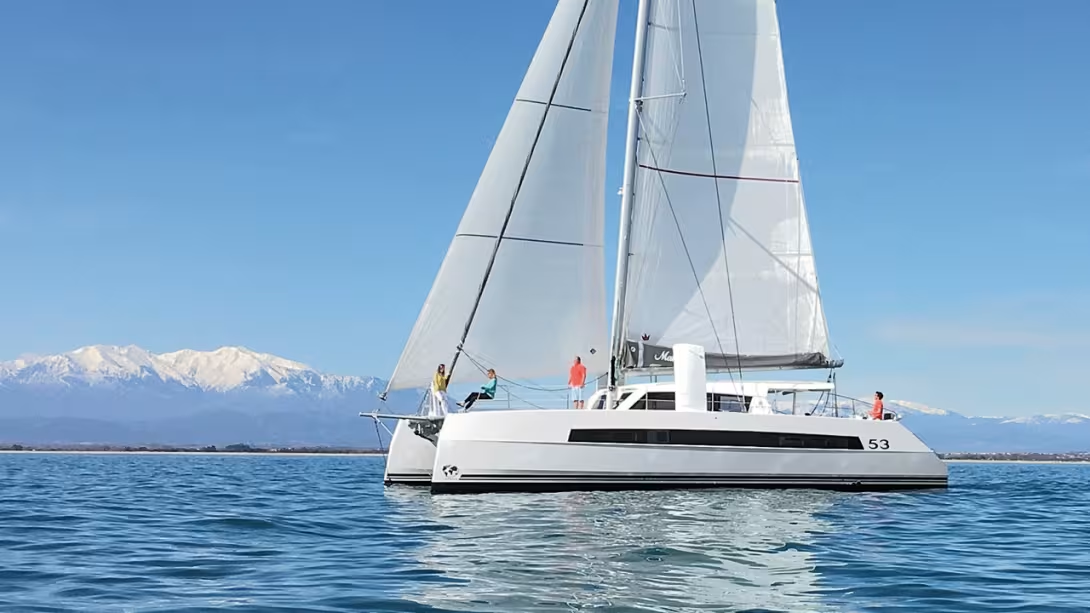
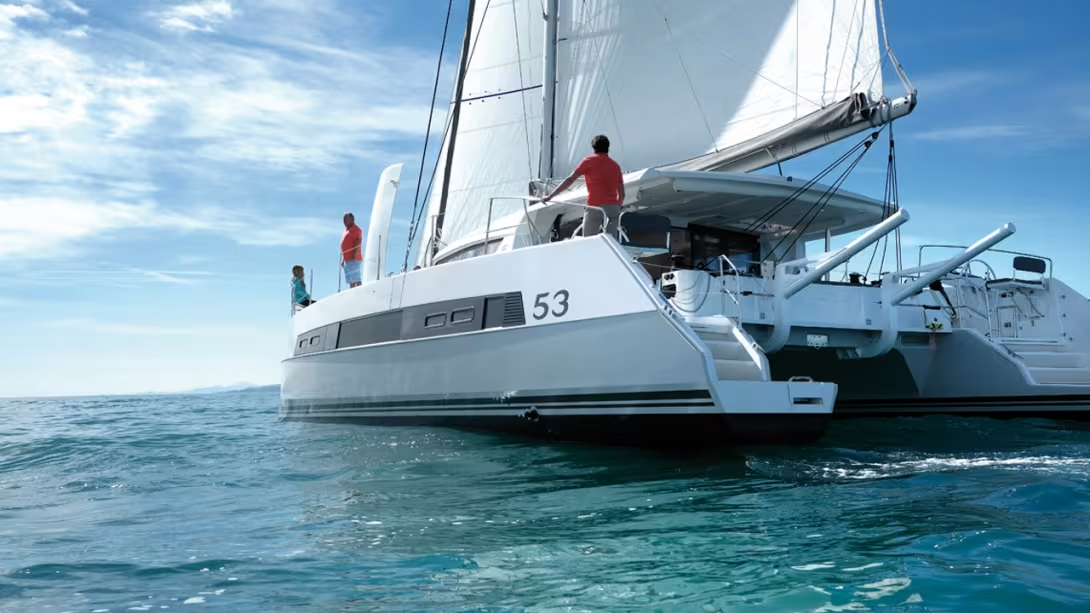
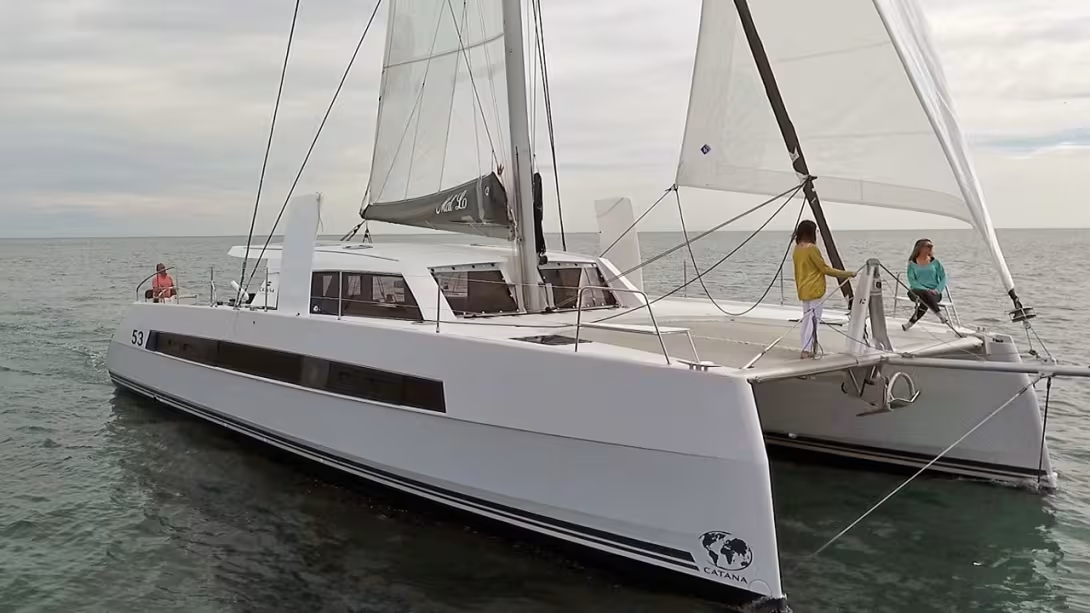
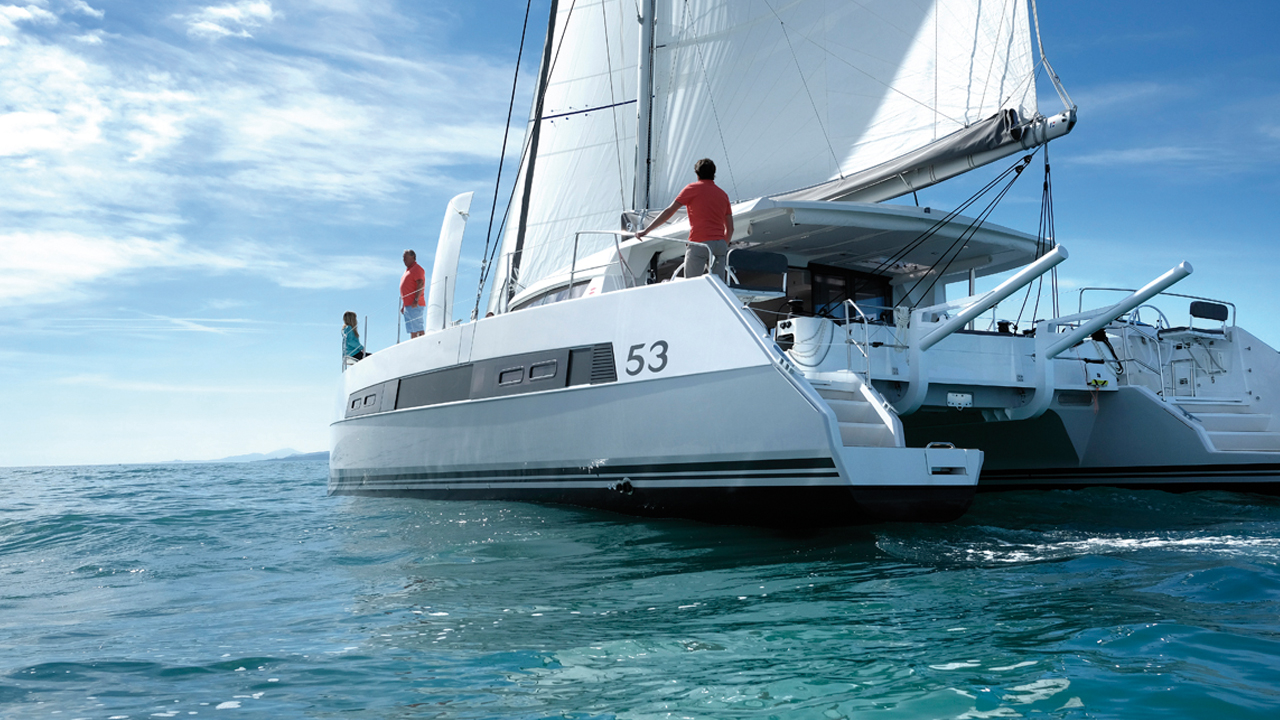
The outline of the Catana 53 gives the observer an impression of understated power: the very assertive design is radical, characteristic of a powerful limousine made to devour the miles. The high, beveled-inverted bows seem to want to push back the limits imposed by a choppy sea; the impressive freeboard allows for generous bridgedeck clearance; the vertical topsides, highlighted halfway up by a stiffening ridge, are mainly built using Airex foam, which is monolithic and is stiffer and lighter than the ribbed foam that would have to be used with curved forms. The elevation of the rig contributes to the perception of a multihull with attitude: the 53 is not hiding its muscles! The lacquered aluminum Maréchal mast contributes to the perception of top quality and is the equal of a carbon tube in this regard.
On-deck technical aspects
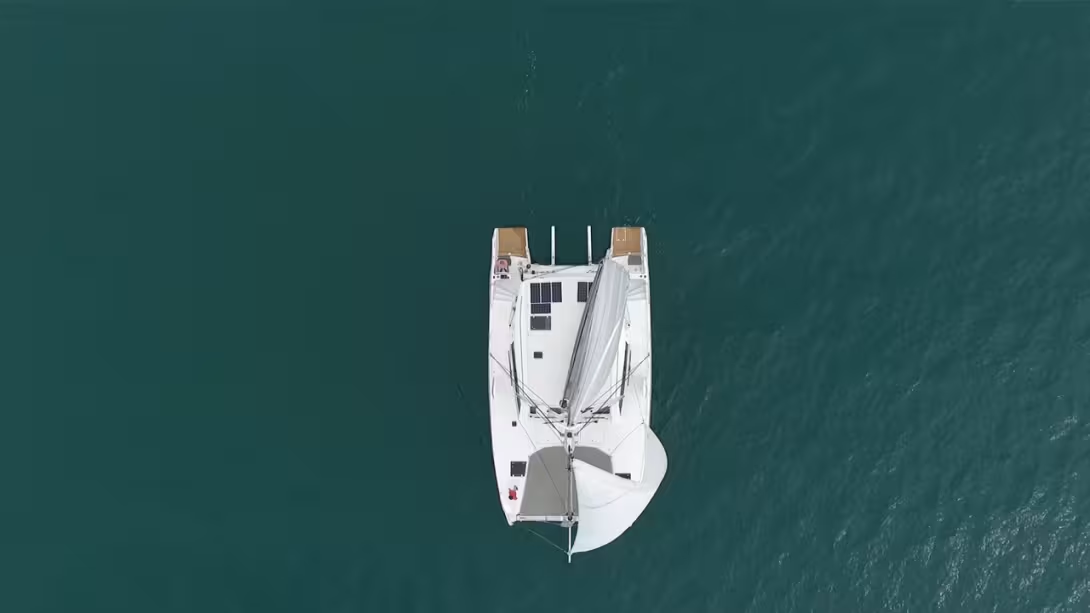
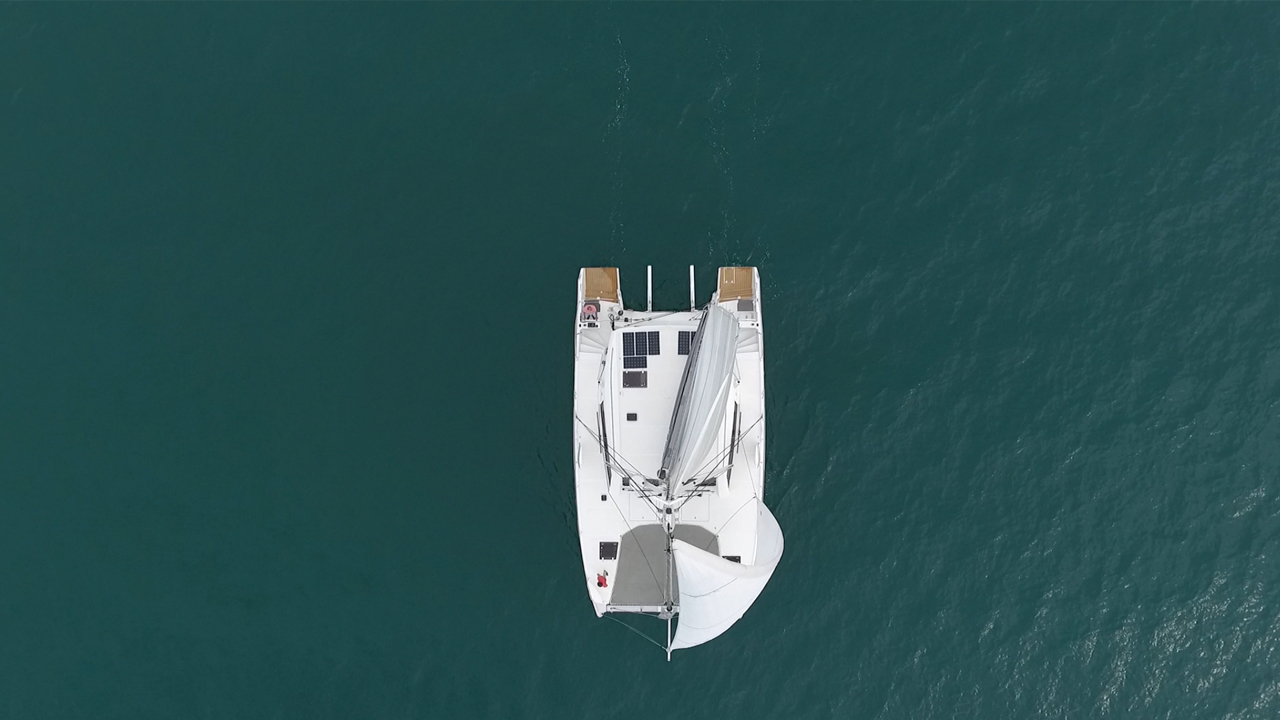
Our Catana 53 test boat is judiciously coordinated: with luxury provided inside, the rig has not been forgotten. The lacquered Maréchal aluminum mast is a good choice, but the focus is on the quality of the D4 membrane sails by Incidences, and the installation of Axxon's one-piece, carbon compression beam / bowsprit. This composite piece is splendid and allows for sail-handling in a modern and aesthetic way (via internal organizers, distributing lines to big clutches) of the 3 optional foresails chosen: lightweight gennaker, code 0 and staysail. I like this configuration which can rationally adapt the sailplan to all conditions likely to be encountered. The connection with the Maréchal forward beam is very neat, but an integral cross in carbon is another attractive possibility. Congratulations are due for the neat use of fiber for the turnbuckles. The fiber standing rigging intelligently complements the design of the sailplan: 154 m² upwind and 274 downwind under gennaker, that's enough to get a multihull of only 15-16 t laden seriously moving! The well-tensioned trampolines which are held by some clever rings (integrated into the composite, not fixed on afterwards!), are perfectly dimensioned and being flush with the deck are really comfortable to walk on.
Refined interior style: non-ostentatious luxury
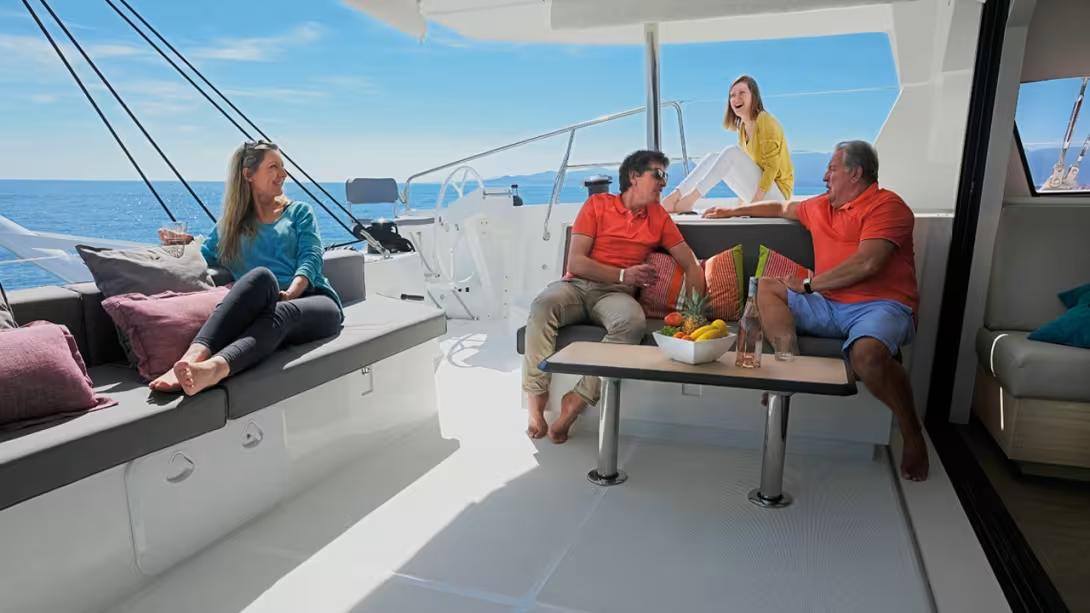
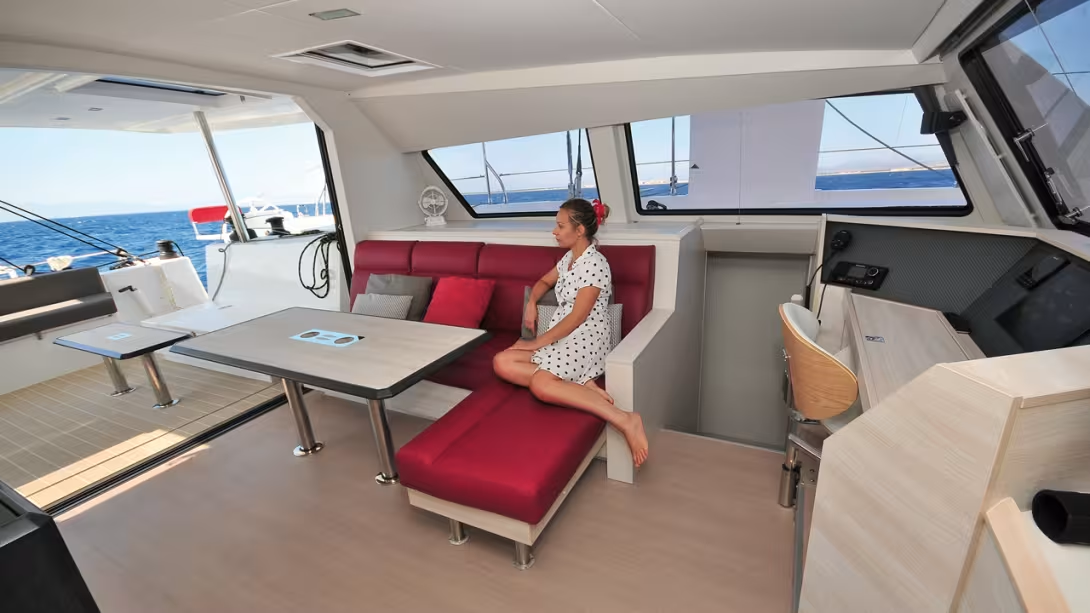
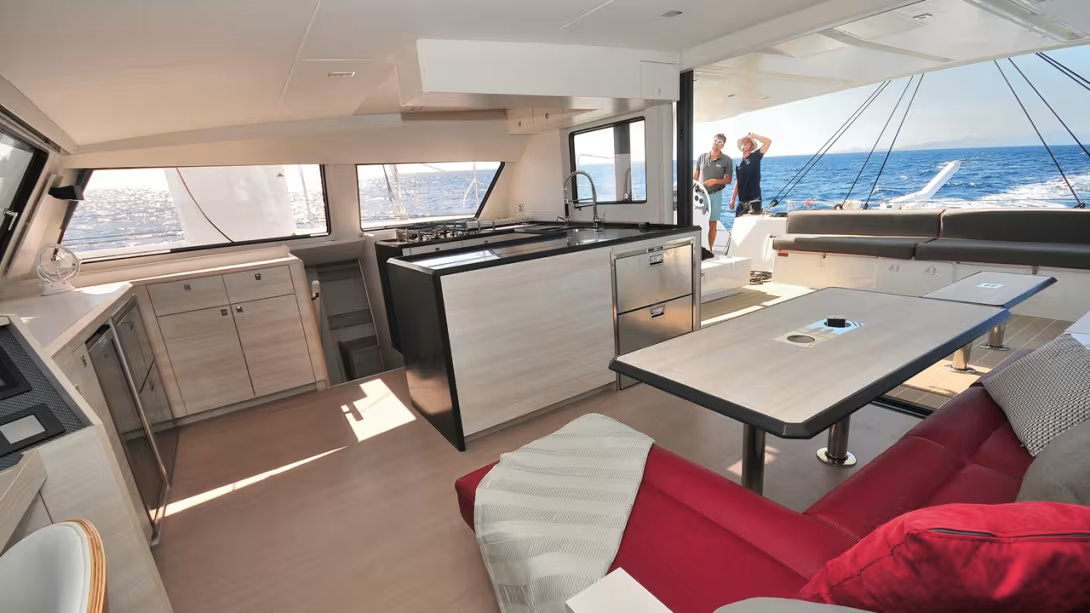
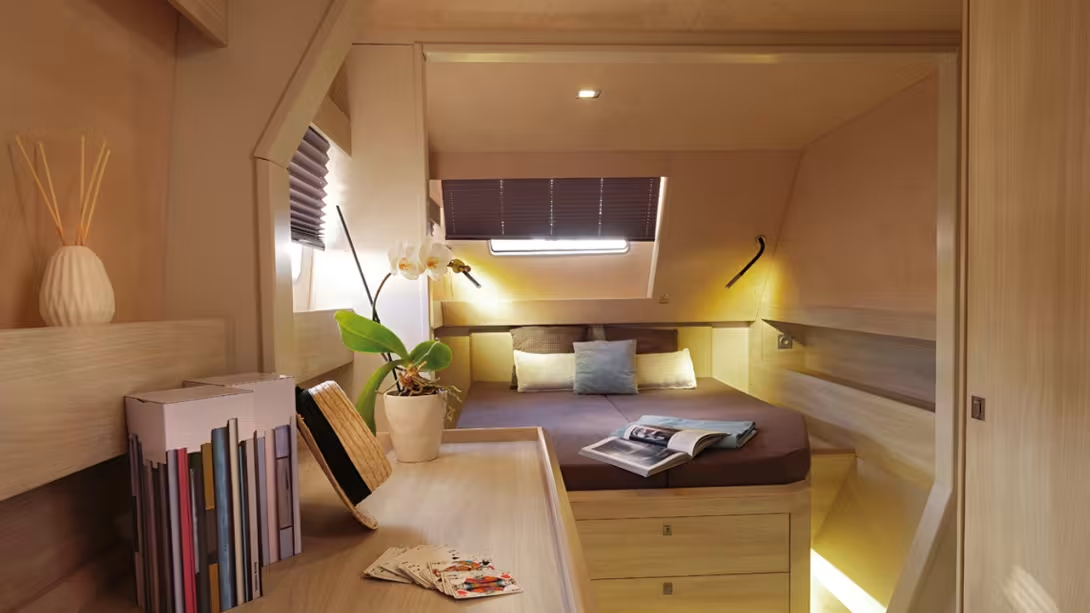
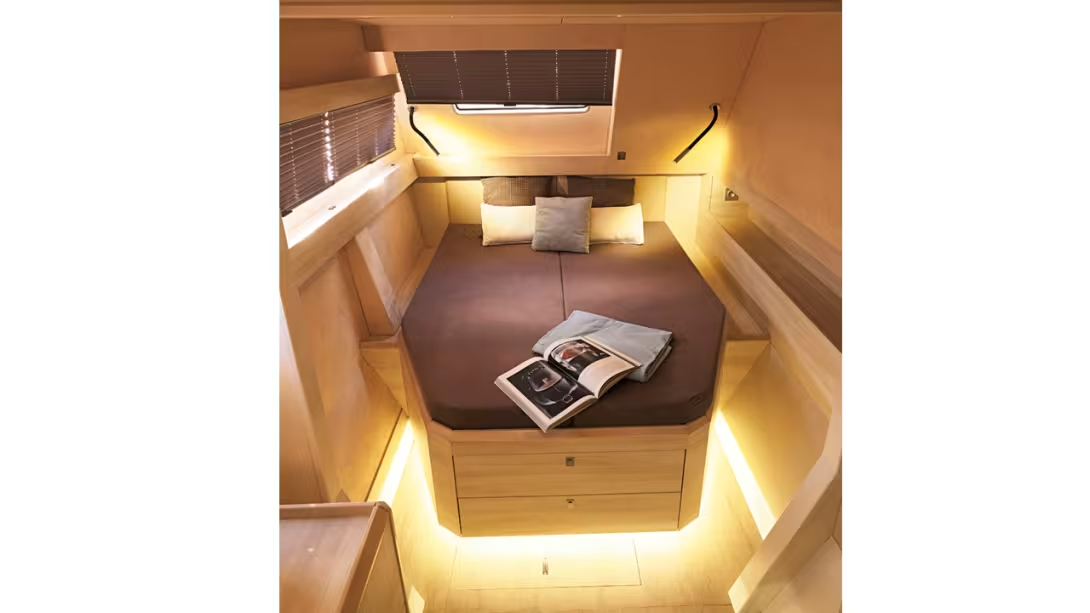
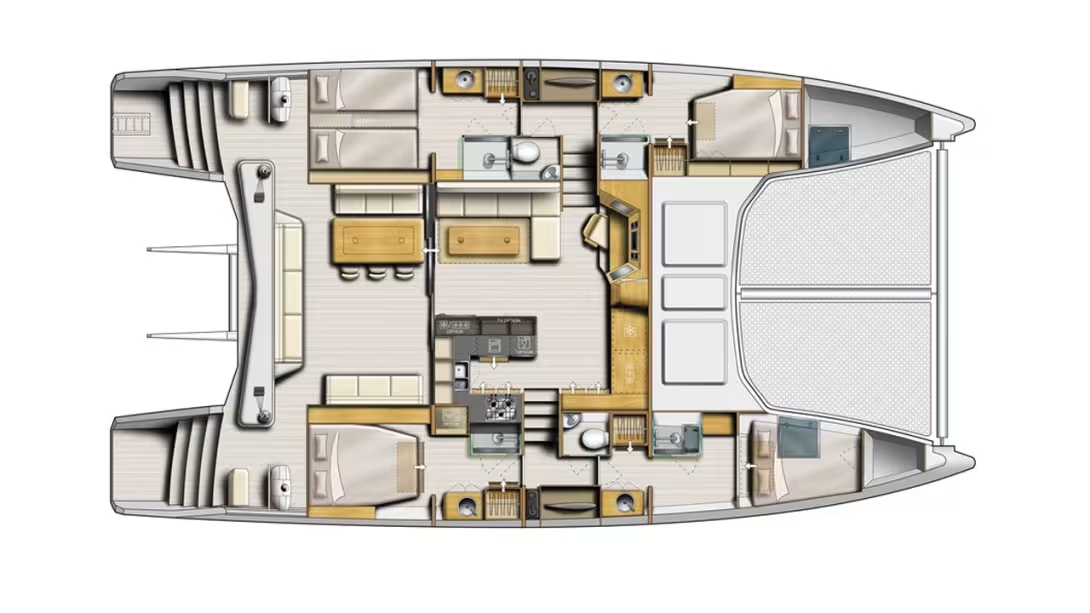
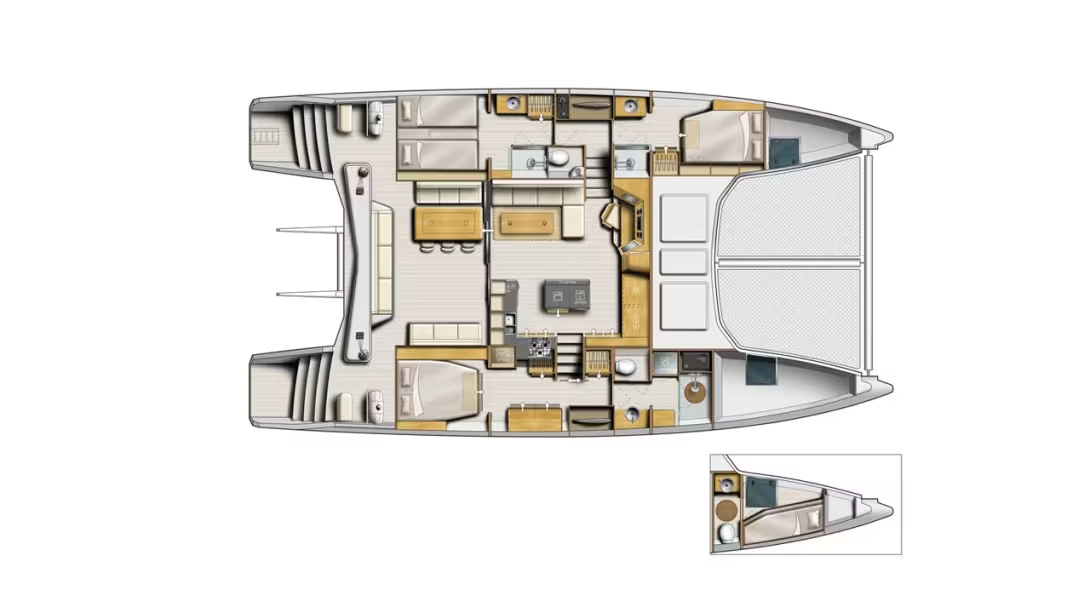
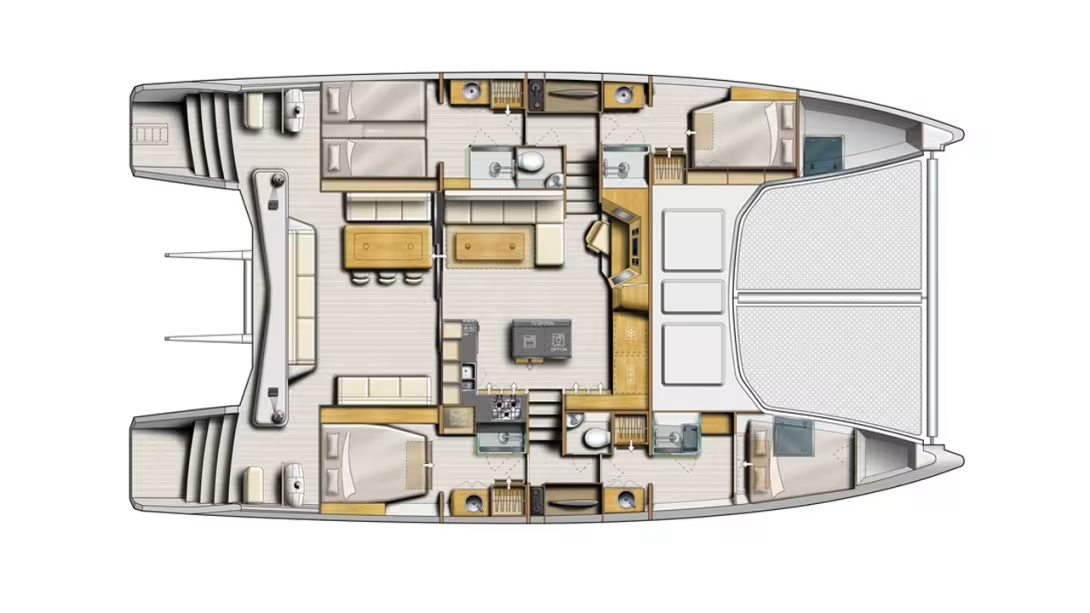
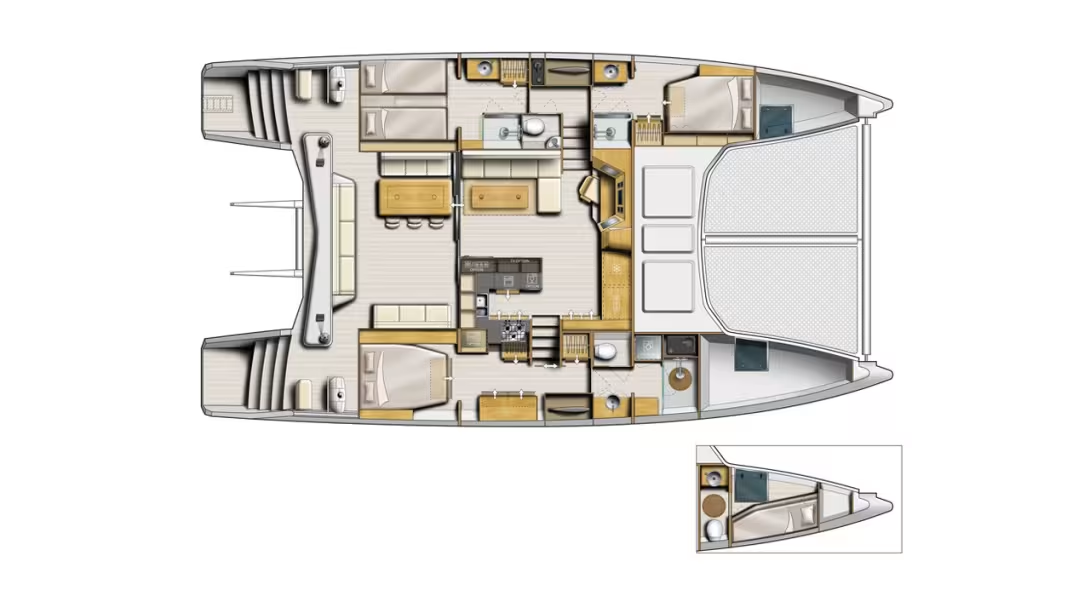
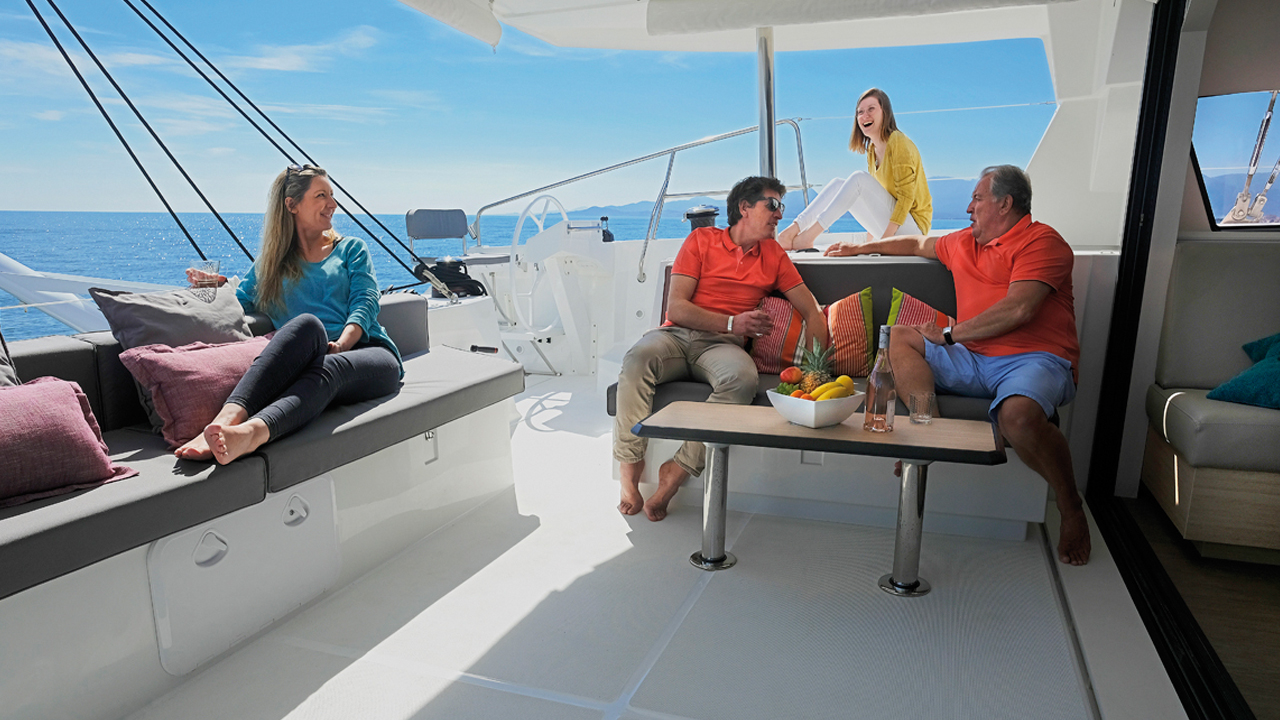
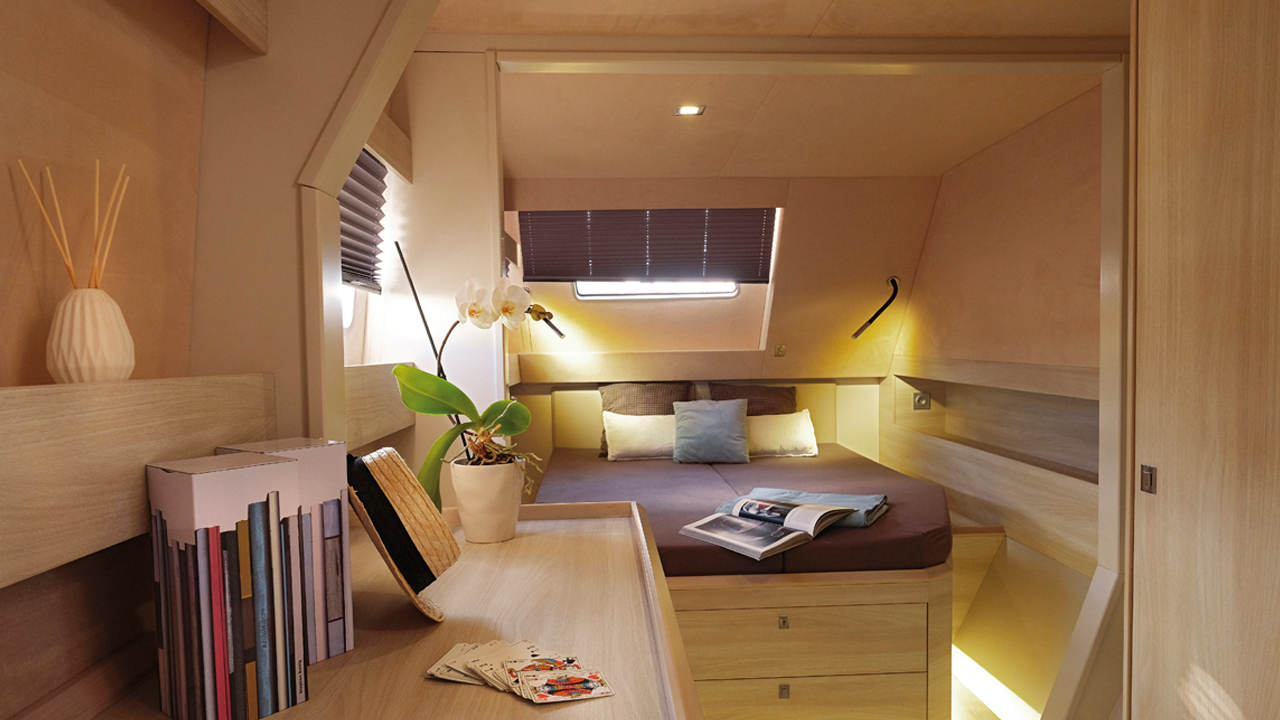
Aboard the 472 and some 2nd generation 50s, or the 580, the emphasis was on luxurious interior cabinetmaking, light teak or cherry trim, and Alcantara upholstery with shimmering colors. This sophisticated marine style now seems to have disappeared from the catalog, in favor of a more universal, contemporary “urban chic” design which is functional and less-consuming of precious resources. Another trend on the C53 is the replacement of the iconic saloon table with elegant, luxury dinettes (1 large one in the saloon, 1 or 2 smaller ones in the cockpit.) In synergy with the central island bar, I like the way the design means on-board eating can be more oriented toward individualized use in small groups, which is better adapted, in my opinion, to use at sea than large conventional tables. The galley is still of a very high standard, with sliding cooler drawers of excellent quality, a small wine chiller forward, black Corian worktops which are "queen sized", a good 4-burner hob and deep sinks. The slide-out TV set is cleverly housed in the central cabinet, but be aware before knocking your coffee over the hole, that it’s only protected by a fiddle and a cover! There is a large and remarkable door with 3 sliding flaps to completely decompartmentalize the saloon, by opening it up into the cockpit. The kinematics of these large moving doors have been neatly designed and the weight significantly reduced - well done! The ventilation of the nacelle is improved by two large opening front windows, which is a very good idea! The island bed in the master cabin is really comfortable, and the mattresses are the perfect density for a comfortable night’s sleep (one night on board was enough to convince me). The bathroom is beautiful and practical: what a pleasure to take a shower in this environment which is neat, practical, and with such a beautiful sea view. The toilet (electric fresh water) is separated from the bathroom but housed in the same module. The shower compartment is large and the faucets good quality, and a large heated towel rail pleasantly completes an excellently appointed bathroom . A special mention must go to the general quality of the floors, for their stiffness, their lightness, the absence of squeaks and the adjustment to the fraction of an inch. The port aft cabin of our test boat had the option of 2 separate bunks with The possibility of being transformed into a double bed. Slatted frames are lightweight and articulated on stainless steel cylinders. Handling will require a little care, but this doesn’t bring the system into question. A small washbasin is opposite the individual heads compartment, and there’s the same nice setup in the forward cabin: the toilet (also freshwater) is independent, but common to both cabins with individual access. I am very much in favor of this arrangement aboard a multihull that is not intended for charter. In general, I am not a fan of air conditioning (even reversible) on board, but I must say that the quality of this one (efficiency, lack of noise, intuitive control modules) associated with a very high outdoor temperature in the marina won me over.
Technical areas
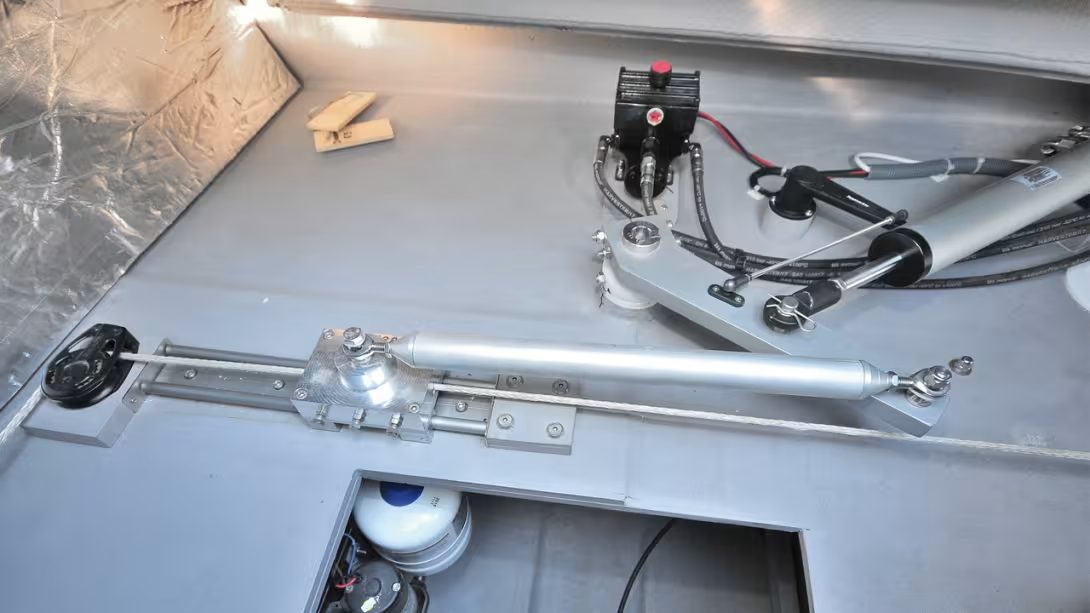
The beautiful engine compartments house either 60hp motors (2.2 liter, 8-valve, direct injection) or the latest 80hp models with common-rail injection. These turbo-charged, 4-cylinder engines achieve their maximum speed at 200 rpm lower than the 60 hp and weigh only 33 kg more (at 271 kg with the sail drive included). The compactness of these engines promotes mechanical accessibility in a generous space. Bravo for the installation of a very good quality diesel filtering system (double filter with water separator). The large Aqua Base watermaker easily finds space to starboard on the large neighboring shelf (good accessibility and readability of the installation). The generator is installed on the port side. The autopilot monitoring is facilitated by its installation on a reinforced aft shelf through which the rudder tube and the quadrant are fixed. The upper and lower rudder bearings are self-aligning JP3s (superb little mechanisms, but annual maintenance is recommended to avoid corrosion and seized ball bearings). The system for the helm transmission is superb (sliding cars, Harken sheaves, Dyneema lines), but why not go for a rigid transmission? Sure, a little heavier, but less delicate to adjust and maintenance-free. The two large lockers at the forward beam accommodate the 4 tanks (2 for fuel and 2 for fresh water). The central panel provides access to the windlass (a large 1700W 24V machine) and pressurized water intakes (fresh and seawater) for rinsing the deck and gear. Monitoring the chain stack is easy if you open the starboard locker when weighing anchor, but the volume should easily accommodate 80m of 12mm chain. A 40kg Delta anchor is provided as standard, a logical choice of size.
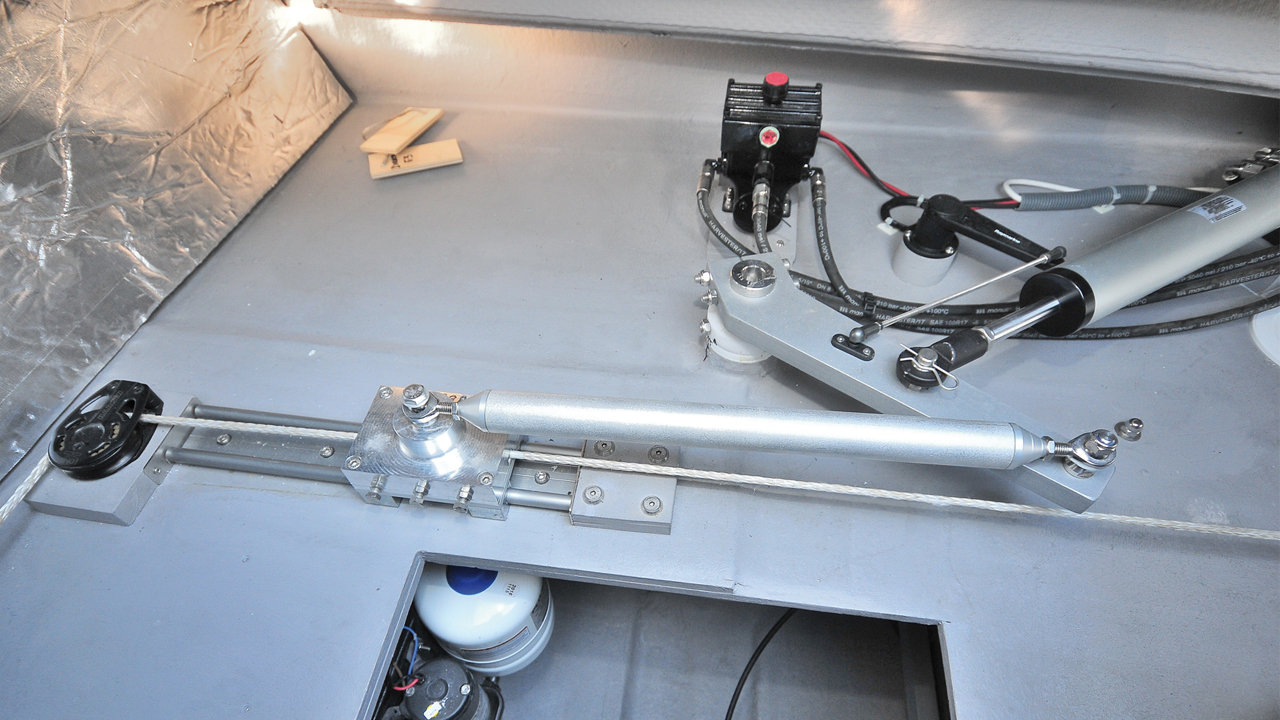
A great machine when you get underway
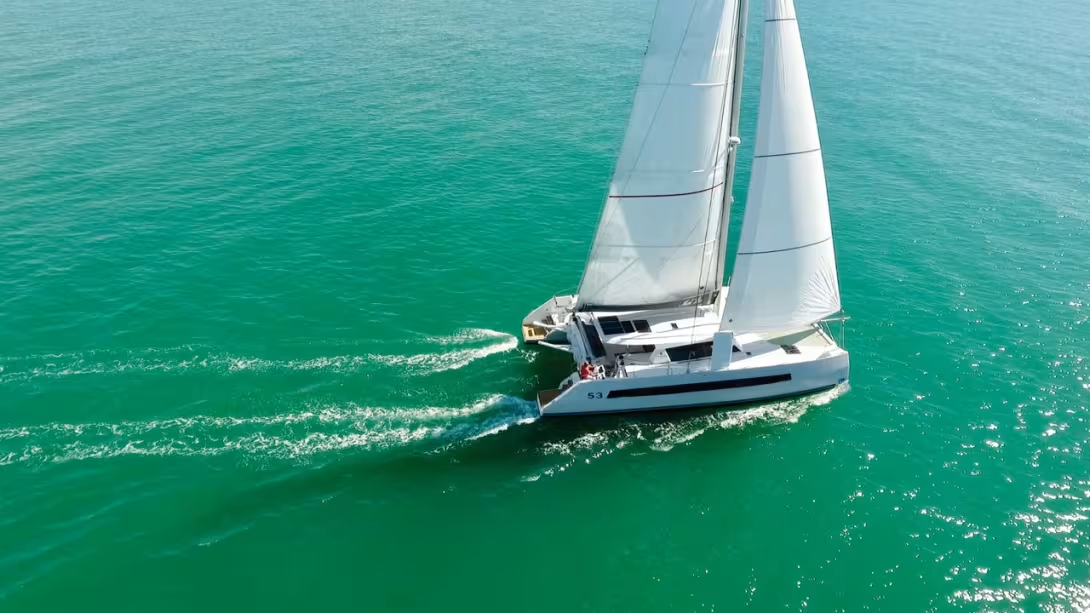
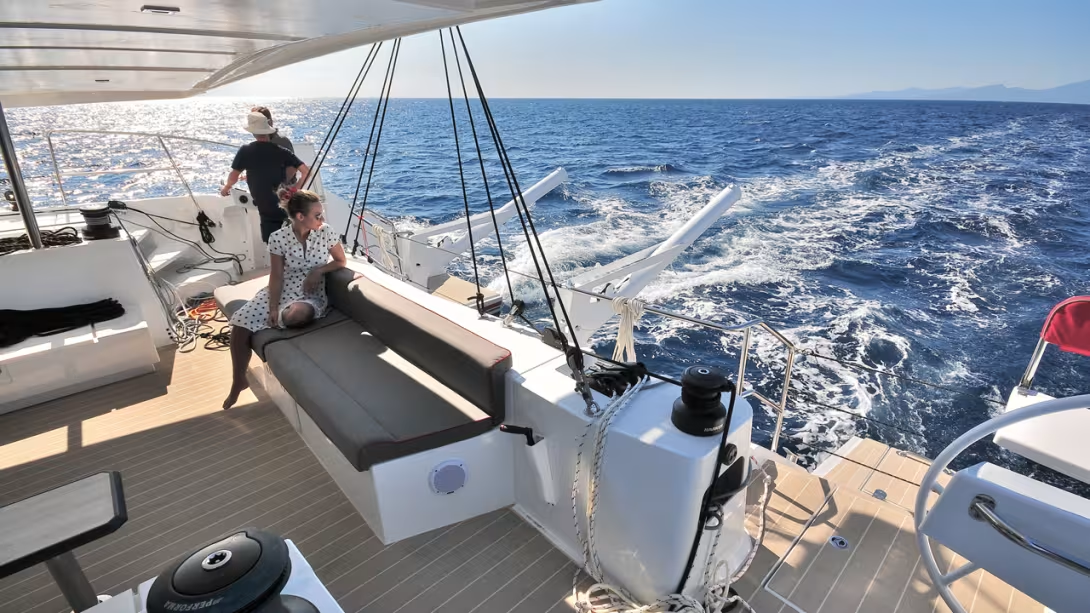
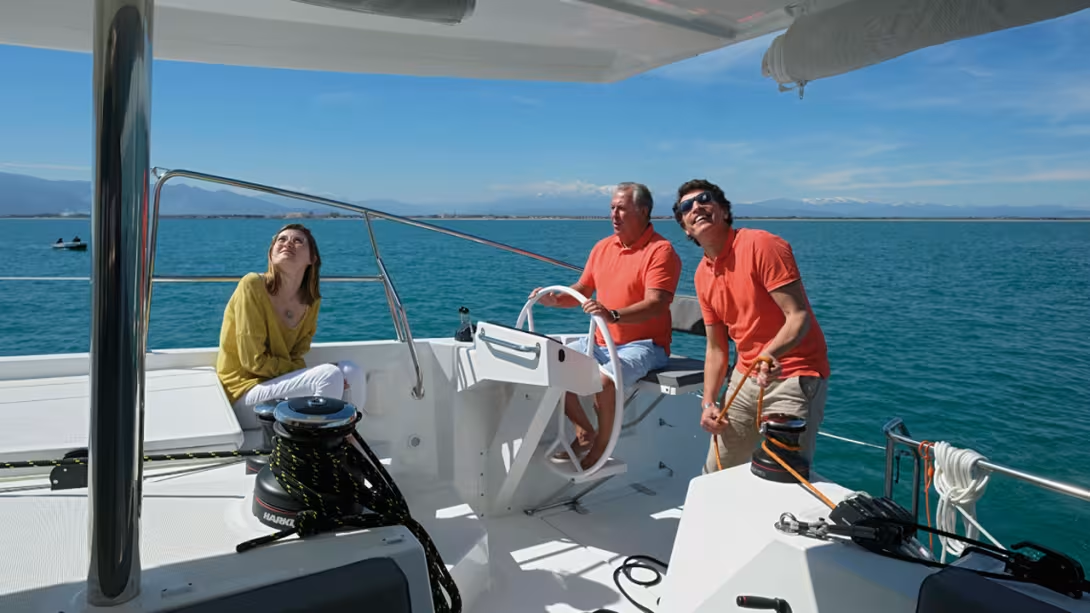
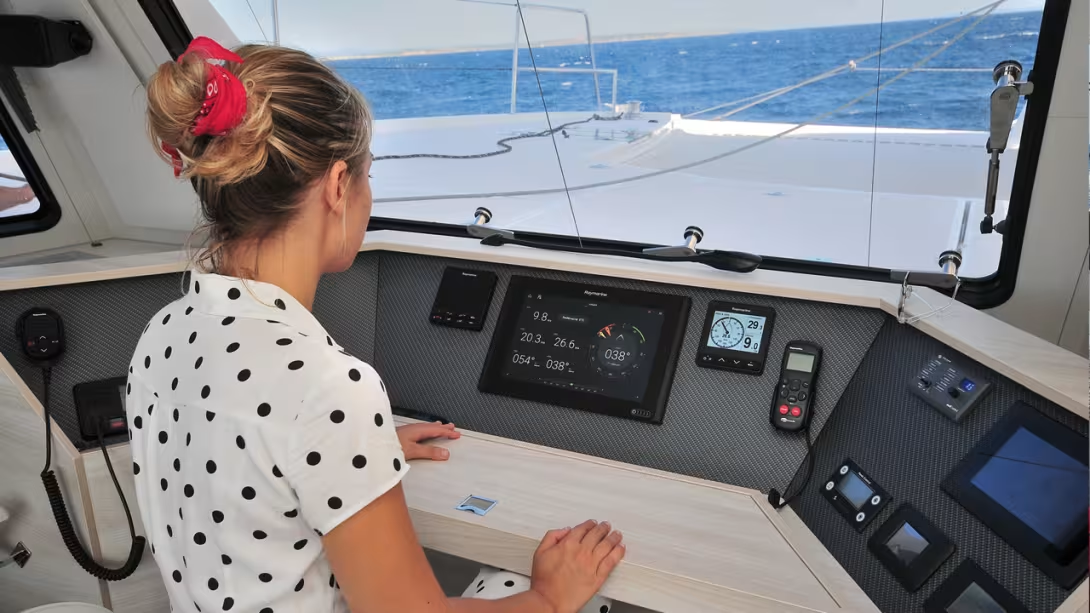
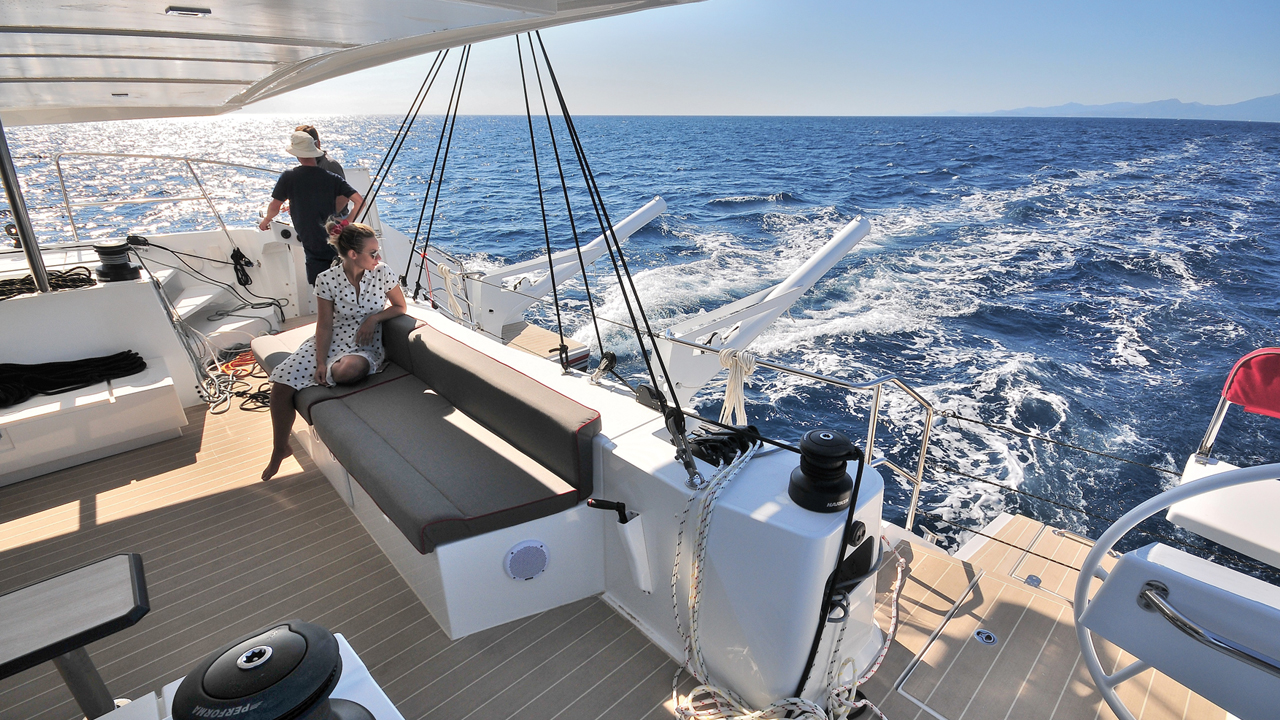
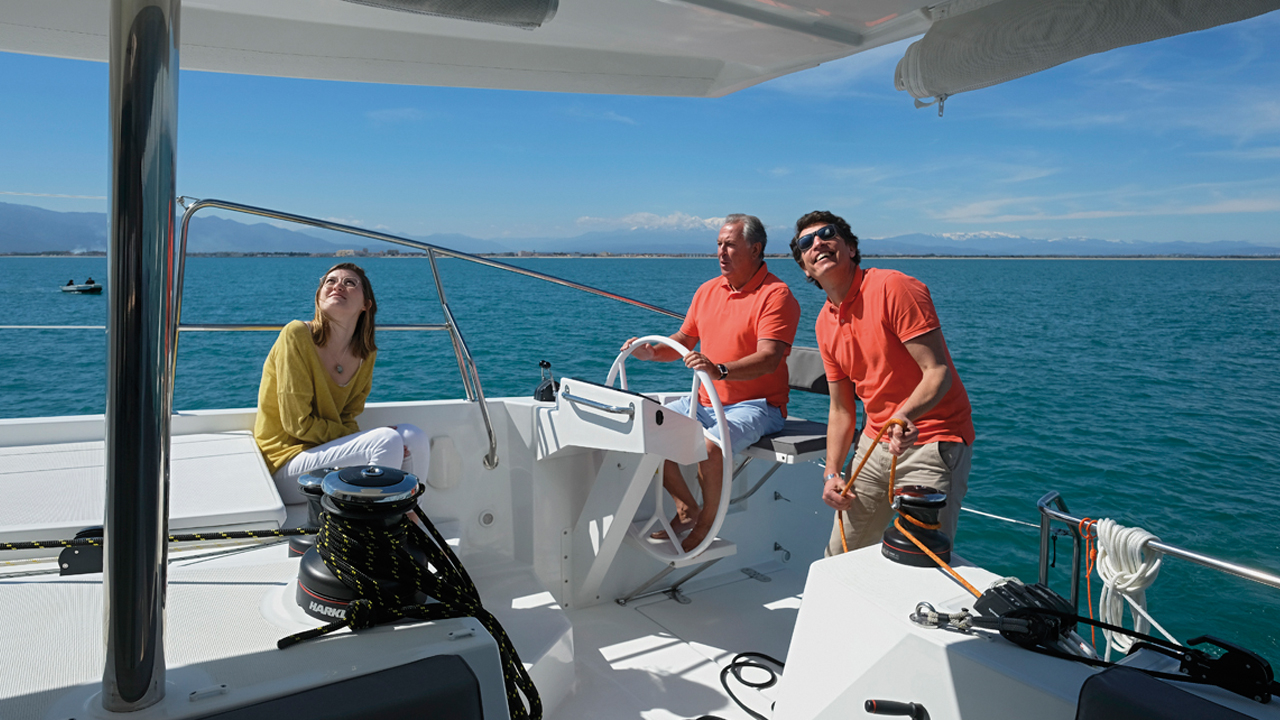
Maneuvering a 16.15 x 8.65 meter catamaran in a crowded Mediterranean marina requires some skill, but with attention (or even a bow thruster) and the torque of these modern engines with quality folding propellers, it's perfectly do-able. Besides, the Catana 53 does not claim to have the agility of a day-boat! Handling the curved daggerboards is done with remarkable flexibility. The appendices slide without effort in the PTFE housings! As far as we can judge in a one-day test, the 53’s deck plan is a real success. Catana takes the principle of the lines being concealed beneath the deck with lines for the principle sail-handling maneuvers being returned by two organizers, but the controls for the mainsail (sheet, reefs, and traveler) are performed on each side of the aft beam and on a single, central winch as on previous generations. The kinematics of the twin mainsheets, on 3 padeyes on each side, streamlines this organization and makes it more pleasant to use and mechanically more rational. The large Lewmar Performa electric winches effortlessly overcome the high loads generated by the generous sail area and are sturdy bits of kit. Hoisting 110 m² of mainsail is done without any fuss, and under mainsail alone the 53 comes alive with ease. The overlapping genoa ideally matches the conditions of the day and we were charging upwind in 18-19 knots of true wind from the NW. The course held was very satisfactory, with a perfect longitudinal attitude (the sea wasn’t big, but there was still a good rippled chop), and settling at 10 knots, the 53 footer showed real agility at this pace. The bows cut the waves gracefully, without lifting spray. The platform immediately takes a few degrees of heel before settling at its most comfortable angle. The flow of water aft is nice and is smoothed by the delicate shape: by easing the sheet a little, a long wake stretches out behind and we’re doing more than 12 knots. The D4 membrane mainsail has exemplary form stability and the volume is magnificent. The genoa is also perfect. These exceptional sail profiles play a big part in the pleasure of sail trimming and the real enjoyment of sailing this boat. After a few gybes, the wind seemed to settle down at around 16-17 knots, the upper range for our big light gennaker. At 10-12 knots in a weakening NW’ly the 53 keeps up a good pace and our record was 14.6 knots on a fairly tight reach! The genoa sheet returns across the deck are admirable and make tacking easy: with these excellent ergonomics, it’s possible to take in almost the entire length of the sheet by hand (in medium airs) as you go through the wind! The helm station is comfortable and the Carbonautica composite wheels are very pleasant to use. The rudders, whose transmissions (which were new: 0 hours of operation) had been judiciously pre-tensioned quite significantly (there is always a little slack), generated a slightly sticky sensation at the beginning of our sail, but this had disappeared by the end of the test.
Conclusion
Catana has always championed a sporting vision of blue water cruising, and the 53 perfectly illustrates this philosophy. It is agile upwind, powerful and excellent in the medium conditions we had on the day of our test: sliding performance downwind is unmistakable. Daily averages will be high because this performance is so consistent. 10 knots average in less than 20 knots true feels quite achievable. Powerful, well-equipped and well-tuned, comfortable and fun to use, the 53 will be a success with wealthy and exacting owners.
Technical Specifications
Builder: Chantier Catana
Naval Architect: Catana Design Team
Length: 16.15m
Beam: 8.65m
Draft: 1.48/3m
Light displacement: 14.5t
Motors: 2x60hp with saildrive transmission
Diesel: 860L
Fresh water: 800L
CE Certification: Category A 10 persons
Construction: Foam sandwich (80kg/m³, Glass/Carbon for bulkheads and Vinylester mast strut)
Mainsail area: 110m²
Solent: 44m²
Price in € ex-tax: 1,142,000 basic model
Price of the boat we tested: € 1,664,000 ex VAT with options (aircon, generator, leather upholstery, D4 Incidences mainsail, staysail in D4, genoa in D4, code 0 in D4 and 164 m² Maxilite gennaker)
Principal options in € ex-tax
4-cabin version: 10,520
Hydranet mainsail: 11,115
Hydranet solent: 3,280
Stormlite gennaker: 10,520
Code D: 7,410
Blue water performance version (Axxon carbon mast, fiber rigging, Hydranet sails): 132,850
2 Electric genoa winches: 6,645
Code 0 deck hardware: 11,660
80 hp motors: 14,020
Folding propellers: 5,935
Solar panels: 7,960
105L/h watermaker: 13,900
Aerothermic central heating: 13,830
Batyline protection for coachroof glazing / cockpit upholstery / venetian blinds for coachroof: 22,588
Electronics Pack: 23,800
Antifouling on epoxy primer: 4,450
Launching and delivery: 12,400
PLUSES
- Successful balance of performance and luxury
- Quality and optimization of overall construction
- Dynamic qualities: the boat comes alive in medium conditions
- Perfect accessibility of the boom and very high quality lazy bag
MINUSES
- Coachroof uprights are large in design
- Token chart table seat: at this level, a proper navigator’s seat is in order
- Stainless capshroud chainplates set back
- Potential fragility of bunk lattices
-
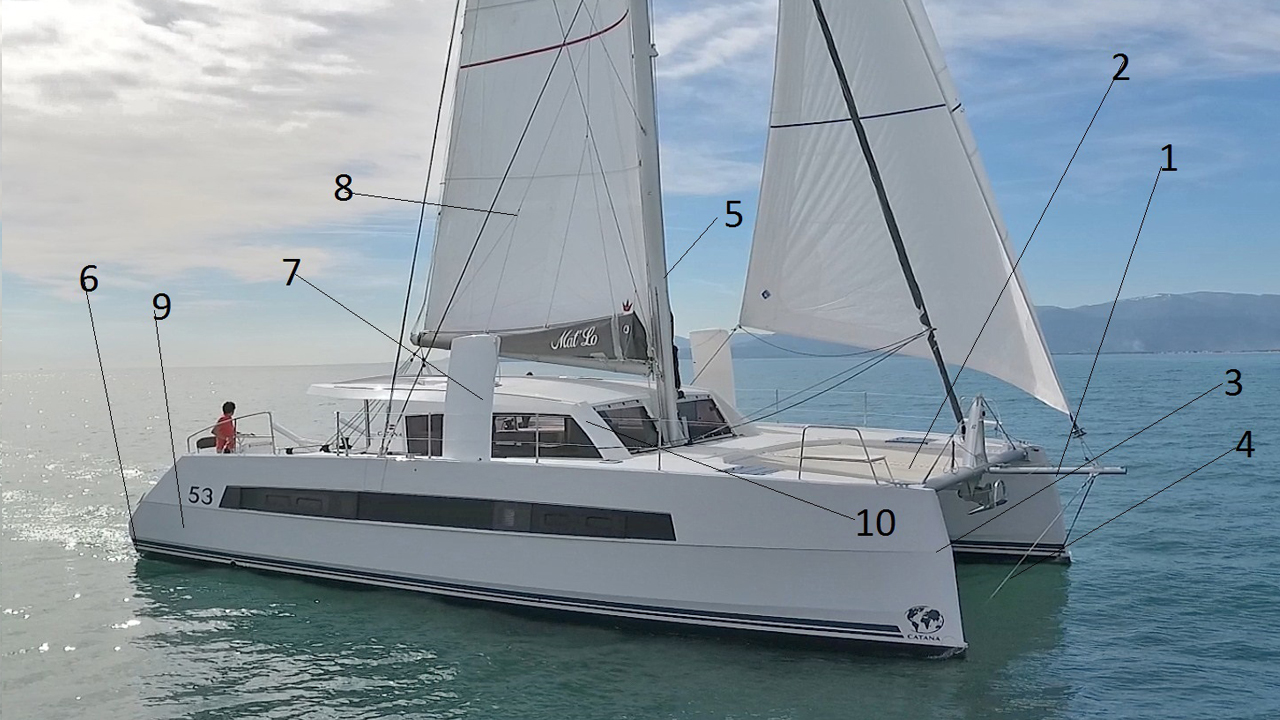
1: Unlike this example, our test boat had a carbon beam / bowsprit
-
2: Trampoline on one level (tension and fixation perfect for good grip)
-
3: Inverted bows, beveled in the upper part, making passage through the water upwind remarkable
-
4: Our test model was equipped with very nice Dyneema bobstays tensioned on elegant turnbuckles: a neat setup at a hotspot which shouldn’t be underestimated.
-
5- Our 53 had a white lacquered aluminum mast by Maréchal, a good alternative to carbon on this boat
-
6: The stern design is delicate and wakes very clean; the steady glide of the 53 through the water is proof of powerful hydrodynamics
-
7: Curved daggerboards fit more discreetly in the housings and even provide, according to the designers, a vertical thrust of several hundred kilos. Their operation is remarkable
-
8: Our 53 sported a set of D4 membrane sails by Incidences: profiles of extraordinary precision for cruising, but beware of how these special sails can exert extra pressure on the rigging and deck hardware, requiring greater attention to maintenance
-
9: The high topsides guarantee a good bridgedeck clearance and their shape allows the extensive use of monolithic Airex foam resulting in much less resin lost than the checkered foam used in curves
-
10: The coachroof is reinforced with carbon; access to the boom and mastfoot are very convenient.
THE ESSENTIALS
- Practical deck layout, very well organized, achieved by good preparation and effective deck hardware
- Offshore aptitude, with consistent high average speeds. Remarkable overall performance
THE COMPETITION
|
Model |
Builder |
Upwind sail area in m² |
Weight in T |
Basic price in €, £ or $ ex-tax |
|
OUTREMER 51 |
OUTREMER |
153 |
10 |
€774,000 |
|
SEAWIND 1600 |
SEAWIND |
133 |
13 |
$859,000 |
|
BALANCE 526 |
BALANCE CATS |
149 |
9.3 |
$1,299,000 |
|
NAUTITECH 542 |
BAVARIA |
143 |
14.9 |
€881,390 |
|
EOS 54 |
MARSAUDON |
165.5 |
12.5 |
????€ 999,500 |