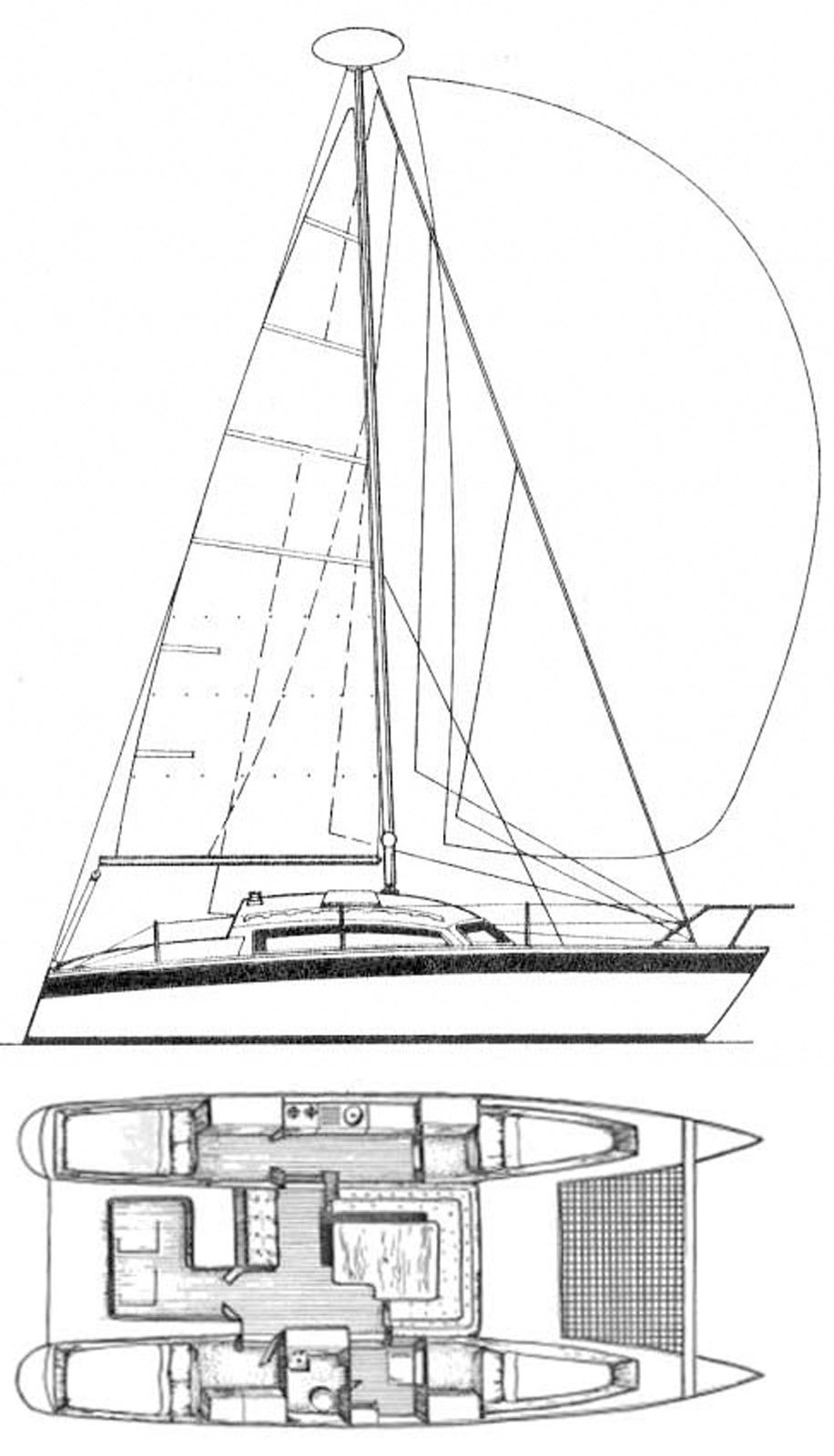
The bigger version of the very popular Iroquois, the Comanche 32 is just as robust but much more modern. She offers more comfort and a load capacity far superior to that of her little sister.
Infos pratiques
- Le chantier : Comanche 32
- La fiche technique
- Découvrez notre vidéo exclusive
- Financez votre Comanche 32
- Assuez votre Comanche 32
- Articles autour du Comanche 32
Its faceted coachroof and (very) raked bows obviously give the Comanche 32 a dated silhouette, but this model deserves attention, if only because of the rather affordable price. Despite her short length, the Comanche 32 is well suited to long distance cruising: she is pretty seaworthy for her size and is safe thanks to its four watertight compartments. In 1978, this model was positioned between the Iroquois 30 and the Cherokee 35 and offered a large load capacity – all within her 32 feet. Obviously, for long periods on board, this boat is ideally suited to the single-hander or a couple. As standard, the Comanche was delivered with fixed keels in order to gain living space inside the hulls. However, daggerboards could be ordered as an option (6 feet / 1.82m draft in the lowered position). The rudders are protected by strong skegs, allowing for stress-free beaching. This model was also available in a motor-sailer version with two 15 HP diesel engines, an interior helm station and a raised deck.
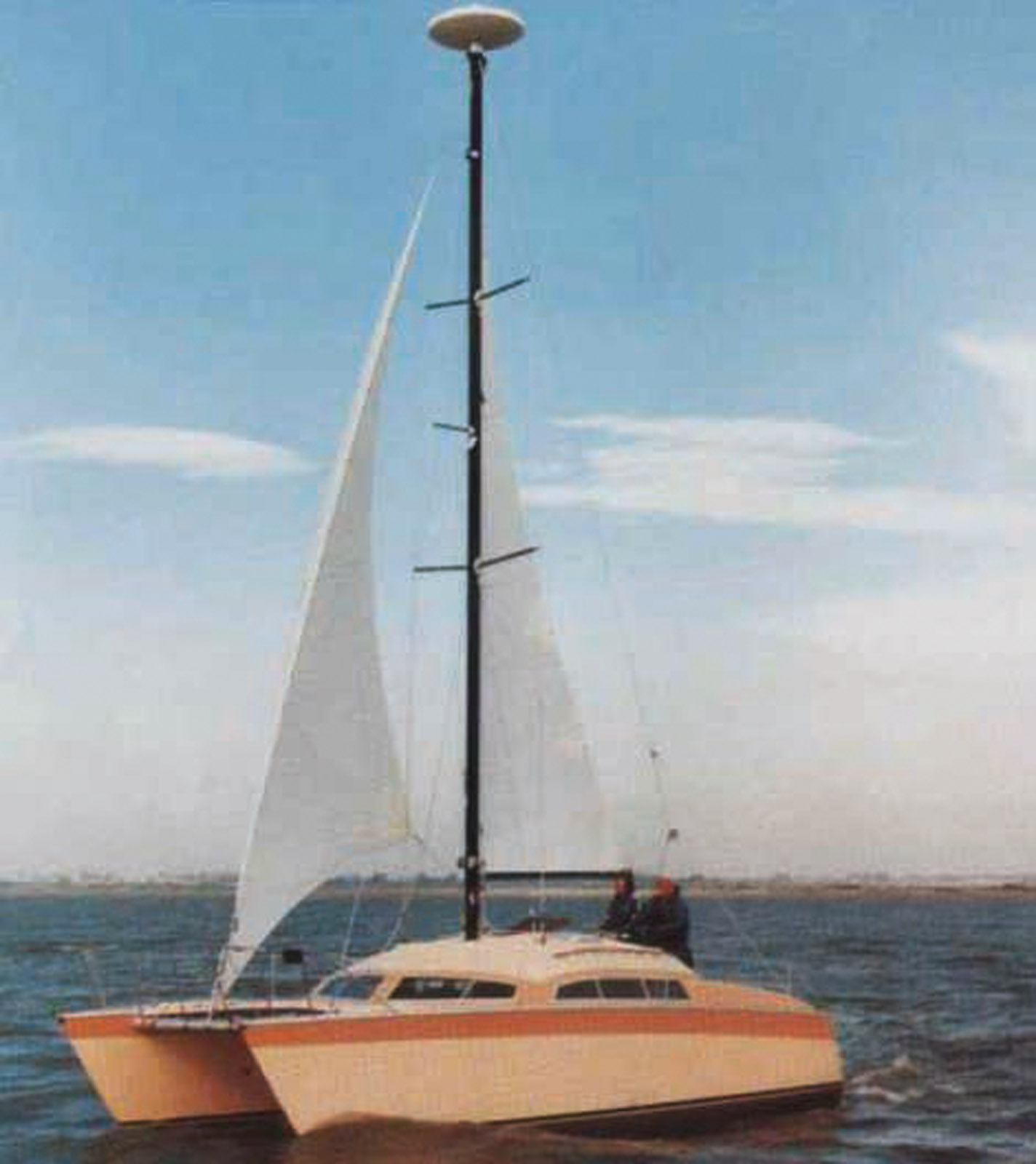
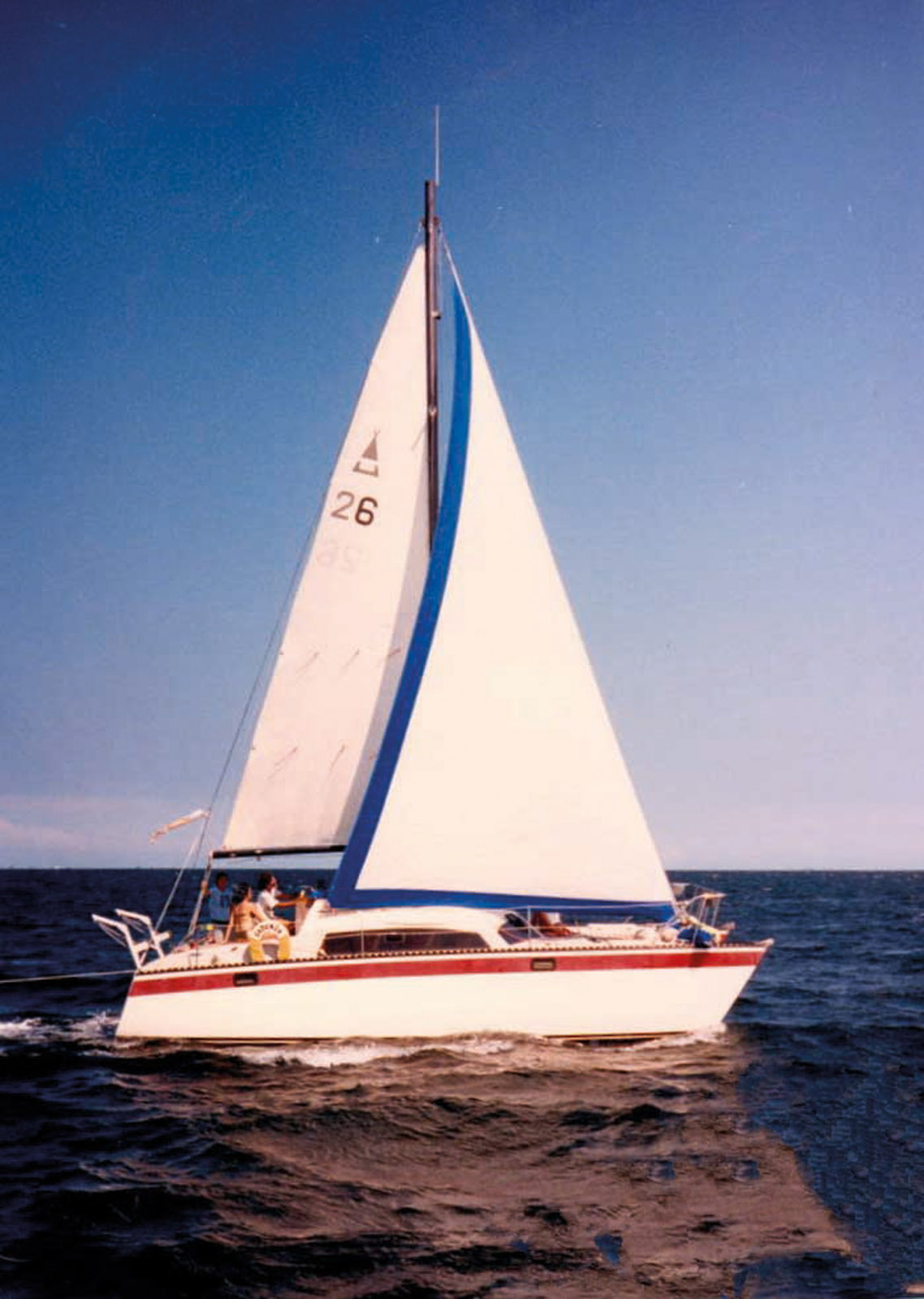
This image shows the monohull-like rig of the Comanche 32 – apart from the anti-capsize addition at the masthead!
Wide coachroof and aft-set mast
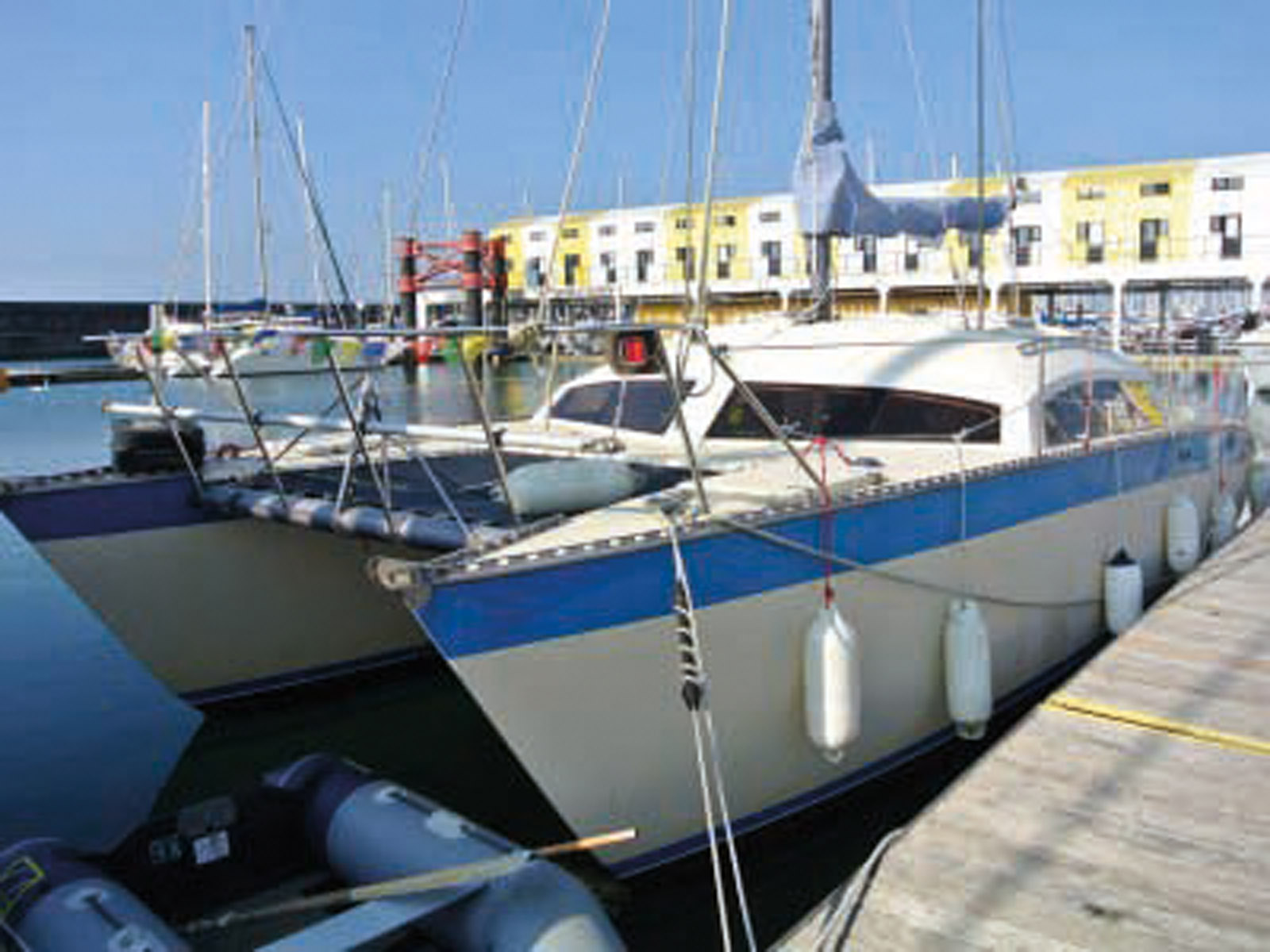
In order to optimize the living space aboard this relatively short vessel, the naval architect opted for a very wide coachroof - the side-decks are almost non-existent. Moving forward therefore requires climbing across the superstructure. An aluminum rail encircles the hulls, there are handrails are on each side and the entire bow is protected by a powerful stainless-steel pulpit, with a vast trampoline extending the deck plan, which includes four lockers cut into the deck. The rig configuration might seem very modern today, given that the mast is stepped so far aft, sitting on the top of the coachroof. However, there’s no only-slightly-overlapping genoa and much less a self-tacking jib: the tack of the headsail is set back on the forward beam, itself set back from the bows. From there, a genoa with a lot of overlap and a rig that is more in line with that of a monohull from the 1970’s - a short foot for sheeting the genoa well in, an inner forestay, two sets of spreaders in line, and even a jumper strut to stiffen the spar. Many of these boats have subsequently been equipped with more modern profiles. As for the cockpit, this features very simple architecture with seating right round the perimeter, thick and raised coamings (that allow easy access to the coachroof), and a helm station slightly offset to port, with a removable helm seat. Many Comanche 32s have been fitted with a canvas bimini. At the stern, no sugarscoops, but full transoms... you have to make do with a swim ladder.
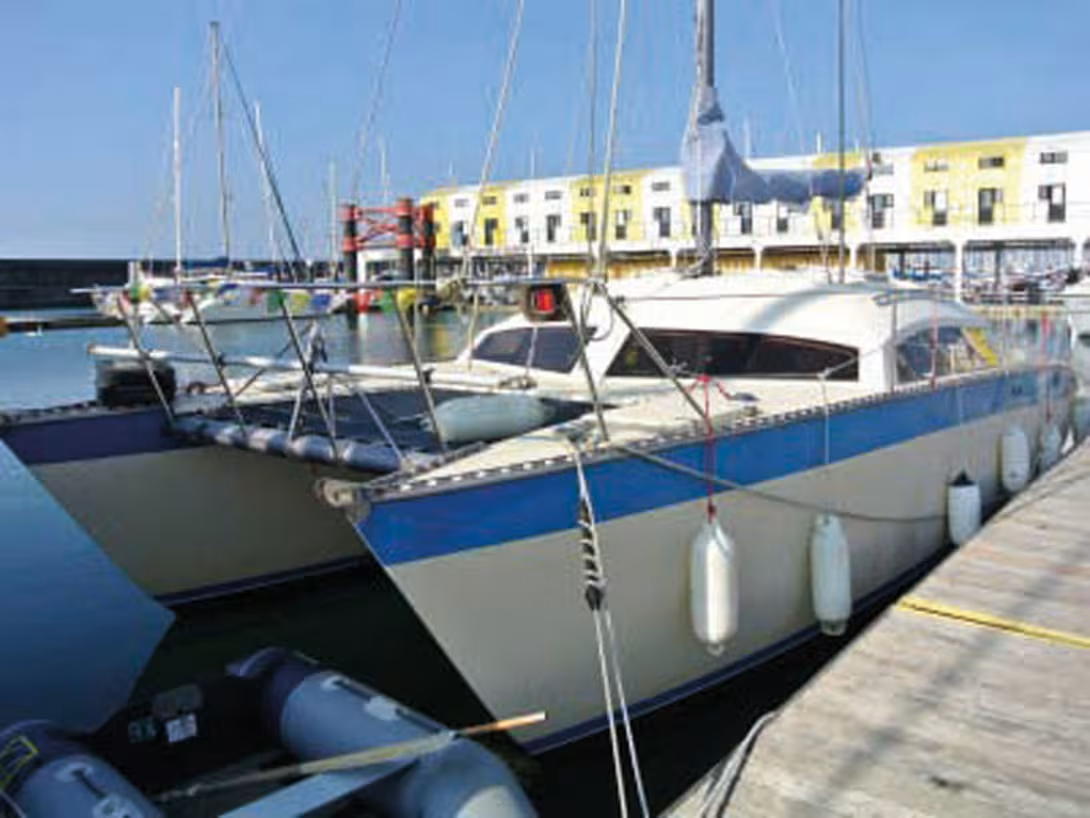
The high freeboard of the hulls is even further increased in the center thanks to the reversed deck sheer.
XXL-sized saloon
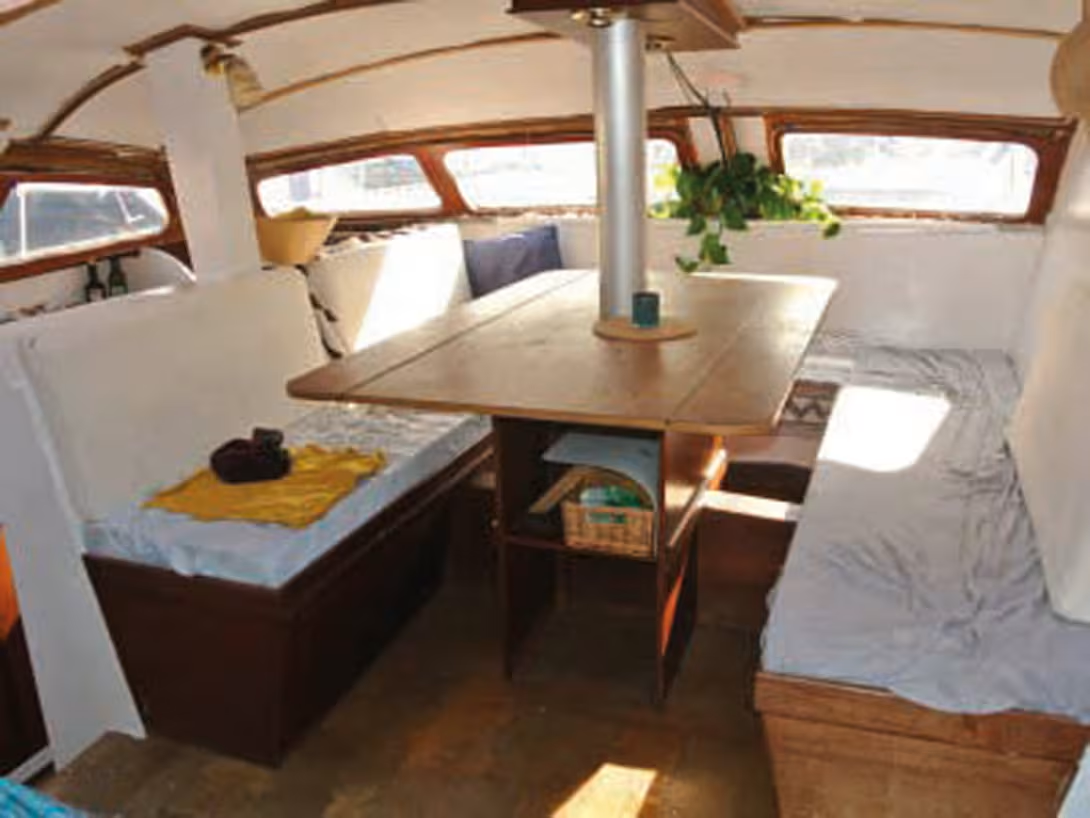
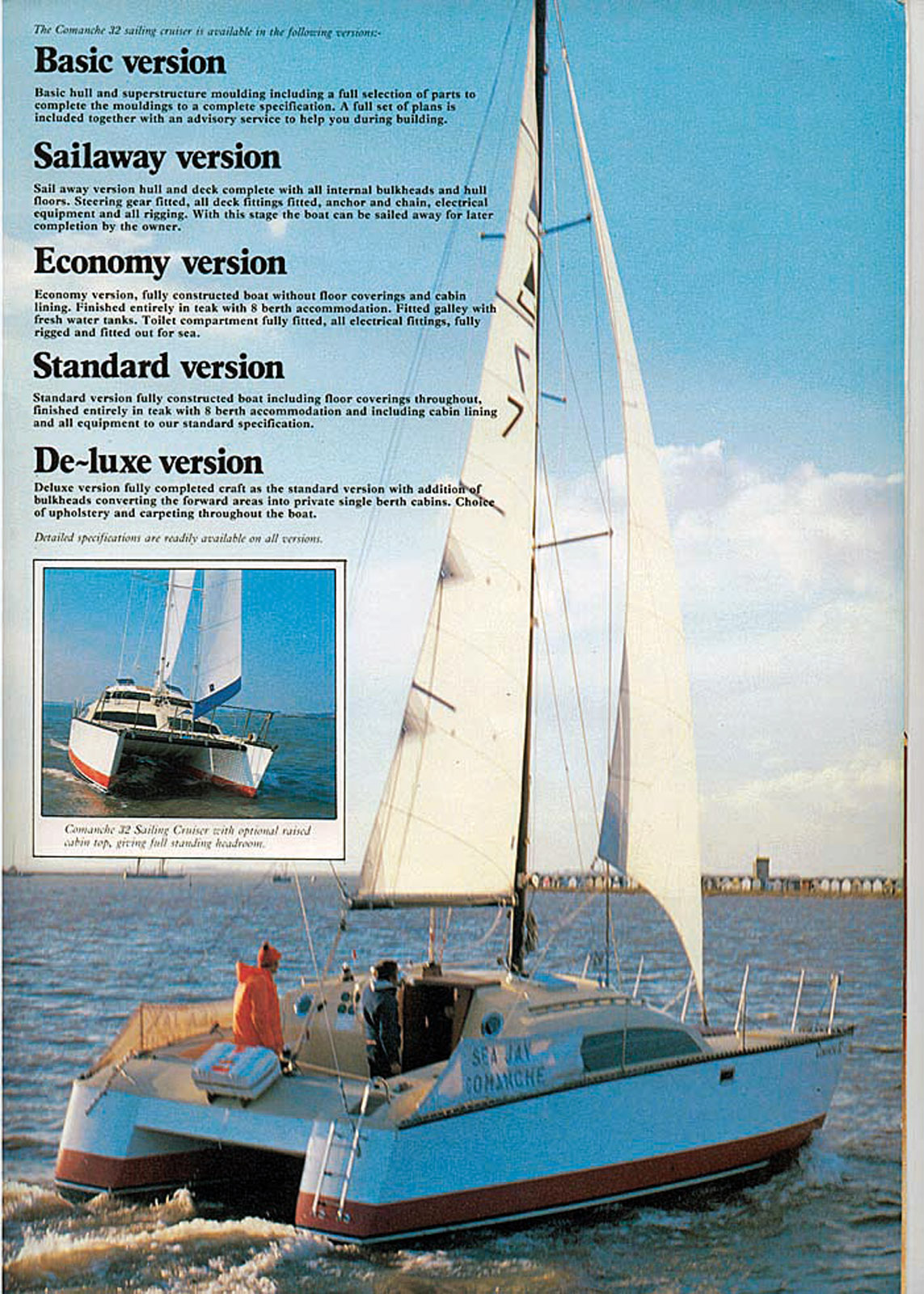
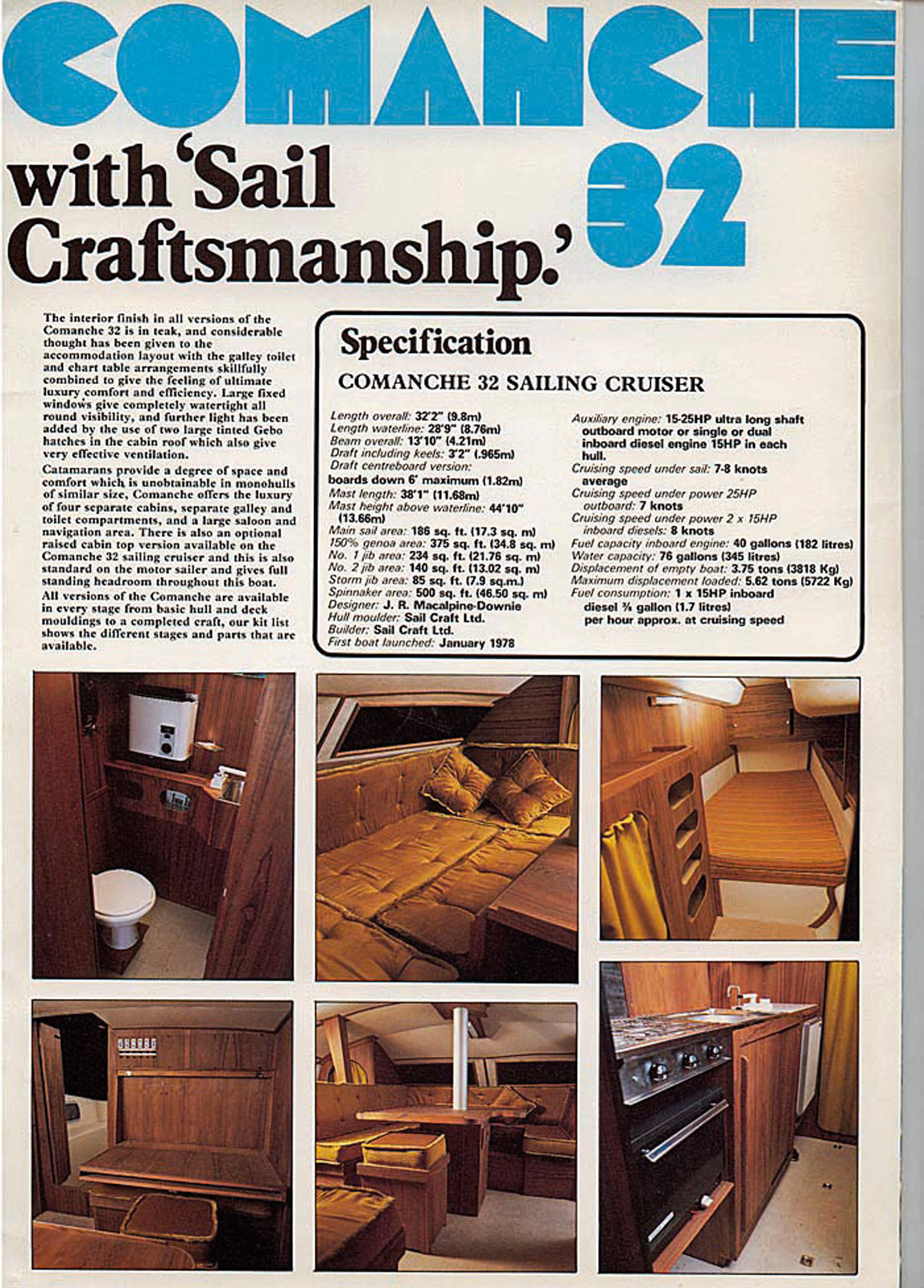
The access to the nacelle, with its double doors and its hinged top, is reminiscent of the companionway on an old monohull... this is a long way the ergonomics of contemporary multihulls. On the other hand, apart from a slight sill, the cockpit and floor are nicely level. A sprayhood will effectively protect the opening from any rain. The windows in the nacelle are generous, including towards the bows: a panoramic view is assured. While the headroom is limited, at 5’5” (1.65 m), it exceeds 6’ (1.82 m) on the version with the raised coachroof. The woodwork is in teak - certainly the species that ages best. The saloon is large enough to accommodate 8 to 10 people, and the table can be lowered, transforming into a large square watchkeeper’s berth - or an extra bed – measuring 6’ (1.82 m) along each side. No space is wasted on board: the storage areas are as clever as they are numerous. The chart table is located on the port side, backing on to the cockpit. The galley takes over the central section of the port hull. Opposite, to starboard, there is a large bathroom. The two forepeaks are sometimes fitted out as single cabins – the De-luxe version. Aft, there are two double cabins. In the late 1970s, these were considered spacious... today, a width of 4’ (1.20 m) is of course considered insufficient. One good thing to note: thanks to the width of the coachroof, the headroom in the cabins reaches 6’11” (2.10 m).
The particularly wide coachroof reduces the width of the side-decks to almost zero.
Mini offshore catamaran
Well-canvassed and not too heavy, the Comanche 32 moves quite nicely, even in light airs. Her well-balanced sail plan gives this catamaran excellent scalability. On the other hand, the inner forestay and a large genoa don’t help quick tacks – this is a different era. Upwind course-keeping is very good at around 50°, and you can expect average speeds of around 7 to 8 knots. The bridgedeck clearance and the marked grooves on the underside of the nacelle limit slamming in a seaway, even when the waves are short. All these qualities have obviously led owners to undertake offshore sailing projects. You can ignore the reserve buoyancy that some Comanche 32s featured until the early 1980s: you won’t be capsizing at the first gust! The engines fitted to these boats are very diverse: an outboard engine in a lifting well; a pair of outboards on brackets on the stern; one central diesel with double transmission; or twin diesels. The data from the manufacturer announced an average speed of 7 knots with a 25 HP outboard and 8 knots with the twin 15 HP diesels.
 |
 |
 |
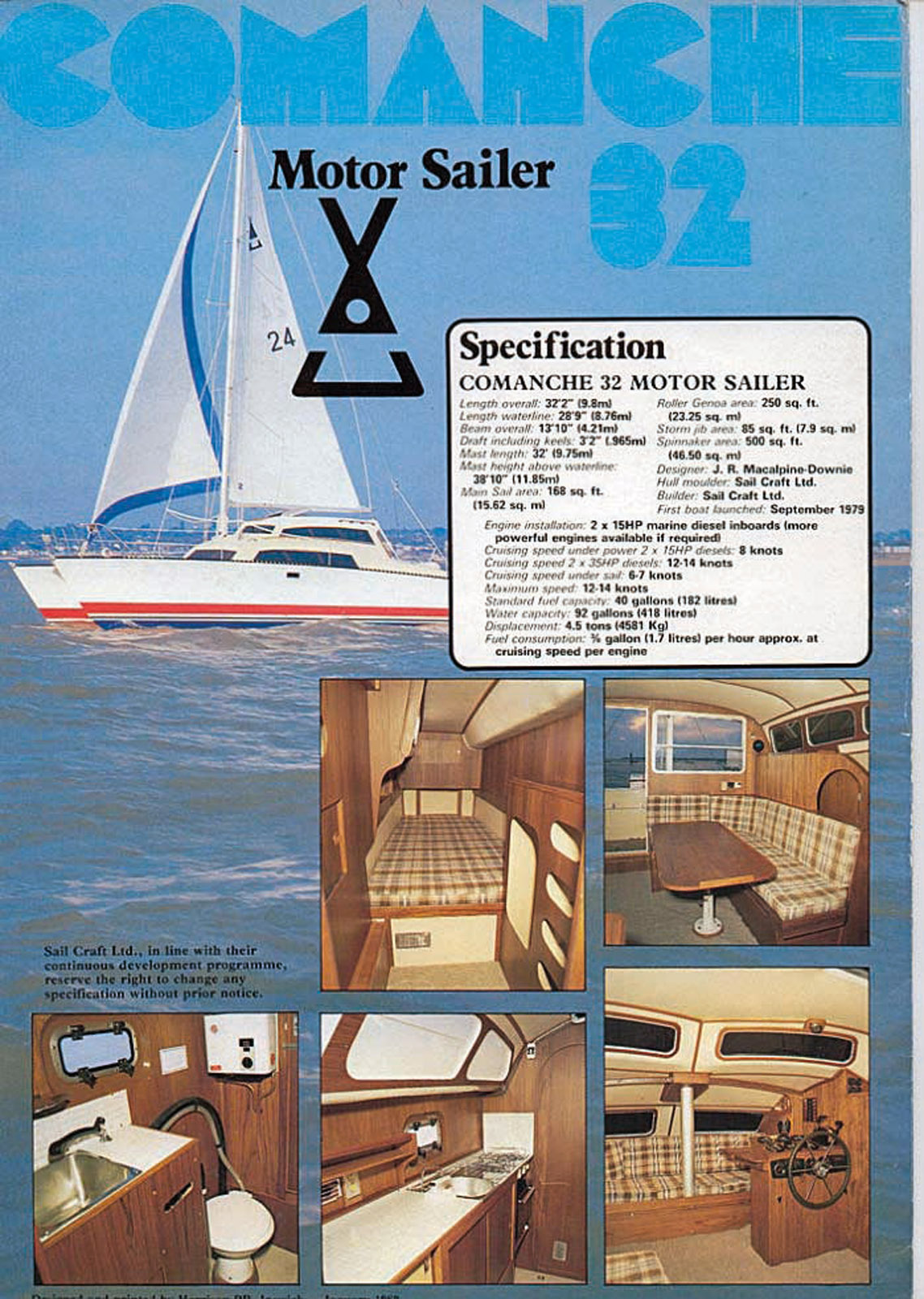 |
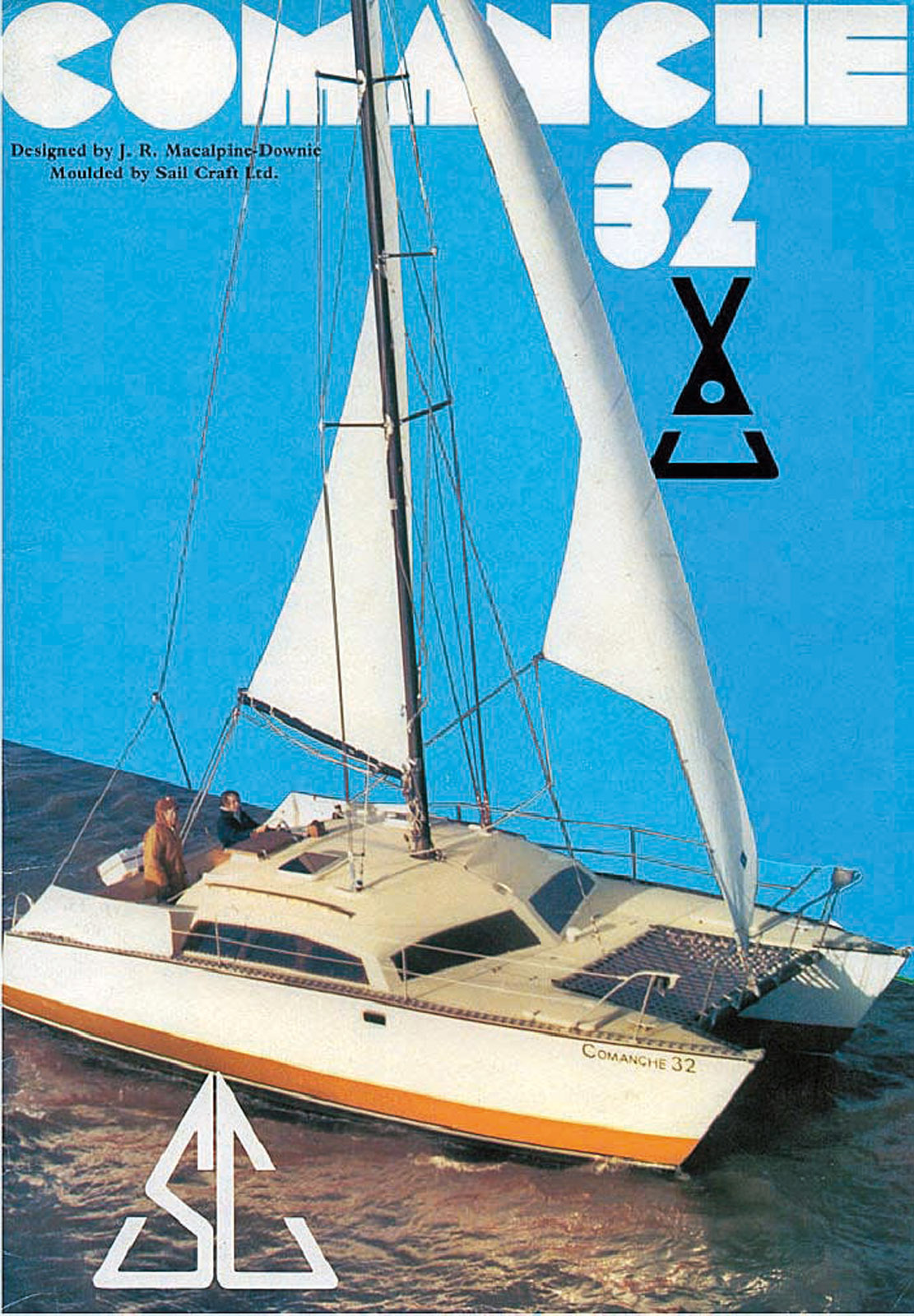
Comanche 32 brochure from the late 1970s.
Conclusion
A 40-year-old catamaran is of course a very, very long way from new... However, many Comanche 32s have been refitted – to more or less convincing standards. In any case, as long as the price is reasonable, this model is an interesting platform for a “minimal blue water cruising” project. Also worth noting is the limited beam: at 13’10” (4.20 m) it allows the Comanche 32 to use almost any inland waterways.
POINTS TO CHECK
The Lloyd’s-certified construction is obviously a guarantee of seriousness and robustness; in fact, the structure of the Comanche 32 seems to be indestructible. The GRP hulls are topped by a balsa/polyester sandwich deck on wood bulkheads, and a metal frame ensures that the rigging loads are taken up. The rig, fittings, steering system, electrics, plumbing, engine(s) and sails warrant careful inspection. The condition of the units available on the market varies greatly depending on the quality of the refit(s) the catamaran has undergone. The mast step, built in a rather deep reserve, is conducive to humidity, and the wooden mast foot may have suffered as a result.
The Pluses
- A seaworthy catamaran that is safe in heavy weather (for its size)
- Good habitable volume
- Attractive price
The Minuses
- No sugarscoops
- Ergonomics of the deck plan are now dated
- Large overlapping genoa
FICHE TECHNIQUE
Constructeur : Sail Craft LTD.
Architecte : J. R. Macalpine-Downie
Longueur de coque : 9,78 m
Longueur à la flottaison : 8,76 m
Largeur : 4,21 m
Tirant d’eau : 1,00 m
Déplacement : 3 820 kg
Tirant d’air : 13,66 m
Surface de voile au près : 52,2 m2
Grand-voile : 17,37 m2
Génois : 34,83 m2
Moteur : 1 ou 2 x HB 15 à 25 CV en puits ; 1 ou 2 x IB 15 CV
Production : environ 80 exemplaires de 1978 à 1982
Prix : 20 000 à 35 000 €