Christophe Barreau is a prolific naval architect whose signature is synonymous with fast cruising catamarans. With XL, Outremer, Catana, Marsaudon Composites and Technologie Marine, he has made significant contributions to the recent evolution of fast cruising catamarans coming out of France. The new Eos 54, inspired by the TS generation has come about in response to a requirement for a sporting/family program, offering top-level performance. We had the opportunity to take one for a sail on a lovely day around the Ile de Groix, off the south coast of Brittany.
(*In Greek mythology, Eos is the goddess of the dawn)
Infos pratiques
- Le chantier : Eos 54
- La fiche technique
-
 Découvrez notre vidéo exclusive
- Financez votre Eos 54
- Assuez votre Eos 54
- Articles autour du Eos 54
Christophe Barreau: experienced architect, passionate about innovation

The architect began his work with multihulls when he took up designing for Catana, following the death of Lock Crowther. He produced several master-strokes, such as the emblematic Catana 471 which is still in production today, and also a lightened carbon version; the excellent Outremer 51, 45 and 4X; and the extraordinary TS 50, capable of amazing speeds for a cruising boat (400 miles/day!). Christophe is also a committed sailing adventurer who, with his one-off 45, crossed the South Atlantic and then Patagonia after having taken the Catana 40 “Diabolo” to Spitsbergen! Trekking in the Alps and the Himalayas led him to develop a taste for the extreme, and for freedom at the heart of natural open spaces. These experiences have influenced his take on sailing. The philosophy of his most radical range, the TS (42, 50, 52 and soon the future 5 and 3) is borne out of this, and provides a consistently innovative vision of possibilities using the catamaran as a platform. The idea of the Eos 54 combines the pleasure of speed and sliding across the water with a spacious and simple layout for harmonious life on board, in the spirit of the Absolu 50, the boat’s predecessor.
An aggressive, yet functional style
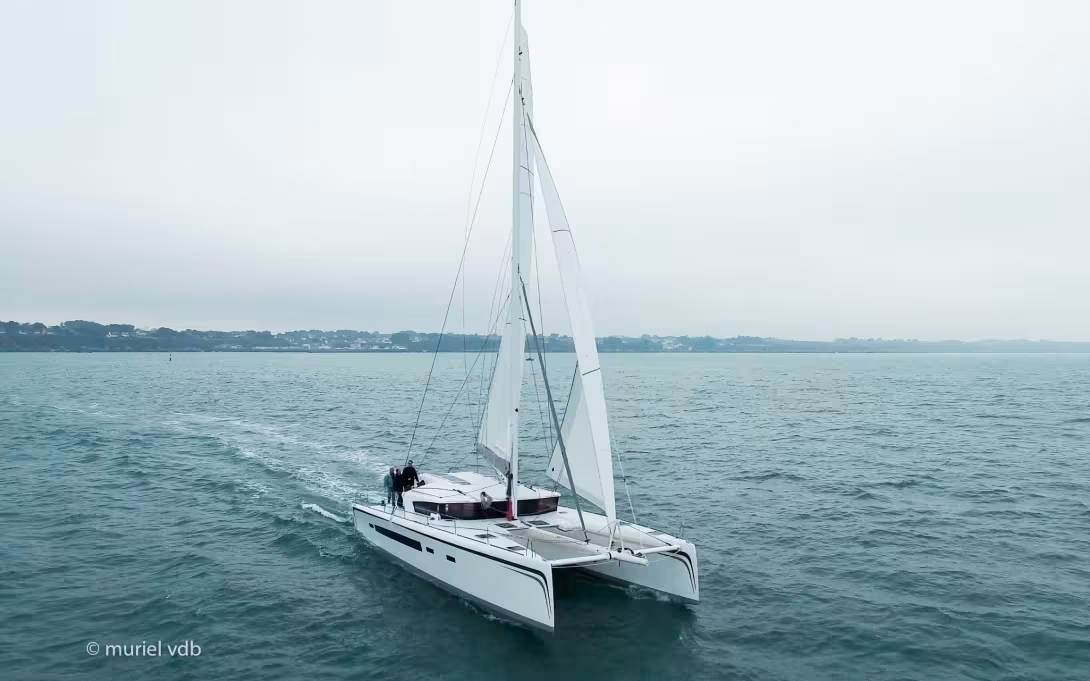
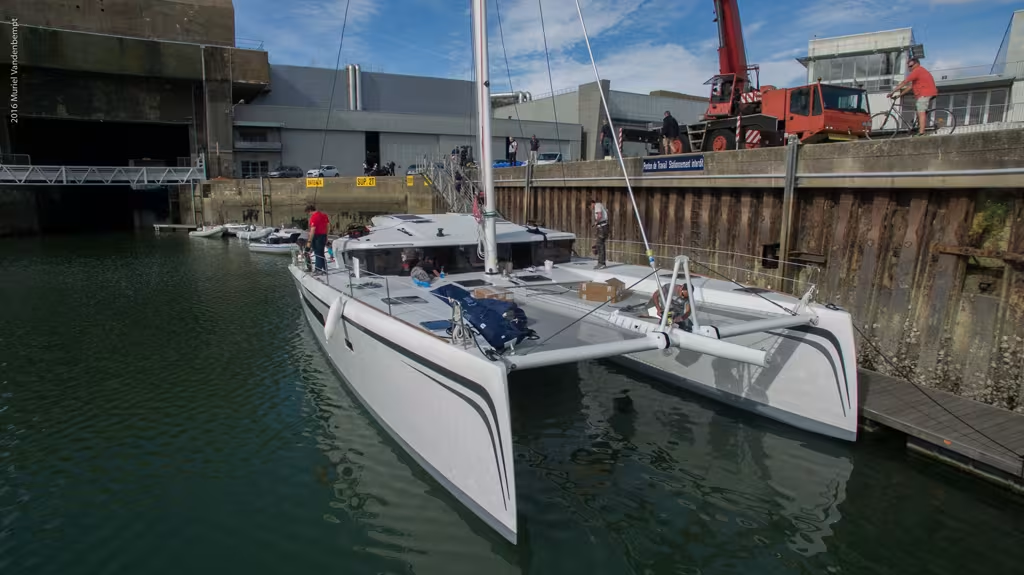
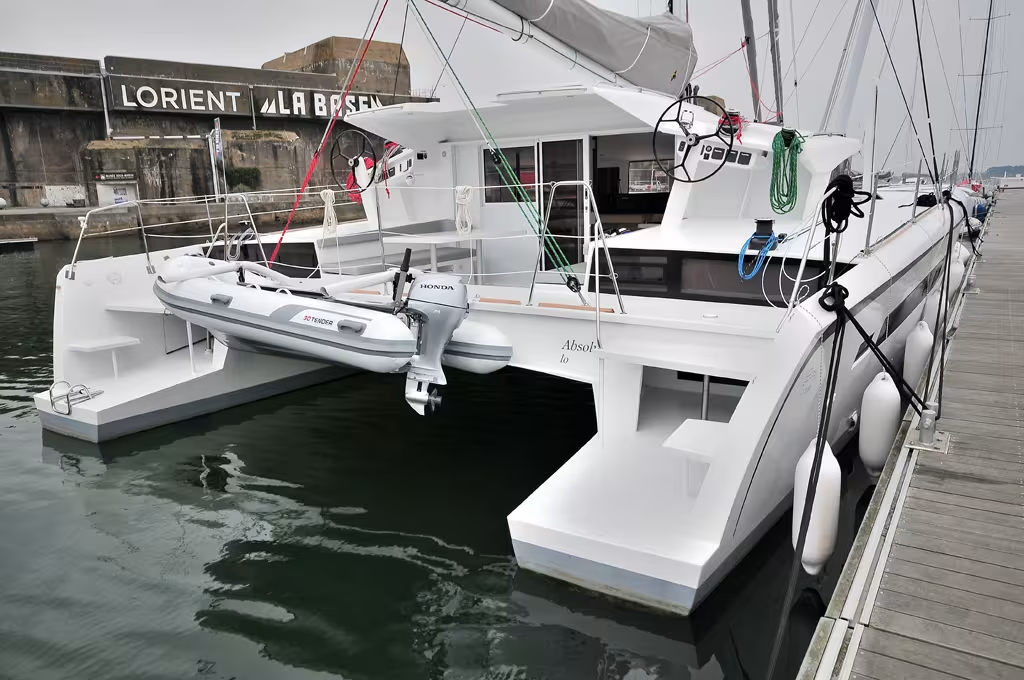
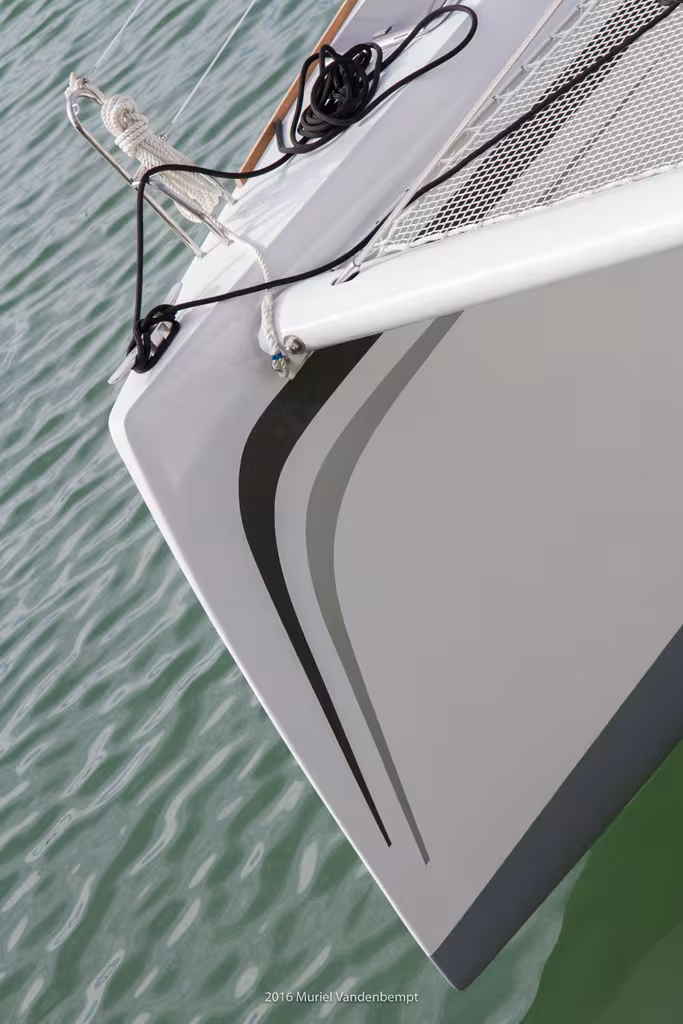
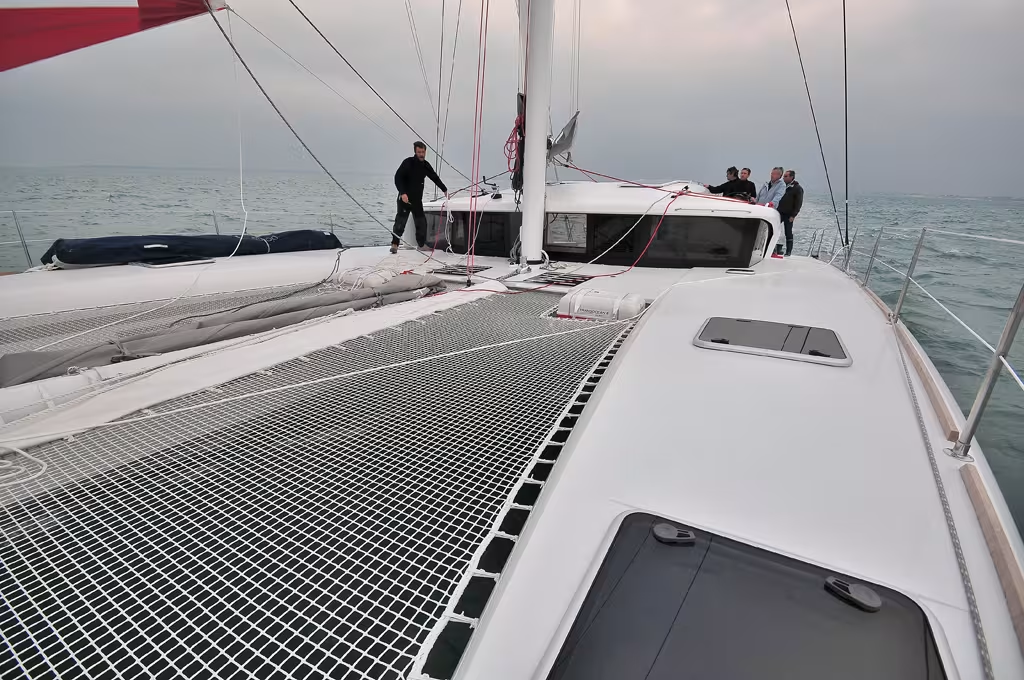
Eos has powerful, willing and original lines, and is firmly anchored in the line of the latest creations which distinguish Barreau’s work from all other production. The strong avant-garde design affirms the boat’s personality as an ocean thoroughbred with long legs. The high bows which are lightly inverted overhang stretched hulls, and the marked curve of the topsides graciously meets the rounded curve of the deck edge. The cutoff aft skillfully covers the extensions to the sugarscoops. As with all the architect’s recent designs, the coachroof and the mast step have been radically moved aft. The raised helm stations are nicely housed in a recess in the bimini edge. The sleek sailplan, carbon forward beam and compression beam and the mast without spreaders complete a direct, formal, sporty and elegant look.
Hydrodynamics and build
The construction uses the infusion technique (integral sandwich for the topsides-underwater hull with 80 kg/m³ high density PVC foam and multi-axial glass cloth). The tooling comprises a mold for the nacelle with internal half-hulls, two external half-hull molds, as well as a mold for the deck and another for the coachroof. Beneath, we can see the bridgedeck is well-clear of the sea with a small central, stiffening wave deflector. The bows are fine-entry, and the increasing volume is very progressive. The hull is stretched, with little rocker; the straight U-sections, forward, flare generously starting from midships to form a planing arch, aft. The deep elliptical rudder blades are not lifting. The yard established by Dominique Marsaudon (racing skipper of the 23 meter maxi catamaran Jean Stalaven), which has been taken over by his son Sam, remains strongly influenced by its surroundings (Lorient-La Base, in southern Brittany, which has become home to the technical side of offshore racing), by their production of racing boats (Idec 2, for example) and refits of racing multihulls. Rigorous work on weight reduction and the quality of composite production form part of the company DNA.
Layout: A laid back take on interior comfort
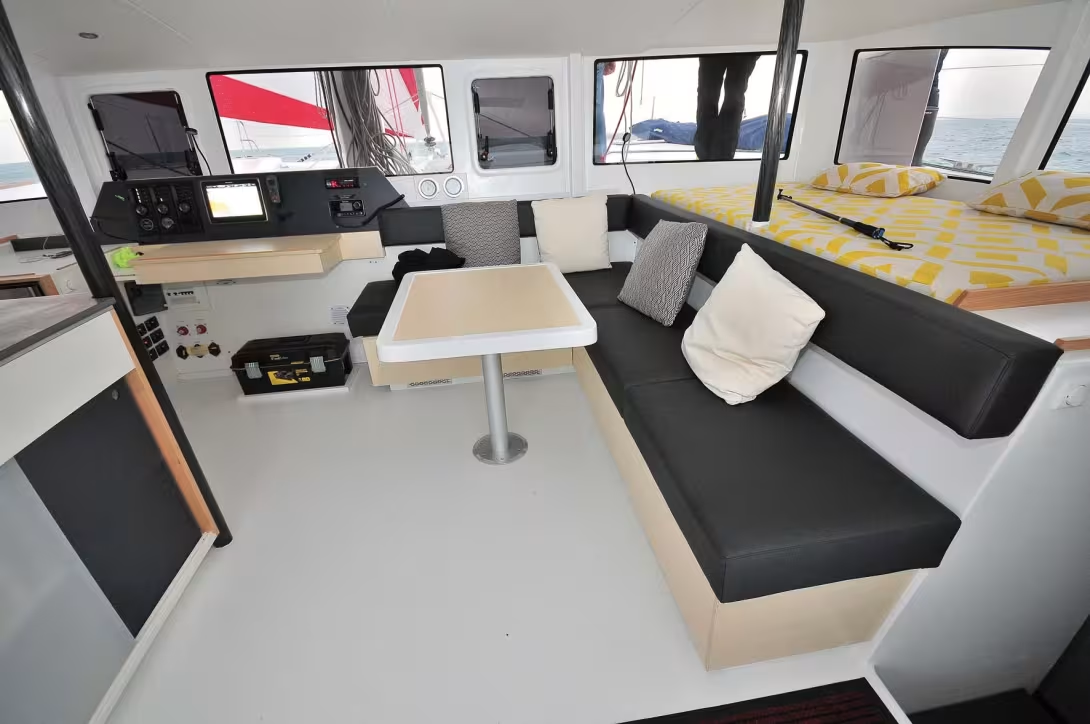
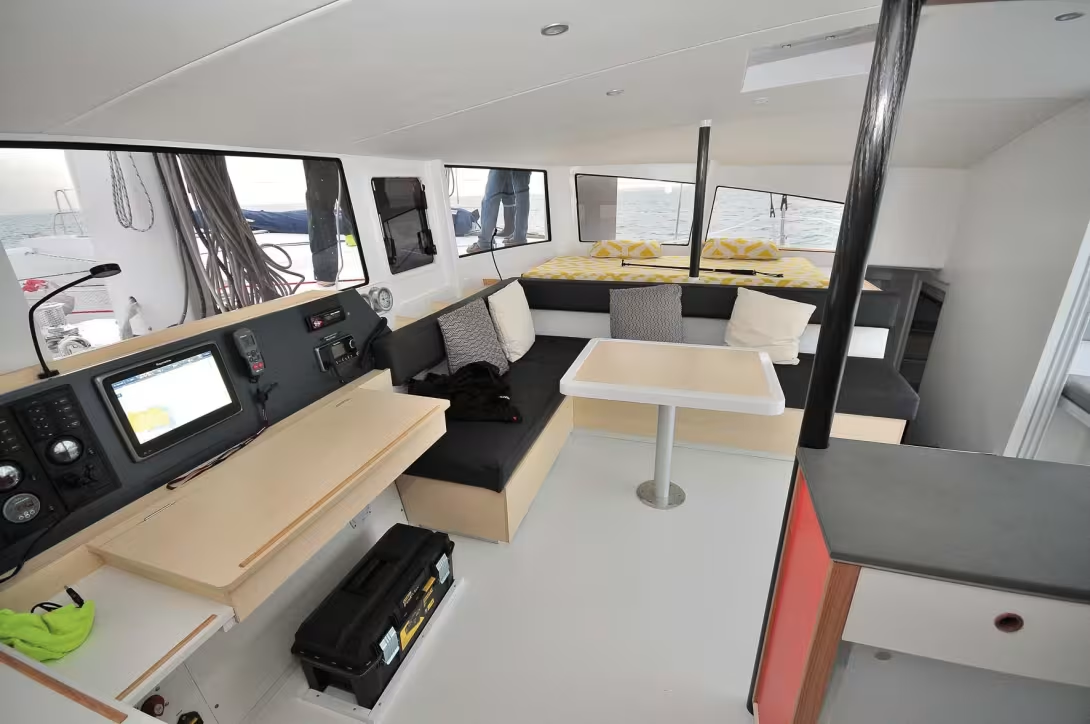
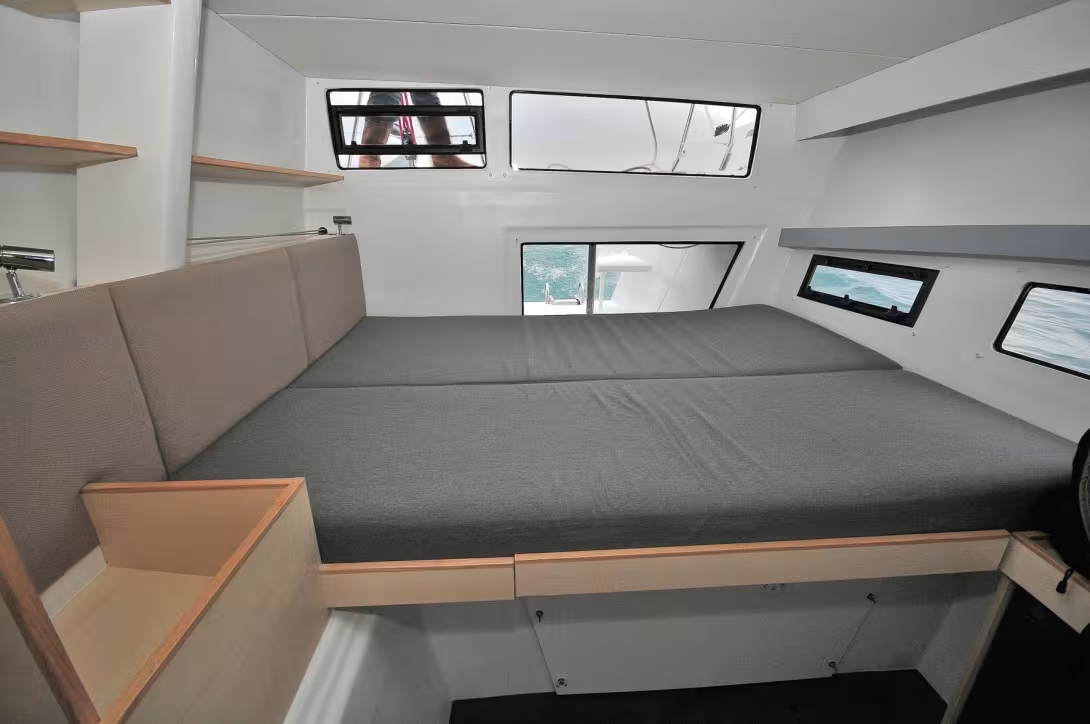
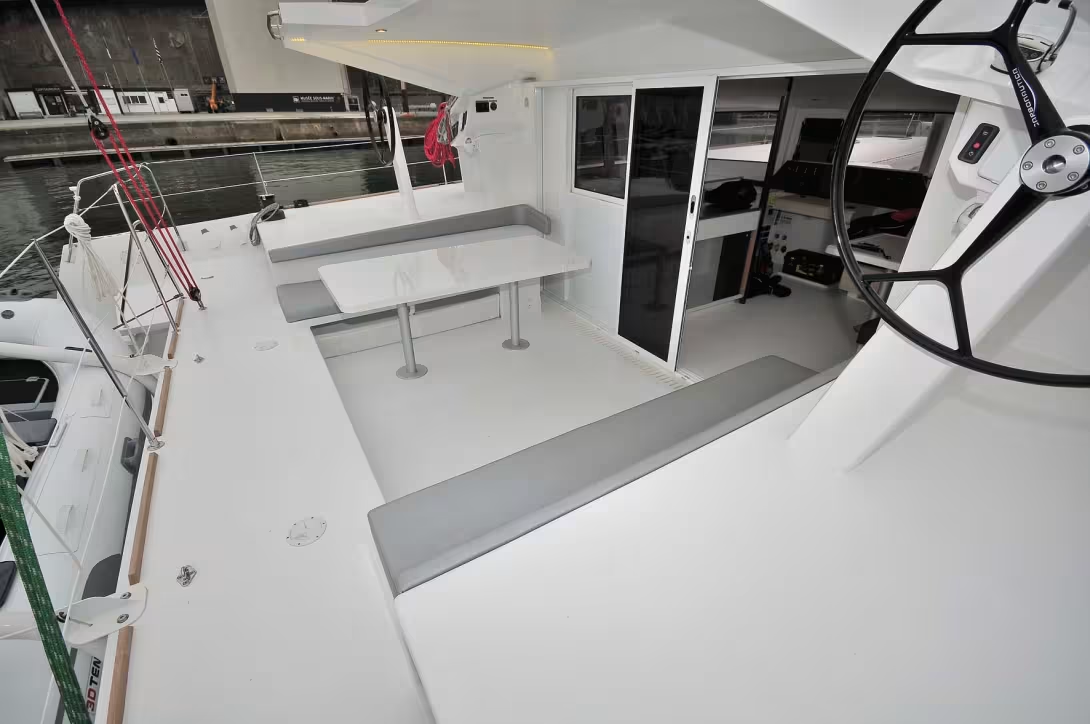
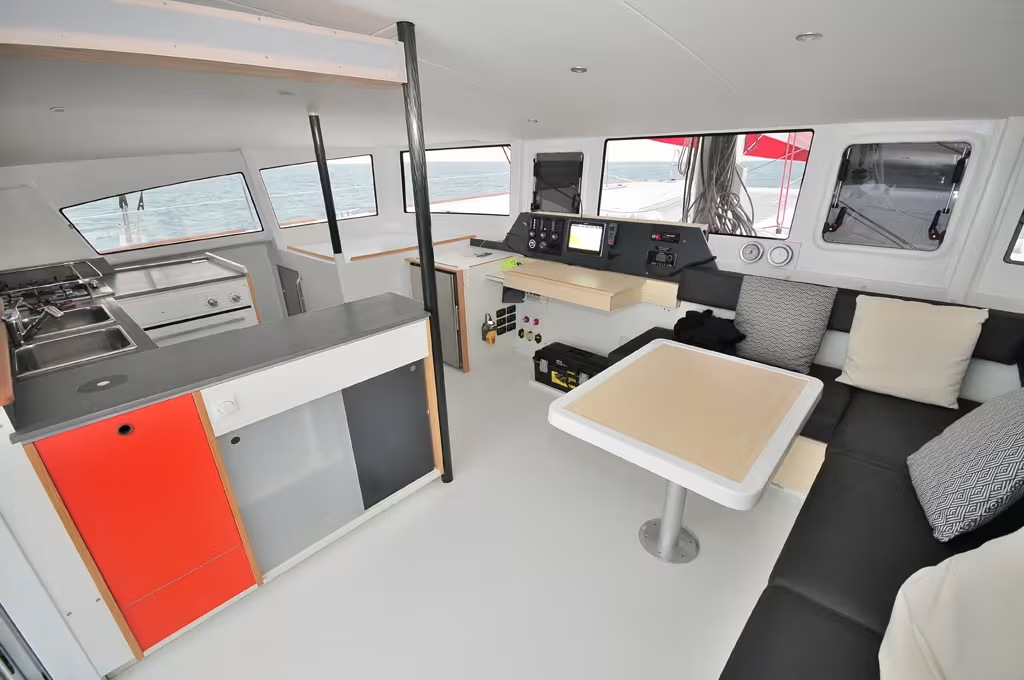
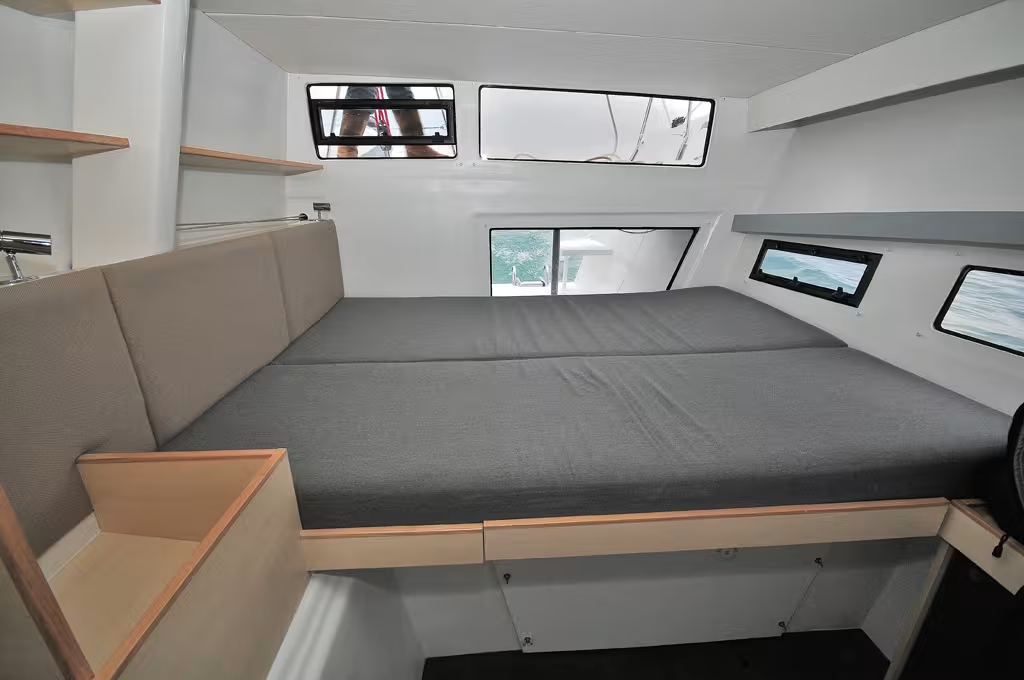
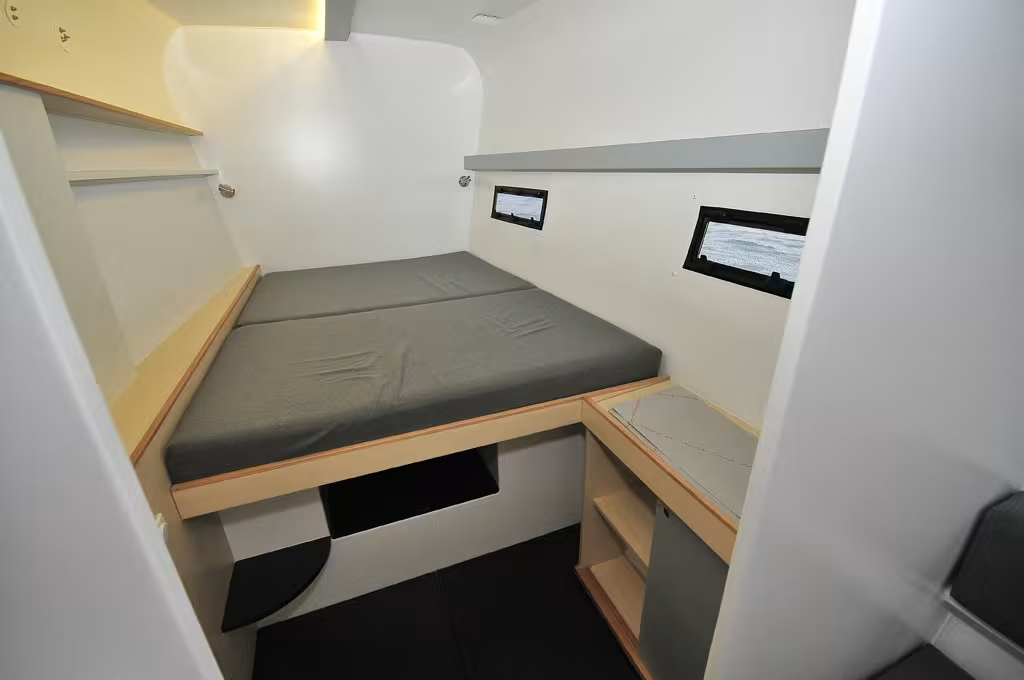
The model we tested was built for a specific, very personalized, program, since the owner (an experienced sailor) wanted to be able to make this boat available to knowledgeable charterers, as he had done previously with his Absolu 50. This charter version offers four double cabins plus crew cabin (forward, in the port bow) and two bunks in the starboard passageway. The interior designer Hervé Couedel has also drawn an owner’s version (three cabins plus crew). On the model that we tested, the interior décor had a minimalist style. This simplicity in no way detracts from the quality of life (on the contrary?), showing off the functional intelligence and clarity of the spaces. If required, it would be possible to modify or completely renew the look by simply changing the upholstery and the décor. This Feng Shui approach (literally wind and water!) allows for several hundred precious kilos to be saved, rationalizes life on board and simplifies maintenance. I’m all in favor! The large cockpit allows several fittings for movable tables which can be set outside or inside depending on the crew and the weather conditions. Ventilation of the deck saloon is boosted by two large opening panels forward and two hatches in the deck head as well as the sliding door. There is abundant light in the saloon thanks to nine polycarbonate panels. Exposure to the sun is minimized by a negative incline which prevents the interior from overheating. The famous couchette-bunk inherited from the TS 50 is fitted to starboard. Light and ventilation in the cabins has been dealt with in the same fashion, with multiple sources. The aft cabins offer a wide angle view of the wake. Quite remarkable! The simple and economic efficiency of the curtain system (blackout material with press studs) is very clever. The cleanliness of the composite fabrication has allowed for the removal of several headlinings, without compromising thermal and sound insulation, thanks to the sandwich construction.
Technical installation
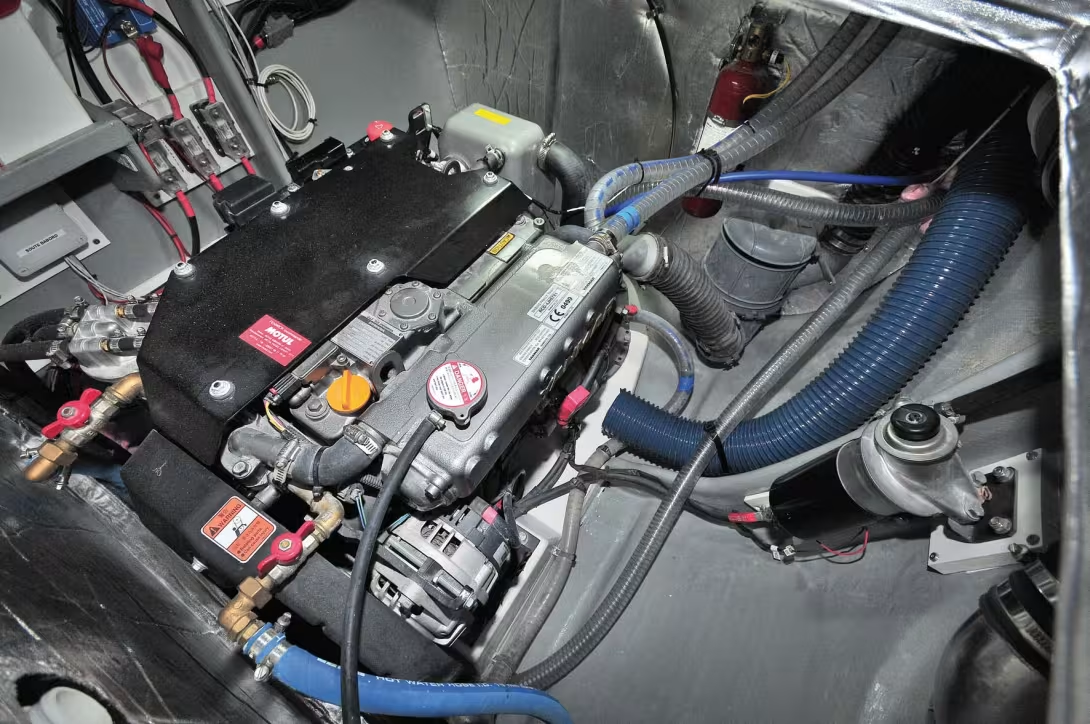
Contrary to many catamarans, the motors are not accessed from outside (this arrangement has ensured excellent lifespans for those on the Absolu 50s with the same setup). This means that they can be set further forward in the boat improving their ease of maintenance, thanks to two large removable panels (one above and one in the forward face of the bunks), while protecting the motors from any spray, which is inevitable with deck-hatch access. The 55hp Yanmar 4JH5CE motors are 2.2 liter, 4-cylinder, and weigh 241 kg with the saildrive transmission and consume around 6 liters/hour at 2,400 rpm at 8.5 knots (maximum 3,000 rpm)
Innovative helm stations
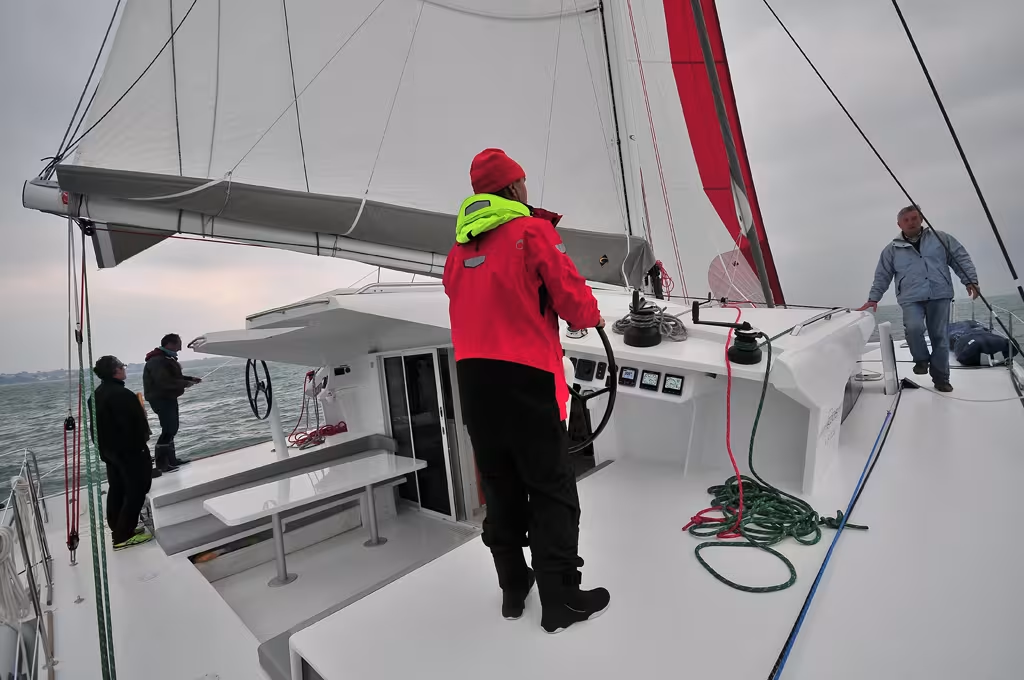
The Eos 54 is equipped with two helm stations with wheels on pedestals, positioned above the aft cabins. This strategic position offers multiple ergonomic advantages: perfect panoramic visibility, both under way and when maneuvering in port and a clear, understandable deck layout combined with safety of moving around, all of which help to keep the weight centered. The instrument panel is well-protected by the overhang of the coachroof, which also improves clarity and reduces glare. Eos number 1 still doesn’t have benches for leaning on, essential for safety: they will be fitted to later models. The fiber lines run inside the pedestal and a turning block sends them across the aft cabin (behind a rail) with a return onto the rigid section. It’s all therefore constantly visible for keeping an eye on, without any dismantling required. Neat idea!
Sea trial: the pleasure of slipping through the water
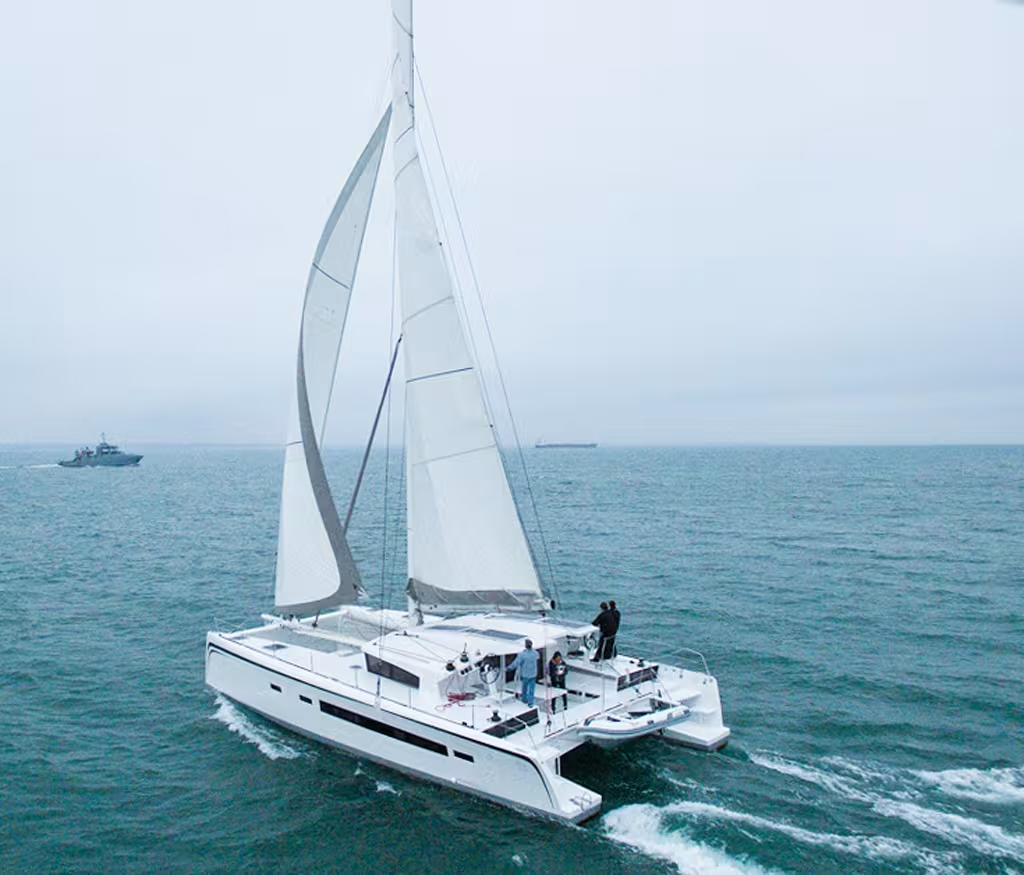
Following a nice, calm, cold night (this was late November), but deliciously comfortable inside, thanks to the heating and the effectiveness of the sandwich material, we set out from Lorient-La Base under beautiful cloudless skies and a moderate NE wind. Apart from the temperature (7-9°C), conditions for our test were ideal: the sea was smooth to slight, even though there was a slight chop because the northeast wind had been blowing for a few days. Our Eos 54 test boat had been the subject of some pertinent equipment modifications on the part of her enlightened owner: there was only one daggerboard well for example(!) I could see the sense in this non-conformist idea which took 250 kg off the all-up weight without major consequences for the anti-leeway plan (for this boat’s program). The forward beam and the carbon compression tube are an expensive option, but are ideal combined with the fixed carbon mast and fiber rigging (on a multihull things work together at a high level: matching and joining components together counts for more than superior performance between one component and another). Hoisting the mainsail is carried out manually with a winch, which is sadly under-sized, but a more powerful electric one can take over for better sail handling and reefing for a family crew. We set off under full main (101m²) and furling genoa and immediately picked up speed with impressive ease. In the channel between the Ile de Groix and the mainland, with 15-18 knots of true wind, the log was permanently showing over 10 knots and generally between 11 and 15, reaching. Remarkable! We were making the most of all the sails (by Europ Sails) for our test. It was time to hoist the asymmetric spi. Well-shouldered, but tolerant and super-stable, the cut of this beautiful sail is ideal for a sport/cruising program: it is easy to use in a breeze, with a very open leading edge. Its performance (as with the other three sails we tested) is excellent. On a close reach on a starboard tack, I really enjoyed playing with the boat through the wavelets (with NE 18-22 knots true). The behavior of the Eos was great for a comfortable cruising catamaran. She regularly slipped through the water, without slamming, accelerating nicely in every gust. With well-shaped volumes aft, the bows lift and cause no drag. The stretched hulls and the absence of any marked rocker make for real easy sailing in these consistent medium airs, and the log hovered between 15 and 18 knots (with the Navionics plotter showing a light current against us)! The hulls have a delicate touch on the water and the transfer of weight to leeward doesn’t affect the wake, despite the sail plan being loaded up: a manifest sign of the effectiveness of the lift generated by the hull and of weight being kept under control. The lateral and longitudinal balance is excellent, and the Eos seems almost immune to rolling and pitching. The helm feels fun and precise with very little movement of the wheel required for heading corrections and gives an enjoyable contact with the rudder blades. The wakes are superb and show that at these speeds (already high), the “chassis” is purring along peacefully. There’s clearly more available “under the hood” and a range of 20-25 knots would likely be within reach in certain conditions. I liked the location of the helm stations, elevated behind the protection of the coachroof. They allowed for sporty pilotage of the boat, and you have ideal visibility over the bows. We generally stayed to the north of Groix in a strengthening wind, and we hoisted the staysail on its removable forestay. Under a well-eased, full main and staysail, with gusts now over 30 knots apparent, the boat behaved perfectly. With one reef and staysail, she was more balanced and was carrying the right canvas for the weather. Six tacks later, we were off the entrance, having made the most of a fairly free point of sail to picnic comfortably inside. The single daggerboard gives good performance, being alternatively to windward or to leeward, but giving no perceptible difference in terms of behavior - a good sign.
Conclusion
This cruising catamaran is not a rival for a TS 50 or 52 (let alone the forthcoming TS5) which are mad machines with hair-raising performance, but they do share some of the same DNA and liveliness. The Eos offers a rare combination of habitable space and performance, and combines the feel of a fast multihull with a program of family cruising. If she is kept light and is driven well, she would offer a lot of enjoyment to the right crew. I was struck by the quality of her passage through the water and by the balance of this agile platform. Eos is the goddess of the dawn, and no doubt she will radiate on this modern and successful catamaran.
Technical specifications
-
Architect: Christophe Barreau
-
Builder: Marsaudon Composites
-
Designers: Pierre Henri Barbé/Pascal Hauet
-
Interior Design: Hervé Couedel / Anne Goasguen
-
Light displacement: 12.5t
-
Laden displacement: 14t
-
Maximum displacement: 16.1t
-
Length: 16.45m
-
Beam: 8.48m
-
Beam: 3.05m
-
Air draft: 24.70m
-
Righting moment: 49 tonnes/meter
-
Mainsail area: 101m²
-
Furling solent: 64.5m²
-
Staysail on furler: 24m²
-
Asymmetric fractional spinnaker: 185m²
-
Mast head spi: 230m²
-
Mast length: 22.70m (rake 2°)
-
Motors: 2x55hp, saildrive transmissions
-
Diesel: 2x200L
-
Water: 2x400L
-
Price ex-tax: €999,500
-
Options in € ex-tax:
Fixed 22.80m carbon mast (bare weight 260kg) with fiber rigging: 61,315
Staysail on furler: 8,148
Carbon cross (forward beam and compression beam): 29,200
Watt and Sea generator on transom (600W): 7,214
Solar panels (400W) on davits: 3,150
Up side Up sail-releasing system: Version “Easy”: 3,950 - version “Medium”: 9,960
PLUSES
-
balance in a choppy sea
-
dynamic stability of the platform (very limited rolling and pitching)
-
high potential speeds
-
the ergonomics and philosophy of the interior layout
MINUSES
-
lack of electric winches, and under-sized manual winches
-
German sheeting for the main (puts load on the gooseneck)
-
lifting daggerboards, but fixed rudders
1: The 22.70 meter mast allows a 101m² mainsail to be carried, this version with a fixed mast without spreaders is particularly fluid and elegant
2: The 24m² staysail on its removable stay is efficient in a breeze: it makes the boat easy to handle combined with a single- or double-reefed main, and saves the genoa from becoming deformed when partially furled. It is secured to the carbon compression beam
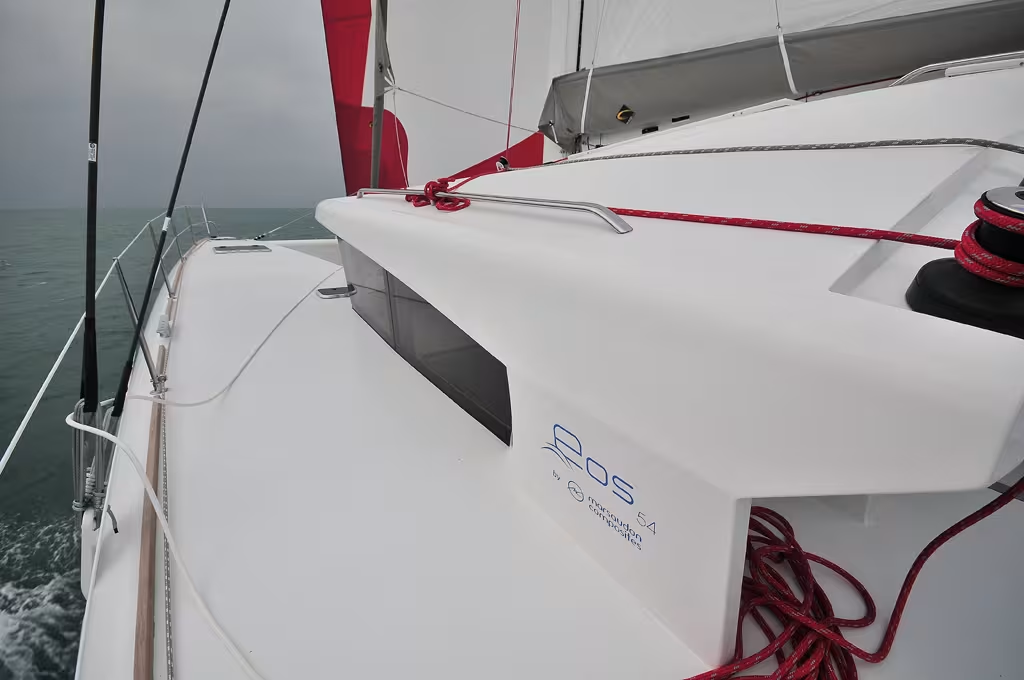
3: The coachroof, set aft, reduces pitching and significantly helps the overall balance of the platform and its agility in a big sea
4: The wake is incredibly clean, really showing off the boatspeed
5: With the mast stepped further aft, pitching is reduced and this significantly contributes to the balance of the platform and its agility in a choppy sea
6: The characteristic behavior of the Eos 54: her forward volumes lift, putting her in a balanced position and she remains almost immune to pitching
7: The location of the helm stations in the “shoulders” of the fixed bimini offer a great driving position with perfect visibility
8: On our test boat, there was only one daggerboard well, thus gaining 250 kg of weight for little effect on the anti-leeway system for the intended type of use
9: The slightly inverted stems overhang very fine-entry bows, with the increasing volume being extremely progressive as you move aft, contributing to a gentle movement at sea
10: The windshield offers excellent overhead protection, and the vertical elements are a simple shape which would be easy to replace (something not always taken into account)