
As the third model in the range, the Excess 11 is undeniably something completely new for 2020: firstly because she’s aiming at a market that’s been abandoned for a few years, that of cruising catamarans under 40 feet, and secondly because she’s not built in a mold borrowed from a Lagoon.
Infos pratiques
- Le chantier : Excess 11
- La fiche technique
-
 Découvrez notre vidéo exclusive
- Financez votre Excess 11
- Assuez votre Excess 11
- Articles autour du Excess 11
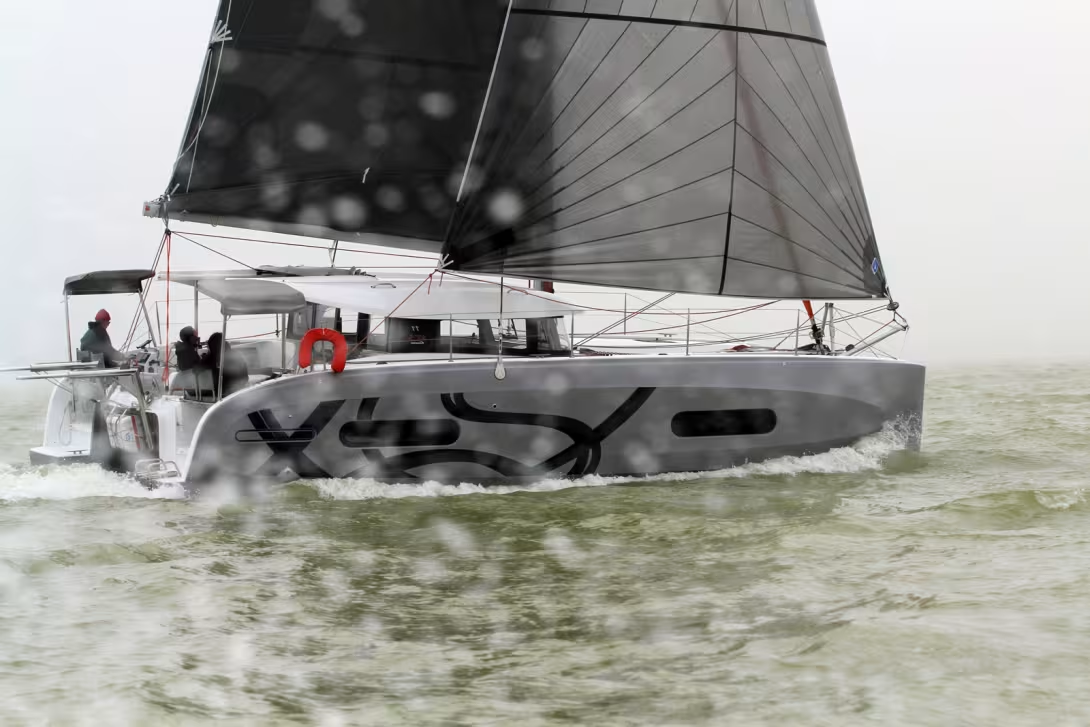
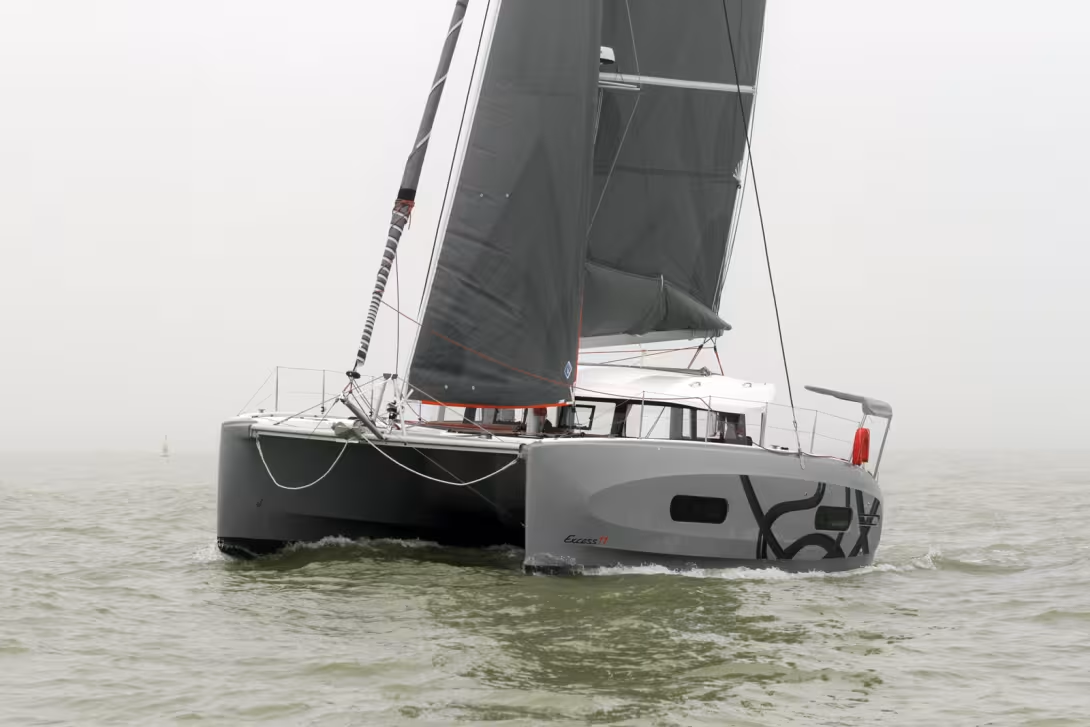
A new and very exciting catamaran to take out for a test sail, but the weather is not entirely suitable, with visibility of less than 200m (650’) waiting for us mid-March off La Rochelle, on France’s Atlantic coast. But this is the price to pay for an exclusive test... At least the morning rain went inland and the wind picked up to around fifteen knots - perfect for the sailor (and heartbreaking for the photographer, but I did what I could). Seen from the dock, the Excess 11 clearly differs from her elders by more-ribbed hulls, a shorter coachroof and above all the mast, which sits on the deck. The yard, in spite of the construction standards which impose generous sampling (40% more weight for the structure compared to a Lagoon 380), managed to keep the weight under control thanks to the deck and coachroof made by injection molding, but also by implementing industrial processes which limit connections and doubling of panels. The saloon module, for example, incorporates the wardrobe from the owner's cabin, and fits into the hulls.
Reputable performance!
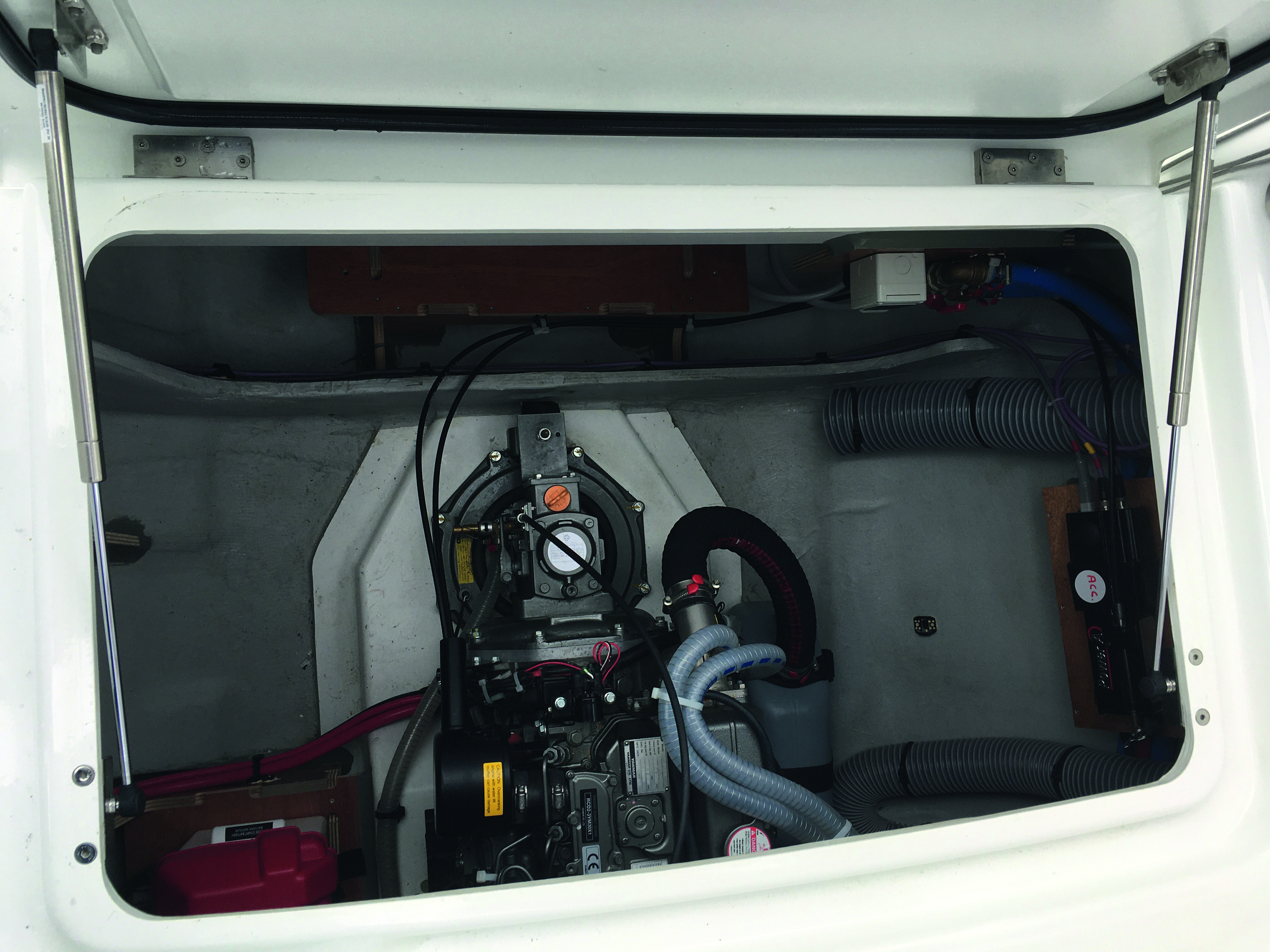
The two 29 hp engines are well-suited to the displacement of this catamaran - 9 tones, lightship. No difficulty when maneuvering in port, a respectable cruising speed of 6.8 knots and well-soundproofed, even in the aft cabins. As standard, the yard offers a 200-liter (53 US gal) diesel tank. A second one can be ordered as an option.
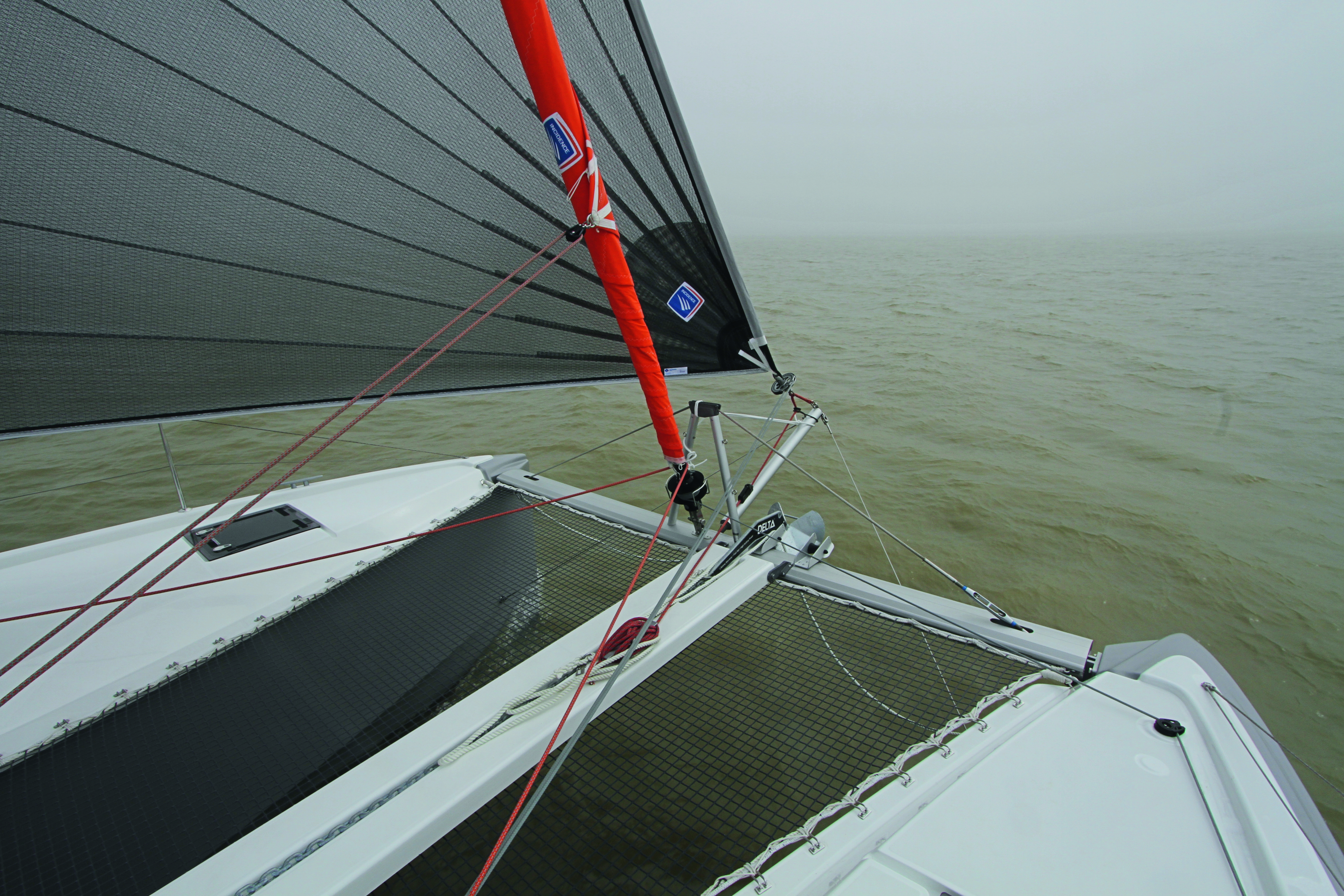
Hoisting a 60 m² (645 sq ft) mainsail - we have the Pulse Line version of the boat - is easy, unfurling the self-tacking jib is even easier: in just a few minutes, we’re under sail. Upwind, the 11 maintains a heading of 50 to 55° and is sailing at nearly 7 knots in only 12 knots of wind. Obviously, the relatively short hulls are much more sensitive to sea state than, say, a 50-foot platform, but the fun of helming motivates us to try and negotiate the waves as well as possible and maintain a good laminar flow with the solent telltales. You can unfurl the gennaker as high as 65/70° off the wind in light-enough airs: these are the conditions which promise, according to VPLP's polars, excellent performance: 9.2 knots at 75° to a 12-knot wind. The minimum angle increases of course as the breeze is more consistent. With 14 knots of wind, this 62 m² (670 sq ft) sail can be rolled out from 110°. The speed increases significantly - a gain of 1.5 knots - but the difference in speed is less obvious than on board the Excess 12 and 15. It should be noted that our Pulse Line version offers 8 m² (86 sq ft) more sail area upwind and that our test boat is fitted with folding propellers.
Twin helm stations and an opening bimini
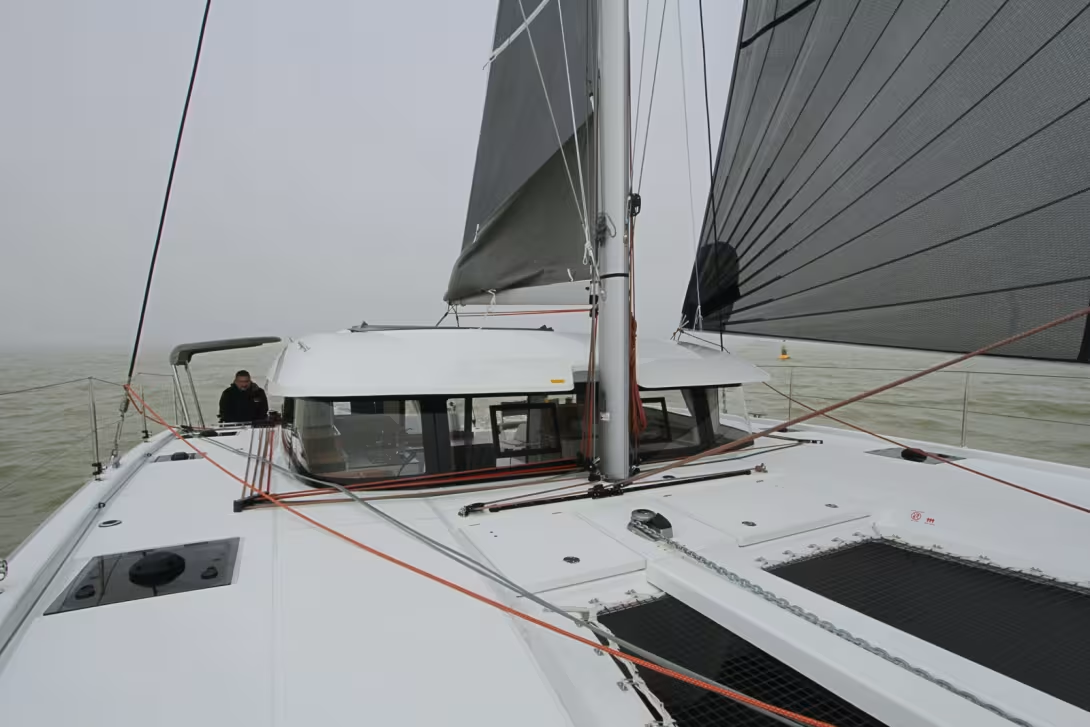
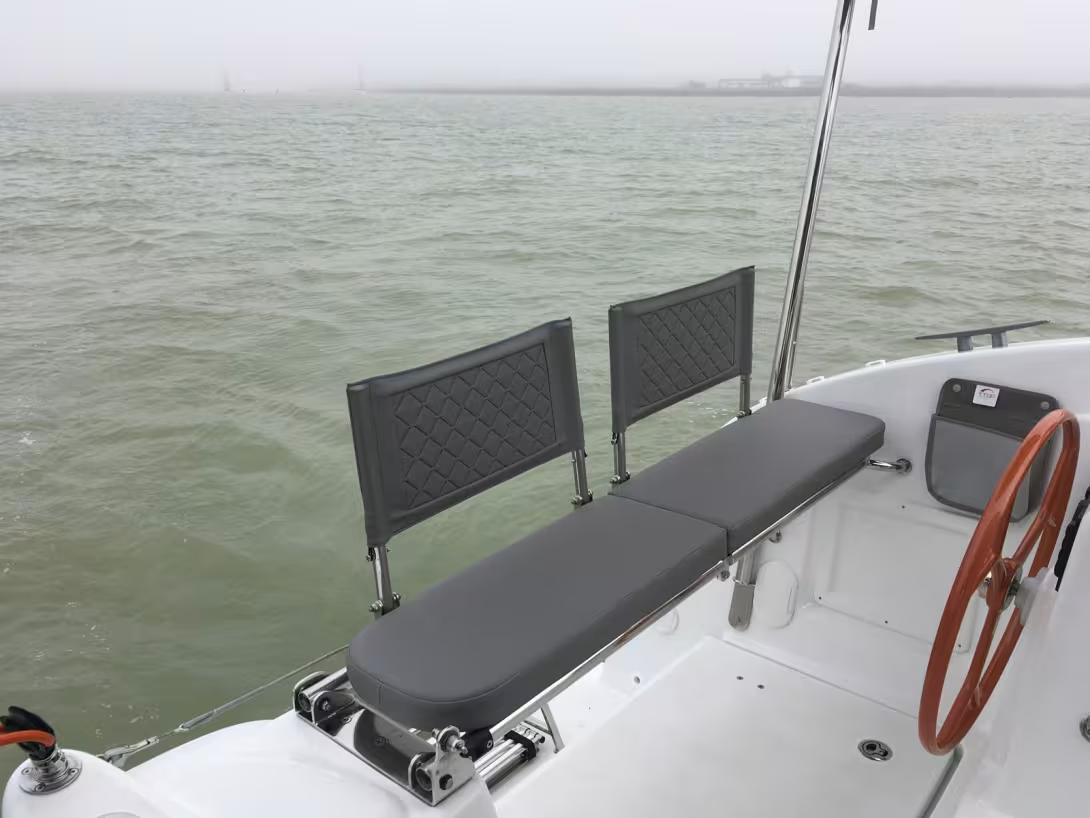
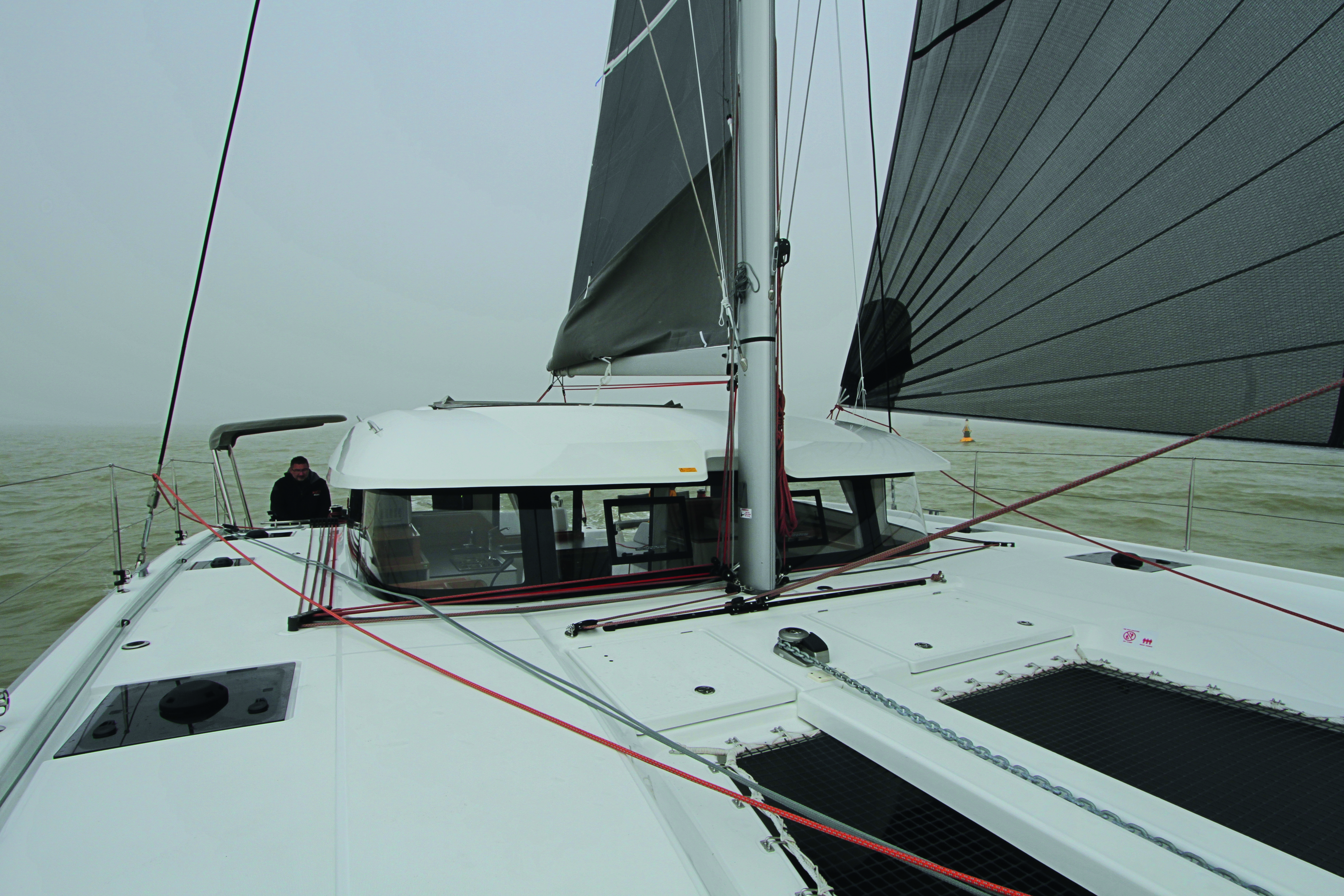
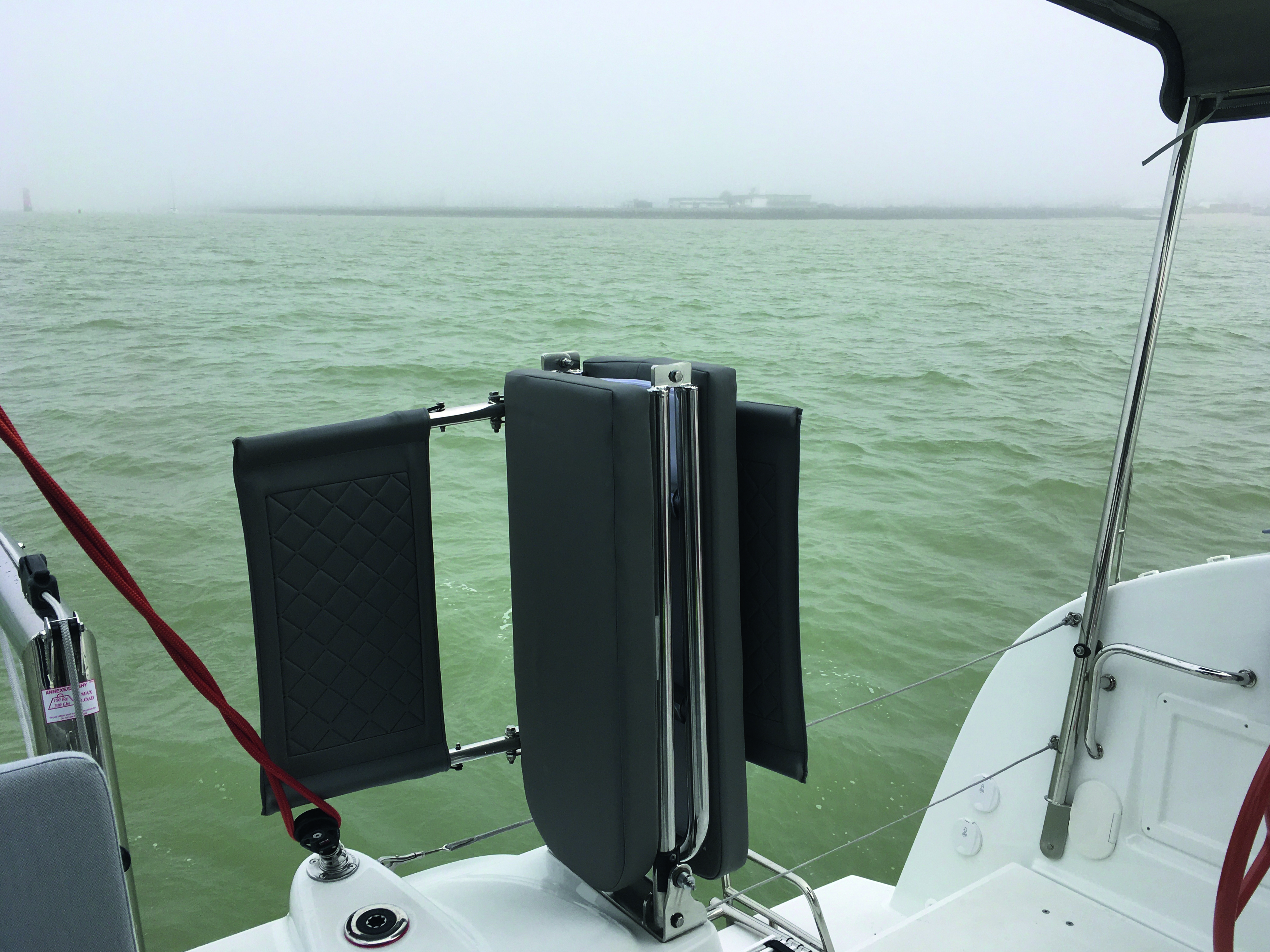
On board, the cockpit understandably looks cozy compared to catamarans of 40 feet and over. But everything is there: a 109 by 76 cm (43 x 30”) table capable of accommodating 4 people (or 6 to 7 using stools), two additional large bench seats, well laid out sugarscoops, and of course the twin helm stations (70 cm / 28” diameter wheels), now an Excess trademark. All sailing maneuvers are concentrated on the starboard side, except for the gennaker halyard and the first reef – at the port helm station. Each line has a distinct pattern while maintaining an overall harmony of color. Subtle, elegant, but not so easy to remember - at least for me! The double folding helm seat, identical to the one on the Excess 12, is clever but deserves more effort in the finish. The famous “Targa sunroof” in the bimini is also to be seen here - quite a find. The work carried out on the coachroof's glazing ensures excellent visibility from either helm station to the opposite hull. Circulation to the forward sunbathing area and the large trampolines (the port one is wider than its neighbor, because the anchor chain lead is off-center) is easy; access to the coachroof (very slippery at the forward end and sides) is provided by folding mast steps.
Compact but functional
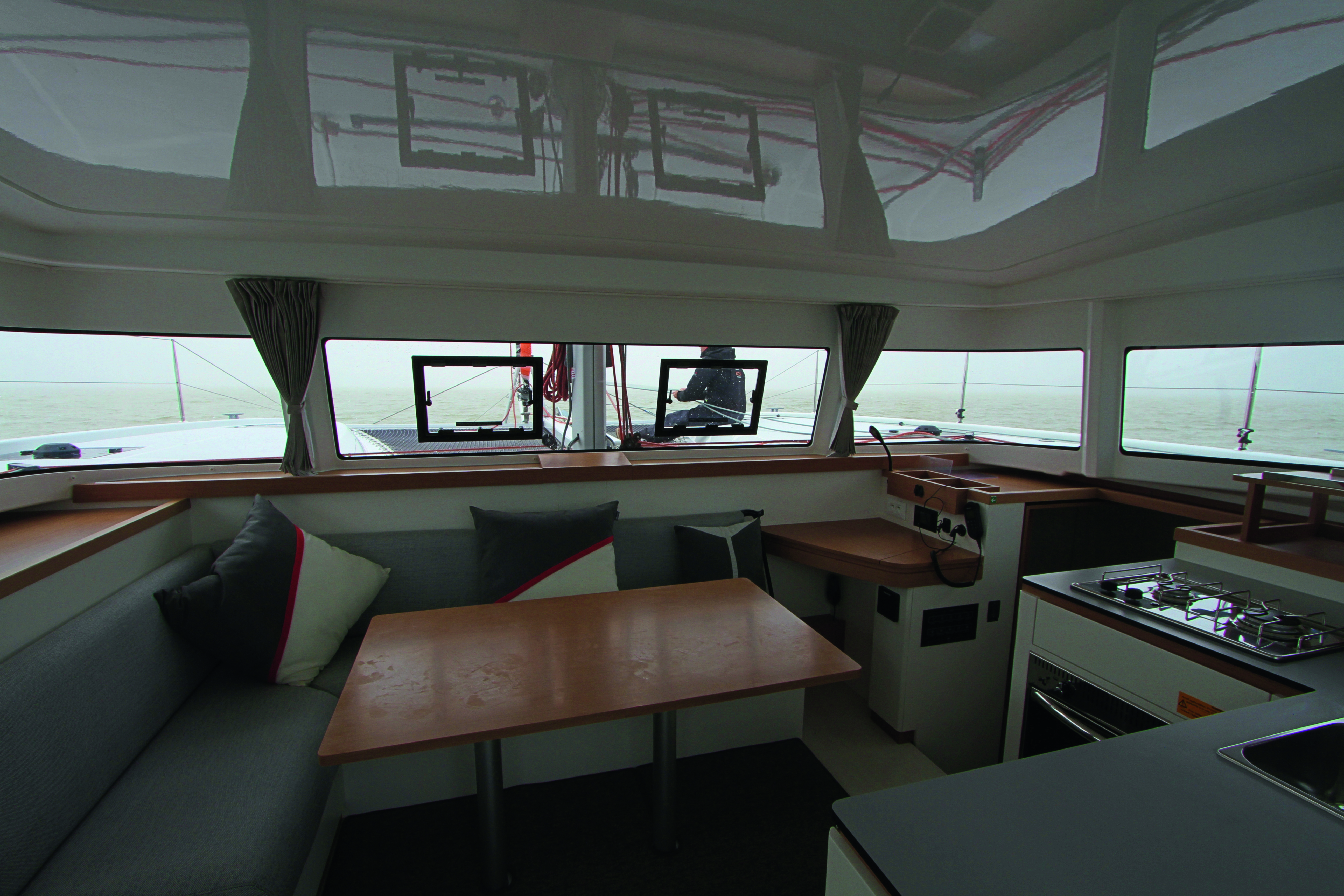
The saloon is accessed through a 1.82m by 76cm (6’ x 30”) sliding door. This size is well below the dimensions offered by Bali, for example, but in no way hinders the ease of movement between the cockpit and the interior. And inside, a comfortable headroom of 2.09m (6’10”) is to be found.
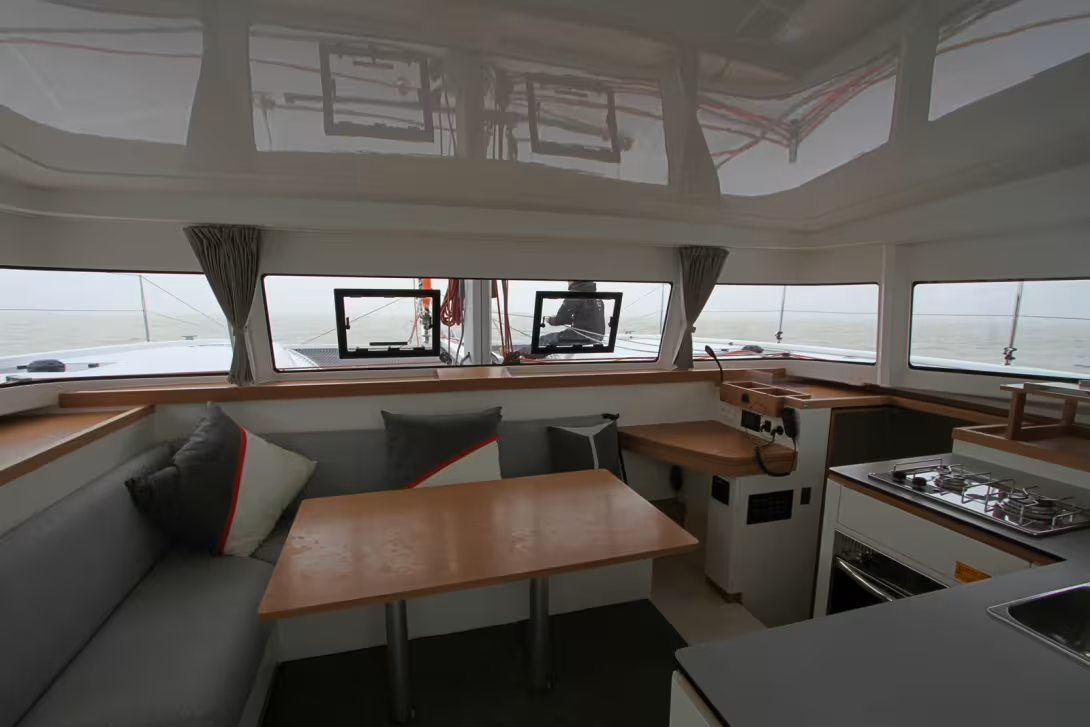
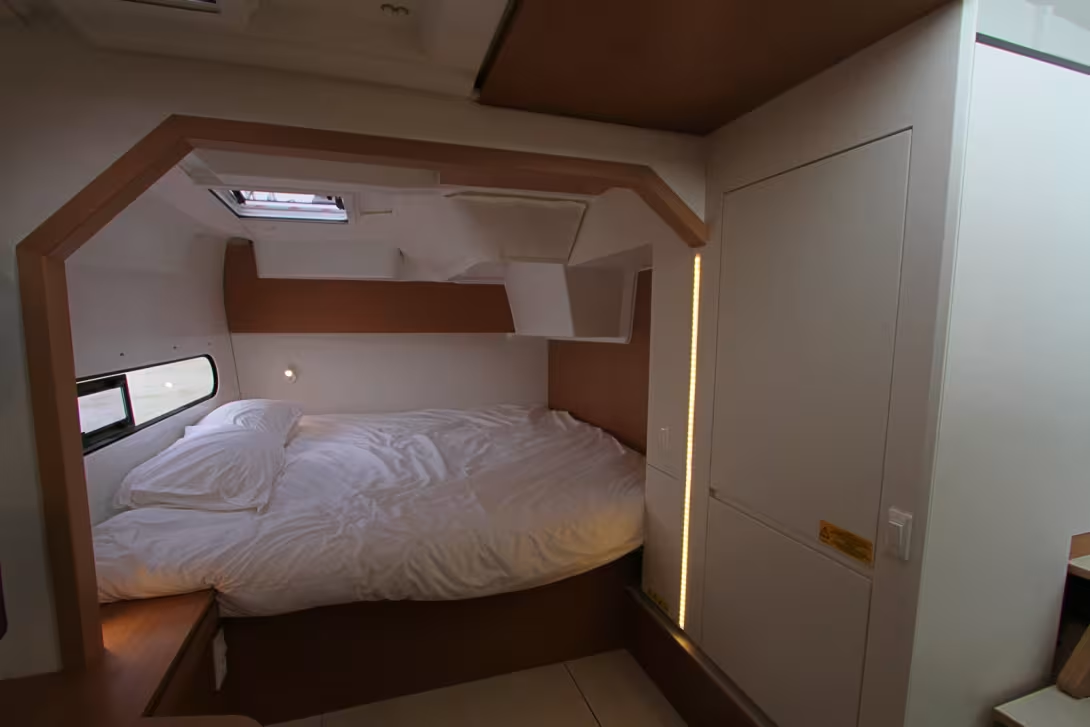
Like the cockpit, the saloon has limited floor area: early on, we found one crew member quickly getting in the way of another. But honestly, it's easy to get used to. As is the L-shaped galley on the cockpit side, the saloon table (124 x 73cm / 49 x 29”) and the small 69cm / 27” wide chart table, which is oriented athwartships. The large windows offer a 360° view. All in all, it would be difficult to do better in such a deliberately restricted volume. Let's remind ourselves here that the Excess 11 is only 38 feet long! A figure that’s easily forgotten as soon as you enter the hulls: admittedly, to port, the cabins share a heads compartment, but the berths are wide: 1.60m (5’3”) aft (set athwartships) and 1.80m (5’11”) forward. A lot of storage space is provided, with in particular very large lockers beneath the mattresses. The doorways are all over 45cm (18”) wide and ventilation is provided by two opening hatches. To starboard, the hull dedicated to the owner offers a large 2 x 2m (6’7”x 6’7”) bed, a desk and a huge bathroom.
Conclusion
The arrival of this new model is great news for the Excess brand, which is now freeing itself from the existing Lagoon tooling: this 11 is a model with no pre-existing constraints, which has allowed the architects and designers to raise the bar a little further towards performance. The launch of the Excess 11 is also a strong message for the cruising multihull market: Yes, you can sail comfortably aboard a catamaran under 40 feet in length! Let's bet that this Excess 11 will be worthy to take over from two iconic 38-foot models, the Athena 38 and of course the Lagoon 380.
Technical specifications:
Builder: Excess Catamarans
Architect: VPLP
Exterior design: Patrick Le Quément
Interior design: Nauta Design
Overall length: 11.33 m (37’2”)
Waterline length: 11.06 m (36’3”)
Beam: 6.59 m (21’7”)
Draft: 1.15 m (3’9”)
Standard air draft: 17.27 m (56’8”)
Displacement: 9 t (19,840 lbs)
Sail area (Standard/Pulse Line): 77/85 m² (830/915 sq ft)
Mainsail: 55/60 m² (590/645 sq ft)
Self-tacking jib: 22/25 m² (235/270 sq ft)
Code 0: 54/62 m² (580/665 sq ft)
Asymmetrical spinnaker: 110 m² (1,185 sq ft)
Engines: 2 x 29 hp
Fuel: 200 or 2 x 200 l (53 or 2 x 53 US gal)
Water: 300 l (79 US gal)
Cabins: 3 or 4
CE Category: A8 B12 C16 D20
Price: € 235,000 ex-tax
Price of the boat we tested: € 343,021 ex-tax
Principal options ex-tax:
Sail Away Pack: € 11,050
Pulse Line Version: € 13,838
Additional cost for electric winch 40.2 starboard aft instead of standard: € 2,950
Code 0 hardware with pole and furler: € 4,115
Code 0 in Mylar standard sailplan: € 6,306
Code 0 in Mylar Pulse Line: € 7,006
Raymarine electronics pack: €2,116
Opening fabric roof: € 2,021
2nd port helm seat: €2,850
Cockpit sole and sugarscoops in teak: € 4,650
Stainless steel davits: € 2,699
Pulpit and composite seat forward with guardwires: € 859
2.60m (8’6”) folding carbon passerelle with cover + 2 deck sockets: € 2,750
Electric engine controls at the helm stations: € 8,854
Three-blade folding propellers: € 2,387
12V 60 l/h (15 US gal/h) watermaker: € 12,125
AGM batteries instead of standard acid batteries: € 729
2kVA 12/230 V inverter: € 2,850
Solar panels on davits (4 X 120 W): € 9,340
CL290 tender pack with Yamaha 6 hp outboard: € 7,220
Plusses
Convincing performance
Targa Bimini
Ease of handling
Minuses
Folding helm seat finish could be perfected
Slippery forward and side edges of the coachroof
