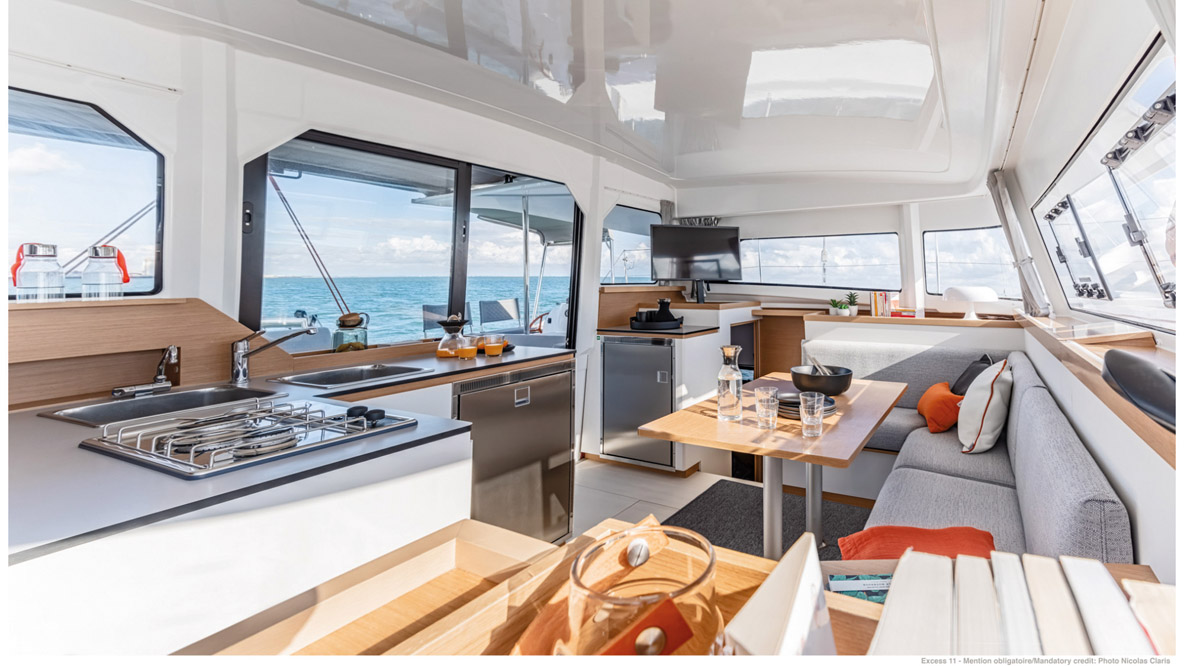
We already tested the Excess 11 over 4 years ago now... but in the meantime, the smallest catamaran from the big manufacturers has established its place on its market, with well over 200 units delivered. This year, this much-loved model is now equipped with an overlapping genoa in place of the previous self-tacking jib. We sent our professional tester Brieuc Maisonneuve to take stock of this evolution - an opportunity to rediscover the smallest model in the Excess range...
Infos pratiques
- Le chantier : Excess 11
- La fiche technique
-
 Découvrez notre vidéo exclusive
- Financez votre Excess 11
- Assuez votre Excess 11
- Articles autour du Excess 11
Conditions: v8 to 10 knots of wind, big residual swell
Conditions were gloomy in the Vendée region, where the first low pressure systems of the autumn had been rolling in for several weeks. Finding a weather window to test the Excess 11 equipped with an overlapping genoa proved to be quite a challenge. The day before, Claire, the brand’s marketing manager, offered me a short afternoon slot between two fronts. A quick glance at the forecast made me hesitate a little: was the Excess team reckless or confident? Testing a cruising catamaran, even a lighter and better-canvassed one, is a real challenge with less than ten knots of wind and a heavy residual swell!
When I arrived in Les Sables-d’Olonne, the drizzle and grey skies typical of this time of year did little to lighten the mood. Only the excitement over the imminent start of the Vendée Globe round the world race, scheduled for two weeks later, could break the melancholy of this out-of-season seaside resort.
Requested by the Clientele: A More Dynamic Catamaran
I was greeted by Théo, European Sales Manager, a sturdy guy with boundless energy! He is very enthusiastic about the performance of this new version: according to him, comparative tests with the self-tacking jib have left no doubt as to the superiority of the overlapping genoa. Points higher, sails faster...
We were joined in a small bistro by Hervé Piveteau, Excess Product Manager, who shares his young colleague’s enthusiasm for the catamaran’s performance. Hervé, a former racer who won the 2007 Mini- Transat, explained the origins of this evolution in the catalog. The Excess 11 is undoubtedly a great success: over 240 units have been sold and produced in four years, and the order book remains full despite a generally sluggish market for new boats. This is the first Excess to be designed using molds exclusive to the brand, and VPLP has risen to the challenge. Designing the smallest mass-produced catamaran on the market, while ensuring aesthetics, comfort, ergonomics and performance, was no mean feat. Of course, VPLP had already designed the best-selling Lagoon 380, but for the Excess, they also had to guarantee performance and pleasure under sail, the brand’s DNA.
Initially, the self-tacking jib was chosen to satisfy charter fleets, attracted by its ease of use. But with the model’s success, many more demanding owners expressed the wish for a more dynamic multihull in the spirit of the famous 380. The manufacturer already offered a Pulse Line version with a taller mast.
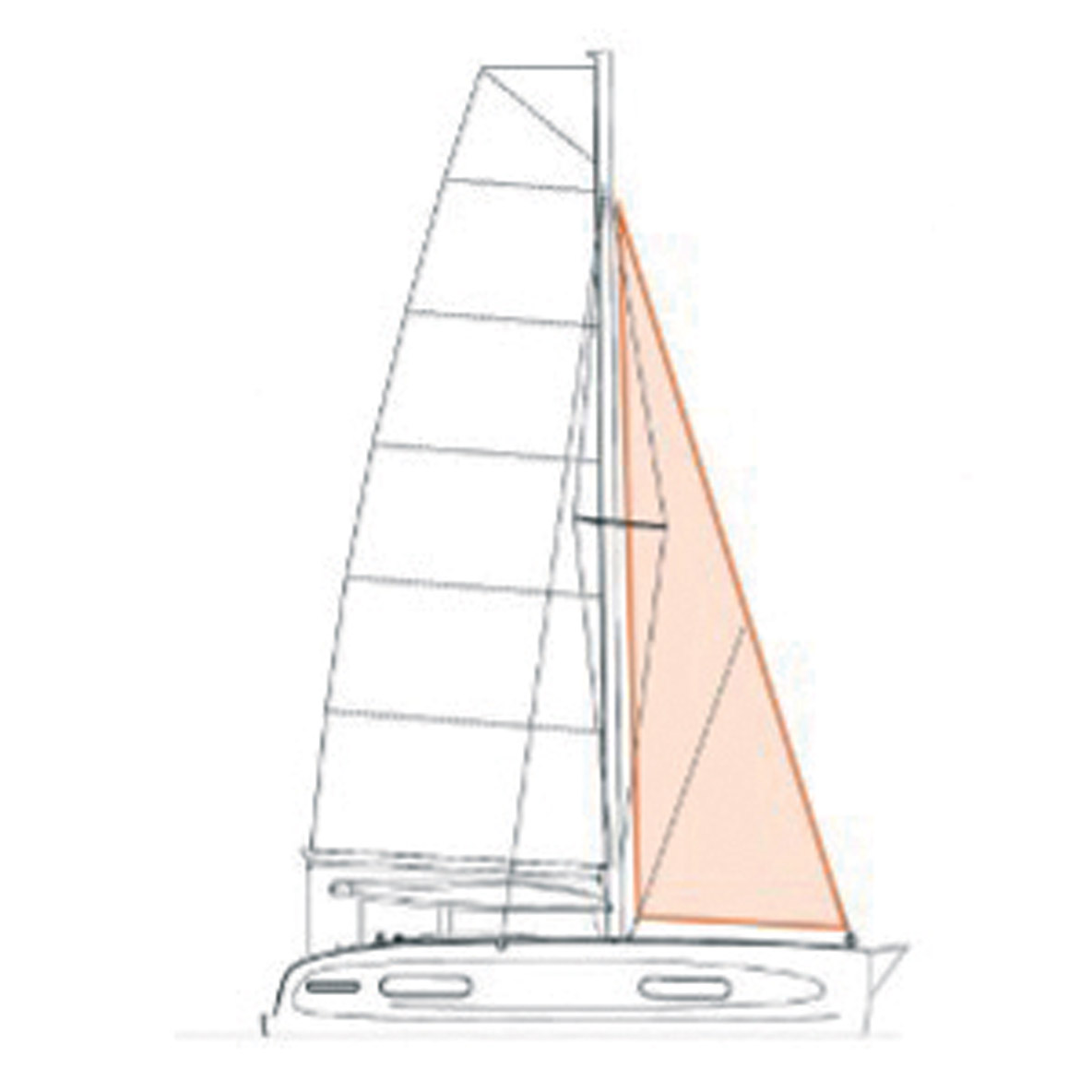
Even with this boosted rig, the figures are 19,840 lbs (9 t) and 882 sq ft (82 m²) as opposed to 16,000 lbs (7.26 t) and 829 sq ft (77 m²) for the Lagoon 380, so the sail area-to-weight ratio came in at 9.11m2/t and 10.61m²/t, respectively. More was needed: the switch to an overlapping genoa (already adopted on the Excess 14) became the obvious choice to appeal to this clientele.
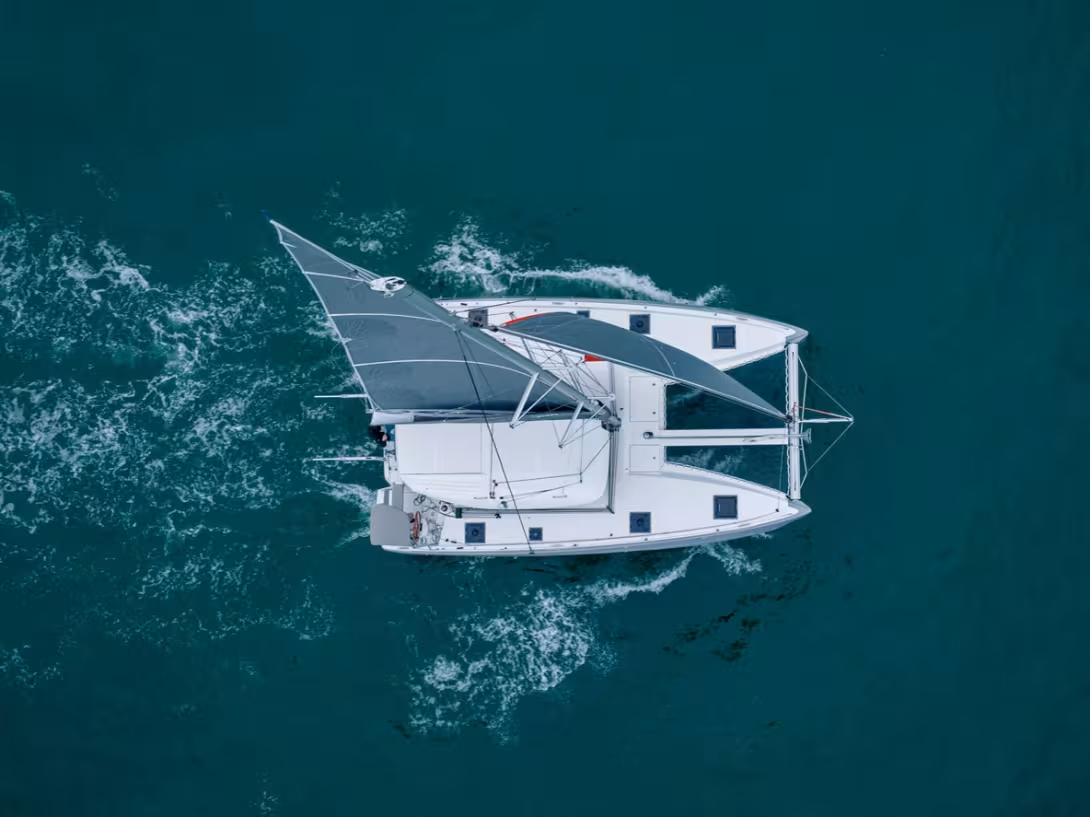
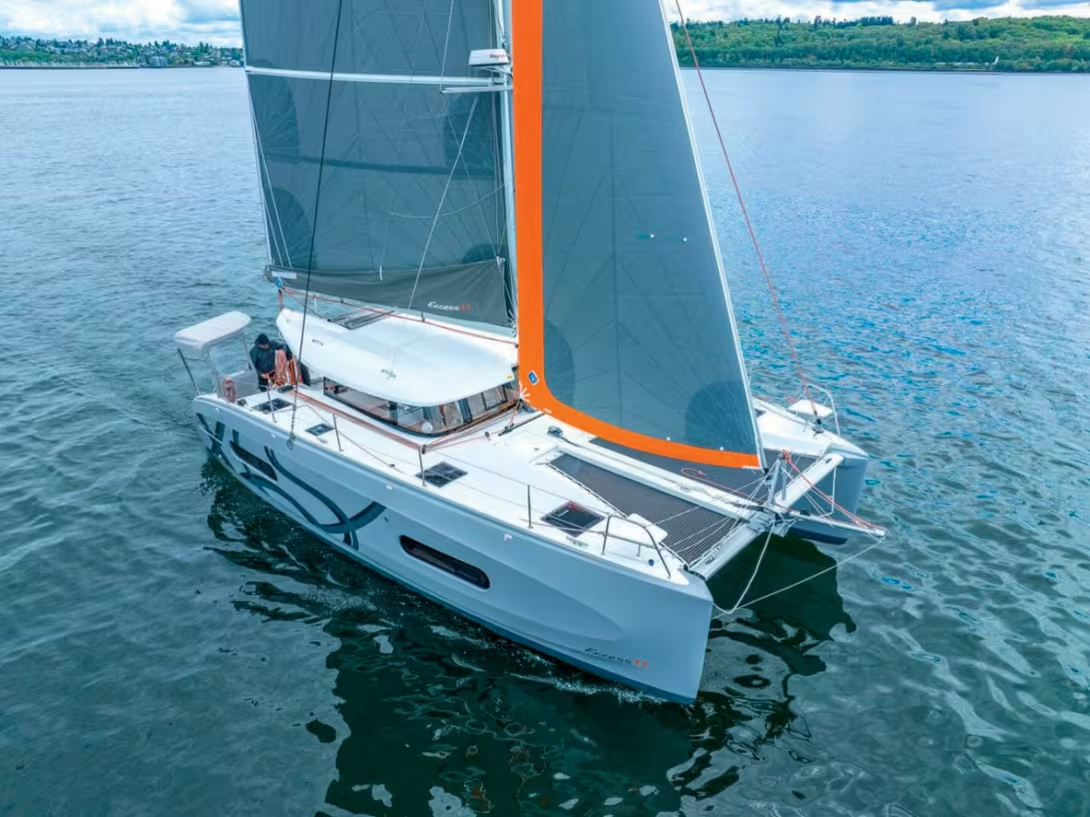
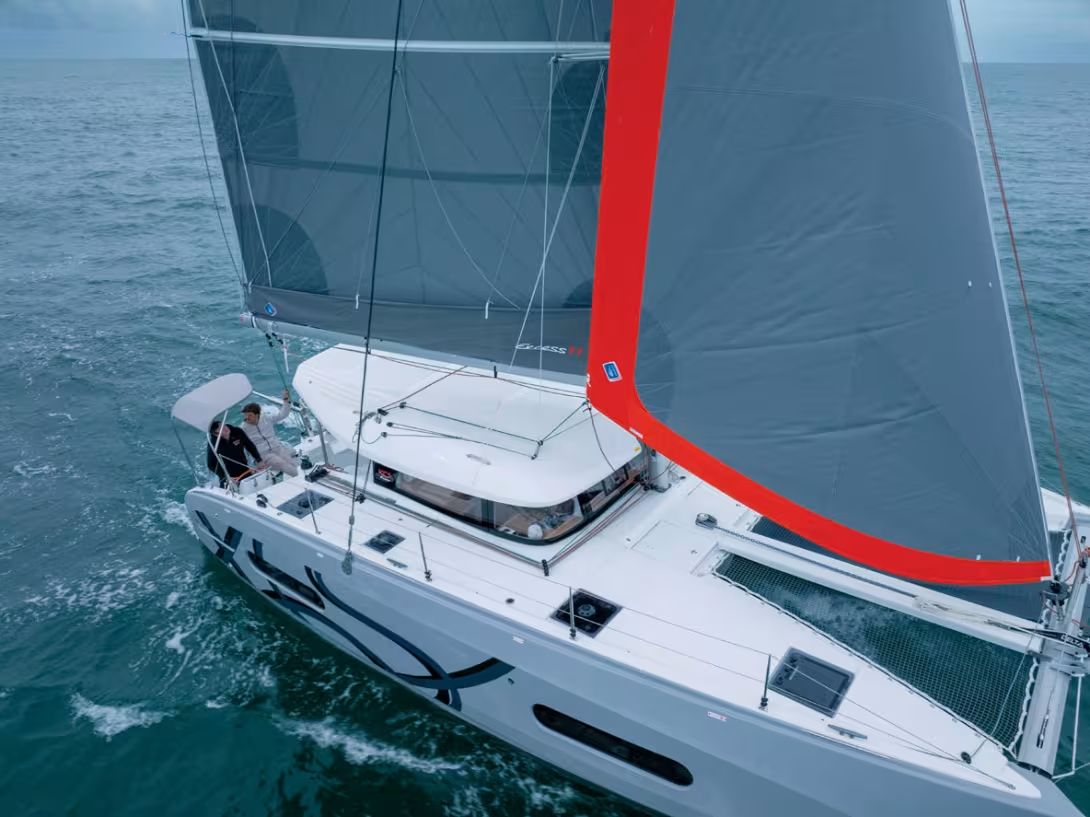
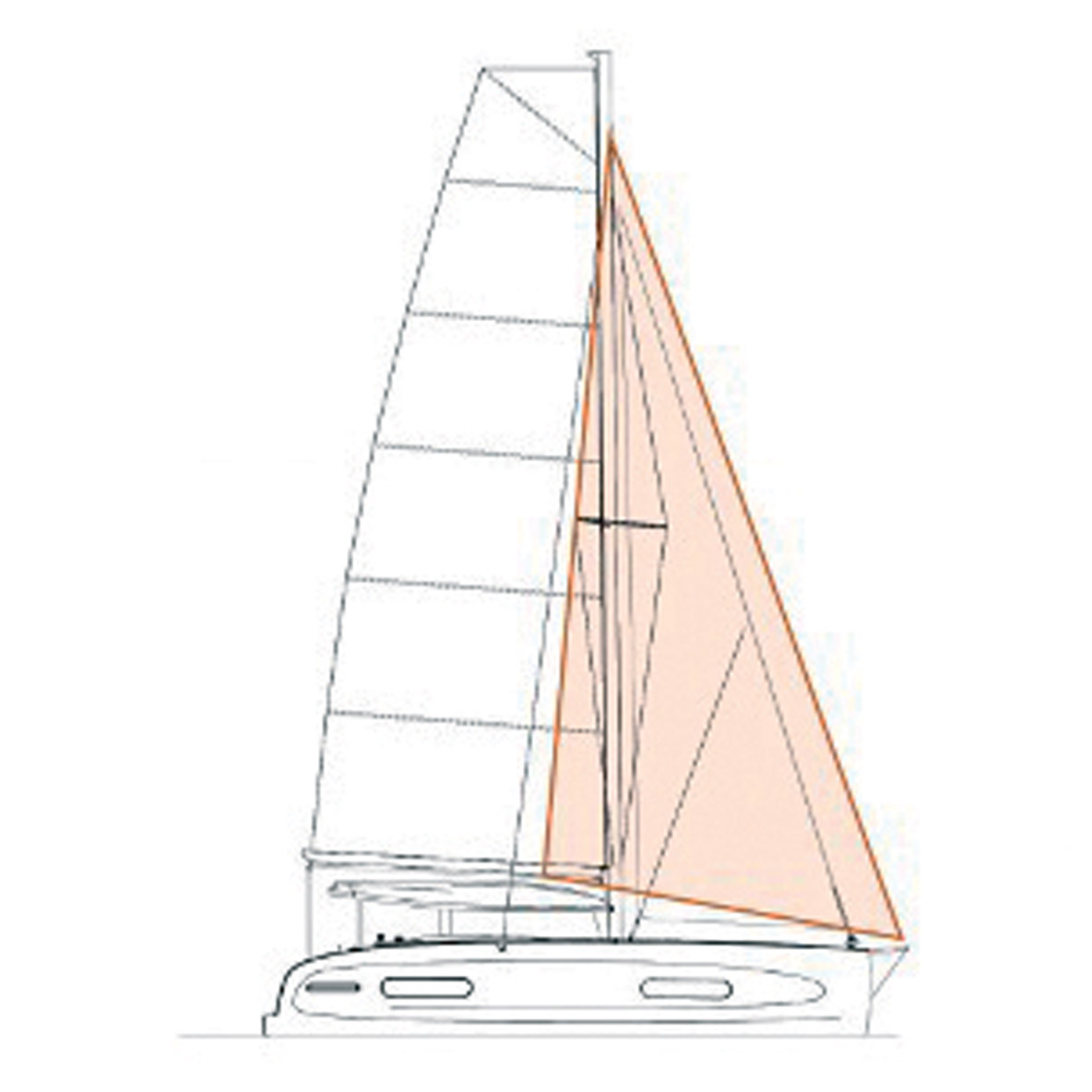
The manufacturer therefore modified the sail plan. The sail area is now 1,028 sq ft (95.5 m2) - an increase of 16.5%, which translates into a new ratio of... 10.61 m2/t, a clear reference to the Lagoon 380!
An Excess in Standard Configuration – Except for the Overlapping Genoa
After greeting a few brave sailors about to set off on a round-the-world voyage, we headed for the Bénéteau dock. Here, several Excess and Lagoon yachts are being prepared for their forthcoming adventures. We boarded Excess 11 #233, a boat about to cross the Atlantic bound for the Dominican Republic. The crew was in the midst of preparations, and the catamaran is in standard configuration, with no special options apart from the famous overlapping genoa.
My first observation on discovering the grey hulls - as I’ve never had the opportunity to sail on an Excess before - was that the mast seems to be stepped further forward than the current trend for cruising catamarans, which inevitably limits the size of the foretriangle.
We made our way out of Port Olonna despite the large number of boats crowding Les Sables ahead of the Vendée Globe Race, and Hervé, being a good sailor, didn’t wait until we were out of the channel to hoist the mainsail. Out on the water, there’s no mistaking the swell, given the number of surfers frolicking on the beach and the obvious breakers over the Nouch reef.
As the electronics had not yet been calibrated, we didn’t have the true-wind information, so this test was based on a feeling for windward angles. The wind shifted to the north-west, the rain stopped, the front had passed... but it was still relatively light, no more than 10 knots, while the residual sea was quite choppy.
16% More Canvas
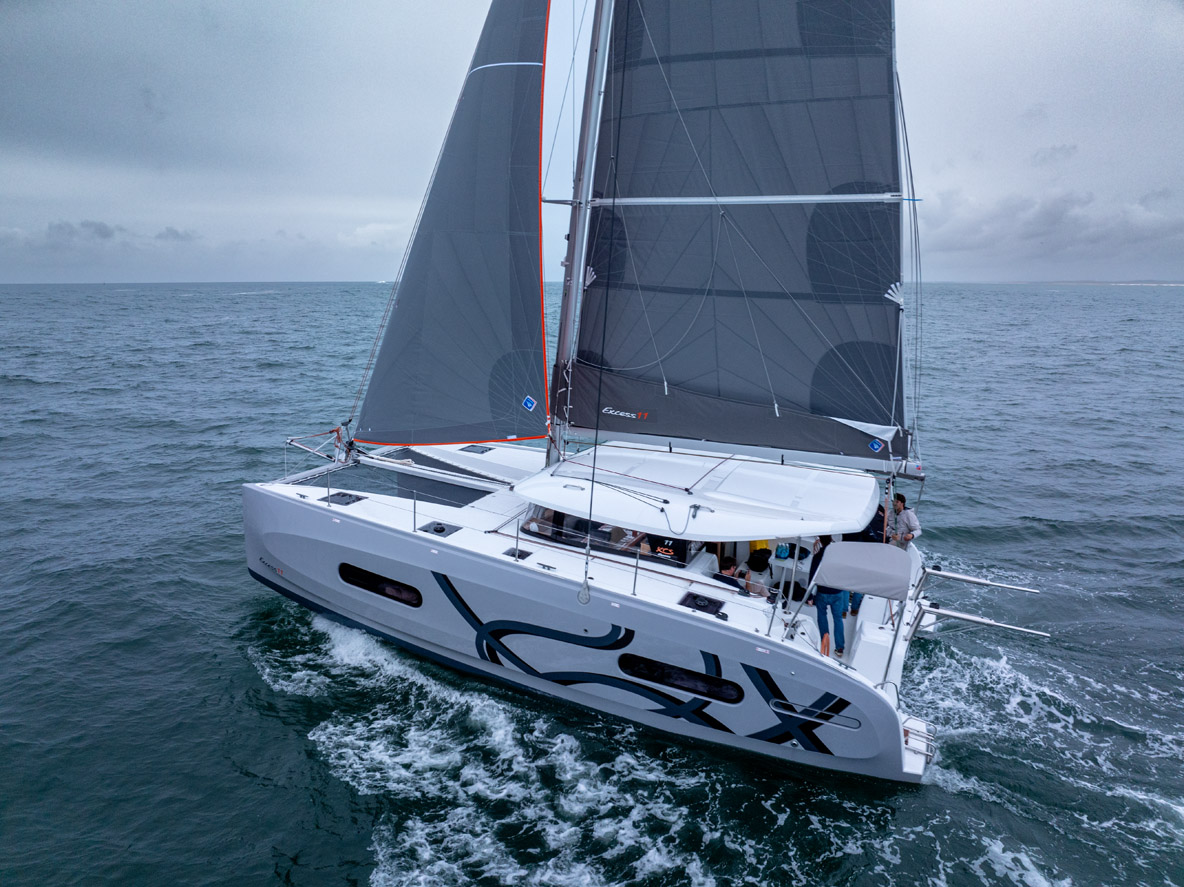
We started out on a reaching tack, at around 80° to the true wind, heading into a bit of a sea, to clear the light at the Barges ledge. Having had the chance to sail slightly sportier multihulls, I must admit I was amazed at the speed of our multihull in these particularly unfavorable conditions. Our speed stabilized at between 6 and 7 knots, and despite its small size, the catamaran went through the waves quite well. More than one cruising catamaran in these conditions would be “stuck to the track”, but thanks to its overlapping genoa and 16.5% extra canvas, the Excess 11 remains very lively.
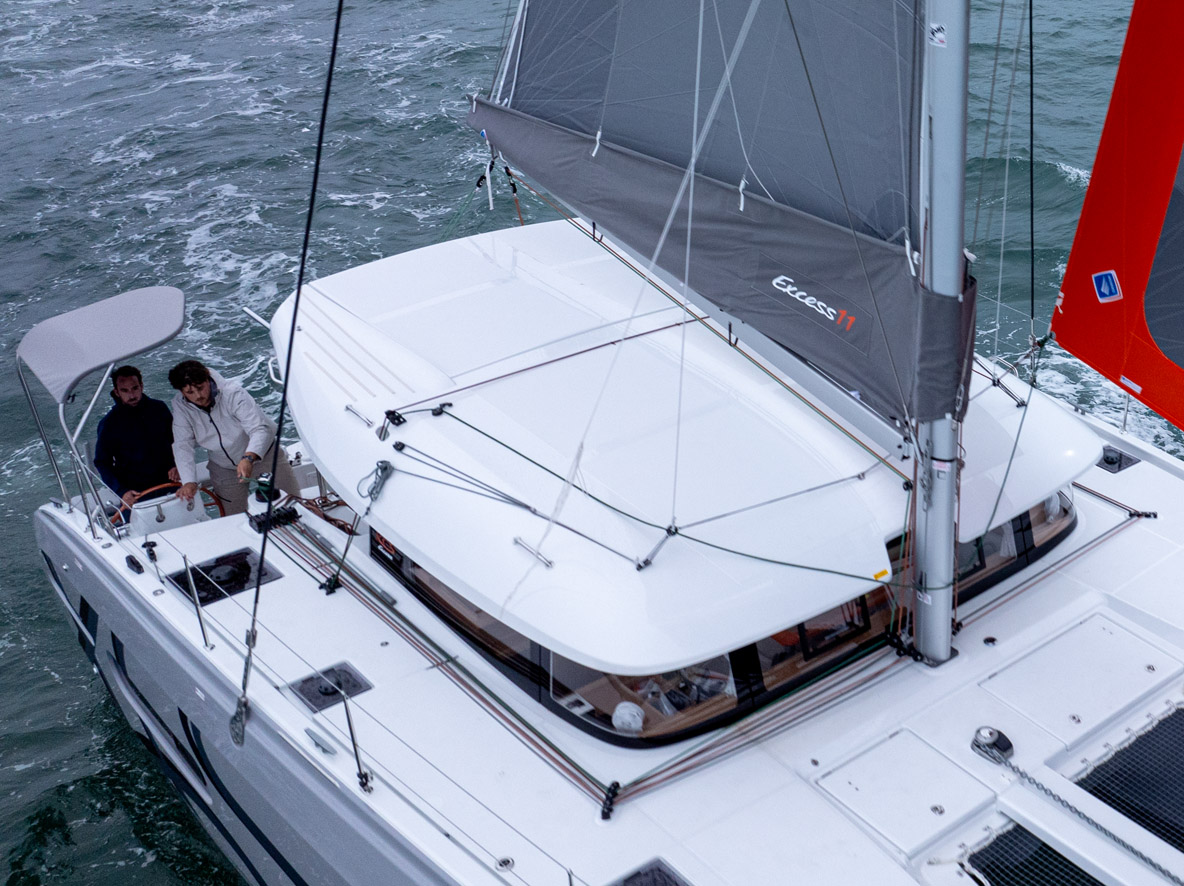
As soon as we could come up on the wind a bit more, we were sailing at around 60 degrees to the true wind, which is already very good for a small multihull for the conditions on the day. The Excess design team’s 3D adjustment of the genoa sheeting points is strongly inspired by what they do on ocean racing boats, and... the system seems to work miracles. We generously sheeted in the tack without flattening the foot of the genoa so as to twist the profile to prevent the catamaran from getting stuck in each wave, and that was it: we kept going at 6 knots at a very reasonable angle. With a self-tacking jib, where control of the leech is very limited and the sail area smaller, I doubt we could have sailed in the same way with such ease.
1,760 lbs (800 kg) of Pull on the New Clew!
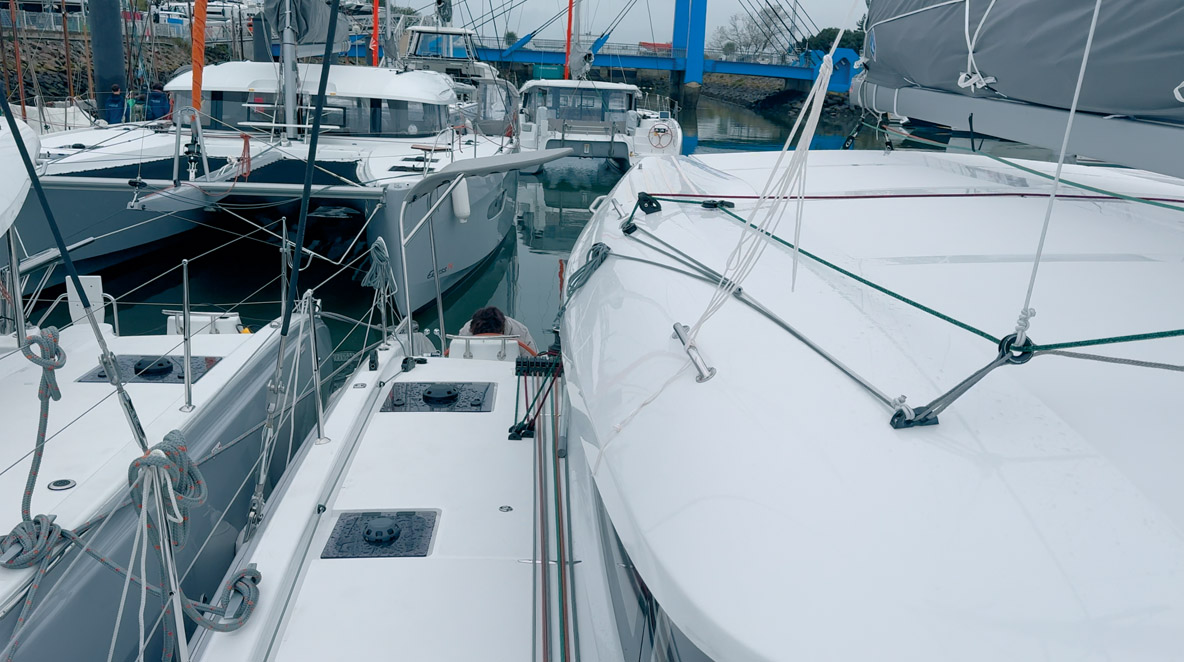
I really like the simplicity of the trimming system: no longitudinal track, just a 3-strand Dyneema tackle connected to a friction sheave through which the sheet passes, allowing you to manage leech tension and the sail’s angle of attack very effectively. I would have liked an additional padeye on the outer edge of the coachroof to be able to open the sail plan completely at angles greater than 80° to the true wind, but structural constraints prevent this. I’d like to take this opportunity to point out that there is over 1,760 lbs (800 kg) of outhaul force on the clew - which, incidentally, rules out refitting models equipped with self-tacking jibs, as the switch to overlapping genoa requires significant reinforcement of the coachroof.
We put in a few tacks to test the ergonomics of the maneuvering station and the boat’s ability to pick up again after going through the wind. Returning all the maneuvers to starboard really does make it easy to tack when sailing short-handed, or even single-handed: the port sheet is returned alongside the starboard sheet, before both cross the coachroof via a channel to the starboard all-purpose winch, installed in front of the helm station. There is another winch on the port side that could have been used - that’s reserved for the twin mainsheets. The only downside to this configuration is that when sailing on starboard tack, it’s less easy to trim the genoa, as it’s partially hidden by the coachroof.
Once again, the additional 145 sq ft (13.5 m²) of genoa and the accelerated flow over the mainsail due to the overlap allow the catamaran to pick up again easily, all aided by a very responsive “fiber” helm transmission.
One last thing - which has nothing to do with the genoa: the single 7-inch Garmin screen is really, really small for my fifty- something eyes!
We set off again on port tack towards the harbor entrance, 130° to the true wind, at a speed where I’d have really liked to hoist an asymmetric spinnaker or a gennaker, but the owner hasn’t received all his sails yet. This allowed us to test the merits of a large genoa - the catamaran accelerated gently at an average of 8 knots, and we could feel that the beautiful VPLP hull was keen to surf the residual swell.
Conclusion
Even though the self-tacking jib has a few advantages, particularly in terms of ease of sailing maneuvers, I’m a big fan of the overlapping genoa, which makes even more sense on this small unit with its fairly forward-stepped rig. The extra sail area and improved flow efficiency on the mainsail make this catamaran more adaptable in transitional phases, and significantly improve average speed.
Some builders are now offering multihulls with self-tacking jibs and Code 0 to maintain speed in less than 15 knots of breeze, but the alternative offered by Excess on its small model is, in my opinion, the right one: a large furling genoa that allows you to maintain speed on all points of sail without overcomplicating the sail plan.
Self-tacking Jib and Overlapping Genoa: In Theory and in Practice...
The speed of this small catamaran
The feel of the helm
Single 7” screen too small
Technical specifications Pulse Line version
Architect: VPLP
Overall length: 37’6” (11.42 m)
Beam: 21’7” (6.59 m)
Draft: 3’9” (1.15 m)
Displacement: 19,850 lbs (9 t)
Upwind sail area: 1,028 sq ft (95.5 m²)
Mainsail: 592 sq ft (55 m²)
Genoa: 436 sq ft (40.5 m²)
Code 0: 581 sq ft (54 m²)
Drivetrain: 2 x 29 HP
Fuel: 105 US gal (400 l)
Water: 79 US gal (300 l)
Cabins: 3/4
Price: € 342,900 ex-tax