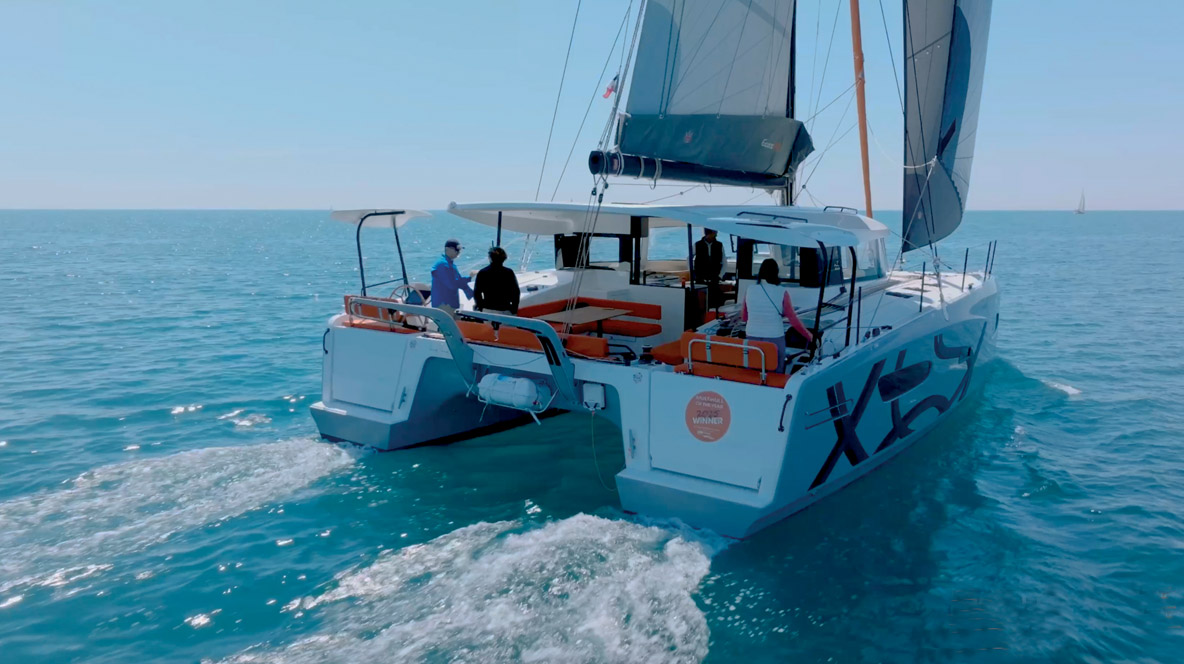
The Excess 13 was certainly one of the most eagerly awaited new boats at the International Multihull Show in La Grande-Motte – so much so that this catamaran was voted Multihull of the Year in the IMS Premiere category. A promising award for this model, which is unlike any other, starting with its somewhat provocative name – but we love it! As if to provide the punchline for the joke, 13 units were sold on the opening day of the show... More seriously, the main new feature of this catamaran is its signature. It is the Lombard design team that is behind it, in collaboration with Jean-Marc Piaton for the interior design.


Infos pratiques
- Le chantier : Excess 13
- La fiche technique
-
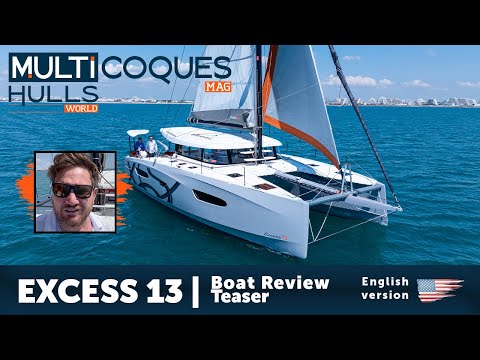 Découvrez notre vidéo exclusive
- Financez votre Excess 13
- Assuez votre Excess 13
- Articles autour du Excess 13
Conditions: Flat sea, southerly wind 8 to 10 knots
“Hello Brieuc, where are you? I thought we were supposed to meet on board at 12:30?” Oops... it’s already ten to one, and I’m still on the other side of the port at La Grande Motte on the Tuesday following the close of the International Multihull Show. I’m finishing up a test of another multihull, which is why I’m late. Fortunately, the Australian customer who was supposed to board at the same time also got lost in the maze of stands being dismantled, which allowed me to get back on board without attracting too much attention. The sun was already beating down on the white city. It was hot for the end of April, and the lack of a steady breeze makes it hard to keep cool, particularly for people like me who were born in Normandy. Basically, it was time to set sail! I’d been very keen to discover this new catamaran: this is the fifth model launched by Excess, but the first to be drawn by Marc Lombard Yacht Design Group, in collaboration with designer Jean-Marc Piaton. The Excess 13 marks a real evolution from previous models, thanks in particular to the contributions gathered via the Excess Lab, a collaborative online platform that allows the shipyard teams to harvest ideas and expectations from current and future owners. It was through this interaction that the idea of folding sugarscoops was born, and these are now integrated into the design. Antoine, a young sales representative for the brand based in the United States, picked me up in a tender at the other end of the harbor. As we approached the catamaran, I gazed at the slightly stocky silhouette of the beast... and couldn’t wait to see what it had in store!
Change of Architect: A Strategic Choice
The choice of MLYDG to design the Excess 13 is not insignificant. It marks a clear desire on the part of the shipyard to further differentiate the Excess range from that of Lagoon, which is more oriented towards comfort and the liveaboard life at anchor and, above all, has been designed by VPLP for some 41 years now. With Lombard, it’s a different approach to cruising that is being attempted - more lively, more refined, but without compromising on versatility. I’ve had the good fortune to sail on many Lombard designs over the years—Figaro 2, Class 40, and of course the Neel Trimarans — and I have always been impressed by the ability of this firm’s naval architects to design fast, balanced, and yet accessible boats. The Excess 13 is no exception: it has that same happy touch, that blend of efficiency and simplicity that makes you want to head out for the open sea, for a long time... and under sail most of the time.
An Elegant, Airy, and Contemporary Interior
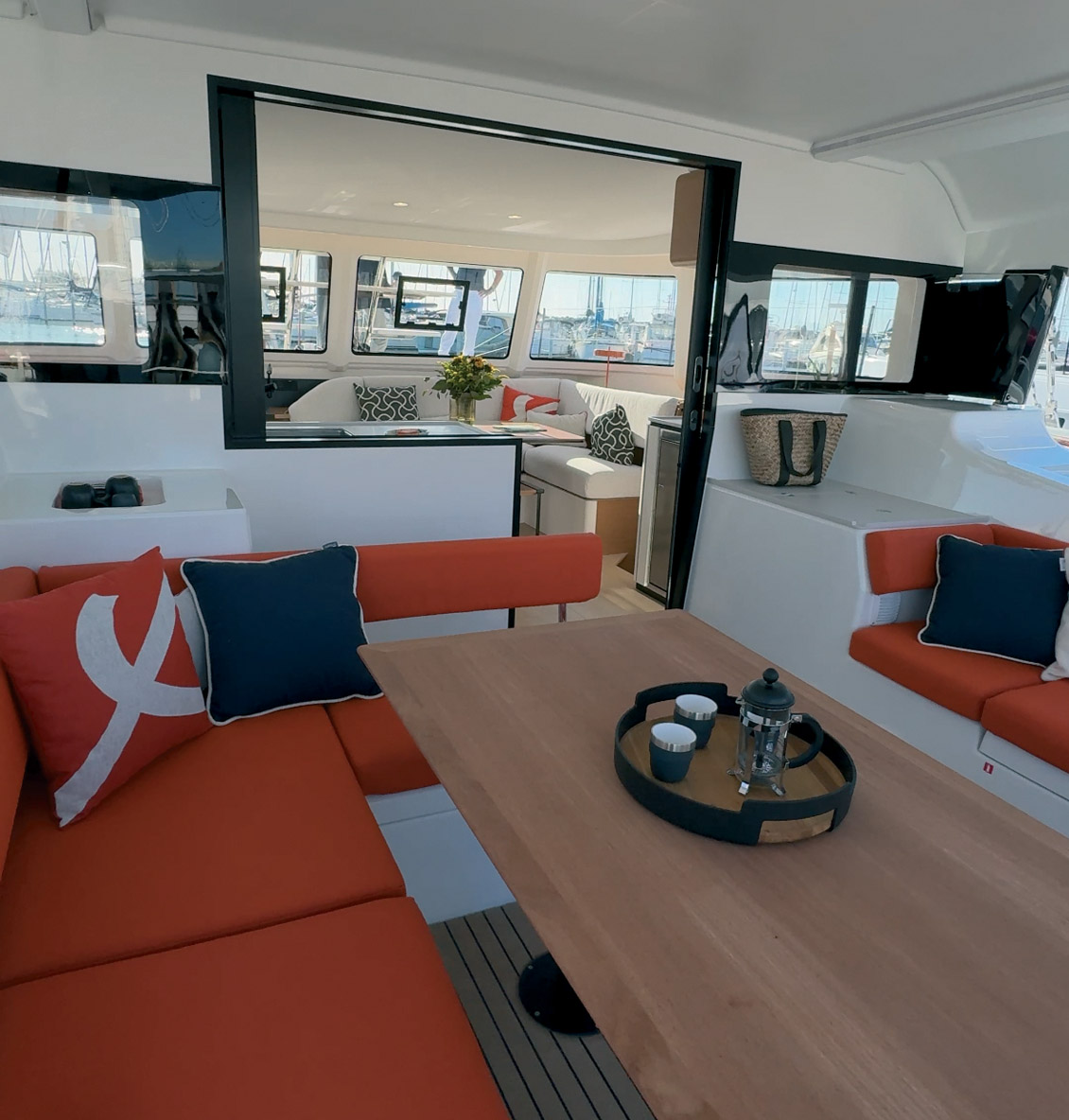
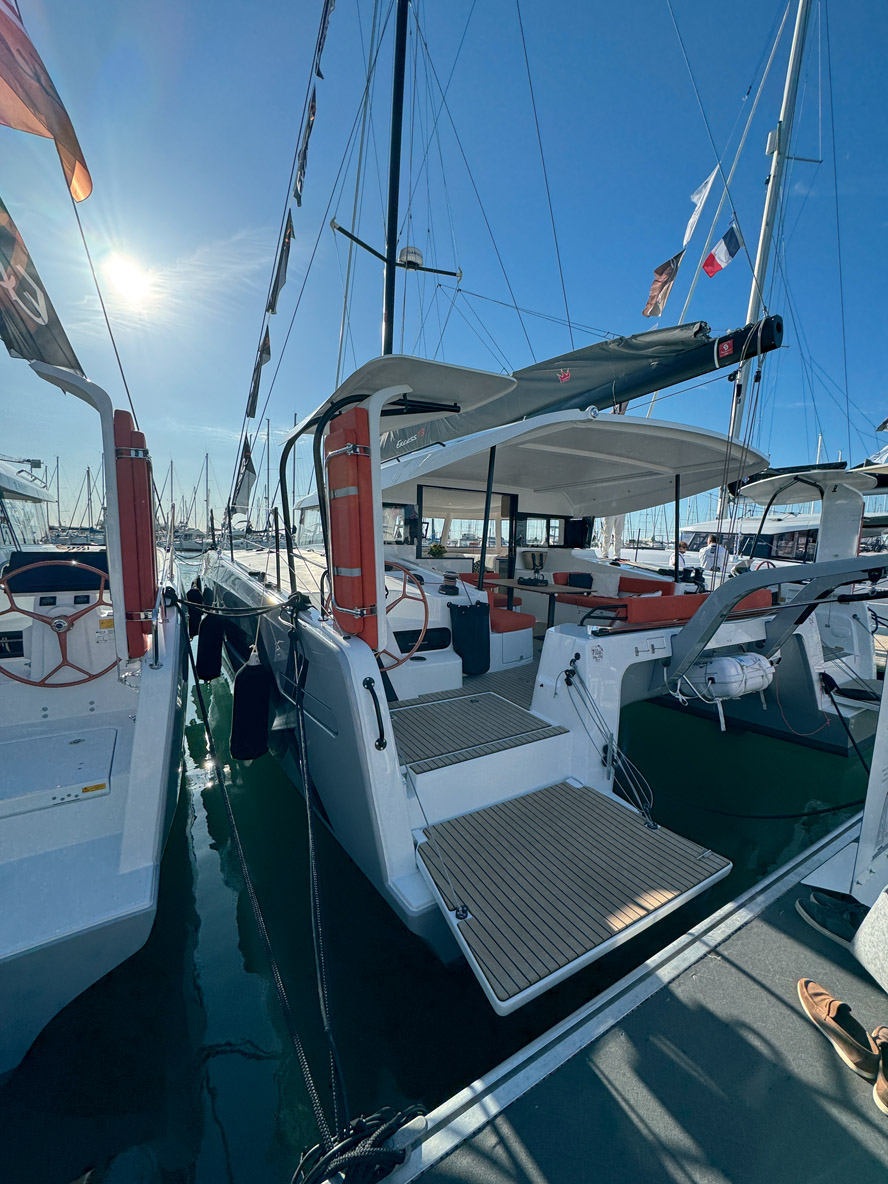
The fold-down sugarscoops make it easy to board. I noticed the futuristic design of the davits, the impressive span of the folding helm seats, and the airy design of the protective bimini tops. The cockpit is spacious and well protected by the rigid bimini that extends the coachroof and offers plenty of seating with an offset outdoor table on the port side. The opening into the nacelle does not give in to today’s XXL trend and is not at all a nuisance.
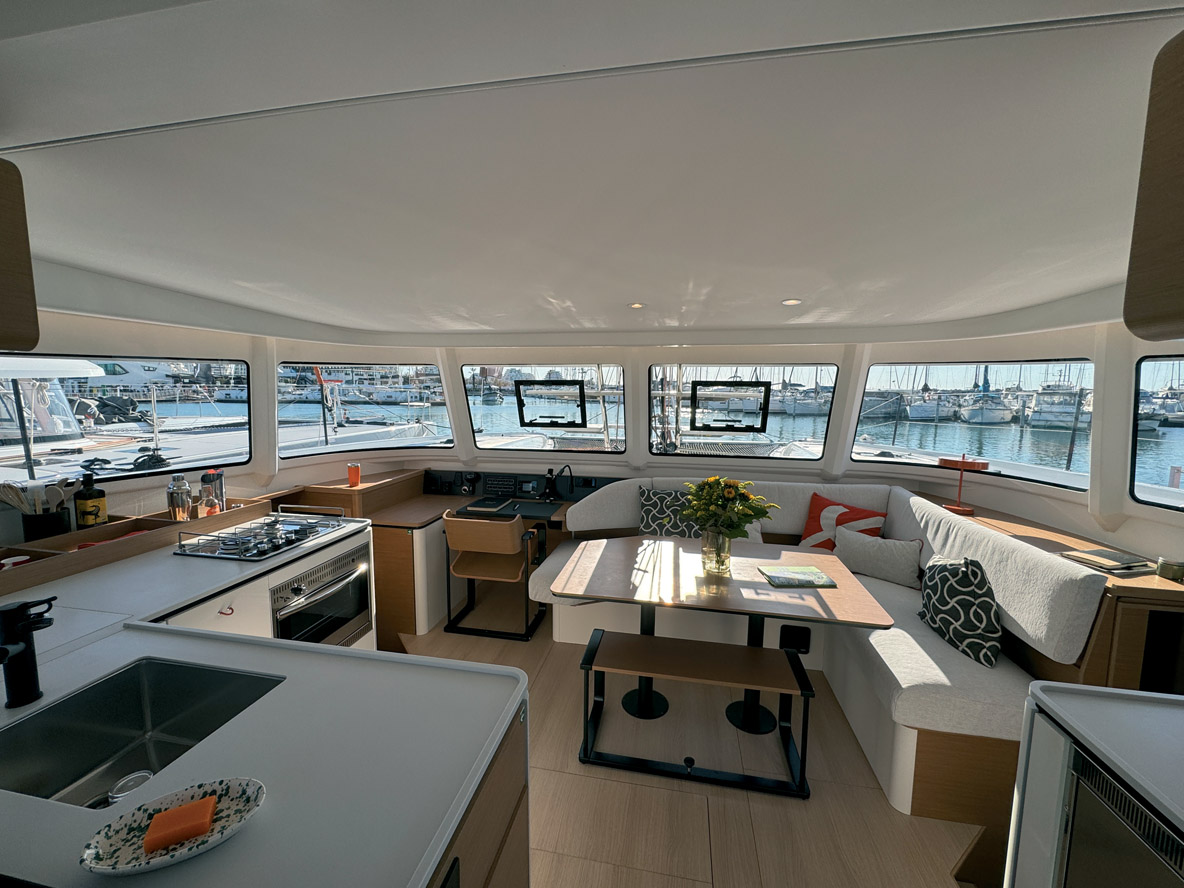
As soon as you enter the saloon, you’re struck by the modernity and brightness of the interior. The L-shaped galley is perfectly integrated on the port side and has generous counter space and well-designed fittings, with plenty of functional storage space, deep drawers, direct communication with the cockpit and easy access to the technical equipment. The large forward window, side windows, and companionway windows flood the space with natural light, creating a very pleasant feeling of openness. This living area is very well designed, especially since, from the outside, the nacelle appears to offer a compact volume.
The furniture combines light matt wood, textured fabrics and understated finishes in a soft palette that’s in keeping with the spirit of the other catamarans in the range. The modular saloon can comfortably accommodate the crew around a large convertible table, and movement between spaces is fluid, even when under way. Every detail seems to have been carefully considered: the lines are clean but warm, the indirect lighting is well positioned, and the seats are well sized.
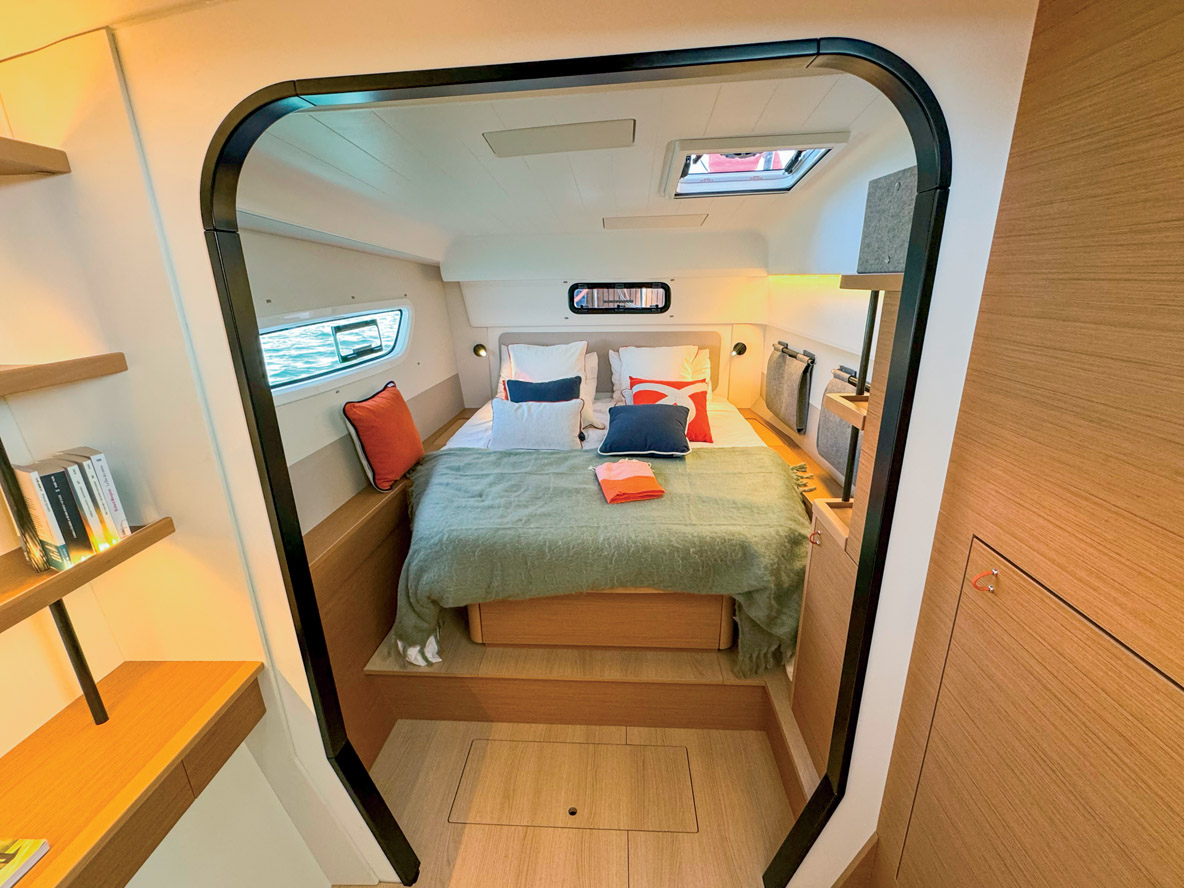
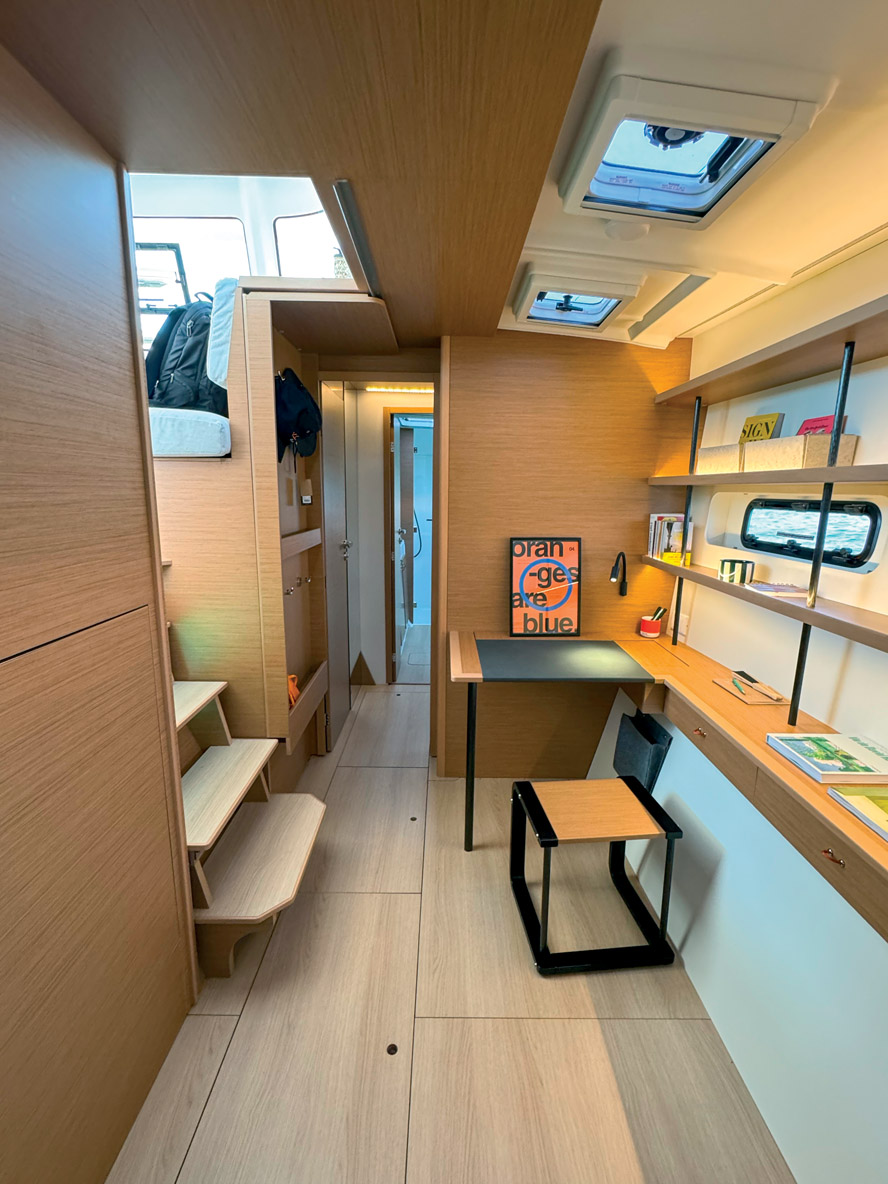
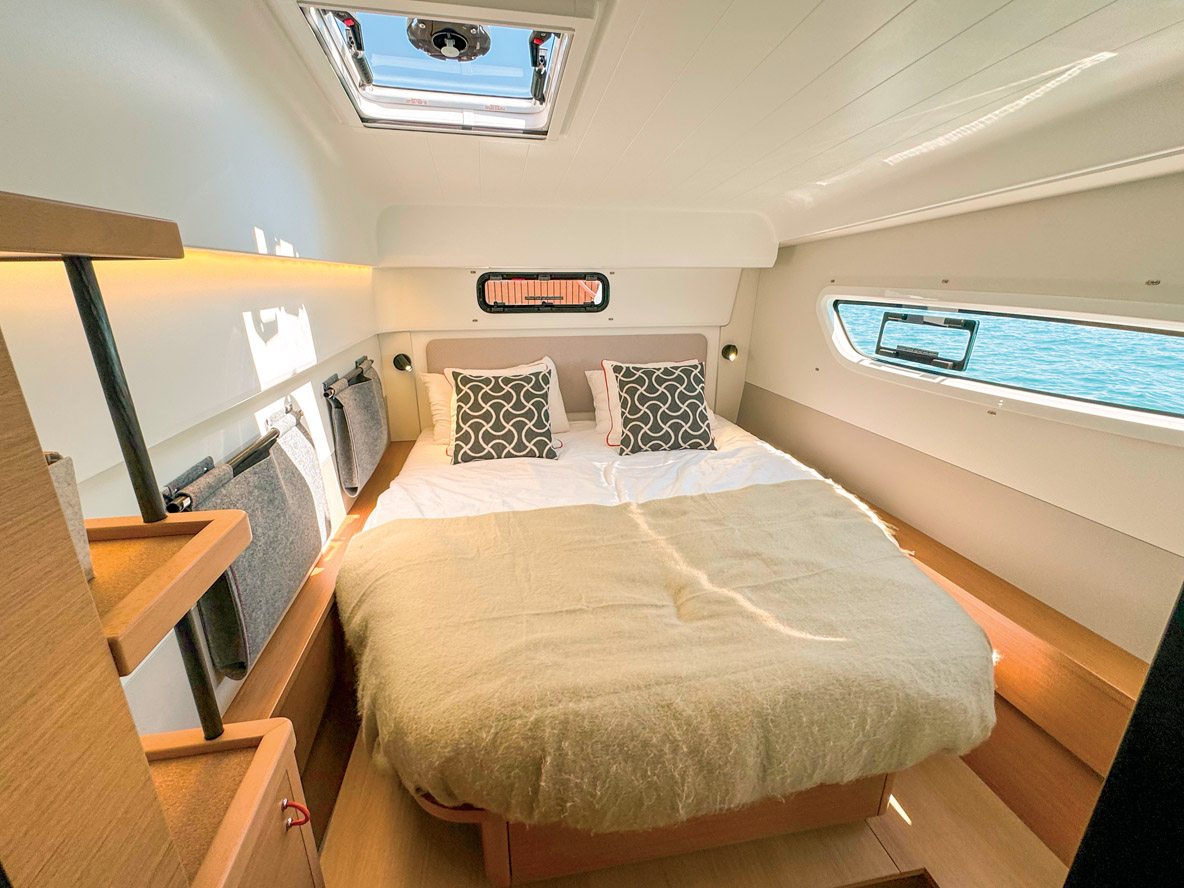
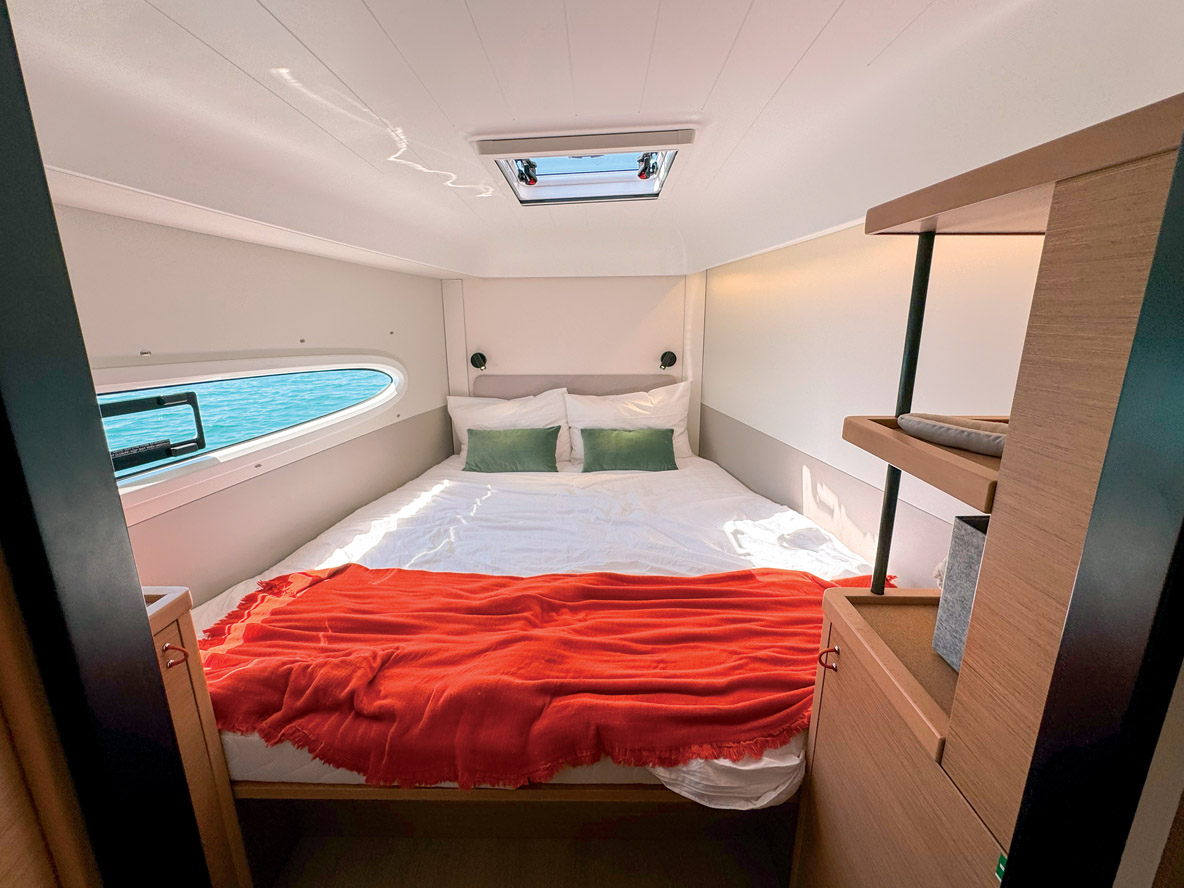
The cabins are spacious for a boat of this size, with a real feeling of space, particularly in the owner’s cabin aboard the 3-cabin version we tested. The starboard hull is like a loft, with a large berth, a desk or vanity area, a separate toilet, and good natural ventilation. The perceived quality is consistent, from the floor to the cupboards and the choice of interior fittings. All double berths are land-lubber sized, i.e., 79 inches (2 m) long and at least 54 in. (1.4 m) wide.
Pulse Line Rig and Code 0
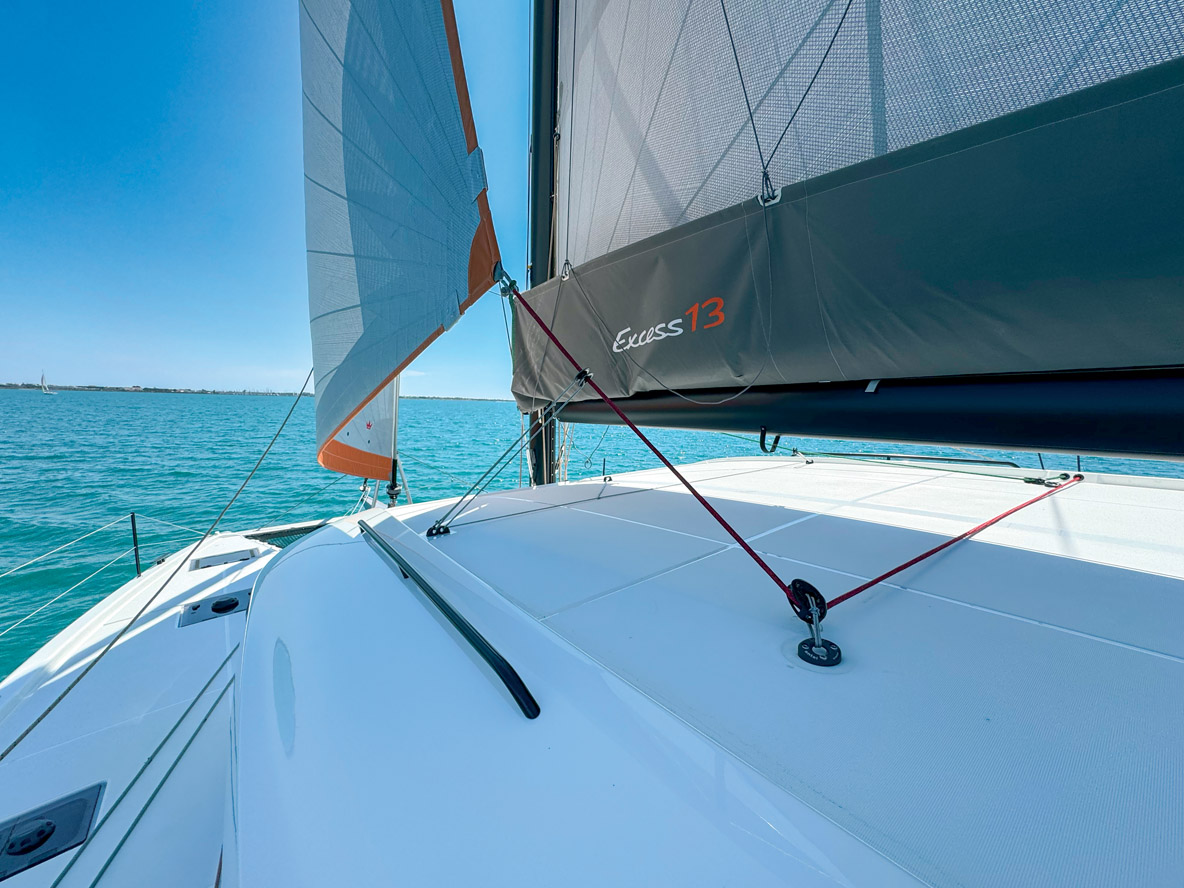
The conditions were perfect for a first outing: 8 to 10 knots of wind, flat sea, clear skies. We started with a long tack under genoa, the boat gliding effortlessly in almost perfect silence. The optional Pulse Line rig immediately stands out: the slightly taller mast and the additional 97 square feet (9 m²) of sail area allow the catamaran to take advantage of the slightest breeze. The first few minutes at the helm confirmed what the design suggested: this catamaran is designed for those who love their sailing. Even in light airs, it is playful and responsive.
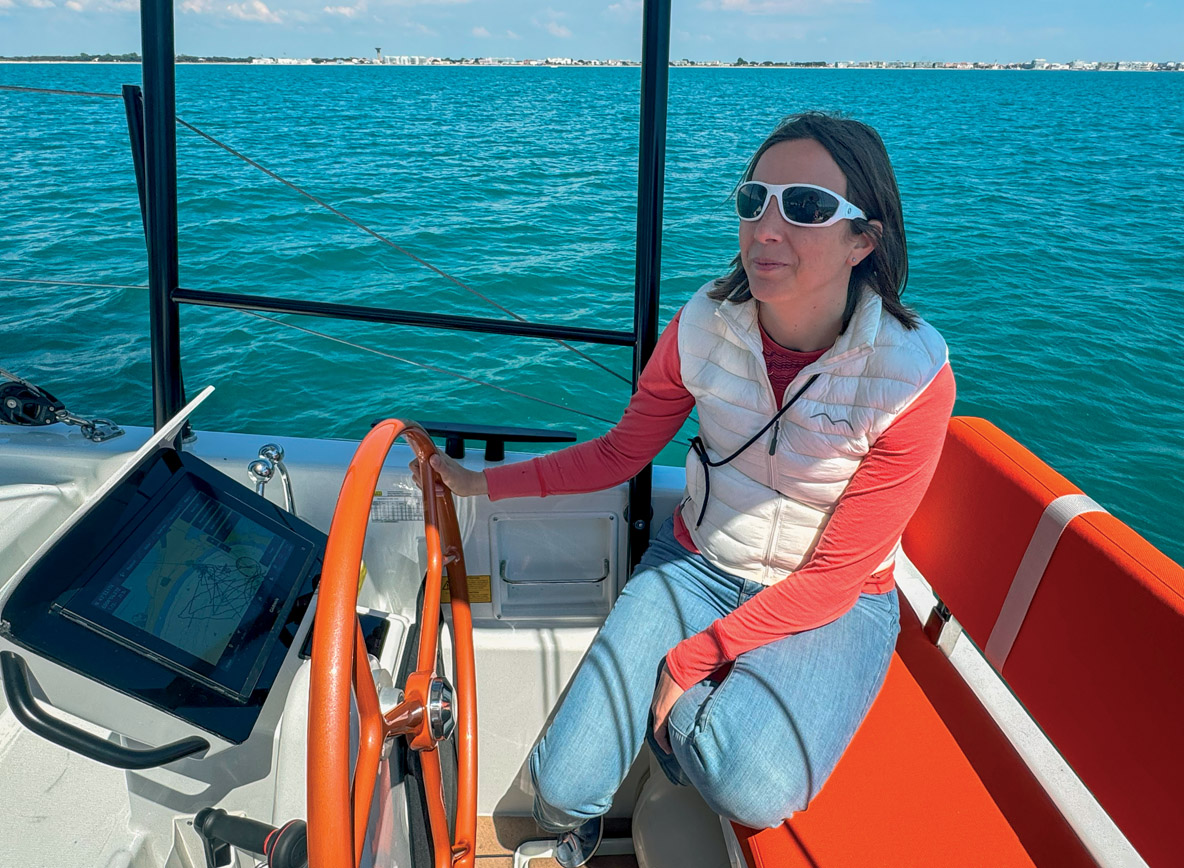
Very quickly, we unfurled the Code 0, and the Excess 13 came to life. In this configuration, the catamaran accelerates smoothly. The steering wheels, positioned to maintain good forward visibility, offer pleasant control: the feel of the helm is precise and inspires confidence. The feedback is direct enough to feel changes in pressure without losing any of the sensations. What is most striking is the catamaran’s overall balance: the trim is sound, the movements are smooth, and the hull is undeniably well designed. You quickly get caught up in the game - you look for the right angle, fine-trim the sails, and the multihull, lively without being demanding, responds with precision. You really want to stay at the helm - and not leave things to the autopilot! Next to me, the Australian customer, initially intrigued, is now literally blown away to see the catamaran sailing at 6 knots in such a light breeze. He had other models at the top of his shortlist, but his priorities are clearly being shaken up. The Excess 13, which wasn’t in his initial top 5, looks to have jumped to the top of the pile...
Details that Scream Experience at Sea
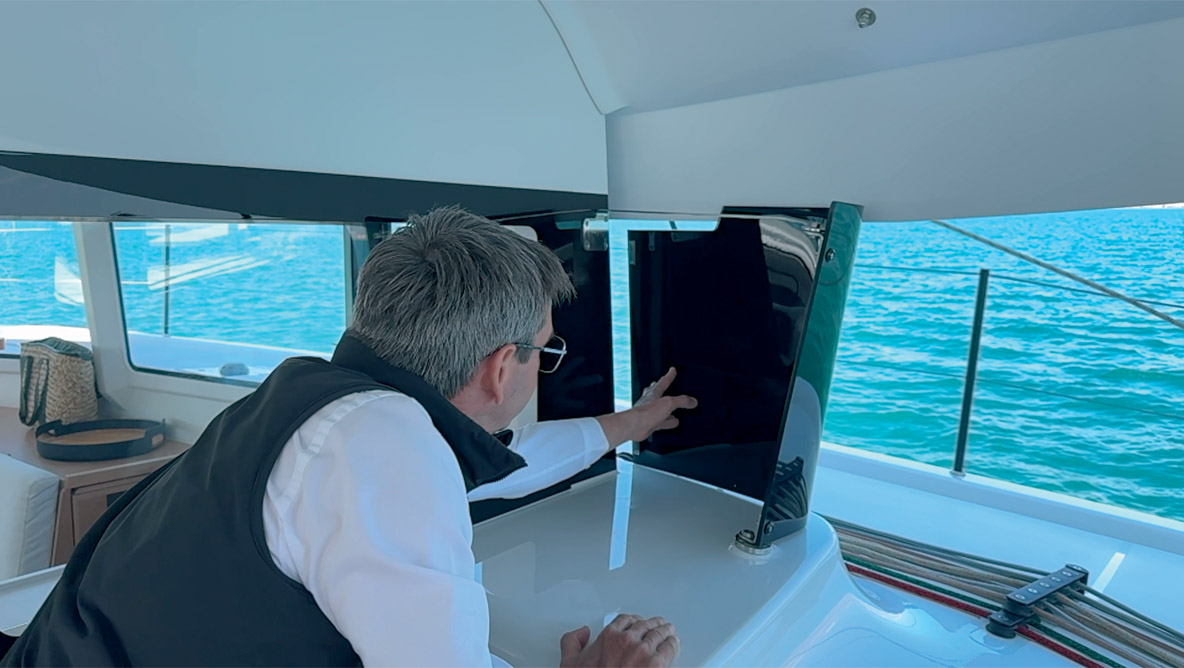
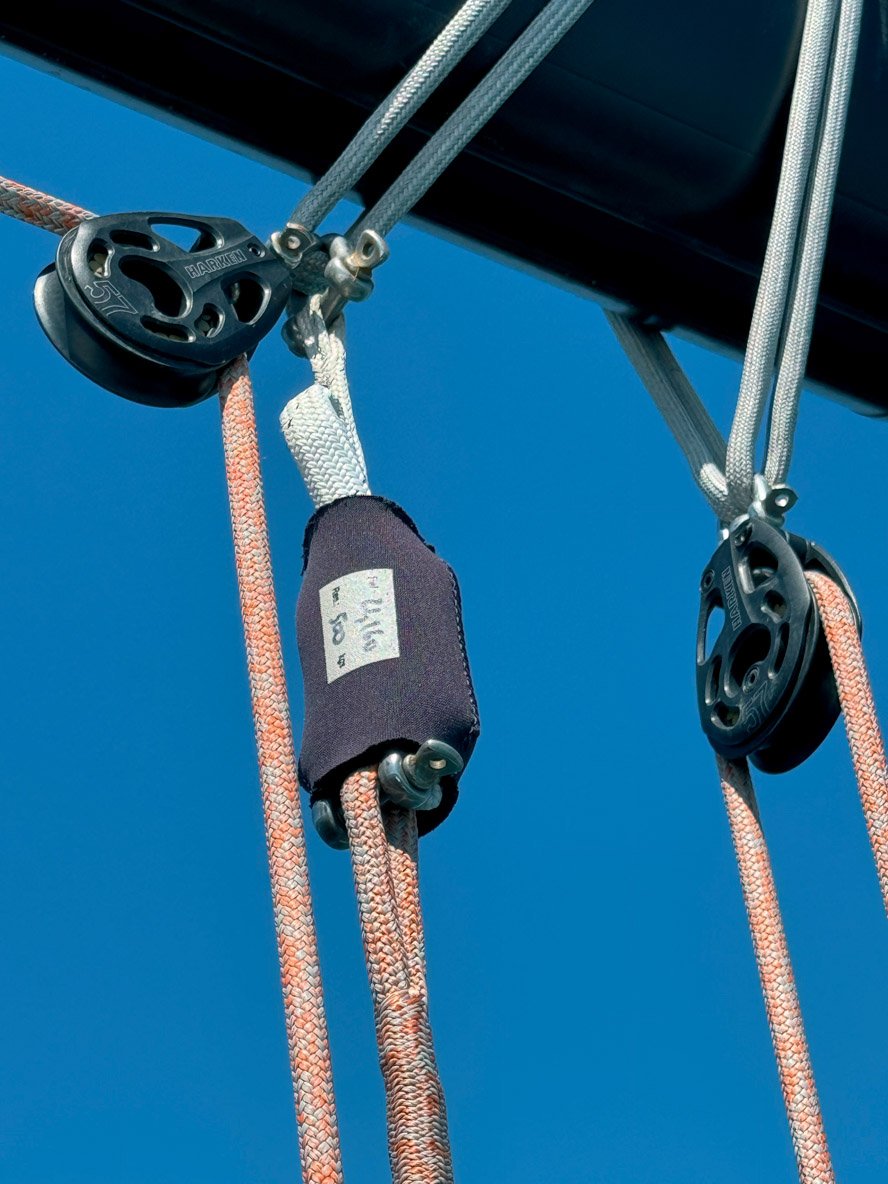
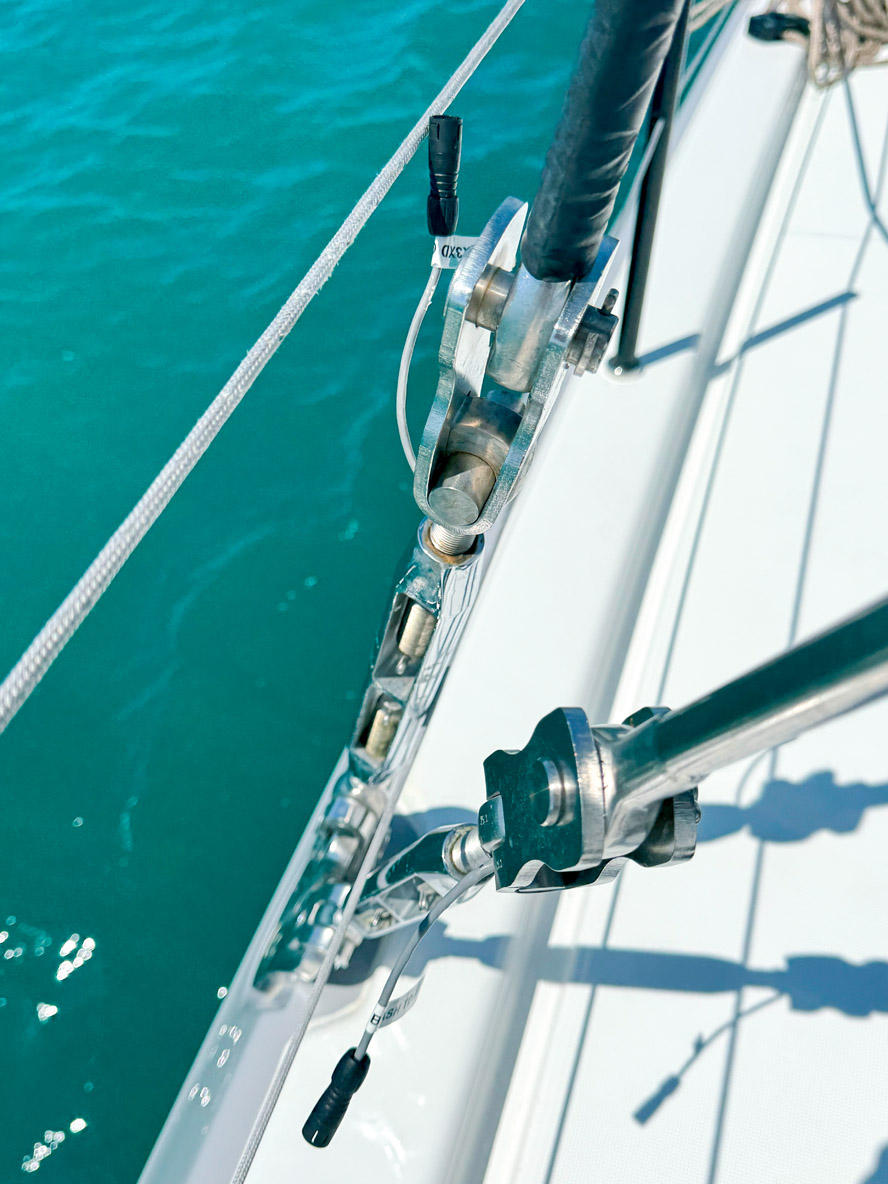
The further we sailed, the more numerous details became apparent showing that this boat was designed by sailors, for sailors. And this is no coincidence: remember that Hervé Piveteau, head of the design team at Excess, won the Mini-Transat in 2009 in the series class. This offshore culture is reflected in the technical choices. Load sensors, for example, were installed on the shrouds of the first model in order to validate the calculations made during the design phase in real sailing conditions. This is a rare approach on a production catamaran and demonstrates a serious commitment to development. Another example is the fuse on the mainsail sheet, designed to give way in the event of overloading. This is a simple and intelligent solution that can prevent a lot of damage and once again demonstrates true seafaring sense. Finally, the discreet but well-designed side vents integrated into the cockpit provide very effective natural ventilation when open. Other features include the water recovery system on the coachroof (the intake is located under the gooseneck), the circuit breakers (finally) easily accessible in a dedicated cabinet, and the cabin doors that double as cupboard doors.
All these small, almost invisible details make all the difference in use
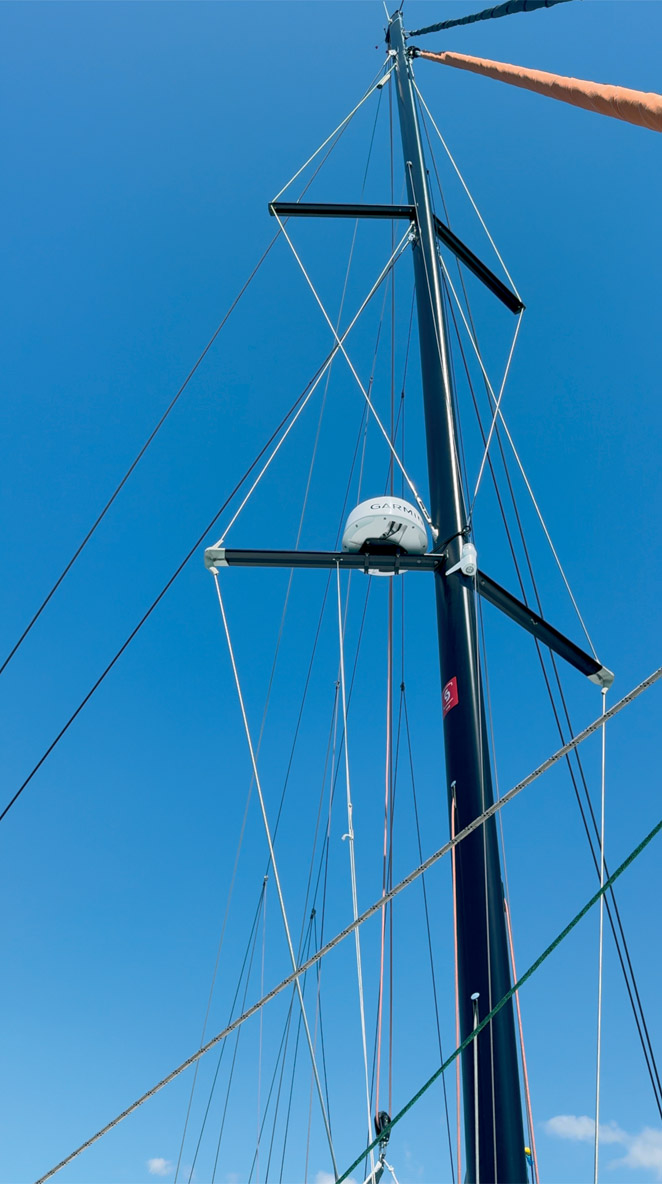
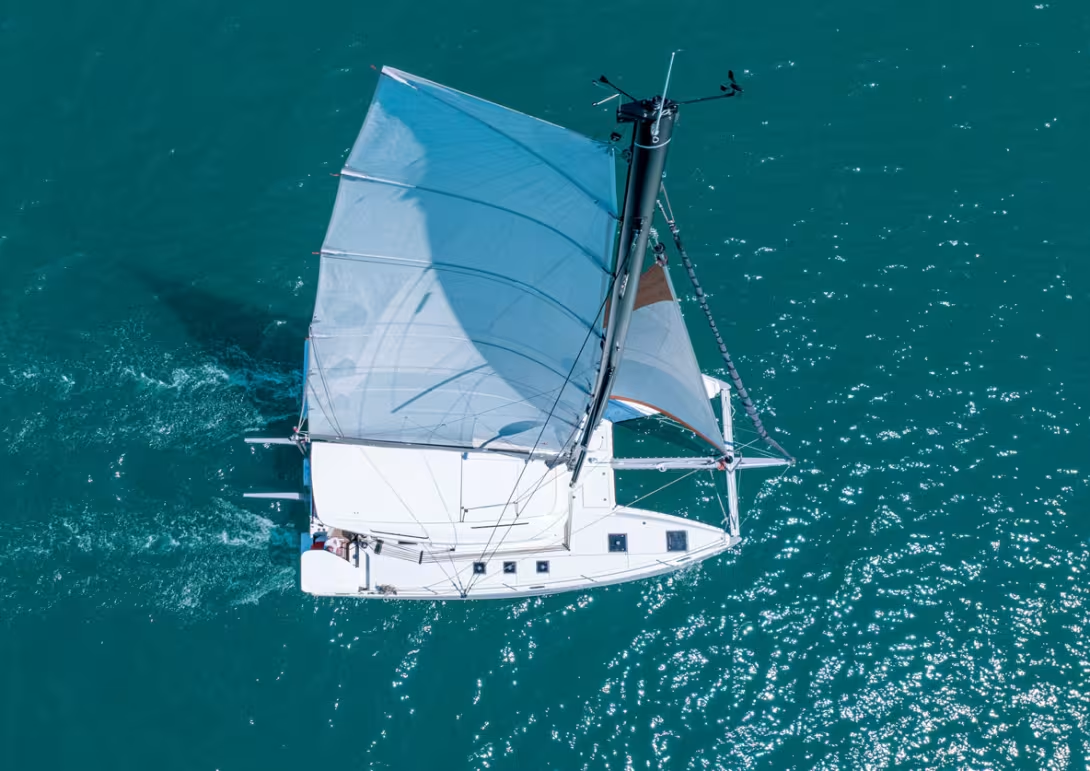
I quickly launched my drone to get some footage of the catamaran under sail. This also made an opportunity to observe the Excess 13 in action from an outside perspective. At first, the sloping stern (when the sugarscoops are raised) is reminiscent of the similarly equipped HH44, but I quickly became interested in the overall balance of the catamaran. The Excess 13 seems perfectly balanced, well-tuned, and smooth. Perhaps a slightly more generous Code 0 would have allowed the cat to gain a few more tenths of a knot. I shared this observation with Hervé Piveteau, who was on board with us. He tells me that an asymmetrical spinnaker on a furling system is being considered as a future option. Another striking feature is the very pronounced mast, which is stepped further forward than on other models in the range. This distinctive feature gives it, from certain angles, the look of a racing multihull, with its taut silhouette and the center of the sailplan set artificially further aft. It’s a nod to offshore racing and a promise of sailing pleasure. It would be impossible to conclude without mentioning the sails. I have to say, I was blown away – quite literally - by the quality of the sails supplied by Elvstrøm. Gone is the basic, poorly cut Dacron that was still fitted to many production multihulls until recently. Here, the sails are well cut, beautiful, high-performance, and show real attention to detail. Their design contributes greatly to the sensation you get of gliding through the water and to the overall elegance of the multihull.
Conclusion
With this new Excess 13, the shipyard has once again hit the mark. This catamaran doesn’t just offer a compromise between comfort and performance: it offers a new take on the cruising multihull, one that’s more dynamic and refined, without compromising on the pleasure of life on board. Whether at the helm or in the saloon, you can tell that it’s been designed to appeal to sailors who love sailing.
Behind the Scenes of the Design:
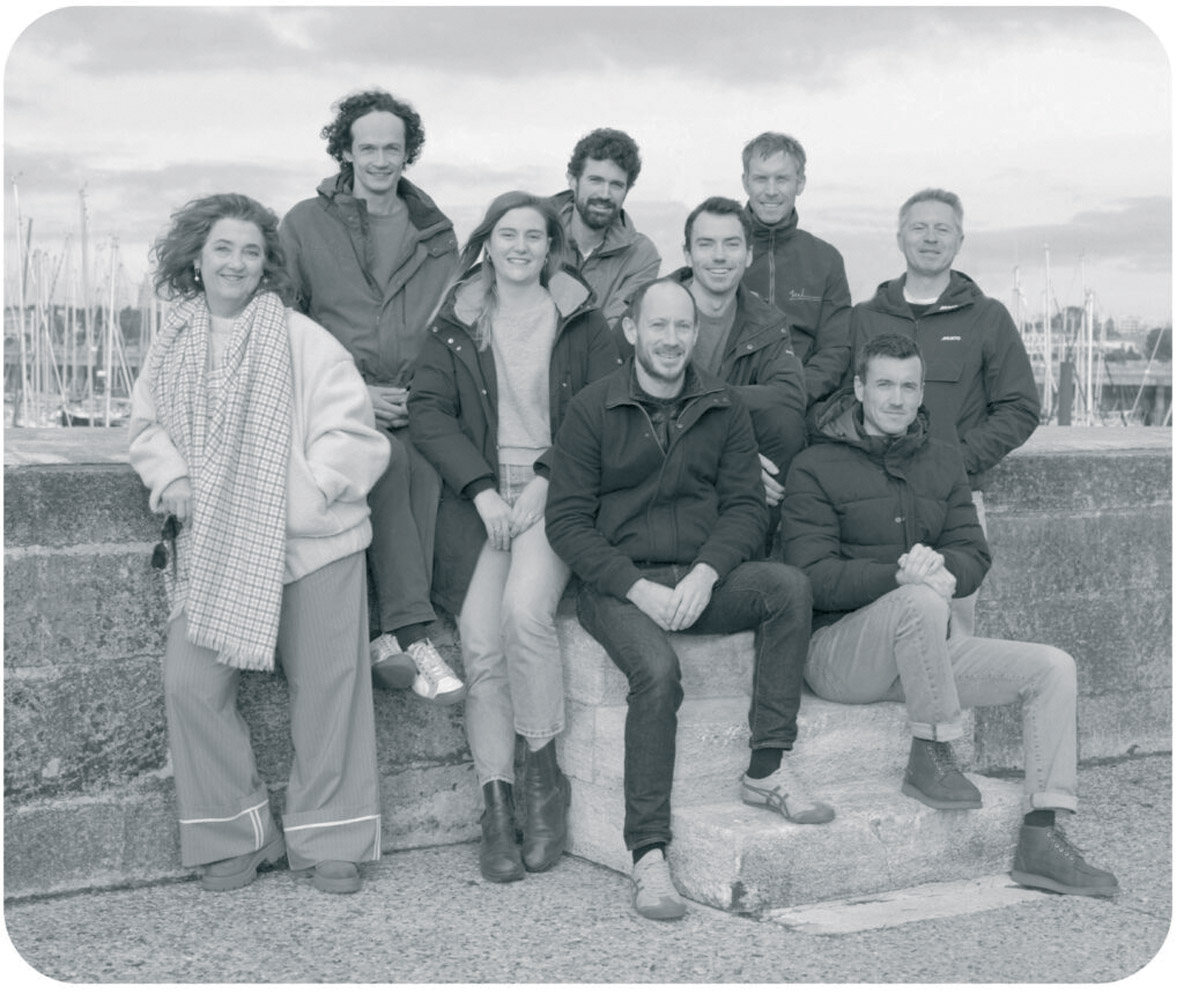
“We were chosen by the Excess design team to accentuate the difference with Lagoon, with very clear specifications: to design a lightweight, high-performance catamaran that was simple to build in order to stay within a reasonable budget in the highly competitive 42-foot market.”
Every detail of the construction was studied in collaboration with the Excess teams.
“We systematically favored injection over infusion whenever possible. You have to spend a little time on board to understand the level of detail we went into to track down every extra ounce we could save. The Excess cabinetmakers did a tremendous job on the furniture, with a constant focus on optimization.”
Regarding the rig:
“The best profile for this project was from VMG, with a mast stepped forward of the coachroof, well forward of current trends. This choice meets two objectives: to simplify manufacturing to meet the shipyard’s production rates, and to increase the interior volume of the saloon and cockpit.”
The result is clear:
“The spaces are optimized without shifting the weight too far aft, as on certain other multihulls.
The catamaran remains balanced. The forward position of the mast is compensated for by a very pronounced rake, and it works! Remember the Hobie 16...”
Éric concludes:
“This project has been very stimulating for the architect/shipyard team. The objective has been achieved: to deliver a more assertive Excess, breaking with the existing models, while avoiding recreating a catamaran that has already been seen elsewhere.”
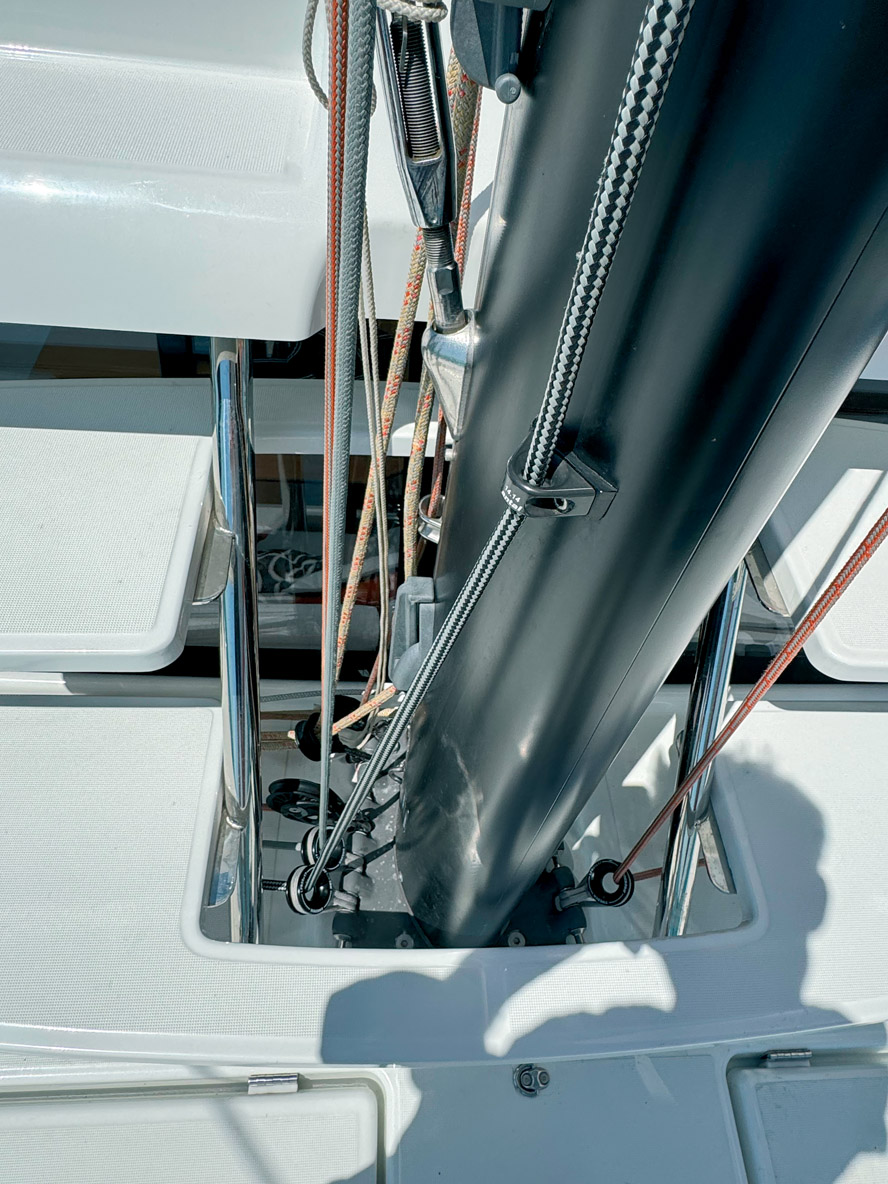
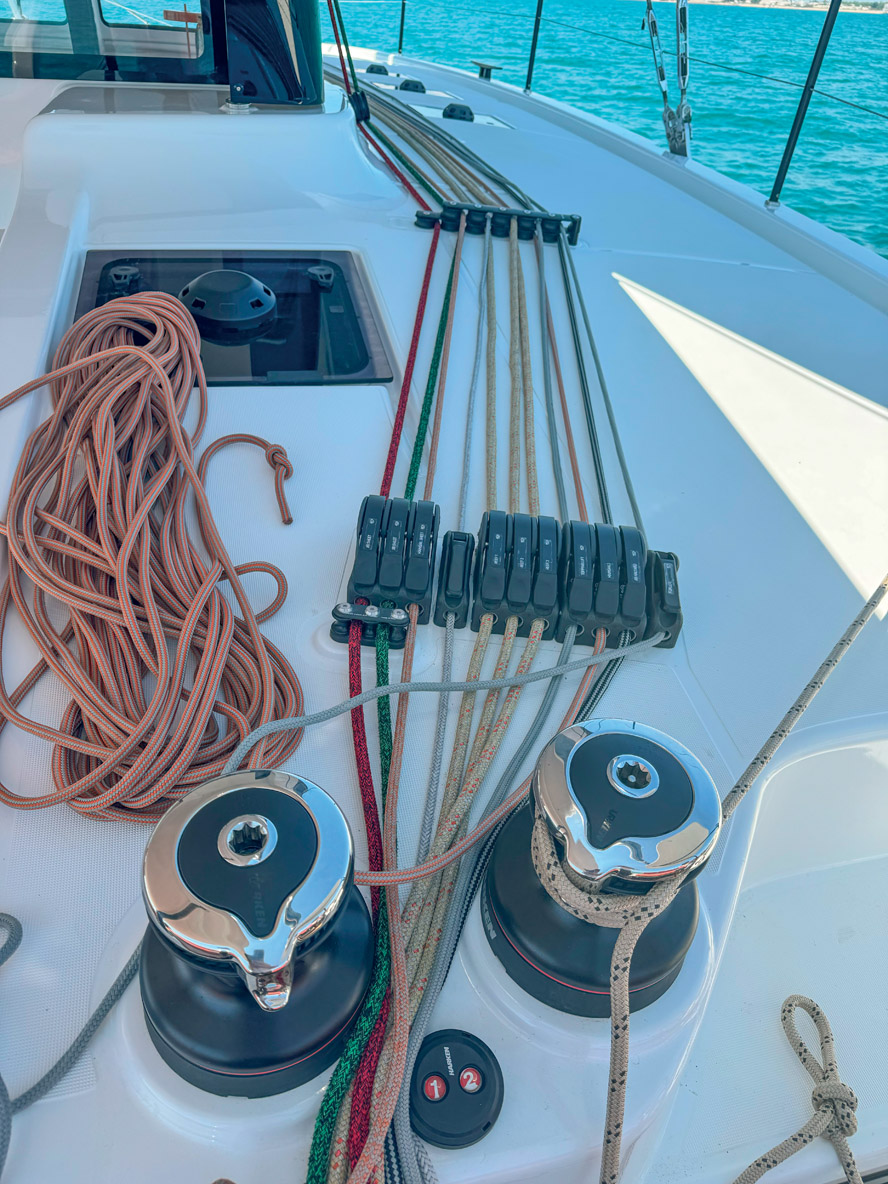
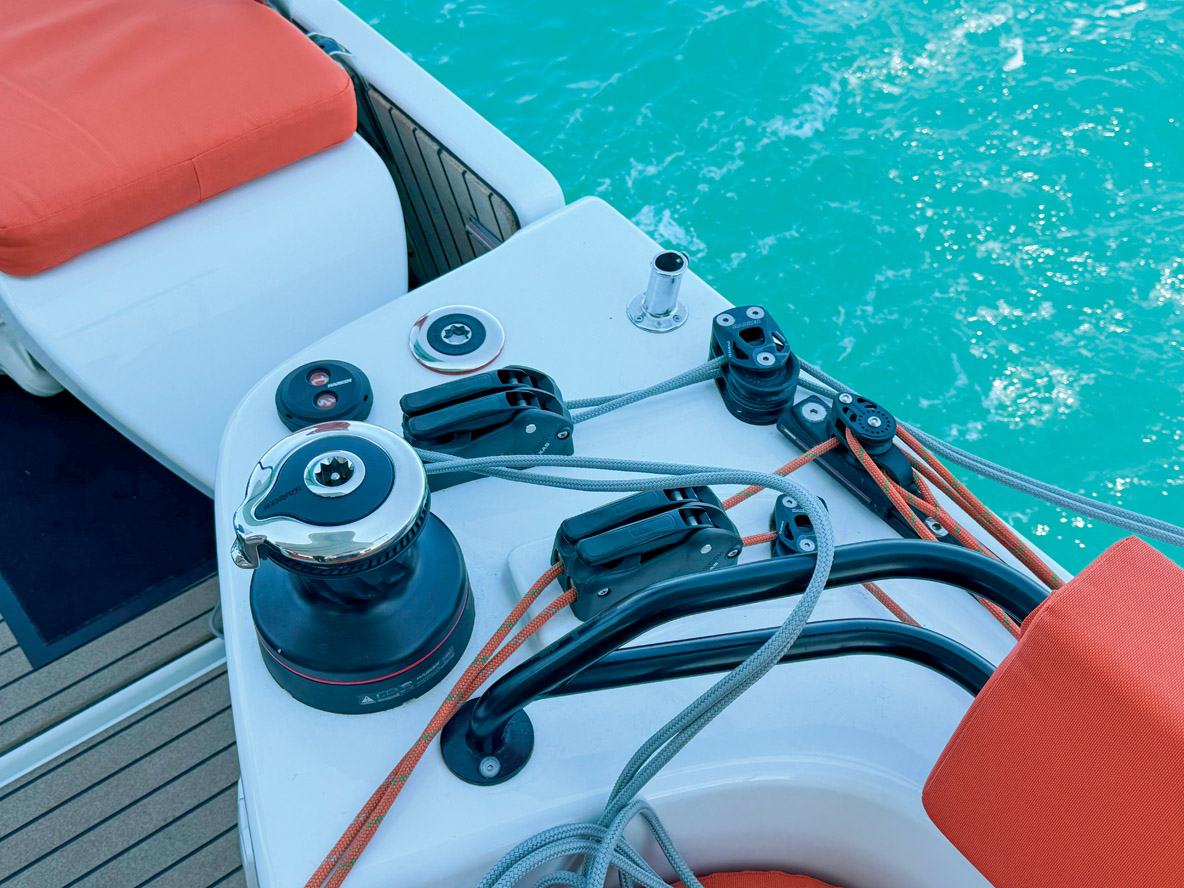
The ergonomics of the maneuvers and the quality of the deck hardware
The layout of the owner’s cabin
The Code 0 could be bigger
The orange cushions (unless you love orange, of course)
Technical specifications
Architect: MLYDG
Design: Piaton Yacht Design
Length: 42’7” (12.99 m)
Beam: 23’9” (7.25 m)
Draft: 4’10” (1.48 m)
Displacement: 23,400 lbs (10.6 t)
Sail area: 1,238 sq ft (115 m²) or 1,335 sq ft (124 m²) for the Pulse Line version
Drivetrain: 2 x 40 HP
Fuel: 2 x 53 US gal (2 x 200 l)
Water: 79 US gal (300 l)
Cabins: 3/4
Refrigerator: 4.6 cu ft (130 l) with up to 10.6 cu ft (300 l) optional
Price: from € 465,000 ex-tax (3-cabin version)
Price of the version we tested: € 650,000 ex-tax
Main options in € ex-tax:
Sail Away pack (Garmin electronics, electric winch & windlass): 26,500
Pulse Line rig (3D hardware, taller mast, gray laminated sails): 18,900
Long bowsprit kit for headsails: 7,000
Code 0 and hardware: 8,730
Bimini tops at helm stations: 4,600
Cockpit tent: 5,200
“Skylounge” layout on the coachroof: 4,900
Watermaker: 14,000
6.5-kW generator: 25,000
Air conditioning: 15,600