
In just a little over 10 years, Peter Johnstone has succeeded in positioning Gunboat as a name synonymous with performance and exclusivity in the catamaran world. A striking design, identifiable at first glance, out of the ordinary performance and effective marketing have made the name an icon. Here is our test of the builder’s latest boat, the Gunboat 55...
Infos pratiques
- Le chantier : Gunboat 55
- La fiche technique
- Découvrez notre vidéo exclusive
- Financez votre Gunboat 55
- Assuez votre Gunboat 55
- Articles autour du Gunboat 55
Fans of 'the orange flame’ therefore look forward to any new boat from this now officially American builder. So when this latest addition ignored tens of years of development in cruising catamarans to re-invent space, despite the cold autumn rain there was a queue on the dock at Annapolis, to have the privilege of visiting THE new boat. For you, Multihulls World has gone one better: sailing aboard for a few hours. Immediate embarkation for the future...
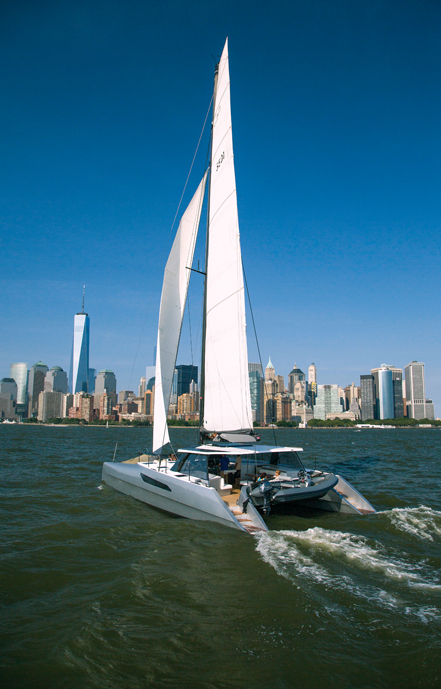
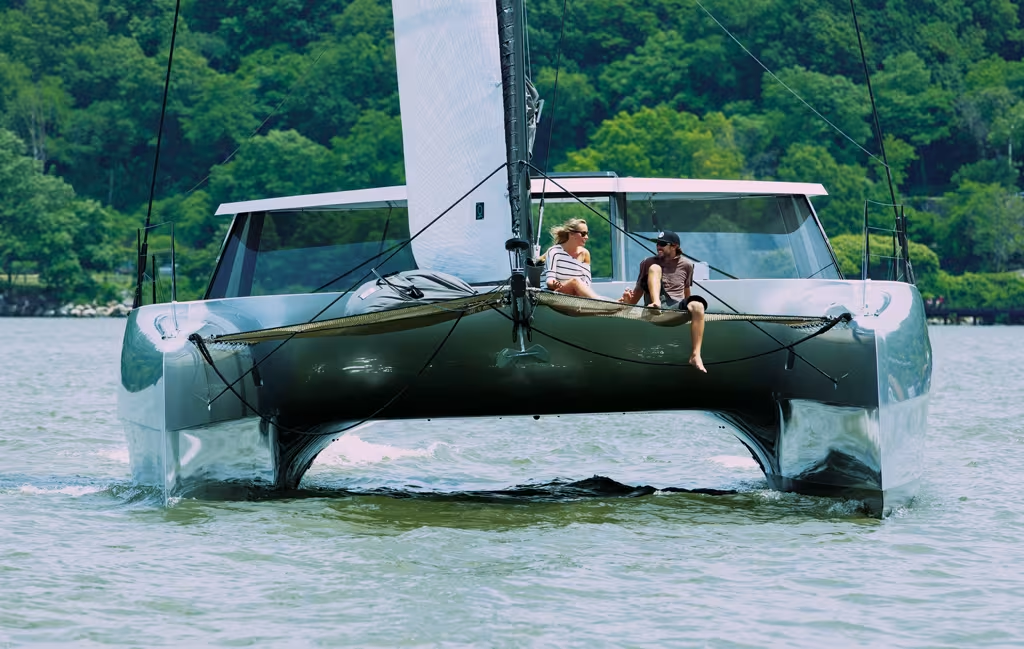
Well supported by its sugar scoops, the Gunboat 55 shows off the power of its slim rig.
A Gunboat’s program can be summed up in one phrase: sailing fast, everywhere and in style. Being a Gunboat owner is out of the ordinary, a lifestyle. For those who create the American legend, a mixture of initiative, dynamism and success. This comes at the right moment; Rhode Island where the company has been based since its creation, and more widely the north-east coast of the United States, is full of people who are successful entrepreneurs during the week but turn into hardened racers at the weekend. Covering over 300 miles per day with no stress, carrying off elapsed time victories, spending summer in Maine and winter in the Caribbean, whilst being able to welcome the family or friends aboard for long, comfortable if not luxurious and certainly unforgettable stays – for Peter, only a catamaran can succeed in squaring this particular circle. It was therefore on this basis, and with the 62’ Tribe launched in 2001, that Gunboat built its reputation and created in a way its own niche in a market totally dominated by general-interest builders. With the exception of an almost ‘popular’ 48-footer, and whilst awaiting a G4 which promises to be spectacular, the performance/comfort compromise means that the American builder’s range consists mainly of large boats: 62, 66, 78, 90 feet, and more recently, 60. The choice of launching a 55-footer therefore aims to appreciably widen the builder's public potential. With a basic price of 2.1 million dollars per boat, 2.5 million fully equipped, we can’t really talk about ‘bringing it within everyone’s reach’, especially as this 55 is almost 57 feet long (56.9 to be exact), but the ambition is visibly to move from one-off production to short production runs. The Gunboat 55 is also the first Gunboat to be 100% ‘Made in the USA’. The huge stars and stripes floating at the masthead throughout the whole of the Annapolis Boat Show week bears witness to the team’s pleasure at returning to the country after its beginnings in South Africa and a Chinese adventure which left some unhappy memories: “Never again!” Peter Johnstone admits, visibly relieved. The child prodigy, raised on J-Boats from the earliest possible age and an expert racer, is thus back in the country, and he wants everyone to know. Because these little gems of technology will from now on be produced in North Carolina. Constructed in female molds, to be able to offer an irreproachable level of finishing, the hulls, built in epoxy sandwich using infusion, are post-cured in a kiln, and benefit from carbon tissue and reinforcements wherever necessary. Carbon: the magic word has been spoken. Carbon in the impressive internal longitudinal reinforcements at each bow, which allows the traditional forward crossbeam to be done away with. Carbon in the mast (fixed, a shame...) of course. Carbon for the shroud chainplates, the daggerboards, the spreaders, the boom, the compression beam which finishes as a bowsprit... At 12.5 tonnes unladen on the scales, the Gunboat 55 is clearly at the bottom of the range of weights for a catamaran of this size. If you add to this an extraordinary stiffness and a generous sail plan, you will very quickly realize that this boat is dynamite! However, to widen the range of possible purchasers, and to reassure lovers of blue-water cruising, the bows are sacrificial for 1.5 meters, with a watertight bulkhead aft of the martingale. The sugar scoops are also separate parts, which can take the rudders with them in the case of a violent impact, without compromising the boat’s structural integrity.
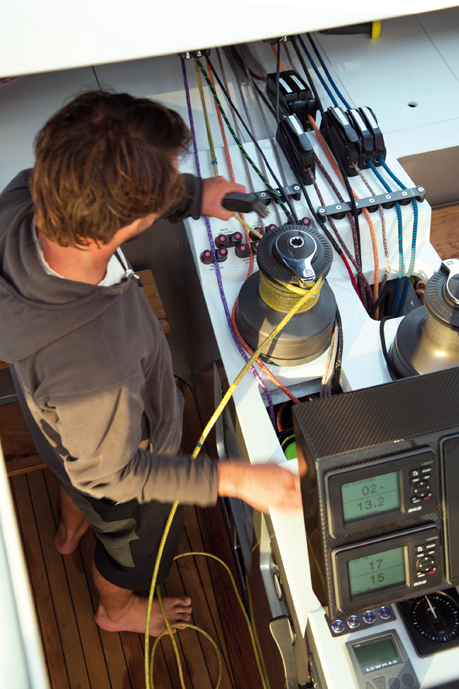
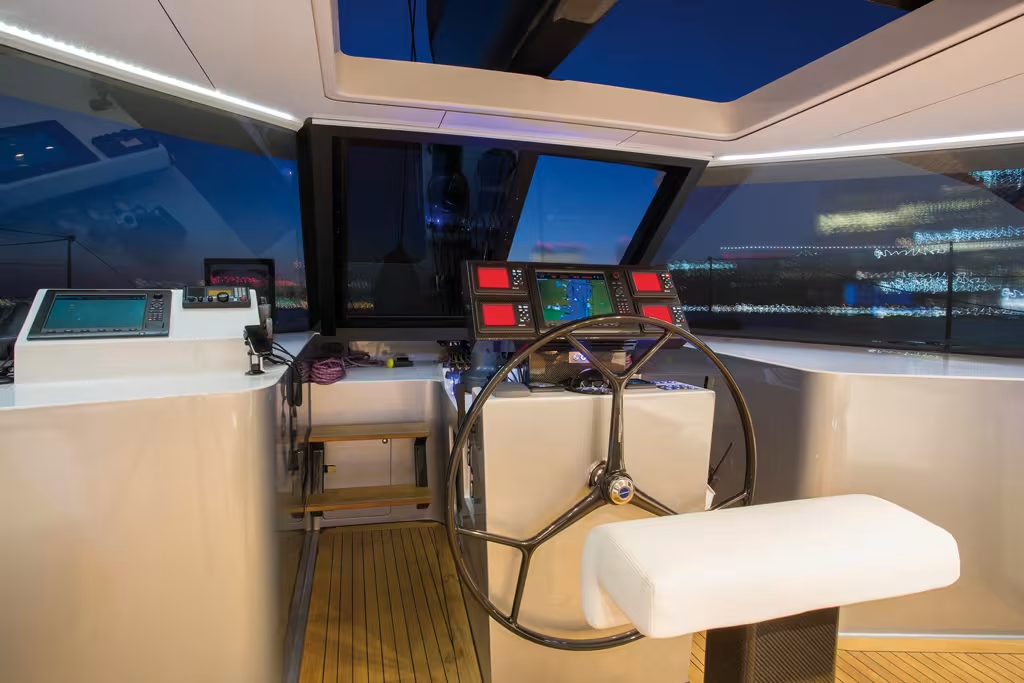
Just two winches to handle everything requires good anticipation of each maneuver’s sequence.
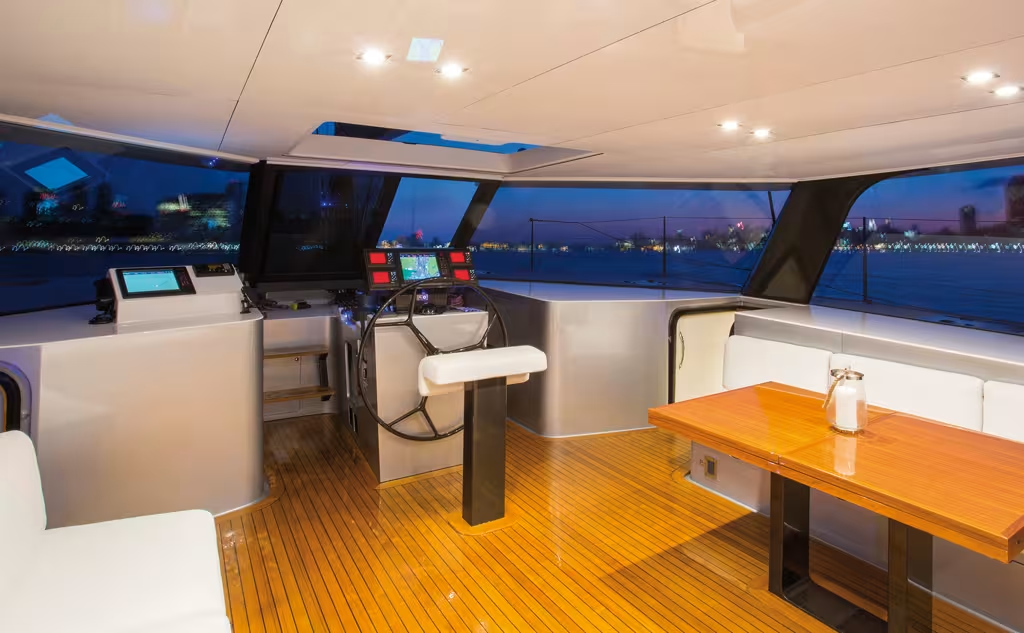
But the aim to please a greater number of sailors is also confirmed by the abandoning of the forward cockpit on the 55, whose effectiveness is approved of by its fans, but whose exposure is decried by its detractors. Also, more than through its construction method, which is certainly up-market, but after all quite classic for a Gunboat, it’s through its radically innovative approach to the accommodation in the nacelle that this 55-footer stands out right from the start. If we could already sense the early signs of a major development in the catamaran species on models such as the Nautitech Open 40, or the Rapier 550, the Gunboat 55 marks a break. Although the maneuvering position and the superb steering wheel are again forward, at the mast foot, in the in-house tradition, they are now integrated into a completely glazed coachroof, which is as aesthetically pleasing as it is efficient in terms of vision and protection. In fact, when talking about fast boats, we are often talking about strong apparent wind. Just like cars at the beginning of the 20th century, and aircraft cockpits at the end of the 1930s, the time has finally come to protect crews from the elements, similar to what the Vendee Globe sailors have developed on their Imoca 60s, or the increasingly effective protection seen on the fastest trimarans in the last Route du Rhum.
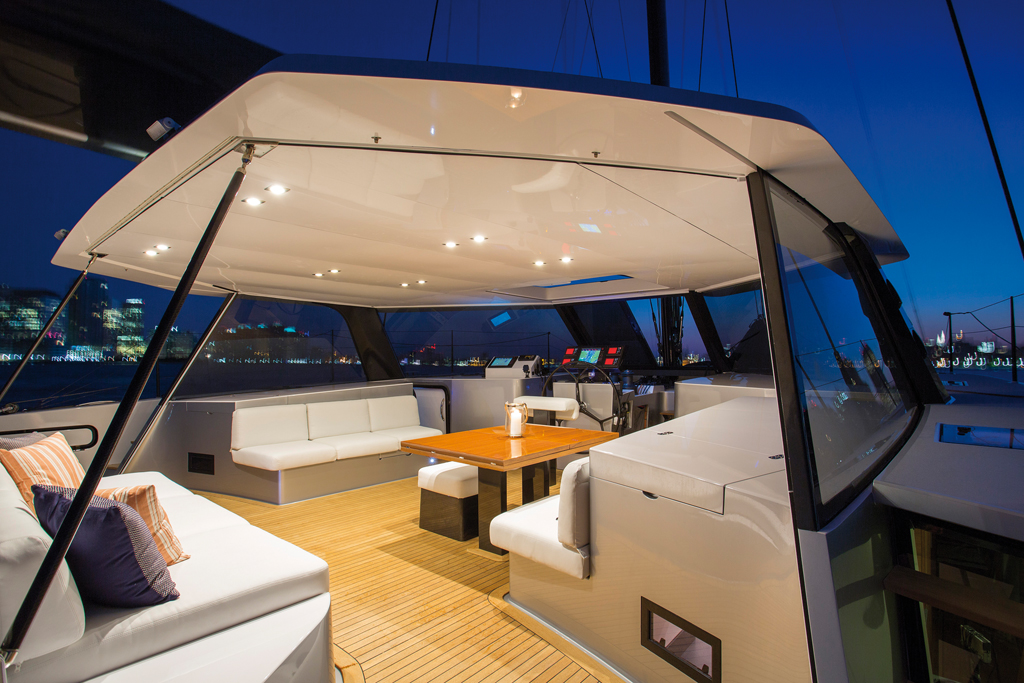
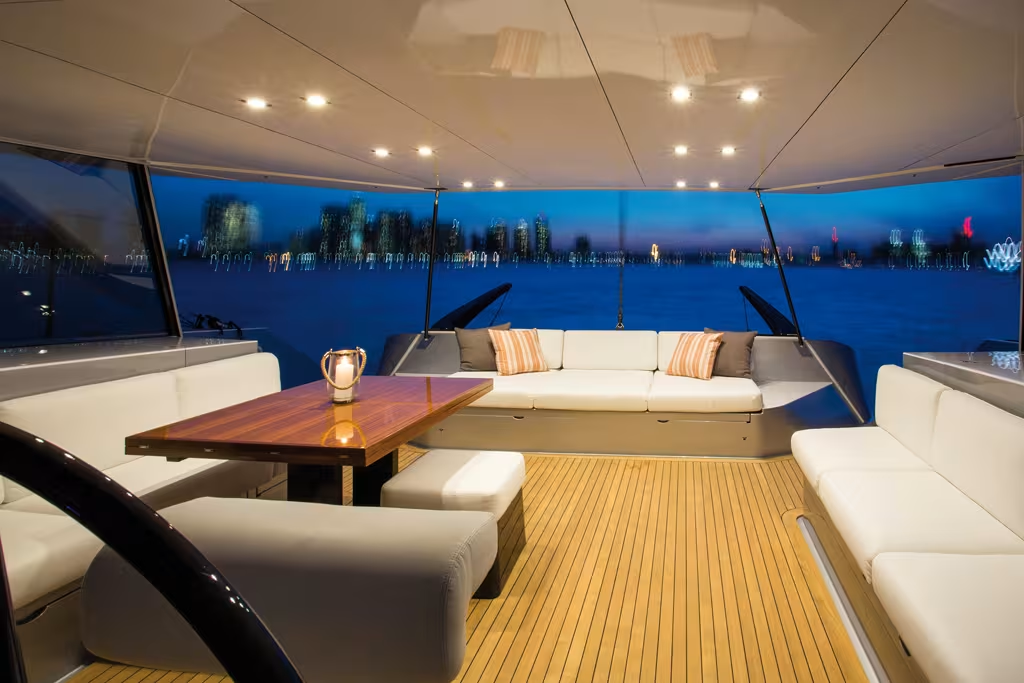
Easy access from the sugar scoops, which can be closed off with transparent canvasses in bad weather.
Welcome aboard
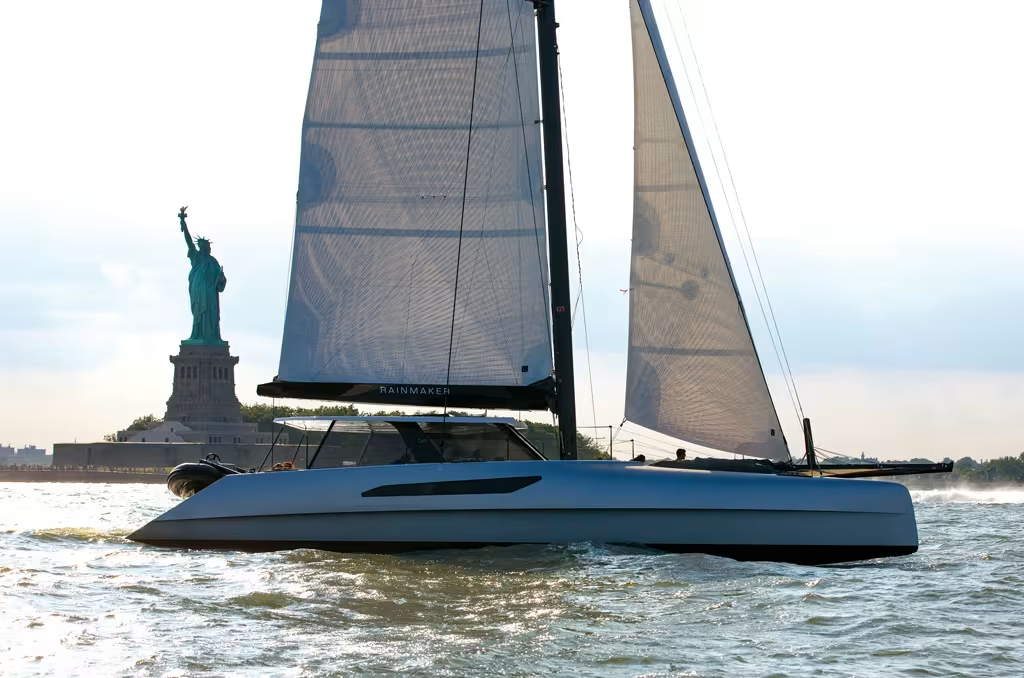
Sharp bows, ribs underlining the dynamism of the lines, sparkling metallic paint, a completely glazed, futuristic coachroof – as we approached in the tender the brand new Gunboat at anchor, the day after the Annapolis Boat Show, you could say that our first impression was...impressive! With this design, Nigel Irens, the star of the naval architecture world, has confirmed (if he needed to) his incredible skills, which demand respect if not admiration from everyone, beginning with that of his fellow naval architects. In the 14 pages of the boat’s technical specifications, one expression alone sums up this design’s philosophy: ‘Less is more’. After this first appealing visual contact, the ‘tactile’ side is reassuring. Climbing aboard is easy; the very wide, teak-covered sugar scoops give comfortable access, via just three steps, to the central nacelle, which accommodates all the functions: cockpit, saloon, steering position, sail handling control position, and even potentially the galley, if the option is chosen to shift it to the living platform from the back of the port hull, where it is positioned as standard. The platform was so devoid of the risk of injury, we didn’t hesitate to take off our shoes. From the aft crossbeam to the mastfoot, and over the full width between the two companionways, there is not a single step, pad eye or line to risk hindering your movements. In much less time than it takes to read the first few lines of this paragraph, the dinghy was raised on its davits, with the help of the captive winch present at the boat’s stern. This is the one and only control line which is not returned to the two Harken 58 hydraulic winches, which sit prominently forward of the steering position. The deck plan has obviously been the subject of an enormous amount of work, to succeed in returning all the control lines, even the spinnaker sheets, so efficiently to this central, forward maneuvering position, as on all the Gunboats, (but protected this time!). Nevertheless, with just two winches, the manoeuvring sequences will have to be perfectly assimilated by the crew to be realizable. But what a panoramic view! With its slightly inclined toughened glass panels, present on both sides and at the front, you have a feeling of being both protected, and in the heart of the surroundings. Forward, three steps lead to an integrated sliding glass door giving access to the mastfoot and the trampoline. The aft end can be closed by flexible panels, with integrated acrylic windows. These panels can either be rolled under the rigid bimini which covers the whole platform, or completely and easily removed. And the icing on the cake of this attractive system is the remotely controlled ‘sunroof’ overhanging the steering position. Certainly a small concession to the weight specifications, but the view of the mainsail, the light and the ventilation form a triple advantage which it would really have been a shame to sacrifice. Under this skyward-looking window, leaning against the sculptural carbon sitting-standing support, the wheel (also in carbon) between two fingers, the two slim bows can be steered with precision, thanks to the in-house designed push-pull steering system.
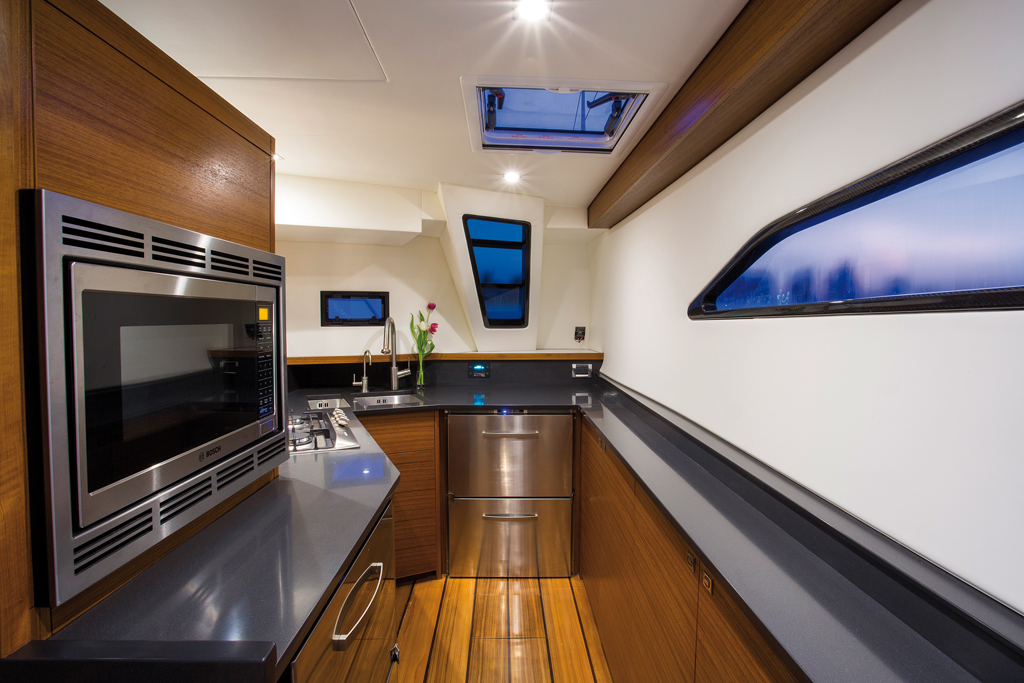
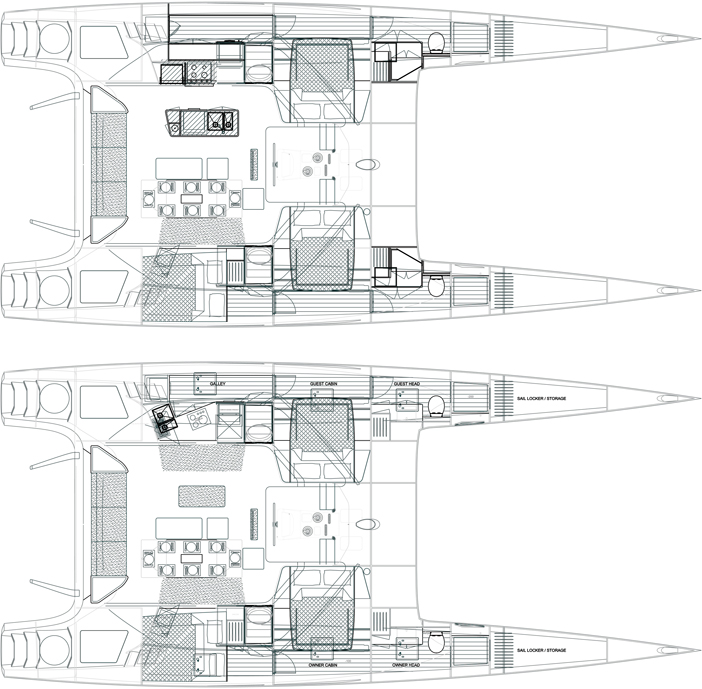
The very nice standard galley at the aft end of the port hull allows snacks to be prepared out of sight.
At the helm of an exceptional boat…
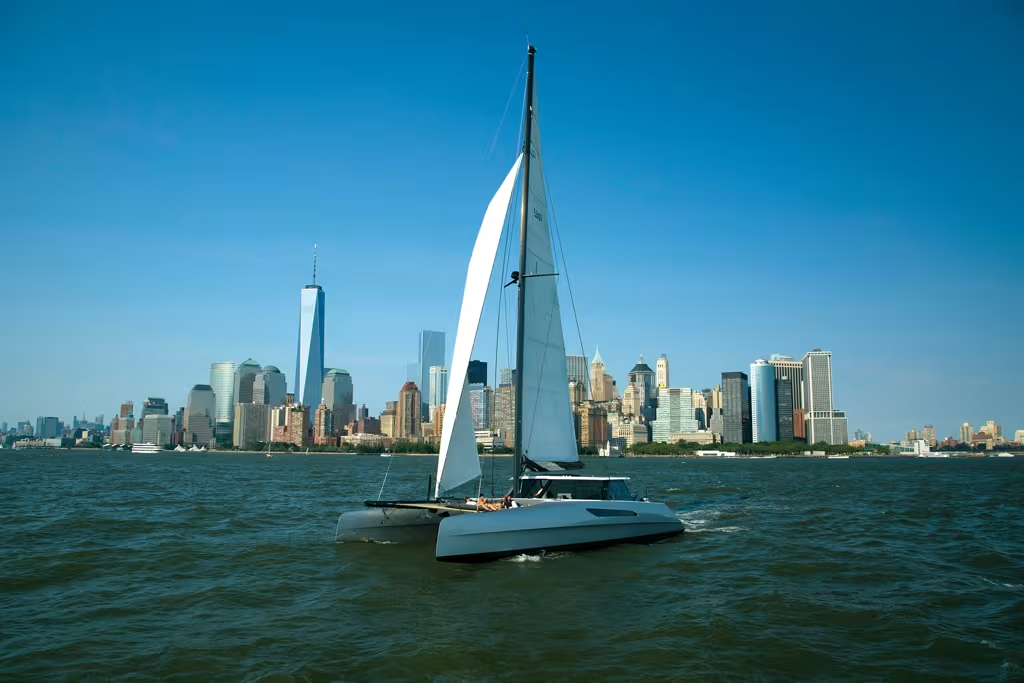
The two 39hp Yanmar engines took us gently away from the anchorage. Hoisting the mainsail was child’s play. At the helm, Peter Johnstone made light of this maneuver, with his foot. With a roar of laughter, he insisted that aboard this boat, the fingers and toes do the most work, by pushing the buttons on the winch! Did the diameter of the halyard surprise us? It’s because the sail is ‘hooked’ at the masthead, thus reducing the weight aloft. With the jib unrolled and the main sheeted in, again using just the fingertips, the acceleration was like a kick in the back. On the very calm waters of Chesapeake Bay, the wind varied frequently, and the Gunboat reacted to each gust. Each acceleration was accompanied by a slight increase in the angle of heel, revealing the sporty character of this catamaran, which upsets all the market's conventions. Under Code Zero, the accelerations were even stronger, as were the forces, but the hydraulic winches easily coped, only betraying their power through the noise of the high-tech lines on their drums. The steering position is well sheltered, and enjoys a stunning view of the water, the sails and the scenery! We had fun luffing up in the gusts and bearing away in the lulls, to optimize the VMG: 200 miles in 24 hours is the minimum, even to windward; 240 miles is the norm. The promise of shortening the distances, and limiting the number of nights spent at sea. Whilst the ‘technico-tactical’ considerations raged around the steering and maneuvering position, the rest of the crew took advantage of the sofas aft to relax and admire the superb wake created by the twin hulls, which are as elegant as they are dynamic, without the unpleasant pitching movement which spoils the performance of so many catamarans. Thanks Nigel...
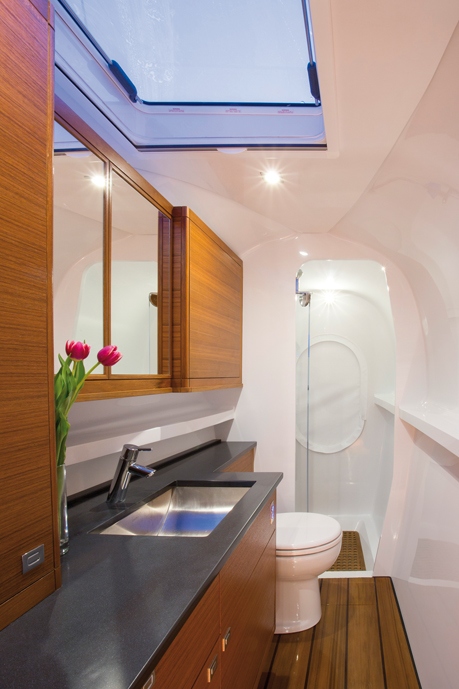
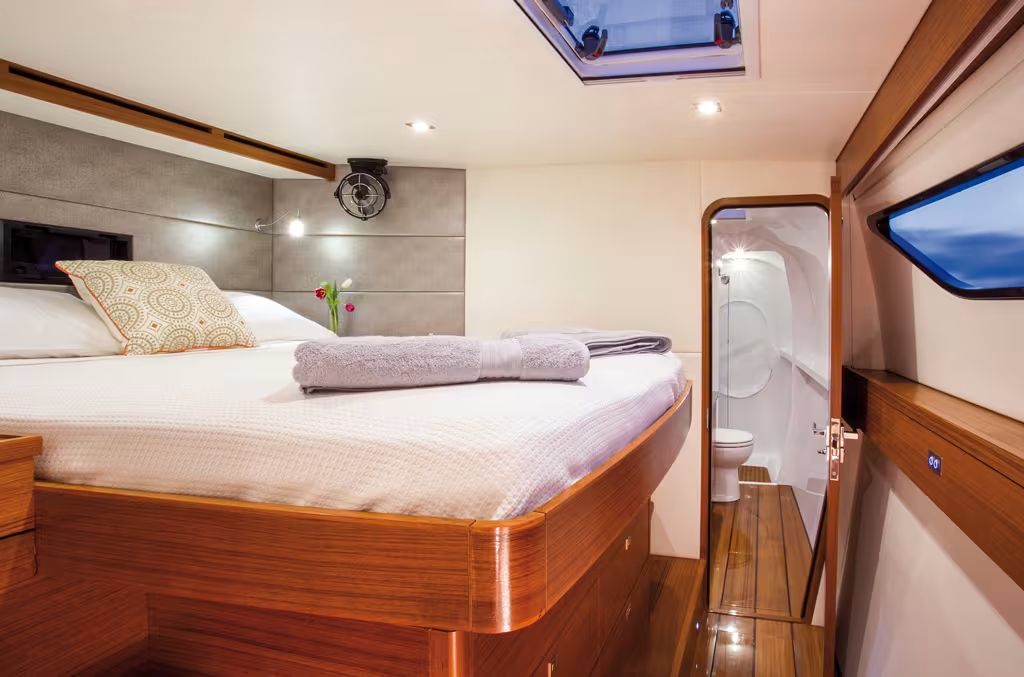
Each central cabin is extended by a genuine bathroom suite, with an electric WC and a huge independent shower: luxury at 15 knots or more!
Although outside everything is elegantly modern, with simplicity serving performance, the two companionways give access to accommodation which in contrast appears relatively classical. Use of teak woodwork no doubt contributes to this impression. Forward of the companionways, the port and starboard hulls offer rigorously symmetrical accommodation, with a transverse ‘queen-sized’ bed in each, with double lateral access. In the forepeaks, the heads are simple and functional, with separate showers of a good size. The presence of the swinging centerboards can be completely forgotten. The noise of the hydraulic unit allowing their control, as well as that of the winches, is a little more noticeable, whilst remaining quite tolerable. Aft and to starboard there is a more classic double berth. To port, you have the choice between either the galley option, or if this has been moved to the upper level, a stowage area, which can accommodate several pieces of comfort equipment: microwave, dishwasher, freezer... Accessible via watertight deck hatches, the engine lockers’ installations have been the subject of remarkable care. The BUS electricity distribution system, the standard lithium batteries and the solar panels integrated into the bimini confirm the builder’s wish to place its 55 at the most highly-developed level of marine equipment available. To our regret, we were back in the anchorage. After having sailed the length and breadth of the bay at top speed, without finding any real opposition to speak of, the anchor dropped to the seabed. Our hearts could start beating a little slower. Sailing at high speed can sometimes be a little stressful, but what a feeling! We remained under the spell of this boat’s purity. The lines, the deck plan, the equipment, the accommodation, the choice of materials, the exceptional level of finishing and the integration of each element – everything contributes to elegance and efficiency. It’s as if this new American racer had Italian elegance in its veins. We would give a lot to be able to sail a race or two at the ‘high-society’ regattas which set the Caribbean alight once winter has arrived!
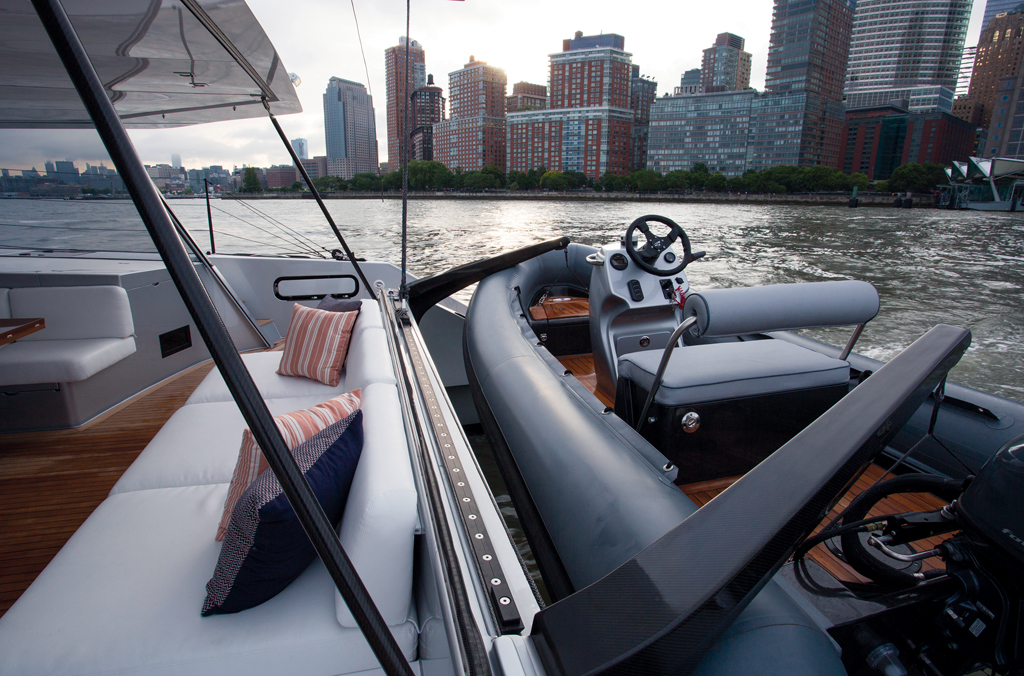
Well fixed on its two carbon davits, the dinghy is raised in the blink of an eye thanks to the dedicated hydraulic winch.
Technical specifications
- Shipyard: Gunboat
- Architect: Nigel Irens
- Overall length: 16.76m
- Waterline length: 16.76m
- Max. beam: 7.62 m
- Draft, centerboards lowered: 2.80 m
- Draft, centerboards raised: 0.61 m
- Air draft: 25.68m
- Mast length: 23.77 m
- Unladen displacement: 12,500 kg
- Laden displacement: 15,250 kg
- Bridgedeck height (fully laden): 0.855 m
- Diesel tanks: 2 x 299 l
- Water tanks: 2 x 185.5 l
- SAIL AREAS: Mainsail: 125 m² Jib: 40 m² Code zero: 140 m2 Asymmetric spinnaker: 235 m²
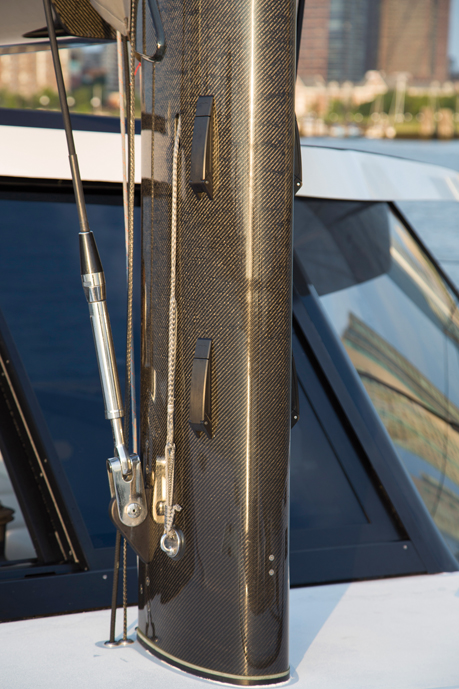
The varnished carbon mast from Hall Spars combines aestheticism with performance.
The competitors:
| Model | Builder | Sail area in m2 | Unladen weight in tonnes |
| Rapier 550 | Broadblue | 160 | 9.8 |
| Swiss SC2 55Evo | Swiss Catamaran | 165 | 14 |
| Outremer 5X | Outremer Yachting | 181 | 13.9 |
| Mattia 56 | Mattia | 200 | 11.6 |
The plusses
- Really innovative design and concept
- Top quality finishing
- Excellent performance
The minuses
- Quite radical boat
- Access to the bows
- Maneuvering sequences which are sometimes complex
