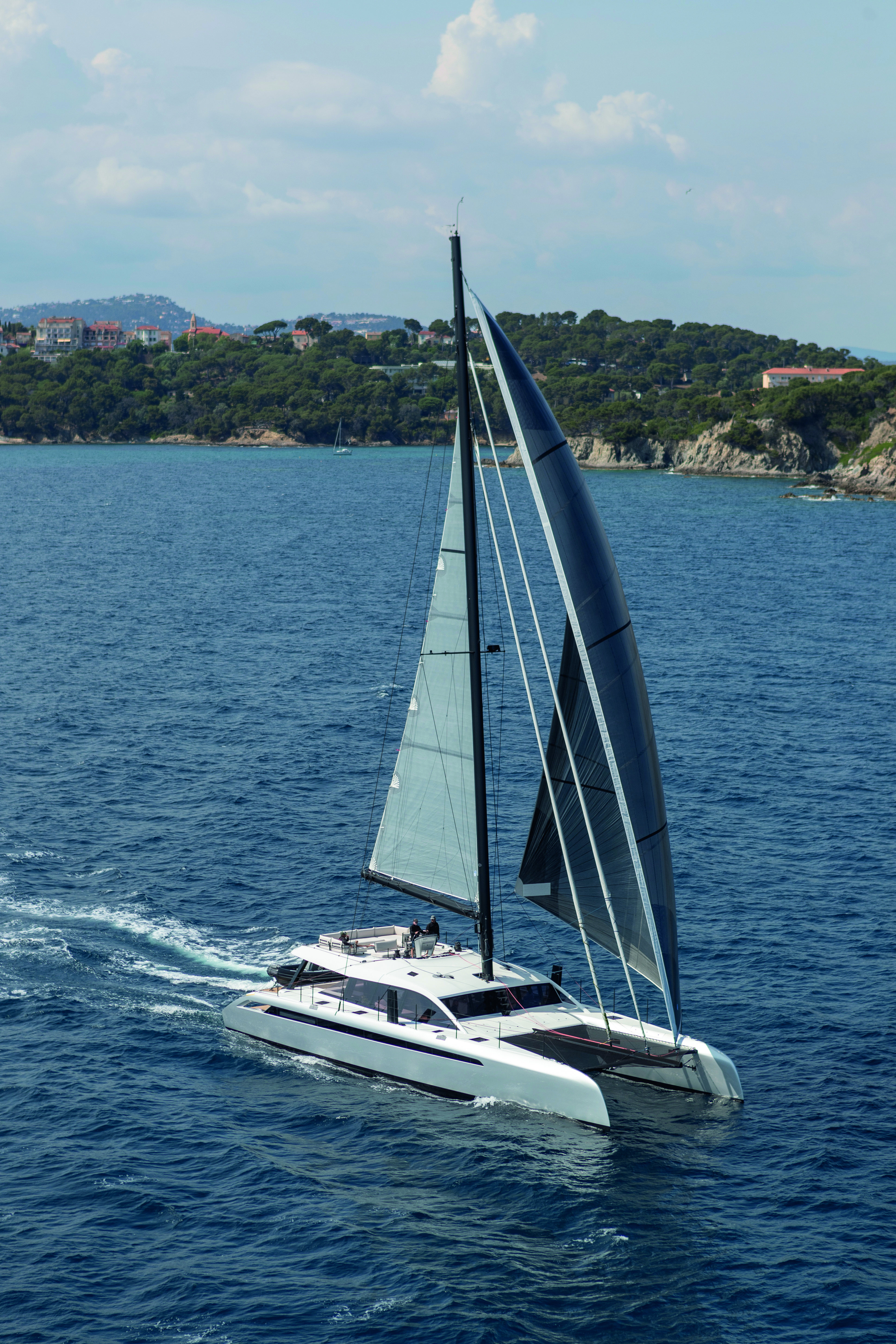
With its carbon mast towering over all the yachts at the Cannes Yachting Festival, more than 100 feet above the sea, the Gunboat 72 was the talk of the town when it was officially presented for the first time back in September. We had the privilege of boarding this fabulous machine for a delivery trip from Saint-Tropez to La Grande Motte. It made a great opportunity to better understand how the manufacturer has managed to reconcile the comfort and luxury of a family yacht with the velocity of an ocean-going steed.

Infos pratiques
- Le chantier : Gunboat 72
- La fiche technique
-
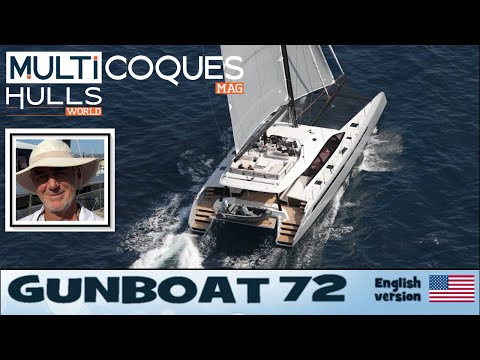 Découvrez notre vidéo exclusive
- Financez votre Gunboat 72
- Assuez votre Gunboat 72
- Articles autour du Gunboat 72
Conditions: 10 to 15 knots of wind, sea state slight
Gunboat... Simply pronouncing these two syllables is enough to arouse attention – followed by the enthusiasm - of the most demanding yachtsman... Synonymous with exclusivity and excellence in terms of design, luxury, technicality and performance, the brand has forged an unprecedented reputation in the highly select world of exceptional multiyachts. In truth, a Gunboat is a true semi-custom cruiser-racer catamaran, in the elitist sense of the term. Since its takeover by the Grand Large Yachting Group and its installation at their shipyard, no less than seven Gunboat 68s have left the hangars, with an 80 was launched at the beginning of the year, followed by the 72 we’re interested in. As for the forthcoming 70, whose development is almost complete (see our Buyer’s Guide in this issue), we shouldn’t have to wait very long before we hear more about it... in the meantime, the previous Gunboats are far from fading into anonymity: on the contrary, they are regularly on the podium of major regattas. A strong signal that shows the extent of racing sailors’ interest in multihulls: the very select IMA (International Maxi Association) created a Maxi multihull division this year. The association of the world’s most beautiful and powerful monohulls is thus recognizing that the finest multihulls can join the ranks of exceptional monohulls. Some Gunboat 68 owners have a glorious past in monohull yachting, before finally being seduced by the sport offered by multihulls. The Gunboat 80 is strictly optimized for day racing. It is the eighteenth racing boat and first multihull for its owner, a Scottish Lord. At the Maxi Rolex Cup, which hosted multihulls for the first time, she finished in second place, setting an example for other Maxi owners. While the program for this first 80 implies a minimalist layout, this is not the case for the 72, which is dedicated to a cruising program (very fast, after all!) and luxury charter. The owner insisted on every comfort, including a flybridge and bathing platform. This request, which went beyond the initial scope of the range, was finally accepted, without losing sight of the DNA that has made the brand so successful.
A masterful design and a weight savings more than mastered
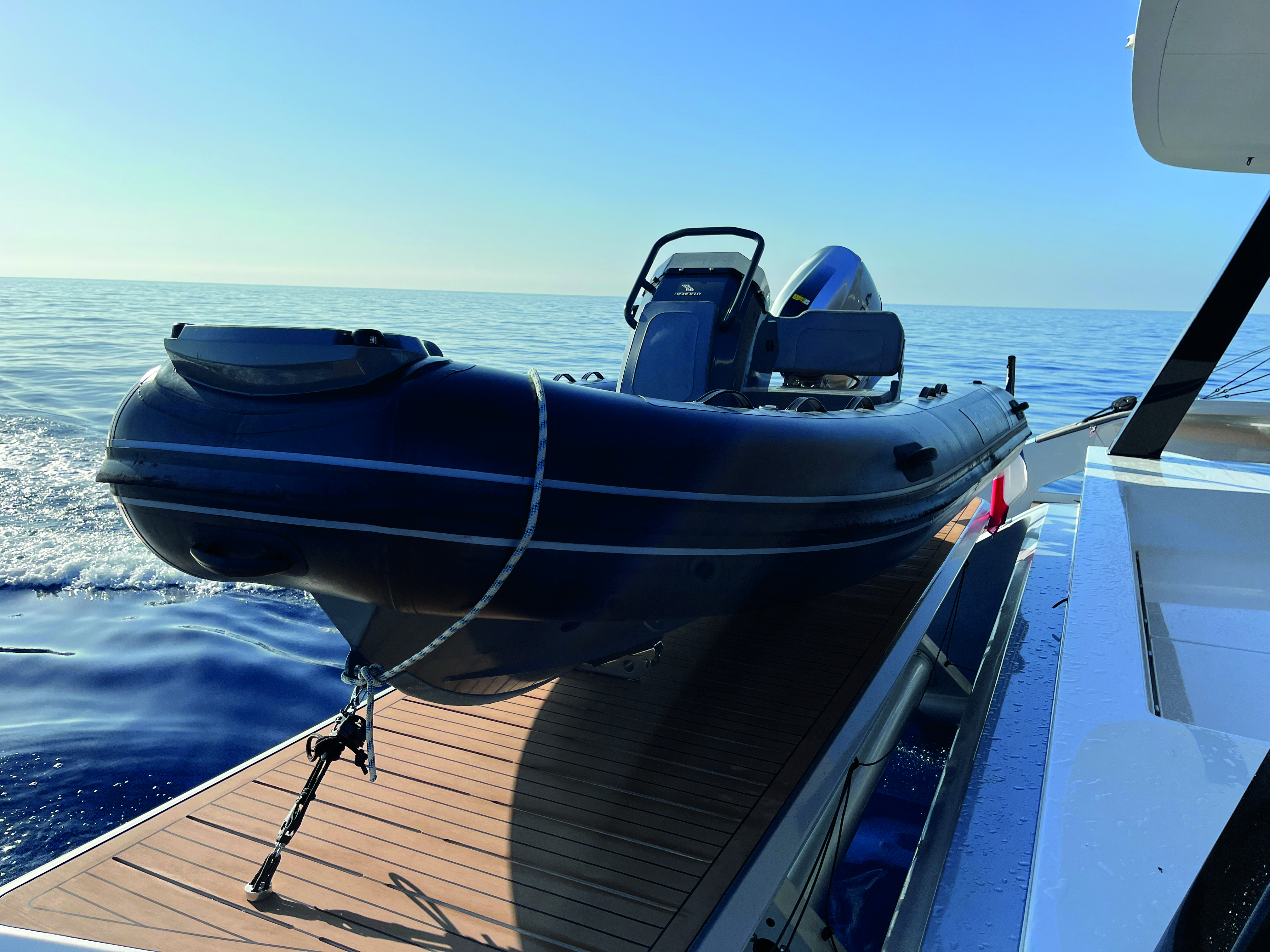
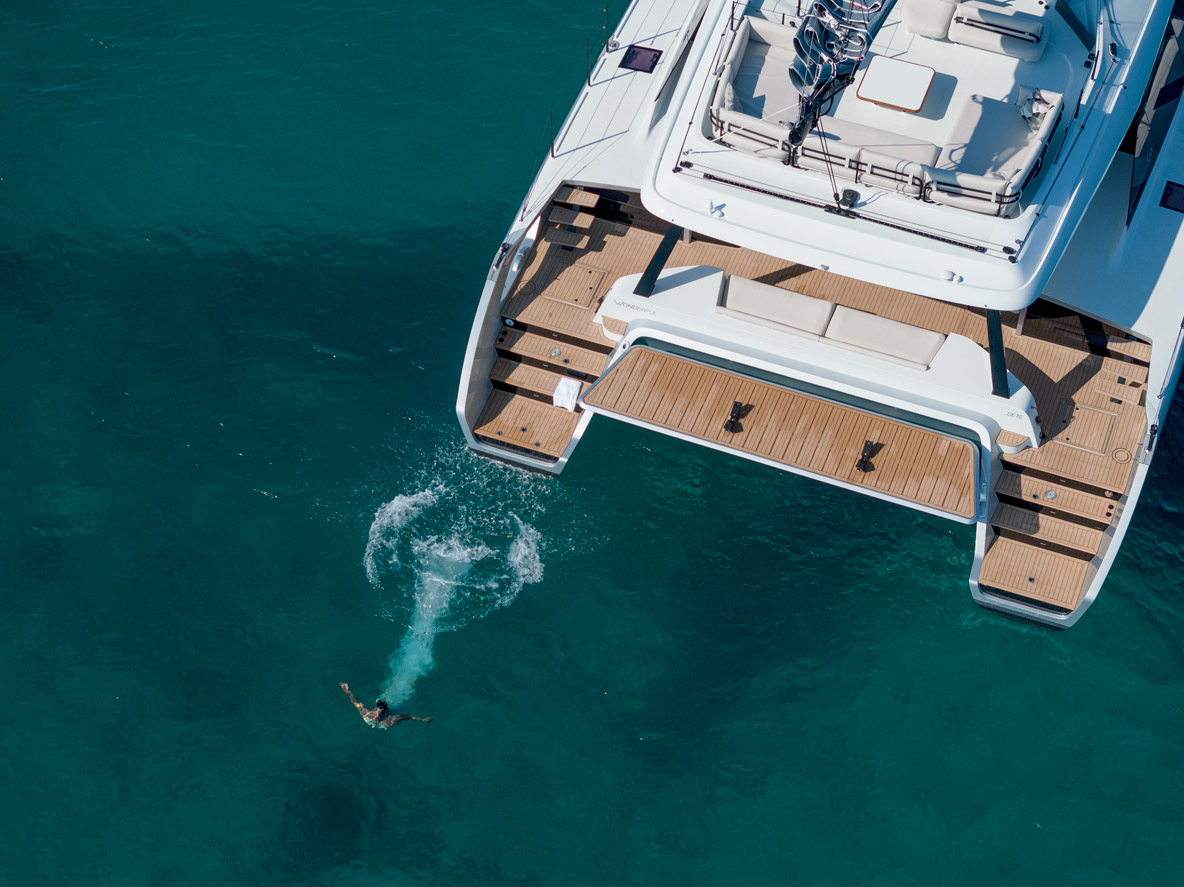
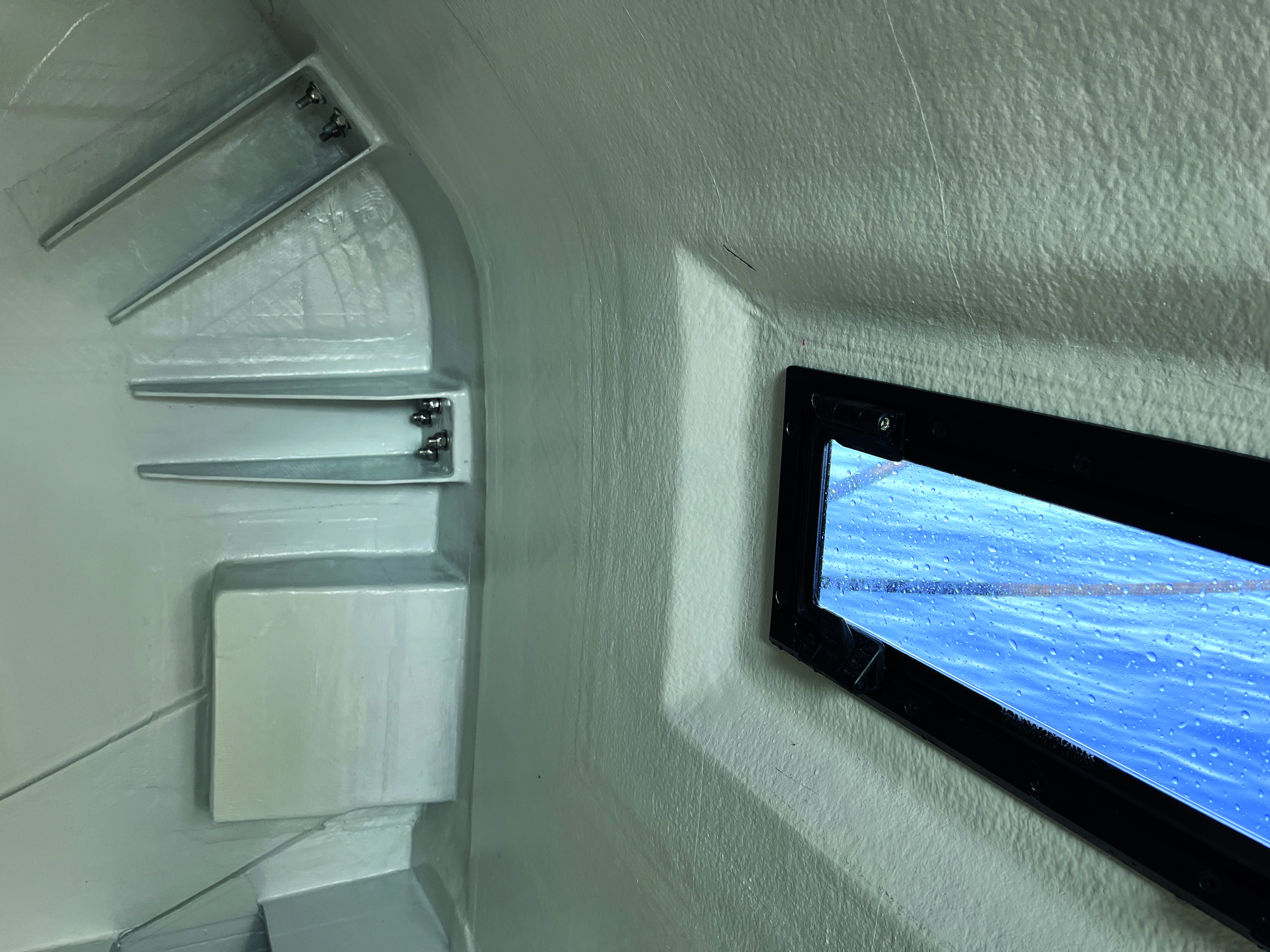
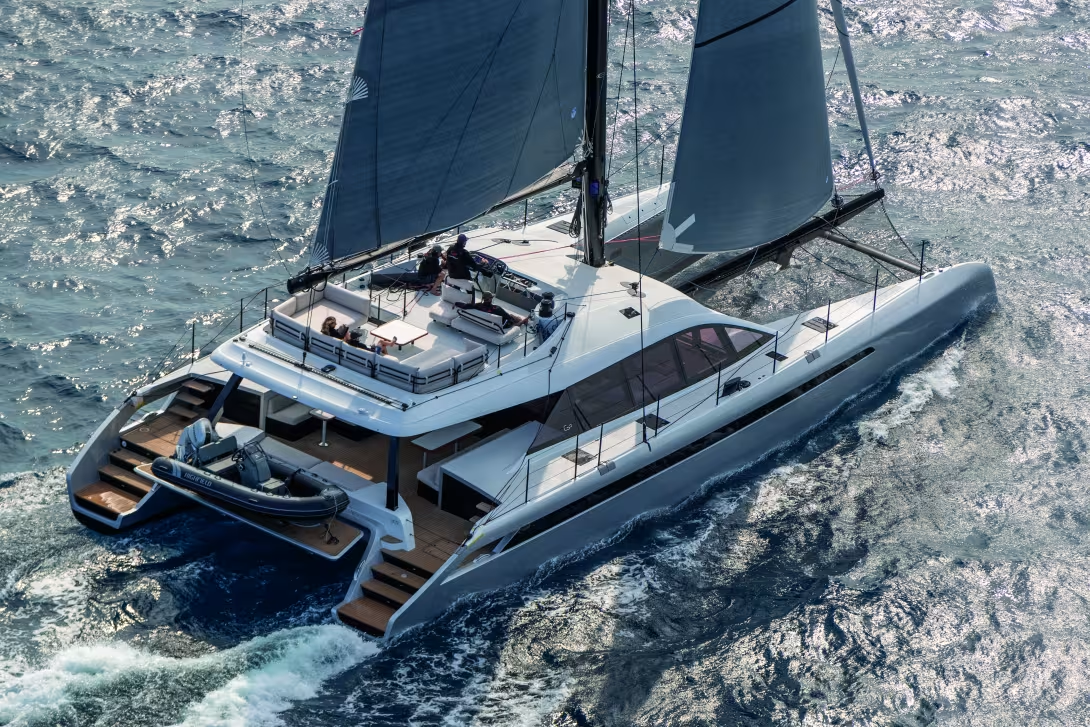
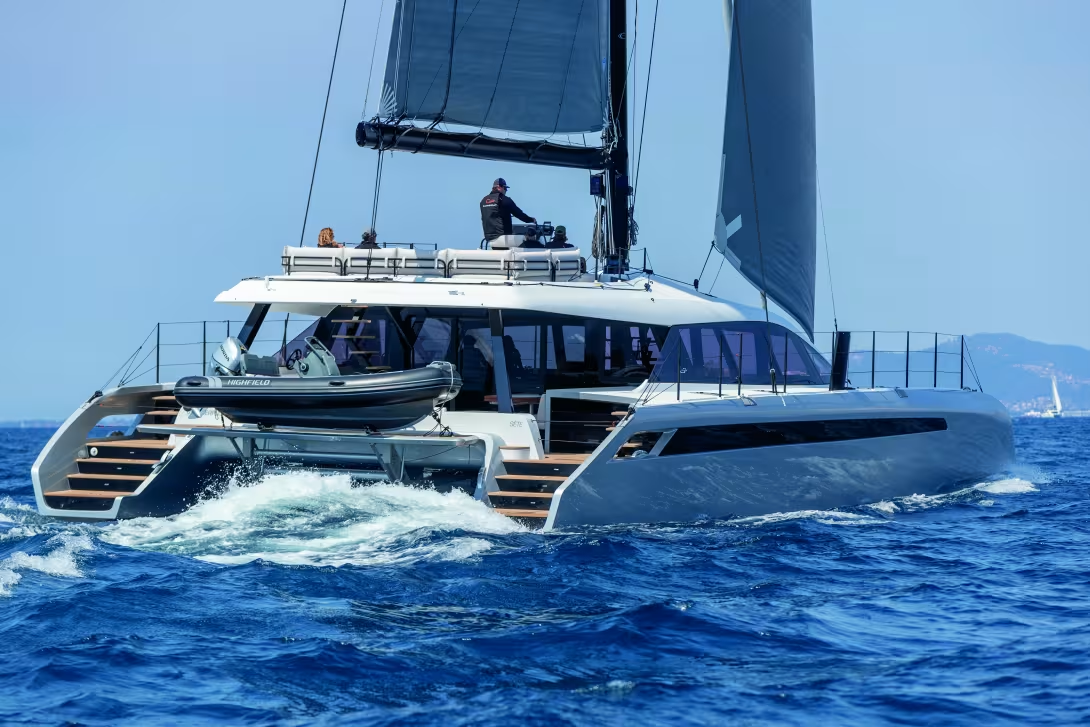
Aesthetics were a crucial aspect of the 72 project, and the designers (Christophe Chedal Anglay and Patrick Le Quément) were able to express all their talent in blurring the flybridge protrusion by concealing it in the coachroof top. To enhance habitability, the proportion of the nacelle is larger than on the 68, but the overall look certainly preserves the Gunboat family look. The wave-piercing bows and fluid, aerodynamic shape of the superstructure with its teardrop portholes characterize this uncompromisingly elegant kinship. In addition to facilitating passage through the sea, the high bridgedeck clearance allows the bathing platform to be raised to cockpit level, disguising its presence and that of the fourteen-foot tender. Step back and you’ll notice that the silhouette, seen from the side, doesn’t betray the presence of any not-so-performance hardware - a real success. But aboard a Gunboat, that performance also depends, among other things, on tightly controlled weight specifications. “This is so tightly controlled that it’s even contractual,” confides Benoit Lebizay, the brand’s managing director. On the specifications, the weight was given as 29 metric tons, but in the end it was just over 27. To achieve this flattering result, “The utmost care is taken in the sampling, infusion, post-curing and assembly of components in carbon, Corecell sandwich or monolithic”, as the shipyard’s engineers, who showed me around on board, explain. It takes two months for the hulls and topsides, a month and a half for the deck, and a further two months for the nacelle. Then seven months of assembly are required, starting with the final post-curing to ensure the rigidity and coherence of the whole. Certain non-structural parts can be made of fiberglass/foam, for maximum lightness. Just open a hatch cover or lift a floor panel to see for yourself. The level of finish is exceptional, as we’d discover once under way. This precision requires constant collaboration between production technicians, the design office and the naval architects, the aim being to zoom in on the specifics as they went along. With 119 employees (20 of whom are women - see inset), the aim is to build three units a year, so we’re well into the top end of the market
Superyacht qualities
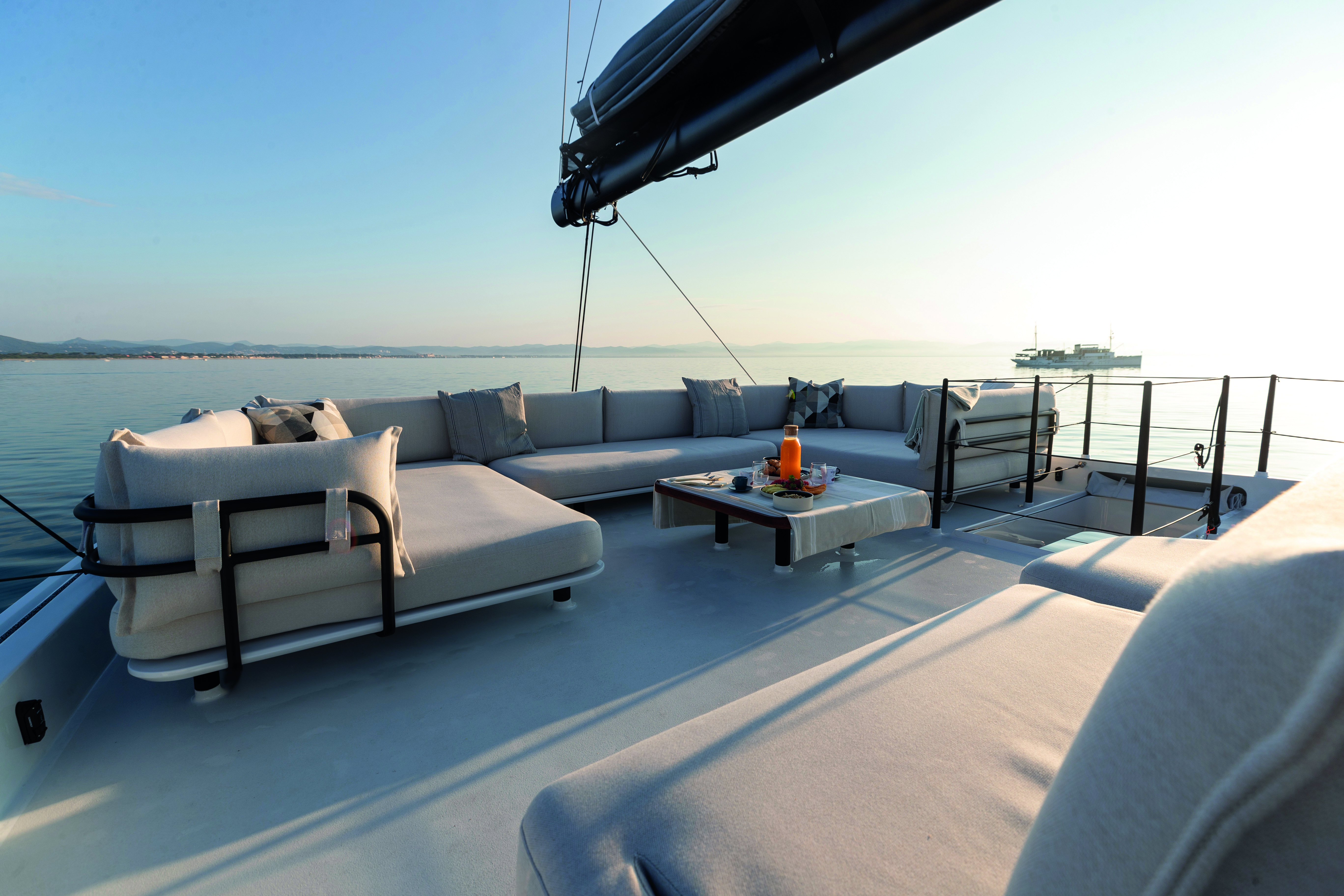
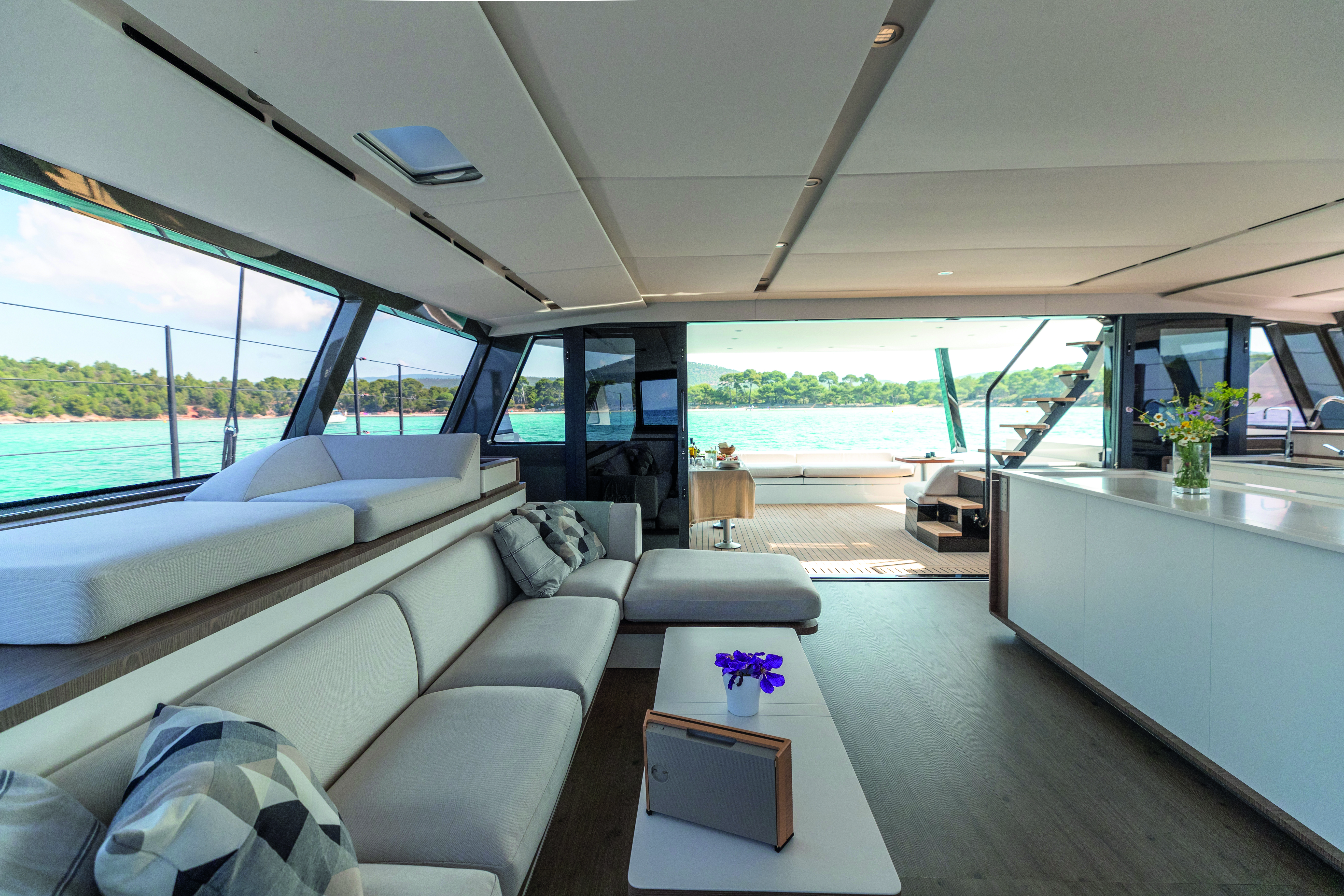
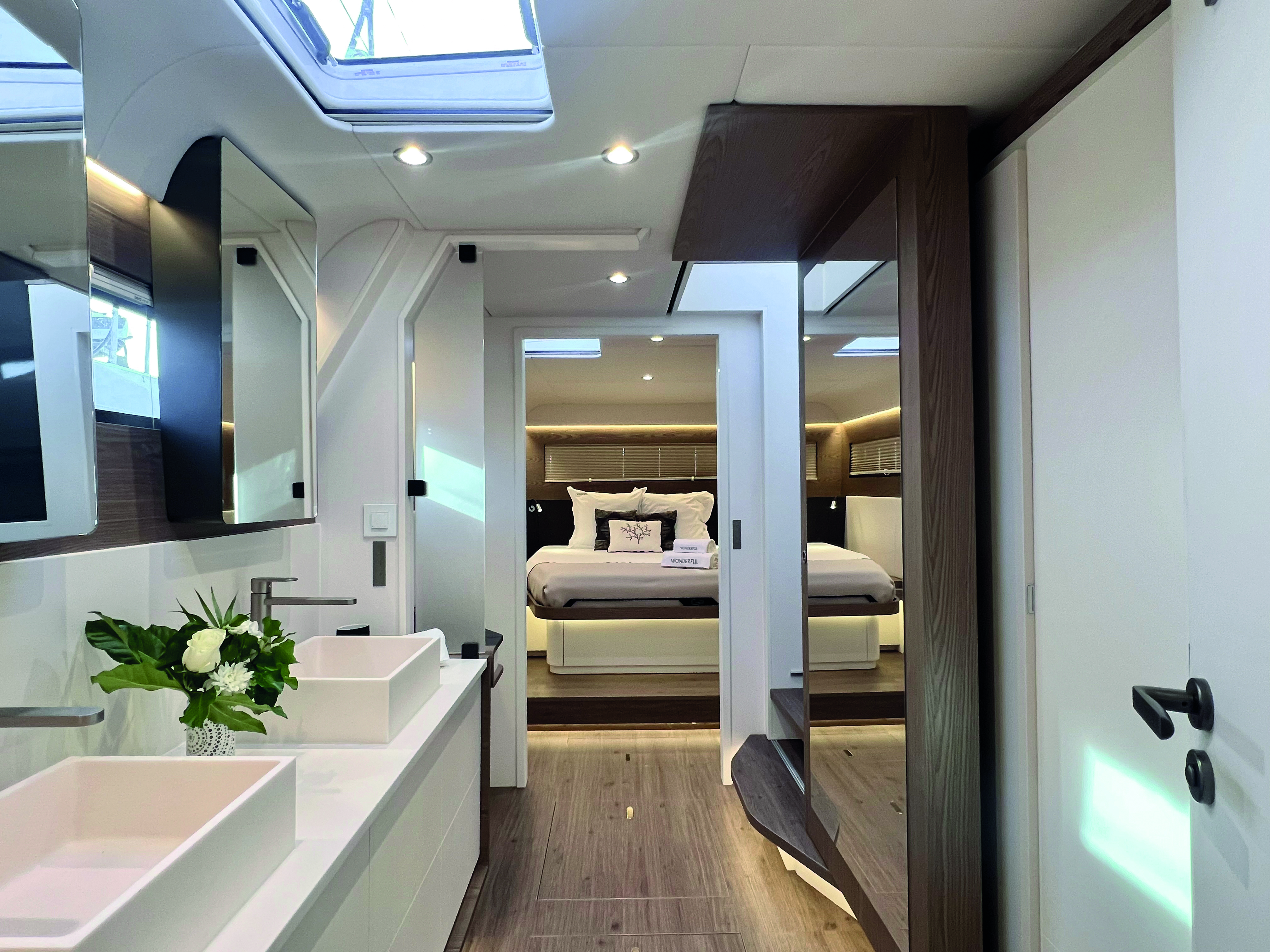
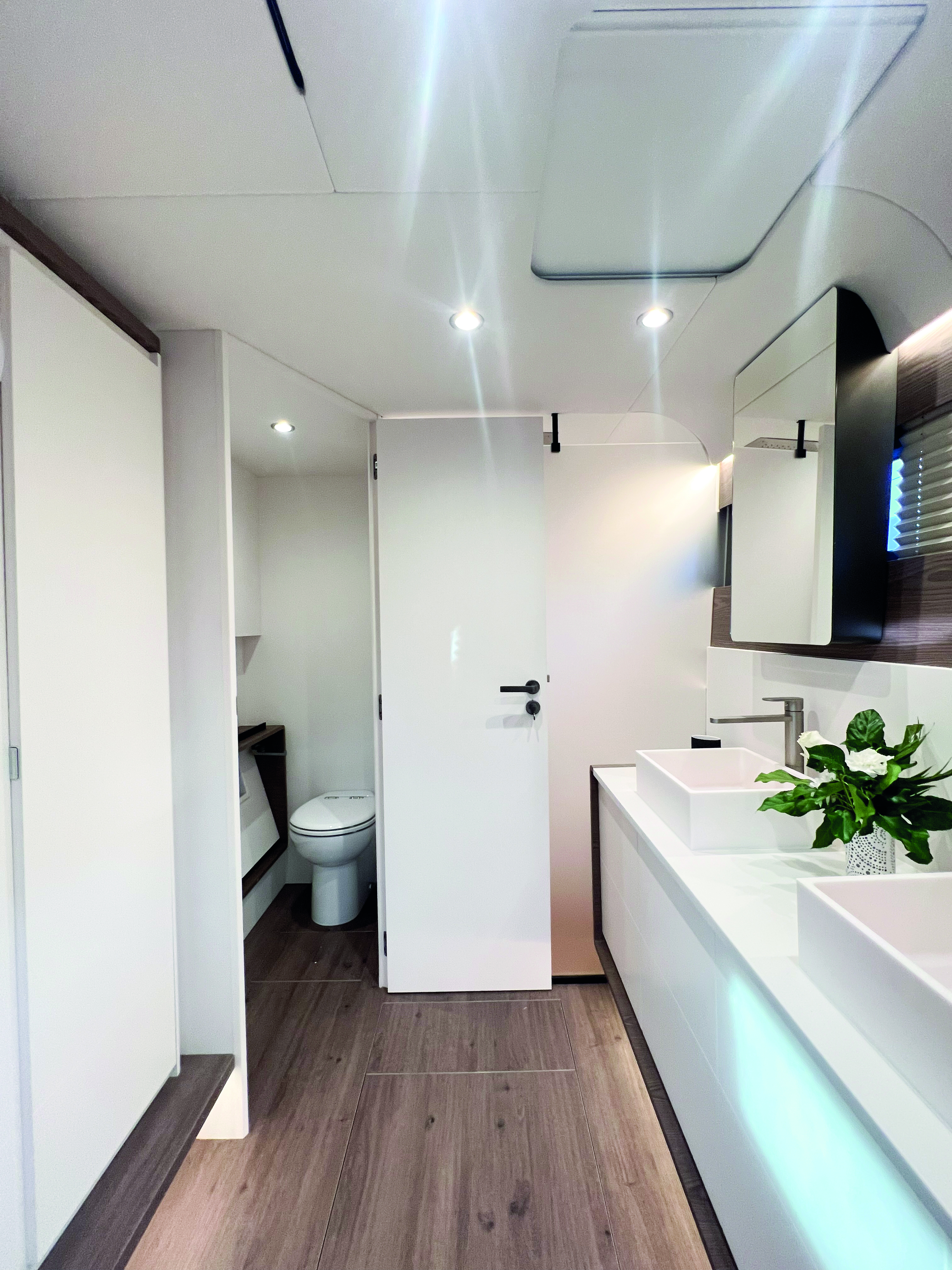
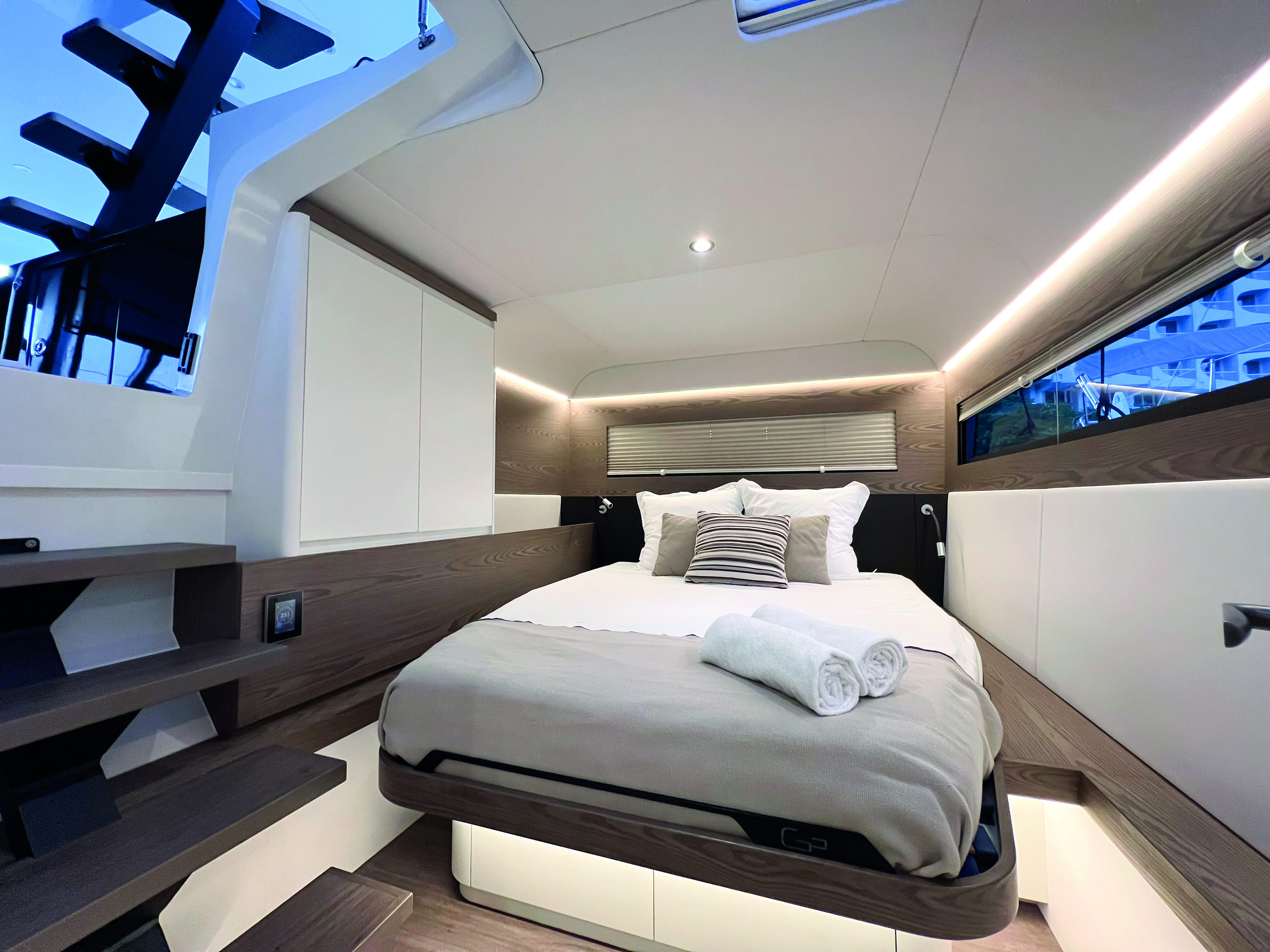
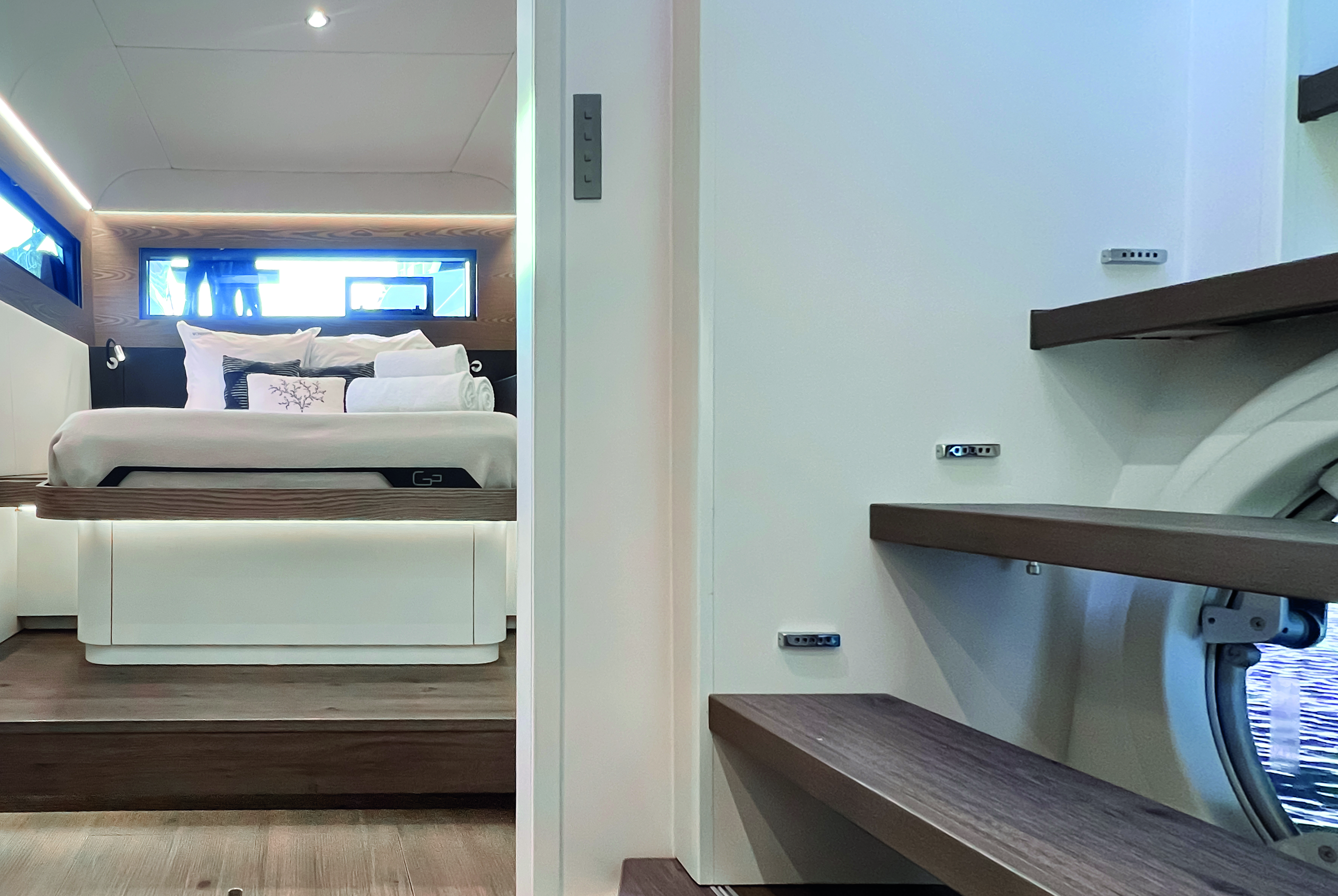
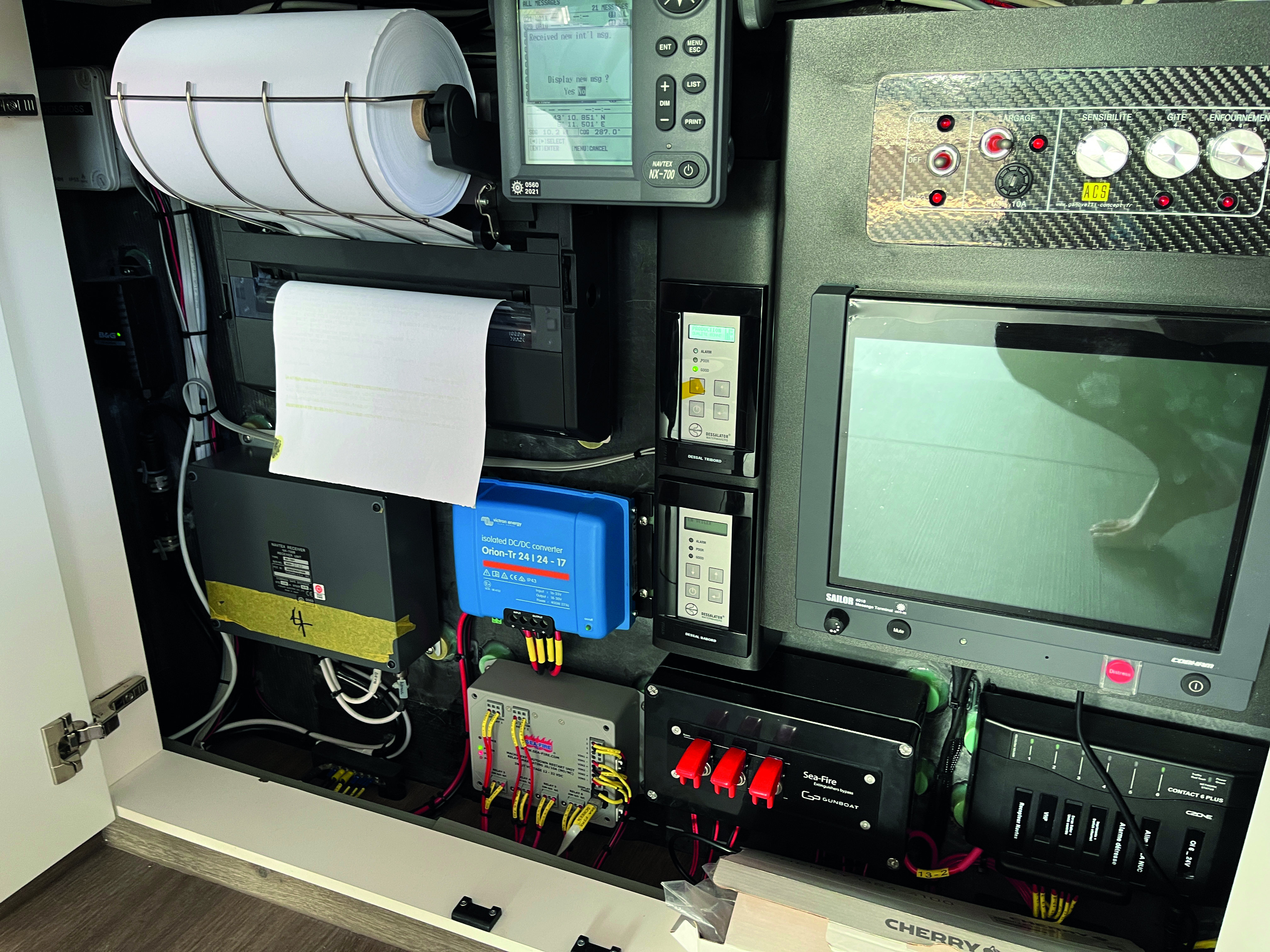
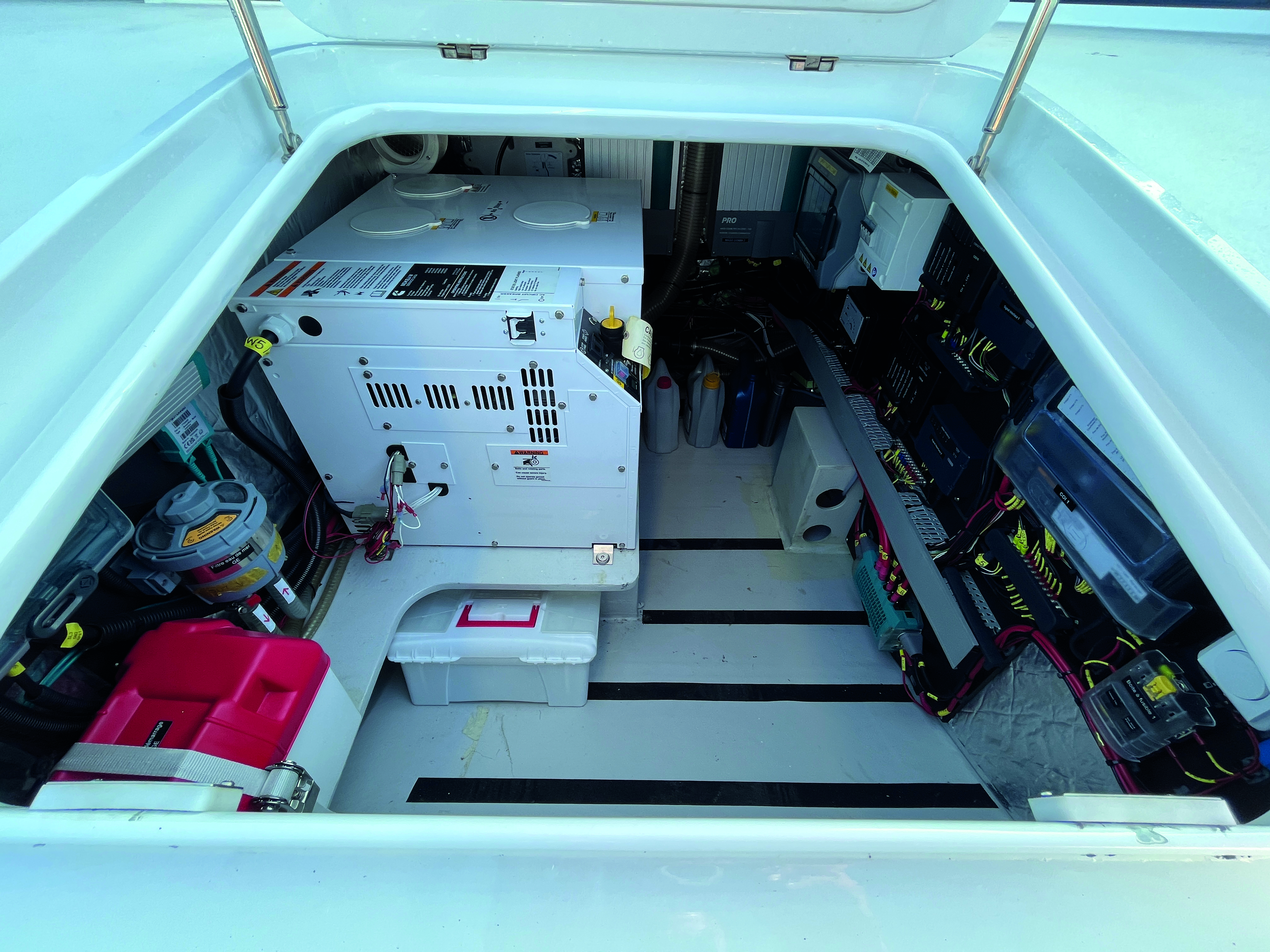
The 72 we got to try out in June, while she was undergoing finishing touches shortly after launch, had obviously completed her transformation two months later. Well, not completely, since at the end of this summer’s pre-sailing and testing season, the shipyard will be checking no less than 450 points! Nevertheless, by September, the luxury catamaran finally unveiled her spacious living areas and numerous outdoor relaxation spaces. Seen at anchor, the 72 and 68 differ little from each other, but when you’re on board, it’s a different story: the 72 reveals herself to be a true cruising multiyacht, as we’ve become accustomed to seeing for the past ten years on boat show pontoons. Admittedly, Gunboat didn’t go so far as to install a Jacuzzi on the foredeck, but the flybridge welcomes guests in comfortable sofas near the helm station with its 360° view. The aft cockpit features a bench seat and large dining table. Inside, the menu is not completely à la carte, but at the owner’s discretion. The number and nature of the cabins can be chosen, as can the level of equipment, provided that it corresponds with the structural and dynamic imperatives, of course. Benoit Lebizay reminds us that “The yard’s expertise lies in its ability to manage the integration of complex systems, in a layout specific to each customer, in a production body (the second 72 is already on the way – Ed.) whose weight specifications are tamed”. Isabelle Racoupeau looked after interior styling. Beautiful materials were selected in contrasting tones. This version features four en-suite cabins, including a beautiful Owner’s suite. One of these cabins opens directly onto the cockpit, for added versatility. The crew can count on three berths in their dedicated quarters. An additional cabin will be installed in one of the forepeaks to further enhance their space. Domestic equipment is set for maximum comfort, with full electrical appliances, air conditioning and a 200 l/h (50 gph) watermaker. The only drawback is that the boat has no green energy generation system. It’s a pity, because the 8-kW generator is a bit marginal. Of course, there’s room in the contractual weight to fit a bigger one, but given the averages achievable under sail (yes, be patient, we’ll get to that!), it’s a shame not to incorporate hydro-generation, which would be optimally efficient. The deck saloon houses the galley, saloon and chart table, all flush-decked with the cockpit. The second Gunboat 72 already on order is due to feature a different configuration.
Sailboat or magic carpet?
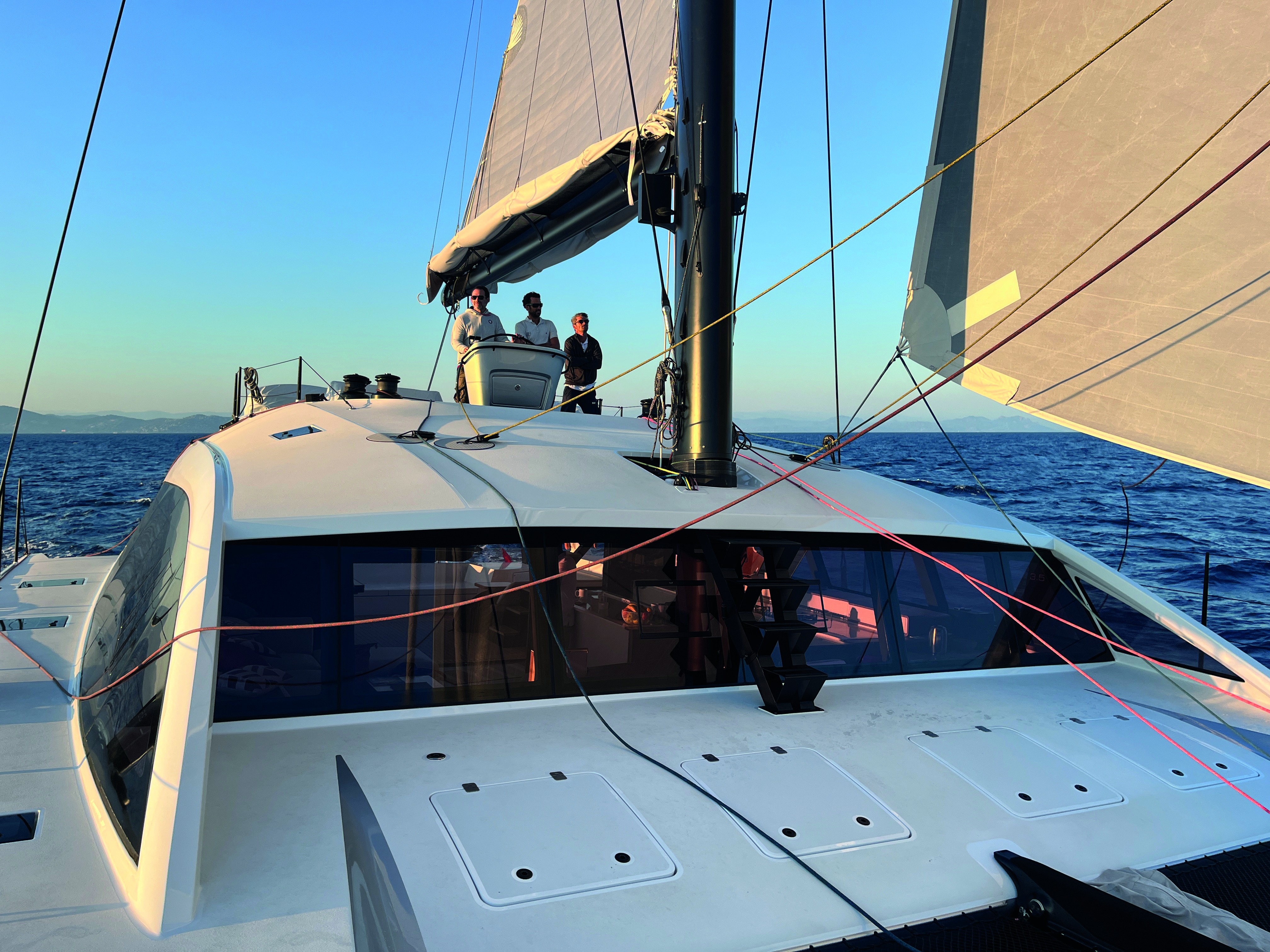
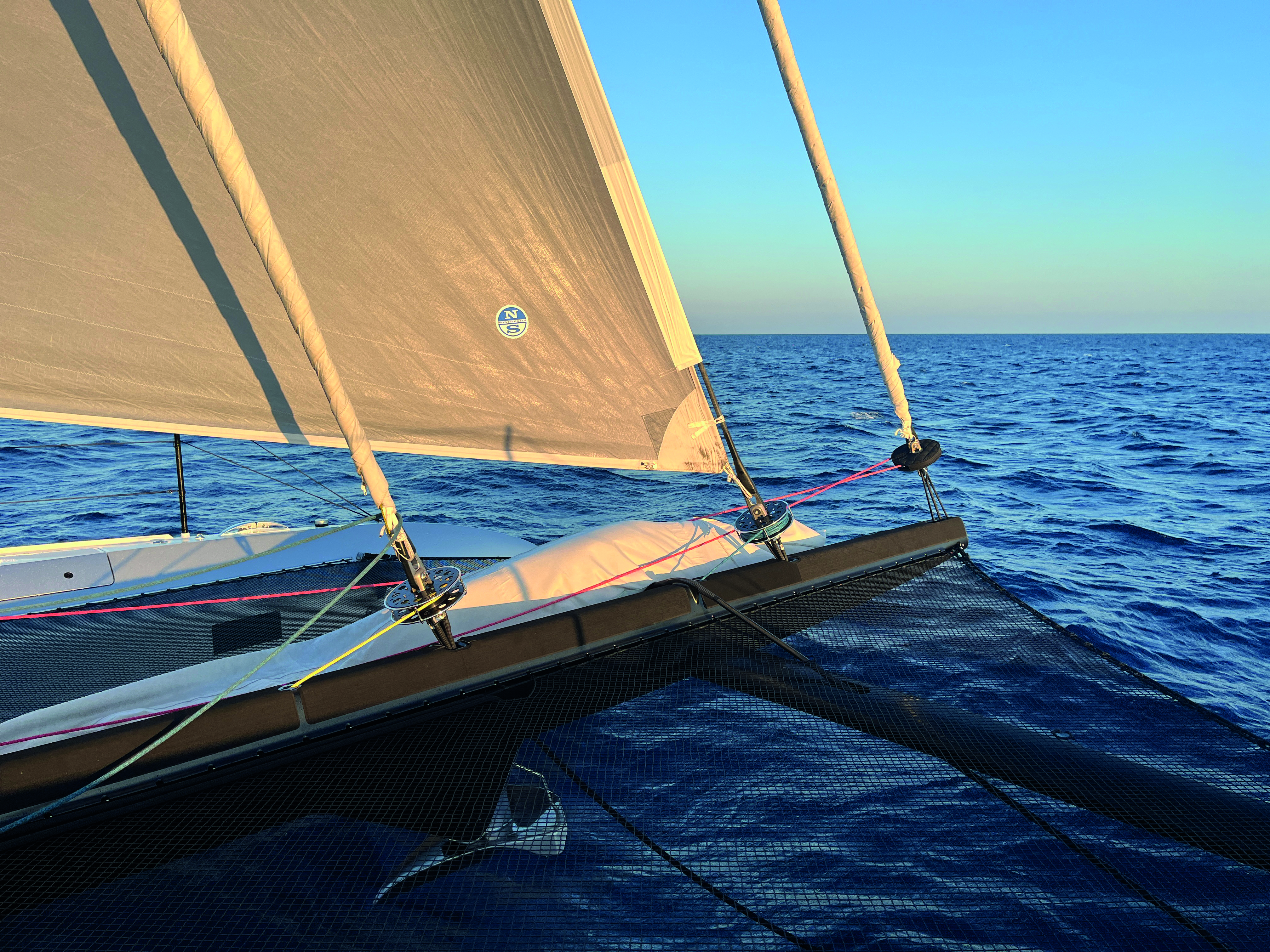
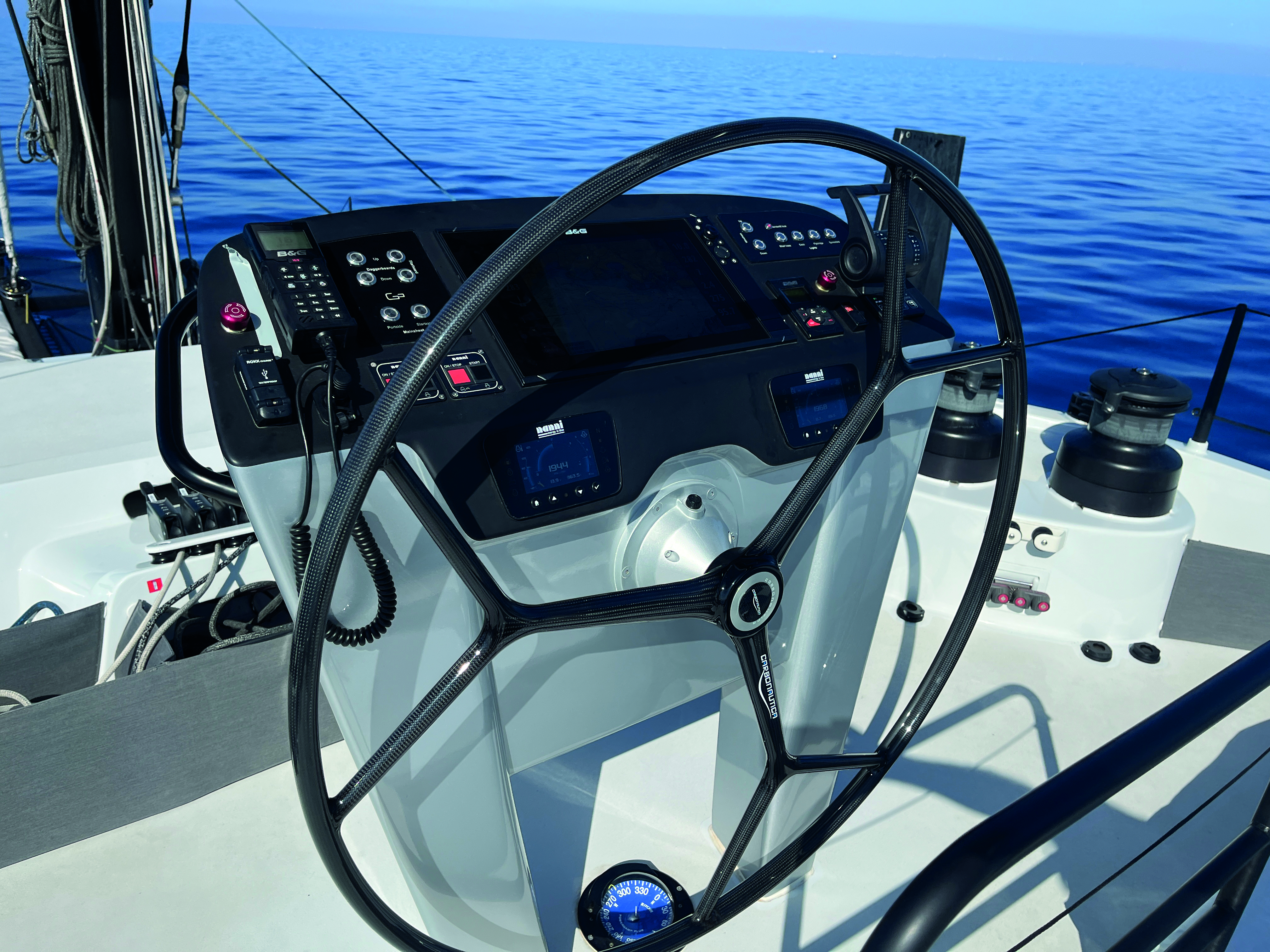
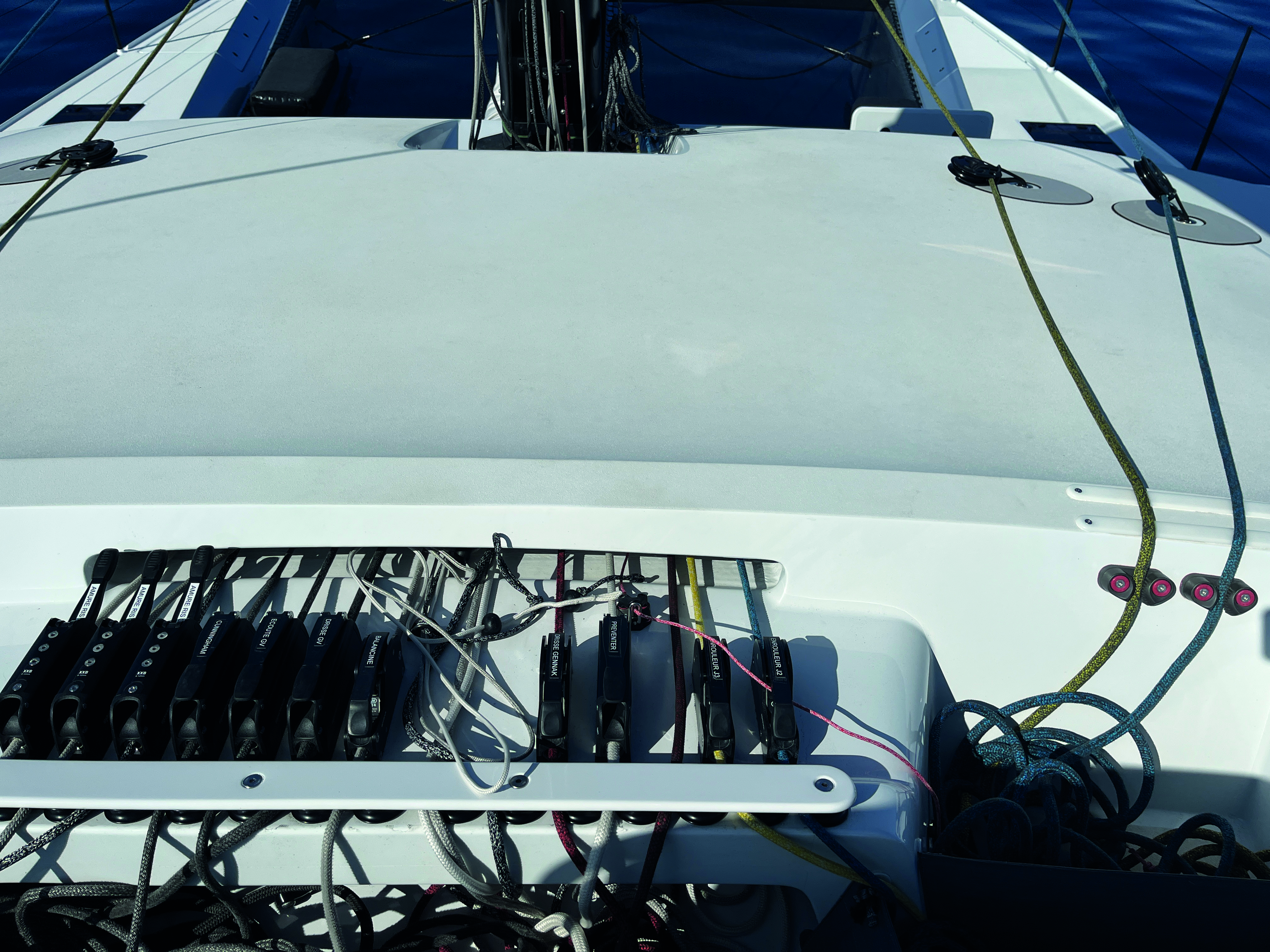
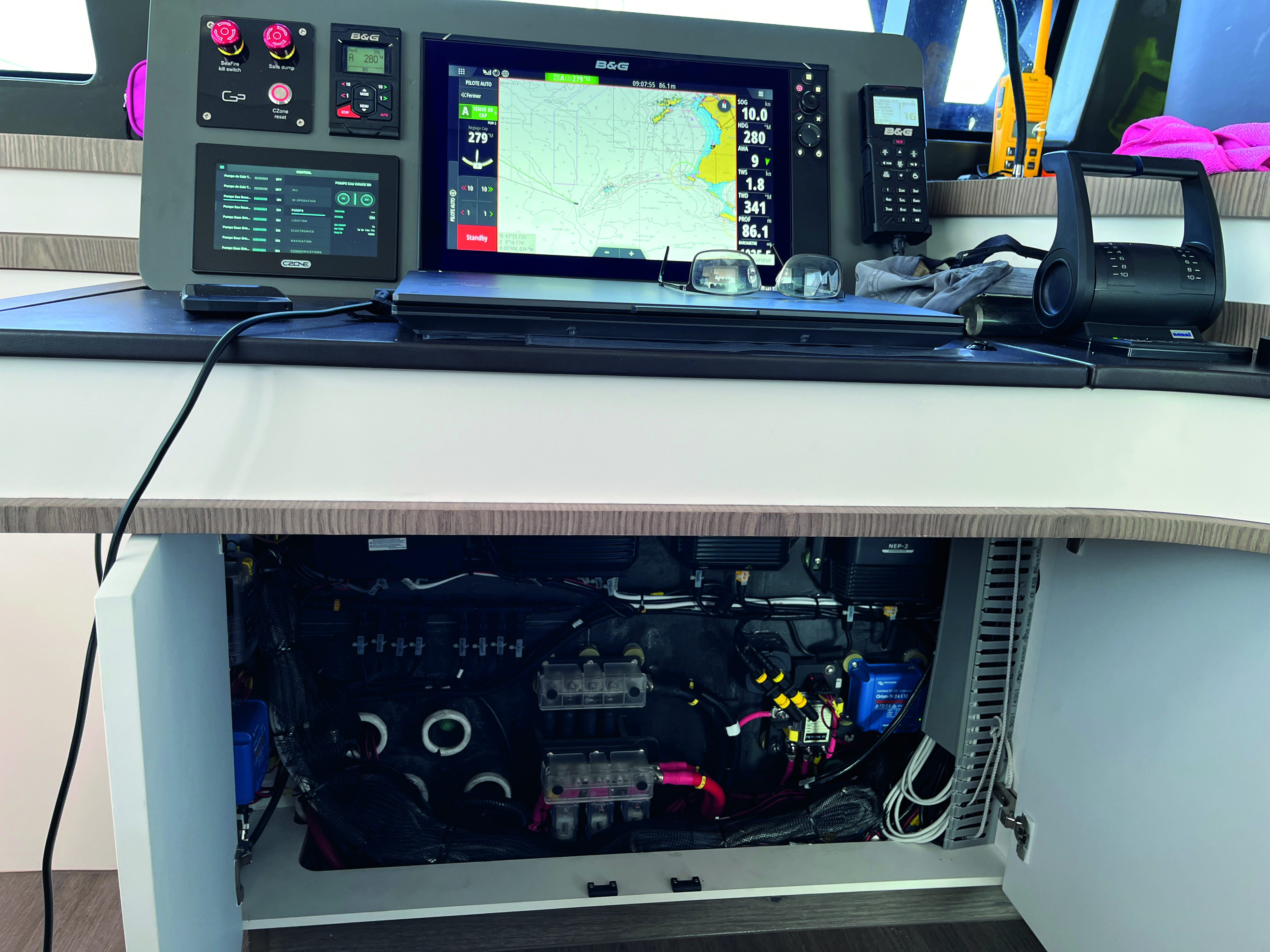
The long-awaited moment has arrived… it’s almost time to set sail! I happen across famous racing skipper Loïc Peyron on the dock, who has just completed a week’s promotion for Gunboat, where his sea trials off Saint-Tropez resulted in a peak speed of over 21 knots at 55 degrees to the apparent wind in barely 20 knots true. It’s a promise that the shipyard was keen to honor: sailing from eight knots at wind speed on a wide range of points of sail. Up on the flybridge, the maneuvering console and helm are just forward of the 29-meter (98-foot) Lorima mast. Incidences’ Hydra Net® sails are designed for long, world-girdling voyages. On either side of the sail maneuvering station, four 3-speed Harken
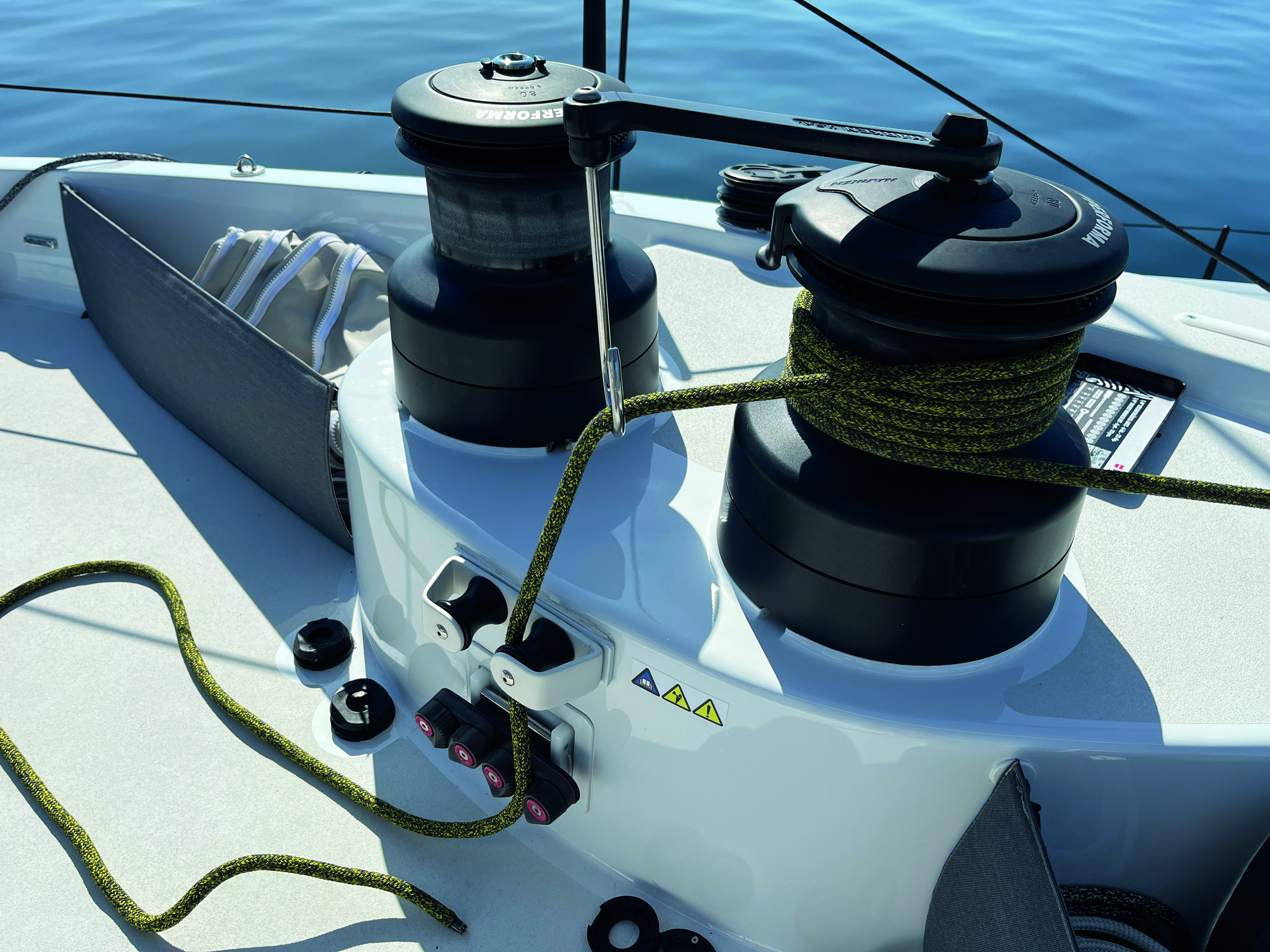
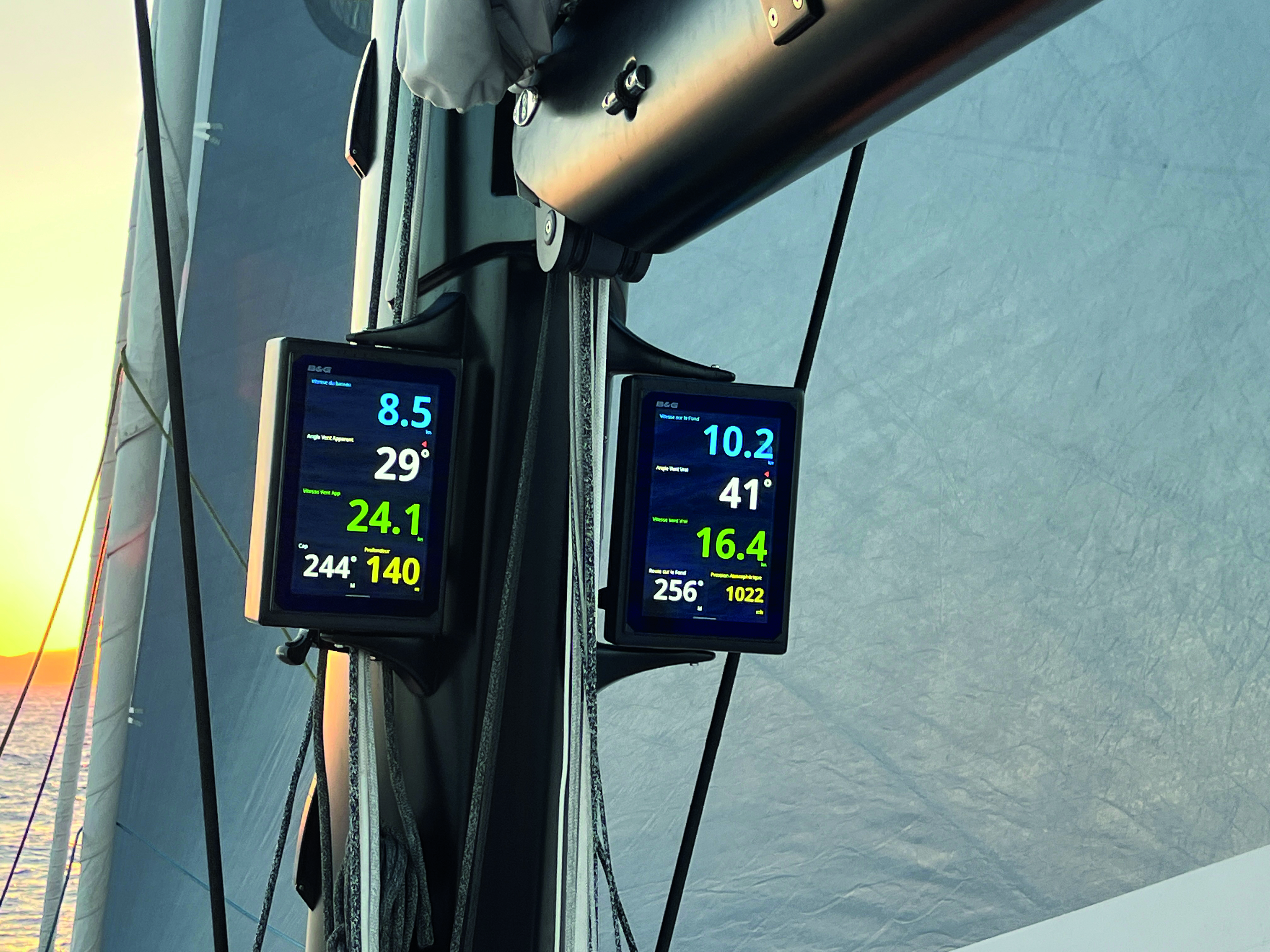
Performa 80 winches are sufficient to handle the 4 headsails - J1 (solent), J2 (staysail) A1 (gennaker) and A3 (code 0) - as well as the 1,830-square foot (170 m²) mainsail. As is so often the case, the wind was coming from exactly the direction we wanted to go. Tacking upwind was required, and we were seeing an average of 12 to 15 knots of breeze. The main and J1 were easily set, so we could sail as close to the wind as possible. For once, the adage “Twice the distance, three times the pain” can be drastically modified to read “Twice the distance, three times the pleasure”. To reach our stopover in Porquerolles, boats typically set off under full power, mainsail high and into the wind - but not us, of course! Our first tack takes us far offshore, at over 10 knots and 29 degrees from the apparent. To change tack, we had to furl the J1 in order to go through the wind, but the 72 turned on its axis and we immediately unfurled the sail again on the opposite tack, which brought us back toward the shore with good acceleration. At the helm, the sensations are very pleasant and, above all, the ease of control is impressive. Everything is simple, efficient and... very fast! Sat on the flybridge with the coastline as a backdrop, you feel like you’re gliding along on a magic carpet. Guests can enjoy the late- summer breeze on the flybridge, while day-to-day life gets organized in the living space below. The Gunboat 72 gives the impression of never running out of energy - at least until the wind dies down for good. As a result, distances seem to be cut back to just what’s needed to make the most of the stopover.
The next day, the long tack to Grande-Motte saw less wind. In barely ten knots of breeze and at 120 degrees off the true wind, the big A3 was capable of pushing the yacht at 10 knots on flat sea - our destination was quickly and quietly reached - and well before sundown.
Conclusion
With this new Gunboat 72, the iconic brand taken over by the Grand Large Yachting group in 2016, continues to earn the prestige and distinction it deserves. The addition of comfort to a high-performance yacht has been perfectly mastered thanks to the interaction of design, engineering and manufacturing. The flybridge is a highly appreciated asset, offering a warm and inviting atmosphere. Life on board is split in two: a racing platform above and a cozy saloon below. Once the exhilaration is over, gastronomy can take over. Leaving Saint-Tropez, we had an owner aboard his Maxi divert to come and admire our Gunboat built to the same high standards as his own steed... we’re playing in the same league, that of the greats.
Relatively easy and safe to sail considering its performance.
Opens up a whole new dimension to cruising
Saloon seating a little low
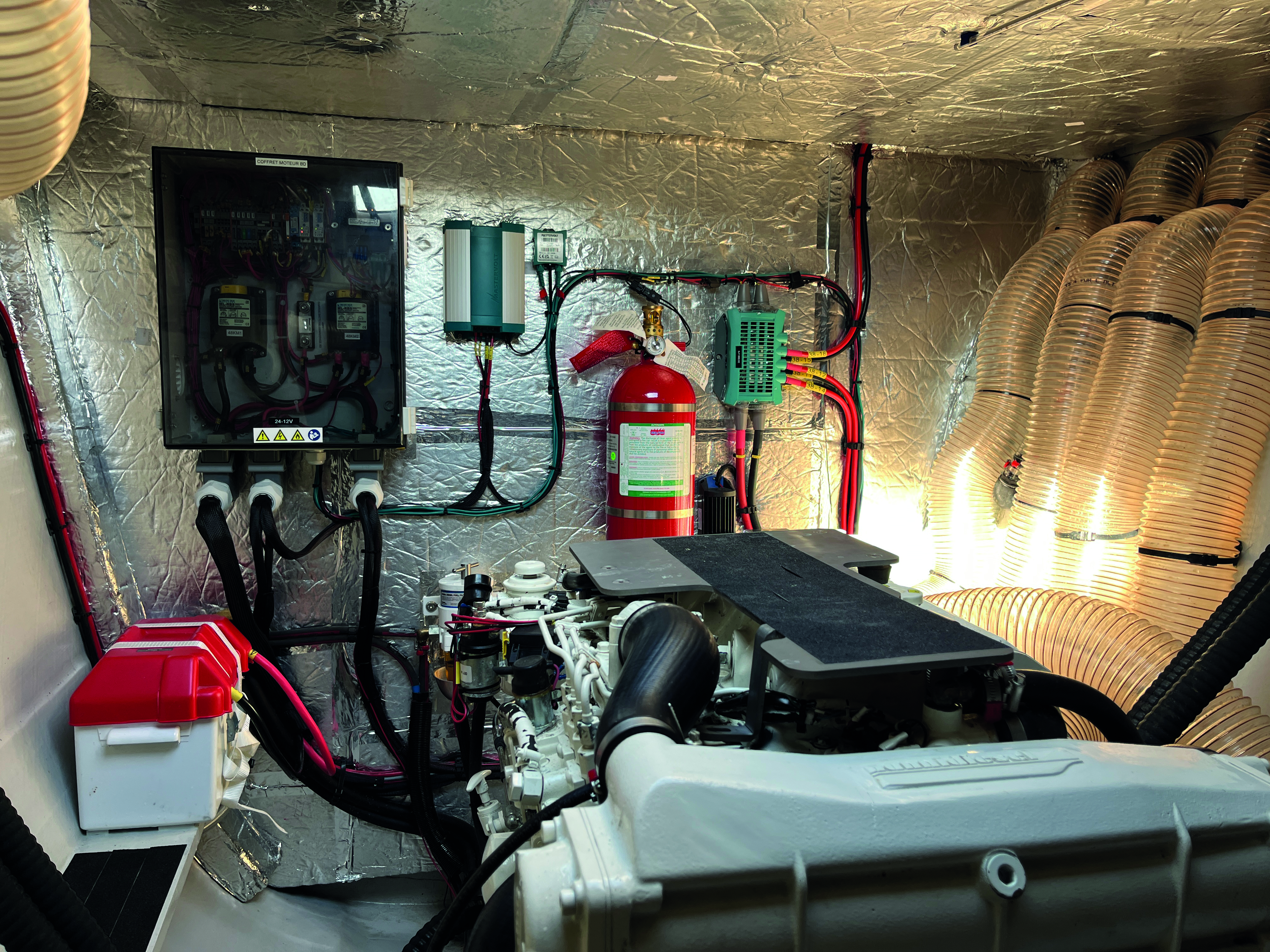
Engineroom soundproofing could be improved
Technical specifications
Naval Architect: VPLP Design
Exterior design: Christophe Chedal Anglay and Patrick le Quément
Interior design: Berret-Racoupeau Yacht Design
Overall length: 72’2” (22 m)
Beam: 30’10” (9.4 m)
Draft: 5’7”/12’6” (1.7/3.8 m)
Mast height: 98’ (29 m)
Bridgedeck clearance: 3’ (0.95 m)
Light displacement: approx. 62,000 lbs (28 t)
Laden displacement: 72,750 lbs (33 t)
Mainsail: 1,830 sq ft (170 m²)
Jib: 1,270 sq ft (118 m²)
A3: 3,015 sq ft (280 m²)
Engines: 2 x 130 HP Nanni
Fuel: 340 US gal (1,300 l)
Water: 220 US gal (840 l)
Price: on request and according to specifications