This is a very recent second-hand model, since production stopped less than a year ago. The Hélia 44 has bowed out, leaving the Elba 45 to take over. Rather easy going and comfortable, the 44 has been enjoyed not only by charterers, but also family crews looking to go blue water cruising.
Infos pratiques
- Le chantier : Helia 44
- La fiche technique
- Découvrez notre vidéo exclusive
- Financez votre Hélia 44
- Assuez votre Hélia 44
- Articles autour du Hélia 44
Better finished and even more comfortable than her predecessor, the Orana 44, the Hélia was undoubtedly the first model from Fountaine Pajot to highlight the famous “perceived quality”. Far from the approximate assemblies and low-end materials typical of catamarans of the 1980's and 1990's, the builder has set the bar for the finishing touches much higher so that you are immediately impressed by the comfort, atmosphere and a sense of well-being on board. This is an operation that is not just about a few panels of Corian or island beds: the Hélia 44 is clearly much more luxurious than her predecessors. This model designed by Berret/Racoupeau retains general characteristics very close to those of the Orana - drawn by Joubert/Nivelt. In terms of design, all the curves have given way to straighter and more angular lines – the bow forefoot, sugarscoops, coachroof openings. But the almond-shaped hull portholes (replaced on the Elba 45 by trapezoidal cut-outs) are still there.

Specifications
“Comfort, yes, but performance as well. There's no question of sacrificing the pleasure of sailing, even though you might actually spend 80% of your time in port or at anchor”. That's what the yard explained to us 8 years ago. However, the Hélia 44 is certainly not a Gunboat or an HH... They needed to fit vast cabins to accommodate good-sized berths. So, the hulls are relatively wide at deck level, but considerably narrower at the waterline, thanks to the inboard chine. As for the appendages, there are no daggerboards, and the hulls remain simple with fixed skeg keels.
Surfing at nearly 20 knots
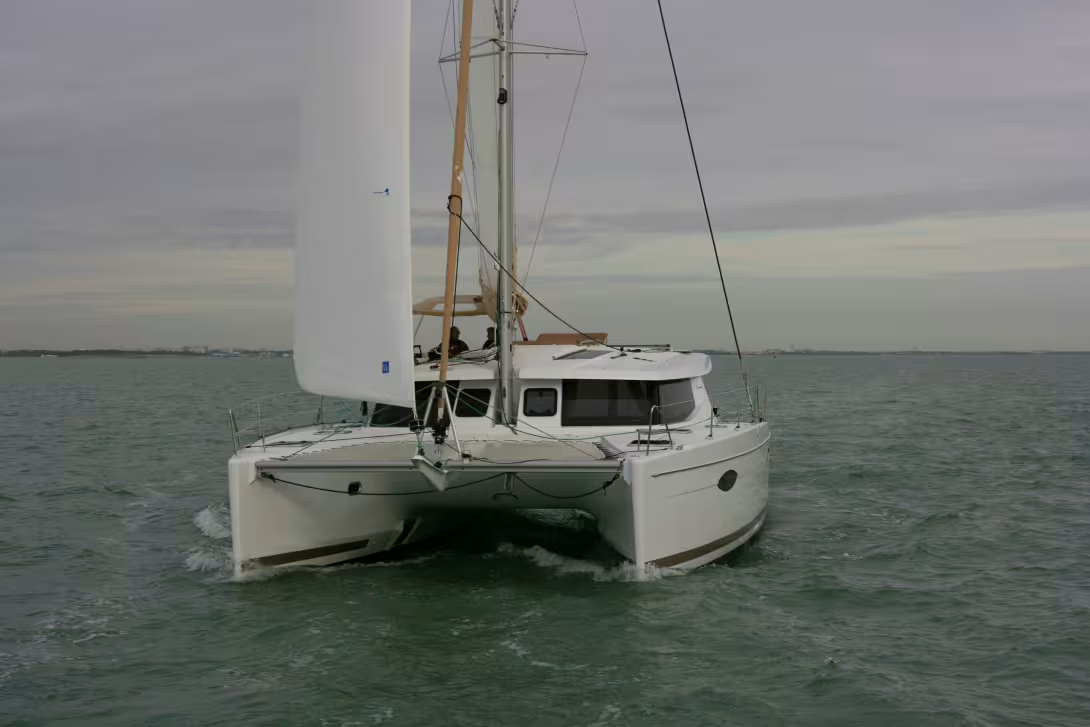
Significantly heavier than her predecessor and with barely more canvas, on paper the Hélia doesn't appear to have a decisive advantage; and yet this model moves rather well under gennaker in light airs. Upwind, things aren’t as good. The 44 managed to climb up to 45° off the apparent wind - i.e. around 55° off the true wind – but no more, otherwise she would have stalled. Some owners report averaging of over 10 knots downwind in a breeze and even surfing at 18 knots.
Raised helm station
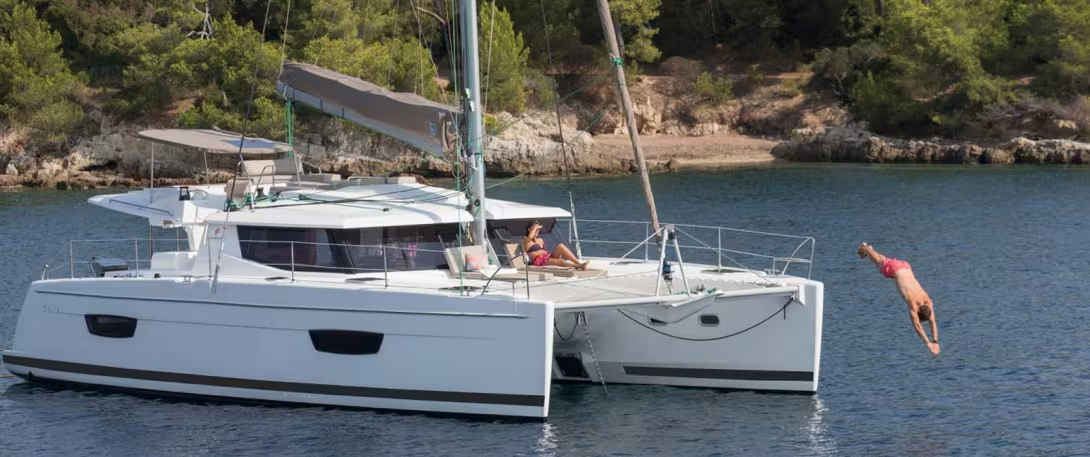
Raised-up, but still in contact with the cockpit, the helmsman has a perfect view of the bow and stern to starboard. But to port? That takes a bit more effort: you have to stand up to see the bow, and lean under the access ladder to make out the stern. The top of the coachroof is fitted out as a lounge: a huge and very welcoming sunbathing area. All sail handling maneuvers come back within the helmsman's reach, in fact right in front of him, onto three winches - two 50's and an electric 46. An all-electric option was available as an option. Only the port spinnaker sheet is elsewhere, in the cockpit, to port.
A successful deck layout
The flush-decked cockpit is really an extension of the nacelle, an impression reinforced by the large L-shaped opening - the glazed door is completed by a sliding panel - and by the rigid bimini which offers excellent protection. The 172 x 84 cm (68 x 33”) table is large enough to seat 6 or even 8 if you squeeze up a bit. To starboard, the yard has installed a lounger. The tops of the davits were designed to be able to support various beach toys. Movement around on deck is particularly fluid: only two steps to reach the wide side-decks. For mooring, there are three cleats down each side, and for anchoring, the windlass and chain locker are well-centered, close to the mast.
Darker interior colors later became lighter
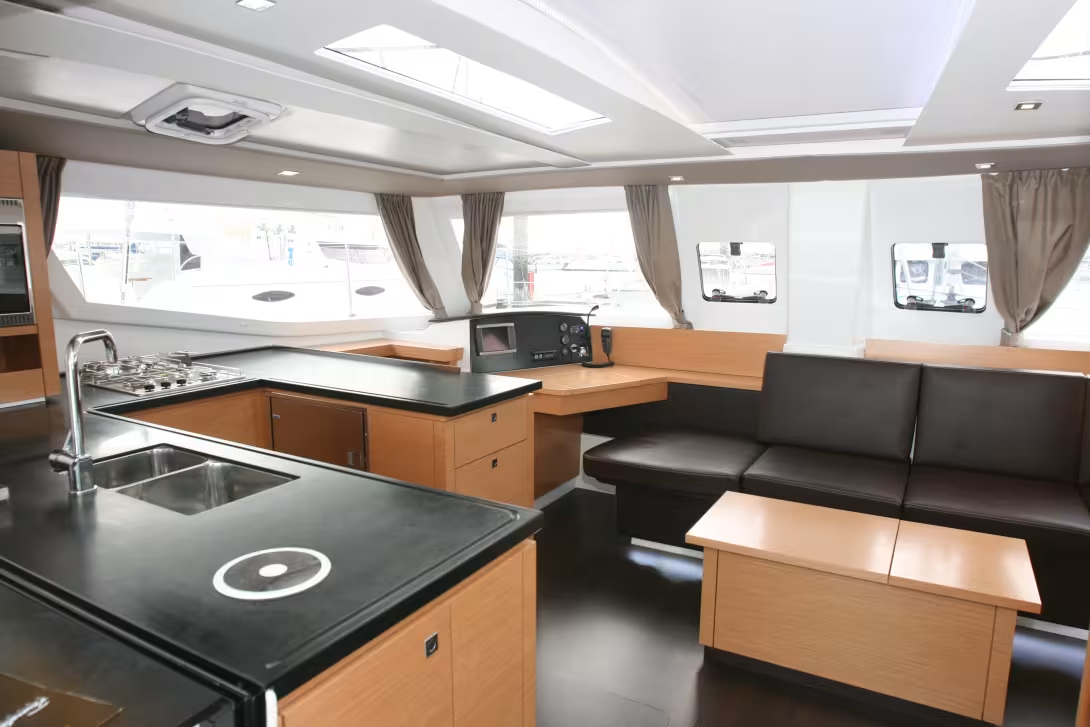
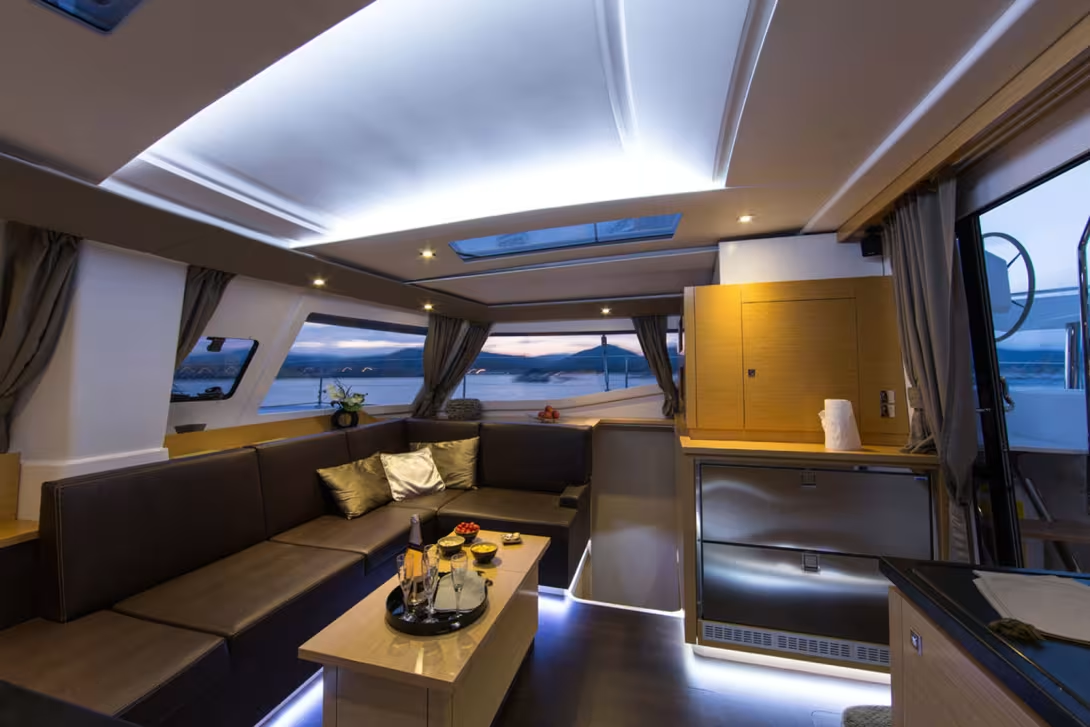
The early Hélia models saw the use of many darker shades - gray galley countertop and brown upholstery - contrasting with lighter woodwork. The Evolution version introduced light shades everywhere except for the floor. Different tastes and colors...
Some models were fitted with a coffee table, a kind of bar of 103 by 51 cm (41 x 20”). Another option was a large table that could be converted into an extra double berth. The U-shaped galley located on the port side. The chart table is set at 45°, with an excellent outside view, but I’d still prefer to be facing forwards. In the hulls, one or two cabins depending on the version chosen. The owner benefits from a sofa, an XXL-sized bathroom and a large desk. The other guest cabins are not to be outdone with their 2 x 1.6 m (79 x 63”) island beds (accessible from either side), generous storage space and adjoining heads compartments. Another good point is the natural lighting and ventilation.
Conclusion
With a load capacity of more than two tons, the Hélia 44 is well adapted to being lived aboard. A perfect platform for a round-the-world trip or an Atlantic circuit, preferably in a 3-cabin version. A family crew will appreciate the giant cockpit, the trampoline and the easy access to the water. Sail trimming within reach of the helm station makes it easy to handle this catamaran whose performance is pretty convincing overall.
Points to check:
Although there were a few issues with early models, resulting in various after-sales service interventions – including modifications to the escape hatches and helm controls - the structure of the Hélia 44 is robust. The hulls, built in a balsa/polyester sandwich using infusion, are reputed to be solid. The hull bottoms are reinforced to withstand collision with floating objects. As for the skeg keels, they are designed not to allow water ingress even in the event of serious damage (a violent grounding for example). The deck, also built in sandwich, uses the injection technique: it remains rigid even on models built 8 years ago. The twin-spreader rig and jumper stay are great, and apart from the condition of the sails and engines - these may already have suffered either from intensive use or lack of maintenance - there are no unpleasant surprises to worry about.
Pluses
Performance from a broad reach to downwind
Remarkable comfort both under way and at anchor
Robustness of the structure and the rig
Minuses
Lack of punch upwind in light airs
Some of the hardware is a little lightweight
On-board energy management could be optimized
Technical specifications:
Builder: Fountaine Pajot
Architects: Berret/Racoupeau
Material: polyester sandwich in infusion
Hull length: 13.30 m (43’8”)
Waterline length: 12.58 m (41’3”)
Beam: 7.40 m (24’3”)
Displacement: 10,800 kg (23,800 lbs)
Draught: 1.15 m (3’9”)
Mainsail: 70 m² (755 sq ft)
Genoa: 45 m² (485 sq ft)
Gennaker: 115 m² (1,240 sq ft)
Cabins: 3 or 4
Engines: 2 x 40 HP
Fresh water: 750 l (198 US gal)
Fuel: 470 l (124 US gal)
Production: 280 examples built from 2012 to 2019
Second hand price: from € 300,000 ex-tax