Over the past 12 years, HH has built up an image of a modern shipyard offering boats that are both high-performance and comfortable. The brand’s latest (and smallest) model, the HH44, takes this concept a step further, with an innovative propulsion system and a number of on-board features.


Infos pratiques
- Le chantier : HH44
- La fiche technique
-
 Découvrez notre vidéo exclusive
- Financez votre HH44
- Assuez votre HH44
- Articles autour du HH44
Conditions: Sea state calm to moderate, 6 to 10 knots of wind, 8 people on board
For those not yet familiar with this young brand, HH was founded in 2012 by Paul Hakes - a veteran of the boatbuilding industry - and the Hudson Yacht Group. It’s also from this association that the name comes, with an H for Hakes and an H for Hudson. The original idea was to build fast-cruising catamarans, a market that is enjoying growing success worldwide. Initially, all catamarans were produced in Xiamen, China, but to meet the demand, a second factory has now been set up in Cebu, Philippines. This facility will enable the company to produce around thirty HH44s a year, and thus reduce delivery times.
Right from the start, the brand had high hopes for the HH44, a catamaran unveiled after the HH66 and HH50, and which above all becomes the smallest model in the range, i.e. the entry into the HH world. Unlike the brand’s other catamarans, the HH44 was not designed by Morrelli & Melvin, but by Paul Hakes’ son James.
A modern look combining elegance and sportiness
The ambition was to offer something radically different, with excellent performance, but also a spacious interior.
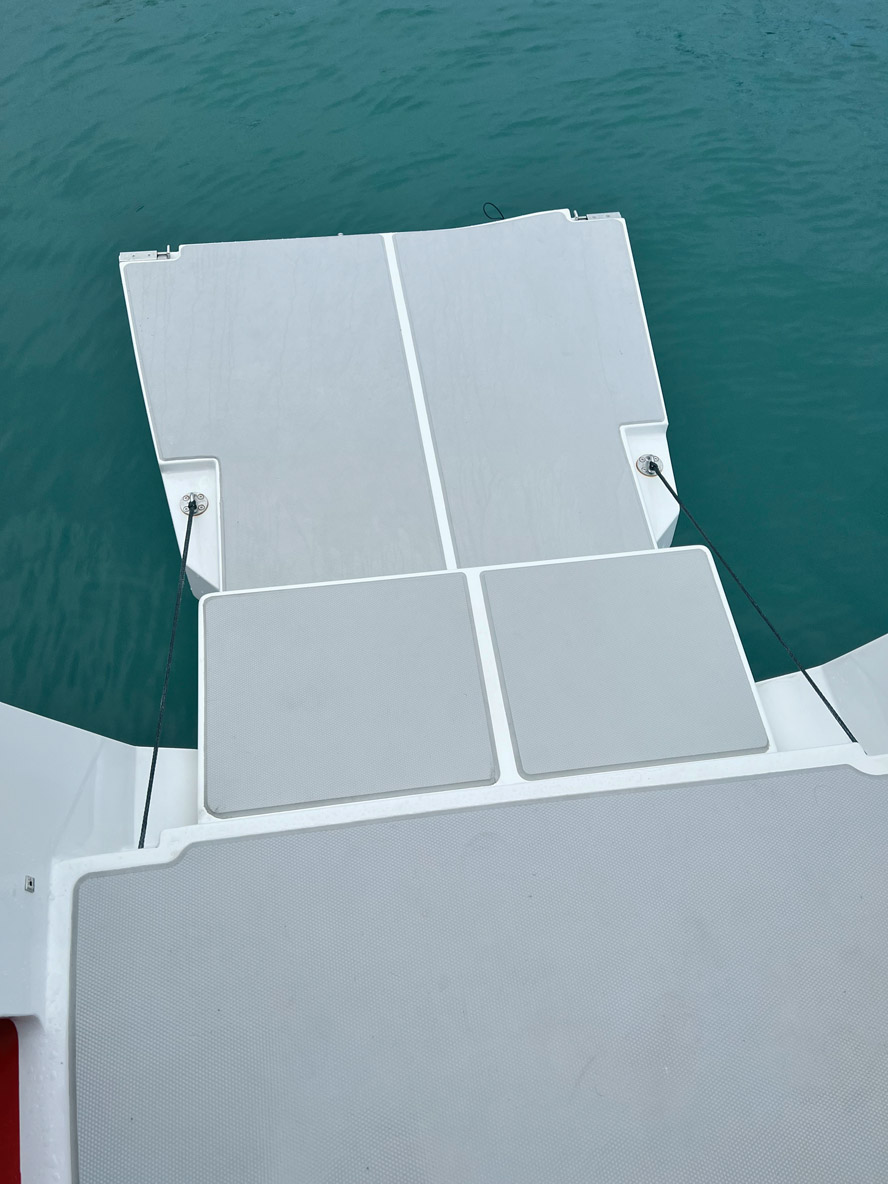
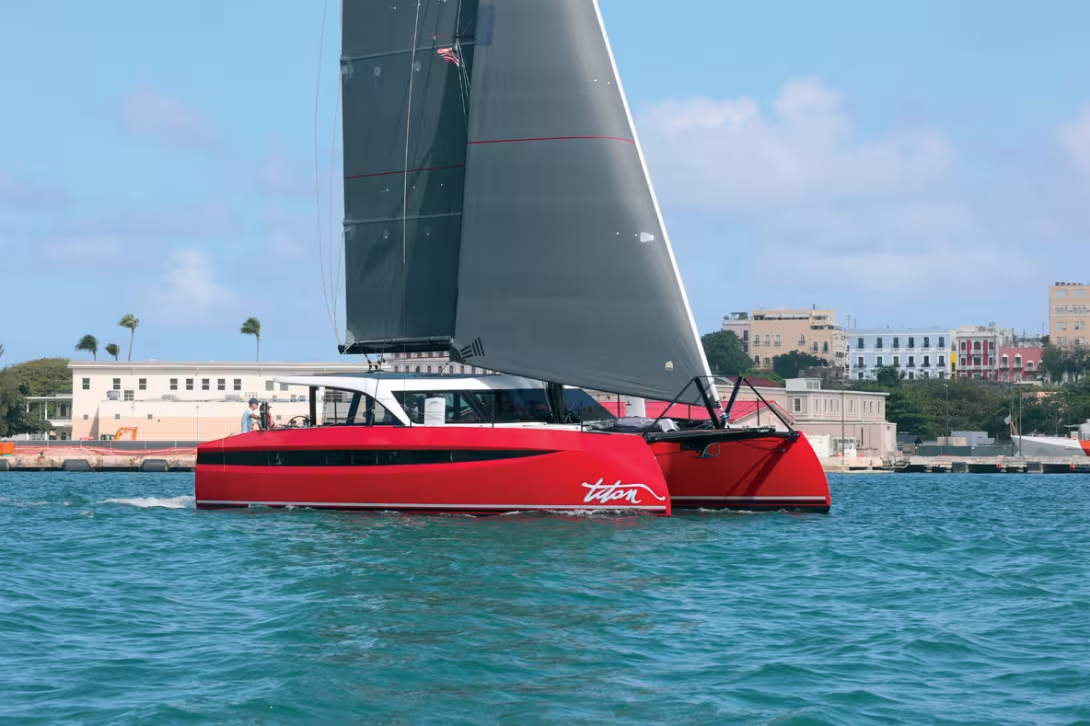
Aesthetically, James has retained the HH style, with long, tapering hulls, sharp inverted bows and a long hull porthole that accentuates the impression of length and adds sportiness to the line. The coachroof, which starts at almost mid-length, also benefits from a highly aerodynamic profile, with a steeply raked windshield and a roof that extends into a bimini housing the cockpit. To lighten the overall effect, the designers opted for a single side window. The stern is a little rough-cut, but this doesn’t harm the aesthetics, and above all allows for the integration of the folding sugarscoops, a good idea.
The slender bows and high nacelle also give a sense of lightness, while the integrated bowsprit gives a conquering appearance to the boat. The deck is topped by a carbon mast that rises 72 ft (22 m) above the water. All in all, this catamaran is a fine example of modernity and sportiness.
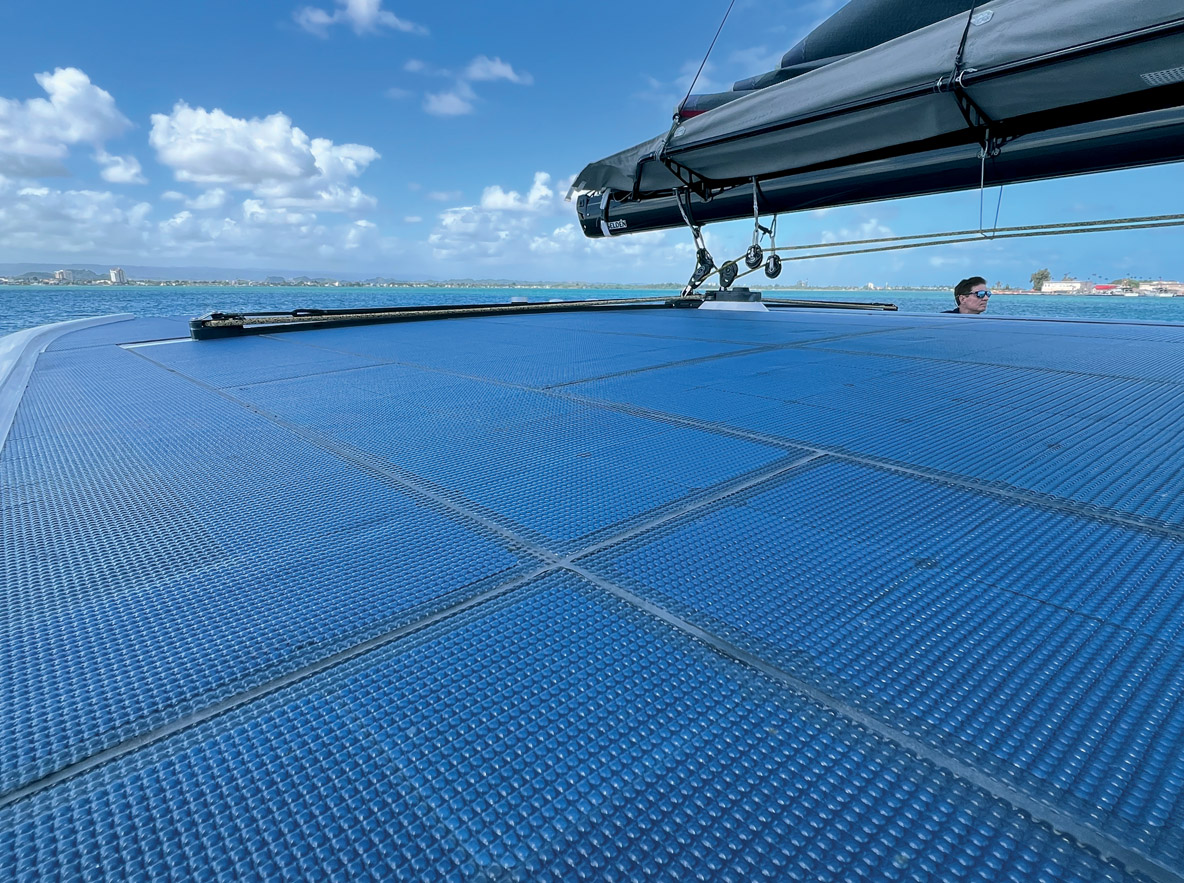
The HH44 is available in two versions: OC (Ocean Cruising) and SC (Sport Cruising). The first, more affordable in price, makes do with an aluminum mast, mini keels and white hulls. The higher-end SC version features a full-color carbon hull, C-shaped daggerboards, carbon mast, solar roof panels and, of course, the Ecodrive system. The latter version is naturally the most popular, with 80% of orders being for the SC. This is also the version we tested.
A deck layout designed for socializing
The moment you get on board, another surprising feature is that the deck is pretty high above the water, guaranteeing good protection for the crew and good habitability. A side door in the bulwark gives access to the cockpit. When sailing with the sugarscoops up, the stern of the boat is totally enclosed, with a deck recess of 32½” (82.5 cm) - a good point for kids. The sugarscoops can be easily opened by hand, and they come with an intermediate step for easy access to the swim platform or tender. The tender, which can measure up to 12 ft, is housed between the two hulls at the stern by means of davits. On the other hand, the HH44 has no central aft platform.
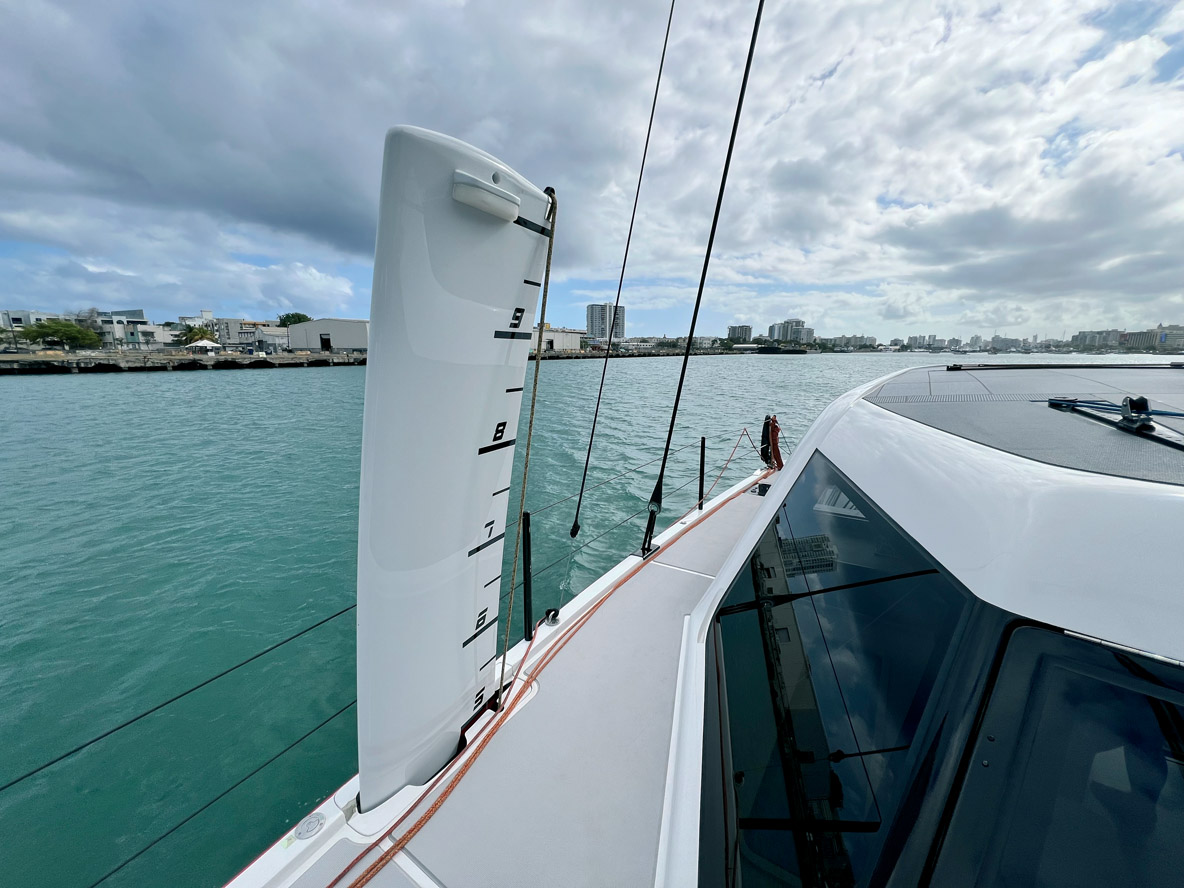
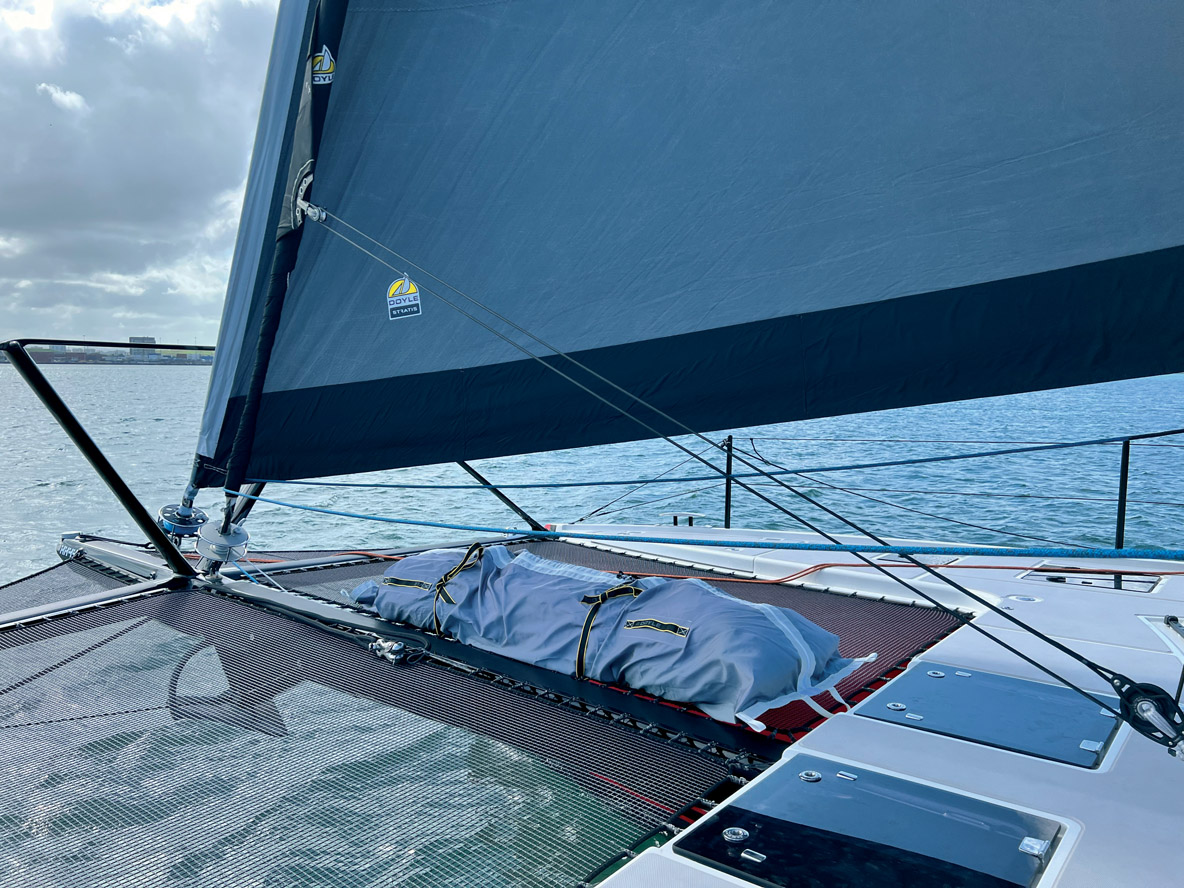
From the cockpit, access to the foredeck is easy since the side-decks are pretty wide and the lifelines are tall enough. Another good point is that the halyards pass through a tunnel, freeing up the deck. The foredeck includes a large trampoline and also provides access to the mast step, while two steps lead up to the coachroof. This is also where the self-tacking jib car is located. Three furling systems are attached to the carbon bowsprit, allowing the boat to be fully maneuvered from the cockpit when sailing short-handed. Finally, large lockers allow you to store sails and fenders
Three cabins full of natural light
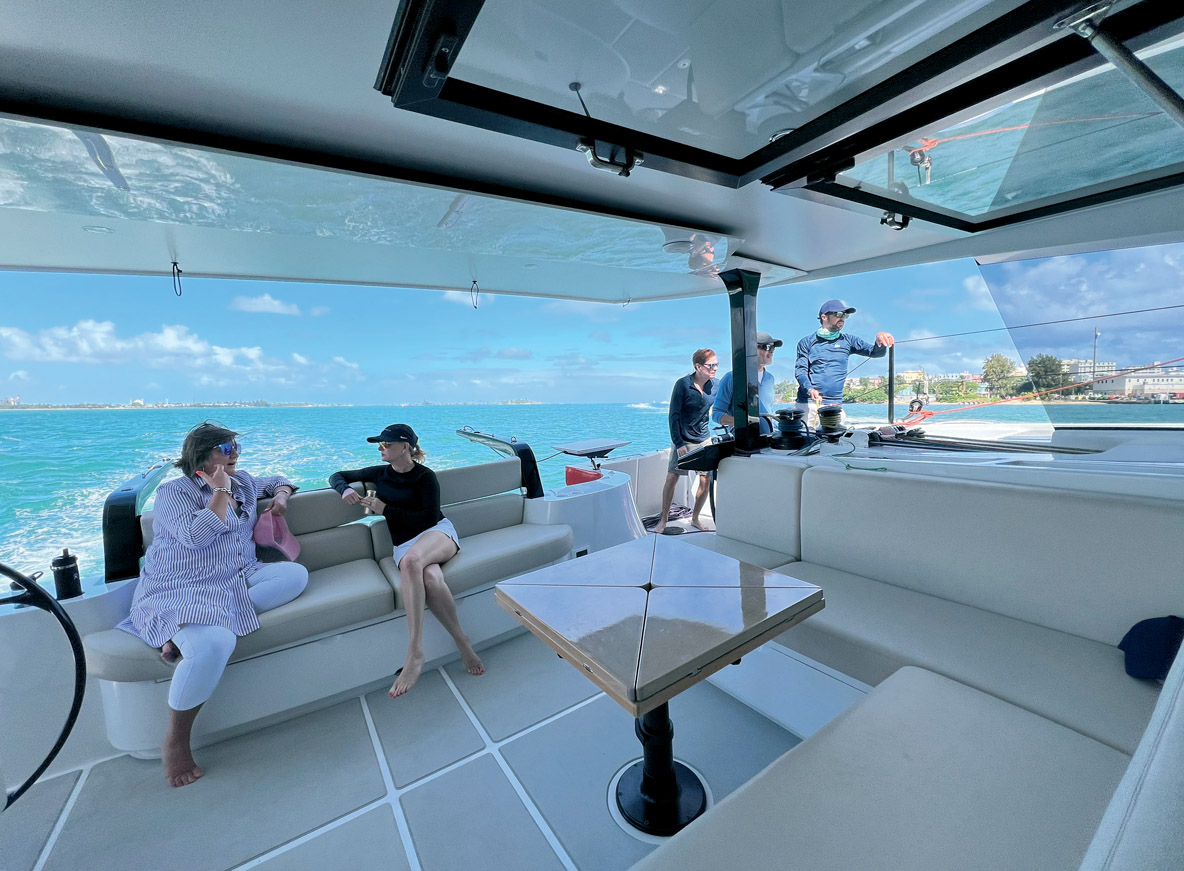
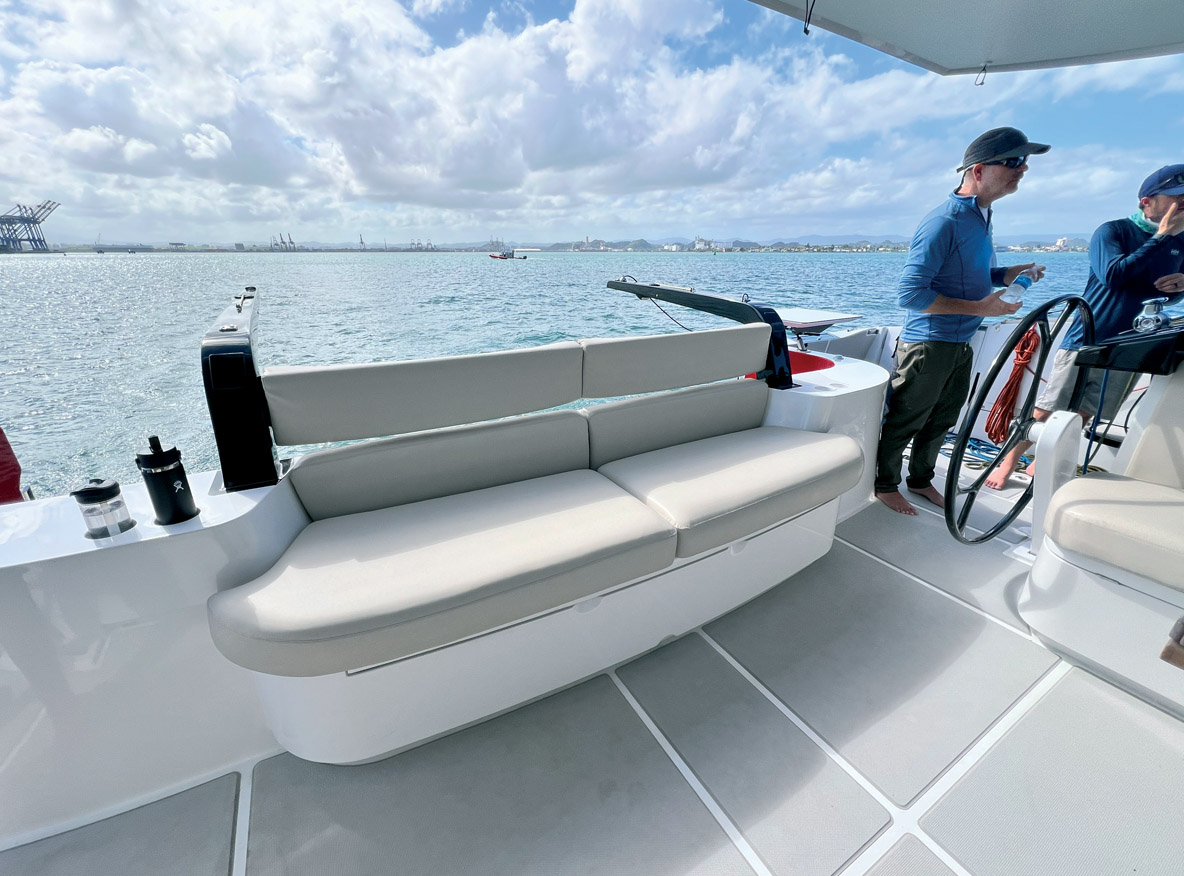
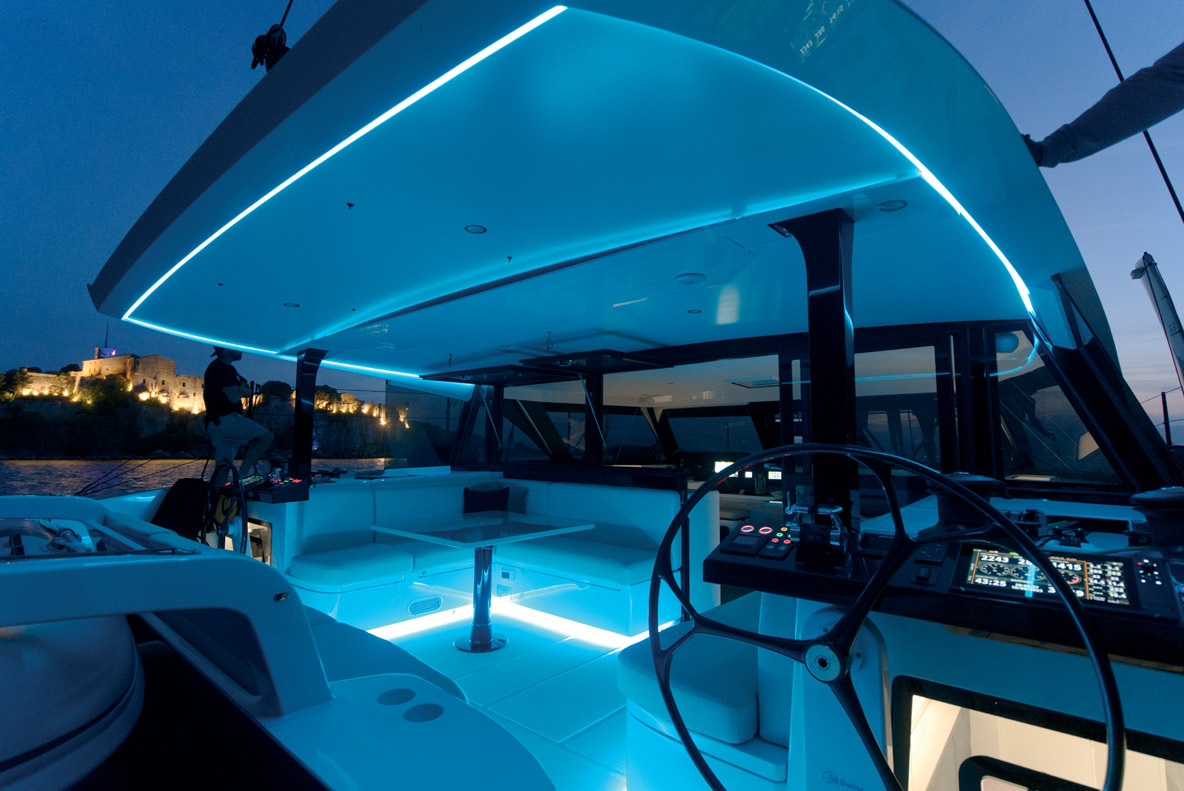
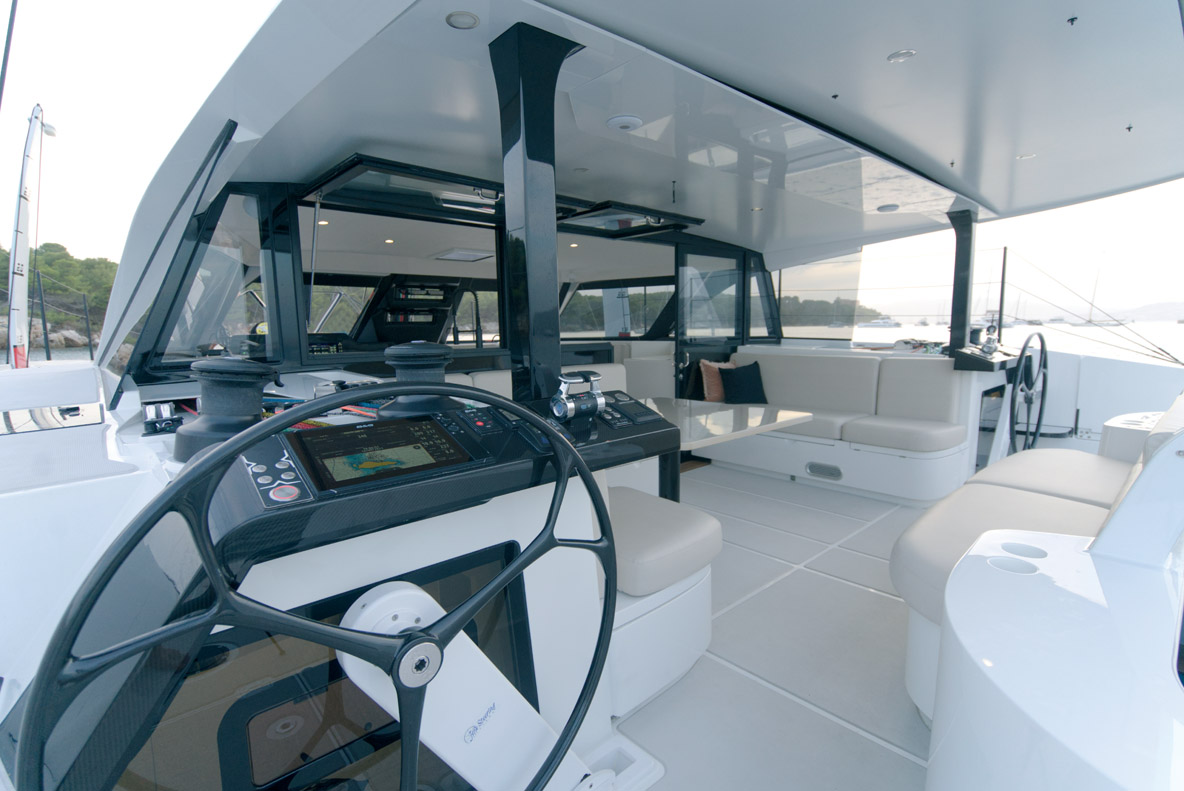
The HH44 not only boasts excellent performance, but also a high level of user-friendliness, with a large outside cockpit protected by a roof and benches that can easily seat seven or eight people, plus a central table. Another good point is that the two helm stations are located directly aft of these seats, so the helmsman is not isolated from the rest of the crew.
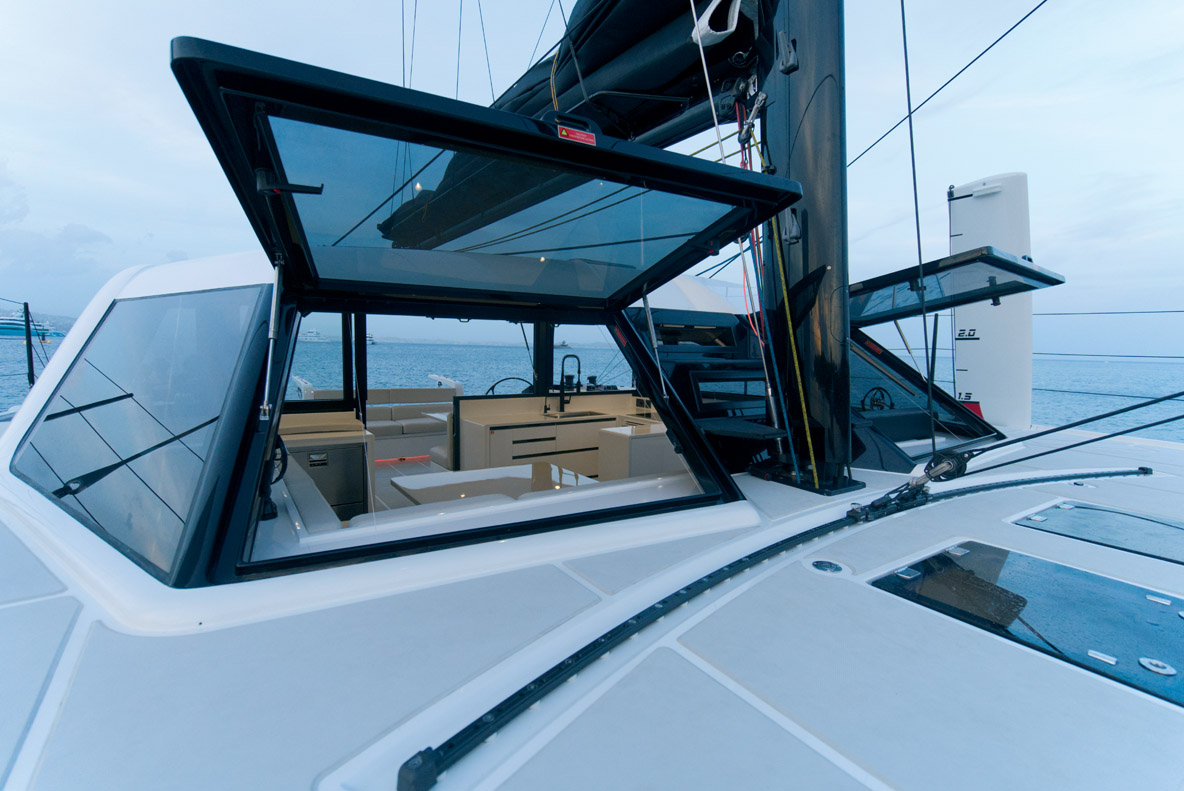
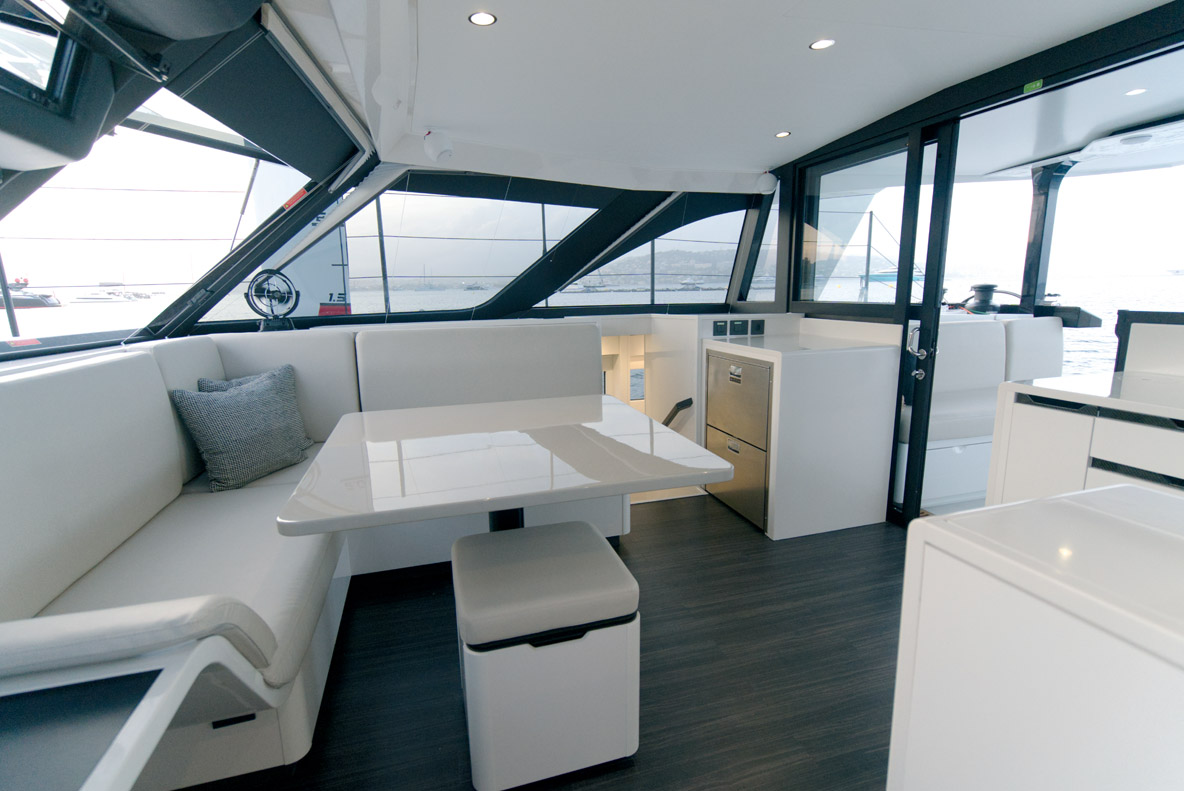
The partition between the cockpit and the main deck consists of a large sliding glass door and two tilting windows that makes the frontier between inside and outside disappear as much as possible.
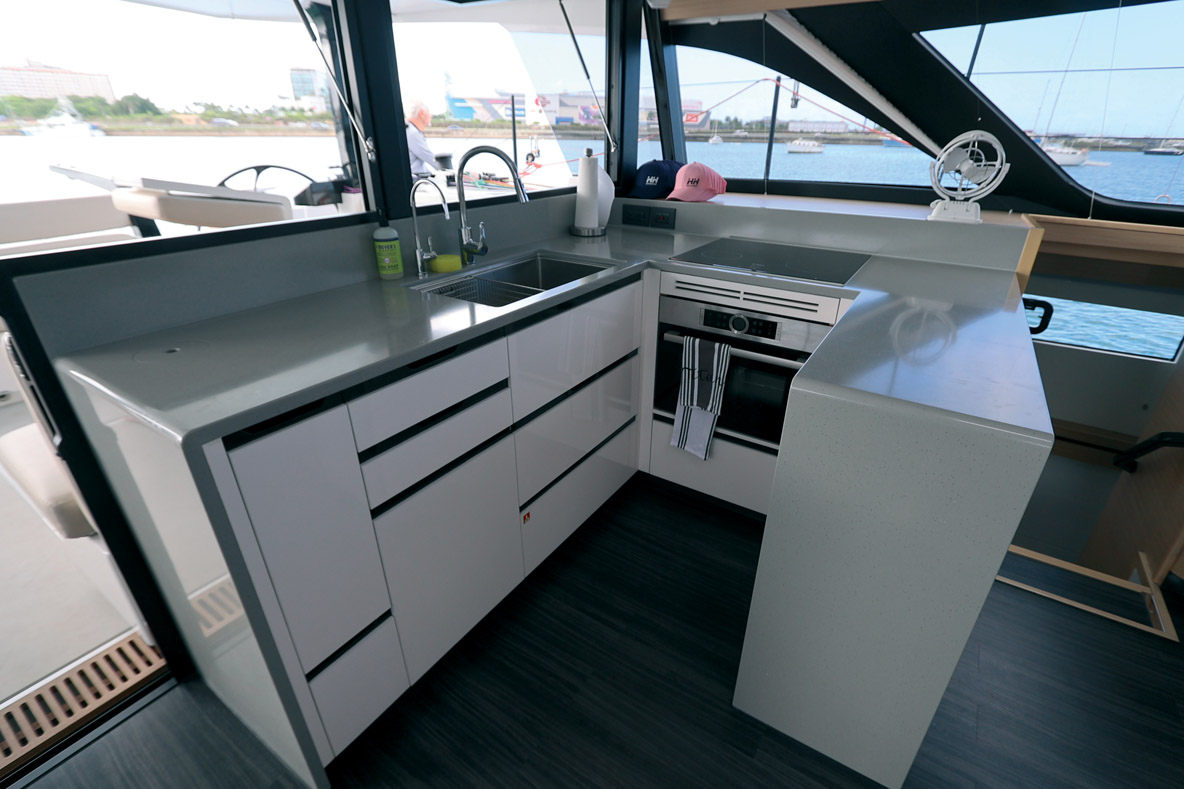
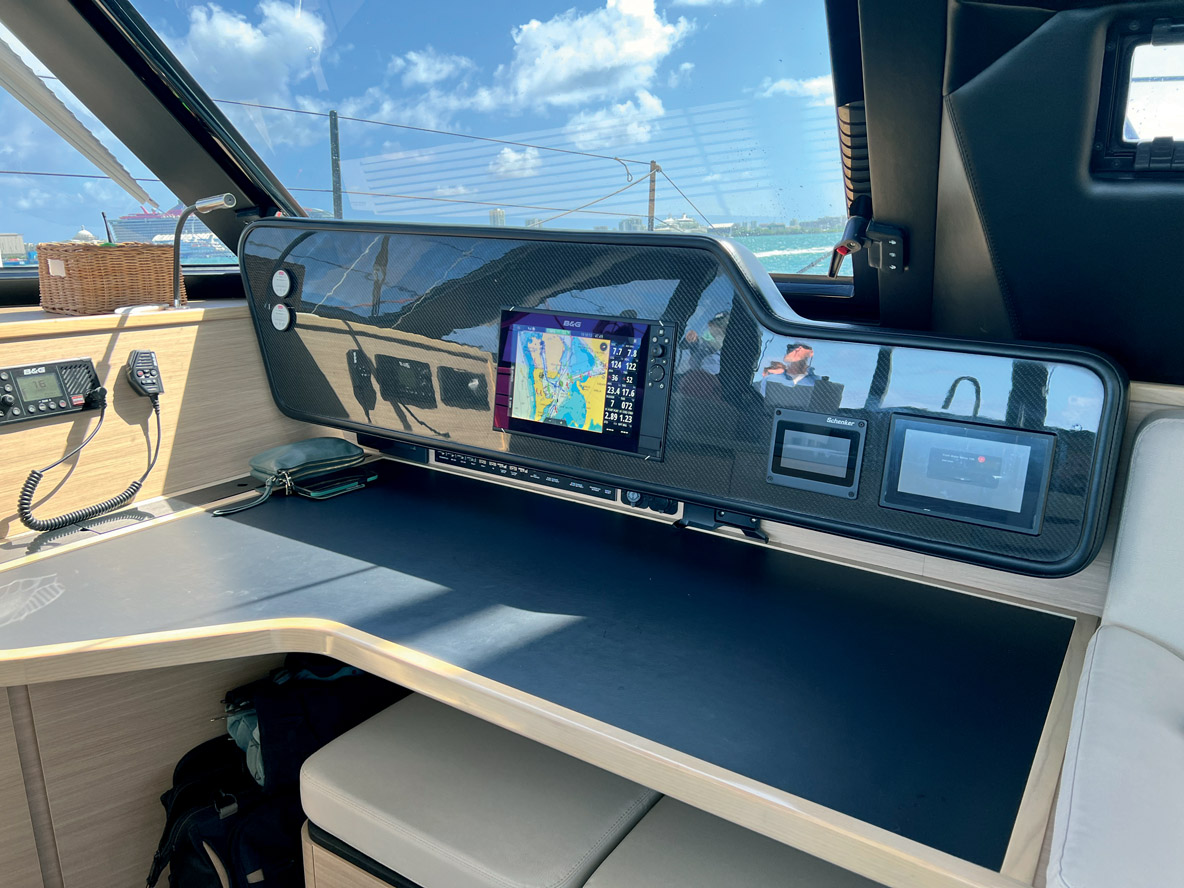
The main deck is very well organized, featuring a dining area, an office/chart table area and a U-shaped galley with sink, oven, hob, refrigerator and, of course, plenty of storage space. A pleasant surprise: the two front windows tilt out to provide excellent ventilation in the catamaran.
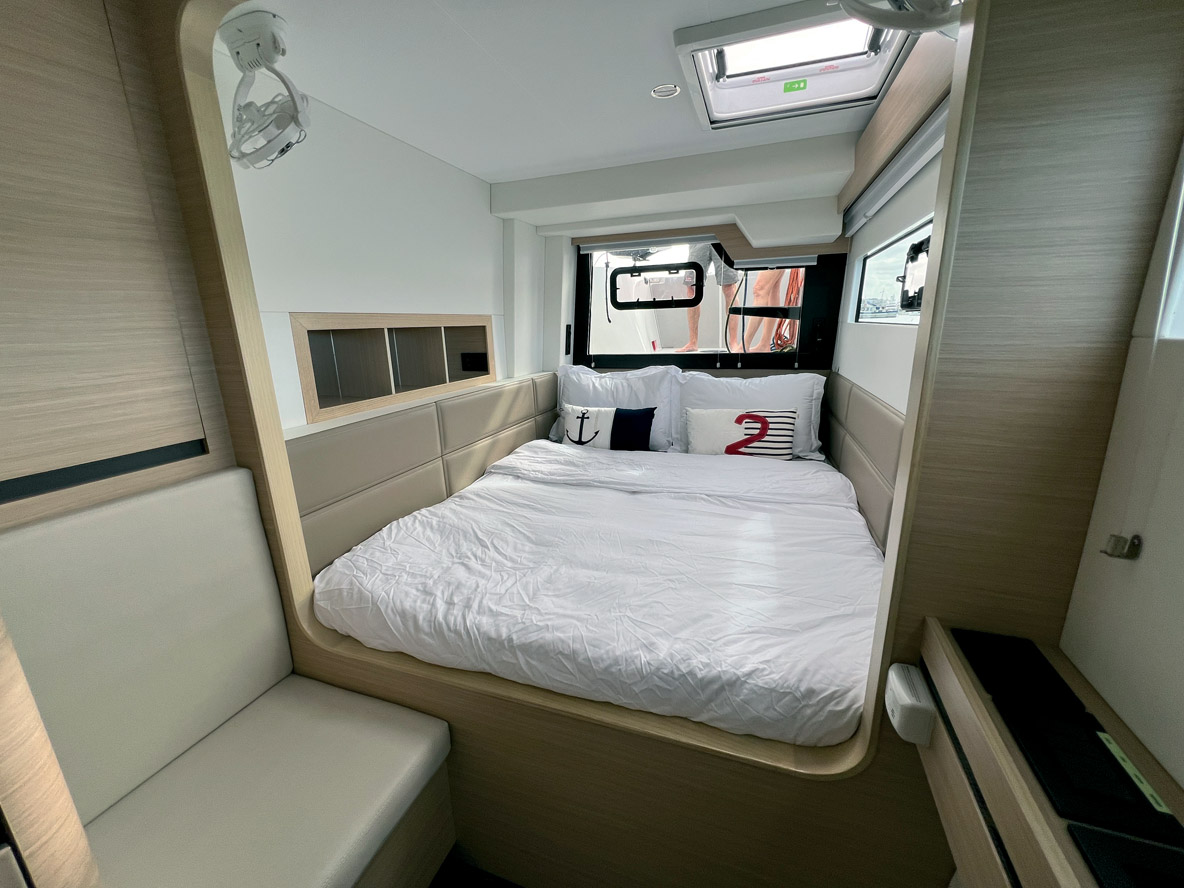
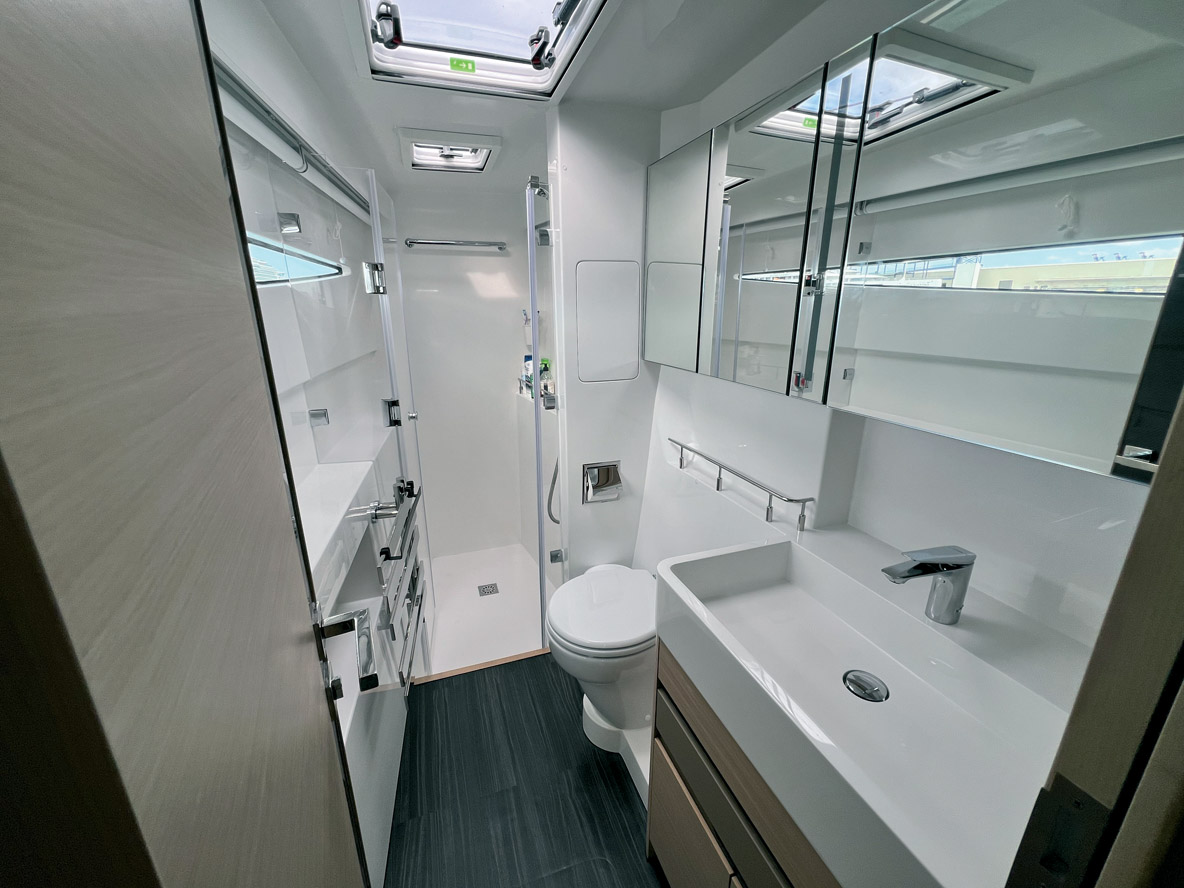
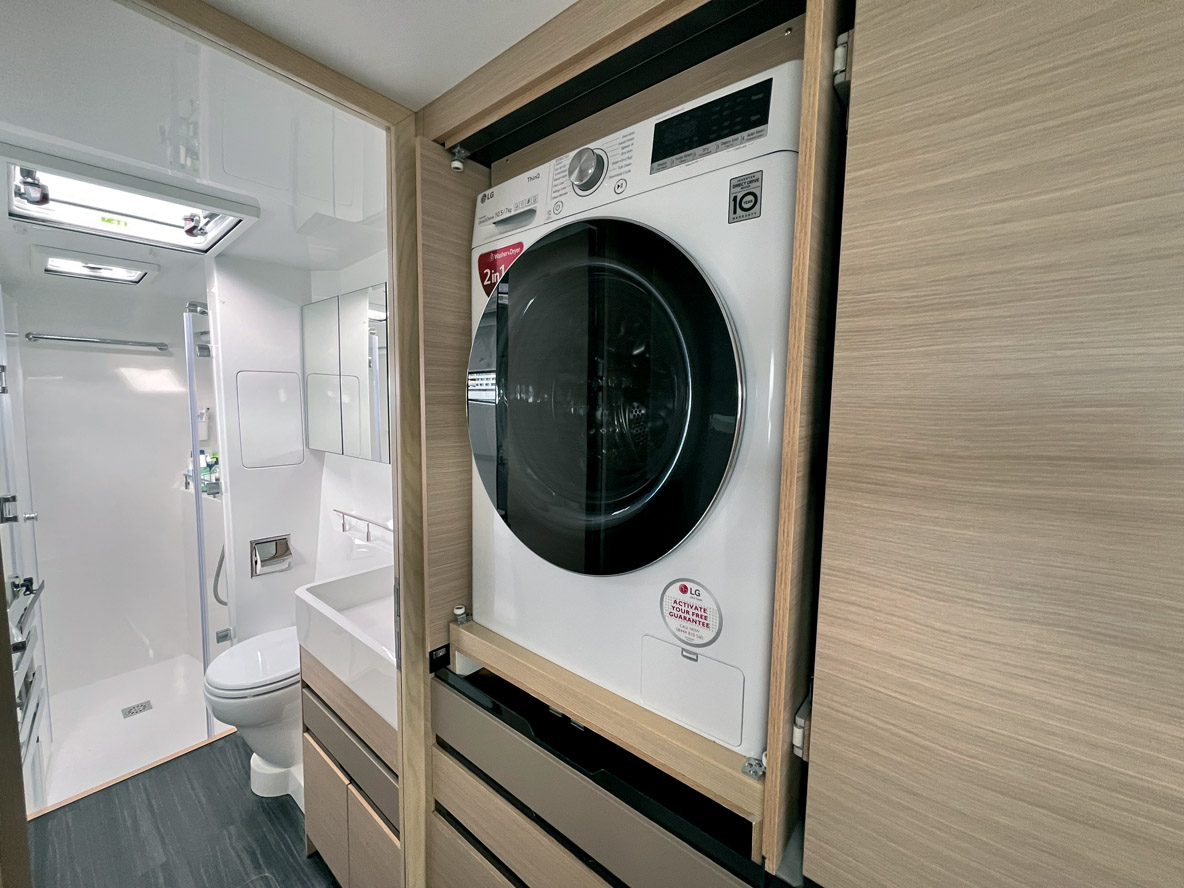
On each side, a staircase gives access to the sleeping area, comprising three cabins. The port hull is reserved for the Owner, with a double berth aft and a large bathroom forward with separate shower. Between the two, there’s plenty of storage space and a washing machine. The long portholes in the hull and the large aft window, which doubles as an emergency exit, provide plenty of light.
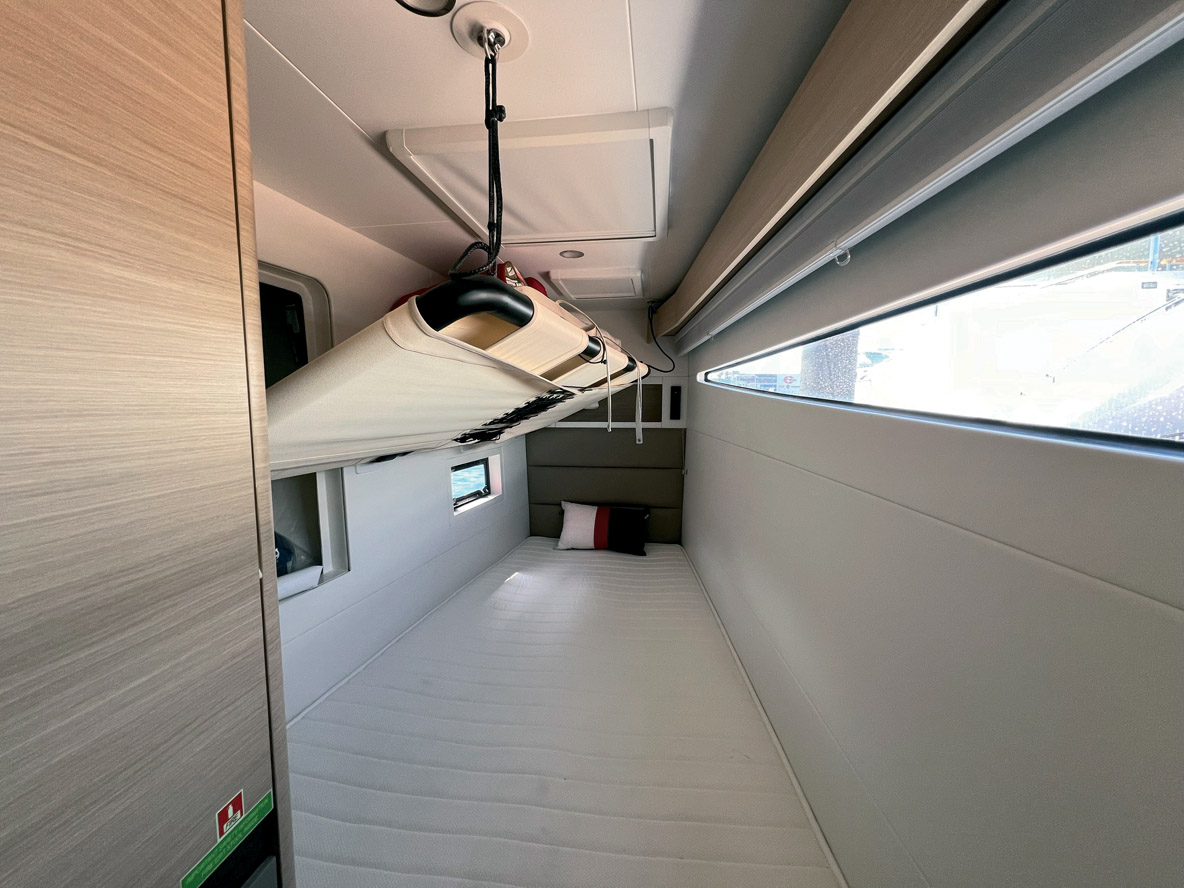
The starboard hull houses two cabins, each with a double bed and a single bathroom to share. A little tip: the starboard forward cabin can be fitted with an extra bunk that hangs above the bed. Once again, the space is bathed in light.
Another interesting detail is that the engines are installed under the aft berths. Although at first sight one might have feared the noise and vibrations induced by night motorsailing, in fact, the noise level has been really well controlled, as have the vibrations. I was able to verify this in situ: the sound ambiance is almost that of a train journey, which for me is ideal for sleeping.
As with all HH models, there’s a large choice of colors, fabrics and woodwork to personalize your multihull as you wish.
Another advantage is that the HH44 comes fully equipped, particularly in this SC version, and while the list of options is still long, you can already sail without having to add accessories.
Very versatile helm stations
The helms are located on each side, far aft. As on many catamarans nowadays, they pivot from side to side in three positions, one completely sheltered, one in the middle and one completely outside. This last position offers maximum visibility of both the road and the rig. What’s more, a small foldable seat allows comfortable steering for long distances. However, this helm station is far from perfect. Firstly, while it’s great to have the instrument panel and engine controls just in front of you and the fact that all halyards lead back to the cockpit, it’s difficult (except if you’re very tall) to reach the clutches. To reach them, you have to move the helm to the side, which isn’t exactly ideal if you need to maneuver quickly. Likewise, a halyard well is housed in the back of the bench seat, which means that guests have to stand up to let you access it – though fortunately not very often. Another questionable point is that when the helm is on the inside, or even in the central position, there’s no direct view of the rig. Instead, the shipyard preferred to keep all the space on the roof to install solar panels. On the plus side, the helm station is quite comfortable, and access to the side-deck is immediate if required.
The HH44 has a light displacement of just over 10 tons, which remains reasonable. A 779 sq ft (72.4 m²) mainsail and a 4,475 sq ft (415 m²) solent are available, giving an upwind surface area of 1,254 sq ft (116.5 m²). You can also use a 913 sq ft (84.8 m²) genoa, or even a 1,603 sq ft (148.9 m²) gennaker. One of the most powerful set of sails in its class, designed by Doyle.
For our test run in Puerto Rico’s San Juan Bay, we enjoyed fairly calm conditions, at least as long as we remained sheltered. A 6 to 7 knot wind didn’t really allow us to make the most of the catamaran’s capabilities. However, under mainsail and solent, a quick tug on the helm allows us to set up at the right angle to the wind. The acceleration is immediate. We put in a few tacks in the bay before leaving the shelter. The wind picks up a little and we encounter a good 5 to 6 ft swell, the result of the previous days’ gale. In these conditions, the HH44 doesn’t disappoint. Even better, she’s comfortable and retains her ability to accelerate while remaining maneuverable, as we can see in the (small) gusts.
With 10 knots of wind, we already reached 8 knots sailing at 60° to the wind. A figure that corroborates the manufacturer’s data, which even announces a speed of 22 knots at 120° from the wind, with 26 knots of wind - conditions that are already pretty strong. In a «normal» breeze, the HH44 is nonetheless capable of sailing between 12 and 14 knots, which is already appreciable for its class, and above all confirms that the promise of performance has been kept.
Another strong point of this catamaran is that it has been designed to be maneuvered almost entirely from the cockpit. This is particularly evident in the three integrated reefing hooks. In fact, all you have to do is lower the mainsail just below reef level, and then raise it a little. It then locks into the hook, and that’s it!
The Ecodrive, a unique parallel hybrid system
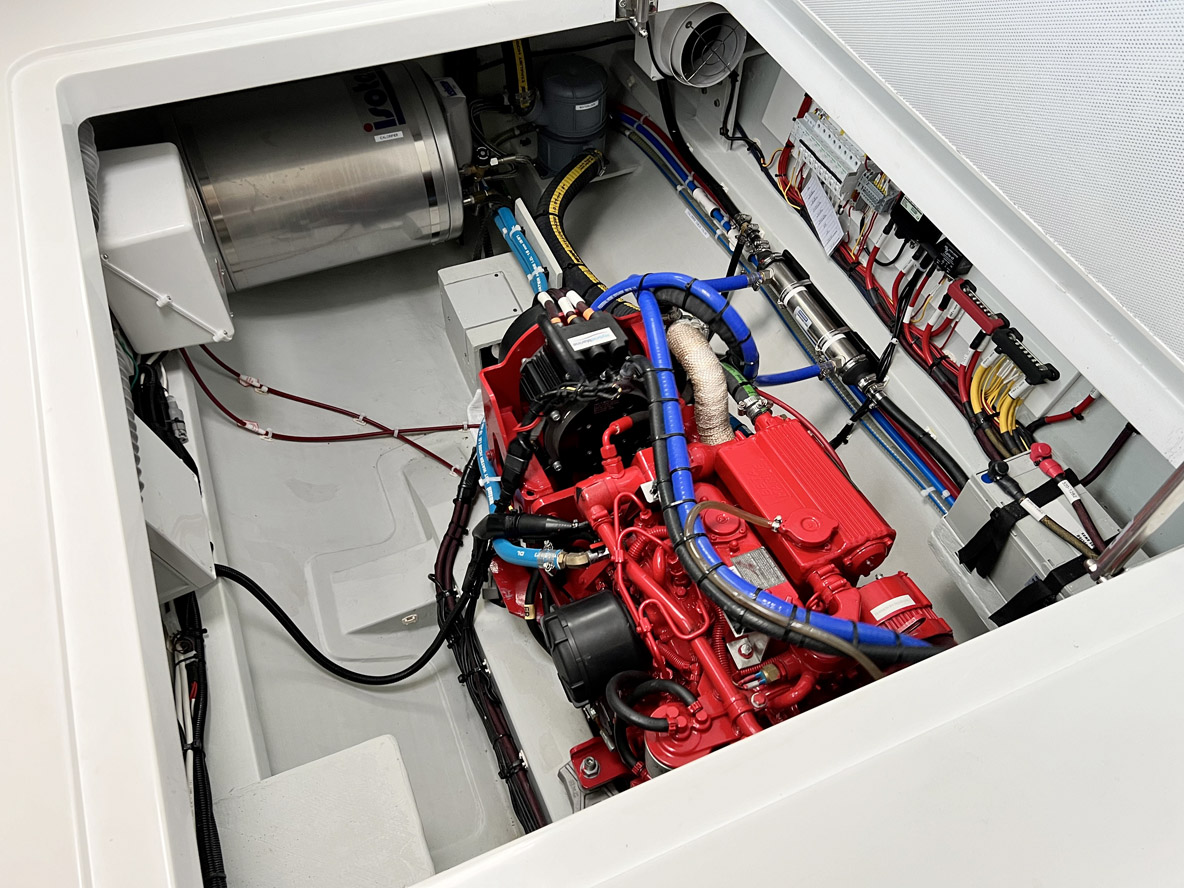
What also sets the HH44 apart from most of its rivals is its hybrid drivetrain, as it is one of the very first catamarans in the world to use this technology. In concrete terms, the shipyard’s Ecodrive system consists of two 30 hp Beta diesel engines, plus two 10 kW electric motors, combined with a 50.4 kWh 48 V battery pack.
In practical terms, the catamaran can be propelled by either diesel or electric motors at speeds of up to 7.5 knots, with a range of 3 hours.
To recharge the batteries, the HH can use three different sources. The first, of course, is the diesel engines, which recharge the batteries as they run. In addition, the catamaran incorporates 4.1 kWp of solar panels on the roof. Finally, when the 44 is under sail, the engines’ Gori propellers are transformed into hydrogenerators to recharge the batteries. All in all, the HH44 boasts a very high level of electrical self-sufficiency, both for propulsion and for on-board power consumption, enabling silent, pollution-free sailing in a wide range of situations.
Conclusion
At the time of writing, the shipyard has already sold about forty units of the HH44. This success is not difficult to understand, since the brand has succeeded in concentrating in 44 feet many of the features previously reserved for much larger units. The HH44 is also full of technology, with a propulsion and power generation system that is as efficient as it is innovative. Admittedly, a few points, such as the ergonomics of the helm station, could be improved, but all in all, this catamaran offers good habitability, very decent performance, a convincing ecological propulsion system, not to mention elegant lines - and that’s not bad at all!
However, all this comes at a price, as the HH44 is priced slightly higher than its rivals: the Outremer 45, Balance 442 and Nautitech 44 Open (without daggerboards, of course) to name but a few. This difference is easily explained, since the HH (in SC version, remember) benefits from carbon hulls and the Ecodrive. It’s hard to have it all...
Difficile de tout avoir...
Performance
Numerous clever little features
No roof window at helm station
Technical specifications
Design: James Hakes
Overall length: 50’3” (15.31 m)
Beam: 23’5” (7.15 m)
Draft: 3’11”/9’11” (1.2/3 m)
Cockpit bulwark height: 2’8” (0.825 m)
Air draft: 72’2” (22 m)
Light displacement: 22,487 lbs (10.6 t)
Laden displacement: 31,967 lbs (14.5 t)
Mainsail: 779 sq ft / 72.4 m²
Solent: 475 sq ft / 50.6 m²
Genoa: 913 sq ft / 84.8 m²
Storm Jib: 129 sq ft / 12 m²
Gennaker: 1,603 sq ft / 148.9 m²
Engines: 2 x 30 HP Beta
Electric motors: 2 x 10 kW
Fuel: 2 x 72 US gal (2 x 275 l)
Water: 105 US gal (400 l)
Batteries: lithium-ion 50.4 kW
Solar panels: 4.1 kWp
CE Category: A
Starting price SC version: US$ 1,415,000