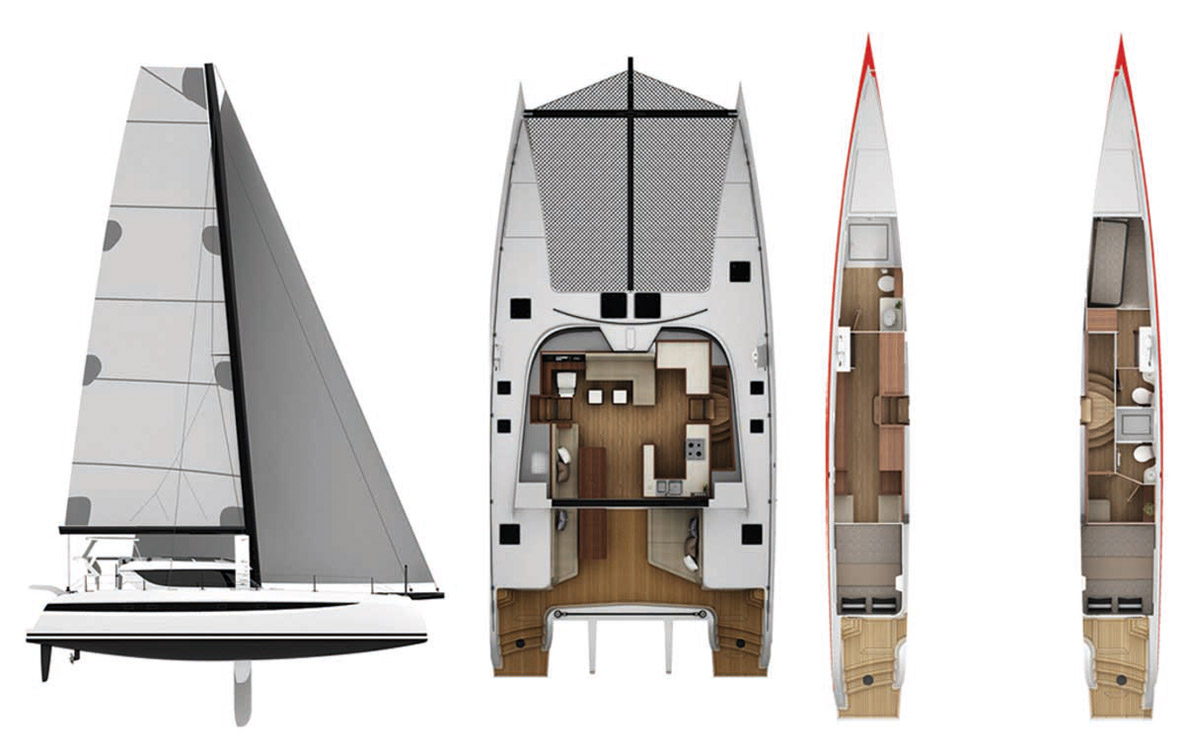
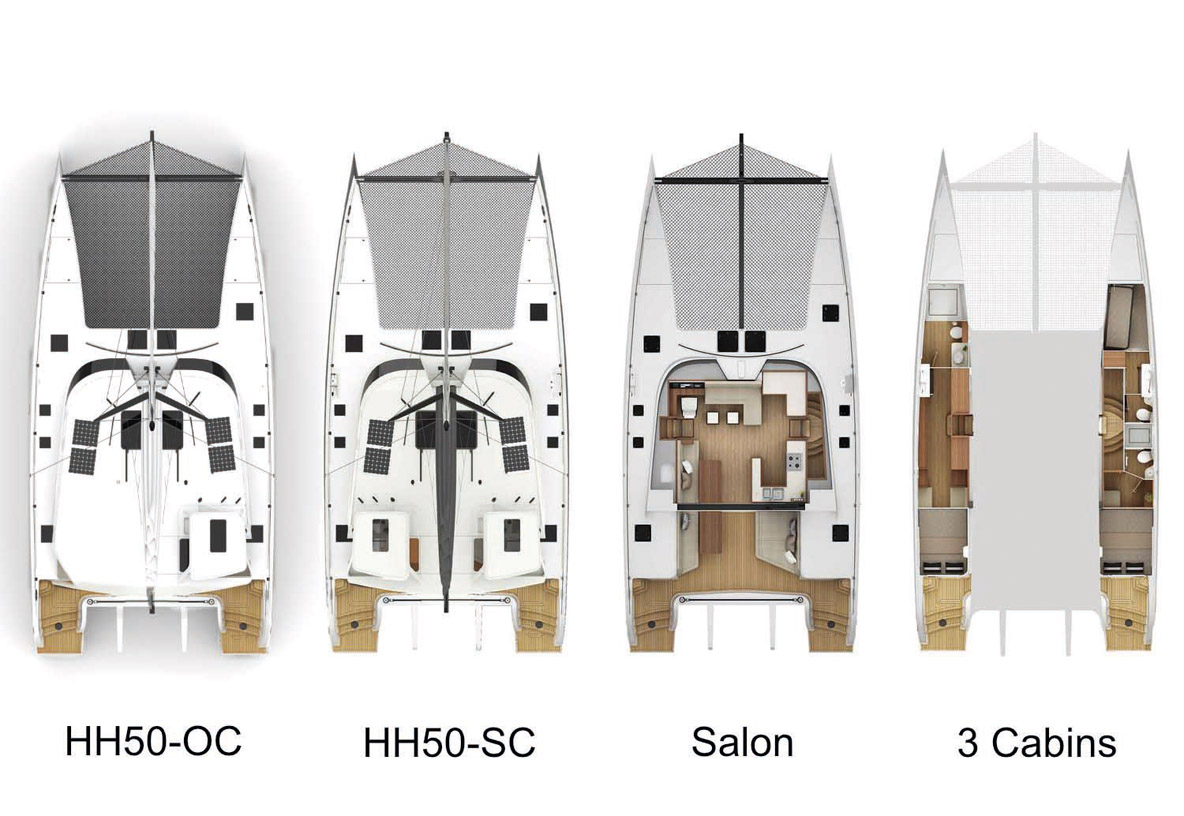
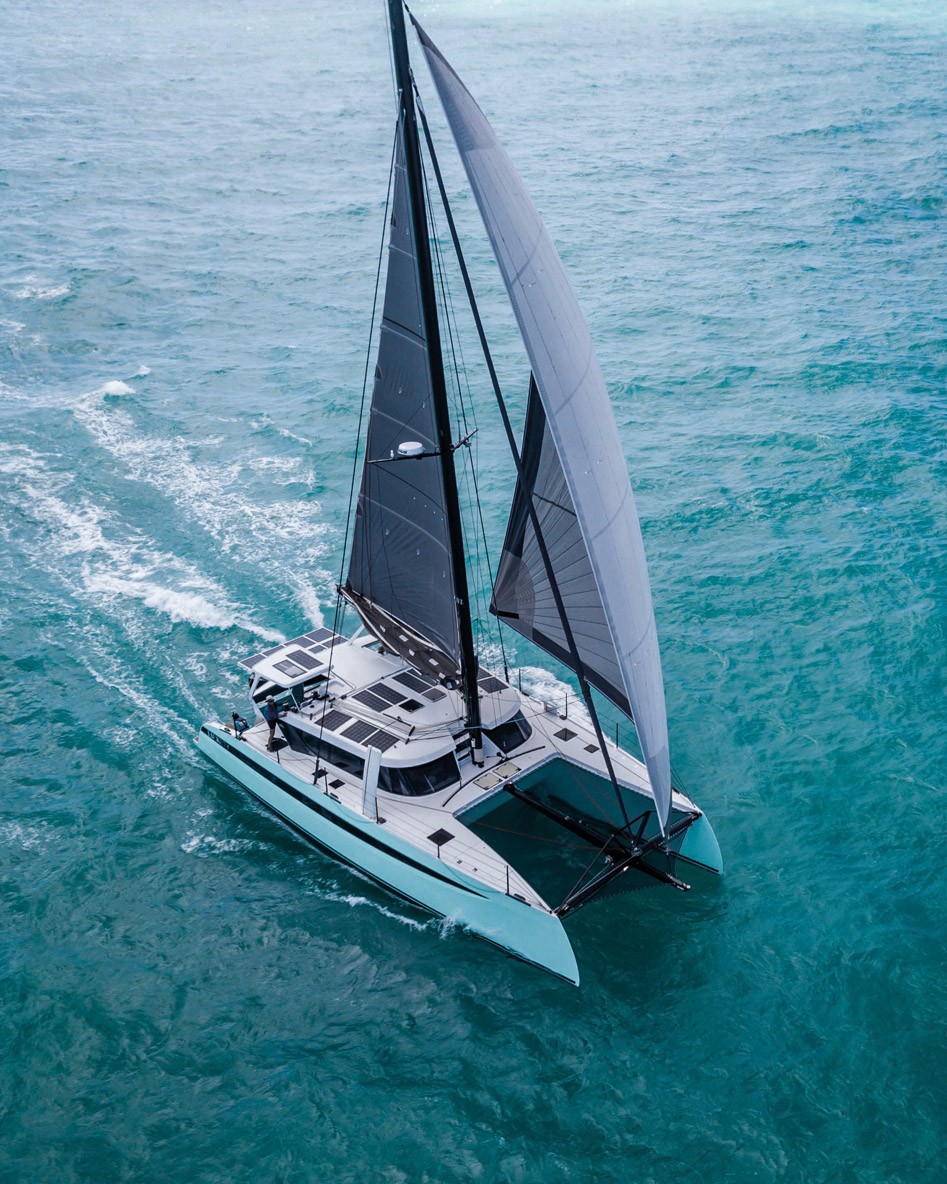
Hudson Yacht Group presented the “Sports Cruising” version of its 50-foot cruising boat at the Cannes Yachting Festival back in September. The HH50-SC, of which only 5 are available, is resolutely focused on high-level performance without abandoning great comfort and even a certain idea of luxury. We got the chance to sail aboard this catamaran, and we certainly got the feeling we were in the world of a “grand tourer”.
Infos pratiques
- Le chantier : HH50 Sports Cruiser
- La fiche technique
-
 Découvrez notre vidéo exclusive
- Financez votre HH50 Sports Cruising
- Assuez votre HH50 Sports Cruising
- Articles autour du HH50 Sports Cruising
Conditions : 6 to 10 knots, slight sea
It was only two years ago that we took the helm of the very first HH catamaran designed for blue water sailing. The HH50 Ocean Cruising (unlike full carbon models such as the HH66 or the HH 55) saw the use of fiberglass/foam/vinylester infused hulls. Today, we have the pleasure of sailing the first HH50-SC model presented in Europe. In terms of differences between the two versions, the inventory is simple. The hulls are made of carbon on a carbon frame. The skeg keels are replaced by curved and profiled daggerboards (still in carbon) plunging over 10 feet (3.3 meters) below the surface. The custom Sparcraft aluminum mast painted in black is replaced by a Marstrom carbon mast with a teardrop section. The sail plan is bigger by around 5% in comparison with the Ocean version, while the full carbon construction of the boat lowers the weight by a ton and a half, giving around 25,000 pounds (11.5 t), which clearly does favors for the weight/power ratio. Two symmetrical helm stations allow for optimum control on each side. An optional set of Doyle Hydranet sails and a Maxikote radial reacher complete the performance-oriented specification. Without offering the efficiency of racing multihulls, which are much lighter and uncomfortable, the HH50-SC intends to come close. It provides a real gliding sensation on the water thanks to its daggerboards whose curvature gives lift to the hulls and reduces drag while improving windward gain. However, “The rigorous manufacturing, quality and finish of the fittings are uncompromising”, as Seth Hynes, the brand’s president, points out, in order to offer the best possible comfort to the occupants and even non-ostentatious luxury.
A manufacturing process derived from racing
If there was any question about the ability of the Chinese workshops to provide the ultimate quality, the HH50-SC leaves no doubt in this area, judge for yourself. The hulls are made of carbon/Corecel foam/epoxy sandwich under infusion. The implementation is very carefully done. The foam panels are heated before being laid out to perfectly fit the shape and curves of the hull, without any breaks or cracks forming, guaranteeing perfect cohesion of the sandwich. The infusion of the whole is carried out with a controlled hydrometry. At the end of the process, the assembly passes to the oven for a post-cure that will set the integration of materials in the same way as on racing boats. The parts subject to heavy stress (joins, mast foot, stanchions, deck hardware, etc.) are monolithic with pre-impregnated fabrics. All bulkheads, structural or otherwise, the ribs and stringers forming the framework, the compression beams, the shower cubicle modules, the floors, absolutely everything is manufactured according to hyper-demanding specifications guaranteeing exceptional rigidity and robustness. All the furniture is built from very light, in-house made PVC foam sandwich panels, allowing the weight savings to be used in part to accommodate the comfort equipment - without adding too much weight to the whole.
Meticulously fine-tuned
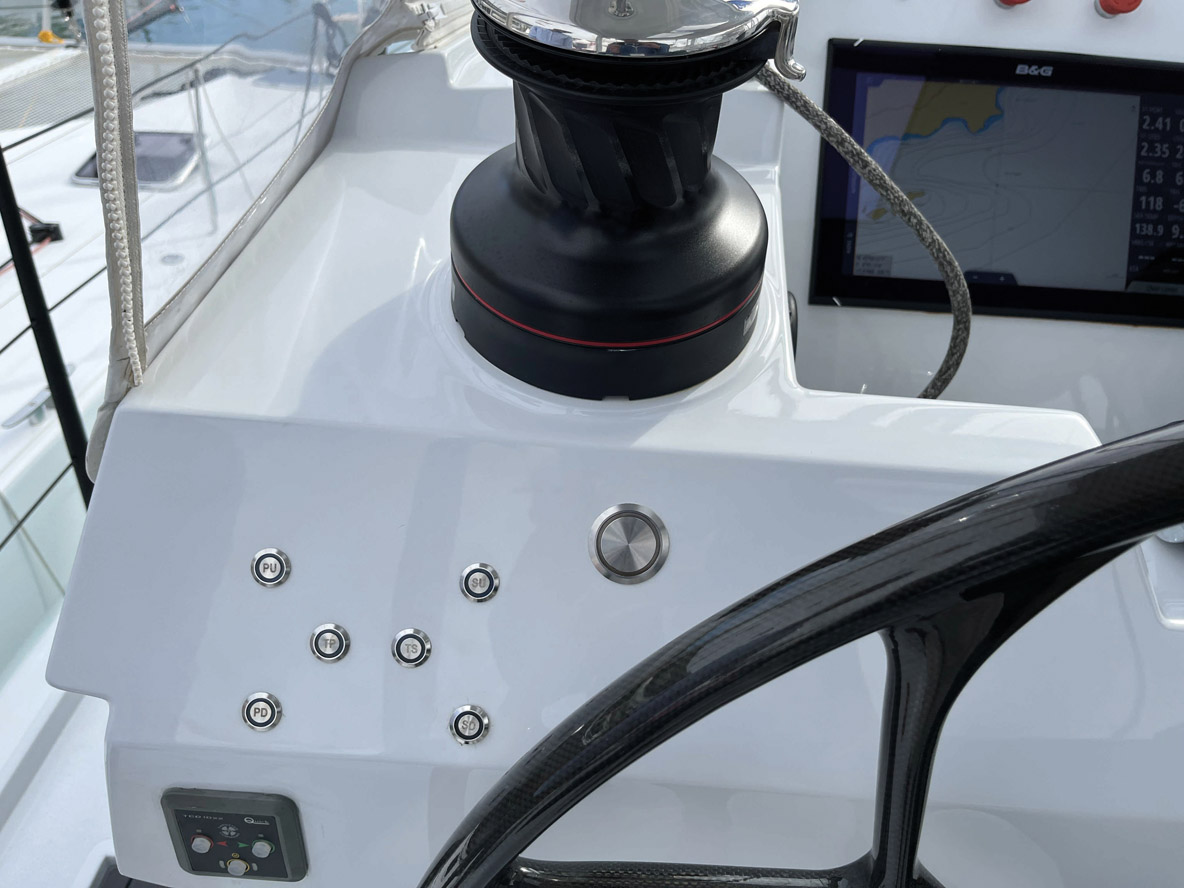
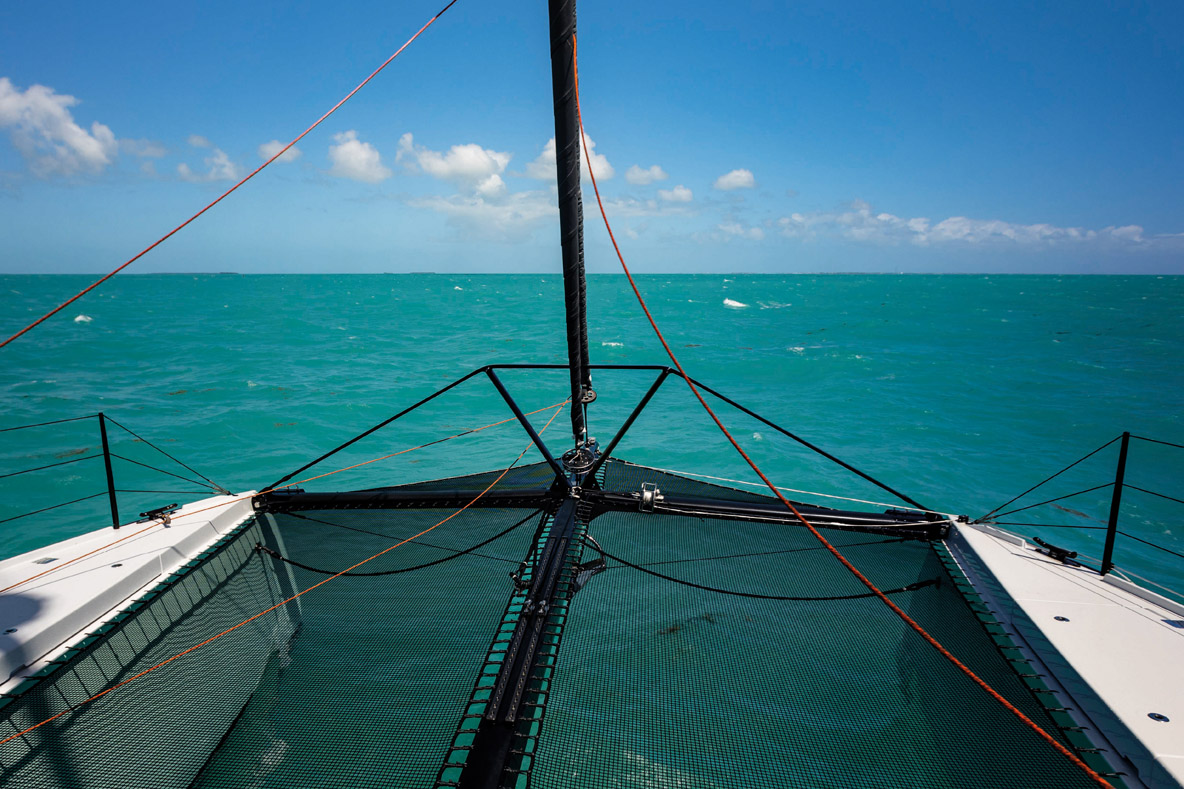
Just like the one-piece forward crossbeam that takes the martingale, the bowroller and the tack of the headsails, it’s clear to see that all the deck hardware has been the object of the greatest attention. Both helm stations are equipped with electric controls for lowering and raising the daggerboards and for operating the mainsheet traveler. Harken electric winches, with foot controls, allow effortless operation of all halyards, leads and sheets that return to the consoles on each side. The organization of the twenty or so maneuvering lines is rigorous, making for easy handling, with the line ends all stowing in a halyard bag forward of the helms. This layout is properly designed for tacking and gybing very quickly, as we will see later on in the Bay of Cannes. The standard delivery offers an extremely complete catamaran, with daggerboards, almost ready to sail, but most of the equipment is included in a very long list of options which includes several alternatives for each station, including a carbon boom or a spare rudder blade. The deck hardware and sails are chosen by the customer according to the degree of performance sought. Nothing has been forgotten and the interior also enjoys this almost sprawling choice, the elements having been carefully designed for their proper integration. The level of detail is pushed to the point of showing the weight of each option to set the fully laden displacement with the greatest precision.
A la carte interior
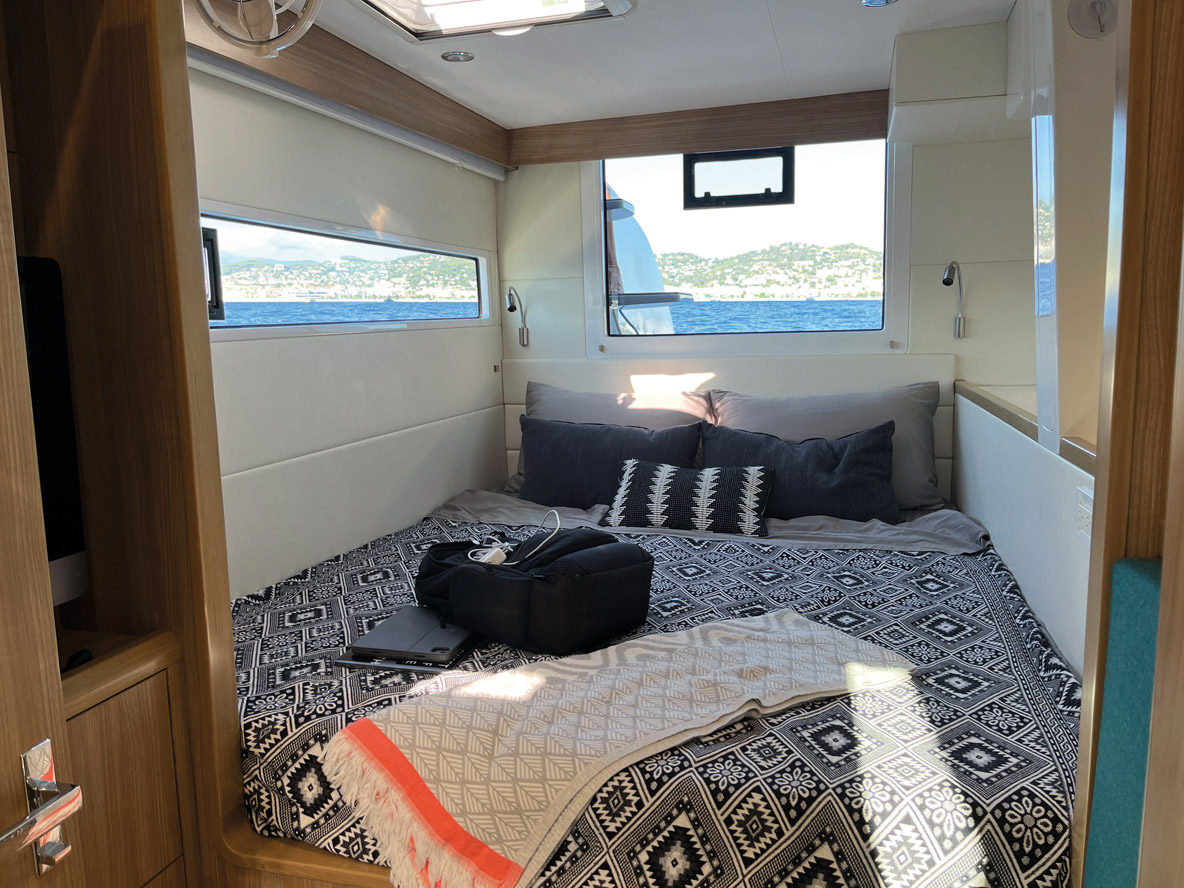
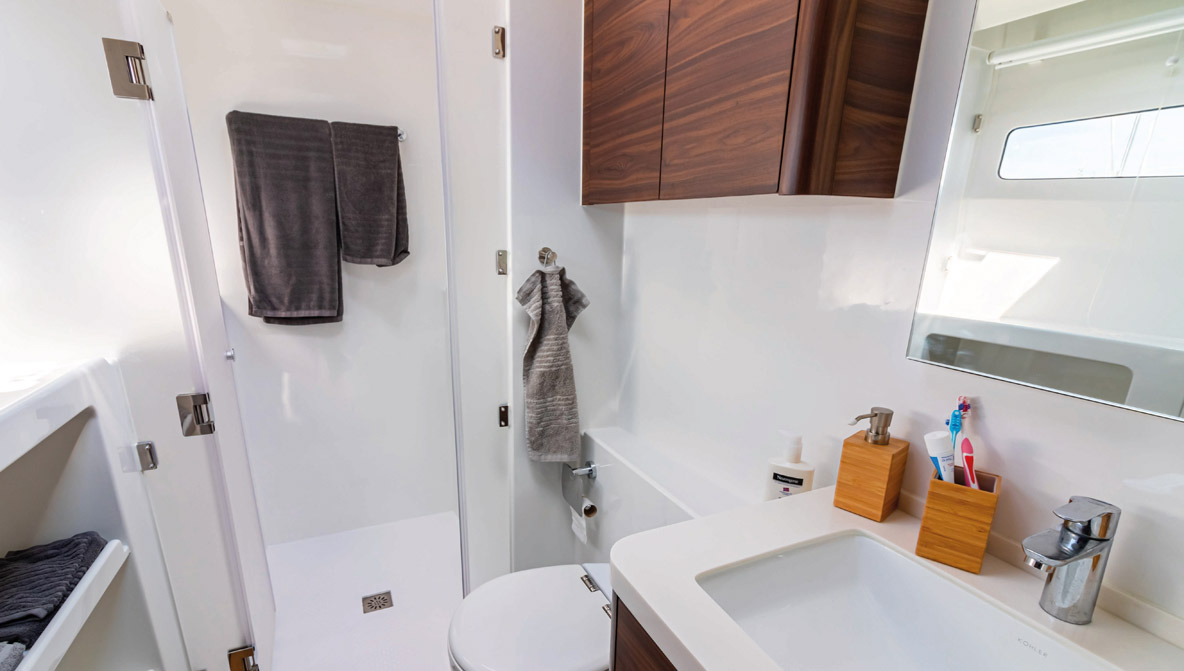
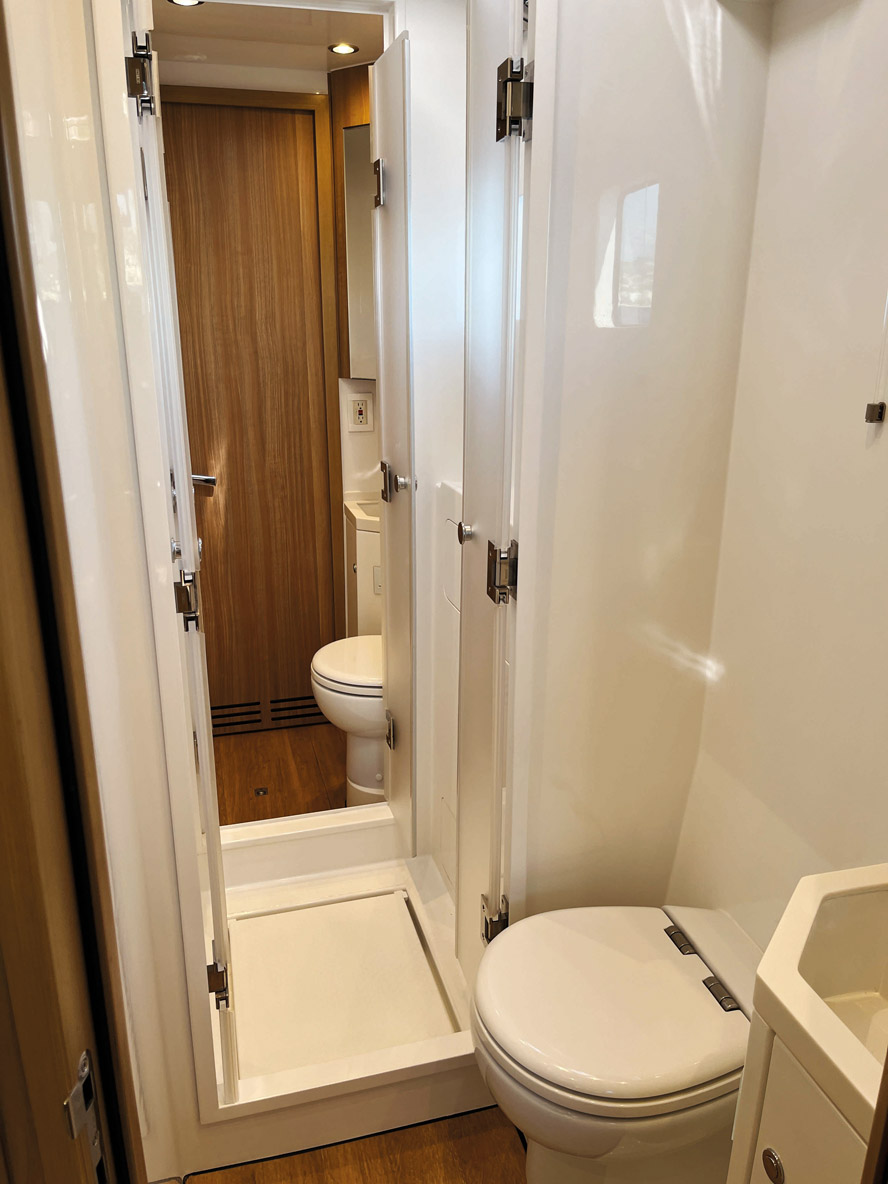
As standard, the HH50-SC comes with three cabins including a portside owner’s suite or four cabins as an option. For the two-cabin hull, the single central shower has access from both sides from the head compartments of each cabin.
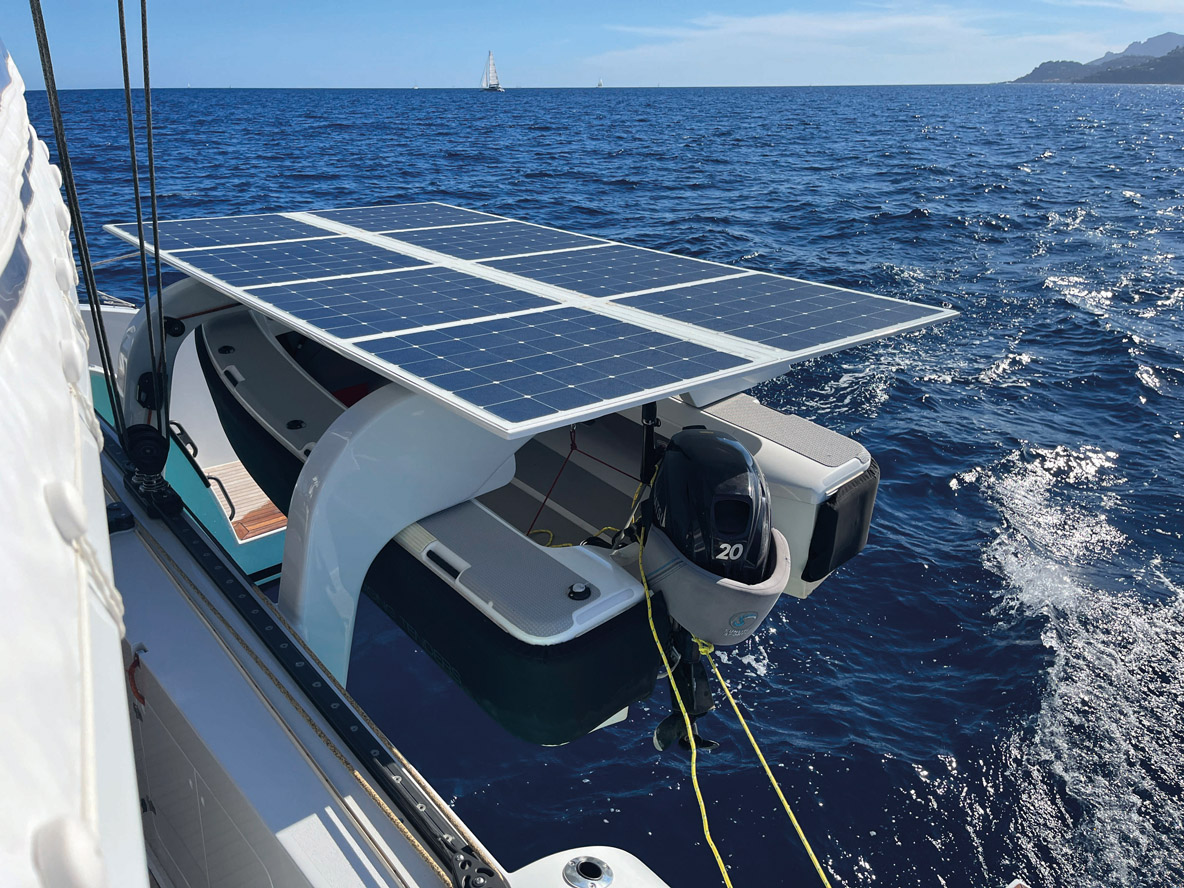
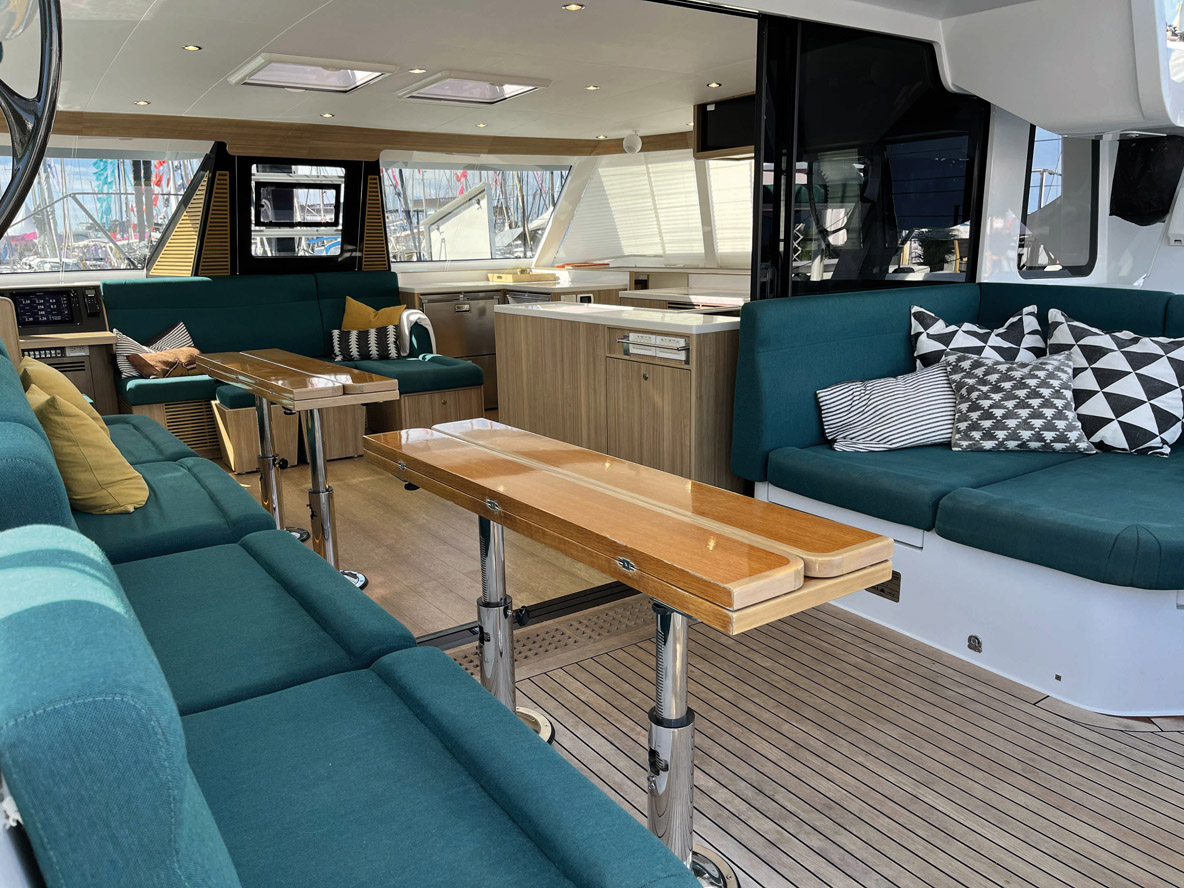
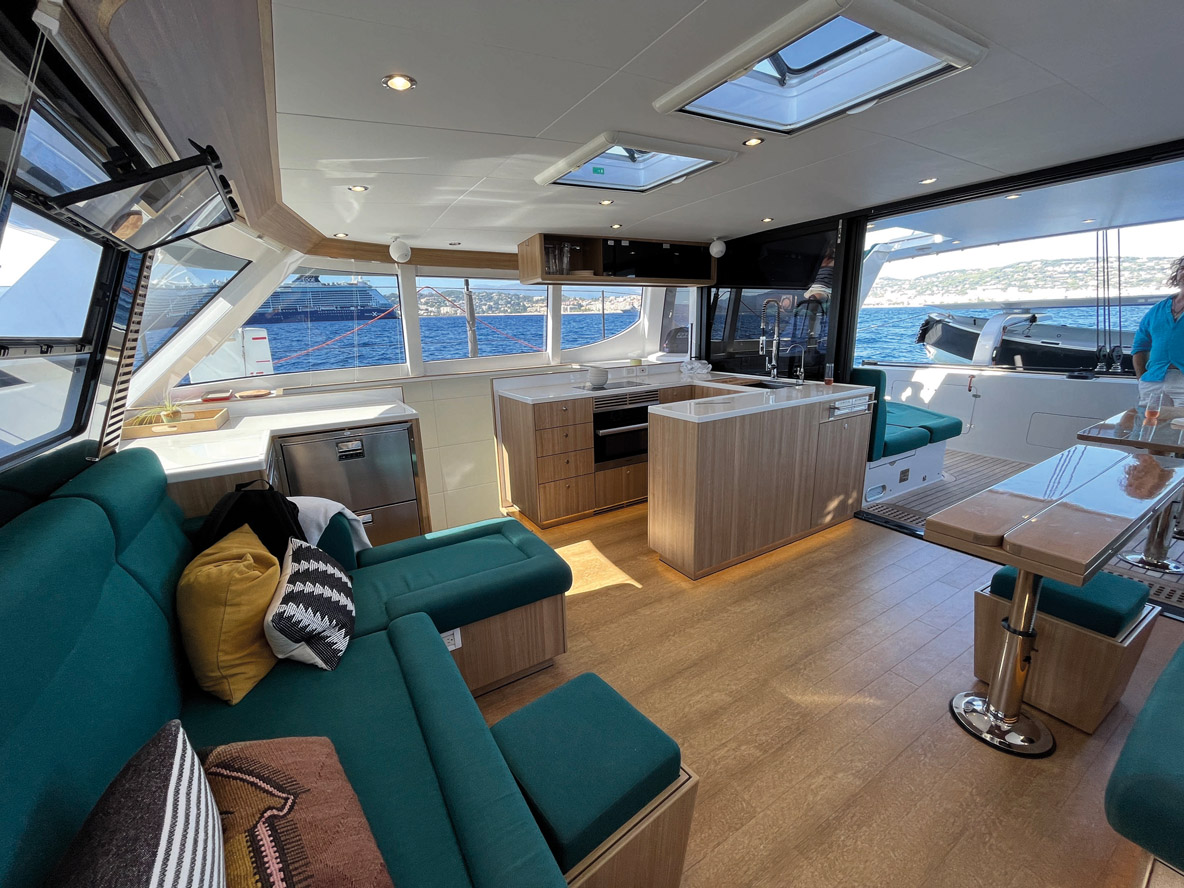
Performance obliges the width of the hulls to be limited to 5’8” (1.73 m): the shape of the bunks therefore follows that of the topsides. However, the cocooning atmosphere is obvious thanks to the finishing materials and assemblies that simply exude luxury. The wood veneers, interior and exterior paintwork, upholstery and linings, worktops, blinds and curtains are all available à la carte from a wide range of choices. This gives the buyer the option, like a semi-custom unit, to compose a unique multihull corresponding to their own personality and tastes. On the main deck, conviviality is the order of the day: the large three-section window retracts, creating an immense saloon-cockpit area. Here, you can set up a table for a dozen guests - and even invite the neighboring crew that you (obviously) beat in a race. The equipment is worthy of the most prestigious boats, but the options have been selected for their relevance as well as for their lightness. There are many clever features on board, such as the sink, which has grooves to support a drainer and a chopping board - that’s real design work! The coachroof, and optionally the dinghy davits, is covered with solar panels to power the battery bank, which is sized to suit the numerous living facilities on board.
Great sailing sensations
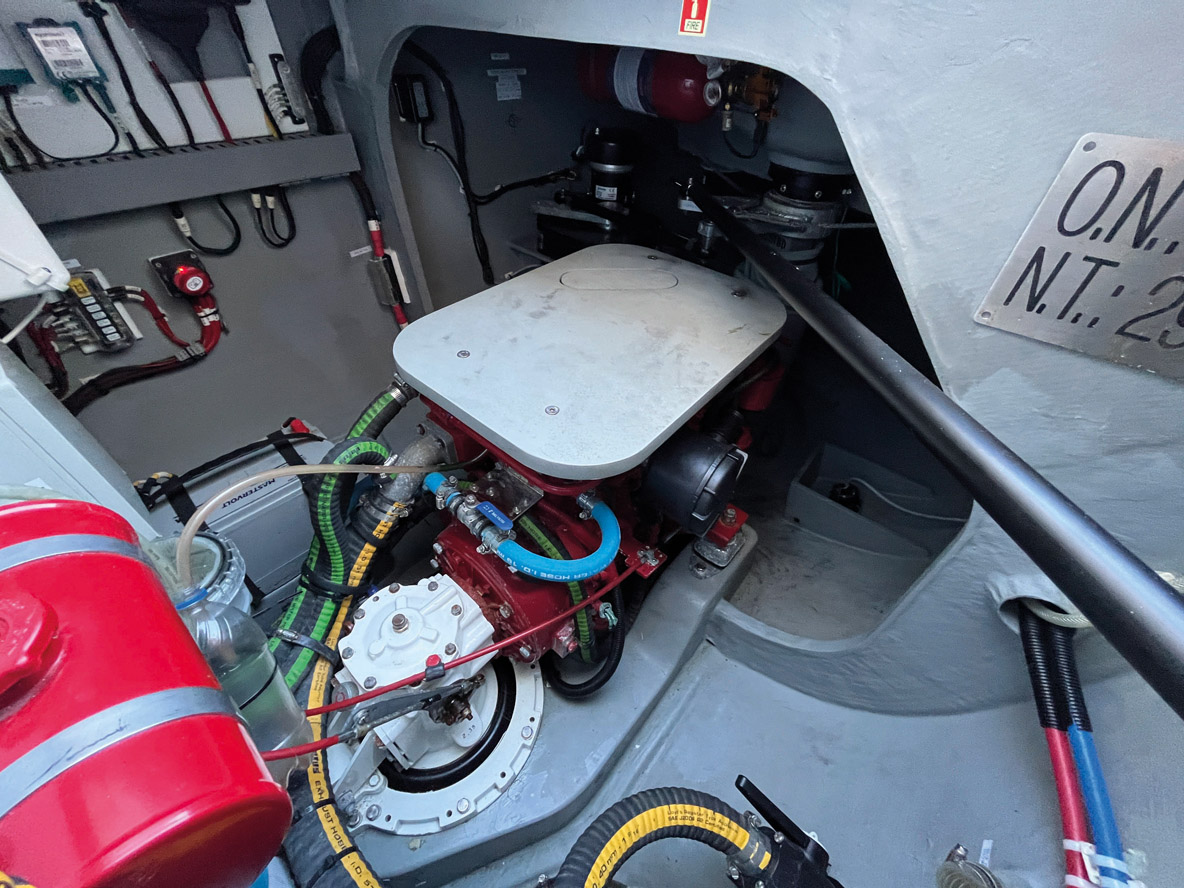
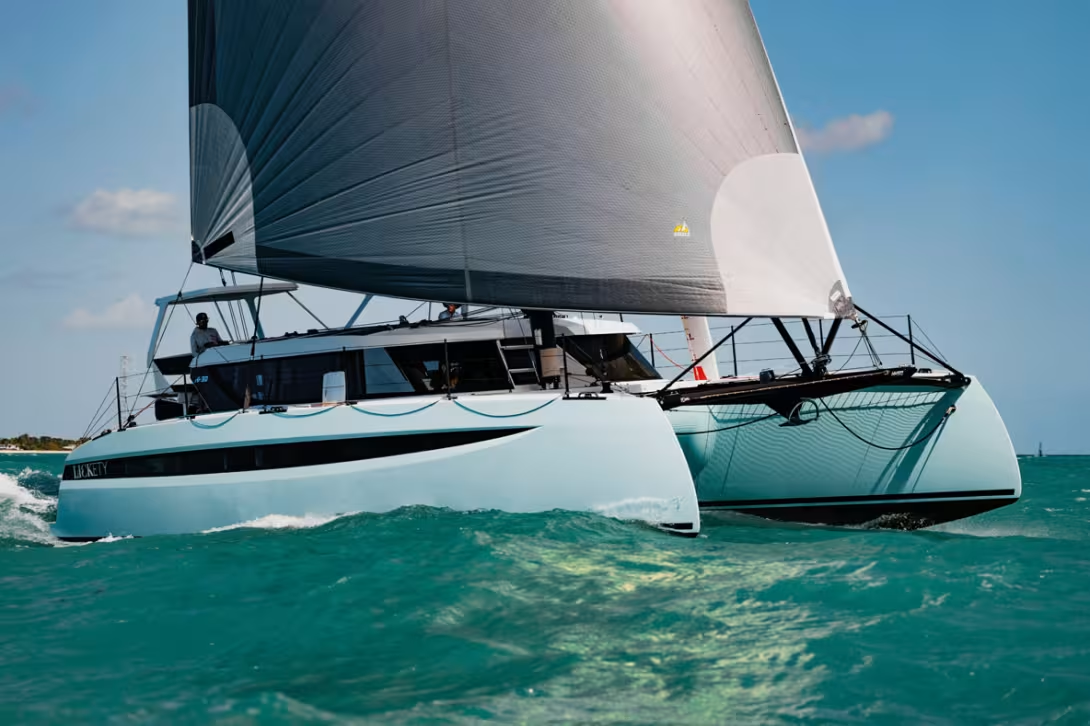
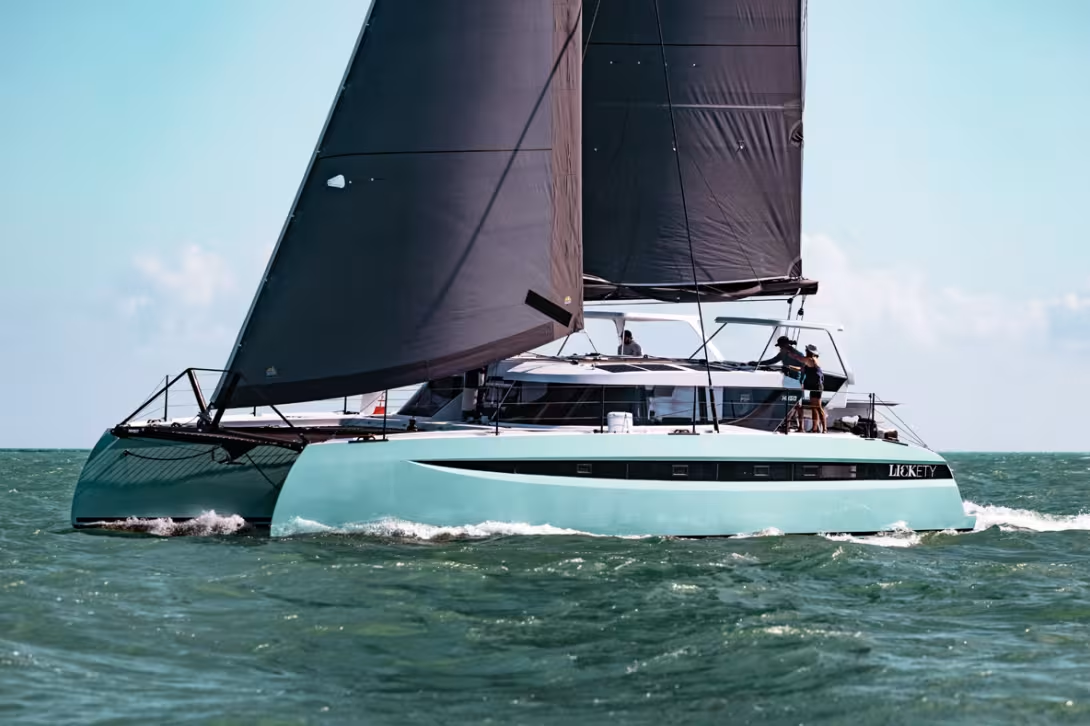
We headed out from Port Canto using the 38 HP Beta motors, an option that proves to be very ergonomic for maintenance, given that the engine compartments are cramped. The shipyard has been working on an EcoDrive version with a diesel electric engine that will meet new environmental requirements. The only slight drawback is that this shaft-driven system will be positioned under the aft berths, meaning it requires faultless sound insulation. Hoisting the magnificent Doyle Hydranet sails is a formality with all the electric winches. The light breeze oscillated between 6 and 10 knots off Cannes, and we began by sailing upwind under solent. All the tanks were full and there were a dozen of us on board - not favorable to performance in these light conditions. Nevertheless, the HH50 was able to make 6 knots upwind on a fine reach, but it was difficult to appreciate the benefits of the daggerboards in these conditions. The load on the shrouds is displayed on the Zeus B&G screens and no doubt this information becomes crucial when the breeze picks up. We bore away slightly, to 70 degrees off the wind and unfurled the gennaker. With 10 knots of true, we were now making over 9 knots boatspeed. Had we been less than fully laden, we would certainly have managed to be sailing at the windspeed - or even faster. Once we closed the foothills of the Esterel mountains, we gybed. The kinematics of the maneuver were disconcertingly clear. The blocks and electric winches work wonders. You can feel that the shipyard team is used to racing, and the ergonomics are very good. When you take the helm, the sensations are worthy of a racing yacht - the smoothness and precision of the Jefa steering system sumptuously enhance your trick at the wheel, especially since the rigidity of the all-carbon platform can be clearly felt from the tips of your fingers and underfoot. Nothing shakes or vibrates, and it’s a pleasure free of any unwanted disturbance.
Conclusion
We’d already been seduced by the cruising version of the HH50, and the more exciting (without being extreme) performance of this Sports Cruising version seems to us even more playful. It’s hard to fault this remarkably well-built, high-end unit. The countless options and settings, if well chosen, guarantee to give you the multihull you need. On reflection, considering the price, this should seem rather normal. The panache of the HH50-SC under sail will delight its owner by giving them the sensations of a racing boat. With family or friends, there’s no need to worry about comfort, as the catamaran can sail quickly and serenely. Surely this harmonious combination of performance, sensations, comfort and safety is the very essence of a Grand Tourer?
Impeccable construction and finish
Performance and pleasure of sailing
Engines under the aft bunks in the EcoDrive version
Requires precise specifications
technical specifications
Architect: Morelli & Melvin
Overall length: 51’10” (15.79 m)
Waterline length: 48’10” (14.89 m)
Beam: 24’5” (7.44 m)
Draft (daggerboards): 5’5” /10’7” (1.65/3.3 m)
Air draft: 79’8” (24.29 m)
Light displacement: 25,516 lbs (11.5 t)
Laden displacement: 35,275 lbs (16 t)
Engines: 2 x 38 HP Beta Marine
Square-topped mainsail: 894 sq ft (83.08 m²)
Self-tacking jib: 426 sq ft (39.59 m²)
Solent: 671 sq ft (62.3 m²)
Gennaker: 1,117 sq ft (103.76 m²)
Spinnaker: 1,486 sq ft (138.1 m²)
Base price: $1,830,000 ex-tax with daggerboards
Price of the catamaran we tested: $2,100,000 ex-tax
Main options (ex-tax)
6 Harken electric winches: $16,500
Electric daggerboard control: $13,860
1,480 Wp solar panels: $20,200
Doyle Sails Hydranet pack: $63,000
Carbon boom: $16,700
Northern Lights generator: $26,500
Additional B&G pack: $27,000
Choice of varnished wood: $45,000
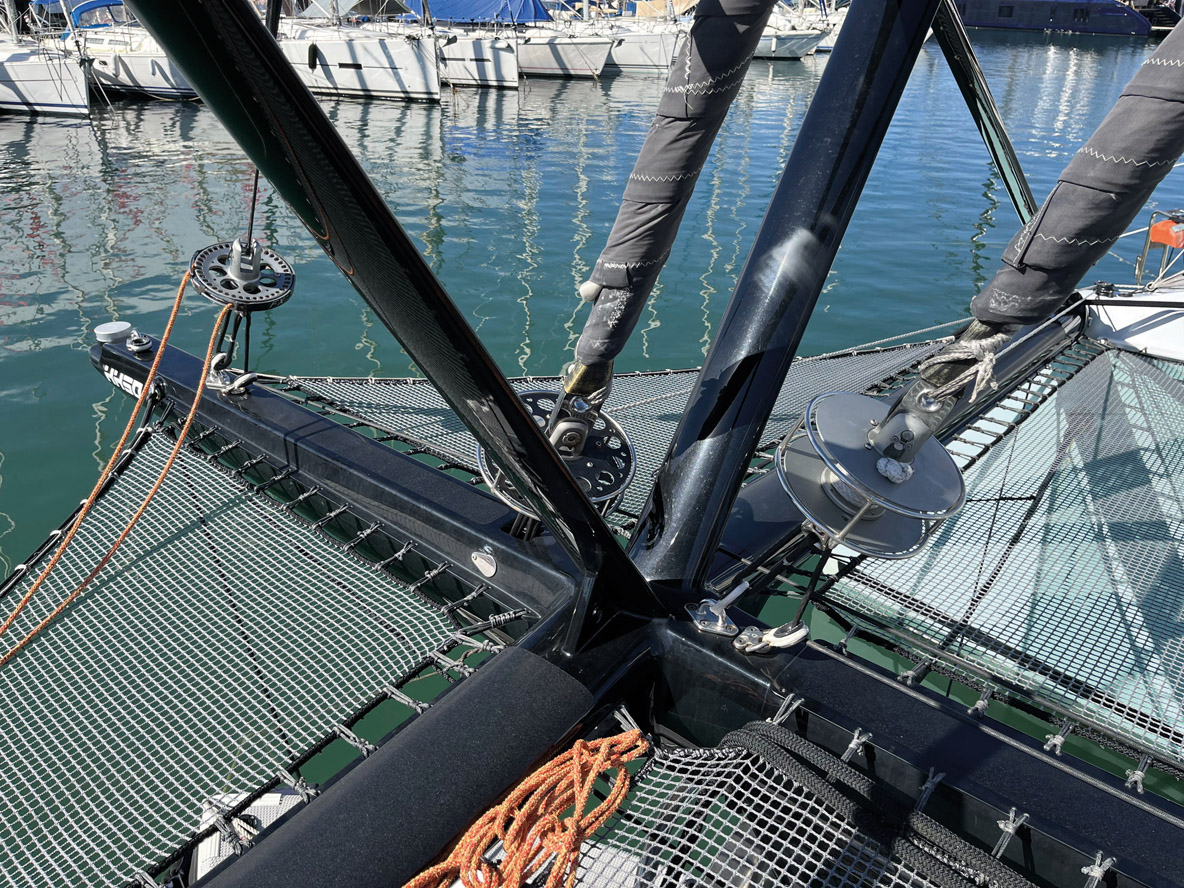
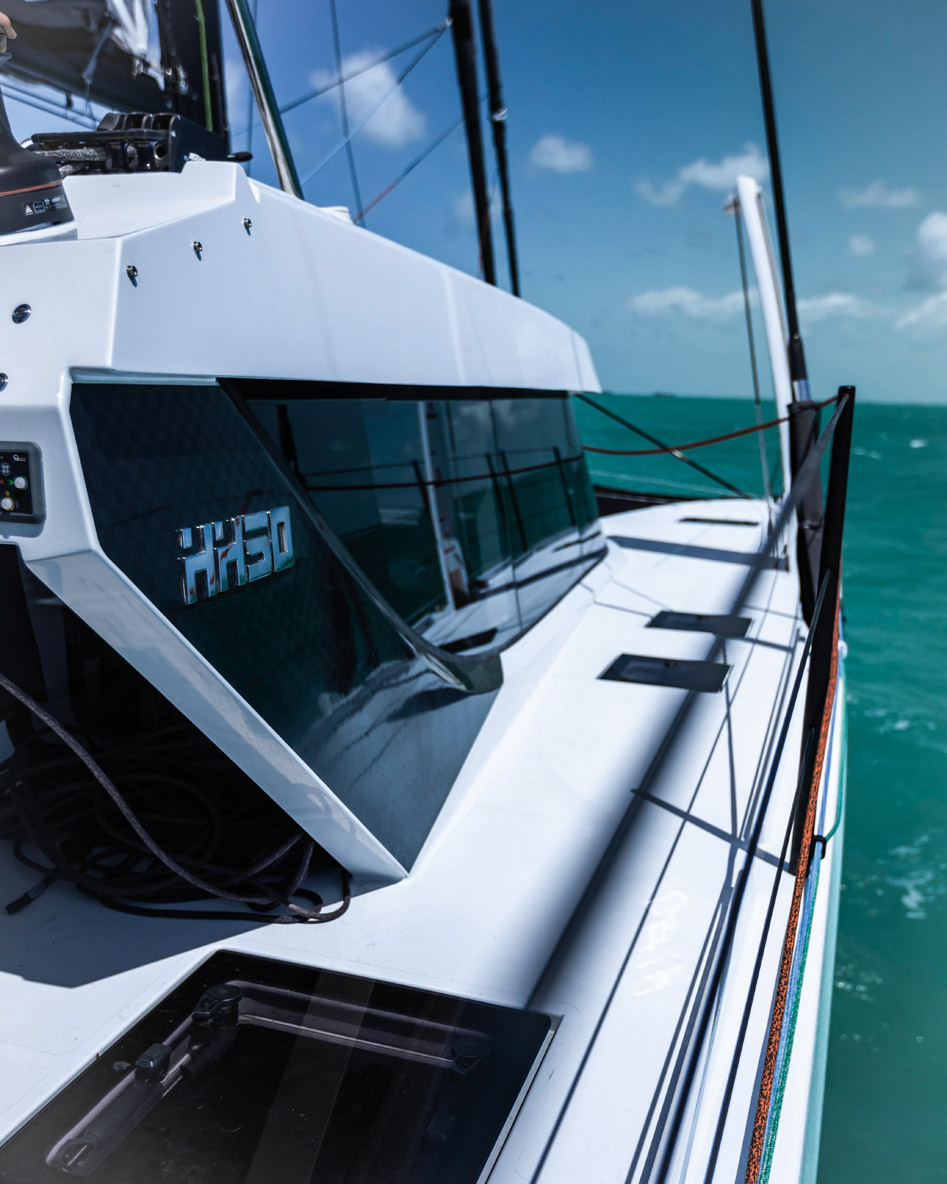
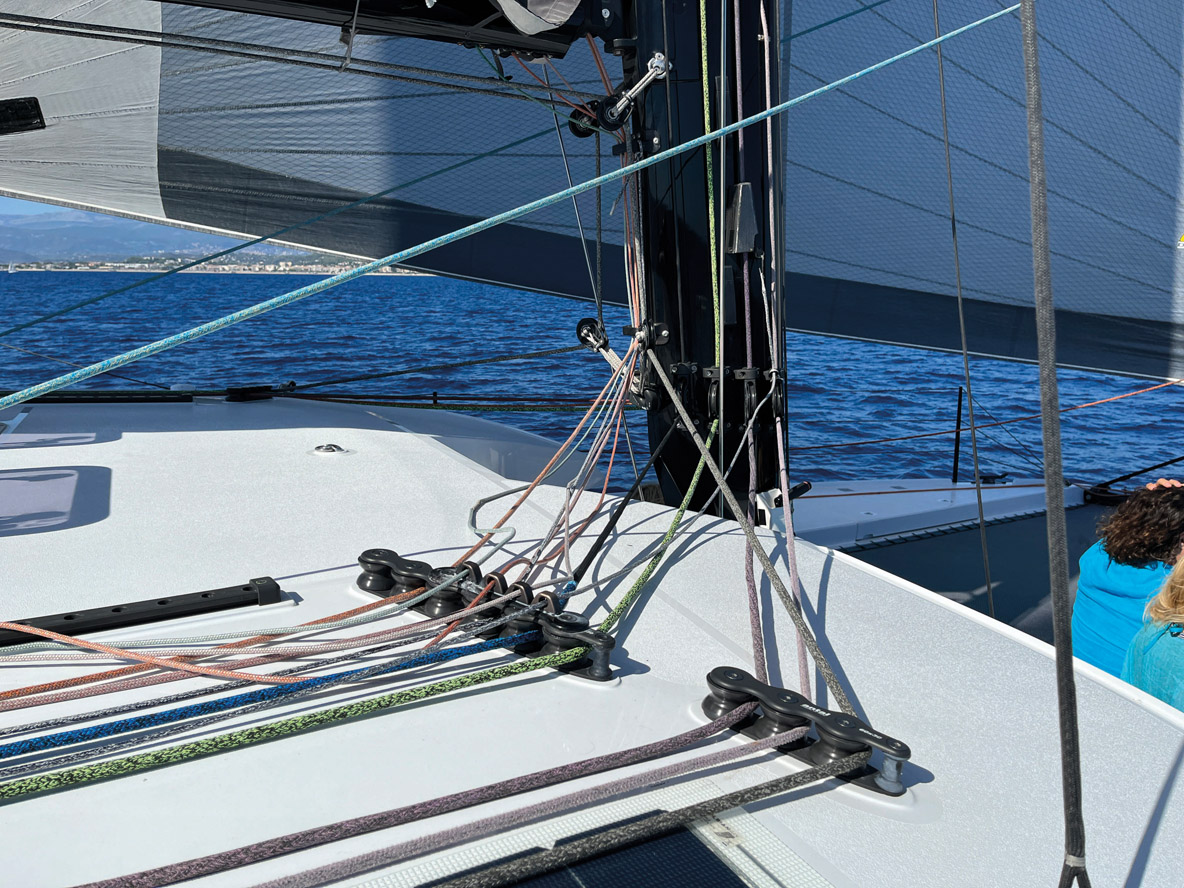
All the running rigging comes back to a very ergonomic console with a very practical line receptacle. Switching tack is another strong point.