Presented at Boatica Cape Town back in October, the Hop Yacht 30 was designed and built in South Africa. This is a catamaran that has ripped up the rulebook, and come up with a (r)evolutionary concept: For the first time, a combination of comfort and liveability has been brought together in an ultra-easy-to-handle boat under 10 meters in length, with a focus on relaxation and pleasure, all with zero CO2 emissions. We got the chance to discover this unusual multihull off the coast of Athens, Greece.
Infos pratiques
- Le chantier : HopYacht 30
- La fiche technique
-
 Découvrez notre vidéo exclusive
- Financez votre HopYacht 30
- Assuez votre HopYacht 30
- Articles autour du HopYacht 30
Conditions: wind 5 to 7 knots, calm sea
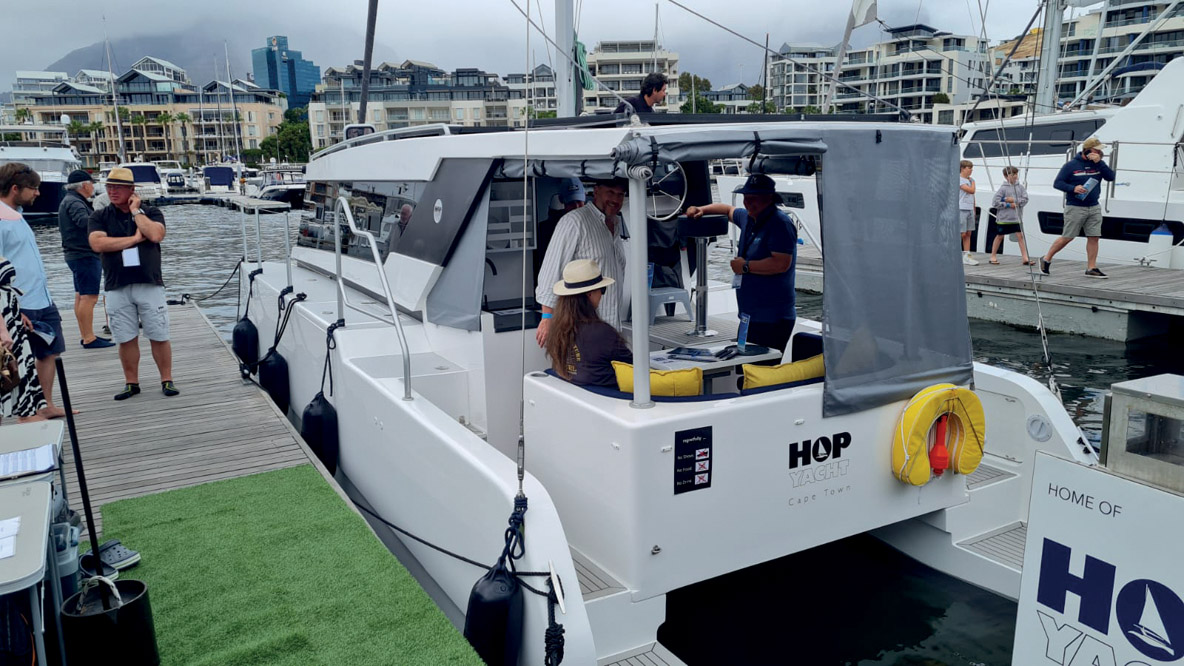
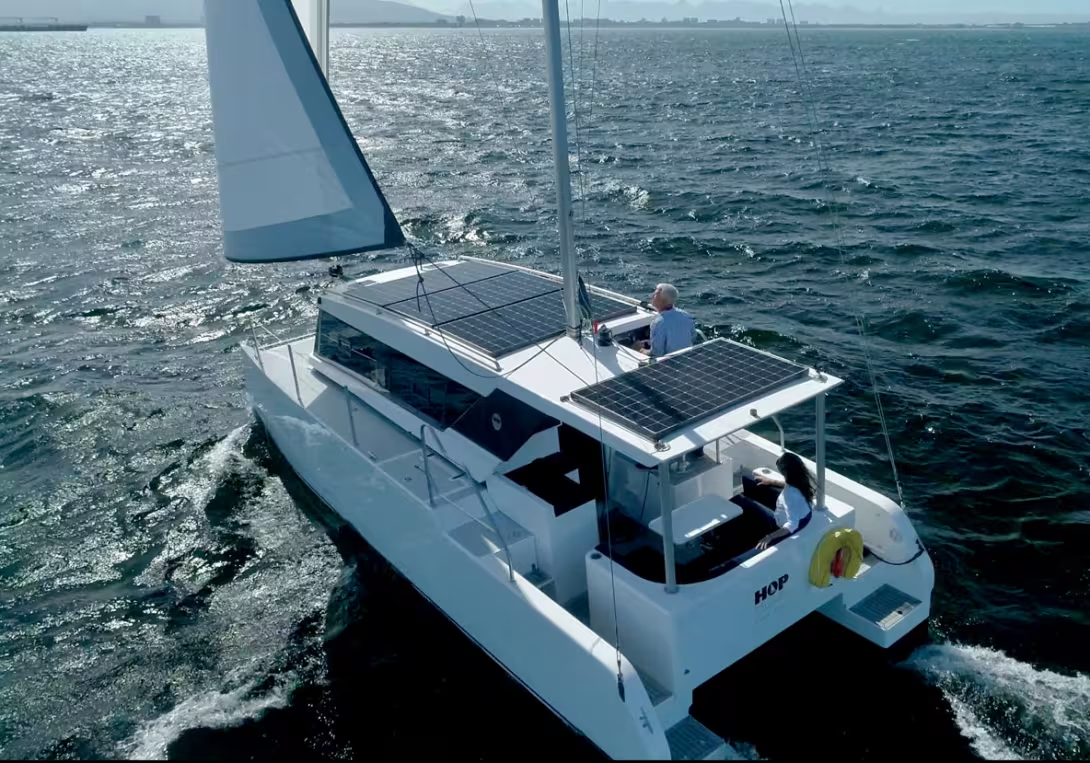
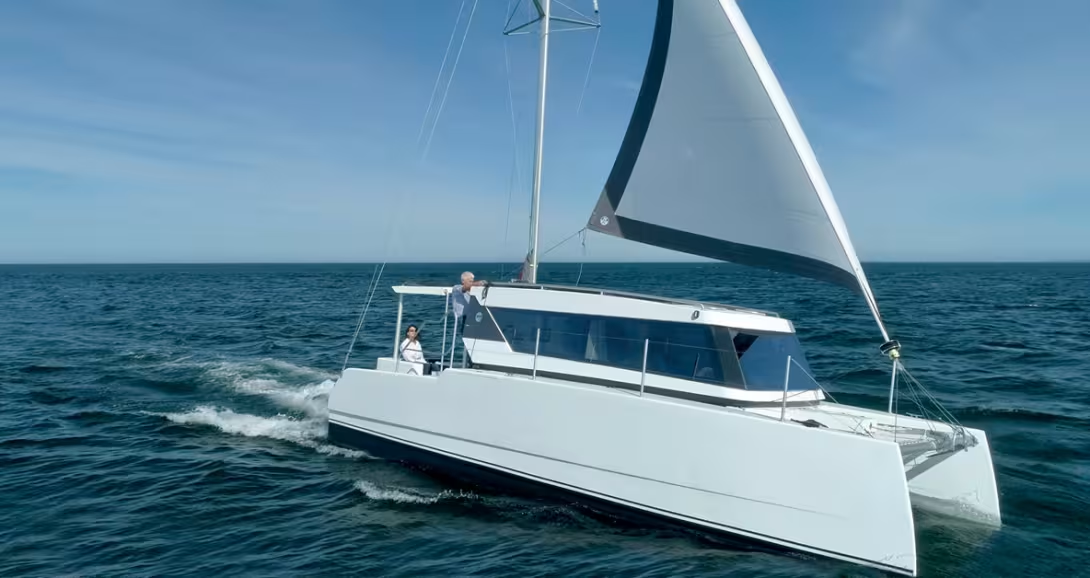
Discovering the HopYacht 30 at Marina Zeas, close to the port of Piraeus, I discovered a resolutely modern silhouette that might take some boaters a bit of getting used to. It’s a cubic living cell. Using 80% of the length of the two floats, it offers record habitability for its size. The very angular look of the superstructure is reminiscent of a Sunreef Supreme 58 or a Silent Yachts 60. But that’s where the comparison ends, as the length of our HopYacht is barely the beam of one of these two great powercats. Its width, limited to 11’3” (3.44 m), is surprisingly comparable to that of a monohull of the same length. This size allows the HopYacht 30 access to marinas at reasonable prices. On a dock normally reserved for monohulls, we were greeted by Mary-Clare and Paul Tomes, the co-founders of this brand-new South African company. Enthusiastically, they immediately explain the meaning of HopYacht: “To be able to leap aboard and start out just as fast, hopping from bay to bay or island to island.” The mini-yacht that hops, in short. Hops, but no sparks: at no point does performance, sail handling or maneuvering take precedence over relaxation. For the couple, the starting point (see inset) was to feel like they were really on vacation, in a lifestyle close to that of an RV, free from all stress. The idea was therefore to design a technically simple boat on which to feel at ease - a platform for relaxation accessible to greenhorns, the ideal target audience being a couple with two young kids.
A small catamaran aimed at an extra-large target audience
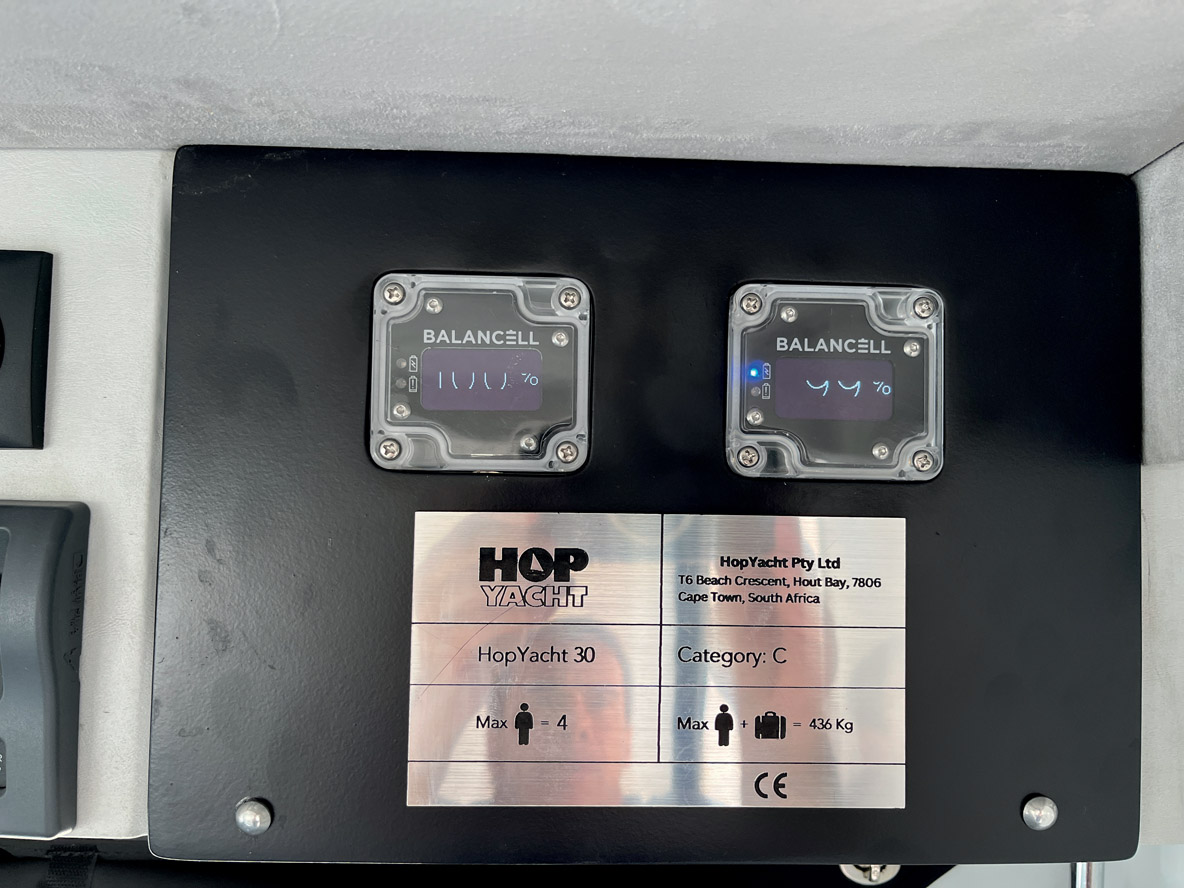
The specifications favored a catamaran formula, capable of offering stability and space. There is one drawback, however: a multihull measuring just 30’8” (9.35 m) in length can at best only claim to have a European Category C rating for four people. This classification opens the possibility of sailing up to force 6 and tackling waves of no more than two meters (6½ feet). But given the HopYacht’s program of coastal sailing and discovering inland waters, this constraint isn’t really a constraint at all.
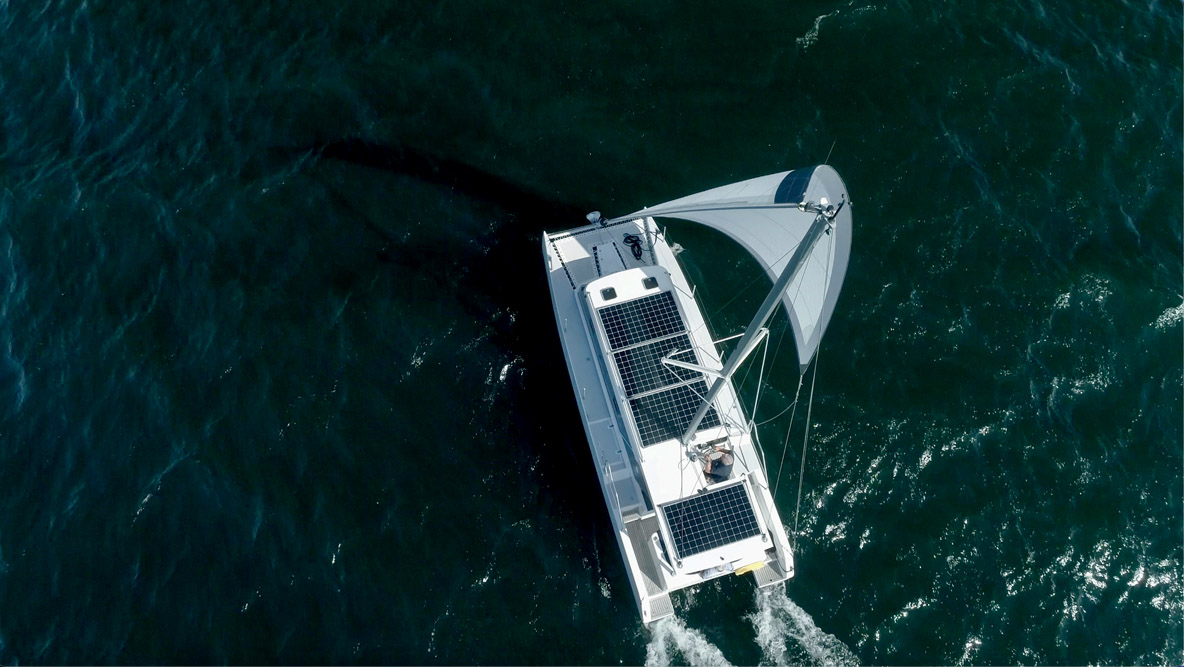
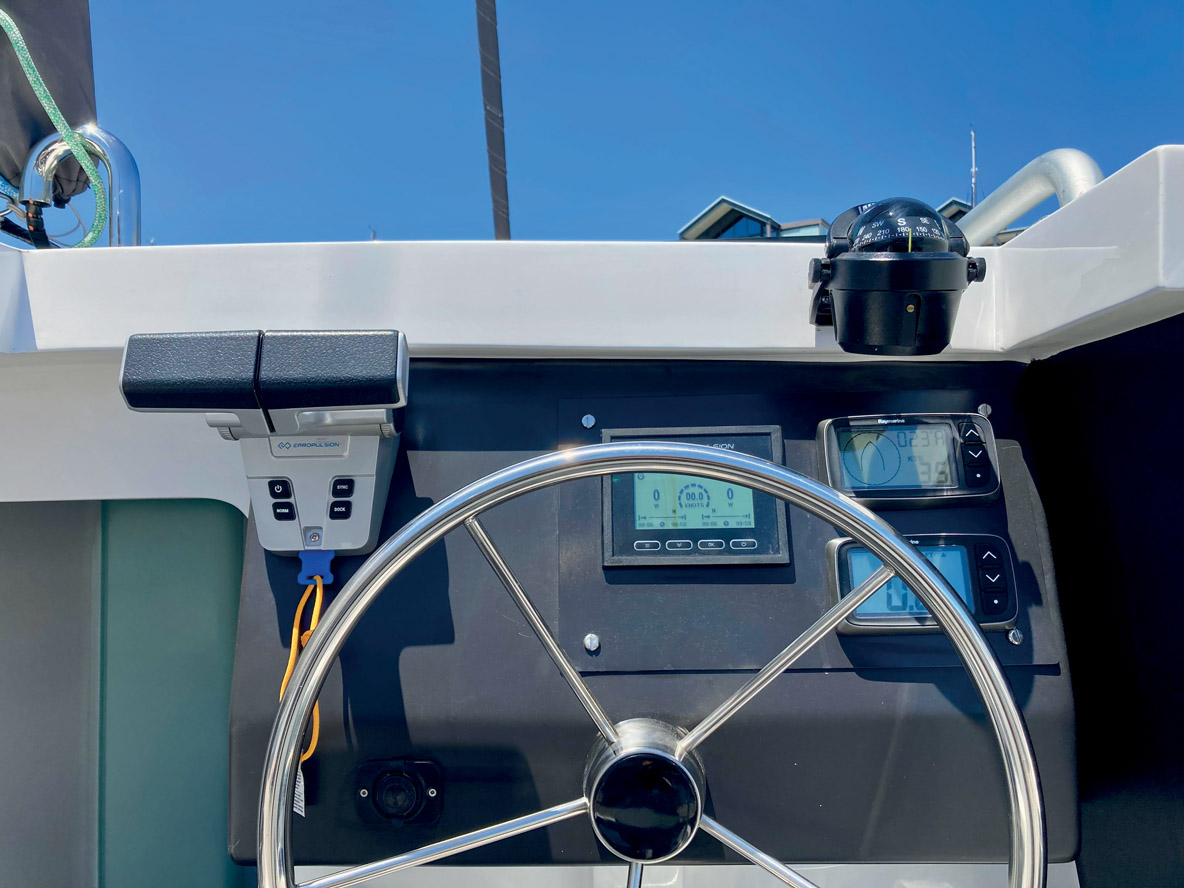
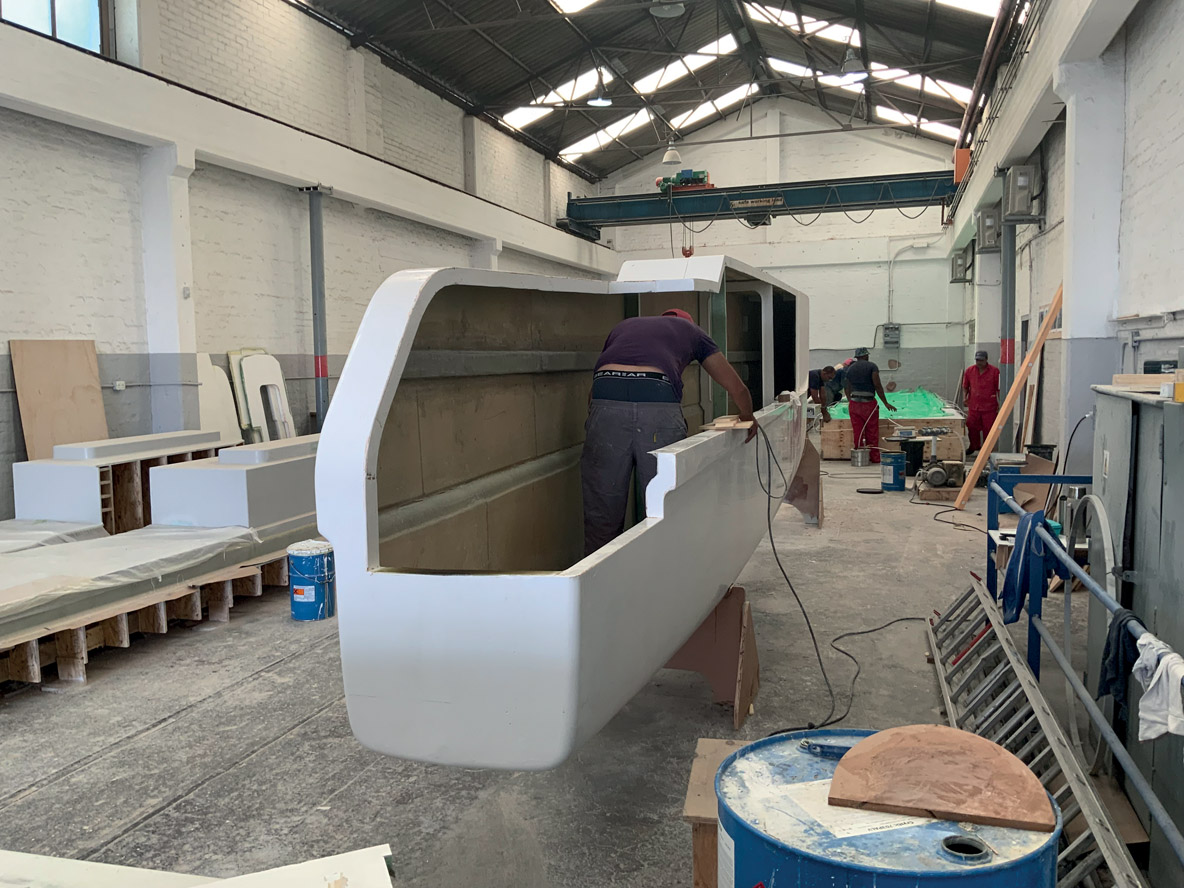
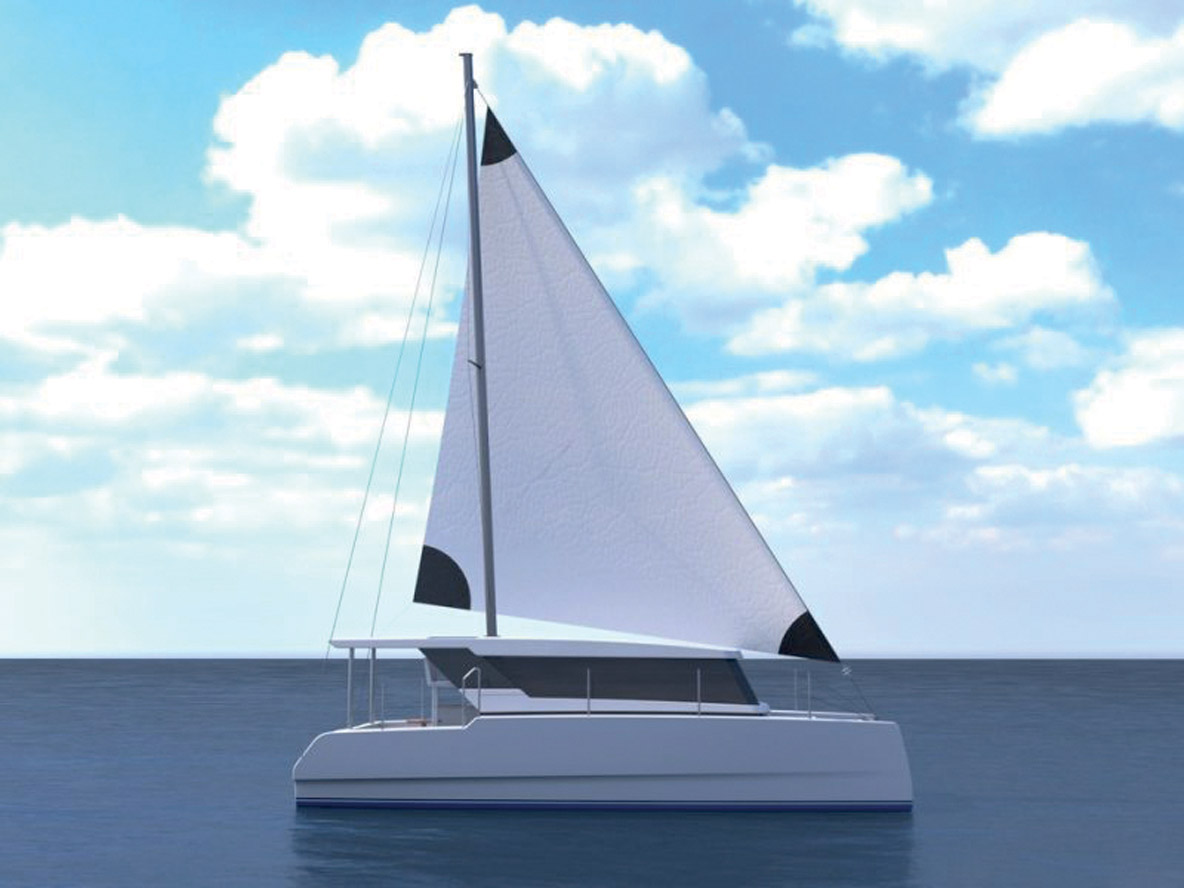
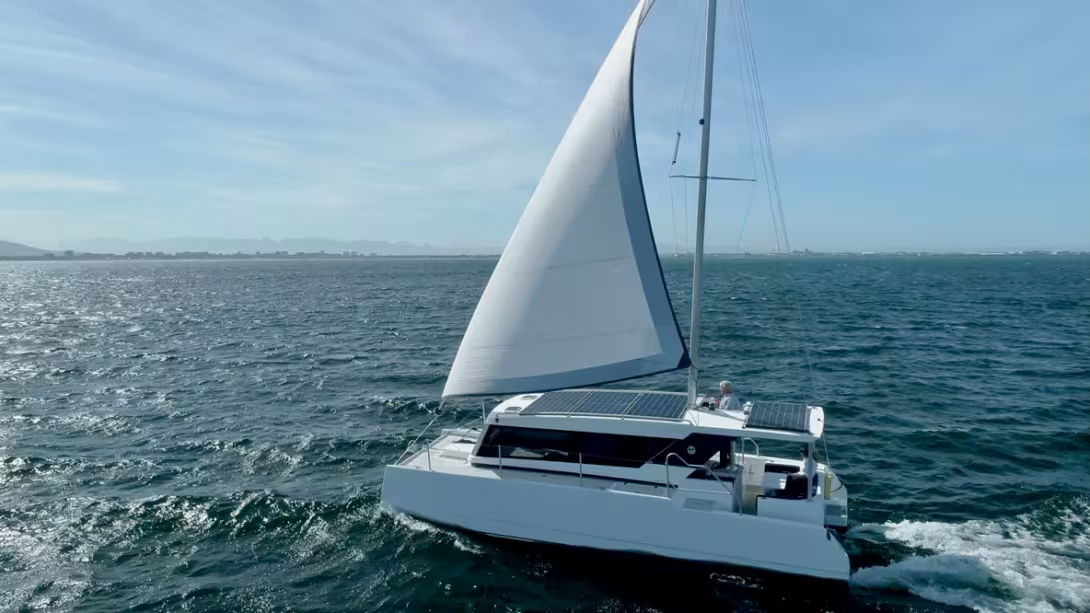
To make for easy access to remote waters and be able to affordably travel to the far side of the world affordable, the catamaran is made up of three modules. The two floats and the nacelle are designed to fit into two 40-foot shipping containers. A day’s reassembly (with 36 nuts and bolts!) is required to put the multihull back together once it reaches its destination. Transport from South Africa to Europe or the USA costs in the region of € 4,000 to 5,000, plus € 2,000 to 3,000 for reassembly and stepping the mast. And while we’re on the subject of the mast (made by Sparcraft South Africa), this isn’t a rig like all the others. It supports a furling headsail, but no main. Here again, the choice of extreme simplicity has been carefully considered. Paul points out that most of the sailboats he comes across are going along with only one of their two sails hoisted, and says with a half-smile that “everything is so much more relaxed once you’ve dropped the mainsail!” Paul drew his inspiration from the traditional fishing boats of Mombasa and Zanzibar, with rigs reminiscent of Egyptian feluccas. The Hop Yacht’s mast is only 33 feet (ten meters) long and is stepped on the after end of the coachroof, Prout Catamarans-style. A triangular-shaped genoa is mounted on a roller furler. The two sheets return to the helm station and to a winch, which also serves to tension the luff, and... that’s all. No hoisting, no lowering, no fear of gybing with only one sheet to handle: easy handling is what this boat is all about! Newcomers little-seasoned in handling sails, and charterers, who want to present their prospects with an easy, economical product, will find it to their liking. Others may or may not appreciate this catamaran, which breaks with the habits and customs of “traditional” sailing.
Born in South Africa - the other multihull country
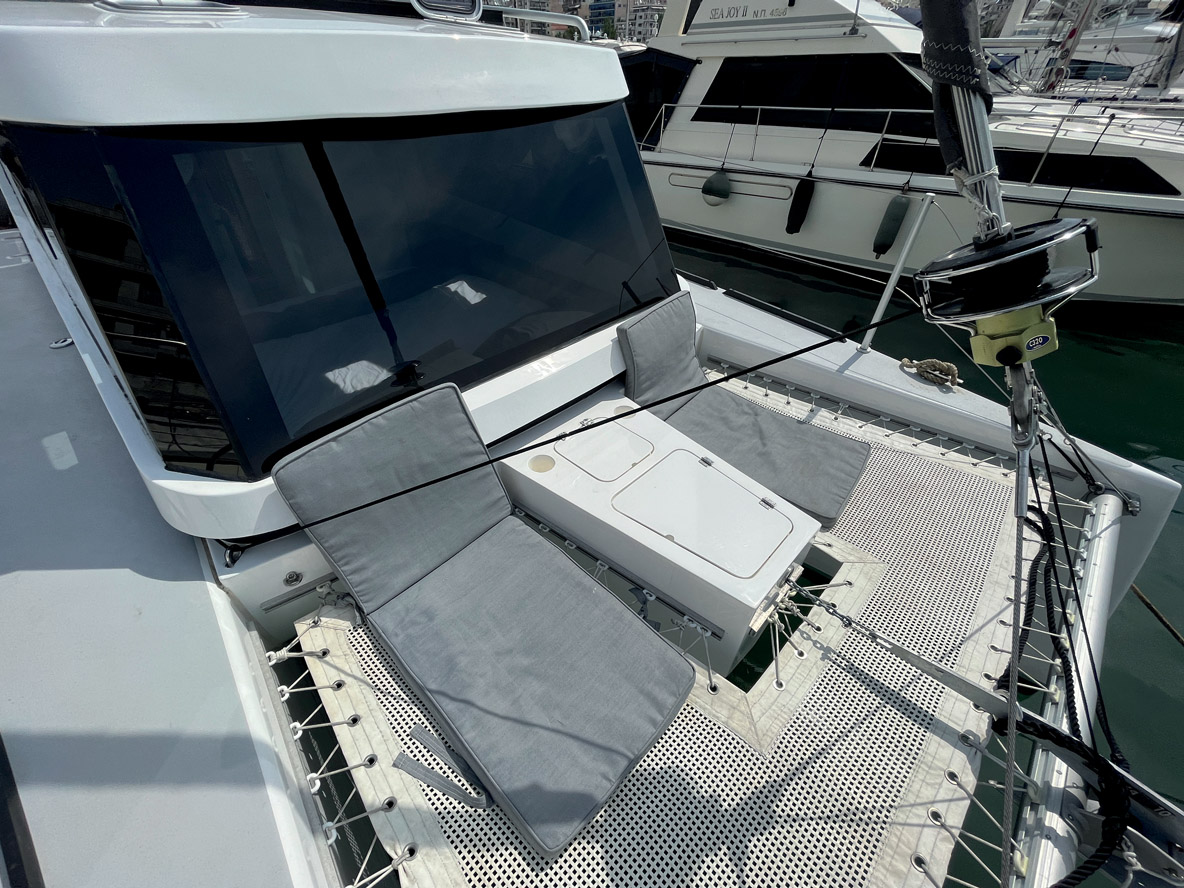
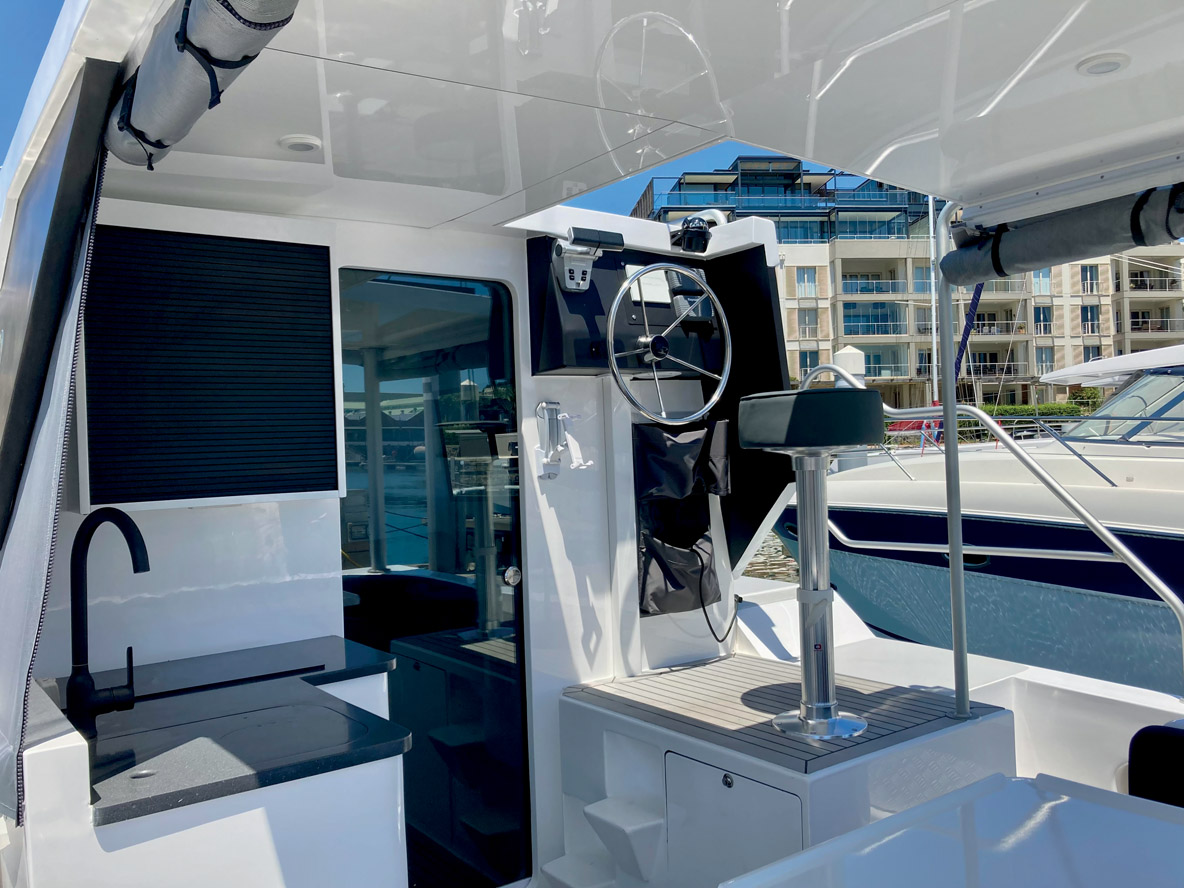
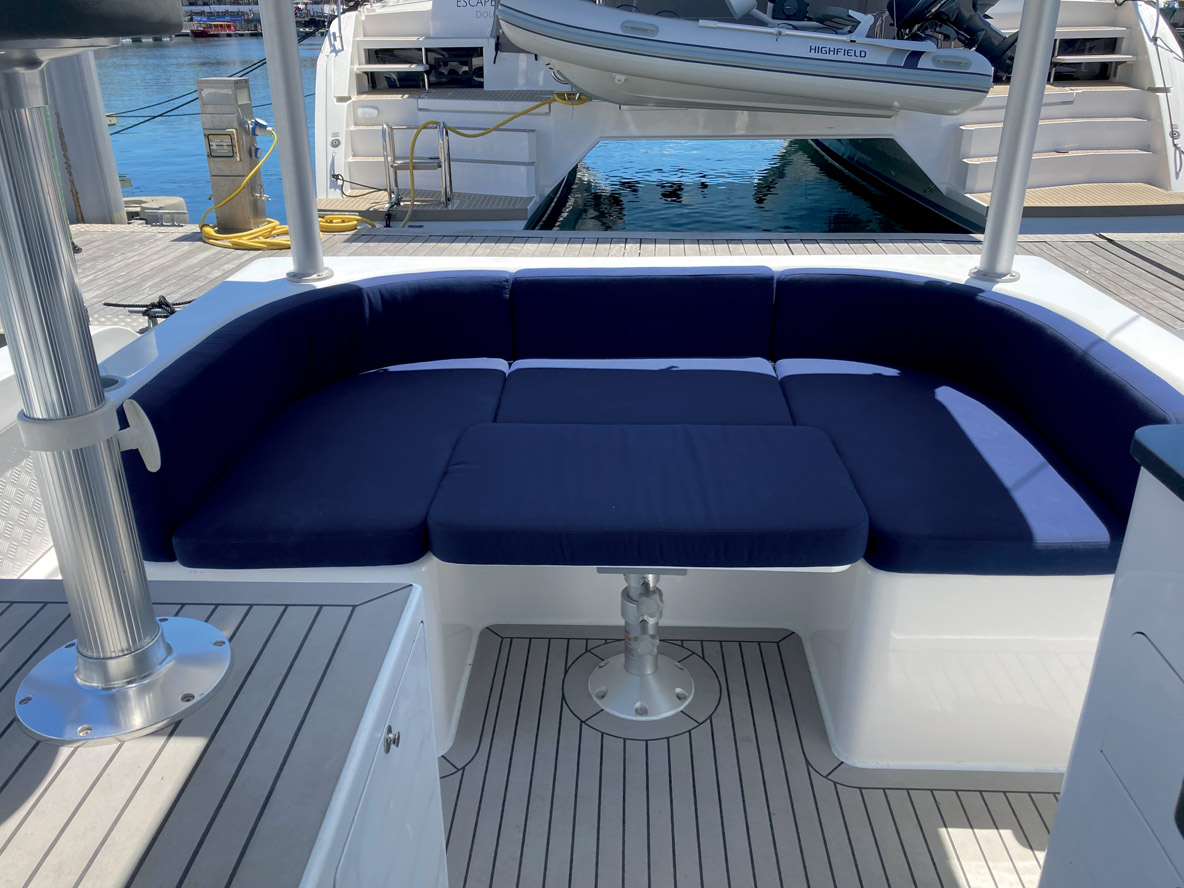
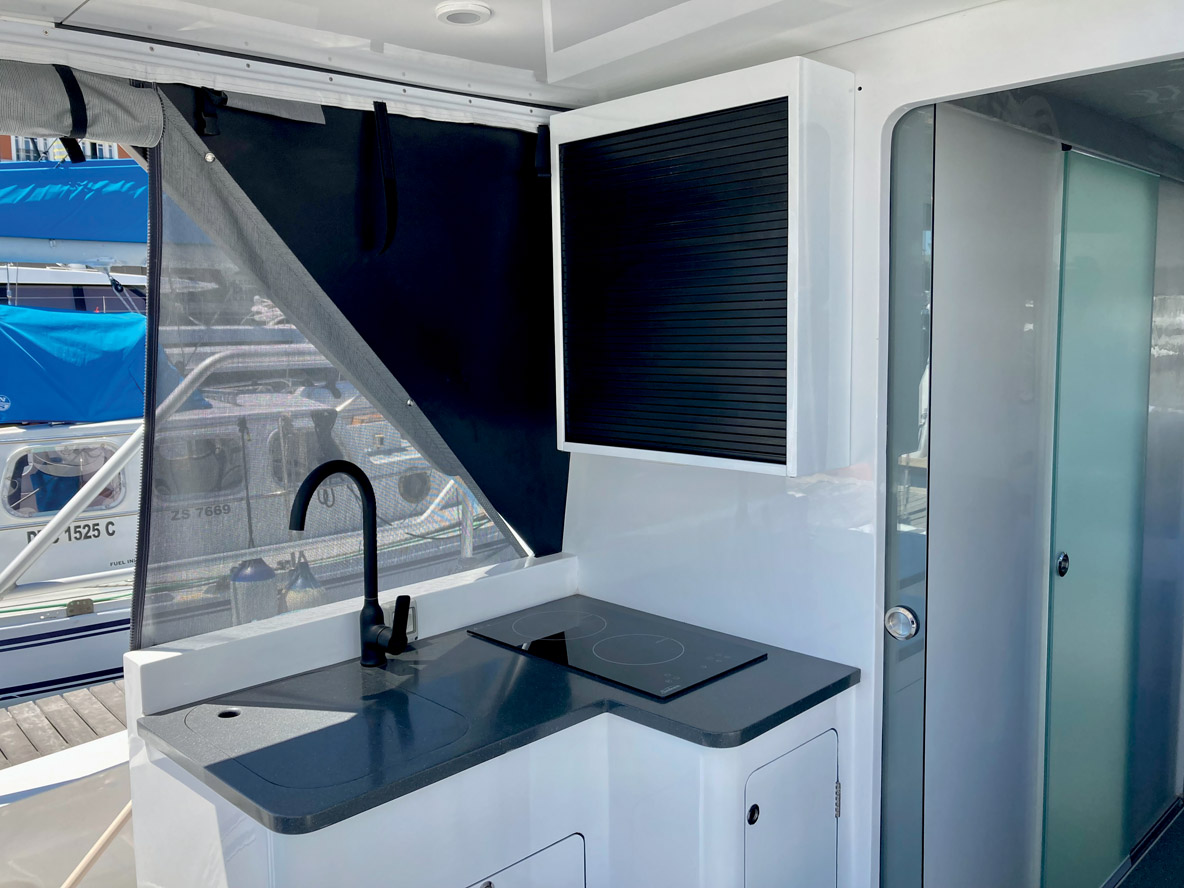
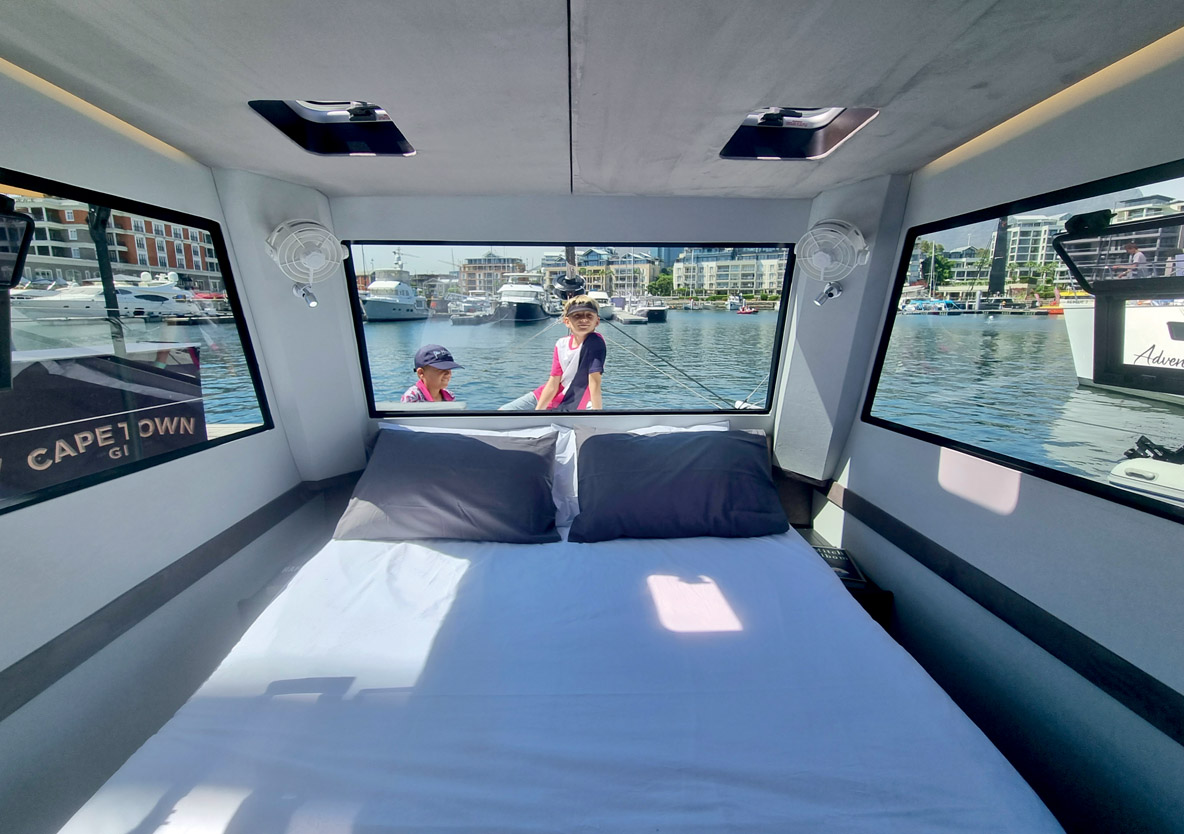
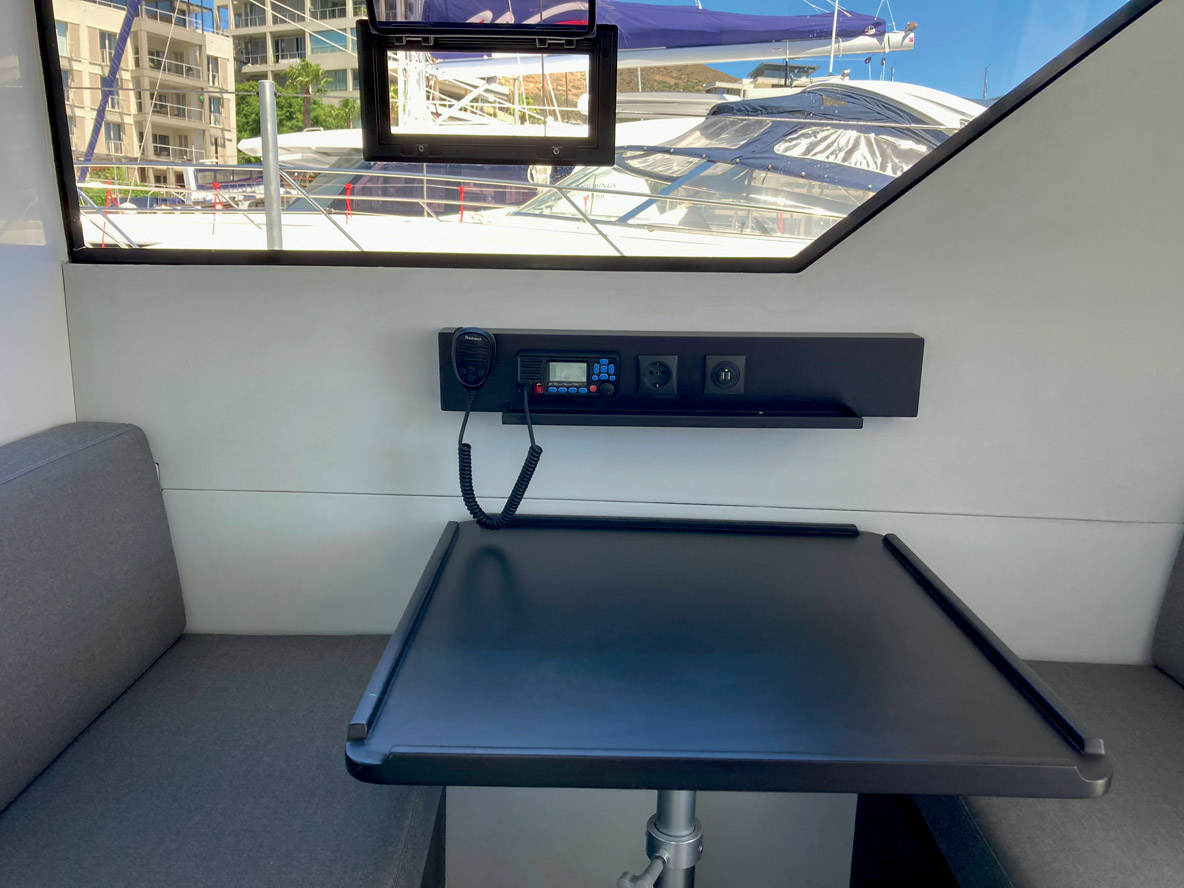
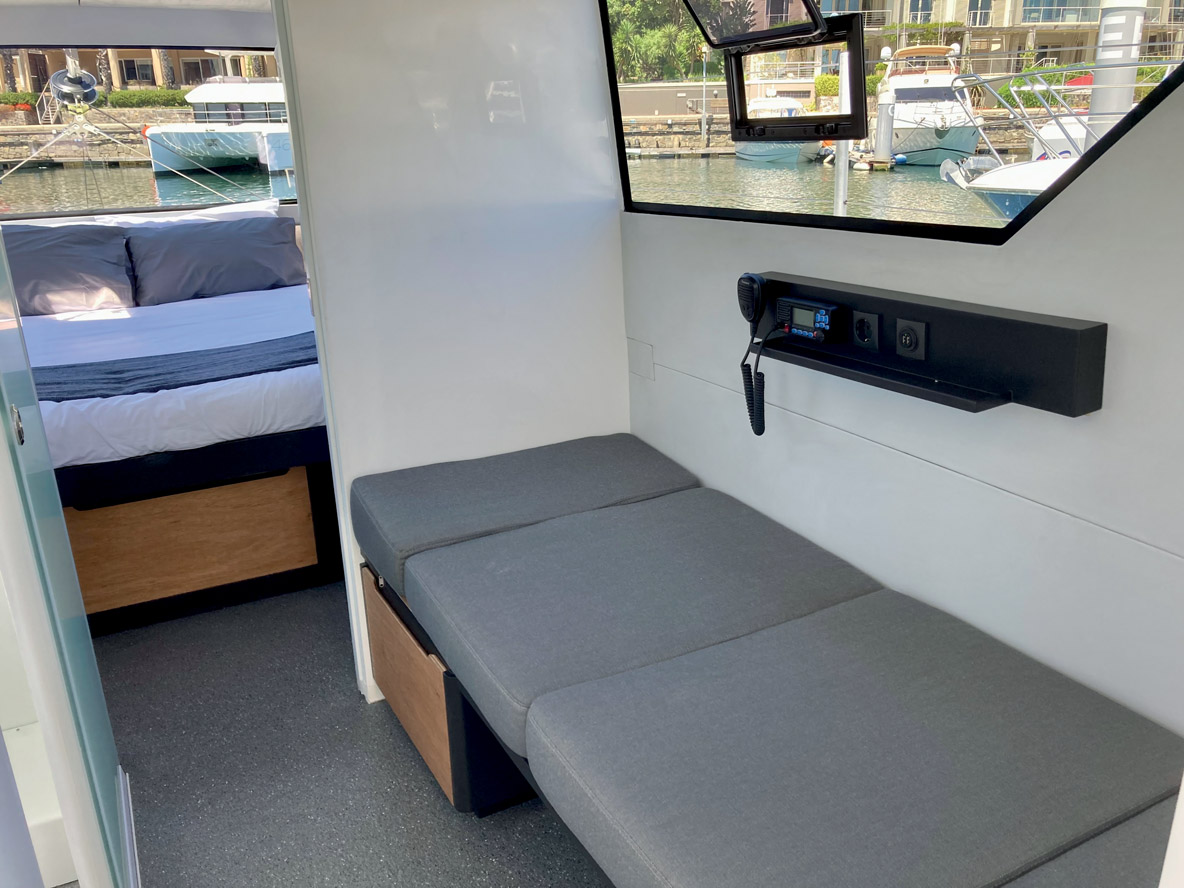
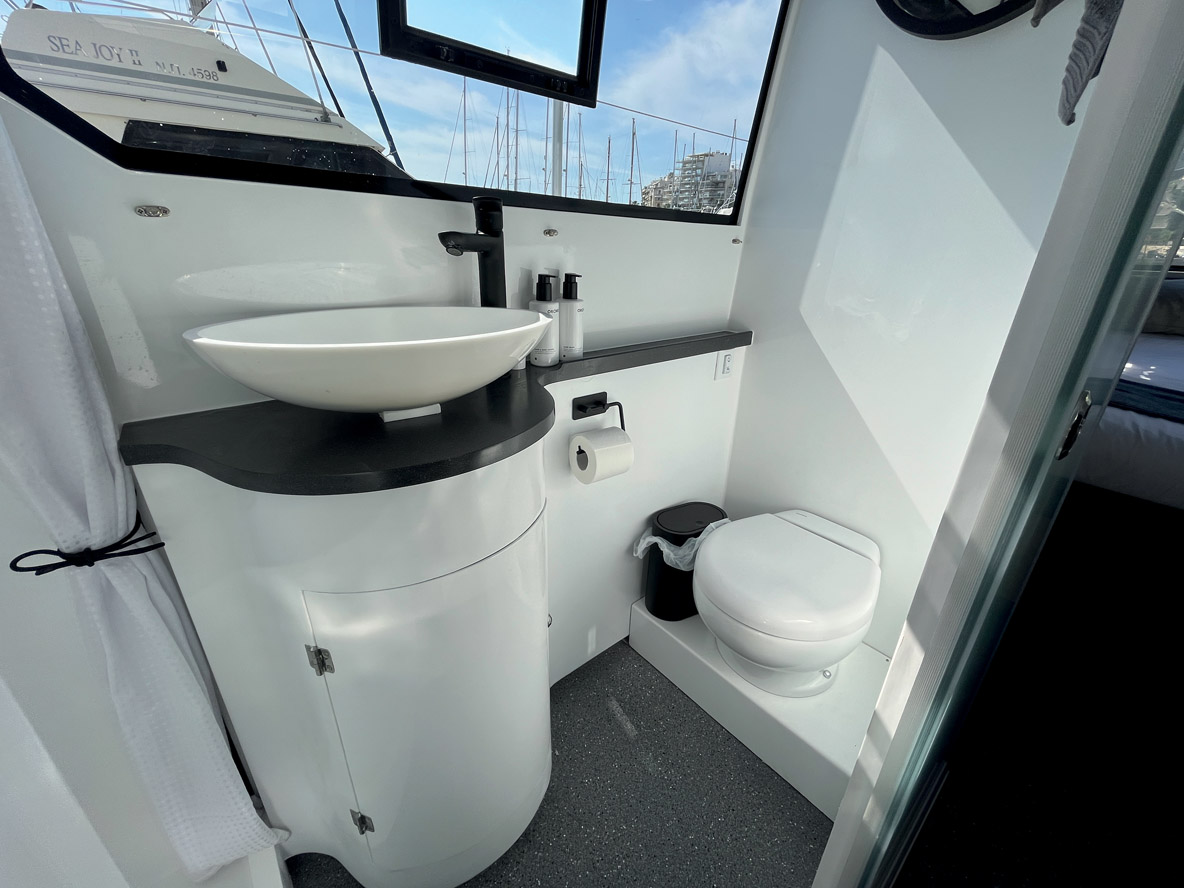
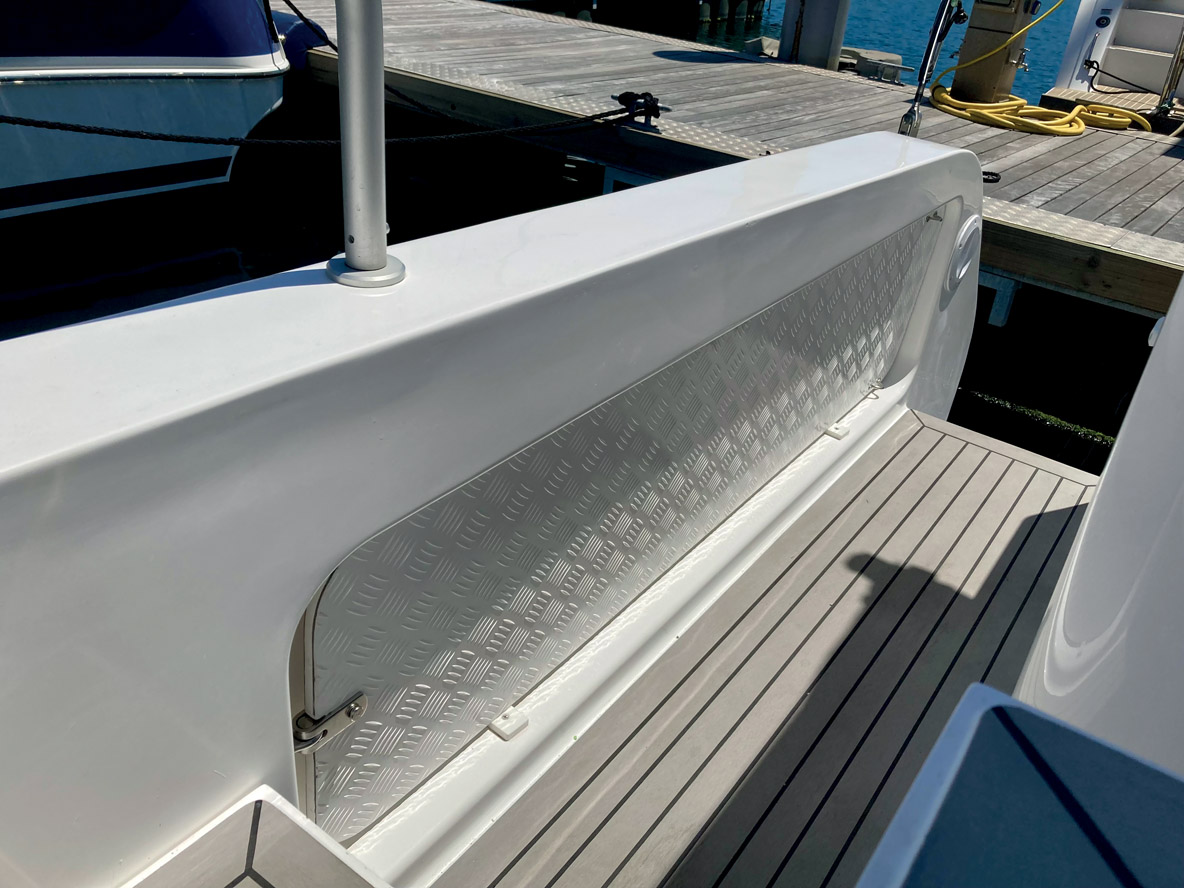
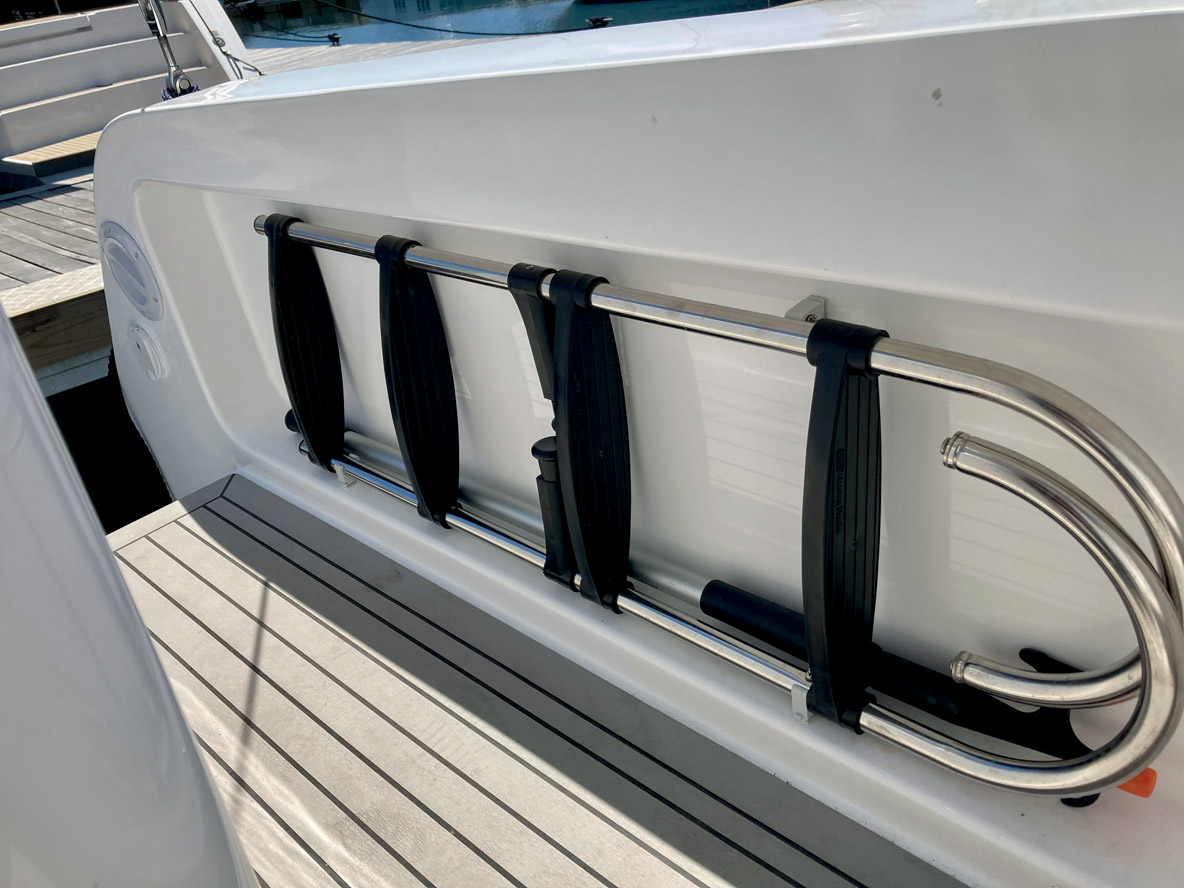
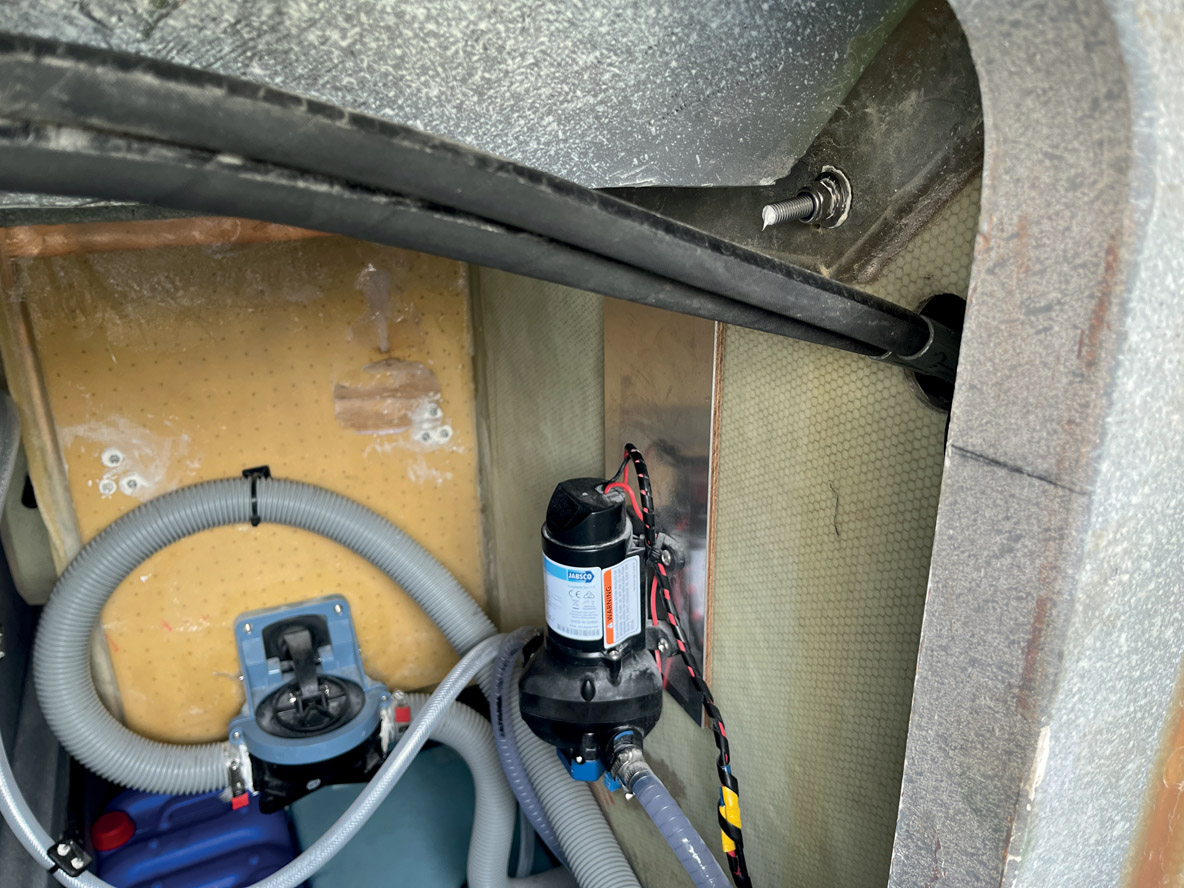
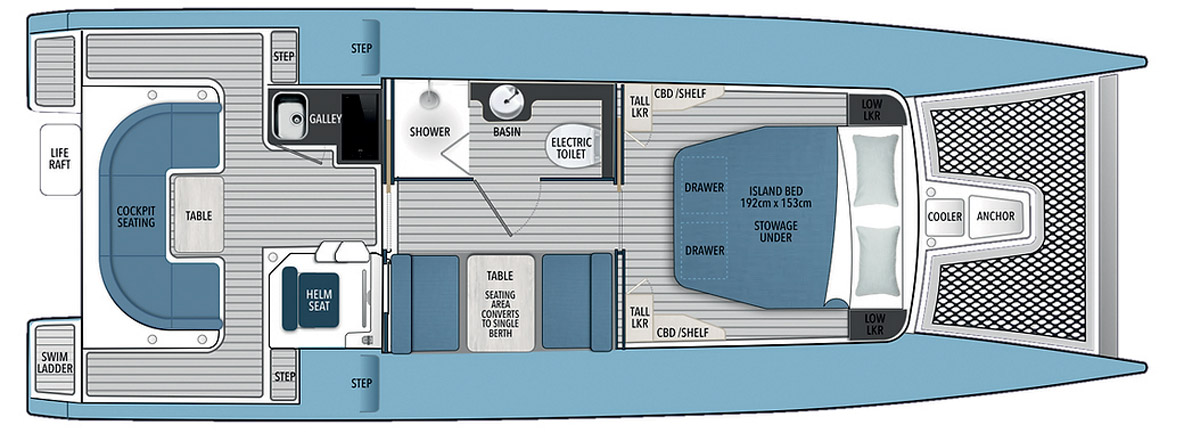
There’s no need to remind you, but South Africa is the world’s second largest multihull producer after France. As a result, the Hop Yacht 30 can boast an impressive level of craftsmanship (apart from a few shortcomings in the finishing, which is perfectly legitimate for hull #1, though they’re barely noticeable at first glance). The reputation of South African shipyards is built around solid boats, made to withstand the harsh maritime conditions typical of this part of the world. As you walk around the deck, which is easy to do with the steps giving access to the side decks, nothing stands in the way of access to the raised helm station or the small outside galley. Natural ventilation beneath the roof cap makes it very pleasant, as is the cockpit seating in the small U-shaped dining area, perfect for three or four people. Ergonomics were carefully considered in collaboration with Du Toit Yacht Design. All doors slide into the bulkheads instead of obstructing the space. The single-story interior, with headroom of almost 6½ feet (two meters), provides all the essentials, but nothing superfluous. At no point, however, does it feel like you’re aboard a boat that’s less than ten meters long. A small coffee table serves as a desk or bunk. The bathroom is a truly spacious shower room with a bay window to the outside - the volume available has nothing to envy that of a fifty-foot catamaran. The forecabin is bathed in light, and its 5-foot (1.55 m) wide island bed is no exception to the rules of comfort found on much larger models, with the added benefit of a view. The optimization of space is reminiscent of a scaled-down yacht, a tiny house on the water. Everything is finished in white lacquer, with a touch of black for accessories. There’s no shortage of storage space, and regular suitcases fit neatly under the bunk. There are also a whole bunch of well-thought-out little details: the curtain on the galley storage shelf, the refrigerator in a sliding drawer, the electric freshwater toilet, and the induction hob all make living aboard so much easier.
Sailing? It’s child’s play!
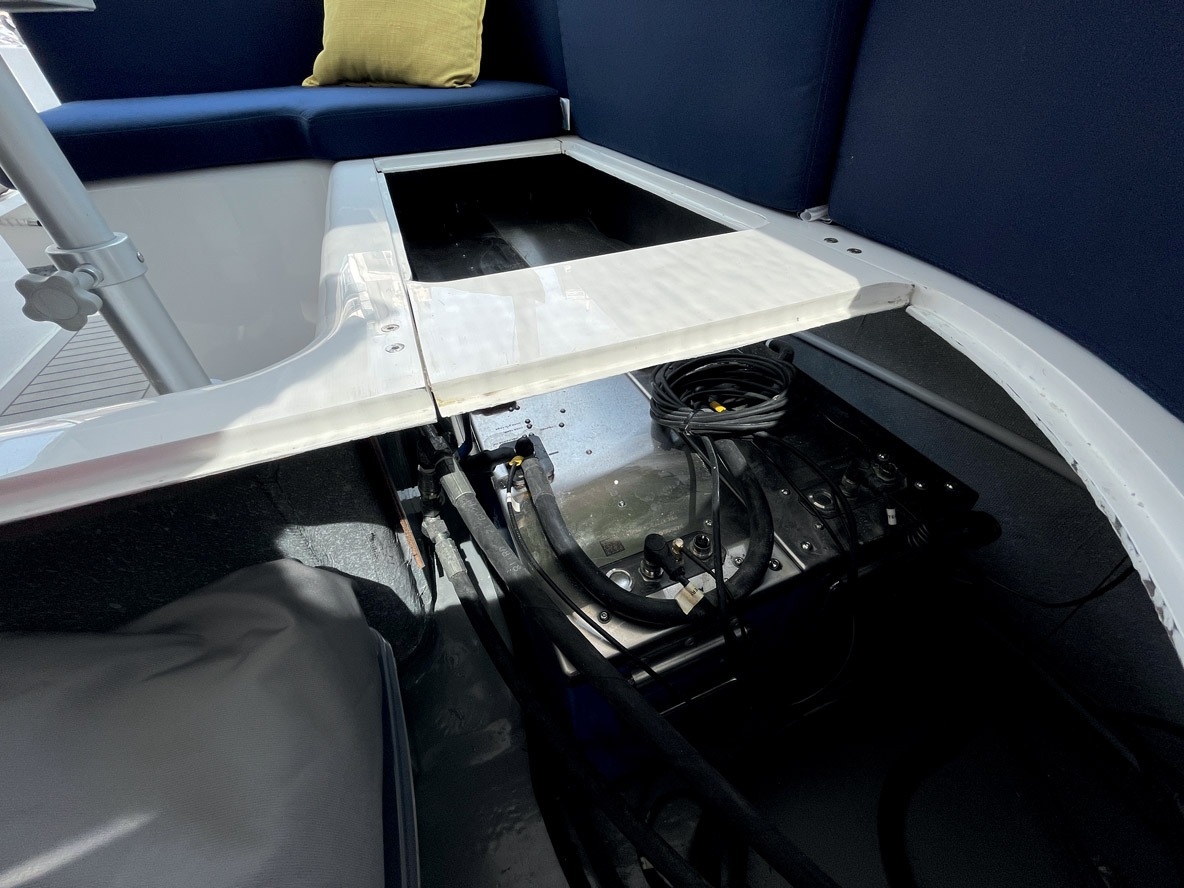
Just a quarter of an hour after arriving on board, we set sail for a trip out off the coast of Athens. “Setting sail” is a big term for something so simple. The two EVO electric Pods, each rated at 6 kW (9.9 HP), with their precise console controls, pull the HopYacht out of its berth without further ado. Once clear of the harbor, simply pull the sheet and release the furling line to unfurl the single headsail (by North Sails South Africa). The wind was light, at just 5 to 7 knots, not allowing us to exceed 2½ knots at 50 degrees to the true wind. “Never mind”, said Paul, activating the leeward motor. With just 0.5 kW of power, our speed climbed to 3.5 knots, and with the additional apparent wind, the little catamaran finally reached 4.5 knots. Admittedly, that’s not ultra-quick, but in the meantime, everyone can live on board as if at home. At this speed, the batteries could last two days (without further energy expenditure), or even longer if it were sunny! No need for the watchkeeper to concentrate too hard, and by the end of the day, 25 to 35 miles will have been covered without much effort, and that’s undoubtedly much more than the average cruising tourist has planned - the average observed among European boaters is 17 miles a day. “That’s what e-sailing is all about,” says Paul. If the wind dies completely, an average of five knots under power can be maintained for around seven hours. The solar panels on the roof deliver a maximum output of 1.6 kWp given optimum conditions. They’ll provide enough power to comfortably spend the night at anchor, but you’ll need to find wind the next day, unless you recharge the two 14.4 kWh batteries using the shorepower outlet at the dock. Otherwise, you’ll need two days of full sun in the anchorage to be able to set out again with full batteries. An optional extra battery could be justified for certain navigation areas where there are no facilities. We turned about and carried out a few maneuvers. When gybing or tacking, the sheet is taken up on the single winch, which appears to require almost no noticeable effort. You might be tempted to ask for an optional spinnaker for downwind sailing, but would this be sticking to the stated philosophy? The pleasure here is more focused on the gentle discovery of the environment and the tranquility of life on board.
Conclusion
This first HopYacht is a bit of a cat among the pigeons when it comes to traditional boating, that goes without saying... Fun, simple, economical, super livable and comfortable for its size, this little catamaran manages to make accessible all the attributes of yachting but without the need for an unlimited budget or in-depth knowledge. At under € 200,000, this first model is fully equipped and ready to sail, breaking away from the option-laden base prices common in the boatbuilding industry. The HopYacht 30 removes any complexes due to lack of experience, and its modest performance compared to faster boats is assumed, to better enjoy your days on the water, without noise, odors or impact on the environment. Is the HopYacht 30 one of these new-generation yachts that will permanently change the way we sail? Check back here in 10 years’ time!
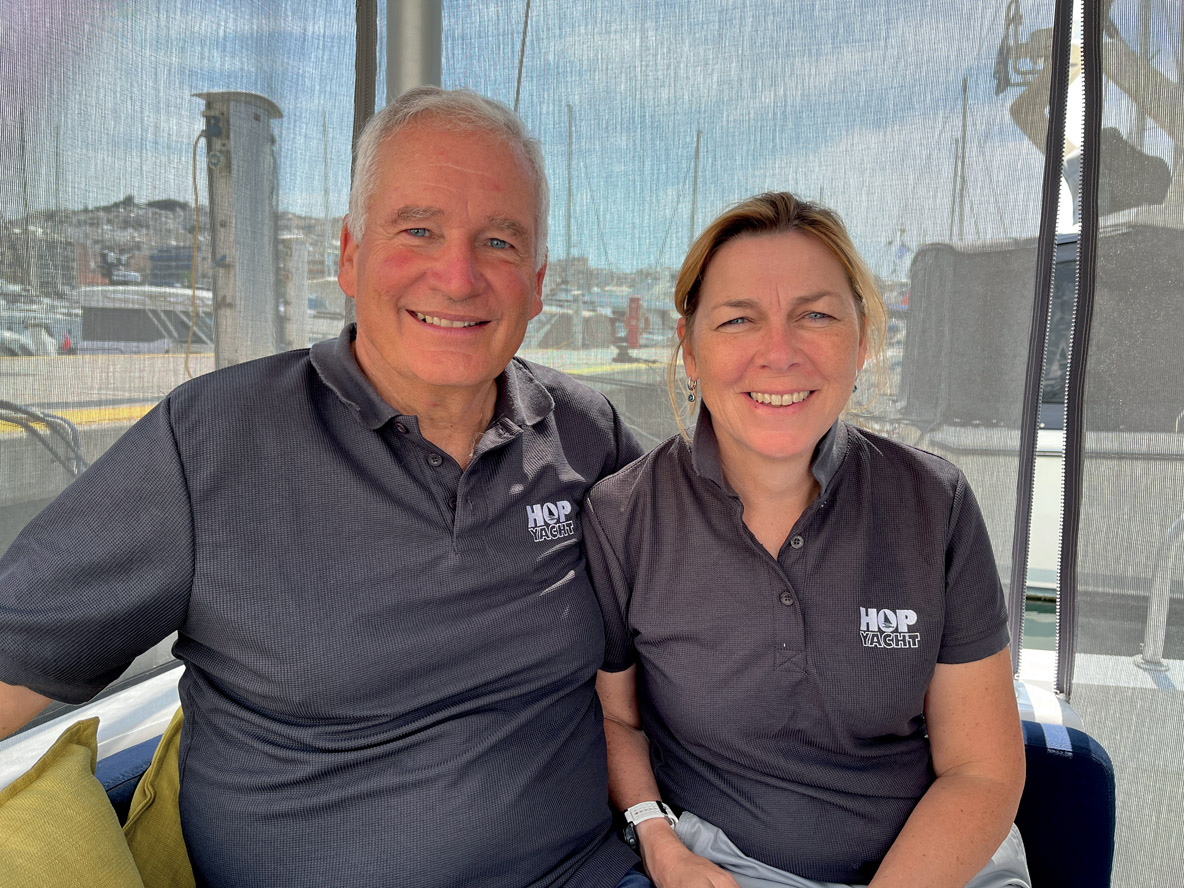
Mary-Clare and Paul Tomes: what a team!
A boat that is financially and technically affordable for a wide range of customers, easy to handle under power and under, inexpensive to operate and maintain, offering a stable, single-level living space, with a real bedroom, a relaxation area and easy access to the water for swimming, all in just over 30 feet and without using any fossil fuels. Spot the mistake in this somewhat utopian specification... When these criteria were issued to Du Toit Yacht Design, the response was explicit, to say the least: “It’s impossible!” But Paul and Mary-Clare are a very motivated couple. They may not be boating pros, but they’re passionate about sailing and racing. When it comes to marketing, they’re extremely seasoned, backed by a wealth of experience in the field. Their diagnosis is that over 40% of charter customers are families with two, three or four members, often with little sailing experience and young children. A family means a budget that can’t necessarily be stretched (unlike chartering with friends, where the total cost of a stay can be increased more easily). This is a sector somewhat neglected by manufacturers and for which there was no relevant product response. Thanks to their perseverance, they have refined their concept dedicated to relaxation on the water for the less initiated, the less fortunate and also the greenest. The scripting of every detail of life on board, and the fine-tuning of every element, finally convinced architect Anton Du Toit of the relevance of the concept, and of the potential of the two cohorts to get this project well and truly launched.
The camping-boat within reach of everyone
Ready-to-sail price
Thermal insulation could be improved
Some options still missing
Technical specifications
Naval architect: Du Toit Yacht Design
Interior design: HopYacht
Overall length: 30’8” (9.35 m)
Beam: 11’3” (3.44 m)
Draft: 2’3” (0.69 m)
Air draft without mast: 8’5” (2.57 m)
Mast height: 32’10” (10 m)
Light displacement: 6,835 lbs (3,100 kg)
Sail area: 323 sq ft (30 m²)
Fresh water: 58 US gal (220 l)
Grey water: 29 US gal (110 l)
Black water: 29 US gal (110 l)
Motors: 2 x 6 kW (9.9 HP) EVO
Batteries: 2 x 14.4 kWh
Base price, ready to sail: €194,000 ex-tax
Container transport Europe: €4,500 ex-tax
Container transport USA: $ 5,000 ex-tax
Reassembly: €3,200 ex-tax