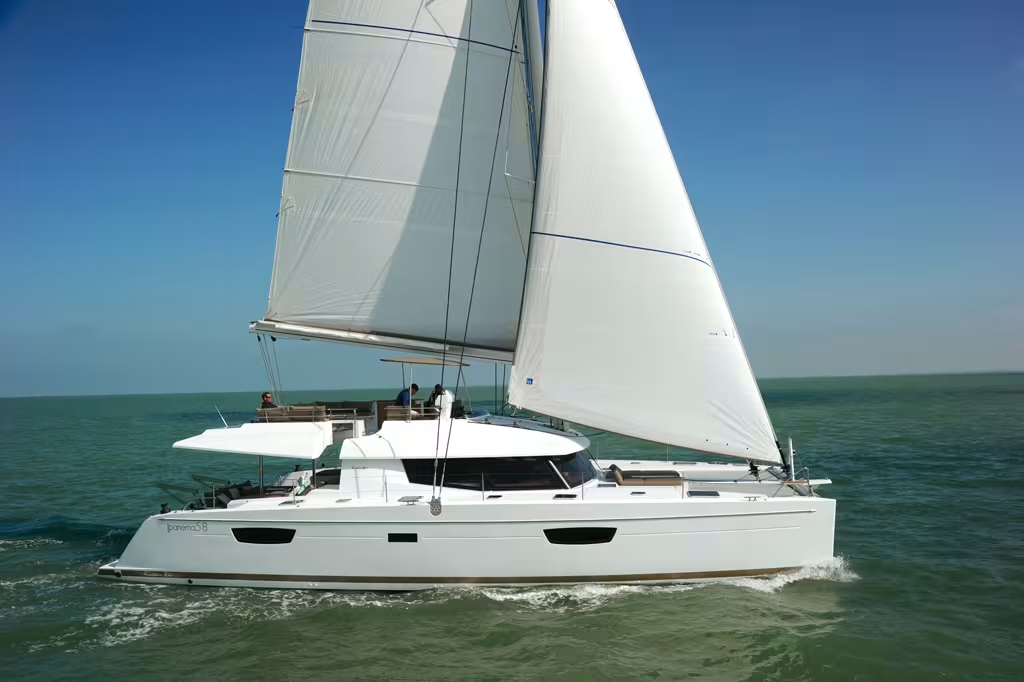
Fountaine Pajot’s new 58’ catamaran will be unveiled at the forthcoming Cannes Yachting Festival. For the first time, the La Rochelle yard are fitting a flybridge to a sub-58’ model. We made the most of nice windy day in June to check out this big cat around the islands of the Charente on the French west coast.
Infos pratiques
- Le chantier : Ipanema 58
- La fiche technique
-
 Découvrez notre vidéo exclusive
- Financez votre Ipanema 58
- Assuez votre Ipanema 58
- Articles autour du Ipanema 58
A constantly-evolving flagship range
In September 2013, the appearance of the Victoria at the La Rochelle Boat Show marked a turning point for Fountaine Pajot. Passing the point of no return, the 67 footer sported a flybridge! This “flying deck” of motor yacht origins had, until then, represented a line which the La Rochelle-based builder was not going to cross. This caveat was based on the convictions of Jean-François Fountaine, who believed that an irreverent crows-nest had no place on catamaran, especially one under 65’. The appearance of the Victoria raised eyebrows among FP fans over this “trendy” comfort feature. In comparison, this likely depreciated the Sanya. After an honorable career, with 30 examples built, the Sanya (see review in Multihulls World No. 123) has struck her ensign and given way to a successor for this worthy position.
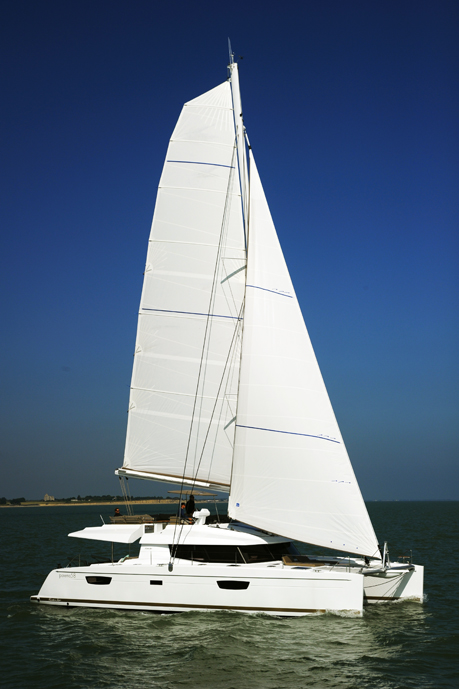
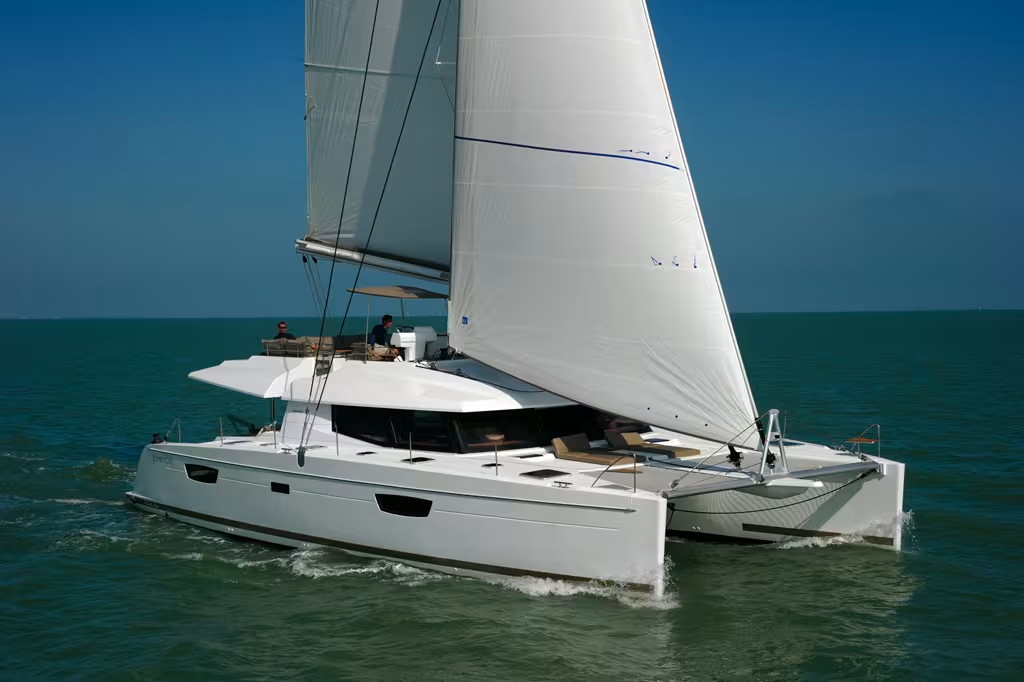
Well canvassed, the Ipanema sports a cutter rig which divides the sailplan and makes sail-handling easy in conjunction with the automatic traveler
Architecture and construction
The Ipanema is based on the Sanya’s lines on the water, but is a new boat which is very different from its predecessor. It shares the same construction as the Sanya, in balsa / glass cloth polyester resin infusion (top quality isophthalic resin for anti-osmotic qualities for the underwater hull), the structural bulkheads are infused (balsa sandwich or recycleable Airex PET foam) and some smaller parts are made in molds using the injection process. The sailplan has been redrawn bigger, the helm station and sail handling has been moved forward onto the new flybridge, the sunbathing area in the cockpit has favorably replaced the aft area which now gives way to very comfortable bench seating and a table large enough to seat ten.
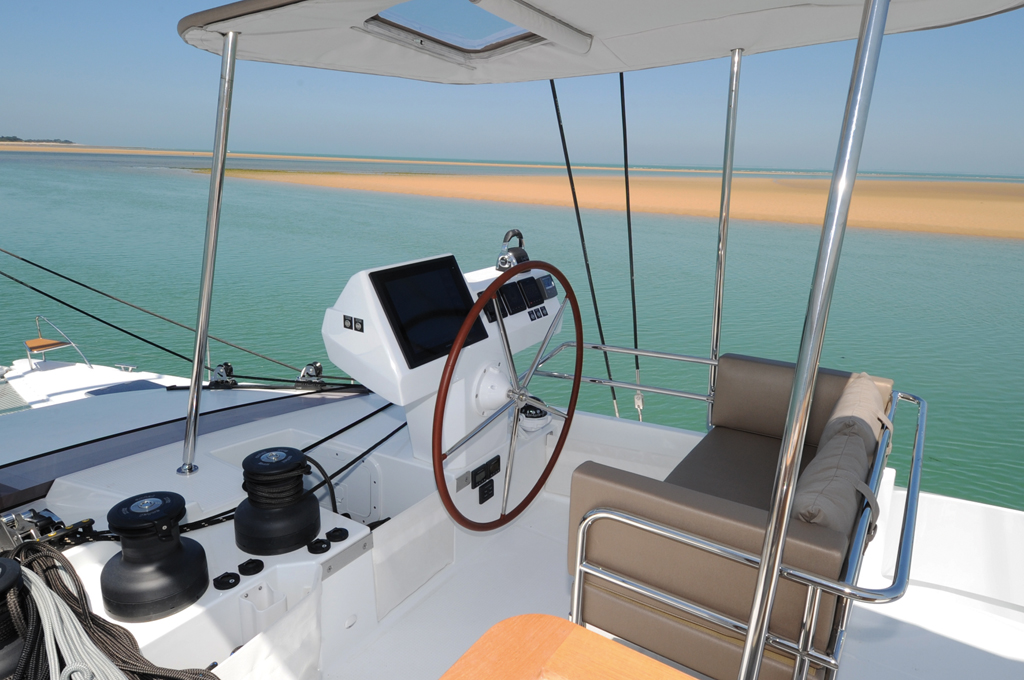
The console at the helm station on the flybridge. The watchkeeper’s seat and the deck layout make it pleasant to use, with the addition of an automatic mainsheet traveler creating perfect efficiency
Profile and style
The main issue here has clearly been to move up a class compared to the previous model. By integrating the flybridge into the overall lines, the builder also wanted to put the Ipanema into the luxury sector. The Sanya evolved into “chic and functional”, but its successor turns the tables and invites the visitor into a refined atmosphere, where the designer’s pen has taken control and sculpted the surroundings. The choice of materials comes from the strength of the design and the creative spaces are reinvented for more private areas or convivial areas combined with an astoundingly fluid movement around the boat. Approaching the Ipanema, it is difficult to imagine the living space above: the imposing section which makes up the flybridge and its equipment has been the subject of meticulous smoothing, and the marriage with the classicism of the hulls is a real success. The intentional design of the smoked-glass windshield and the overhead cover is reminiscent of the company’s hallmark design and highlights their concerns about UV protection. Under sail, the fact that the sailplan has been raised up gives an impression of increased power, and only the little bimini over the helm seems not so well integrated.
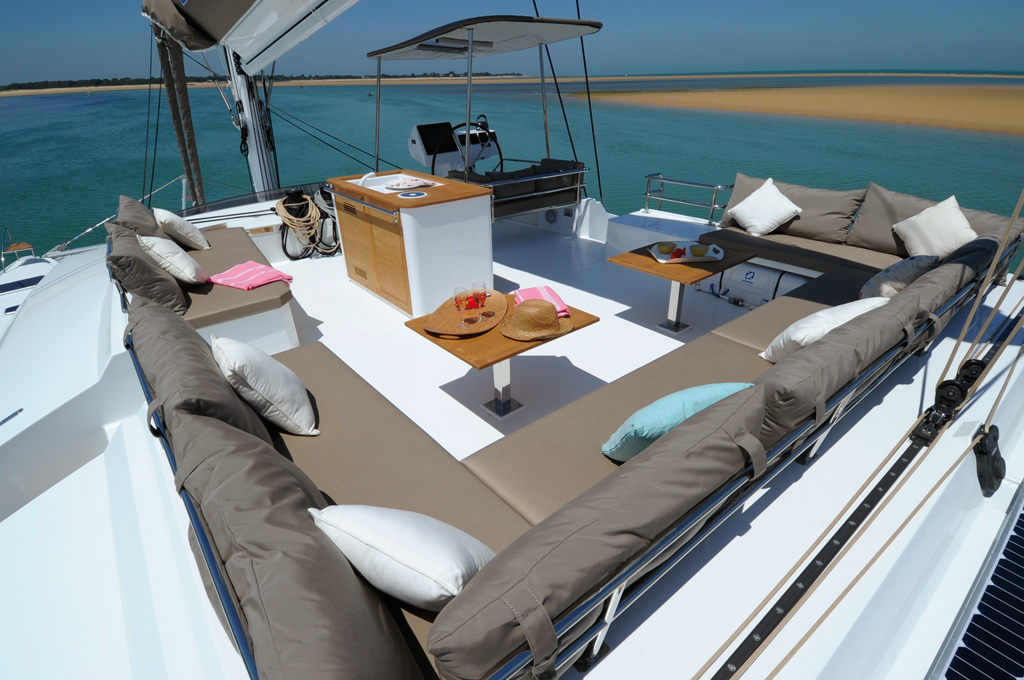
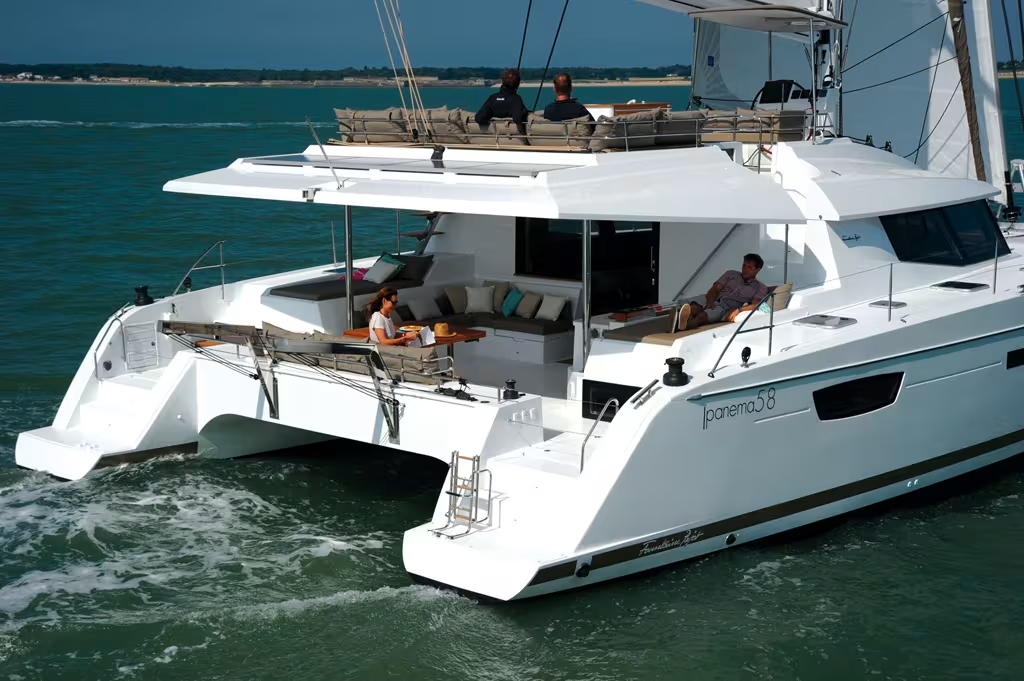
Like a real suspended salon, the flybridge wins the acclaim of the La Rochelle-based company
The outdoor living areas have taken control!
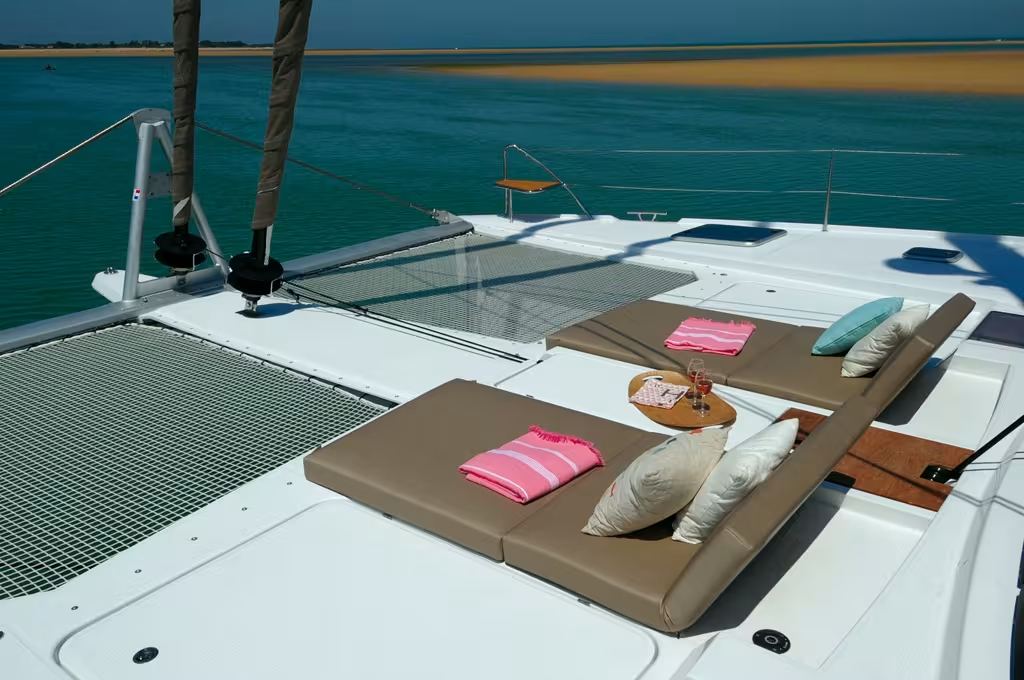
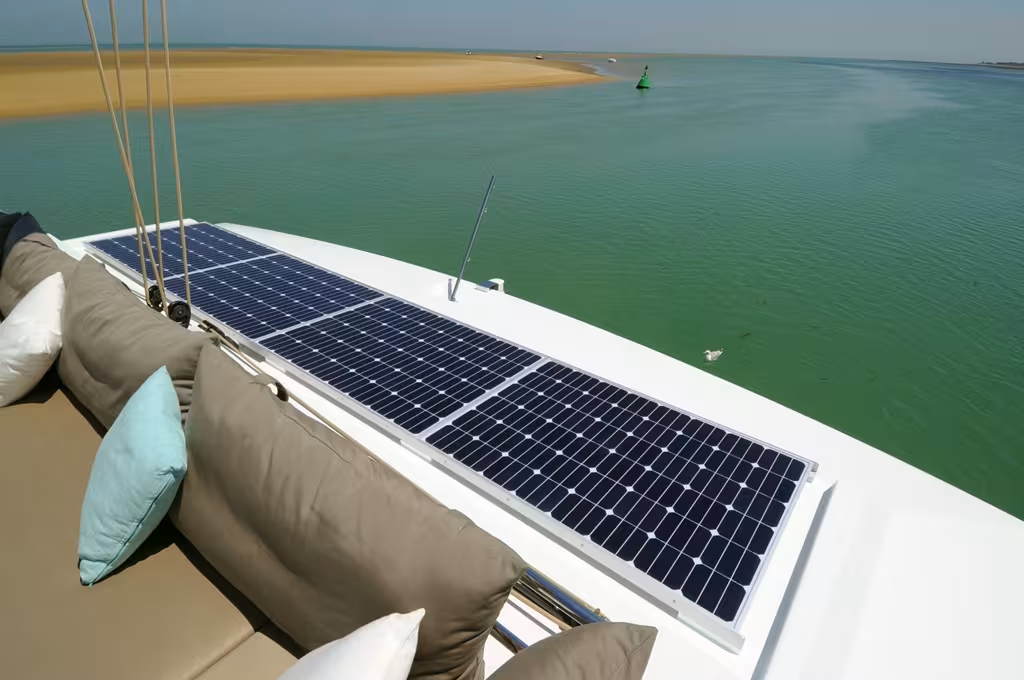
Stepping aboard, the apportionment is immediately obvious: having lost all the technical gear, the cockpit has become an area ready to deal with the varied needs of a fun-loving crew. The sunbathing beds invite you to rest or contemplate in a relaxing atmosphere, and are at the same time safe and comfortable. The view is superb, and exposure to the sun is cleverly reduced by the hard-top bimini. The outdoor galley area also serves as a bar, with its own refrigerator, and a grill completes the setup. The corner lounge space constitutes a perfect refuge area. The solid and attractive folding table comfortably accommodates your guests on a large bench seat aft and folding chairs. Accessible from both sides, the upper deck is a multi-activity area which is usable simultaneously without interfering with anything (helm, sail trimming, relaxation, lunch, etc.) The safety hand rails are top quality, really making this marine terrace feel safe, and also taking into account the need for people to move about safely. Rollaway awnings are designed to be able to be fitted into recesses in the boom. They should be able to be quickly installed, and cover a large part of the flybridge. The forward sunbathing area is ideal for getting a tan, or for spending time with friends at the end of the afternoon or evening in the anchorage. It’s also a good vantage point under way in summer weather in the shade of the sails.
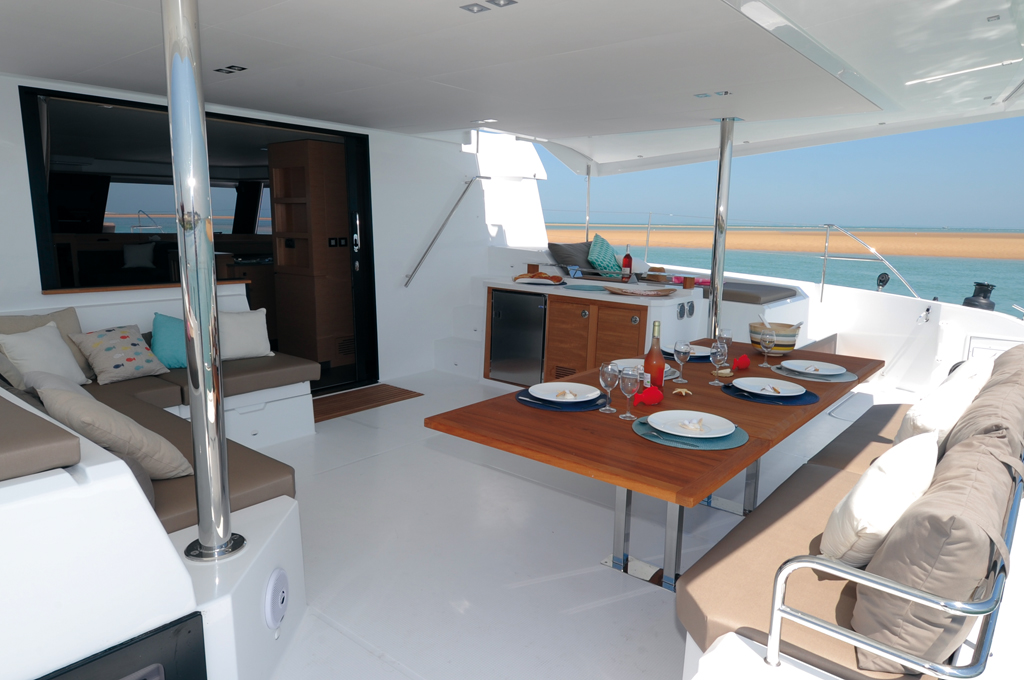
The cockpit is coming of age: every area really adds to the quality of life on board
Luxurious interiors with many versions available.
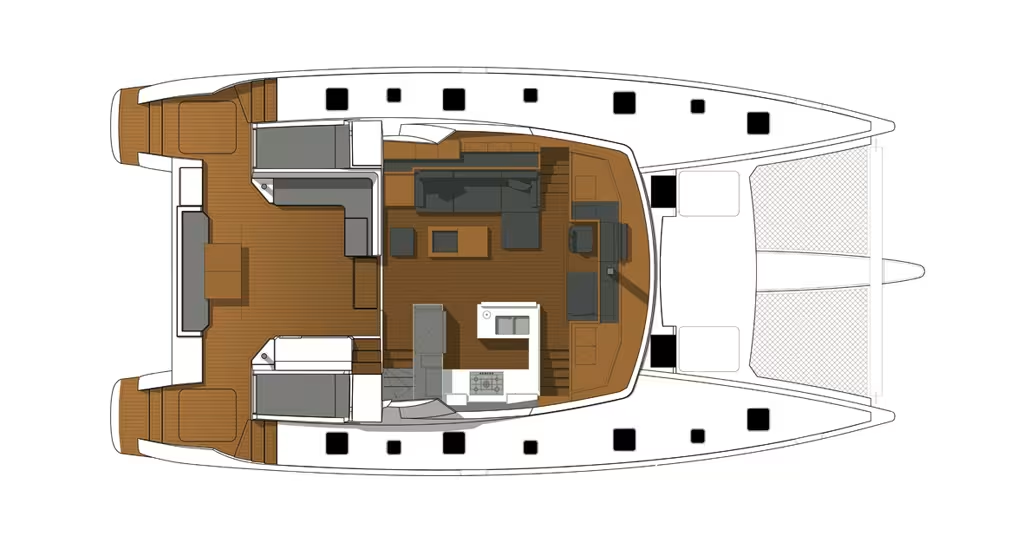
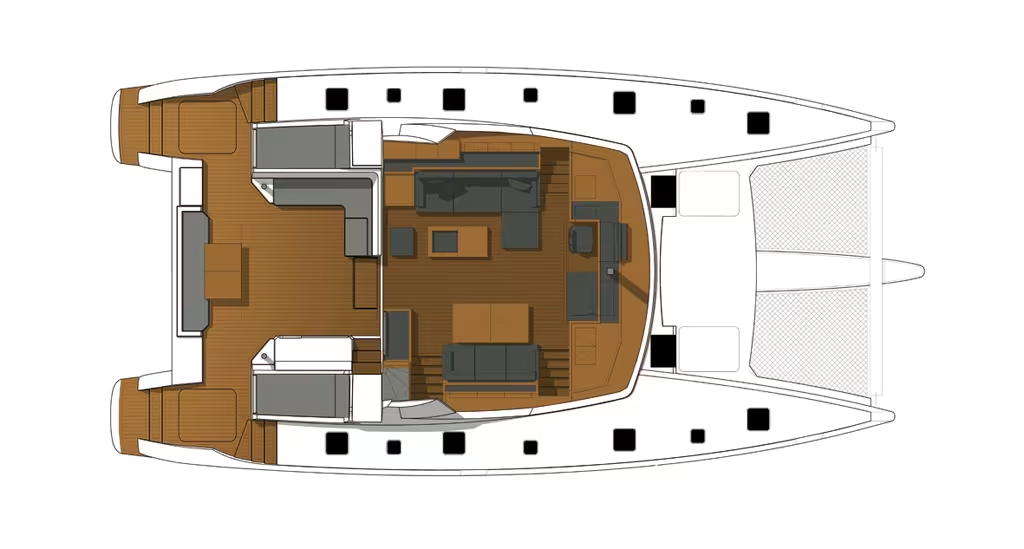
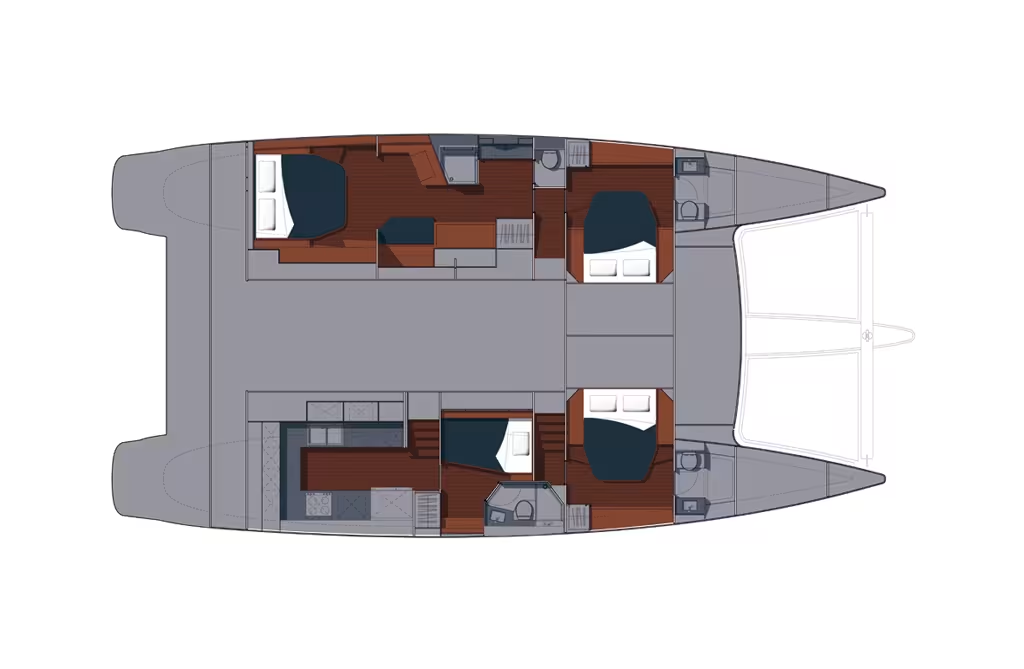
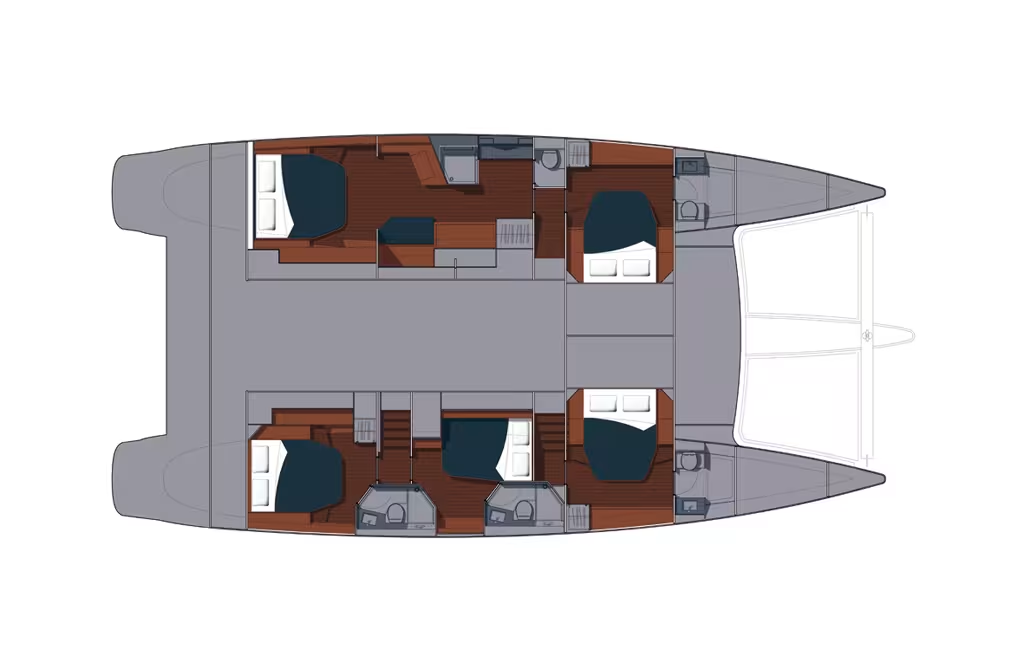
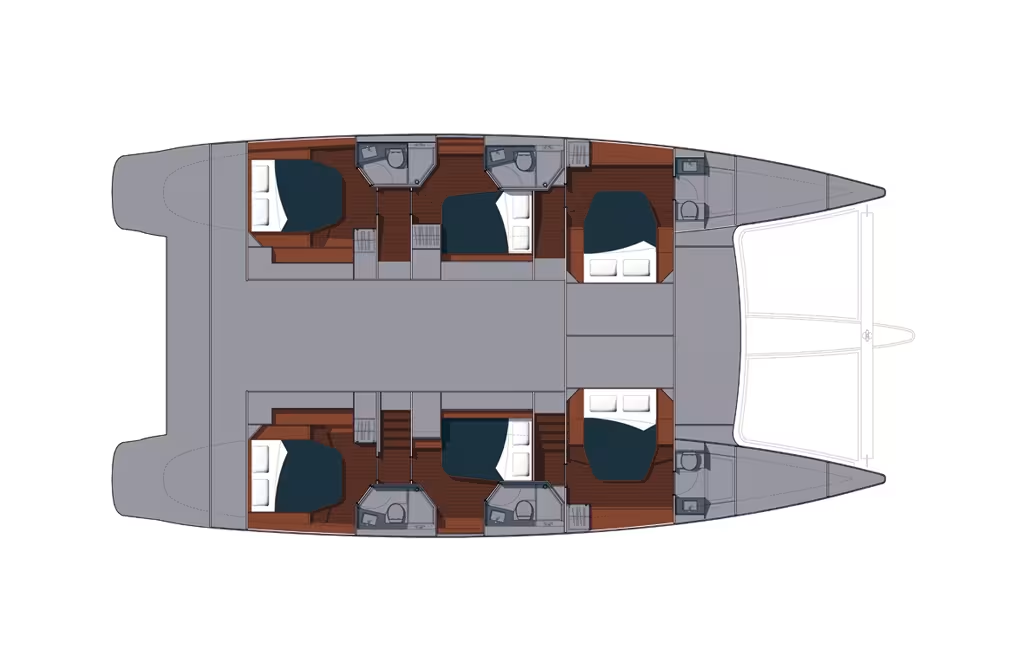
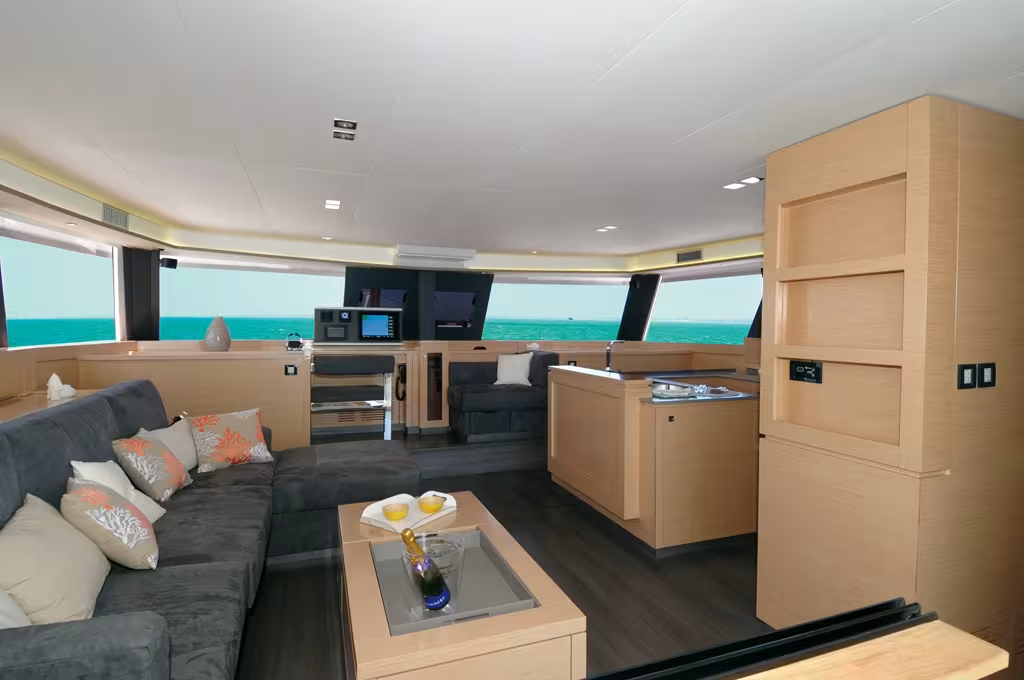
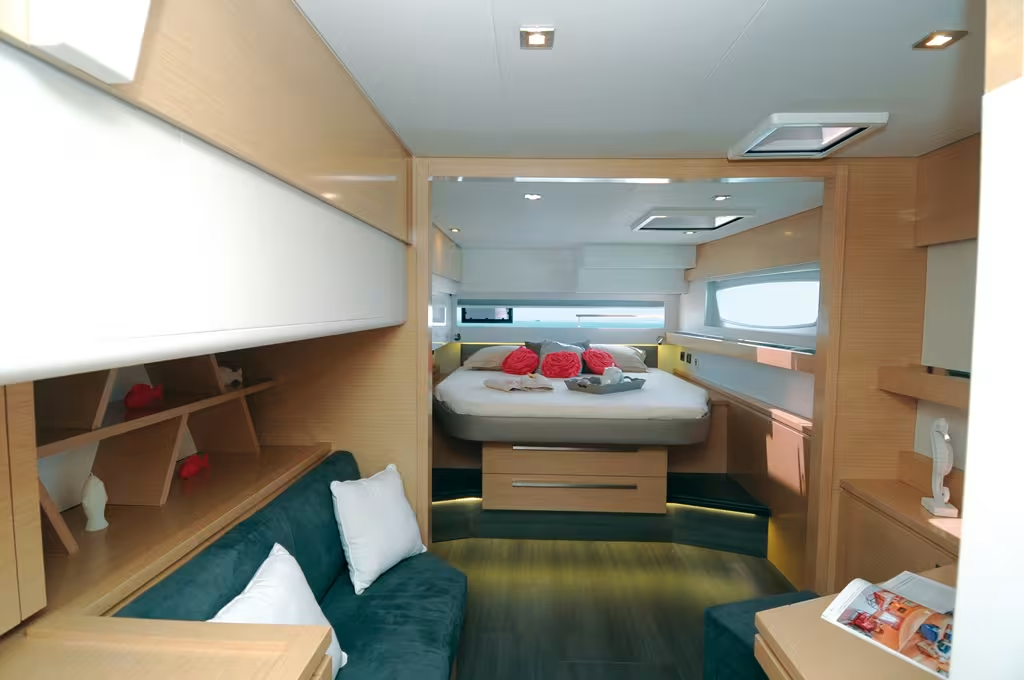
The dark veined laminate floors combine well with the grey velour upholstery: sofas and loungers offer cozy comfort and couches in a move away from the traditional bench seating round the salon. The cabinetry, faced in Alpi ash, brings a contemporary feel which is clean and functional. The effort which has been put into the light, the perspective, the lines and the materials used results in a homely atmosphere. The need to make creative new areas has led to several neat ideas which have resulted in a few original brainwaves (shelving with split supports, a corner desk and a three-sided bathroom cleverly installed in the owner’s cabin). Our test boat (the five cabin version) sports an owner’s suite, two cabins forward with bunks athwartships, but the starboard aft cabin is just as attractive, and equally well equipped with some nice fittings. On the Asia version, the salon opens up completely, making it ideal for top-of-the-range charter or for an owner’s version with a crew making it possible to have a proper salon-dining room and a separate galley in the port hull.
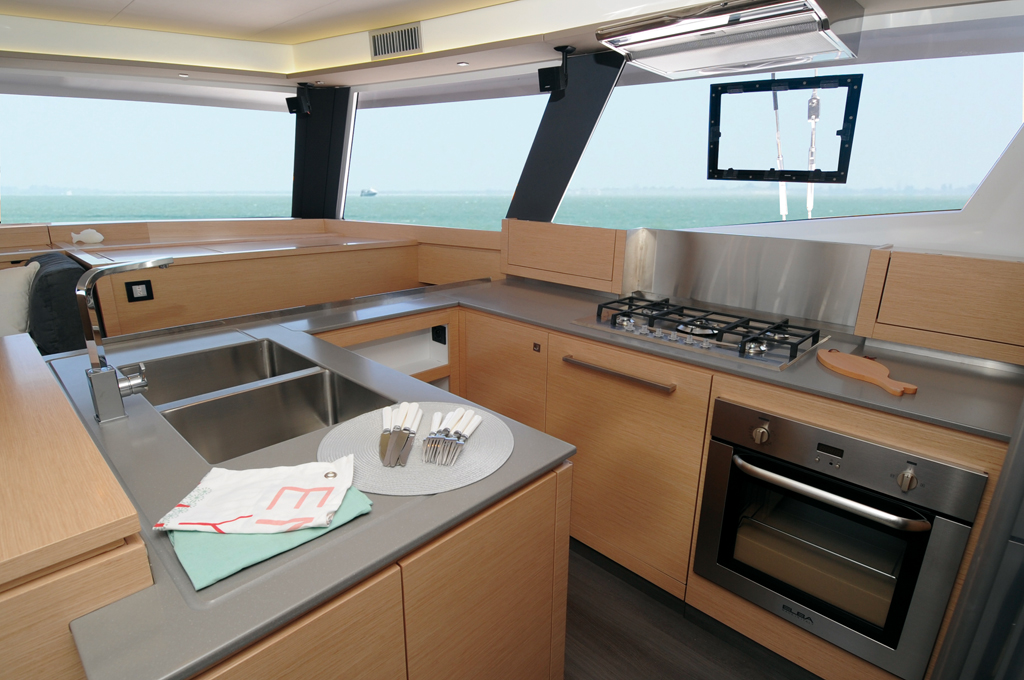
A perfectly set up chef’s galley! Note the stainless cooker hood and the hatch above the cooktop
Motors
The five cylinder Volvo Penta is a remarkable modern aluminum motor with a common rail injection system. Its high technical specs guarantee it will be unobtrusive, comply with all the anti-pollution regulations and be very reliable. All the same, you need to keep an eye on the quality of the diesel used, as the injection system is quite sensitive, so a regular bacterial treatment for the fuel would be recommended. Shaft-driven transmission with a water-cooled stern gland guarantees ease of maintenance and longevity of the whole system. The engine room is split into two parts which are accessible from the deck using a sturdy aluminum ladder. The first section houses the hydraulic components of the steering, the watermaker and the battery bank (to port), and the generator to starboard. The lower parts of the hull here are flat with a decent volume, making engine access easy, but there is no additional insulation in this echoey space. Further forward, on the other side of the structural bulkhead, the engine space is separated by a removable quilted lining. The raw water strainer is tucked away on the inside, so is not visible straight away for a quick check. Access is good for the stern gland and the gearbox, but there is no protective grill over the moving parts.
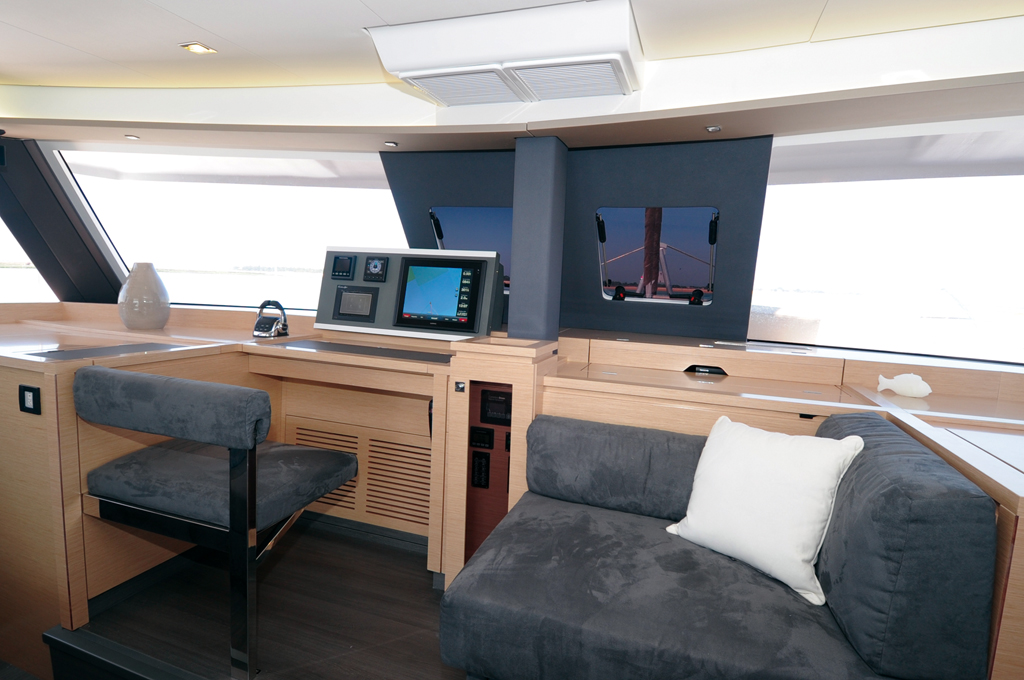
The nav station has seen some of its functions transferred to the flybridge, but it remains a spot for management and certain navigational functions. The windshield is fitted with two opening hatches with contribute effectively to the ventilation
A dynamic test
Text: Philippe Echelle - Photos: Yves Ronzier The 110hp Volvo D3s allow very good maneuverability. The torque, the excellent grip the props have in the water and the setup of the electric controls all make for easy command of this big boat even in tight marinas. The maximum speed of 10.5 knots at 3,160 rpm is quite satisfactory, but 8 knots would be a comfortable cruising speed. The wind was light in the morning, however this big catamaran showed its agility and several precise measurements showed a target speed of 6.5 knots maintained in 9 knots of true wind (measurements taken using my Garmin Quatix watch, so independent of the on-board electronics). Close hauled at 44° to the apparent wind, our speed picked up to 6 knots in just 8 knots of wind! Not bad for a boat with so much space! Coming back up the Pertuis Breton channel we made some long runs along the coast, and luckily we were the only ones there. Having figured everything out, I was quickly able to make the most of the deck layout and get the hang of tacking the boat with no difficulty. The clarity of the sail trimming console make this easy: genoa furling line goes on the electric winch, leeward sheet ready to ease out, and then all you need to do is set it turning during the maneuver, allow a good angle to pick up on the opposite tack, release the genoa sheet clutch and pull the first few meters in by hand, sheeting in the last bit with the excellent electric Antal 62s, and that’s it! A good eye needs to be kept on unfurling, but I must say the progress which has been made in reducing friction, the deck fittings and fiber ropes make this deck layout efficient and very agreeable to use. On these big boats you don’t put in a quick reef only to shake it out a few minutes later: on our test Ipanema the standard system is preferred over the continuous reefing line setup, which is offered as an option. The luff strap is attached with a fiber shackle with a dogbone (better than a stainless snapshackle) and all you need to do is tension the reefing line while carrying on under headsail, with the mainsail eased right out. The helmsman then controls the power with ease by playing with the foresails (reducing the genoa or hoisting the staysail if the wind has picked up), a cutter rig being ideal for this type of boat. The technical gadget which contributes significantly to the ease of handling the Ipanema is the motorized traveler: a great solution which was introduced successfully on the Victoria (and is also to be found on the Rapier 550). An Antal captive winch gives fingertip control to the mainsheet car. For me, this “indispensable” piece of kit has found its rightful place on these big boats, especially on flybridge models. Thanks to this, it’s possible to gybe properly single-handed, without noise, with damaging anything or asking for help from the (not always trained) crew. Neat! The hydraulic helm is best not mentioned, but the excellent Garmin pilot, with its easily readable menus, does great work. The two-man helm seat is nice, but it could have been extended in an L-shape on the starboard side (wing style!) to allow an offset viewpoint for better watching the sails? I didn’t like the fixed bimini too much: a removable one would allow for a much better view of the profile of the mainsail. The sumptuous anchorage of the Banc du Bûcheron (Ile de Ré, off the French Atlantic coast) has great views: coming back under spinnaker with a wind shear giving 20 knots of breeze gave a bit of a limousine feel (9-10 knots average, touch 11.9 at times with this big asymmetric) on board our magic carpet.
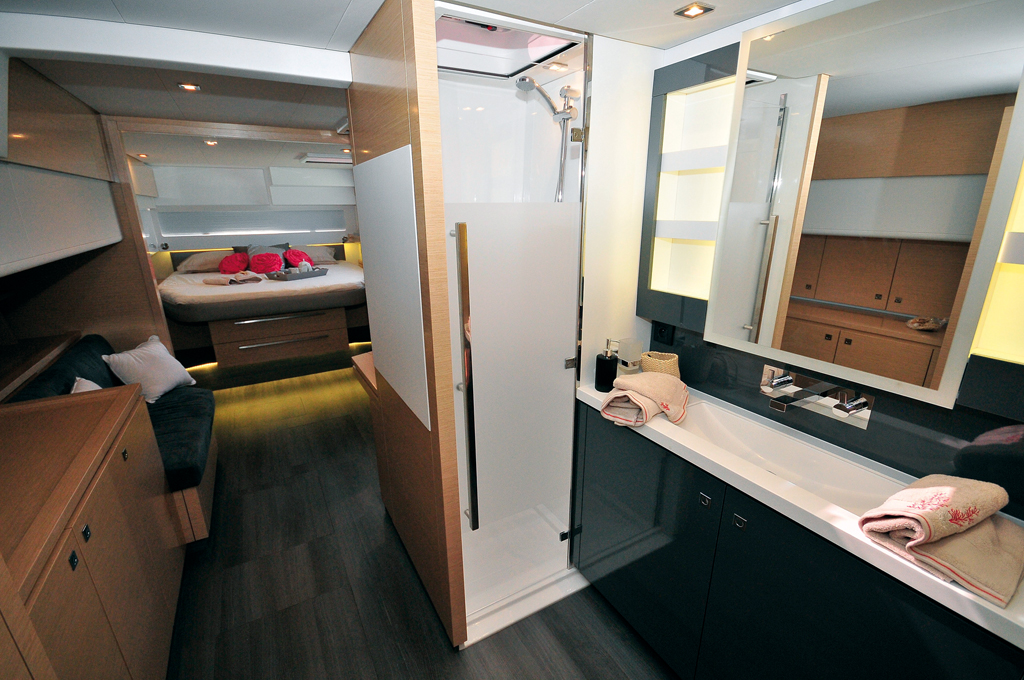
The bathroom of the 58 is a three-sided affair: shower/washbasin/toilet, very cleverly incorporated into the owner’s cabin
Conclusion
The Ipanema is a luxury catamaran aimed at affluent , fun-loving sailors. It is equipped with numerous attractive assets. Technically easy to live with, the perfect ergonomics and refined comfort bring together the owner crew or charter hosts. The quality of the deck equipment combined with the cutter rig give this boat pride of place among the easiest big boats to use.
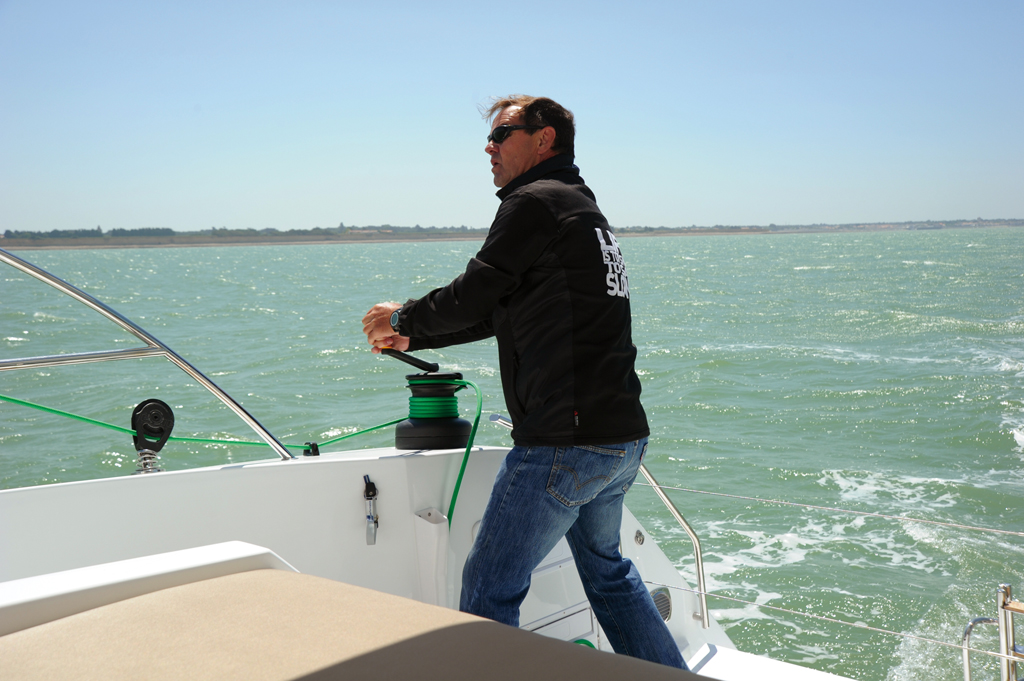
The only technical function which remains in the cockpit is the adjustment for the gennaker or asymmetric spinnaker
Pluses:
- Excellent system for handling the sheet cars
- Ergonomics of the flybridge and the cockpit
- Quality of the woodwork/cabinetry
- Shaft-driven props with motors starting from 75hp
- Creative interior design
Minuses:
- Helm seat could be improved
- Hydraulic helm vague and not responsive enough
- Bimini cannot be retracted
- Insulation in the engine compartments could be improved
- View of the sails
The competition
| Model | Architect | Builder | Upwind sail area | Weight | Basic price ex-tax |
| Sunreef 60’ | Sunreef | Sunreef | 182 m2 | 33 t | €1,36 M |
| Privilège série 6 | M. Lombard | Privilege | 229 m2 | 28,3 t | €1,82 M |
| Lagoon 560 | VPLP | Lagoon | 207 m2 | 28 t | €908 k |
| Catana 59’ | Catana | Catana | 197 m2 | 19 t | €1,69 M |
| Leopard 58’ | Simonis/Voogt | Robertson/Caine | 187 m2 | 24 t | €929 k |
Technical specs:
- Naval Architect: Berret-Racoupeau Yacht design
- Interior Design: Isabelle Racoupeau
- Builder: Fountaine-Pajot
- Construction: Balsa/glass/polyester sandwich (hulls) et foam/glass/Airex (bulkheads) using infusion process
- Length: 17.02m
- Length with bowsprit: 17.81m
- Beam: 8.88m
- Draft: 1.40m
- Light displacement: 23t
- Maximum load: 7t
- Furling genoa area: 67m2
- Mainsail area: 102m²
- Motors: 2 x 75hp / 2 x 110 as option
- Transmission: Propshafts on both versions
- Layout versions: Maestro (1 suite+4 doubles), 6 double cabins,
- Lounge (4 double cabins), traditional salon (galley up),
- Asia salon (galley down - starboard hull, aft)
- Water: 1050 l Fuel: 1100 l
- CE Category A for 14 persons; Category C: 24 persons; Category D: 30 persons
- Basic price ex-tax: From €998,000 to €1,031,500 depending on layout version
- Principal options in € ex-tax Volvo D3 110hp motors: 14,744 Folding propellers: 3,461 4 x 140W solar panels: 6,150 Generator: from 13,381 to 20,820 depending on power (7 to 17kW) 220l/h watermaker: 15,136 Air conditioning: from 31,000 to 34,000 depending on version Electric winches: mainsail sheet and halyard: 6,600, Gennaker or spi: 9,900, genoa sheets: 6,600 Furling staysail: 15,500 Gennaker and deck hardware: 13,400 Garmin electronics pack: from 13,000 to 21,500 depending on specification Mast and boom in white lacquer: 5,500 Ocean equipment pack (including mainsail and genoa sheet electric winches, all exterior upholstery and multiple equipment): 65,000 Transport, mast-stepping and delivery to La Rochelle (France): 5,800
Caption
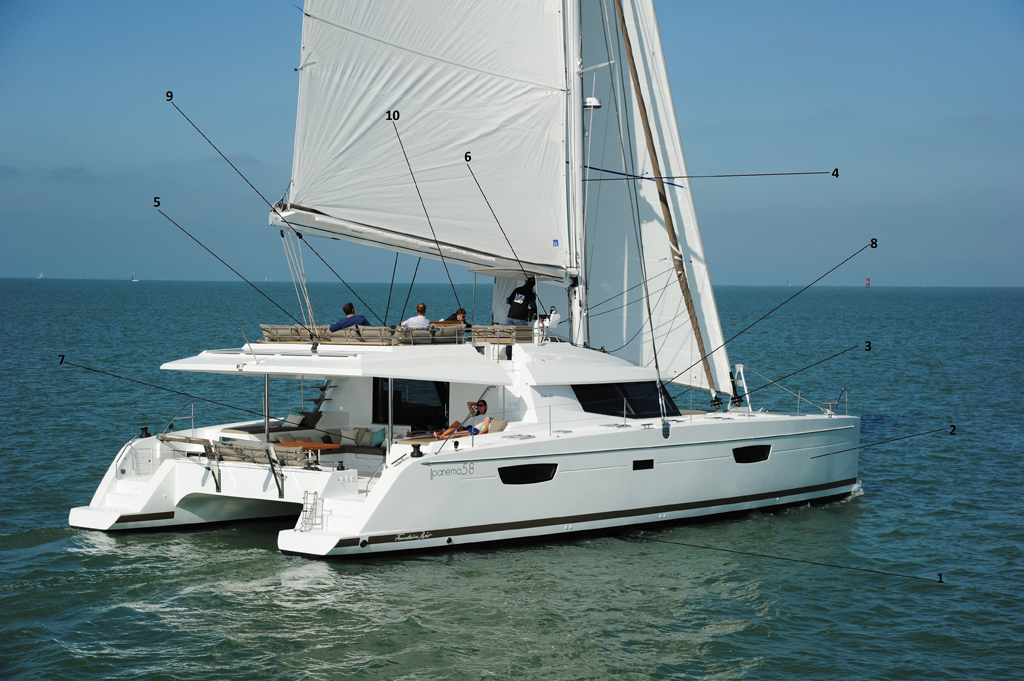
- : Lines inspired by the Sanya are right up to date on the Ipanema
- : The classic design of the hulls steers clear of current trends such as deflecting steps or inverted bows
- : The cutter version is ideal for this boat, with the two furlers assisted by an electric winch. The rig with two sets of spreaders will maintain the perfect profile
- : The lacquered JPM mast with welded chainplates will withstand any test
- : The mainsheet traveler is assisted by a very effective captive Antal winch: a great idea for this type of boat
- : The position of the helm is good, the seat is comfortable, but the fixed bimini interferes with your view of the sails
- : The cockpit lounge area works well, with relaxing sunbathing area, galley unit and outdoor bar. The folding table seats 10 and is set between the comfortable aft bench and the L-shape seating in the dining area. Perfect ergonomics!
- : The smoked glass windows of the turn of the coachroof combined with the front awning overhang protect the interior from UV rays and blend in with the overall lines.
- : The Ipanema flybridge is a success. Esthetic, very comfortable and safe, it also helps make the deck layout clear, efficient and easy to use.
- : The sail handling setup, the quality of the deck fittings and the power of the Antal electric winches allow for smooth and reliable maneuvers when sailing short-handed.
A word from the architects
The Ipanema picks up on the company’s DNA: refined profile, lifted by the strong yet minimal lines of the coachroof: it’s an elegant sailboat with definite seafaring character. Moderate displacement and sail area within the company’s specifications (generous but manageable) develop speed and good passage through the water. The outdoor spaces are big, such as on the flybridge and sunbathing area at the foot of the mast, as well as the enormous cockpit. For the interior design, we wanted to create in the Ipanema a chic atmosphere, which was light, comfortable and convivial while keeping true to the evolution of the Fountaine Pajot style. So we developed an interior style with a sober design in a light wood. Light-reflecting materials with a glazed effect have been added in the cabins to deal with the shelves high up in the cabins, bringing in more light. The style of the upholstery has also evolved to become more comfortable and more luxurious, with particular attention paid to the shape and the finish. We have emphasized the hatch surrounds and the headlining, to give bigger openings and more light. Moving around the boat is easy between the different areas and allows the relaxation zones to link easily with the more convivial areas. The Ipanema 58 is a boat for “sailing and living well”! Olivier and Isabelle Racoupeau