Launched 55 years ago, the Iroquois was certainly a revolutionary catamaran at the time. Reasonably fast and seaworthy, it inspired owners to take up racing or go blue water cruising. But is it still worth a look today?
Infos pratiques
- Le chantier : Iroquois
- La fiche technique
- Découvrez notre vidéo exclusive
- Financez votre Iroquois
- Assuez votre Iroquois
- Articles autour du Iroquois
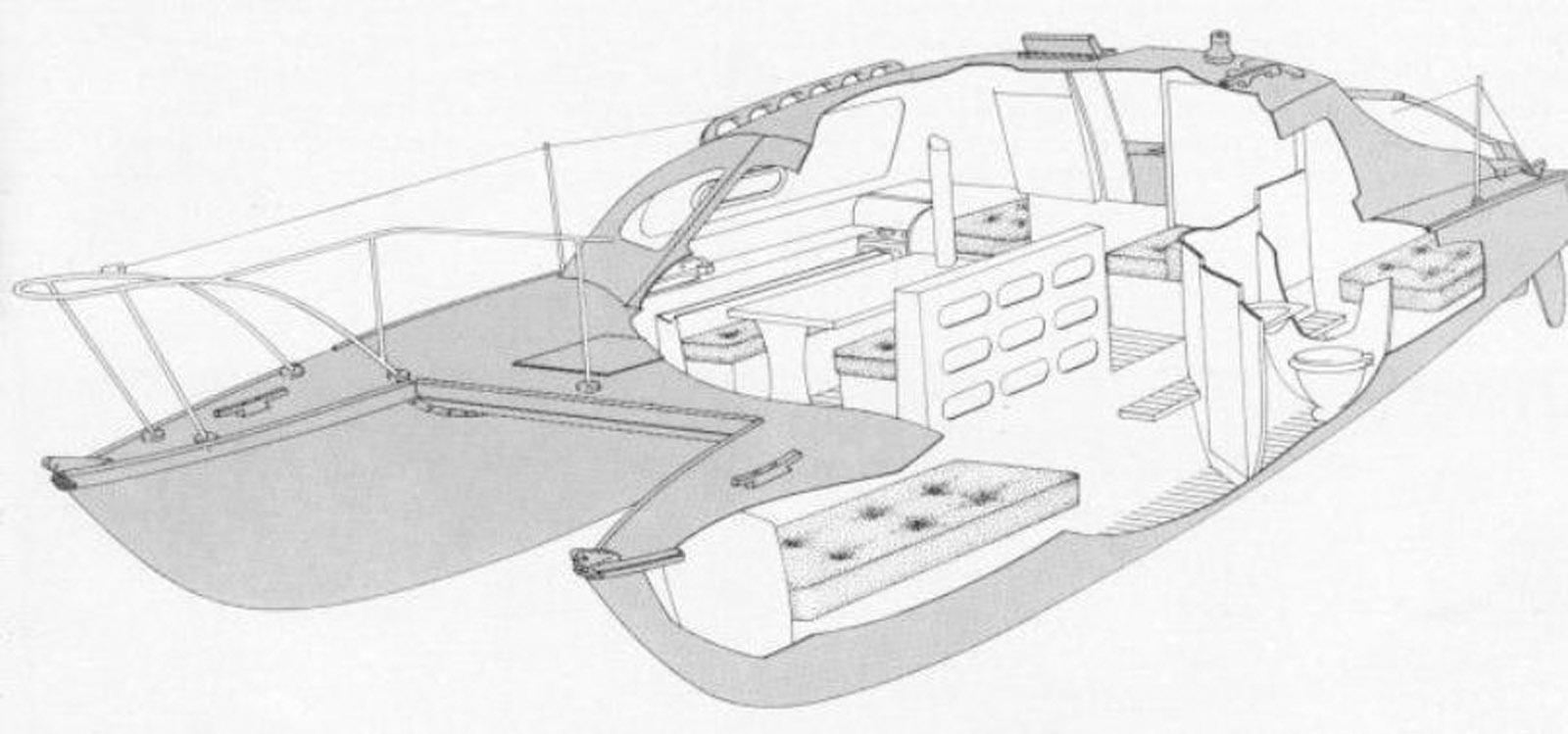
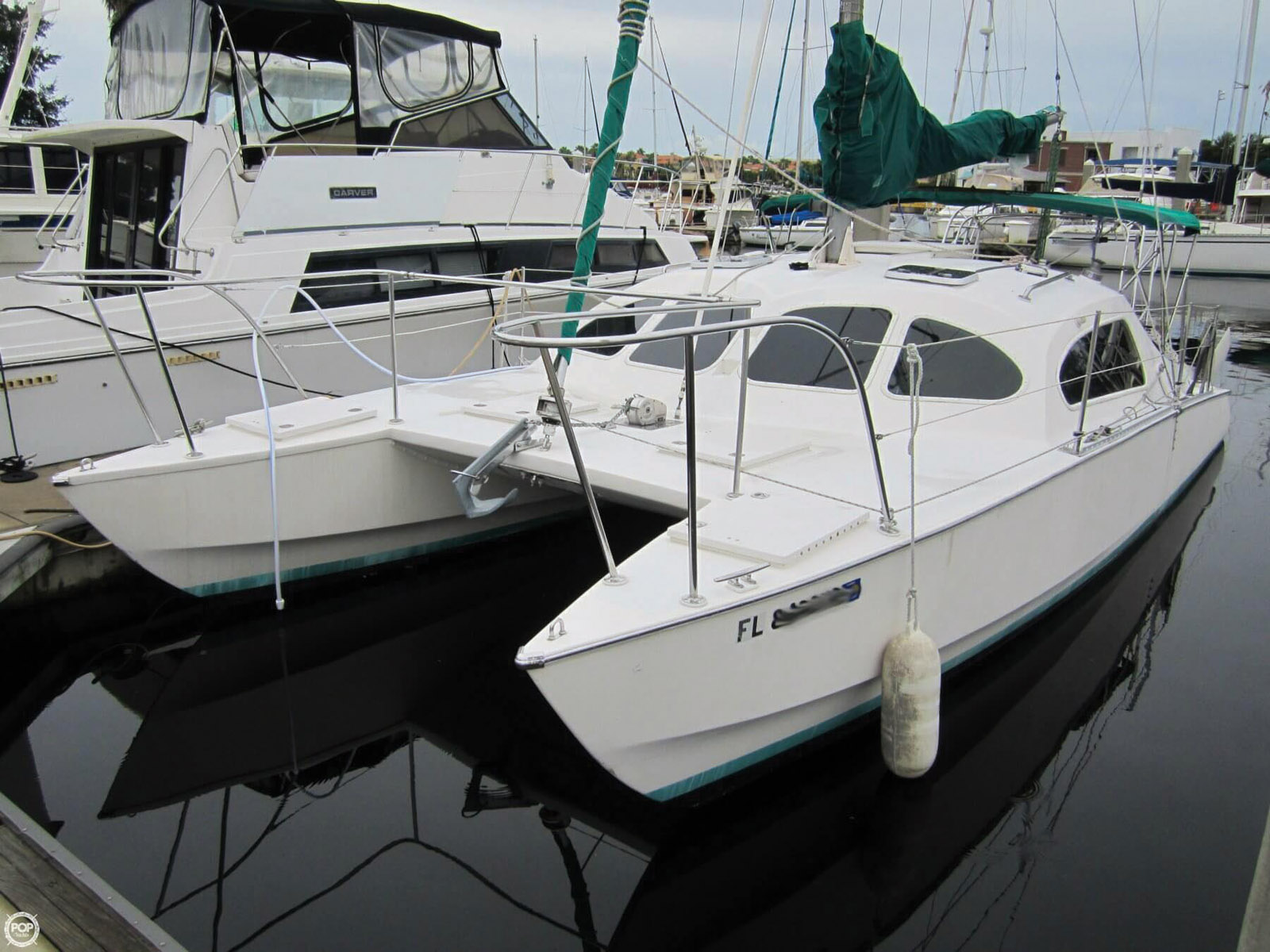
The first version of the Iroquois, retrospectively christened the Mk 1, is certainly the most elegant and vintage. This polyester catamaran is undoubtedly the ancestor of our modern multihulls. The different elements - hulls, deck and underside of the nacelle - were all bolted together and then laminated. A simple construction method that doesn’t necessarily age all that well... The strong point of the Mk 1 is its compact rig, at the heart of which is a fully-battened mainsail. On the other hand, there is no trampoline. As early as 1968, the British boatbuilders Sail Craft Ltd. revised their product with the launch of the Mk 2: this catamaran was constructed by lamination; the freeboard and the bridgedeck clearance were increased, the coachroof was less prominent, and the hatches were improved. An aluminum beam was fitted between the bow of each hull, and this now held the forestay – a big very advance compared to the previous version - and offered a trampoline. The rig gained extra horsepower with an imposing genoa - up to 200% overlap - but the mainsail saw the loss of its roach. The daggerboards, simple sheet metal on the Mk 1 were thicker and profiled, now being made in plywood. Later, the shipyard was to launch the Iroquois Mk 2a, whose hulls were extended at the stern to house lockers, and the Mk 2m, fitted with two 10 hp diesel engines.
Centerboards
The deck layout is obviously nothing like that of a modern catamaran. The first surprise is the narrowness of the side decks: limited to 4.11 m (13’6”) in beam - compared to 5.30 m (17’5”) for Fountaine-Pajot’s Maldives - the Iroquois’ coachroof clearly being to the detriment of the deck area. You get the same feeling in the cockpit: it’s small and there’s little in the way of access to the sea except for a small bathing ladder. Nevertheless, the deckhouse offers good protection. Each rudder is connected to a tiller. The rudderblades are pivoting, like the centerboards, allowing for sailing in complete safety. The rudders, on the other hand, require fine tuning to achieve a smooth, neutral helm. The steering position can be improved by fitting tiller extensions and seats – the coamings are uncomfortable. Any deck hardware, if it’s original, will obviously require complete replacement.
Volume for its size
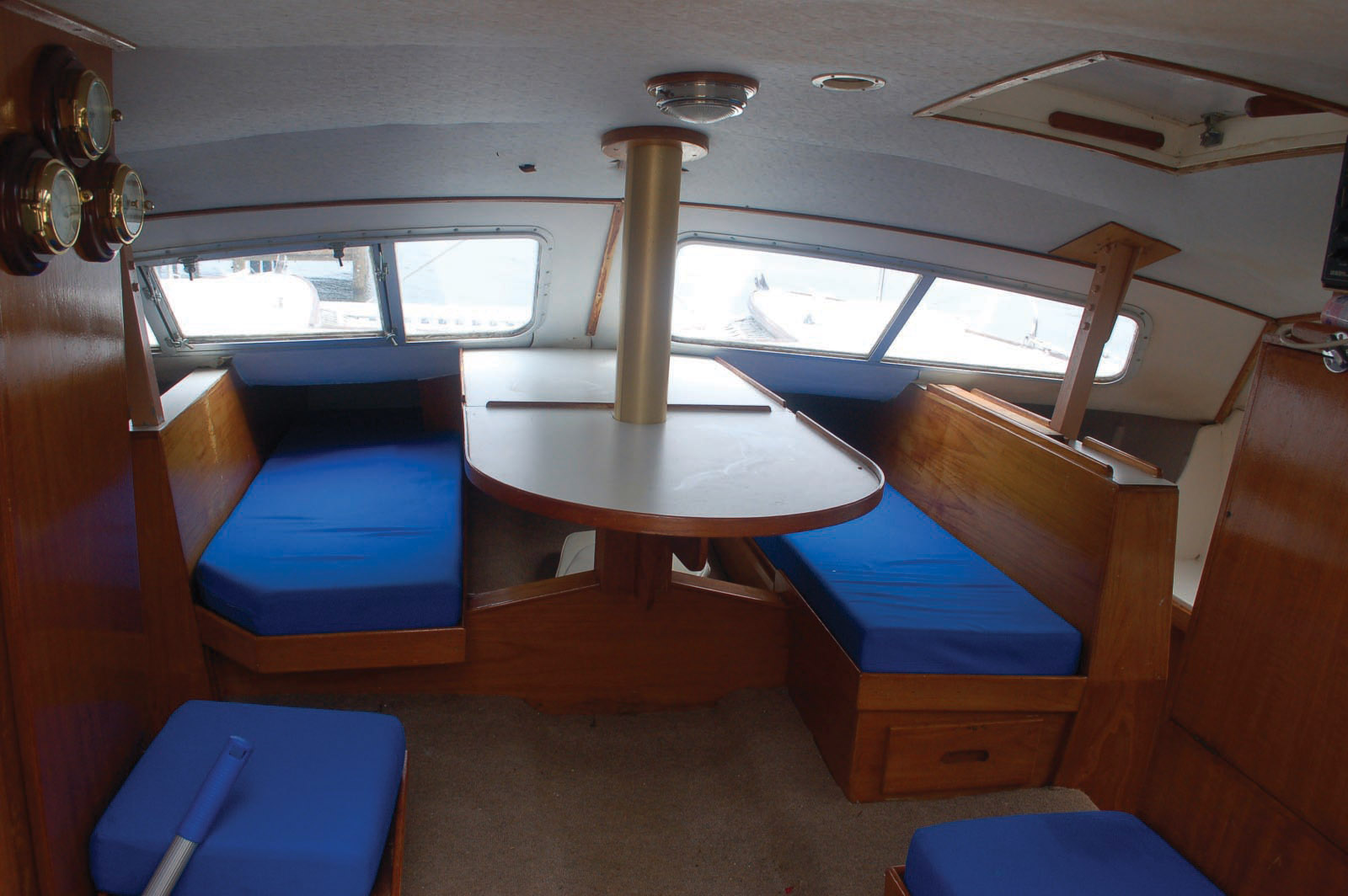
The saloon is accessed through a narrow door, but the living area offers good visibility forward and to both sides. The table is pushed all the way forward - six people can sit here by squeezing together a little. Headroom is limited, but the coachroof, which extends out over the hulls, makes it possible to exploit a considerable overall volume, given that the hulls are only 9 meters (30 feet) long. The galley, as well as the heads, are understandably located in the center of the passageways. The berths comprise two singles forward, and two doubles (which are rather narrow) aft.
Quick in a breeze
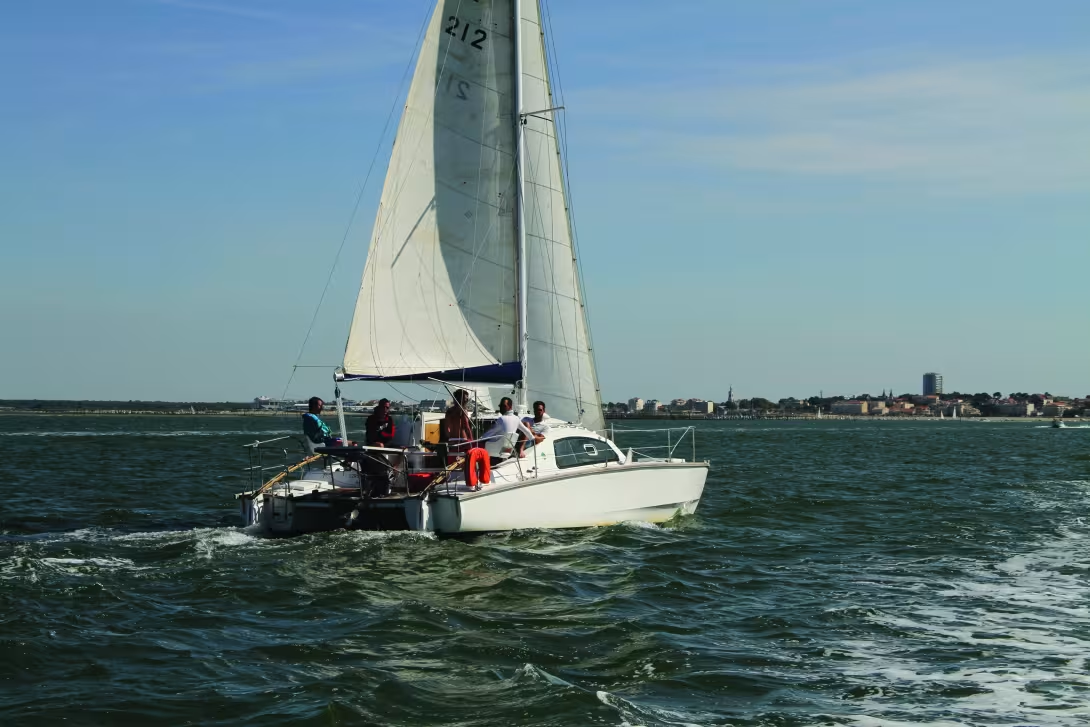
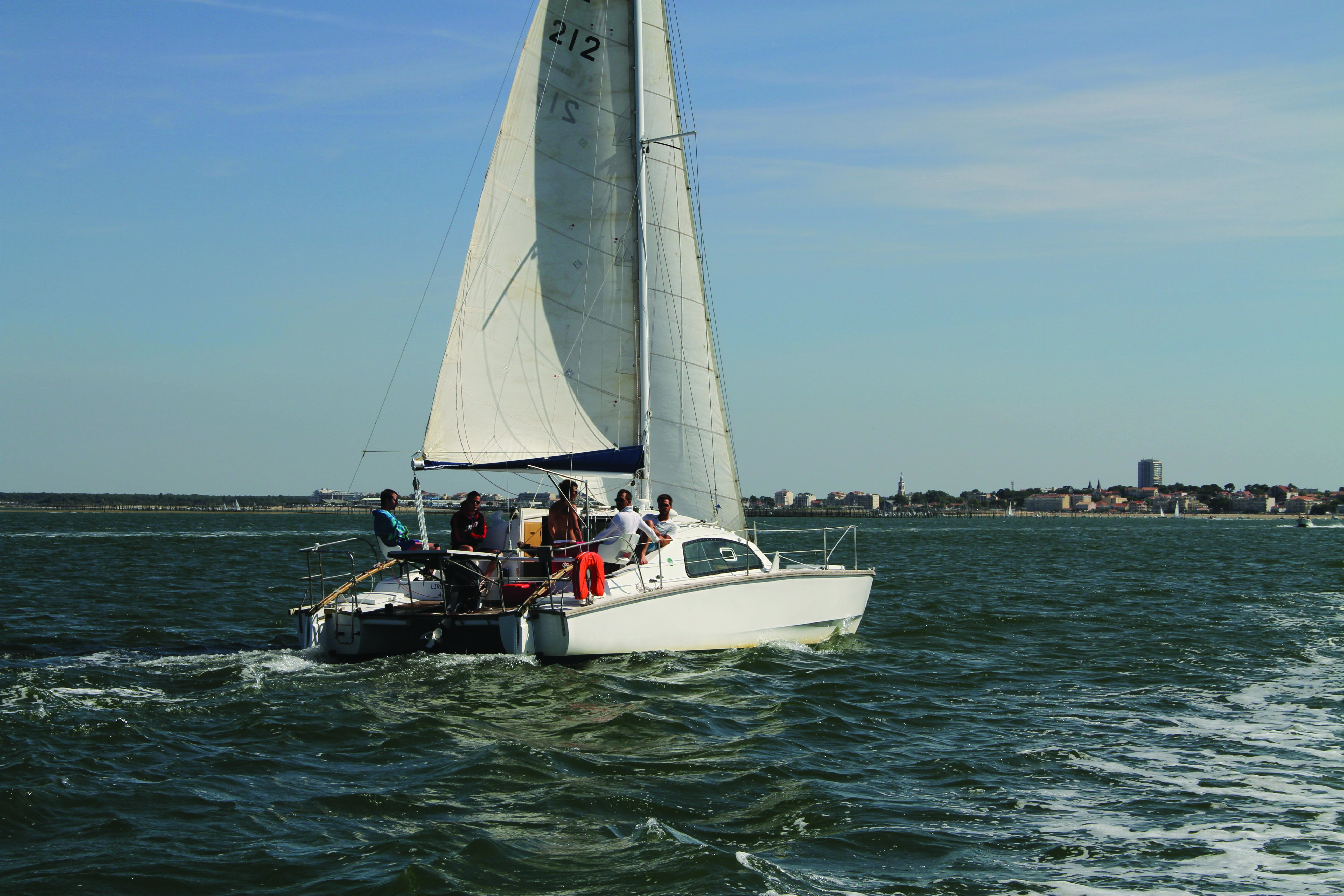
Of course, the very slender bows are from another era... but the chines forward and the rounded sections of the hulls are still in the loop. When they first came out, the Iroquois managed to make a name for themselves in some prestigious races, such as the Round Britain and Ireland. Though lacking in horsepower for light airs, they come into their own upwards of medium conditions; their daggerboards allow for making a very good course upwind. Average speeds of 8 knots are common and peaks of 18/20 knots have been recorded. In heavy weather, it is recommended not to sail these catamarans overcanvassed, and to have windward daggerboard down, and the leeward one up. In heavy seas, the Iroquois doesn’t take well to being overloaded; take special care to lighten the bows by moving the ground tackle and locker contents aft. As for the rig, the Mk 2 version is the best by adopting a genoa with a small overlap and a fully-battened mainsail with a roach – making it similar to the sail plan of the Mk 1 but with a more powerful jib.
For or against the flying saucer?
In many pictures, you can see a float at the masthead – often described by Iroquois owners as a “flying saucer”. Of course, in the mid-60s and the 1970s, confidence in the stability of catamarans was still low, which explains this safety feature. In concrete terms, the float allowed a capsized Iroquois not to fill its cockpit and nacelle, and then to be easily righted with the assistance of a motorboat. But in fact, the famous flying saucer represents not inconsiderable windage. And if it fills with water, can weigh up to 50 kilos (110 lbs)! Reasons enough why it is hardly ever seen anymore. Nevertheless, many cases of capsizing have been reported - mostly in difficult conditions. The Iroquois remains a small multihull and its relative narrowness doesn’t advocate use in rough seas and strong gusts. So, some therefore consider her more suited to coastal programs - even though many have made ocean crossings, or even a circumnavigation.
Conclusion
Buying such an old catamaran is obviously a risk. An in-depth examination, preferably accompanied by a surveyor, will allow you to fully understand any work to be carried out - and therefore the inherent costs. If the structure has any damage, restoration can become onerous - but is still feasible given that it’s only a 30-foot unit. Ultimately, you’d have the satisfaction of sailing a multihull as vintage as it is historic, for the price of a new sports catamaran.
TECHNICAL SPECIFICATIONS
Builder: Sail Craft Ltd. (UK)
Architects: J.R. (Rod) Macalpine-Downie
Construction: PVC/glass/polyester sandwich
Hull length: 9.14 m (30’)
Waterline length: 8.23 m (27’)
Beam: 4.11 m (13’6”)
Draft: 0.38/1.52 m (15”/5’)
Displacement: 2,976 kg (6,560 lbs)
Upwind sail area Mk 1: 32.05 m² (345 sq ft)
Upwind sail area Mk 2: 42.50 m² (460 sq ft)
Genoa: 25.3 m² (275 sq ft)
Mainsail: 17.2 m² (185 sq ft)
Engine: Outboard motor or 2 x 10 hp diesels
Number of examples built: 300, from 1965 to 1979
Price: from € 10,000 ex-tax