It was to take 11 years of development - and as many prototypes - before François Tissier launched his folding and transportable catamaran. His Iziboat is all the more accomplished as this first model has already had two seasons on the water, and has been tested by 1,200 crew members!

Infos pratiques
- Le chantier : Iziboat
- La fiche technique
- Découvrez notre vidéo exclusive
- Financez votre Iziboat
- Assuez votre Iziboat
- Articles autour du Iziboat
Test location: La Flotte-en-Ré, France
Conditions: flat sea, 10 to 15 knots of wind
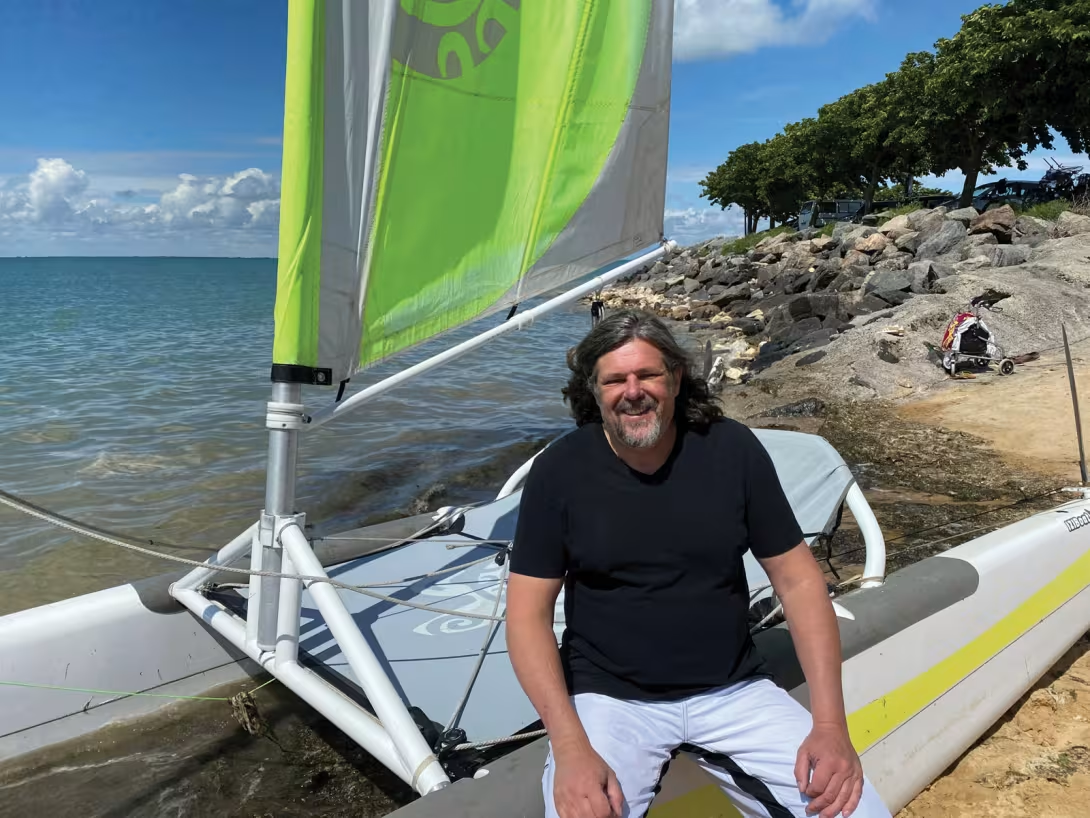
We met up in a small parking lot shaded by pine trees: a few cars, of course, but more importantly, a curious-looking catamaran ready to sail. François Tissier, who is at the origin of the project, is in the middle of a discussion with a FrancoBelgian family: Nino, in a wheelchair, seems very eager to go sailing! This impromptu meeting shows that the Iziboat - even before getting out on the water – really does deserve its name.
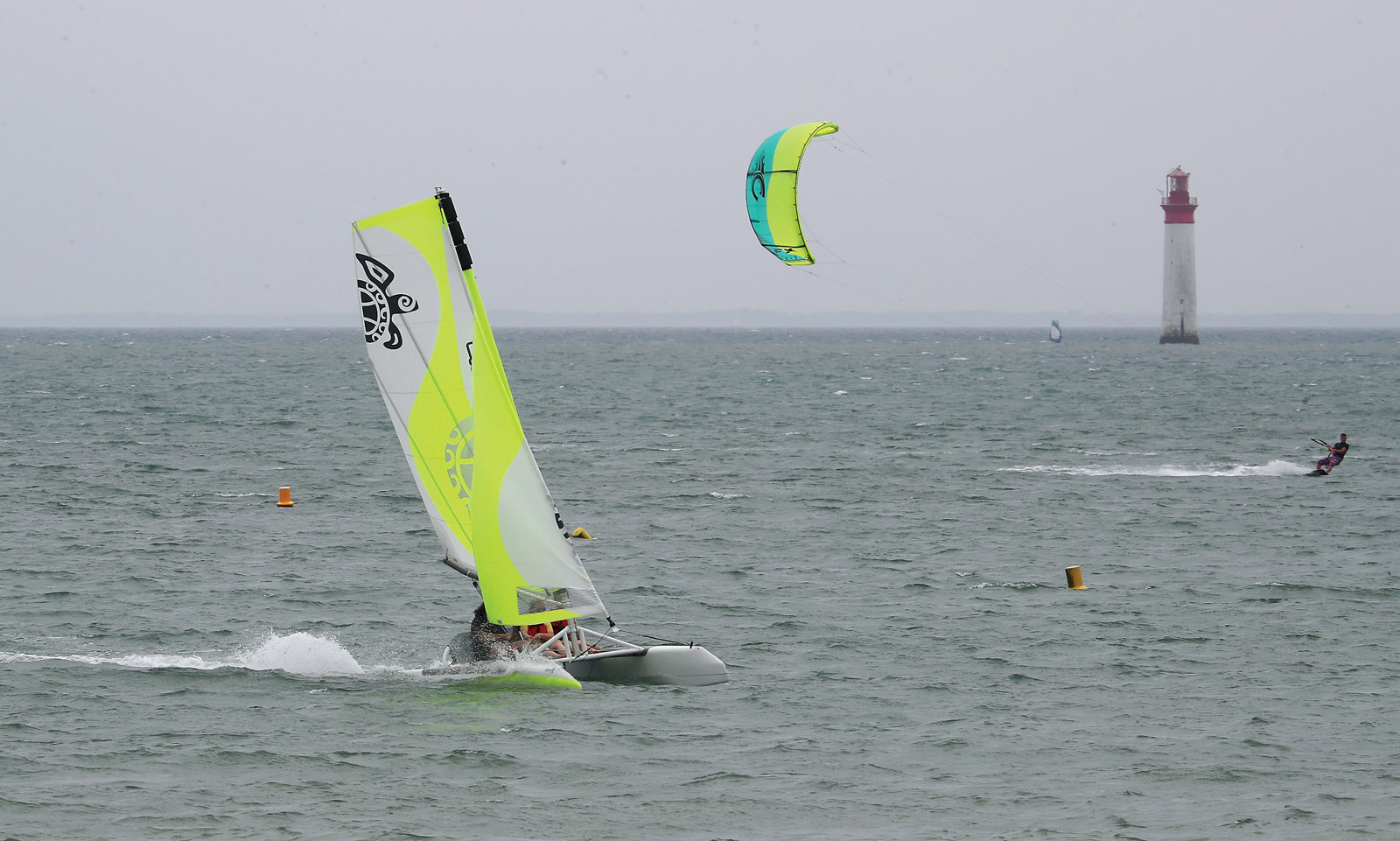
The overlapping genoa is very effective as you start to come off the wind.
But if you try and hold a course hard on the wind, even with the sail partly furled, the very outboard sheeting points don’t help.
The complete mainsail/small jib/gennaker wardrobe seems the best choice to us.
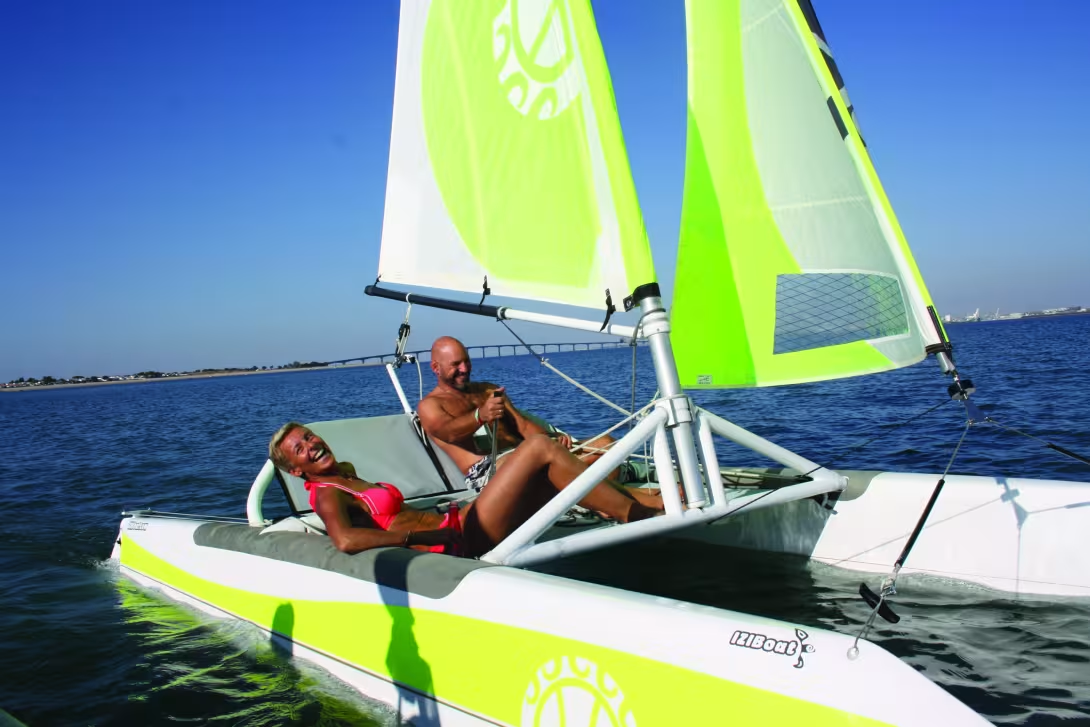
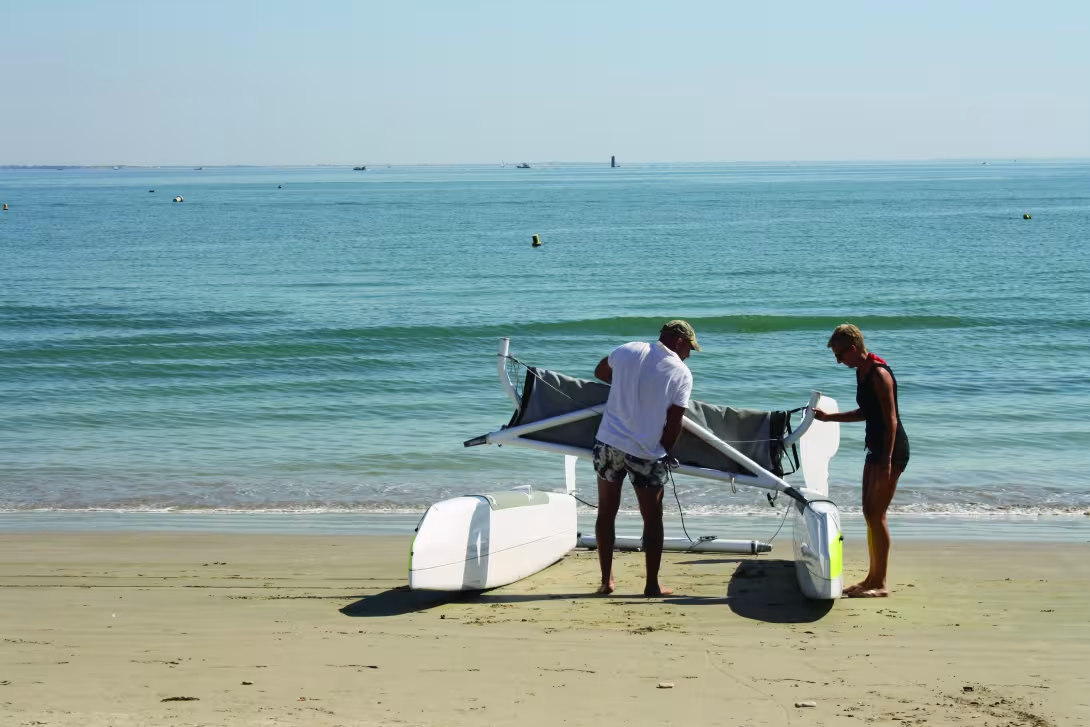
The interest of this small multihull is of course the possibility to dismantle it - and therefore to transport and store it - very easily. The operation takes 15 minutes. Two powerful straps ensure that the various parts are securely held in place. For those who live close to the water, the manufacturer even suggests transporting it by bicycle. This is possible, but on flat ground, since the Iziboat still weighs 152 kg - as much as a Hobie 16. The new production models should be a few pounds lighter. The first trick is when it comes to launching: the wheels fit directly into the floats. The polyester hulls adopt a modern design with inverted bows and a generous volume – 16.5 cu ft (469 l) per float. The exterior hulls have almost vertical sides so that there are no daggerboards.
The undersides of the hulls have a marked concave shape, so as to generate an air cushion effect. The rudders can be lifted up. The structure and rig are made of aluminum. The mainsail is very original: with its two large, almost vertical battens and its articulated boom, it wraps around the mast. A float is recessed at the top of the mast to prevent it from turning turtle in the event of capsize. Suitable for everyone, this small multihull has proper seats and is operated intuitively thanks to a joy-stick - the standard equipment of most beach pedalos...
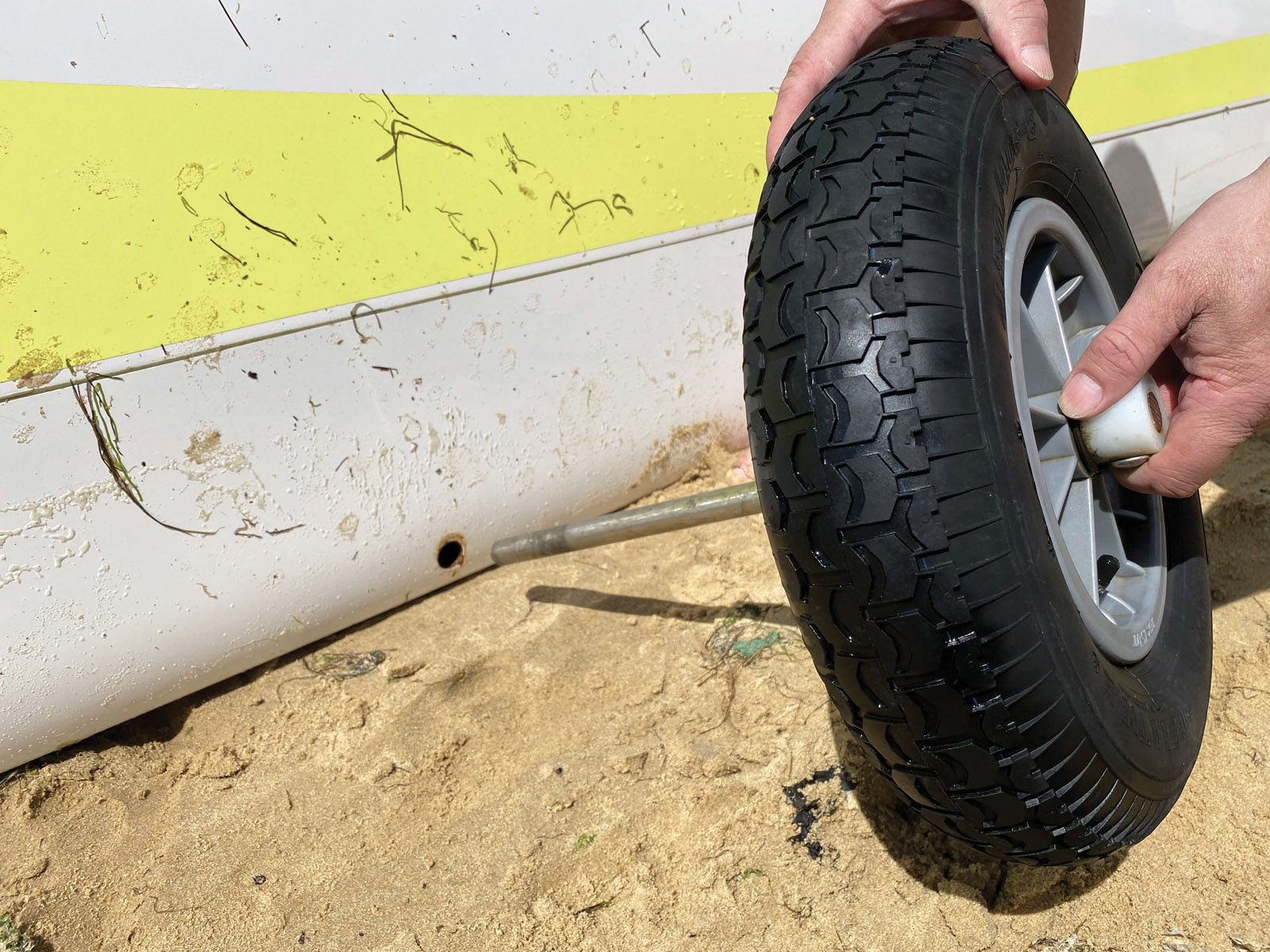
The launching wheels fit directly into the hulls and can be taken along with you when sailing.
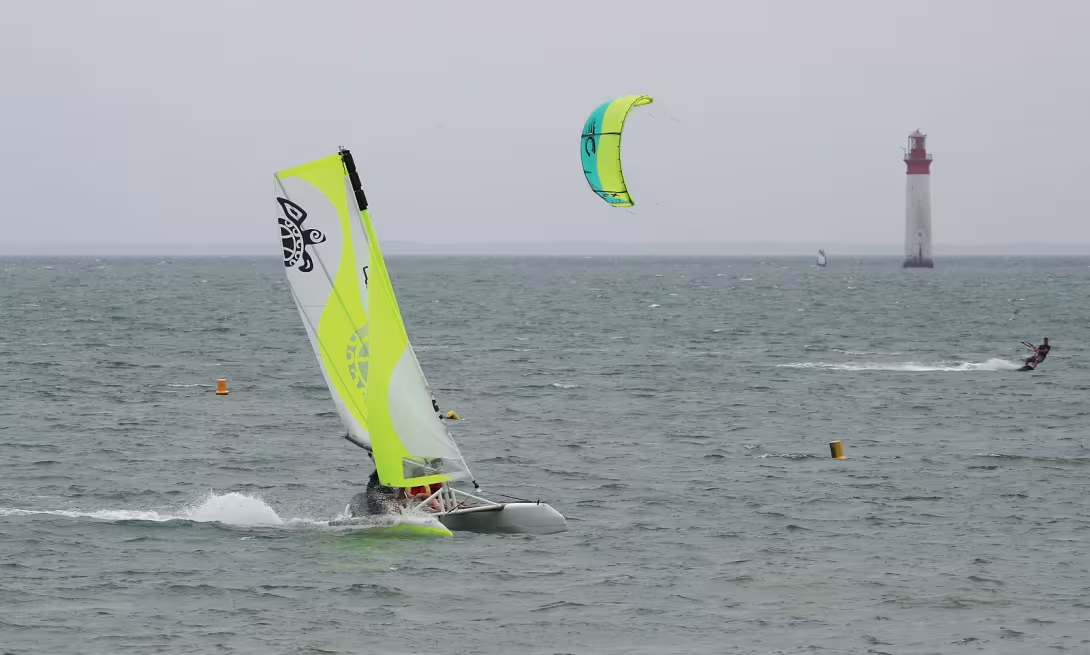
But then a fine helmsman might sometimes struggle to hold a course: the helm works upside down in their eyes, and a forward-facing position could confuse them. In practice, this leads to a few swerves during the first few tacks, but nothing more. The boat is surprisingly stable: up to 10 knots of wind, a solo sailor doesn’t need to change seats. Between 10 and 15 knots, you begin settle into the wind. The boatspeed quickly exceeds 10 knots: there’s a confusing sensation of easy gliding across the water! The sheets are close to hand - mainsheet at the top between the two seats, and the generously overlapping genoa has its sheet on the trampoline. The Iziboat takes little water and the relatively high position also helps keep you dry most of the time.
 |
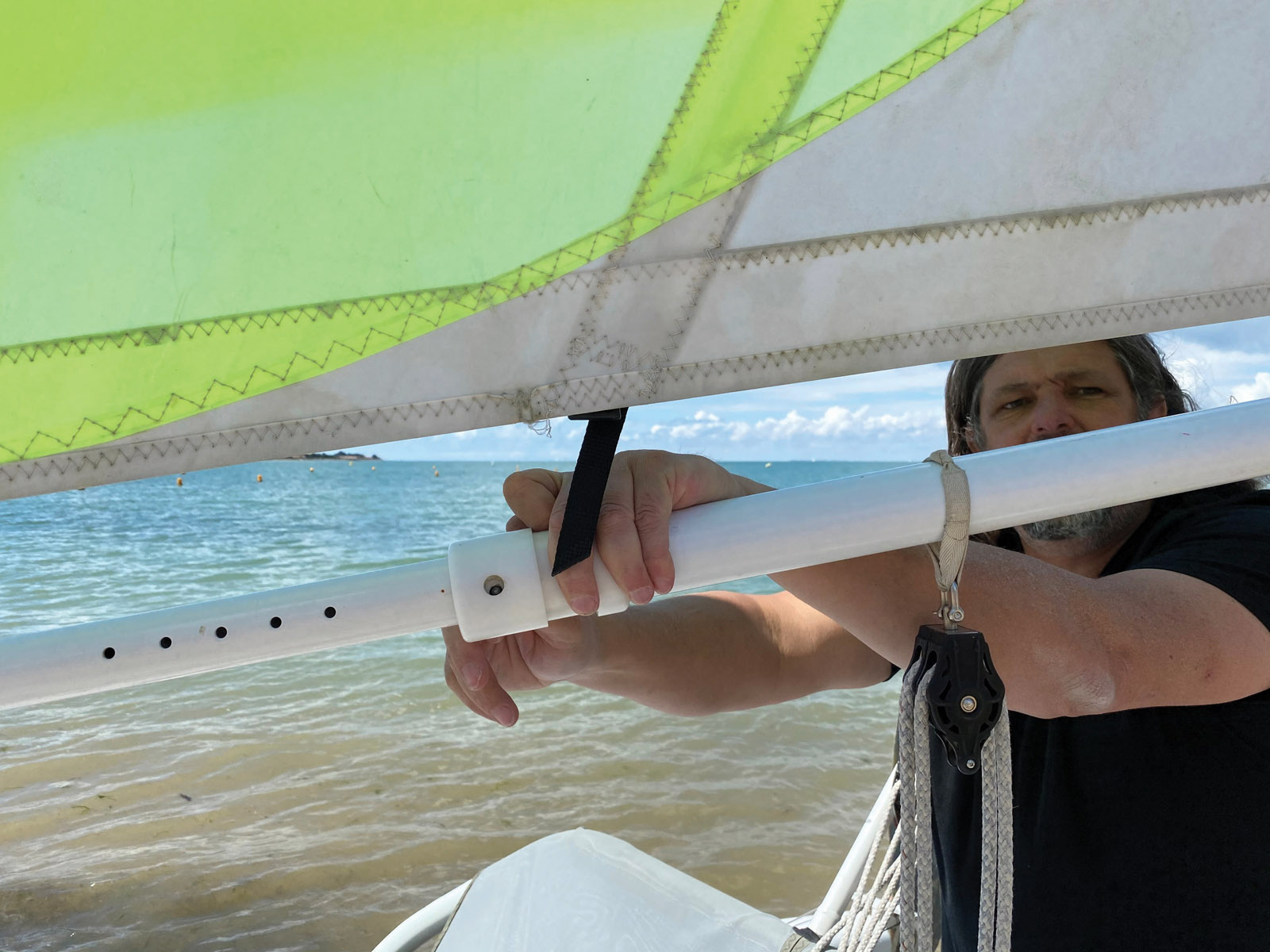 |
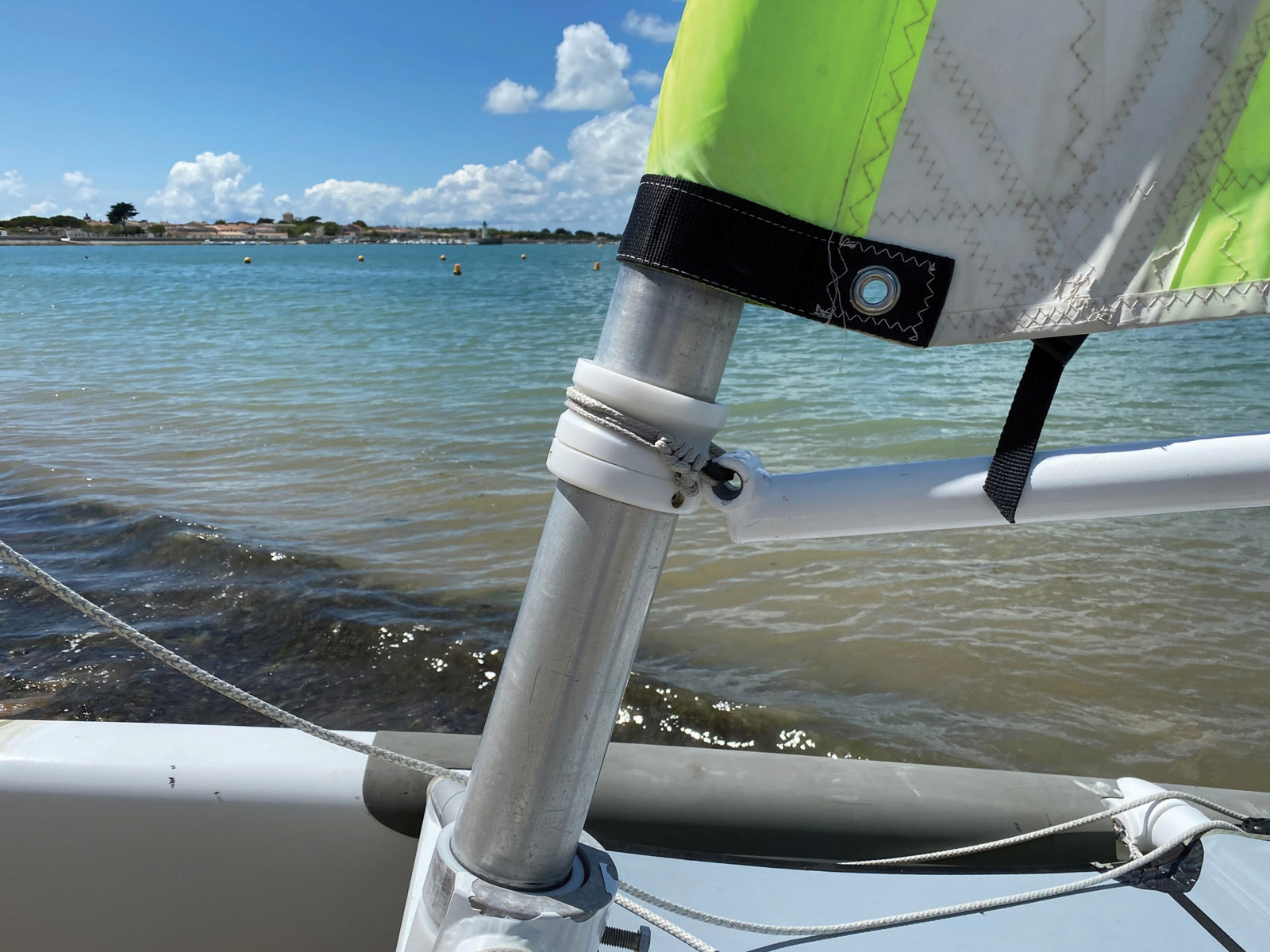
The gooseneck slides on the mast and is hinged so that the boom can be fitted, and then the foot tension can be adjusted using a ratchet: the rig is full of surprises!
Obviously, in the absence of a tiller extension, there’s no hiking out on the rail; though this would be possible for a crew member if there were two of you. In fact, for two-handed use, a trapeze would be possible - but you’d have to have the trapeze line secured quite low due to the configuration of the rigging. Upwind, the daggerboard has an effect at low speed, but that becomes almost nil as soon as the Iziboat picks up speed. The large genoa’s very off-center sheeting points make it impossible to hold a course high on the wind. You could move them more central... but this would be to the detriment of crew comfort.
A small jib – one is available - would give much better results on a beat. The mainsail/jib/ gennaker package is undoubtedly the best sail wardrobe option for the Iziboat, which certainly isn’t like any other multihull on the market.
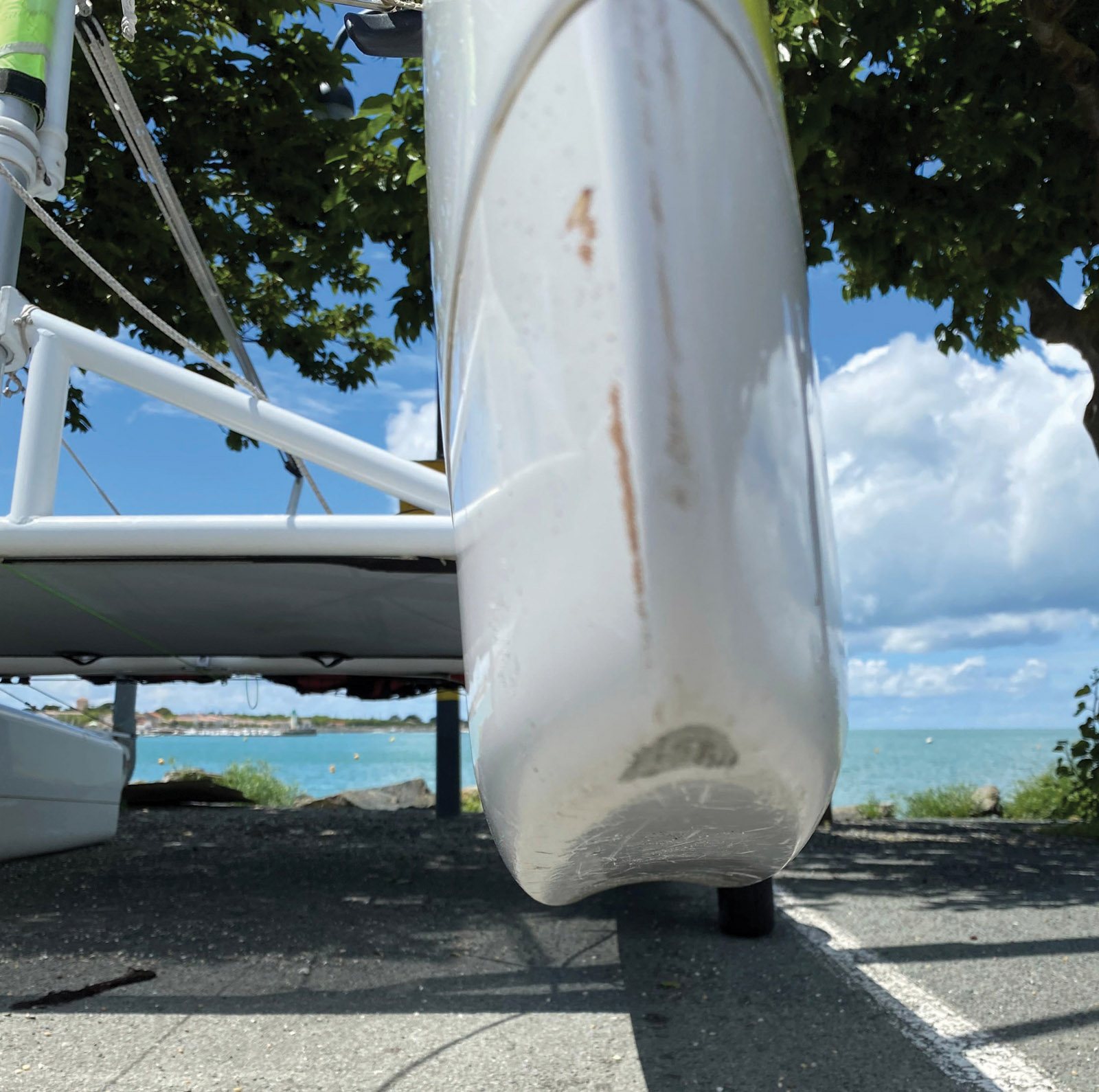
The hulls feature a pronounced concave shape, generating an air-cushion effect.
A word from Nino, at the helm of the Iziboat
“I’ve been in a wheelchair for almost ten years now. It’s also been at least that long that I haven’t sailed! This afternoon, I met François quite by chance: he was assembling his Iziboat prototype and we chatted for a while. It didn’t take much more than that for him to offer me a sea trial! I wasn’t expecting it - what a surprise! Getting on board went without a hitch, and in spite of the fact that I no longer have use of my legs, I was able to settle down easily on my own. A real inclusive boat. Great impressions of the boat at sea. The seat allows very good stability yet leaves you free enough to sail independently. A great experience for a successful return to the sea!”
TECHNICAL SPECIFICATIONS
Manufacturer: Iziboats
Length: 16’10” (5.14 m)
Beam: 7’10” (2.40 m)
Draft: 2’8” (0.8 m)
Air draft: 20’10” (6.34 m)
Weight: 335 lbs (152 kg)
Maximum crew weight: 570 lbs (260 kg)
Sail area: 166 sq ft (15.4 m²)
Mainsail: 95 sq ft (8.8 m²)
Genoa: 71 sq ft (6.6 m²)
Price of the Go version: € 9,990 (launch promotion)
Price of the Beach version: € 11,990 (launch promotion)
Text: Emmanuel van Deth - Photos: Iziboat and by the author