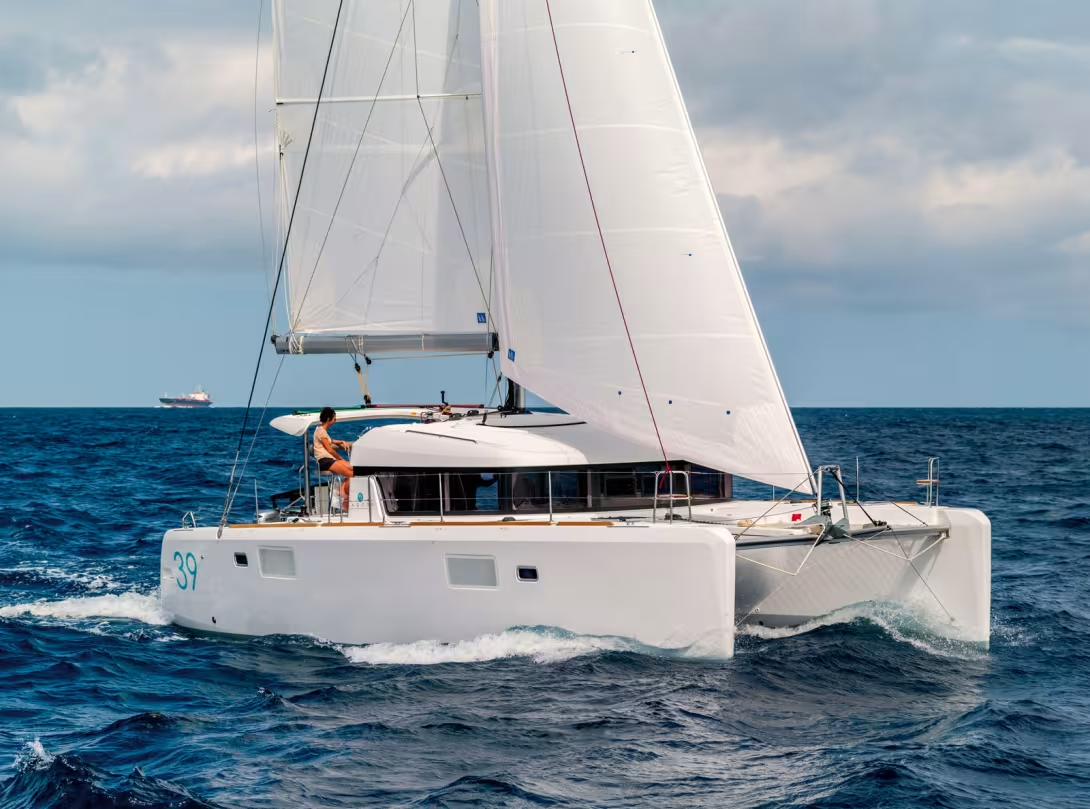
Innovative with its aft-set mast, the Lagoon 39 was the first model from the shipyard, along with the 52, to establish the foundations for the current generation with its suspended coachroof effect and chamfered bows. A robust and very livable catamaran that is perfectly suited to an offshore family program.
Infos pratiques
- Le chantier : Lagoon 39
- La fiche technique
-
 Découvrez notre vidéo exclusive
- Financez votre Lagoon 39
- Assuez votre Lagoon 39
- Articles autour du Lagoon 39
In 2013, the launch of the Lagoon 39 surprised everyone, given its positioning – slipped in between two wellestablished models, the 380 and the 400. Two “older generation” catamarans that were almost to outlive it, since the 400 was discontinued in 2017. The Lagoon 39 was nevertheless one of the first two representatives of the latest Lagoon generation.
Not off to the best of starts…
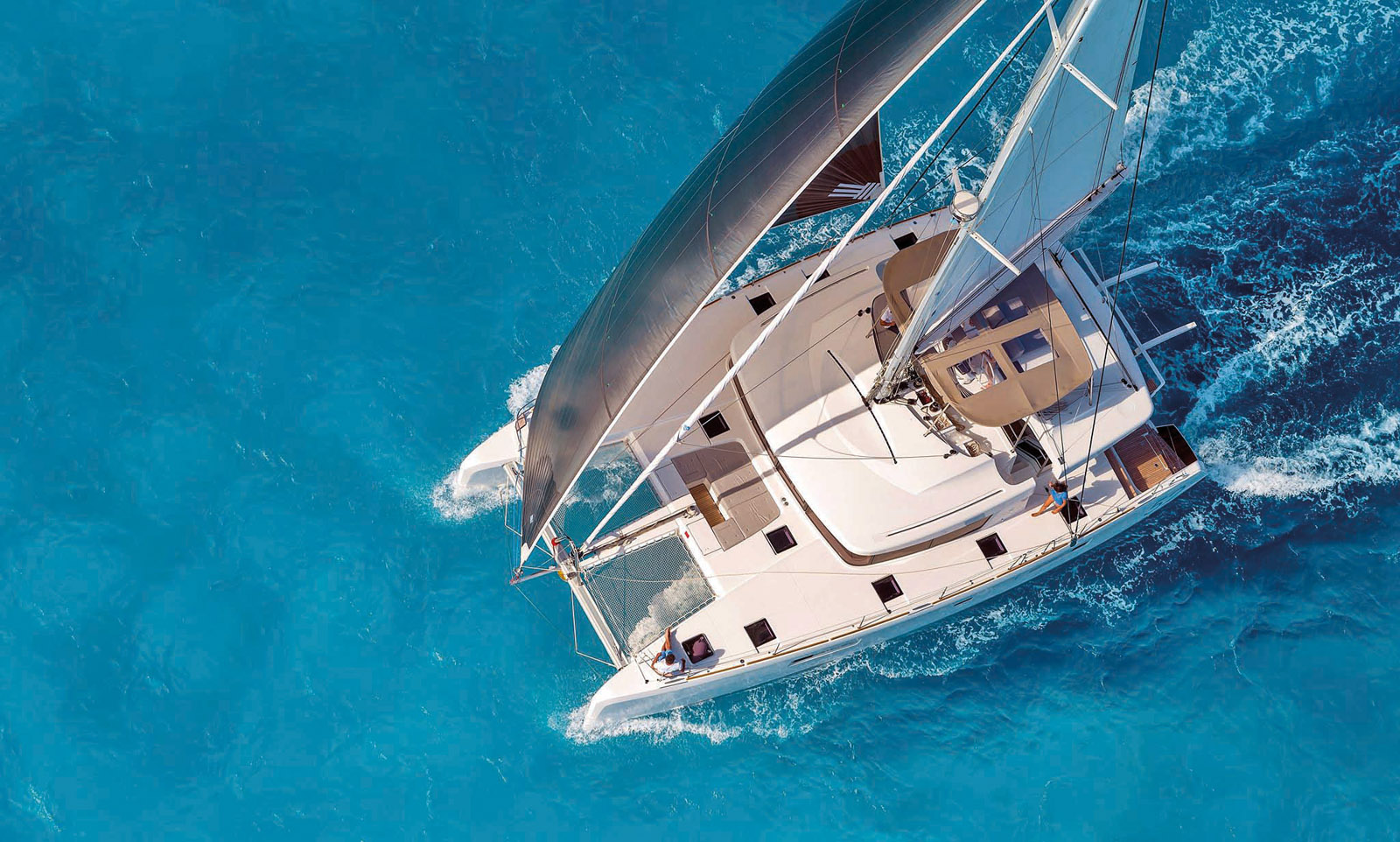
Let’s get straight to the nitty gritty of the reasons for a bad reputation in terms of performance. The first tests of the Lagoon 39 done by the boating press, dealers and customers were mostly undertaken without unfurling the gennaker, and on boats that weren’t equipped with the overlapping genoa. The downwind sail was not always on board. And while the Lagoon 52 managed to do well with her self-tacking jib from 7/8 knots of wind, the same could not be said for her smaller sister, stuck to the water in light airs. In 10 knots of breeze, we noted an inglorious speed and course: 4.5 knots at 60° off the wind, whereas the overlapping headsail would allow you, according to the architects’ polars, to gain 5° in heading and half a knot of boatspeed. So, the shipyard had therefore been referring to the “overlapping genoa” option, which was integrated in the VPLP polars. However, Lagoon 39s were delivered with a self-tacking jib. Everything was possible with a gennaker and/or a spinnaker - but you still had to have them! The speed quickly reached 9 knots provided there was enough breeze. This observation remains valid today, as does the need for the square-topped mainsail – an extra 65 square feet (6 m²) high aloft makes all the difference! With the right sail area, the Lagoon 39 provides very good performance. Characterized, in the absence of being a pleasure to helm, by great ease of the sail maneuvers at the raised helm station, this catamaran can easily be managed single-handed. Given the displacement of the 39, you’re better off looking for one with the twin 30 HP drivetrain rather than the 20’s. With the more powerful motors, you can count on an average of 6.5 knots at 2,800 rpm in great acoustic comfort - the insulation of the engine compartments has been well-designed.
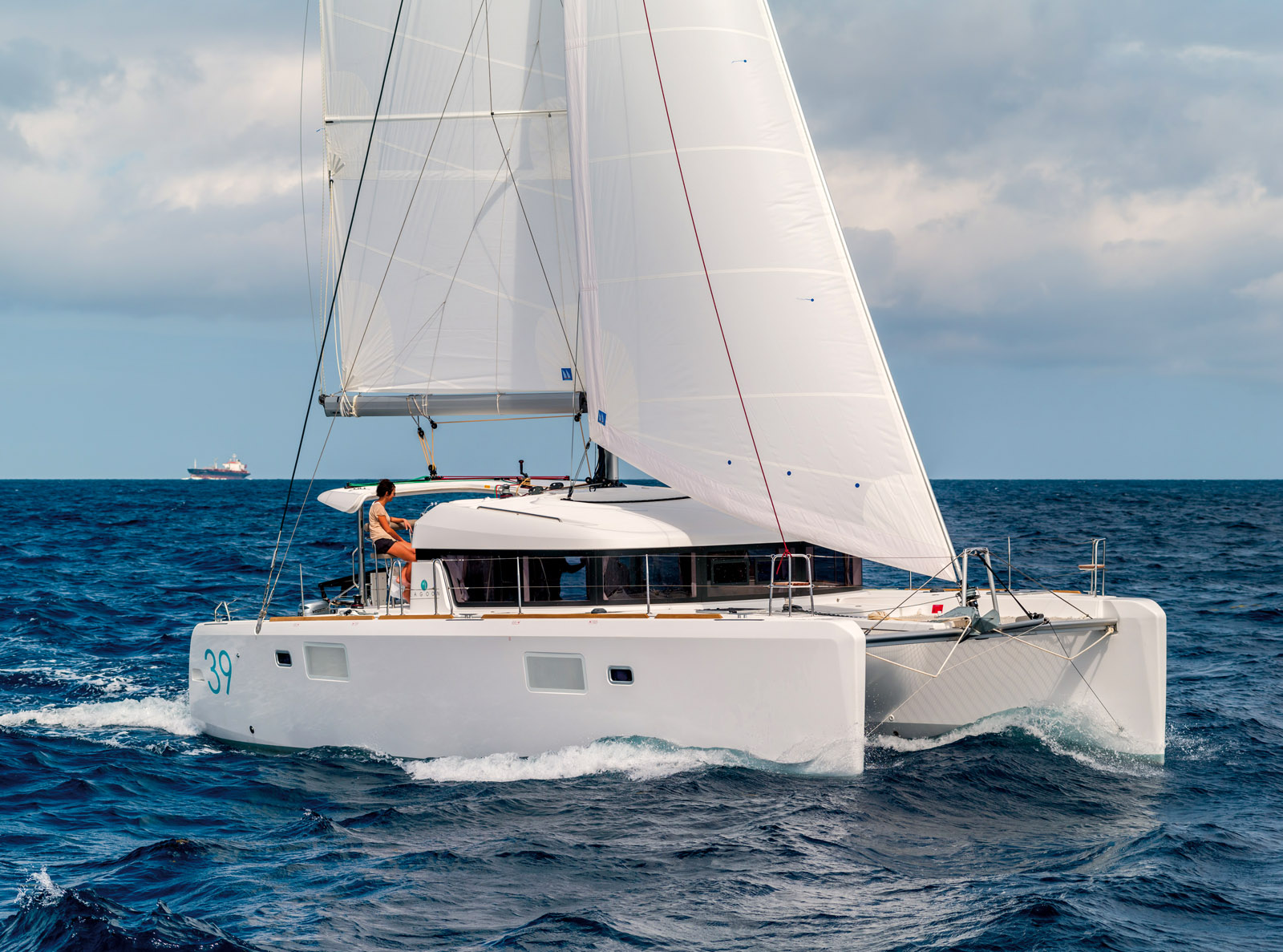
The self-tacking jib sure is practical but doesn’t have the horsepower for light airs.
Moving the mast aft, was it a real innovation?
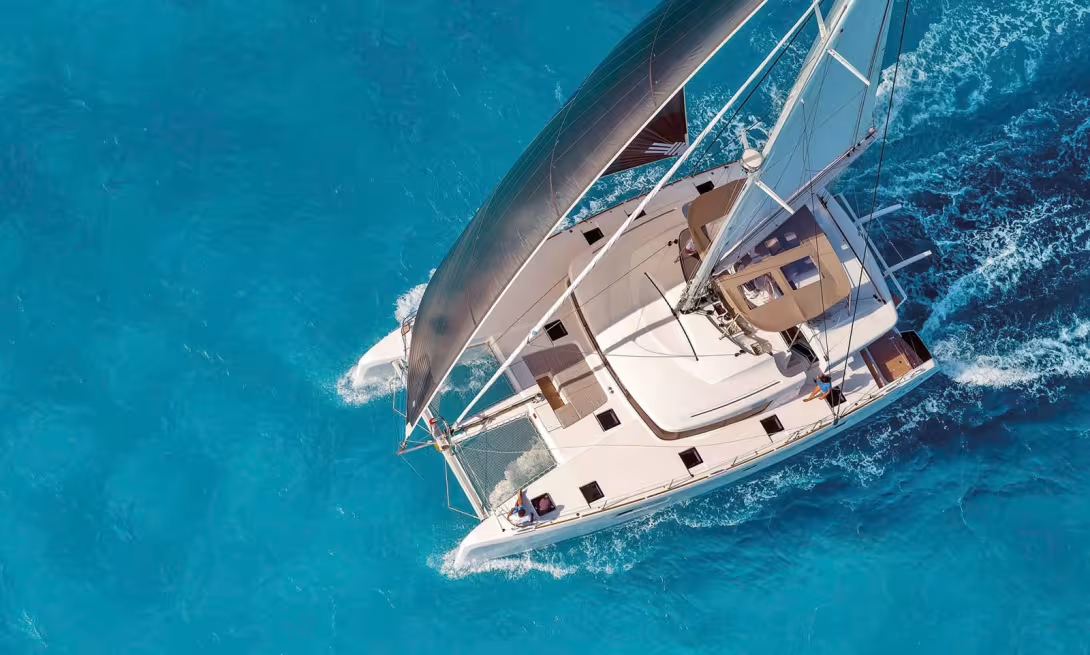
The mast, which is stepped very far aft, has been adopted by all the most recent racing trimarans – Ultim and Ocean. However, all these multihulls have taken on a rig configuration that was very popular... in the late 1970s. The famous Snowgoose 37, to name just one, had a very aft-set rig; but this was a model launched by Prout Catamarans some 40 years ago! The principle is to better center the weights, to limit shroud compression thanks to a more open angle of the forestay - and thus to save weight on the mast - and finally to reduce the mainsail area in favor of the foretriangle to facilitate and simplify sail handling maneuvers. The lines on the winches and clutches, only a few inches from the spar itself, are free of the typical duplicated blocks and deck organizers. In short, the aft-set rig has got a lot going for it, but not without the headsail: under main alone and in light airs, the Lagoon 39 will luff up by herself.
 |
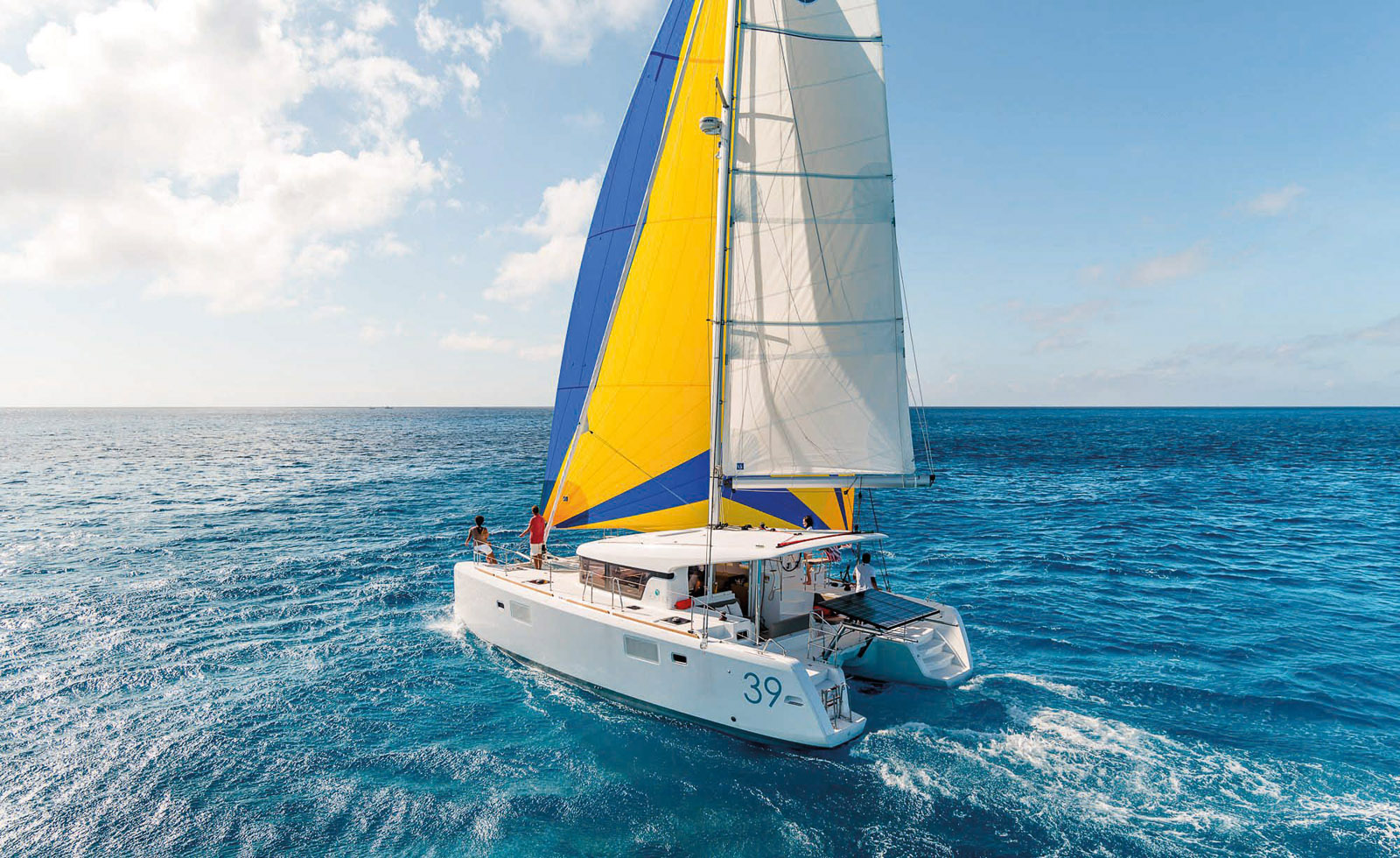 |
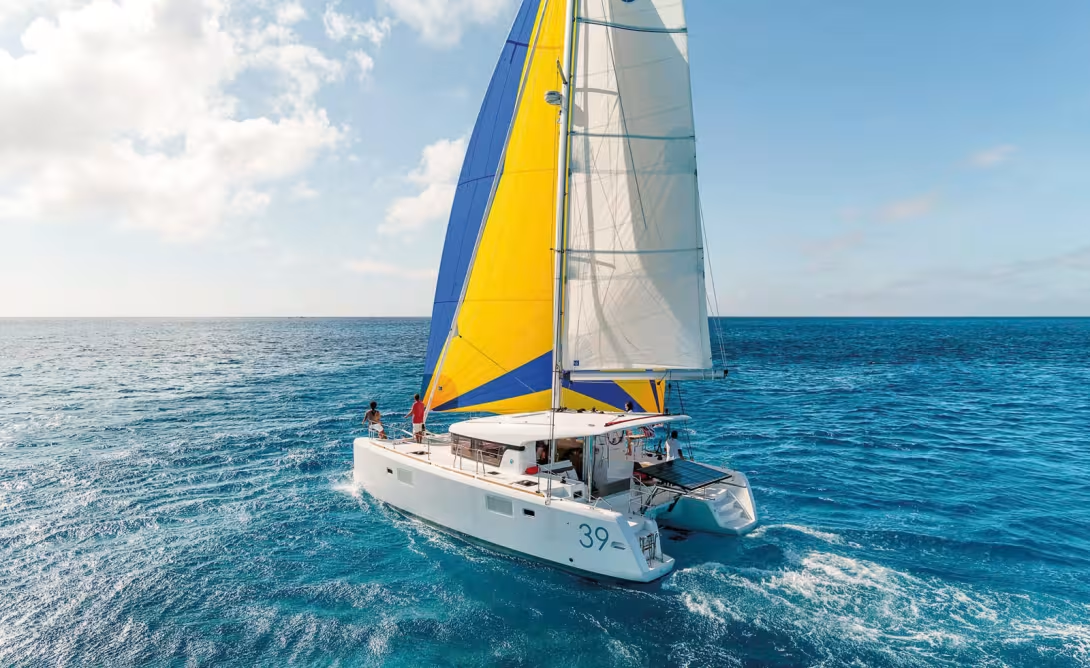
Gennaker et spi asymétrique transforment complètement le caractère du Lagoon 39, qui devient vivant et équilibré. A consommer sans modération !
Priority to comfort
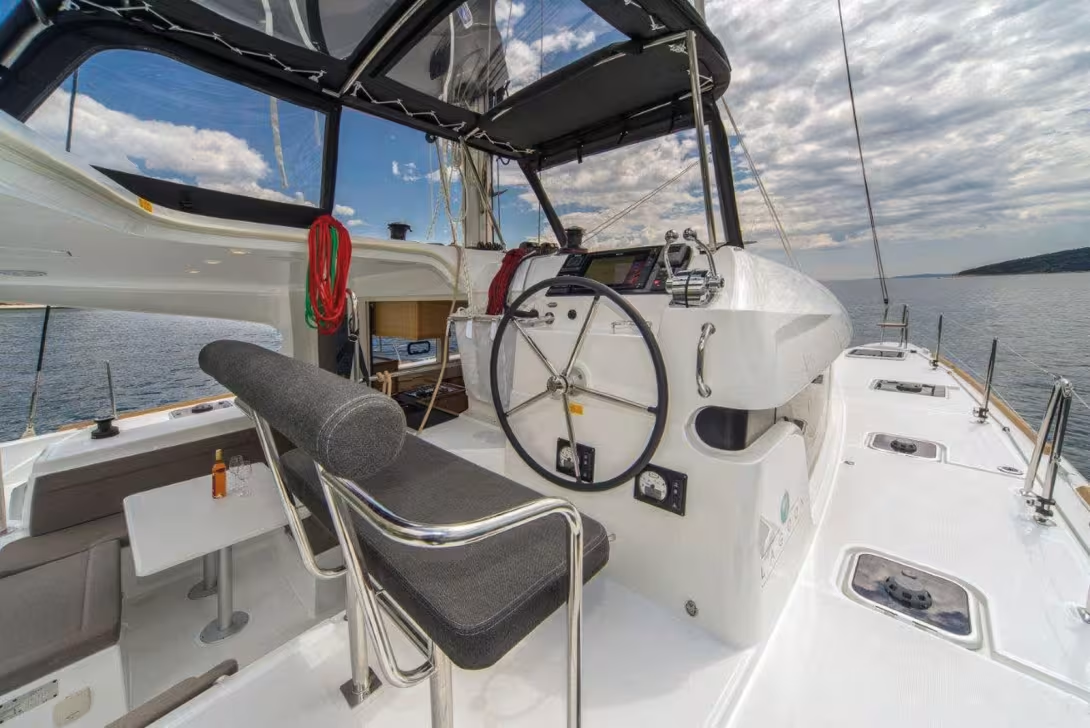
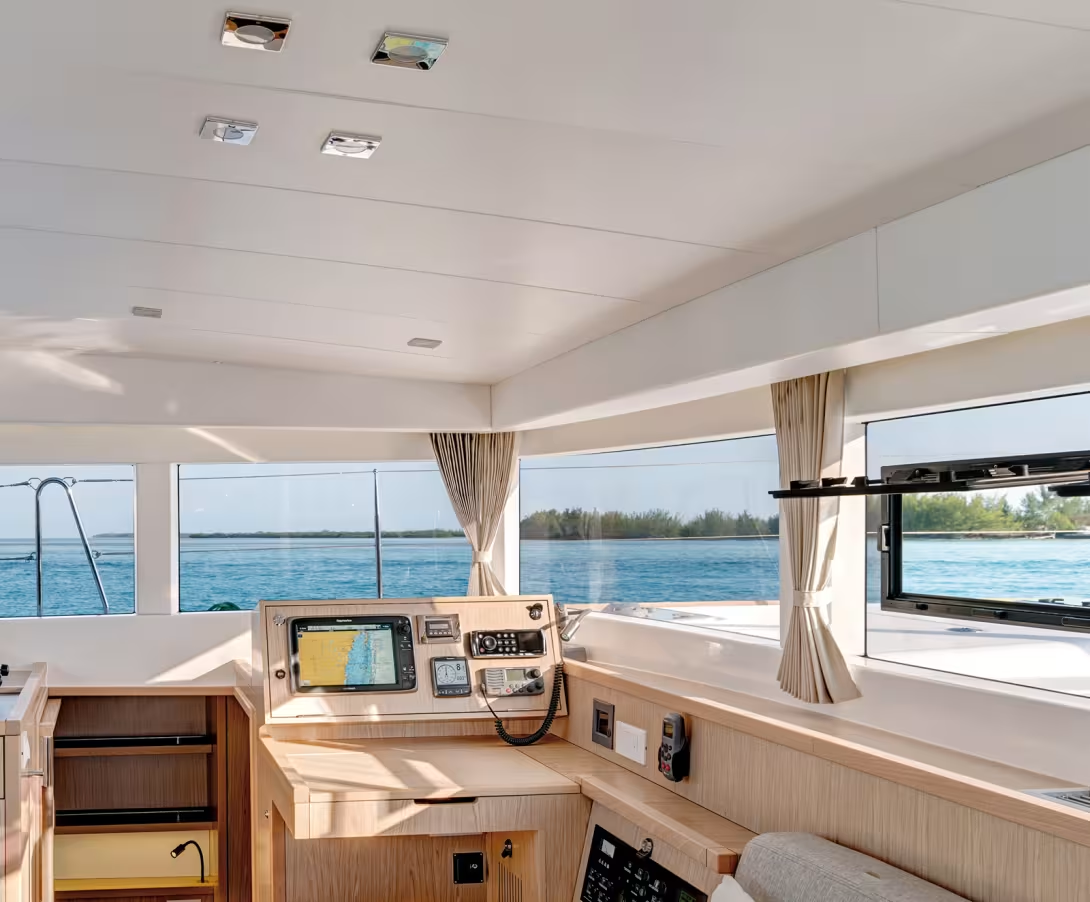
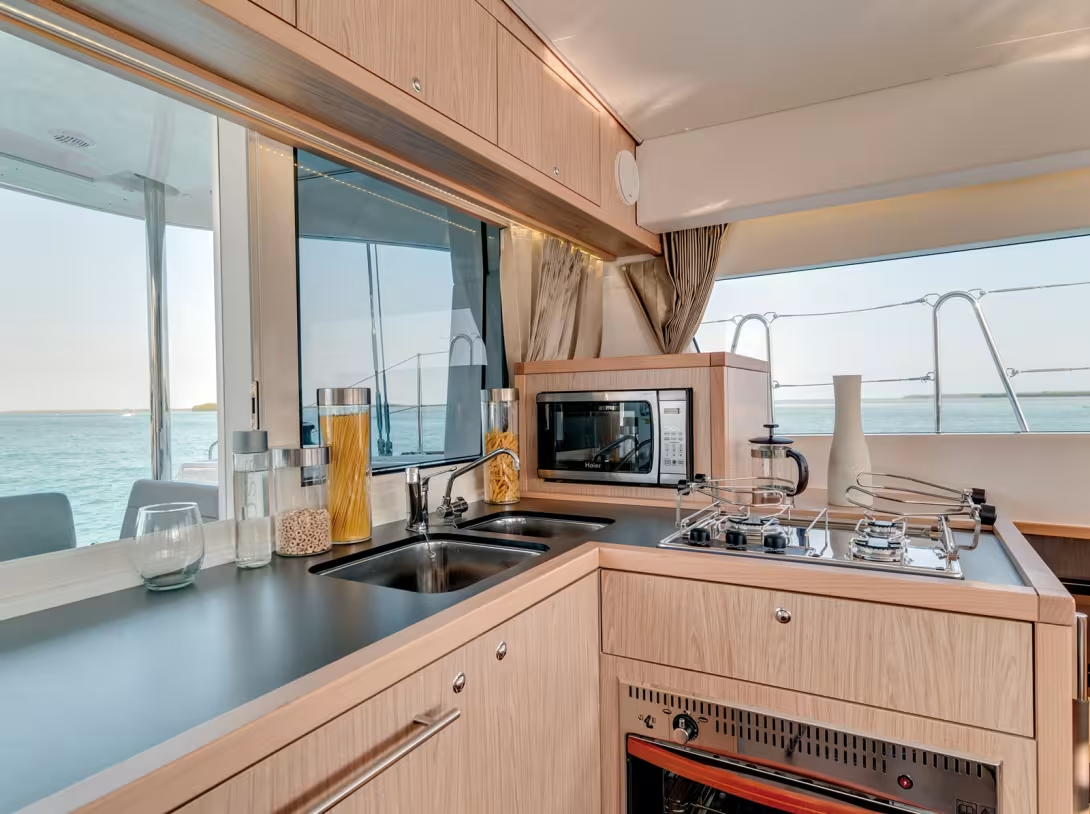
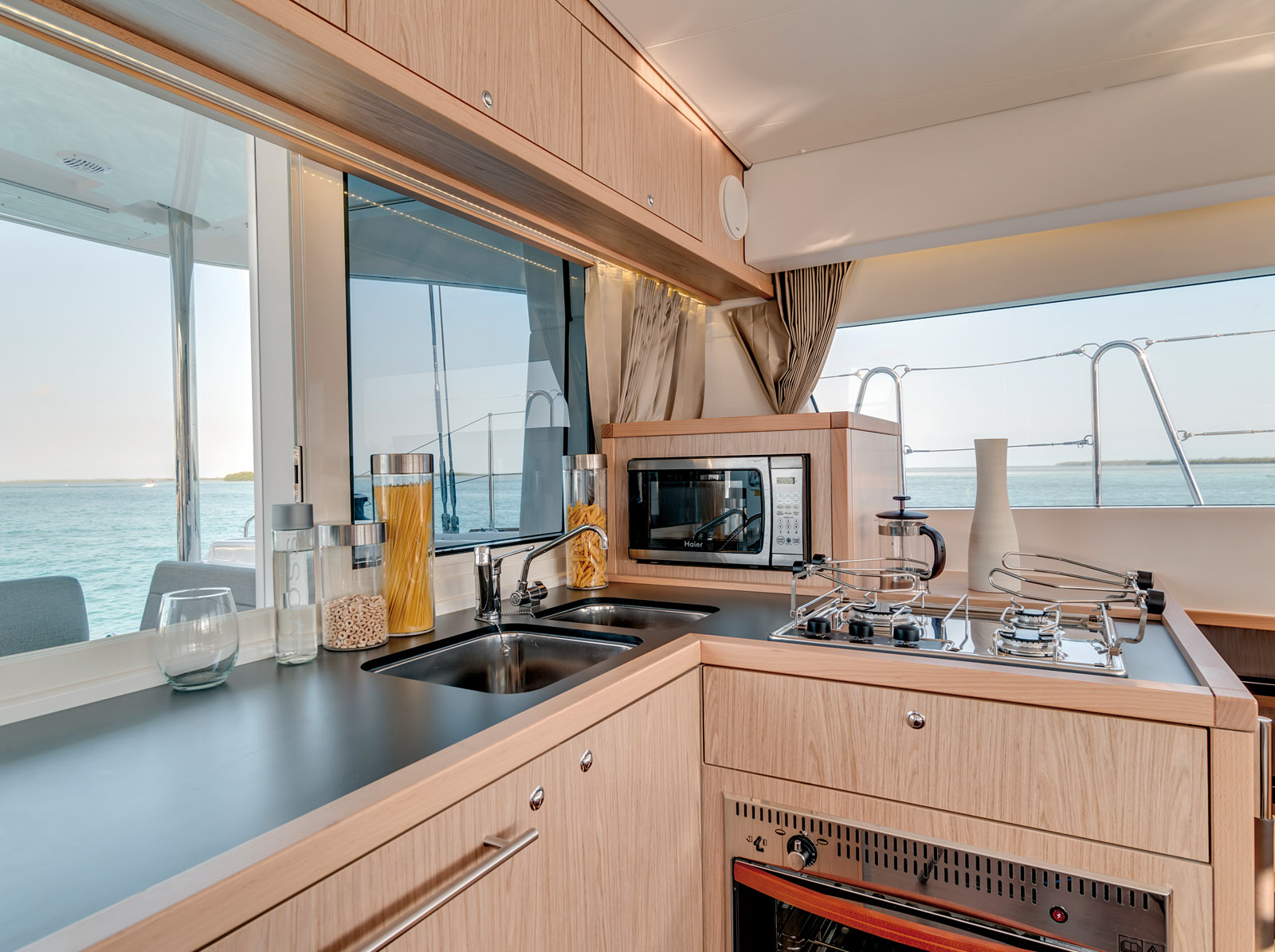
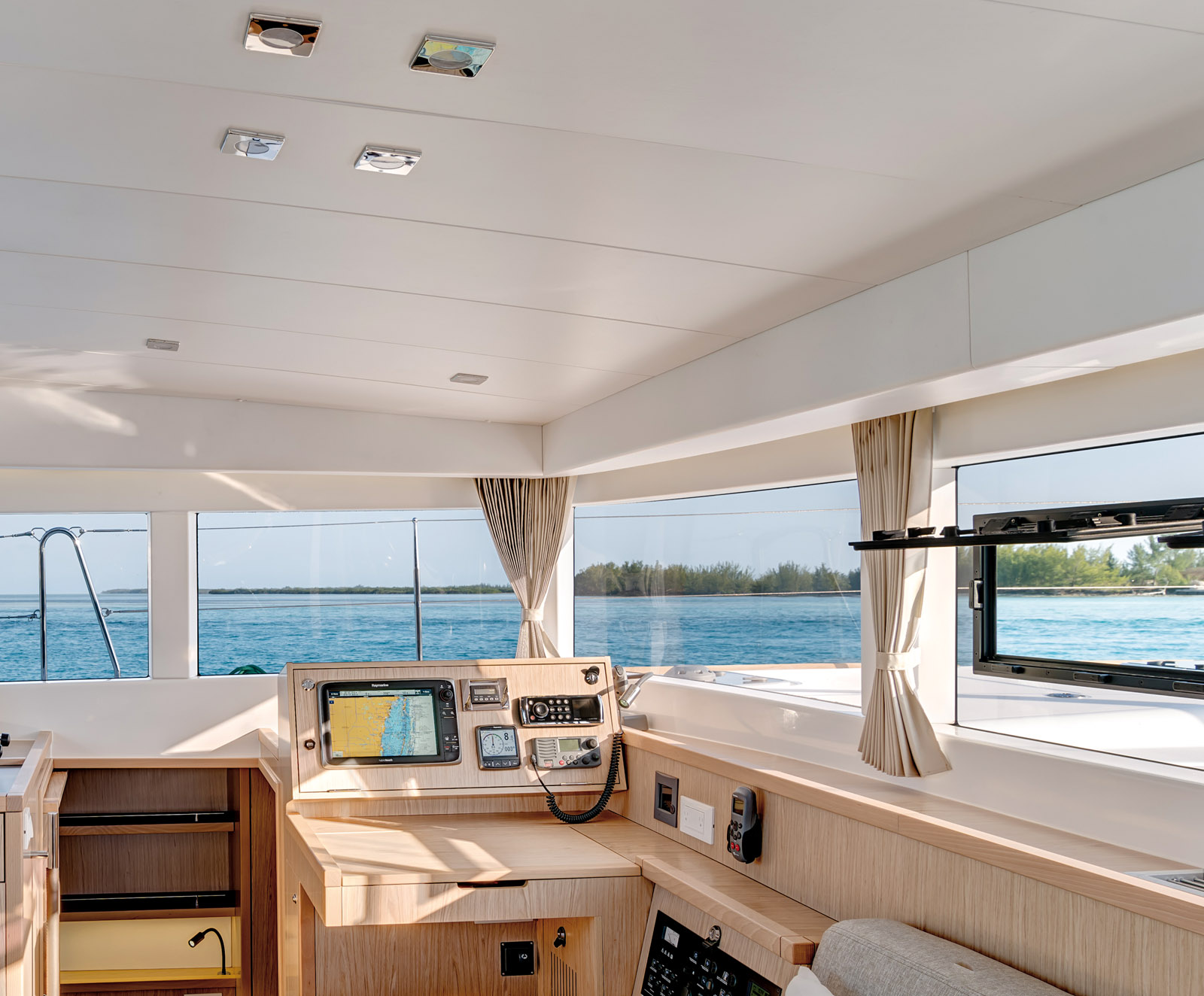
This model is without doubt the one where the comfort dial is cranked all the way up to the maximum: beginning with the 42, Lagoon started on a slimming plan, at 12.1 t on the scales. The Lagoon 40, with 10.88 t, is almost a ton lighter than the 39, although the principal dimensions remain identical. The manufacturer managed, on a relatively compact platform, to fit a vast cockpit and a high-ceilinged saloon – 6’6” (2 m) of headroom in a space that is well lit. It naturally features the vertical windows common to the whole Lagoon range since 1997 and has carefully-designed ventilation. Initially you might be surprised by the sight of the stainless-steel mast support strut next to the galley countertop, but quite quickly it becomes something you don’t even notice. The light woodwork gives a pleasant feeling of well-being in the dining space as well as at the chart table. The manufacturer built this model in two, three or four cabin versions. Aft, the berths are 5’3” (1.60 m) wide. Those forward are narrower, especially at the feet. On the other hand, the significant freeboard of the hulls allowed for 6’2” (1.88 m) of headroom throughout (6’0” / 1.84 m in the bathrooms).
Conclusion
Though the 39 is one of the heaviest sub-40-foot catamarans on the market, it has the advantage of offering a large load capacity... lending itself perfectly to an offshore cruising program to match that of a multihull 3 or 4 feet longer. And that handful of inches can make the budget a whole lot lighter, meaning that for between 230,000 and 300,000 euros, you can get yourself an almost new catamaran, equipped and ready to set off (again).
 |
 |
Points to check
Nearly ten years since the first units were launched, we’ve not seen any unfavorable feedback concerning the structural strength of the Lagoon 39. The challenge was unprecedented for the shipyard: moving the spar back to step it on the coachroof posed structural difficulties in terms of distributing the compression forces, via a mast support strut, of course, but also via the bottom of the nacelle, which has got to transmit those forces to the hulls. Lagoon chose a metal beam on a composite structure. This is a much more complex exercise than the more traditional one of incorporating a beam forward in the nacelle. The rest of the construction remains common to the previous models in the range: topsides and deck in balsa sandwich infusion with anti-osmotic and polyester resins. All the peripherals are still pretty recent, so are likely in good condition, except for the sails if they are the originals on a very early model. One last detail to check: the edges of the plywood used for floors and in the engine compartments were not protected, which can result in a deterioration of the wood if the boat has been used in regions of high humidity.
The Pluses
+ Easy to sail
+ 2, 3 or 4 cabin versions
+ Very wide bunks
The Minuses
- Gennaker essential to get any performance
- Little pleasure at the helm
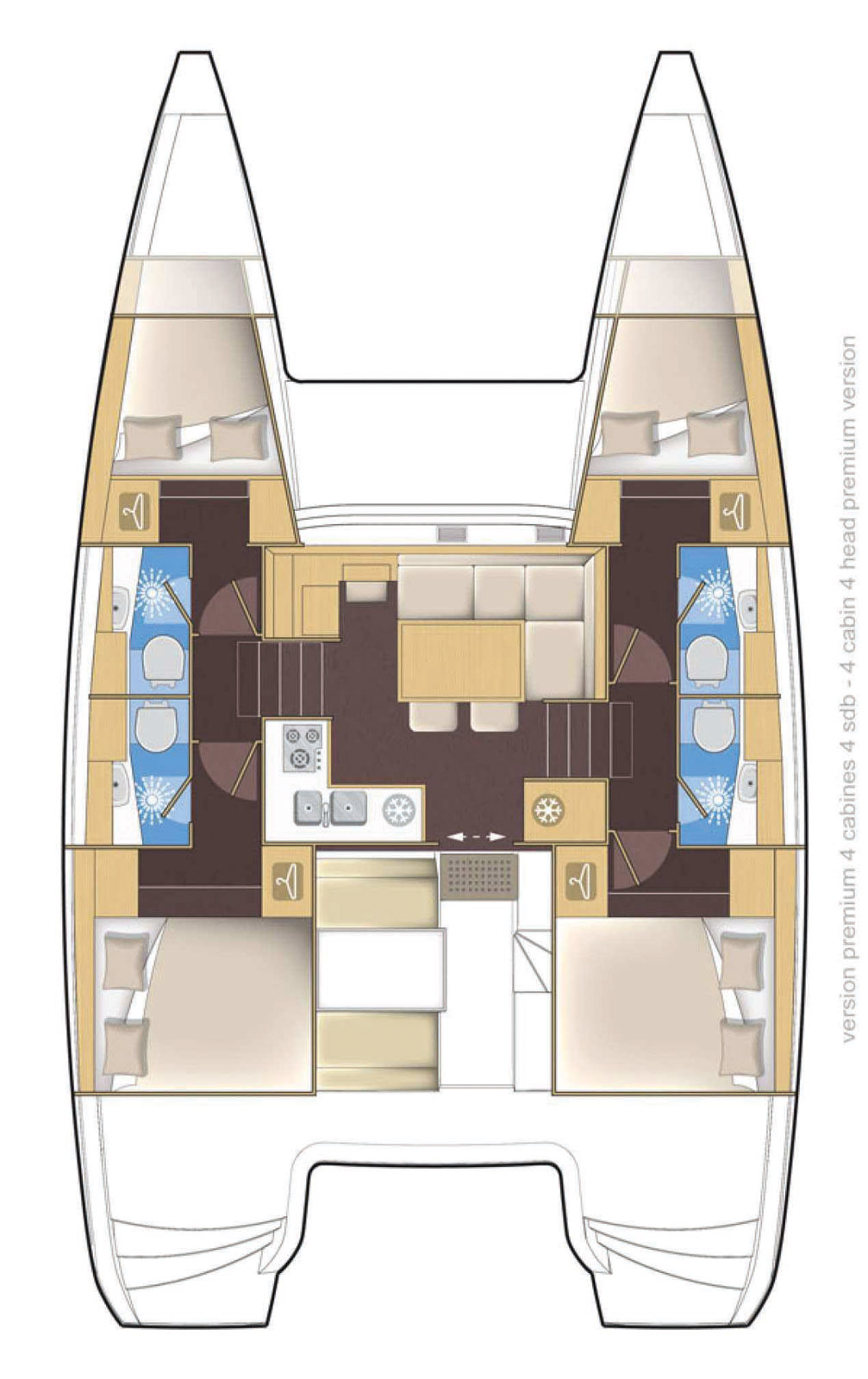
Technical Specifications
Builder: Lagoon
Architects: VPLP
Material: GRP
Overall length: 38’6” (11.74 m)
Waterline length: 37’10” (11.53 m)
Beam: 22’3” (6.79 m)
Draft: 4’ (1.21 m)
Displacement: 25,730 lbs (11.67 t)
Upwind sail area: 753 or 818 sq ft (70 or 76 m²)
Mainsail: 409 or 474 sq ft (38 or 44 m²)
Jib: 344 sq ft (32 m²)
Gennaker: 732 sq ft (68 m²)
Cabins: 2 to 4
Fresh water: 79 US gal (300 l)
Fuel: 2 x 52 US gal (2 x 200 l)
Engine: 2 x 20 or 29 HP inboards
Production: 280 units built from 2012 to 2017
Price: from € 230,000 ex-tax
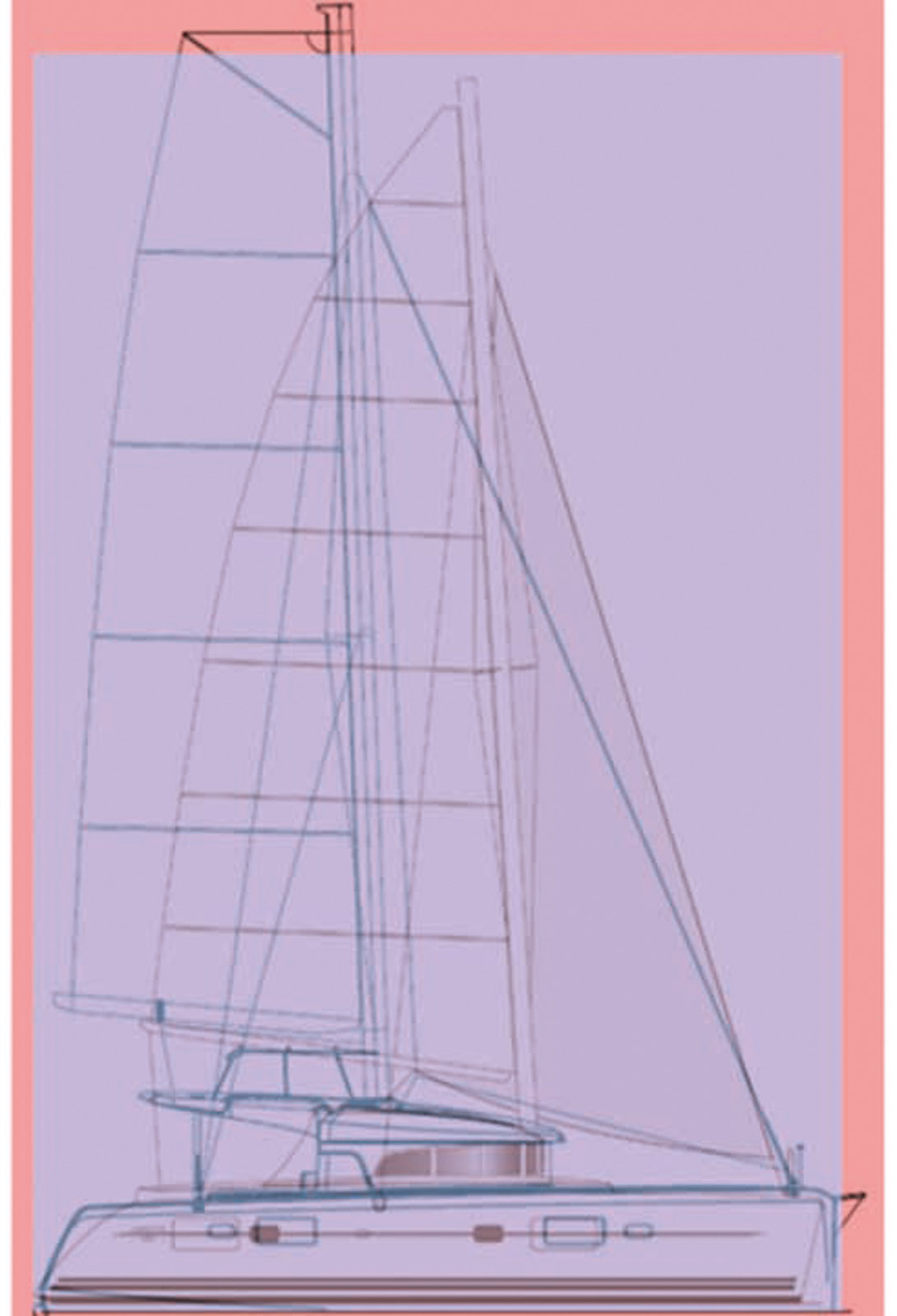
This picture shows the sail plan of the Lagoon 380 superimposed on that of the 39: moving the mast over six feet further aft changes everything!