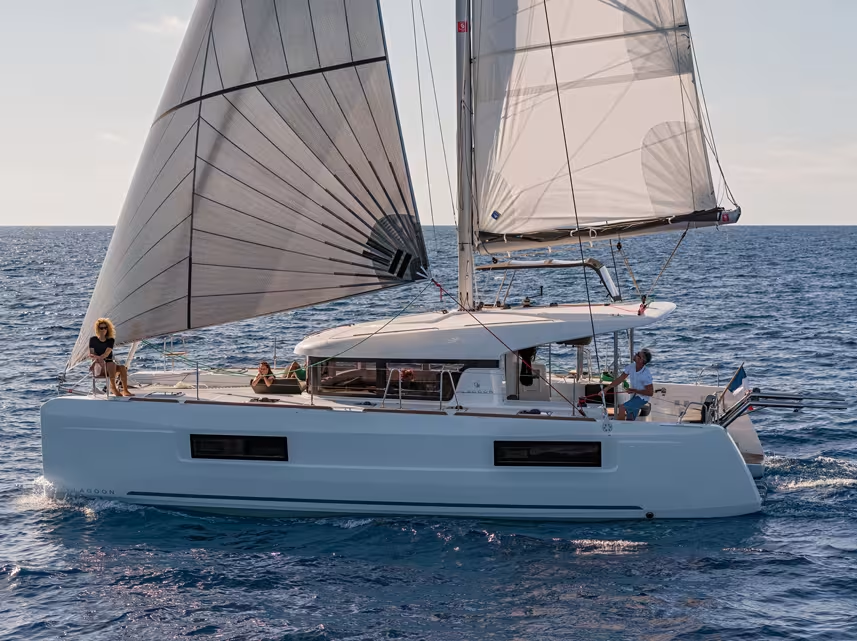
Lagoon have just unveiled their new 40 footer with a bold move: the 40 is replacing the 400 and the 39. The production of the unbreakable 380 is now much reduced (well, down to about thirty a year anyway!), and it is the 40 which has now become the entry-level and introduction model to the Lagoon concept. This, in a sector that has shown explosive growth (more than 800 units for the 380!). We helped deliver the first 40 from Canet en Roussillon to Cannes along France’s Mediterranean coast, with a good NW wind of 20-25 knots and spent two days and two nights on board. Here are our first impressions.
Infos pratiques
- Le chantier : Lagoon 40
- La fiche technique
-
 Découvrez notre vidéo exclusive
- Financez votre Lagoon 40
- Assuez votre Lagoon 40
- Articles autour du Lagoon 40
Design and creation methodology
Lagoon is backed by the world leader in sailboats: the Bénéteau group. This allows them to benefit directly from its purchasing power, the resources of efficient design teams for every aspect, the reactivity of a solid industrial tool and investment capabilities. The Achilles heel though of working on such a scale is that the machine, once production is launched, (and overrun with orders) is not that receptive to changes during manufacture! Since the early 2000s, the phase of intense growth has been accompanied by rationalization efforts in an attempt to remain competitive, innovative, and to improve perceived quality. However, a crucial point resisted these attempts: the reduction of weight! Especially as the trends in terms of living space, equipment and interior design serve only to load up the boat. The 400 was a remarkable turning point, but Lagoon and VPLP wanted to go further, in 2015, by implementing the concept of moving the rigging further aft. This innovative geometry was proving itself on racing trimarans, but not yet on cruising catamarans. The 39 courageously concretized this idea and validated it in part, but an excess of weight didn’t allow the boat to express all the benefits of the formula. The presentation of the 42 project brought together all the elements: reaching the objectives set (favorable price, comfort, ergonomics and performance). The 42 footer presented a demanding specification which implied a questioning of some of the usual construction practices (mainly concerning counter-molds and installation of the interior). Once these aspects were identified and revisited, the success and performance of the 42 came to encourage this virtuous movement; the 40 has directly inherited this new approach and marks a significant evolution!
Evolving manufacture
Everyone knows that the worst ton is the last! However, it is the previous weight which needed to be looked at first. To this end, the entire modular construction of the interior has been redesigned. Traditionally, in series production, the unit blocks (heads, galley, etc) are delivered with a ready-built structure, to maintain homogeneity and make transport easier. The inert material of these structures is no longer useful when the unit is installed, but cumulatively, represents a considerable weight. On the 40 (as on the 42), the dismantling and trimming of unnecessary parts has been systemized. Result: big weight savings! Counter molds are also a staple in the fight against extra pounds. They are numerous and often large: here too, the culture of the 42, and the work done by Nicolas Riebel (project manager for the 42) could be directly transposed. Many moving parts (hatches) are injection-molded (die-casting which makes it possible to directly obtain a perfect finish on both sides) and the remaining counter-molds have been designed for the purpose of drastically reducing their weight. The technical installations (including the plumbing) has also benefited from this logical approach: it has been simplified and streamlined. It is lighter and more efficient, less time-consuming during installation, and also offers superior performance (6 water outlets can work at the same time without any drop in pressure!). The composite phase of the platform is made of FSC-sourced, quality balsa sandwich (110-120kg / m³ and multidirectional glass cloth) infused in one go with high quality anti-osmosis polyester resin. The process is the same for the coachroof and its counter-mold. The rudders (with stainless steel posts) consist of two composite half-hulls glued on pre-formed foam using an injection process at a pressure of 4 bars (in milled aluminum molds).
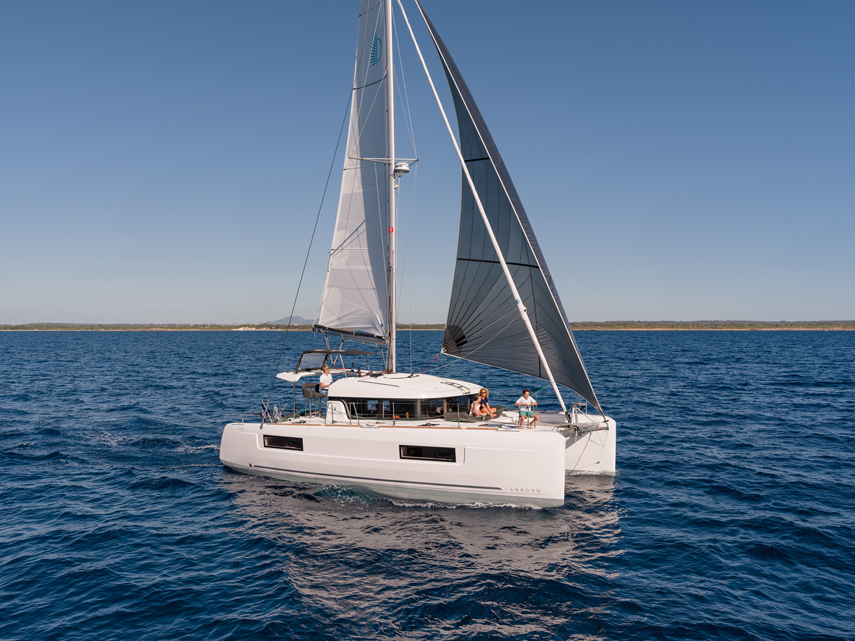
Profile and architecture
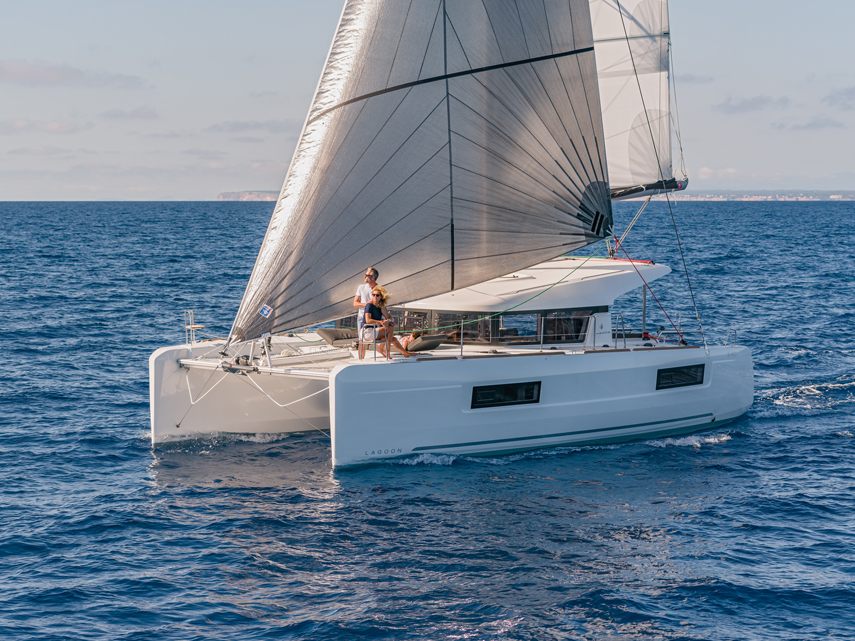
The 40 shows significant evolutions compared to the 400. The forefoot is a little more immersed and the curvature of the hull will have a beneficial effect on the capacities as one moves aft; the main sections being moved further aft give the impression of moving towards a large deep U instead of the earlier circular shapes. There is greater volume under the arch to help with planing and the center of the hull being set further back offers a greater waterline length forward of the skegs. This feature will help stabilize longitudinal trim and counter any pitching. The rope-volume balance of the rudder blades and the well-designed trailing edge have resulted in a delicate feel and efficiency right from the first directional effect of steering. The architecture of the gull-wing shape offers connections of more progressive forms to reduce slamming beneath the nacelle. Straight beveled bows are deliberate: a small step runs just above the waterline and comes back to blend in at the sugarscoops. The integration of the neat rectangular hatches in the hulls is testimony to the meticulous design work: they sit in a delicate recess in the topsides. These lines (step and recess) soften the perception of the topsides and contribute to the overall nice style of the boat. The choice of smoked polycarbonate panels with a vanishing line aft, overhung by the bimini with a fine cupola form, gives elegant lines to the volume of the coachroof.
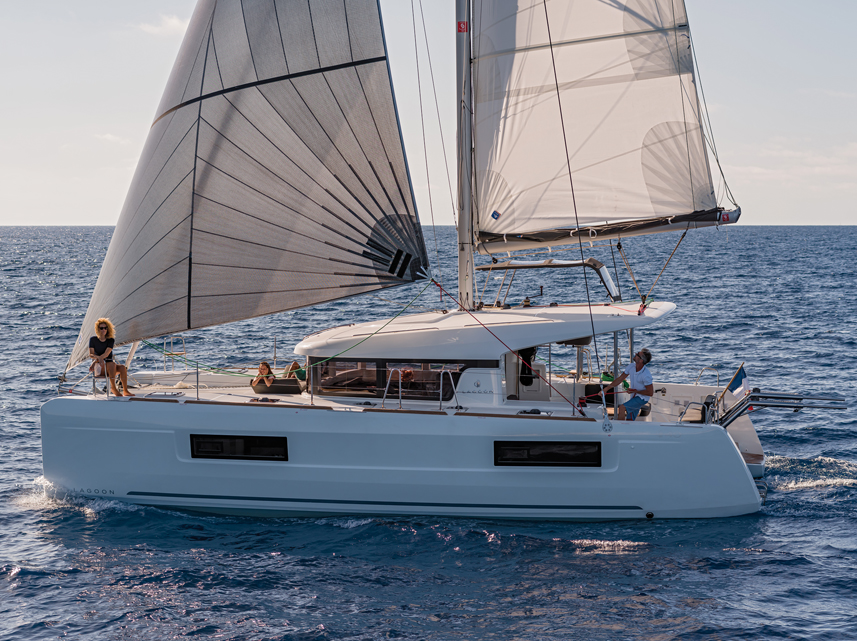
On deck
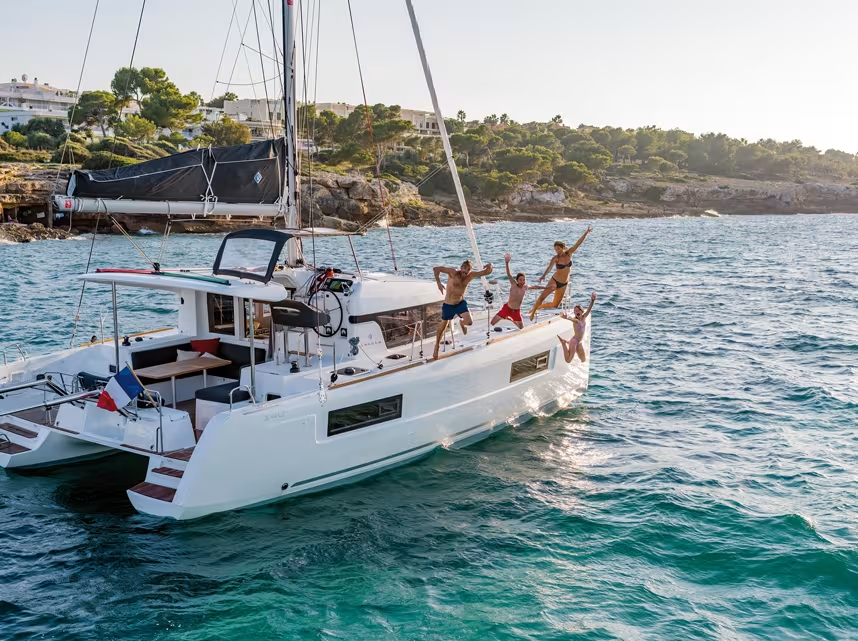
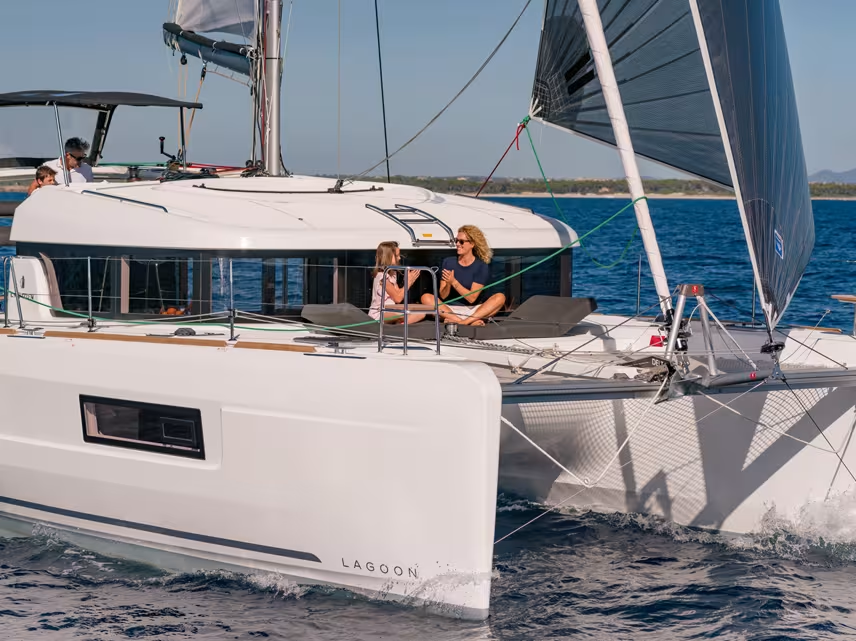
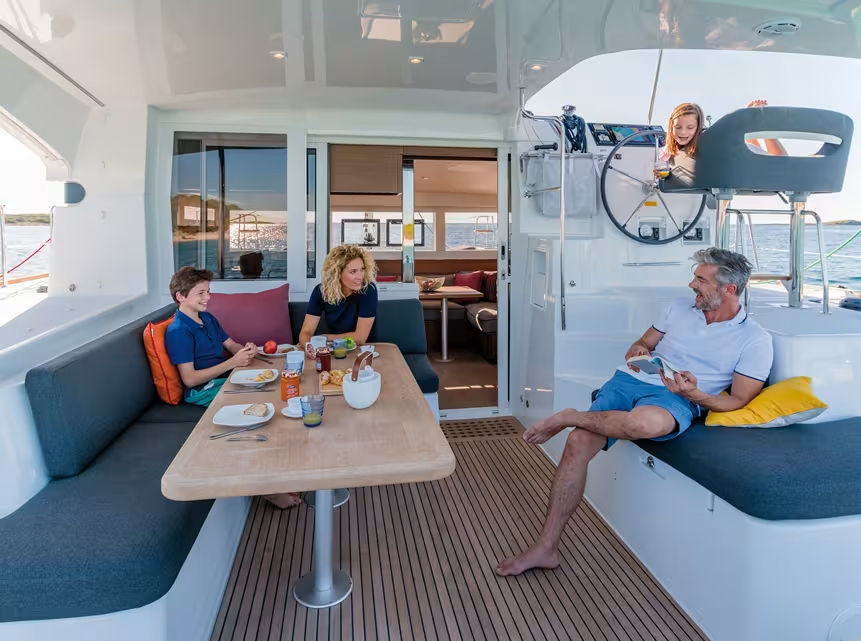
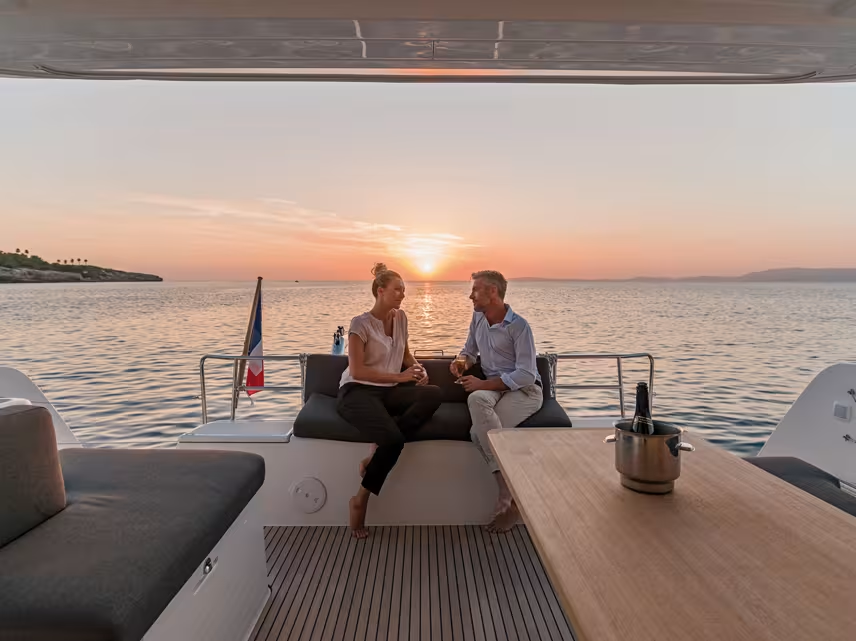
Access on board by the central gangway or sugarscoops is easy. The traditional tubular davit system is well-designed and practical to use. The dinghy is lifted nice and high and so is well-clear of the tunnel (there will however be a limit to this when offshore in poor conditions and deflation and stowage will be required). The visual effect of the teak option on our test boat is flattering and the grip underfoot is nice, but is it relevant to use such a luxurious (expensive and rare) ressource for this, when there are very good alternatives? The handrails and stanchions are solid and reassuring, but the moveable guardwires for the sugarscoops could do with being higher. The forward-facing aft bench seat makes for a great watch-keeping seat outside and is also pleasant just for relaxation. The outdoor saloon with its new, more comfortable upholstery and the lounger facing it are enticing. Well protected from the outside conditions, they allow you to lunch on the "patio" even under way (if the temperature lends itself to it!). Access to the side-decks from the cockpit by four wide steps is very convenient; the deck hatches are integrated into the coaming with a very smart flush-effect; the hardwood wedge on the outside of the stanchions perfectly plays its alignment role and provides a seductive visual appeal. The anchoring gear has been well thought out and built and the deep locker, the chain lead on the compression beam as well as the bow roller are all well-made. Access to the freshwater tanks is clear, and generous storage allows ground tackle and fenders to be accommodated. Three generous cleats on each side allow you to correctly secure the catamaran when alongside.
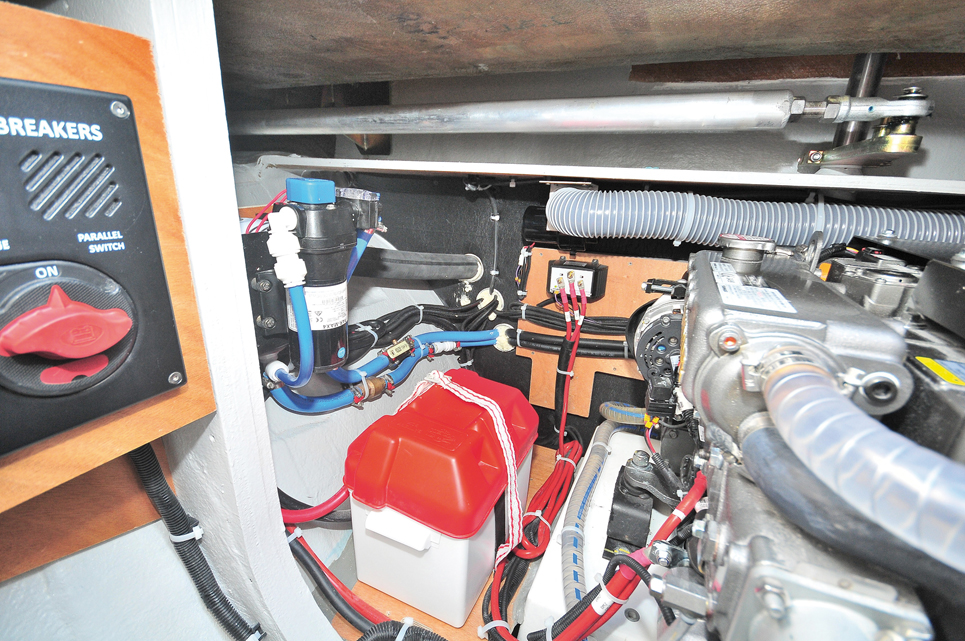
Engine compartments
In line with the current trends, sail drive engines (the right way round, with clear access to the gearbox and linkages) are pushed back as far as to be beneath the sugarscoop steps. Rudders and rudder tubes are fixed to the aft bulkhead, in other words forward of the engines. The space is limited, but the care taken in the arrangement allows for good accessibility and especially good readability. Praise is due for the twin-pole electric cut-off that will allow the boat to be left properly isolated, and also for the attention to detail with the waterproofing of ducting through the bulkheads. Access to the rudder link-bar and the autopilot is more for agile mechanics, but is still possible.
Interior layout
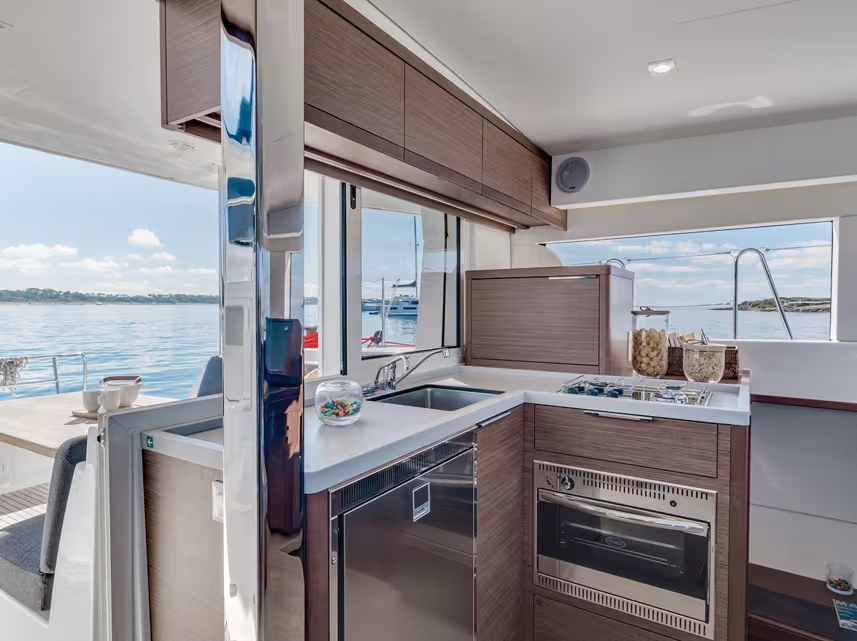
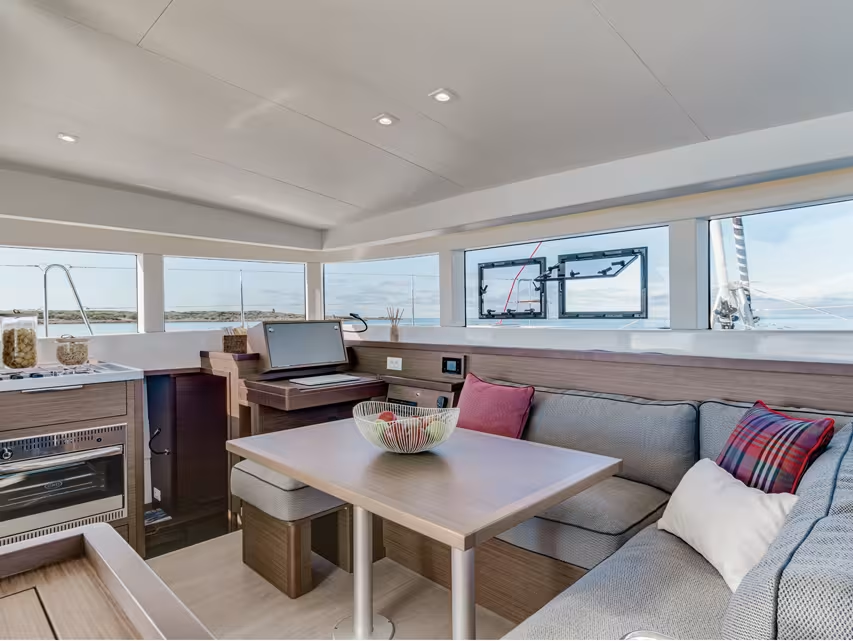
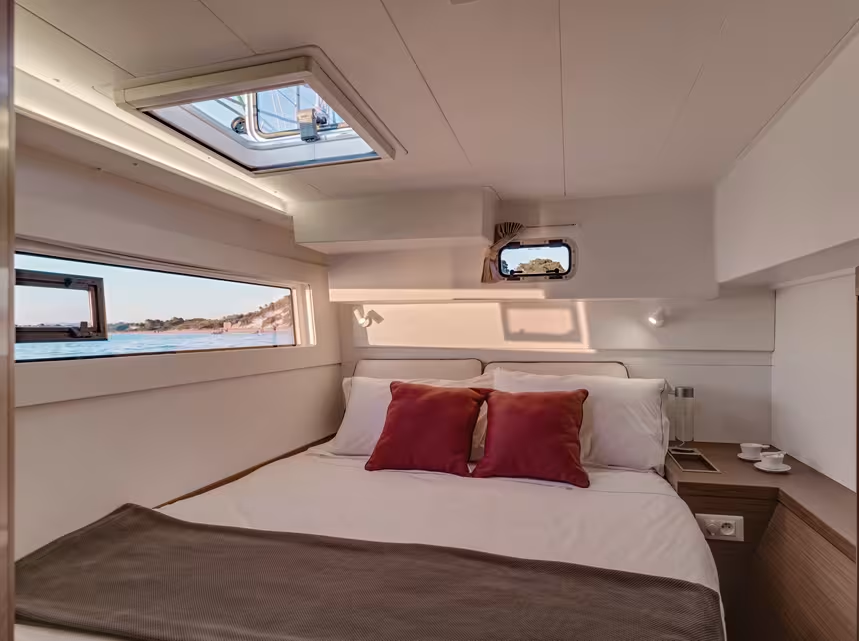
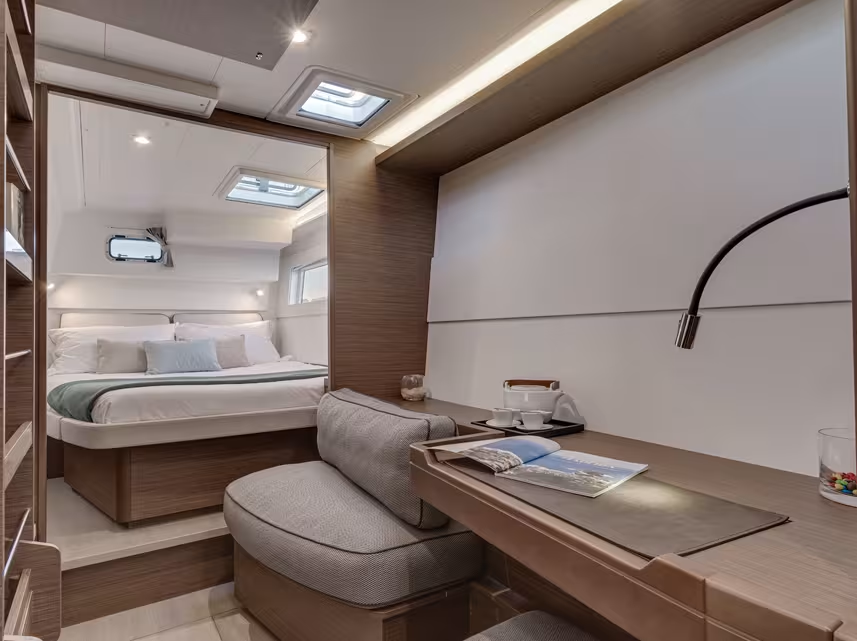
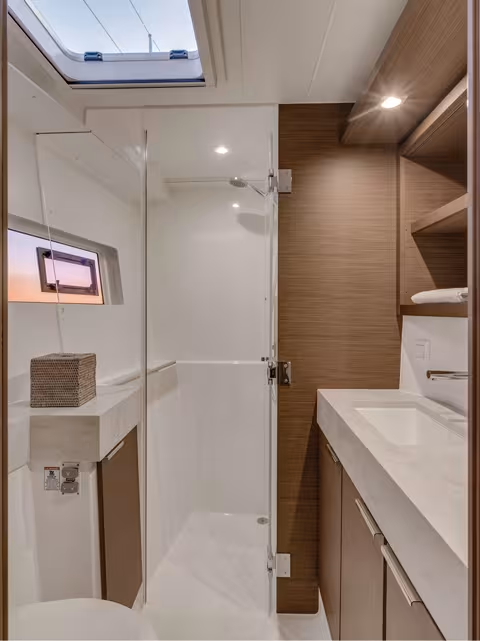
The volumes seem to be better developed than on the 400 and the cabinetry has progressed further. The adjustments are accurate, and there is very little structural noise even in a choppy sea. The owner's hull (port side) is attractive. The semi-island bed (partial side access) is very comfortable and the mattresses of excellent quality. Nauta are constantly and intelligently revisiting their solutions, and this is noticeable: the small desk is a welcome addition, and I must give a special mention to the lighting (and to the blinds for blocking out light) and especially to the bathroom as a whole. It is perfect! Very clear, ergonomic, and well-suited for offshore use. Taking a shower in choppy conditions with a "sea view" is a pleasure of which I will never tire! The starboard double cabins offer a very good level of comfort and privacy. The panoramic coachroof houses a well-equipped, aft-facing galley with a movable serving top, a small chart table and a comfortable traditional dining area. The overall quality of the fittings is appreciable, as well as the readability and access to electrical management (simplified and intuitive switch panel and electrical cabinet beneath the chart table, with re-settable fuses, circuit breakers, 2000W inverter-charger and 220V panel in the port passageway).
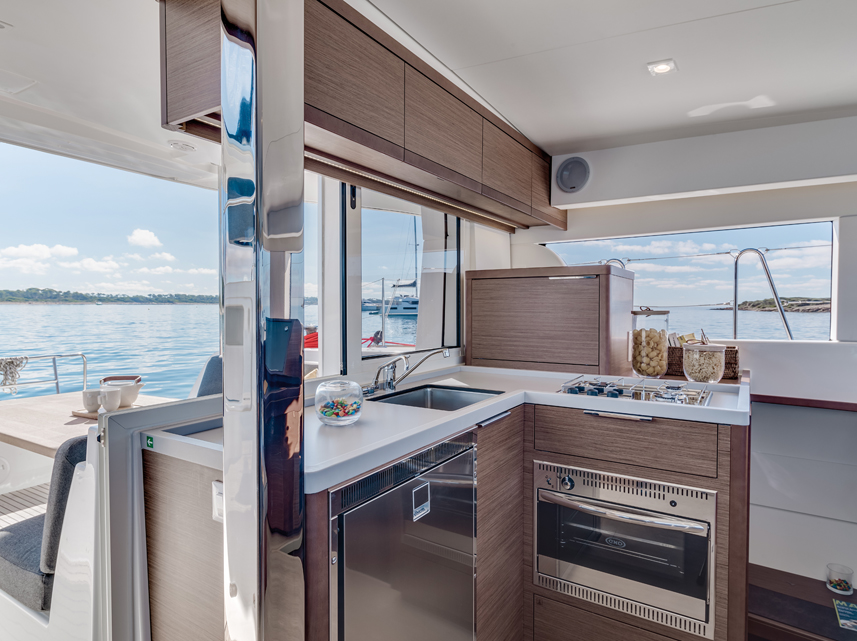
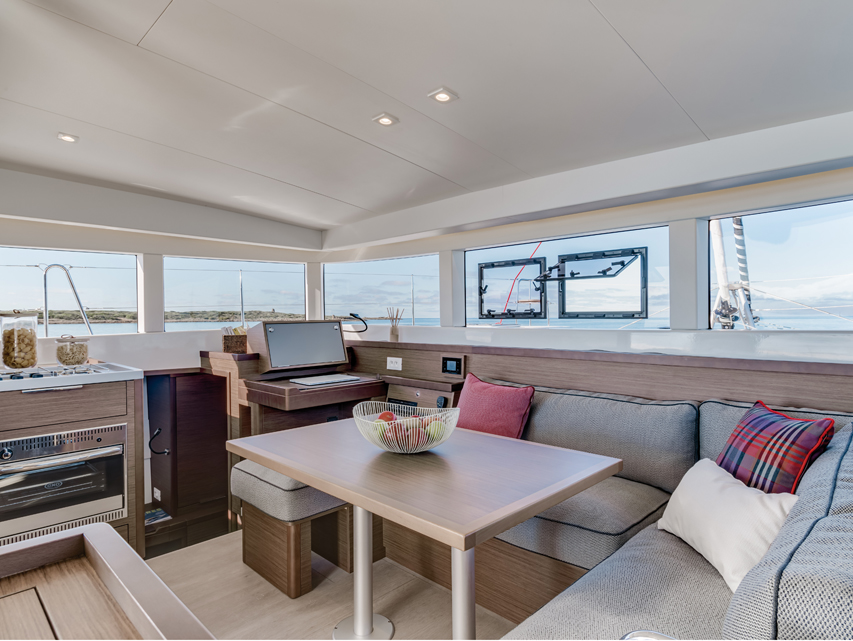
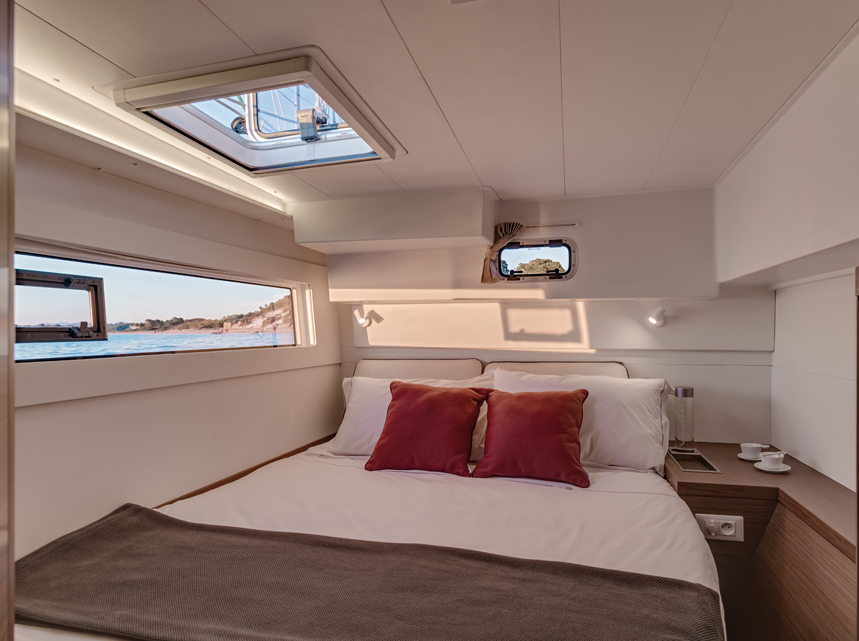
200 miles on a Lagoon 40
A seatrial with Bruno Belmont (former director of Jeanneau Techniques Avancées, builder of the trimarans for the film Waterworld, and Groupe Pierre 1er, Florence Arthaud’s Route du Rhum winning boat, part of Laurent Bourgnon’s RMO, the Lagoon 55 and 57, the Jeanneau / Irens F40, ex director of sail products for the Bénéteau group, and today in charge of development at Lagoon) is not something to pass up on. He is the brains behind of the group's multihulls! Also having Armand Burgaud along, the project leader for the 40 was an additional opportunity to discover the boat in depth. Our departure from Canet en Roussillon to Cannes was therefore essential!
The weather window seemed favorable and after a good revictualling and dinner "Chez Luis" on the beach, we set sail at 11pm in a NW’ly breeze lit by a full moon. The wind was blowing from behind and the sea was on the beam: a quirky situation caused by the land breeze, but one which the 40 handled very well. With 12-15 knots at the start, the boat bowled along with excitement and we made 25 miles in three and a half hours on the first watch. The night was calm under a wind from the WNW increasing to around 15-20 knots. We were still under mainsail and solent (we should have perhaps hoisted the code 0 initially, the range would have been perfect for it, but uncertainty about the strength of the coming wind and being new to the boat made us postpone this idea!). The pace was maintained and we covered 72 miles in 10 hours (against a knot of current!). In the middle of the day, the well-formed sea was coming from the port quarter, animated by a good Force 5 to 6. The pleasure at helm is real and this lively track was an ideal testing ground.
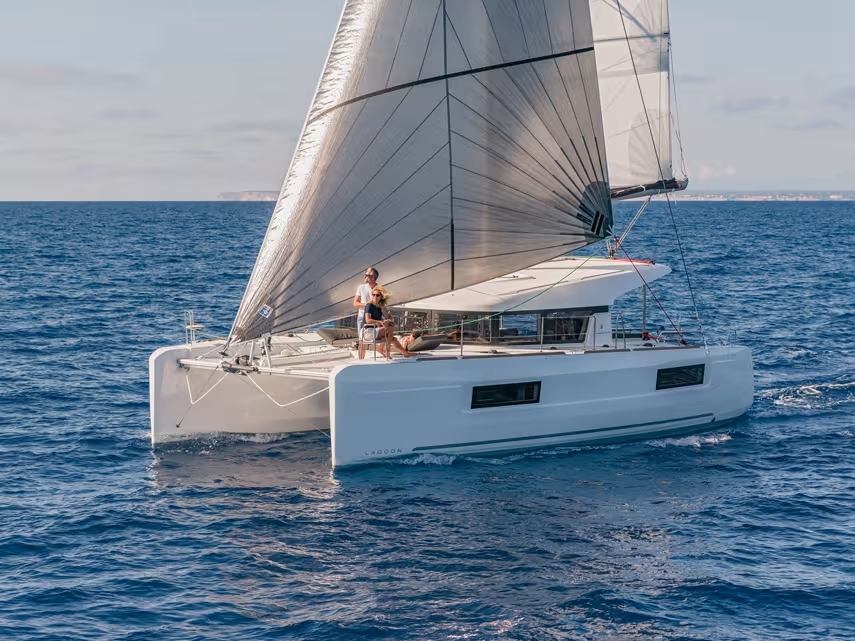
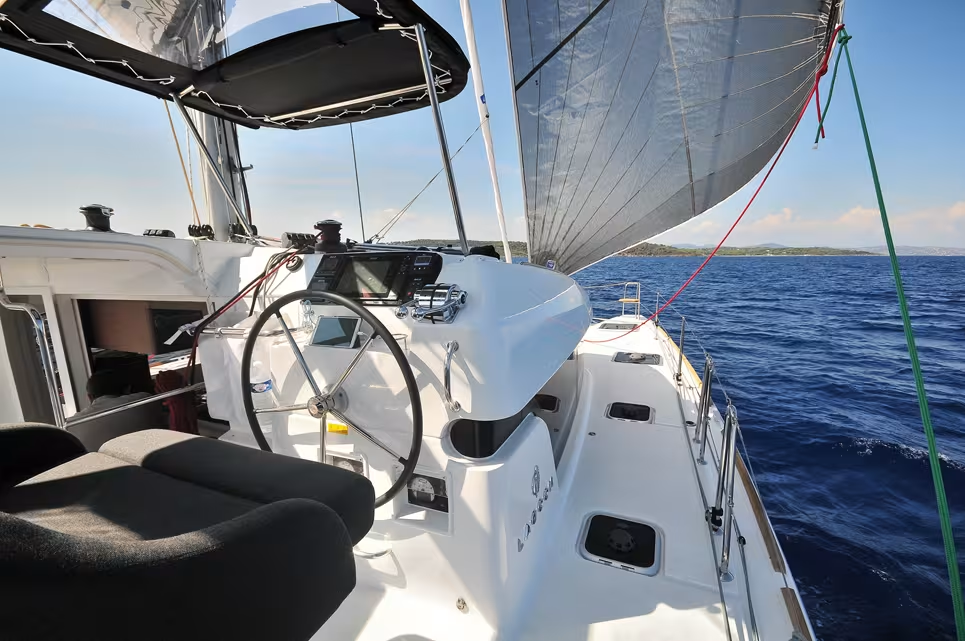
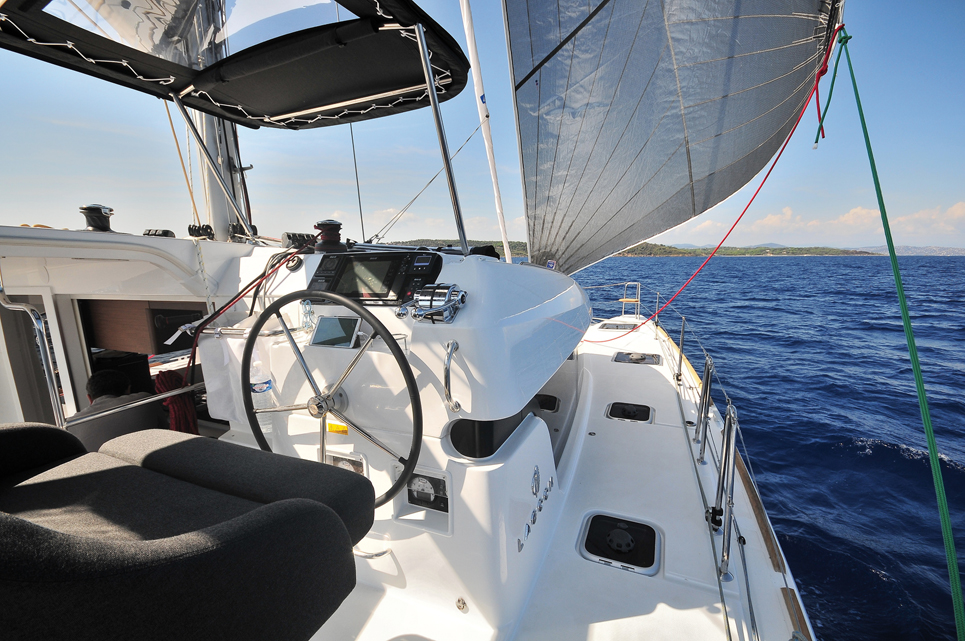
The wheel is of a good diameter and is sheathed in leather, and connected via cables: the feel is very noticeable, flexible yet firm at the same time. Little effort is required, while the linkage is very direct. Although sometimes brutal, the cross-seas caused no difficulty for the helmsman and the quality of the directional control was astonishing! The platform seems to like heavier conditions, and the new sail plan shows itself to be judicious. The overall dynamic balance pleasantly surprised me, with no sensation here of a mainsail that "weighs” on the helm or tries to take the boat into a luff, encouraging sail reduction. The nice 47.5 m² main works well and has finesse: the thrust is comfortable almost difficult to feel, although it is substantial. Downwind, the capshrouds limit the opening of the sail plan, but with a purchase for the leech line on a pad eye or cleat, the boat goes downwind very nicely. The solent is rigged with the indispensable barber-hauled sheet: Beyond 100 ° (self-tacking track), a second sheet returns through the code 0 block, increasing the sheeting angle and allowing for perfect trimming. The maneuver from the helm-station is simple and intuitive, and the use of the traveler is fast and efficient on your own, thanks to the possibility of putting it on the electric winch. Off the coast of Marseille the wind was still rising and blowing at 25 knots with rare and occasional gusts to 30: Should I confess that we didn’t feel the need to reduce sail? The boat felt perfectly comfortable and started surfing with agility and regularity. The helm maintained the good feel of the previous conditions and is surprising in its efficiency and very good feedback.
Between 9 and 12 knots, the "little" Lagoon goes along on a nice track and records some good figures: 13.6, 14.7 and even 15.2 knots showing on the Navionics display (with the same counter current of about 1 knot over the whole trip)! The sophistication of the underside of the nacelle considerably reduces slamming; even more surprising is the platform’s balance: the 40 keeps up on the crests with a surprising agility, sat on its master sections like a skier in powder, well-positioned with ski-tips safely pointing upward, and no wiggle aft and going down the troughs with ease, and with the bows well cleared. The result was 142 miles in 19 hours in perfect comfort with a very gentle final of 4 hours in the Baie de Toulon and the Passse de Langoustier under sail and an ideal arrival at Porquerolles at 7pm. The next day saw summer conditions (10 knots true) under mainsail and code 0 and confirmed the ability of a sail plan which allows the boat to really come alive in light airs on all points of sail.
Conclusion
For me, balance remains the key word of our test of the new Lagoon 40: the balance of the helm which transmits a fine feel which is clear and provides a playful directional effect and is remarkable in a choppy sea; the overall platform balance related to the geometry of the rig and the significant work which has gone into weight distribution and weight reduction and the balance of the sail plan that offers real efficiency in all conditions encountered and a significant tolerance in a breeze. The Lagoon 40 is enjoyable and comfortable; what sticks with me especially is its ease of use. And also the fun to be had making it really go!
The Lagoon 40 by Marc Van Peteghem
The 40 is positioned as the entry level boat, but we put all our knowledge into increasing the performance, the safety and the ease of use. The mast being set further aft contributes significantly to simplification and power forward, by creating a lift effect (via the opening of the forestay angle). It is not by chance that on modern racing boats, the mast is positioned at only 44% of the boat length! We wanted a catamaran that picks up semi-planing early enough with enough volume aft to achieve this safely. The result is also due to a real technical complicity with the yard because this formula only reveals its qualities if the weight is kept under control. Our client is the user and we try to put ourselves in his place, with the family, to advance anything that can promote the feeling of safety, and ease by making the boat fun.
Technical specifications:
Naval Architect: VPLP
Exterior Designer: Patrick Le Quément
Interior Design: Nauta
Builder: Lagoon
Construction: Balsa/glass polyester sandwich
Length: 11.73 m
Beam: 6.76 m
Draft: 1.35 m
Lightship displacement: 10.9 t
Mainsail area: 47.50 m²
Self-tacking solent: 34 m²
Code 0: 65 m²
Air draft: 18.42 m
Motors: 2x29hp standard to 2x45hp (transmission: saildrive)
Fuel tanks: 2x200l
Fresh water: 300l
Versions and number of berths: 3 cabins-2 bathrooms/4 cabins-3 bathrooms/4 cabins-4 bathrooms from 4 to 12 berths
CE Category: A - 10 pax. B - 12 pax
Basic price in € ex-tax for the 3-cabin version: 256,000
Principal options ex-tax in €
Reinforced sails, square-topped main + lazy bag: 3,222
Code 0 + jockey pole + deck hardware: 10,806
Cockpit cushions: 3,236
Carpeted cabins: 1,926
45hp motors and three-bladed folding propellers: 7,946
12V/220V/2000W Inverter: 2,783
12V Sea Recovery 63l/h watermaker: 11,558
Seajet Platinum antifouling, docklines and ground tackle: 4,200
Essential electrics and electronics pack: 20,100
Launching and stepping of mast: 8,880
Minuses
- Upper guardwire on the sugarscoop too low (a possible extra 20cm in height would make them safer)
- The labeling of functions (seacocks, electrics, deck layout, emergency procedures, etc) could be improved
- Square-topped main is only an option
- No protection over the high-power bus bars next to the batteries
Pluses
- Dynamic balance of the whole platform
- Enjoyment and directional effect of the helm
- Multipurpose and efficient rig
- Quality and accessibility of the battery bank installation
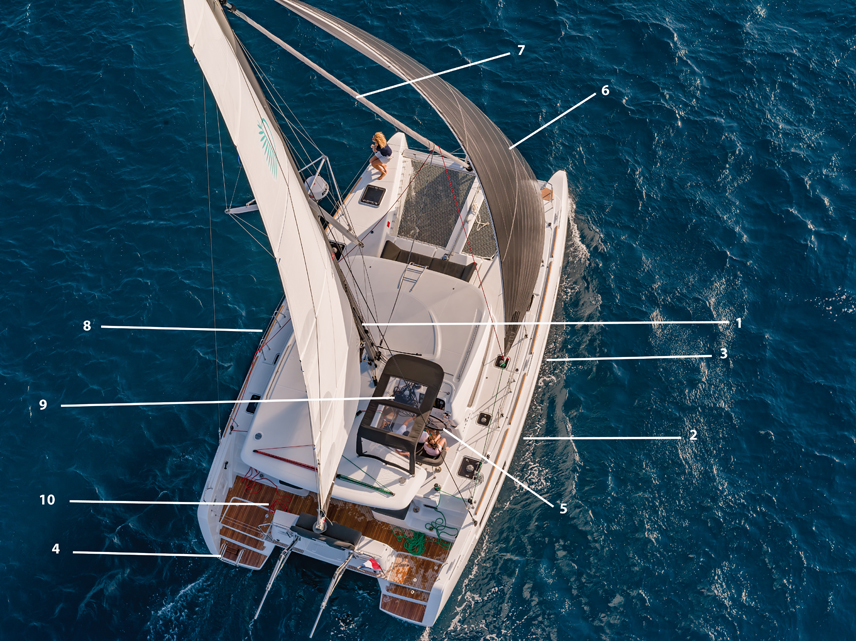
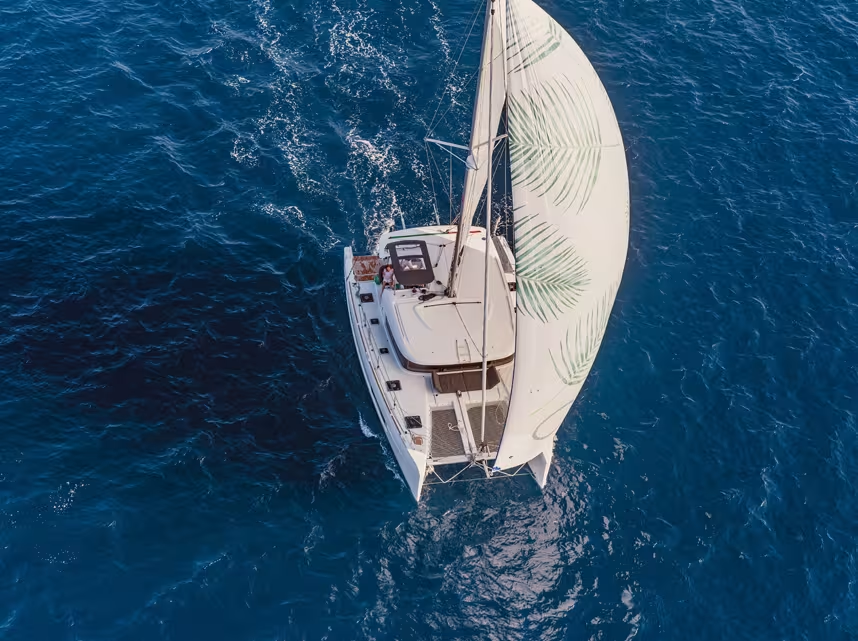
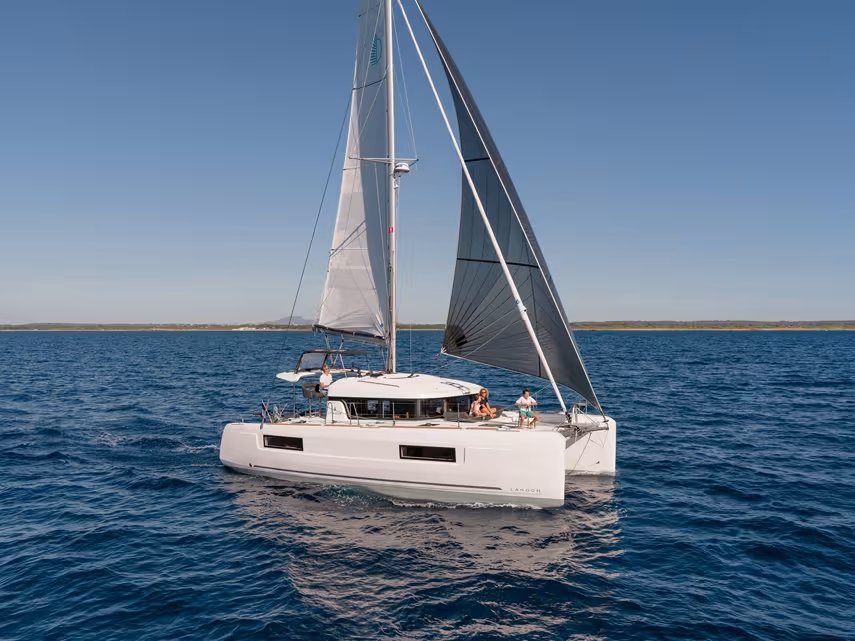
1: The 40’s mast has been noticeably shifted aft. This position helps reduce pitching, and improving the efficiency of the foresails and reducing weight aloft. The result is a narrower mainsail which is more tolerant in the breeze and more maneuverable
2: The innovative position of the mast allows the moving aft of the center of drift and the center of gravity, giving better behavior in a chop upwind as much as downwind
3: More waterline length forward of the skegs
4: Important optimization work was done on the rudders and their linkages for a more sensitive, directional and pleasant feel to the helm
5: The diameter of the wheel as the precision of the cable transmissions contributes to pleasure and safety helming in strong winds
6: The code 0 is totally part of the 40’s "sailing engine". It is an indispensable complement in light and lower medium airs, and is a relevant, powerful sail plan which is easy to use
7: The self-tacking solent has a good sail area and gives good performance. Rigging a barber hauler via the Code 0’s block improves the sheeting angle
8: Patrick Le Quément’s contribution to the hull design is undeniable and reinforces the friendly style of the 40
9: The helm station is complete and well organized. The return of traveler lines to the electric winch allows a quick and fluid solo maneuver (especially when preparing to gybe!)
10: The fluidity of the access to the sugarscoops and side-decks is a success
THE ESSENTIALS
A catamaran which is safe and agile in a choppy sea
A forgiving and performing sailplan which really makes a difference
THE COMPETITION
|
BUILDER |
CATANA |
FOUNTAINE-PAJOT |
LEOPARD |
BAVARIA |
BALI |
|
MODEL |
42 |
LUCIA 40 |
LEOPARD 40 |
NAUTITECH Open 40 V2 |
BALI 4.0 |
|
UPWIND SAIL AREA m² |
112 |
93 |
91 |
92 |
81 |
|
WEIGHT IN TONNES |
8.9 |
9.1 |
9.4 |
7.8 |
8.6 |
|
PRICE IN € ex-tax |
543,080 |
274,000 |
289,000 |
272,000 |
270,940 |