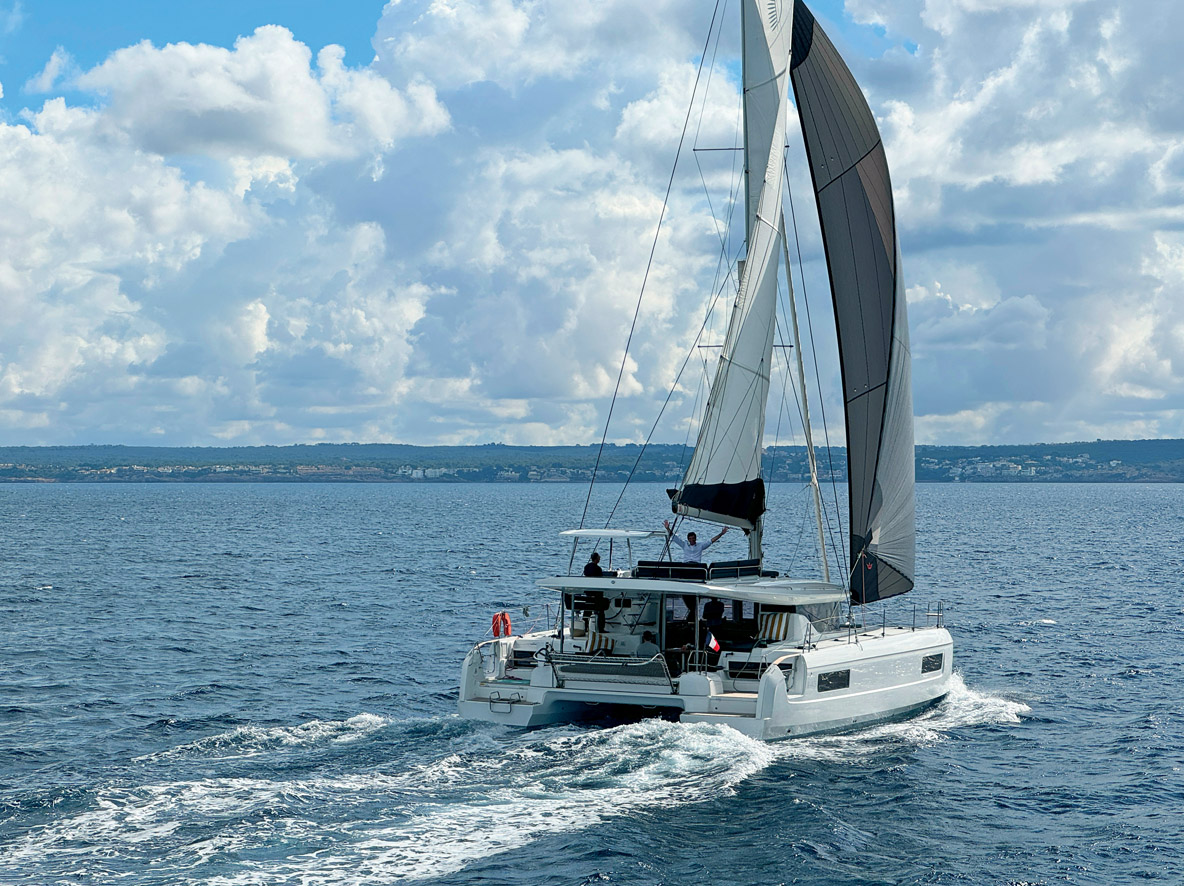
Unveiled to the public at the 2024 Cannes Yachting Festival, the Lagoon 43 aroused great enthusiasm among future cruisers and charter operators alike, with 70 units sold in its first 3 months on the market. At first glance, this latest opus doesn’t seem to be a renewal of the genre... but on closer inspection, it’s packed with little innovations and practical details. What’s more, the low price of the 43 (it’s less expensive than the 42!) clearly breaks the inflationary trend we’ve witnessed since Covid.
Infos pratiques
- Le chantier : Lagoon 43
- La fiche technique
-
 Découvrez notre vidéo exclusive
- Financez votre Lagoon 43
- Assuez votre Lagoon 43
- Articles autour du Lagoon 43
Conditions: Southeast then northeast winds 8 to 15 knots, smooth sea state
This new model has been a long time coming... due to the insolent success of her predecessor, the Lagoon 42. With over 1,000 units sold since first being launched back in 2015, the latter has outperformed both the Lagoon 380 and the 450, becoming the world’s best-selling cruising catamaran. The 42 is still not officially out of the catalog yet, with the latest available models being offered fully-loaded under the name Millenium in a 4-cabin configuration... but in the design office, project 43 had been ready for a long time - as has the Lagoon 38, which will be officially announced very soon. This launch was therefore relatively quick.
Overlapping Genoa and Widened Bows
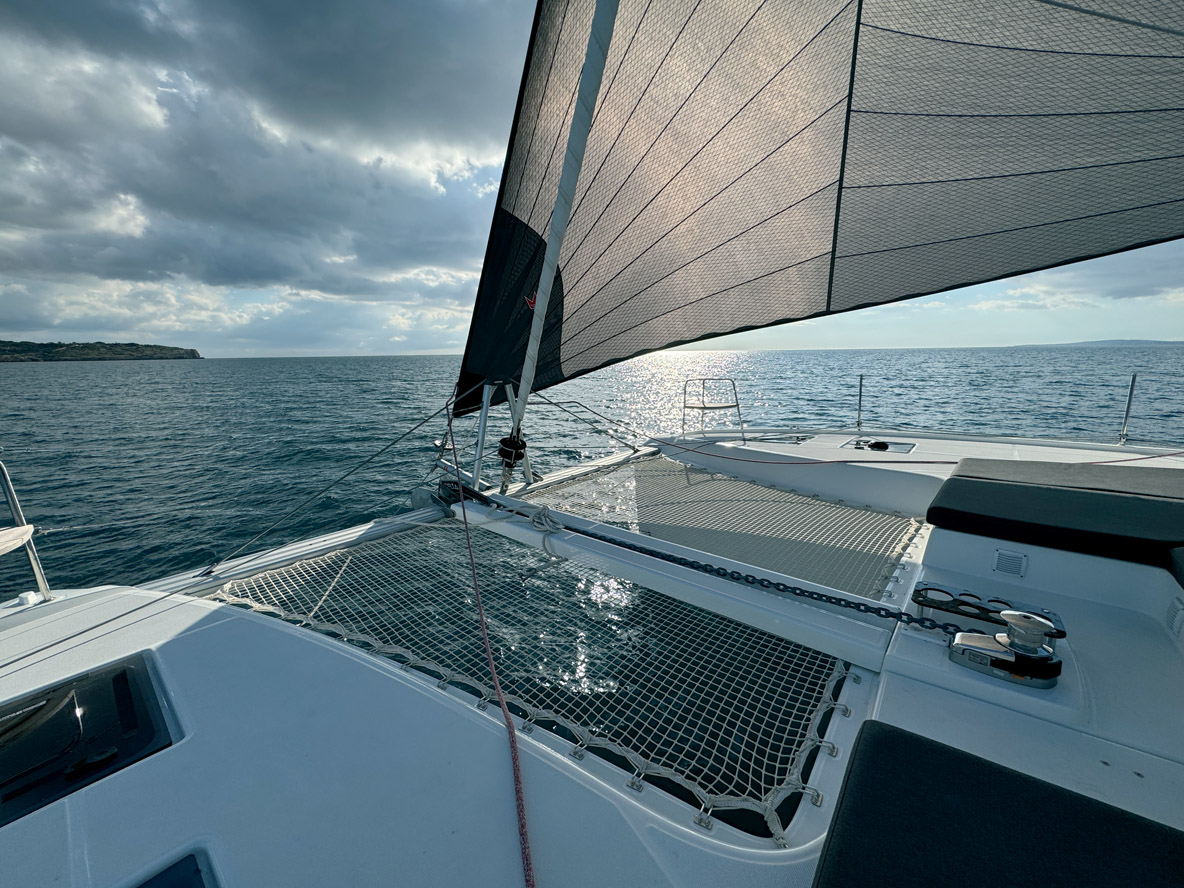
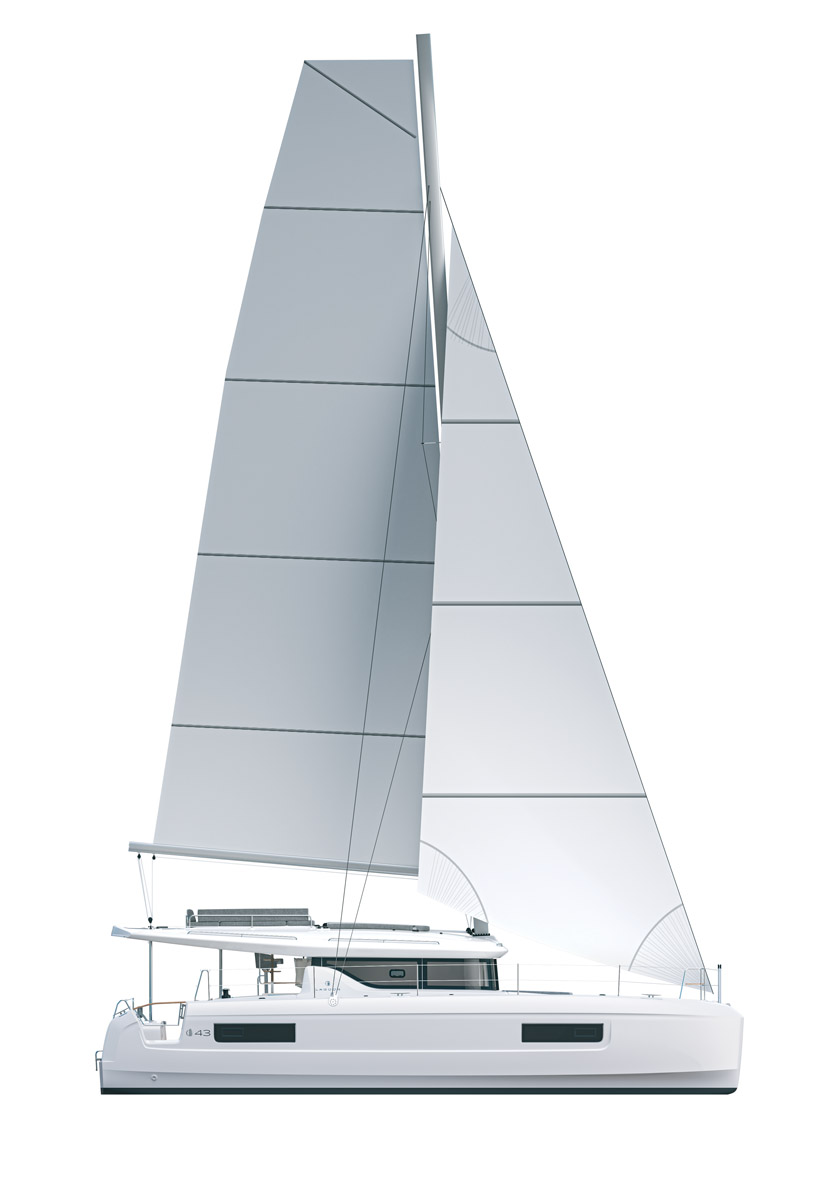
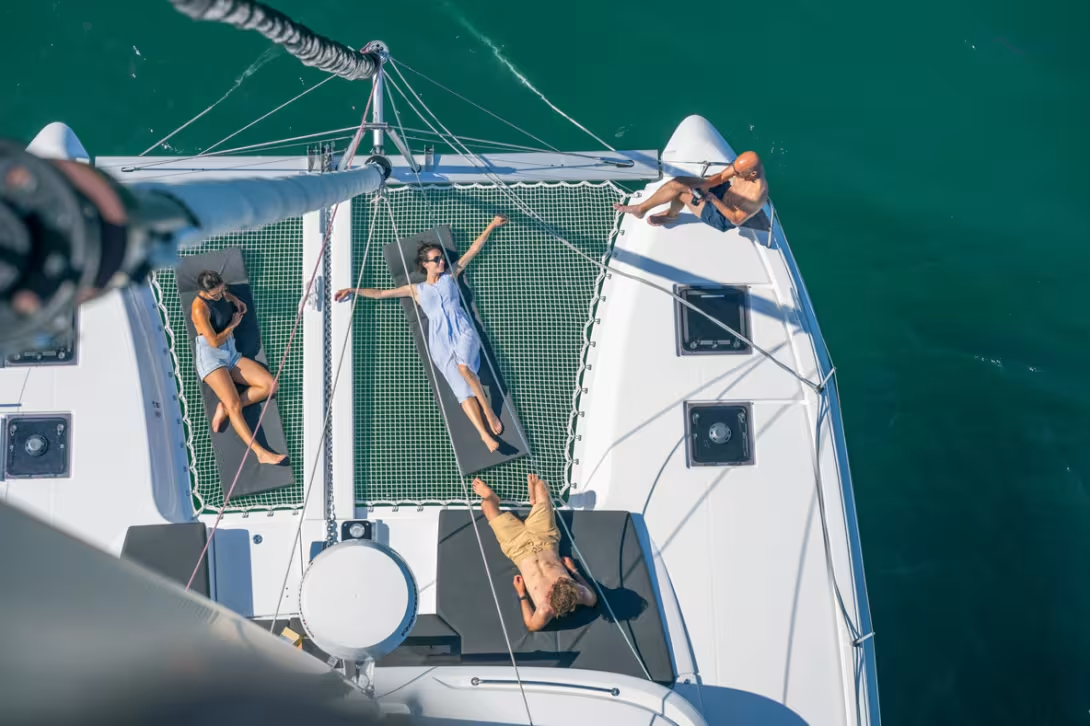
The Lagoon 51 and 60 began to set the tone: the latest catamarans are abandoning the idea of the self-tacking jib as seen on the Lagoon 39 and 52 in favor of a very classic - and ultimately more versatile - sail plan, with a rig that’s stepped further forward and an overlapping genoa. This is the setup that’s been chosen for the Lagoon 43. A second point of note: above the waterline, the bows quickly become much wider than those of the 42. This is particularly apparent when viewing the 43 from ahead and from above. VPLP’s architects have therefore “forced” the principle of chined bows, the aim being, as we shall see later, to gain volume in this part of the hulls. In terms of pure design, the sloping shape of the coachroof (which plunges forward) has been skillfully refined, making the superstructures appear less massive. So much for the broad outlines, we’ll see in the course of this test that a great deal of work has gone into the cockpit and interior, to further enhance comfort and practicality.
A Door in the Bulwark
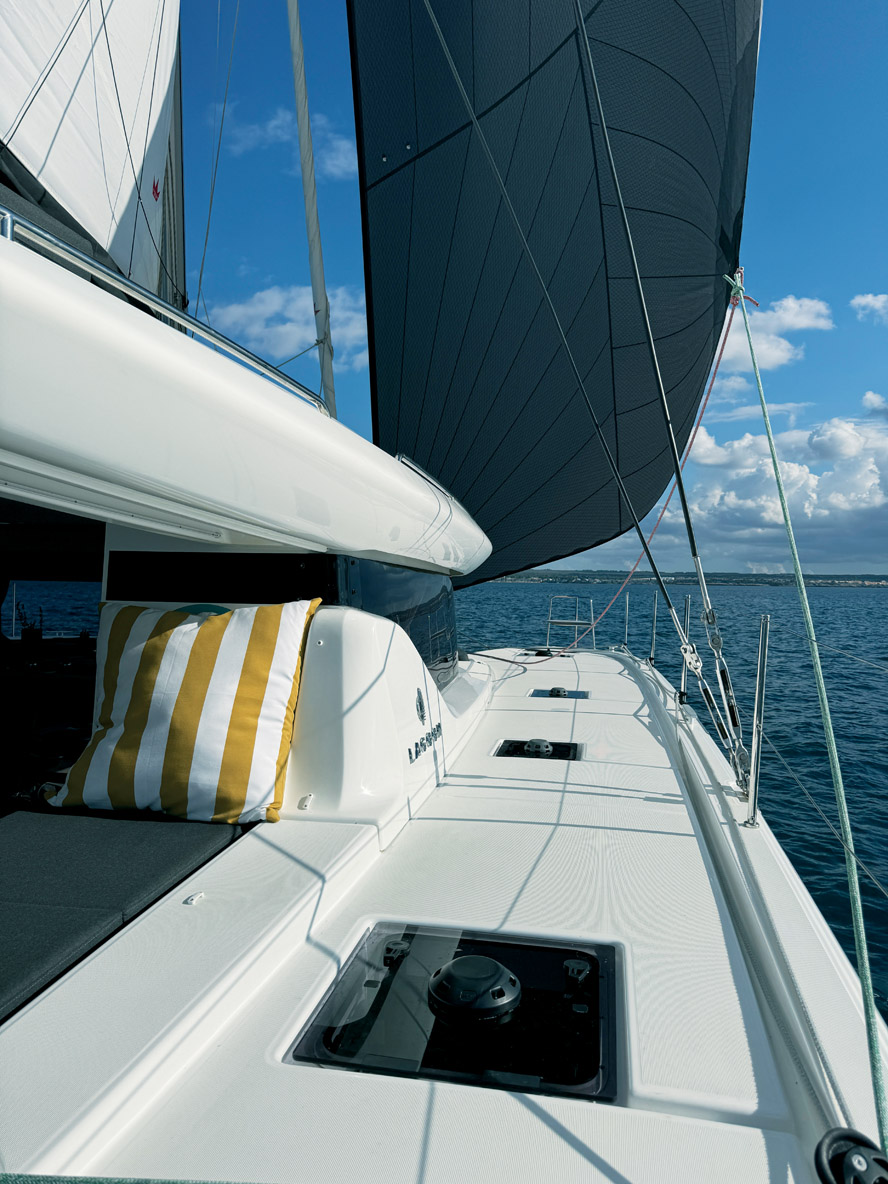
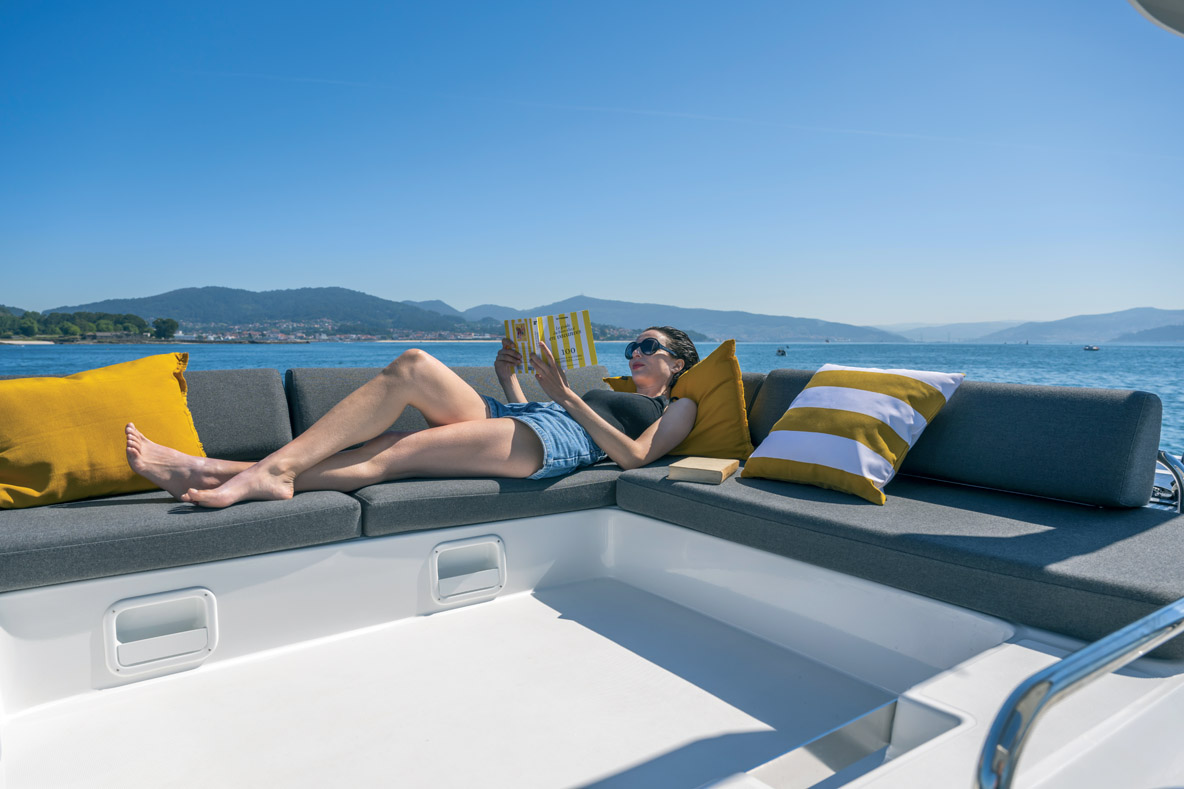
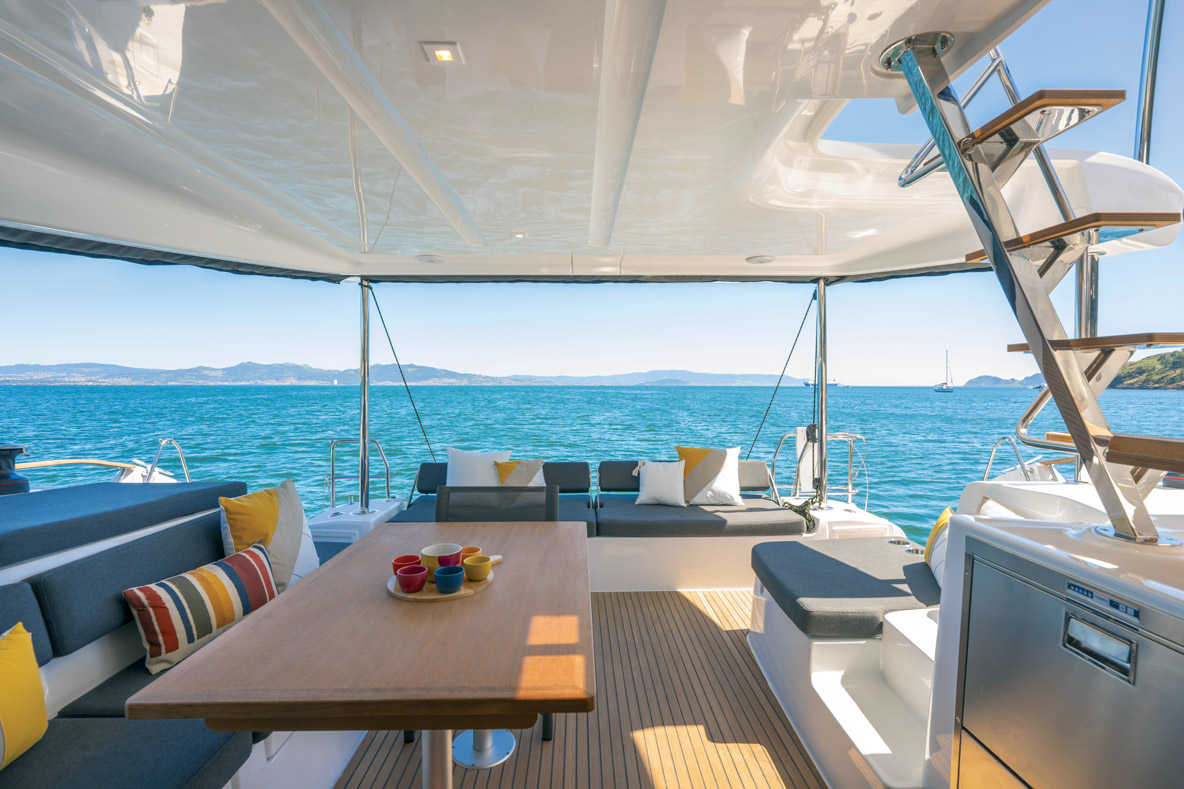
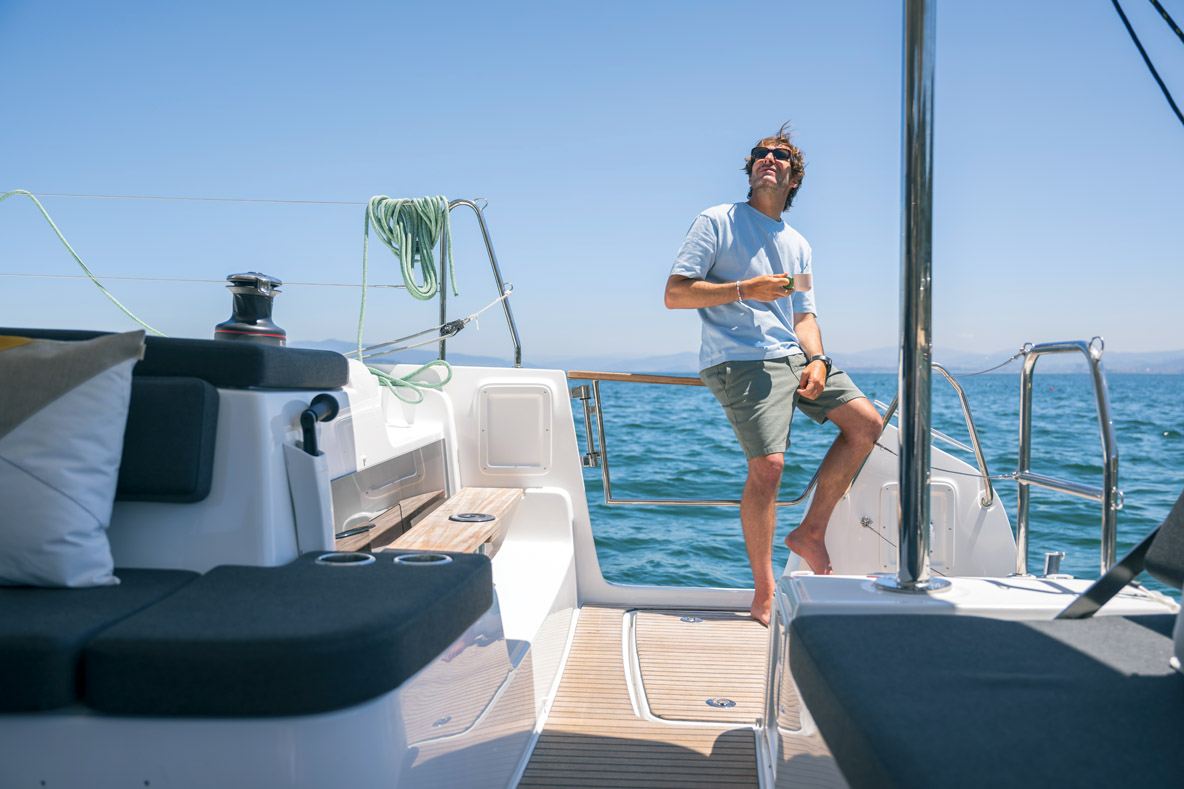
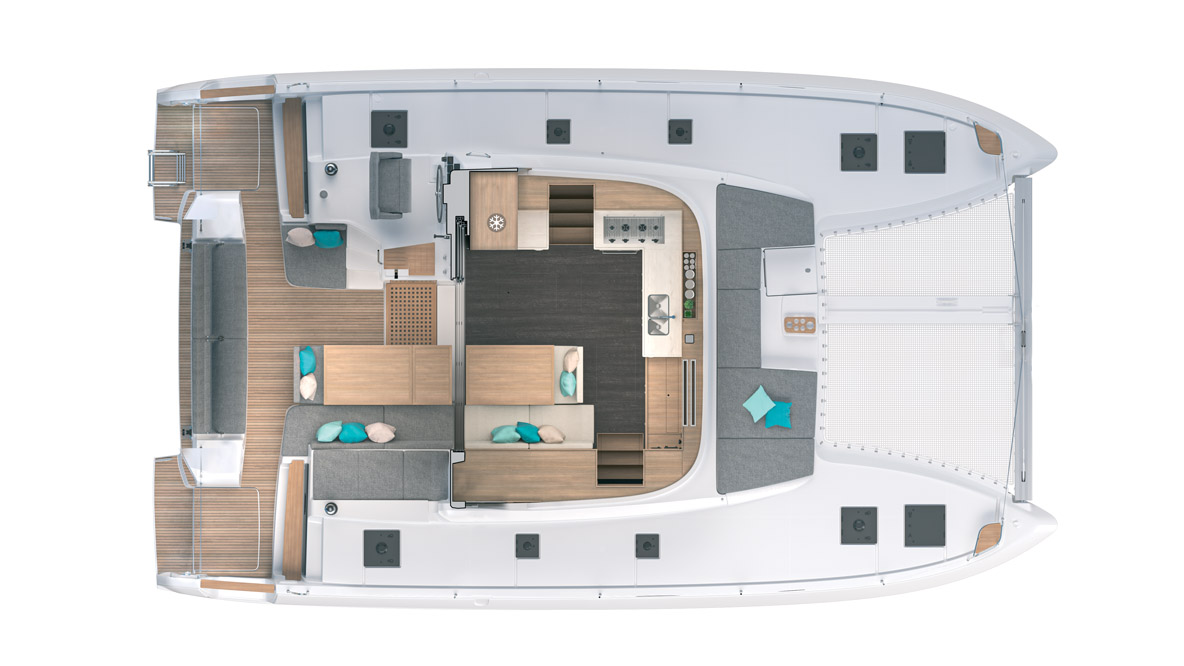
The catamaran I discovered in Cannes was now 350 miles to the south-west, in the bay of Palma de Mallorca. The Lagoon 43 was moored stern-to, which meant that I didn’t (yet) have the opportunity to use the clever bulwark doors. At the stern, on each side, a deep indentation allows for particularly easy access from the dock. When underway, a locking gate ensures the safety of the cockpit, which is much wider than it is long. Like the 42, the Lagoon 43 is 28 inches (70 cm) wider than most of its competitors of the same length. The manufacturer has multiplied the seating capacity, starting with an impressive rear bench seat measuring 8’7” (2.62 m) in length.
Highly Acceptable Performance and Comfort
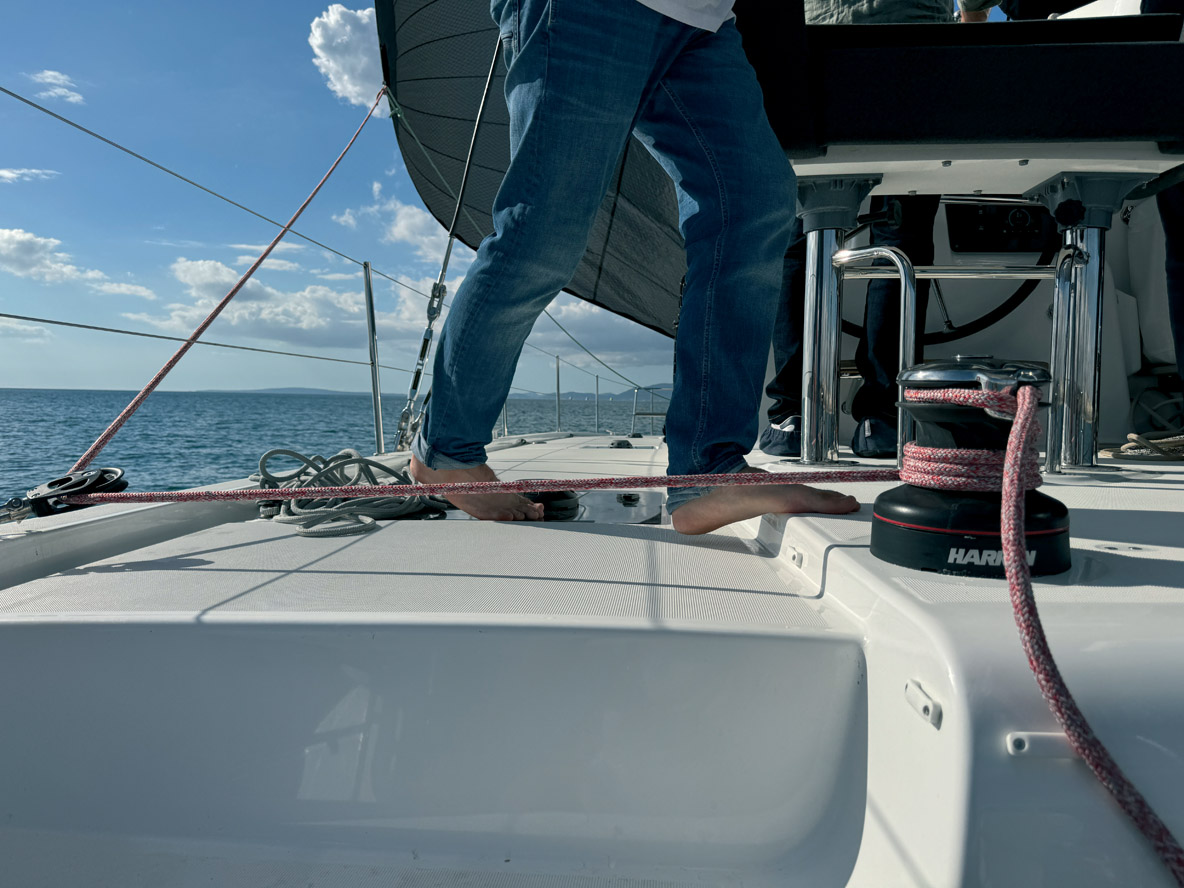
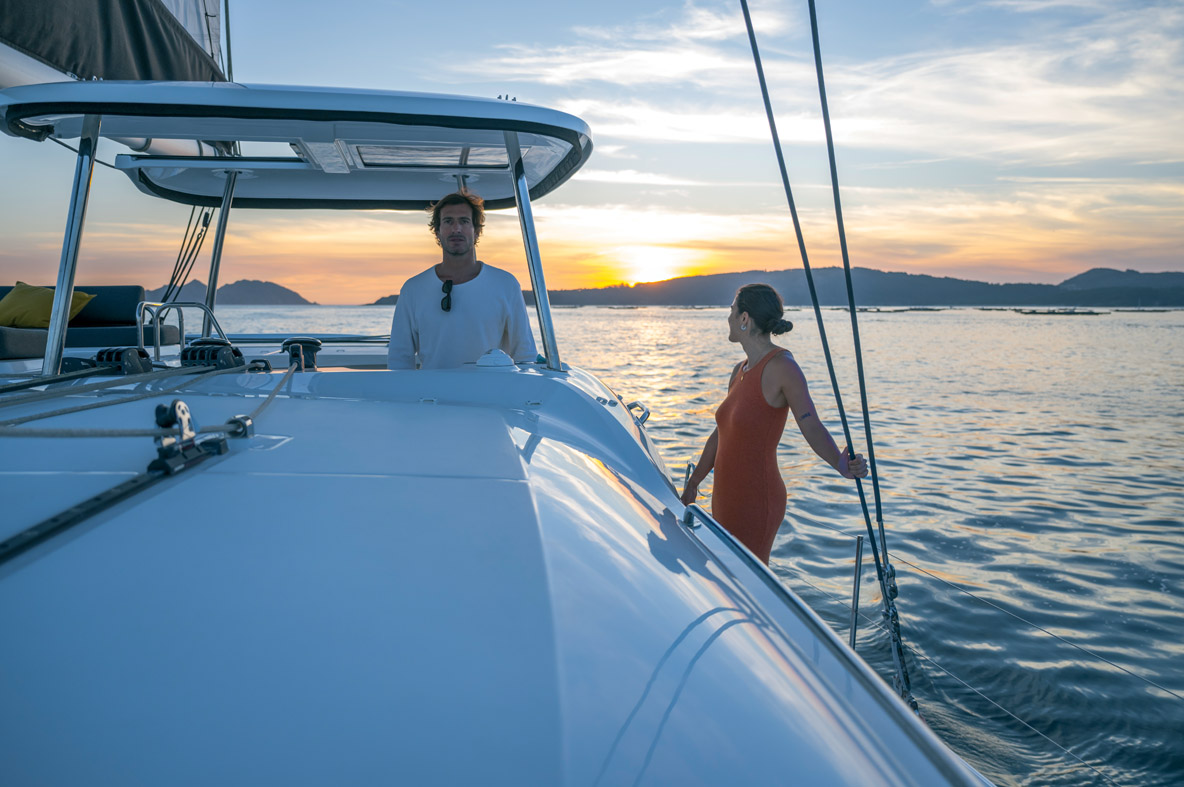
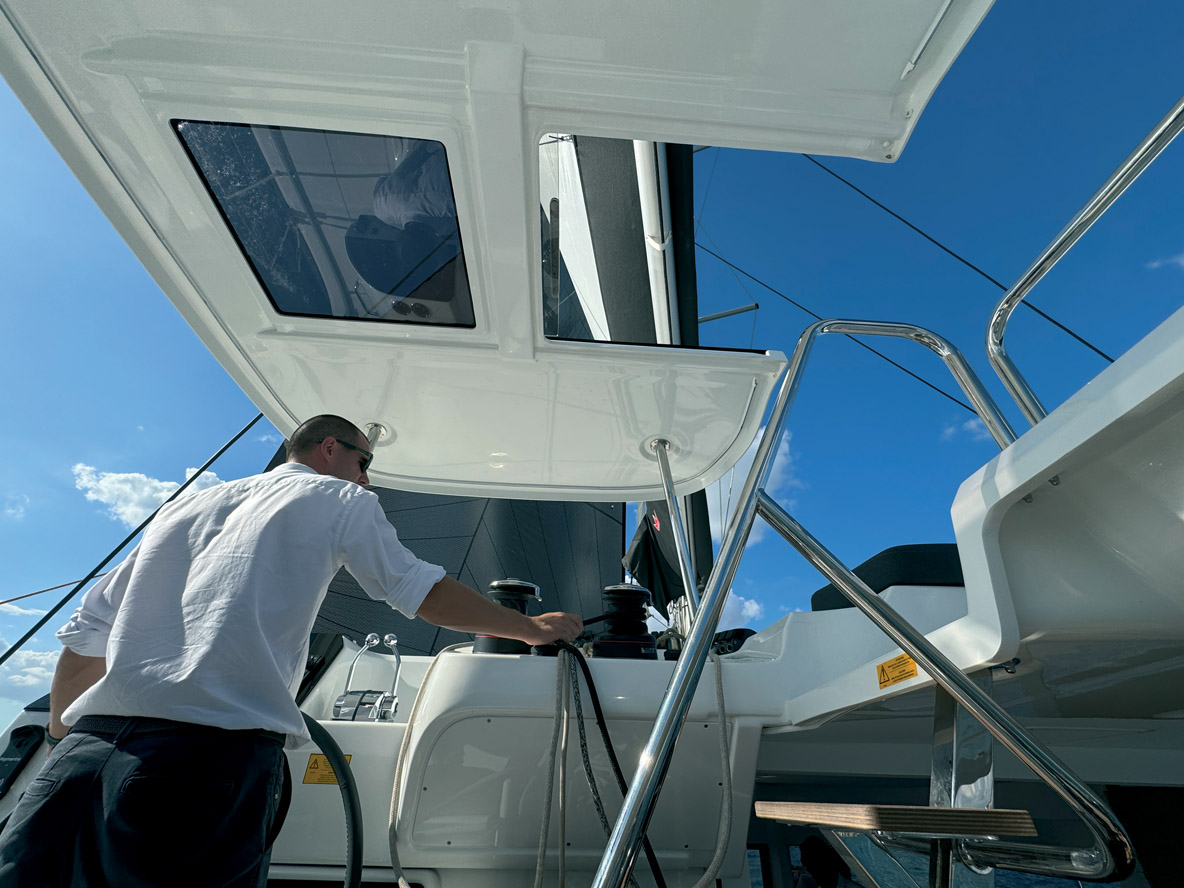
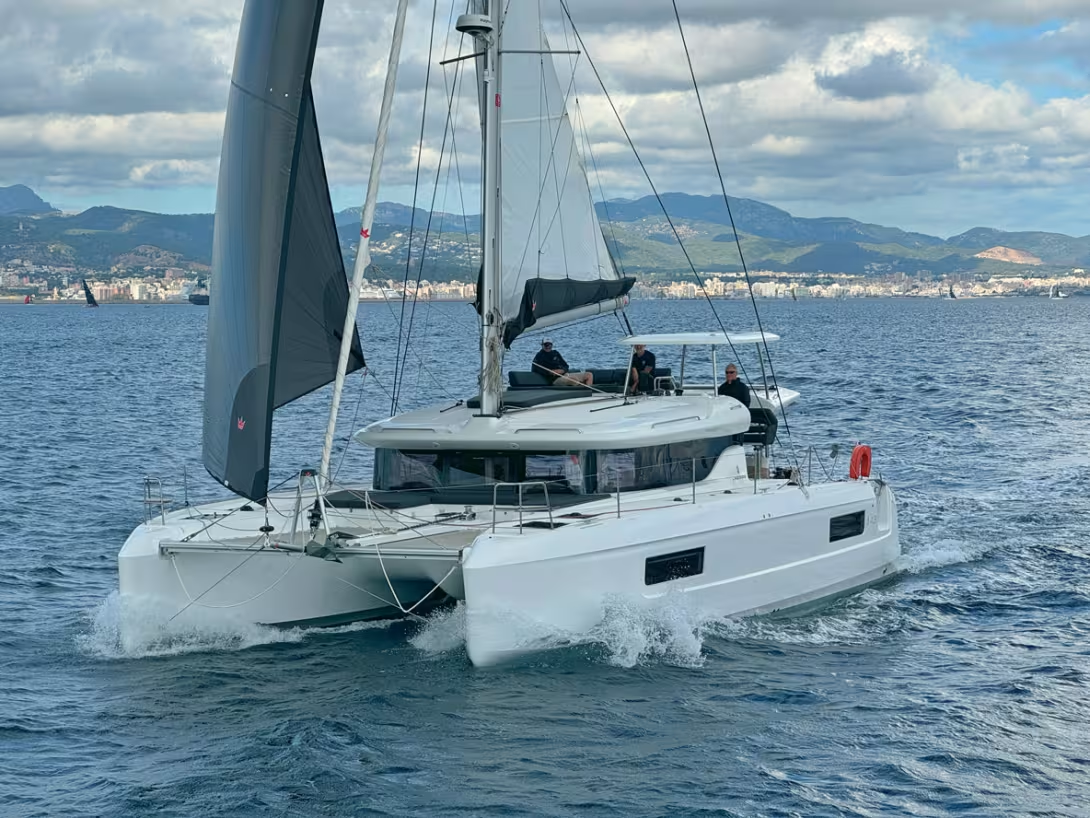
On paper, the new Lagoon 43 is clearly geared more towards comfort than performance: its upwind sail area to lightship displacement ratio is 6.98 m²/t with the standard mainsail (7.55 m²/t with the large roach mainsail). The Lagoon 42, meanwhile, was rated at 7.43 or 7.77 m²/t, depending on the mainsail option. So, when it came time to cast off, I wasn’t expecting to discover an ultra-quick steed. Setting sail is easy. All maneuvers are carried out from the helm station (the bench seat is 33½”/85 cm wide), with the exception of the two gennaker sheets, which can be a hindrance at the after end of the side-decks as they are recessed in relation to their turning blocks and the winches. The wind on our first outing was out of the south-east, oscillating between 8 and 10 knots with almost flat seas. Under full mainsail and genoa, we reached 5 knots at 55/60° to the wind, a fair value given the displacement of this catamaran. The helm is smooth and direct, and there’s always enough scope for tacking.
The surprise came when the gennaker was unfurled: the Lagoon 43 managed to erase its image as a “perfect, comfortable platform for life on board”, transforming itself into a real, lively, high-performance cruiser. The following day, with a slightly more established breeze of 12 to 15 knots, the 43 even reached 8 to 9 knots without difficulty. The photos and videos of this second outing clearly show the bows churning - without pushing water - and the two wakes lengthening
Modular Layouts
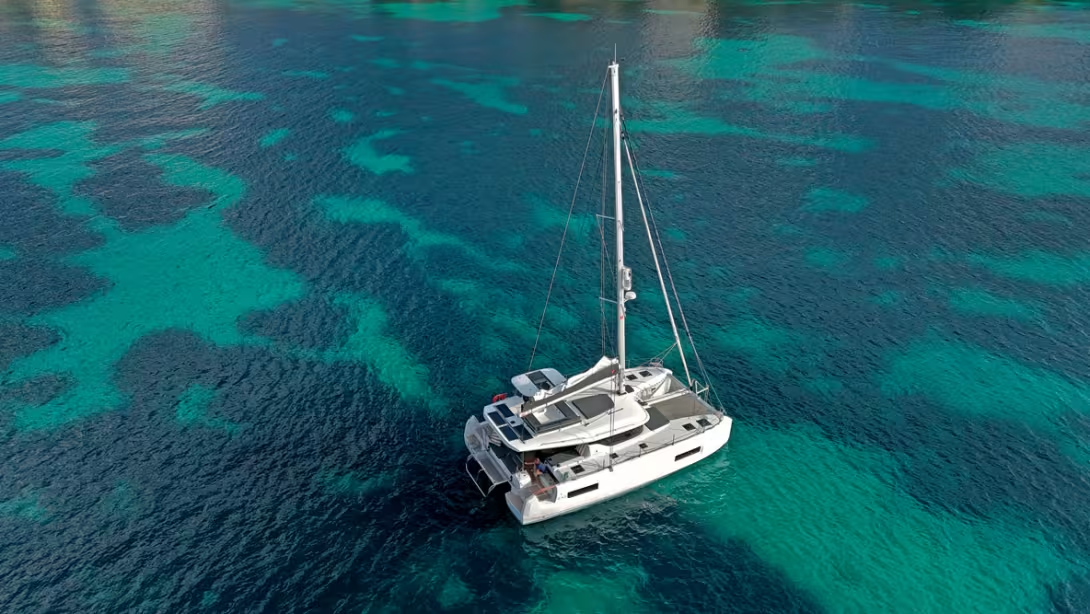
As we set out, the plan was to make for Cala Blava to enjoy the anchorage. With the twin 57 HP motors, you can reach a cruising speed of 7.5 knots without straining your nerves, while enjoying good sound-proofing. Despite the choice of these powerful Yanmar engines, the engine compartments are spacious enough to allow routine maintenance to be carried out easily.
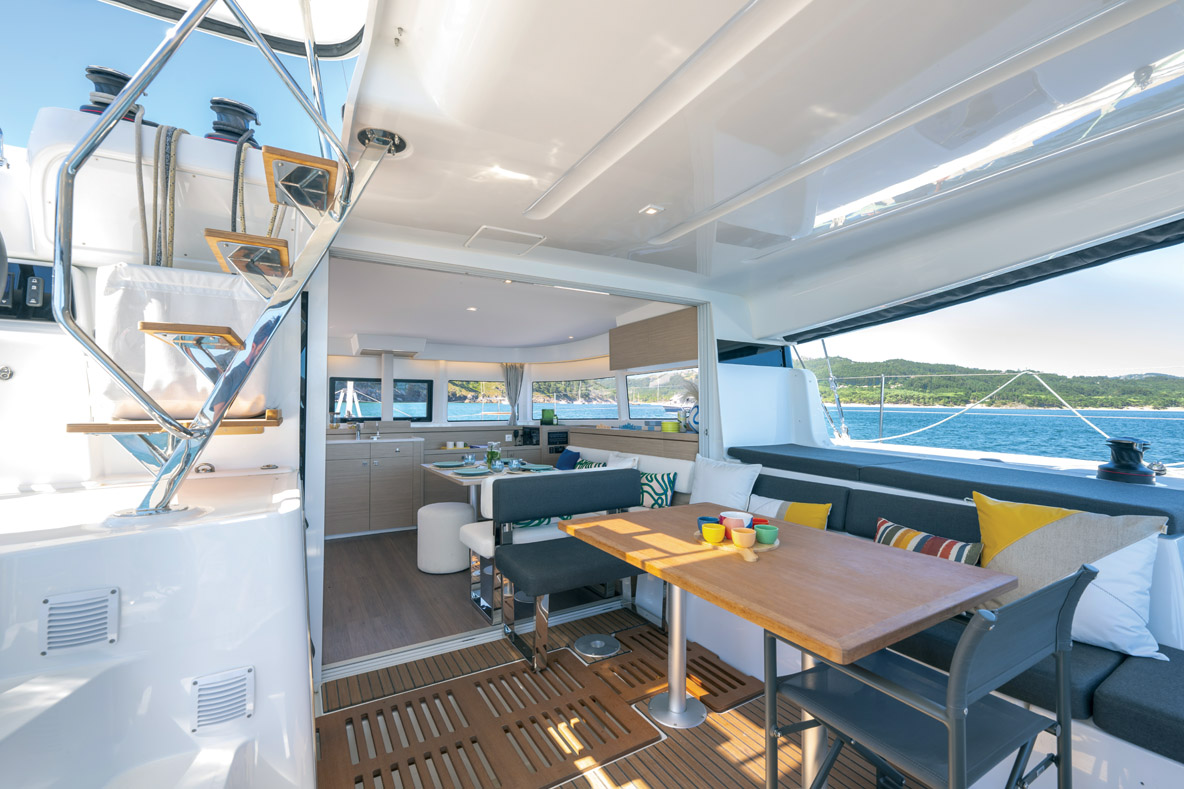
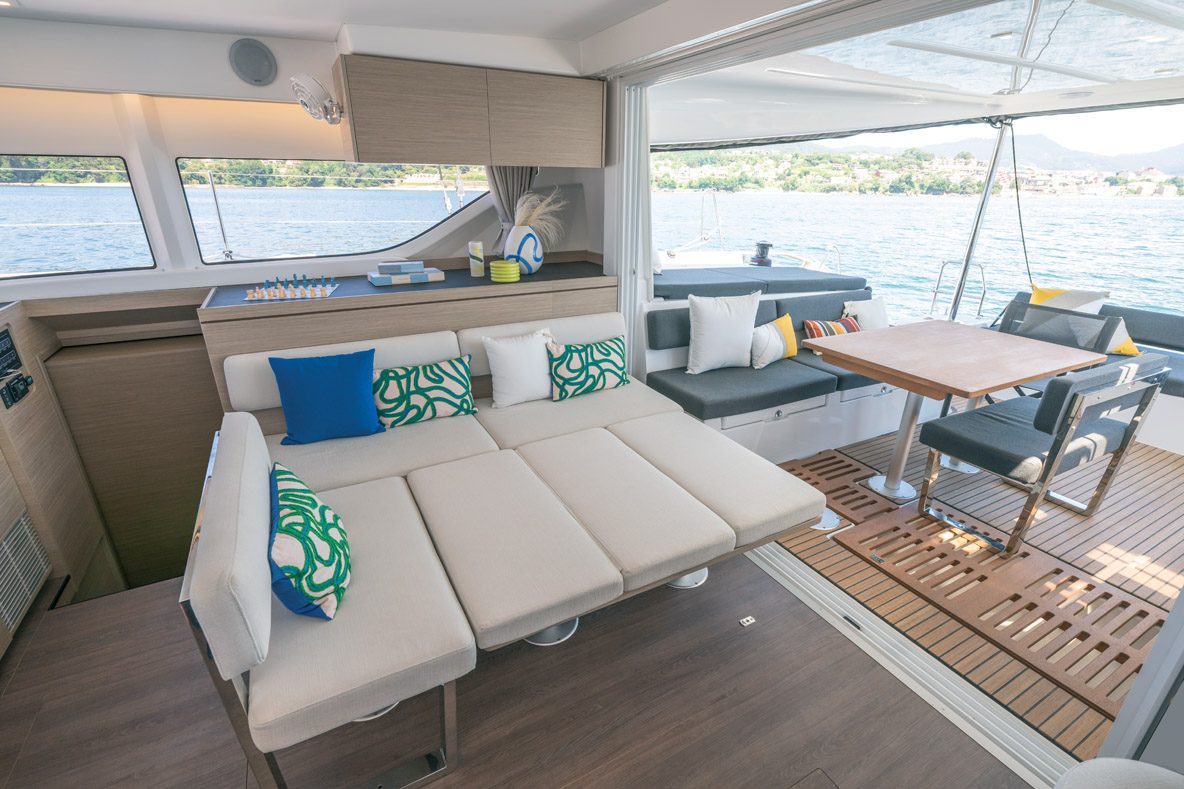
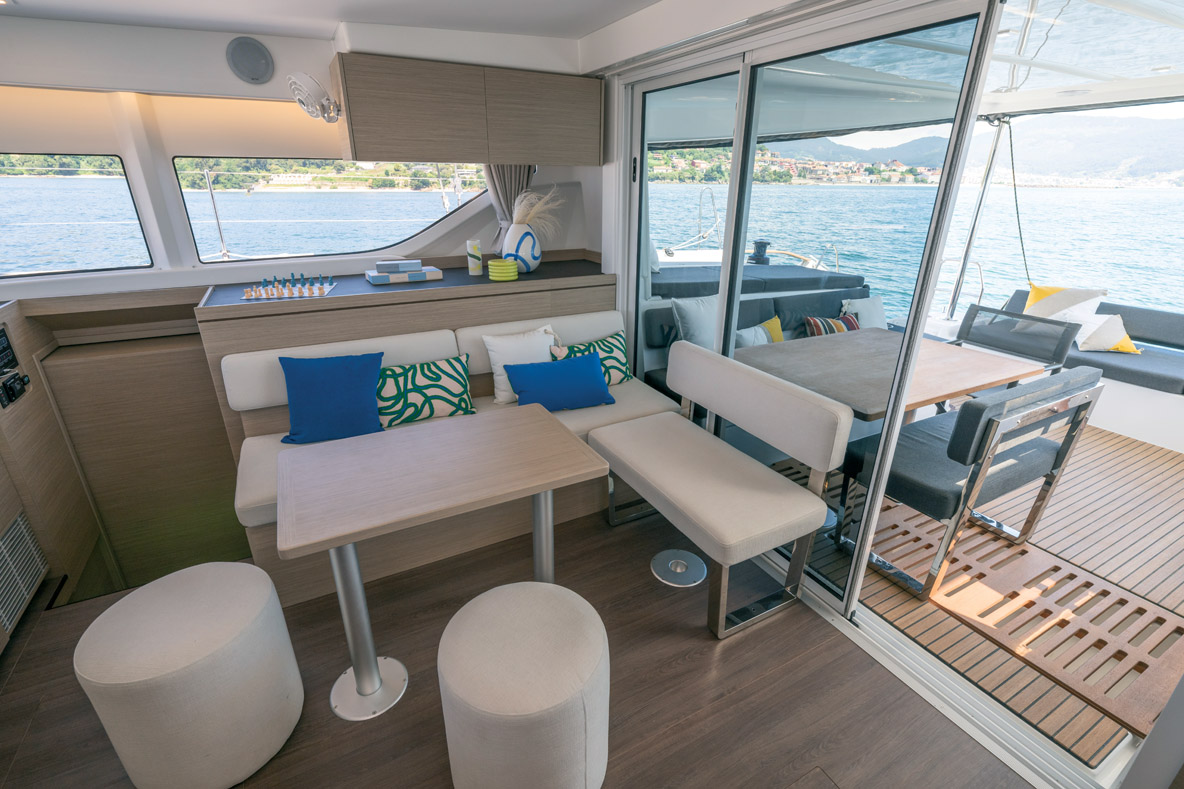
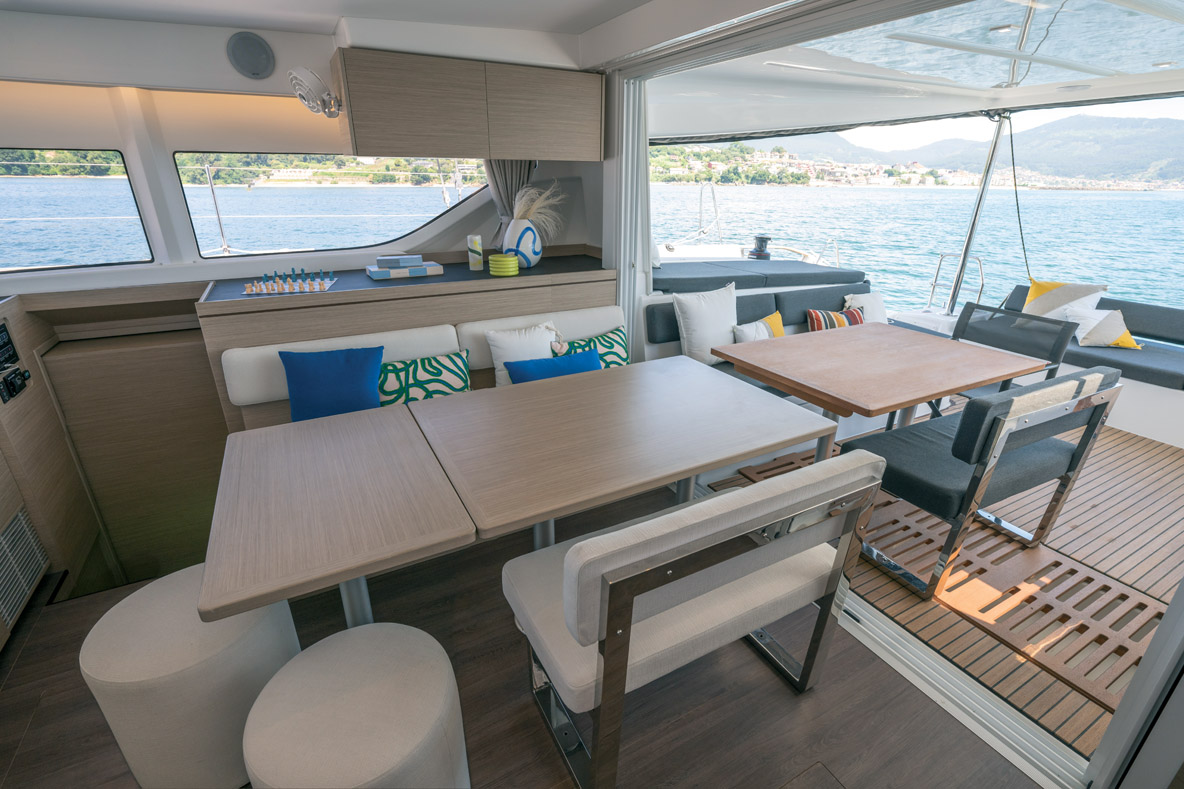
Once in the incredibly colored water, we dropped anchor close to the Lagoon 60 and the 620 Neo, also offered for testing by the shipyard. The main bow-roller is installed just to port of the forestay fitting. A long chain lead, also offset, leads to the chain locker, set back against the coachroof. Thanks to the double trampoline, you always have a perfect view of the anchor. It was time to take advantage of the lateral doors to board the dinghy, and discover the Lagoon 43 from every angle, then after, to take look at the layout. Starting with the bay window, which opens up fully, thanks to panels that disappear into the structure, creating an enormous opening that measures 7’6” wide by 6’3” wide (2.3 m by 1.91 m)! The manufacturer has taken advantage of this open nacelle to design an original modular saloon/cockpit layout. In specific terms, the exterior table (48”x 32”/1.21 x 0.82 m) can be joined to the slightly larger inside table (53”/1.35 m). The bench seats, which can also be moved, adapt perfectly to this new configuration. Other intermediate possibilities are open to occupants: a vast double berth perfect for keeping watch at sea, a small or large interior table, etc.
An Owner’s Cabin Forward
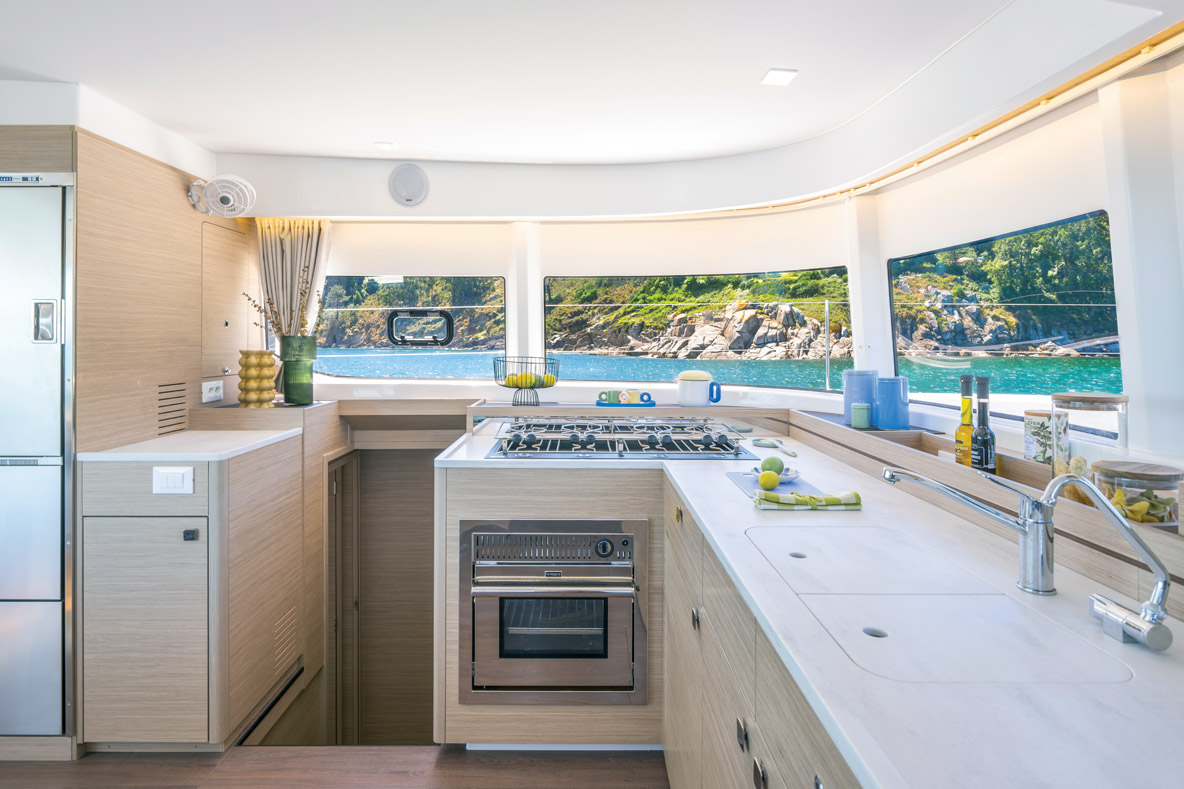
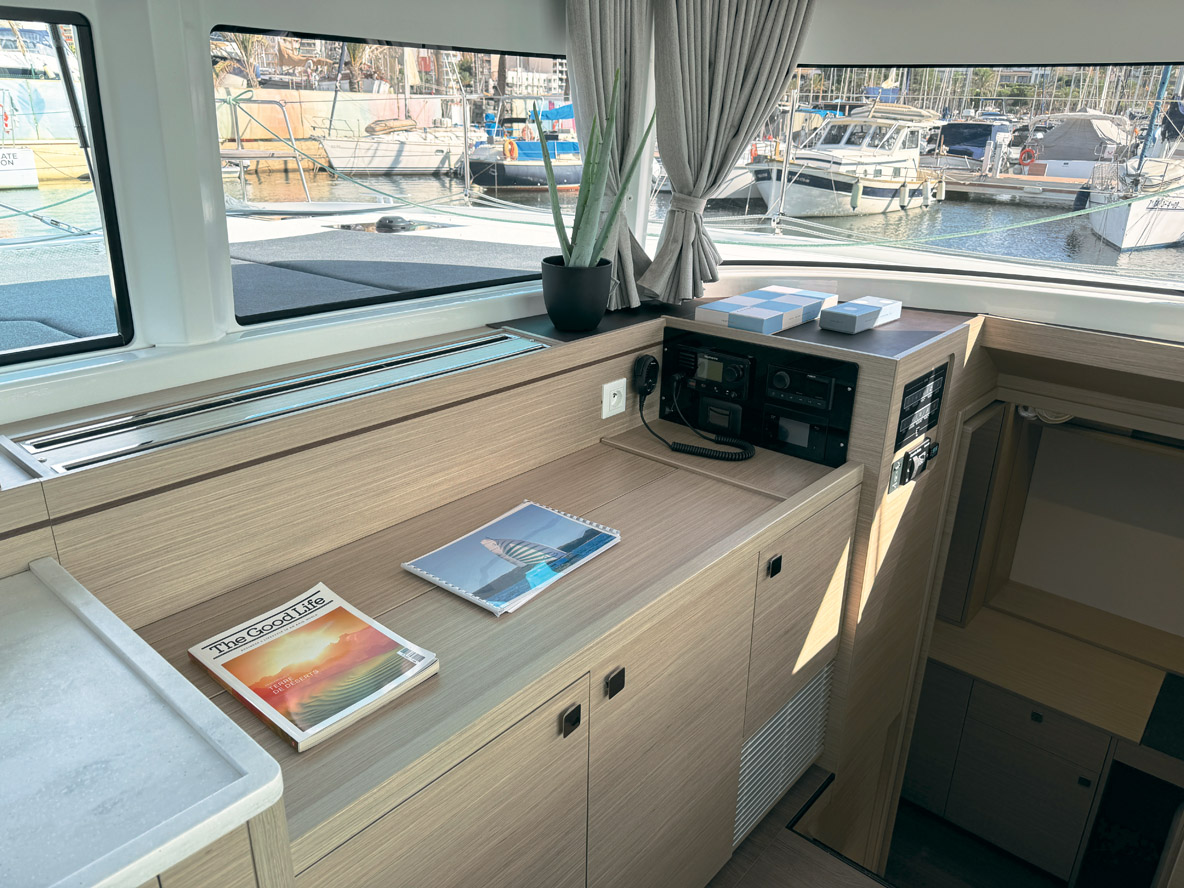
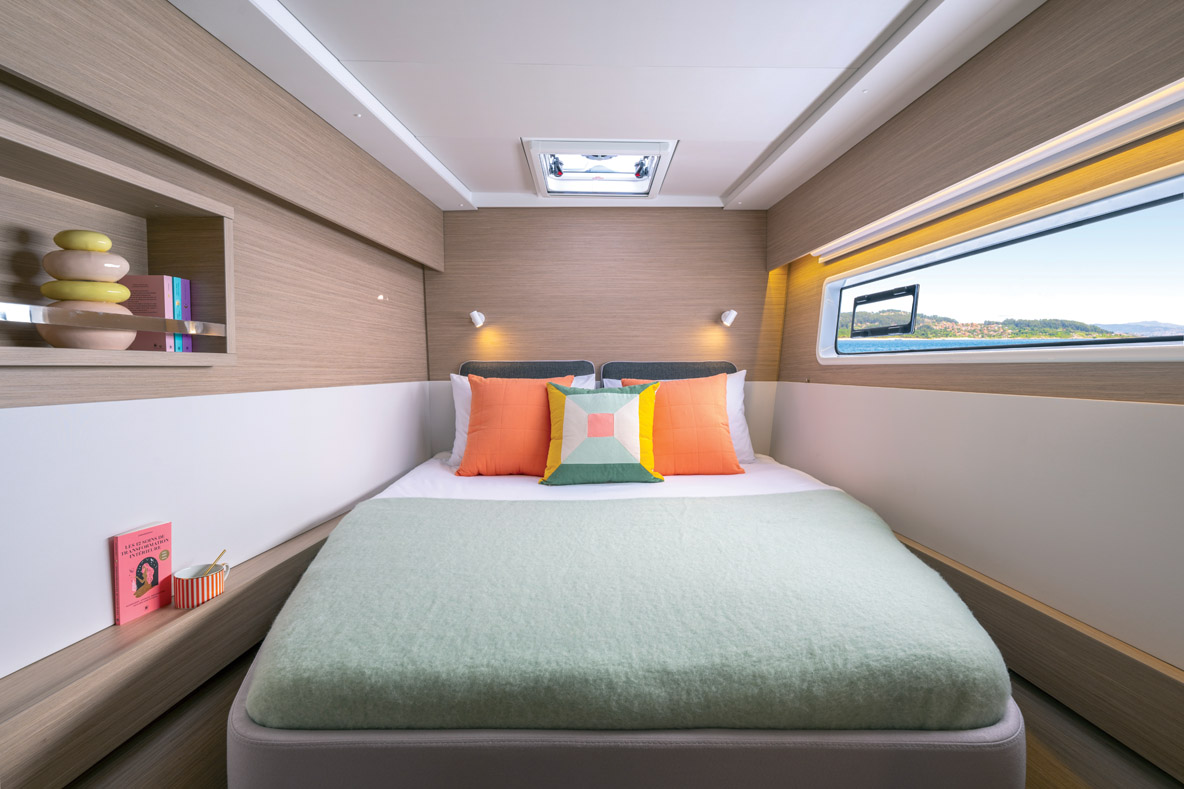
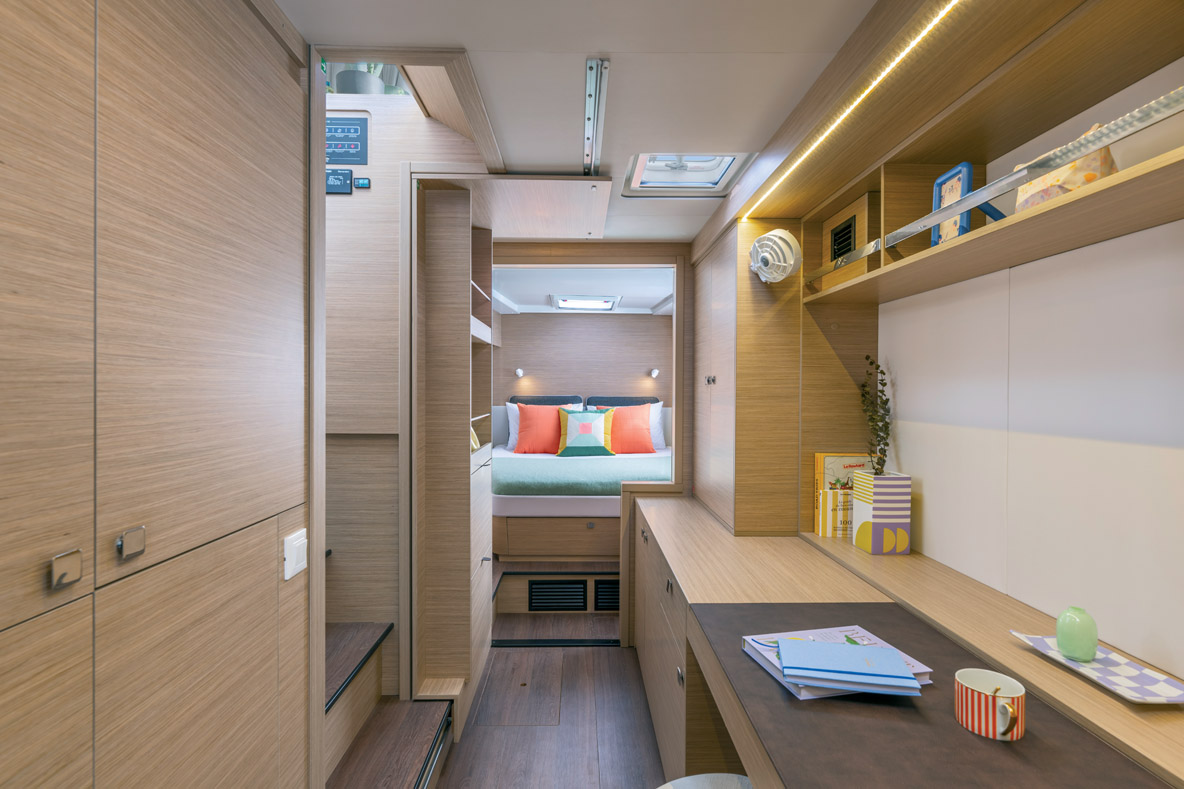
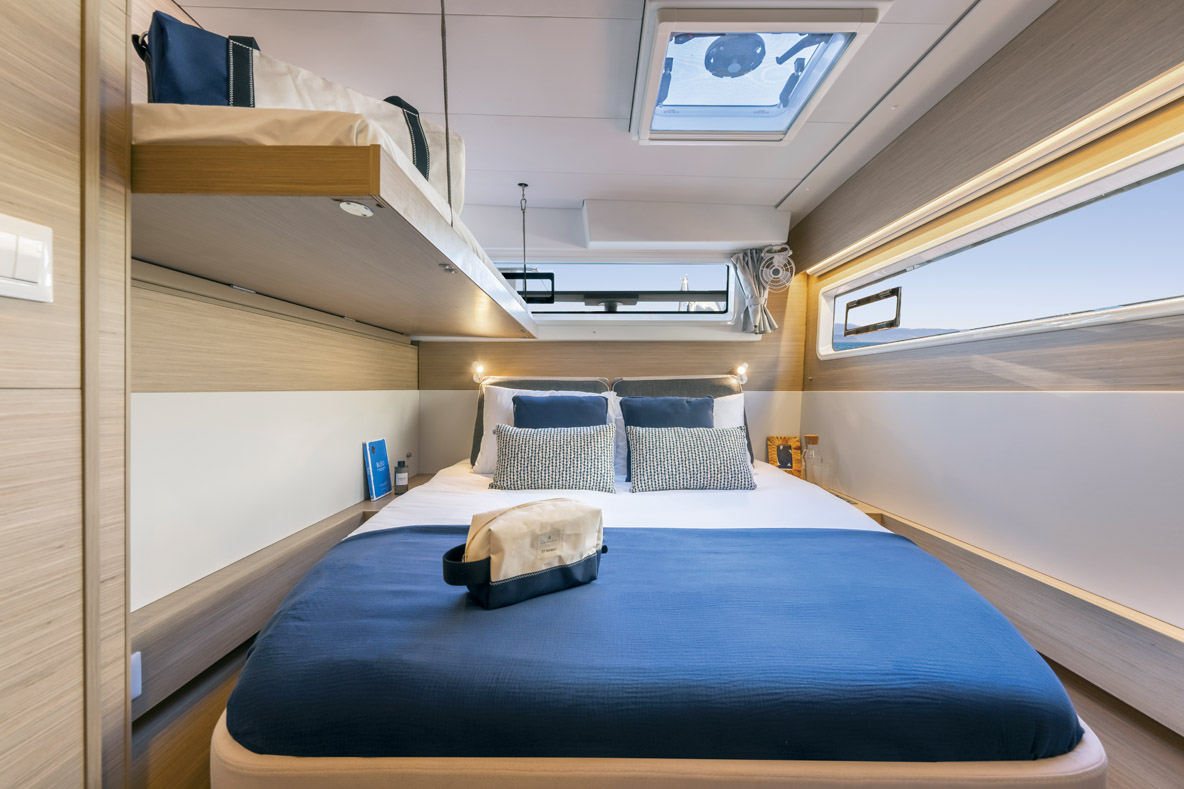
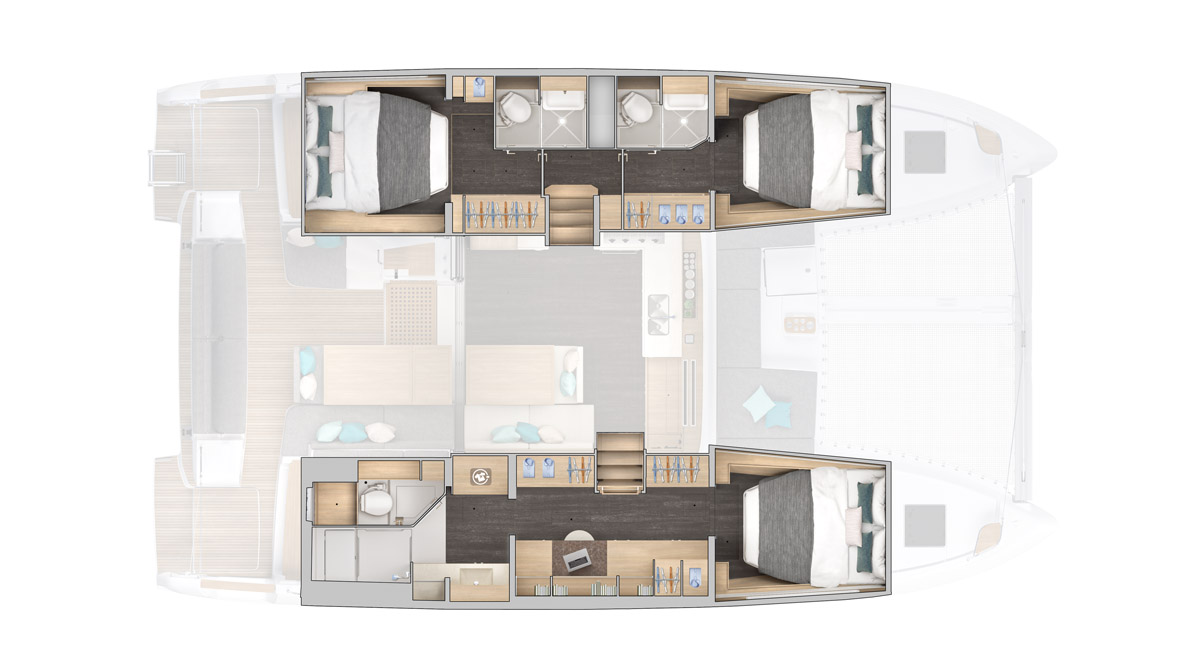
The nacelle, while not very deep, is relatively wide and, above all, boasts a respectable headroom of 6’6” to 6’10” (2 m to 2.1 m). The galley is L-shaped on the port side and continues at the back of the nacelle with a streamlined nav station where you can work standing up. Two layout versions are available: 3 or 4 cabins. This first configuration is the one set up on our test boat, with the starboard hull entirely dedicated to the owner. The novelty here is that the berth is forward - and not aft as usual. “This is already the trend aboard large monohulls, as this forward area is further away from noise pollution, and therefore quieter”, explains Thomas Gailly, the brand’s director. In fact, the starboard bow is away from the sailing maneuvers to port, the engines aft and even the windlass, which is offset to port... though the generator is positioned right up against the bed. Better make sure it’s turned off at night.
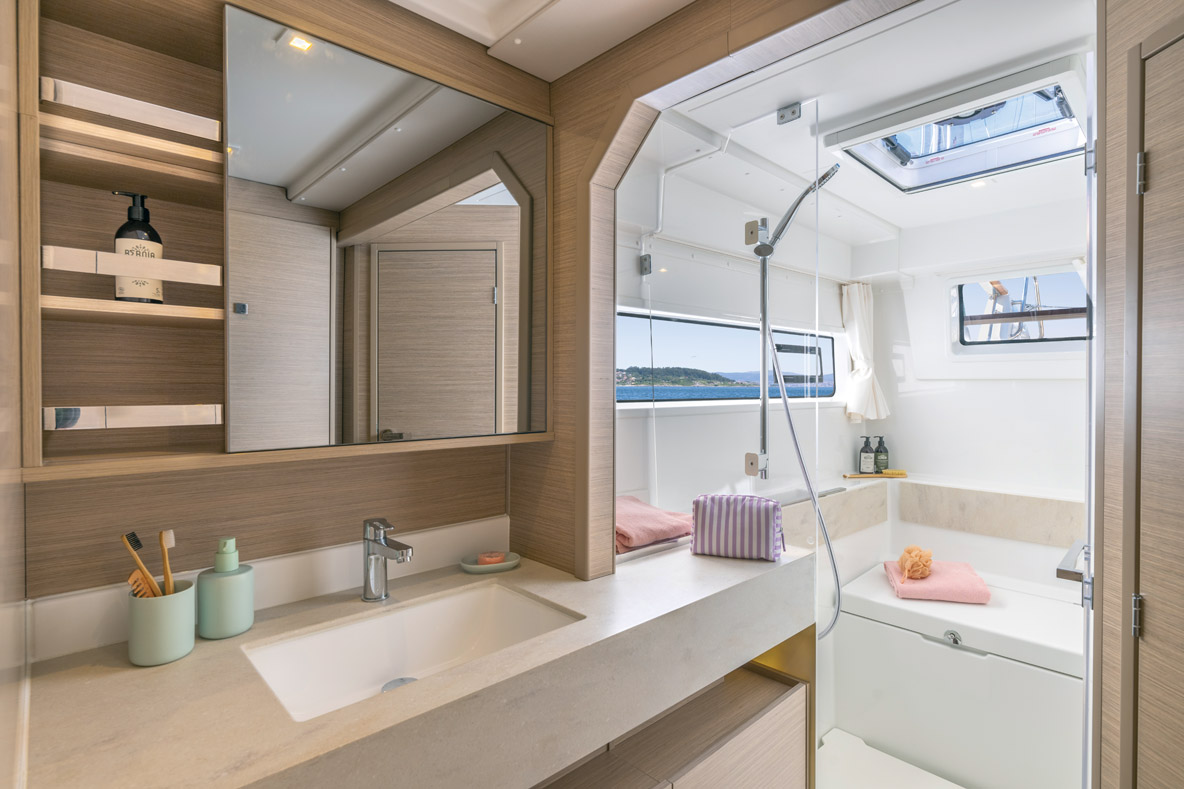
Now we understand why the forward volume has been enlarged: each cabin offers equivalent volume - and a respectable 6’5” (1.96 m) headroom. The wide (20”/50 cm) doors and ventilation, provided by a number of cleverly placed opening hatches, are also to be commended.
Conclusion
The Lagoon 43 perfectly meets the specifications of both an offshore family cruiser and a charter company looking for a comfortable unit capable of “turning” 20 to 30 weeks a year. This quest for optimum efficiency is also combined with the desire to offer a very competitive price, lower than that of the Lagoon 42. There’s an absence of risk-taking: two years after the launch of a complete range equipped with electric motors by historic competitor Fountaine Pajot, and the latest Leopard 46 proposal, Lagoon is sticking to its “internal combustion” position, as Bali has done. The manufacturer’s history, which saw it launch a hybrid catamaran as early as 2008 before returning to an all-diesel model, provides an explanation for this reluctance.
Could this choice change quickly? The answer will be revealed in the engine compartments of forthcoming models…
Openings in the bulwarks
Very competitive price
Gennaker sheet leads hinder circulation
Generator too close to owner’s cabin
Technical specifications
Architect: VPLP
Exterior design: Patrick le Quément
Interior design: Nauta Design
Length overall: 45’5” (13.85 m)
Hull length: 42’1” (12.82 m)
Beam: 25’3” (7.69 m)
Draft: 4’4” (1.31 m)
Air draft: 65’5” (19.94 m)
Light displacement: 30,848 lbs (13.9 t)
Mainsail: 646/732 sq ft (60/68 m²)
Genoa: 398 sq ft (37 sq ft)
Drivetrain: 2 x 57 HP
Water: 79 US gal (300 l)
Fuel: 151 US gal (570 l)
Berths: 6 to 13
CE Certification: A12/B14/C20/D30
Price: from $499,000 ex-tax