
The 39 and the 52 showed the way back in 2013, but it was the 42 and the 40 that turned the idea of setting the rig further aft into a winning formula. The 46 now picks up on this experience to apply this idea (new to cruising boats, though not racing!) to the heart of the Lagoon range... the stakes are high!
Infos pratiques
- Le chantier : Lagoon 46
- La fiche technique
-
 Découvrez notre vidéo exclusive
- Financez votre Lagoon 46
- Assuez votre Lagoon 46
- Articles autour du Lagoon 46
A significant transformation!
At the time of writing, the 46 is not yet available on the market, but we had the chance to try Prototype #1 (there will be three, before going into production). It is due to replace (in June 2019) the 450 which has already broken the record of the most prolific catamaran in the world (746 Flybridge version and over a hundred S versions!). Why, then, do they need to replace such a successful model? Probably because after 10 years in existence, you need to renew to maintain potential interest, attraction, surprise and creative image. But also because the technical changes which began with the 42 , then the 40 can’t remain isolated features and are intended to be generalized across the entire range.
A rapidly evolving style
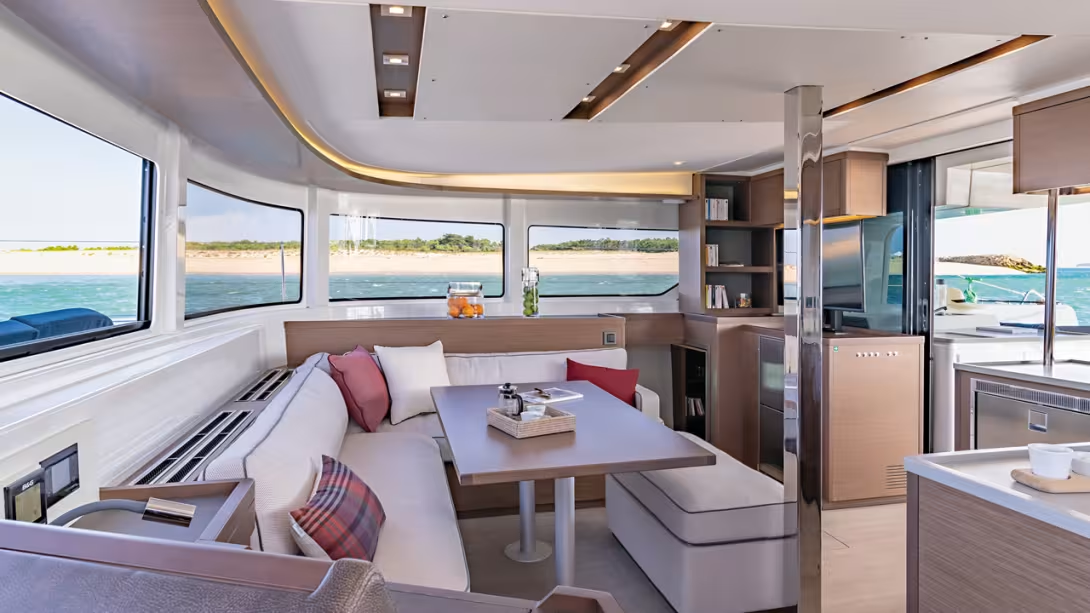
The 46 seems to be the product of synthesis of several simultaneous influences: The VPLP architecture which advocates a revolutionary rig and a more efficient centering of weight, and an enhanced exterior design. This is the result of the collaboration with Patrick le Quément (a great designer in the automotive industry) and the interior style by Nauta which highlights Lagoon’s desire for a more luxurious feel and ever more space.
Increasingly attractive lines
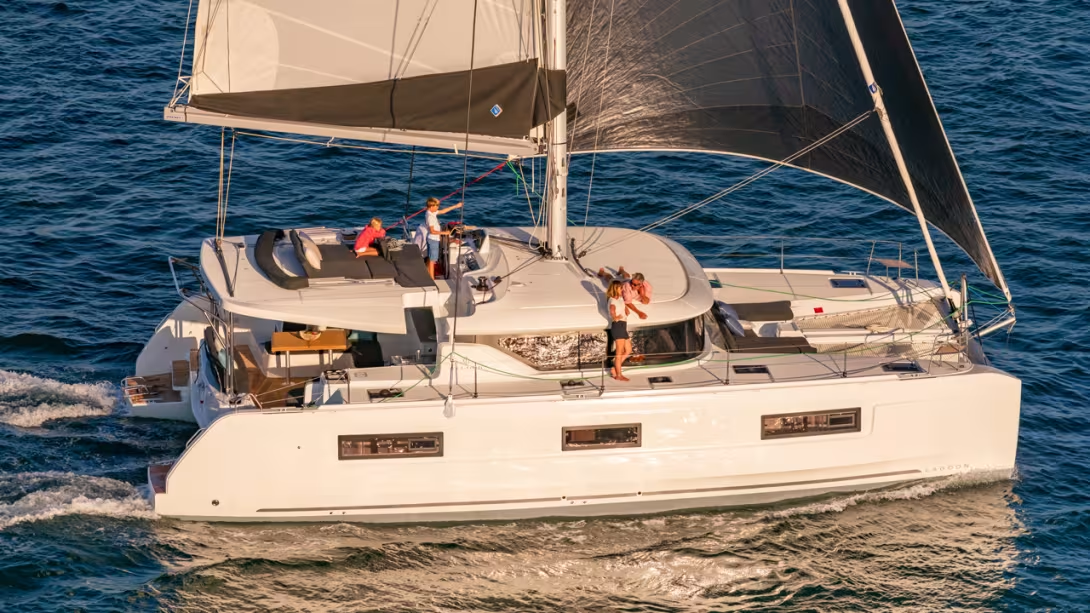
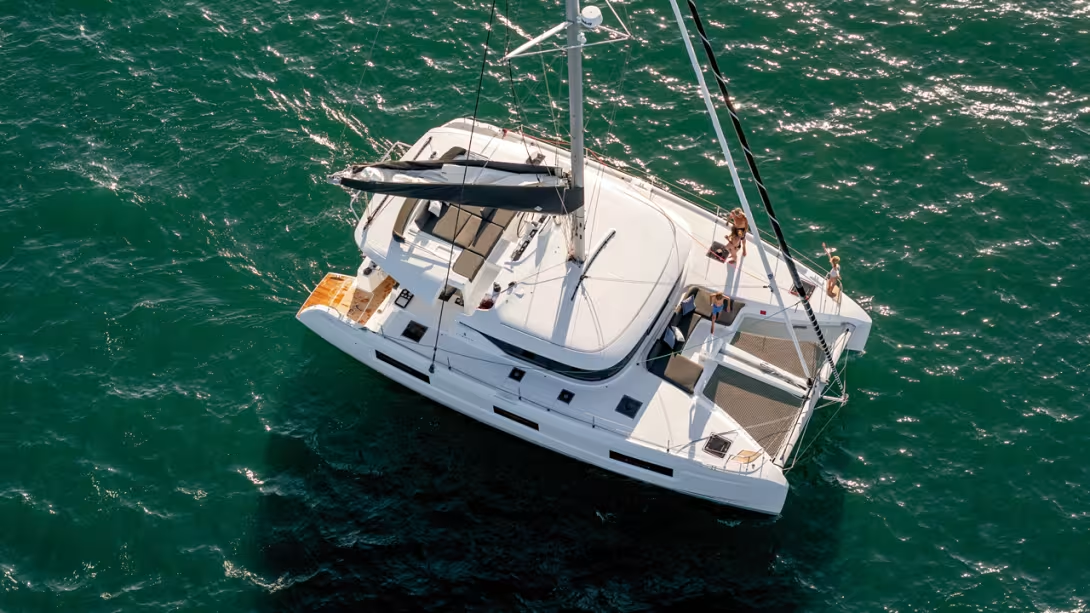
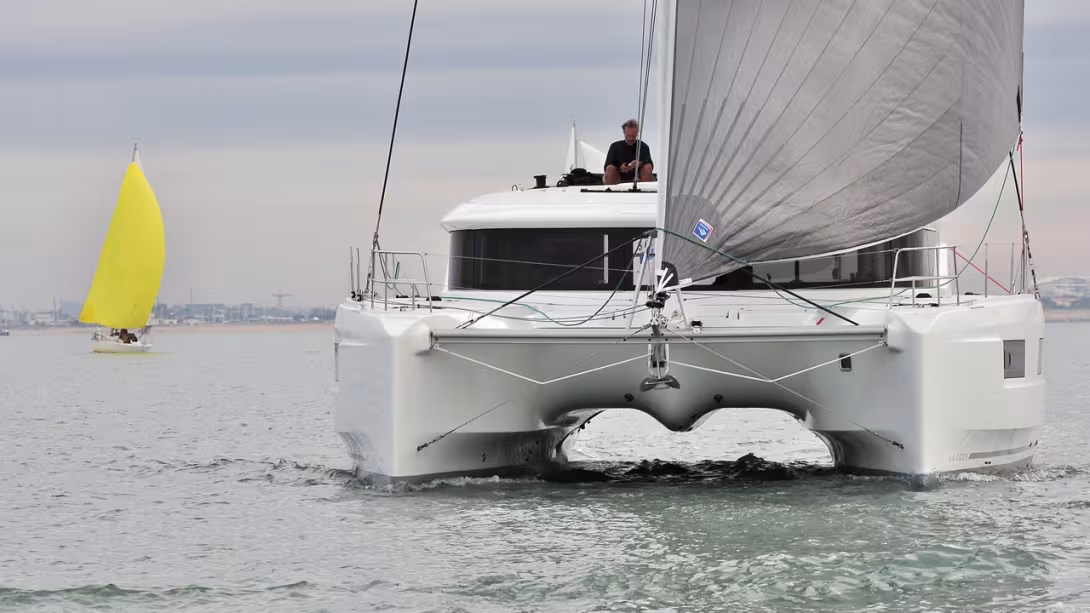
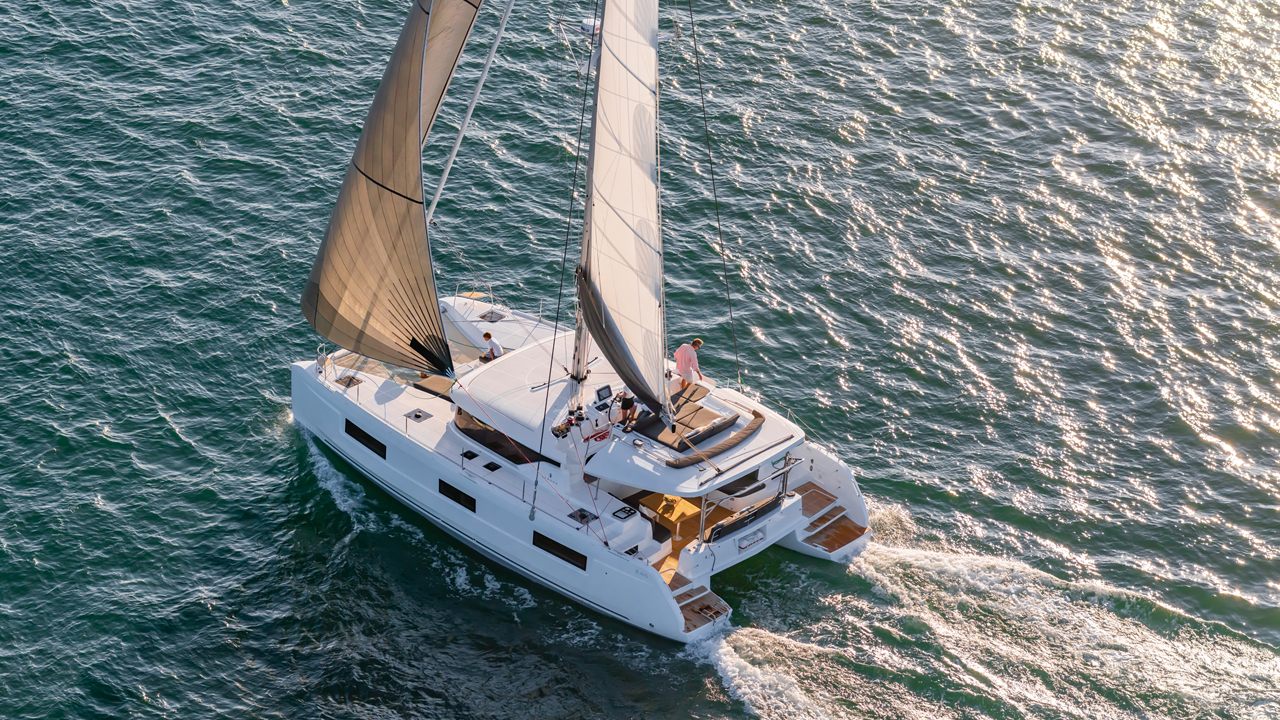
A lot of work has been done on the aesthetics and this has paid off. The perception of the boat is more flattering than with the previous shapes: the coachroof, as if slightly lifted from the structure is more aerial and the roof pillars are embedded in the continuity of the plexiglass panels, making the forward windows seem more fluid. The flybridge, more discreet than on the 440/450 and the easily folding bimini favor a rational use of these areas and a better view of the sailplan. The sculpting of the topsides, the insertion of 3 large lateral skylights in a reveal and the delicate rib of the exterior step allow the eye to better take in the general shape and the appearance of this catamaran whose sail plan rises to almost 25m in height, (it carries 197m² of canvas in light airs!). The new design of the sugarscoops improves access on board and also contributes to this renewed form.
Architectural parameters
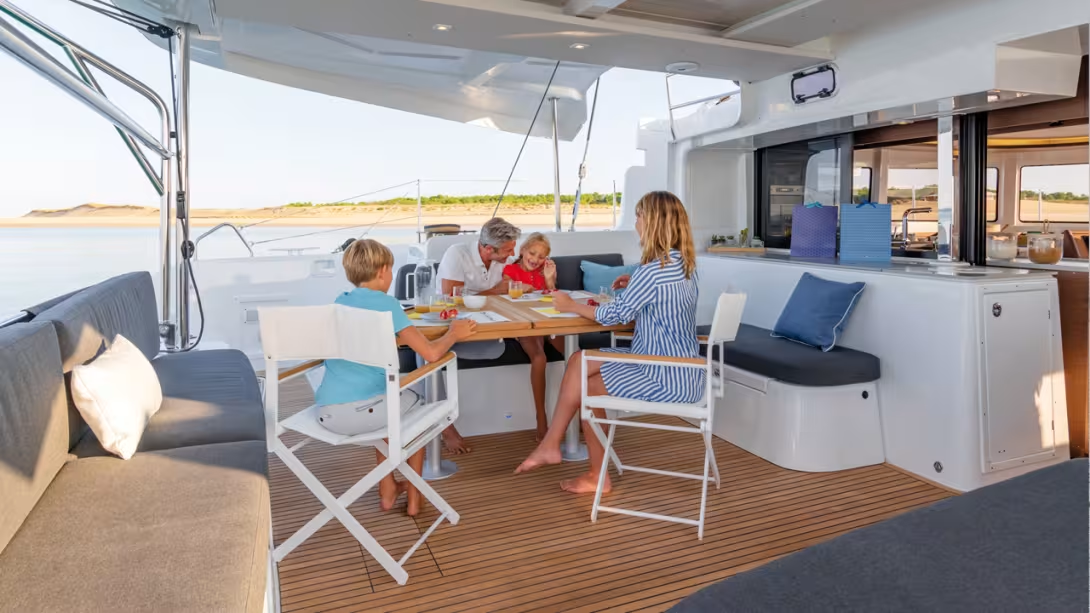
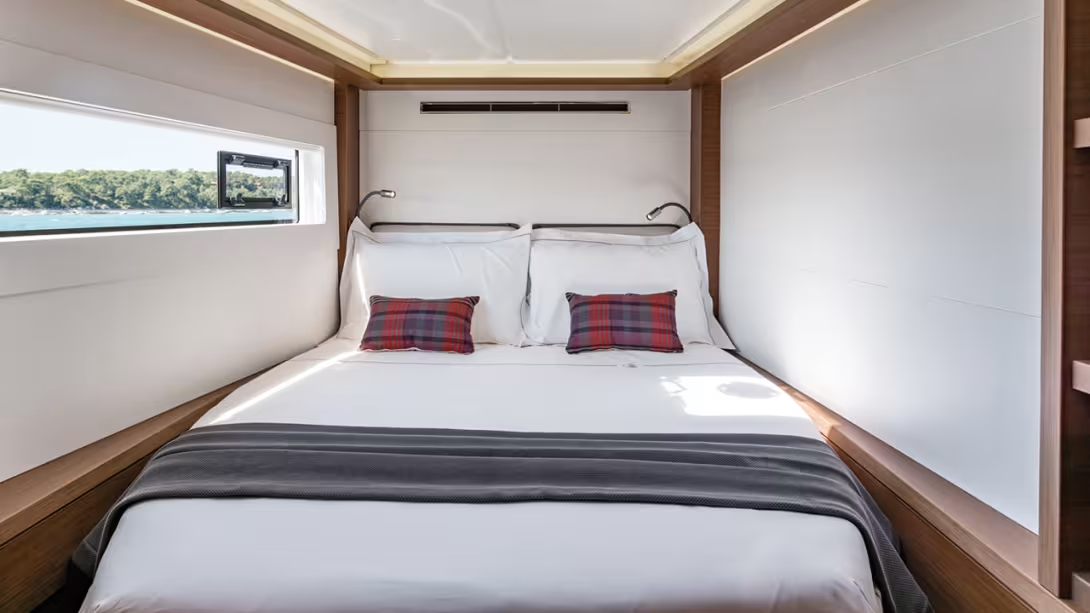
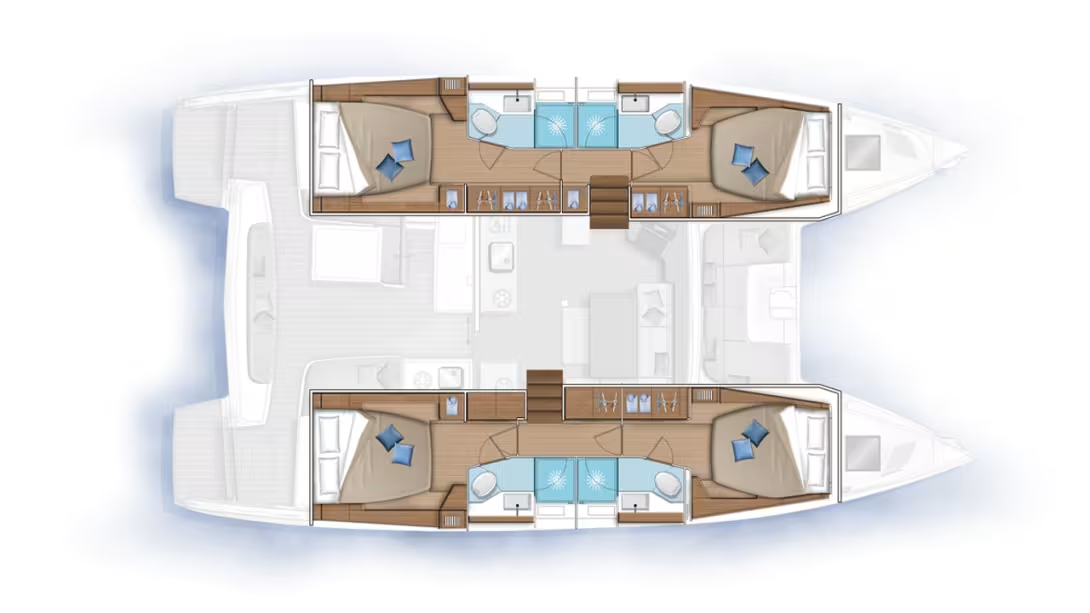
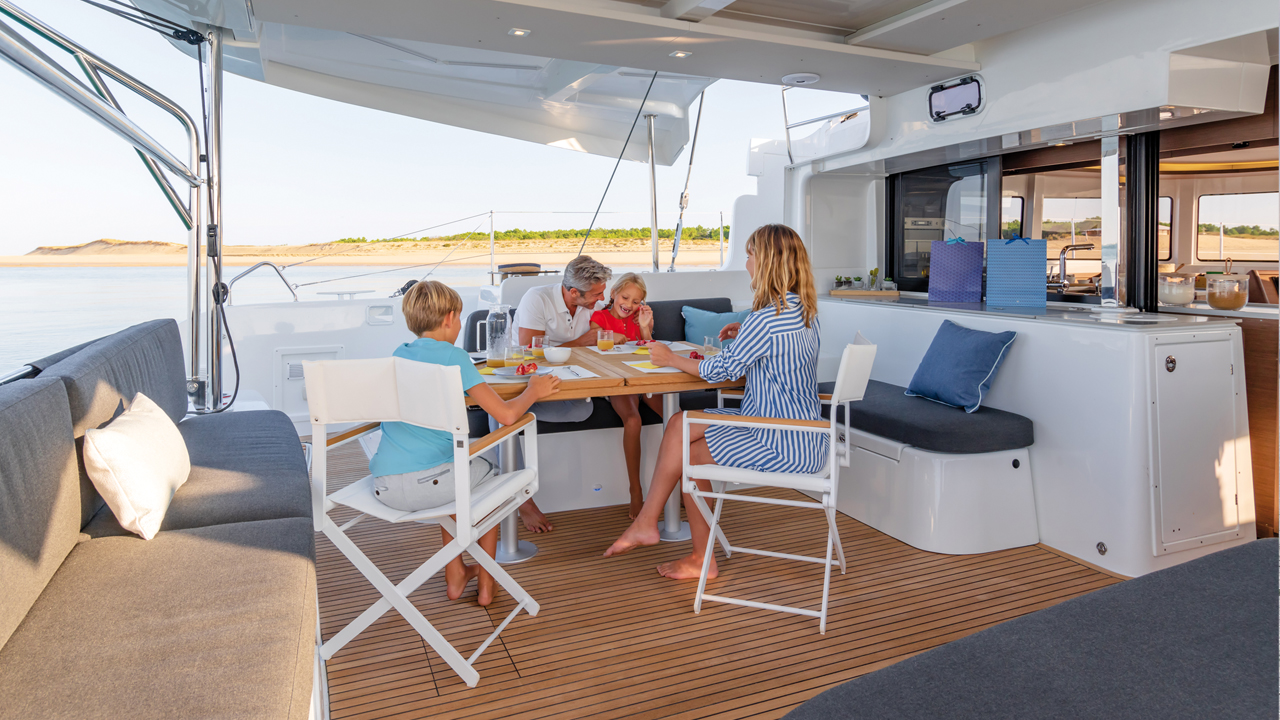
The visual perception of generous volume, the ergonomics, the quality of the light and the ventilation, associated with an internal atmosphere with enhanced features, all constitute the new criteria of appreciation for the clients, and thus become directions for the designers to follow. The need to offer the same level of comfort for all cabins in this size (a charter requirement, but not only!) involves fitting beds 1.60m wide in all four corners of the boat... now there’s a challenge! The widening of the hull sections is a challenge for the increasing volumes seen above the waterline. This transformation benefits occasional users of charter units of course, but also with owners’ versions. Despite the intensive use of infusion techniques and a vigilant struggle against unwanted weight (excessive counter-molds, lost stiffening elements of layout modules), the weight of the 46 is not reduced (it even weighs a ton more than the 45, for only a few centimeters extra length). The positive difference lies in much better centering of the weight, and a performance mainsail and very optimized headsails.
A more elaborate interior atmosphere
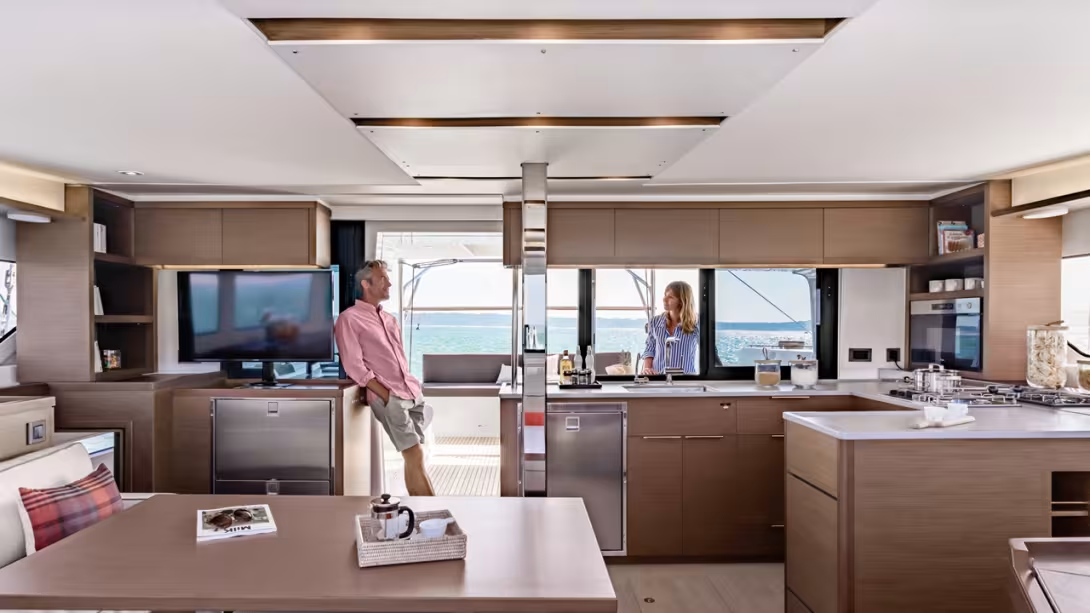
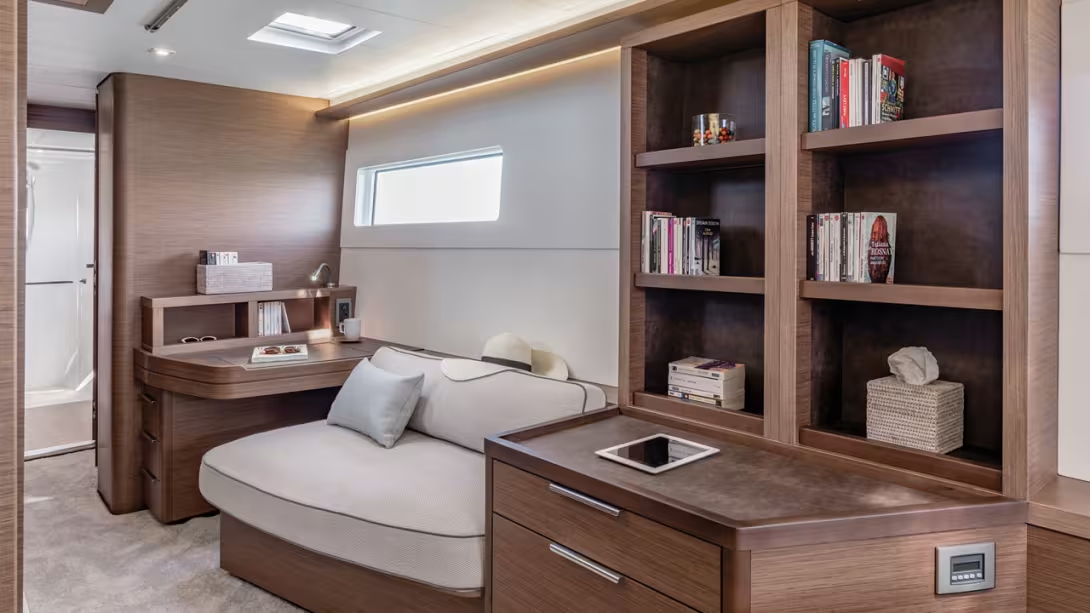
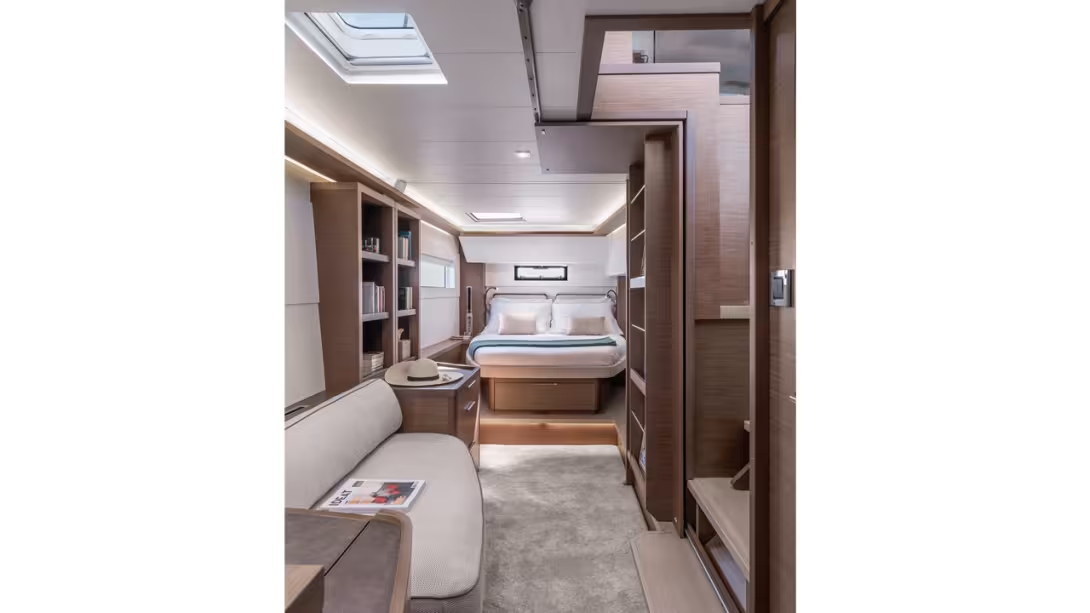
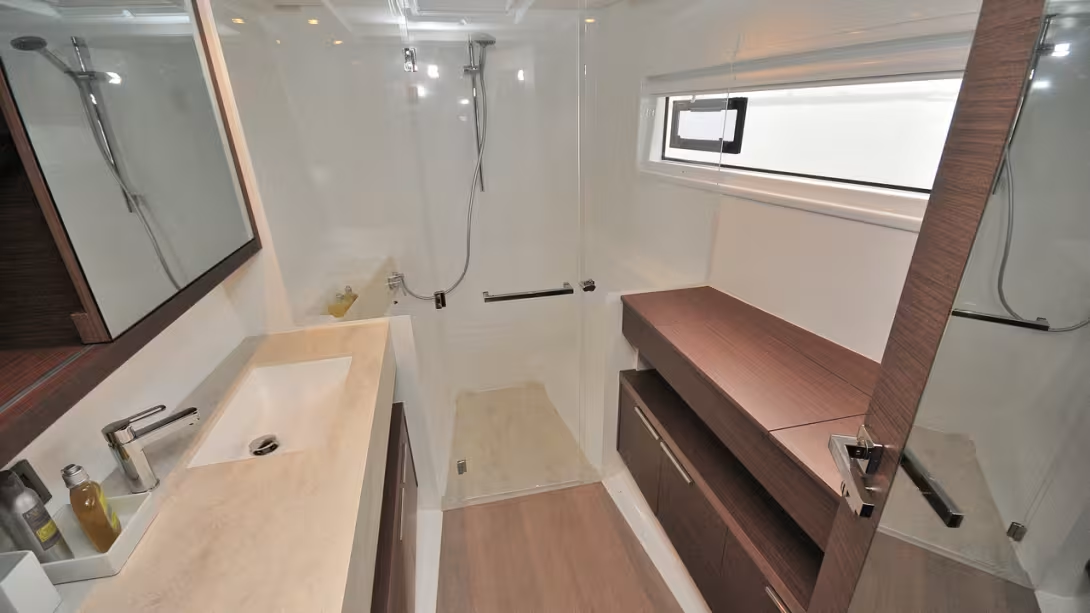
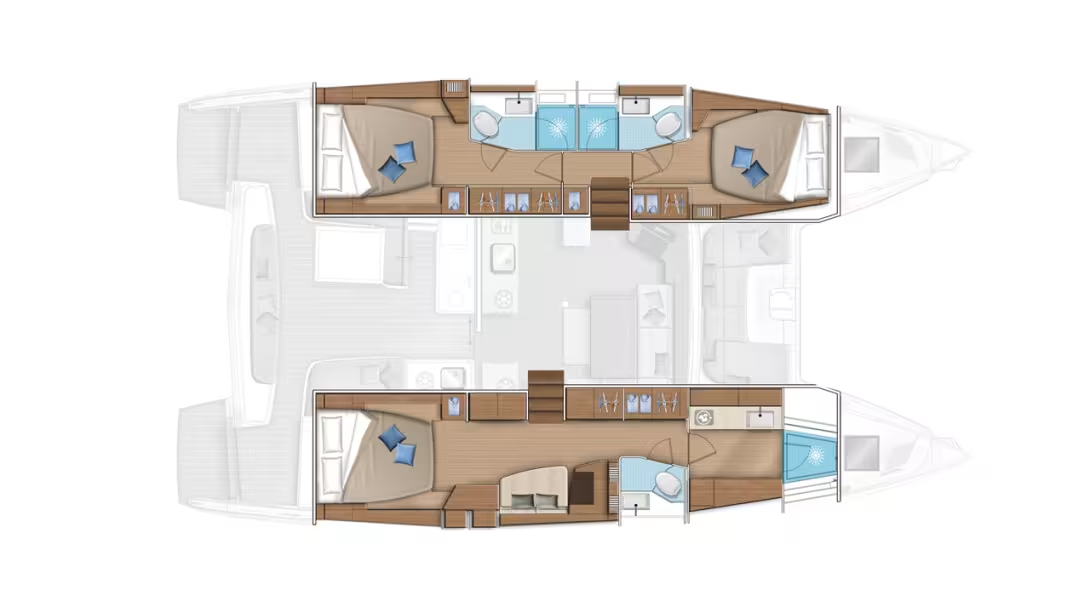
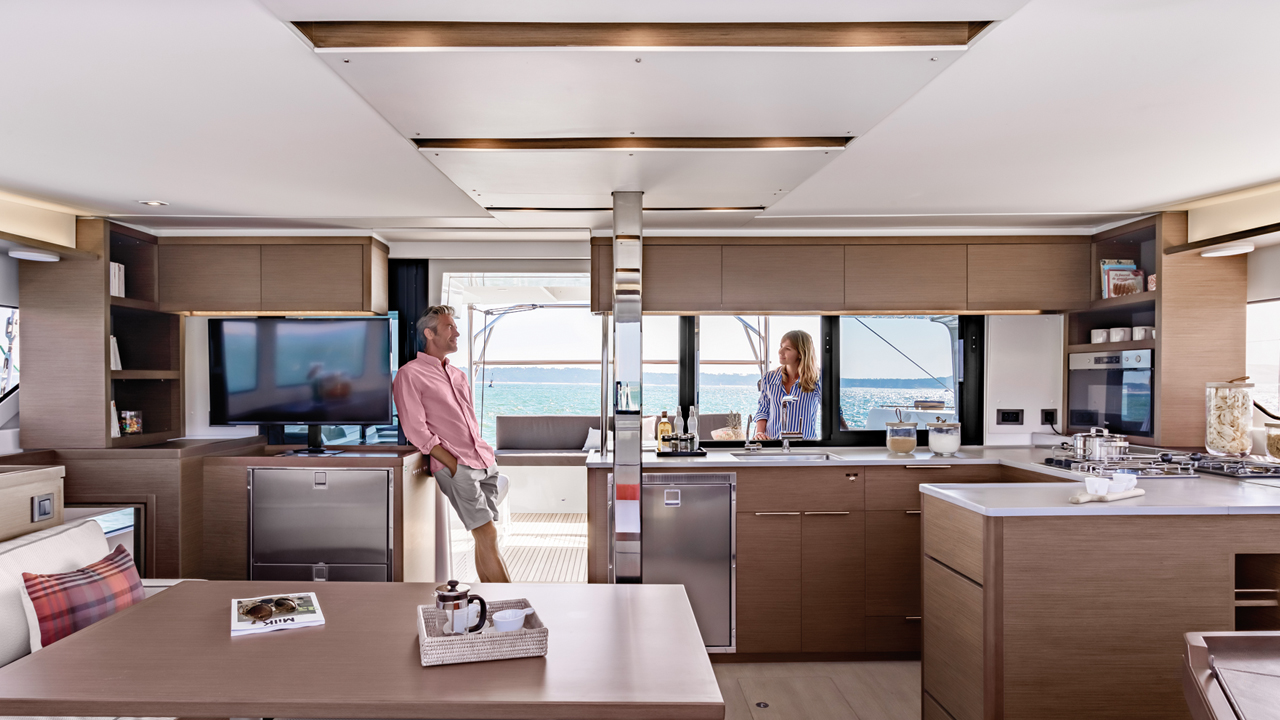
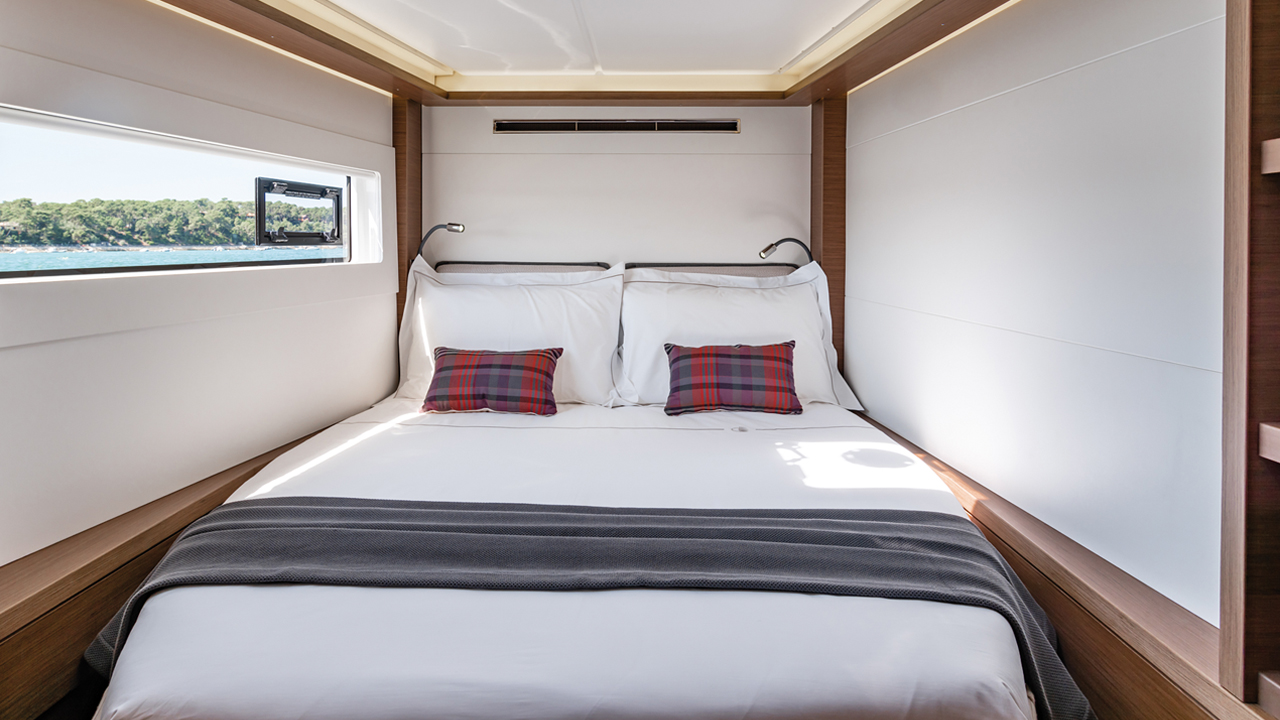
The choice of Alpi walnut trim contrasts skillfully with the light oak that has become widespread to the point of saturation. An element of surprise or is it reality? I find the general atmosphere more cozy and relaxing for the eyes! The light (indirect LED strips) is superb and provides a very popular subdued effect. In the owner's cabin, the design of the furniture has been completely renewed (desk, bookcase, sofa) and suggests that a benevolent decorator personally took care of your boat. The installation forward of real Island beds of 1.60m in width with lateral access will defuse all potential conflicts of cabin allocation within the crew: everyone enjoys the same benefits and also benefits from bathrooms and private toilets. In the owner's version, the XXL bathroom and separate heads compartment (electric toilets) are worthy of a small superyacht!
Quality technical installations
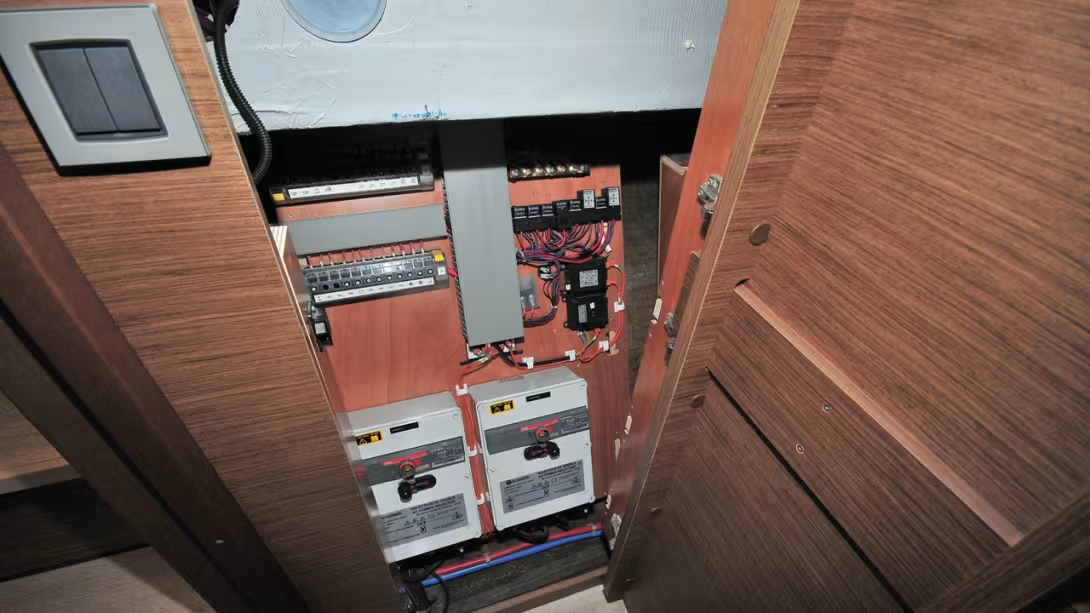
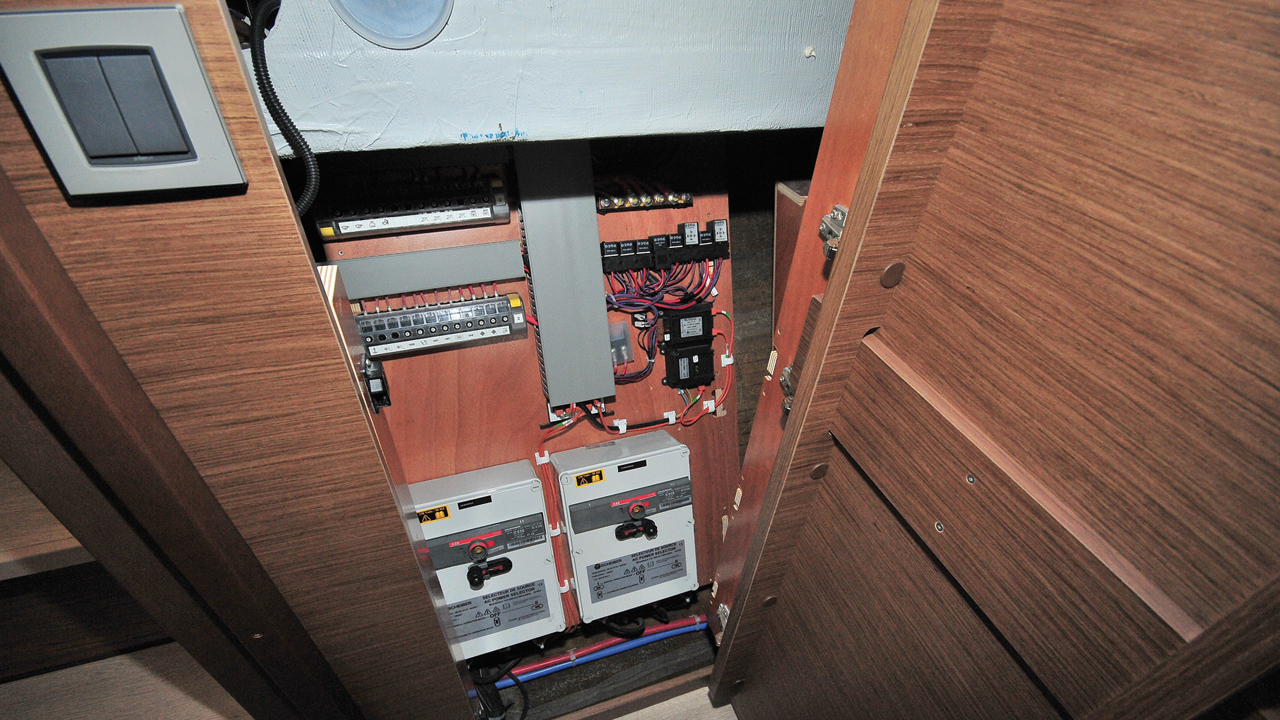
The engine compartment is well-designed, and has been carefully made watertight after the necessary connection holes in the front part (for hot water, electricity, engine controls) had been drilled. The legibility of the key elements is good, and the gooseneck of the circuit of water is located high up to avoid return to the the block. The circuit breakers and battery cut-offs are legible, accessible, solid and logically positioned on protection boards. The service battery bank (3x140A or there’s a 6X120A option) is housed in the starboard engine compartment at the lowest point, which is good for the center of gravity, but it would have been possible to put them 20cm higher and have them away from any potential water! Careful attention remains essential when closing and locking access hatches: spray from above is always dramatic for the mechanical parts, the alternator and electrical connectors!
The autopilot connected to the rudder link rod is securely installed and well-protected, and access to the ram, the motor and the helm lines is possible. The 1,700W windlass planned for a 12mm chain generously anticipates the efforts which will be required (this is one place you don’t want to be looking to save weight!). It is firmly installed, and the chain lead is part of the compression beam. Visibility for anchor handling maneuvers, as well as space for attaching the bridle are good. The forward lockers house the generator (option) and the water tanks; the fuel tanks are aft, under the beds; the black water tanks are located under the floors in the middle of the hull. Seen at all stages of installation on different models, the technical equipment is obviously the subject of much attention to prevent problems or facilitate after-sales servicing. The fixed fins are generously reinforced and fitted at the base of a thick sacrificial monolithic sole.
A very educational factory tour
After a first sail on the boat we were able to visit the Belleville sur Vie production site where the Lagoon 380, 40, 42 and 46 are built. I must admit I am more familiar with small or medium size yards, but this ultra-modern industrial site allowed me to discover "the other way to make multihulls". 450 staff run this 24-hour production line which is almost the opposite to what you would imagine. The creation of these boats takes place in 18 big successive stages which are clean and orderly. Each is supported by an autonomous production team of 5 to 12 people who are highly involved in the quality and risk prevention process. The composite phase is of course the critical link for creating the boat: it is carried out in rotating molds (to facilitate the manual preparation for the infusion process), followed by the fiber phases (projection of resin and cut fibers after gluing the plywood bulkheads) and interior technical painting (topcoat). This all happens in in a wet line in a well-ventilated space.
Then, once the nacelle and the outer half hulls are connected (with an asymmetric join, aft, to offset the axes of the rudder tubes and the transmission!), the chassis joins the assembly line where each autonomous team has 5 hours for a set of perfectly codified tasks. All the elements are in place, the tools and the operators remain at their station with each movement of the chain! The stage that we were lucky enough to see was the moving of the 18 boats (!) currently in the yard, to bring them to the next station, a few meters away. This gigantic movement is set like a symphonic score and calmly performed in a matter of minutes.
At the end of this breathtaking ballet, a catamaran comes out of the factory and then enters the pool for a series of ruthless tests which take 5 hours (high-pressure watertightness, engines, transmission, plumbing, electronics...). The most impressive stage is the fitting of the deck, during which fifteen or so qualified operators perform a trial assembly in a few minutes before connecting the networks prepared in advance and undertaking the structural bonding and end of assembly by bolting! Steadily but not too slow in order to respect very precise drying times. I admit to having been positively impressed by the meticulous rigor of this industrial organization and the juxtaposition of hundreds of artisans at work, the efficiency of the methods used and the final quality of the product. 300 Lagoons will come out of the 2700m² Belleville factory in 2019. For a catamaran like the 46, it takes 18 months of design and only 23 days in build using a production tool which is probably unique in the world.
In-water test
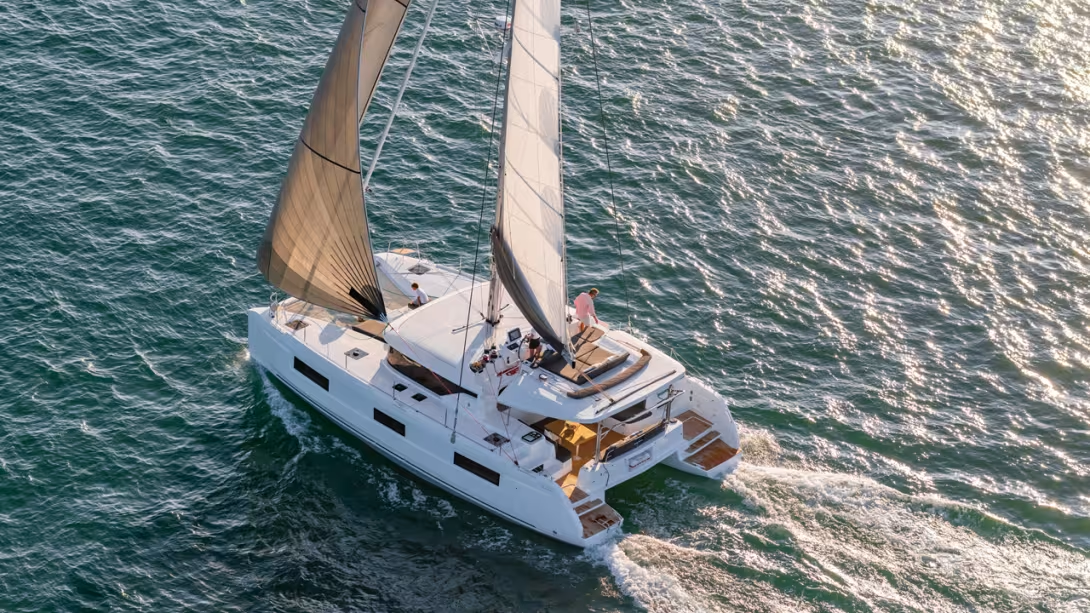
During the photo shoot we did before the test, I was struck by the consistency that emerges from the 46’s sail plan. It confirmed before my eyes several sensations experienced with the 40 and the 42 (boats that I had not observed under sail from the outside). The elevation of the mainsail is remarkable and the shape of the profile admirably thin, but not flat. The draft of the sail is perfectly held by battens which aren’t straining like some with XXL-sized booms and the square top is easy to control with sheet tension. It is not surprising that the performance of this profile is remarkable and the eyes only serve to confirm it! Paradoxically, the perception of sail area is minimized compared to what it is in reality (there is still 87m²!). The big code 0 is to the same standard: a superb sail, capable of being sheeted to the maximum (in the range of use of 2-15 knots) without deforming and "flies" perfectly on a reach. Once again, the recipe for efficiency! Aesthetically this sail plan is very flattering.
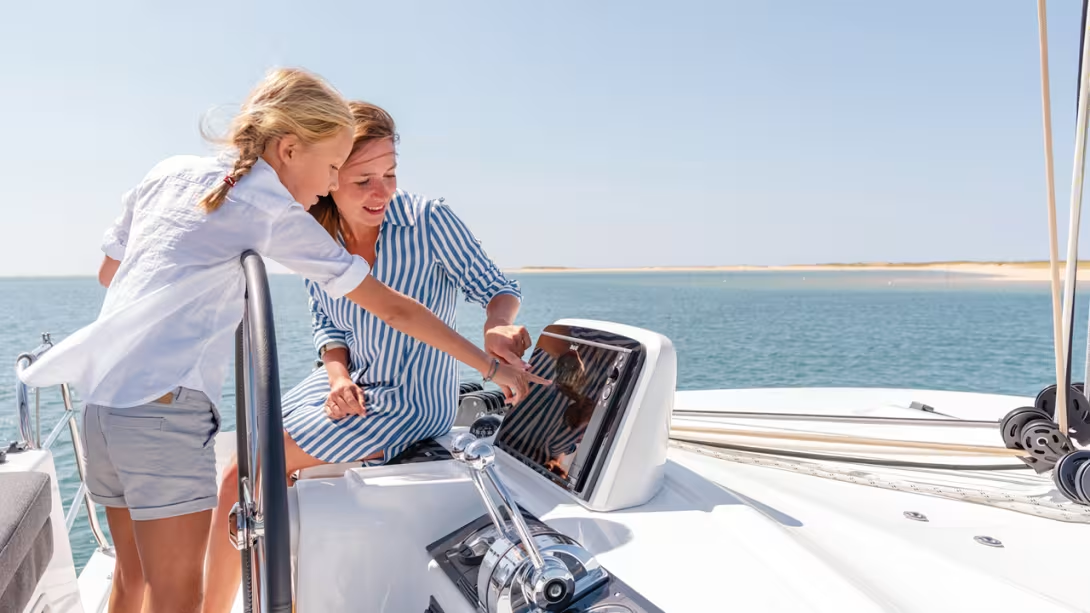
On board, the first sensations with the wheel are astonishing (as on the 40), with perfect directional effect and a pleasant sensitivity. The increased diameter of the leather-trimmed wheel makes it possible to have steering transmission (through fiber cables) that is efficient, precise and enjoyable to use. The 46 is easy to trim and flies with real ease in this light NE’ly breeze (10 knots). In squalls, the code 0 remains perfectly propulsive without being weighed down by the water which runs quickly off its surface without wetting the composite. The ease of use is of course reinforced by an efficient deck plan and generous Harken (electric) winches, but it is the "line driver" of the mainsail track which is at the heart of the pleasure of sailing short-handed (or solo). The instinctive, fast and powerful control of this automated traveler will undoubtedly allow many users to rediscover mainsail settings that they tend to neglect with previous generation sheet cars (open the opposite clutch, haul in the car with a winch which is sometimes under-sized, not forgetting to jam the clutch off again... not to mention the effort required to center the car before gybing!)... The new system is discreet and almost goes unnoticed on the deck. Its operation is carried out with admirable fluidity: a must-have!
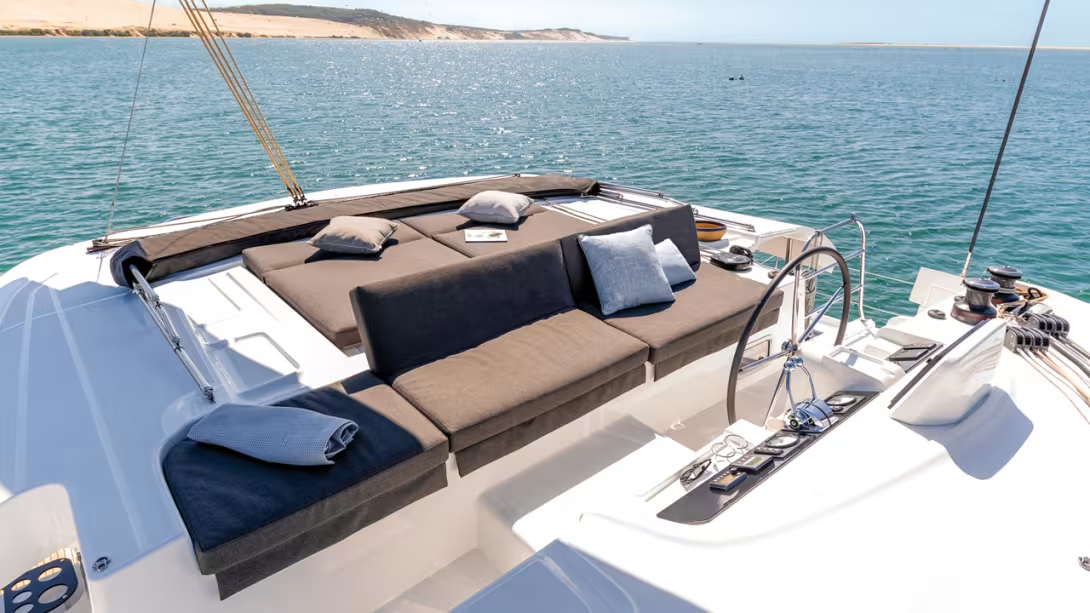
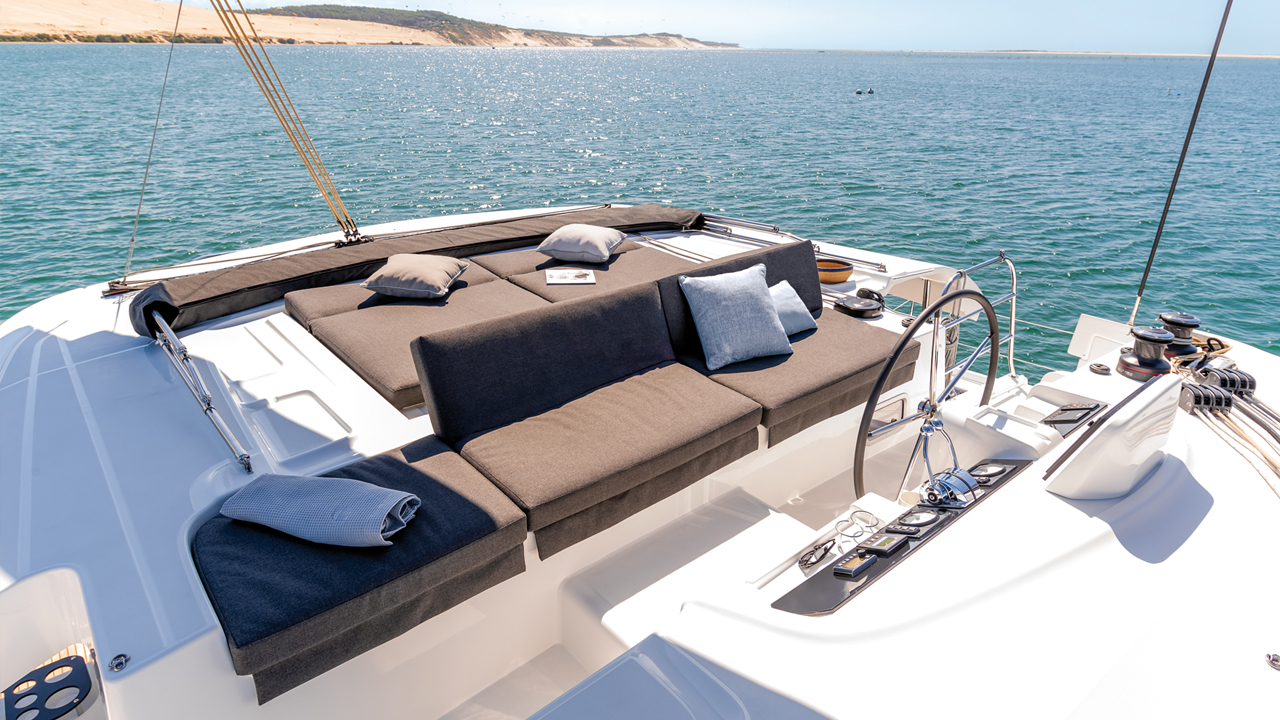
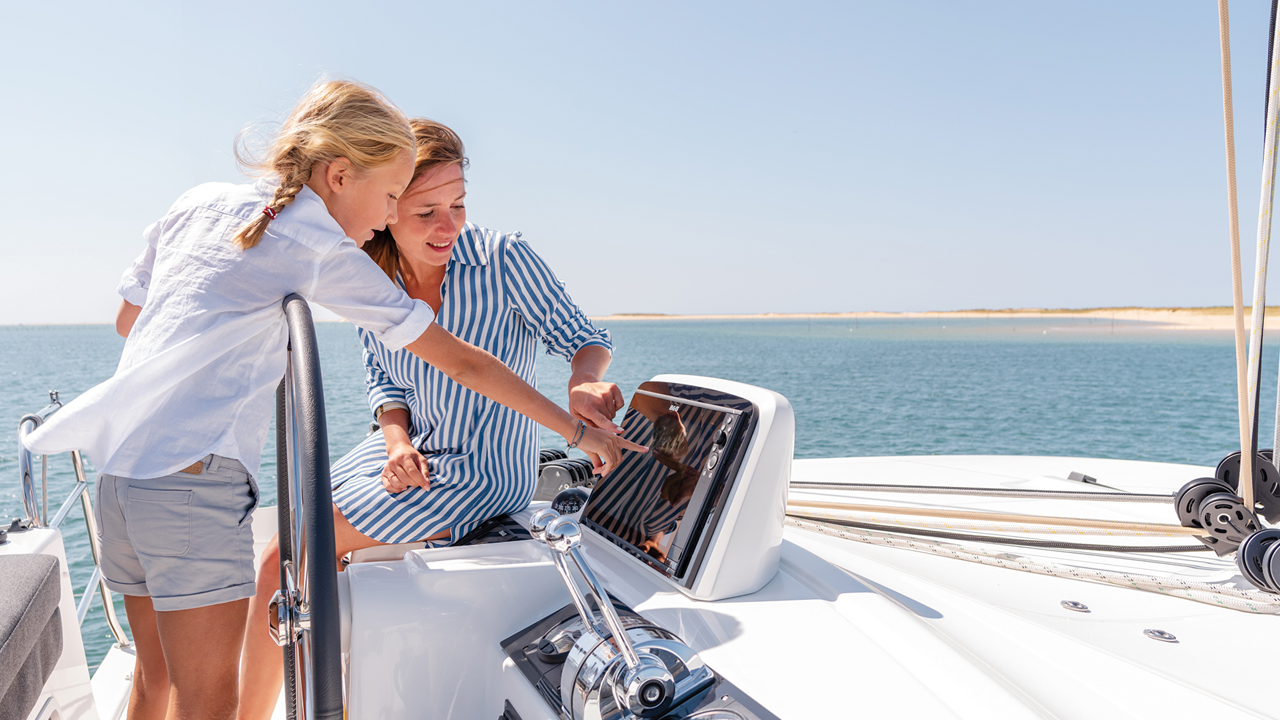
Not being a hardcore fan of flybridges, I somehow appreciated this one! The unpleasant sensation of being suspended aloft is much reduced, with the access from both sides improving circulation and the proximity with the lower living area. The absence of a rigid structure above your head allows excellent interaction with the sails and the panoramic visibility is of course excellent. I liked the folding cabriolet-style bimini, which can be put in place when needed, and stowed the rest of the time! The steering position is comfortable and the sunbathing area aft is a nice alternative for watch-keeping if the weather permits (otherwise you need to cover up!).
Despite being undeniably overweight and having an impressive living area, the 46 is agile and picks up well in light airs, remaining manageable on all points of sail and behaves like a lighter catamaran as the breeze varies. Close hauled and on freer points of sail, the efficiency of the sail plan maintains the enjoyment of helming, and careful observation of the instruments confirms the good performance. The numbers have only a relative value, but in less than 10 knots of wind, on flat sea the boat speed and the true wind are often not very different. 8.8 knots of speed in 12 knots true at 90° off the wind or even more impressive, 7 knots at 120° with 8 knots true. These are interesting numbers. Of course, this progression will not be linear, and we’ll have to wait for the breeze to significantly increase to exceed 10 knots of boatspeed, but subject to sensible loading (the last ton is the worst!), it is likely that the proven agility on the 40, in 30 knots downwind and a formed sea, will be similar. The tolerance of the sail plan (and especially of the mainsail which when sailing downwind won’t need reefing for a long time), combined with a self-tacking jib at any event should allow for playful runs and comfortable average speeds in good conditions.
Under engine, the hourly consumption with 2x45hp Yanmars is 9.6l / hr per motor at 2400rpm with fixed propellers (speed: 7.85 knots) while it is 8l at 7.50 knots with three-bladed folding propellers. Equipped with the 57hp Yanmars, the consumption is 9.4l / h / engine at 7.90 knots (fixed propellers) and 8.1 knots for 9.9l / h with folding three-bladed, showing a very slight advantage to folding propellers, but a huge plus under sail (often 1 knot of difference!). The maximum speed is about 8.85 knots. 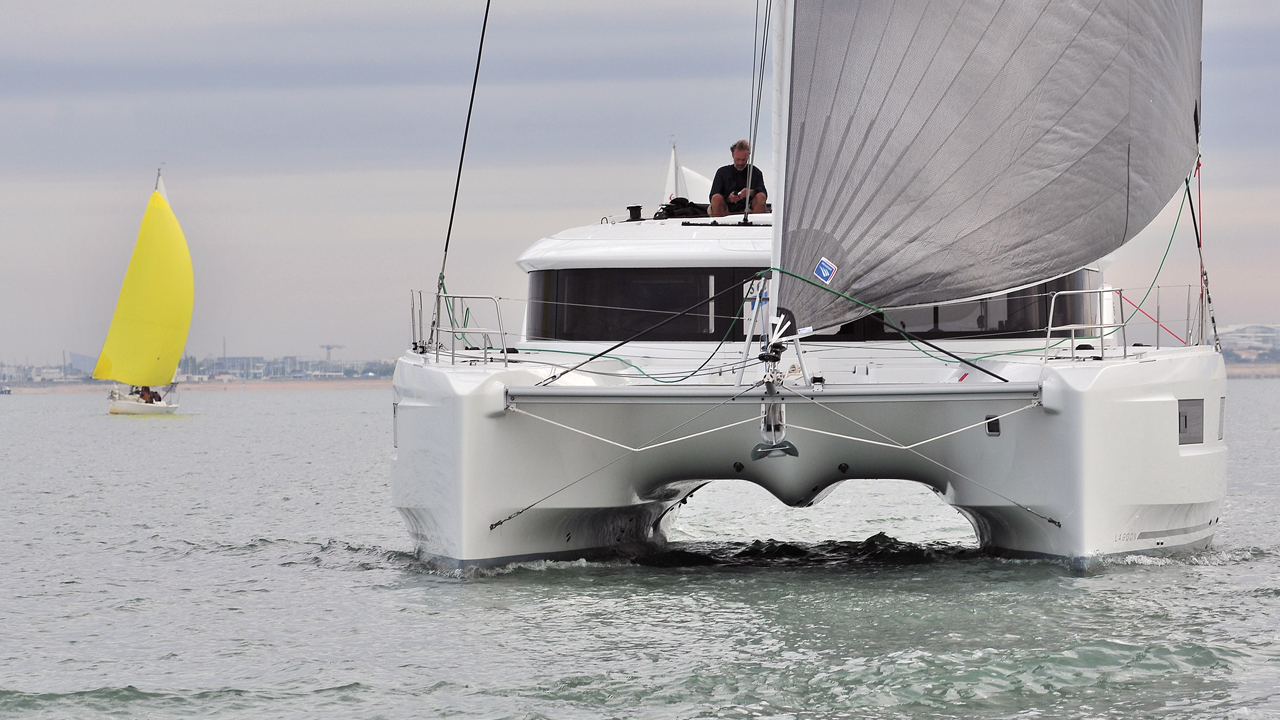
Conclusion
It’s a shame we weren’t able to test the 46 in the choppier conditions we are used to, but paradoxically, the conditions on this October week did not lend themselves to it! This model actually validates the new sail plan and demonstrates its ease and relevance on a 14m catamaran! Finesse, elevation, beautiful profiles, and versatility of the fore-triangle are synonymous with easy performance and driving pleasure. The deck plan, with the new motorization of the mainsheet traveler is a model of simplicity and efficiency. The revisited interior will probably win the vote of fun-loving crews. The quality of manufacture is clear.
Technical specifications
Builder: Lagoon
Architects: VPLP
Exterior Designer: Patrick le Quément
Interior Designer: Nauta Design
Length: 13.99m
Beam: 7.96m
Air draft: 23.99m
Draft: 1.30m
Light displacement (CE standard): 16.6t
Upwind sail area: 140m²
Mainsail: 87m²
Self-tacking jib: 50.5m²
Code 0: 110m²
Construction: Balsa/glass/polyester sandwich with bulkheads in glued or laminated plywood
Fresh water: 2x300l
Diesel: 2x520l
Holding tanks: 2x120l
Bridgedeck clearance: ??????????????
Motors: 2x45 or 2x57hp option (model we tested)
Price: €433,000 ex-tax
|
Model |
Builder |
Upwind sail area in m² |
Weight in T |
Basic price ex-tax |
|
SAONA 47 |
Fountaine/Pajot |
127 |
13.3 |
€496,000 |
|
LEOPARD 45 |
Robertson/Caine |
124 |
14.5 |
€399,000 |
|
BALANCE 451 |
Balance cats |
132 |
8.4 |
$477,000 |
|
NAUTITECH |
Nautitech |
112 |
10.8 |
€413,000 |
|
BALI 4.5 |
Bali |
111 |
11.6 |
€391,540 |
THE ESSENTIALS:
- Innovative sail plan, enjoyable and good performance
- Quality/comfort/price point very carefully studied
PLUSES
- Efficient and tolerant mainsail
- Exemplary automation of the mainsheet traveler
- Rig set aft giving performance under code 0 and under self-tacking jib in a breeze
MINUSES
- Fiberglass projected onto the plywood bulkheads adds weight
- The service battery bank could be raised up out of reach of bilge water
- The secondary electrical panel (at the bottom of the starboard companionway) has little protection for accidental water run-off
-
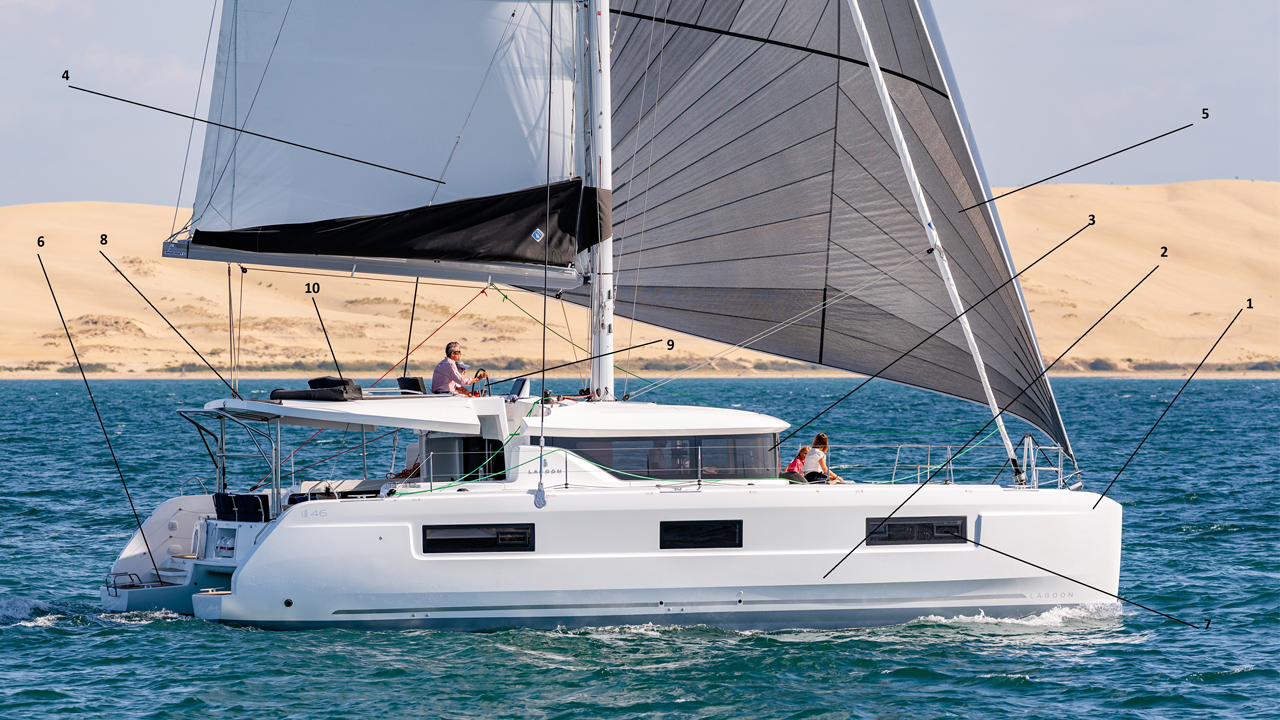
1: The break in the shape of the bows and the sculpted topsides enhance the overall perception of the lines
-
2: The outer step in the hull is well-integrated into the silhouette. The inner step blends into in the gull wing form under the nacelle
-
3: The structure uprights of the coachroof disappear behind the polycarbonate windshield and the bimini is more airy. A large sliding front panel creates a direct opening to the forward cockpit and effective forced ventilation.
-
4: The profile of the mainsail, directly related to the aft-set rig and the shortened boom is superb! The top of the main benefits from stronger wind and its performance is better
-
5: To complement the "revolutionary" main, the 110m² code 0 is the boat’s turbo-charged sail for light weather and the lower end of medium airs. The furling, self-tacking jib and the mainsail constitute an all-weather engine with excellent tolerance to breeze variations.
-
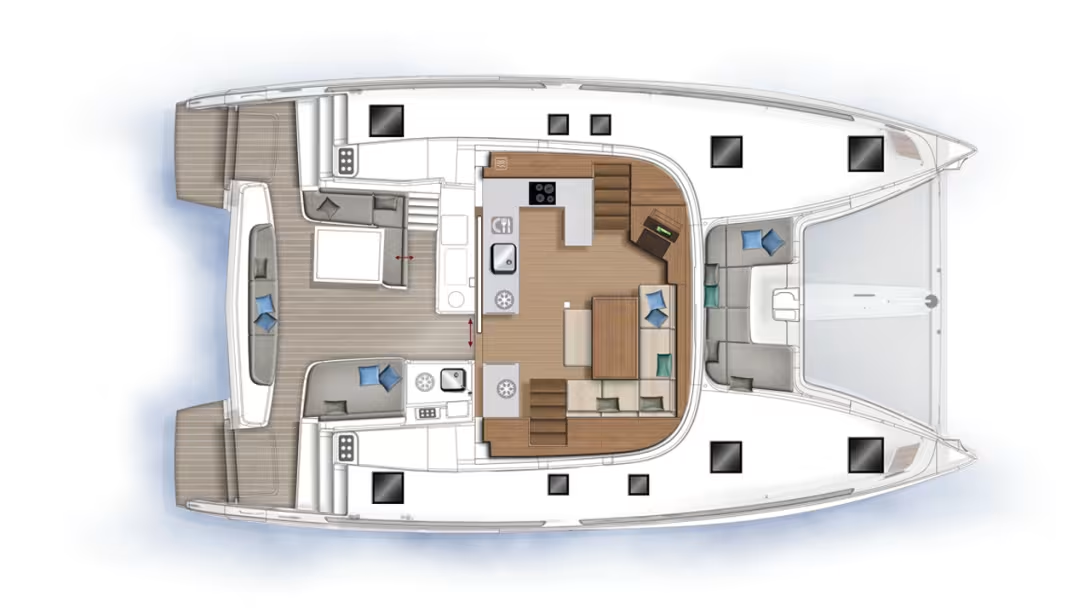
6: Congratulations for the excellent ergonomics of access to the cockpit, reduced to only 3 steps!
-
7: Large skylights, increased ventilation and attractive aesthetics thanks to new plexiglass cutouts
-
8: In these sizes, the Harken Line Driver is the secret to controlling the mainsheet car! A must-have!
-
9: The positioning of the flybridge is clever and reduces the impression of being suspended aloft
-
10: The cabriolet bimini is also a good idea. Only to be used when it’s essential, but it doesn’t obstruct the view of the plan of sail
