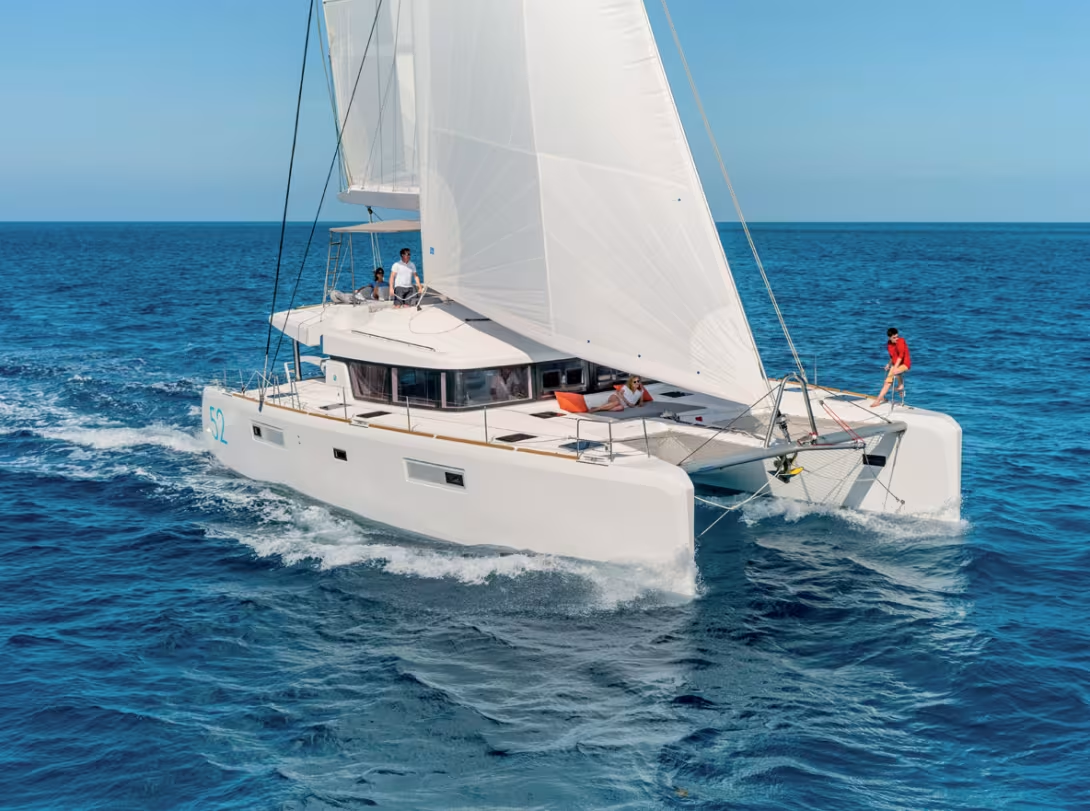
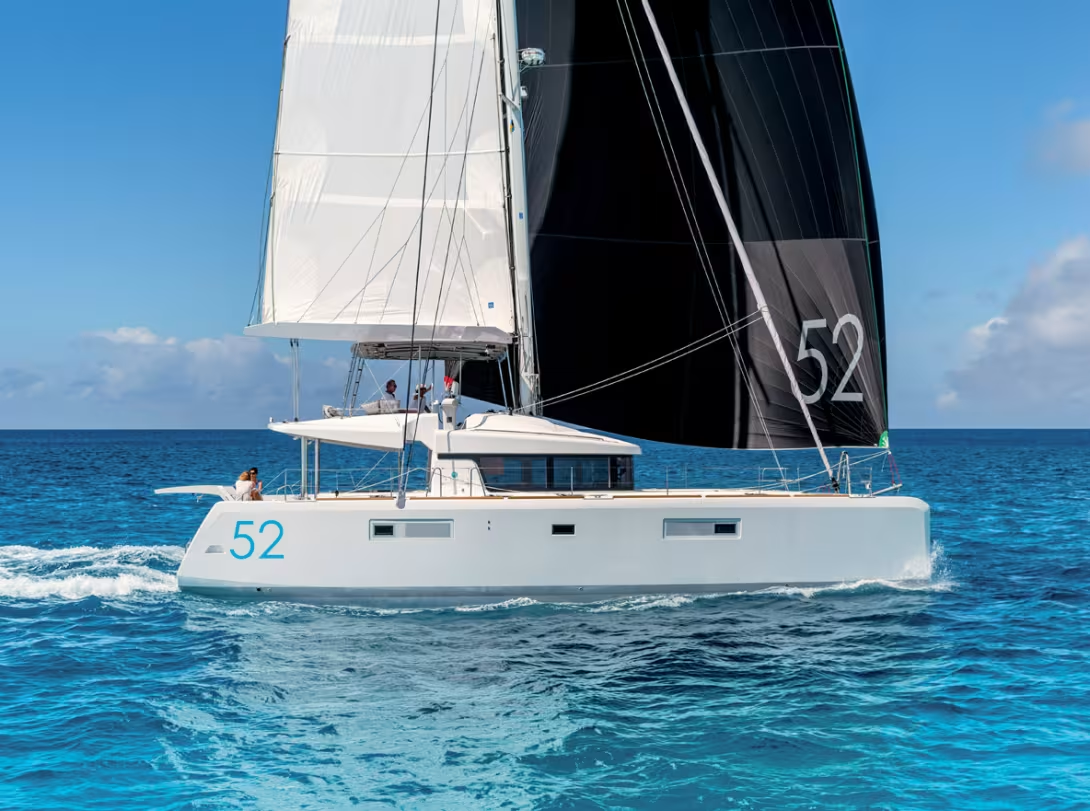
Late 2012, Lagoon went all out by presenting two models with the rig stepped far aft on the coachroof: the 39 and the 52. The larger of the two understandably featured more harmonious lines thanks to a better integrated superstructure. As for the “diamond” shape bows at the stemhead, they offered a welcome sporty touch... For almost 10 years, the Lagoon 52 was the brand’s largest catamaran capable of being sailed by a family without the need for a professional skipper. Only just out of production, this model, available in a SporTop version (without flybridge) from 2016, is becoming a devilishly seductive second-hand catamaran.
Infos pratiques
- Le chantier : Lagoon 52F
- La fiche technique
-
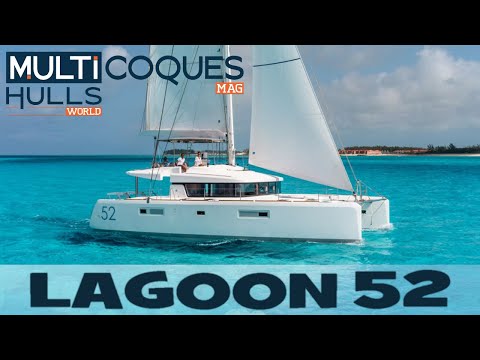 Découvrez notre vidéo exclusive
- Financez votre Lagoon 52
- Assuez votre Lagoon 52
- Articles autour du Lagoon 52
The Lagoon 52 was therefore the initiator of a new generation, one that was much more innovative than the shipyard’s previous models. This model was the replacement for the 500, of which only 150 were built, and remained faithful to the Lagoon philosophy - maximum comfort for life on board, ease of handling, vertical coachroof windows, etc - but it went much further, with its aft-set rig: the mast is no longer stepped forward of the coachroof but on top of it, which required the creation of a supporting structure - a galvanized steel beam integrated into a composite reinforcement, the forces of which are taken up by the bulkheads and hulls. The initial idea was to optimize performance while simplifying the life of the crew. The theoretical advantages are numerous – a sleeker mainsail, better centered weight so less pitching, less compression with wider shroud angles, so smaller and lighter profile, shorter boom for easier gybing and reefing, larger and more versatile headsails and therefore an efficient self-tacking jib. For Marc Van Petheghem of VPLP, the aft-set rig also meant “Finer bows, more buoyancy aft, but also better visibility forward”.
Convincing performance in 10 knots of wind
Three rig configurations were offered: standard, square-topped mainsail and VMG pack with overlapping genoa and removable staysail without a fixed or adjustable forestay. Lagoon recommended the Code 0 and asymmetric kite combination rather than a single gennaker. With hindsight, it turns out that at least one downwind sail is essential to boost this catamaran, which proves to be quite efficient and comfortable under way as long you’ve got more than 10 knots of wind. In light medium conditions, during our long test in April 2013 (a delivery trip from La Grande-Motte to Palma de Majorca), we noted an average speed of 6 to 8 knots and even 9 to 12 when the breeze picked up. The manufacturer offered two engine options (a pair of either 57 or 80 HP motors). A large majority of the models sold were equipped with the more powerful ones, a configuration that we would recommend for peace of mind when propelling a catamaran that’s more than 20 tons lightship.
Versions to suit all tastes
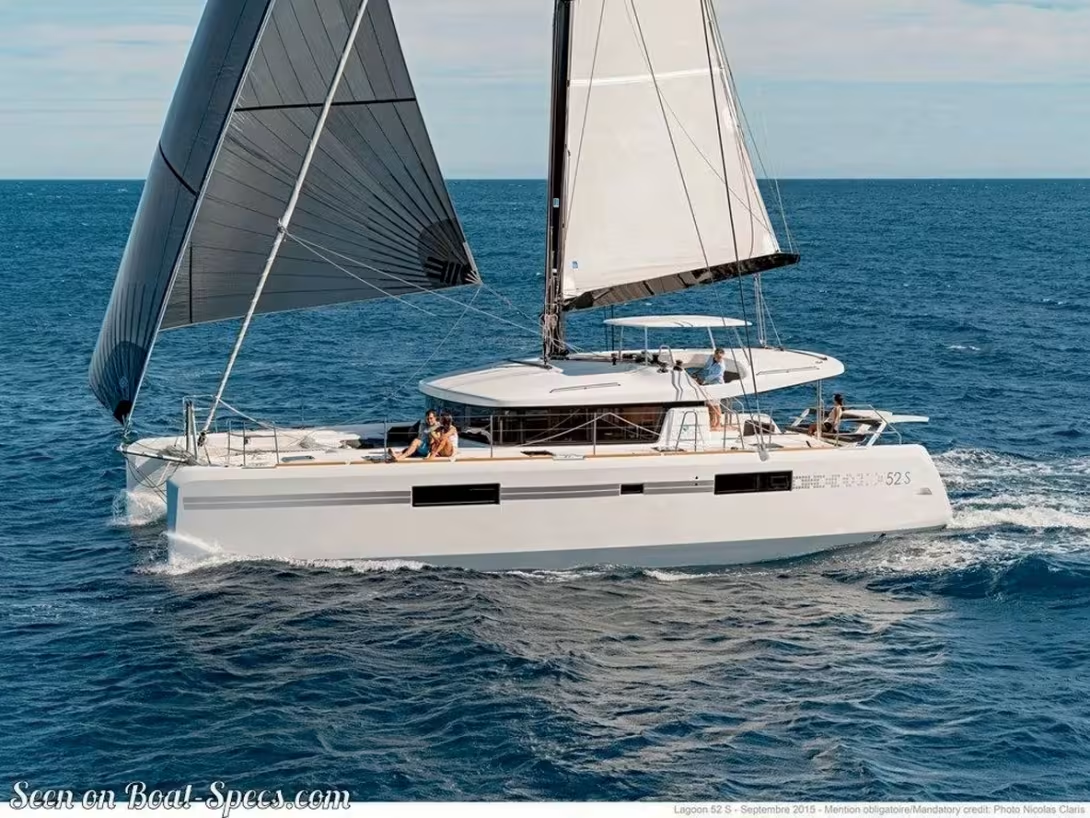
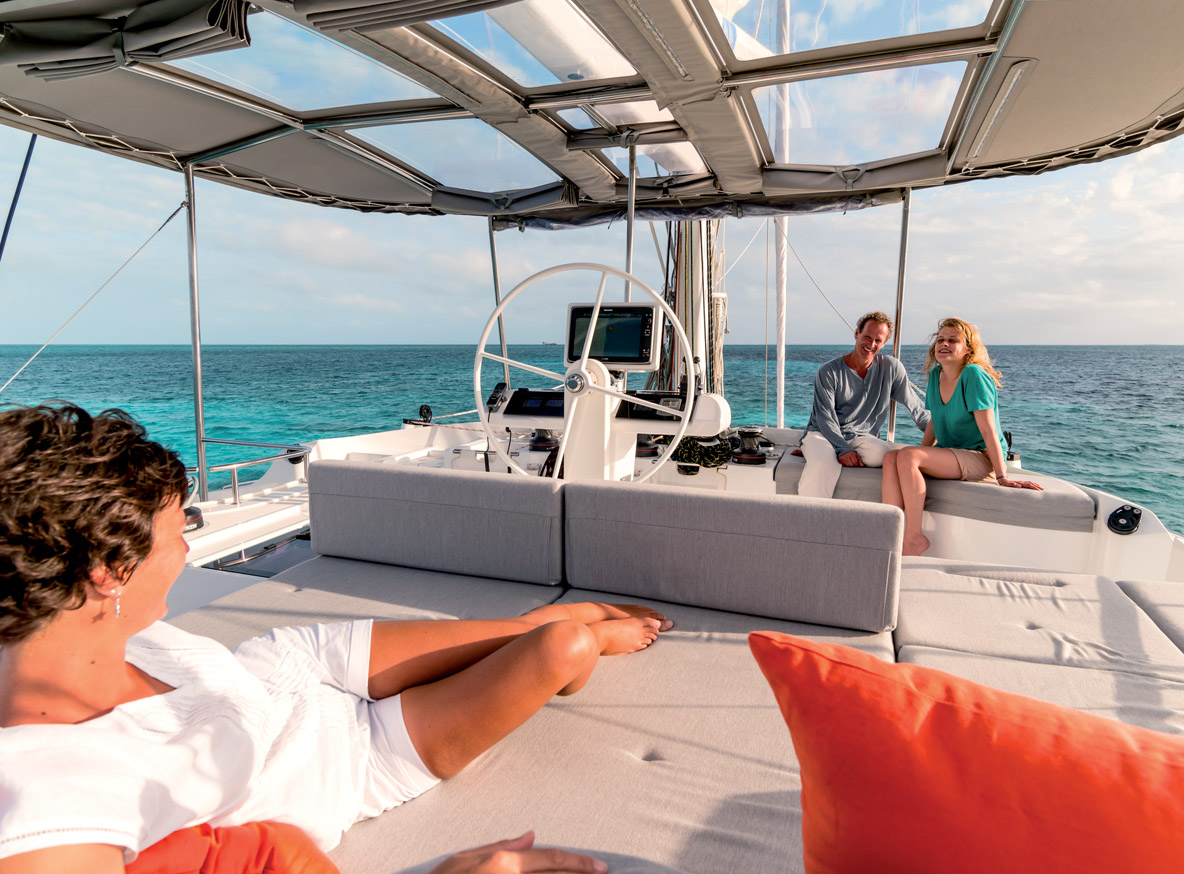
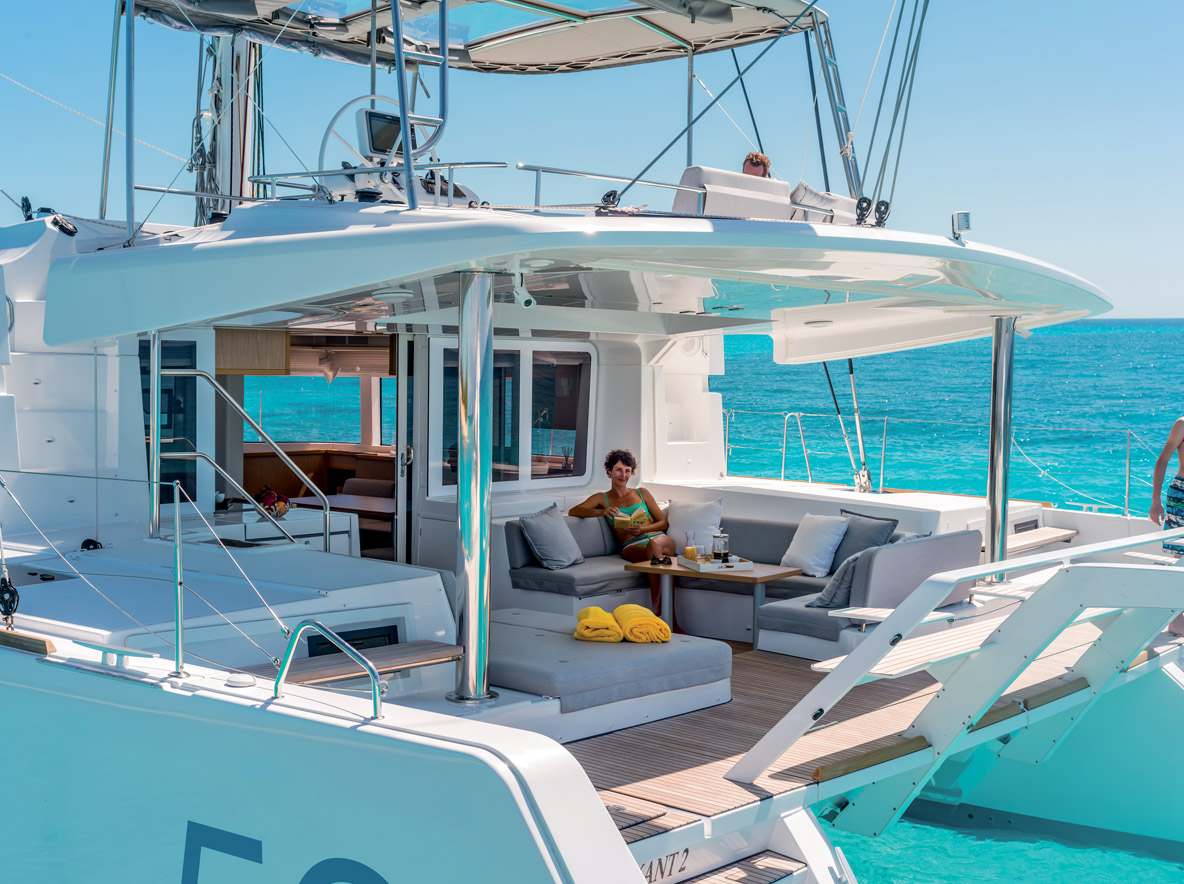
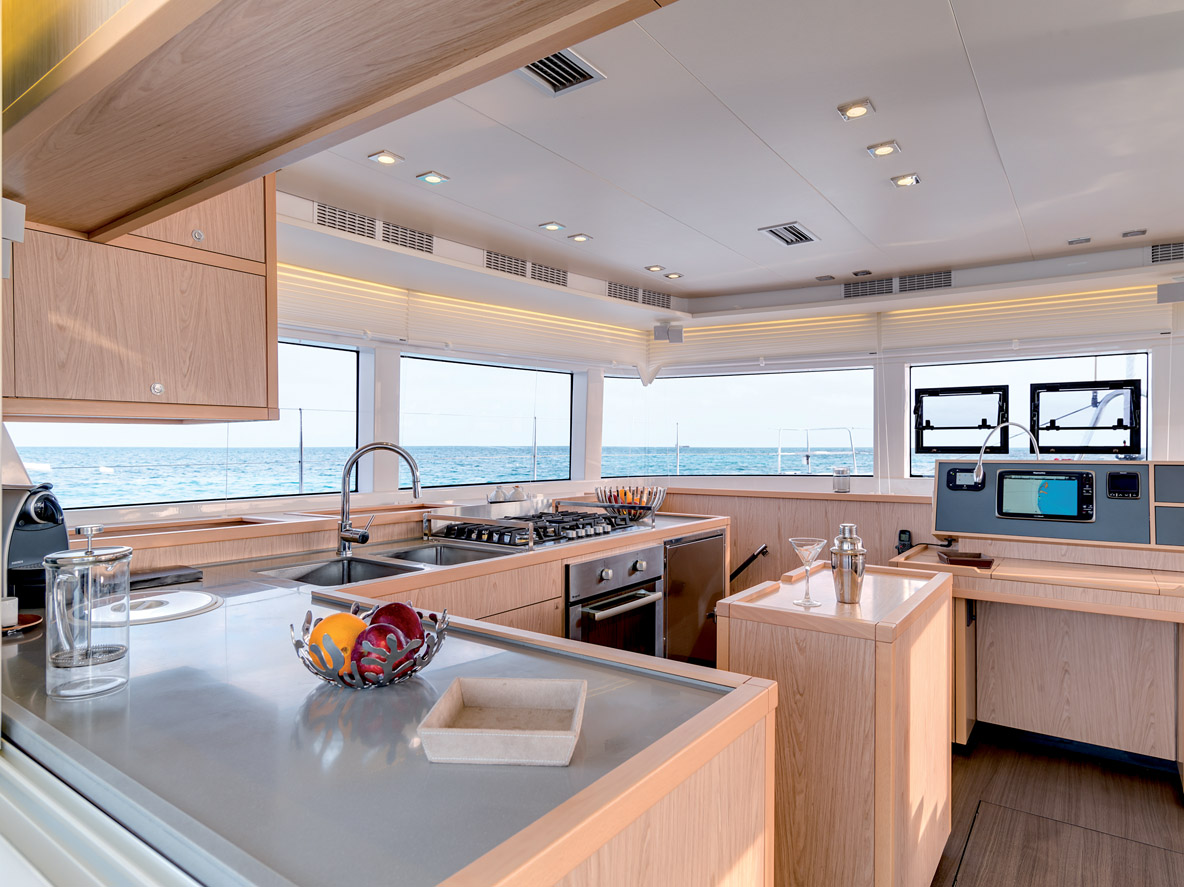
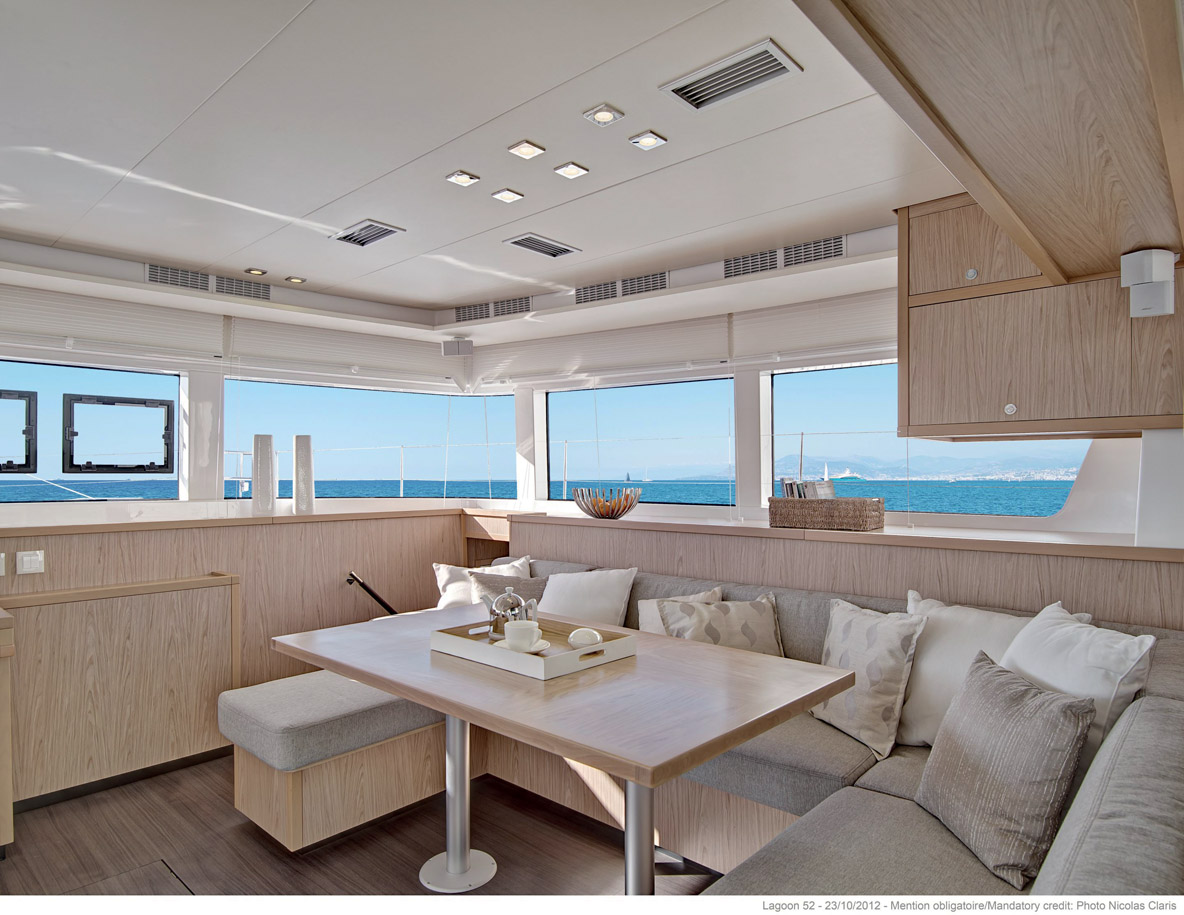
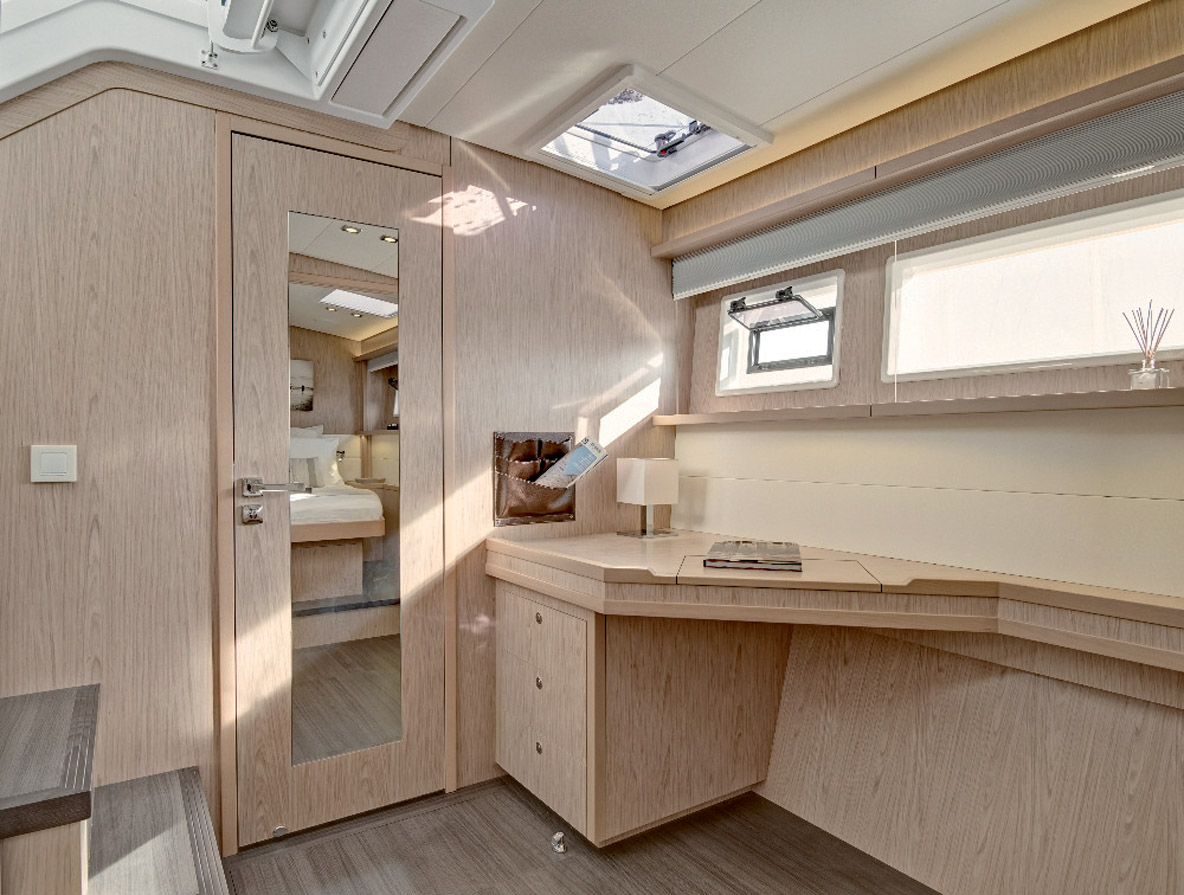
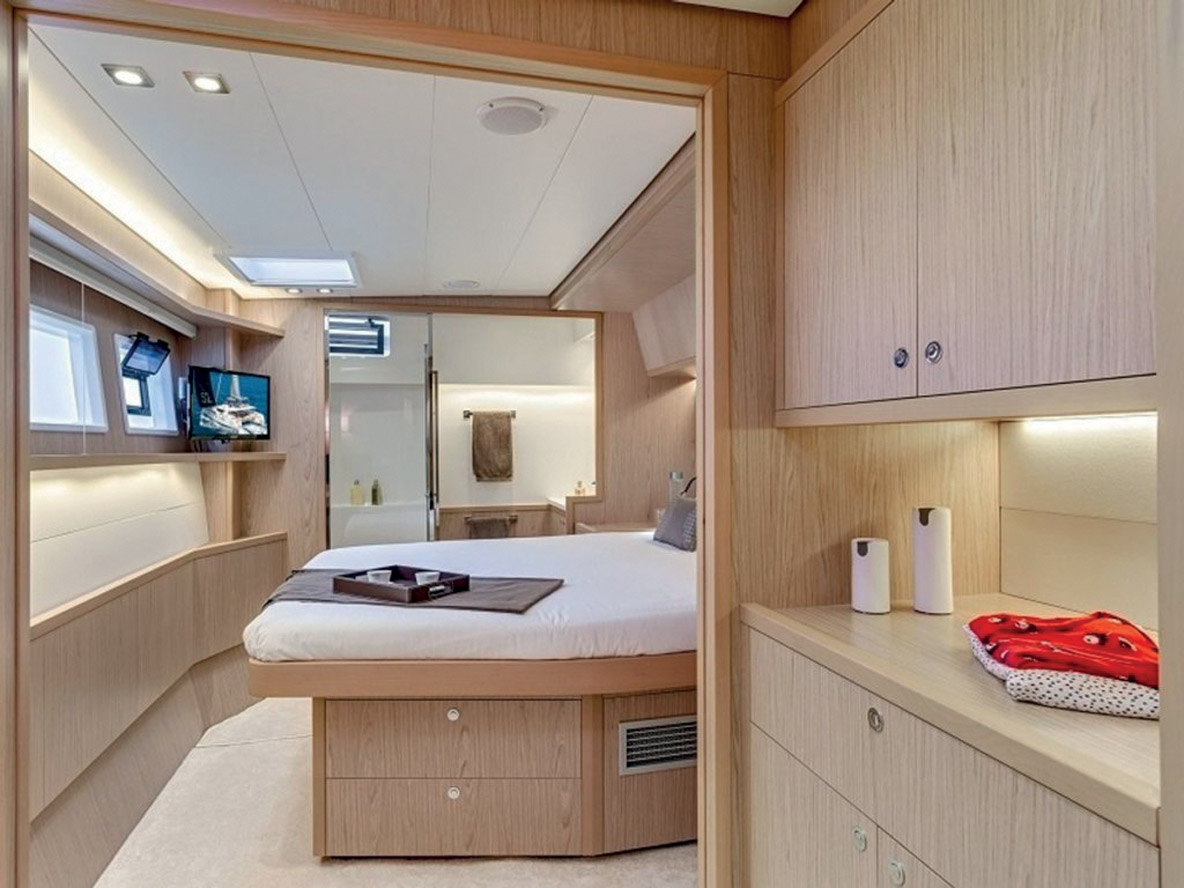
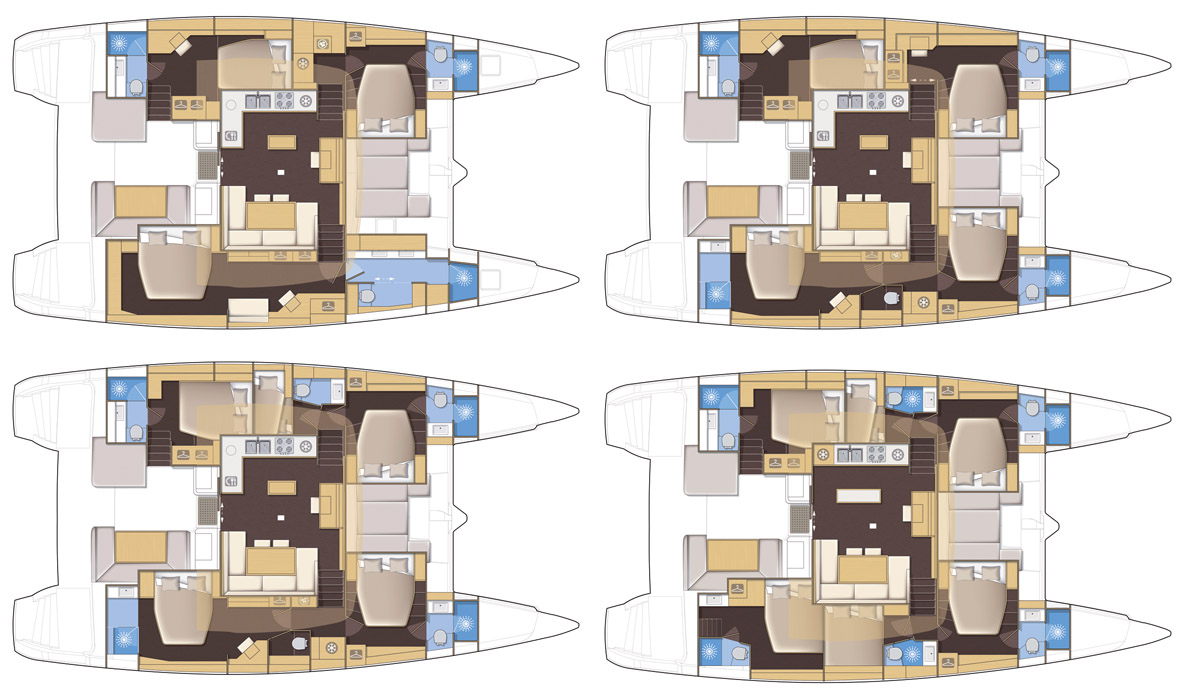
Aboard the original version with a flybridge – which became the F version from 2016 - the skipper is on a real upper deck with a helm that pivots to port or starboard for optimal visibility. All maneuvers are intelligently arranged and accessible from this high perched helm station. The SporTop version sees a more standard deck layout with a helm and sail maneuvering station at mid-height. In both cases, the huge cockpit is entirely dedicated to lounging around. Its layout remains very much the same as you’ll find on the very latest boats, only the somewhat shorter sugarscoop steps betray the age of this VPLP design. Four versions of layouts from three to six cabins were available. The unusual compression post in the center of the nacelle is cleverly camouflaged in white. The L-shaped galley includes a central island, and as an option, a small refrigerator was available in the middle of the worktop. The builder provided a central, forward-facing chart table, though this was missing a proper navigator’s seat. While the owner’s suite is traditionally located aft on the starboard side, the aft port cabin is worth a visit: it is self-contained and accessible directly from the cockpit. The finish is well thought out everywhere, with attractive options such as the video/sound system with movable screen. All the technical components have been cleverly thought out (functions are clearly identified, space is provided for maintenance operations). Also noteworthy is the innovative (for 2012) electrical management system that features a touch screen and wireless switches. This multiplexing setup has since been adopted on all the larger units of the Bénéteau Group.
Conclusion
Admittedly, the Lagoon 52 didn’t break the sales records achieved by the Lagoon 450 and 380 (1,000 and 900 examples sold respectively), but with nearly 200 pairs of hulls built, we can estimate that this almost 16-meter-long model was a more than honest commercial success. Some criticize the 52 for its massive appearance: Sure, the F version with its protective canvas under a boom perched at an indecent height raises questions over both elegance and windage... but take a look at the SporTop version and you’ll agree that the Lagoon 52 can play it seductive - in addition to seeing the boom regain its rightful place! But in fact, it is the F version that has largely imposed itself on the landscape, accounting for over 90% of the models sold. As for the accommodation versions, which provide 3 to 6 cabins, the choice is wider.
In addition to being a proven catamaran that was distributed to private owners and professionals alike, the Lagoon 52 is logically well represented on the second-hand market: a quick search allowed us to identify 10 models priced from € 700,000 ex VAT for the earlier vintages to € 1,200,000 for one of the very last models built.
Points to check
There is not much to note here about this still very recent model, with the very earliest examples being just 10 years old... That said, there may always be little things you’d want to change, but overall, the Lagoon 52 proves to be a rather reliable and robust catamaran. When you buy a catamaran of more than 50 feet in length, not new but almost, you have the advantage of having a unit that has just been broken in and is ready to set off (again), but the budget is still significant - this is a good reason to carefully check the hulls and the structure, if necessary with the help of a marine surveyor, to make sure that the boat has not succumbed to any of the numerous perils of the sea - collision, grounding, flooding, etc. On board a unit that’s more than 6 or7 years old, the condition of the sails should be inspected. If they’ve seen heavy use (charter and/or ocean passage- making), they may be nearing the end of their useful life - typically 10 years. The rest of the equipment (always!) calls for a close examination, but there’s little risk in the way of unpleasant surprises.
Ideal platform for living aboard
Numerous versions available
Flybridge version not very elegant with the enclosure covers in place
Few SporTop versions on the second-hand market
Technical specifications
Architects: VPLP
Design: Nauta Design
Material: balsa/polyester sandwich
Overall length: 52’ (15.85 m)
Beam: 28’3” (8.6 m)
Draft: 4’11” (1.5 m)
Light displacement: 49,600 lbs (22.5 t)
Mainsail: 1,044 or 1,152 sq ft (97 or 107 m²)
Self-tacking jib: 635 sq ft (59 m²)
Code 0: 1,657 sq ft (154 m²)
Spinnaker: 2,745 sq ft (255 m²)
Engines: 2 x 57/80 HP
Fuel: 262 US gal (992 l)
Water: 253 US gal (960 l)
Production: about 200 units from 2012 to 2021
Second-hand price: from € 700,000 ex-tax