
With this new model, the little sister to the remarkable SEVENTY 7, Lagoon is reinforcing its anchored position in the world of luxury catamarans with a visual identity that is very different from that of the smaller Lagoons. We were able to make two trips aboard the SIXTY 5 off La Rochelle on France’s Atlantic coast, sailing between the islands of Ré, Oléron and Aix.
Infos pratiques
- Le chantier : Lagoon Sixty5
- La fiche technique
- Découvrez notre vidéo exclusive
- Financez votre Lagoon Sixty5
- Assuez votre Lagoon Sixty5
- Articles autour du Lagoon Sixty5
Test location: La Rochelle,France
Wind: WSW 6 to 18 knots
Sea state: slight
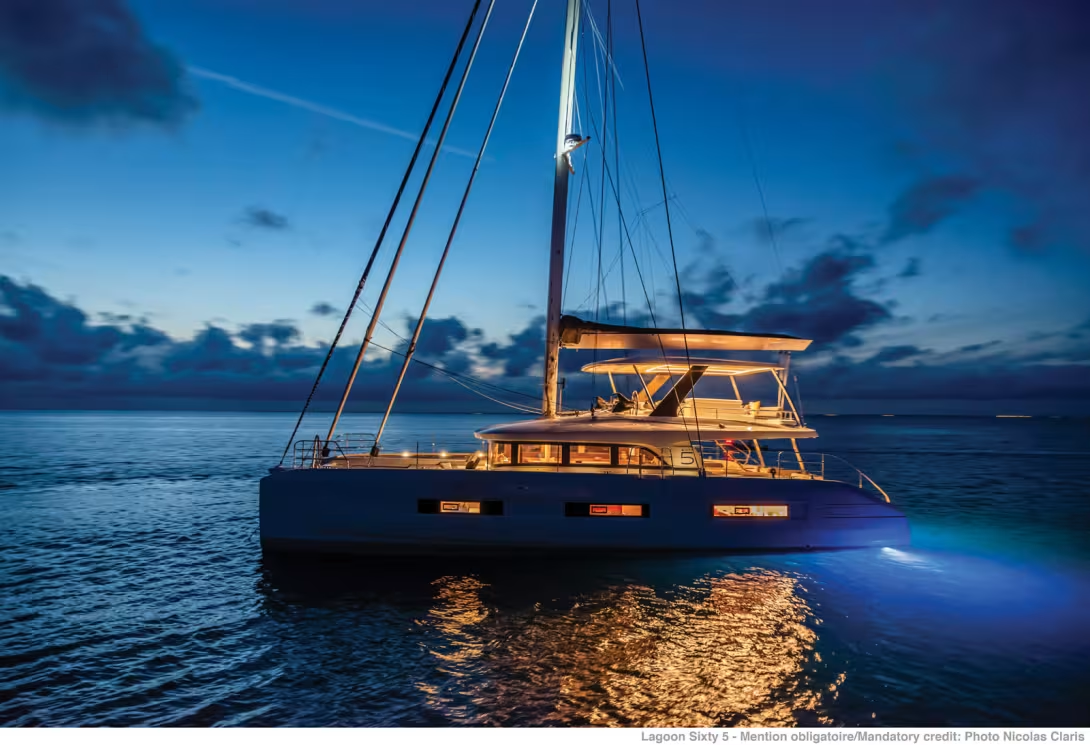
We had hoped to see her in April at the International Multihull Show... but it’s going to be at Cannes in September, if all goes well. The launch of the Lagoon SIXTY 5 has of course been disrupted by the health crisis. While waiting for the 2020 Cannes Yachting Festival, here we are aboard this imposing catamaran of more than 65 feet (20 meters). For once, the base of this model is the power version and not the other way round. Lagoon was eager to first complete its power model in this fast- growing niche market. The SIXTY 5 is therefore the sailing version of the SIXTY 7 first presented barely a year ago - see our test in MW170. This new boat is based on the design of the big Lagoons and keeps the suspended deckhouse and the “ear” cut out at the top of the aft pillars. The burgundy red hulls of the first model have given way to a more discreet cream. But the most visible difference is of course the imposing rig. On the other hand, the work carried out on the aft third of the hulls, rudders and keels - the draft is 16” (40 cm) deeper - is obviously more discreet.
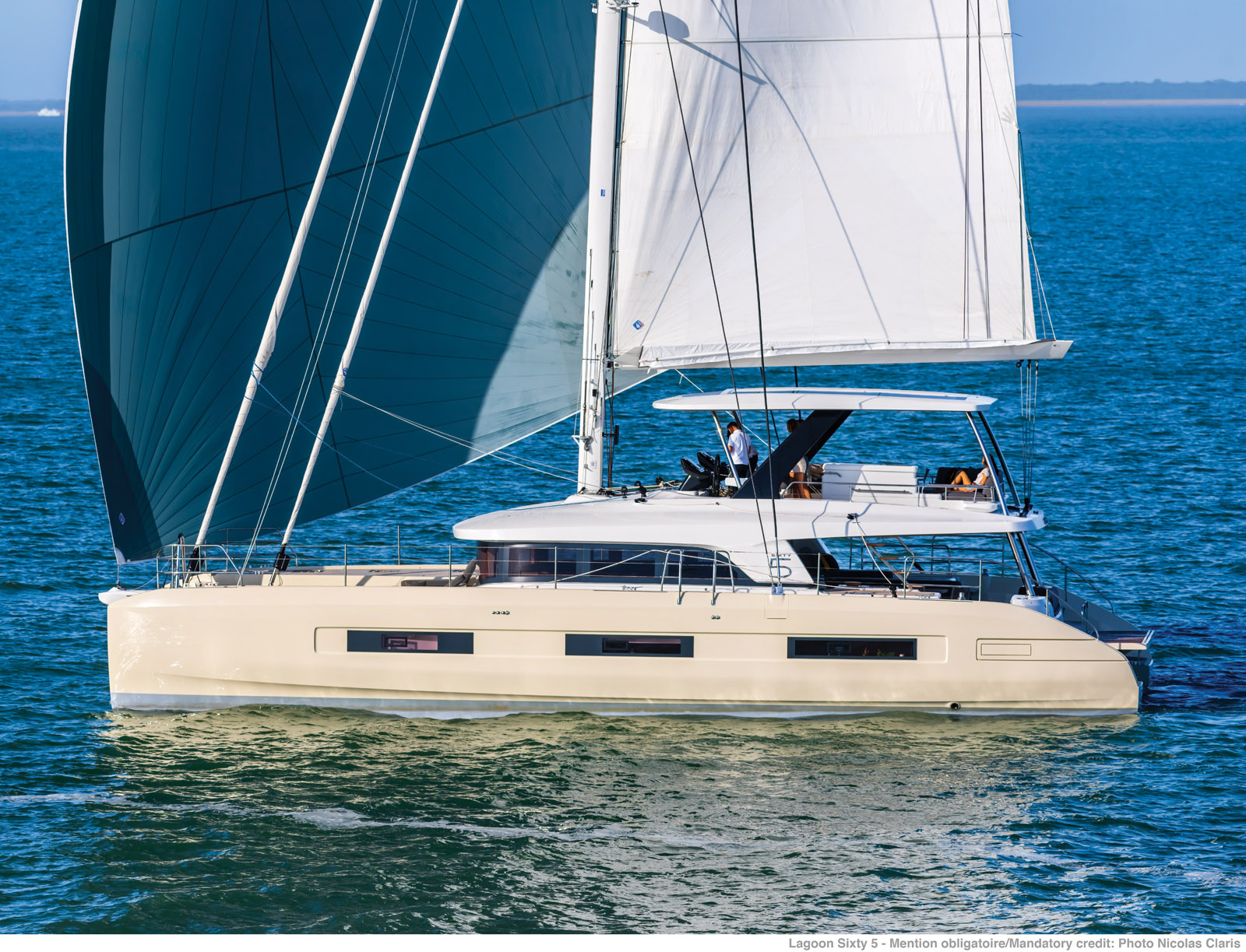
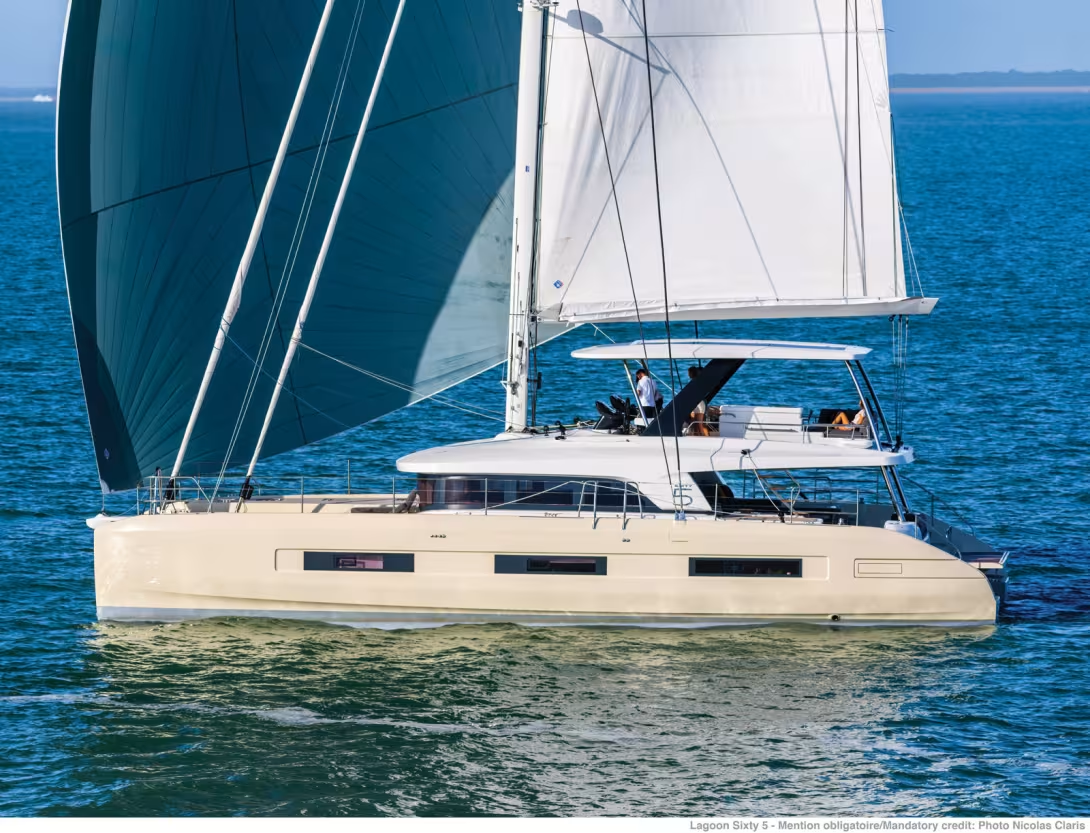
The big 3,875 square foot (360 m²) asymmetrical spinnaker is ideal for long downwind passagemaking.
Professional crew
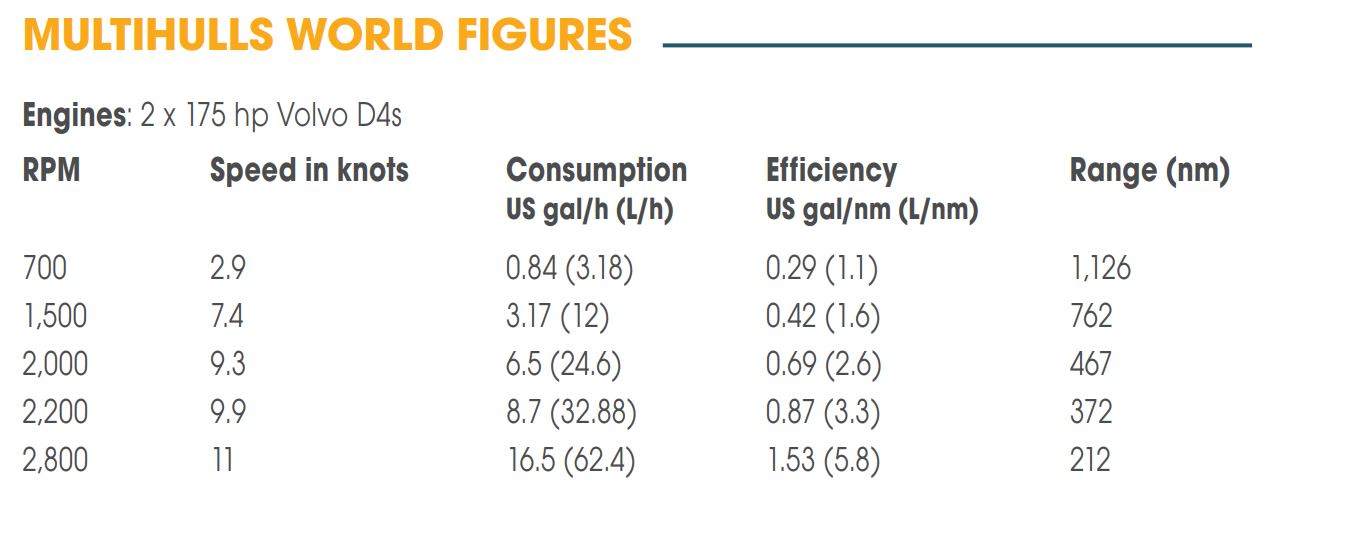
We’re welcomed on board by the Lagoon staff, but also by the professional crew who run Matao. Their job? To ensure an irreproachable service, but above all to manage this 45-ton mastodon in their charge. You have to make up your mind: maneuvering such a catamaran in port requires a great deal of experience, opening the lazy-bag at more than 20 feet (6 meters) up requires a minimum of physical condition and the daily maintenance requires solid technical knowledge. In short, a very experienced owner could well be satisfied with the additional help of a professional sailor. Otherwise, it will be two people. As a spectator, however, getting out of the marina slip looks easy - having two powerful engines and the bow thruster on the starboard side may have something to do with it. This boat has twin 175 hp Volvo D4s instead of the standard 150s. The advantage of these somewhat powerful units is that they only need to be overhauled after 800 hours of operation. Cruising speed is 8/9 knots at 1,800 rpm and fuel consumption is limited to 5¼ US gallons (20 liters) per hour. These figures should be compared with those of the SIXTY 7: this same speed is reached from 1,300 rpm with a consumption of less than 4 US gal (15 liters) an hour. But it is above all the range that’s in a different category: 600 miles for the SIXTY 5 as opposed to 3,000 for the SIXTY 7 at this reduced speed. In short, we are indeed on board a sailboat. Once clear of the channel, the mainsail is hoisted with one reef set. The operation is carried out from the flybridge, accessible on the starboard side: a battery of four large electric winches takes care of all the maneuvers just aft of the mast.
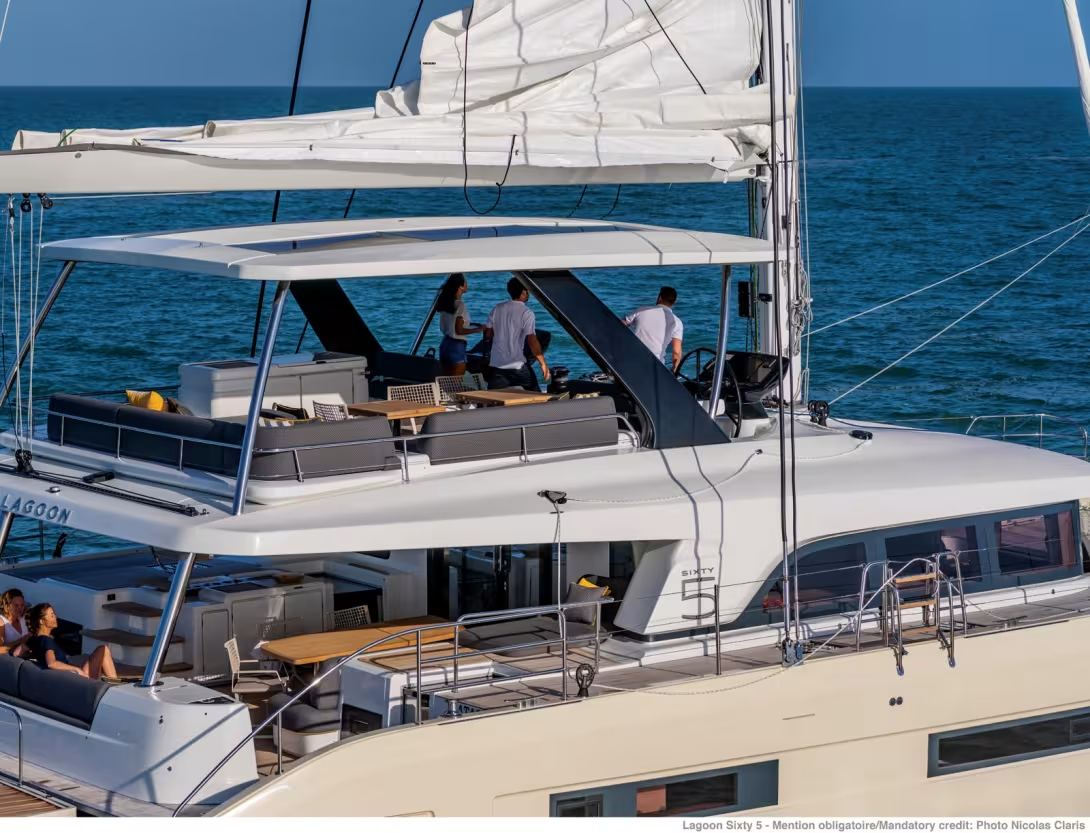
This configuration has the advantage of reducing friction. Visibility upwards is reduced from the flybridge - a crew member at the foot of the rig calls the shots. The push buttons are very low, so sometimes you have to sit down to operate them. The same electric actions to unfurl and sheet the genoa: the engines are switched off. Let’s go! We are treated to a nice 15 to 18 knot breeze and a slight sea. The helms are direct but air bubbles in the hydraulic system cause a slight hard spot. Because of the height and due to the lack of protections (available as an option, but not very pleasing visually), the flybridge quickly turns out to be windy. On the other hand, the bimini effectively shades the whole area. So, in moderate winds and pleasant temperatures, you would enjoy the 320 square feet (30 m²) of this magnificent rooftop.
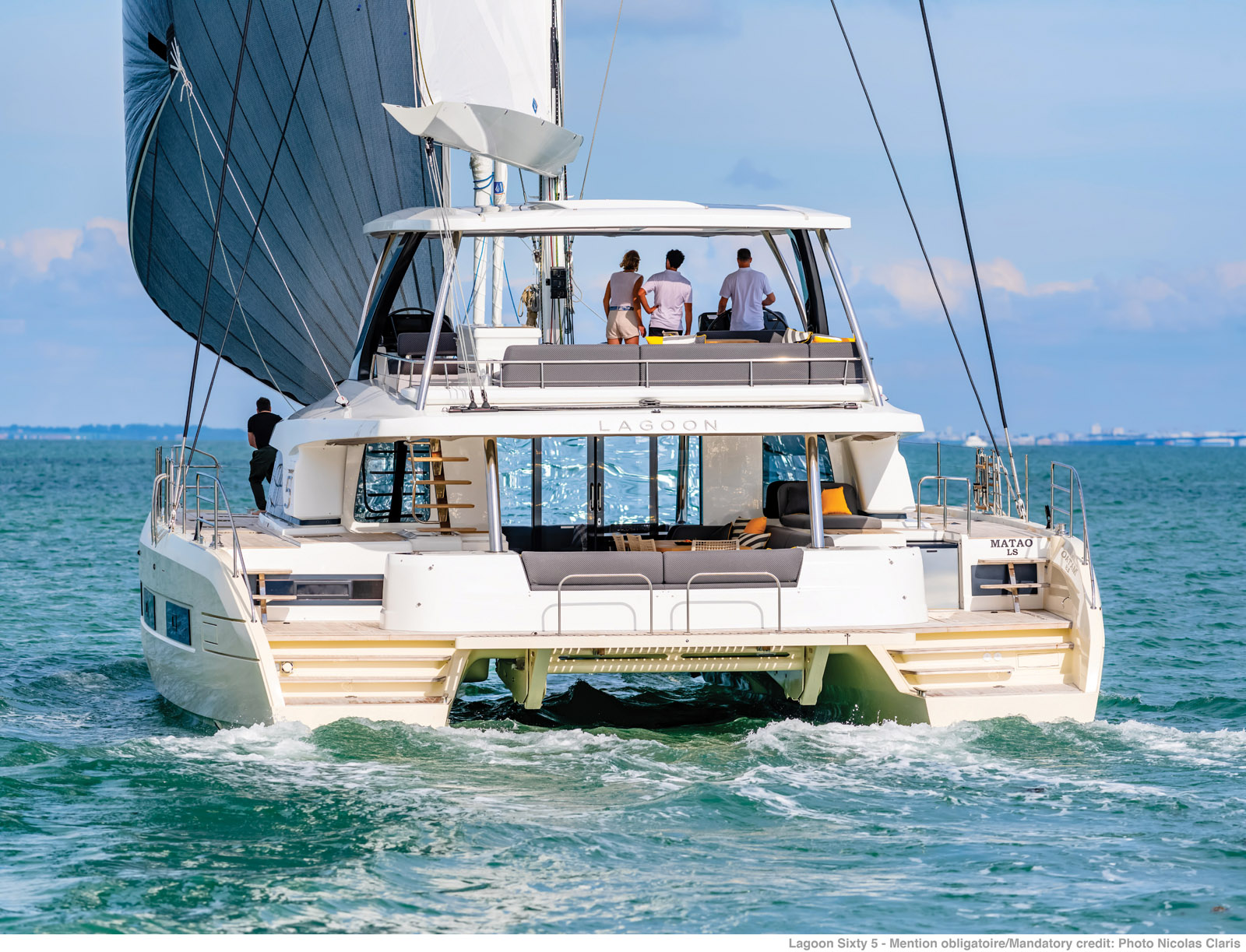
Without enclosures, the flybridge is very exposed to the wind. But the SIXTY 5 is more elegant …
A wake that’s just asking to be stretched out
As we come upwind, we climb to 50° off the true wind with negligible leeway. The speed showing on the log: 8.5 knots. The hulls slip nicely through the slight chop with hardly any pitching. A few waves sometimes hit the bottom of the gull wing, but nothing bad. Bearing away, the speed increases to 12/13 knots. In the absence of (real) waves to surf, the speed doesn’t increase much more with the gennaker. Changing tack is straightforward, with no worries of getting stuck in irons. The following day we had the opportunity to sail in lighter airs. This time we hoisted the full 1,835 square feet (170.5 m²) of the main, and our readings showed 4 knots under gennaker in 6 knots of wind and 7.8 with two knots more on the beam. Close-hauled, with 10 knots true, we reached 6.5 knots with the solent. The Lagoon SIXTY 5 is therefore a little lazy below 10 knots of wind - logical given the comfort offered and the displacement - but knows how to take advantage of her hull length in a breeze. Tradewind passages with averages of 8/10 knots are therefore on the program.
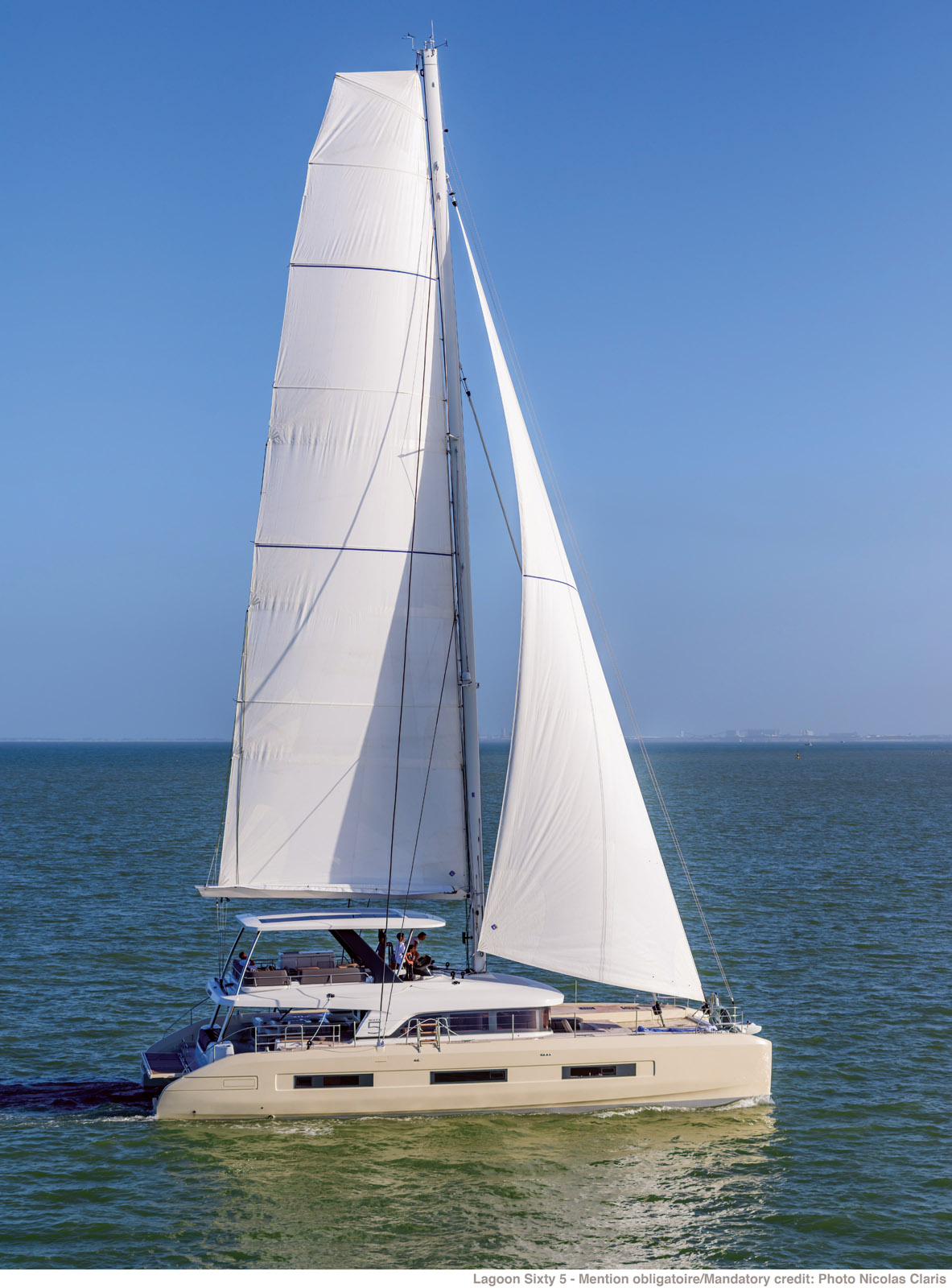
The very sleek sail plan combined with an overlapping genoa allows this 45-tonne boat to be efficiently driven under sail.
A successful deck plan!
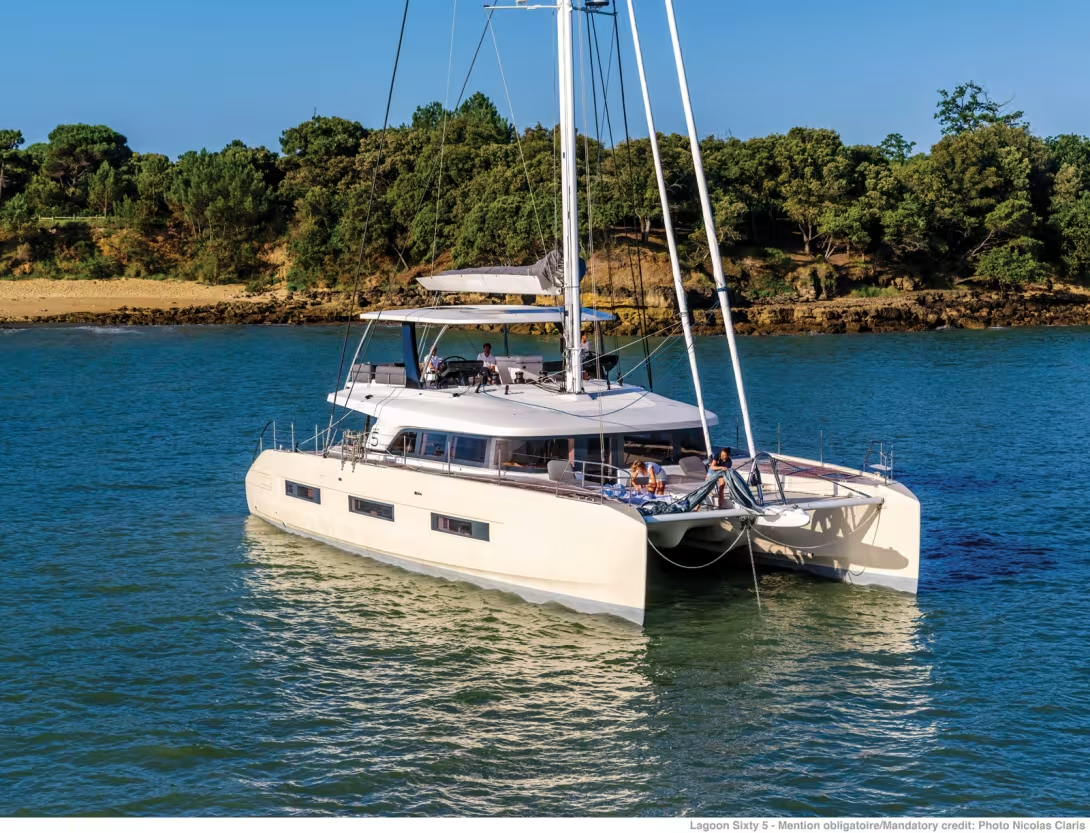
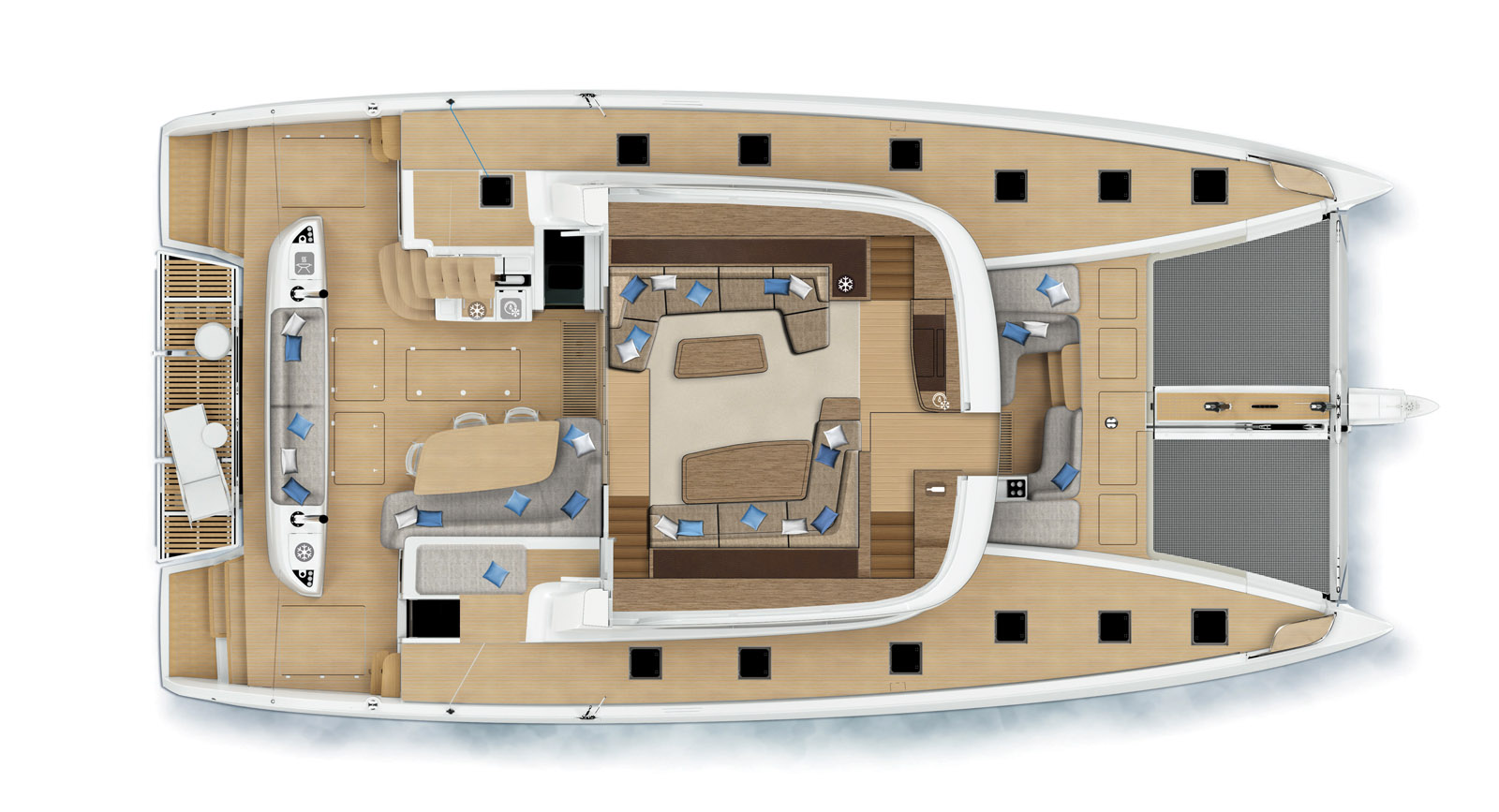
The designers have favored large, flat surfaces – there’s no less than 970 sq ft (90 m²) of available space. These large areas make it easier to move around on board and reinforce the impression of a this being a very large multihull. The aft cockpit is perfectly arranged over 380 sq ft (36 m²) with an outside galley on the port side, a large table and seating. It is completely covered and therefore protected from wind, bad weather and sun. At the stern, the large bench seat is reversible; you can sit facing forward, or admire the wake... The two sugarscoops are wide and the central hydraulic platform facilitates the launching of the RIB (up to 15’ / 4.6 m long). The side-decks are obviously very wide, like boulevards... and are protected by a thick bulwark and all the pulpits, stanchions and solid handrails you could wish for. At the bow, a second cockpit of 140 sq ft (13 m²) is well protected from the wind and so will be appreciated by sunbathing fans. Closer to the bows, a row of deep lockers and two trampolines.
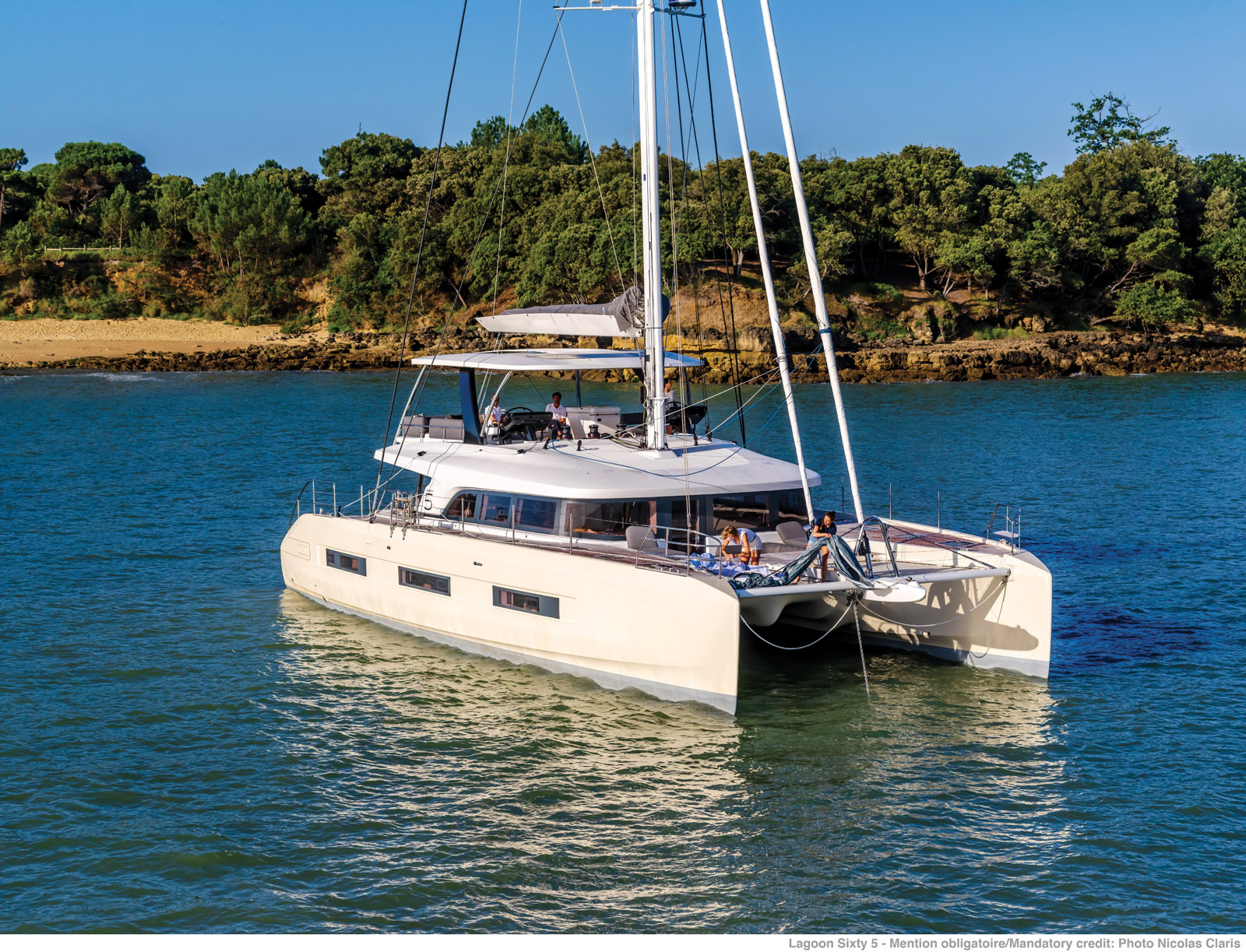
The forward cockpit is the area best exposed to the sun - a shade sail is among the options
Superyacht ambiance
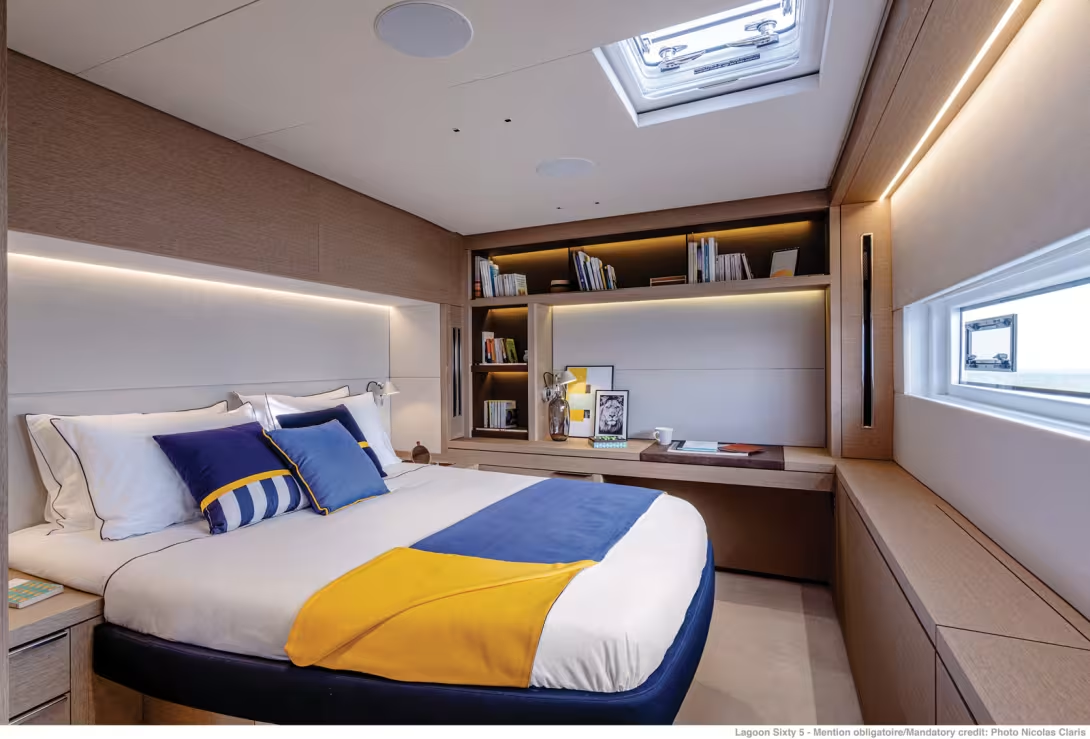
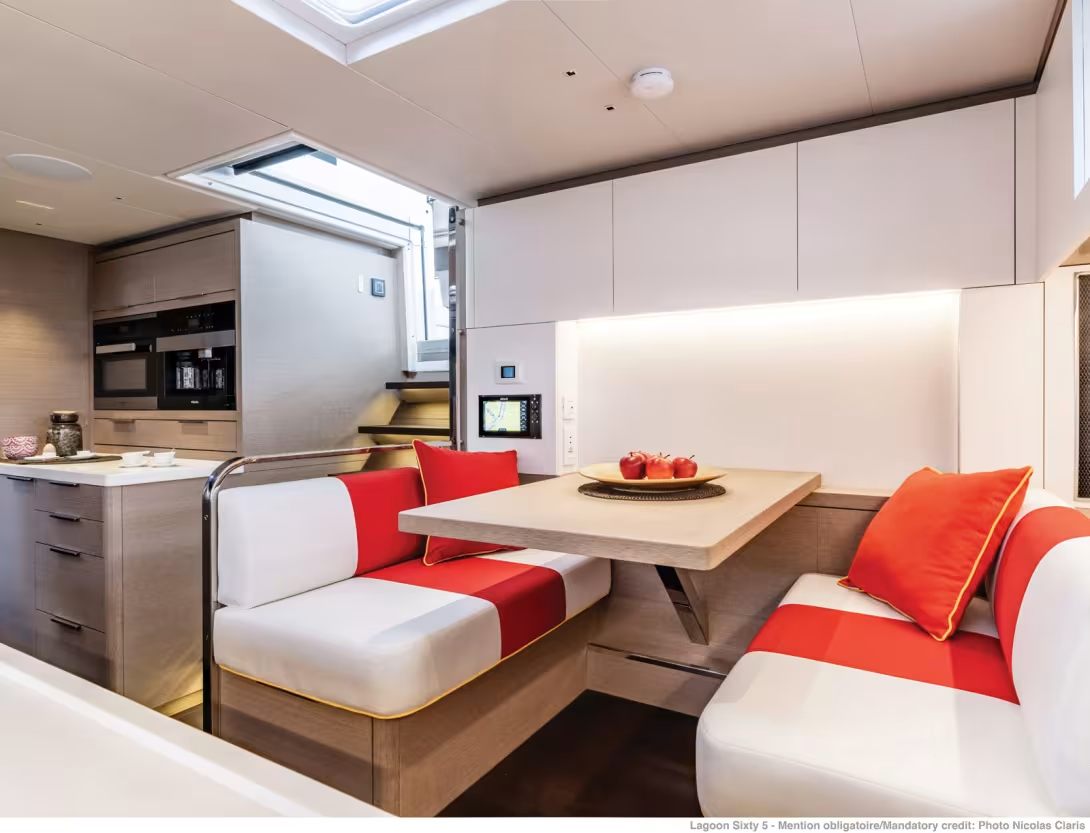
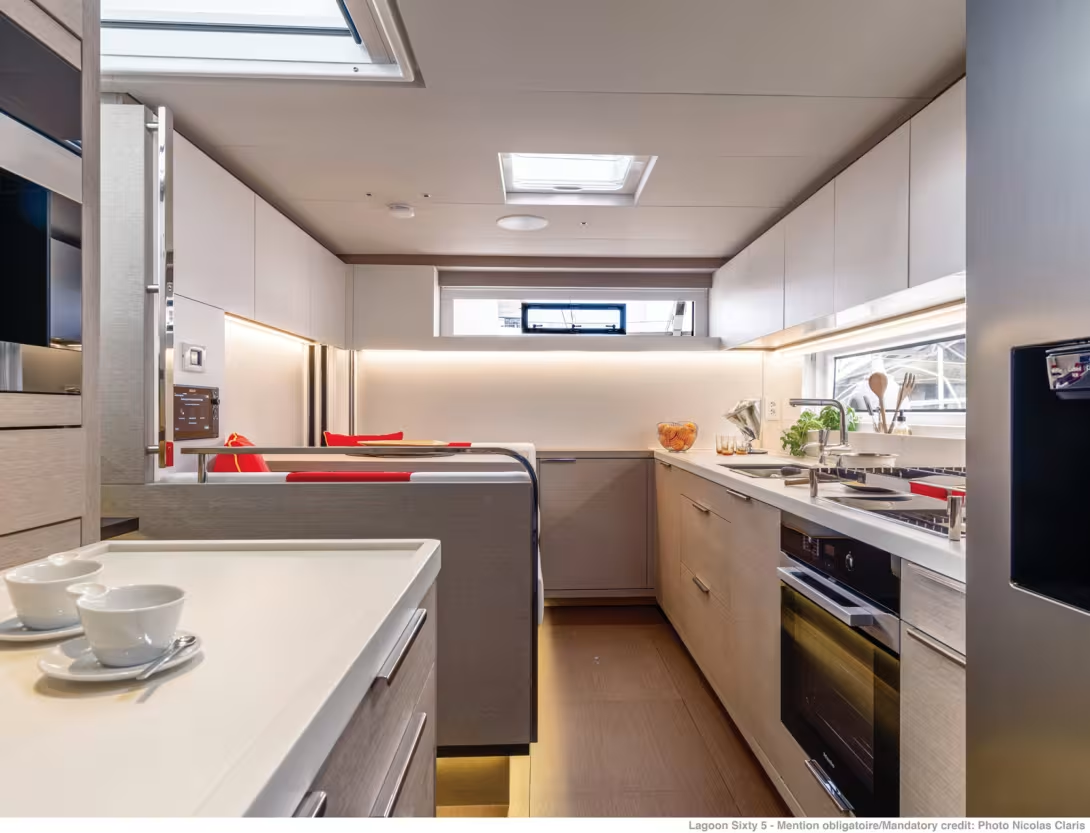
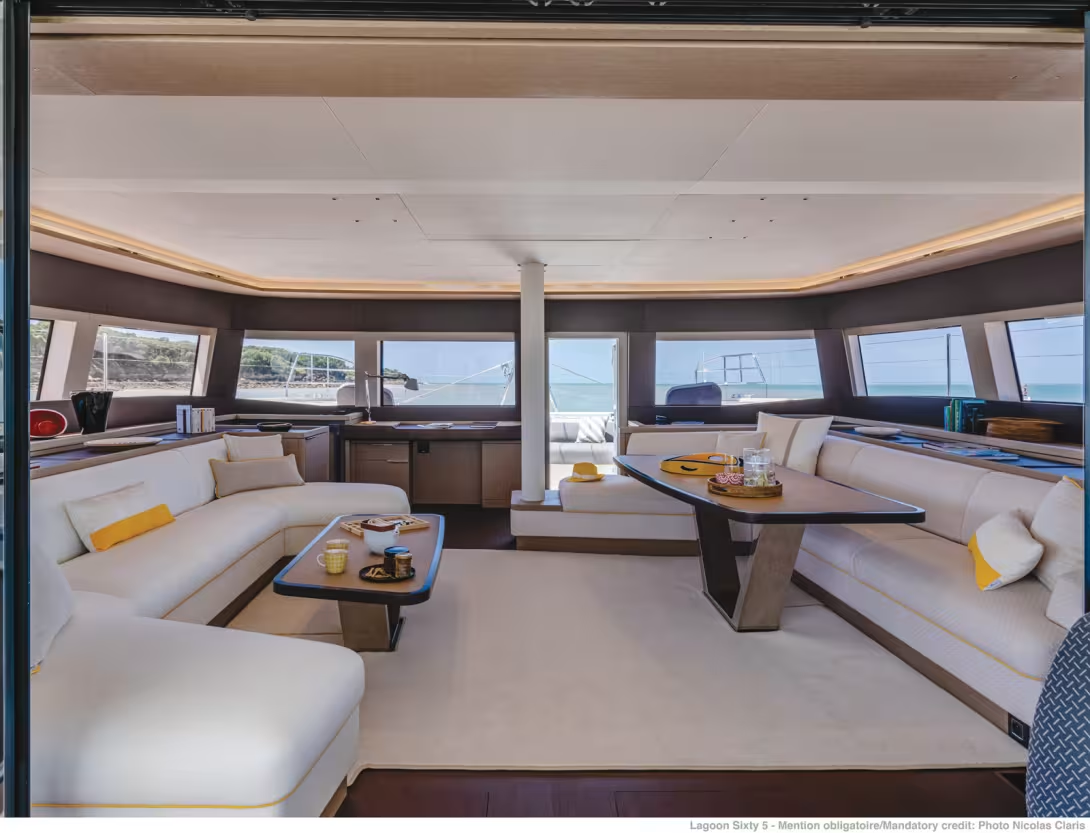
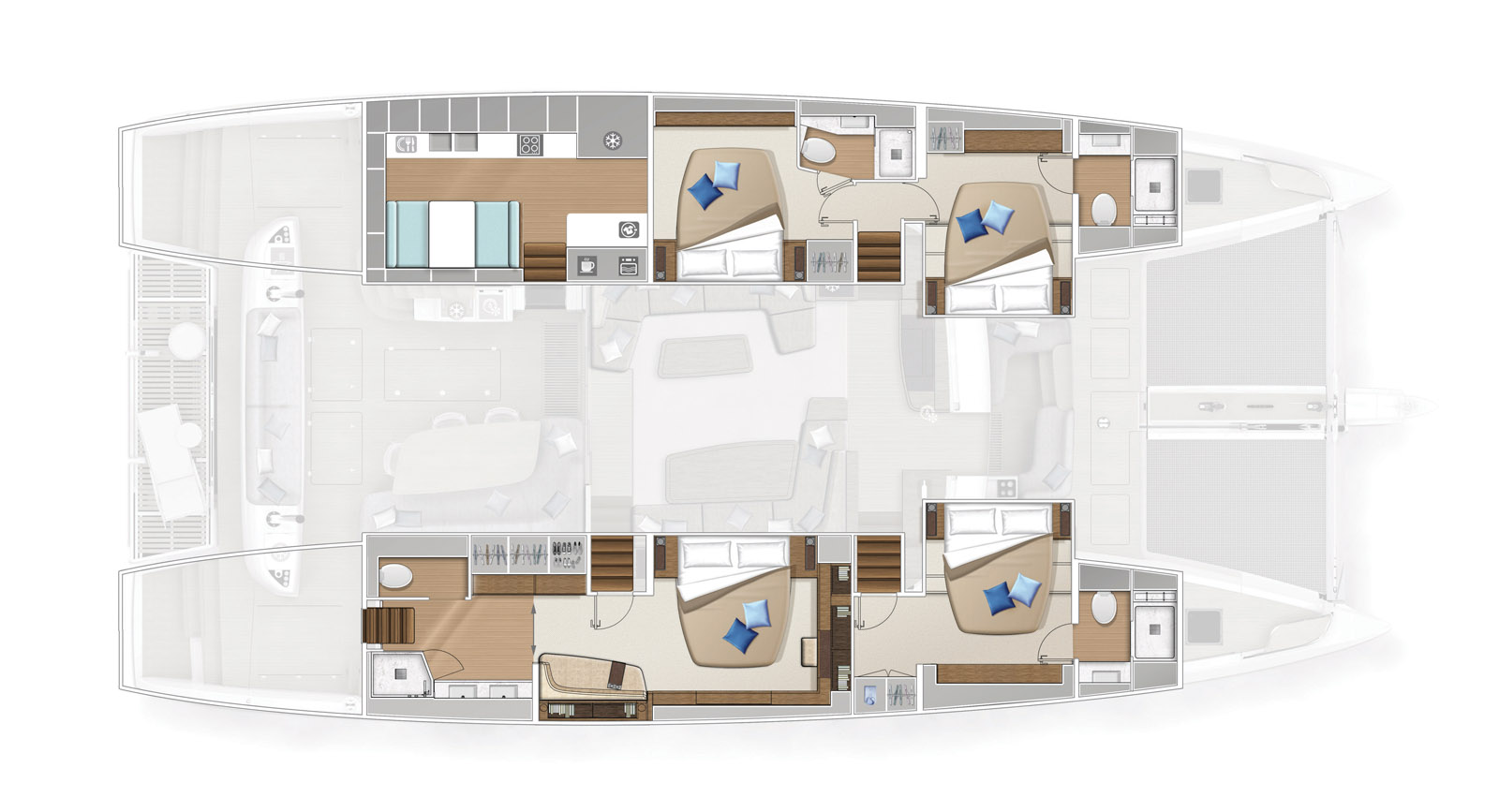
Usually, the saloon would be entered from the rear - this is of course possible thanks to a large, flush-decked opening that is 6’7” (2 m) high by 7’ (2.13 m) wide. But on the SIXTY 5, a second opening is also cut out at the front. Between the two doors is a 320 sq ft (30 m²) saloon with a bar area and a dining area - each can accommodate 8 people - and a nav station facing forward. The panoramic view is perfect, the materials are carefully chosen, the finish is flattering and the lighting very neat. In terms of small criticisms: some sharp angles noticed near the companionway down into the hulls, headlinings insufficiently secured and above all, numerous vibrations when running the engine at low rpm and other bulkhead squeaks when under sail. Following the example of what is practiced in the automobile industry, one or more “Mr. Noise” investigators would be welcome in order to improve, if possible beforehand, the acoustic situation of such a unit. Our test model offers a galley in the passageway, perfectly suited to use by the crew, with its minimess. However, it is possible to opt for a galley-up configuration. For the hulls, a multitude of options are offered from 4 to 6 cabins. Their surface area varies from 100 square feet (9.5 m²) to 130 (12 m²). This first SIXTY 5 launched is an owner’s version: and the owner’s suite occupies 230 square feet (21.5 m²) and offers direct access to the starboard sugarscoop, in complete privacy. You can also isolate this large and luxurious cabin by a door. The numerous options (sound system, video, communications, air conditioning, wood paneling etc.) provide the comfort and service of a hotel of the highest standard.
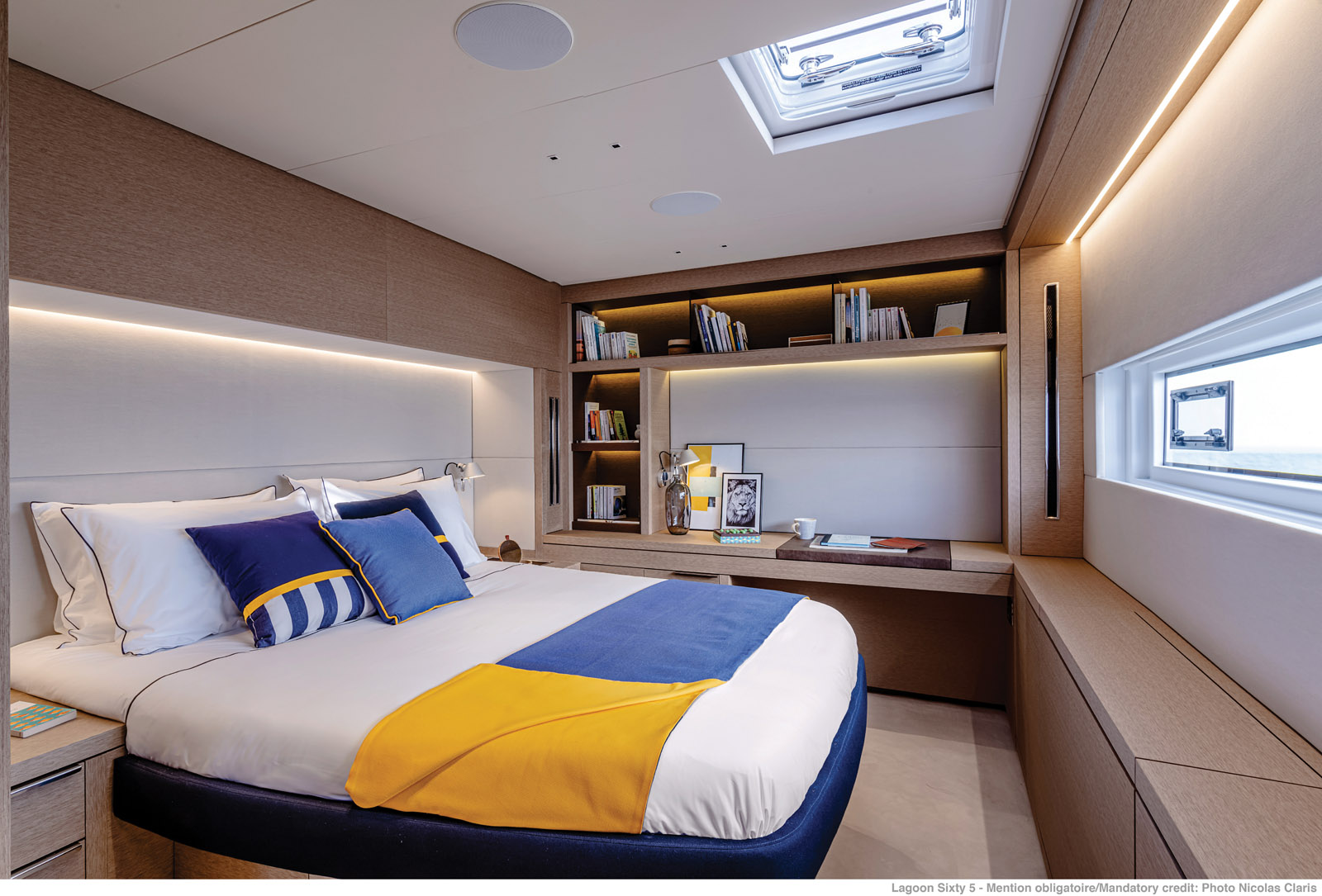
The first SIXTY 5 to be launched is an Owner’s version. And the owner’s suite, occupying 230 square feet, includes direct access to the starboard sugarscoop, in complete privacy
Conclusion
A successful silhouette, good performance, semi-custom finish and an excellent level of comfort: the Lagoon SIXTY 5 has all the qualities required aboard a luxury catamaran. Only a few details remain to be reviewed. This unit also has another interest: compared to her competitors, she is significantly cheaper (or less expensive, depending on how you’re looking at it). Lagoon now has two sailing models and two power models of more than 65 feet (20 meters) in length. This is more than just dipping a toe in the water of the big league...
The Pluses
+ Successful design
+ Exceptional comfort and habitability
+ Flattering performances from 8 knots of wind
The Minuses
- Irritating noises and squeaks
- Professional crew almost mandatory
- Flybridge exposed without protection
 |
 |
TECHNICAL SPECIFICATIONS
Shipyard: Lagoon
Architects: VPLP
Exterior design: Patrick le Quément
Interior design: Nauta Design
Construction: fiberglass/foam composite
Length overall: 67’5” (20.55 m)
Waterline length: 63’4” (19.3 m)
Maximum beam: 32’10” (10.00 m)
Draft: 5’2” (1.55 m)
Light displacement: 88,000 lbs (40 t)
Upwind sail area: 2,890 sq ft (268.5 m²)
Mainsail: 1,835 sq ft (170.5 m²)
Genoa: 1,055 sq ft (98 m²)
Staysail: 527 sq ft (49 m²)
Code 0: 1,580 sq ft (147 m²)
Spinnaker: 3,875 sq ft (360 m²)
Engine: 2 x 150 hp or 2 x 175 hp Volvo
Diesel capacity: 340 US gal (1,300 l)
Fresh water capacity: 264 US gal (1,000 l)
Black water capacity: 134 US gal (510 l)
CE categories: A 14, B 18, C 24, D 40
Prices : Standard version: € 1,825,300 ex-tax
Model we tested: € 2,911,728 ex-tax
Main options ex-tax
Woodwork in Alpi Brushed grey oak - Wenge flooring - Corian: € 30,750
Carbon canoe boom with lights and cover: € 49,869
Square-topped mainsail and genoa, in Spectra: € 73,456
Staysail, rigging and electric furling system: € 21,190
Code 0 in Mylar: € 15,162
Asymmetrical spinnaker with sock: € 14,181
Teak on side-decks and foredeck: € 33,950
Hydraulic rear platform 1,200 lbs (550 kg): € 65,605
Exterior upholstery with protective covers: € 23,540
Sunbathing pack: € 37,645
Equipped composite bimini: € 66,225
Teak on flybridge floor: € 19,750
Additional cost for 2 x 175 hp motors: € 6,850
Electric bow thruster, starboard side: € 16,510
Folding propellers (Varifold): € 6,618
Onan Generator - 19kVA 230V/50Hz: € 34,664
Watermaker 74 US gal/h (280 l/h) Sea Recovery Aquamatic 230 V: € 18,950
Reversible centralized chilled water air conditioning: € 89,750
B&G Navigation Pack: € 42,220
Hi-fi Media Center sound system & 55» TV: € 29,750
Communication system with Inmarsat subscription: € 17,890
Ocean Master Deluxe OM 460 dinghy pack with 60 hp outboard: € 25,779
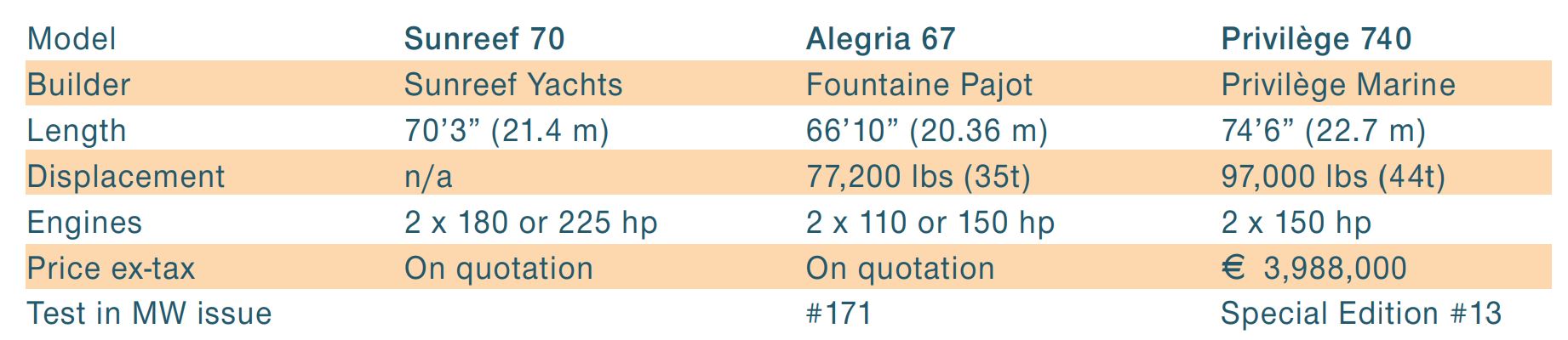
The competition
 |
 |
 |
Photos: Lagoon/Nicolas Claris and by the author
