
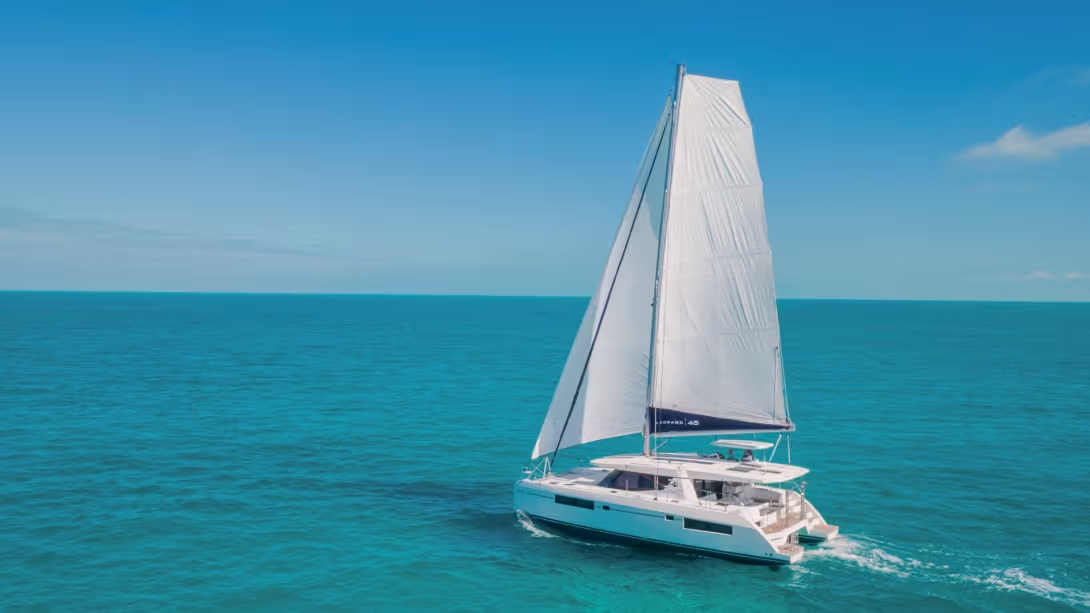
The Leopard 45/V1 was the first model manufactured in a production run by the South African builder starting in 1997. It has contributed significantly to the discovery of the catamaran concept in Moorings charter bases around the world. Today, its successor has taken the boat of the year title in its category, awarded by Cruising World at the Annapolis Show, and seems determined to get in on the non-charter market.
Infos pratiques
- Le chantier : Leopard 45
- La fiche technique
-
 Découvrez notre vidéo exclusive
- Financez votre Leopard 45
- Assuez votre Leopard 45
- Articles autour du Leopard 45
A South African builder on the world stage
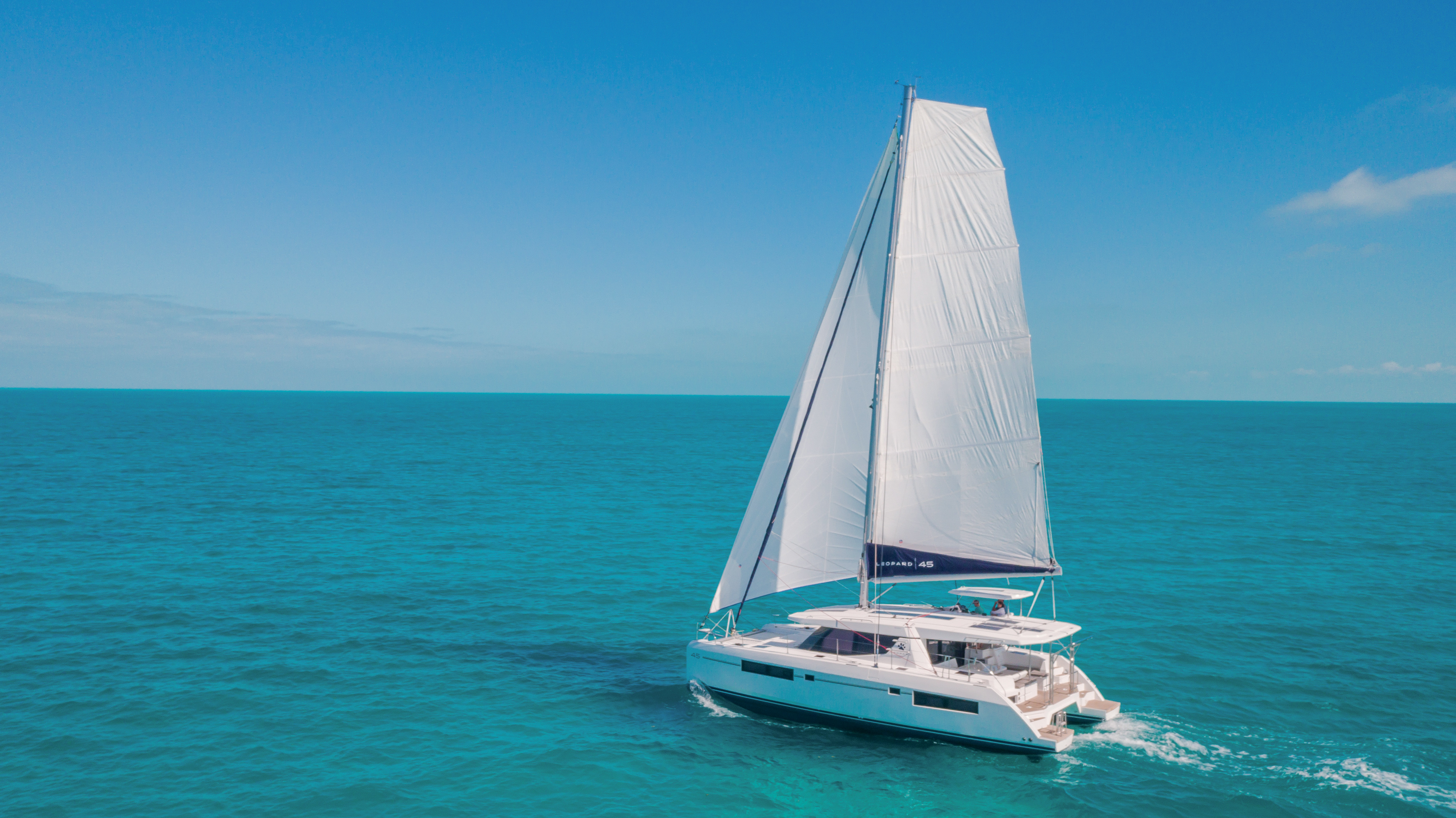
The Woodstock yard near Cape Town was founded by John Robertson more than 30 years ago. Jerry Caine joined him as a partner in 1991. Since 1995, they have forged close ties with Moorings to supply the emerging catamaran charter market (Moorings then merged with Sunsail into an international travel group, thus creating a giant in the market). Logistics and customer knowledge (mainly American in the Caribbean at the beginning, now globalized) oriented the Leopard design towards a rationalization of functionalities and increased equipment (cold storage, air conditioning, electrical self-sufficiency). The arrival of Lex Raas (a Bénéteau group defector) as operational manager accelerated this development. The world's No. 1 charter company has led Robertson-Caine in their development and has allowed them to reach the top 3 of multihull builders. The experience of intensive use of ships, understanding of sailors' expectations and the availability of highly competitive production tooling logically motivates Moorings to regularly renew its range and diversify its commercial ambitions towards individual owners. It is no longer enough to convince investors as buyers, but to seduce users. For several years, Franck Bauguil has been in charge of product development.
A top production site in “Multihull Valley”
The factory has expanded to cover four and a half hectares in the heart of this southern region, where there are numerous multihull yards. (There have been the Gunboats, and today, Tag, Knysna, Xquisite and St Francis are to be found here!). It employs 600 people who produce 3 units per week. The range exclusively dedicated to catamarans includes 4 models of sailboats (40 ', 45', 48 ', 58') and two Power Cats: the 43' and 51' PC. The operating requirements of their main and associate customer, combined with the builder's experience, guide the choices towards resistant manufacturing and reinforced technical installations to guarantee reliability in conditions of intensive use, by reducing maintenance requirements for technical elements and repairs. The vacuum sandwich construction employs multidirectional E-glass laminated cloth on a high density balsa core; Resins and isophthalic gelcoat prevent hydrolysis from appearing (but epoxy is an option for the underwater hulls). The skegs are entirely in closed-cell polyurethane foam. The 45, as with all Robertson and Caine boats is doubly CE and IMCI certified and the construction meets all applicable ISO standards.
A silhouette which has asserted itself!

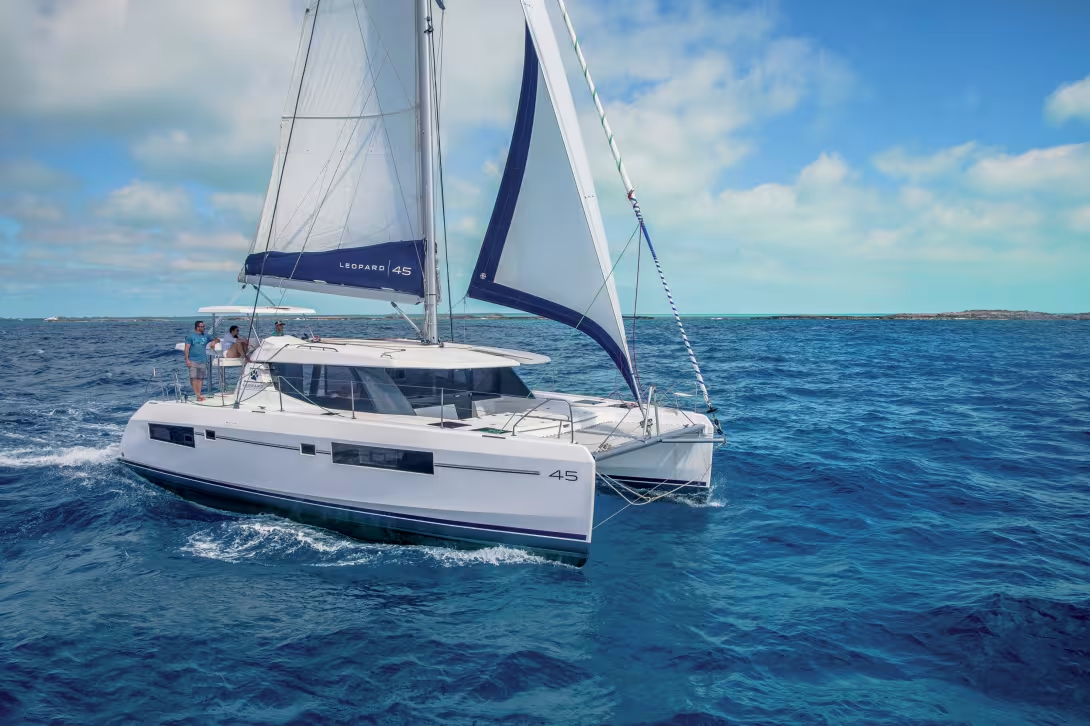
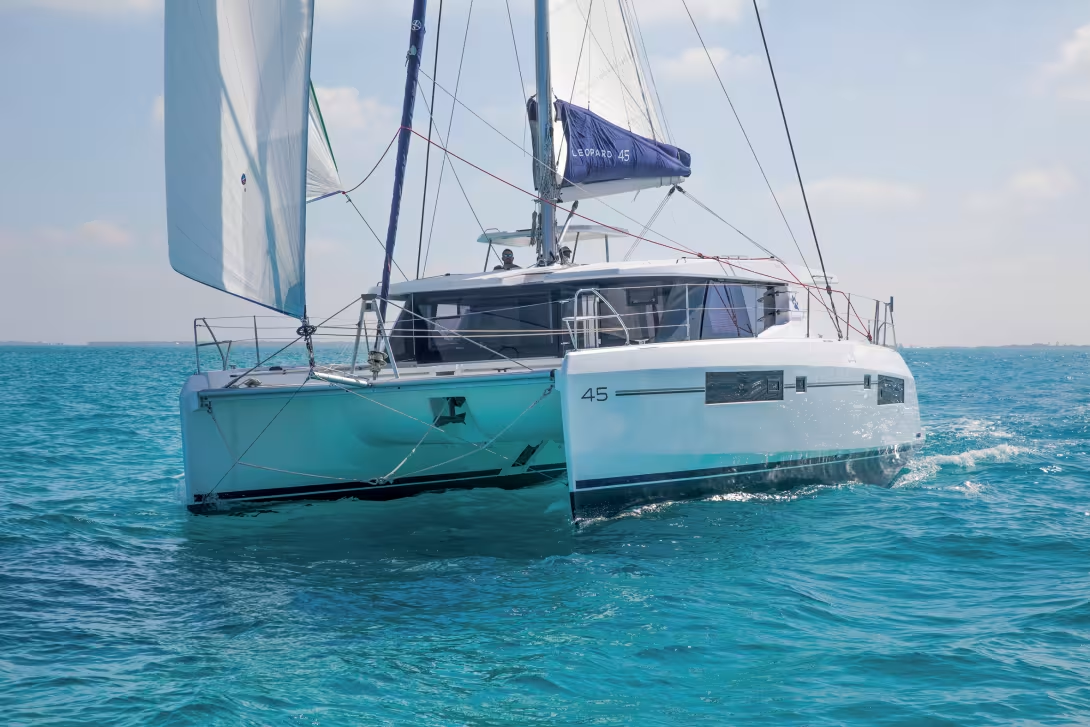
Like Lagoon with the 410's vertical façade of the coachroof (which eventually set a standard!), Leopard deliberately violated the codes of architectural well-being by opening the front bulkhead and installing a forward cockpit. Considered non-conformist a few years ago, this approach sweeps aside the fixed ideas of the "performance" multihull and responds to the more prosaic use of a large proportion of users. This daring implantation provokes less and less criticism and is now even emulated. The Leopard approach is well accepted because it can evolve and adapt to international trends. After upsetting the multihull world, it normalizes itself with discreet touches to meet European aesthetic standards without losing its own characteristics. If you compare the 44 with the 45, the differences are considerable: the lip of hull-deck joint has disappeared, the "beak" effect of the old coachroof has been softened thanks to a better shape to the glazed sides panels and the installation of skillfully designed black fairings, the bows have had a more modern redesign, the perception of the hull is more dynamic, the step better integrated in the overall lines, the fusion with the sugarscoops is more modern and the height of the nacelle increased by more than 20 cm!
Internal Revolution
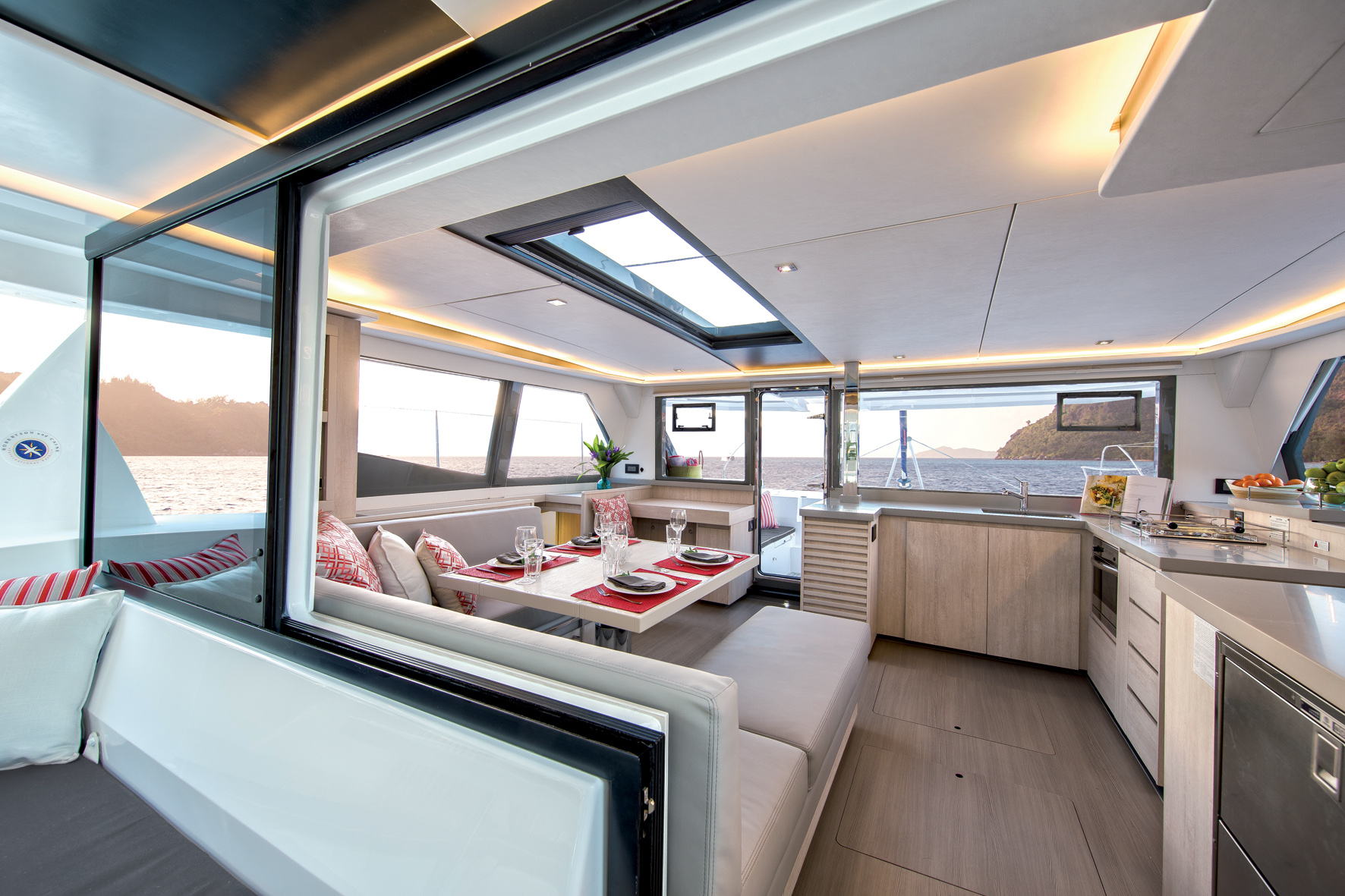
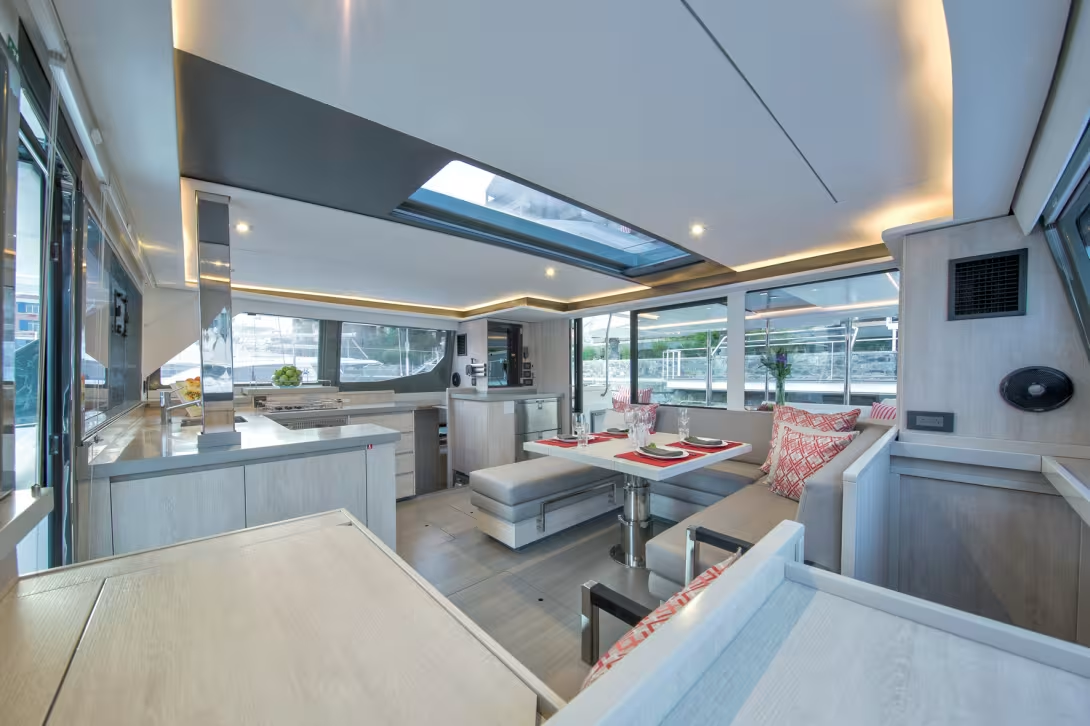
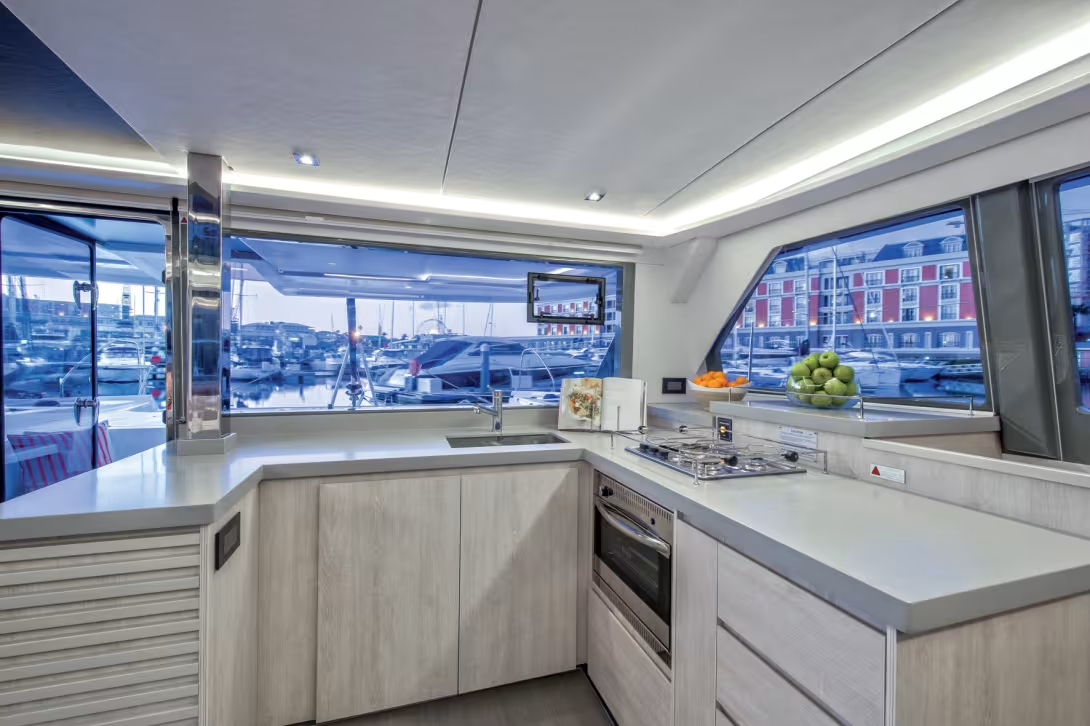
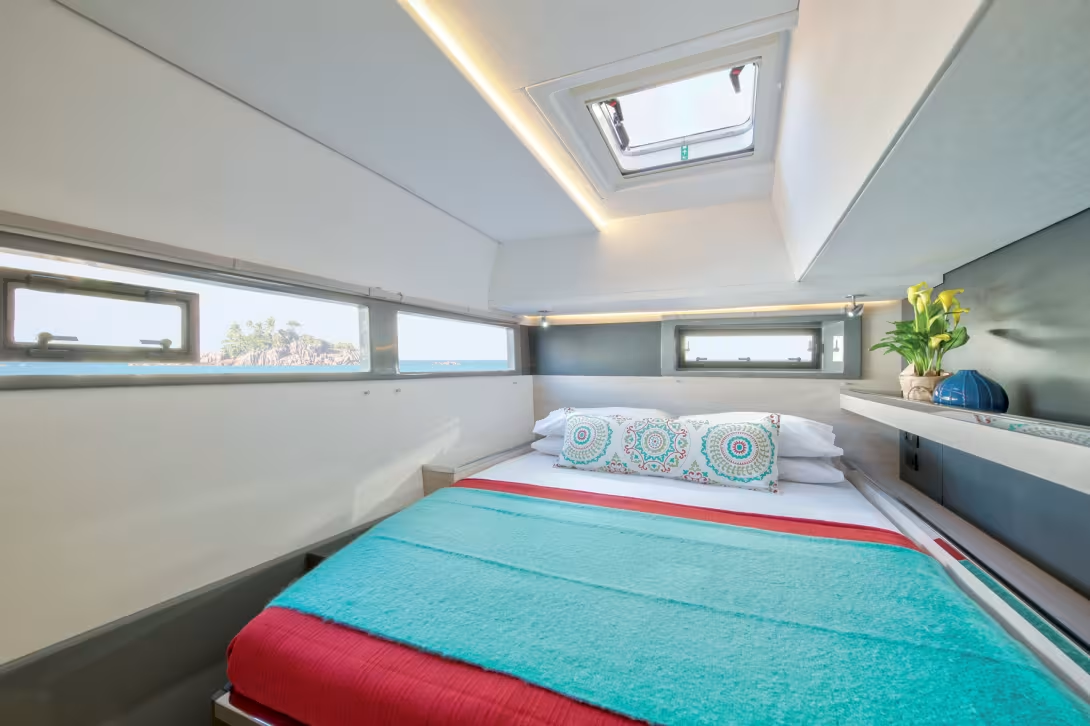
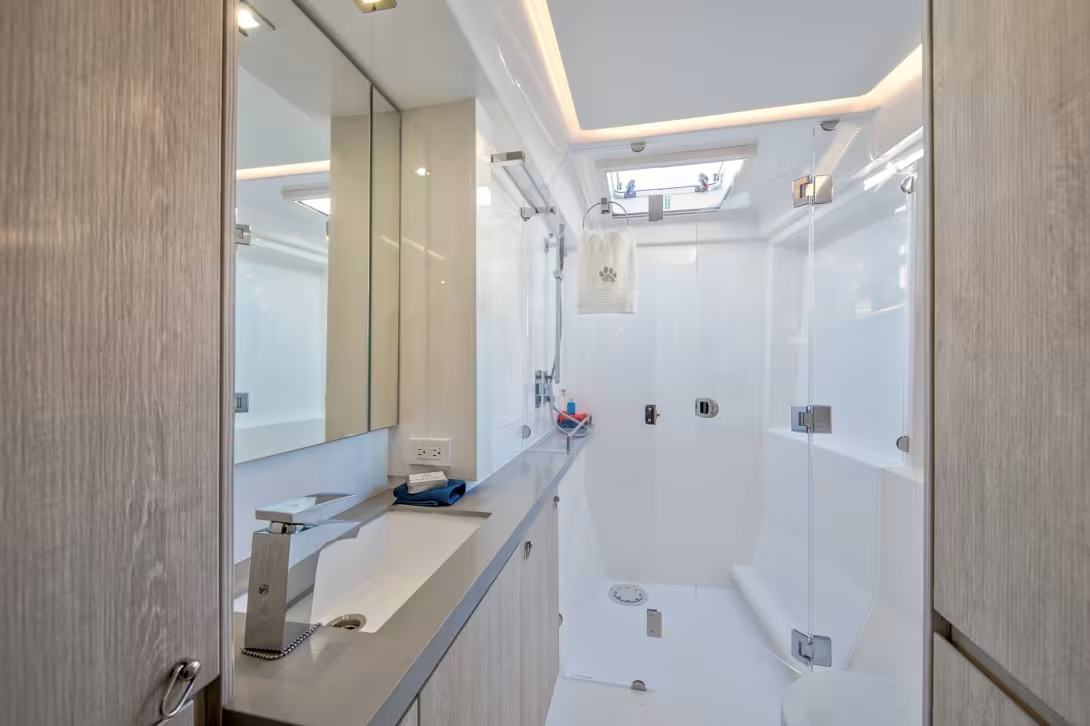
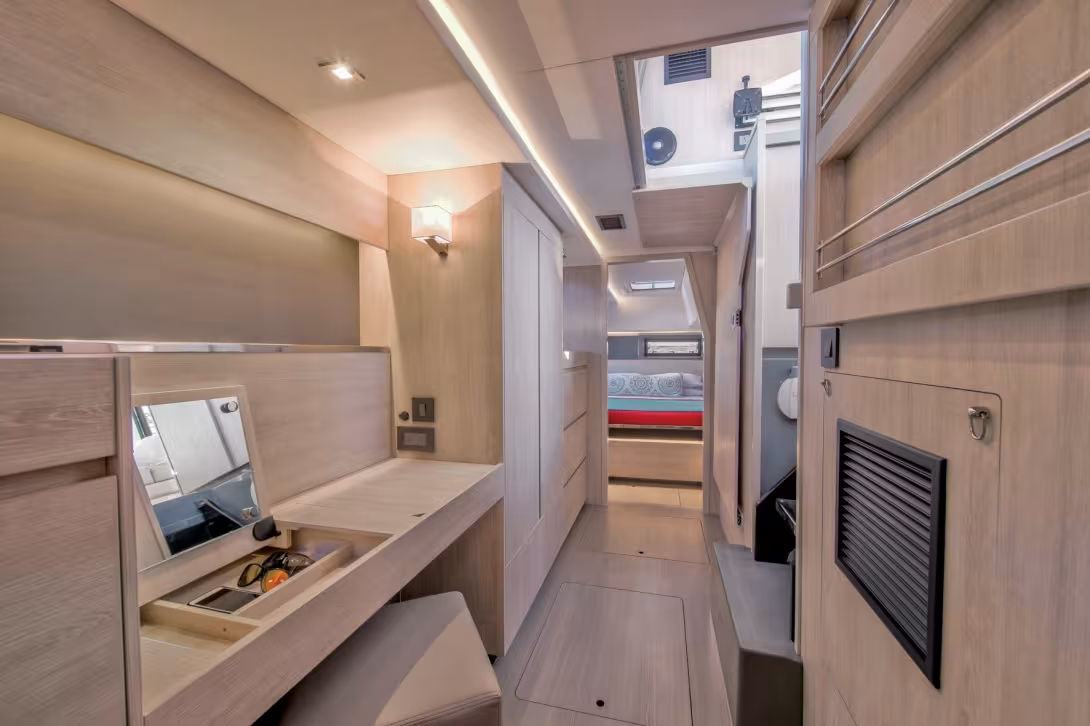
Another radical change is that of interior design! Despite being past-masters in cabinetmaking in cherry, the yard decided to abandon this conception of identity of the fixtures from the 51PC and the 40. The transition is based on several convergent motives: it was difficult to produce two completely different styles in series, so they needed to harmonize the power and sailboat ranges. On the other hand, the costs of supplying the cherry wood increased significantly and the stylistic developments went against it! After the 40 and the Power cats, the 45 adopts a new inspirational "Urban chic" design, rather stripped back, but in good taste and of high quality, which will be easy to customize by tapping into the resources available from décor catalogues.
A guided tour
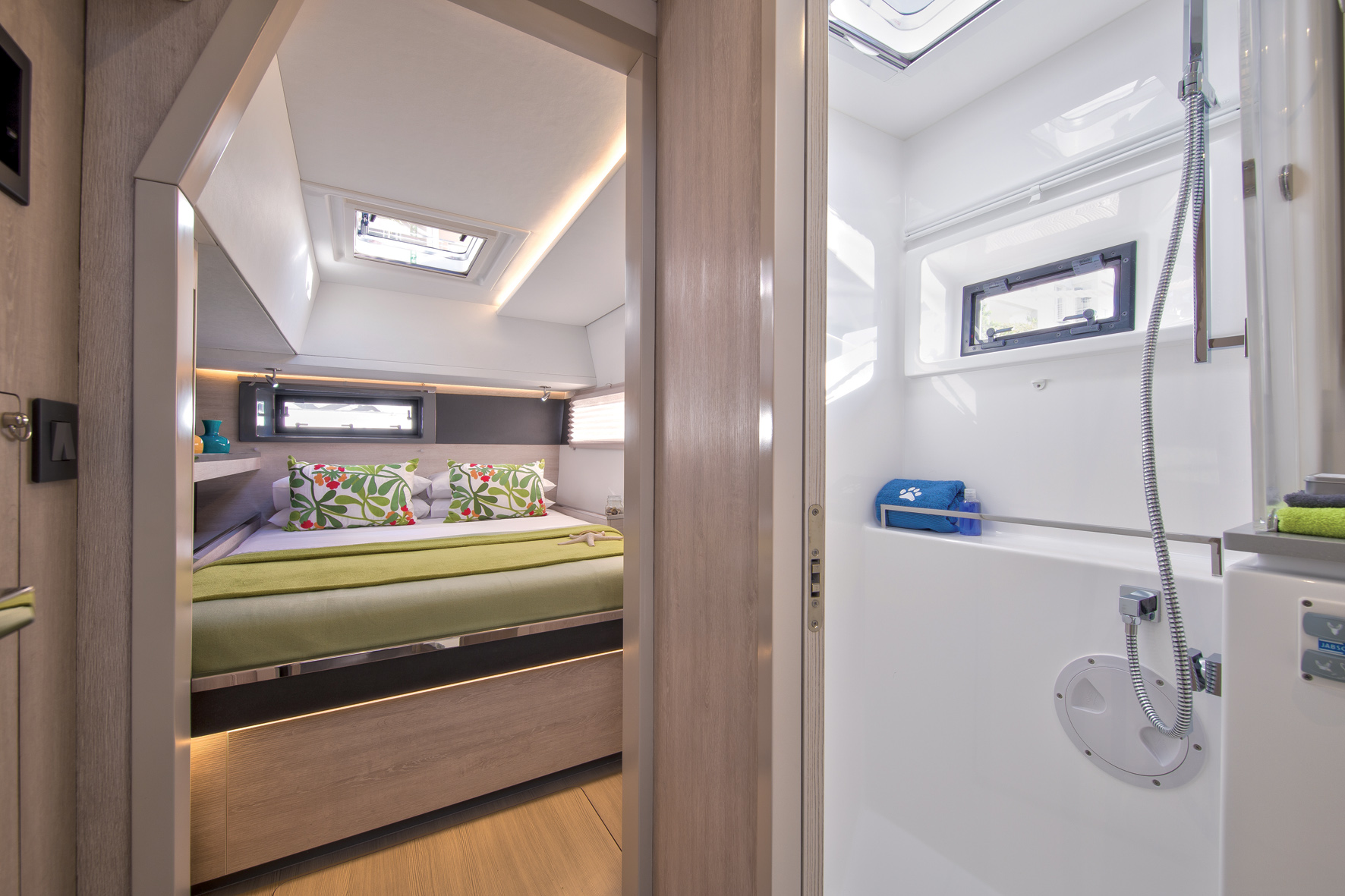
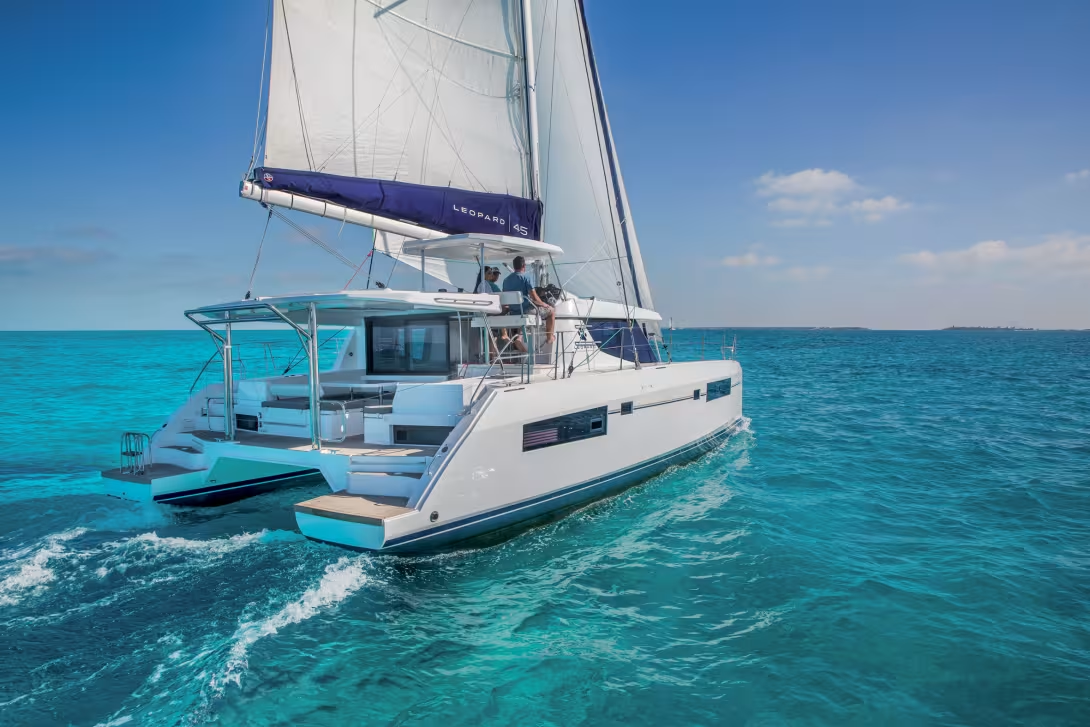
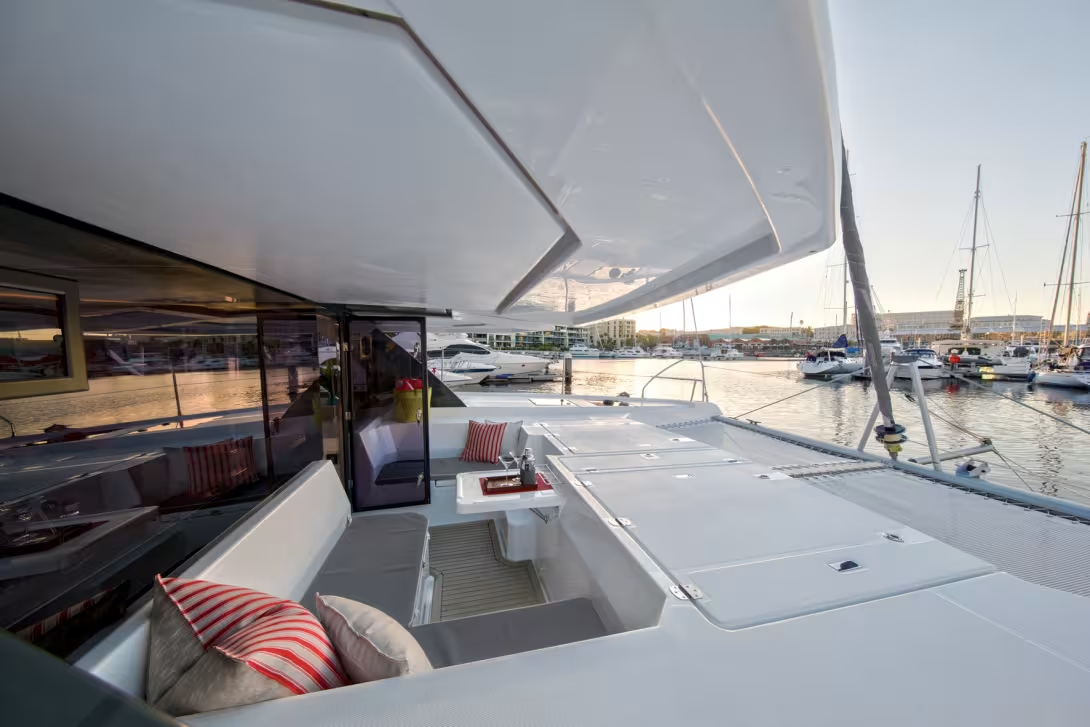
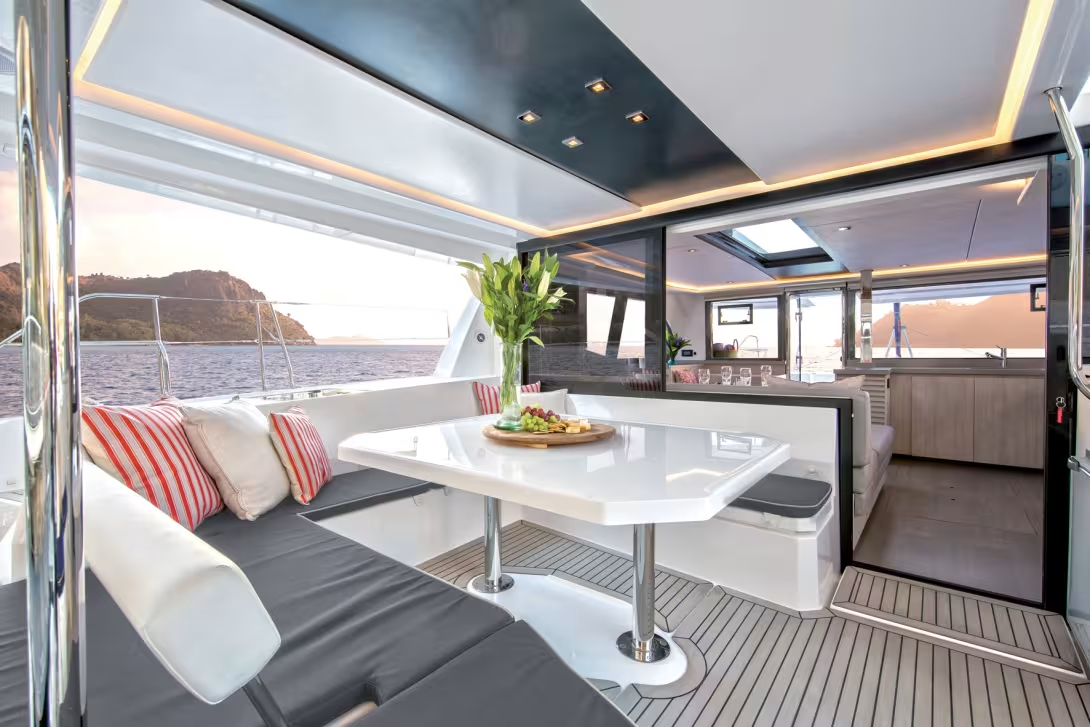
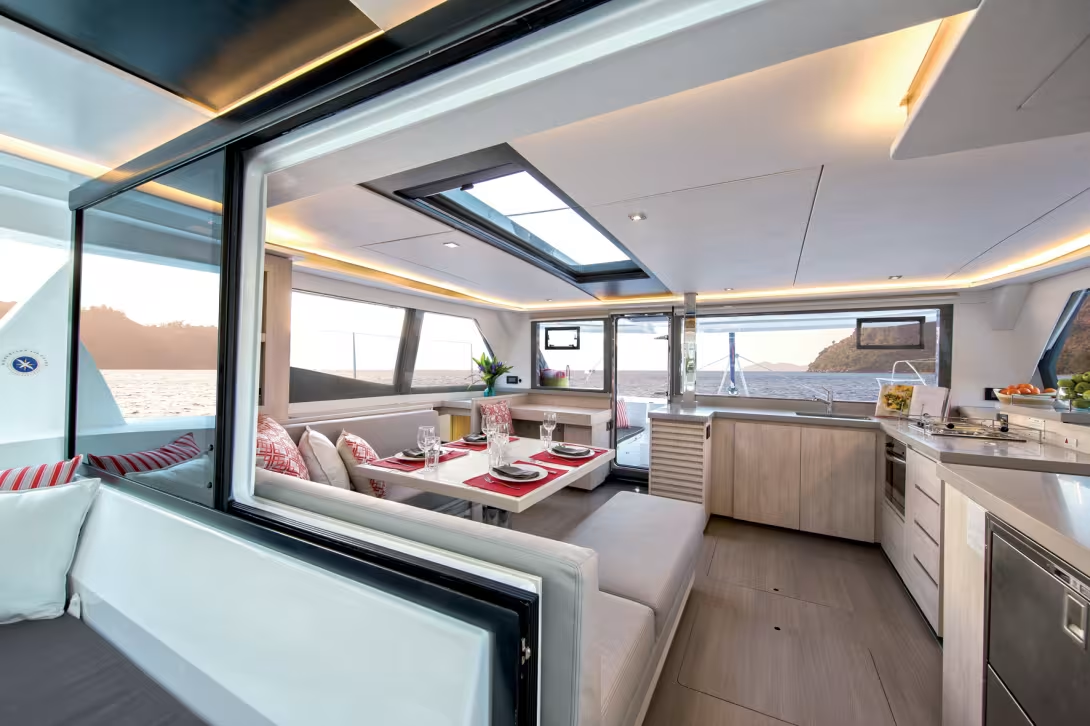
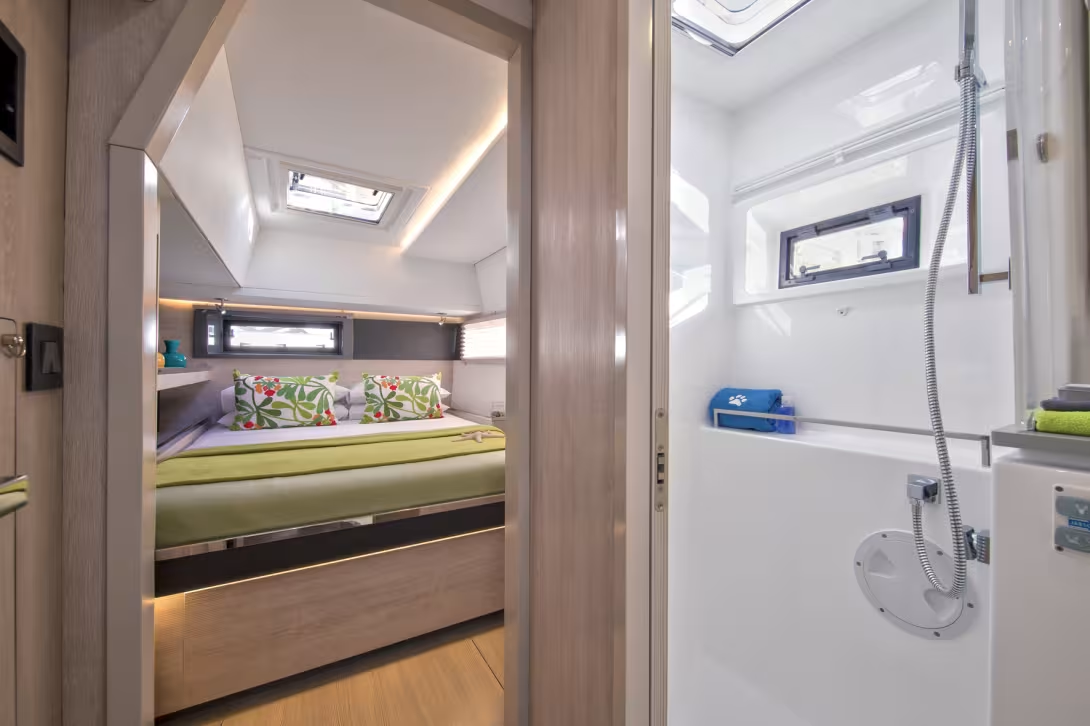
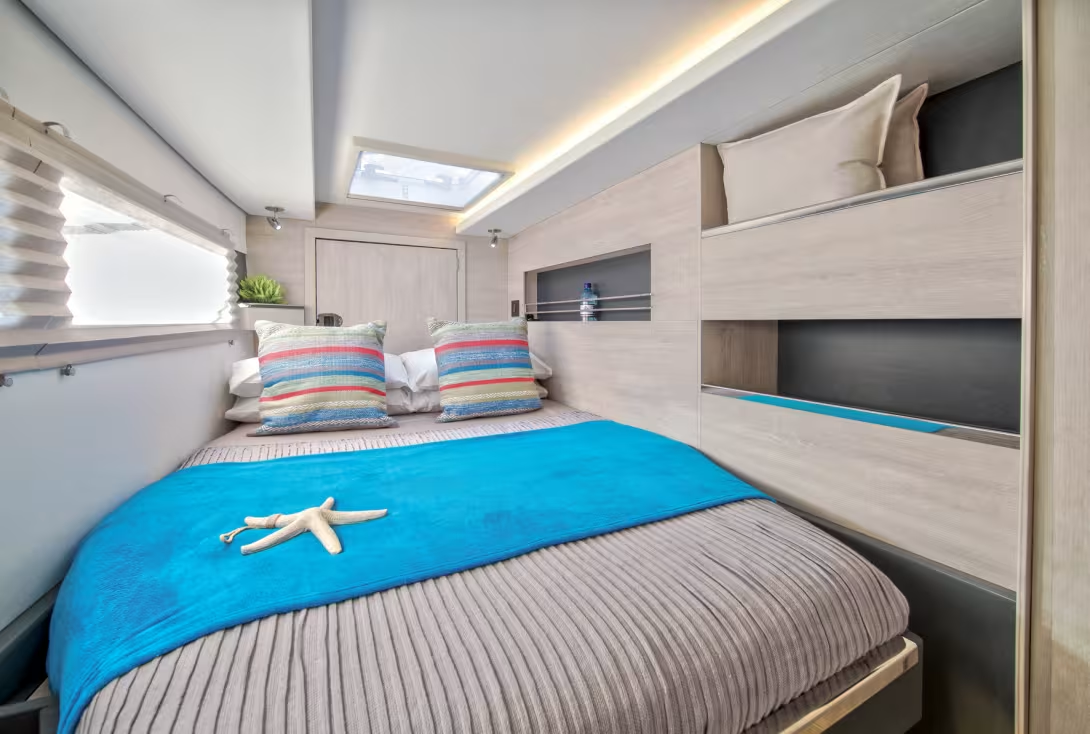
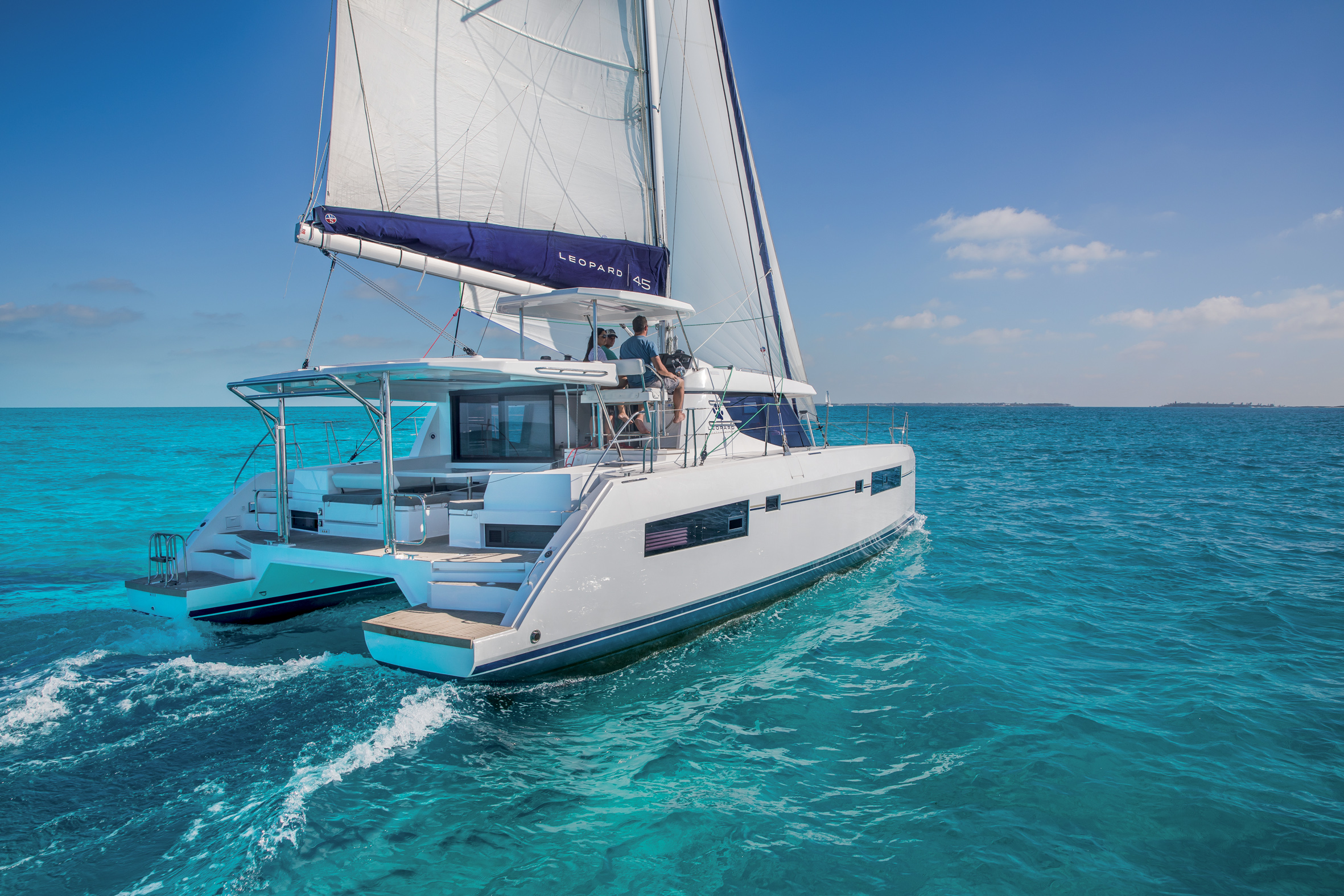
In the contemporary style, the sugarscoops are wide and the access to the cockpit is very fluid (the rear arms having disappeared). A tilting cradle frame (made of welded stainless steel) acts as davits, and this allows the dinghy to be clear of the tunnel and is easily handled using the captive electric winch housed in the bimini top. The cockpit lounge is really welcoming: it is insulated from aft by a two-section seat with folding back (forward or towards your wake). A large composite table is firmly fixed to the floor. 6 guests dine in comfort and a lounger allows you to add a folding table for 2 or 3 more people if necessary. The battery bank is easily accessible (under the front seat) as is the gas locker, well separated from the rest of the facilities. The whole of this outdoor area is comfortably protected by the bimini and will be easy to maintain and to clean. The saloon is now fastened to the sliding bay bulkhead, allowing the crew to choose the dining area depending on the outdoor conditions or to accommodate numerous guests in this open-plan dual dining room. A skylight on the ceiling (equipped with an occulting blind) brings in extra light and allows you to monitor the sail plan without getting up. The table mounted on a solid telescopic base is transformed into a sleeping berth with panoramic view. The galley, installed facing forward, has very generous worktops in Corian; extending aft, to starboard, are the stainless steel drawer refrigerators, topped by a Corian panel. When fully crewed, it will be possible to use these spaces as self-service areas. This will simplify the role of the cook, and will allow continued service in a relaxed atmosphere well suited to cruising (there are no fiddles, so non-slip mats would be useful). The small desk, forward, to port, is perfect for electronic navigation. The forward cockpit, completely obstruction-free, is a perfect haven for the kids to eat breakfast or for an intimate sundowner. The owner's cabin, to starboard, offers a spectacular view, the quality of the cabinetry, seems to have leapt forward compared to the first 40 “new generation”. The lighting is neat, the bathroom splendid (and practical to use). This master suite is welcoming and perfectly preserves the privacy of the occupants from the outside of course, but also from the inside. With a small volume, the "guest" cabins offer the same facilities. The standard mattresses are remarkable.
Engine compartments and helm linkages
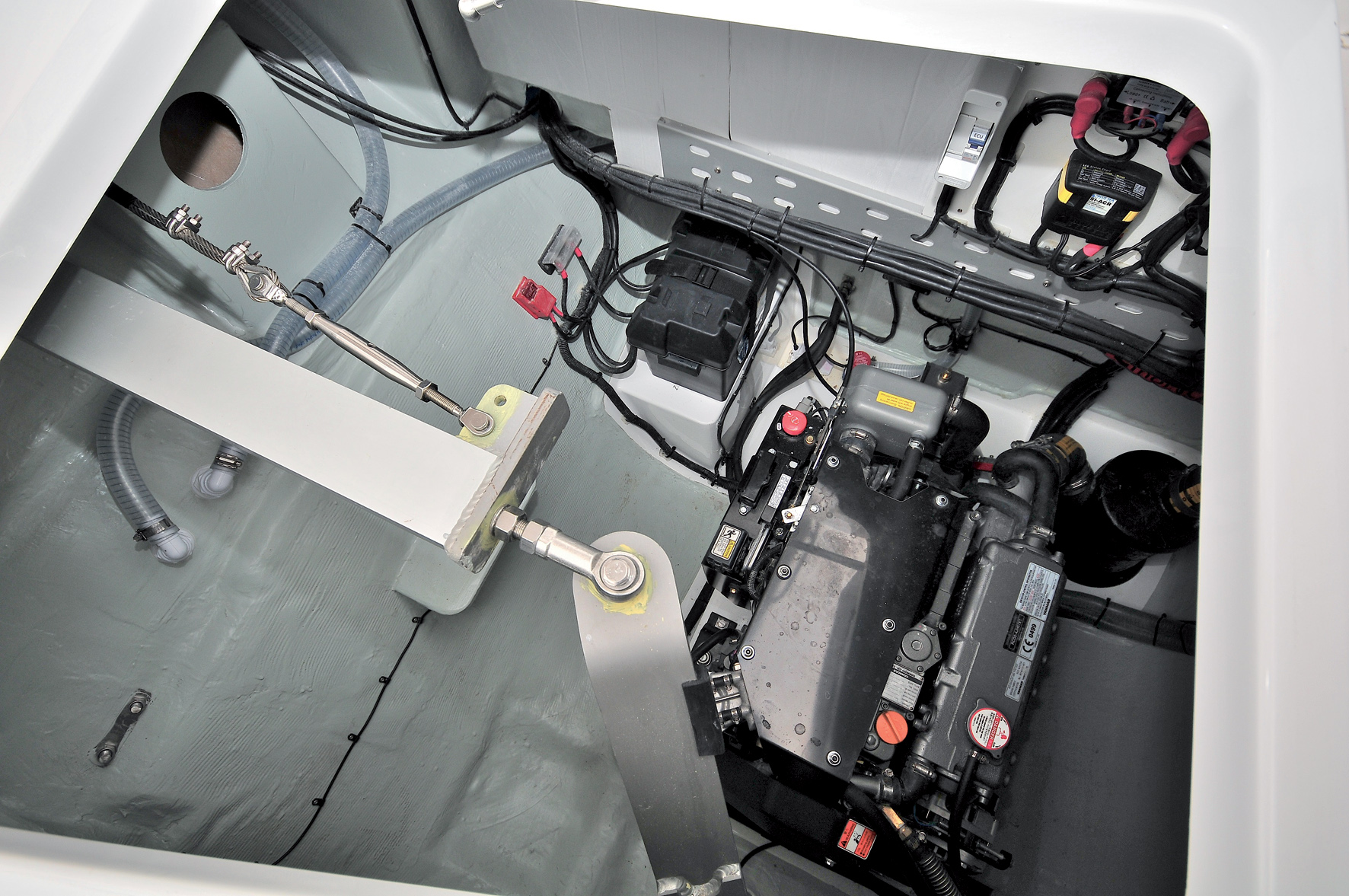
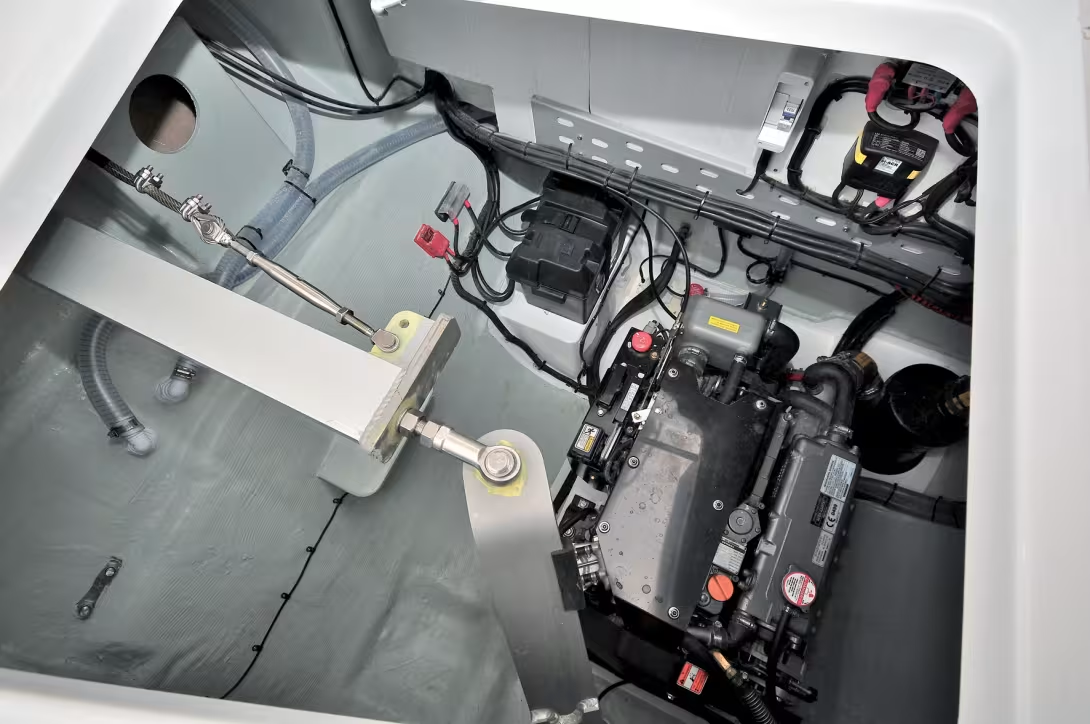
The 45-hp Yanmar 4-cylinder motors are fitted facing aft on their saildrives in order to keep the flow of the propellers away from the rudders. The installation is clean, the bilges carefully topcoated, and the mechanical accessibility is good. The rigid connecting rod for the rudders (an aluminum profile with adjustable ball joints, for parallelism) connects the mechanically welded struts connected to the stainless steel rod by removable flanges. The adjustment of the stainless steel transmission cables is an easy job to undertake.
Bold design
The challenge: with the main bulkhead and the rear arm having disappeared, the trick was to replace these vital structural elements by equivalent structures concealed within the platform! Other yards have adopted the principle of replacing masts. For the 45, Simonis/Voogd chose to replace the main bulkhead with two strong stainless steel cross beams, connected in the form of an H, on which the mast support strut rests. This frames is bolted to the hull bulkheads (which are fixed largely to the nacelle) and embedded in the floor of the coachroof area to create a homogeneous and totally invisible structural assembly. Aft, the approach is the same, but the metal beams are replaced by reinforcements and composite bulkheads to create a structural box housed between the bottom of the nacelle and the cockpit sole. From a hydrodynamic point of view, the 45 also shows a significant evolution: the elegant U-shaped sections are new, the bows are fine-entry and the forefoot is deeply immersed to lengthen the hull. The skegs have a neat design to reduce their wetted surface and refine the profile. The volumes aft form a planing arch which is a good load carrier. The semi-elliptical rudders are slightly compensated for balance. In short, a beautiful cruising catamaran hull.
Test under sail
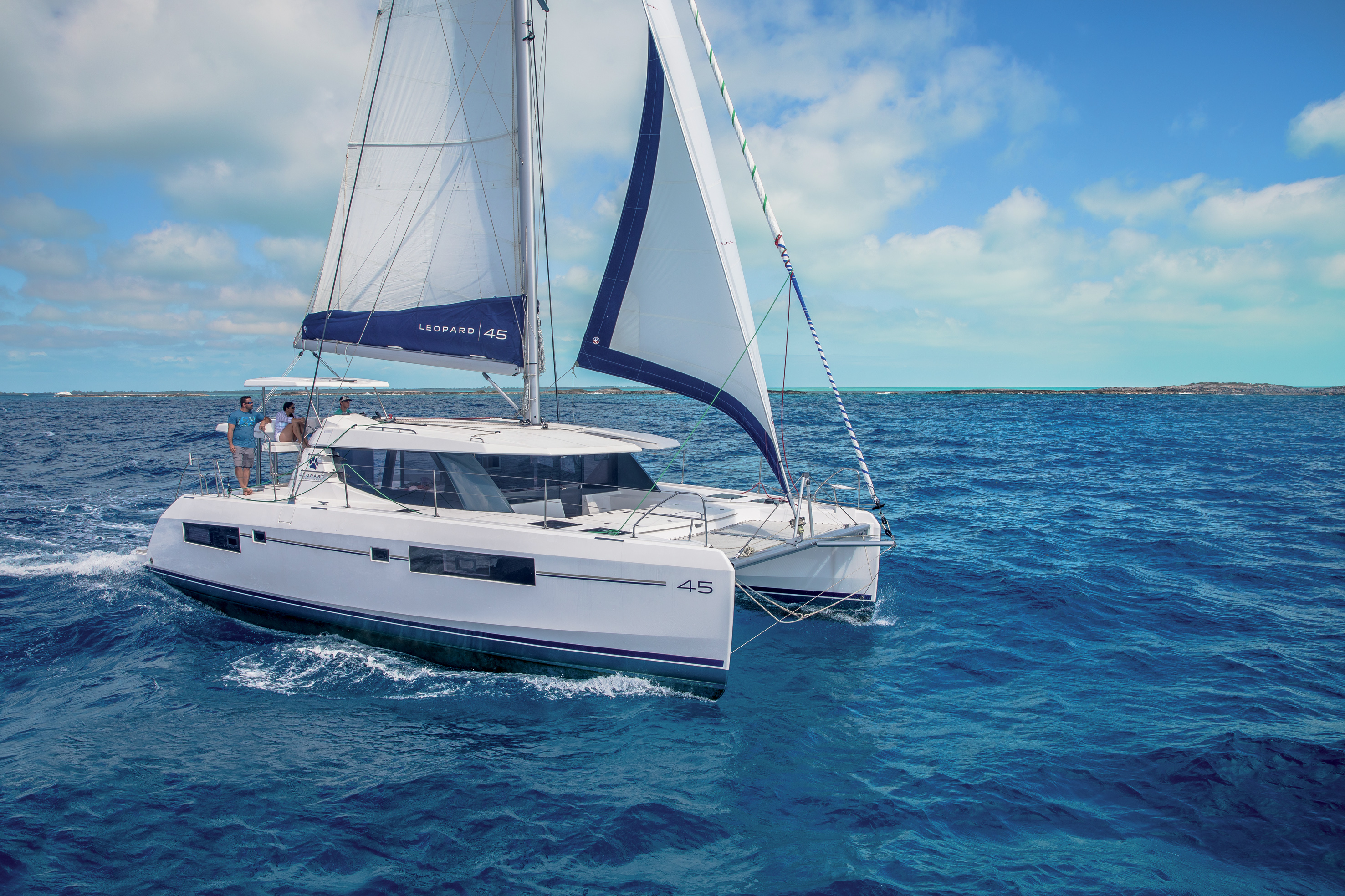
The short-lived, but vicious 40 knots out of the NW which has been blowing since yesterday is leaving this corner of the Mediterranean, the boat being in St.Raphaël. By early afternoon, the wind becomes manageable again, and we are looking at only 25 knots. The maneuverability is good with the fixed three-bladed propellers (!) and the 45 hp, 2.2 l Yanmar (with common rail injection, weight 264 kg with the saildrive). The acceleration is brisk, without effect on the trim. The maximum speed approaches 9 knots and the useful cruising speed will be about 7.5. The fuel consumption will be 4.5l per engine at 2,400 rpm. Other than in exceptional cases, there should be no reason to use the full range (of over 70 hours!) of operation, since the Leopard is able to move under sail even in light airs. The Z-Spars mast is a good reassuring classic profile, held by a pair of capshrouds and two lowers. The stiffness being provided by a single set of spreaders and two diamond stays. The mainsail is of a respectable size (73 m²) and is equipped with low-friction cars on a track and hoisted with the aid of the electric winch coupled to a double-purchase halyard. After having taken 1 reef in with the single continuous reefing line, and under genoa in the tail end of a Mistral, as brutal as it was surprising, we charge along comfortably at 9 knots in 20 knots true. Unfortunately, we have to adapt too quickly to the changing weather: the wind comes back from the SE as quickly as its predecessor has disappeared! The mainsail is re-hoisted in full and we can enjoy a good breeze of 15-18 knots which immediately raises a chop formed on the sea coming from the NW. Surprisingly, the 45 seems quite comfortable on this terrain, and sails valiantly at more than 8 knots on a close reach with little pitching which is quickly absorbed. The balance of the whole platform reflects the good architectural work which has gone into it. Unfortunately, we do not have a code 0 (or a gennaker suitable for the weather), which would have been perfect under these conditions. An experienced crew will make the most of these new hulls under 1 reef (to keep a supple and directional helm) and small gennaker downwind, conditions in which the boat will exceed 15 knots. A family crew might dispense with this equipment for the benefit of a medium asymmetric in a sock or a code D if it’s not too large. The deck plan is very easy to use, but I advocate the installation of an electric winch for mainsails because the lengths which need to be dealt with (especially getting ready for a gybe) and the forces required are significant. The helm is supple and directional thanks to mechanical transmissions and efficient rudders. Our record of the day was to be 11 knots, but the fixed propellers are a handicap to speed under sail: without them the boat would have been much swifter.
Conclusion
This new 45 has a pertinent hull design. It is not light, but it works well and its platform balance is remarkable. The quality of interior fittings highlights the new style and will appeal to potential individual owners. The 3-cabin version is made for them, and the size is ideal for offshore cruising. The charter versions (Sunsail 454 and Moorings 4500) will have a generator and air conditioning for tropical use, to suit American demands.

1: No tubular davits, but an articulated cradle support frame. Lifting is assisted by an electric winch concealed in the bimini
2: The management of the mainsail is entrusted to 2 sheets on multi-purchases, the manual winch may prove limited for the sheeting in long lengths in a breeze (in preparation for gybing)
3: Leopards are equipped with rigid kicking strap
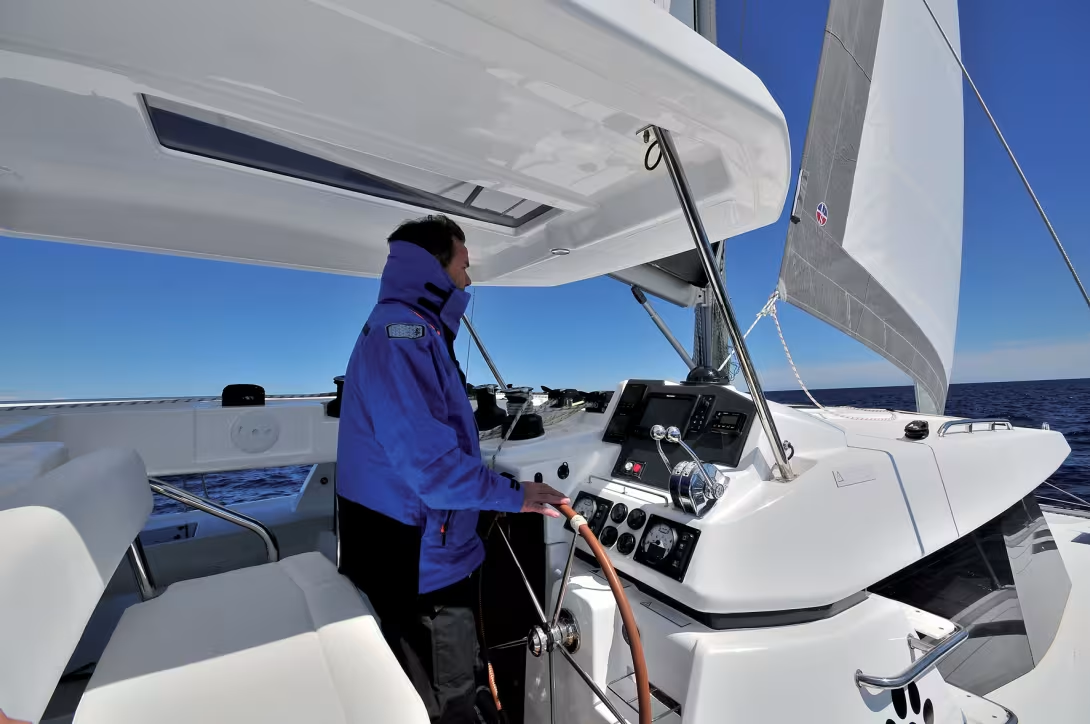
4: The helm station is a complete set-up, with steering wheel, instruments and bench seat for 2 people. The accessibility of the sail handling console is good
5: The excellent work which has gone into smoothing lines and the addition of black fascias, forward, improve the perception of the coachroof
6: The 73m² main is powerful, and the boat is very stable, but it will be necessary to reduce sail in the breeze and keep the canvas forward
7: The design of the step is much prettier and better integrated in the silhouette than on the predecessor 44
8: The hulls have benefitted from great optimization. The new U-shaped sections are very efficient
9: The bowsprit option and gennaker will allow more demanding owners to enjoy good performance in the breeze
10: The bridgedeck clearance of 92cm (lightship) is good, far superior to the predecessor 44
Technical Specifications
Builder: Robertson/Caine
Naval Architects: Simonis/Voogd
Construction: Glass/balsa/polyester sandwich
Length: 13.72m
Beam: 7.35m
Draft: 1.55m
Air draft: 21.34m
Bridgedeck clearance lightship: 0.91m
Upwind sail area: 123.4 m²
Mainsail area: 73m²
Genoa: 50.4m²
Asymmetric spi: 140 m²
Light displacement: 14.5 t
Motors: 2x45 hp inboard saildrive
Water: 780 l
Diesel: 700 l
Holding tank: 170 l
Available versions: 3-cabin owner’s, or 4-cabin
Standard price ex-tax: € 389,000
Principal options in € ex-tax:
Three-bladed folding propellers (Bruntons): 4,935
Raymarine electronics pack: 11,209
220V electric pack (charger, shore power cable, interior sockets, circuit breaker: 5,065
12V/220V/2700W inverter-charger: 4,156
AGM batteries in place of lead-acid: 1,558
4x100W solar panels: 6,104
Sea Recovery 117l/h watermaker: 16,234
Code 0/bowsprit/square-topped main/lazy bag: 11,364
Ground tackle: 1,354
Delivery to Cape Town: 11,948
Delivery to Europe or USA: by sea 31,515 / by ship 42,424
PLUSES
Very successful cockpit design
Good overall exterior design
Good volume/performance balance
MINUSES
2 mainsheets and no traveler
Weight
Optional folding propellers expensive
THE ESSENTIALS
Efficient hulls
Quality of the fitting-out
THE COMPETITON
|
BUILDER |
CATANA |
FOUNTAINE-PAJOT |
BALANCE |
BAVARIA |
LAGOON |
|
MODEL |
BALI 4.5 |
HELIA 44 EVOLUTION |
BALANCE 451 |
NAUTITECH 46 |
450S |
|
UPWIND SAIL IN m² |
111 |
116 |
85 |
112 |
129 |
|
WEIGHT IN TONNES |
11.6 |
12.6 |
8.39 |
10.8 |
15.1 |
|
PRICE EX-TAX |
€ 341,890 |
€ 384,560 |
US$ 418,803 |
€ 389,700 |
€ 373,300 |
A word from the designer
The new Leopard 45 is the result of 20 years of collaboration between 3 key players, the charter company (The Moorings at the time we started), the builder (Robertson and Caine) and ourselves as yacht designers. The success of Leopard lies in the level of refinement we have achieved together over the last two decades. Interestingly enough, the very first model we did was also 45ft in size. But, that is where the comparison stops. The original design is no match for the new 45, be it in performance, space or luxury. Although we as designers did pretty much all aspects of the design in the original boat, today that is very different. We closely work together with a design team of about 15 members situated at the yard. This team consists out of specialists in each discipline, taking care of the interior, electrical, plumbing and mechanical layout. This level of expertise and volume of design resources allows us as yacht designers to concentrate more on fundamental design aspects such as performance, handling and the primary structure. The result: A bigger boat, with more volume and more luxury, without compromising (as a matter of fact we improved on it) the performance and handling. Those advances made didn’t come easily, but could be achieved not only by the dedication and increased resources of having a large design team, but also through the systematic and incremental improvements we made over the last 20 years on each of the Leopards produced. Today the Leopard 45 represents the best boat made by R&C. It is strong, stiff and yet light, through detailed engineering making use of detailed FEA analyses to allow for an un-obstructive space frame, sandwiched in between the bridgedeck and the cabin sole of the saloon. This frame takes care of the high rigging loads imposed by the sails, yet it allows for a near 360 view through large windows and door openings on all sides of the saloon.Through advances made in the computer modelling of the performance, the rig and sails are optimized to a degree previously only possible for high-end racing projects with large R&D budgets. This boat can sail faster with less sail area thanks to carefully optimized aspect ratio’s between the mainsail and jib. The same advances in computer modelling also have allowed us to improve the boats motion. This latest generation hull has a lower tendency to pitching motion and has less wave interaction between the hulls which in the past would account for the uncomfortable slamming on the bridgedeck in a heavy seaway. Optimization is always possible, but often constrained by time and money. On the new Leopard 45 we didn’t have either constraints allowing us to take great care in designing a boat which is not only modern and luxurious in appearance, but also a true blue-water cruiser with stellar performance. For those who need more convincing on the latter, take a look at the performance video on the Leopard website. The boat was sailed by just 2 people and taken to 18+ knots in flat water conditions (no help of big waves or swell). More importantly, it was never difficult to sail or out of control. At the end of the day we just furled up the sails and headed back to port. I can vow for that as I was one of the 2 crew members sailing the boat that day.
Alexander Simonis (Simonis/Voogd Design July 2017)
