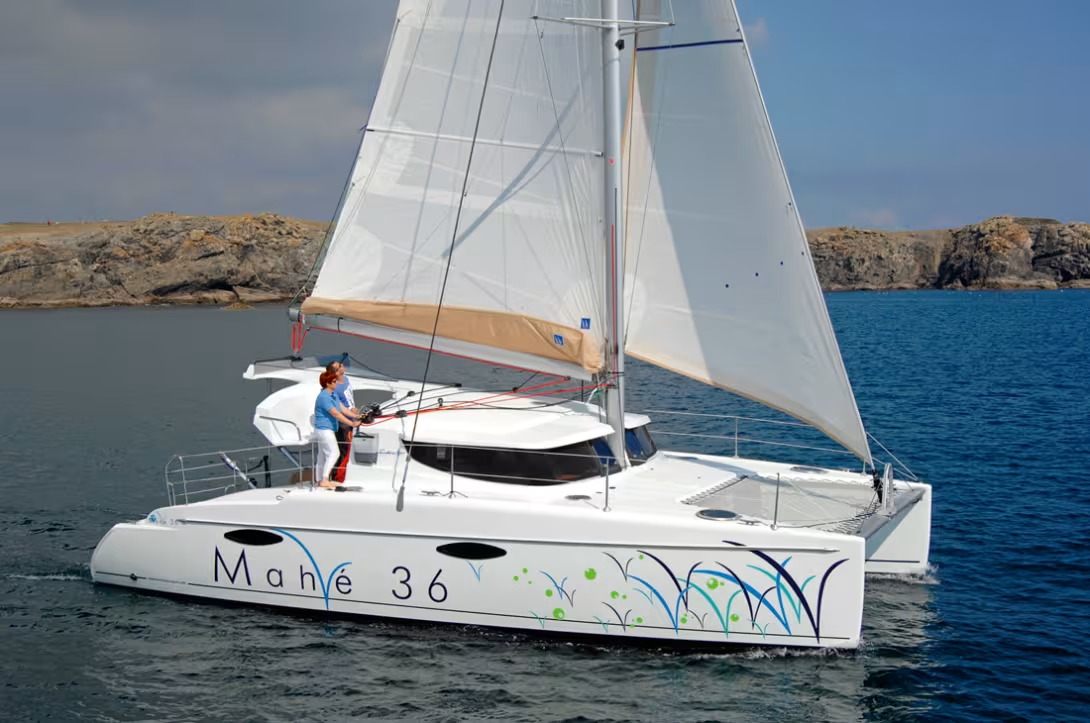
With the Mahe 36, Fountaine-Pajot has succeeded in offering a compact catamaran which is however treated as a much bigger model! A model which is particularly present on the second-hand market.
Infos pratiques
- Le chantier : Mahe 36
- La fiche technique
- Découvrez notre vidéo exclusive
- Financez votre Mahé 36
- Assuez votre Mahé 36
- Articles autour du Mahé 36
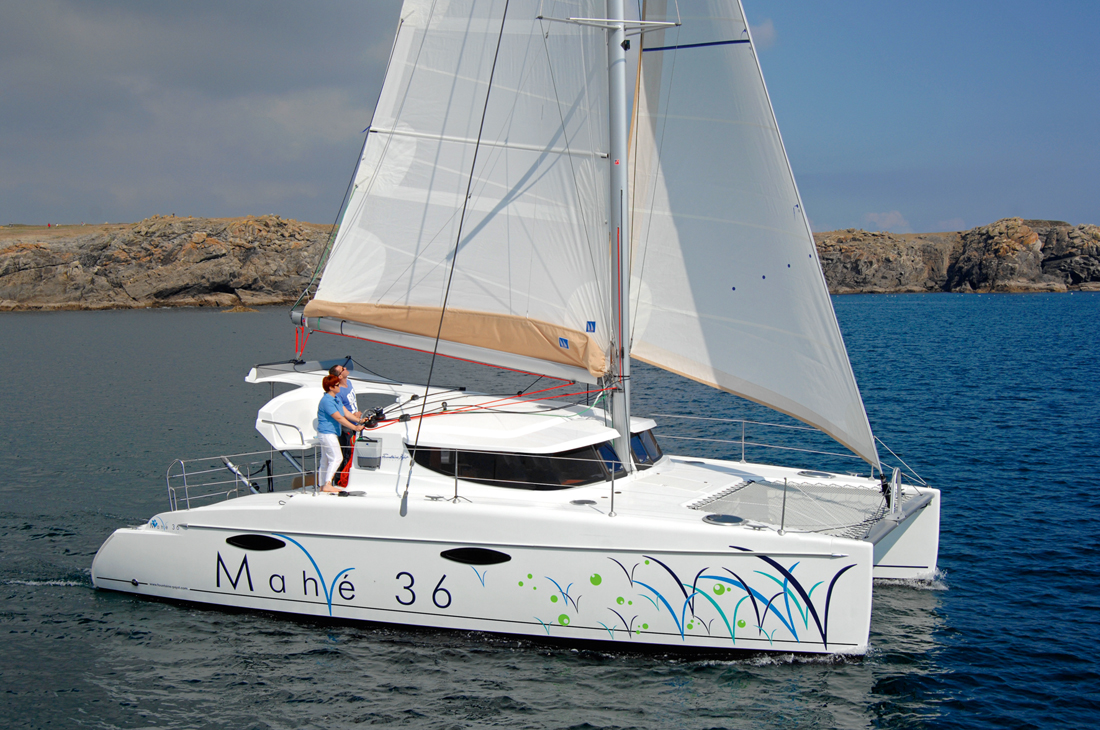
Launched in 2006, the Mahe 36 remained Fountaine-Pajot’s smallest model until 2013, with 195 boats built. A nice success for this catamaran, built in just one piece thanks to injection techniques - no less than 80m² came out of the mold! In 2011, the 36 benefitted from a revamp, thus becoming the 36 Evolution. The builder was then offering a rigid bimini, a redesigned maneuvering station – with an electric winch on request – and slightly modified accommodation with better finishing.
This model’s main interesting feature is its size…although in the 90s and early 2000s multihulls of 35 to 40 feet flourished – the Antigua 37 then Tobago35 for Fountaine Pajot, Aventura 36, Edel 38, Broadblue 385, Lagoon 380 – the following decade clearly focused on models of 40 feet and over. The builders can’t be reproached for this: it’s true that 40 feet is considered to be the minimum size for long distance cruising with all the comfort desired, and…in complete safety, of course. Given that most catamarans of this size bought second-hand are intended for long-term cruising, we can legitimately ask the question: is the Mahe 36 suitable for an ocean crossing? The answer is yes, if we judge by the number of Atlantic crossings completed without mishap by this model. But in certain conditions. The first is obviously not to tempt fate; meaning to sail in such a way that you avoid – as far as is possible – strong gales and dangerous seas, even if it means deviating from your planned route. Good routing ashore can be a very precious support. The second is to adapt to a reduced load-carrying capacity. 1,500 kilos is very little when long-term cruising…therefore you must do without equipment such as a generator or a dive compressor. And of course limit the crew to four people ideally.
Pleasant under sail
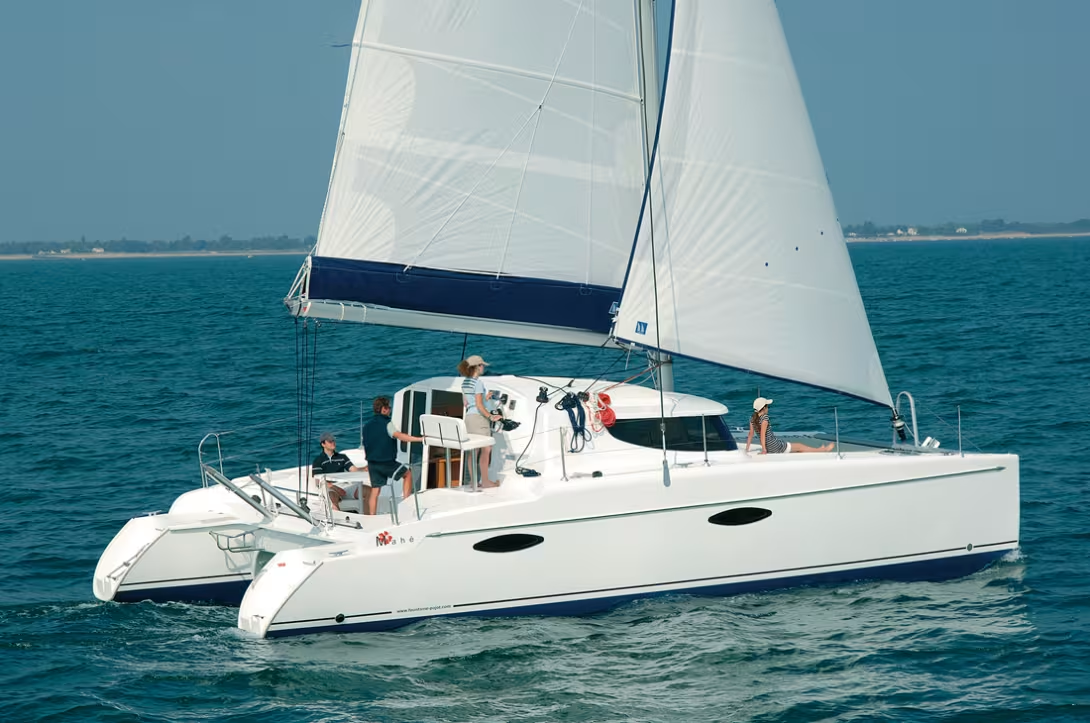
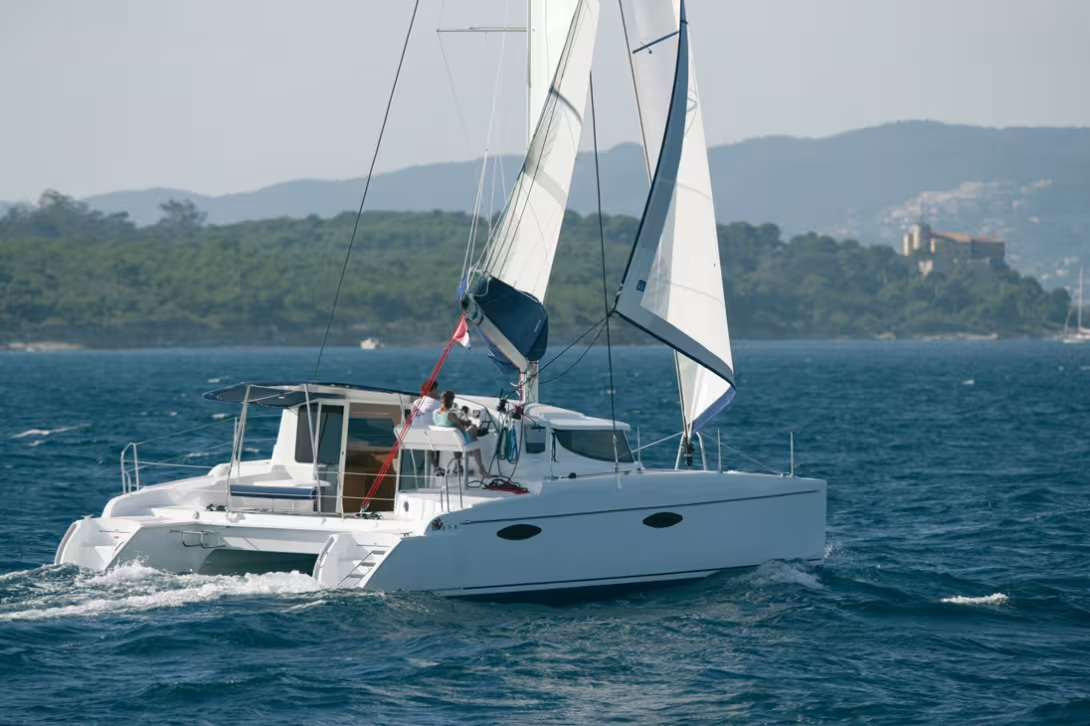
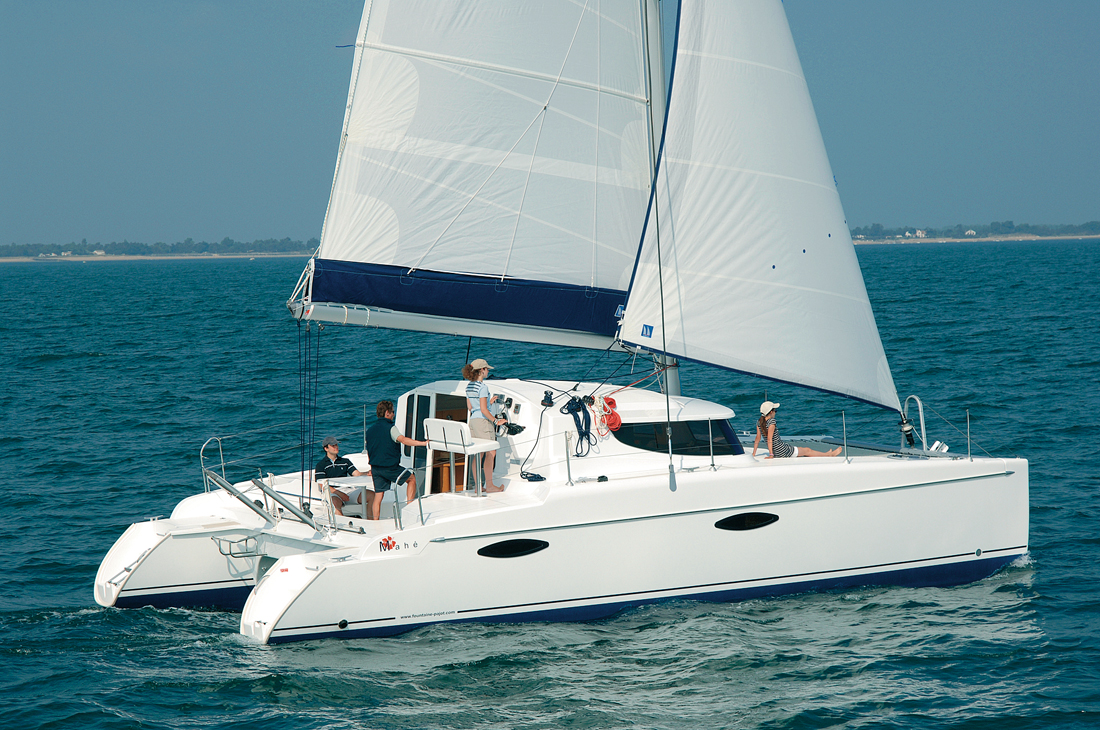
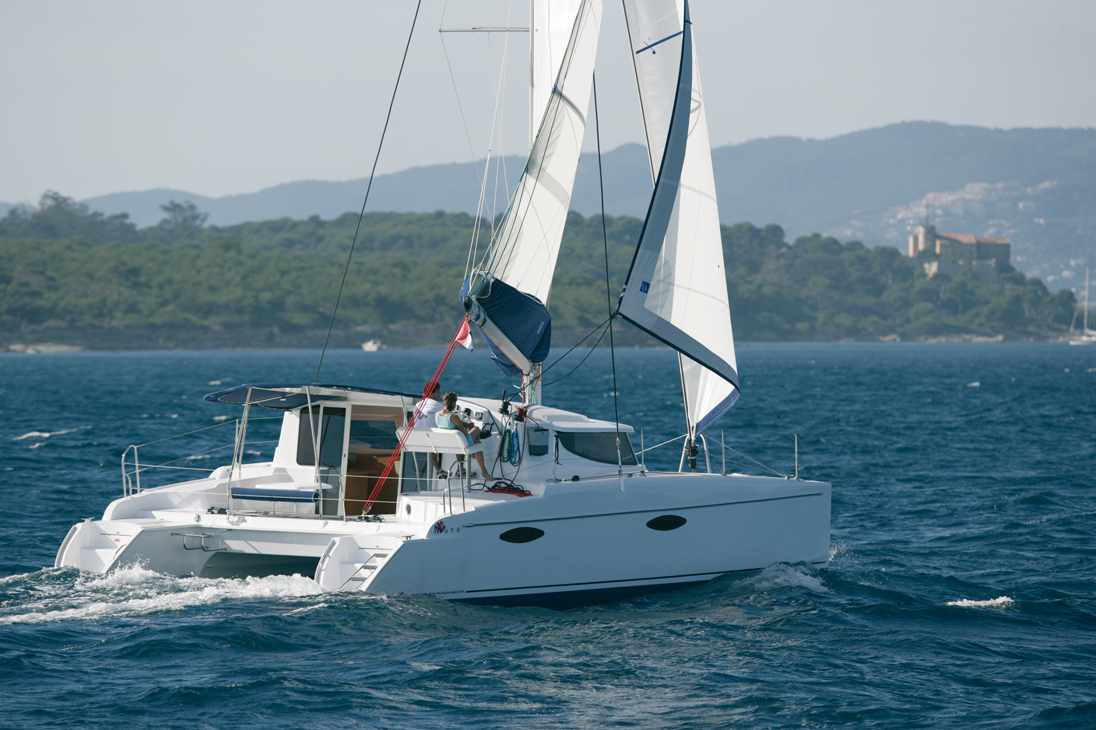
Although the hulls’ slim waterline sections – even though they are rapidly enlarged by a progressive longitudinal step higher up – result in low tolerance to load, they offer many attractive features, starting with a convincing speed potential: averages of 8 knots are common. Not surprising when you look at the sail area/weight ratio: 15.4m²/t – more than most models in this category, which are rather closer to 10. The Mahé 36 therefore proves to be fast, even in light airs. Obviously folding propellers rather than the fixed ones delivered as standard improve still further the figures read on the speedo. Although the Mahe is at ease in beam and following winds, it is less so to windward. Firstly because its stub keels are rather short – 1.1m draft – but especially because the bridgedeck is quite low, and quickly slams in the waves. Not very comfortable for the crew...on the other hand, as shown by the anchor and chain at the mastfoot, care has been taken with weight centering. Pleasure at the helm is a bit limited by the small diameter of the steering wheel.
A very successful deck plan
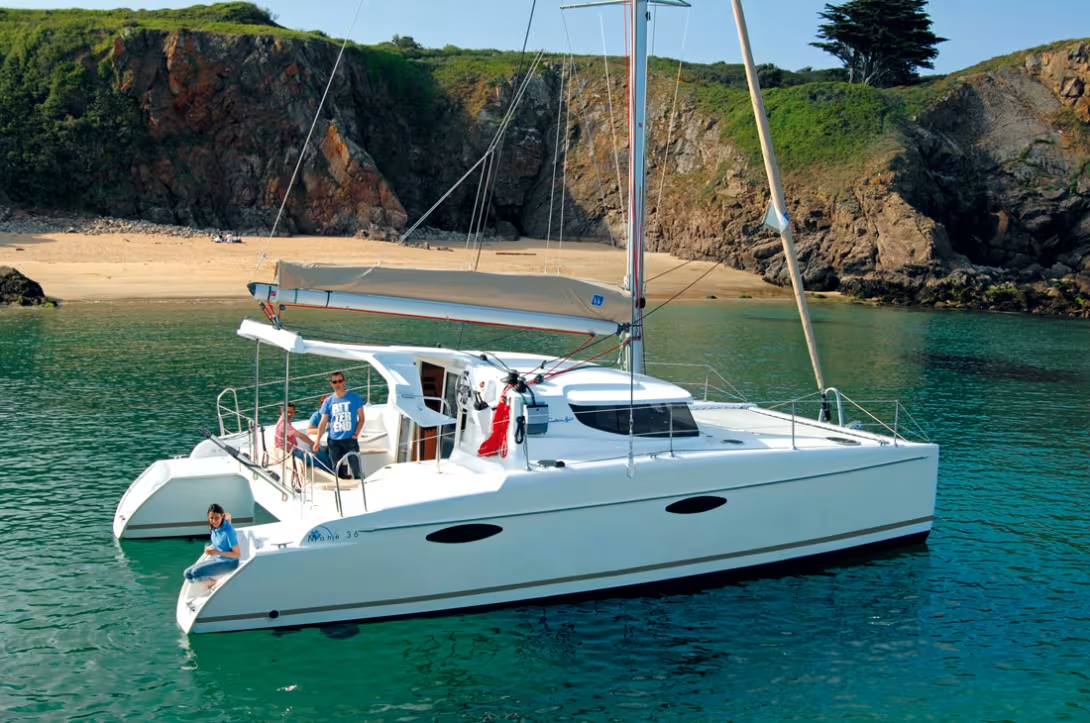
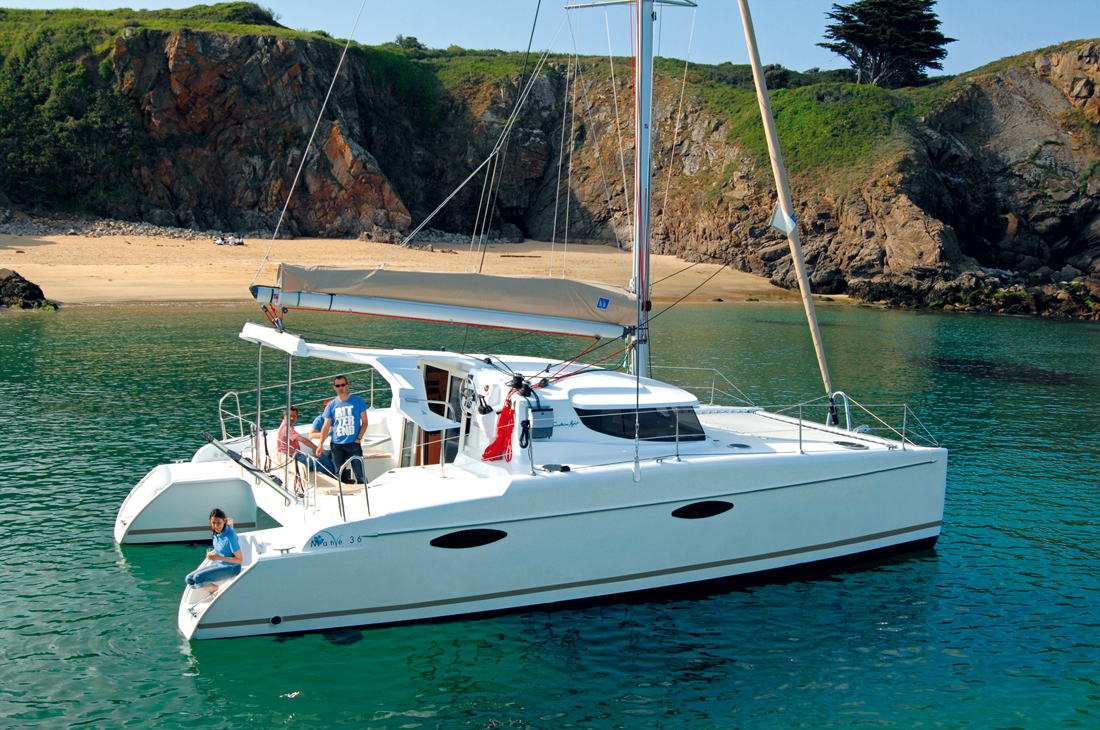
The builder and the architects chose to retain rather wide side decks and a huge trampoline forward. Pleasure on a cruise – obviously a tropical one for preference – is thus guaranteed, with huge relaxation areas and well-designed sugar scoops – even though they are narrower than current formats – for direct access to the sea. The cockpit is very simply fitted out, and makes do with a huge U-shaped settee which completely encircles it, and a table offset to port. The steering position comes down to a large raised seat, with access to most of the control lines. As standard, the first Mahes didn’t therefore benefit from any cockpit protection. Most owners of course opted for a fabric bimini. The Mahe Evolution therefore offers a rigid bimini, which cleverly incorporates the steering position’s seating. This new configuration radically changes the boat’s silhouette, from a rather simple, basic catamaran to a more luxurious boat – and finally very close to the other bigger models on the market.
Limited number of cabins
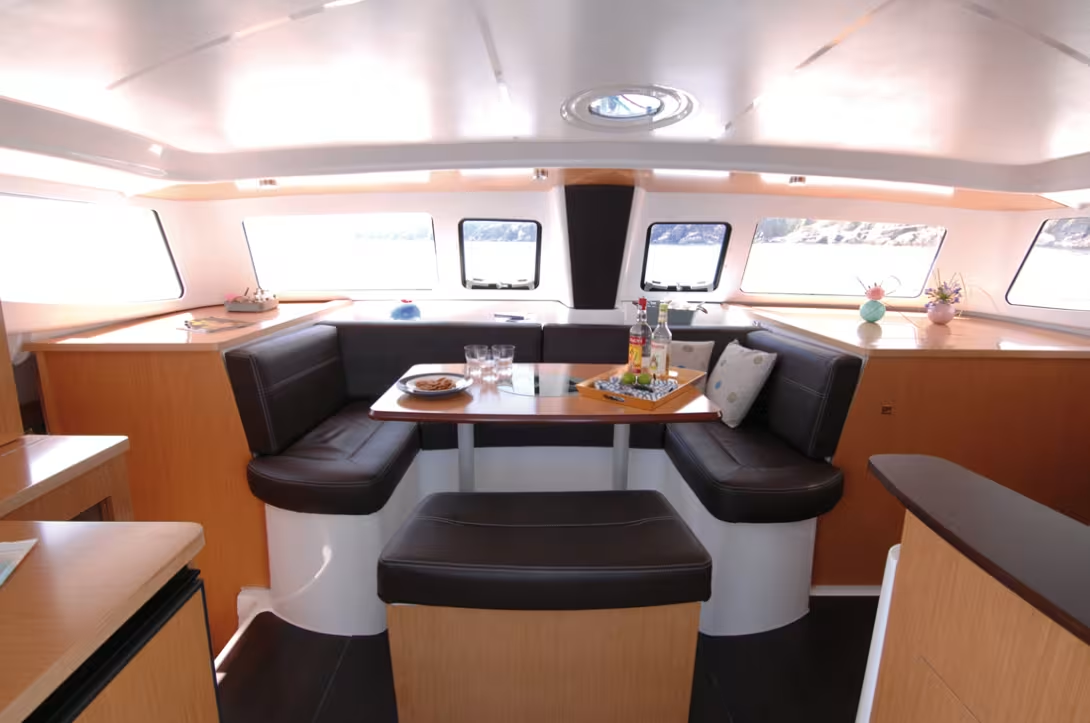
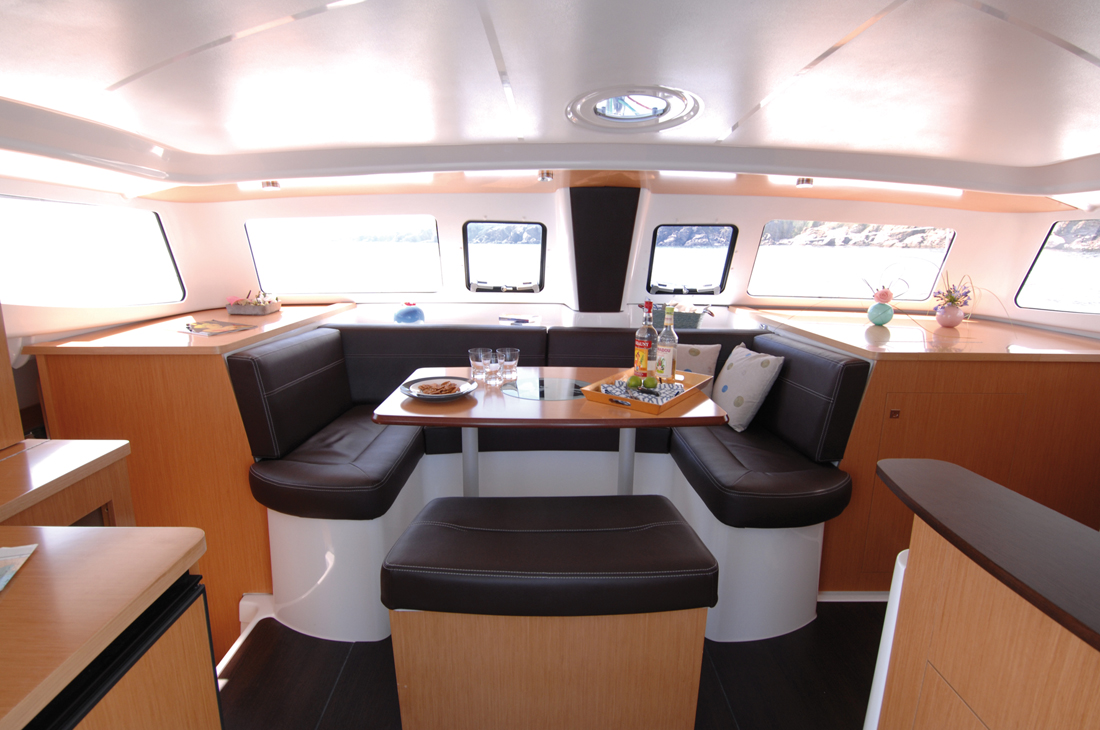
Another intelligent commitment by the Mahe 36’s designers: that of not giving in to the competition to fit in as many cabins as possible. Starting from the observation that a bridgedeck of this size will contain a crew of a maximum of six people, the architects haven’t struggled to fit in four cabins. The boat is therefore available with two or three double cabins. In the first version, the forepeaks logically house the heads. These enjoy a much greater volume than if they were placed in the passageway, in the middle of the hulls. The three-cabin version only has one heads; one of the forepeaks is therefore fitted out as a cabin. This is noticeably narrower than its counterparts aft, and will be reserved more for a single adult or the children. In the nacelle, the builder has succeeded in fitting a saloon, an L-shaped galley and a small navigation area. Ventilation is well thought-out and the famous lip at the front of the coachroof protects from the greenhouse effect when the sun is at its zenith. The finishing, quite basic on the first models, improved noticeably on the Evolution. We also noticed a new galley unit and an extra seat in the saloon.
Conclusion
A minimum-size catamaran for setting off on a long cruise, the Mahé 36 offers one hard-hitting selling point - its price. For which there is a wide spectrum: the first models change hands for a little over 100,000 euros, whilst the more recent 36 Evolutions, just 4 or 5 years old, cost 70 to 80,000 euros more. Although the Mahé 36 is more suited to a Mediterranean circuit than an Atlantic one, it is nevertheless capable of venturing on the latter, if sailed sensibly.
The points to check
Over and above the models which are sometimes well-worn through years of charter use - check the engine hours, the sails, the electronics and the standing rigging – the Mahé 36s have aged rather well. The structure and the rig are robust, the engines are easily accessible for everyday maintenance - and therefore for inspection. On the other hand, and particularly on the older 36s, a few problems have been noted in the period after construction – rough furniture and bulkhead fitting incomplete, or defective fitting of certain equipment. Most of these small problems have been resolved of course – most often by the builder or its dealers. In short, you may still come across an example whose deck squeaks under your feet, or a bulkhead which creaks in rough seas, but not much more.
We like
The compact format – and the attractive price
Ease of maneuvers
Easy maintenance
We don’t like
The bridgedeck slams in rough seas
Small load-carrying capacity
Average finishing
Technical specifications:
Builder: Fountaine Pajot
Architect: Joubert/Nivelt and Flahault Design
Material: glass/polyester
Hull length: 11.00 m
Beam: 5.90 m
Draft: 1.10 m
Unladen displacement: 5.00 t
Mainsail area: 47 m²
Genoa area: 30 m²
Engines: 2 x 20 hp
Second-hand price: from 105,000 euros