
Given the boom of the RIB market and inflatable paddleboards too, it’s no wonder that small catamarans are also taking a look at the formula. The big leader in this niche, MiniCat will soon be celebrating its 15th birthday and... 2,000 catamarans produced! We tried out the most popular model from the Czech manufacturer, the MiniCat 420.
Infos pratiques
- Le chantier : MiniCat 420
- La fiche technique
- Découvrez notre vidéo exclusive
- Financez votre MiniCat 420
- Assuez votre MiniCat 420
- Articles autour du MiniCat 420
Some large multihulls with clear space on the bimini have been known to carry a pair of Optimist sailing dinghies on the top - although the windage would be substantial and stowing as well as launching wouldn’t be an obvious task. Surely, it’d be simpler to take a small sailboat that fits in two bags? And why opt for a small monohull capable of capsizing in the first puff of breeze when you are a multihull enthusiast? MiniCat - or rather its founder, the Czech Martin Horak - became interested in the idea of an inflatable catamaran 14 years ago. His goal was to offer a real sailing boat, easy to assemble and transportable in simple bags. The MiniCat can be easily stowed on board, but also in your car. You can therefore be the owner of a catamaran that slips under your bed! The range starts with the 10 feet (3 m) Guppy and extends up to 15 feet (4.60 m).
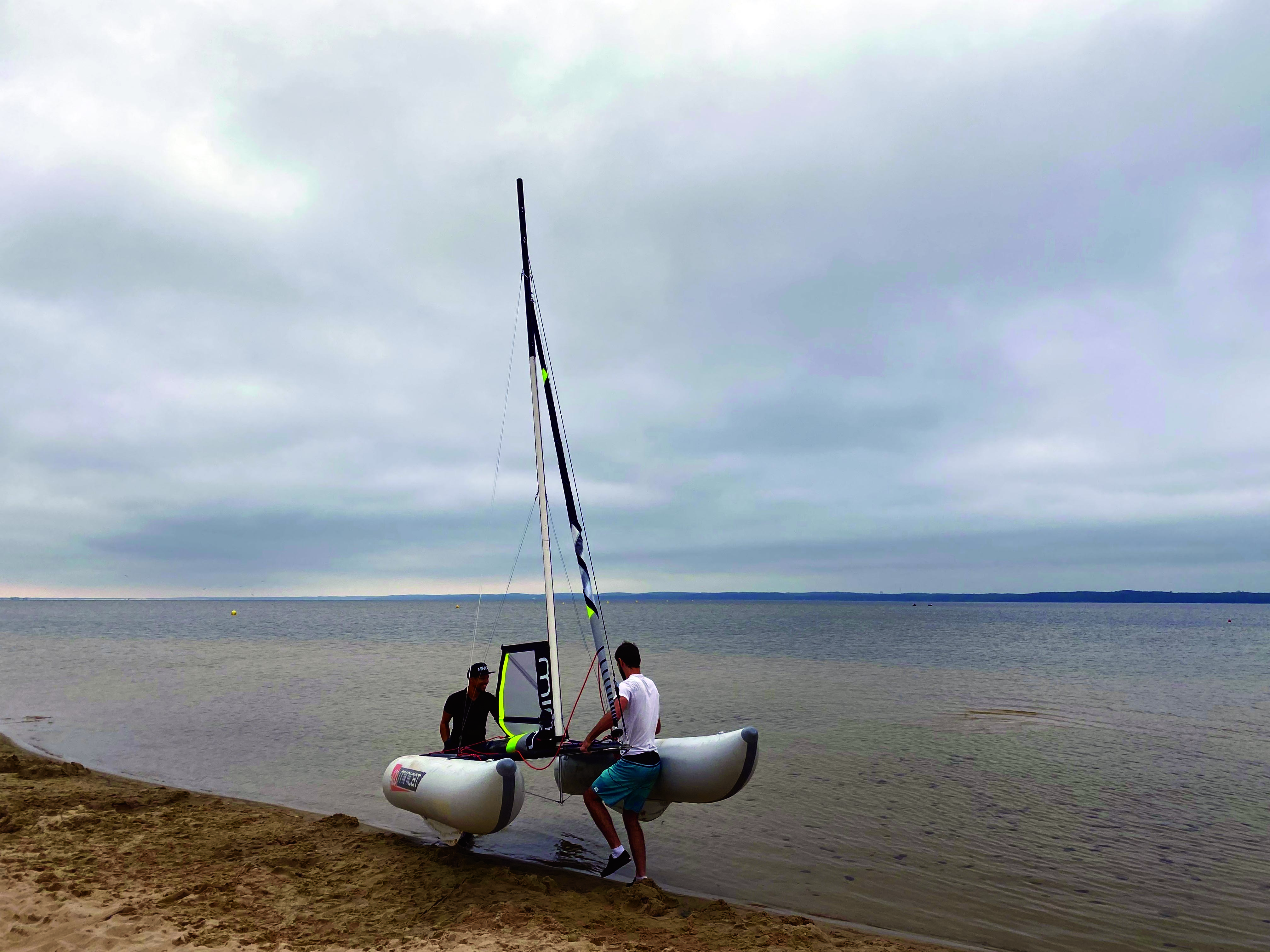
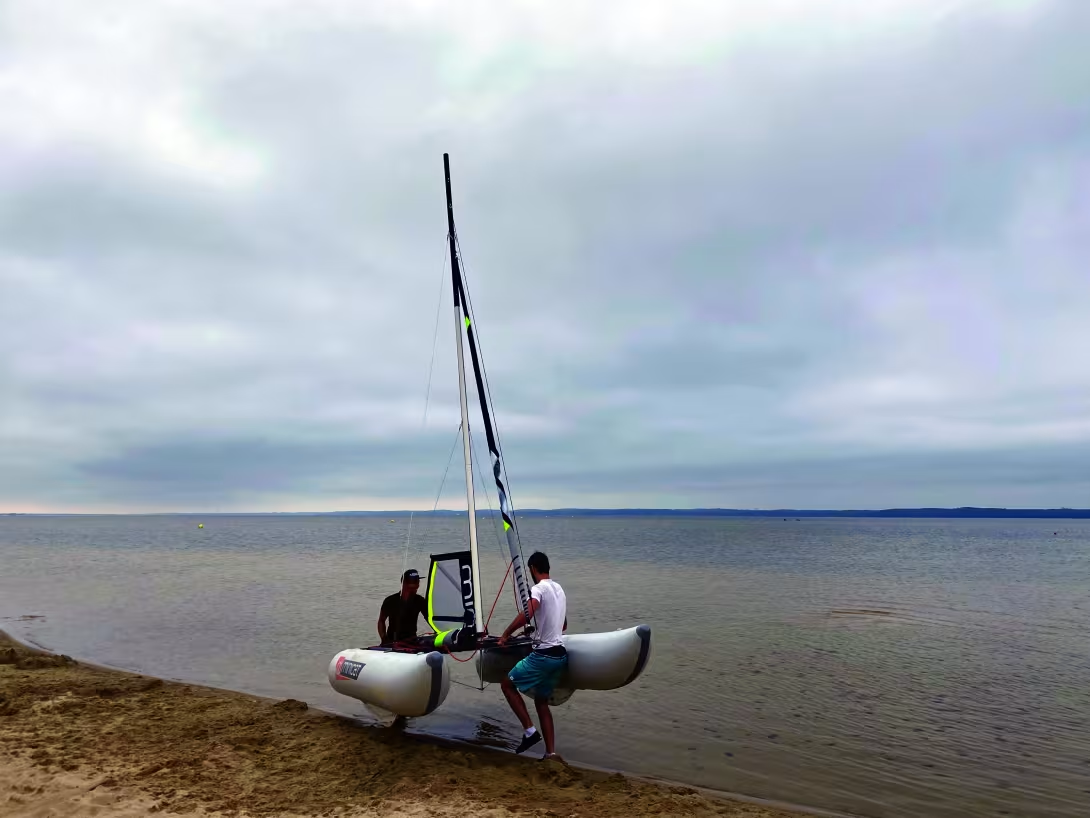
112 lbs (51 kg) all up: the 420 can easily be carried by two people. You can pull it on the sand on your own.
It fits in two bags!
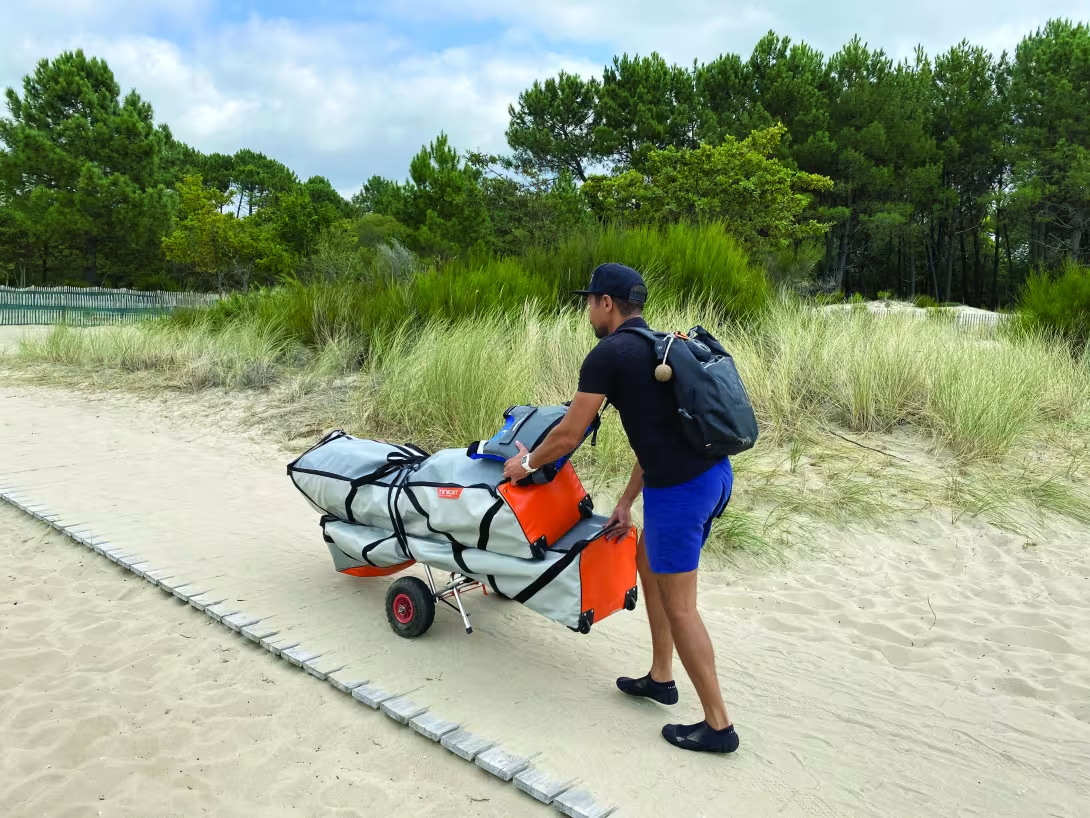
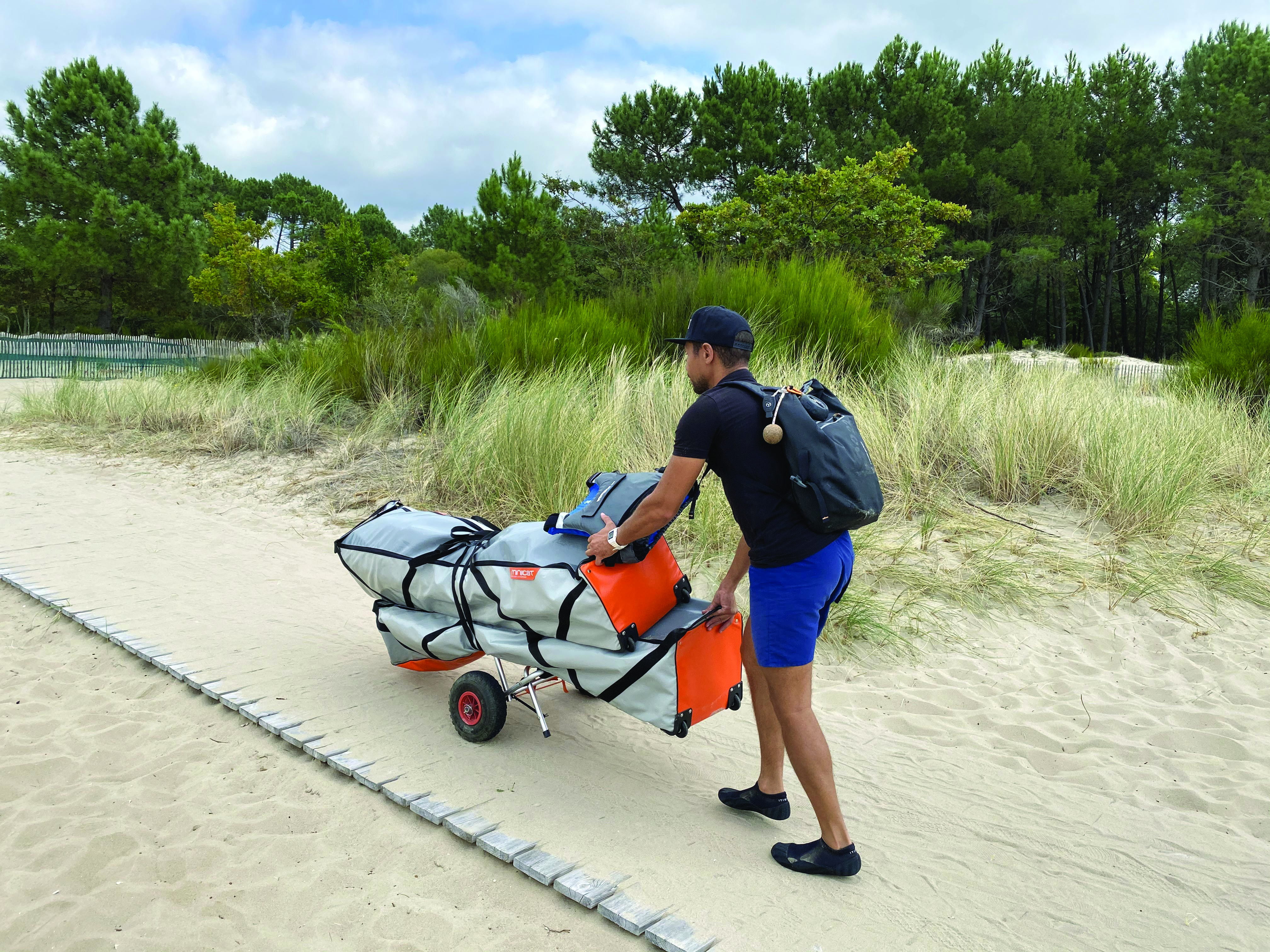
The MiniCat 420 fits in two bags of 5’9”x12”x12” (175 x 30 x 30 cm) - they are designed to fit in a standard car by folding just one seat. Each bag weighs just over 50 lb (25 kg). Optionally, they can be equipped with wheels. A kayak cart also works very well. The size of the machine means you could put it together on your trampoline, but the launching and recovery might become somewhat acrobatic…
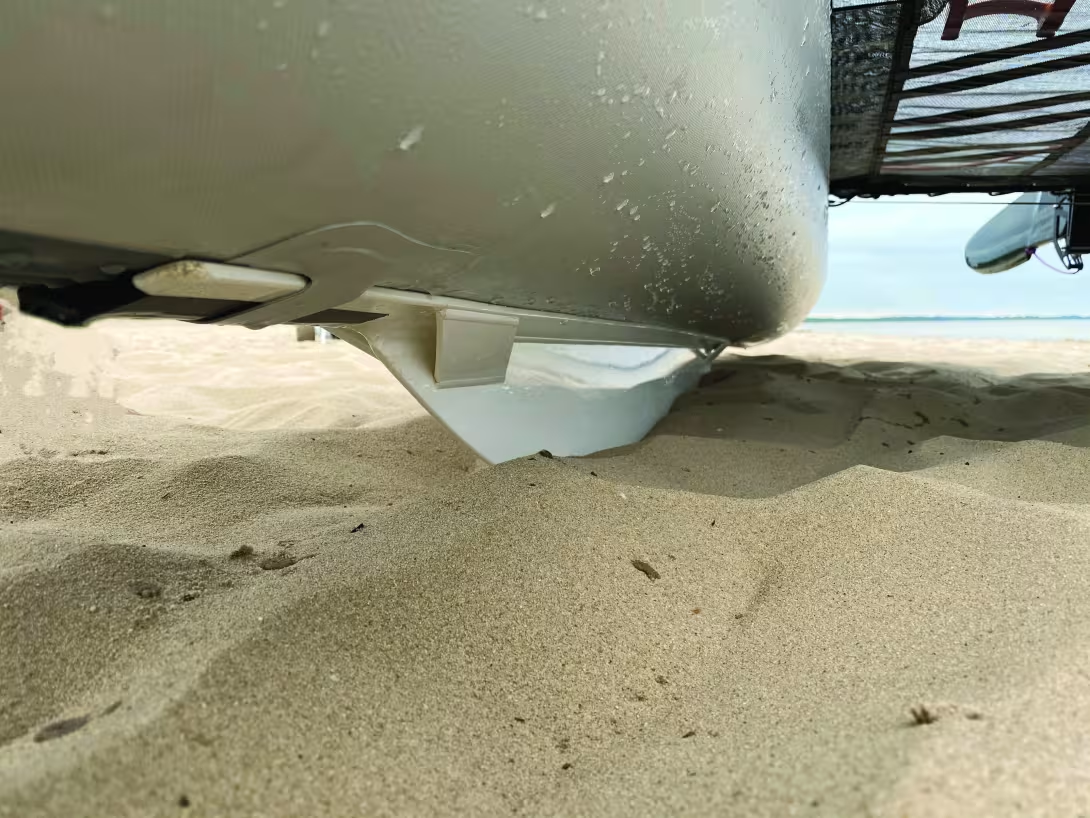
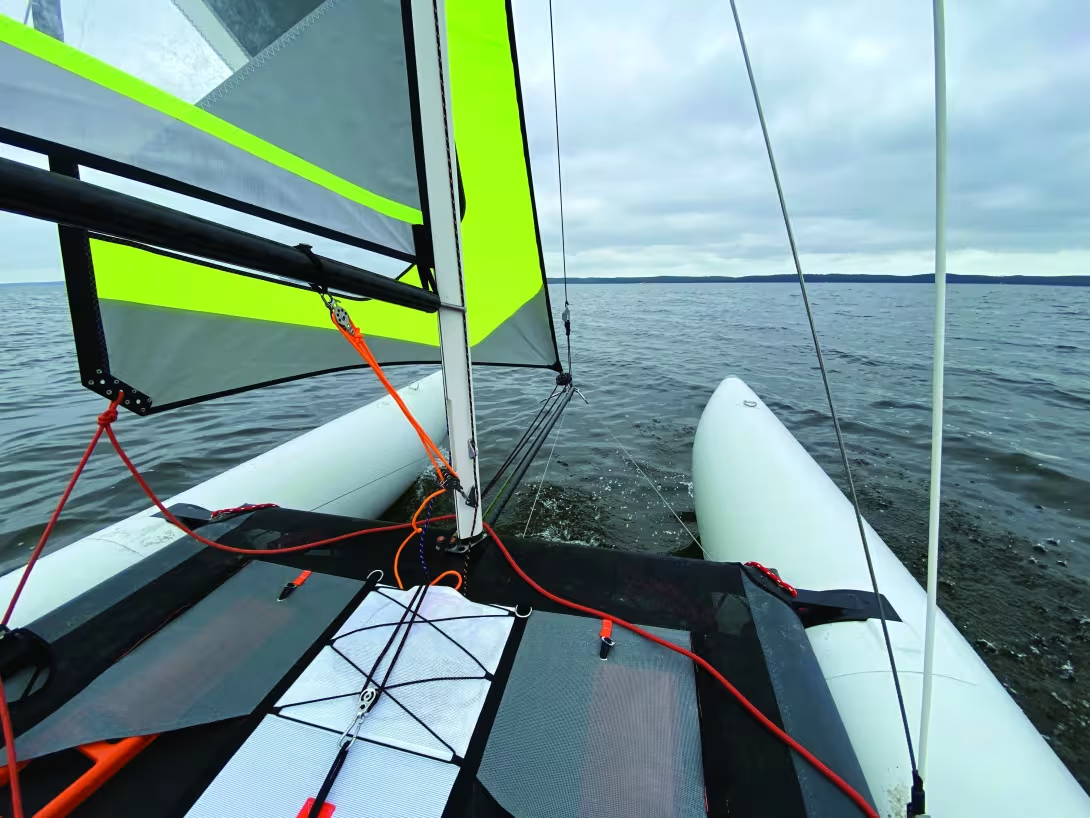
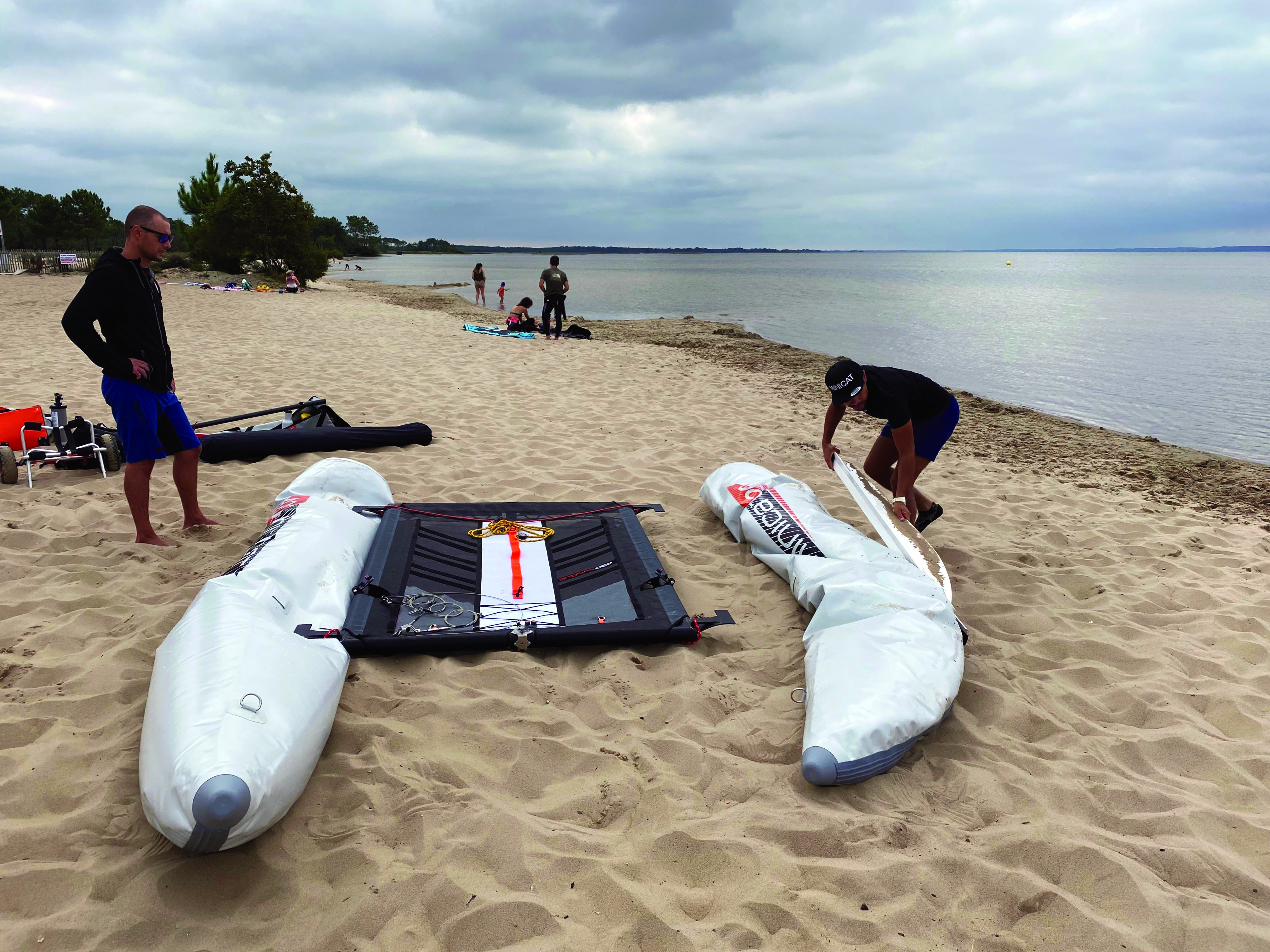
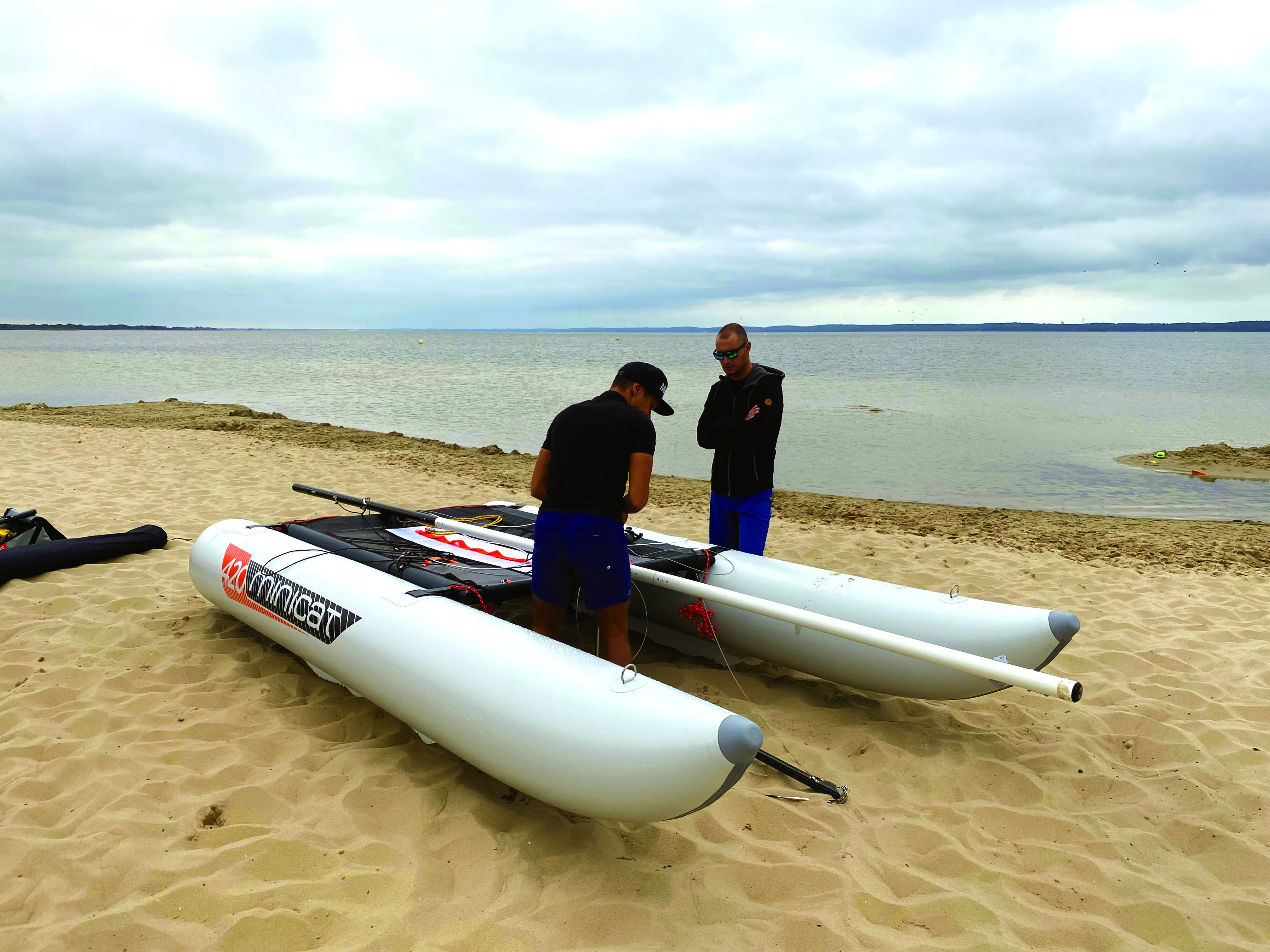
Installation of the tubes, the aluminum structure, the rig (the mast is in three parts), the rudder... All the operations are very simple and don’t require any tools. The two tubes are inflated once the trampoline and the small polypropylene skegs are in place. Inflation can be carried out using an electric inflator and completed by the manual inflator to reach 3.6 psi (0.25 bar). The 420 is finally very similar to a light rigid catamaran with its four aluminum beams, trampoline and stayed rig. The only differences are the appendages: the small skegs and the single central rudder. The assembly takes 45 minutes on your own, 30 if there’s two of you.
Breeze lover
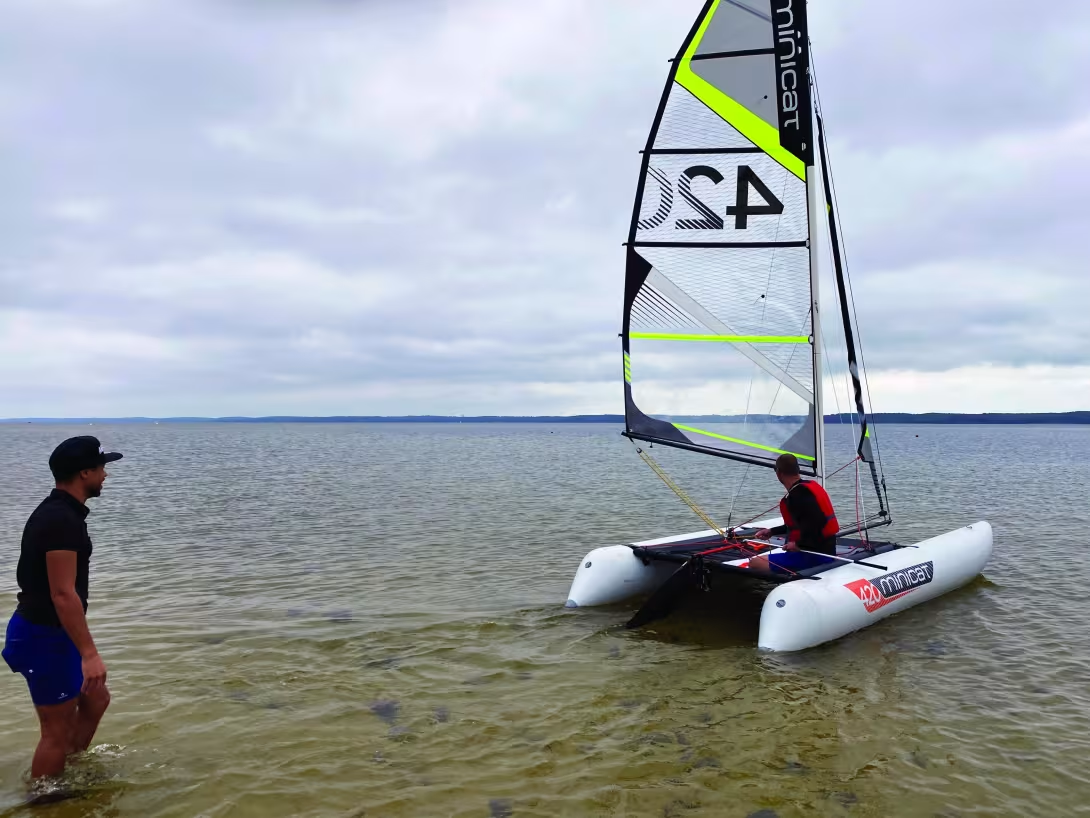
The version we are trying is the Evoque, delivered with many carbon parts, the two bags and a Racing Polyester X-PLY line mainsail. Let’s specify here that the manufacturer sells all the spare parts - including one of the inflatable hulls! The very shallow draft of the keels and the lift-up rudder make it easy to launch from the shore.
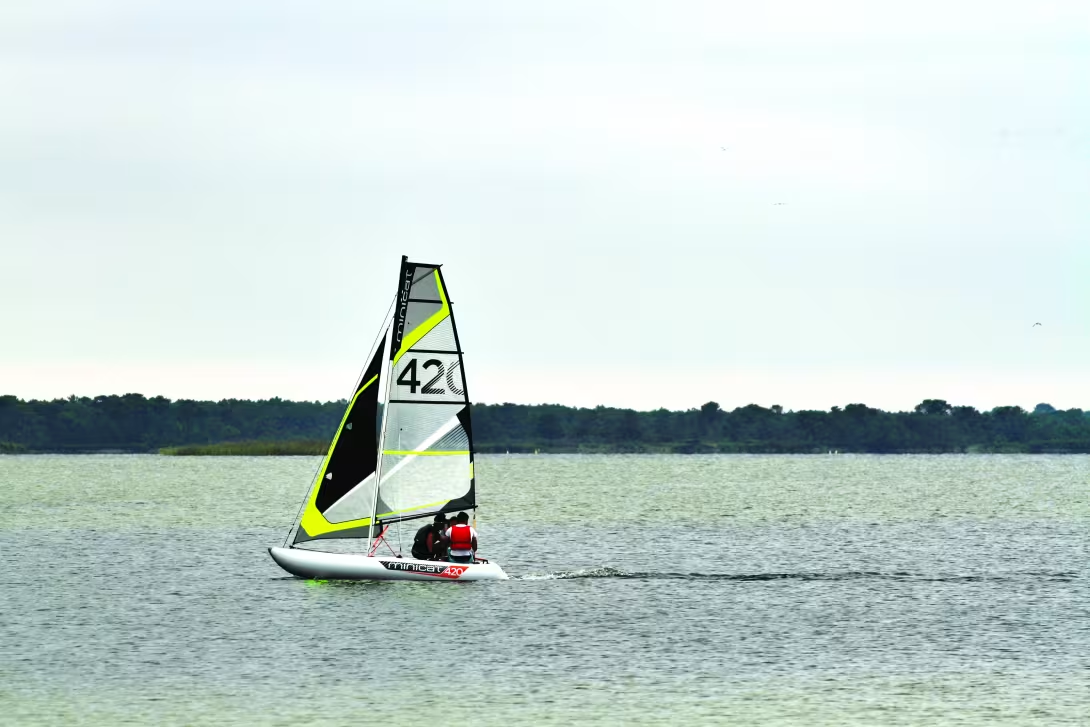
On paper, the MiniCat 420 shows great potential with a sail/weight ratio much higher than that of a Hobie 16... Ok, but the sails do tend to just hang when there’s less than 5/6 knots of wind. In light airs, the MiniCat has a hard time getting going, drifts along at low speed and suffers from a genoa sheeting point a little offcenter to be able to sheet it tight in. The seats on the tubes are very comfortable. You gain speed by shifting forward when going downwind. Tacking is not a problem. The fittings, the rigging and the sails are of good quality. Alone on board, the round hulls porpoise gently when a chop sets in. Obviously, if there are three or four of you on board, the 420 loses its liveliness. This small catamaran obviously appreciates the breeze; in these conditions, there’s no leeway and, above all, it offers spectacular acceleration. From 15/20 knots of wind, you can reach 12 knots boatspeed. The Minicat isn’t reluctant to fly a hull... but remember to ease sheets a little, otherwise the central rudder will come out of the water! In choppier water, the hulls tend to hug the surface - the structure lacks the rigidity to efficiently transmit the full power of the sail plan. Nevertheless, this small catamaran is generally stable and relatively dry. This is a perfect toy for those who live far from any stretch of water... and those who want to have fun at anchor.
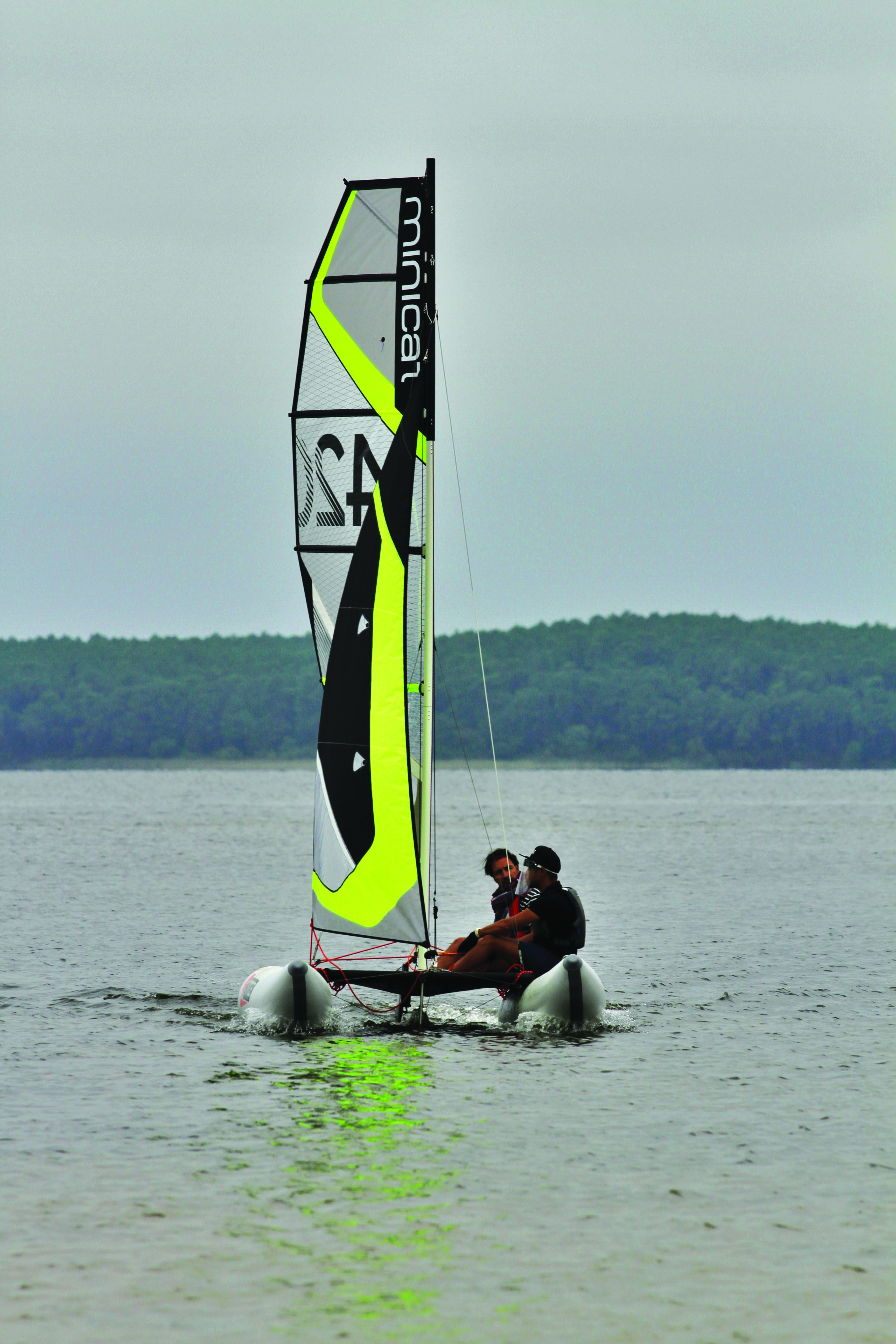
This little inflatable catamaran prefers a breeze to light airs.
Assembling the MiniCat 420 in 45 minutes flat
 |
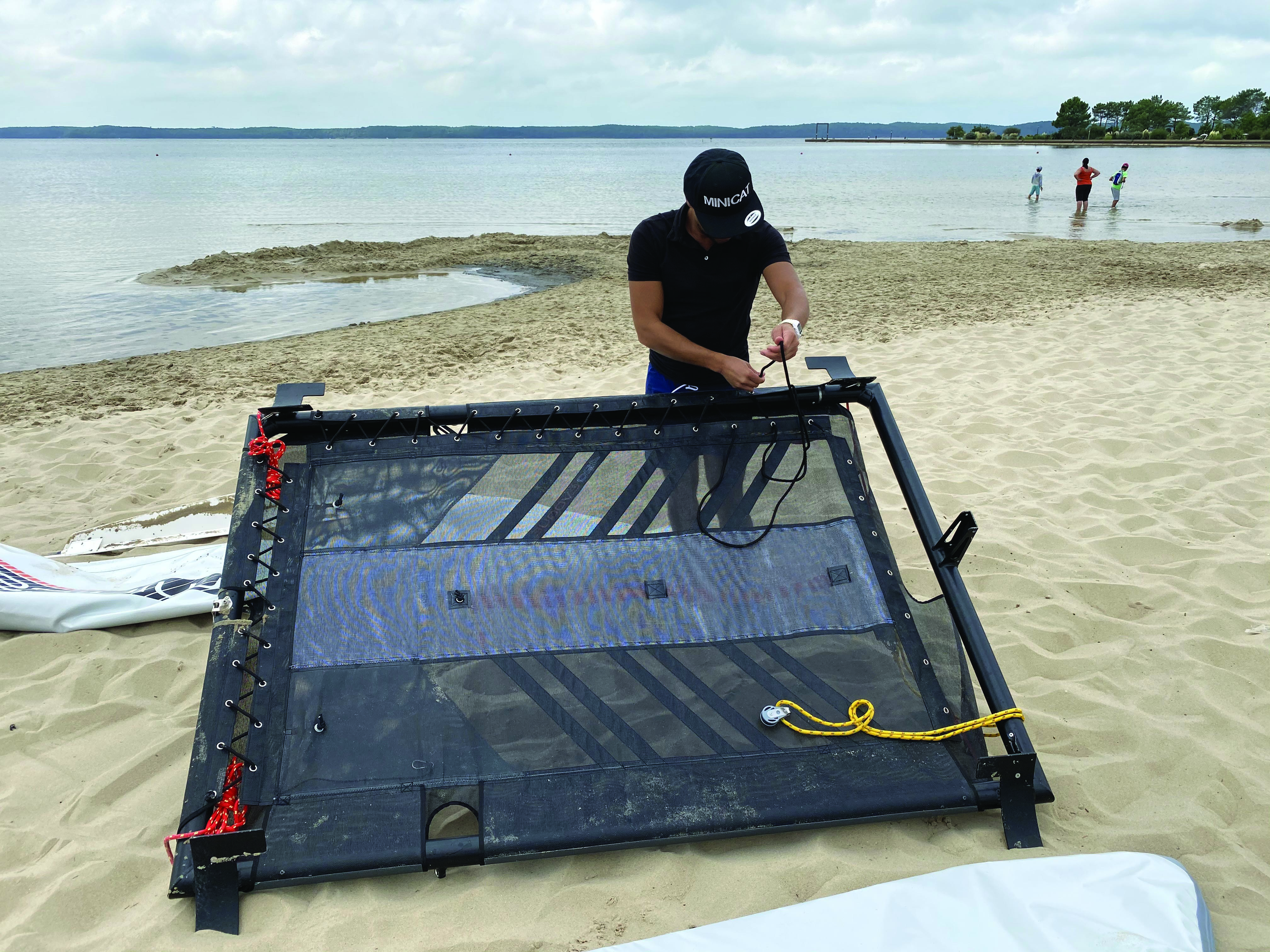 |
1/ A cart makes it easy to transport both bags. - 2/ Assembly of aluminum structure and trampoline.
 |
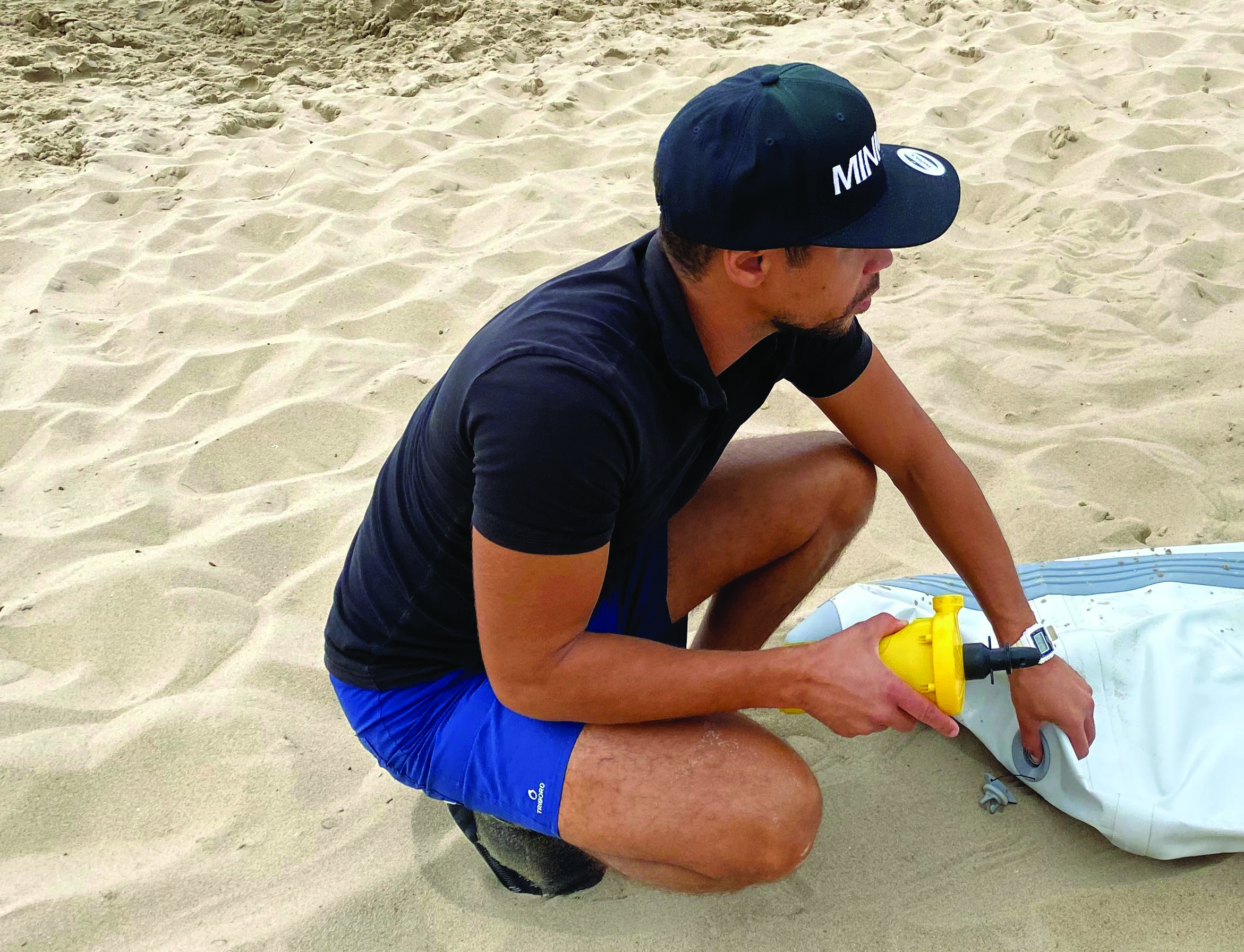 |
3/ Installation of the structure and the daggerboards on the deflated tubes. - 4/ Inflation with electric pump and finishing with hand pump – 3.6 psi (0.25 bar).
 |
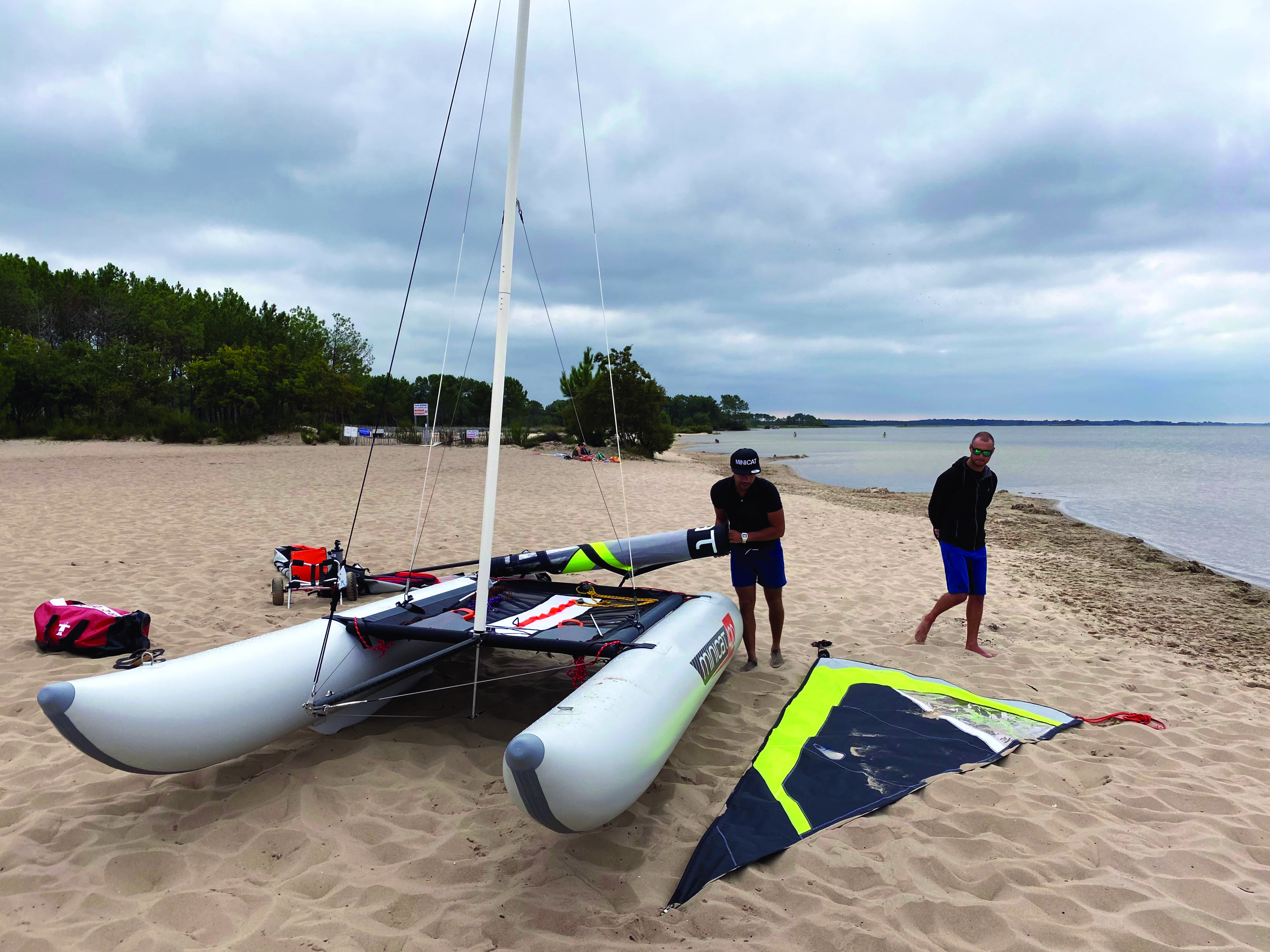 |
5/ Installation of the three-part mast, the bowsprit and the stays. - 6/ The sails are rigged.
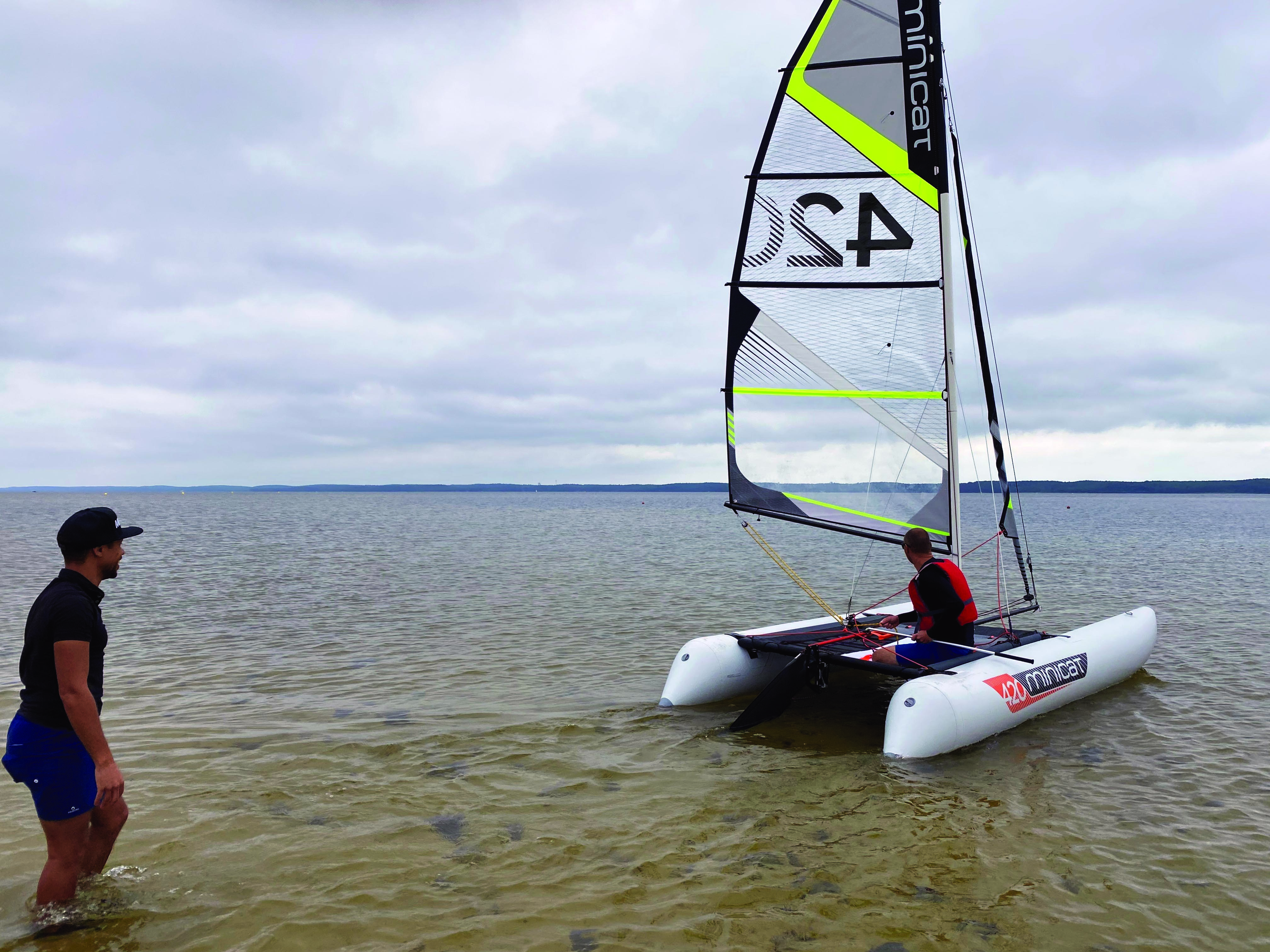
7/ No more building sandcastles, you’re out on the water on two hulls!
The pluses
+ High initial stability
+ Good performance in a breeze
+ Can carry up to 4 people
The minuses
- Jib sheeting point set too far outboard
- Poor hydrodynamic performance of the skegs
- Large space required for assembly
TECHNICAL SPECIFICATIONS
Manufacturer: MiniCat
Architect: Martin Horak
Material: Hey-Tex
Length: 13’9” (4.2 m)
Beam: 6’11” (2.1 m)
Weight: 112 lbs (51 kg)
Maximum load: 990 lbs (450 kg)
Upwind sail area: 104 sq ft (9.7 m²)
Mainsail: 70 sq ft (6.5 m²)
Genoa: 34 sq ft (3.2 m²)
Bag size: 5’9”x12”x12” (175 x 30 x 30 cm)
CE Category: D
Units built: approximately 1,300
Price Instinct model: from € 4,175 ex-tax
Price Emotion model: from € 4,400 ex-tax
Evoque model price: from € 4,596 ex-tax
Principal options
10.5 m² Gennaker and complete kit:€ € 678 ex-tax
Trapeze kit: € 136 ex-tax
Cover: € 291 ex-tax
Dismantlable cart: € 342€ ex-tax
