
Since it first came out, back in early 2014, the concept has surprised people... before quickly seducing them. The order book immediately showed the success of this trendy new model. The takeover of Nautitech by Bavaria is now allowing the manufacturer to take a new step forward in the industrialization of production (purchasing, engineering, outsourcing development ...). Overhauling the interior and restyling the silhouette were therefore essential in allowing the company to establish its new brand while sustaining such an auspicious catamaran. We tested this significantly revised 40 footer, shown at Cannes in September 2017.
Infos pratiques
- Le chantier : Nautitech 40 Open MK2
- La fiche technique
-
 Découvrez notre vidéo exclusive
- Financez votre Nautitech 40 Open MK2
- Assuez votre Nautitech 40 Open MK2
- Articles autour du Nautitech 40 Open MK2
For an under 12 meter model it’s Captivating!
12m: The “magic size” to enjoy being able to fully master everything! Not too big to allow fluid and instinctive handling, but not so small that the crew (not always seafarers) don’t feel at home and enjoy good comfort at sea. Nautitech and Marc Lombard have dared to revisit the “open” concept (at the same time as the Bali created by Olivier Poncin and Xavier Fay!), which meant: reducing the volume of the sacrosanct deck saloon in order to allow the lounge deck to expand! They needed to do this with finesse, preserving if possible the advantages of the one whilst avoiding the major disadvantage of a truly openable version (apparent wind, spray, sun but which makes the catamaran significantly lighter!).
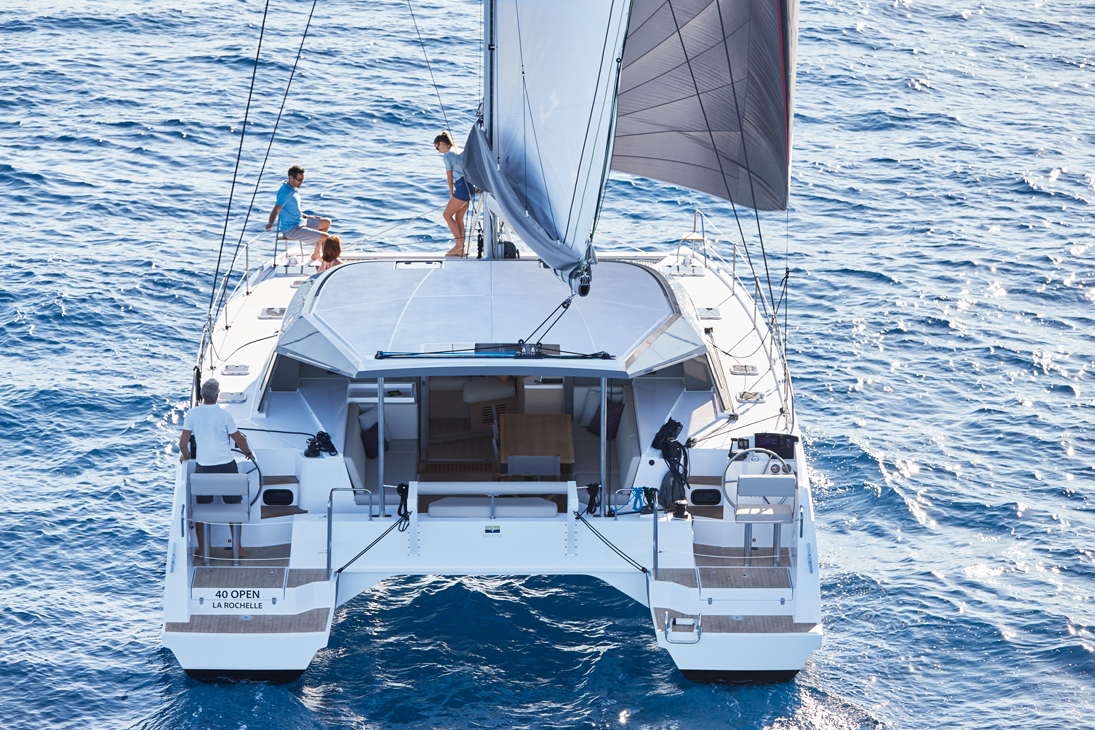
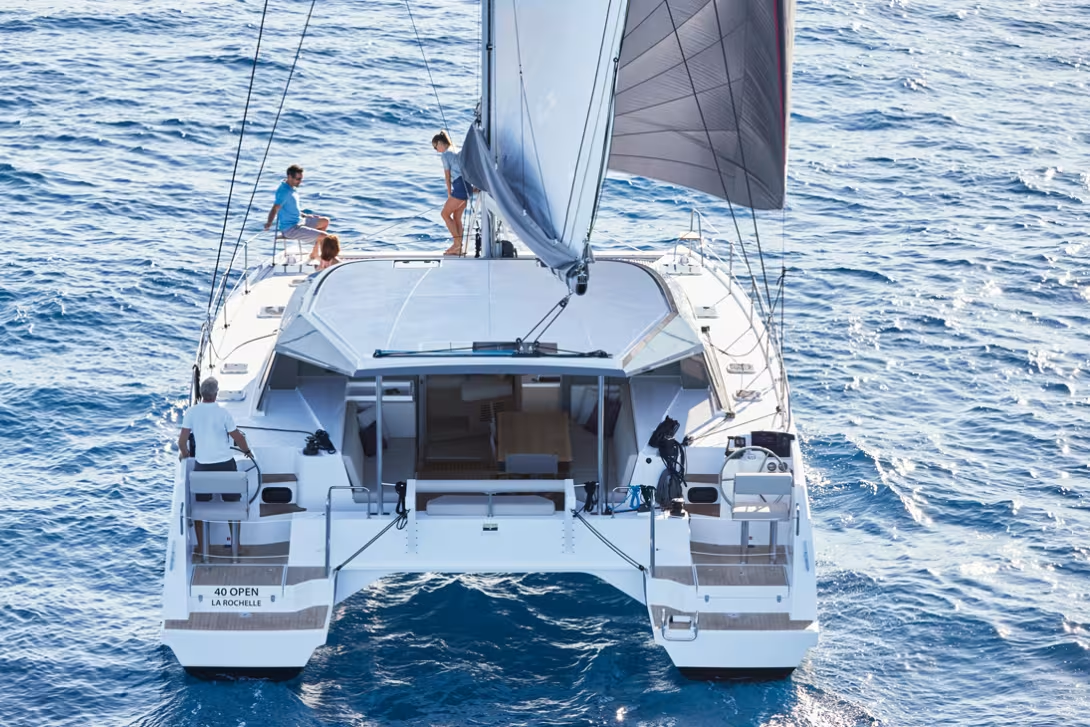
This combination of being both closed, and yet open at the same time, was visionary and joined the pent-up expectations of many sailors searching for a cruising catamaran that provided everyone with different pleasures and adapted to their needs. The pleasant and precise steering wheel of a sporty machine, the cozy interior of the cruising catamaran and the protected yet well-ventilated patio of the charter boat! This ambitious merger is what made the success of the Nautitech Open 40. Bavaria is quite right to extend the adventure via this elegant restyling. The canvas kit that encloses the cockpit highlights a creative and innovative organization of the catamaran space allowing it to achieve the status of a "tropical veranda". It will be wonderful even in temperate climates. The modularity of this nautical "Targa" means it can adapt to (almost) all latitudes and still remain compatible with blue water cruising.
A dynamic approach which is still pertinent
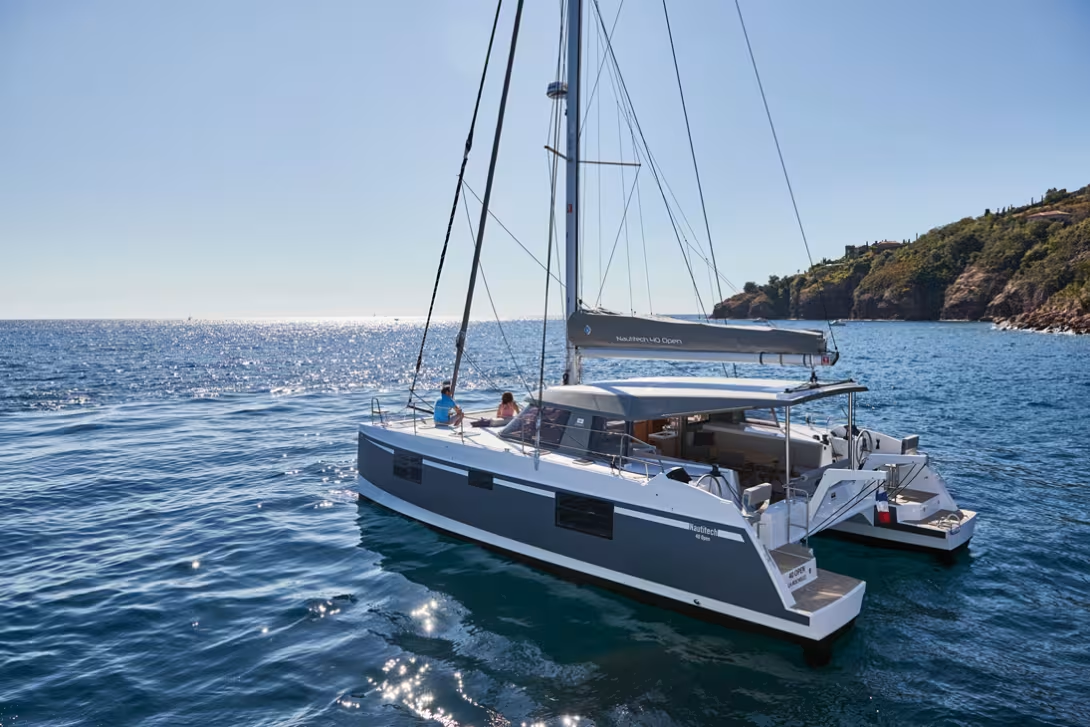
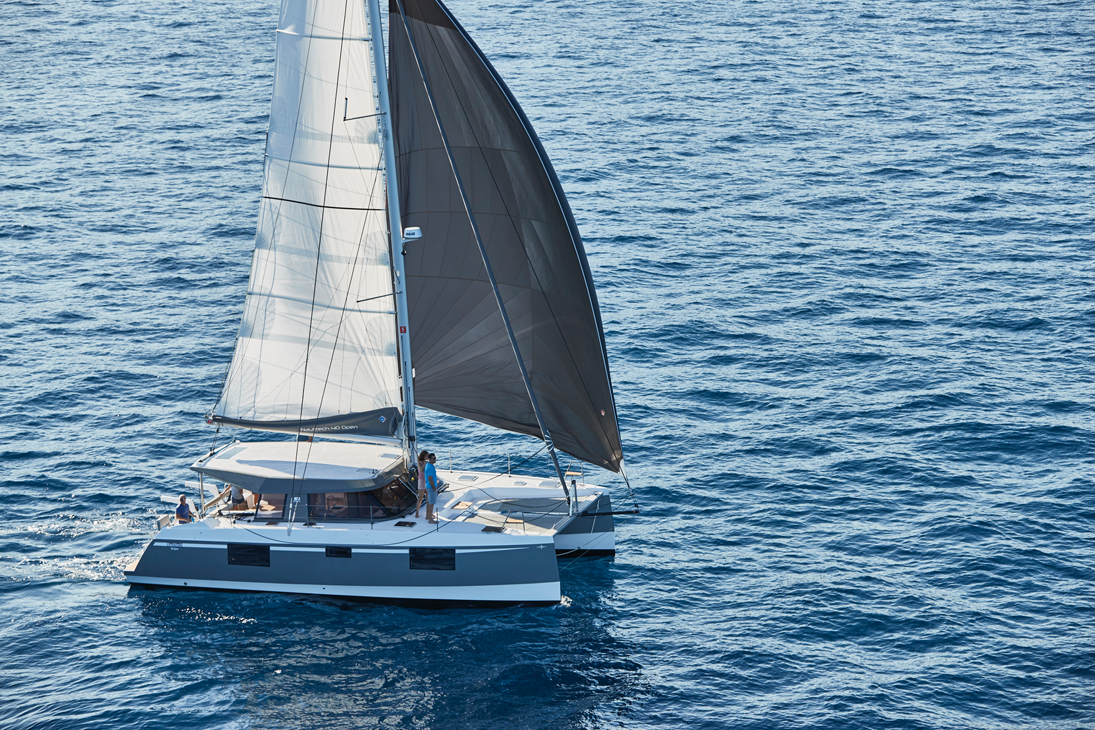
In 2014, the Lombard-Nautitech duo entered into a challenge to launch a stiff and lightweight platform (for a cruising boat of course!) with the ambition of being high-performance in this class. The slightly inverted bows reflect the desire to offer a contemporary profile with weight set further aft and with fine water entry. The harmoniously increasing volume of the forward third of the hulls shows exemplary progress and seems to belong to a faster hull. The deep U-sections are pure, the fusion with the generous arch beneath the hull is elegant, designed to generate a delicate passage through the water. The hull step allows for creating a “current” volume inside the hulls, without adding any drag. It also generates a ski-tip effect and increases the vertical thrust of the hull at full dynamic load. Deeper than average skegs create an effective anti-leeway system, whilst reducing the wetted area. The beautiful elliptical rudders are hung closer to the transom, clear of any disturbance induced by the sail-drive, thus improving the maneuverability under power and also the directional effect. There is nothing to interfere with the tunnel under the bridgedeck, and forward, the nacelle joins the hulls with a particularly successful connection. The bridgedeck clearance and the hydrodynamic fluidity optimize passage through the water, both upwind as well as downwind.
The 2017 Restyling
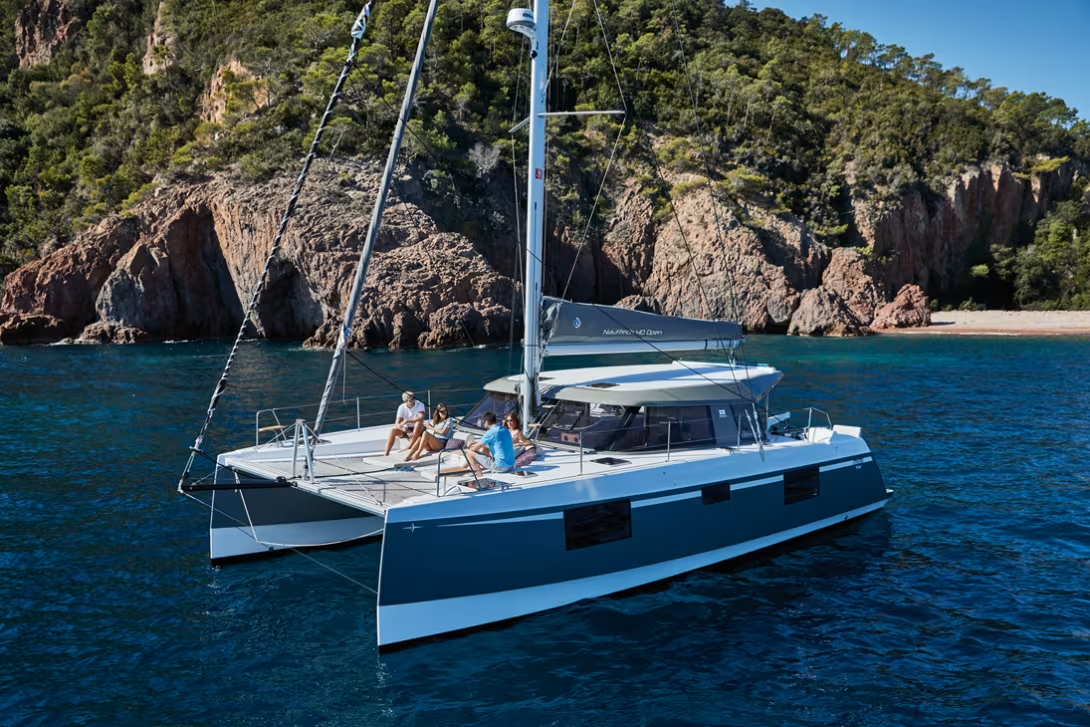
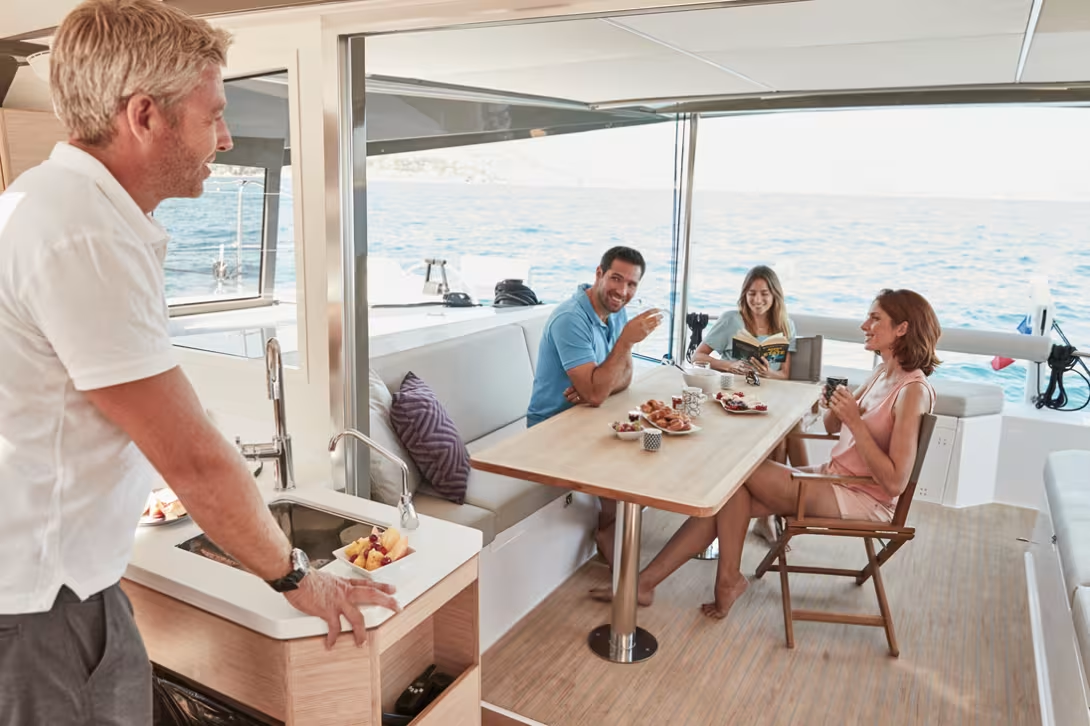
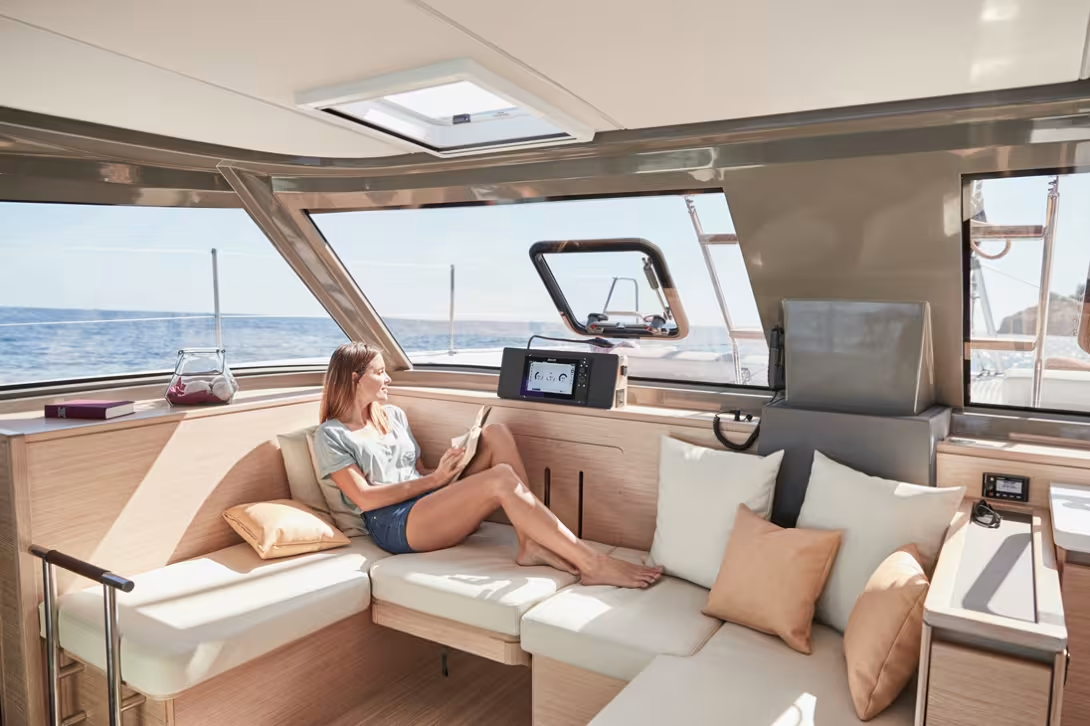
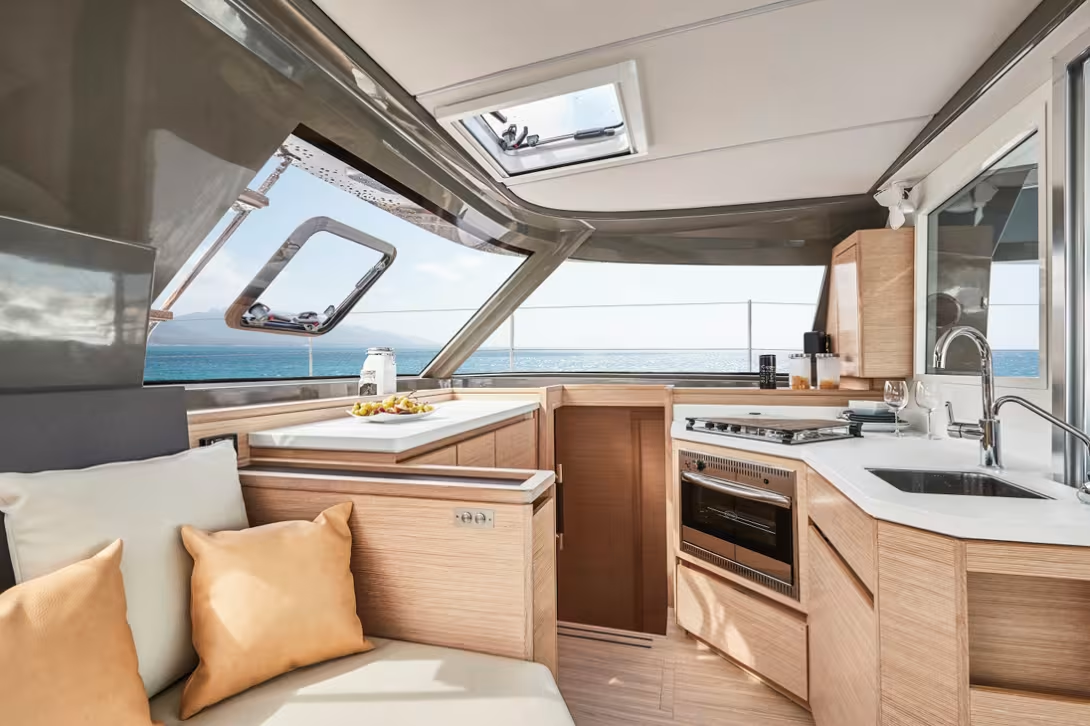
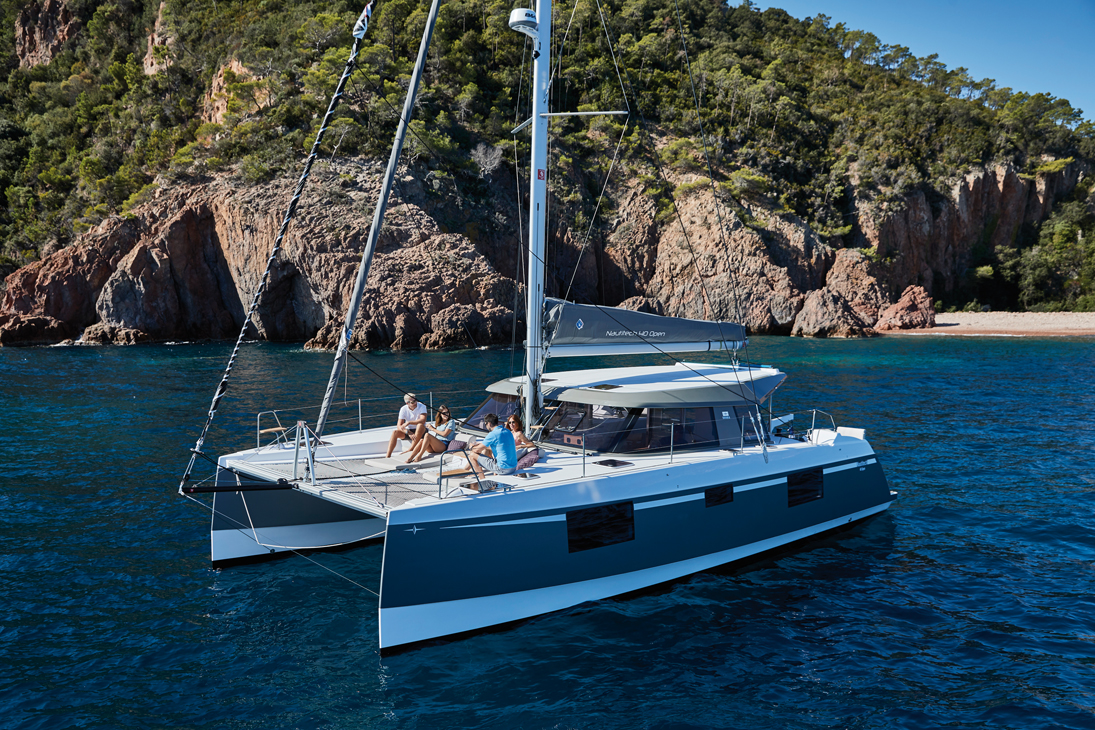
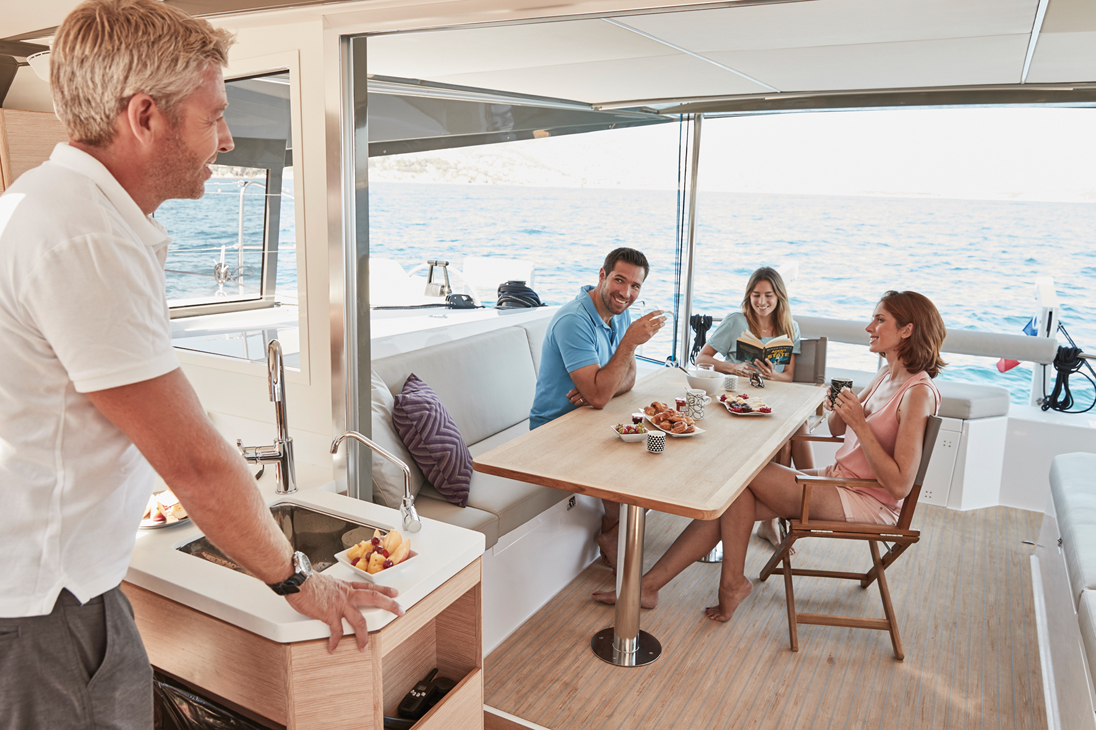
This version, which appeared at the Cannes Yachting Festival in September 2017, retains all the original architecture, but has a completely transformed interior, from the point of view of design and cabinetmaking. Stéphane Roséo has made a smart design proposal to increase the perception of quality, to improve overall comfort by reorganizing the volumes of the deck saloon (including the galley, now facing aft in keeping with current trends). The overall look has also been carefully considered; the matt wrap (available in dark or light gray) of the topsides and the colorful gelcoat on the coachroof edge, combined with the smoked windows completely renew the perception of this beautiful multihull and make it even more desirable. The portlights in the topsides have had their surface area doubled, and skillfully conceal the opening ventilation hatches. Significantly, the interior has been totally transformed. The galley has migrated aft and is now in a favorable position to serve the outdoor dining area (the main living space). The evacuation of (good) cooking smells will also be optimized.
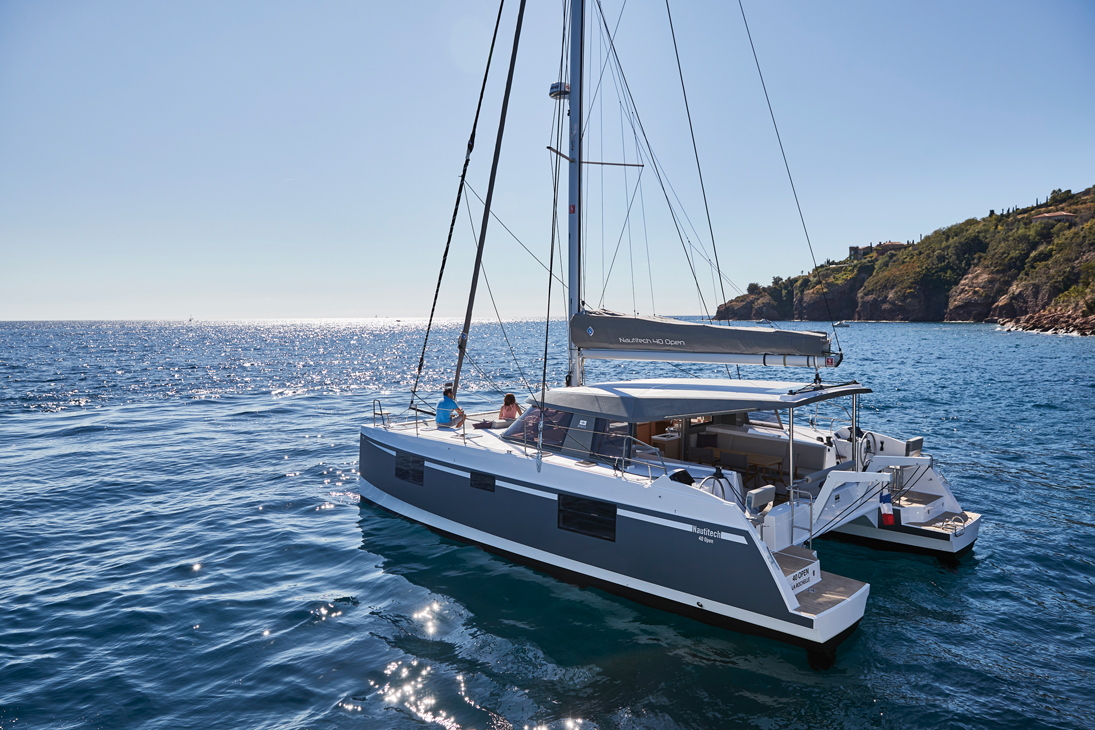
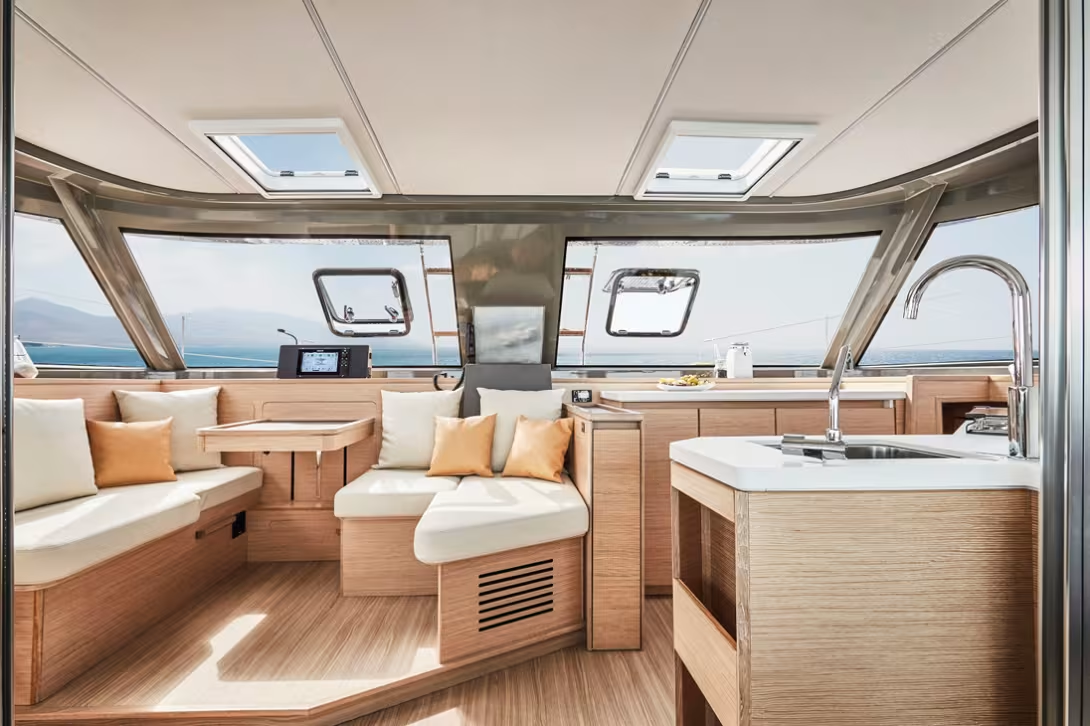
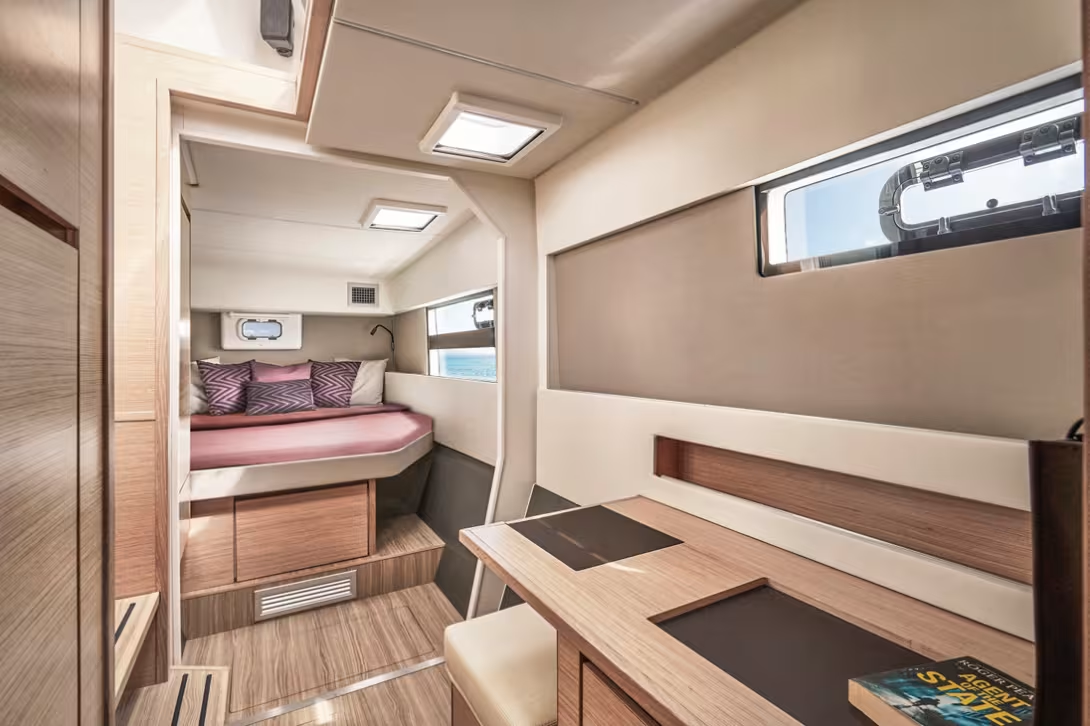
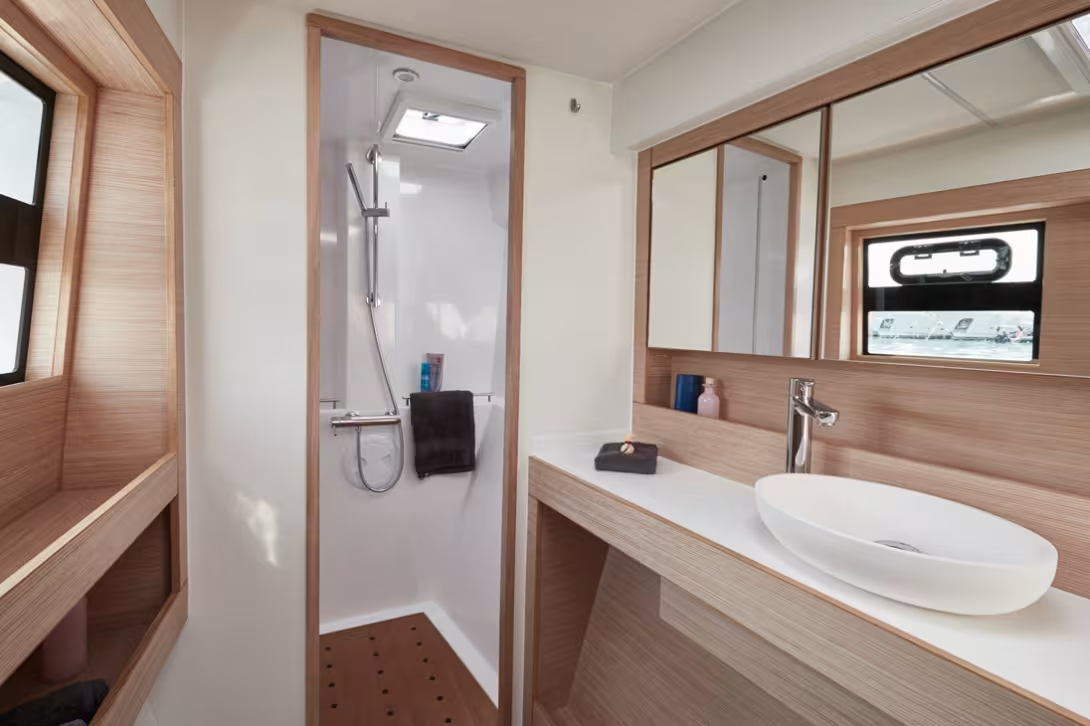
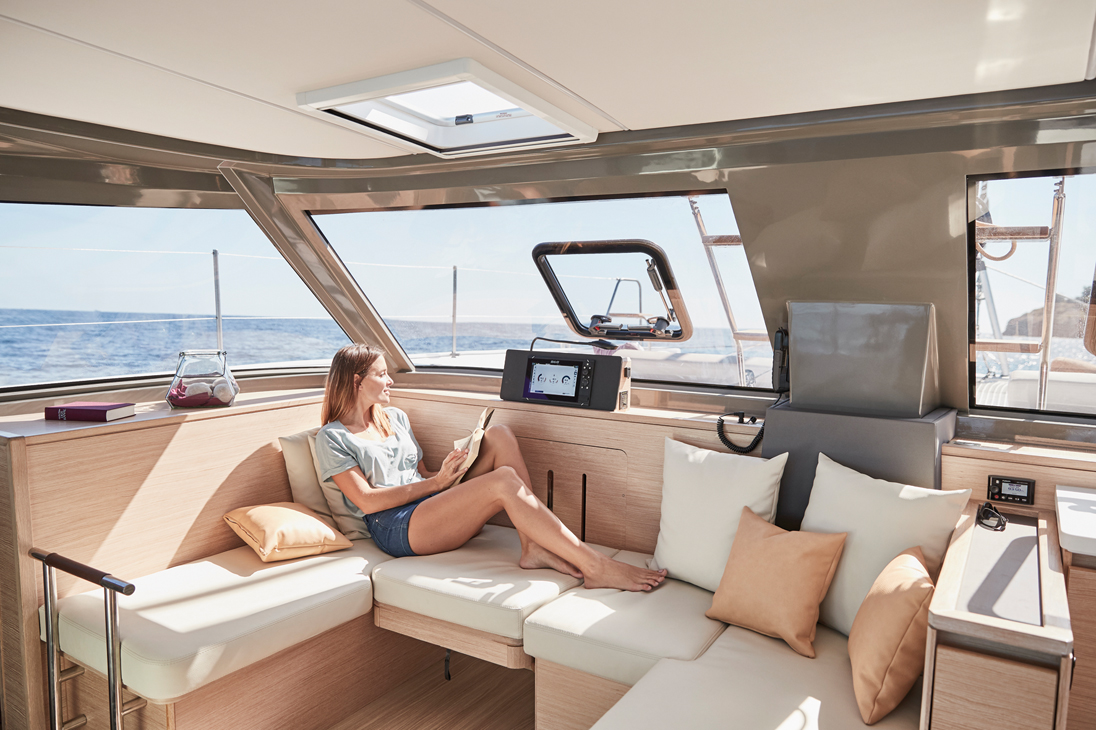
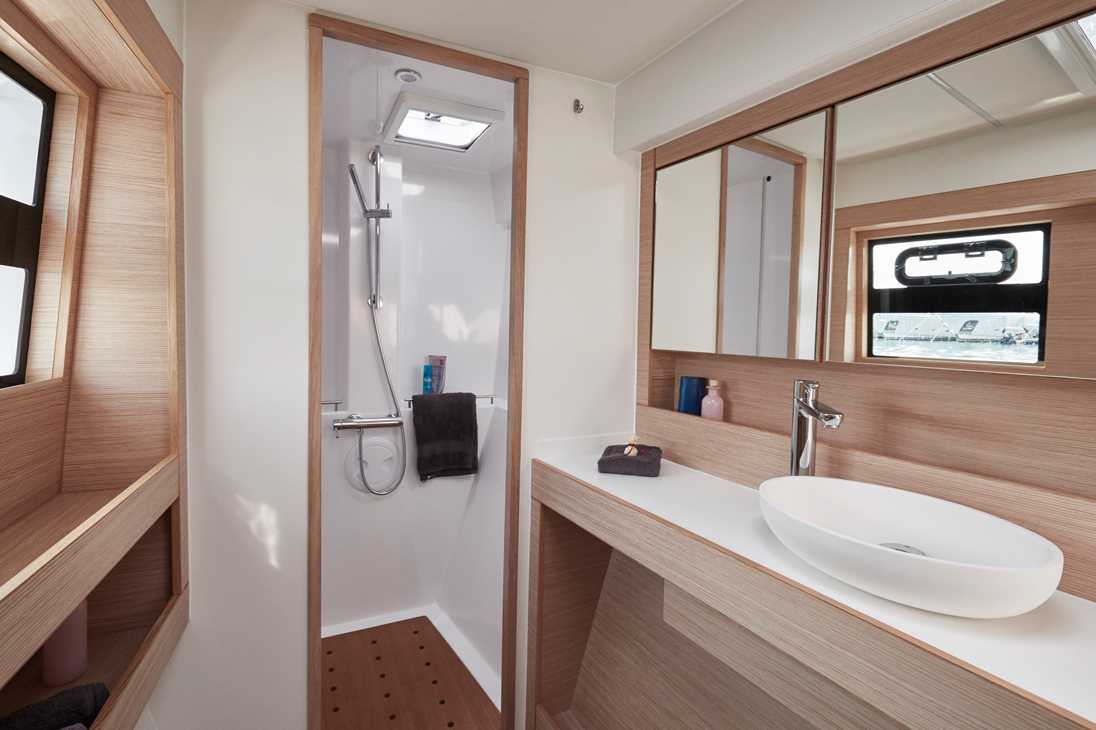
The new atmosphere transforms the style of the boat. There is no more apparent white gelcoat, the wood veneers (composite panels of grainy light oak) are beautiful in appearance and the assembly is very neat. The manufacturing quality seems irreproachable (pre-fabrication of the fittings is carried out in the large Bavaria factory in Giebelstadt, Germany, before being installed on board in Rochefort, France. The upholstery is of good quality, the colored band around the inside of the coachroof is elegant and reveals the fineness of the upright sections, the headlinings are superb. The whole contributes to a perceived quality far superior to the previous generation, which is what the manufacturer was looking for. The small dining area that could raise objections is now convertible into a raised sofa thanks to a clever system that allows the table to be lowered quickly. The cabins benefit from the same decorative treatment. The light has improved markedly (in quantity and quality), the port hull (3 cabin version) is reminiscent of models in more luxurious sectors and the bathroom is a real success (a point that the builders have successfully invested in for some time!).
Changes on deck as well
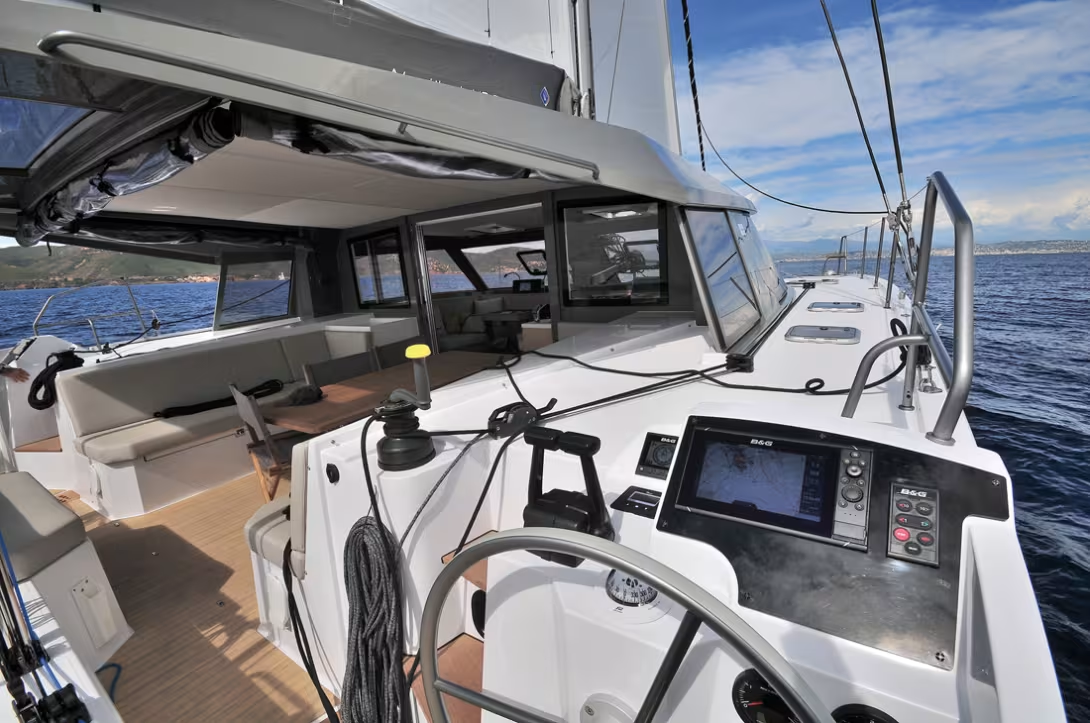
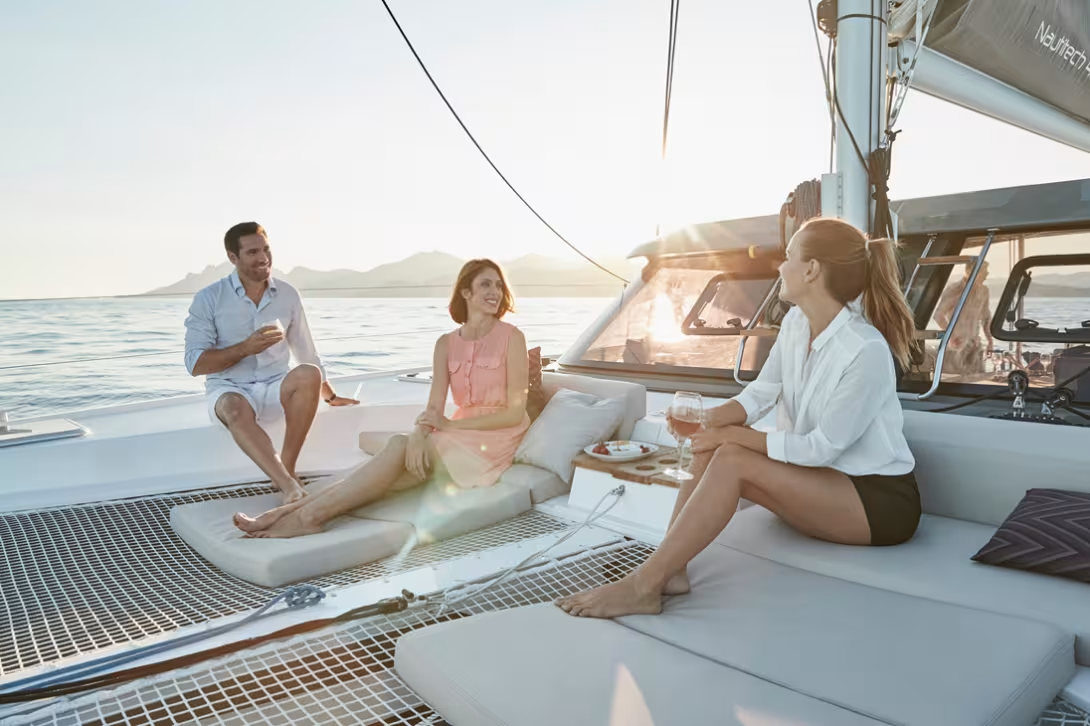
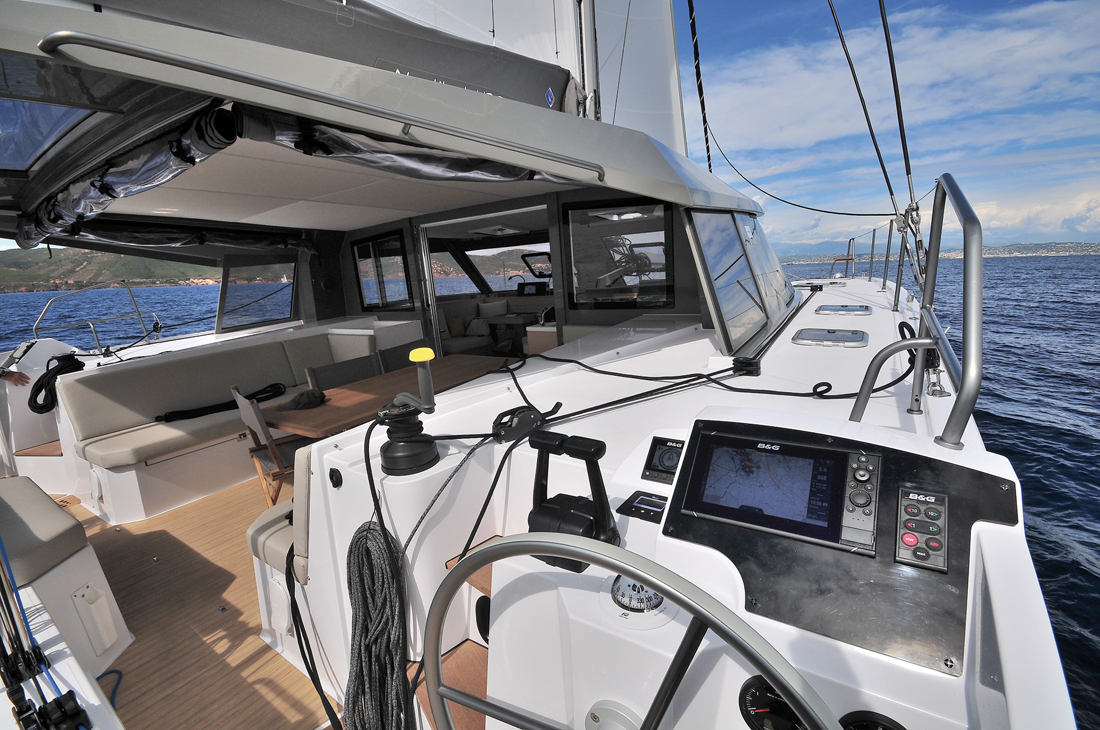
The (optional) choice of the new titanium-like aluminum metalwork by Goïot for stanchions and steering wheels is not anecdotal, as the exceptional appearance of these fittings changes the overall look and perception of quality. The new Flexiteek on our test boat is also outstanding on the cockpit sole and the sugarscoop steps. The small steps positioned on each side of the forward end of the coachroof provide easy and secure access to the mastfoot, these are not mere details! For relaxation, the two trampoline sunbathing areas and the serving table create a welcome new space for coffee or a summer aperitif.
A neatly laid out technical section
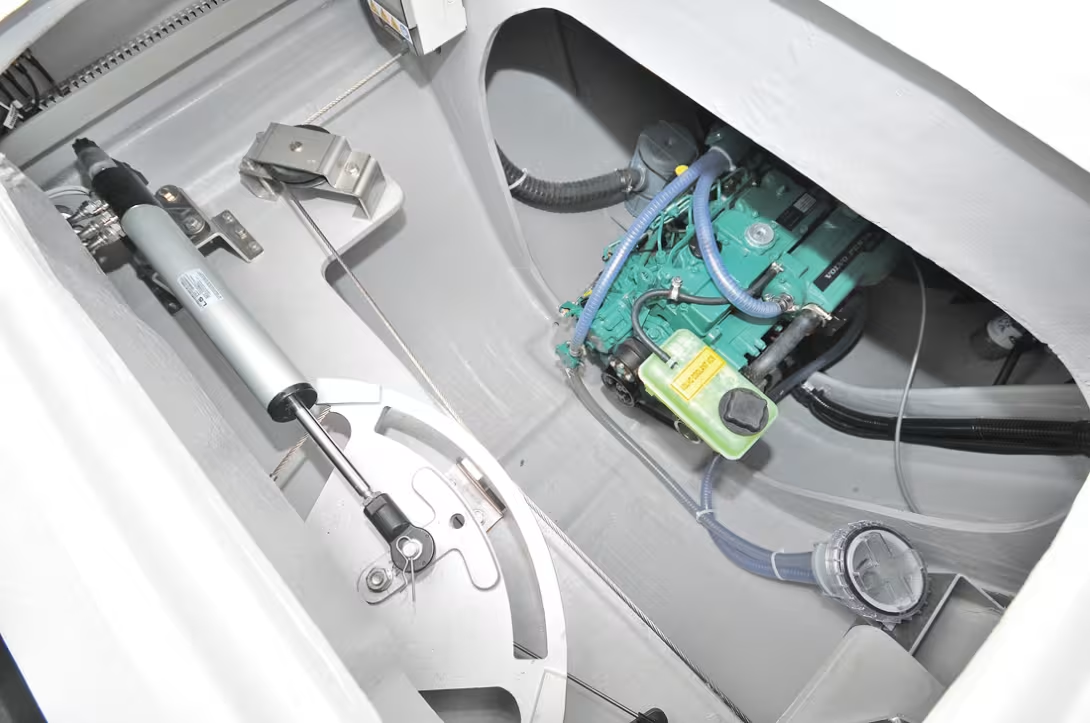
Below the decks, I found the same quest for sharpness and quality. The beautiful aluminum fuel tanks located under the aft berths are fitted with inspection hatches and all the bilge areas are coated with a topcoat paint applied with care. On the port side under the aft bunk, the battery bank securing rack is firmly fixed, and the brass connectors are good, as is the clarity of the installations. However, a removable cover over these installations would protect against any corrosive sprinkling if a hatch were to be left open. Midships, the bilges are also painted with care (giving important protection to the sandwich structure!) and access to the thru-hull valves is clear.
A pleasure catamaran!
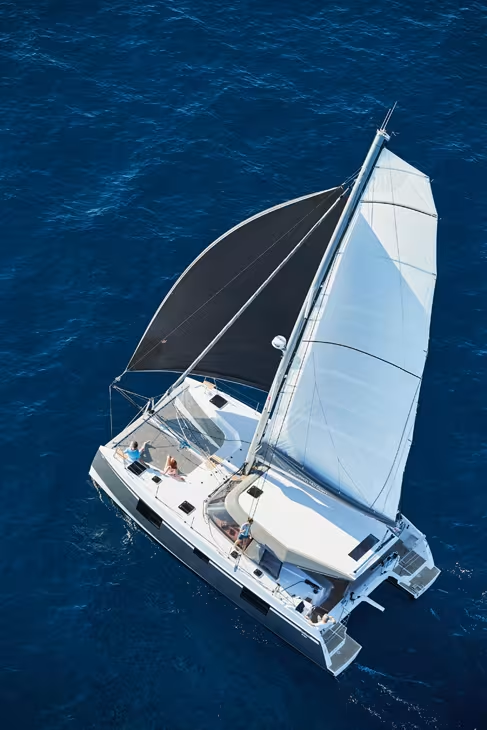
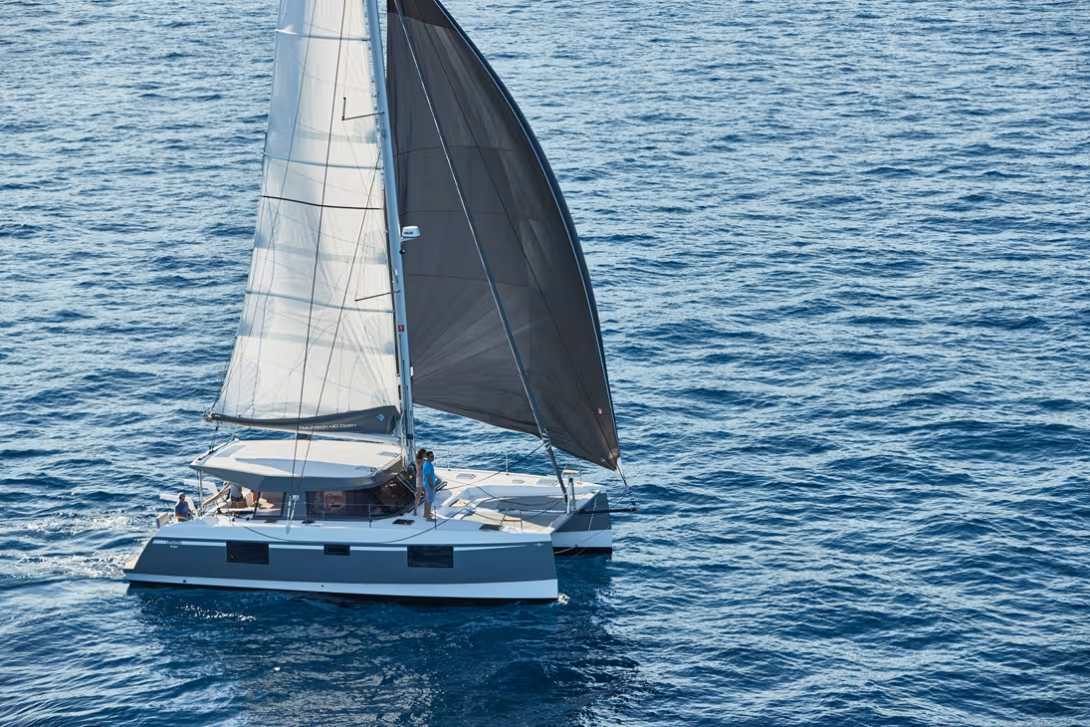
During our test of the original version, we had benefited in March from more than sustained conditions with the passage of stormy fronts and a big NW’ly breeze. This weather had revealed the agility of the new Lombard design and its ability to remain composed at all speeds with a rough and breaking sea. Both reaching and downwind, the boat had shown beautiful ability to steadily slip across the water at between 11 and 14 knots (we pushed the machine a bit in the conditions we had for our test, but the boat’s reactions were perfectly sound). For our test of the restyled version, we had a great day of good weather with the likely arrival of a small stormy front late afternoon; excellent additional conditions for this new model with a superb set of sails (Elvström furling asymmetric spinnaker, gennaker, self-tacking solent and mainsail by Incidences).
The Vmg-Soromap mast is identical to that of the first version. It has a good weight-inertia ratio and a sleek form without additional structures other than two sets of spreaders. The benefits are multiple: weight reduction, lowering of the center of gravity, lower aerodynamic drag, good compatibility with the headsails and no chafe on the diamonds. The Nautitech Open 40 V2 gives pride of place to helming with very comfortable seats. The new generation Goïot steering wheels fit perfectly and the direct transmission offers a good feel whilst maintaining a balance, a powerful directional effect and a lightness that the autopilot will appreciate. The beautiful asymmetric spinnaker on a furler is a marvel in the early morning. This sail has a Baltic cut, flying high with beautiful volumes that remain compatible with furling. The catamaran reacts enthusiastically to this sail being hoisted and remains pleasant in these light conditions. The wind picked up in the afternoon to ten knots allowing us to release the code 0 for a long leg at 70° to the true wind. The 40 footer quickly takes on a few degrees of heel, pressing on the leeward hull, and this characteristic attitude, allows the anti-leeway skegs to play their part and give an honorable upwind performance under solent. At the end of the afternoon, heavy clouds hang over us and allow for a few nice tacks under self-tacking solent before bowling along under gennaker at between 9 and 10 knots in a breeze that struggles to exceed 15 knots.
Conclusion
Throughout our day on board, I appreciated the functional quality of the deck hardware which had been well chosen and well installed (much of the trimming is still done by hand on the Nautitech 40 in medium conditions). The line-pulling positions are right, and the general ergonomics are neat. The engines (from 20 to 40 hp) allow each owner to adapt the power to their planned program (with folding propellers obviously). The interior redesign of the 40 is a clear success, this seductive catamaran appears today more luxurious and more trendy, but it has retained its dynamic qualities and the original architecture of its deck saloon. This restyling should allow it to successfully withstand the test of time.
Technical specifications
Builder: Bavaria-Nautitech
Naval Architect: Marc Lombard
Interior Design: Stéphane Roséo
Length: 11. 98m
Beam: 6.91m
Draft: 1.32m
Laden weight: 8.5t
Mast height: 20.05m
Mainsail area: 63m²
Self-tacking solent: 28m²
Construction: Glass-polyester foam sandwich in Vacutec infusion process
Standard motors: 20 x 20hp Inboards with saildrives
Fuel: 2x215l
Water: 2x215l
Layout: 3 or 4 cabins
Price: 3-cabins version: € 272,000 ex-tax
Price of the boat we tested: € 407,429 ex-tax (Exclusive finish, White Oak cabinetry and numerous options)
Principal options in Euros ex-tax
B&G basic electronics pack with autopilot: 6,600
Electrical Pack (charger, inverter…) : 3,670
Bluewater Pack:(Electric winch, gennaker, code D, furler deck hardware): 9,882
Detailing / hull wrapping + darker gelcoat for coachroof +stanchions and wheels in titanium-style aluminum: 11,900
40 hp Motors and folding props: 6,900
60l/h Watermaker: 10,950
Warm-water antifouling - 3 coats of epoxy + 2 coats of Seajet Platinium: 4,650
Cat A equipment with 10-person liferaft: 3,675
The Nautitech 40 Restyle by Stéphane Roséo
With the launch of the new restyled Nautitech Open 40, Roséo Design is now accompanying Bavaria in the evolution of its catamaran range whose concept is to unite interior and exterior living spaces to offer a more spacious package. This 40 footer offers excellent performance under sail, very good comfort on board and a style with strong character. The starting point for this second version, was based on the shipyard’s desire to offer a galley turned towards the cockpit. From there, I was able to work on this new plan and reinforce the "Open" concept for example, by widening the passage between the cockpit and the saloon. With this new layout, the galley has become larger, gaining in circulation space and storage volume. The main part of the saloon is separated from the galley by a central cabinet that houses a retractable TV screen. The chart table and the coffee table are removable to transform with the sofa into an XL-sized lounger. This "chill out" space becomes ideal for a party or sitting in front of a good movie! The separation between the interior lounge and the "dinette" in the cockpit (which can accommodate more than 8 guests around the table) makes each space more enjoyable. I chose to raise the saloon on a platform to keep the view over the deck, even when sat on the sofa. The large coachroof windows are now framed by dark tinted surfaces. The choice of dark colors also applied to the exterior surfaces reinforces the sleek silhouette designed by Marc Lombard by creating an interior / exterior color link. I dreamed of looking at the horizon, lying on the bunk in the aft cabin. From this idea emerged double windows in the hull that provide extraordinary natural light. These changes improve the style and life on board. Inside, the white gel coat that surrounds the saloon has been replaced by wood paneling, and the enhancement of the interior passes through indirect lighting that can "sculpt" surfaces, especially in the cabins. The choice of materials, (leather, stainless steel, lacquers and fabrics), and the care given to some significant details of the furniture and a carefully designed lighting system in the cockpit as in the saloon all contribute to the creation of a calm atmosphere in a contemporary and unique style.
MINUSES
- A little more effort could be made painting the interior of the arms in less-accessible areas
- The catamaran looks to have put on a bit of weight
- Folding propellers are only an option
PLUSES
- Successful presentation and restyling
- Enjoyable multihull to use
- The bilges and lockers are carefully painted

1: The portlights in the topsides have been enlarged and skillfully conceal the opening ventilation panels
2: The gray hull wrap (long-lasting decorative adhesive coating available as an option on the restyled version) is easy on the eye
3: The coachroof extension and tinted uprights (also on the inside) enhance the 40’ Nautitech's beautiful lines
4: A beautiful furling asymmetric spinnaker with a Baltic cut optimizes performance in light airs
5: The 40 V2 helm station is a very pleasant, ergonomic bench seat with beautiful Goïot wheels, halyard and sheet turning blocks judiciously placed (solent, gennaker or spinnaker, the mainsheet returns are on the aft beam with the traveler adjustment)
6: The N40's cockpit is perfectly protected from the outside weather; the fabric enclosure kit transforms it into a smart marine veranda
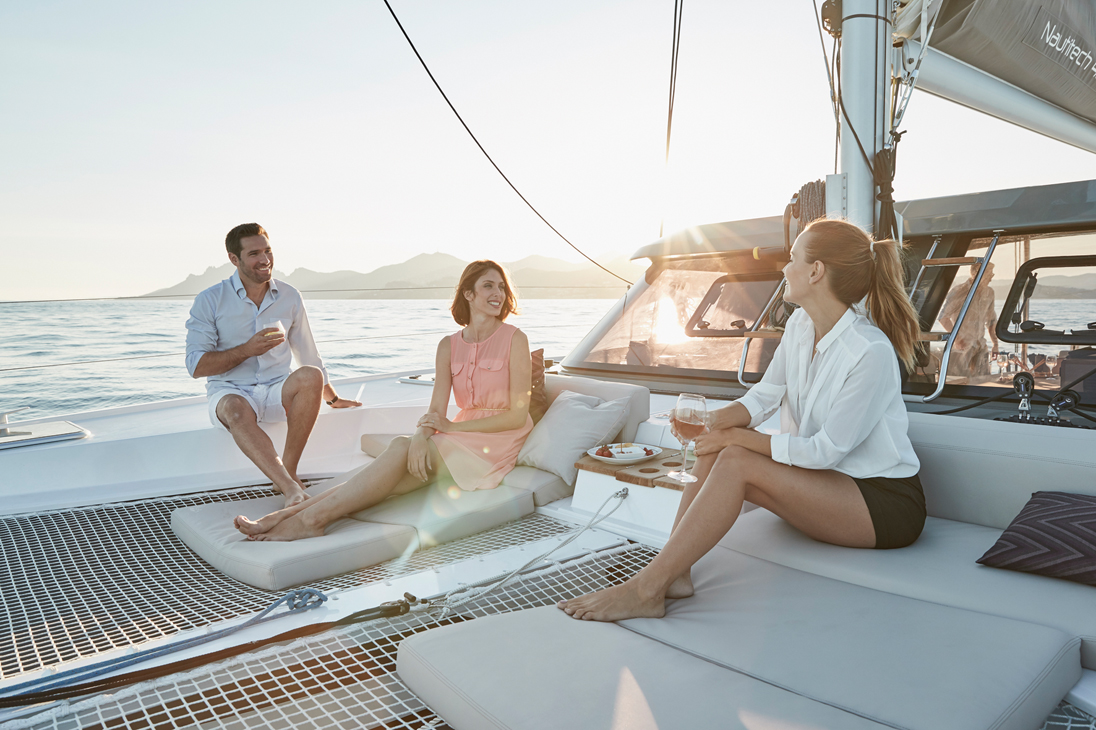
7: A folding table and two sunbathing loungers form a new living space on the trampoline
8: The smoked windows are particularly elegant
9: The side protections really contribute to the nice feel of the cockpit
10: The VMG-Soromap mast with the refined architecture has been specially designed for the 40, and is a success.
THE ESSENTIALS
A TREND-SETTING CATAMARAN
A SUCCESSFUL BALANCE OF COMFORT/PERFORMANCE
THE 2017 RESTYLING IS A SUCCESS
THE COMPETITION
|
BUILDER |
LAGOON |
FOUNTAINE PAJOT |
LEOPARD |
SEAWIND |
BALI |
|
MODEL |
LAGOON 40 |
LUCIA 40 |
LEOPARD 40 |
SEAWIND 11.90 Sport |
BALI 4.0 |
|
UPWIND SAIL AREA IN m² |
81.5 |
93 |
91 |
89 |
81 |
|
WEIGHT IN TONNES |
10.9 |
9.1 |
9.4 |
6 |
8.6 |
|
PRICE EX-TAX |
€ 256,000 |
€ 261,000 |
€ 289,000 |
$ 389,000 |
€ 263,000 |
