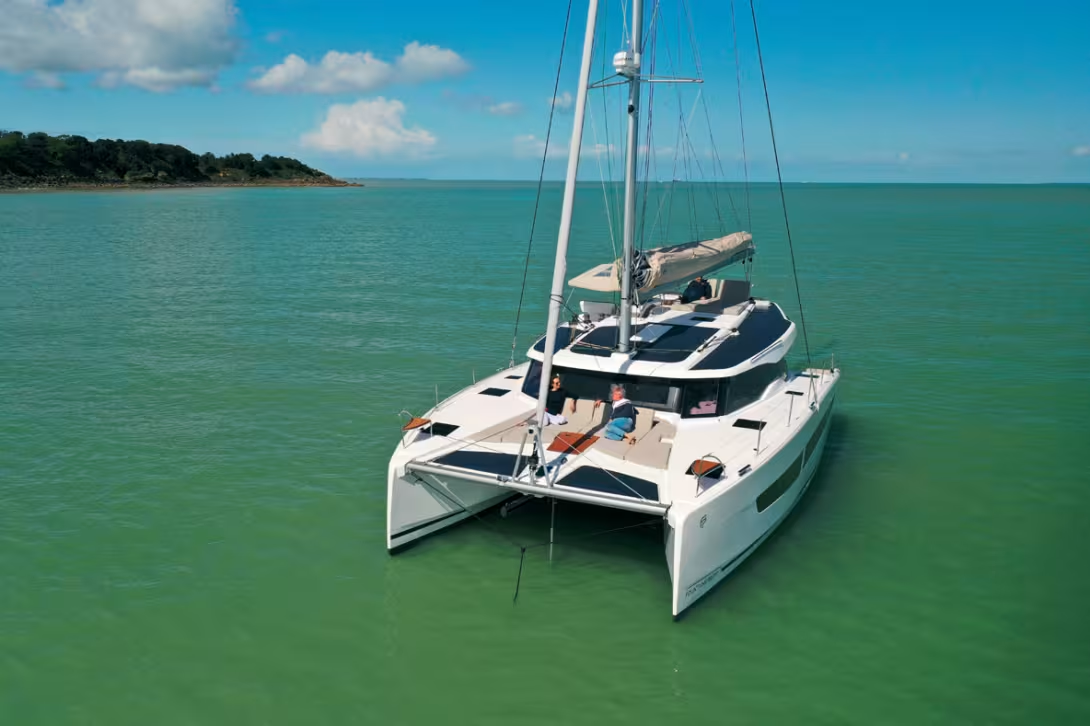
This new model is replacing the Isla 40 but offers the same volume as the Astrea 42, all for a relatively competitive price... as you can see, the New 41, whose proper name will be revealed soon, is already positioning itself as a serious contender in the 40-foot category. We got the chance to test it for you exclusively between La Rochelle and the Île d’Aix.

Infos pratiques
- Le chantier : FP41
- La fiche technique
-
 Découvrez notre vidéo exclusive
- Financez votre New 41
- Assuez votre New 41
- Articles autour du New 41
Conditions: 5 to 12 knots of wind, slight chop
With this new model, initially conceived as a 39-footer, Fountaine Pajot is opportunely focusing on its entry-level range – at the same time, Lagoon, the world leader in the sector, is just launching a 38-footer. And Nautitech has announced a 41 S Line to replace the 40 Open... Basically, the 40-foot market is in turmoil, due to demand that initially contracted significantly after the post-Covid euphoria and then became wait-and-see in view of the turbulence shaking the markets. The sharp rise in the price of our catamarans since 2022 has not helped matters, which is why manufacturers are making significant adjustments. The New 41, which offers the same volume as the Astréa 42, is priced at € 404,400 ex-tax, which is € 108,600 less than its bigger sistership.
Internal Combustion or Hybrid Propulsion
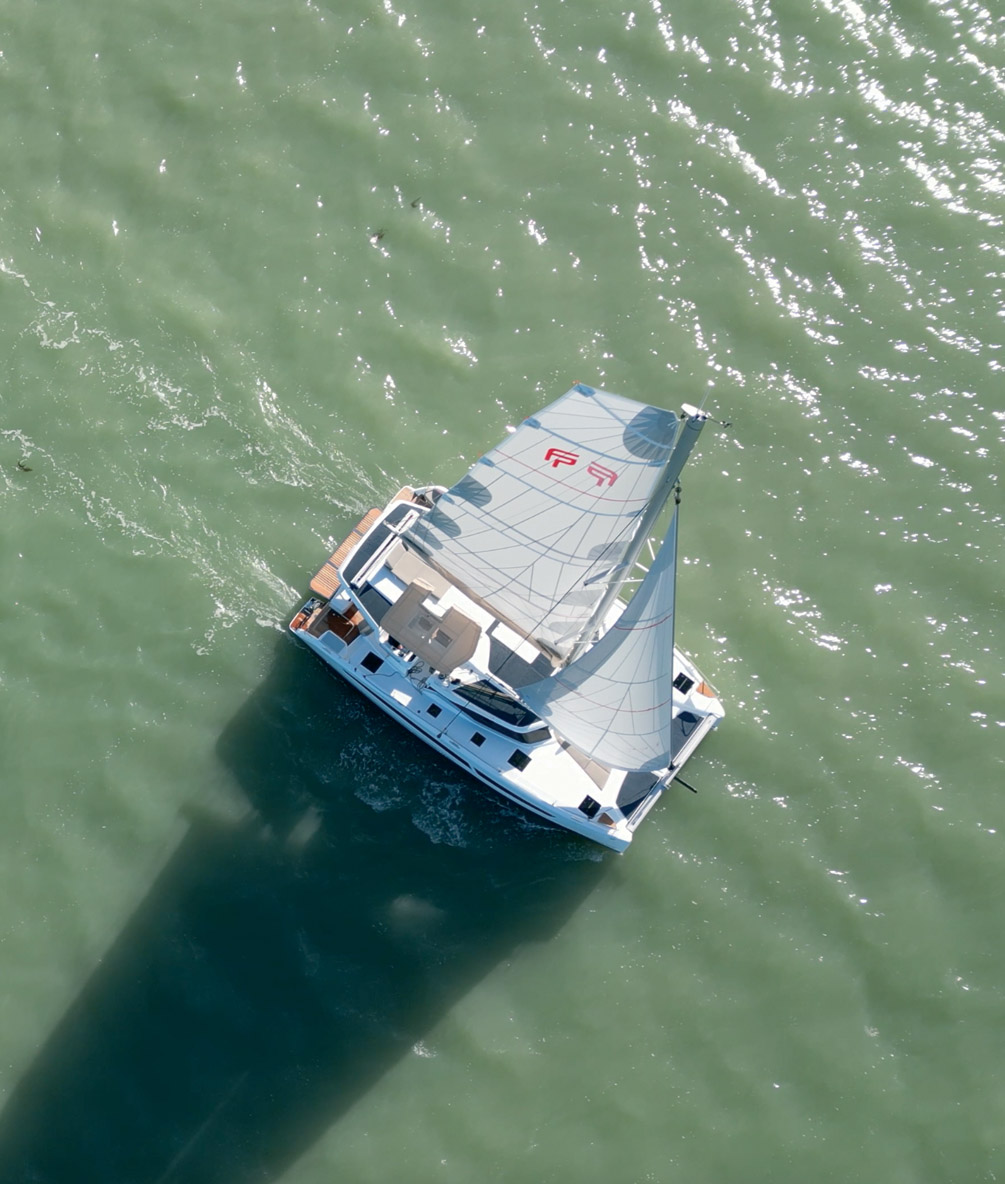
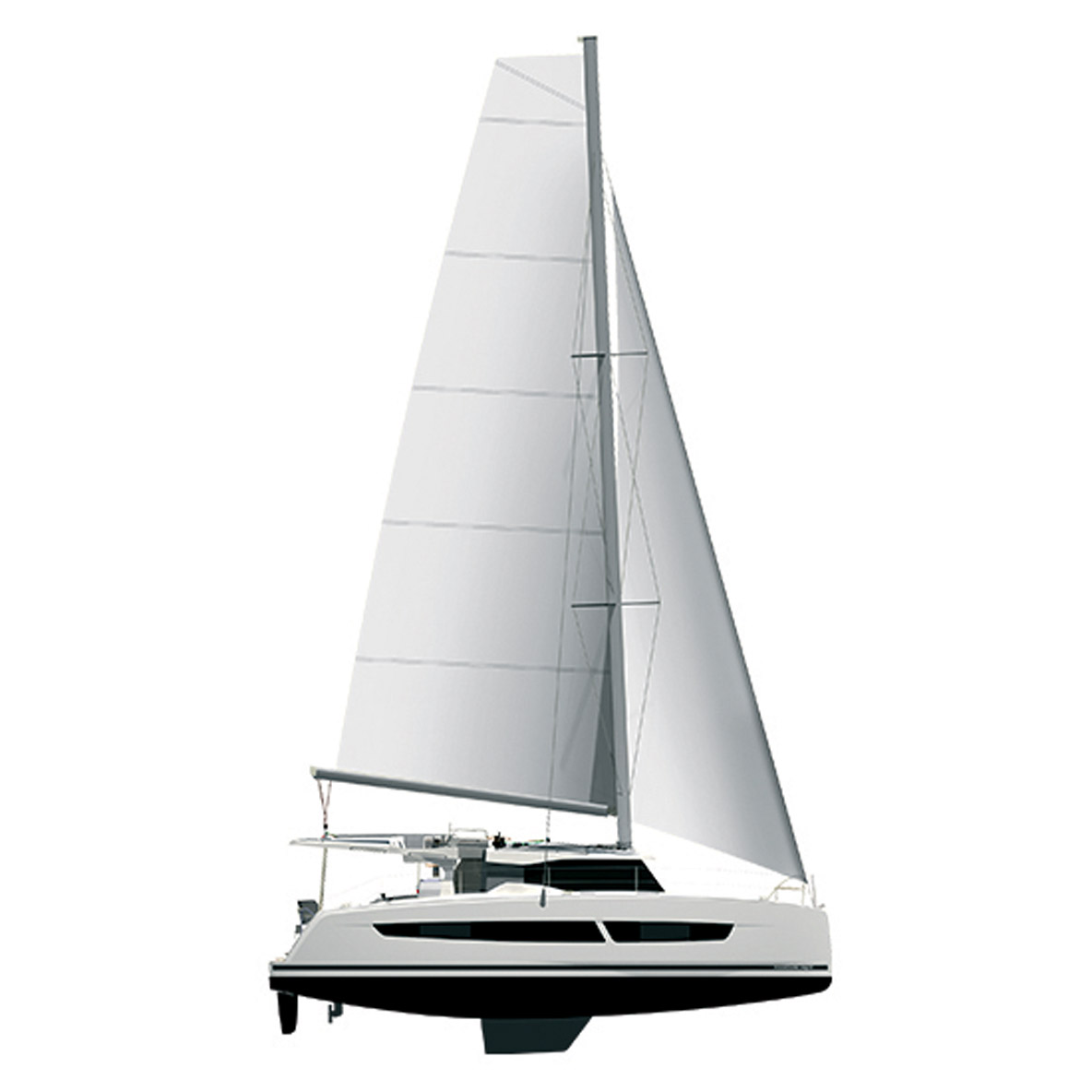
In terms of design, you don’t change a winning team: the Berret/Racoupeau design studio has created lines very similar to those of the other models in the range. So, no revolution, but a silhouette that remains pleasing and attractive to buyers.
The hulls, deck and structural bulkheads are built using infusion on a balsa, PET foam or PVC foam core. The resin used for the hulls is anti-osmotic. The two skeg keels are inserted into composite wells and then glued to prevent the risk of water ingress in the event of grounding. During our test, the deck felt rigid and free of squeaks.
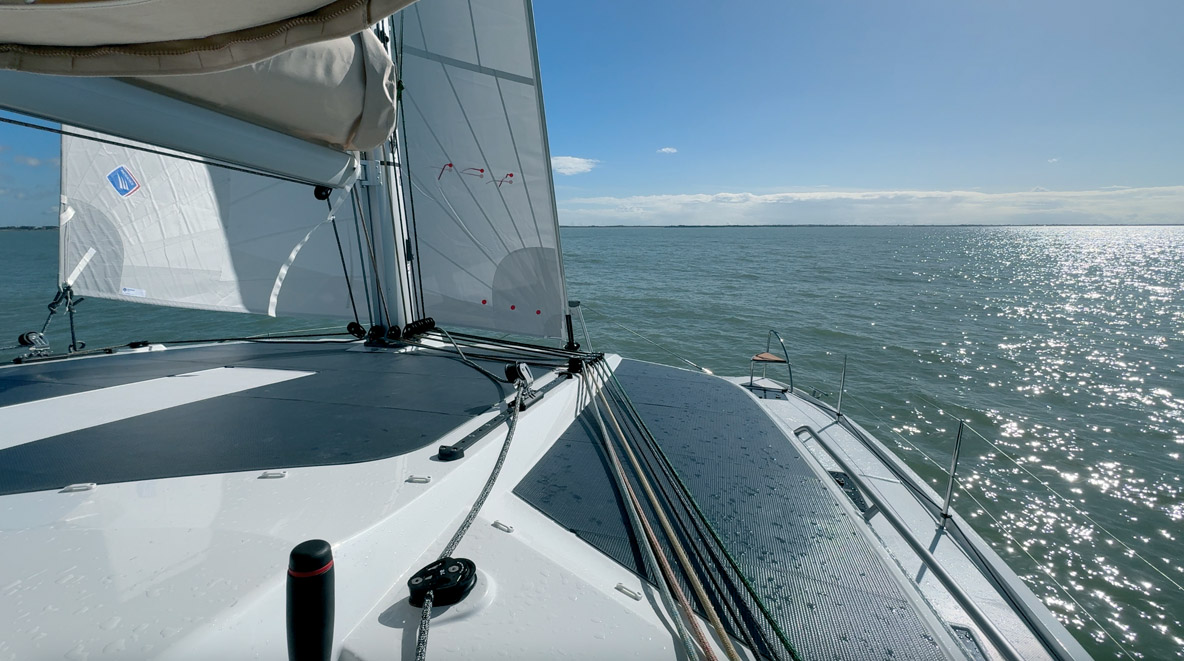
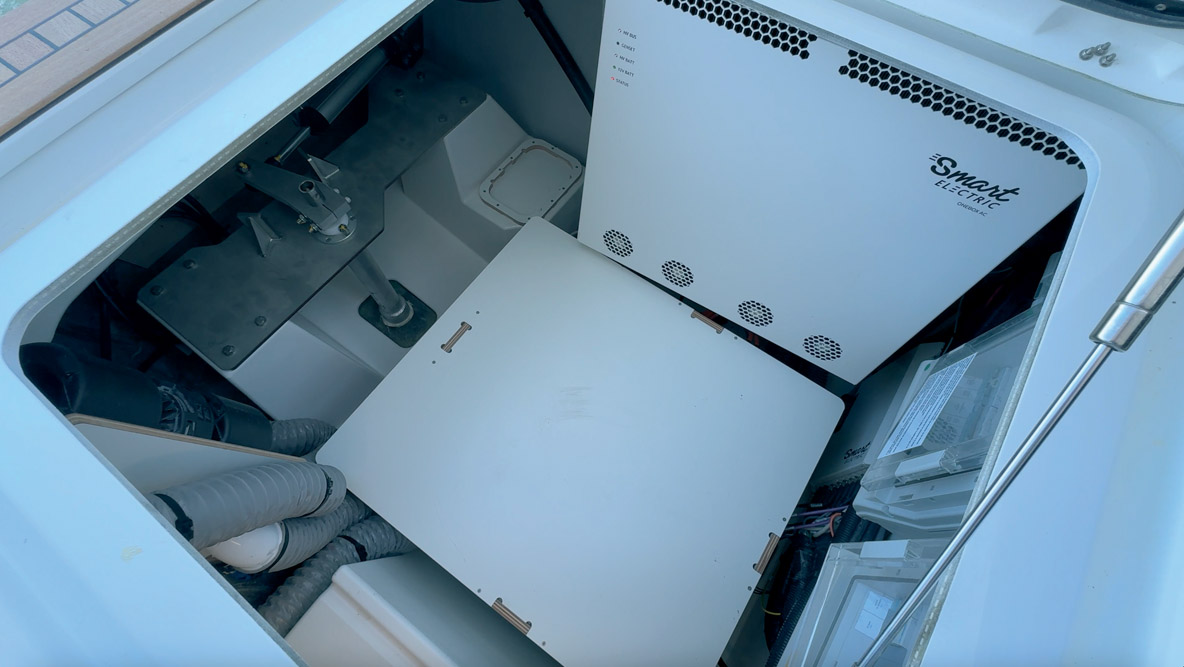
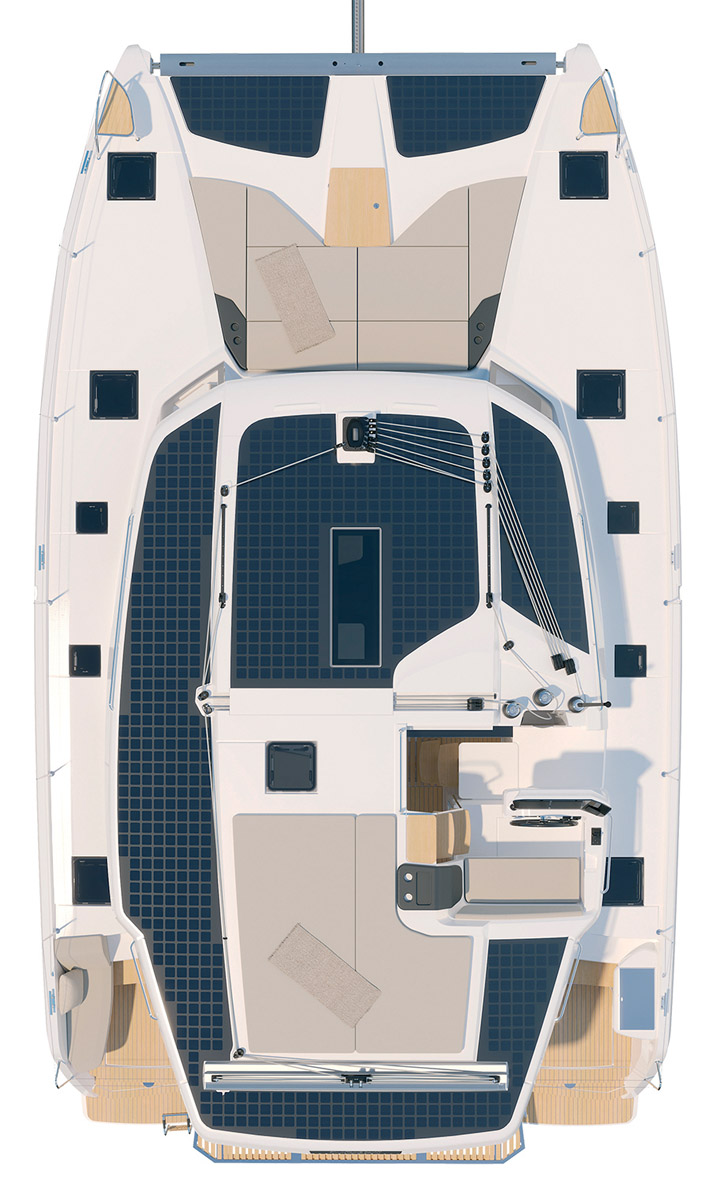
When it comes to electric propulsion, the shipyard remains well ahead of the pack – our test model was equipped with the ODSea + 55 package, which includes two 25-kW motors and a 27-kWh battery. This innovative propulsion system provides a range of 110 minutes at 6 knots in full electric mode. If the battery drops to 20% charge, the 16-kW generator kicks in – with 92 US gallons (350 liters) of fuel, the range is around 1,000 nautical miles. The real advantage of this hybrid powertrain, in addition to offering a more environmentally friendly multihull, is that the battery can be recharged using the powerful solar panels (2 or 2.3 kWp) and hydrogeneration, which is particularly efficient when the catamaran reaches 8 knots under sail. The only downside, in my opinion, is the price of this option, which represents an additional cost of 35% on top of the basic price before tax – we are still waiting for the manufacturer to make an effort in this area; the future of the energy transition depends in part on its accessibility. Another point for improvement: the efficiency of the solar panels could be even better if the halyards ran under a false deck rather than above the photovoltaic cells.
Easy to Handle
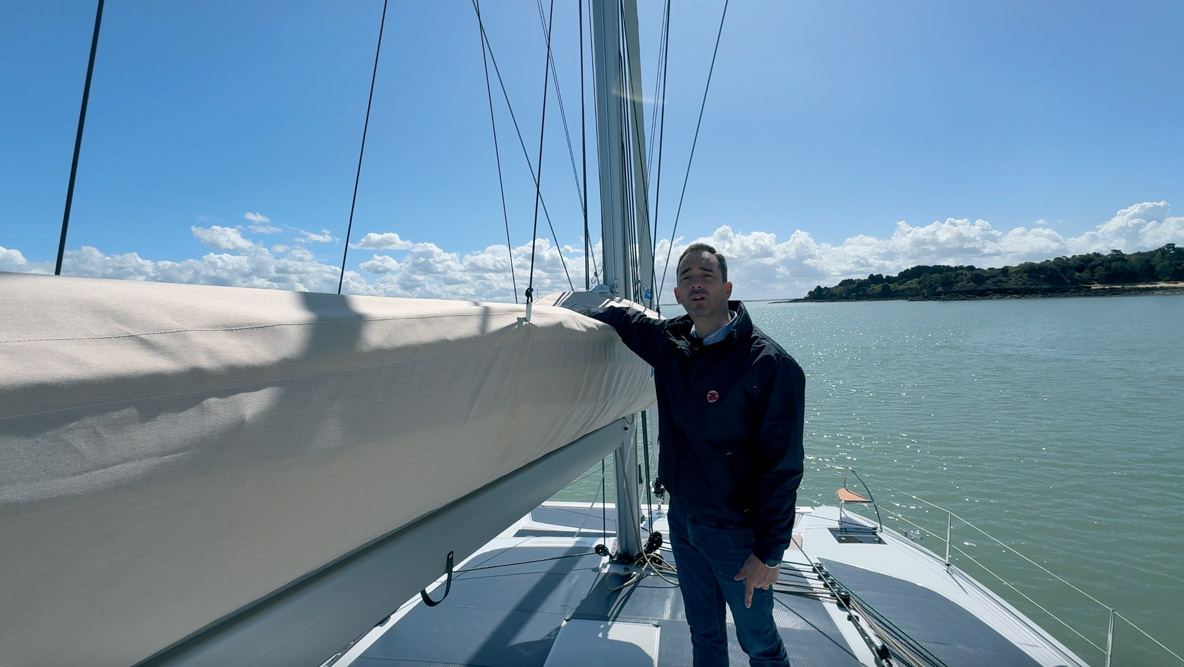
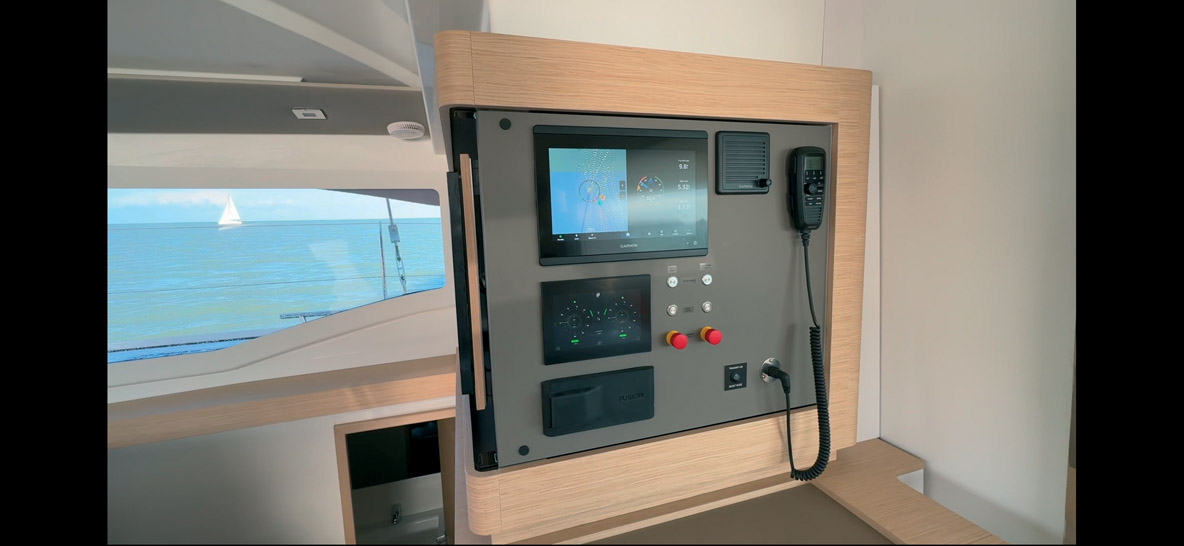
A multihull weighing less than 15 tons is generally easy to manage short-handed, and this is particularly true during port maneuvers, especially as our test model has fairly moderate windage. As for the powerful torque provided by the electric motors, it allows Erwan de Vuillefroy, product marketing manager, to position the bows with precision without having to use too much power. The same goes for setting the sails: the mainsail is hoisted halfway at the mast, with the job being finished with the winch. The genoa is unfurled in no time at all. It’s so easy! The single helm/maneuvering station still found on the Isla 40 has now been replaced by a dual configuration at mid-height, which is standard on all Fountaine Pajot models up to the Aura 51. All sail maneuvers are led back to a position just ahead of the helm station, and here, at the wheel, the instruments are now grouped together on an XXL console. This provides dual access (cockpit and outer deck). In practice, it works perfectly with a crew or when two-handed... but also solo, when the autopilot takes over.
With 7 to 8 knots of wind, we recorded 4.3 knots close-hauled at 55° to the true wind: It’s clear that in these light conditions, the New 41 is slowed down by its large propellers, which are designed for electric motors and hydrogeneration. Folding propellers suitable for this purpose are currently being developed. In a good breeze, the New 41 performs well, with Erwan’s team recording a speed of 9.5 knots in 15 to 18 knots of wind. A gennaker and/or spinnaker would of course have allowed us to gain another two knots.
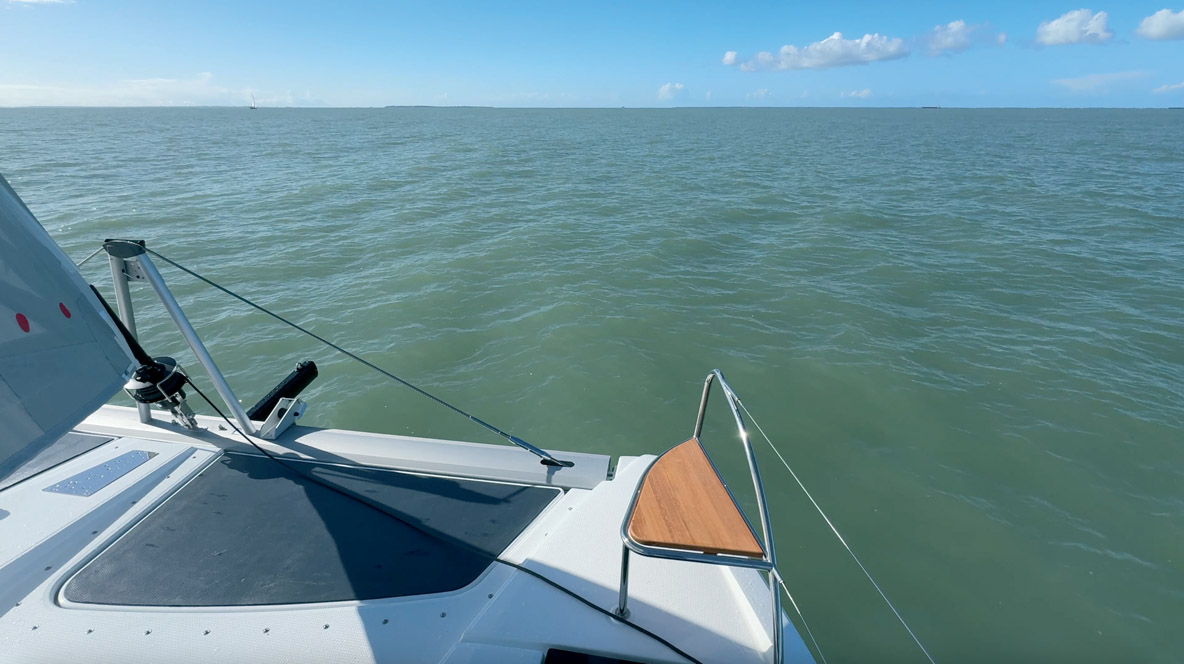
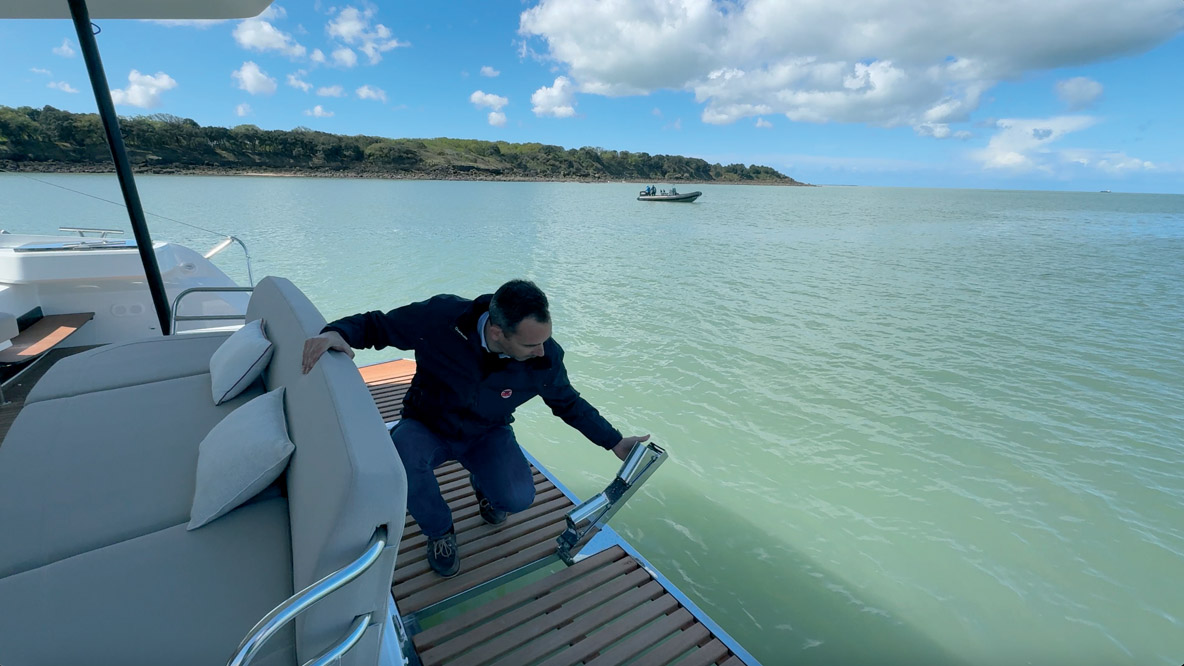
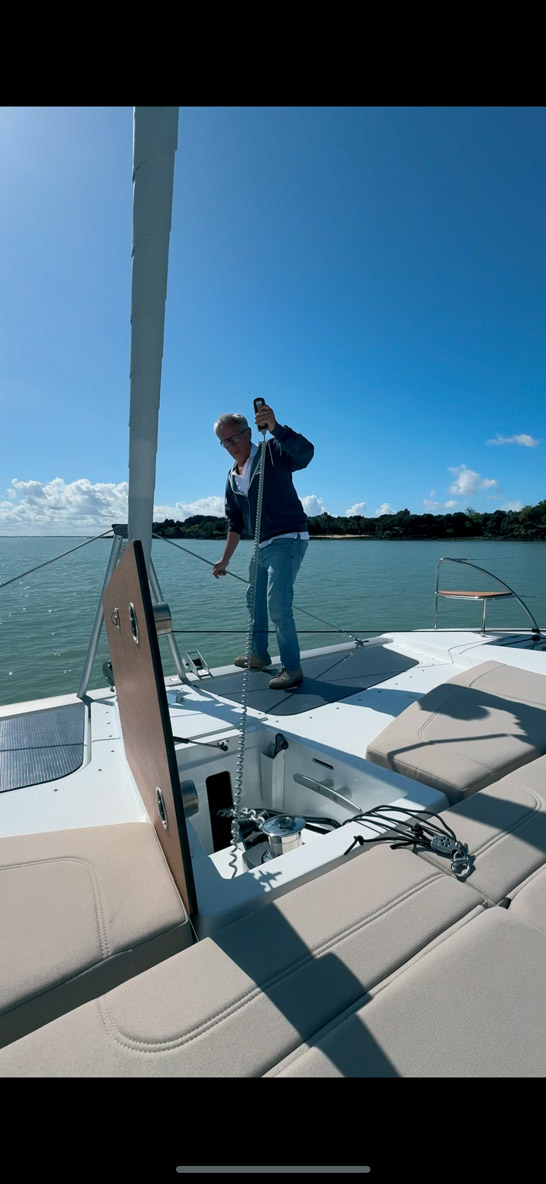
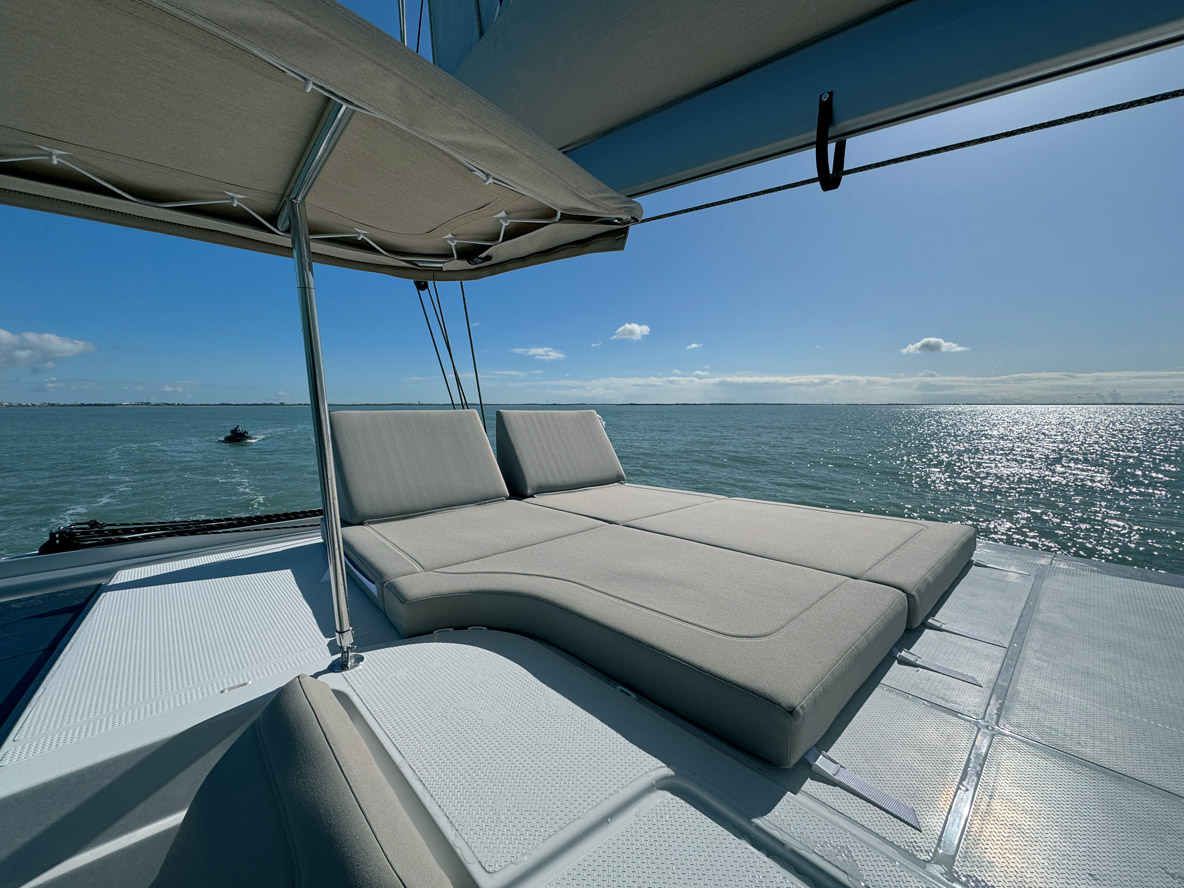
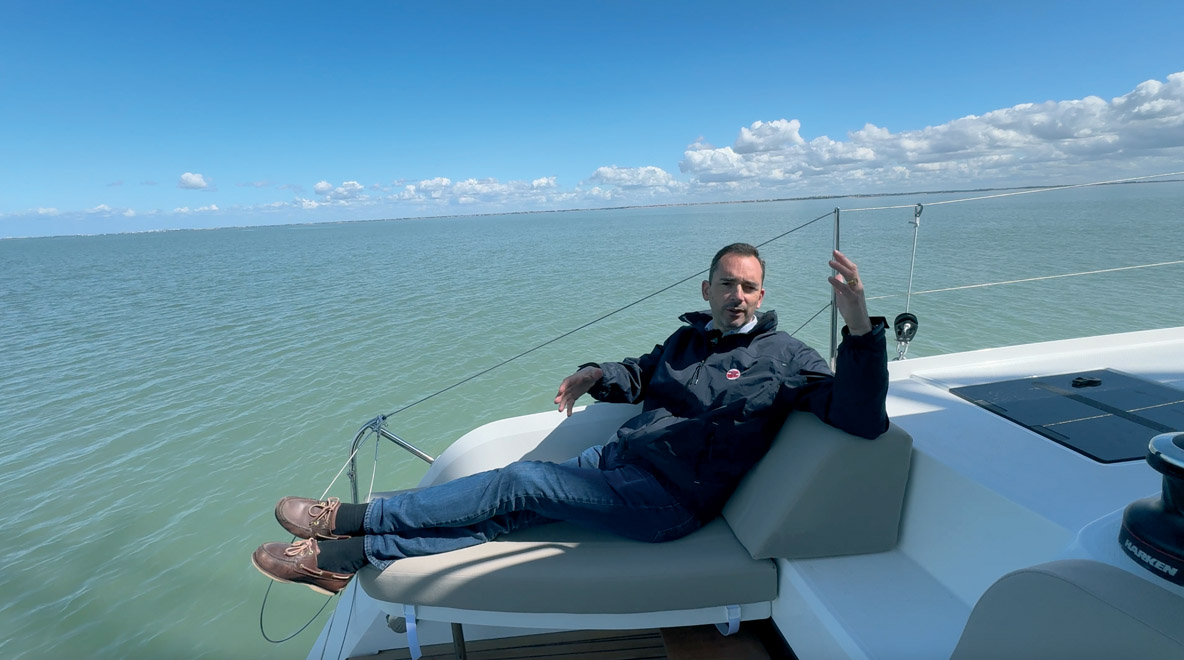
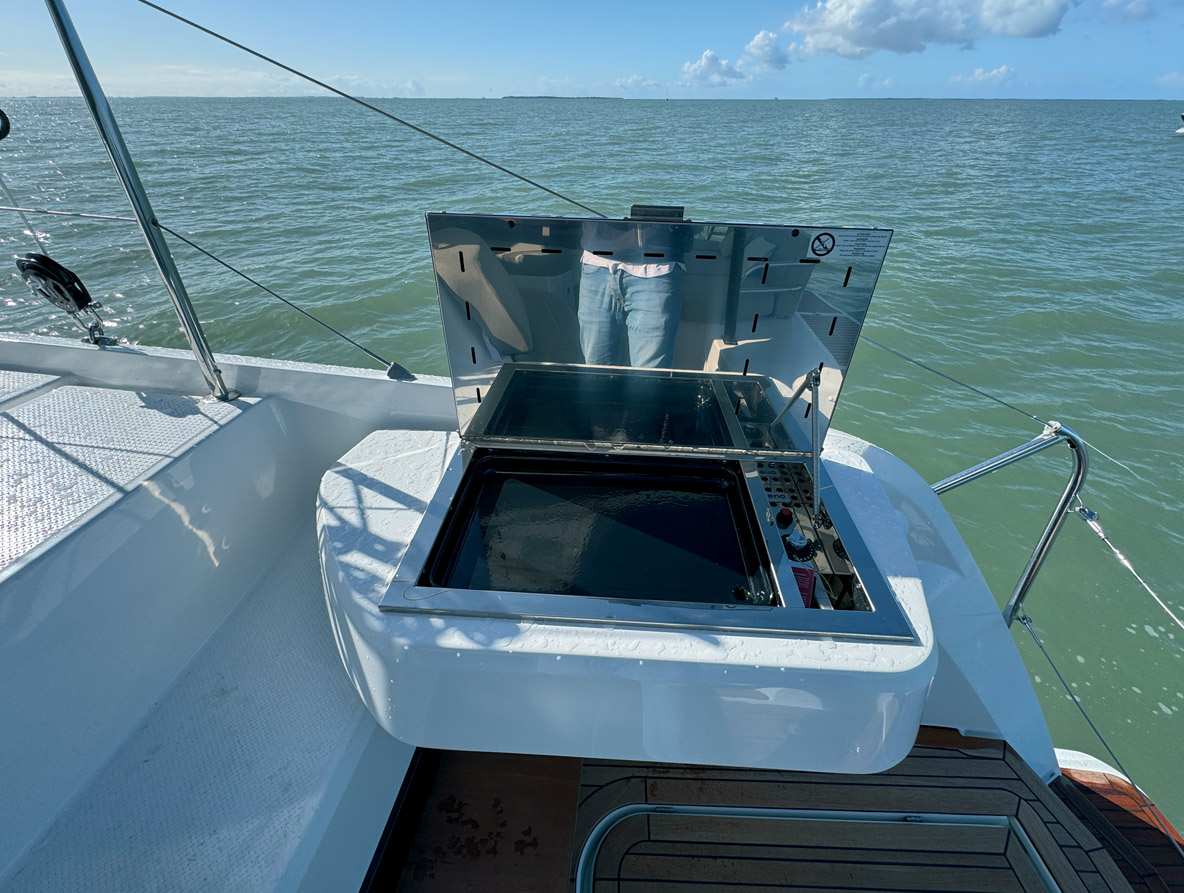
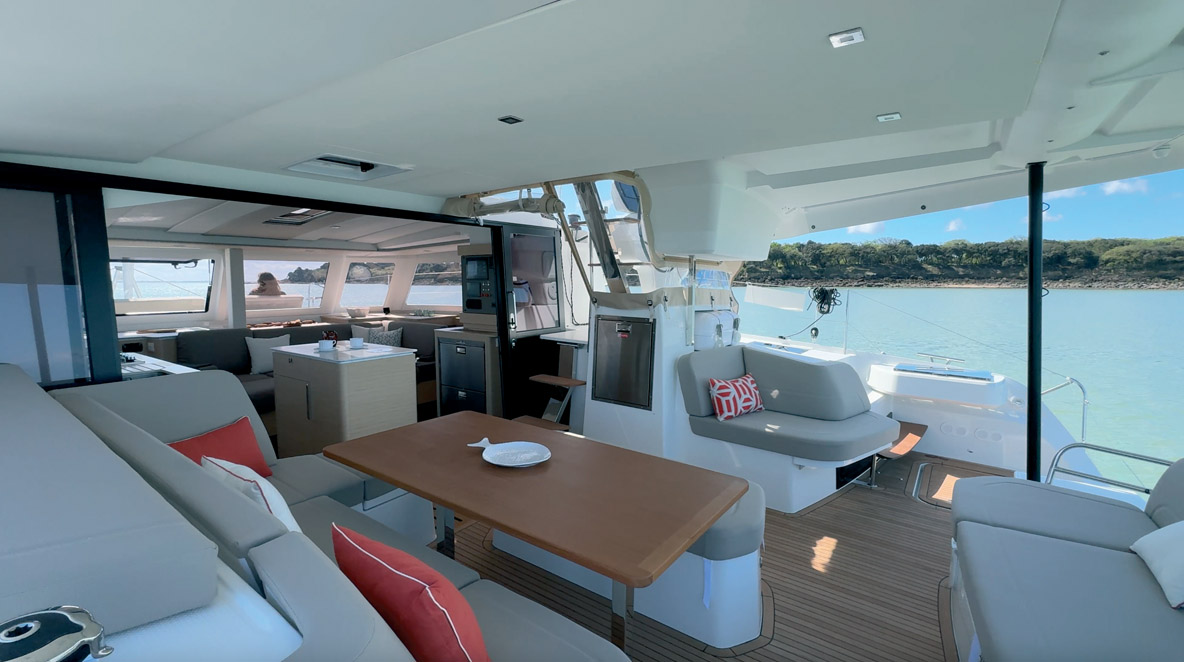
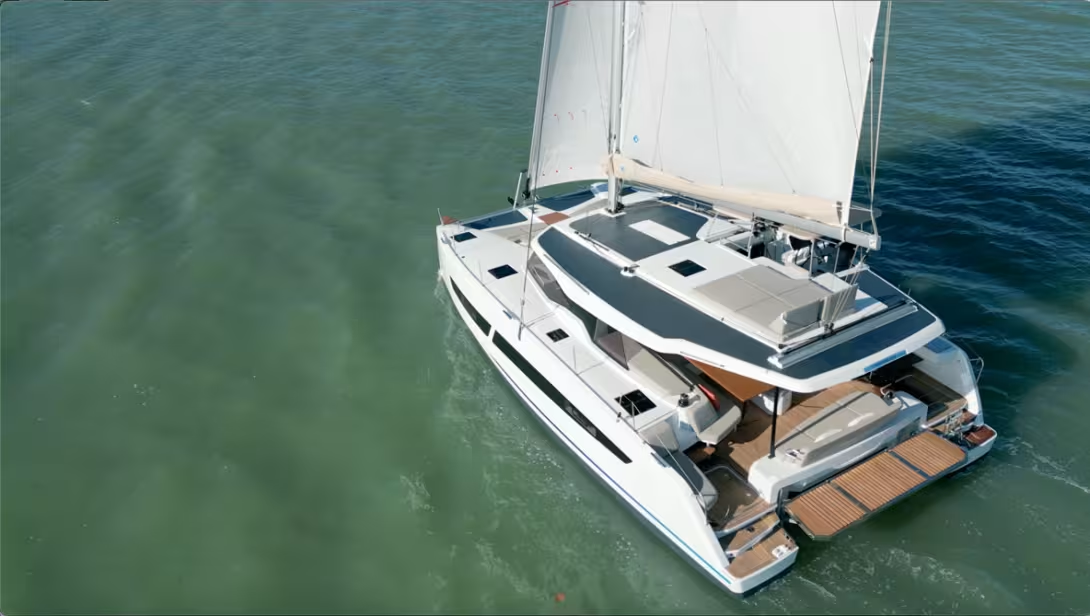
The deck layout is very clear, with a large cockpit well equipped with storage space and, above all, seating, including a 65 x 33 inches (164 x 84 cm) outdoor table, a well-protected mini sofa behind the helm station, and a long 8-foot (2.5 m) aft bench seat. There is even room for two comfortable sun loungers all the way aft, outside the hulls, overlooking the wake. A sun lounger combo on the port side and a plancha grill on the starboard side are also available. Between the sugarscoops, there is an 11½-foot (3.5 m) hydraulic platform equipped with tilting cradles for storing the dinghy. The side-decks, which are nowhere less than 37 in. (69 cm) wide, lead to a forward deck with sun loungers that are adjustable at the head end, and, above all, designed so as not to interfere with the opening of the lockers. The anchor locker and bow roller have been moved forward so that the anchor and chain are more visible from the deck. At the very front, there are two seats integrated into the pulpits. Optionally, the trampolines can be replaced by solid panels designed to support additional solar panels. On the coachroof, a lounge deck with adjustable mattresses has been fitted – but this is not a true flybridge. The boom remains very low to facilitate access to the lazy bag as well as the reefing lines.
Bright and Well-finished Interior
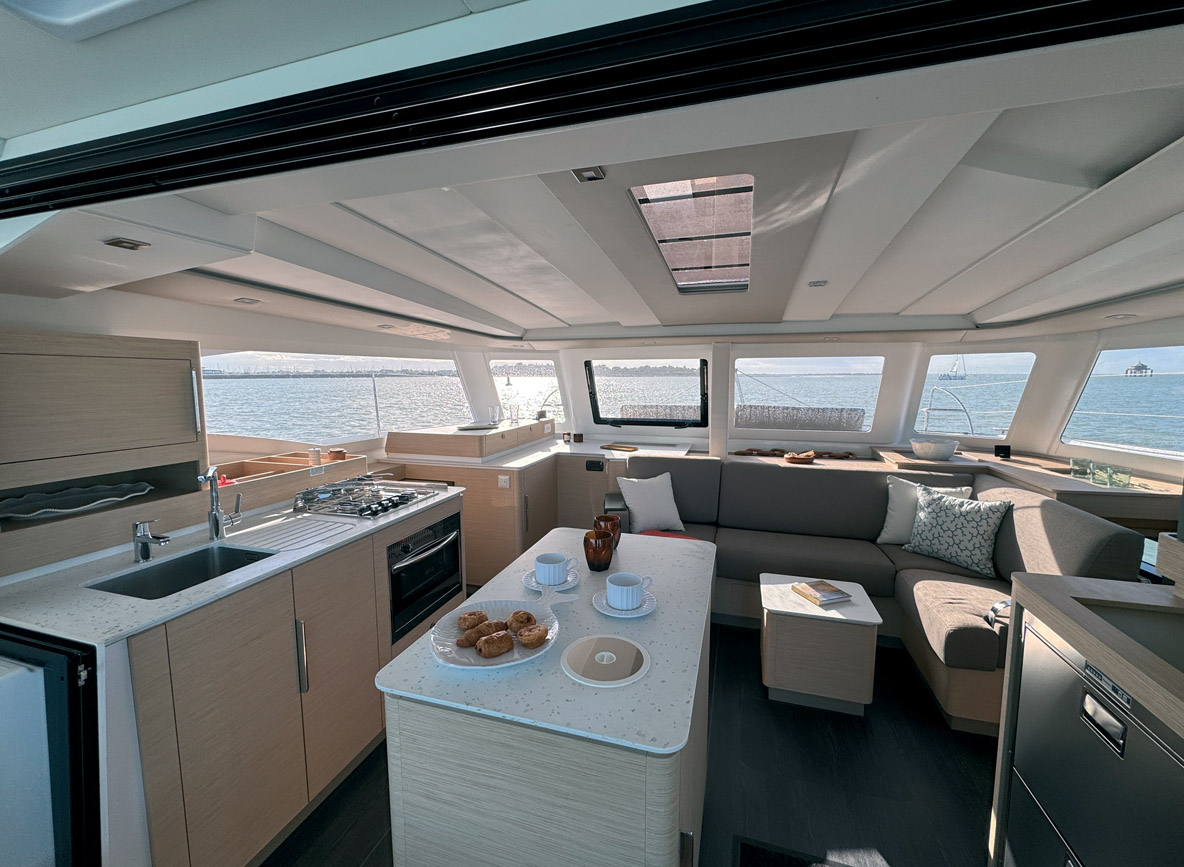
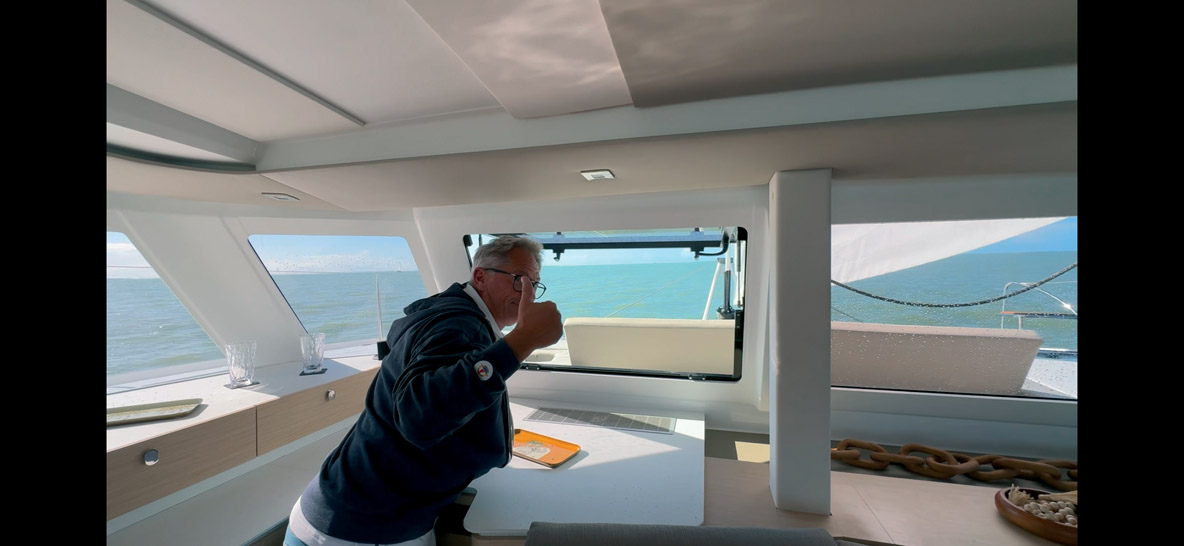
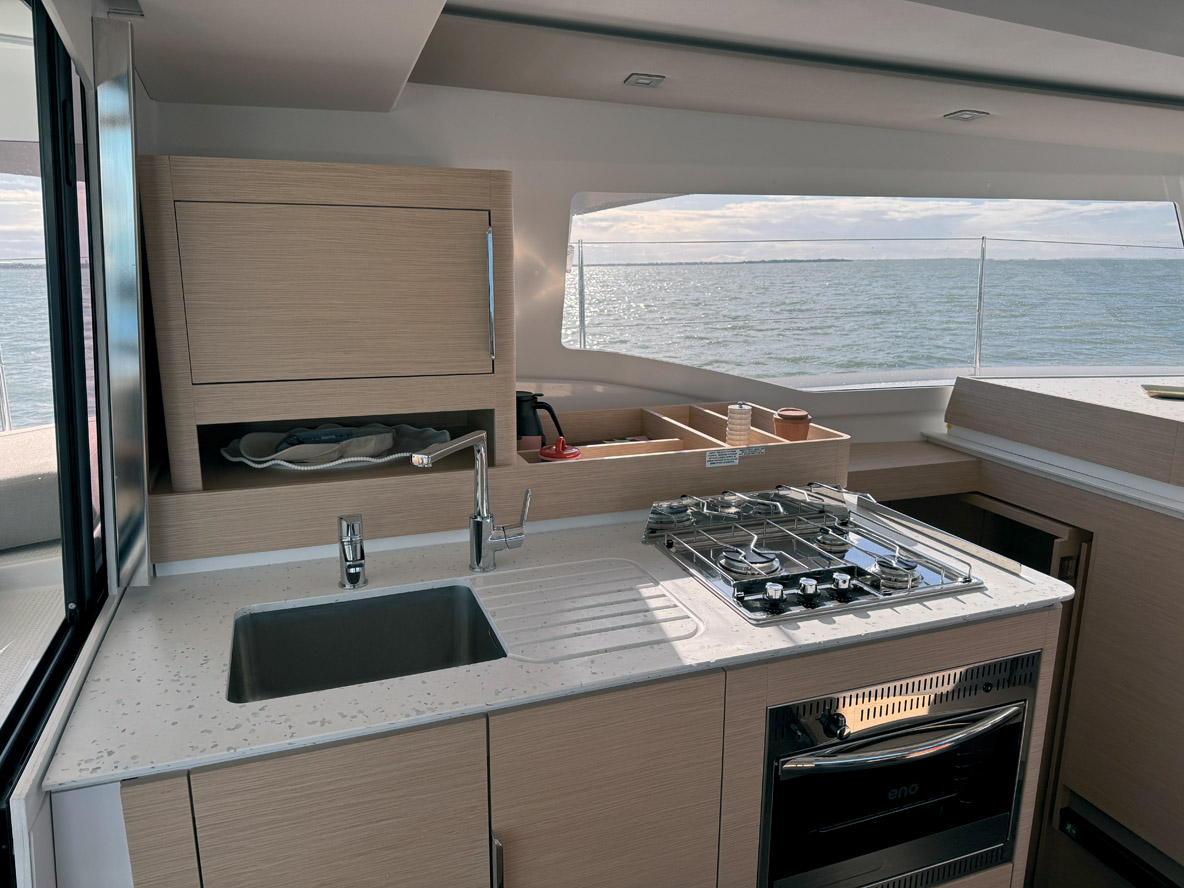
The shipyard has ensured smooth communication between the cockpit and the nacelle with a level passageway and a large opening measuring 6’2” (1.87 m) high by 6’7” (2 m) wide, increased by an additional 18” (0.45 m) opening on the port side. The headroom at the entrance to the cabins is 6’9” (2.05 m) and is greater than 6’3” (1.91 m) throughout. The central island is immediately noticeable with its relatively imposing tabletop measuring 40” x 24” (1.01 by 0.61 m). This configuration had disappeared from the Tanna 47 before making a strong comeback on the Aura 51. On the port side, there is a fully equipped galley with plenty of storage space (over 70 cubic feet/2 m³ of usable volume in the nacelle), complemented by a side unit, the electrical panel, and a large refrigerator at the entrance on the starboard side. The atmosphere is cheerful with light-colored materials and woodwork. The worktops are made from recyclable materials. The overall finish is very neat, with precise adjustments. Natural ventilation can be boosted by a large 37” x 25” (95 x 63 cm) front panel that opens out. This opening can also be used as a hatch. The saloon is limited to an L-shaped bench seat and, most notably, a tiny 19” x 17” (49 x 43 cm) coffee table. I highly recommend the “saloon table that converts into a bed” option.
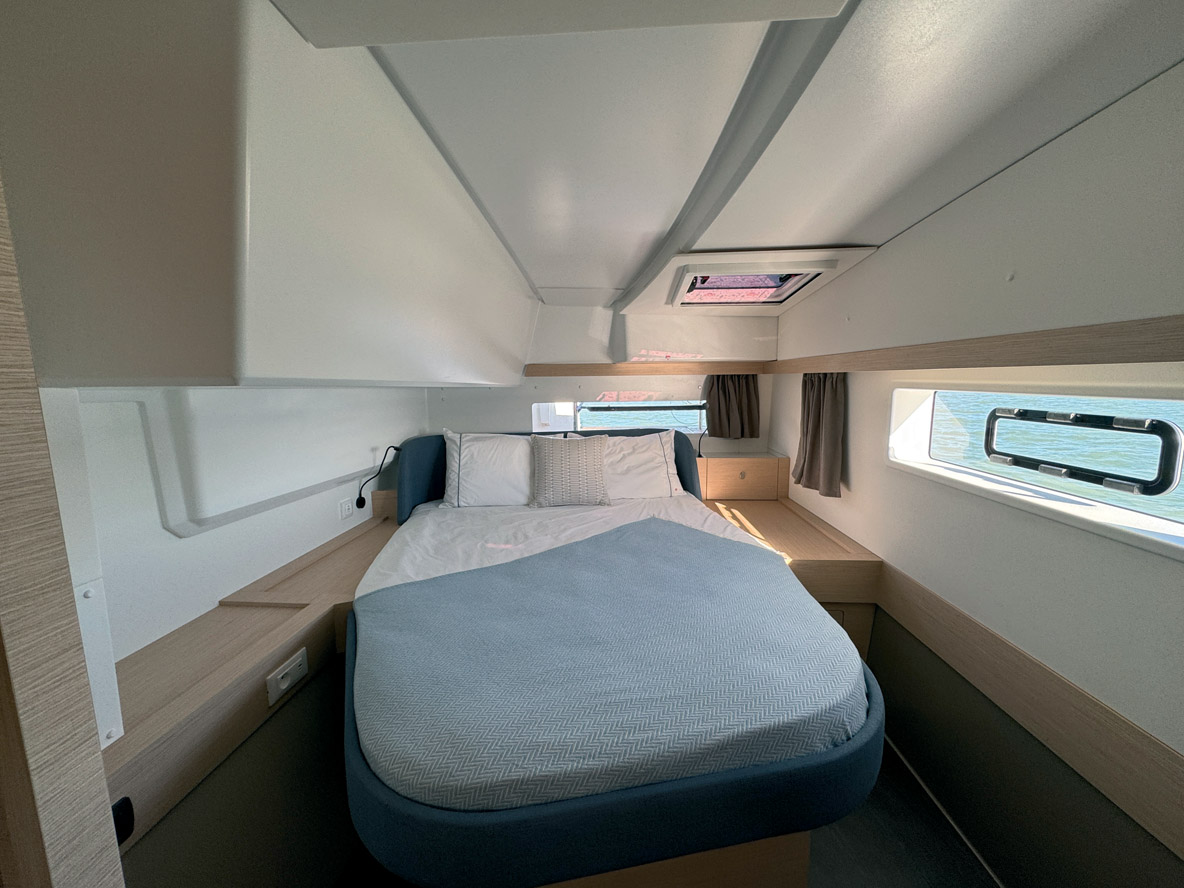
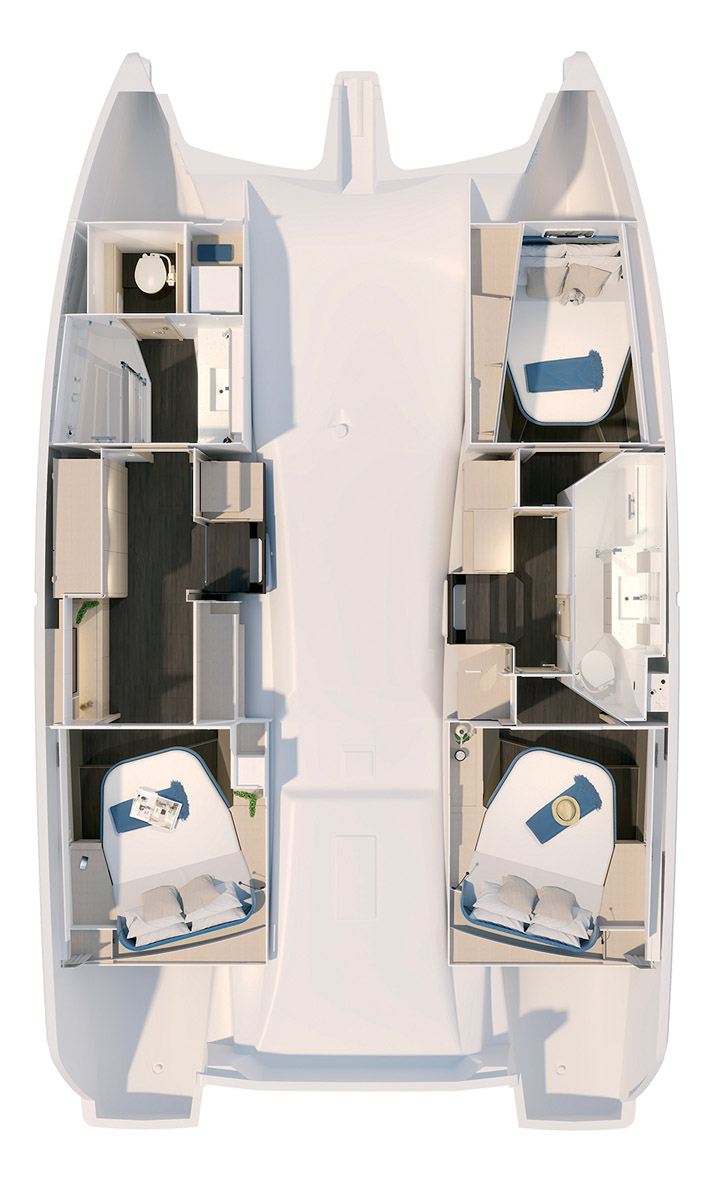
Each hull is accessible via four steps, which bring you to exactly 3’8” (1.12 m) below the level of the nacelle. The layouts are available in three or four cabins with or without shared bathrooms. For our test, we had the Maestro version with three cabins. The shipyard has gone for slightly offset berths to increase the feeling of space – and it works rather well.
The berths are both 78 inches (two meters) long, and the (maximum) width varies from 63” (1.6 m) for the aft mat- tresses to 60” (1.5 m) forward, thanks to the chines! Headroom is generous at 6’4” (1.93 m) throughout, there is plenty of storage space and ventilation has not been overlooked.
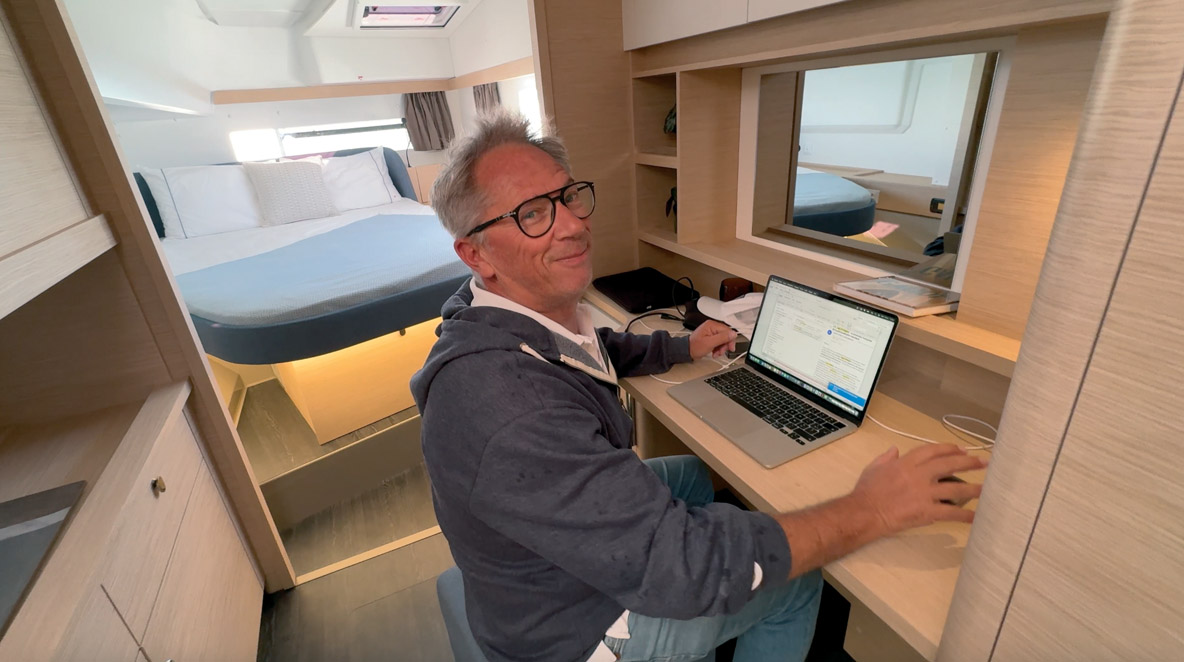
There is a change of atmosphere on the port side in the owner’s cabin, which offers real luxury with a proper desk (39” x16”/1 x 0.40 m), a huge bathroom forward and numerous cupboards and drawers in the passageway. The cabin can be isolated from the cockpit by a sliding panel that closes off the companionway.
Conclusion
The model we discovered ex- clusively in La Rochelle proved to be smooth to sail, very pleasant to live aboard and easy to handle. The elegant silhouette is very “FP”, and it’s in the details that we find interesting innovations such as the integration of the double helm/maneuvering station dear to the brand, the huge opening hatch at the front of the nacelle and the slightly angled aft berths. The New 41 will be presented during the Open Days event organized by the manufacturer at the end of June in La Rochelle, then officially launched in September at the Cannes Yachting Festival.
Many clever features that make life on board easier
Attractive price
No real table in the nacelle in the standard version
The halyards pass over the solar panels
Technical Specifications
Architects: Berret/Racoupeau Yacht Design
Length: 39’8” (12.1 m)
Beam: 22’8” (6.91 m)
Draft: 4’5” (1.34 m)
Displacement: 28,000 lbs (12.7 t)
Mainsail: 700 sq ft (65 m2)
Genoa: 376 sq ft (35 m2)
Drivetrain: 2 x 20/30 HP
Fuel: 92 US gal (350 l)
Water: 2 x 79 US gal (2 x 300 l)
Electric motors: 25 kW
Cabins: 2 to 4
Bathrooms: 2 to 4
CE Category: A8/B12/C15/D20
Price: from € 404,400 ex-tax
Main options in € ex-tax:
Ocean Pack: 15,000
Comfort Pack: 32,180
ODSea+ 55 Pack: 143,165
1 x 27 kW battery: 7,838
Fast charger: 13,585
2 Yanmar 3JH40 engines: 5,930
Folding propellers: 2,475 to 2,578 depending on engines
Cockpit awning: 4,940
Fixed bimini at helm station: 3,999
Rigid bow platform: 1,678
Synthetic teak sugarscoops and cockpit: 19,225
Gas plancha grill: 2,448
Fitted out forepeak: 1,870
Garmin Smart Cruising Pack No. 3: 20,907
Bose speakers and sound system: 2,140
Washing machine: 1,886
Full heating system: 13,146
Multicolor underwater lighting: 5,885
47-gallon (180 l)/h watermaker: 18,878
Offshore sails: 22,404
Gennaker: 5,942
Gennaker pole and fittings: 7,133
Dinghy platform: 20,147
Electric genoa winch: 2,506
3.10 m (10’) dinghy with 15 HP outboard: 10,411