By revisiting the deck, coachroof and interior design, can the designers of the New Windelo 50 Yachting really claim to be presenting a new model? Do the improvements validated by the manufacturer bring any noticeable changes once under way? What about comfort and eco-responsibility? To answer all these questions, what better than to step aboard - which is precisely what we did following the world premiere of the New Windelo 50 at the Cannes Yachting Festival.

Infos pratiques
- Le chantier : New Windelo 50
- La fiche technique
-
 Découvrez notre vidéo exclusive
- Financez votre New Windelo 50
- Assuez votre New Windelo 50
- Articles autour du New Windelo 50
Conditions : 9 to 15 knots of wind, slight sea
Launched back in 2021, the Windelo 50 marked a major technological step forward: its eco-responsible basalt fiber and PET foam composite construction had been noted, but the first Windelo also brought a new concept in fast catamaran cruising. The 50 demonstrated excellent potential under sail, while offering a protected forward cockpit as an integral part of the nacelle’s living area. At the stern, the manufacturer offered an optional retractable door system under the coachroof, similar to that developed by Bali. The young shipyard launched their 54 the following year, and it’s clear that the brand has been a real success with environmentally-conscious offshore sailors, with production now reaching 7 or 8 units a year. It’s also worth noting that all Windelo models are powered by electric motors, making the manufacturer one of the leading players in this field. While we had some reservations three years ago about the level of finish (which can be excused for the very early examples) and the rigidity of the aft door, it’s got to be said that the brand reacted immediately to these criticisms. And here we are, two years after the launch of the 50, with the New 50 Yachting version, a much more accomplished product...
New design
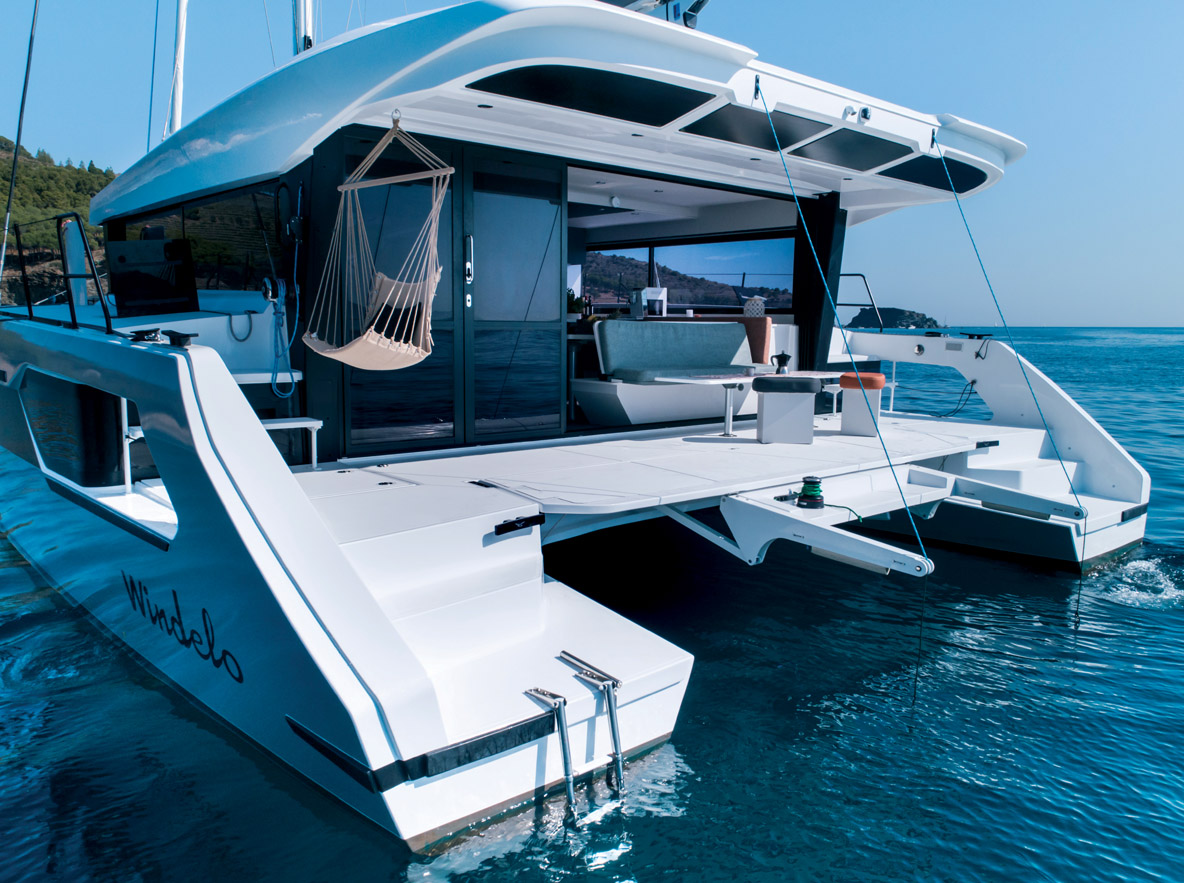
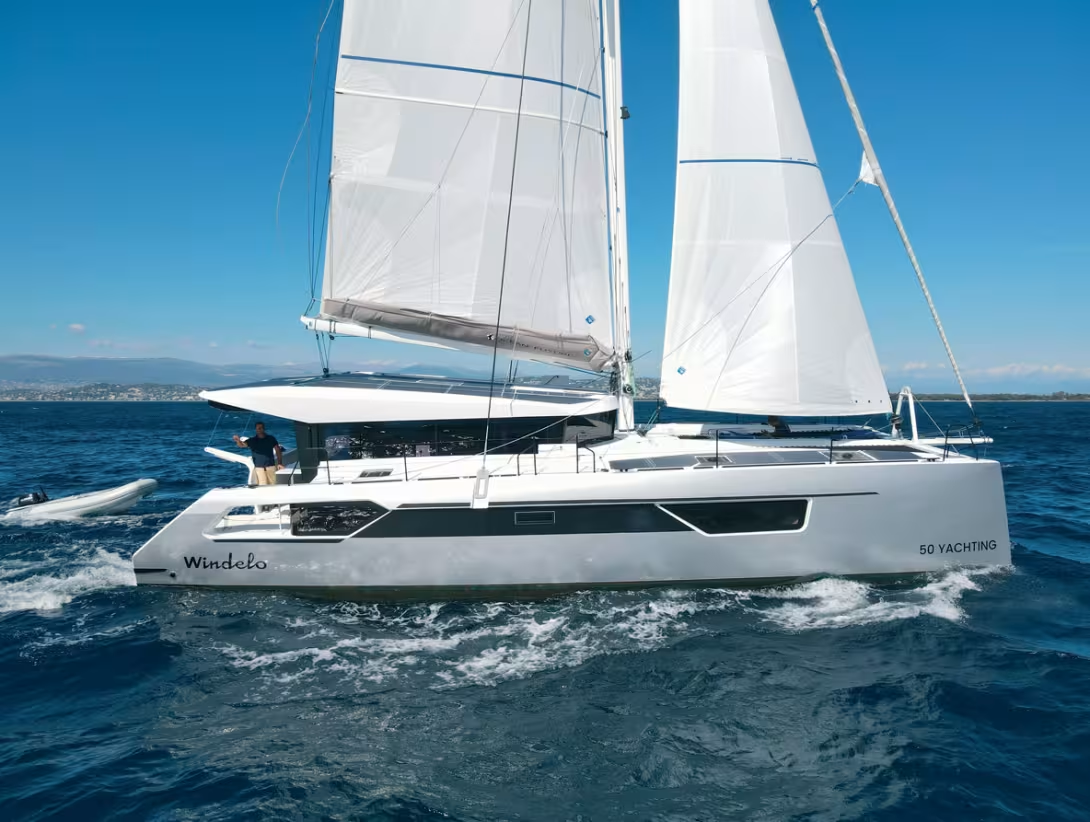
While the hulls and much of the nacelle remain identical, at least in appearance, the deck and coachroof have been redesigned, creating much more fluid, aerodynamic shapes. As for the interior, the makeover is tangible at first glance. The close collaboration between the LADIDA Agency, Christophe Barreau, Fréderic Neuman and the shipyard’s design office has made it possible to combine design, decor and technical services with the same objective, as we shall see. The builder has also made a major investment in large molds for the deck and coachroof, enabling the direct incorporation of a non-slip surface. This new construction method eliminates the need for assemblies, increases rigidity and saves weight - allowing the installation of more “comfort” equipment without impacting on the boat’s overall displacement.
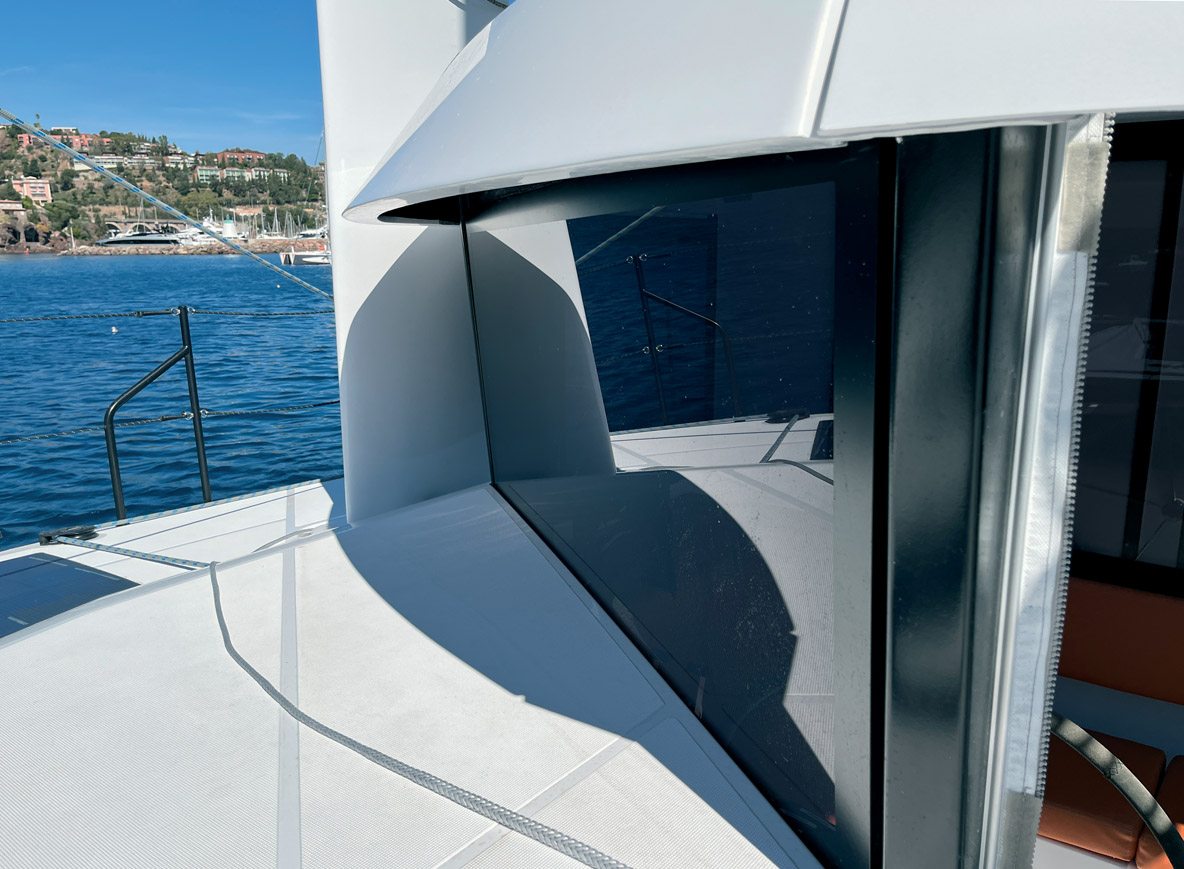
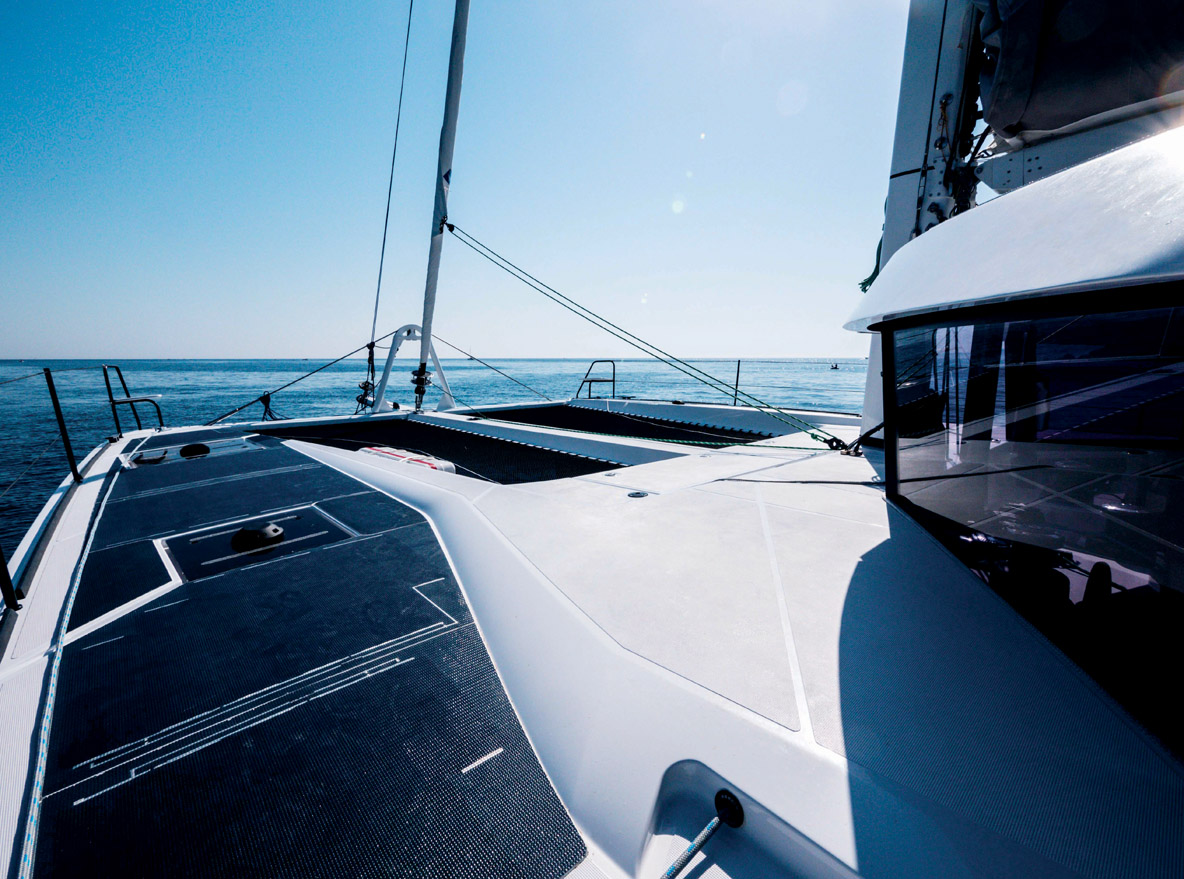
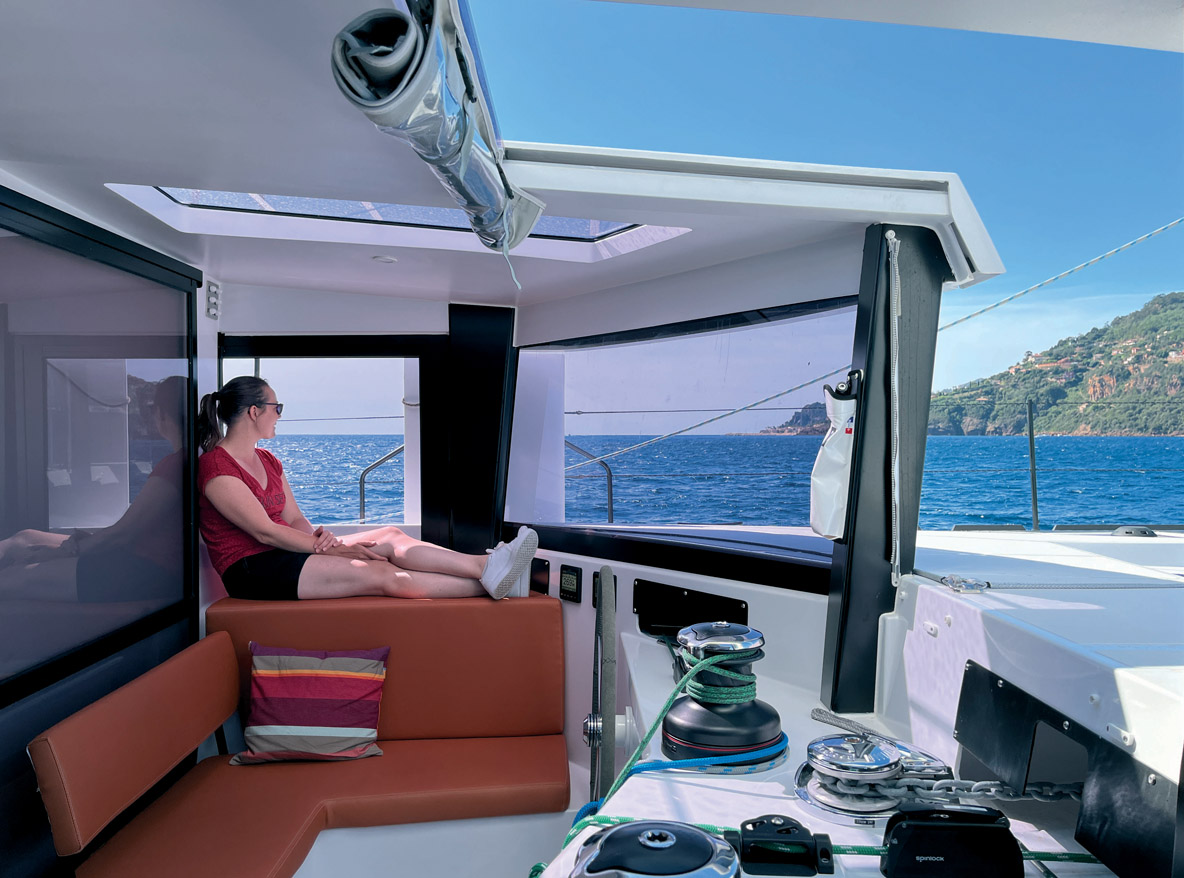
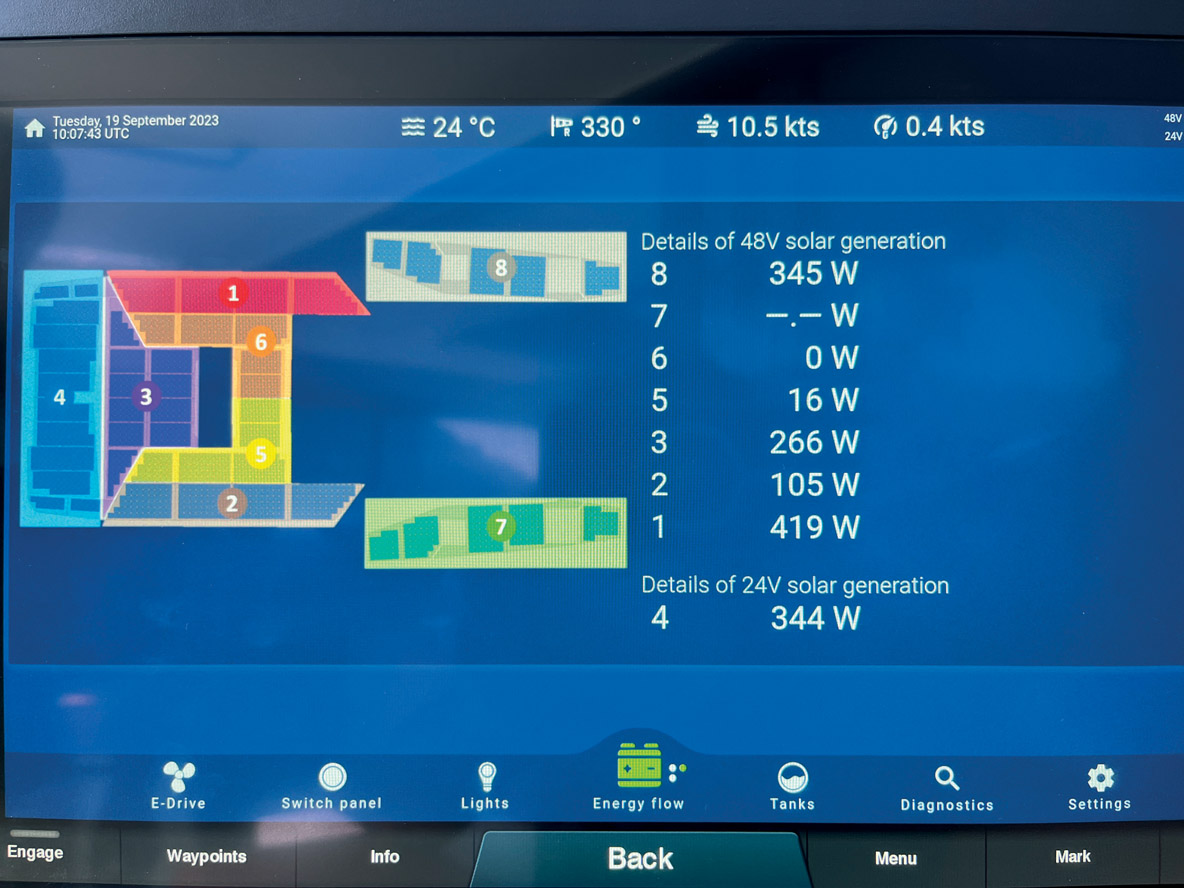
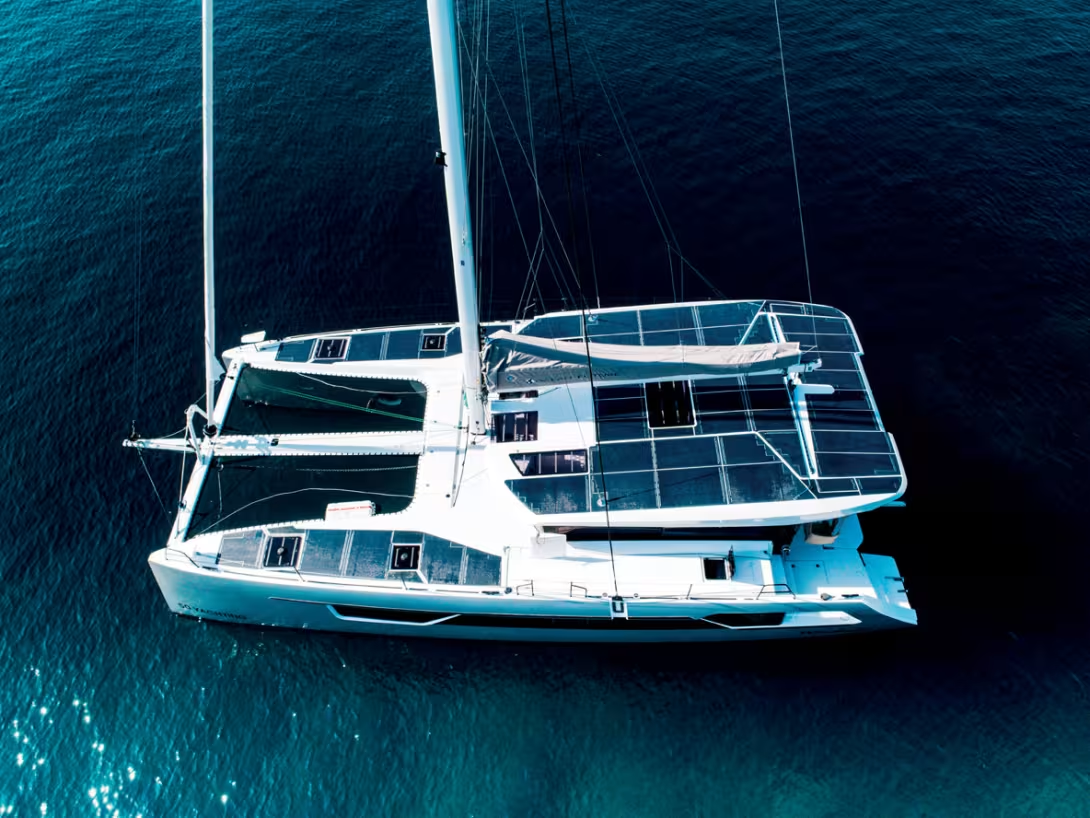
Aesthetically, the success is undeniable. The coachroof corners are more rounded, giving it a dynamic look that suggests performance. The canopy overhanging the front windows protects the forward cockpit from the sun’s rays. The ergonomic design of the deck and coachroof not only ensures better drainage of spray and rain, but also provides a larger surface area for solar panels. This brings power to 5,680 Wp instead of the previous 3,300, thanks in particular to the integration of panels on the foredeck. This significant gain obviously enhances propulsive and domestic self-sufficiency without CO2 emissions.
Improved ergonomics and level of finish
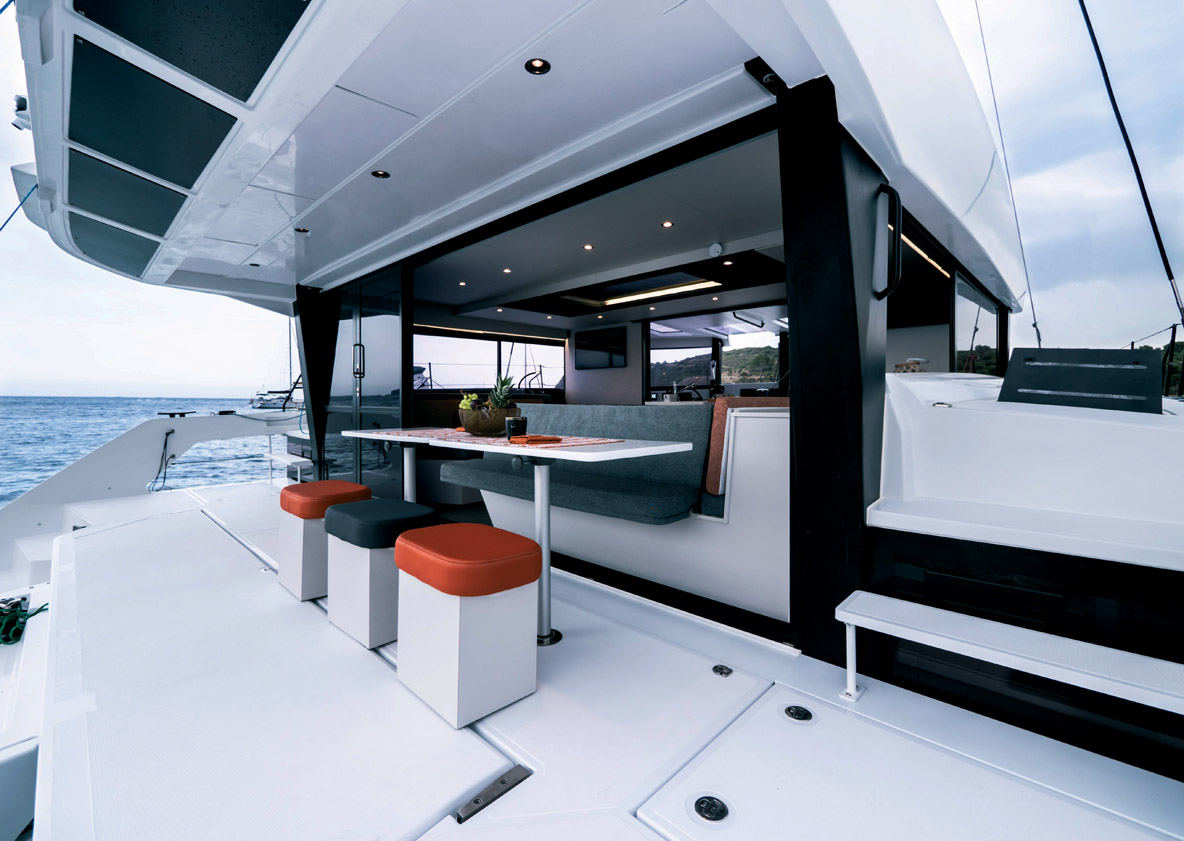
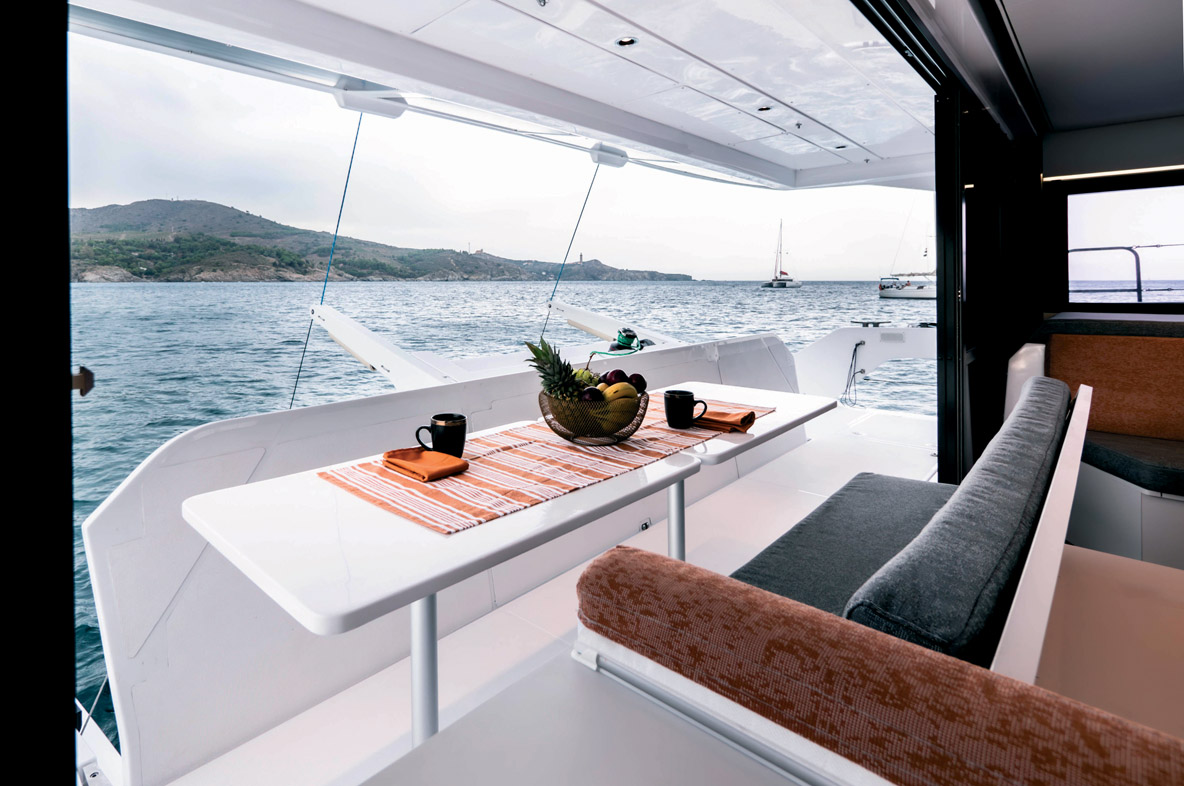
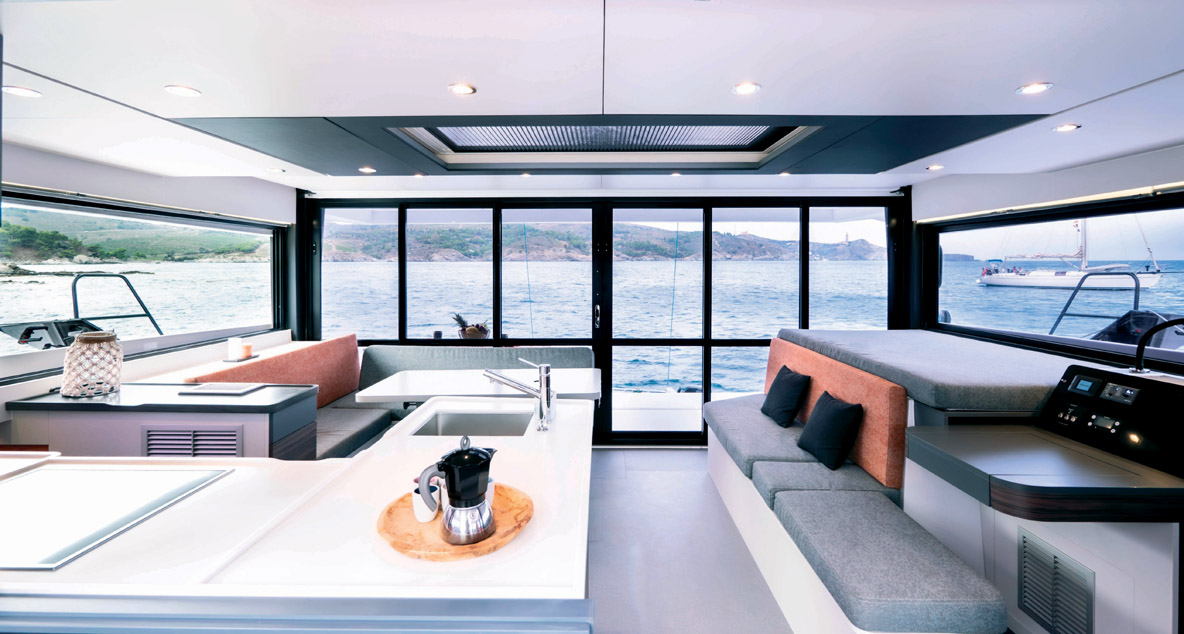
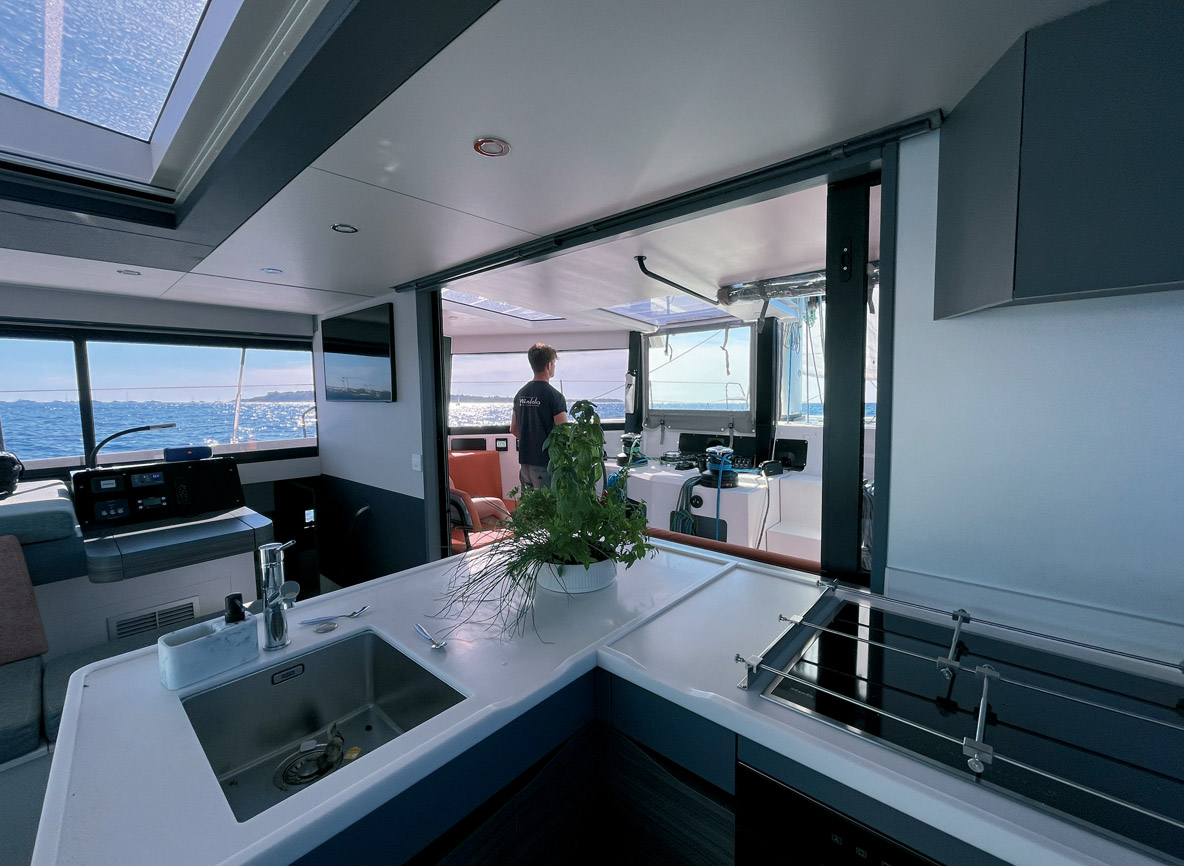
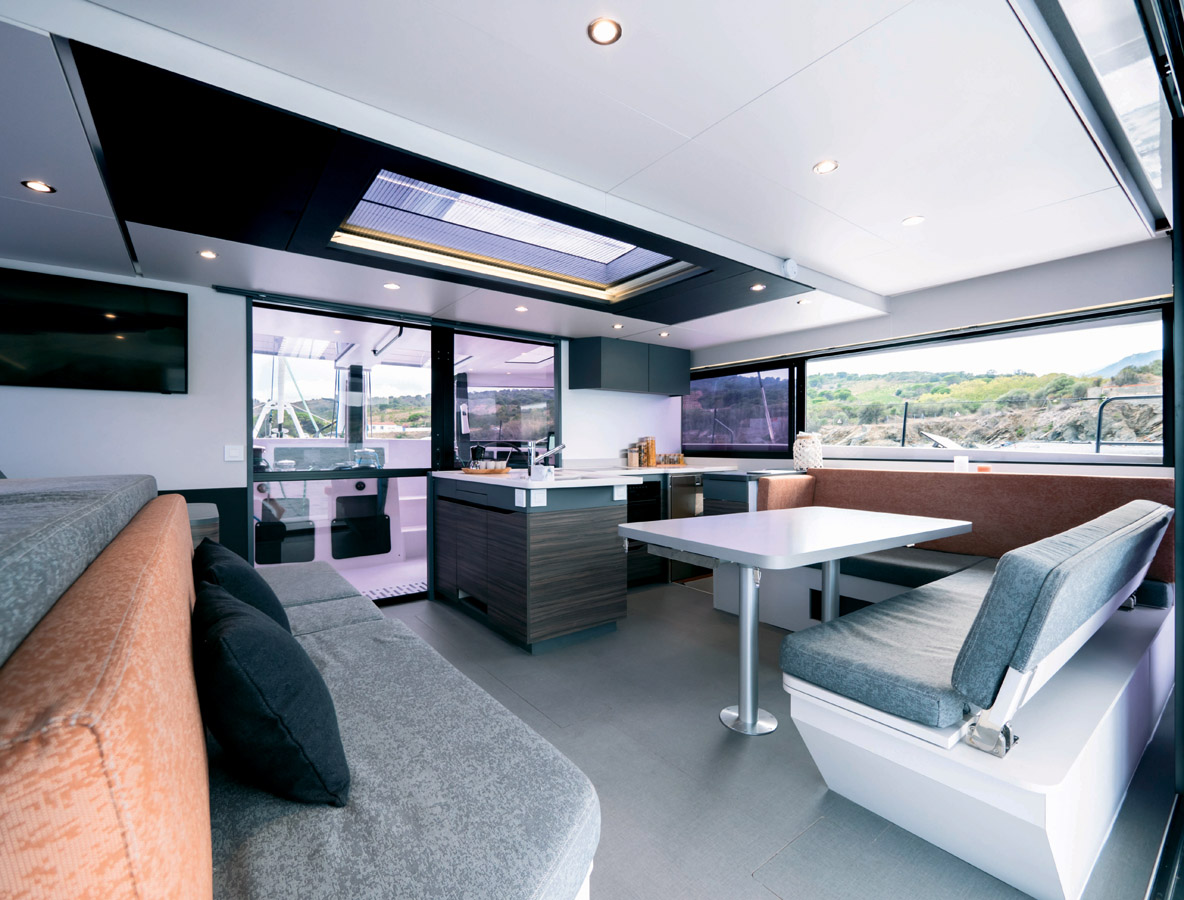
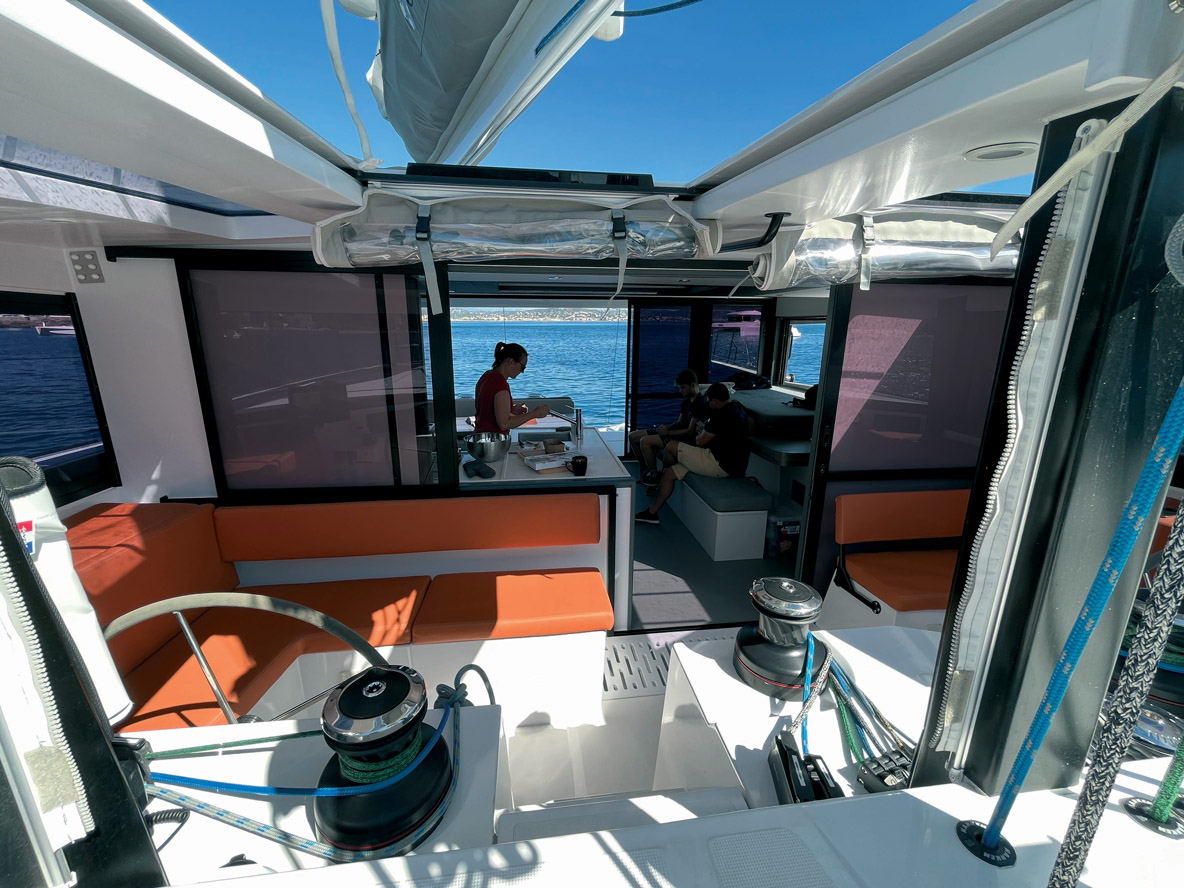
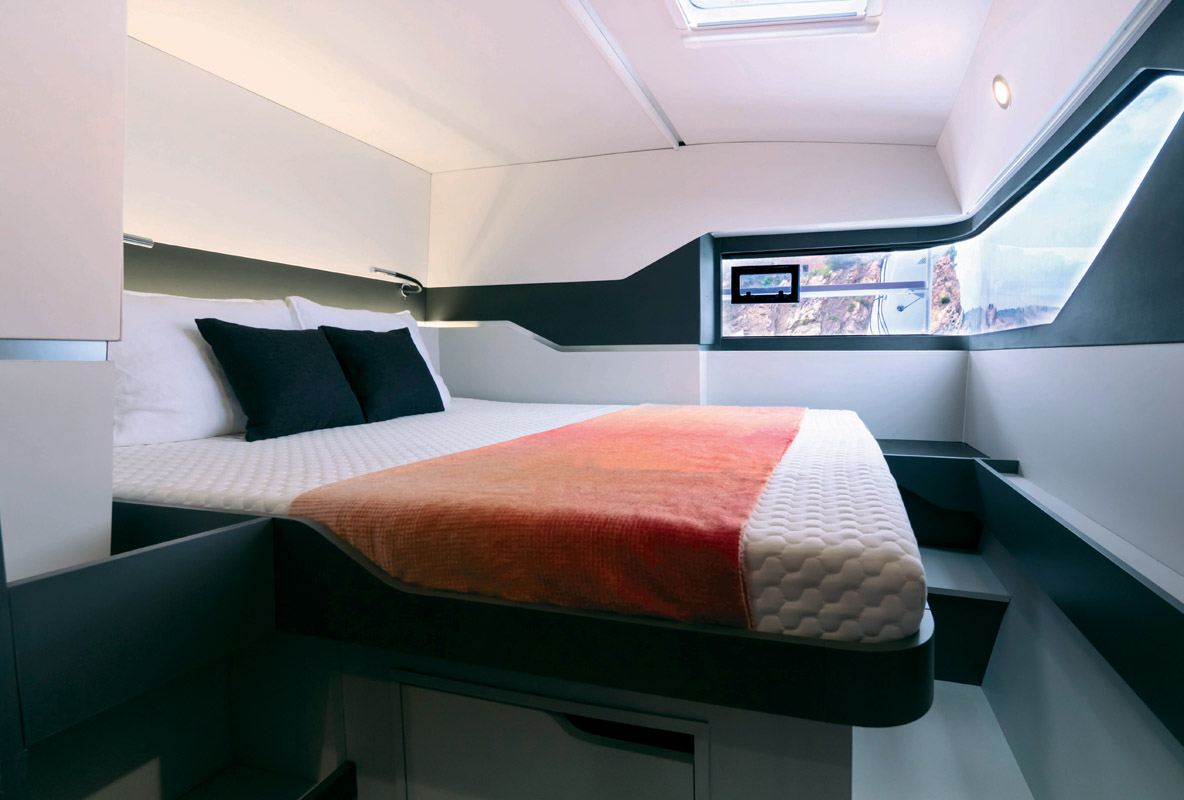
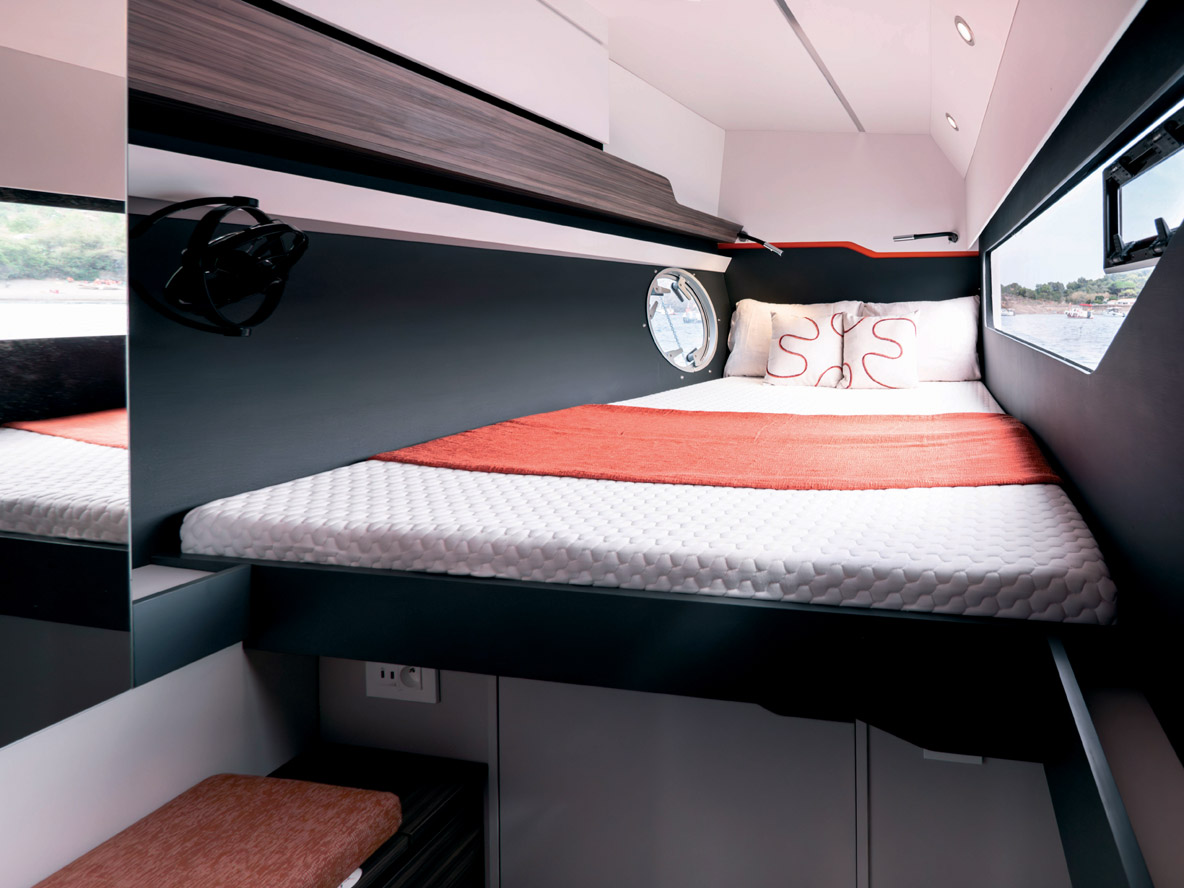
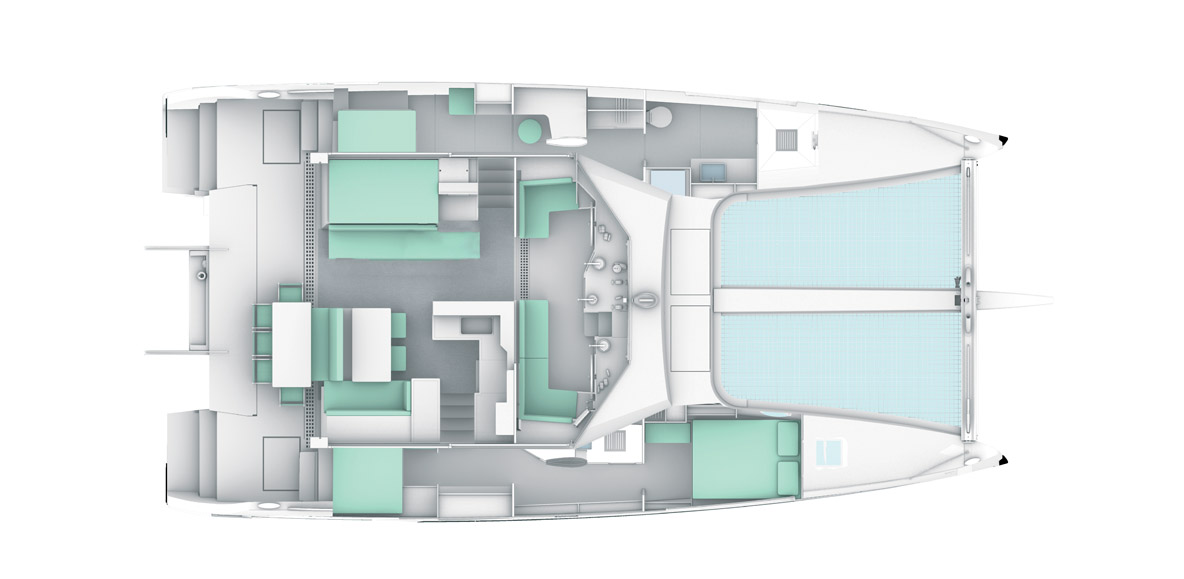
Our tour of the interior is equally convincing. Here’s an important detail: on this first model, the retractable door has been replaced by a six-panel sliding glass door. By folding the panels to either side, or to one side only, opening is almost as efficient as with the up-and-over door. Handling is much easier, and insulation is much better under way. This modification was also made to facilitate the installation of a terrace with a table for six with a sea view. Two layouts are still available. Whereas the first 50 had a saloon with a U-shaped galley and table opposite, the New 50, with its L-shaped galley and L-shaped saloon area, is more practical, even allowing you to sunbathe or take a nap at the stern by lowering the backrest. The cabin layout is identical, with an owner’s suite to port and two double cabins to starboard. On the other hand, as we mentioned earlier, the standard of finish has made a huge leap forward compared to previous models. Laminated composite panels fit much better, while the lightning bolt motif on the bulkheads is emphasized by a stainless-steel border between the cream headlining and the dark panels. The quality of fabrics and linings is much classier, contributing to a more refined ambience. These materials are made from 100% recycled and 100% recyclable materials. Depending on whether you go for the Adventure, Yachting or Sport finish, you’ll benefit from different materials and colors to create very distinct worlds. When you’re cruising, you’ll feel perfectly comfortable in the nacelle: there’s not a single vibration or creak to disturb the moment of peace and quiet you’ve come to find inside. This is all the more true when under power: the noise generated by the machinery is almost imperceptible, as we’ll discover out at sea.
A truly usable all-electric mode
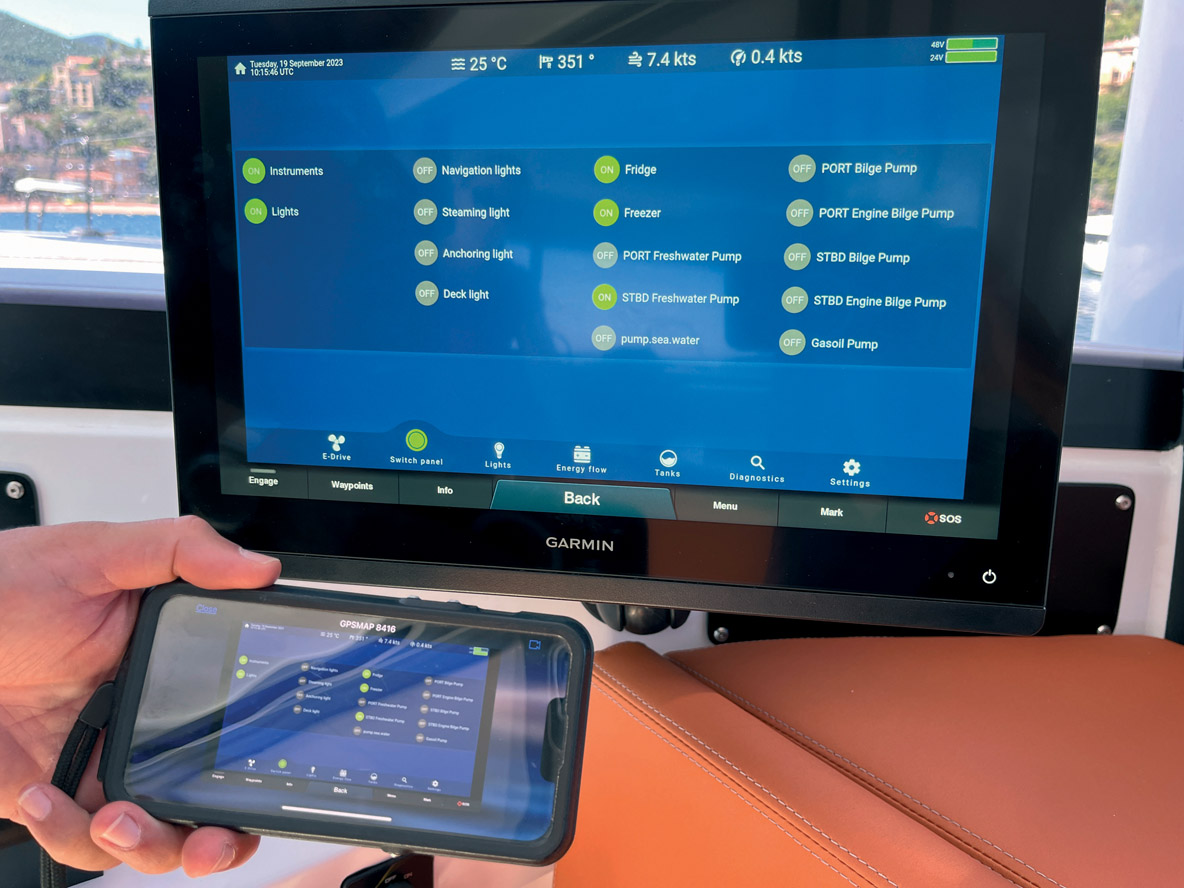
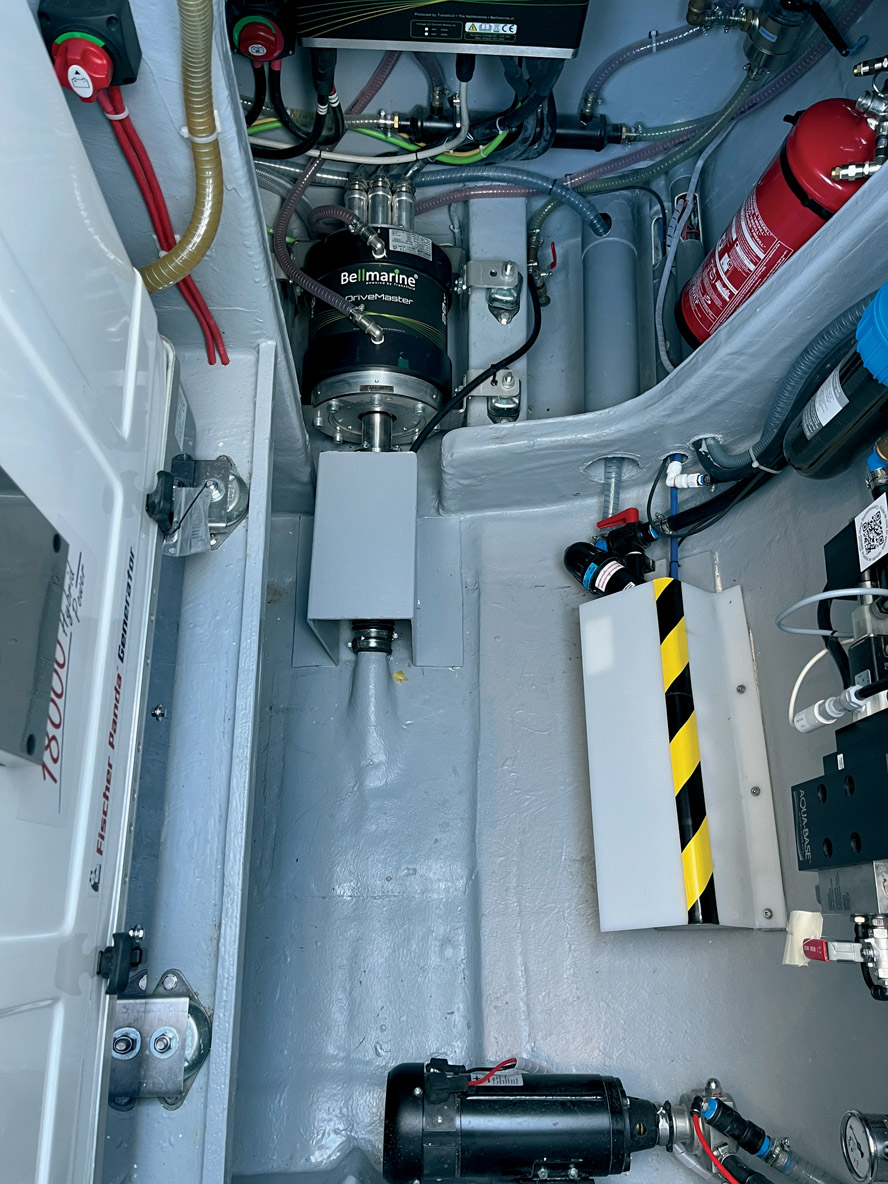
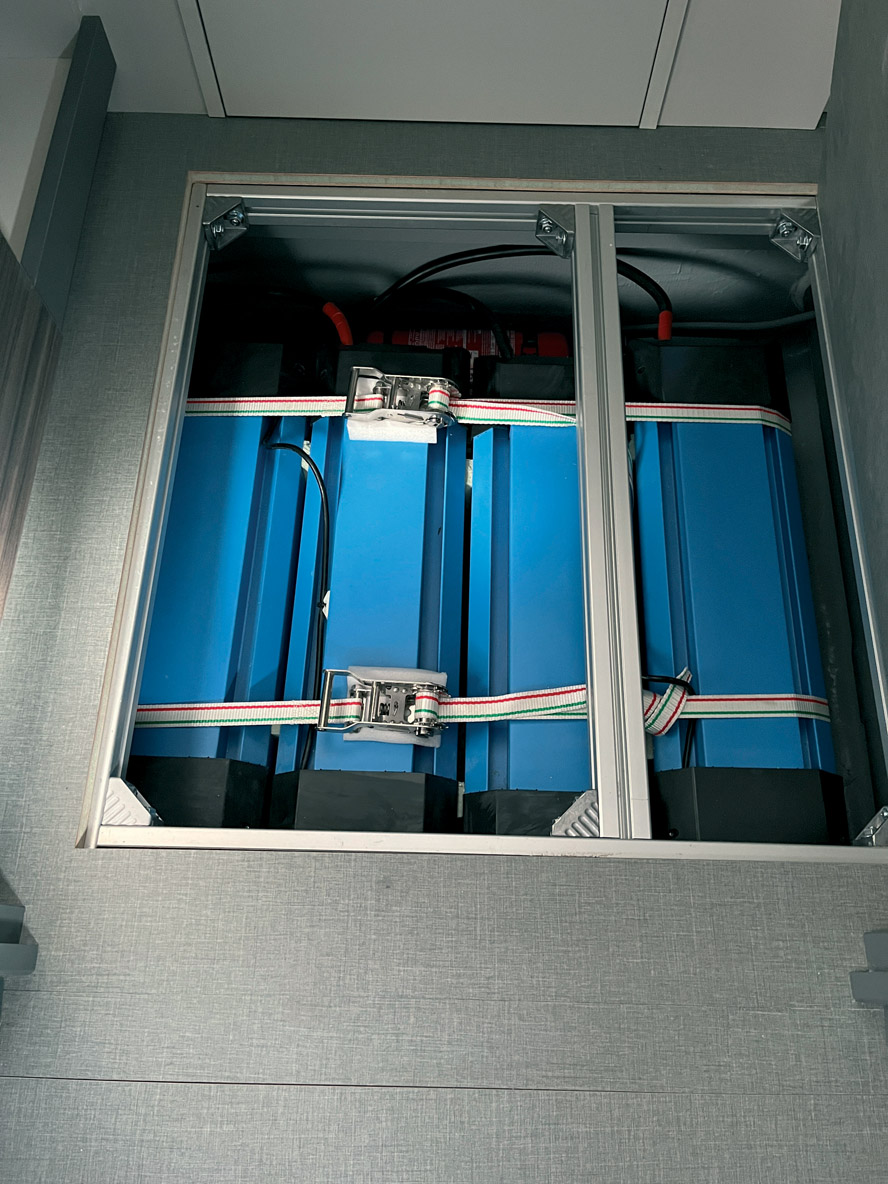
The weather cooperated for our test sail off Cannes: a good breeze of 10 to 15 knots was forecast with the afternoon thermal wind, and the beautiful sunshine was able to supply energy to the 53.8 kWh 48-volt battery bank. At Windelo, they’ve been mastering the energy mix since the first model was launched... Three years later, the subject has been tackled even more effectively, with the solar panel surface area revised upwards - now capable of recharging the battery bank in around fifteen hours, which corresponds to two days with good sunshine conditions. Hydro- generation provided by 13.5” Gori propellers can reach up to 2 kW (1 kW per prop) when the catamaran is sailing at more than ten knots. Two optional wind generators can provide 2 x 400 watts on days without sunshine. The only criticism here is when there’s neither sun nor wind (which does happen, but rarely both at the same time). It’s in these unfavorable conditions that we have to call on the 18-kW generator. For propulsion, the two 20-kW Bellmarine motors installed one in each hull are shaft-driven. Friction losses are minimal, and, above all, this transmission is particularly quiet. With batteries full, these motors can be used for six hours at six knots, and eight hours at four knots. Beyond that, the generator provides the propulsion energy, and the total range, with the 500-liter (130 US gallon) tank, reaches 1,100 nautical miles at six knots. That’s over 180 hours under way, assuming that domestic power consumption is covered exclusively by green energy. But that’s all theory... in practice, the Windelo is first and foremost a fast multihull powered by a highly efficient, in-house- developed energy management system. All qualities that really change the way you sail. All information on engine and on-board consumption, as well as on the various loads in the energy mix, can be read at any time and on all on-board screens, including your smartphone. The degree of functionality and ease-of-use is impressive, giving you peace of mind as your cruise unfolds. We feel this to be an invitation to do a full-scale test...
Performance in the service of ecology
Usually, when you try out an electrically-powered boat, the batteries are always at 95% charge or more. In this case, however, the charge was only 50%, as the Windelo had not been hooked up to the shore power. And at 10 a.m., solar recharging had barely begun. The powerful torque provided by the electric motors proved very efficient for getting out of the maze of pontoons set up for the boat show. On the way out, we reached a peak speed of eight knots, but not for long, as power consumption soars at this level. We then hoisted the Elvstrøm sails, which were clearly happy with the amount of wind. Centralized sail handling maneuvers in the cockpit at the foot of the mast are very fluid. All maneuvers are within reach at the helm. Guests, seated on the large bench seats, can relax and enjoy the sailing. Upwind, helming is very pleasant. Thanks to the daggerboards, the catamaran easily climbs up to 30 degrees from the apparent wind. The GPS indicates 6 knots with thirteen knots of true wind. With the self-tacking solent, tacks are a formality, and you can feel that the boat picks up again very quickly. The Windelo handles the chop with ease, and the rigidity of the platform contributes to this ease. A quick glance at the display: solar gain is 1.2 kW, shore power 0.2, and recharging 1 kW. At this speed, hydro-generation isn’t working yet, but a wind generator would certainly do the trick. We arrived at the anchorage, and the electric oven had had time to heat up our meal, which we obviously enjoyed with a sea view. With the sun at its zenith - even though it was at no more than a 45° angle to the horizon just over a week before the autumn equinox on the Côte d’Azur - the solar load rose sharply to over 1.5 kW. By 2 pm, the propulsion batteries were at 56% and the service batteries at 100%. As predicted, the wind picked up in the early afternoon, and it was time to tack with the gennaker for a bit of fun. Unfurling, gybing, furling: these maneuvers are child’s play, with halyards and sheets returning to the cockpit. With 15 knots of wind, the 9-knot average is held at 60° to the apparent wind. Steering is easy and visibility at the helm is superb. The sensations offered to the helmsman are excellent. With hydro-generation underway, the energy balance is a little more positive. The leeward propeller works better than its windward counterpart. For the time being, we can only count on 0.6 kW. In fact, the ultra-precise display showed that we ended our instructive and enjoyable day with just over 60% battery and 95% service. On a longer cruise, the recharge would have been much higher. This leads us to believe that speed is the essential ally of energy aboard an electric multihull. And a fast catamaran creates a good ambiance too...
Conclusion
The New Windelo 50 proves that it is now possible to sail long distances with complete peace of mind, without emitting CO2. This new model has even succeeded in validating the difficult exercise of day sailing (a lot of energy expenditure and little recharging) with brio and relaxation. Fast at all speeds, lively at the helm, this new version is more pleasant than the previous one - the New is more accomplished, both technically and ergonomically. There’s still progress to be made with the hydro-generation at low speeds, but the overall balance already makes zero-emissions boating very realistic, all in good conditions of comfort and safety.
Highly relevant covered/enclosed forward cockpit
Efficient use of the energy mix
Beware of energy-intensive options
Recurrent cleaning of solar panels required
Technical specifications
Architect: Christophe Barreau
Frédéric Neuman
Interior/exterior design: Windelo/LADIDA
Overall length: 50’ (15.24 m)
Beam: 26’1” (7.95 m)
Draft: 3’5”/7’7” (1.03/2.32 m)
Light displacement: 24,700 lbs (11.2 t)
Mainsail: 990 sq ft (92 m²)
Solent: 463 sq ft (43 m²)
Gennaker: 1,733 sq ft (161 m²)
Motors: 2 x 20 kW
Generator: 18 kW at 48 volts
Solar panels: 5,680 Wp
Batteries: 53.8 kWh
Fuel: 132 US gal (500 l)
Water: 105 US gal (400 l)
Base price: from €1,075,000 ex-tax
Price of version we tested: approx. €1,350,000 ex-tax
Main options:
4-cabin layout: €11,400 ex-tax
Tilting aft door: €40,420 ex-tax
Electronics pack: €19,840 ex-tax
Starlink marine pack: €6,900 ex-tax
Watermaker 27 gal/h (105 l/h): €13,750 ex-tax