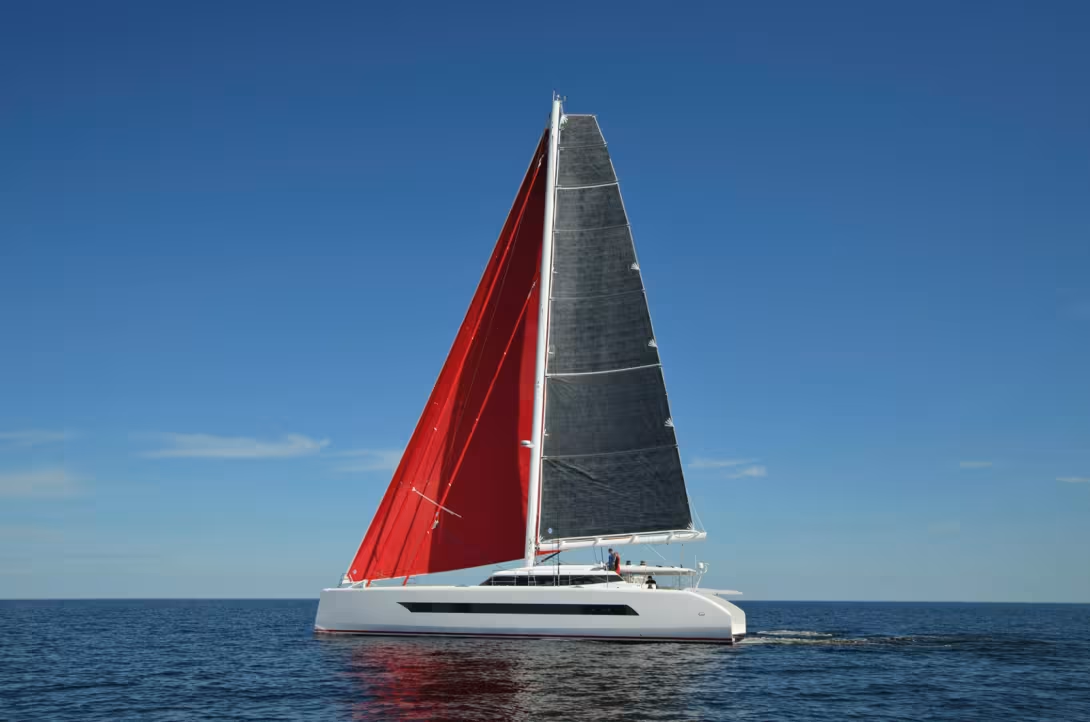
Finnish brand Ocean Quality Systems has just launched a new 72-foot catamaran. On the program, high-end cruising aboard a very fast multihull that remains manageable by a short-handed crew, and safe, whatever the weather conditions. One of the manufacturer’s preoccupations is to offer a catamaran that will limit the amount of CO2 that into the environment and be as quiet as possible. We got the chance to test this prestigious multihull for the first time in the Gulf of Bothnia, not that many miles from the Arctic Circle…
Infos pratiques
- Le chantier : Ocean Explorer 72
- La fiche technique
-
 Découvrez notre vidéo exclusive
- Financez votre Ocean Explorer 72
- Assuez votre Ocean Explorer 72
- Articles autour du Ocean Explorer 72
Place: Jakobstad, Finland
Conditions: Wind - 7 to 18 knots of wind; Sea state - slight
In 2015, we were seduced by the Ocean Explorer 60 (see full test in MW #141). This luxury offshore cruiser, that’s fast and safe, was as attractive as it was innovative. As the first catamaran from the young brand, it was a total success and showed exceptional build quality. Since our test, OE 60 #1 has covered more than 60,000 nautical miles and two other examples have left the yard. Six years later, the opportunity arose to discover its bigger sistership just launched by OQS in Jakobstad, Finland. With this model, carefully thought out, the brand intends to confirm its very high-end semi-custom positioning, similar to what Nautor Swan have done. This comparison is not totally innocent, given we’re in the fief of the manufacturer presented as the Rolls Royce of monohulls. The objective of OQS is therefore a gradual increase in size, favoring efficiency and reliability, all in an elegant and understated setting. The architect, a certain German Frers, is also one of the pillars of the Swan story. Peter Granholm, one of the visionaries behind OQS sadly passed away in 2018; he has been replaced by Tomas Halmesmäki. An electrical engineer by training, Tomas worked his way up in the industry, then moved on to become a shipbuilding engineer at Nautor Swan and Baltic before taking over the management of OQS in 2017. Virtually all the yard’s operators have gone through the same rigorous apprenticeship, and to be fair, the cooperation between the three yards is so close that the craftsmen are interchangeable, and are deployed according to the activity, as evidenced by the infusion of a Swan 48 in the OQS workshops during our visit.
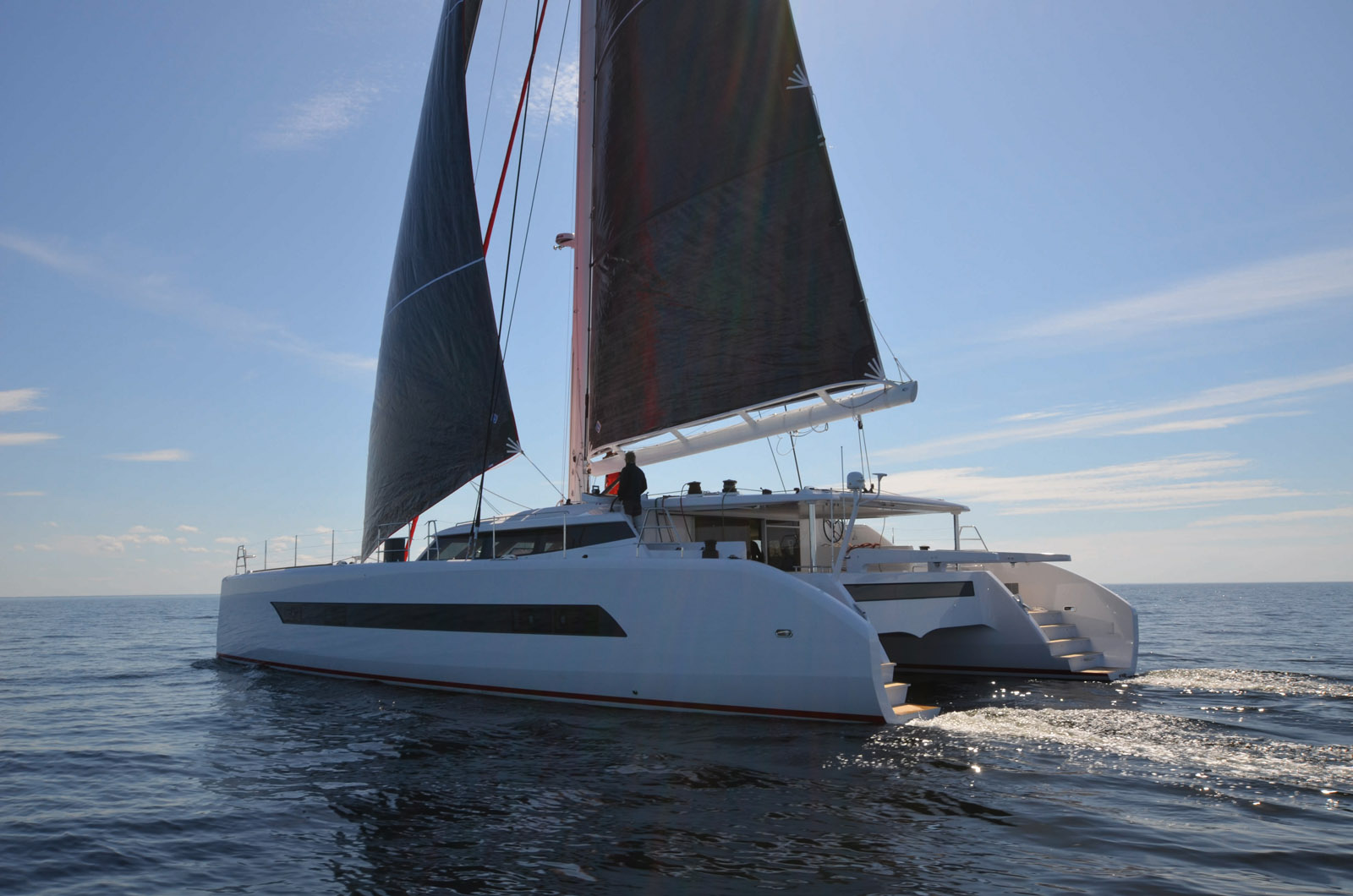
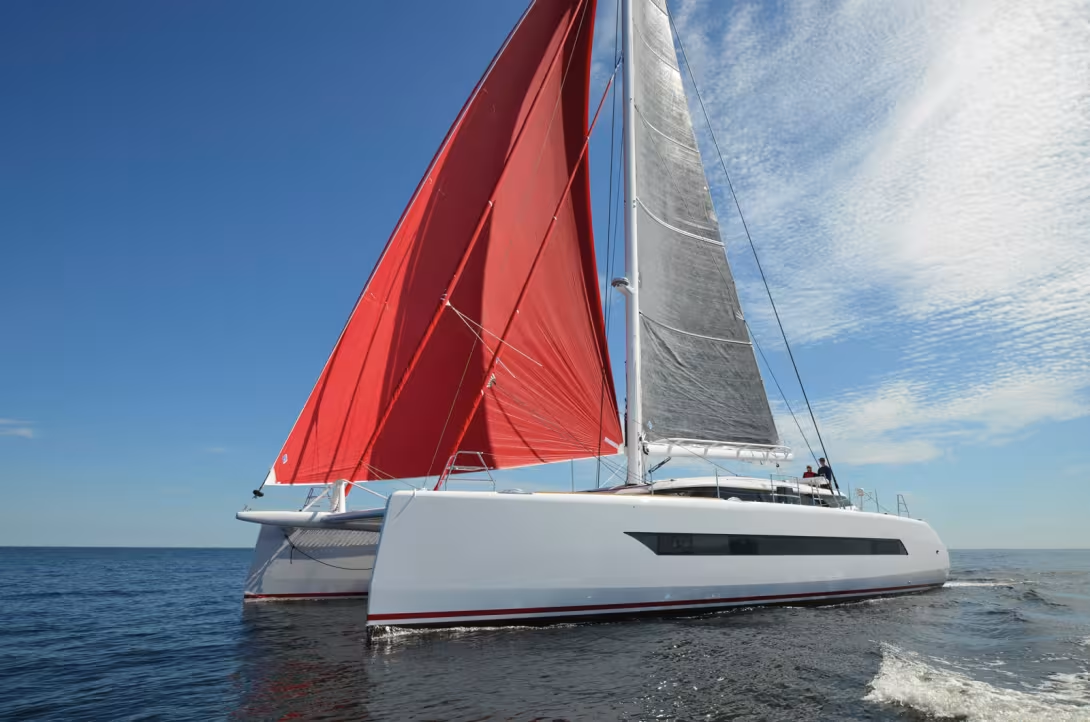
With her leeward daggerboard plunging to three meters below the surface, this 34-ton super cat does more than just shuffle along in these light airs: 7 knots of boatspeed is achieved in a wind speed of 7 knots, at 28° to the apparent (and 45° to the true wind).
Finnish standards of excellence
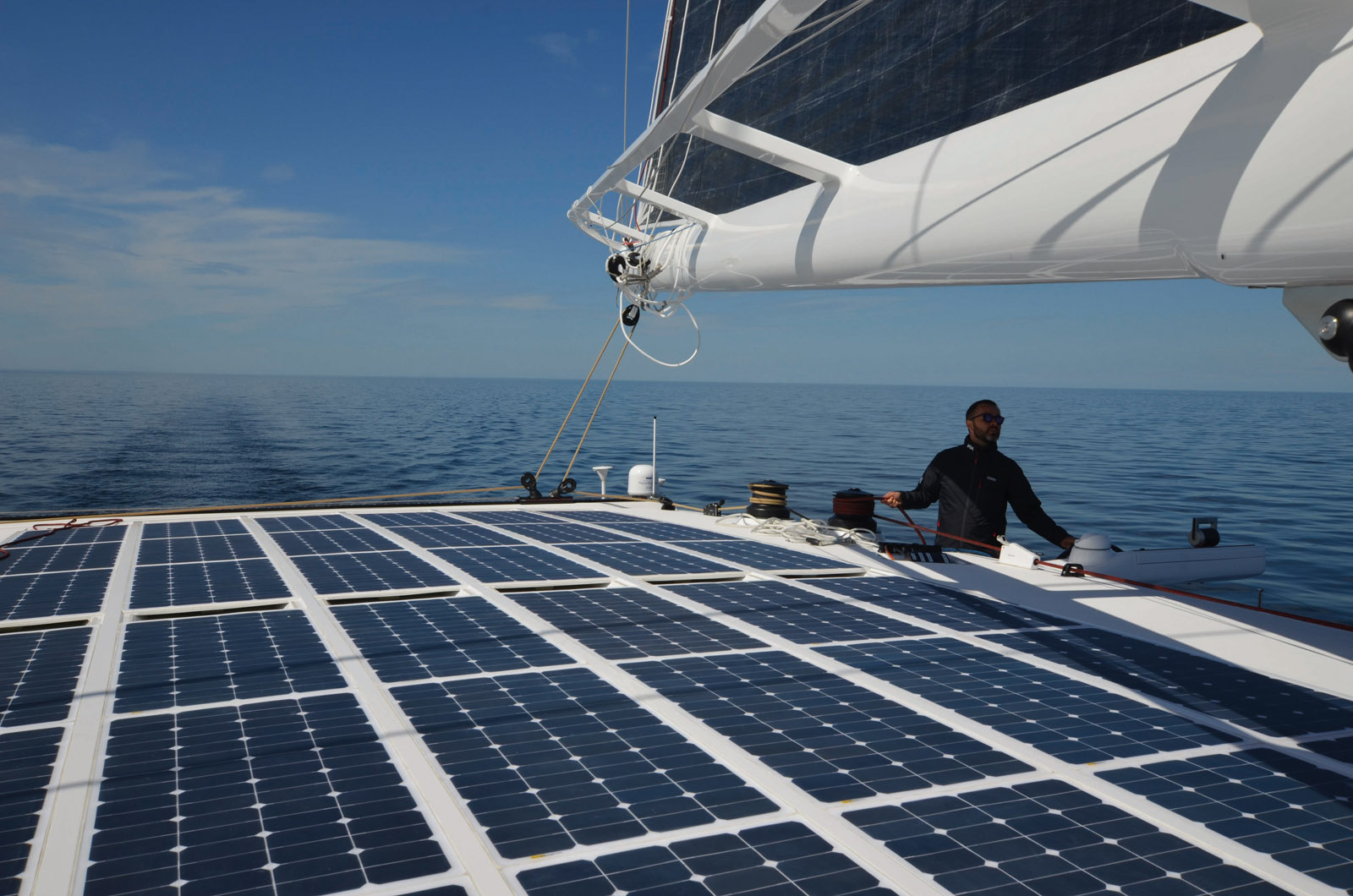
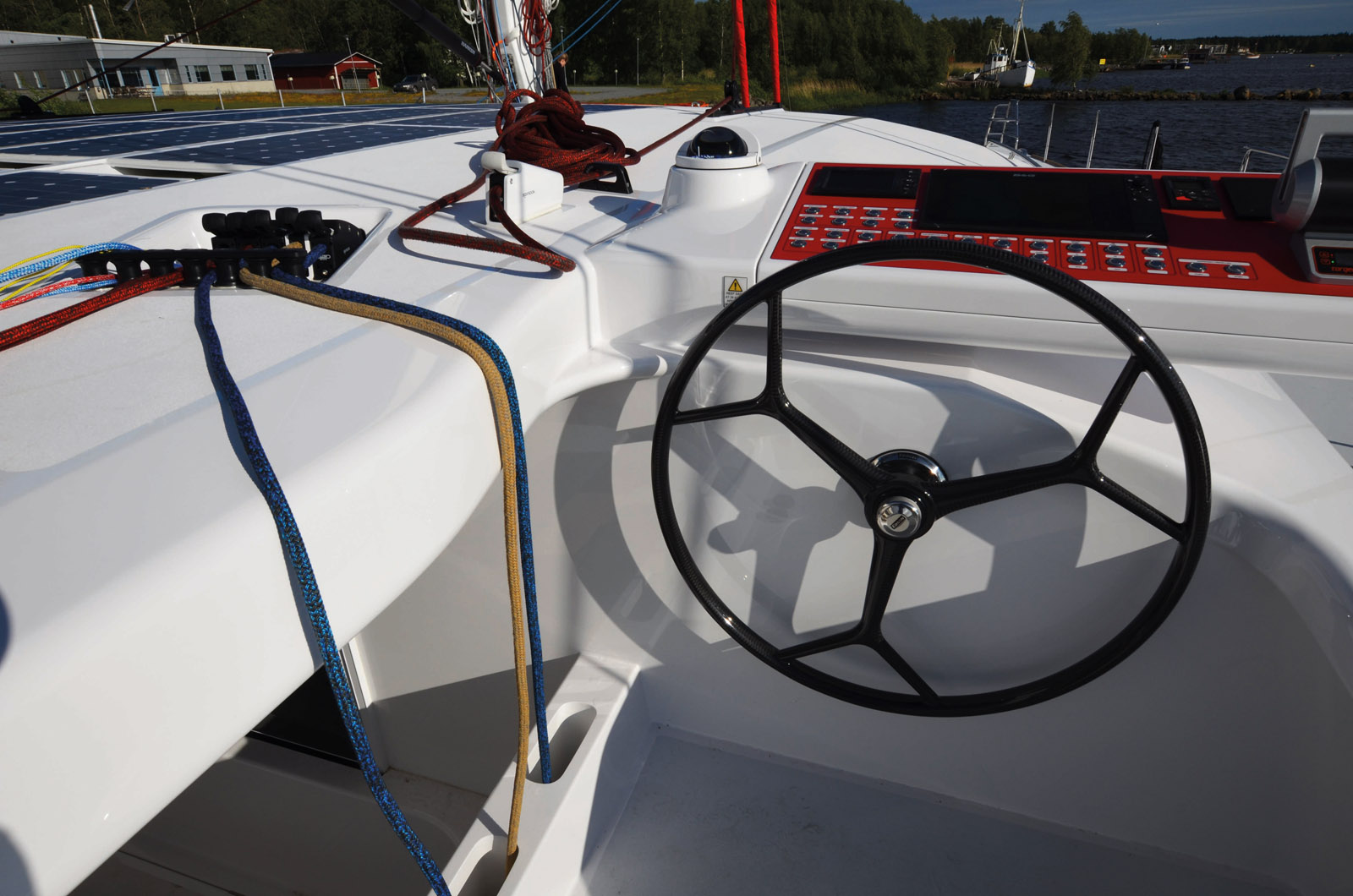
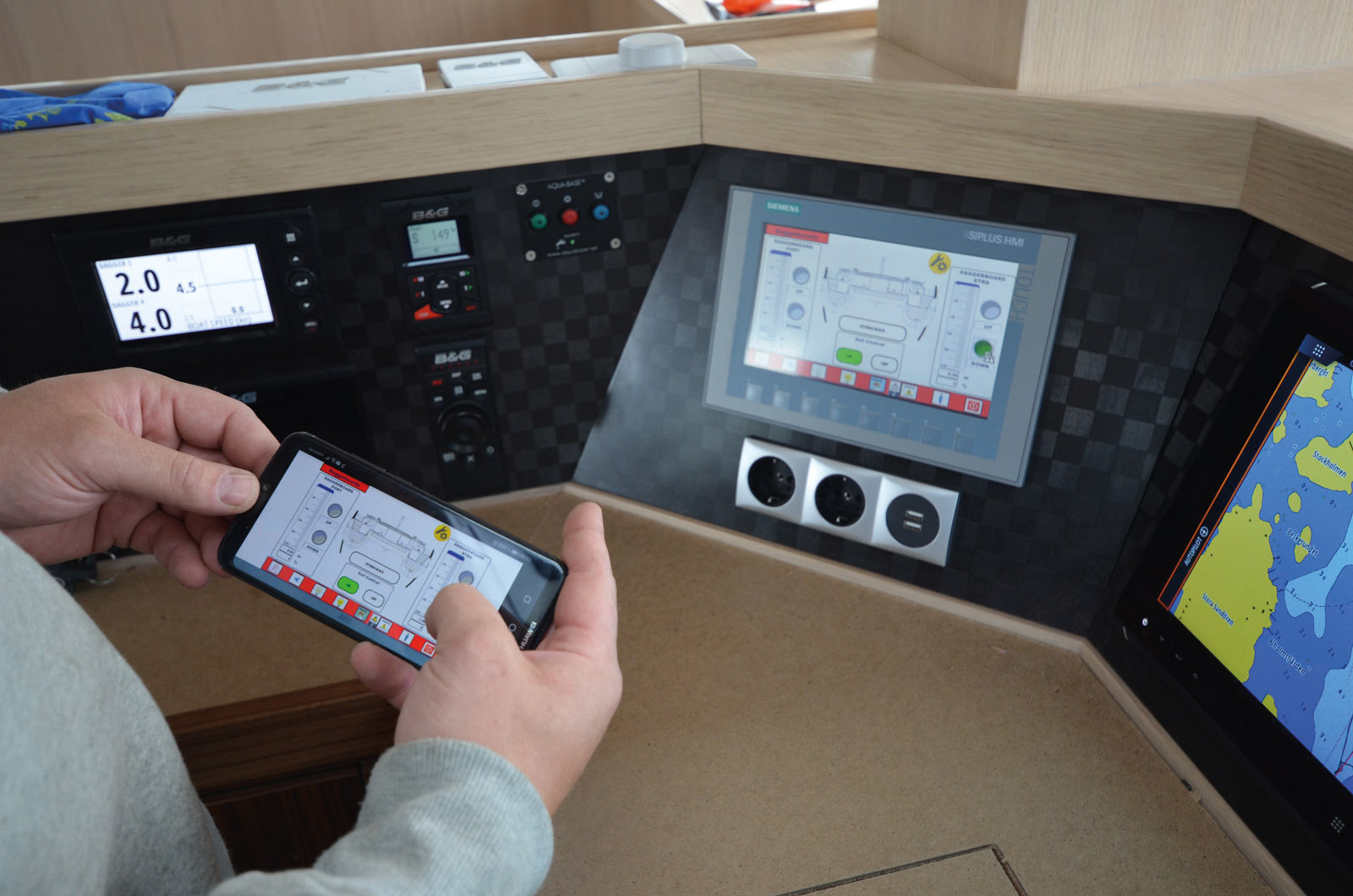
It goes without saying that these teams have mastered every aspect of the build process. The client’s specifications were for a powerful catamaran, capable of crossing rough seas smoothly and averaging over 10 knots. As a result, the sampling of glass/Divinycell/epoxy sandwiches for the hulls and nacelle and carbon/Divinycell/epoxy for the coachroof, reinforcements and appendages was calibrated for an initial weight estimate of 30 tons lightship. At the weigh-in, the builder recorded 33.5 tons with all the sailing equipment aboard and the tanks full. The Lorima high module mast, 100 feet (thirty meters) high, is fixed, simple and strong. With all the maneuvers hydraulically controlled by Reckmann furlers (solent and staysail), as well as the traveler and vang cylinders and Harken reversible winches, you’re able to adjust the sails from the helm console. Of course, you’ve got the option of working these controls, plus those of the daggerboards, rudders, windlasses, and all the energy management on board from your smartphone via a Siemens industrial system, as found on board very large and renowned one-off monohulls. Such systems, designed for defense and operations in hostile environments, can withstand extreme temperatures and humidity. The fittings, which are designed and finished to the owner’s discretion, are made of sandwich construction and the quality of assembly is also at the highest level in order to dampen any vibration or creaking that might occur in heavy weather. Obviously, the level of utility equipment is sized as it would be at home and features the same, if not better, reliability. With 270 square feet (25 m²) of solar panels, providing a 4 kWp recharge on the roof, the 14-kWh service bank will be topped up very quickly. 8 kW can be used simultaneously, and you can always connect to the 160 kWh of the engine batteries... No need to resort to the generator at anchor.
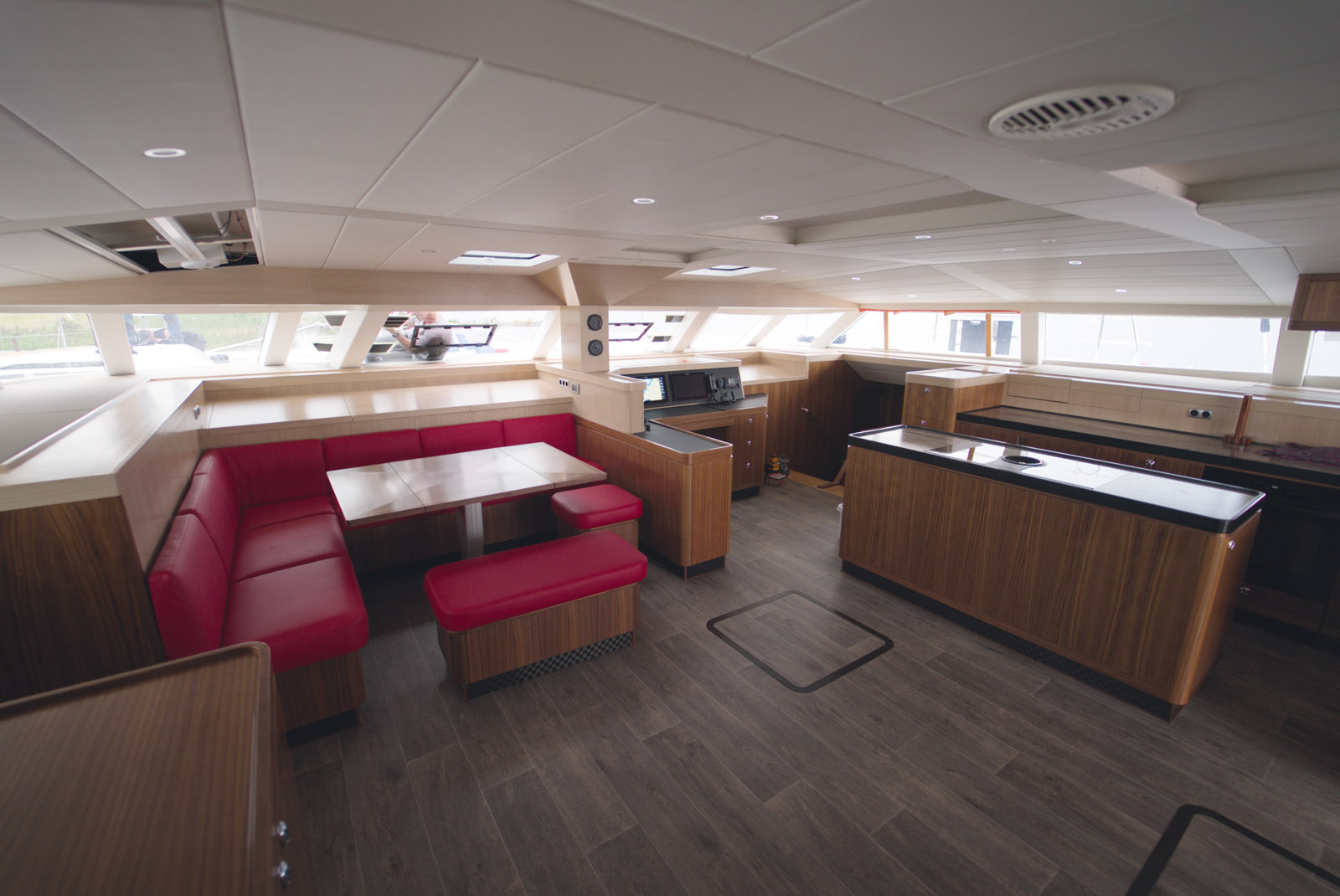
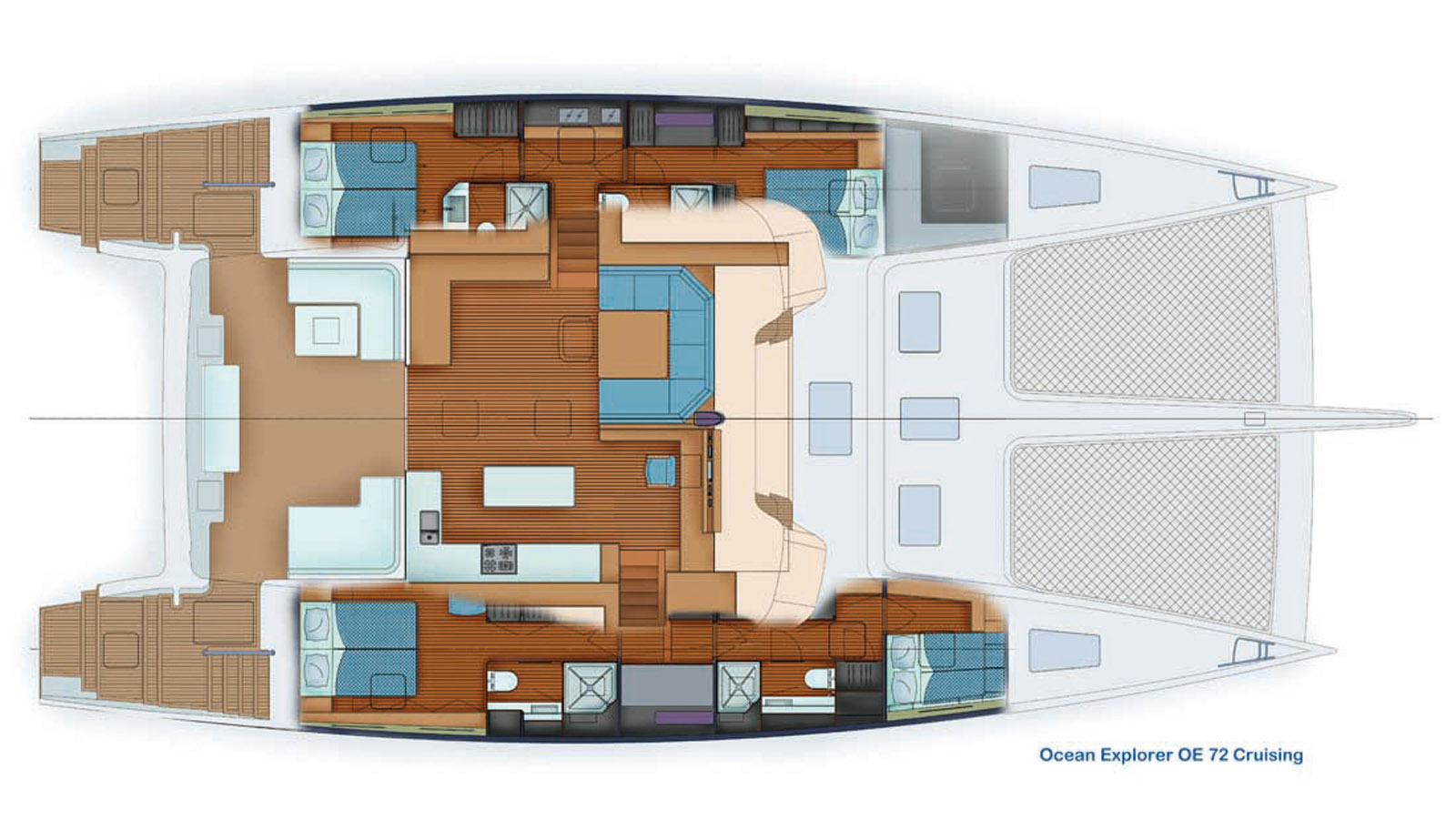
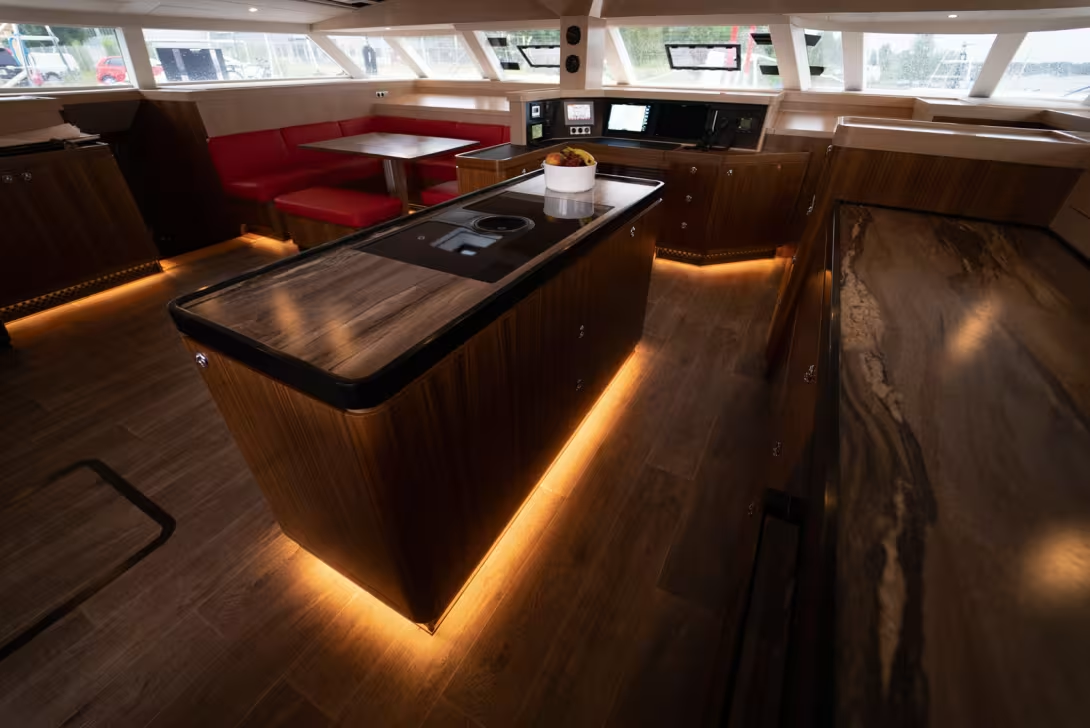
The saloon benefits from the extra-wide beam, which provides each function - wheelhouse, galley, and dining area - with a well-separated space while preserving a large open area like a lobby.
Tailor-made interior
The European buyer, a hardcore sailor and former owner of a Catana 65, is planning a long trip around the world with his wife. Planning on only hosting his children or friends for short stays, the owner will be accompanied by a skipper/hostess couple in order to make the most of their time under sail. The forepeaks are exclusively reserved for the storage of downwind sails. A large workshop for maintenance takes the place of the crew cabin but can accommodate an extra berth for an additional crewmember. The skipper and mate’s cabin is, in fact, a double suite located forward in the same hull as the Owner’s suite - which occupies the after end, and is over 23 feet (7 m) long. In the opposite hull, two very spacious guest suites, forward and aft, are separated by large storage spaces. The saloon is intelligently open and modular: to starboard side is the galley with a central island; it is well equipped and very practical. The navigation station is located forward, with a large desk. On the port side, a large volume (equipped with an L-shaped bookcase) is freed up to optimize circulation and access to the companionways down to the cabins. At the front, a beautiful U-shaped bench seat serves as an aperitifs and dining area for six people, depending on how the table is set. But this can be extended on the free end, becoming a proper banquet table where a dozen people can sit comfortably if needed. Efficient and essential for life on board for long-term voyaging. The cabinetry is in walnut and oak for the furniture and teak for the cabin floors; passing fashions have no place here...
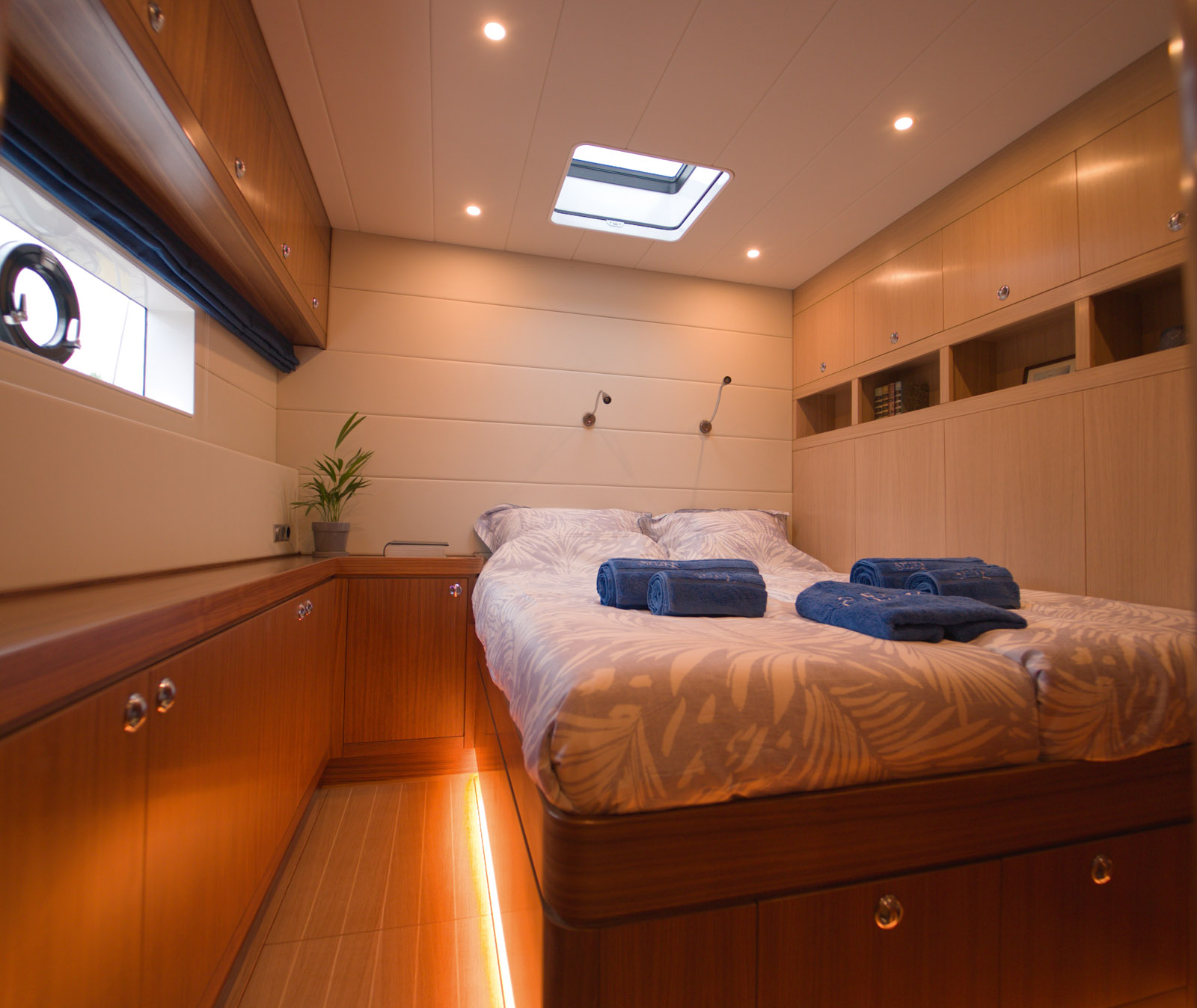
The four cabins are proper small suites with their own private bathroom and huge closets. The beds are fitted in semi-island fashion to free up passage around them.
A green drivetrain
One of Tomas’ main principles as an electrical engineer is to try to limit C0² emissions. The new twin 100 kW Deep Blue Torqeedo electric drives are mounted in the aft holds with two WhisperPower generators of 25 kWh each. In order not to penalize the weight too much, the motors chosen from the Torqeedo range come in at 550 lbs (250 kg) each instead of 1,070 lbs (485 kg) for the larger models. These engines have been installed with a V-drive transmission whose articulation is via a ZF gearbox allowing the 2,400-rpm engine speed to be reduced to 800 rpm at the shaft. The 28-inch, four folding bladed propellers also offer an optimum pitch for the thrust/consumption ratio. The ensemble provides torque never seen before in yachting. Maneuvering away from the dock illustrates its efficiency. By manipulating the controls, the 34 tons swivel like a model in a pool. It’s as impressive as it is safe. The Torqeedo quality engineer was on board, and our first day on board began with an engine test. With 15 to 18-knot headwinds and a sea swollen by a long fetch, our OE72 was striding along smoothly, over and through the foamy waves. The inertia of its displacement combined with the fineness of the forefoot and the evolution of the U of the hulls effectively counteracts the windage caused by a beam of almost 36 feet and the height of the rig. In these unfavorable conditions, a reduced cruising speed was established at 6.5 knots, drawing 25 kW from the four BMW batteries - they total 160 kWh - ideally distributed under the four double berths. Adding to a rather “far-sighted” construction, the extra weight of the engine batteries, generators and ZF gearboxes adds 2.5 tons compared to an internal-combustion engine version. These data explain the difference with the architect’s specifications. In this respect, I wondered if the generators would benefit from being centered in the middle of the hull, near the daggerboard wells. By pushing the speed to 8.5 knots, consumption increases to more than 45 kW. The next day, with calm conditions, 32 kW was to be sufficient to maintain this same speed. In the first as in the second case, considering that discharge will not exceed 80%, we can estimate that the range before the generators are required as being is 32 nautical miles, that is to say 5 to 6 hours of silent and non-polluting navigation. You can still manage to reach 11 knots, that is to say the hull speed, but you’d be better off settling for consumption of 50 kW, which will be compensated for simultaneously by the two 25 kW generators. During our test, electricity generation by the propellers, under sail, was not able to be checked. The shipyard later informed us that 7kW of recharging is achieved at 11 knots of boatspeed under sail. We have made an appointment with the captain and the Torqeedo engineer to discuss these parameters in more detail.
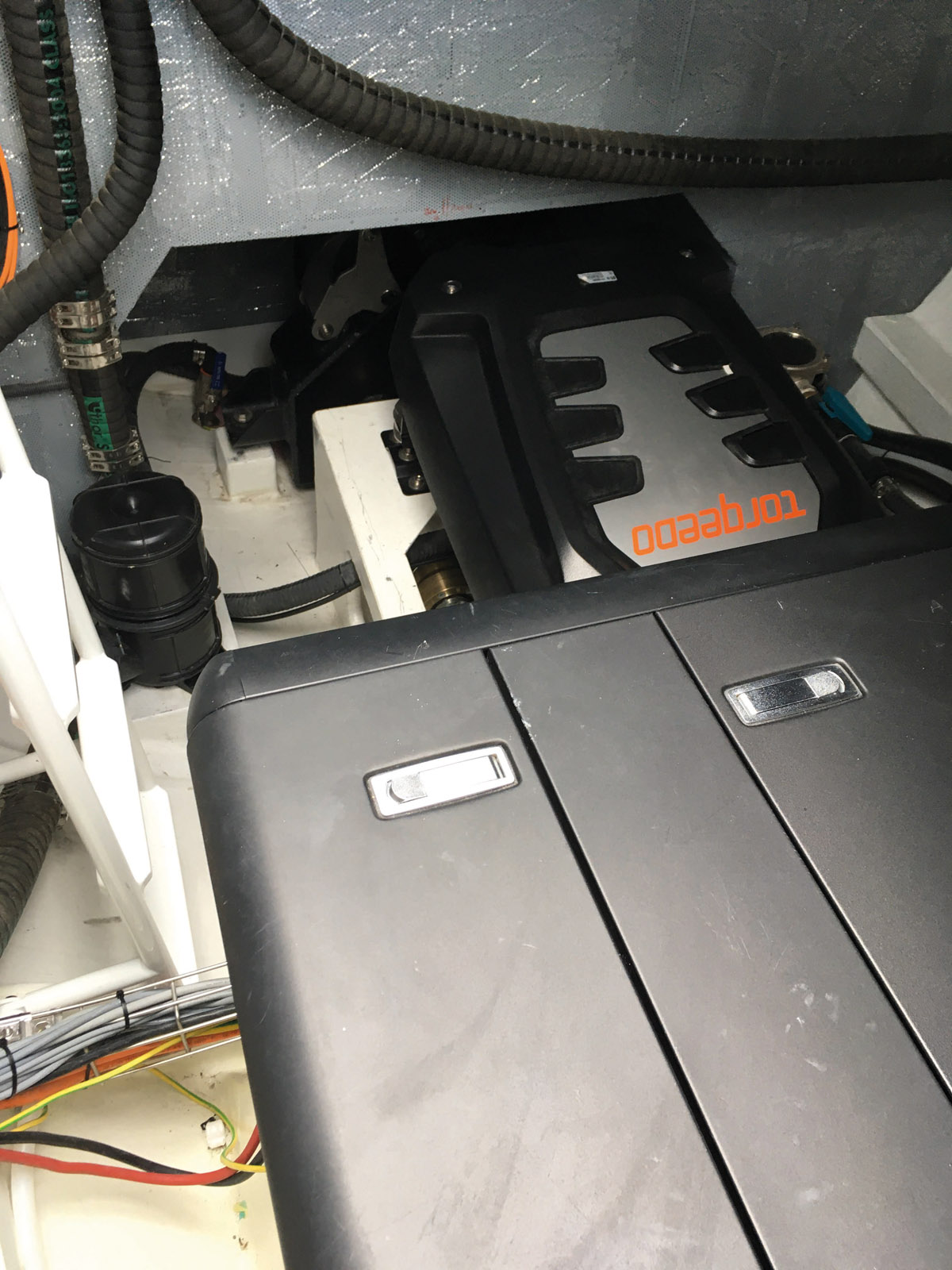
The 100 kW Deep Blue Torqeedo motors are installed forward of the generators. Even further forward, the ZF gearbox reduces the engine speed from 2,400 to 800 rpm, thus improving the torque and performance/consumption ratio.
Over 3,000 square feet of upwind sail area
For our first test under sail, we had a light breeze of eight to twelve knots. On deck, there were no surprises, the tried and tested solutions were used, with twin helm stations at half height on the coachroof. The whole is treated like a superyacht with halyard drums, endless-lines to ease the sheets and of course reversible winches. The Incidence DFI sail wardrobe (3,145 sq ft / 292 m² upwind) is superbly cut to meet the constraints of the machine and exploit its power. Speed records are not on the agenda; the idea is rather to achieve high daily runs and to make all sailing maneuvers easy. The mainsail leaves its open canoe boom to be hoisted quickly. As we headed out to sea, Andrew, the skipper, hoisted the gennaker. The catamaran accelerated and progressively built its apparent wind up until it reached the true wind speed of 11.5 knots. This flattering figure remained fixed on the B&G H5000 despite the changing helmsmen taking turns. The chain steering mechanism is a bit firm; a few adjustments are still needed to reach perfect smoothness. Andrew was later to confirm a speed of 15 knots in 18-19 knots of wind. Returning to the yard required upwind sailing: with a push of the index finger, it took just a few short seconds to unfurl the solent. The pressure of another finger made the curved daggerboard (in the shape of an airplane wing) plunge to leeward. Under mainsail and solent, at 28 degrees to the apparent wind, we made it back to shore at a steady 7 knots as the breeze dropped... to 7 knots.
 |
 |
Tomas, OQS Director, lets go of the helm without apprehension to trim the sails. The rope reels make releasing of the sheets safe on the reversible winches. All maneuvers are controlled with one finger from the console.
Conclusion
Fast, comfortable and serene exploration of the oceans were the owner’s specifications, and this corresponds in every way to what the design and production teams have actually achieved with this OE72. This luxurious catamaran is more like a three-quarter custom than a semi-custom. This particularly elegant limousine of the seas guarantees its owner sensations under way and life on board that have never been explored before. So much so that the accuracy and balance of the concept are unprecedented.
 |
 |
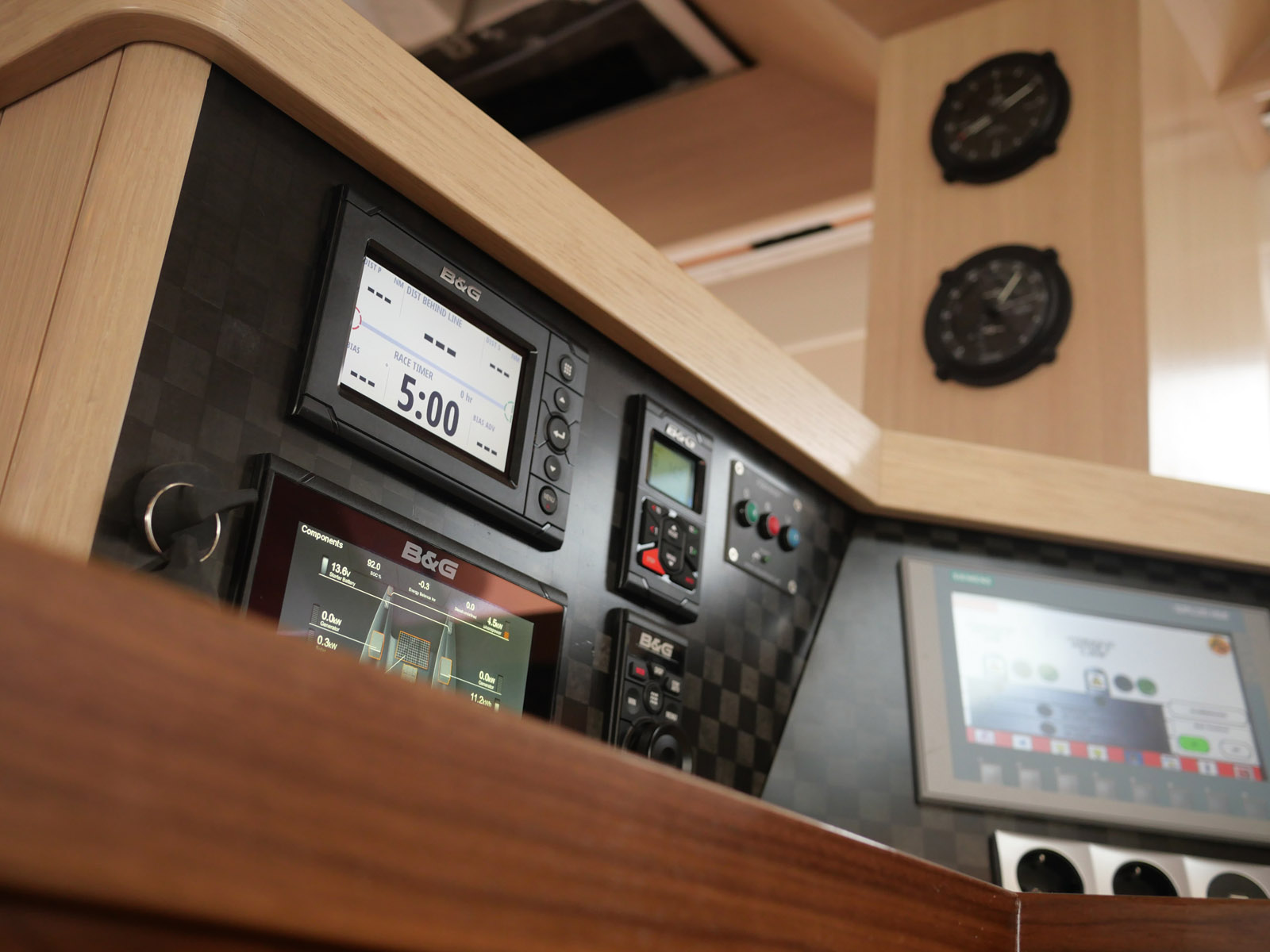 |
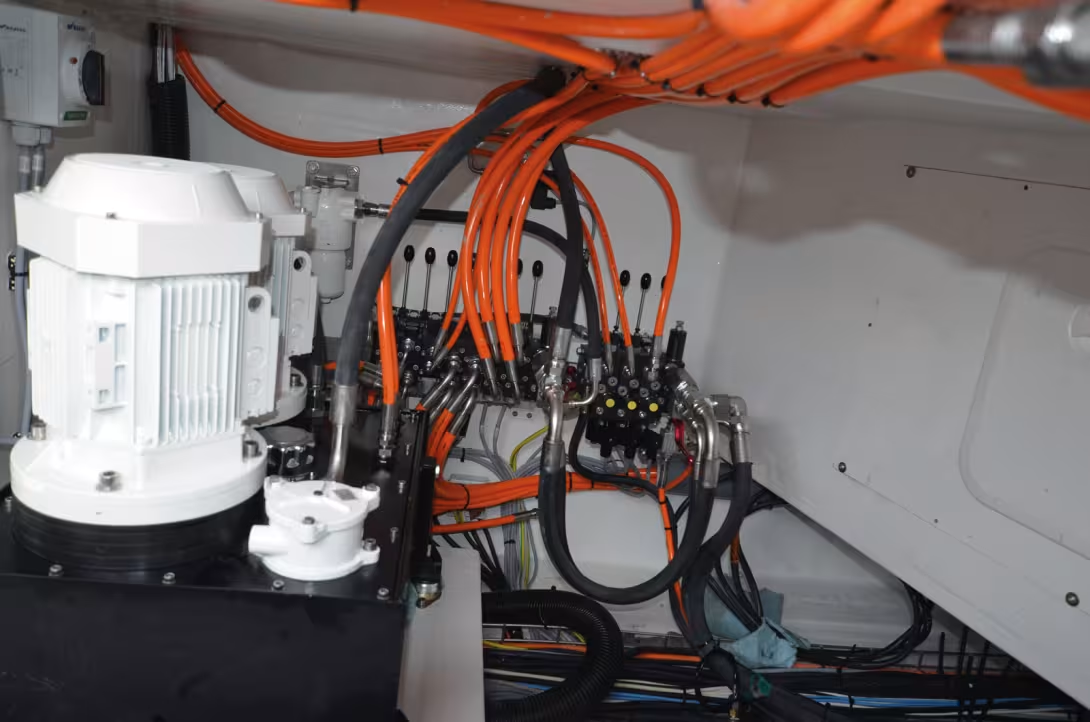
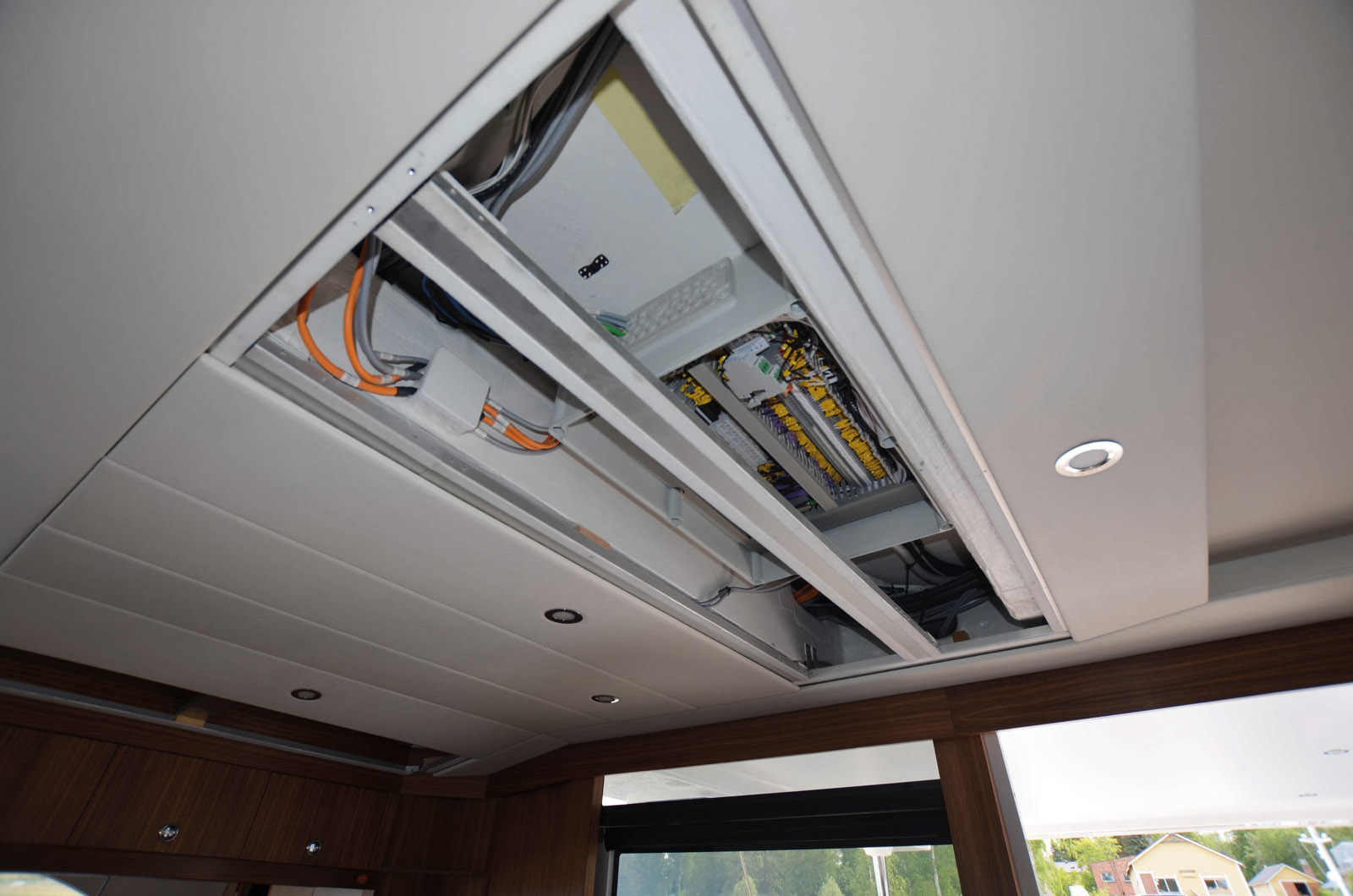
The Siemens control panel is designed to meet industrial standards. With this, or from your smartphone interface, you can control the whole catamaran, as here for the daggerboards. In case of problems, the fuse box is directly accessible overhead.
German Frers - Desiging the new Ocean Explorer
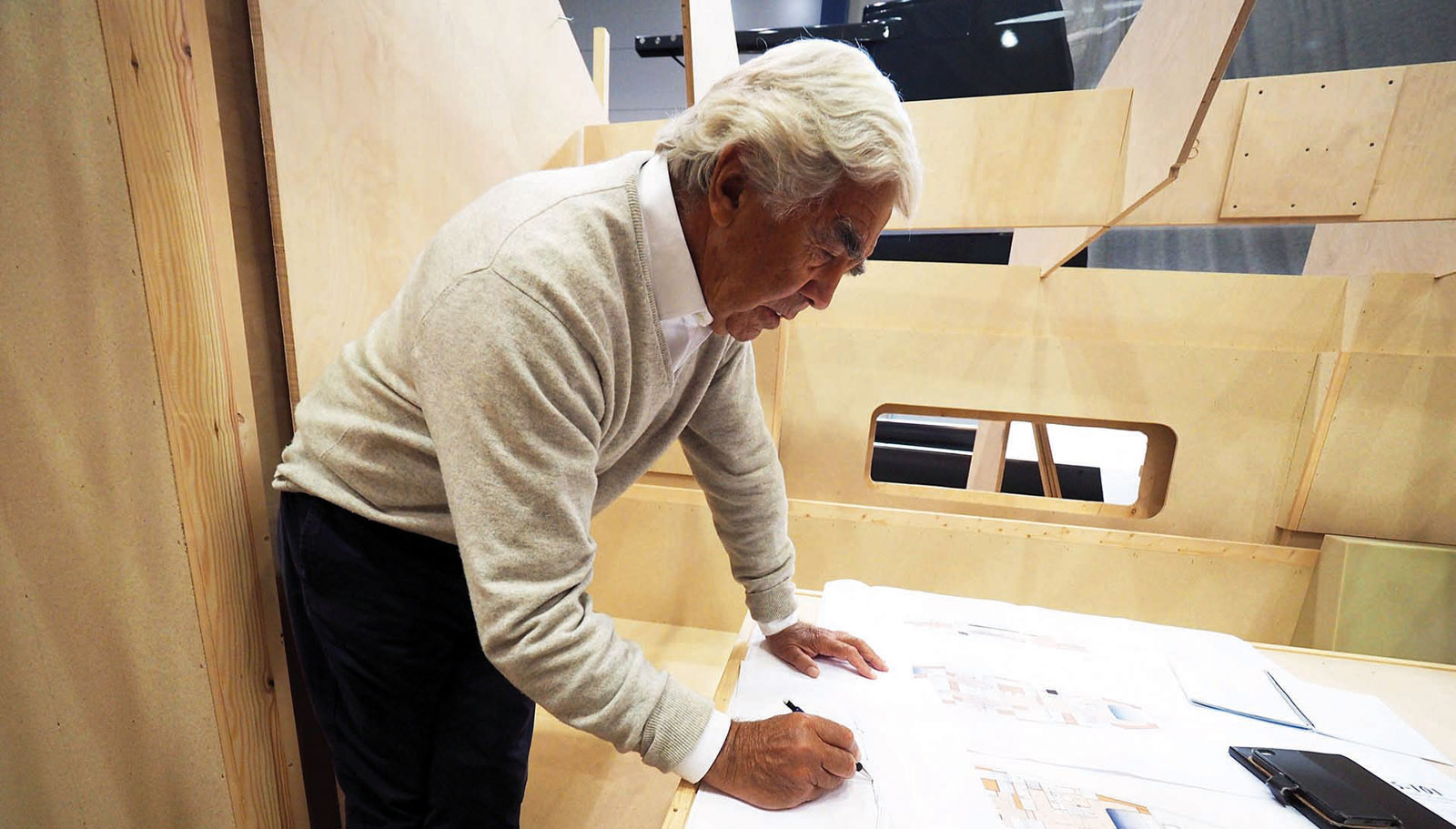
German Frers, the Argentinean naval architect who has designed some of the world’s most beautiful one-offs and contributed to the success of Swan, the world’s most iconic monohull yacht brand, needs no introduction. After the OE60, the OE72 is an important challenge for German as it puts the shipyard into the super-cat sector. For this exercise, the architect applied some of the recipes that have made many of his monohulls successful: “I’ve always liked fluid lines with low-profile coachroofs. On the OE 72, we raised the freeboard slightly. This is reassuring when heading into bigger waves and has allowed us to design a low-profile roof cap that preserves the elegance of the silhouette, a crucial aesthetic point, in my opinion. The other advantage is to be able to center the large tanks under the floors – these being consequently higher. This first OE72, whose construction is oversized to meet the owner’s desire for sailing in all latitudes, is therefore very robust. The shipyard and the teams that I have known for many years are capable of making lighter versions and easily building a boat under 30 tons lightship, with sophisticated and reliable manufacturing processes. As for the 11-meter beam, this increases the righting moment and allows averages of 15 knots over long periods, provided the breeze is there, while maintaining on-board comfort.”
The Pluses
+ Seakeeping qualities
+ Construction, finishing and technical standards
+ Coherence of the design and its realization
The Minuses
- Significant, exacting customer involvement
- Centering of weights still perfectible
- Electricity generation under sail still needs work
Technical specifications
Builder: Ocean Quality Systems
Design: Ocean Quality Systems
Architect: German Frers
Overall length: 72’2” (22.00 m)
Waterline length: 72’ (21.95 m)
Beam: 35’10” (10.92 m) Draft: 2’3” / 9’10” (0.68/3 m)
Light displacement: 66,150 lbs (30 t) depending on version
Payload: 13,225 lbs (6 t)
Mainsail: 1,700 sq ft (158 m²)
Solent: 1,440 sq ft (134 m²)
Self-tacking staysail: 540 sq ft (50 m²)
Gennaker: 2,690 sq ft (250 m²)
Asymmetrical spi: 4,305 sq ft (400 m²)
Engines: 2 x 100 kW Torqeedo
Generator: 2 x 25 kW WhisperPower
Engine batteries: 4 x 160 kWh BMW
Service batteries: 4 x 3.5 kWh Torqeedo
Fresh water: 211 US gal (800 l)
Fuel: 343 US gal (1,300 l)
Black water: 110 US gal (420 l)
Cabins: 3, 4 or 5 + crew
Price: on quotation, depending on customer specifications
Price of the version we tested: about € 7,000,000 excl. tax