
Coming straight from South Africa, the Ocean Renegade R5 is a catamaran which combines performance and ecology, both in terms of the materials used and its hybrid sail/electric propulsion system. An interesting concept on many points, that also hides other good surprises.
Test location: St Petersburg (Florida - USA)
Conditions: 20 knots of wind, slight chop
Infos pratiques
- Le chantier : Ocean Renegade R5
- La fiche technique
-
 Découvrez notre vidéo exclusive
- Financez votre Ocean Renegade R5
- Assuez votre Ocean Renegade R5
- Articles autour du Ocean Renegade R5
In the business world of catamarans, there are several schools, each with their own specificities and assets. For several years, South Africa has become one of the Eldorados of multihulls construction with several architects and shipyards competing in terms of talent and performance. One of the assets of African boat building, apart from the attractive prices, is the massive use of carbon fiber, a material that allows to build boats as strong as they are light. The Ocean Renegade brand uses this exact recipe. The company has been building leisure catamarans since 2014, and its roots are in the commercial marine industry, so there’s no shortage of experience at the shipyard. Ocean Renegade was created by Clayton Dee and the catamarans are built by Novaluxe Manufacturing, in Cape Town, South Africa, a shipyard majority-owned by Allan Knight. Sensitive to the environmental cause, the builder produces its own electrical energy using solar panels. The philosophy of the brand is to offer the most adapted boat to the customer’s needs and to offer an excellent compromise between habitability and performance. Right now, the range includes two main sailing models, the R5 and R6 and a powercat, the R6 Power. The R5 is also available in several versions, the R5, the R5 MKII, which offers improved performance and a larger aft cockpit, and the R5 MKII Regatta, which, as its name suggests, focuses on performance with interesting architectural choices such as the two helms located in the forward cockpit. Apart from these different variations, the Ocean Renegade catamarans are semicustom and can therefore be modified according to the client’s wishes.
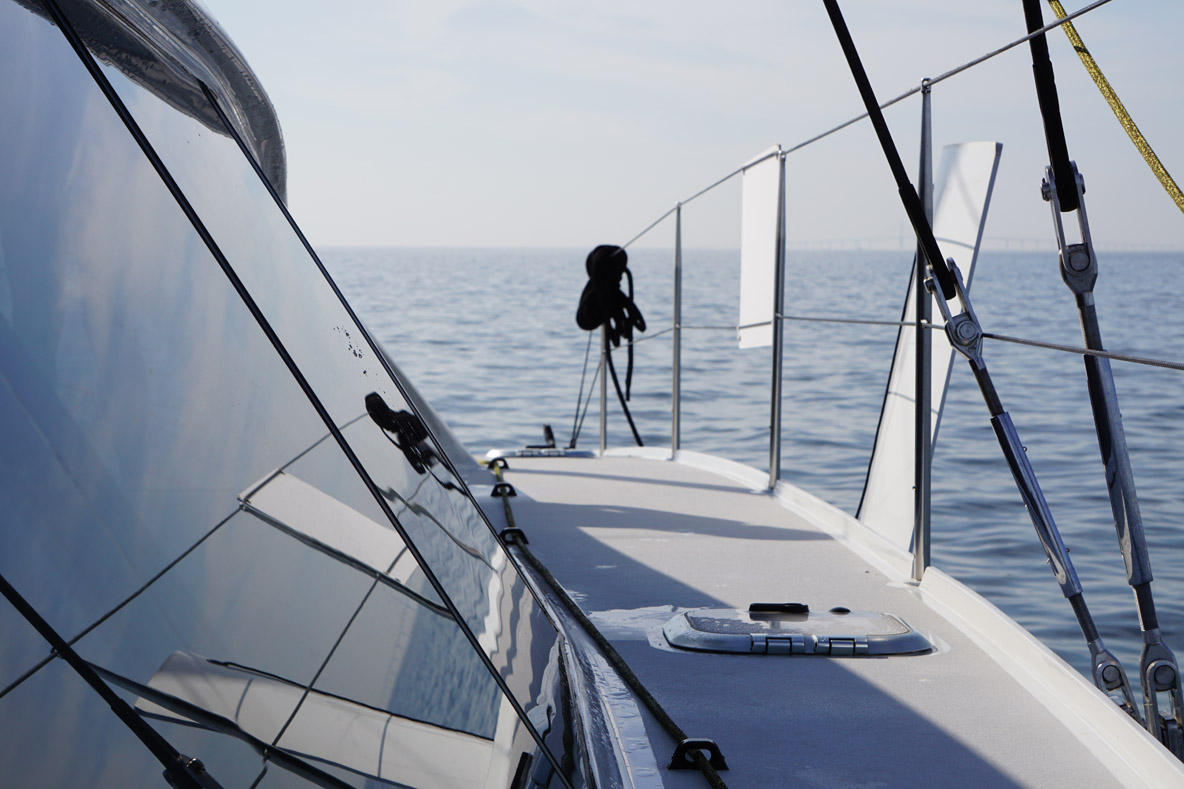
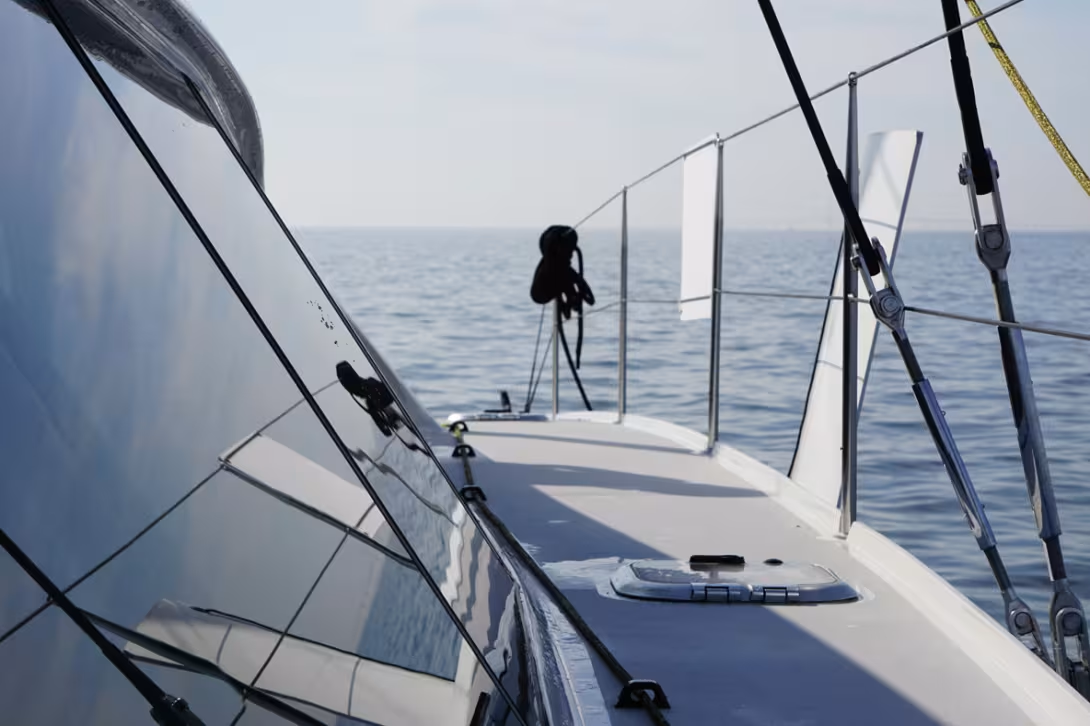
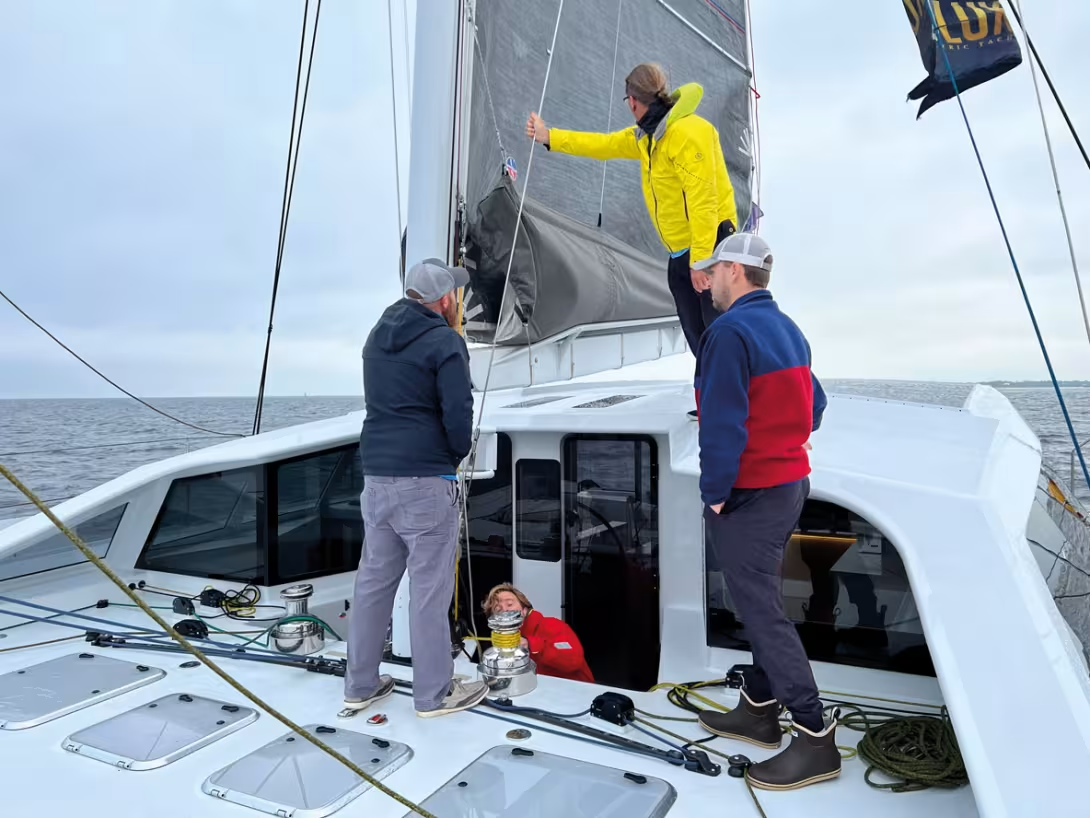
The circulation towards the front is very easy: the side-decks are wide and the lines are efficient. Raised, the daggerboards do not hinder the passage thanks to their off-center positioning and their angle.
An exterior space designed for longer passage making
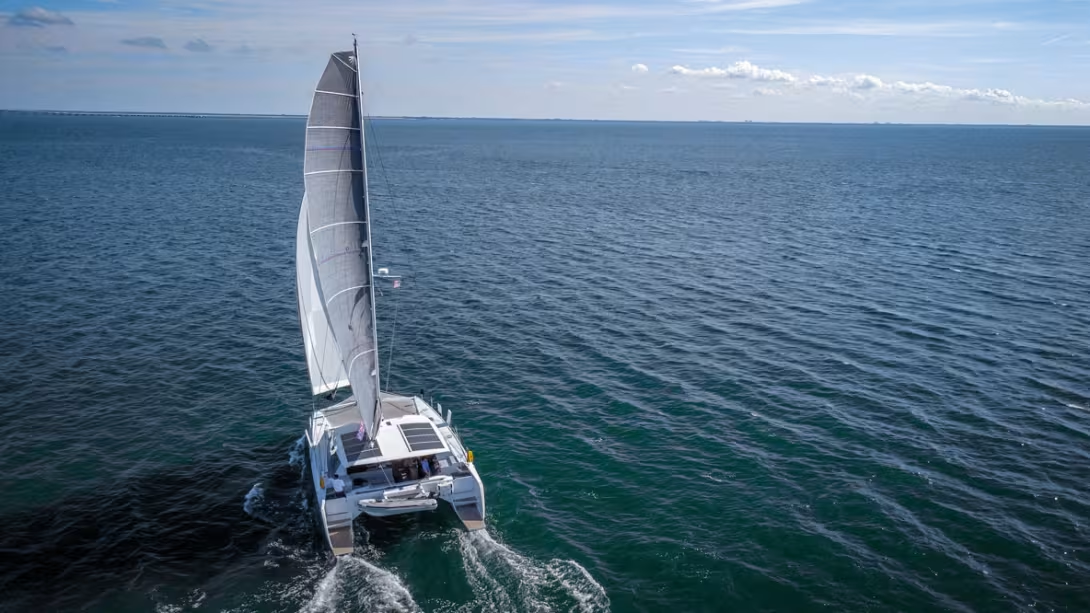
The R5 is the first model of the R series and also the smallest, even if with its 16.46 m (54 feet) of length, it already shows some impressive dimensions. Regarding the construction, the R5 benefits from a carbon structure and an epoxy hull. The daggerboards are also made of carbon as are many elements on board, including the bunk beds! These materials are both light and strong and have the advantage of being largely recyclable.
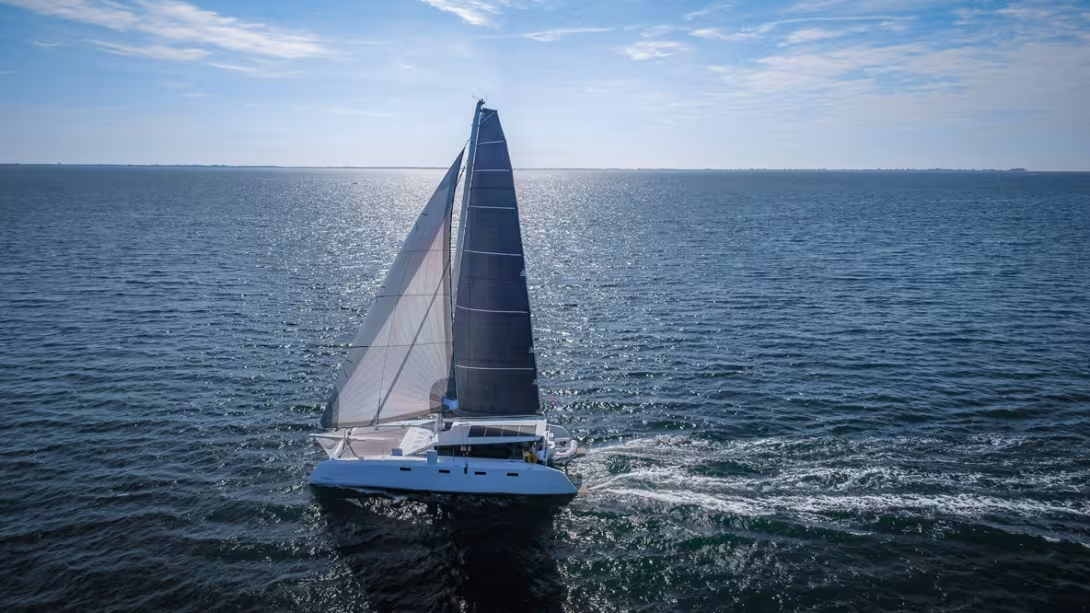
With a fairly high deck line, inverted bows and a large coachroof whose front posts extend far forward, the R5 immediately displays a strong personality. At the opposite of the current trend, the hull portholes are very small, which does not necessarily mean that there is a lot of light inside, and this really contrasts with the long main deck windows. Another interesting characteristic, even if the nacelle is quite high above the water, it remains thin and very tapered, accentuating the sporty look of the catamaran. Finally, a long bowsprit allows for hoisting the downwind sails. The stern is more conventional with two large sugarscoops and a pair of davits to accommodate a good size tender.
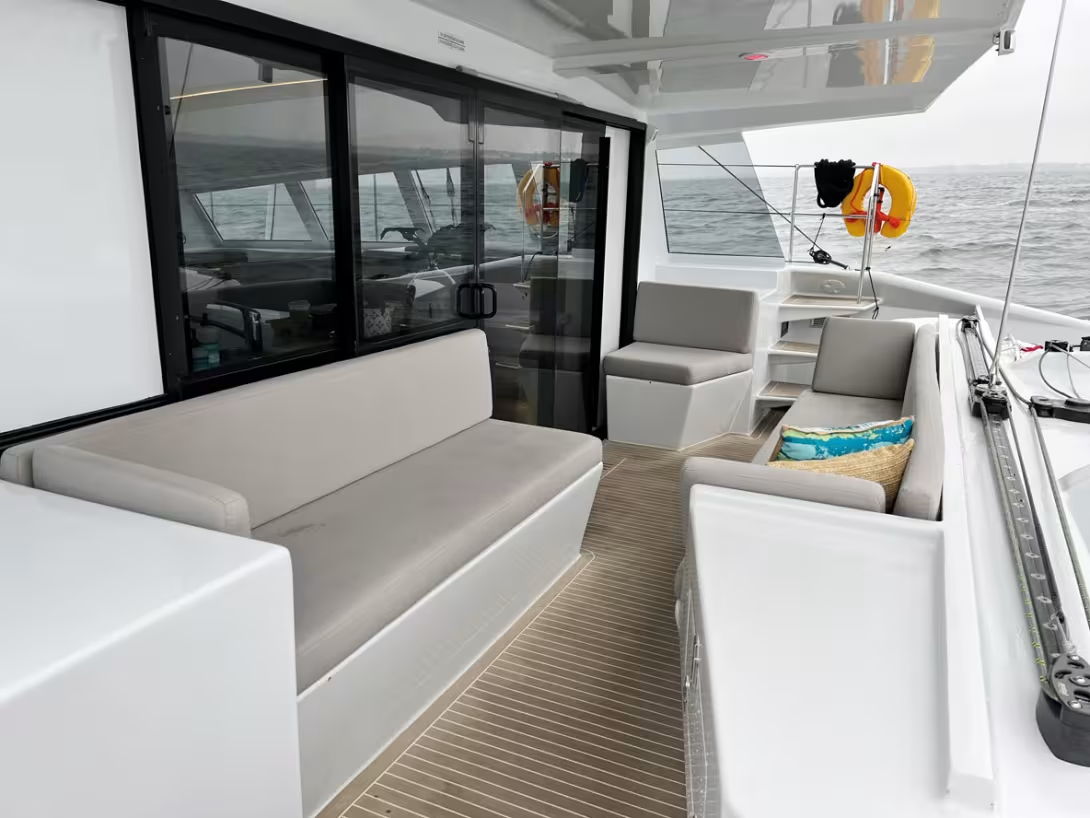
Entering the cockpit, we were a little surprised by its modest size. It is in fact the owner’s wish that the aft bulkhead be moved back to provide more interior space at the expense of the exterior cockpit - an example of what can be done in a semi-custom version. This space still features a large aft bench seat with storage underneath and a second seat up against the coachroof bulkhead, all well sheltered by a long cap that, by the way, adds a little more sportiness to the boat. On the other hand, on this «special» version, it is difficult to fit a table. Circulation towards the sugarscoops is very easy and the side-decks allowing you to reach the bow are a good width and very safe thanks to the s tanchions and guardwires.
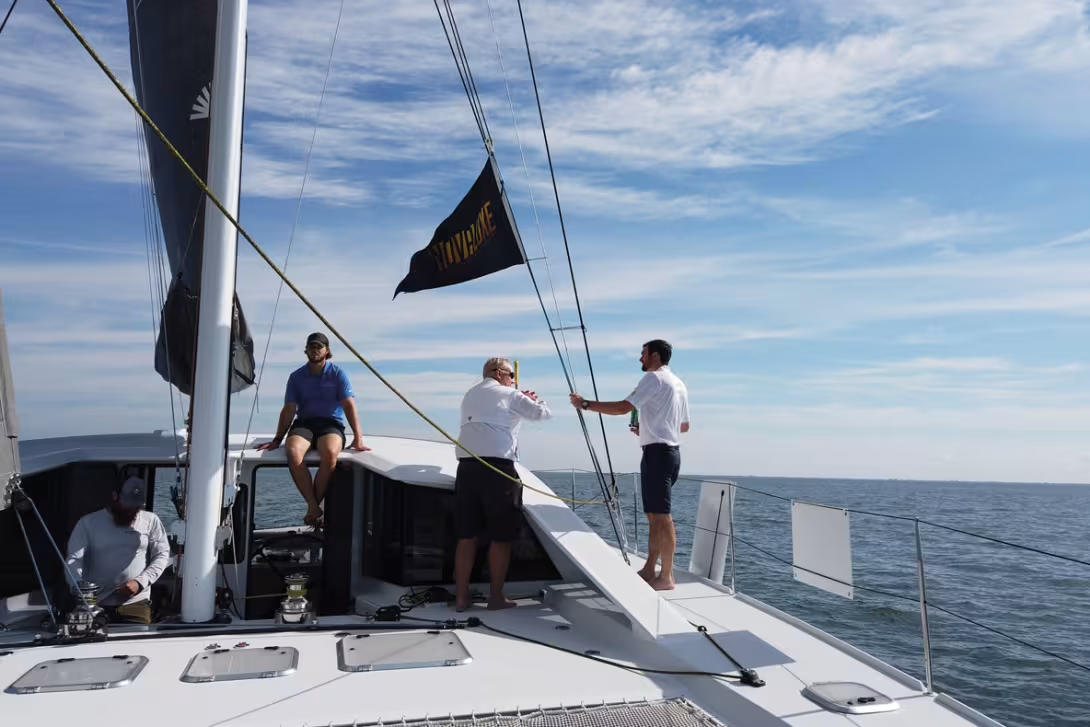
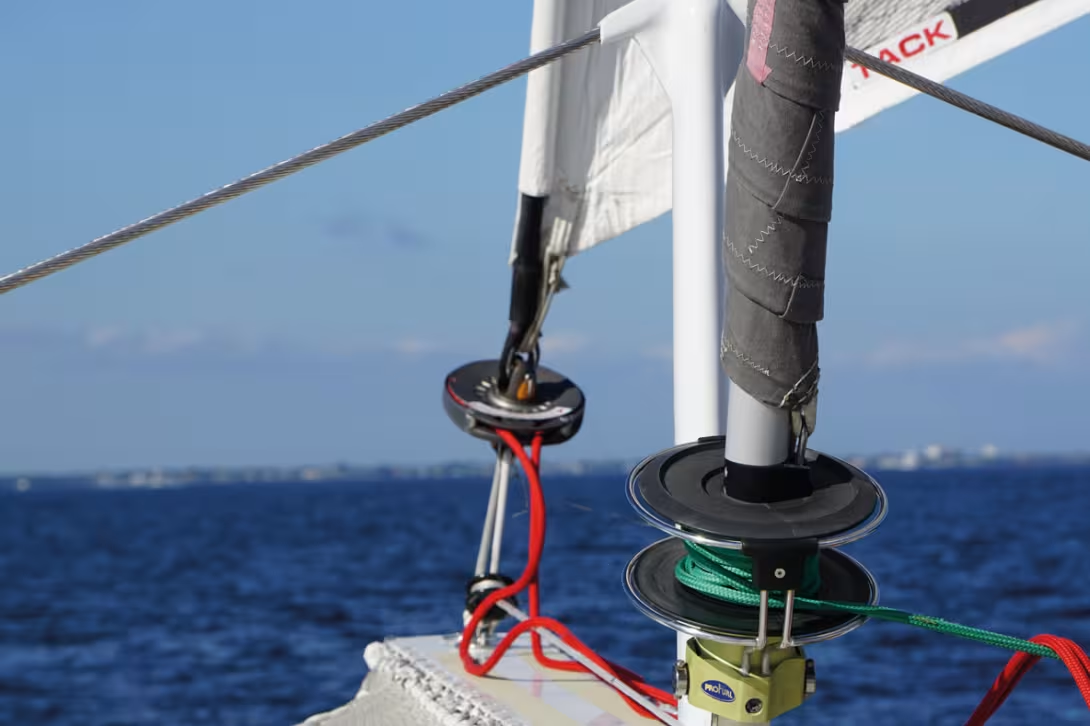
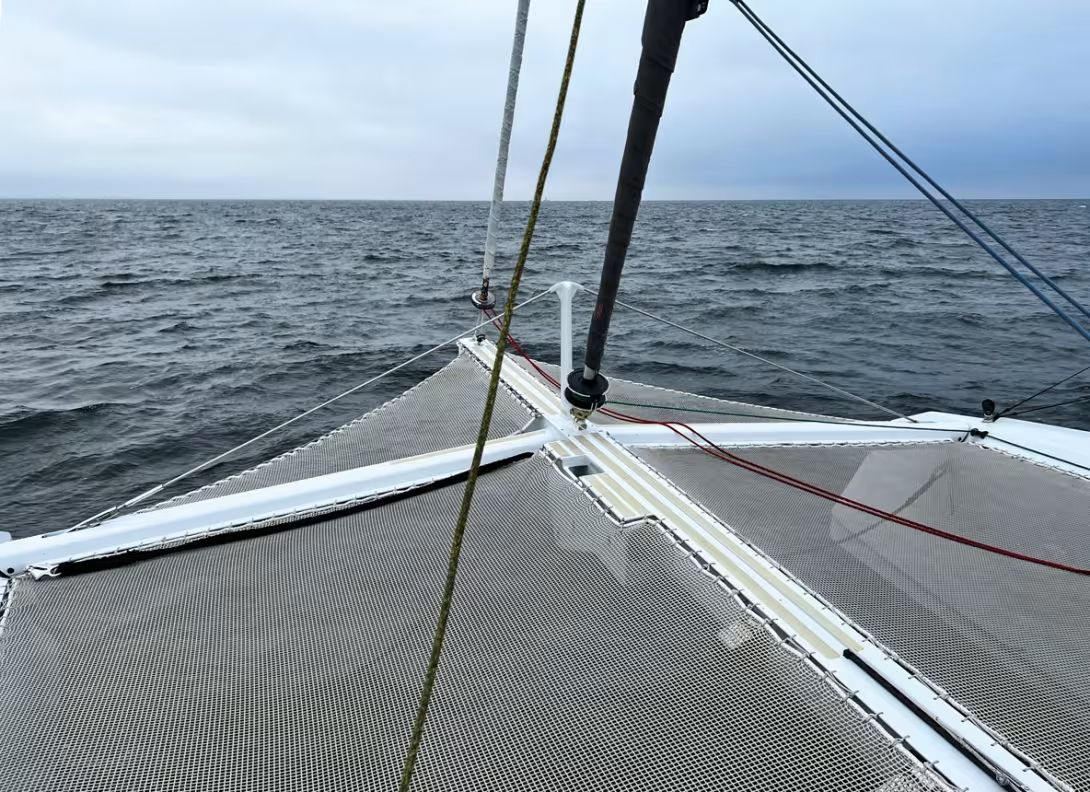
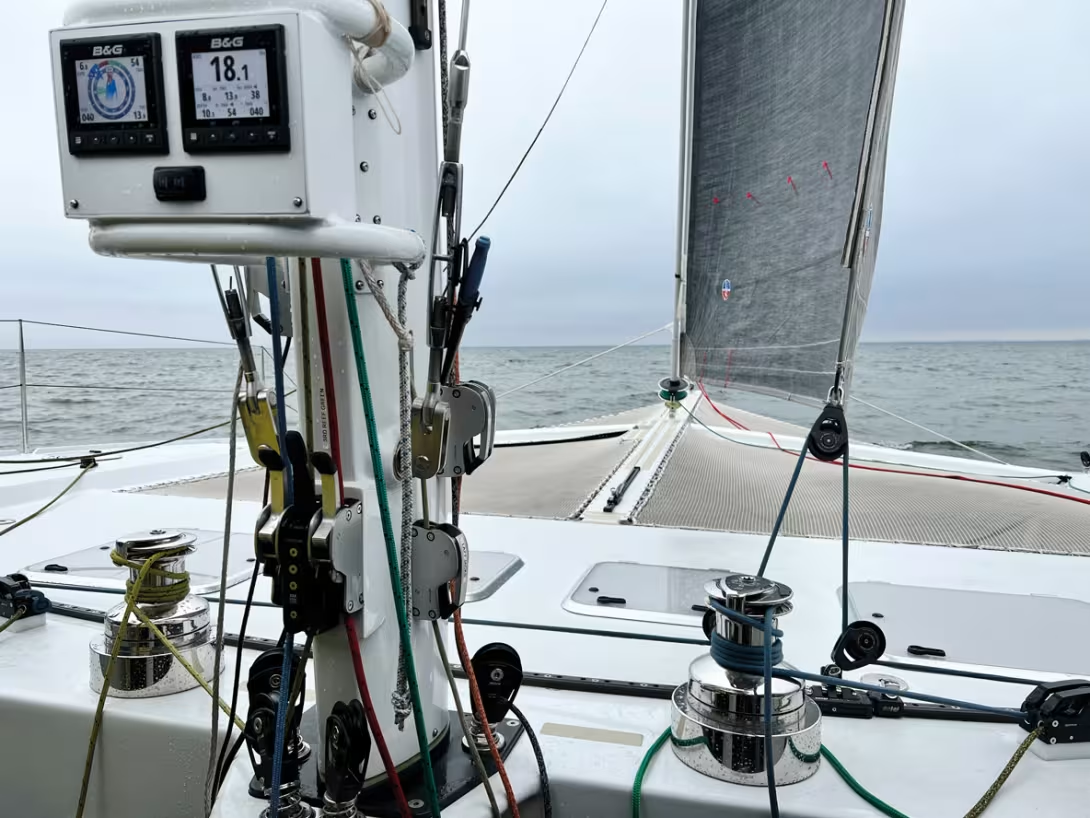
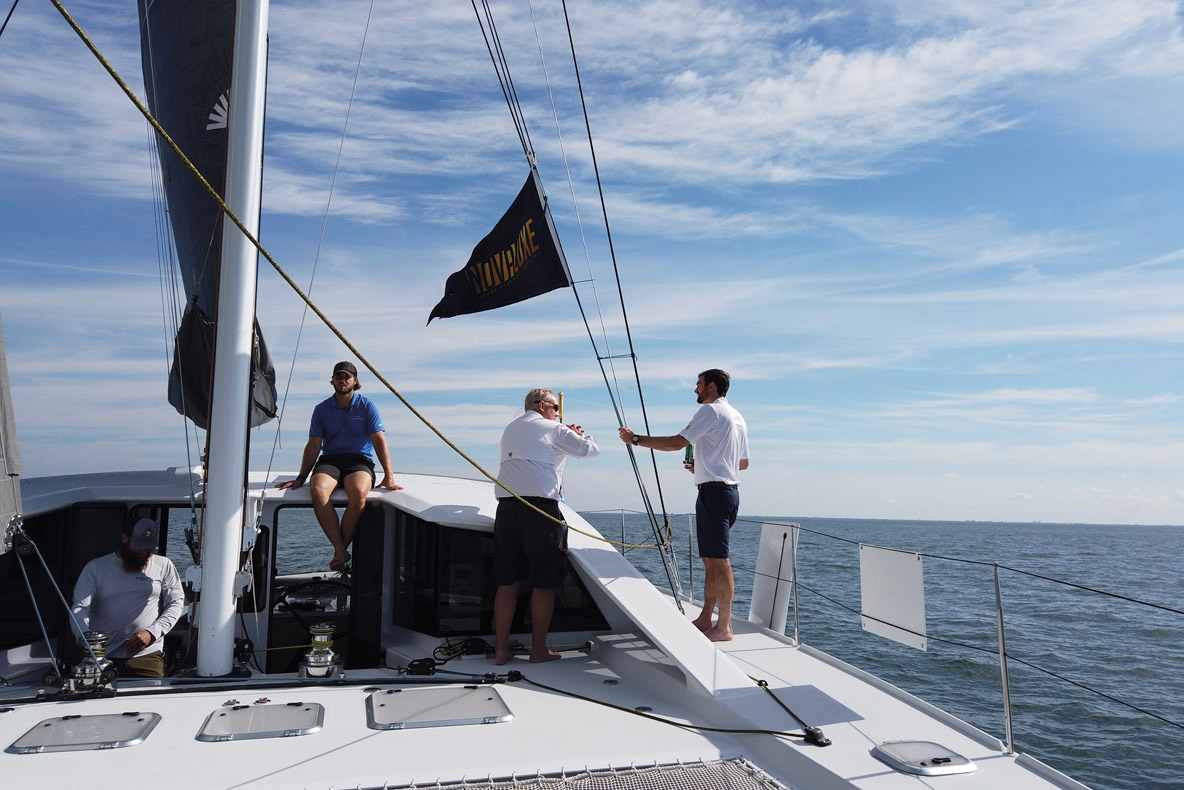
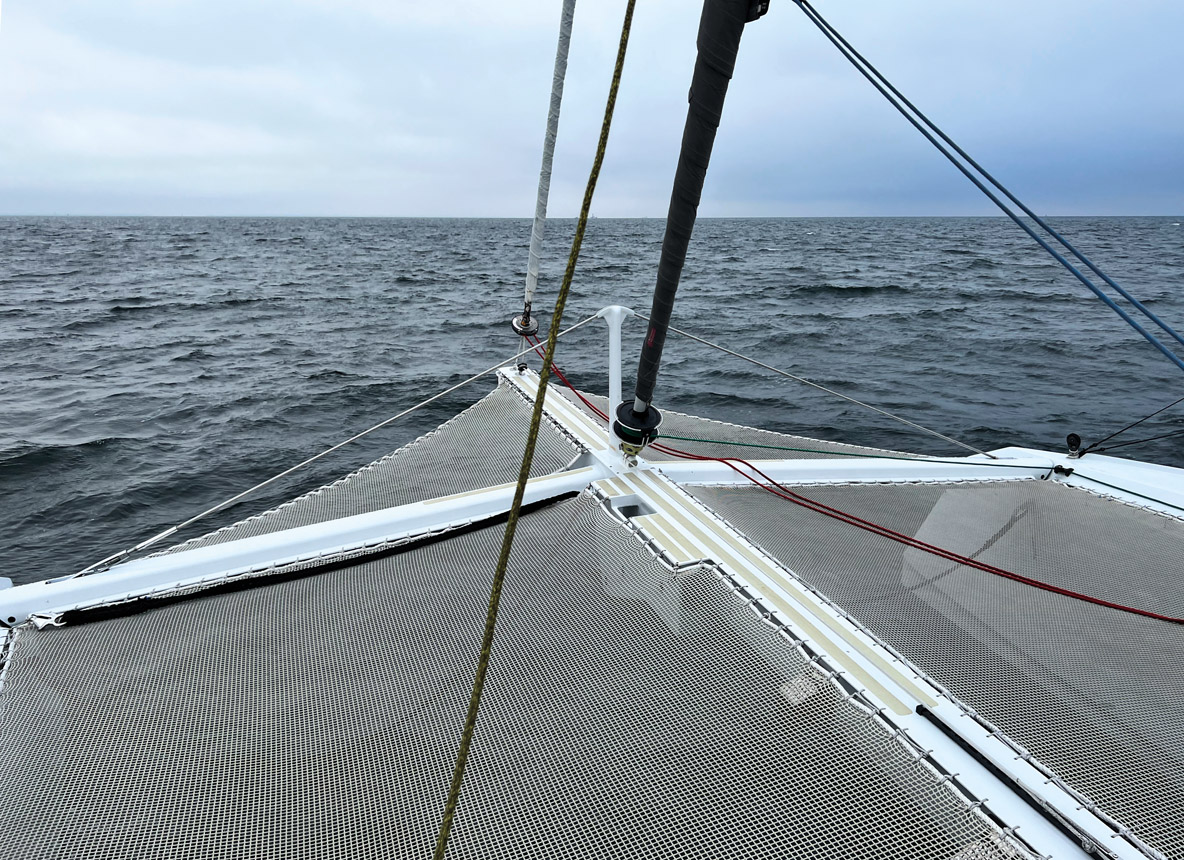
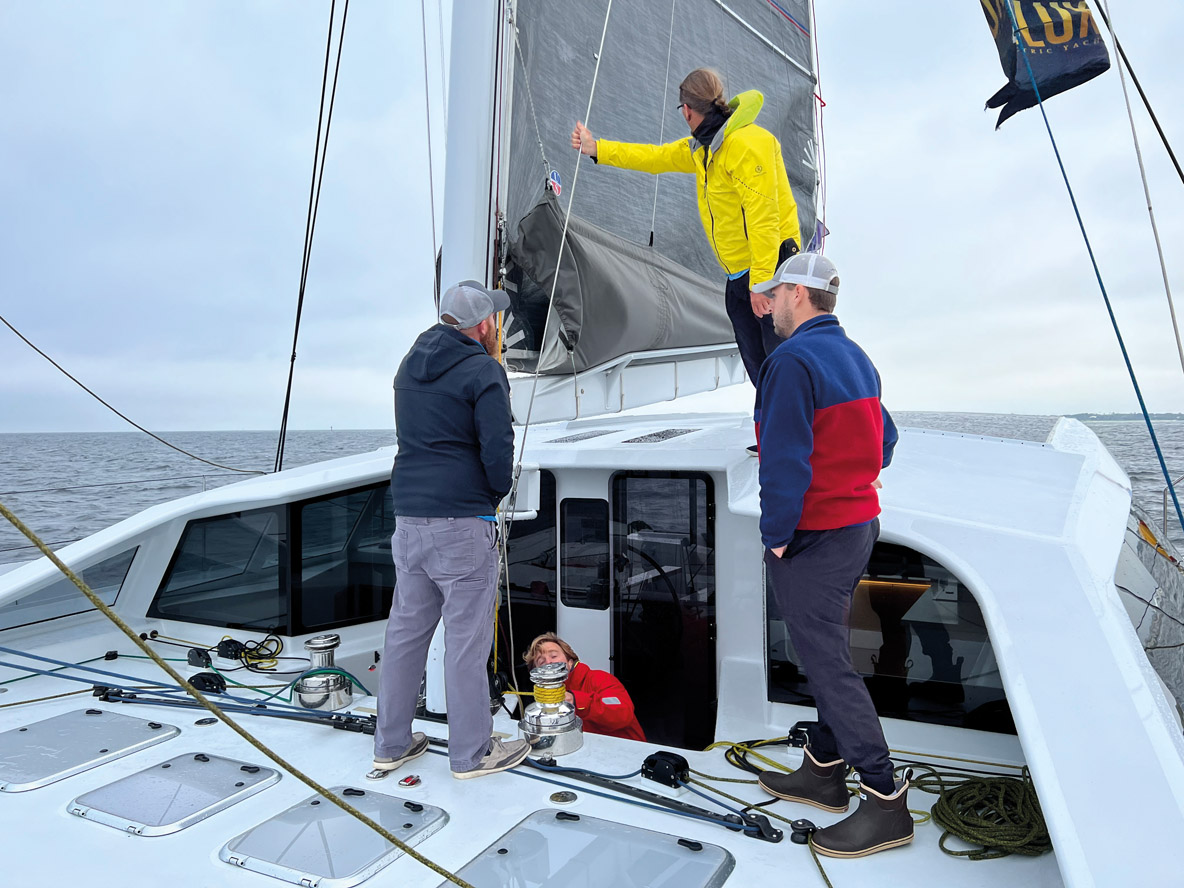
Designed for performance, the R5 features a large trampoline instead of a front deck, on each side of the bowsprit. A sailor’s choice that allows for maintaining a very reasonable weight. Just in front of the coachroof, a second cockpit is dedicated to maneuvers. Very well thought out, this space gathers all the halyards at the foot of the mast, the winches and the rope bags to keep the area clear. There is also a series of repeaters directly attached to the spar that are readable by both the maneuverers and the helmsman from inside. Last but not least, this cockpit is protected on the sides by the side windows of the coachroof that extend a little forward. In the event of heavy weather, this will be much appreciated.
 |
 |
The R5 remains a very user-friendly catamaran and especially is very comfortable for its crew.
For the front deck, Ocean Renegade opted for traditional trampolines, which allows for saving weight.
Zen feeling inside this semi-custom interior
Accessible through a double sliding door, the main deck takes you, in a fraction of a second, into another universe. Enlarged at the request of the owner compared to the initial plan, this deck gives pride of place to clarity with very large, glazed surfaces all round.
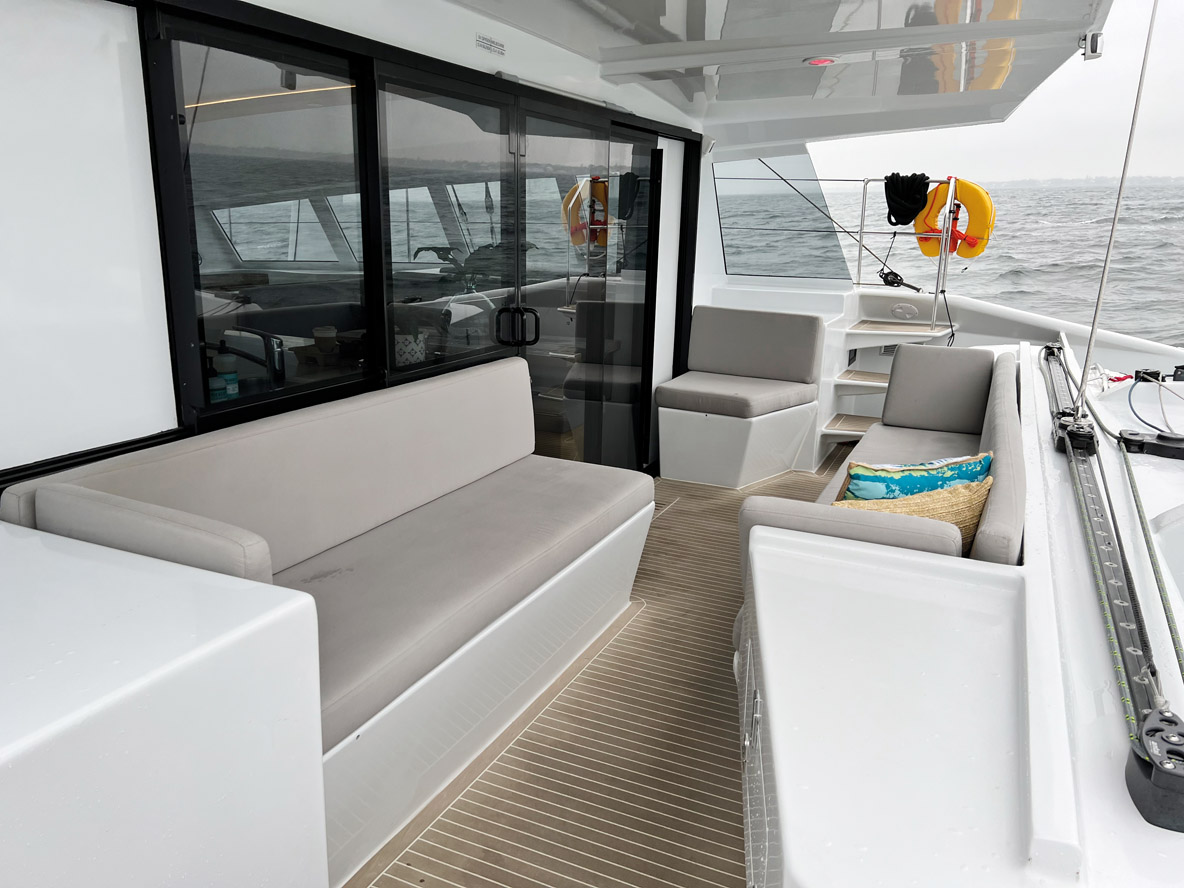
On this version, the owner asked to reduce the aft cockpit, which nevertheless offers two nice seats.
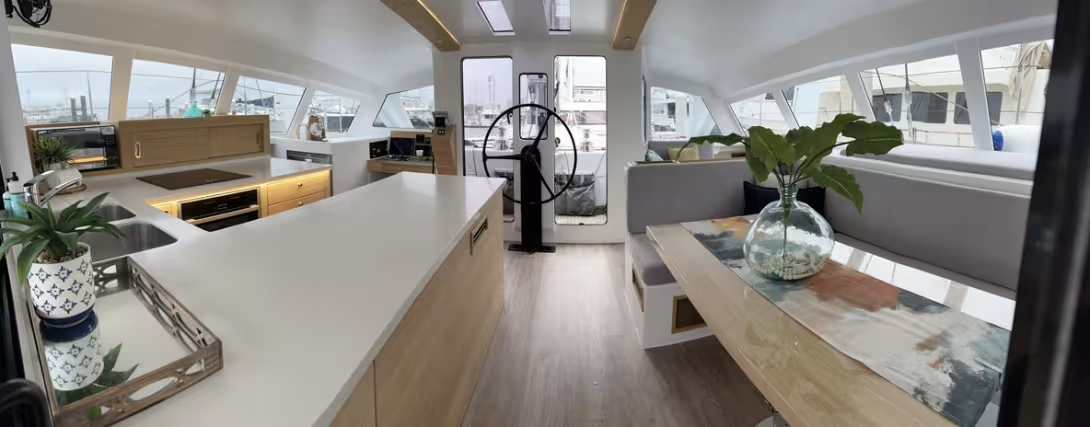
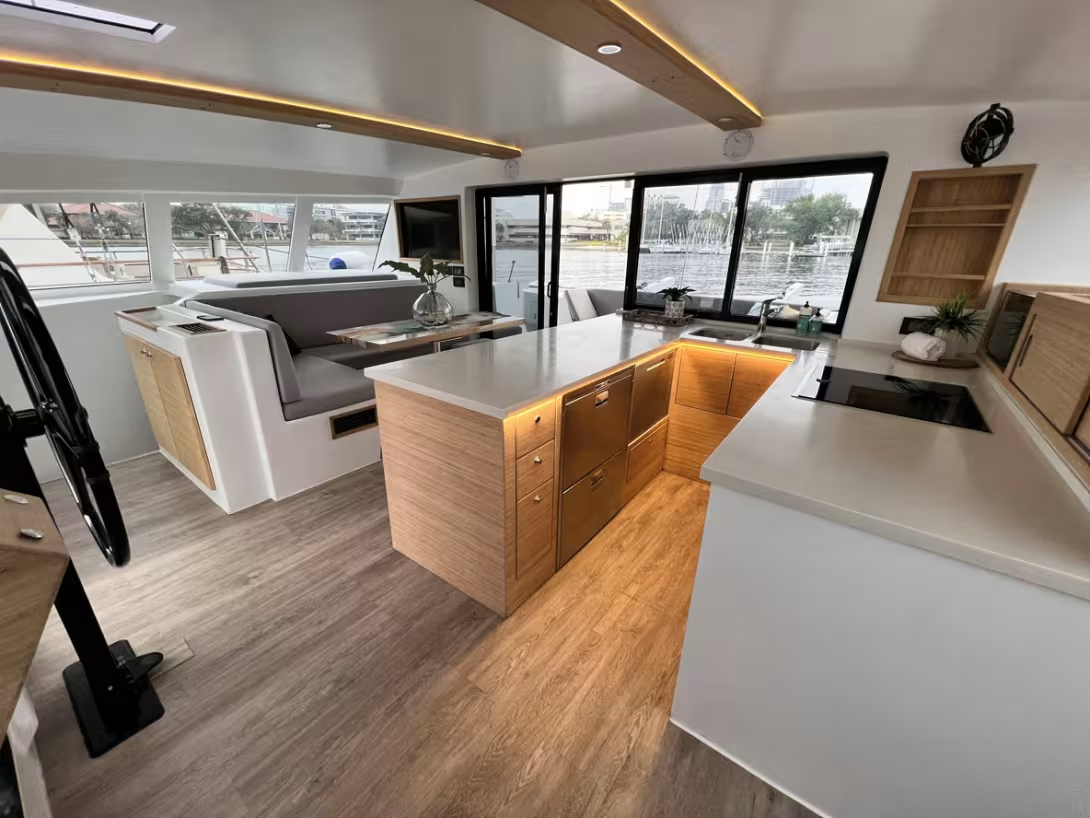
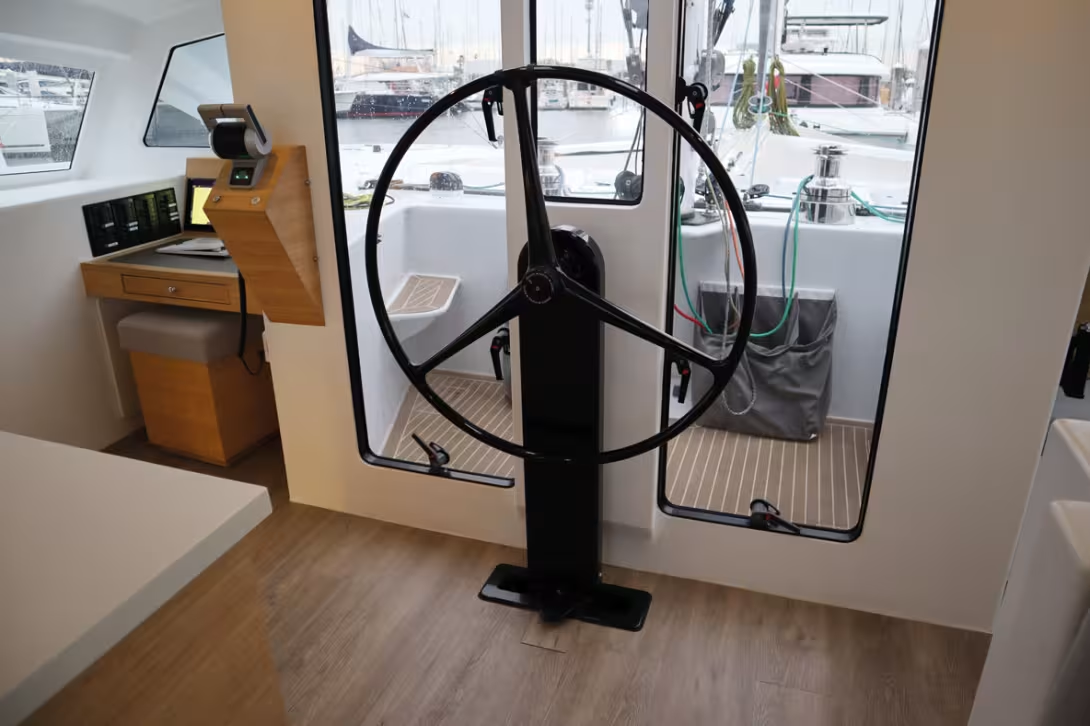
The white color of the walls and the light wood used for the furniture also play an important part in the very bright interior. The layout, which uses simple and taut lines, as well as the Zen decoration, display a very modern feeling. On the starboard side, a saloon can seat six people around a large table, all of which can be converted into a double berth. Almost the entire port side is taken up by a large galley that would be the envy of the most demanding chef. In addition to the surface area of the worktops, totally unusual for a 54-foot boat, this kitchen is made with bamboo furniture (again in an environmental choice) and is equipped with high end appliances, starting with the oven or the induction cooktop. On the ceiling, false beams hide LED lighting with changing color, a detail that fits perfectly with the recessed spotlights or indirect lighting for a beautiful effect. The forward port side hosts a complete chart table with all the electronics, the electrical panel and even the VHF, all very well embedded. Finally, located behind two glass doors, the helm has a perfect view, and the wheel can be tilted to the left or right to optimize the helmsman’s position, all while remaining totally sheltered or opening the doors to enjoy the breeze. The Torqeedo motor control handles are easily accessible, and if necessary, the mast foot and all halyards are within easy reach. A really well-thought-out design that makes the catamaran easy to operate while freeing up the interior space of all the sailing equipment. The last subtlety is the two windows in the ceiling, allowing the skipper to keep an eye on the rig. The only thing missing is a folding seat for the helmsman, a good element of comfort for passage-making.
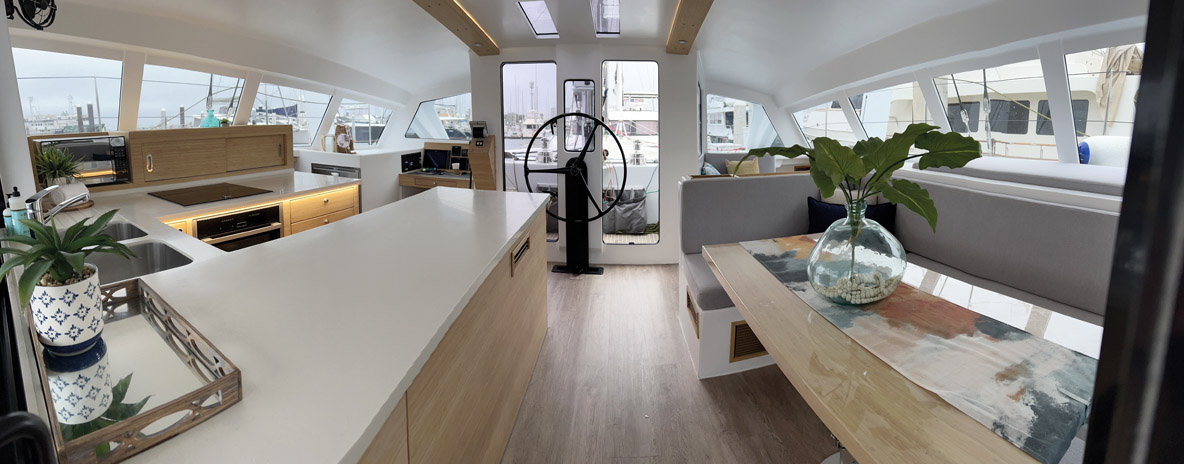
The nacelle offers an amazing volume for a unit of this size, an impression of space reinforced by the white walls and the large windows.
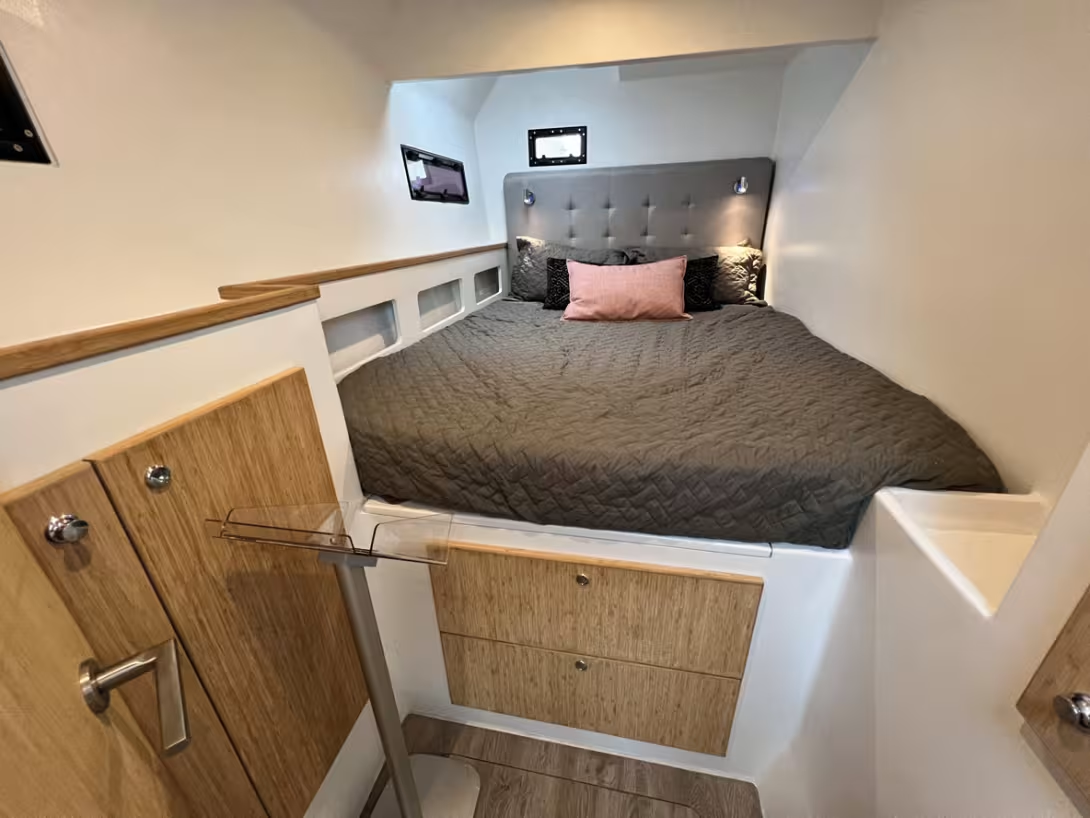
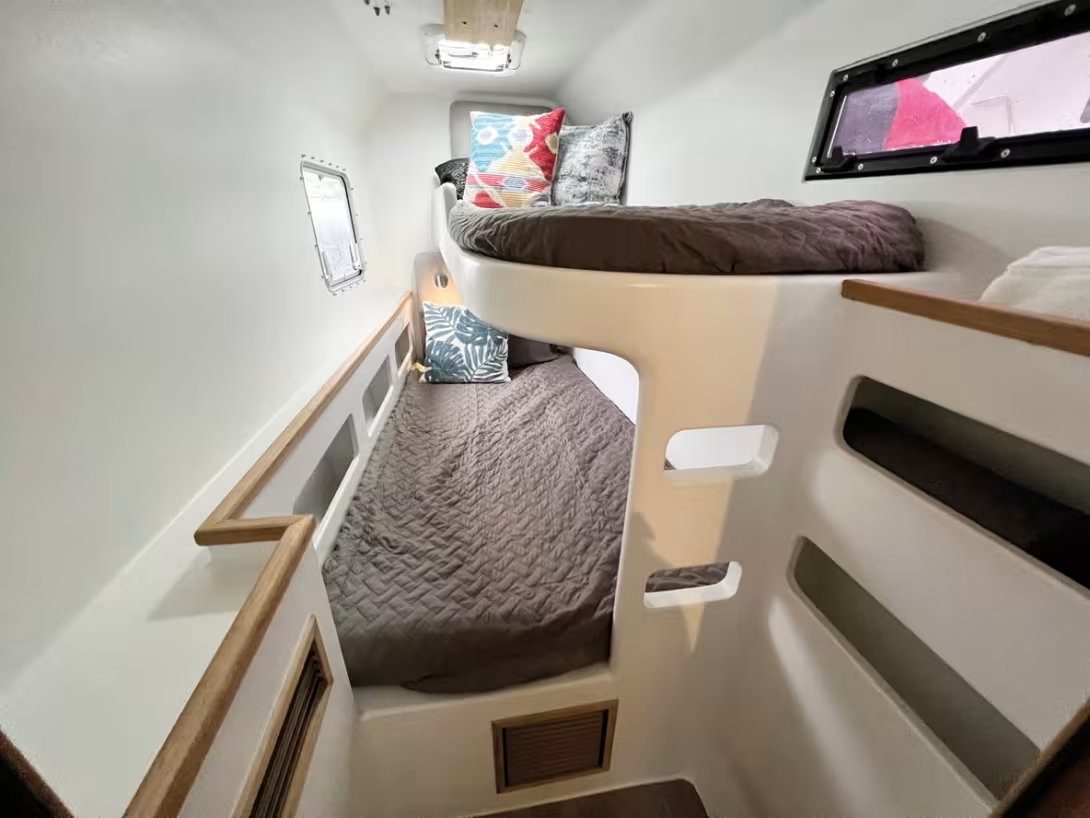
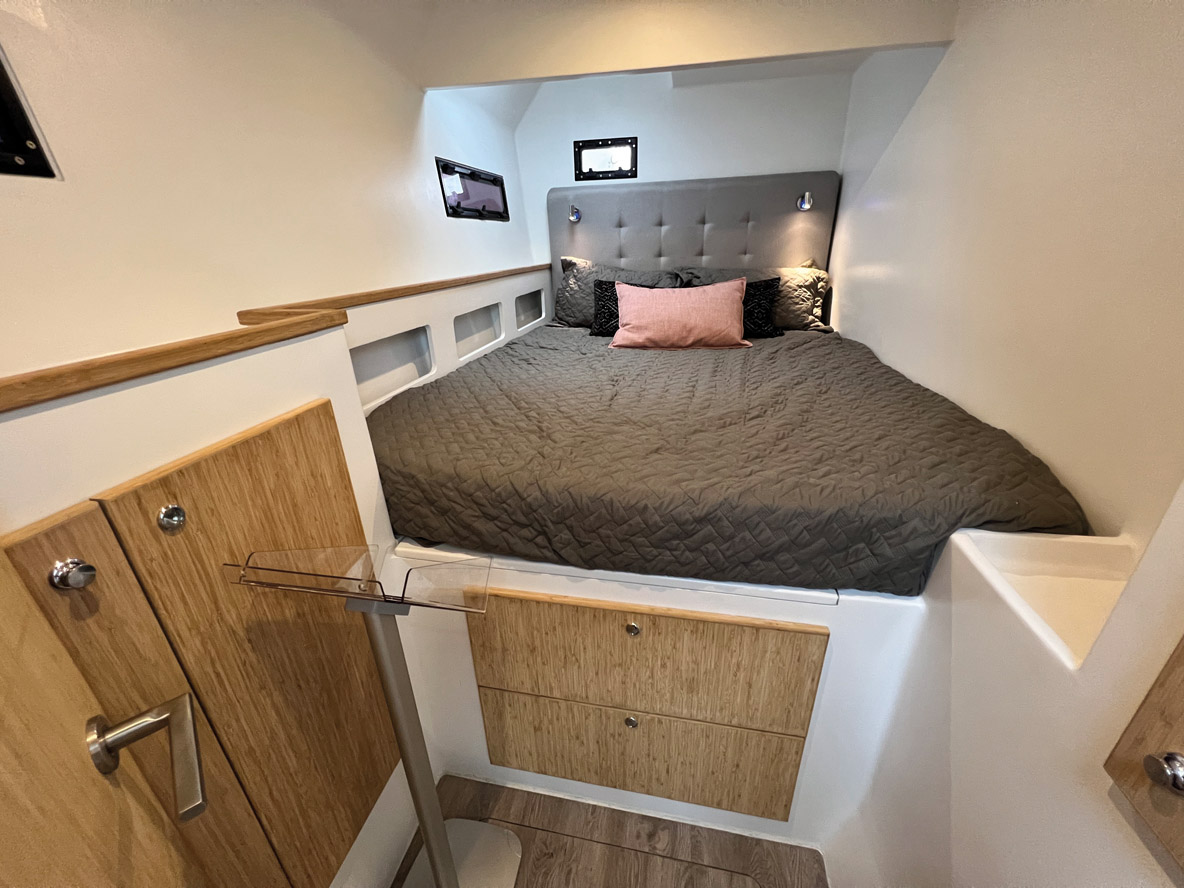
As a semi-custom boat, this catamaran can be totally configured according to the customer’s needs or wishes. Our test model was equipped with three cabins. Each hull has a double berth surrounded by storage spaces. The starboard forward cabin has two bunk beds - that are made of carbon! On the starboard side, a staircase leads to the bathroom, which is very accessible for guests, but also, thanks to its two doors, for the occupants of the two cabins. To favor performance, the hulls are not immensely wide, but there is a real double bed with some storage space at the rear. As for the front part, it features two bunk beds made... in carbon! The comfort is a bit minimalist even if nothing is missing... or almost: a bit more natural light would be a plus.
 |
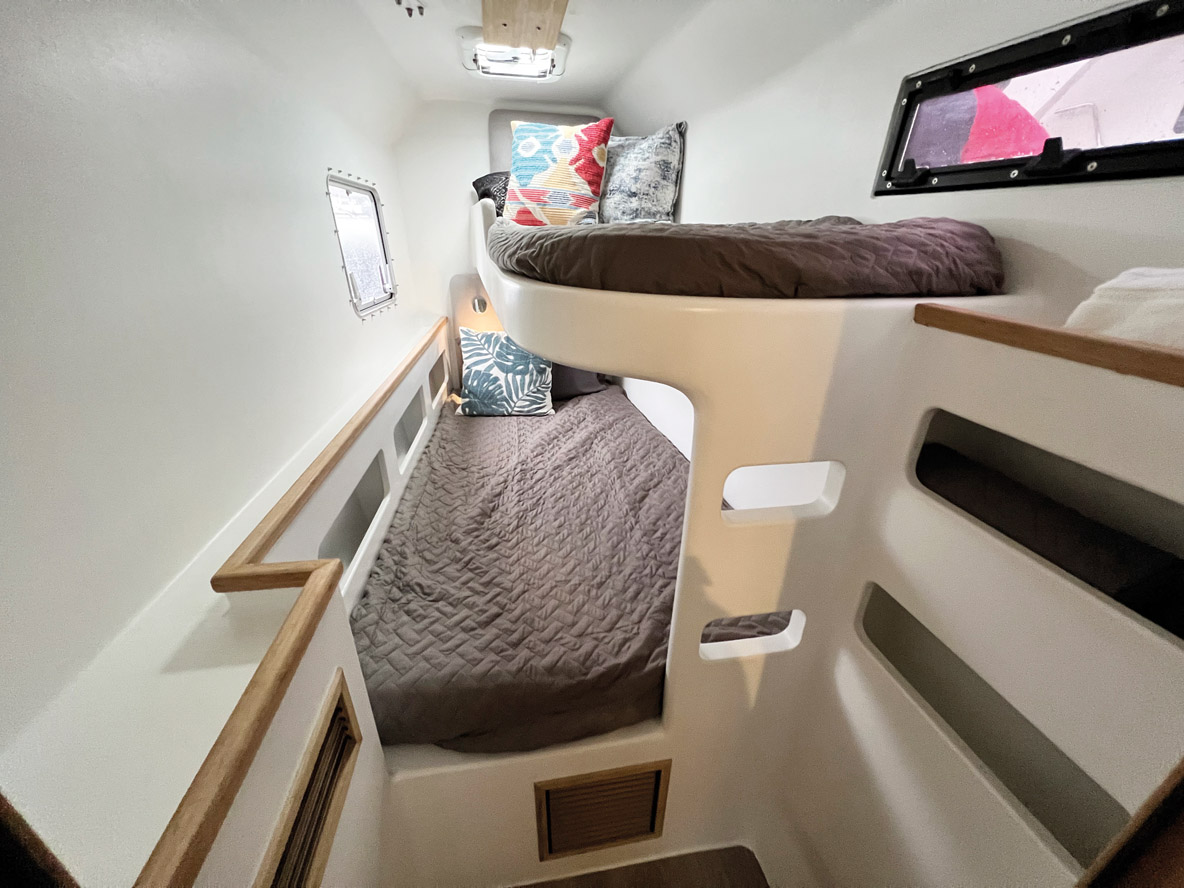 |
Each hull has a double berth surrounded by storage spaces.
The starboard forward cabin has two bunk beds - that are made of carbon!
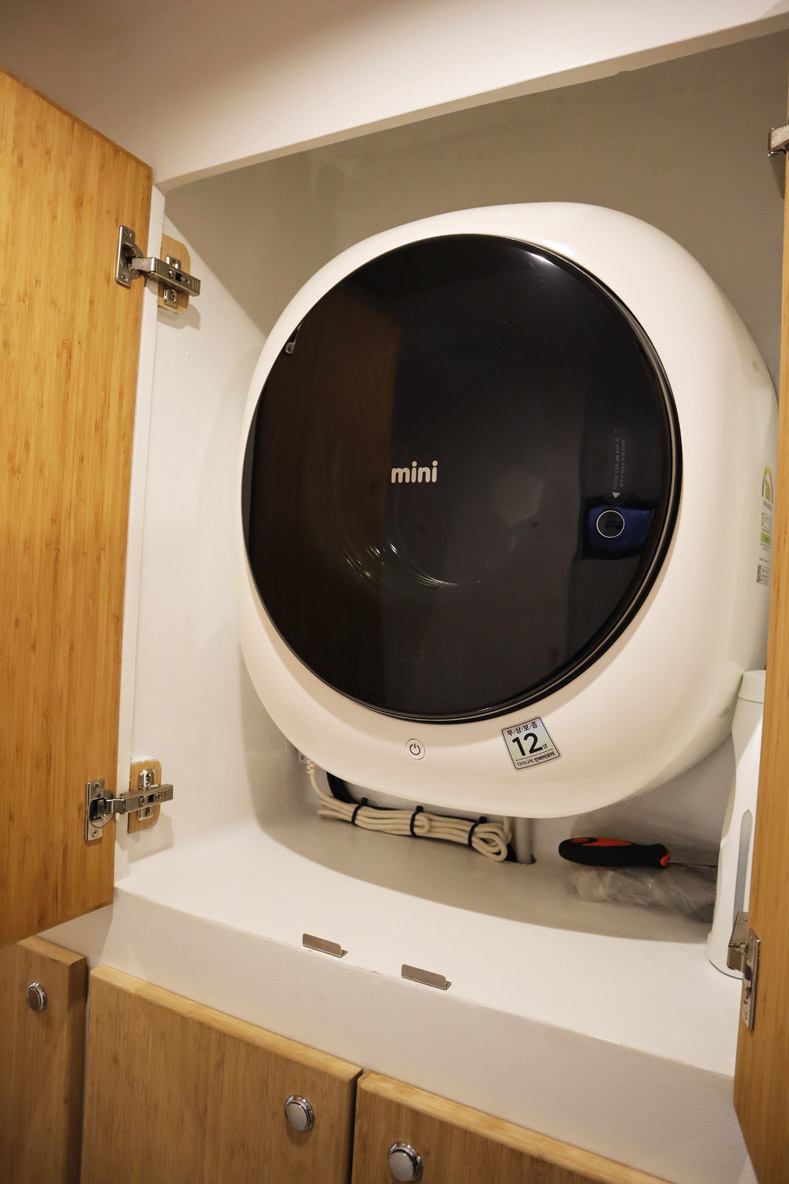
On the port side, the configuration is a bit different since the hull hosts the owner’s suite with a double bed and a huge bathroom up front. In the middle, there is a small desk and a lot of storage space. This is where the batteries for the Torqeedo system are located, as well as a lovely little washing machine from Korea. Here again, the atmosphere is quite understated, but we wouldn’t mind a little more natural light.
The equipment is about average, but as each catamaran is unique, the different elements are decided with the customer when he passes the order.
 |
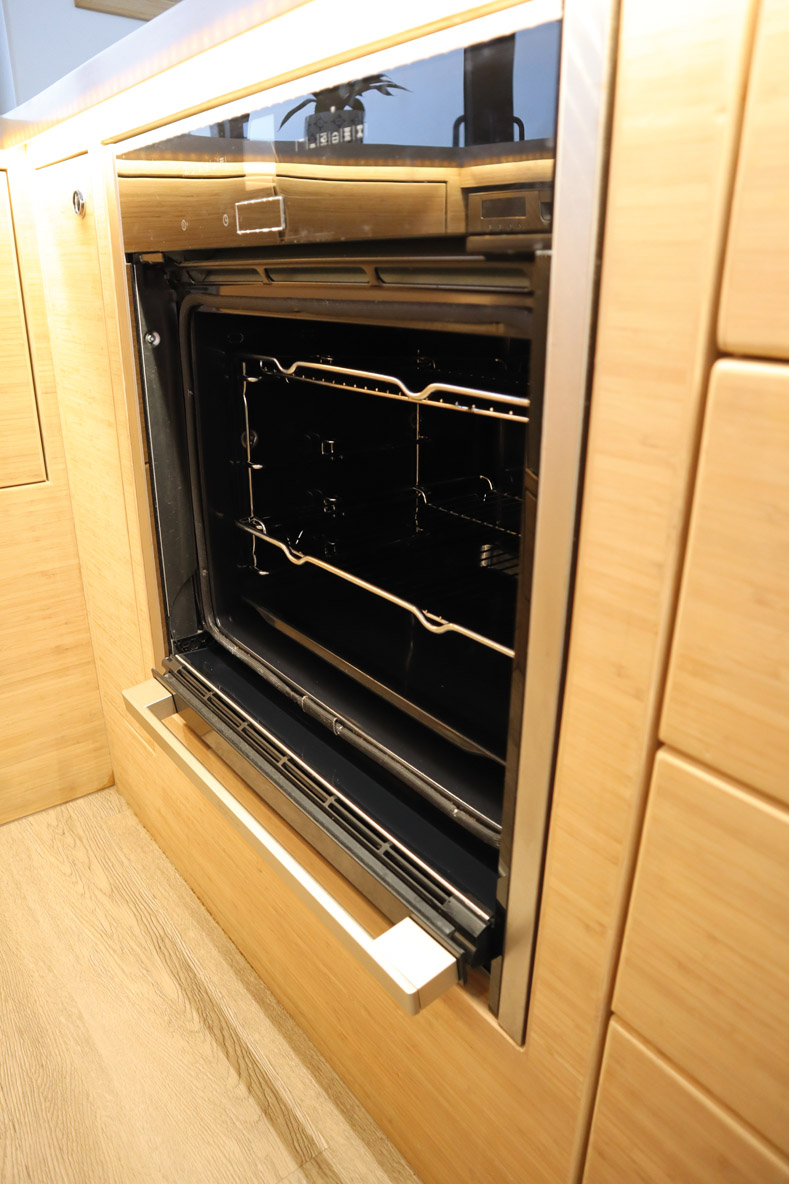 |
All the domestic appliances are high-end. These items of equipment have also been selected for their low consumption. As for this very original washing machine, compact and low in demand for electricity, it comes straight from Korea.
A multihull that is practically energy self-sufficient
Regarding energy production, the Ocean Renegade features eight flexible solar panels on the top of the roof delivering a total of 2.4 kW. The panels are connected to a 6-kW inverter while the energy storage is provided by a battery bank with a total capacity of 50 kWh. The electricity can then be used by the lamps, the domestic appliances and the various systems on board, all with low consumption, or by the two electric motors.
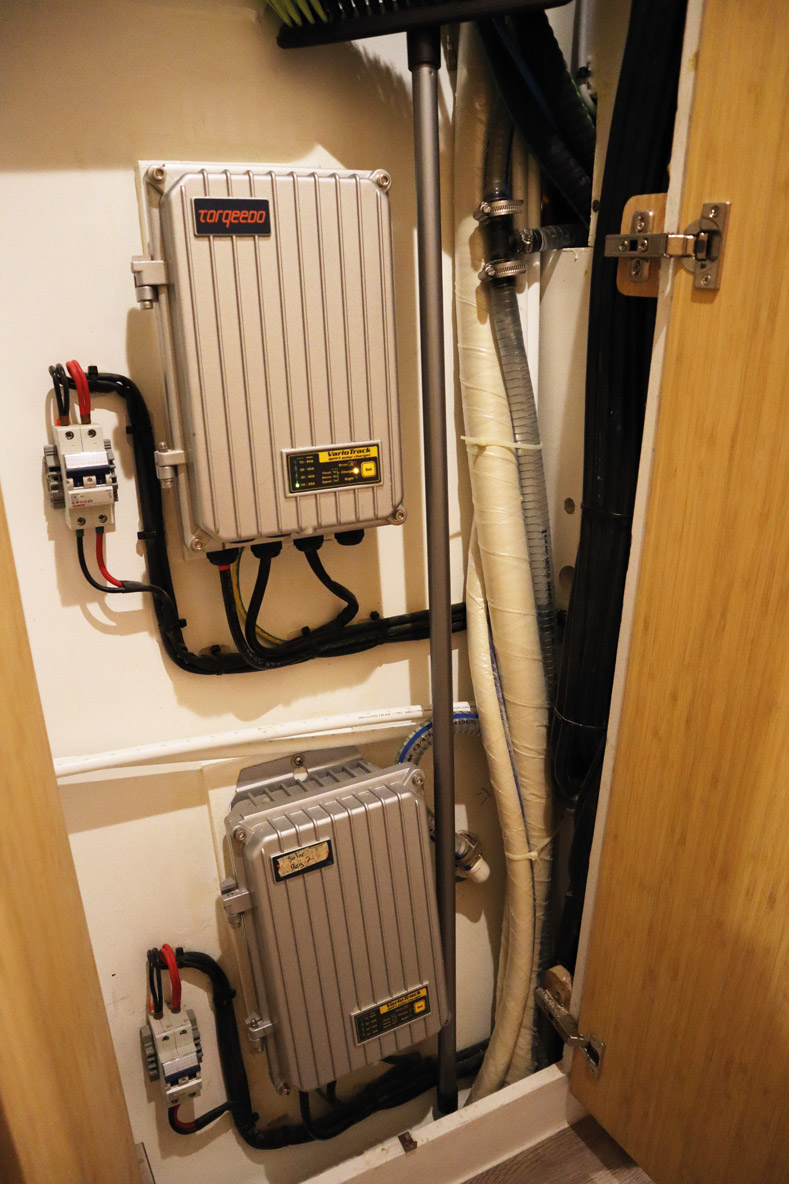
Indeed, to go through with the process, the R5 is equipped with an electric propulsion, in this case, two 25 kW Torqeedo Deep Blue motors. In addition to the obvious ecological aspect, these motors have the advantage of not taking up too much space, of not weighing too much and of not consuming much energy. This power, more or less equivalent to 2 x 34 HP internal combustion engines, allows the catamaran to cruise at about 6 knots without reducing the range too much; it allows a maximum speed of 10.5 knots, just in case. The Deep Blue system is coupled with a 42 kWh BMW I3 High Voltage battery pack with, by the way, a nine-year warranty. What’s more, the system is capable of regenerating energy at a rate of 1 kW per engine at 10 knots when under sail.
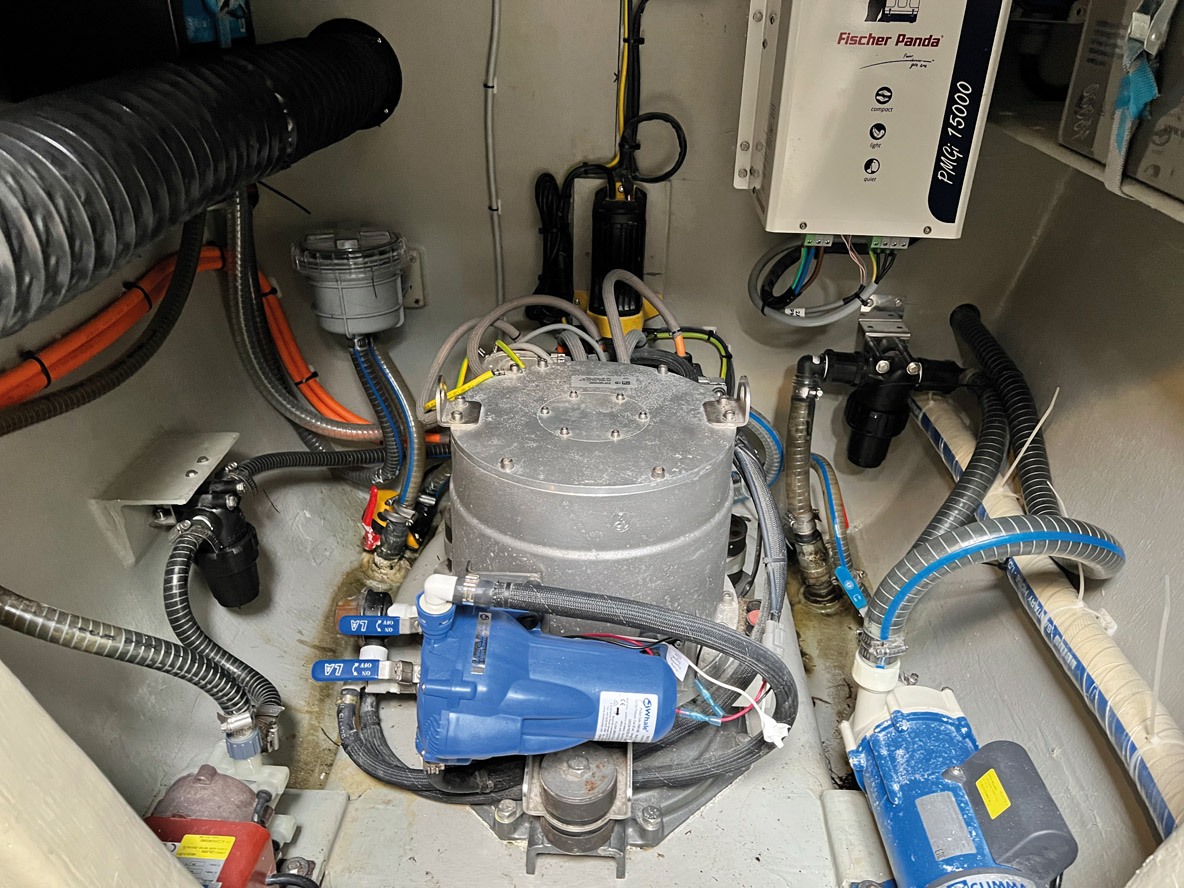
The 25 kW Torqeedo Deep Blue motor takes up very little space in the engine room.
Finally, in case of a lack of energy, which normally should not happen, a Fischer Panda 15000i generator of 10 kW is available on board with a 105-US gallon (400-liter) diesel tank, enough to fall back on. In any case, the electrical system generated by the batteries and the solar panels should be largely sufficient and this, without depriving yourself of modern comfort since the catamaran includes notably an air conditioning system, also chosen for its low consumption. In fact, once on board, you don’t feel like you’re on a boat where you have to constantly pay attention to energy consumption, a true sign of maturity for this type of installation.
 |
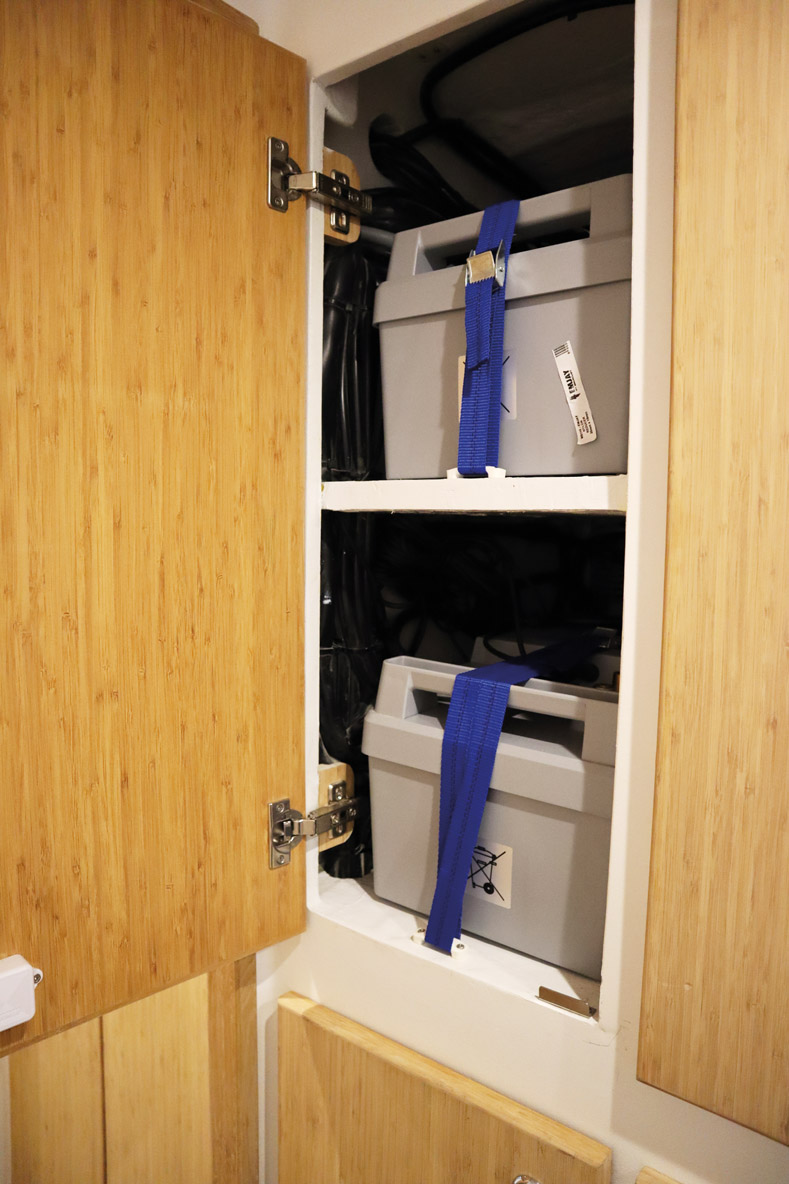 |
To power the engine, the R5 houses a 42 kWh BMW I3 battery pack.
Racing performance
Thanks to its carbon-epoxy construction, the R5 has a weight equivalent to many more traditional 45 or 50-foot boats that are made of fiberglass. A characteristic that the catamaran takes advantage of. In addition, thanks to very thin hulls and a thin nacelle, it drags little water, which favors performance.
Not surprisingly, the mast and boom are made of carbon and several sets of sails are available, from the cruising version to the racing version. For our test, the catamaran was equipped with a set called “Performance Cruising“, i.e. a slightly more powerful variation of the cruising sails. Concretely, the sails receive carbon inserts which improve the rigidity and thus the stability of the profiles. Hoisted on the 69-foot (21 m) mast, the mainsail area is 990 sq ft (92 m²), while the self-tacking jib has 452 sq ft (42m²) of sail area, giving a total upwind sail area of 1,442 sq ft (134 m²). Of course, you can opt for a Code 0 and for an asymmetric spinnaker well. Once again, it is all a question of choice when ordering. Thus equipped, the Ocean Renegade does not need much air to take off. Florida is usually known for its tropical climate, but on the day of our test, it felt more like the north of England. The temperature was quite cold (for Florida), the rain was constant, the wind was about 20 knots, and the waves were getting on for 18” (50 cm) high, not really ideal conditions, but it’s part of the hard job of a tester to adapt to the weather!
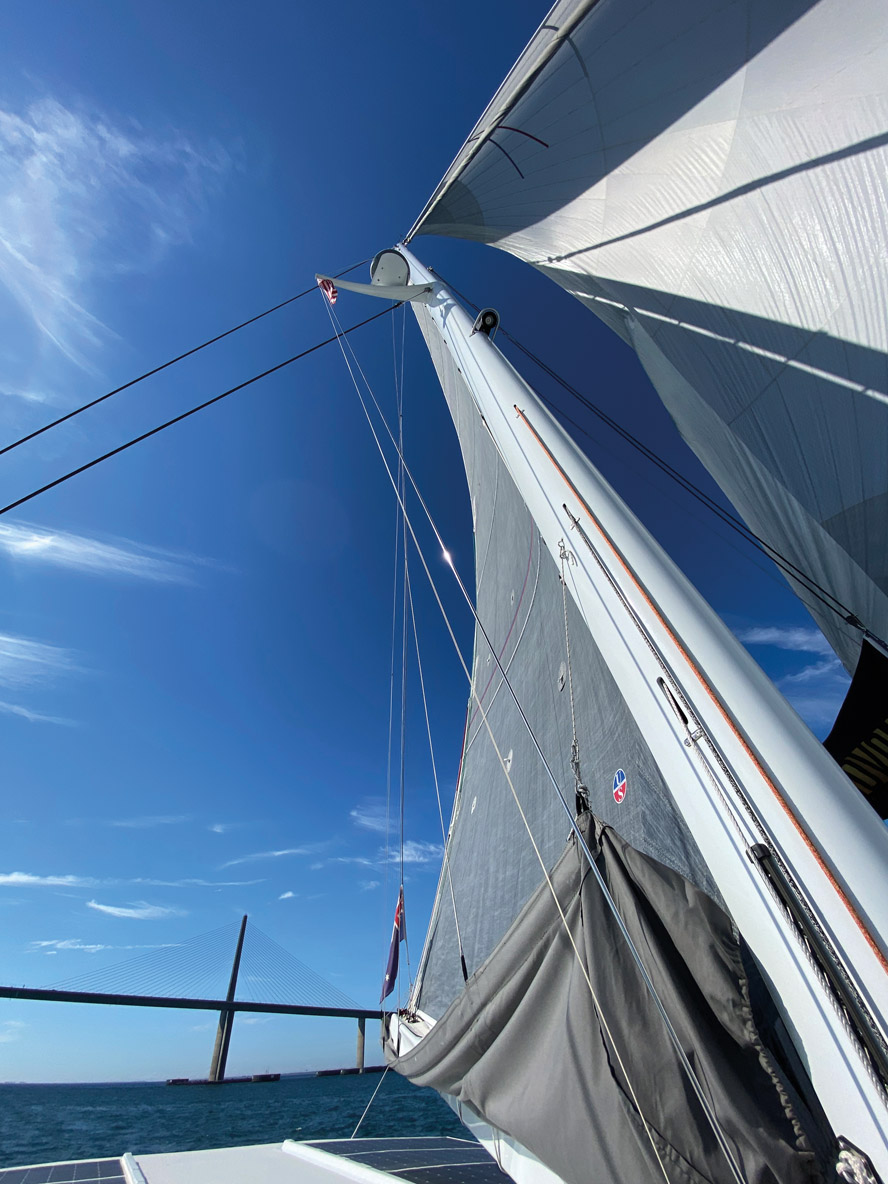
The 69-foot mast is made of carbon - enough to easily support getting on for 1,500 square feet of upwind sail.
This annoyance was quickly forgotten in view of the catamaran’s capabilities. As soon as we left the marina and the sails were set, the R5 did not hesitate: it started at the slightest wind. From our first port tack, with 15 knots of wind, the catamaran took off at 8 knots, then 10 knots with just the mainsail and the self-tacking jib. Under Code 0, the result is even more satisfying since the speed oscillated between 10.5 and 12 knots when the wind rises to 17 knots, rather satisfactory values. In order to get into it a bit more, we decided to go for a little more wind: with 20 knots displayed on the wind instrument, the R5 gave us a small peak at 14 knots. During a trip around the Florida Keys, the crew even managed to reach 20 knots, which gives an idea of the possibilities of this catamaran - even if the version of the day is only intended for cruising… The carbon daggerboards also play their role perfectly, allowing the boat to stay very close to the wind – with minimum leeway, of course. Another great advantage: thanks to the location of the various winches and blocks in the forward cockpit, maneuvering is really easy. The same applies to gybing, where everything is done quickly and easily. This ease of operation allows us to sail short-handed and therefore to be truly autonomous. Unfortunately, the conditions did not allow us to hoist the spinnaker. That was a pity, because the GPS was showing promising data. At the wheel, it is once again the impression of ease that dominates. Very precise, the Ocean Renegade keeps its course without needing to bring it back permanently on track, and this is very appreciable.
On board, the comfort remains royal, so that the crew can enjoy the show, have a drink or read a good book without having to look for support every 30 seconds. These characteristics confirm the offshore vocation of this multi-faceted catamaran.
 |
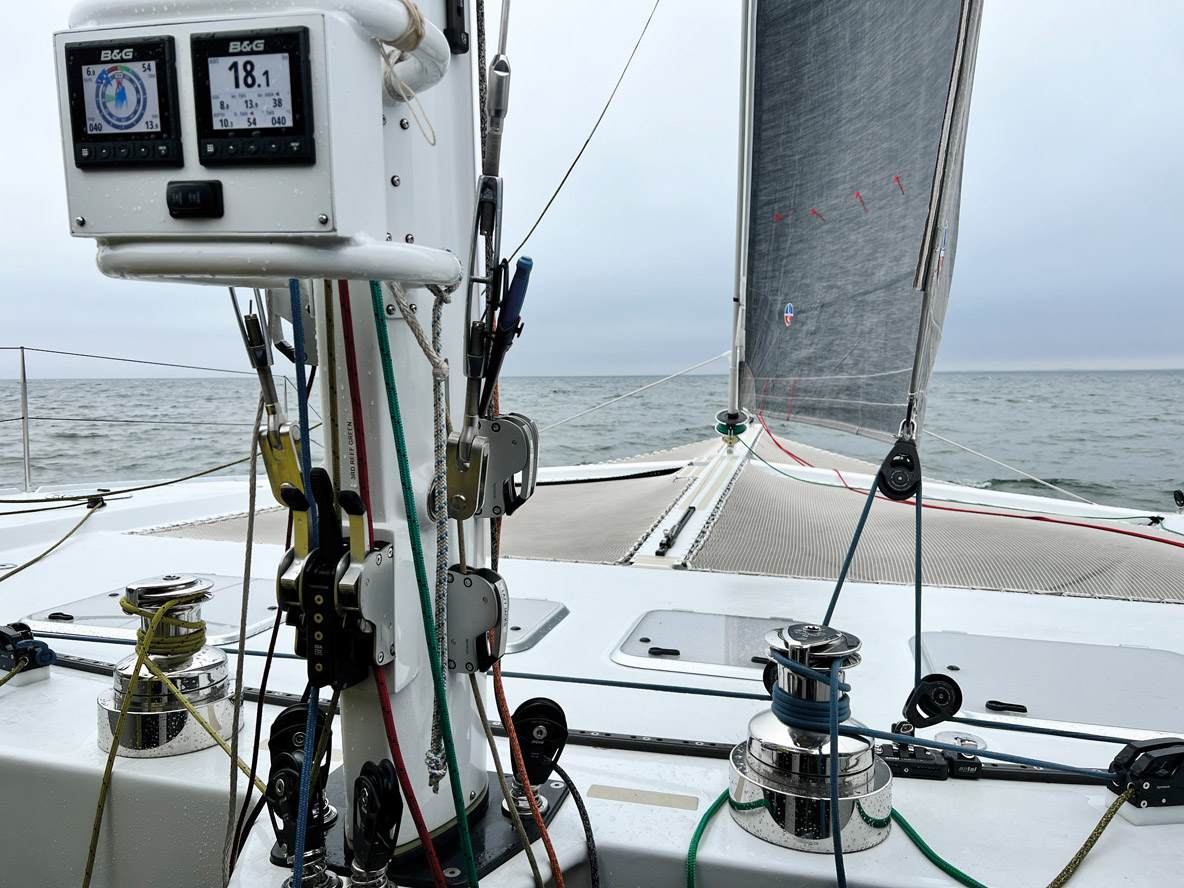 |
The front cockpit is dedicated to maneuvers. All the halyards come to the mast foot and there are also repeater instruments.
Conclusion
The R5 brilliantly combines performance and comfort on board, and adds to this an interesting living space, even if the space in the hulls is a bit limited. On the other hand, it is easy to operate, even short-handed. Its construction is serious and its price remains very well placed for a 54-foot carbon structure.
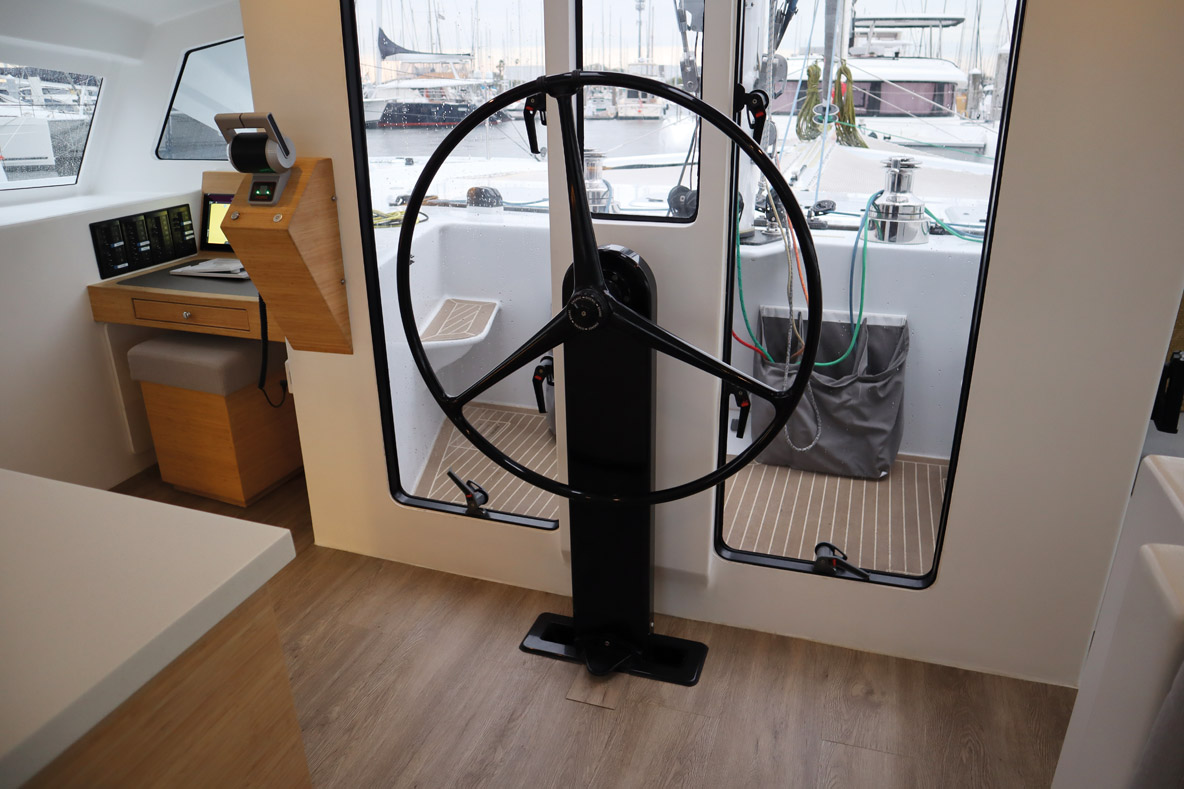
Ideally located behind glass doors, the wheel can be tilted to the left or right to increase the helmsman’s visibility.
THE PLUSES:
+ Indoor space
+ Limited displacement
+ Performance
THE MINUSES:
- Only one bathroom for the two port cabins
- No helm seat
- Lack of natural light in the cabins
TECHNICAL SPECIFICATIONS
Builder: Novaluxe Manufacturing (South Africa)
Designer: Tony Grainger
Overall length: 54’ (16.46 m)
Beam: 25’5’’ (7.75 m)
Draft: 4’3’’/7’6” (1.30/2.30 m)
Light displacement: 24,912 lbs (11.3 t)
Mainsail: 990 sq ft (92 m²)
Self-tacking jib: 452 sq ft (42 m²)
Code 0 (option): 1,003 sq ft (96 m²)
Spinnaker (option): 1,937 sq ft (180 m²)
Engines: 2 x 25 kW Torqeedo Deep Blue
Fuel: 105 US gal (397 l)
Water: 105 US gal (397 l)
Berths: 8 Price from: $1,900,000 ex-tax
Price of the version tested: $2,200,000 ex-tax
Options: on request