Designing a replacement for the much-loved 1st generation 45’ represented a serious challenge for the Outremer yard. A multihull symbolic of adventure since the 2000s, the 45 is effectively a passage-maker, as well as a fast and fun boat all at the same time. We had a chance to try out the successor to this magical boat…
Infos pratiques
- Le chantier : Outremer 45
- La fiche technique
-
 Découvrez notre vidéo exclusive
- Financez votre Outremer 45
- Assuez votre Outremer 45
- Articles autour du Outremer 45
A powerful image!
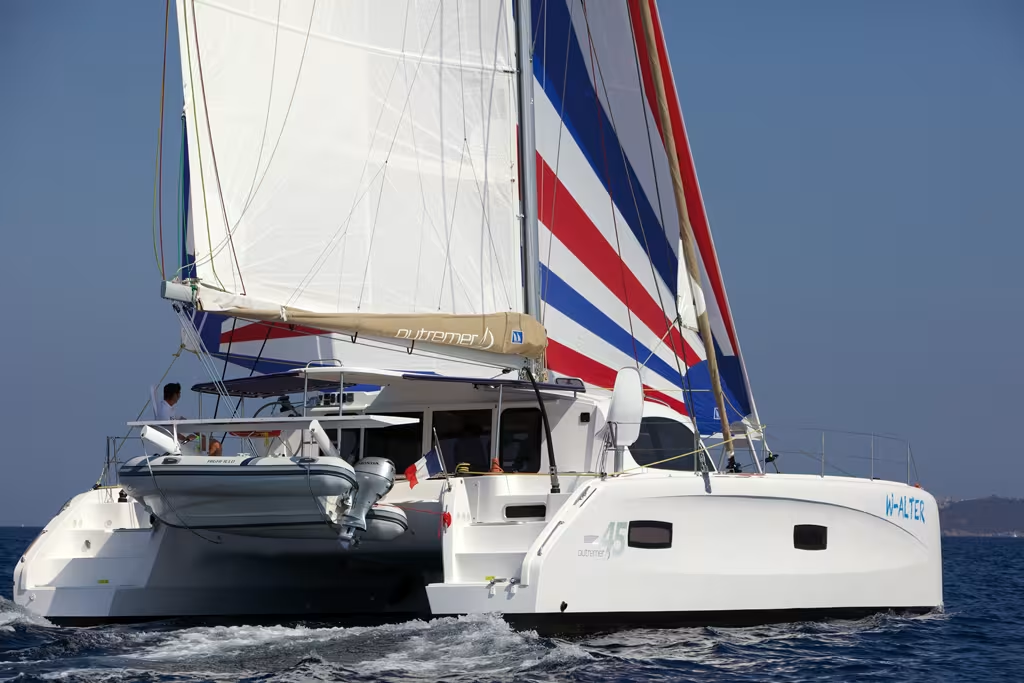
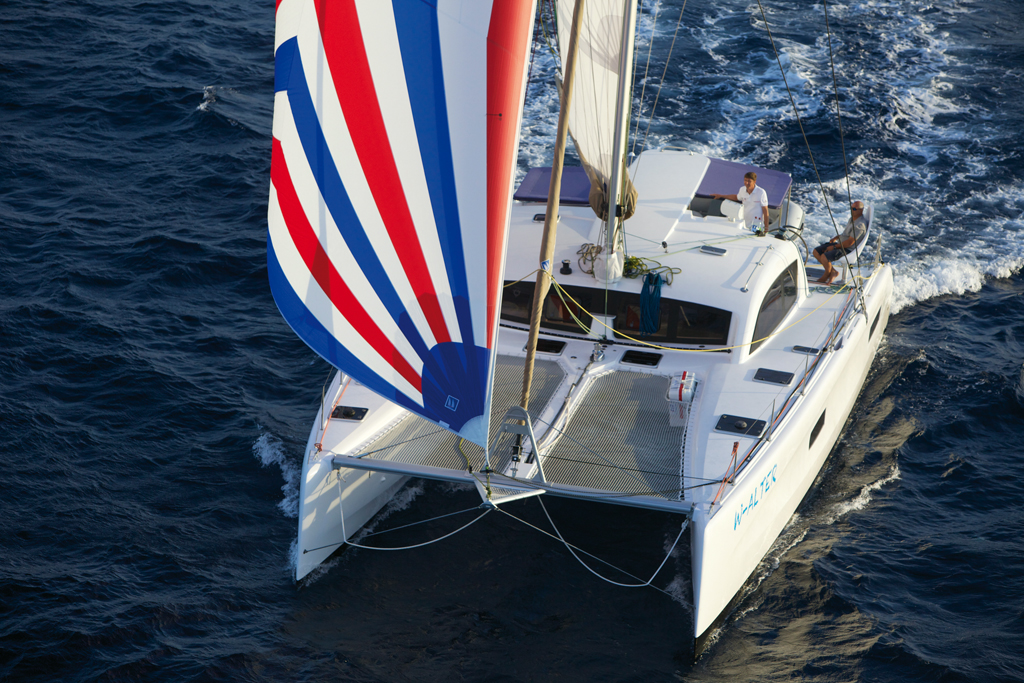
In 2000 Didier Le Villain managed to take the prototype of the 1st generation 45 to win class 3 of the single-handed Plymouth-Newport race (formerly the OSTAR). This great race was to herald a successful future for the model. Gérard Danson (naval architect / builder of that era) and his faithful production manager, Daniel Cailloux, had produced an exemplary model which would become a benchmark for a whole generation of fans. Unfortunately, the tooling (required for hand laminating) and the narrow design of the hulls prevented from going into production, a model which is still held dear by many enthusiasts. Wally Wallou, a lightweight version fitted with a rotating carbon mast remains formidable in all conditions and shows the possibilities of this high performance, reliable catamaran on the second-hand and refit markets.
The performance speaks for itself!
Fitting a new 45 footer into an already balanced range
The skillful transformation organized by Xavier Desmaret and his team following the yard’s takeover in 2007 is today bearing fruit. The strong brand image and the unfailing loyalty of the first generation of owners with the founding architect, represent considerable marketing power, but might hinder further evolution. Outremer Yachting seems to be winning this challenge, by having integrated the values of the Outremer yard without having lost any of its identity in spite of a complete overhaul of the range and of production methods. The 49 (which is today the 51), launched at the Cannes Show in 2009, has a place in the coveted 50 foot market: designed by Christophe Barreau, it is the successor to the almost legendary 50-55 footers by Danson. The 5X VPLP was released in 2012, and put the company into an exclusive and sporty little niche for cruisers who wanted to go fast. The two catamarans hit the mark, and enabled the builder to make significant changes to their operation. The challenges involved in producing the new version of the 45 were such that the project was to take more than two years to come to fruition.
The Outremer 45 shows how modern multihull sail plans have evolved
A recognizable design
The Outremer family currently comprises three clearly defined models which, with all their advantages, are championing a brand, a personality, almost a philosophy! The new range has seen a real increase in power, incorporating production techniques unseen on their predecessors (option to have the mast and bulkheads in carbon, infusion process, etc)… with obvious consequences to the price! All that’s missing today is a 40-42 footer to complete their traditional place in the market. The designs, with their blue stripes, are instantly recognizable as being by Gérard Danson, the 5X, the 51 and the 45, and are just as important. This perception is reinforced is by several styling elements, which, despite having different designers involved, remain consistent. It’s here that the work of designer Patrick Le Quément, involved with the 5X and the 45, stands out. An Outremer has to give the impression of being powerful, yet seaworthy for serious offshore sailing. Fast between two marks on the racecourse, comfortable between two continents, reassuring between two ways of life - these are the subliminal messages imprinted into an Outremer. Large sail area, fine hulls, high freeboard and aerodynamic coachroof are the common denominators of this dynamic builder.
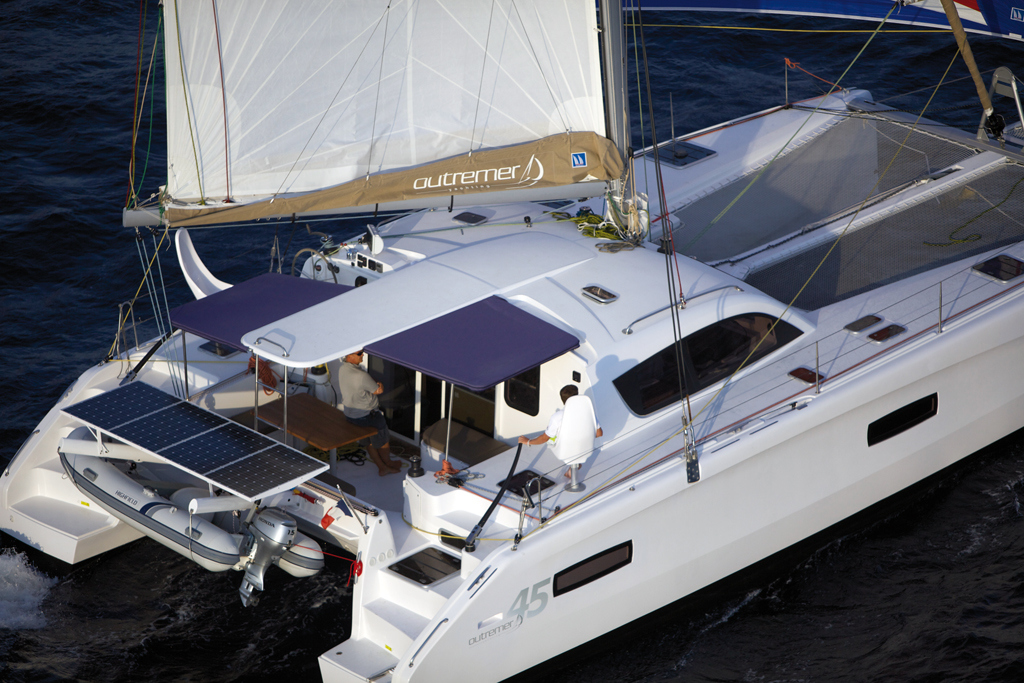
The bimini extends from the central “cuttlefish bone” passerelle, which gives access to the boom. Options include “ears” in fabric or composite, with water catchment, to complete the sun-screen effect.
Well-designed, sporty lines
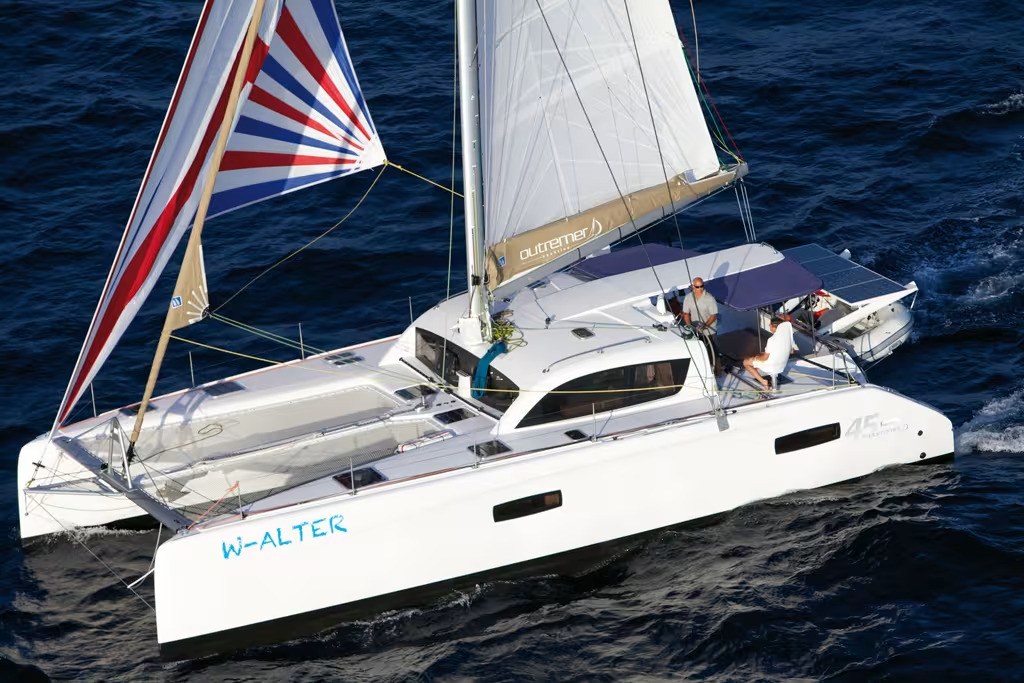
What makes the 45 attractive is the flowing design marked by a smaller coachroof set further aft atop elegant hulls. The appearance of high freeboard is broken by a clever and subtle hollow. The forward window of the coachroof allows the track for the self-tacking solent to be as far aft as possible, as well as providing UV protection. The form of the side windows in plexiglass, highlights the design, yet is easy on the eye while offering a modern panoramic view. The design of the bimini is clever and functional without impacting the overall lines.
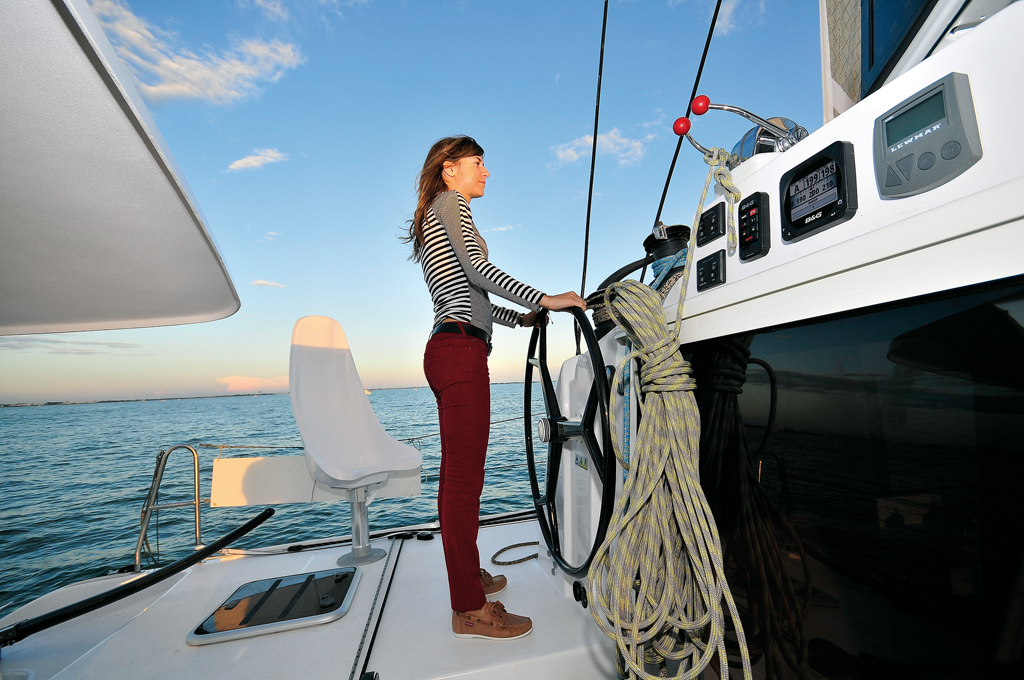
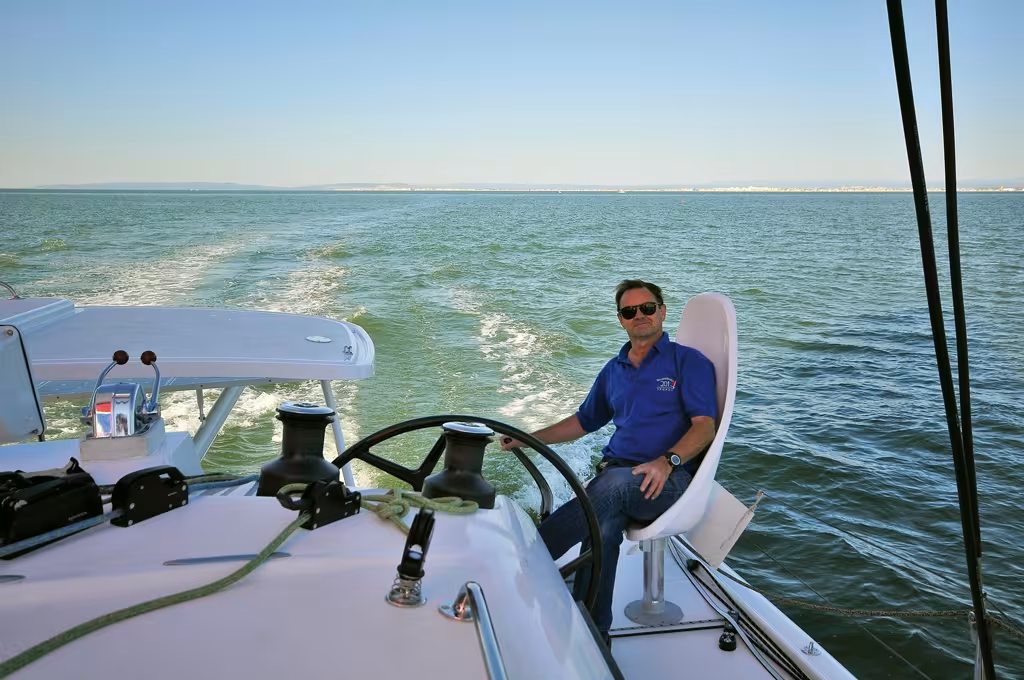
The helm station is in keeping with current trends (deck layout based around a single navigation station), but bucks the trend with the “Sport Outremer” version with tillers
Design and Build
A tour of the yard with Xavier Desmaret and Christophe Commard (Industrial Director) gave a clear picture of the care taken in the build quality. The use of the infusion process implies (and facilitates as well) rigorous precision, as it dictates a meticulous sequence of lay-up, of applying the PVC foam, the installation of the strengthening structure and the resin infusion under vacuum. A record is made of each composite part produced, including the type of the cloth used, where exactly it is fitted, and how. A second check by the operator and the quality controller are then formalized in the boat’s tracking record. This production method is made possible by rigorous work by the design team who set out the architect’s design. A look at the molds shows how important this is. With a strongly reinforced structure, the female mold ensures consistency of form, and provides for long-term use without risk of deforming. The hulls are well-balanced, the mast and the coachroof moved further aft, allowing very fine bows and a gradual increase in volume. The small step on the inboard side is quite subtle, and doesn’t generate any wave noise. The semi-circular sections become bigger level with the forward beam, a flare out into a wide, flattened U-shape to create a good load-bearing space. The delicate hollow in the hull allows for speed in moderate and breezy conditions, and this slight bend doesn’t impact on the boat’s progression. The strength of the bottom of the hulls is aimed at haul-out and taking the ground (optional supporting skegs), the covering of the underwater surface in vinylester resin increases the water-resistant quality of the composite. The bulkheads have corner profiles on both sides. In short, great work!
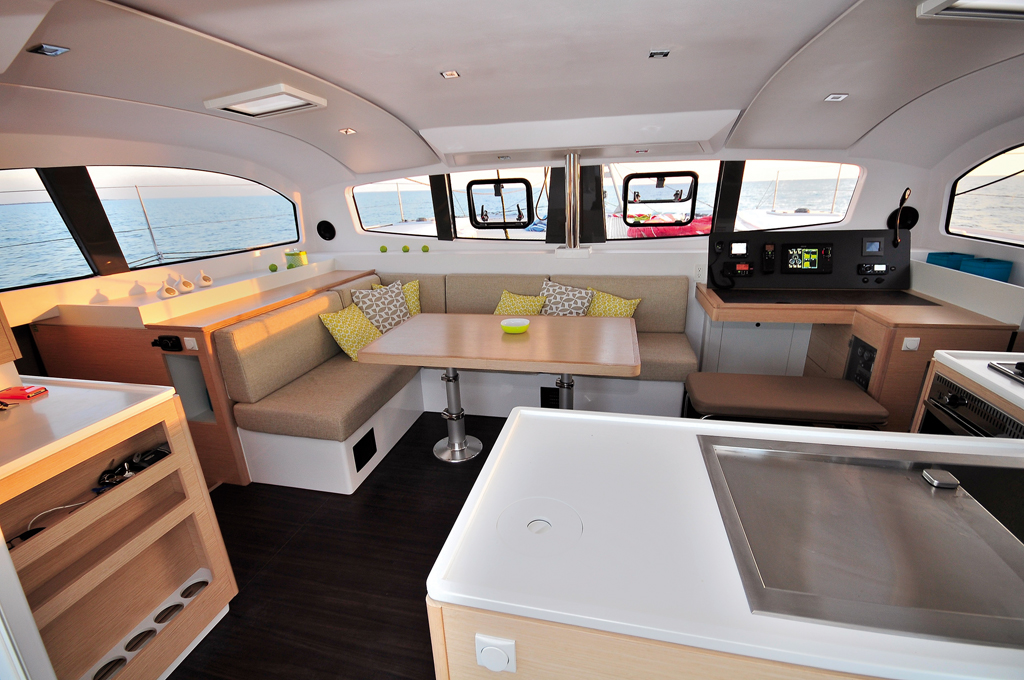
A clear and functional style are upheld by a high build-quality
Simply, functionally and tastefully fitted out
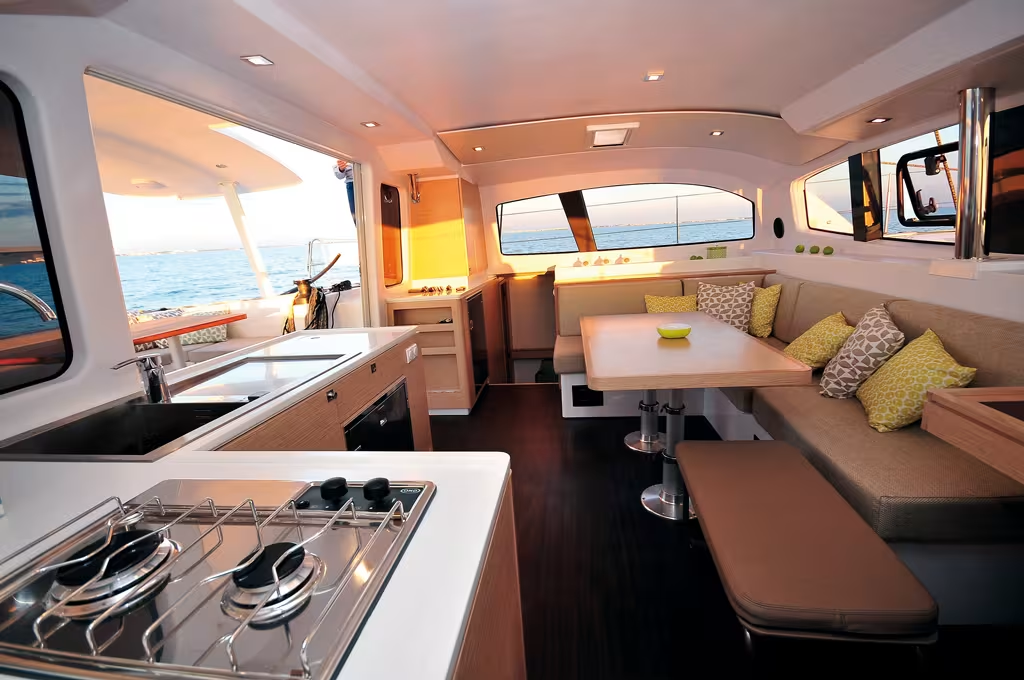
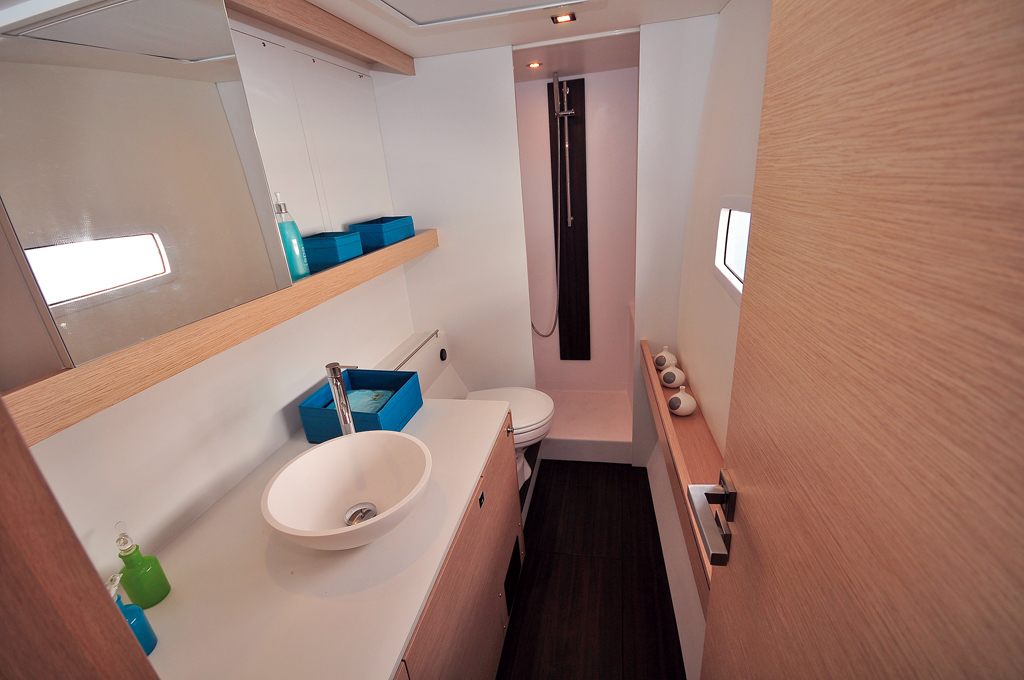
A good thing for moving about the boat, whether inside or out. The design of the bimini with a central step and fixed (or canvas) wings, and rainwater catchment device is very clever: the boom is easily accessible, the cockpit access is safe and comfortable. This has a spacious table which comes into its own when the large sliding door is opened up. Franck Darnet’s interior design is simple, with linings in light colored Alpi (this stuff sets the standard of rot-resistant reconstituted wood paneling) which has a warm shade which contrasts with the darker floor coverings (which are in sandwich). The build quality is very good and the finish is attractive. The same effect is created in the cabins, whose bunks have comfortable slatted bases, and good stowage with fiddles. But the best has got to be the bathroom of the owner’s version: it is perfect! All the usual problems have been overcome: there is plenty of space, lots of useful stowage, light and ventilation are well catered for, there are no sharp corners and the access and functionality are excellent. The total volume of the salon is understandably less than on other boats in the cruising market, but the headroom is the same throughout, keeping this area a light and pleasant living space. The L-shaped galley is open to the cockpit, the salon table can easily seat five, and there is an optional telescopic leg for this, creating a lounger for when under way. This doubles the entertaining space if the cockpit table is used for dining. The little operating console no longer has the superb chart table of previous models, but is now set up for electronic navigation. The design is configured to include the electrics, being adjacent to the salon bench under which is the battery compartment. This set-up, along with the same build quality found on earlier models, has deservedly earned a reputation for reliability among crews.
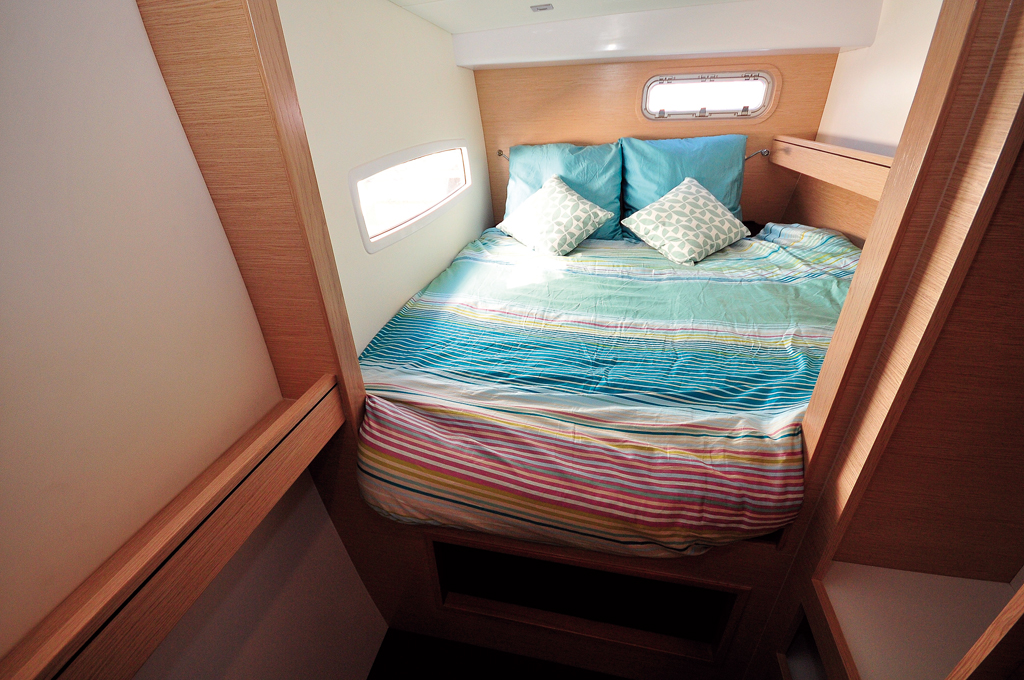
Effective and controlled comfort
Motors and steering
The two power units are mounted as far forward as possible in the boat, under the structural aft bulkhead, so space is limited. All the routine items to check (belts, water pumps, levels) are on the accessible side, but any more serious work would mean they would have to be accessed from inside the aft cabins. The superb mechanical helm linkage does cost more, but it is magnificent. The mechanism is made a little more complicated by the two-position helm (wheel, which can be disengaged, AND tillers), but the design team have come up with a remarkable solution. The tillers are fitted on rotating pivots, themselves secured at three points (by roller bearings above and below, and by a dividing shelf). A solid bracket holds the pulleys for the steering cables. The autopilot is protected from the elements: it is directly fixed to the aluminum bar linking the two rudders (a carbon tube and fiber cables would have been more in keeping with this beautiful machine) by means of a short coupling which is adjusted with washers. It all inspires confidence.
Faultless!
Sea trial
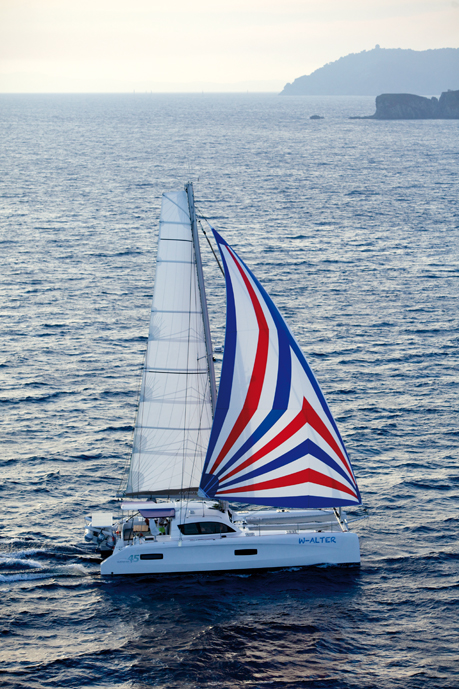
The deck layout of the 45 is simple, easy to understand and easy to use: forward of the wheel is the primary winch with a bank of clutches for the main halyard, the reefing lines and the solent sheet. The optional electric winch would be very appealing for family cruising. In addition, there is also winch for the spi and gennaker sheets, and finally one at the mast, for foresail halyards (well-placed on the forward end of the coachroof, and not actually on the mast). The stand-up blocks for the gennaker do away with the need for multi-position tracks. In the cockpit are the winches for the mainsheet, the traveler and the daggerboards, ergonomically mounted on consoles, as already seen on the 51. Maneuverability under motor is good and the power transmitted by the 30hp motors to the three-bladed folding propellers is totally sufficient. Readying the gennaker and the Code D for hoisting is made easier by the triangular welded bowsprit onto which is fixed the tack point. With a light wind of 7 to 10 knots, the 45 made way energetically, the well-balanced rudders were fairly neutral, and the feel of the helm was pleasant in spite of the inertia in the steering cables (they still move even when the wheel is disconnected). This slightly “sticky” feeling is always there, but becomes minimal at speed, as is not really a nuisance. The carbon wheel is a joy to hold, and it steers the boat well, without particularly losing feel. The daggerboards slide perfectly in their housings, and the boat tacks itself very nicely upwind. The optimized size of the solent reduces the usual gap compared to an overlapping genoa: the perfect formula for cruising. After the first afternoon of light moderate winds of 7 to 10 knots, and a good night alongside, then we had a real moderate breeze of 14 to 18 knots. This is what the Outremer is made for! The 45 is a passage-making multihull, but the enthusiasts like to let her run free and unrestrained. Under the (square-topped) mainsail and Code D, well sheeted-in, the increase in wind allowed the 45 to match this increase in a dynamic fashion, accelerating with the wind. With the drive being on the leeward hull, the wake regularly stretched out behind us, and from about 13-14 knots this came back and became at little characteristic vortex. We made the most of this sustained wind for several hours, and were able to see the boat’s true ability. Between 10 and 15 knots of speed, the playful nature of the 45 is quite clear, and general balance confirms the good positioning of the tiller (a tiller extension would improve the comfort of the helmsman). The enjoyment of it hits the spot.
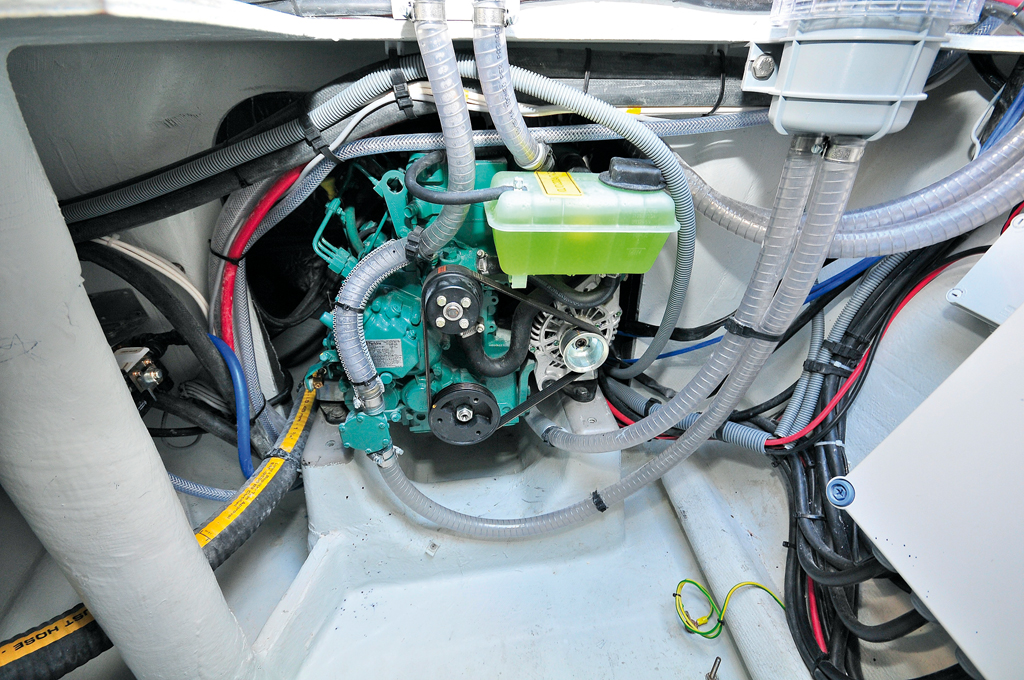
The weight of the motors has been moved as far forward as possible, making the space above the cylinder heads more restricted, but access is possible through the aft cabins. The regular checks and maintenance points are easily accessible
CONCLUSION
In the weather conditions we had for our test, the 45 showed itself to be fun, easy to live aboard and fast. There is a good feel to the helm and it is easy to handle. The options list would allow you to make this pretty boat more sporty, and there would be genuine results for the exacting and wealthy enthusiast, but the version we tested was everything you could wish for. Dr. Cruising and Mr. Fast, the 45 remains true to the Outremer character.
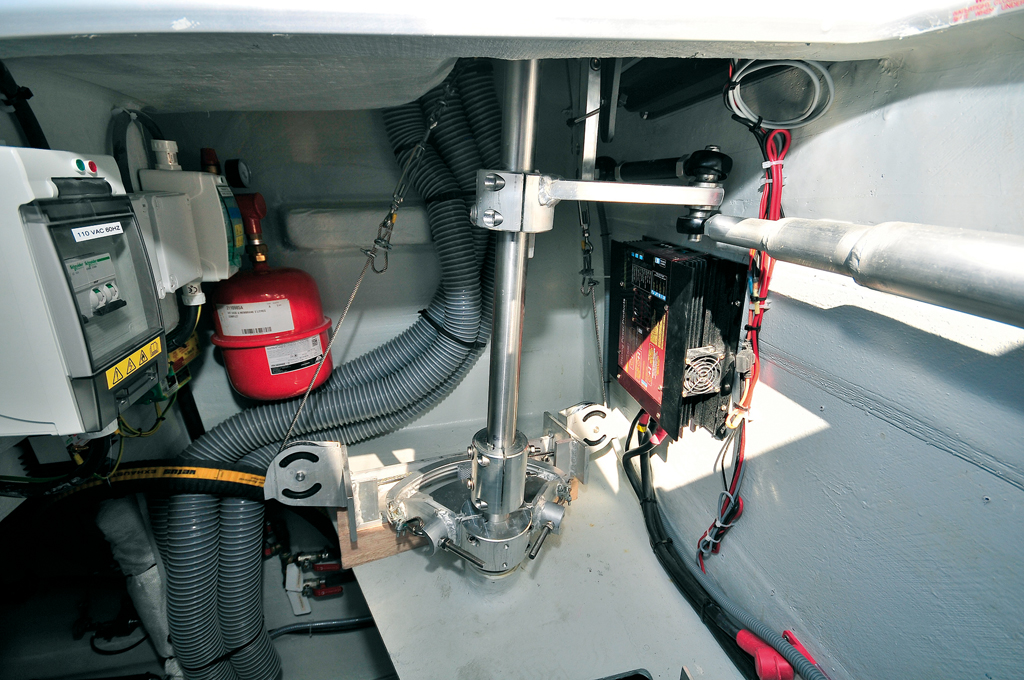
A general view of the mixed helm mechanism (wheel and tiller), and the excellent accessibility
Pluses:
- Nice lines
- Well built
- Dynamic qualities
Minuses:
- Expensive options
- Tillers a bit short
- Saildrives and rudder blades fixed
THE COMPETITION
| Model | Builder | Upwind sail area in m² | Light displacement in tonnes | Price in € ex-tax |
| S2C45 | Swiss Cat | 122 | 10.5 | 770,600 |
| O’ Yacht CL4 | O'Yacht | 124 | 7.6 | 590,000 |
| Dazcat 1495 | Multimarine | 120 | 6.5 | 744,000 |
| Tri Neel 45 | Neel | 106 | 6.5 | 450,000 |
| Catana 47cr | Catana | 139 | 10.9 | 609,700 |
| Slyder 47 | Slyder | 129 | 8.2 | 549,000 |
Warning: certain boats compared include options (the S2C45 and the Class 4 have carbon masts for example). You are advised to check the specifications with the individual manufacturers.
Table showing the performance results of our test (as verified by GPS using a Garmin Quatix watch)
True wind in knots True wind angle in ° Boat speed in knots Headsail 9 70 6.5 Genaker 11-12 110 9 Genaker 12.1 95 9.2 Code D 13.4 100 9.6 Code D 15.2 100 11.2 Code D Code D 110 14.2 Code D
Technical description:
- Architects: Christophe Barreau/ Frédéric Neuman
- Designer: Patrick Le Quément
- Interior Design: Franck Darnet
- Builder: Outremer Yachting
- Light displacement: 8.7t
- Length: 13.77 meters
- Beam: 7.1 meters
- Mast height: 17.50 meters
- Draft: 1/2 meters
- Mainsail area: 69m2
- Solent: 41m2
- Gennaker: 90m2
- Asymmetric spinnaker: 120m2
- Motors: 2X30 hp
- Transmission: saildrive
- Construction: foam sandwich / poly-vinylester / glass infusion process -
- Basic price owner’s version ex-tax: €469,500 -Offshore pack ex-tax: €66,373 (comfort, safety, solar panels, gennaker, folding propellers, bimini, watermaker, full B&G electronics, deck upholstery, saildrive skeg - Sport Pack ex-tax: €98,045 (rotating carbon mast, hydranet mainsail, spinnaker, tillers) Other principal options - prices in euros ex-tax: - Carbon bulkeads: 12,200 - Forced air heating: 9,980 - Electric toilets: 1,050 - Watt&Sea hydrogenerator: 7,750 - Kevlar capshrouds: 7,350 - Electric winch: 2,368

Caption
1: The hallmark of an Outremer, the optional tiller allows a direct contact with the boat whether on passage or racing. It’s a must-have for enthusiasts 2: The wheel (and by extension, the autopilot!) is for regular cruising. The cable-linkage provides for effective steering. 3: The 45’s compact coachroof shows its character 4: The vertical appearance of the freeboard is evened out by the effect of the hollow 5: Equipment typical of Outremer: the davits support solar panels, allowing greater independence when blue-water cruising 6: The well-proportioned hulls refine the lines 7: The wakes are smooth at speed, but can be a bit turbulent when going slower 8: The access to the boom is practical, creating the makings of the bimini 9: The design of the bows is good, modern without being excessively fashionable 10: The sail plan gives the power you would expect, but remains handleable. A fixed or rotating carbon mast is an option, and would go hand in hand with carbon bulkheads.
Designing the new Outremer 45 by Frédéric Neuman and Christophe Barreau
Replacing the previous 45, an intelligent, performance boat, presented a challenge. But, the Outremer 49 and the 51 had already succeeded in maintaining the brand’s fundamental principles, while improving the comfort (without over-equipping or fitting-out), light, space and ergonomics. It had to remain a catamaran of the equivalent form (length to displacement ratio), and at this size, this is a difficult equation to solve! In order to maintain performance and stability, the overall proportions formed a large part of the slenderness, a higher nacelle, the volumes of the hulls set well apart, a beam sufficient for safety and performance, without compromising the weight. The fine shape forward led us to bringing the coachroof further aft, though the mast is stepped on the coachroof and not on the deck. A lot of work went into the geometry of the cockpit, so that the overall shift aft of the structure didn’t impact on the link with the interior, nor on the access to the water. This balance led us to a hull shape quite different than that of the 51. The weight is shifted further aft, and the increasing volume of the hulls follows this pattern as well. The hull is clearly designed for high average speeds! The theory of the flowing design was proved using a digital towing tank (Numeca Fine / Marine), then more recently, out on the water where the first few sails have met with expectations! A steady 8-10 knots, peaking at 14-15 in a fairly choppy sea and a wind around 15 knots, we were pleasantly surprised by the amount of pitching; the boat went over a wave and stabilized straight away. In line with the rest of the range, it leaves you with a real impression of serenity.