
Automobile manufacturers have always entrusted their brand image to their sportier models. Volkswagen’s Golf or Peugeot’s 205, the Subaru Impreza or Mitsubishi’s Lancer saw great sales in their sports versions, and these became the powerhouse of company publicity. The racing technicians heavily modified competition models to the point where it was only their outline which bore any reference to the original car. But what a success!
Infos pratiques
- Le chantier : Outremer 4X
- La fiche technique
-
 Découvrez notre vidéo exclusive
- Financez votre Outremer 4X
- Assuez votre Outremer 4X
- Articles autour du Outremer 4X
In the marine industry, none of the builders have comparable means available to generate a link between competition, cruising and future buyers. In the same way that the “rally-pro” category has no real equivalent in multihulls, the next step up is straight to Formula One level! Despite these differences, Outremer has always asserted its sporting prowess, inspiring the market with a high powered version of its 45 footer, the 4X.
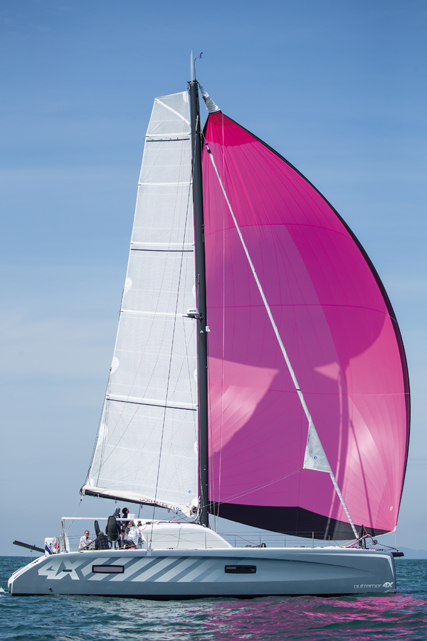
Mast and bulkheads in carbon; a compression beam/bowsprit also in black fiber; fiber rigging and (very) optimized sails. Here is the recipe for sporting success
A logical conclusion
The 38 and 40-43 footers designed by Gerard Danson (the founder of Outremer) correspond with the French image of “fast cruising” versions, and perfectly embody the concept of a nautical GTi from the 1990s. The naval architect and builder designed inspirational models received an enthusiastic welcome from enlightened fans. The higher production costs of these “simple” boats linked to craftsmanship of their build, mean that they have evolved perfectly. can find them to a period which today has evolved. Their designer experienced a certain amount of mistrust of rotating masts and fiber rigging when they first came out, though these are now seen as essential on a performance multihull. The yard was taken over in 2007 by the Grand Large Yachting group, and this opened up a new era. The launch of the 51 (Barreau/Neuman design) and its successors fitted with optional carbon masts and bulkheads, then the 5X (VPLP design) paved the way for the arrival of the 4X fitted with these attributes, yet on a production vessel.
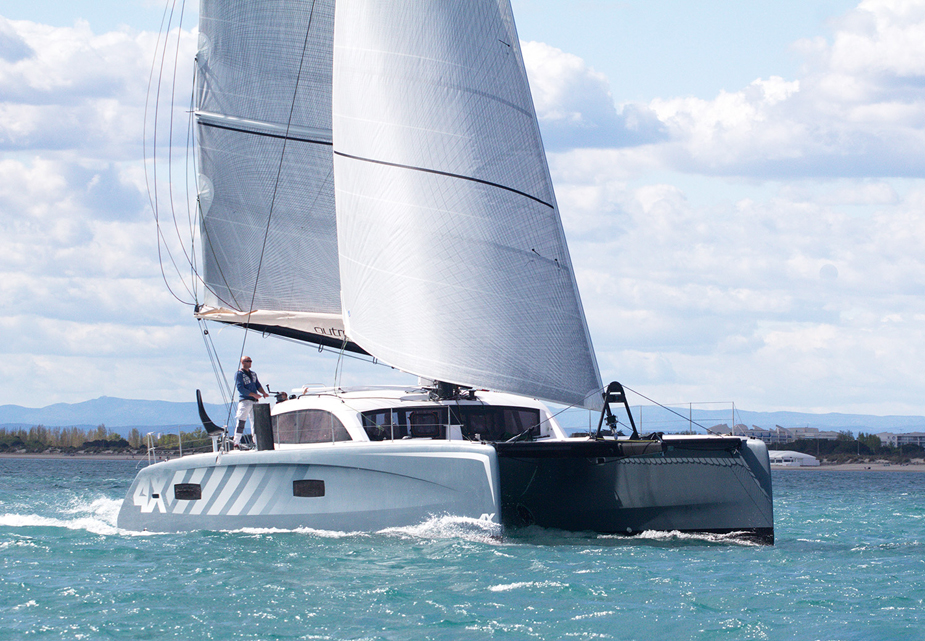
Without any noticeable increase in area, the redesigned sails, made from top of the range materials (in this case, Incidences D4) generate significantly better performance than cruising sailcloth
A “sporty” chassis and powerful sails
The precision of digital design and the evolution of construction processes (widespread use of infusion) have made it possible to have large sections of production models in carbon fiber (bulkheads, beams) outside of the competitive sector. The arrival on the market of very reliable carbon masts, delivered at a reasonable price, has led to a (very relative) increase in popularity of these exceptional machines, meaning they are no longer just seen on the race course. Their acceptance by future owners is growing, and their context is becoming more favorable, with models such as the 4X starting to rule the market.
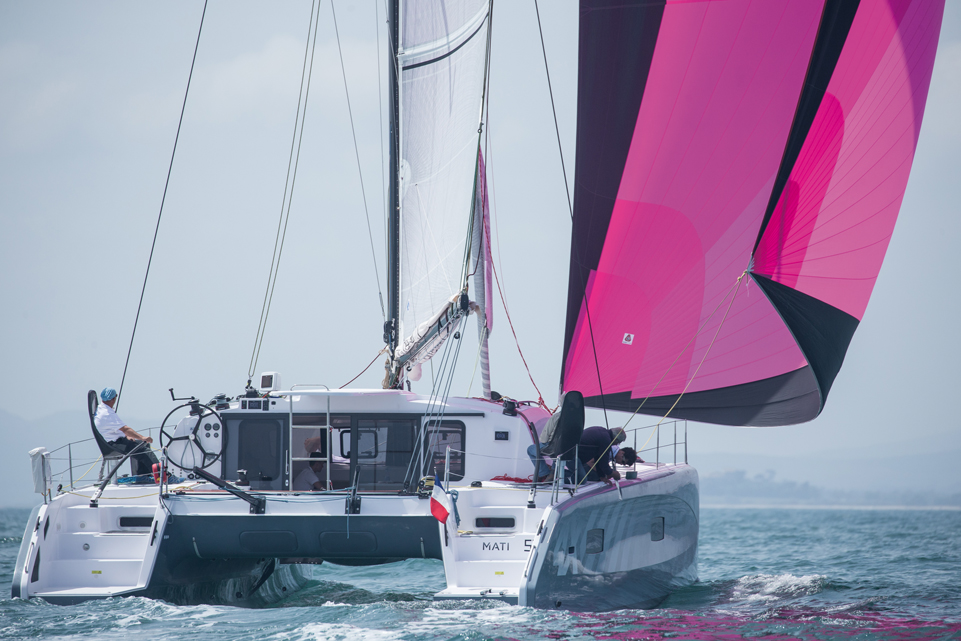
In these conditions (under full spi) of medium or light airs, the location of the tiller allows for direct contact with the rudders for a really fun feel to the helm
Attractive lines
Following on from the parallel with the automobile industry, I remember the advertising for Ford’s 4-door Sierra Cosworth when it first came out: “You won’t want to borrow your friend’s sports car ever again”, captioning the muscled-up front end of the 2 liter Turbo 4x4 alongside an almost plain-looking red GT! This same principle could equally be applied to the sport version of the 45, which is taking the same approach: combining use and enjoyment, cruising and day-sailing, with increased performance! There’s no question of slipping by unnoticed with this kind of boat. The gel coat of the topsides is in a nice anthracite color, adorned with a dynamic motif and the 4X emblazoned in a special font. It’s pretty, but needs looking after (fender socks are essential as is annual polishing). The davits and the coachroof carbon handrails fit in well with the lacquered rotating carbon mast by Axxon-Dracula Spars, held tight by rod rigging. The bridgedeck clearance (90cm) demonstrates ambitious capabilities. The very marked convex form to the exterior topsides is perhaps a little too marked, though the fine-entry bows are elegant. Along with the carbon compression beam which extends to become the bridle-less bowsprit, they contribute to the sporting identity of the 4X.
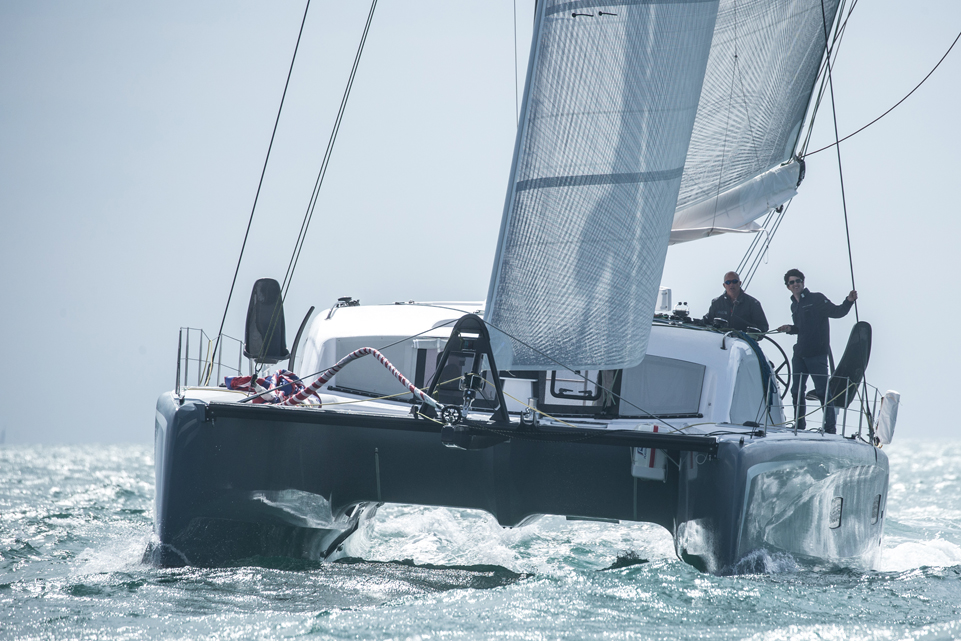
Despite increased torque and power, the 4X maintains the usual Outremer balance. The bridgedeck clearance, the centering of weight, the fineness and volume of the hulls allow it to take on a choppy sea in safety
A light yet reinforced platform
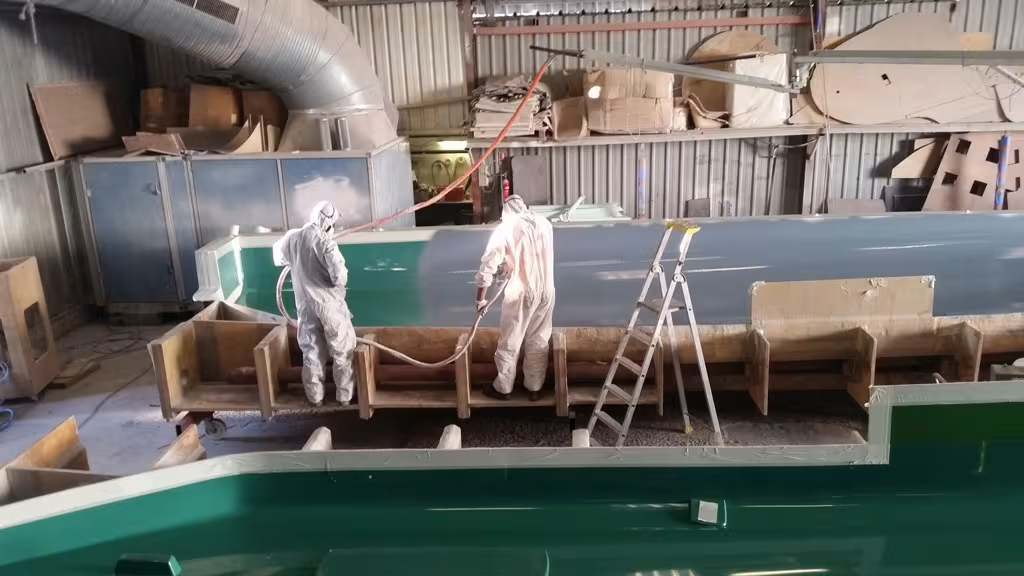
The 4X is geometrically identical to the 45, but the hydrodynamics have been smoothed out in the region of the aft tunnels, and the foam / carbon bulkheads (glued and fixed in manually) appear as a substitute for fiberglass to stiffen and lighten the structure. The deck is also reinforced with carbon, as are the dagger boards and the new, longer rudder blades (which will replace those on the 45 which were the same as on the first examples of the 4X). The exterior of the top sides, like the underwater hull, are in vinylester and the bottom of the hulls in monolithic laminate. The combination of all the carbon parts allows for a weight saving of around 500 kg on the platform.
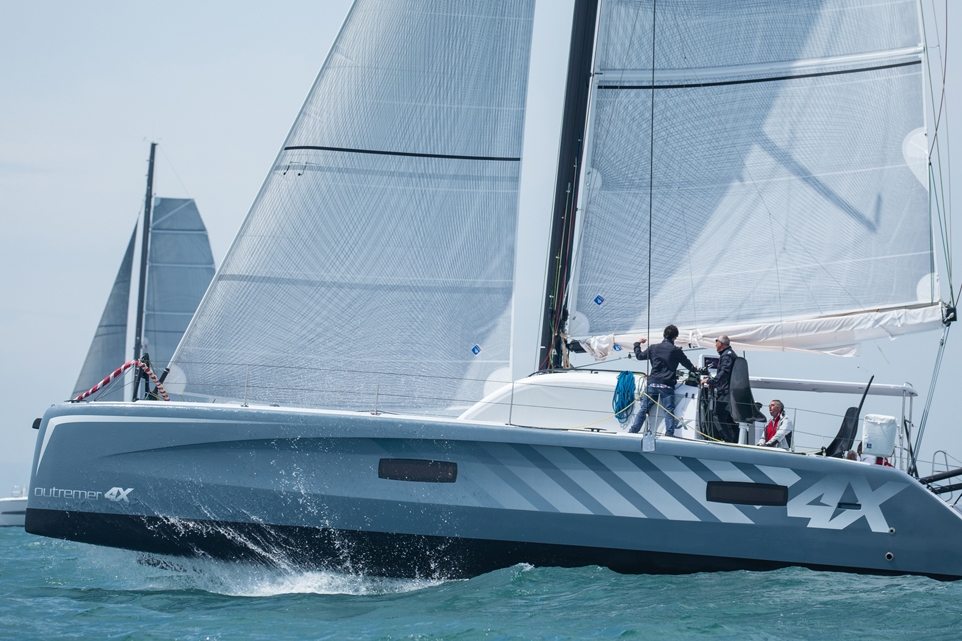
You can’t go by unnoticed in this boat! The anthracite gray gelcoat and the dynamic graphics really stand out
Finding the Sport/Comfort Balance
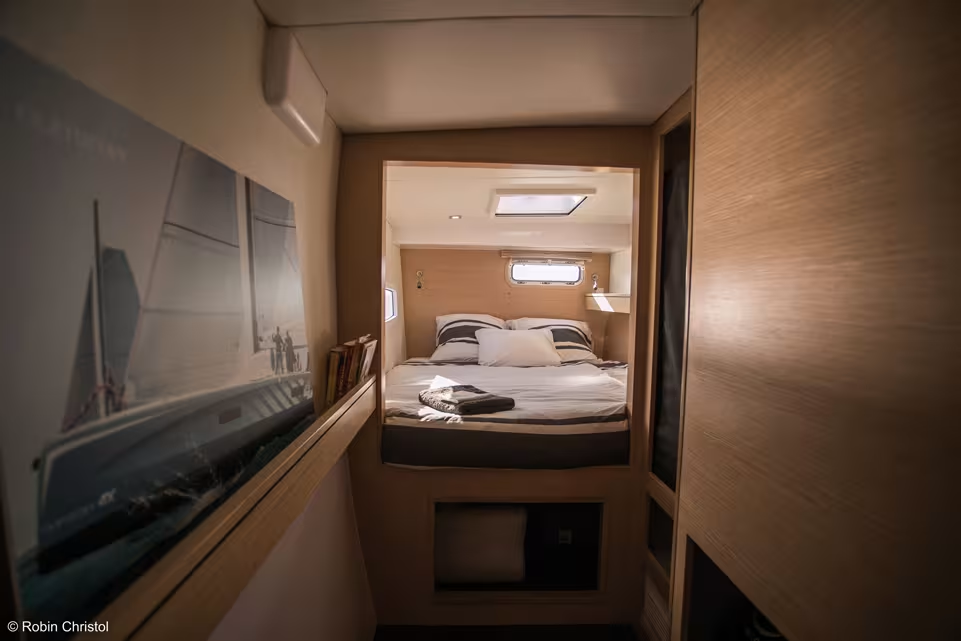
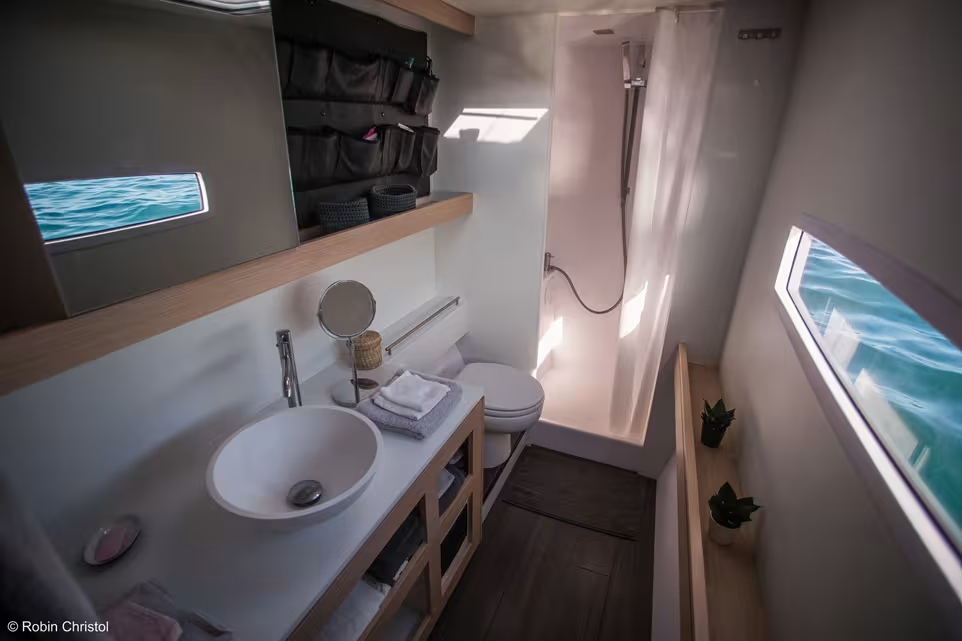
The cockpit of the 4X is perfectly connected for sail handling (the winches on pedestals are cleverly positioned) but this doesn’t impact on being comfortable and multi-purpose for the relaxation side of the cruising program. The L-shaped bench seat and the lounger to starboard can seat a good-sized crew. A neat height-adjustable table can be lowered to become a perfect spot for stretching out for a siesta, or even as an outdoor bed for the off-duty watch keeper in good weather. Above, the rigid central passerelle offers easy access to the boom, and with fabric extensions (which slide away into lateral rails), this becomes the bimini. This light structure provides good protection from the sun and from the rain at anchor. It’s a pertinent solution which combines panoramic visibility under sail, comfort for the crew, functionality and reduced windage. The glazed sliding door opens up wide, giving flush-decked access into the salon, though this could be better integrated into the bulkhead. Inside (as in the cockpit) the panoramic visibility is excellent. A very important safety feature! Efficient ventilation is ensured by two large panels forward (which you must make sure you close when underway, so as not to snag any of the lines). The unbleached linen and the light Alpi trim (the top of the range veneer made from reconstituted wood) create a calm and contemporary atmosphere. The cabins are light, well ventilated and I particularly liked the simple and effective design for covering the hatches (a composite panel cut to shape) and the larger stowage area under the bunks for travel bags. With the 4X, Outremer seem to have successfully combined a refined and comfortable level of seaworthiness with a chassis which definitely has sporting ambition.
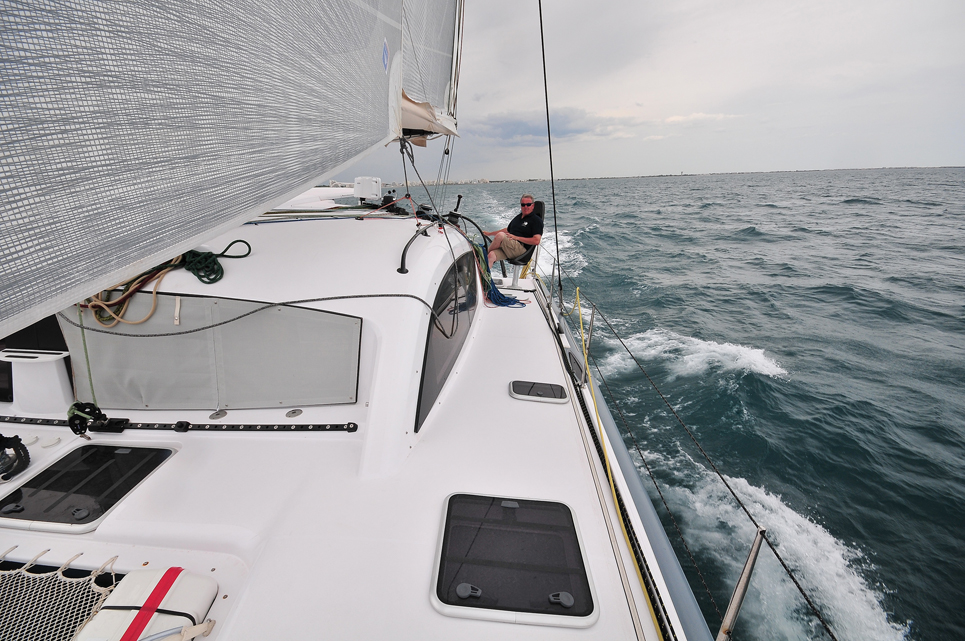
The 4X is capable of some remarkable performances in light and medium airs (amazing for a fast cruiser this comfortable). In a breeze, it very quickly reaches double figures.
Sea trial
What should you do when the forecast is suggesting 5 to 9 knots of wind in the zone where you want to sail? Putting to sea for an interesting experience and a day of fun sailing is the logical answer with an Outremer 4X! Our test boat is not the lightest of the production, being as it is equipped with the luxury of forced-air heating, a watermaker and numerous items designed to increase comfort and safety, getting us ready for setting off cruising. It does however have a set of perfectly cut Incidences D4 sails. Under engine we clear the dock at La Grande Motte on France’s Mediterranean coast, using the two 30hp motors whose power is perfectly sufficient (with three-bladed folding Volvo props of course). We came to the first sign of ripples on the water and stopped the motors with the wind instrument showing 4 knots. Upwind and close-hauled, the 4X set off without complaint under main and genoa (our test boat was also equipped with a self-tacking solent for easy use for a couple or single-handed). It will be in conditions such as these where we will see what the boat can do! The best helming position in these conditions is obviously the bucket seat fitted each side on the side-deck. In light airs, the carbon tillers are no longer accessories, but become the direct physical link with the rudders, giving a fine feel. Creating apparent wind and crossing a flat body of water at good speed is an experience exclusively reserved for sharp multihulls. Reaching this achievement in a cruising catamaran is reserved for a small number of models, of which the 4X is one.
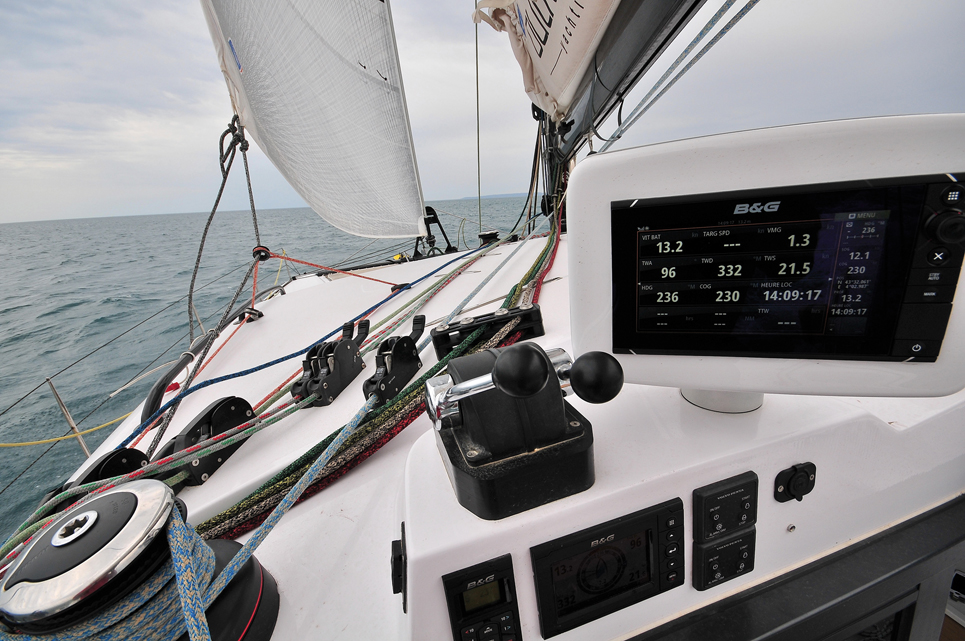
The deck layout is modern and easy to read. A few minor points need addressing for later models to take into account the requirements and the power of the boat (traveler, sheet centering, and alignment of some of the clutches).
The objective on our first day was to make the most of these qualities, and we hoped to cross that symbolic 10 knot mark. We didn’t quite make it, though the 4X really showed its potential. From 5 knots of wind, the boat speed on a reach is consistently very close to the true wind. Or even more when flying the asymmetric, and this was not a one-off, as it achieved such figures regularly. From 7 to 8 knots true, the 4X sailed nicely, with the wakes starting to stretch out and the wind refreshing the helmsman. Slipping along at an average of 9 knots in less than 10 knots of wind on almost smooth water generates immense pleasure, equally good as hurtling along at 20 knots in a breeze. Tacking was very quick and the boat picked up again extremely rapidly (watch out for the genoa sheets which have a tendency to snag on the swan-neck for the cables from the mast), and the angles are very tight upwind. The boat is perfectly balanced and holds its course during trimming. The rudders of the 45 are effective and neutrally balanced, giving a good directional effect. But the yard has chosen to substitute these for longer profiles which are finer, and even further amplify the pleasure of helming and increase their reactivity at high speeds. Our record on the day (as shown by the Navionics on the plotter and measured by a Garmin Quatix) was 9.6 knots, even though we had seen no more than 10 knots of true wind. The following day, a switch to wet and stormy weather was forecast for the afternoon. With lines ready to slip, we were on the lookout for the little front. As a reward, from 3 till 6pm we enjoyed a good, though sometimes irregular, breeze of 12 to 19 knots. As soon as we cleared the dock, a long upwind, but slightly open, leg allowed the 4X to get its teeth into the wind at between 12 and 14 knots. Not bad for a cruising boat, especially as this power is delivered in total safety (which means that you don’t need to have someone ready to ease the traveler in case of being overpressed!). The stability of the D4 sails is amazing at this speed, with the rotation of the mast really improving the airflow. We had the chance to sail alongside another 4X on delivery: the wind dropped a little to 10-11 knots, but under the asymmetric, a little duel ensued with over 10 knot averages.
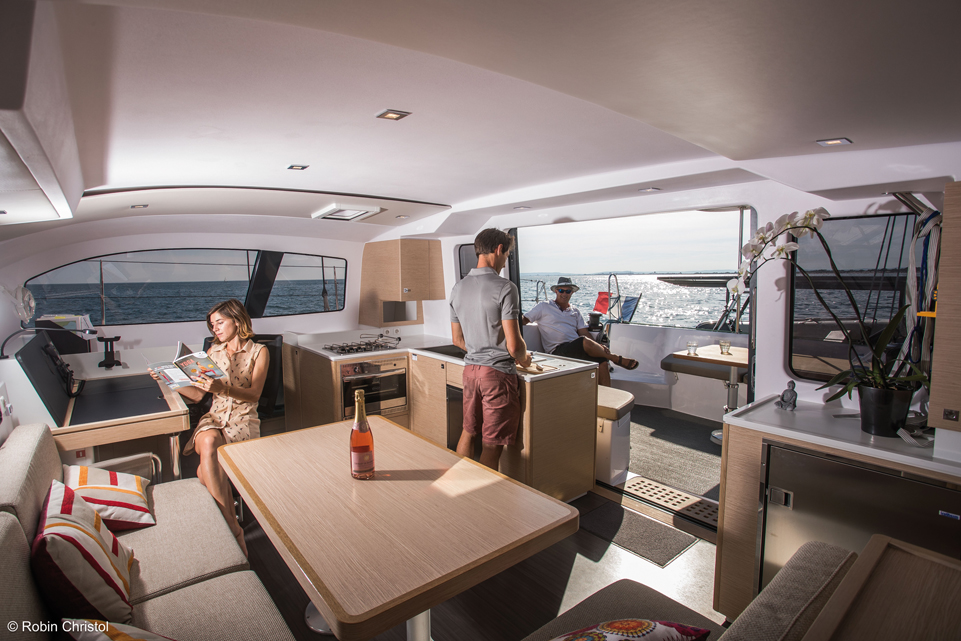
The volume of the coachroof allows for a comfortable interior layout. It is sleek and contemporary, remaining pleasant in any season.
Conclusion
The 4X: what a great machine this is! Good-looking and well equipped, this catamaran responds perfectly to its specifications and seems to effortlessly combine sporting pleasure with livability for blue water cruising. However, this comes at a price. This boat has a rather rarified price tag. The superb rig combines power with ease of use (genoa and self-tacking solent); the deck layout and the twin helm stations / tillers are totally appropriate. All that remains is to ready the cannons for an attack on a transat, such as the ARC, while waiting for some cruising multihull racing, such as Mutli 2000 to come around. This boat will surely feature in it.
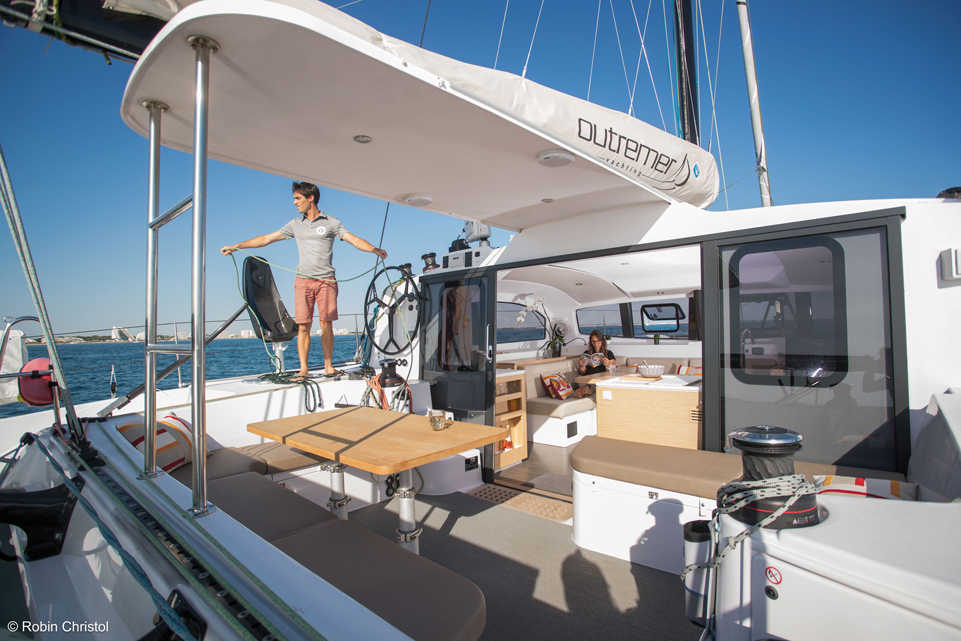
The visibility through the coachroof from the cockpit and the helm stations has been carefully designed
Technical specifications
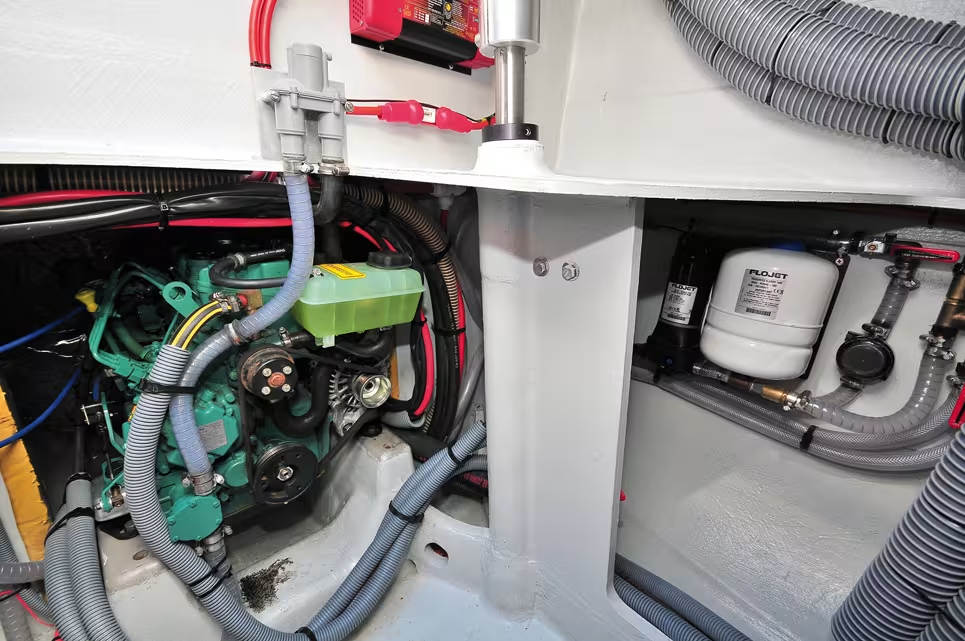
Naval Architects: Christophe Barreau and Frédéric Neuman Builder: Outremer Yachting Design: Patrick Le Quément Interior Design: Franck Darnet Length: 14.65m Beam: 7.10m Draft: 1.00/2.00m Mast height: 17.50m Rigging: Fiber Air draft: 20.40m Hydranet mainsail area: 68m² Hydranet genoa area: 55m² Gennaker: 115m² (option) Asymmetric Spi: 130m² (option) Motors: 2X30hp Volvo with saildrive transmission and three-bladed folding propellers Fuel: 336 liters Fresh water: 450 liters Starter batteries: 2x70Ah Service batteries: 180Ah (lithium) Price excluding tax: €689,000
Pluses
- Good sport / cruising balance
- Cruising catamaran offering excellent feel at the helm
- Well-presented
- Twin controls with disengageable wheel / tiller
Minuses
- Fixings of a few items of equipment at the chart table
- The return for the gennaker line is complicated and the furler over-sized
- System for genoa sheet could be improved
- Some adjustment required to align the rope clutches on the early models
THE COMPETITION
MODEL O’YACHT CLASS 4 126 m2 7,5 t 800,500 CATANA 47CR 139 m2 10,9 t 598,900 BALANCE YACHTS 451 131 m2 8,4 t 419,000
BUILDER MODEL UPWIND SAIL AREA UNLADEN WEIGHT PRICE EX-TAX
O’YACHT CLASS 4 126 m2 7,5 t 800 500
CATANA 47CR 139 m2 10,9 t 598 900
BALANCE YACHTS 451 131 m2 8,4 t 419 000
A word from the naval architect, by Frédéric Neuman
The specifications for the Outremer 4X were clear: push the boundaries of performance, using our latest Outremer 45 as the platform. It was a question of playing all the design parameters, yet not losing sight of the fundamentals of the brand: keep a simple, fast and safe boat. The general proportions and the power (we couldn’t alter the beam of the boat) were fixed by the existing Outremer 45. So we played around with optimizing the hulls and the lightness and optimization of the sail plan to improve performance. The hulls were optimized by increasing the waterline length aft. With the use of CFD simulation software, we were able to find the right form and dimensions for this extra length. On this one factor alone, theoretical performance was optimized by 7.5%! The structure has been optimized, by the use of carbon where it really makes sense (in particular in the main bulkheads). This makes for a stiffer and lighter structure. The sailplan has been optimized, yet maintains consistent power by working particularly on the quality of sails for light airs and medium conditions (the design of the genoa and good downwind sails for light airs). The yard and the first clients played the constant game of optimizing weight with every item of equipment installed on board. The sailing we did during the most recent Outremer Cup showed the pertinence of these choices. By optimizing these design factors little by little we have successfully produced a performance boat with good average speeds and some really impressive top speeds in the comfort and serenity so dear to Outremer!

Boat details
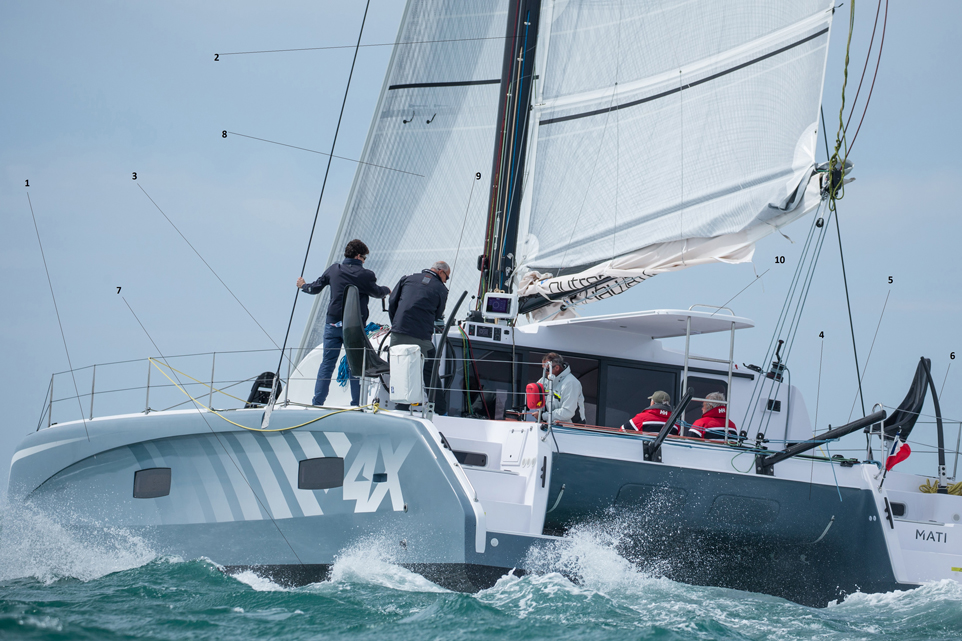
- : The hull design by C.Barreau and Fred Neuman is efficient and full of energy. The convex shape is original and stiffens the panel
- : The Axxon rotating mast is superb, really improving airflow over the mainsail.
- : The fairly aft-set coachroof gives proportions pleasing to the eye and remains aerodynamically fluid despite its interior volume.
- : The 90cm bridgedeck clearance is comfortable, allowing for height above the waves and good passage through the water.
- : The carbon davits (as with all the carbon parts) contribute to weight saving and also centering of weight.
- : The double helm system (wheel and tillers) is particularly well-suited to the 4X.
- : The Barreau/Neuman hulls are quick and safe. The carbon daggerboards and the new lengthened rudder blades help make the most of the boat provided it is kept light.
- : The combination of the self-tacking solent for short-handed cruising and an overlapping genoa for better performance perfectly suits the 4X. Membrane sails (D4 in this case) allow perfect shape to be maintained in the breeze.
- : The helm station is home to all the essentials for sail trim, engine controls, Garmin electronics (in a waterproof compartment) and the disengageable carbon steering wheel.
- : The bimini designed around a central passerelle provides great access to the boom. Fabric extends laterally to provide lightweight and effective protection from the sun.