It’s tricky to replace a best-seller... the catamaran we’re on about here is the Outremer 51, built in 100 examples. Its replacement, announced back in September, is the 52. This new model, presented as a preview – and at home, too - during the International Multihull Show, should do even better, as we felt it to be seductive and accomplished.

Infos pratiques
- Le chantier : Outremer 52
- La fiche technique
-
 Découvrez notre vidéo exclusive
- Financez votre Outremer 52
- Assuez votre Outremer 52
- Articles autour du Outremer 52
Conditions: Northwesterly 15 to 20 knots, sea state slight
Even though the Outremer 5X is imminently retiring as we conduct this test, we can see that the core Outremer Yachting range has shifted some 10 feet (increasing, of course!). In the early 2000s, the previous generation Outremer 45 was considered the ideal round-the-world multihull, while the 55 was considered a rare and exclusive deep-sea bird. Today, the 51 has taken the prize for the most popular Outremer and its replacement is eagerly awaited... Changing times? Don’t be so sure: “The initial status of customer demand remains close in its philosophy,” notes Matthieu Rougevin-Baville, Outremer Yachting’s sales director. What do future circumnavigators interested in the brand expect, anyway? Most often, they want to sail with their families, quickly and safely. They also hope to avoid technical problems, which are always possible both at sea and in port. “Offering even more comfort without impacting the intrinsic and essential qualities of an Outremer is the challenge we have tried to meet,” adds Matthieu. The extremely demanding and precise specifications involved close collaboration between the shipyard teams, the naval architecture firm VPLP, the exterior designer Patrick Le Quément and the interior designer, Darnet Design. The objective is to offer more space and comfort, to propose a modern, robust and reliable cruising catamaran, while maintaining a level of performance equivalent to that of the Outremer 51. In other words, the 52 is required to maintain an average speed of 10 knots without being inaccessible in terms of handling.
Carbon structure and bulkheads
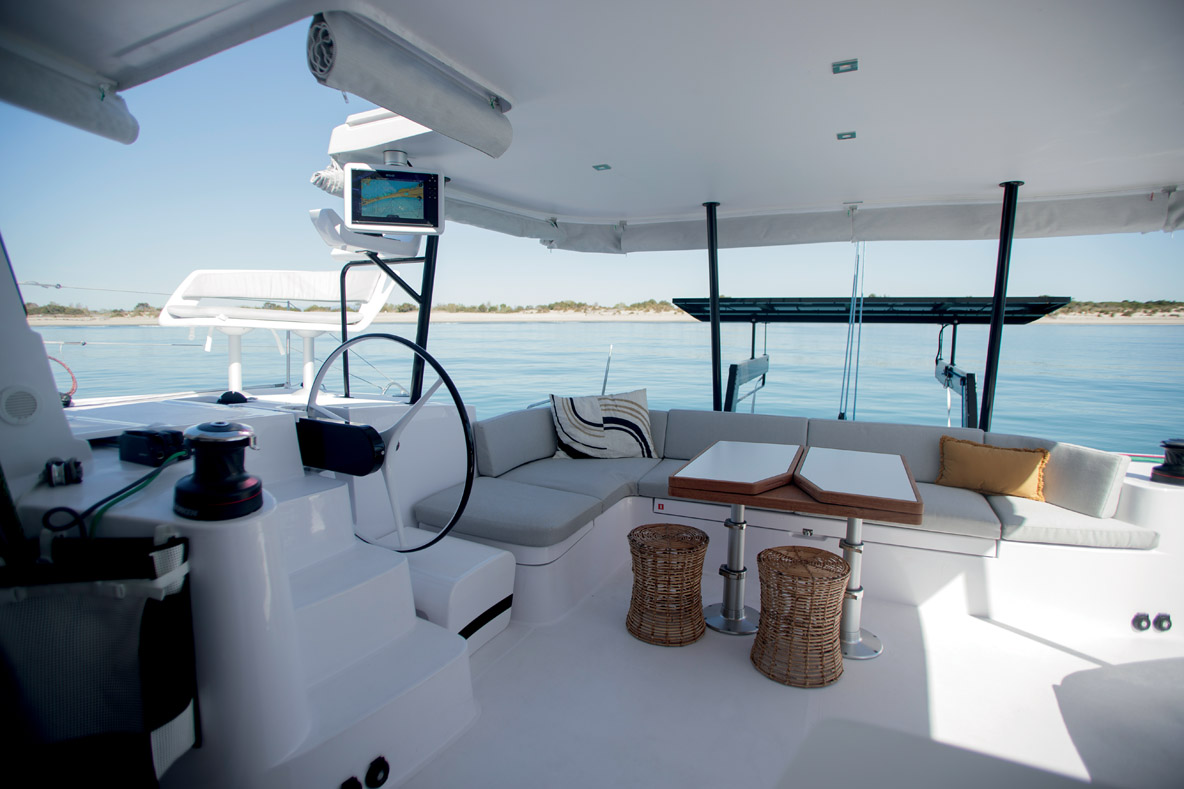
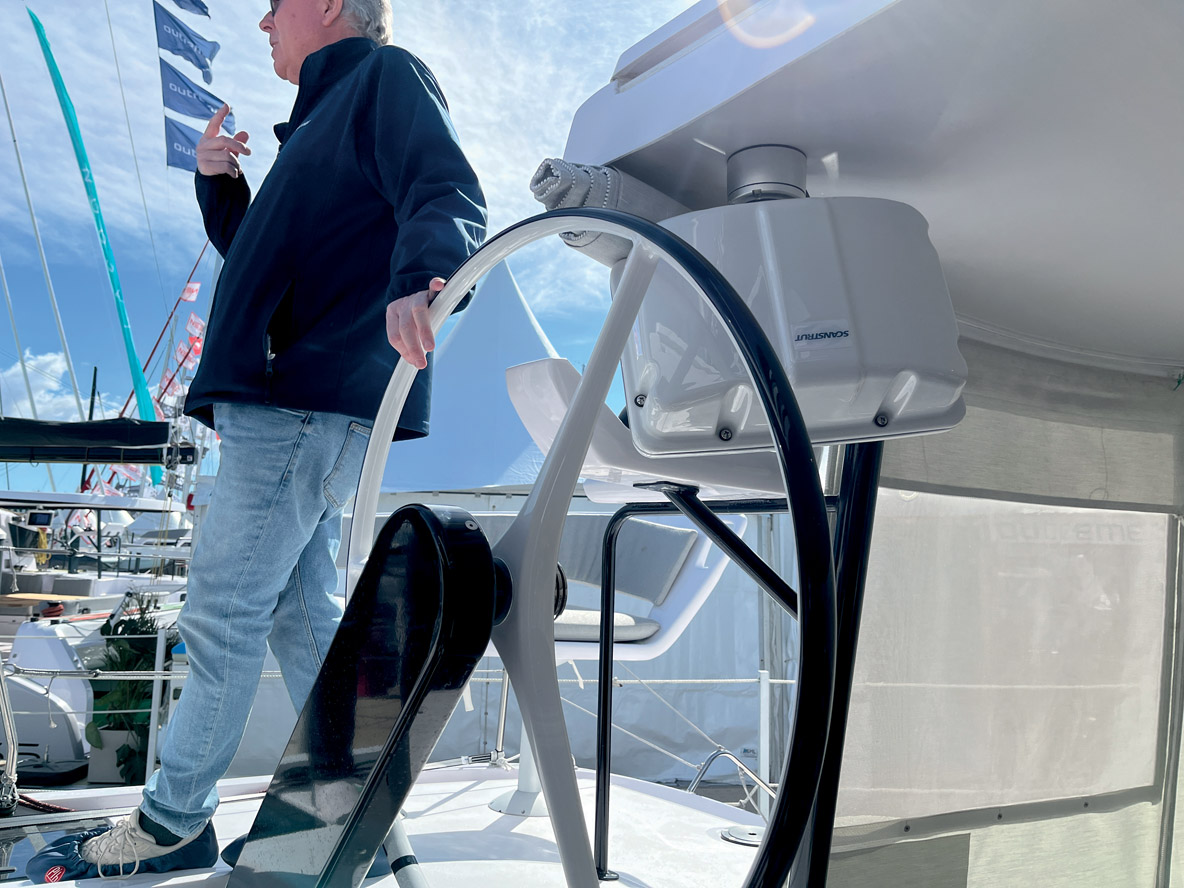
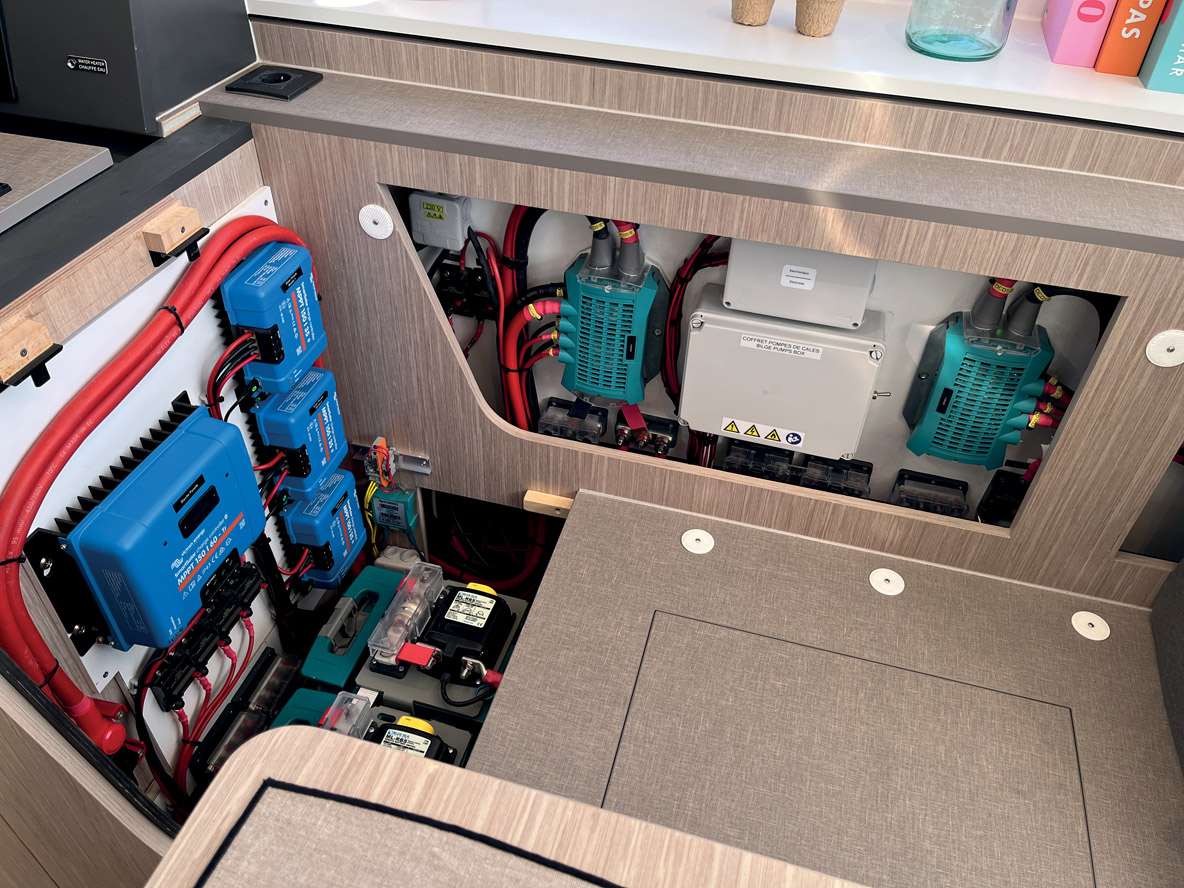
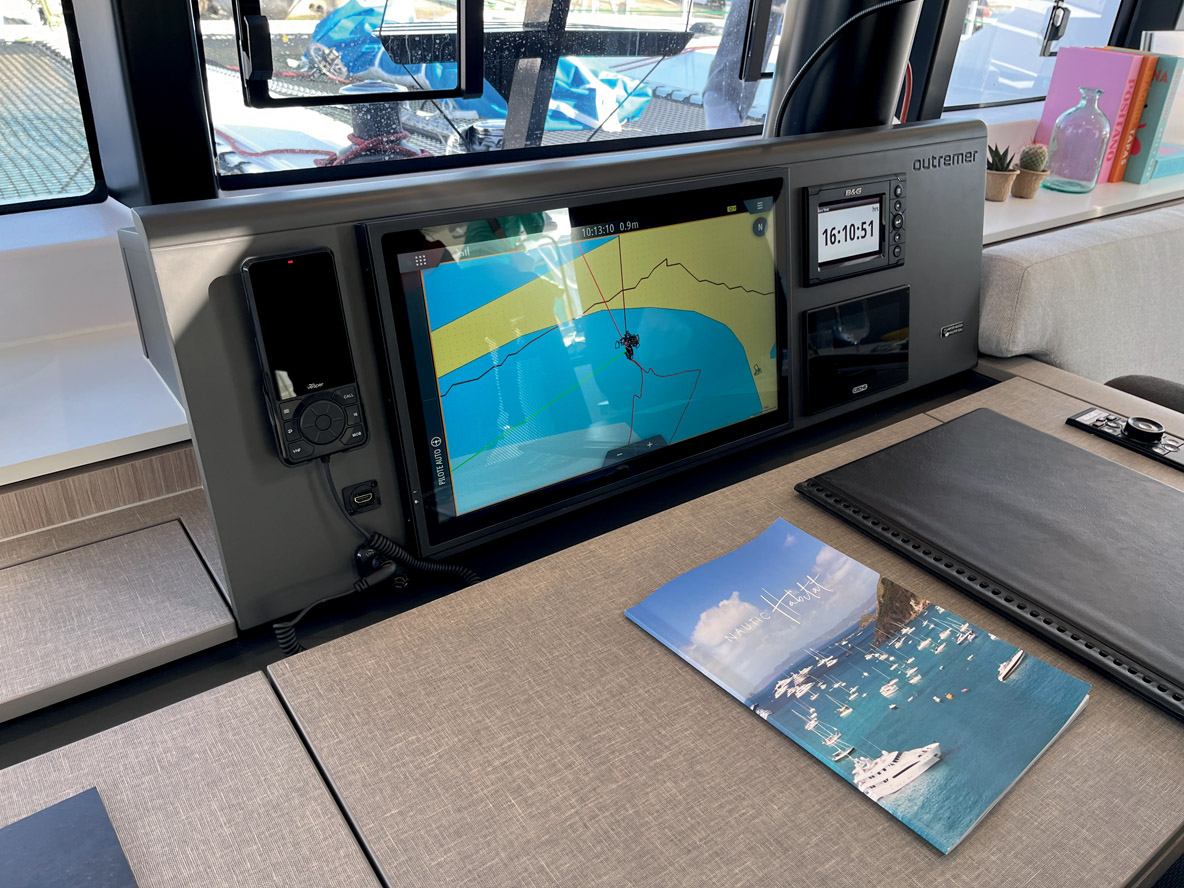
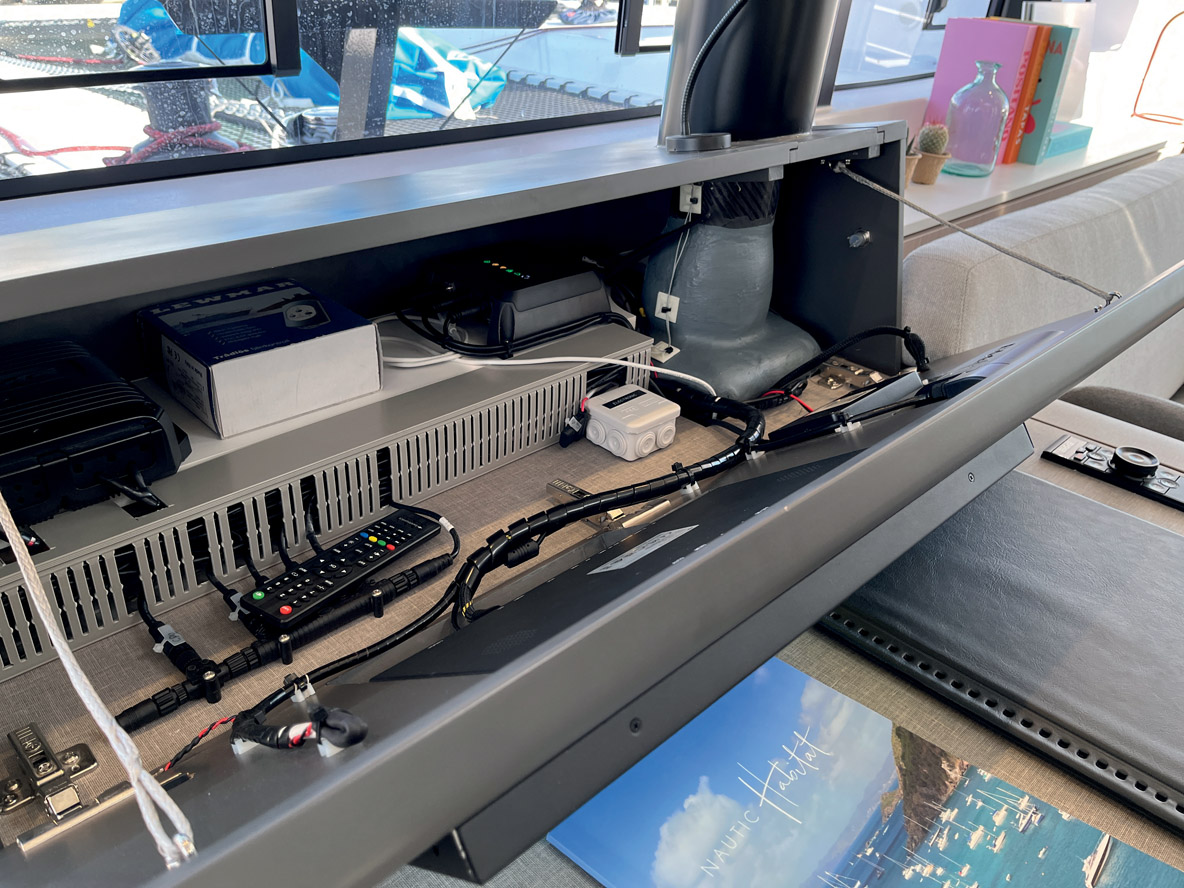
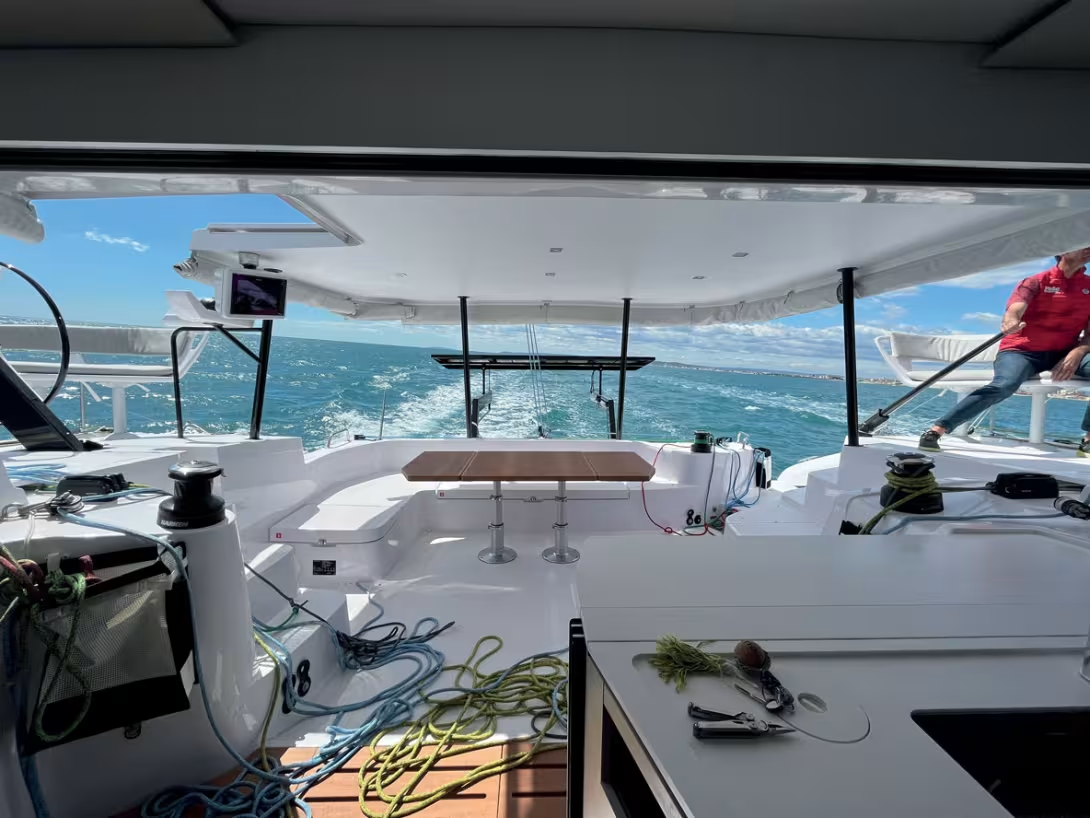
Here we are aboard the Outremer 52, hull #001, let’s see what we make of it! First off, a look at the brochure shows a light displacement of only 27,500 lbs (12.5 t), but then discovering a few seconds later, a generous cockpit and a bay window over the entire width of the saloon raises a few questions... And this astonishment only increases when we discover the queen size or even king size berths in the cabins. The use of monolithic carbon for all the bulkheads and structural beams partly answers the question. But this feat of offering so much comfort while remaining light is, above all, the fruit of “The implementation of the entire construction, which has largely benefited from the technical input acquired with the construction of Gunboats,” says Matthieu. The high-tech construction in the neighboring facility has advanced the Outremer yard in all sections of infusion and finishing. The synergy between the various brands of the Grand Large Yachting group, which are very much focused on the concepts of robustness, reliability and practicality at sea, is of course of multilateral benefit. The perceived quality of the silicone or acrylic seals has improved significantly. The same goes for the organization of technical components: the wiring harness and the plumbing manifolds are easily accessible under the bench seats or the floors. The bow crash-boxes and the watertightness of the bow and stern bulkheads are evidence of serious consideration of safety. We like the fact that the steering wheel can be pivoted down into the cockpit, which can then be completely enclosed, yet still allow access to maneuvers.
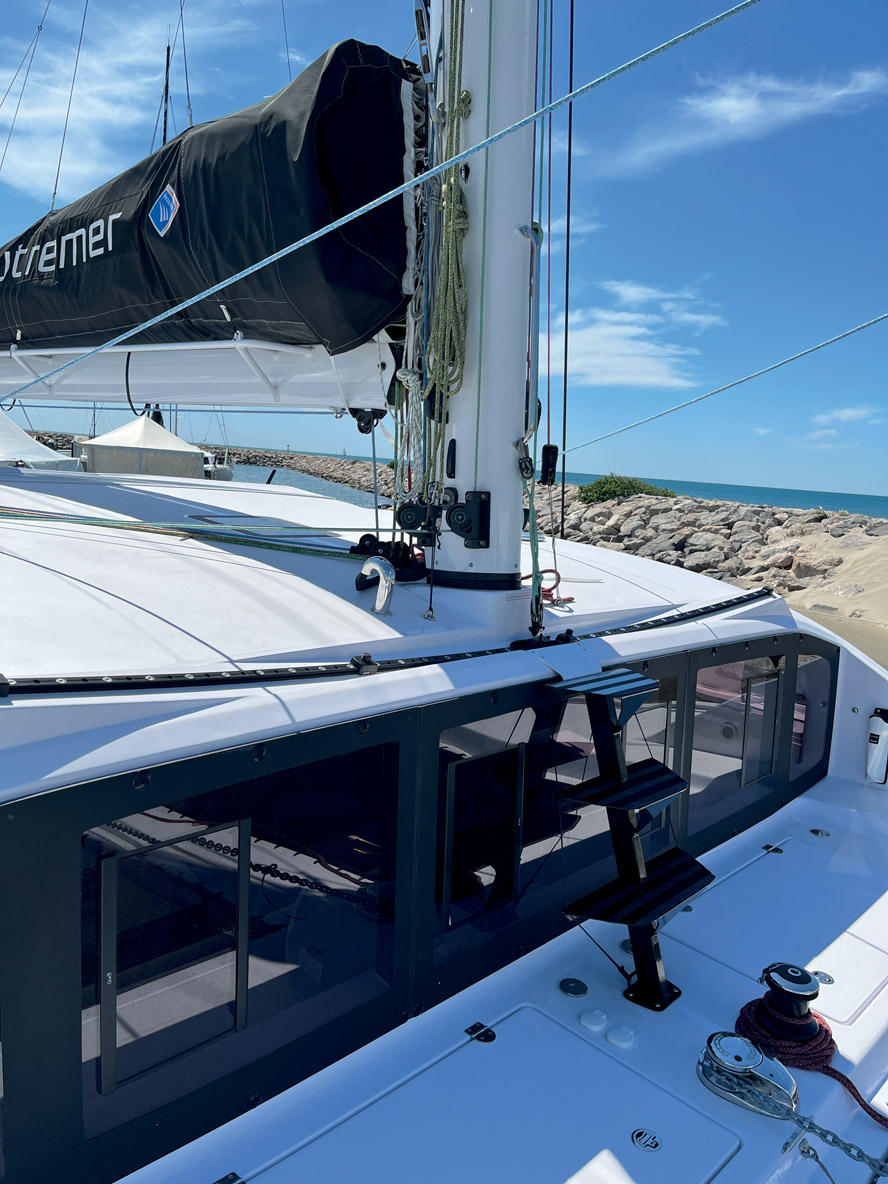
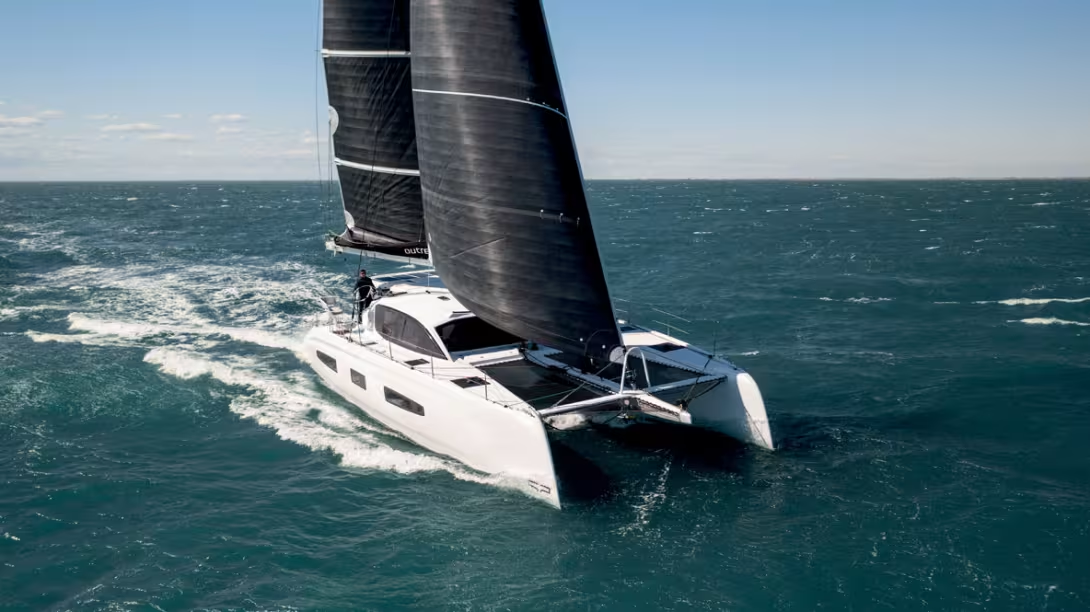
The slightly chined hulls remain slender beneath the waterline, while the nacelle is perched more than 33 inches (85 cm) above the water. With well-calculated weight distribution, efficient deck hardware, a carbon Lorima rig and a wardrobe by Incidences Sails made in DFi, the Outremer 52 promises some great sailing sensations...
The true comfort of a cruiser
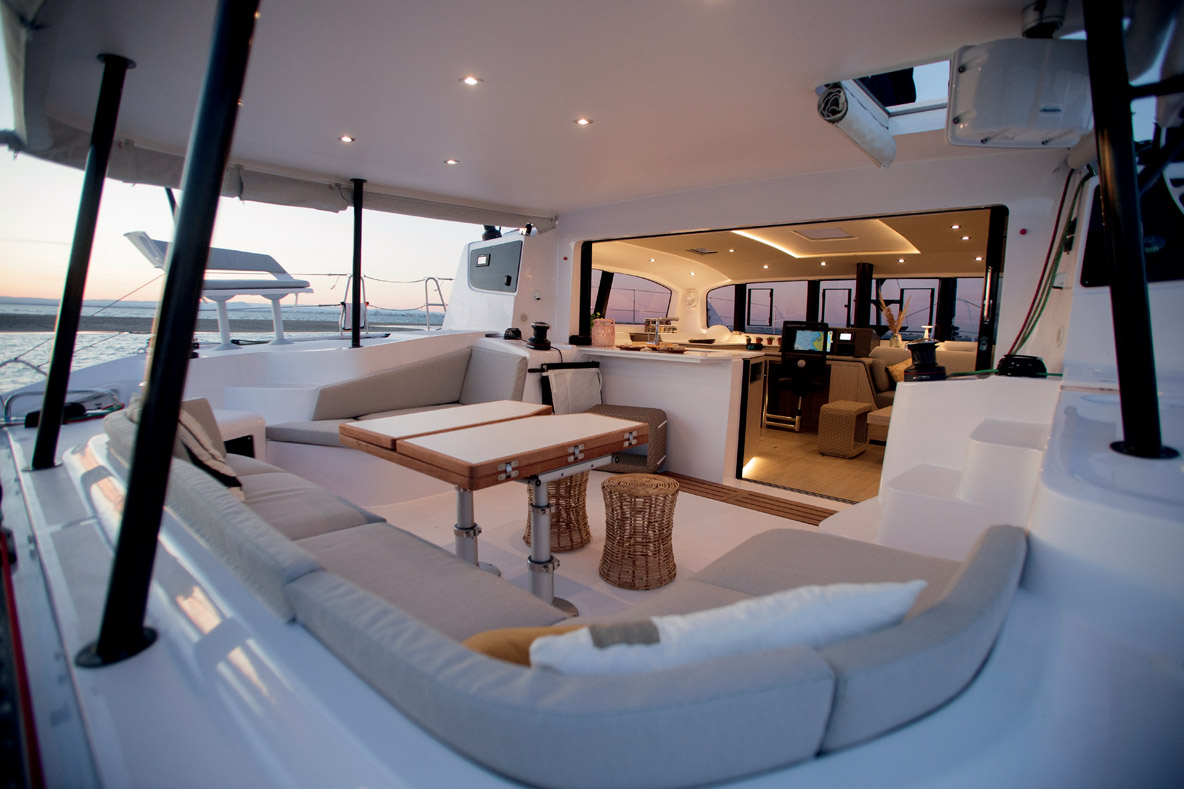
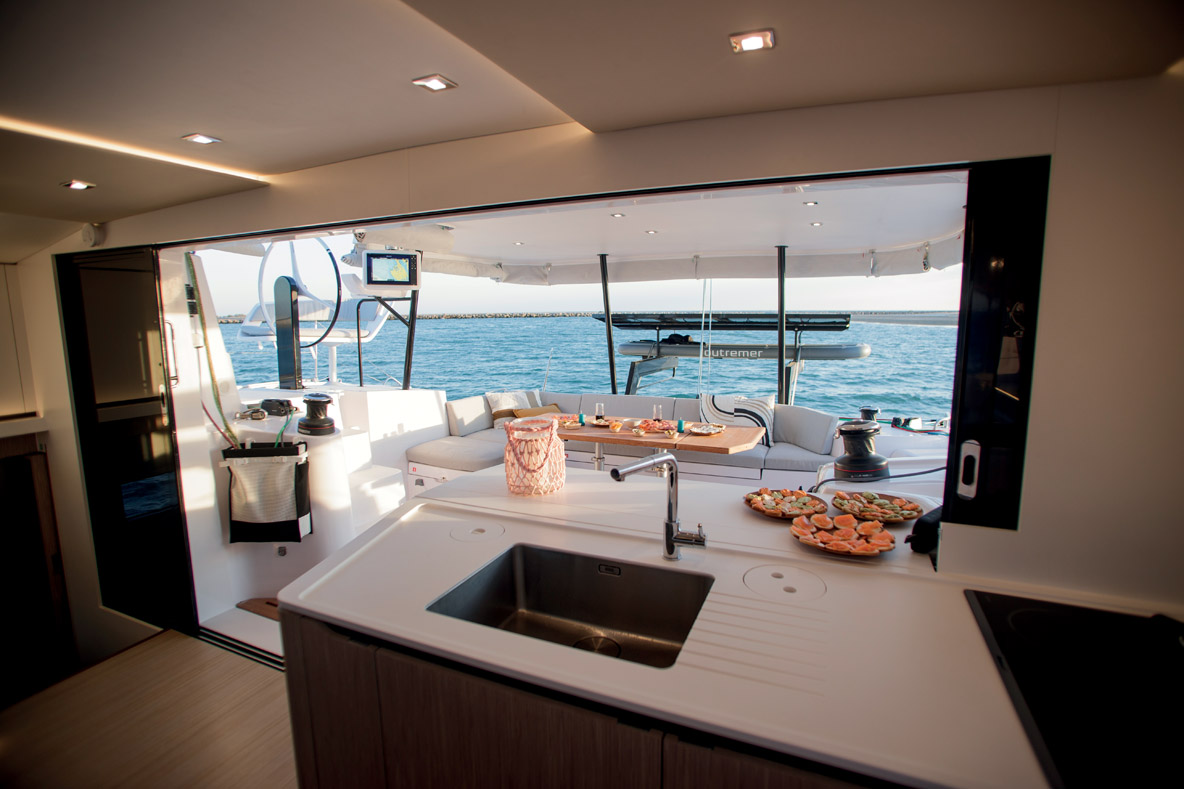
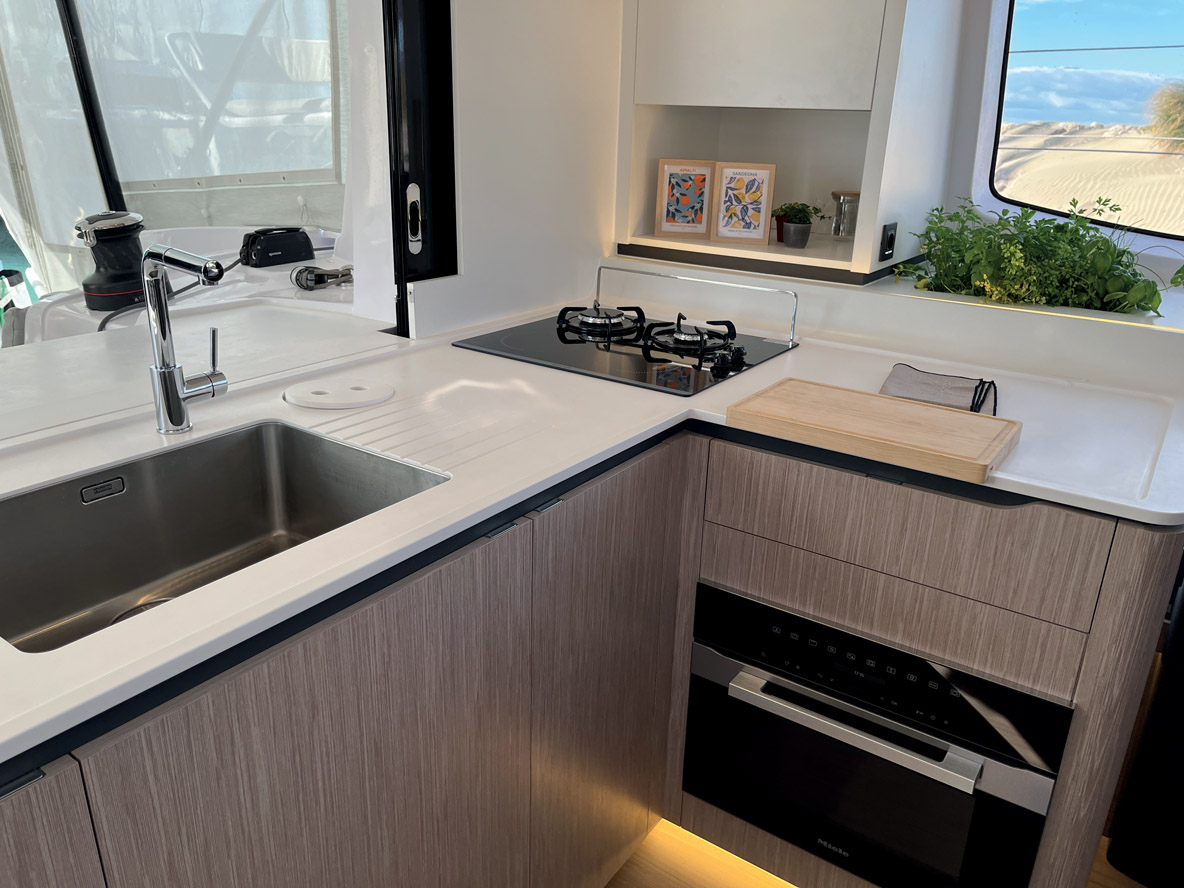
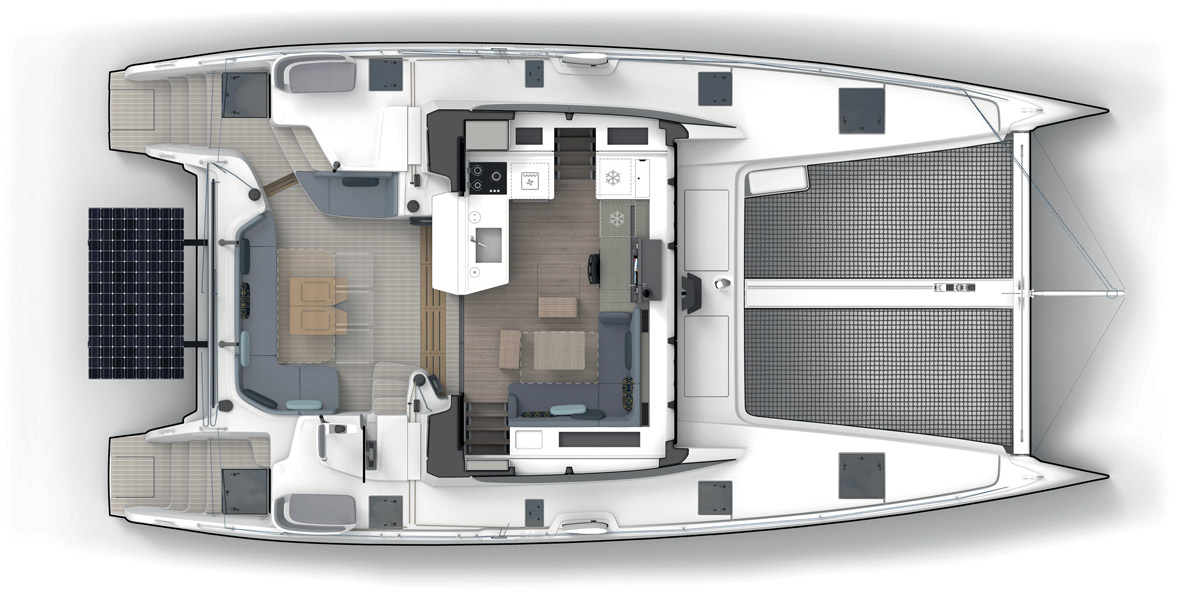
If the silhouette of the 52 evokes speed and thus seems to guarantee excellent performance, what about the interior? A tour of the inside is essential... The tone is set as soon as you’re at the entrance from the cockpit. Surrounded by thick and comfortable cushions, it is very spacious: we’re looking at a really cozy saloon that’s equipped with a modular table that can easily seat eight. Thanks to the Batyline side pieces, the space can be completely enclosed. A cube, that can also be used as a stool, blocks off access to the sugarscoop. Thanks to the large sliding window, the cockpit forms one large unit with the dining area and the galley, in the middle of which sits the bar, making a partition. None of this sounds very original on a 50-foot cruising catamaran marked as a mass-produced boat, you might think, but... we are on board an Outremer! The instruction not to sacrifice any seakeeping qualities, so dear to the brand, was indeed given to the architects from the very beginning (see inset). So this “all-comfort” layout cleverly hides a nacelle that has remained short.
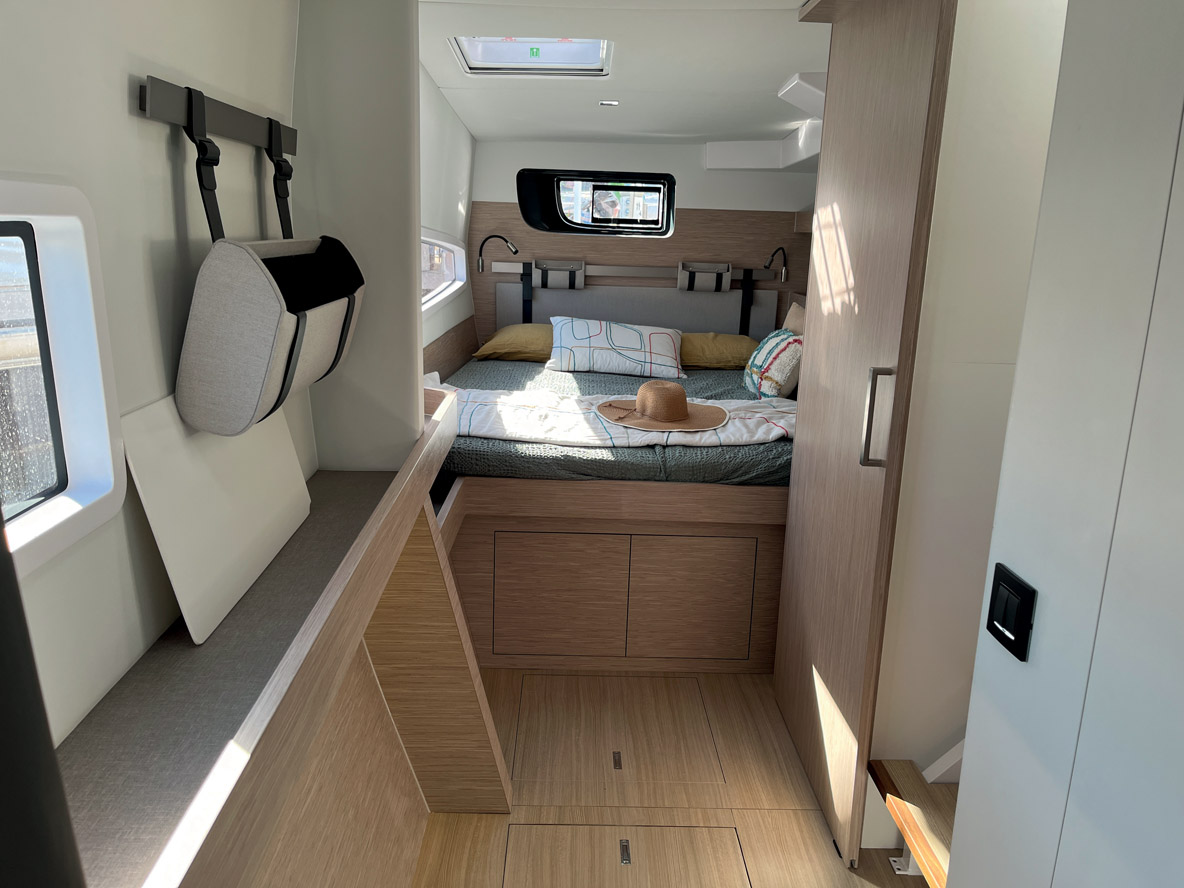
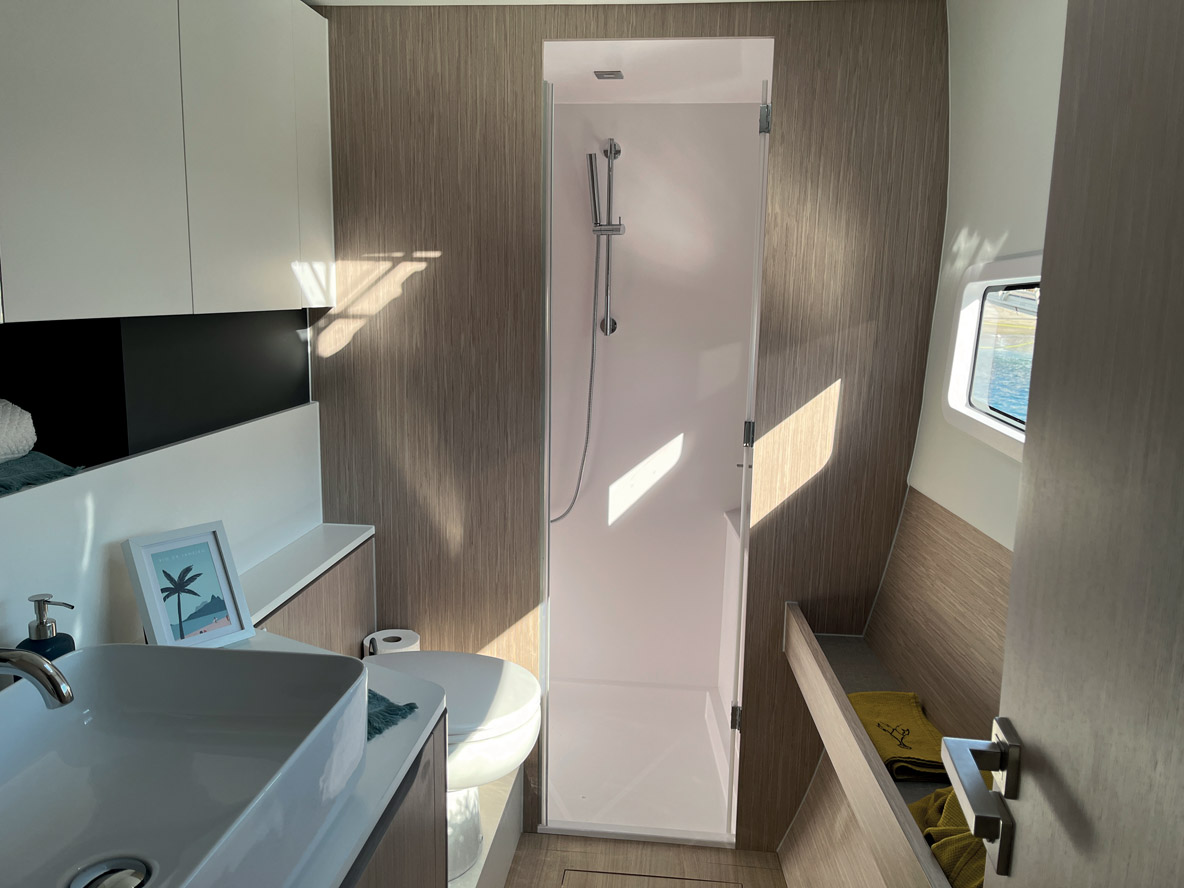
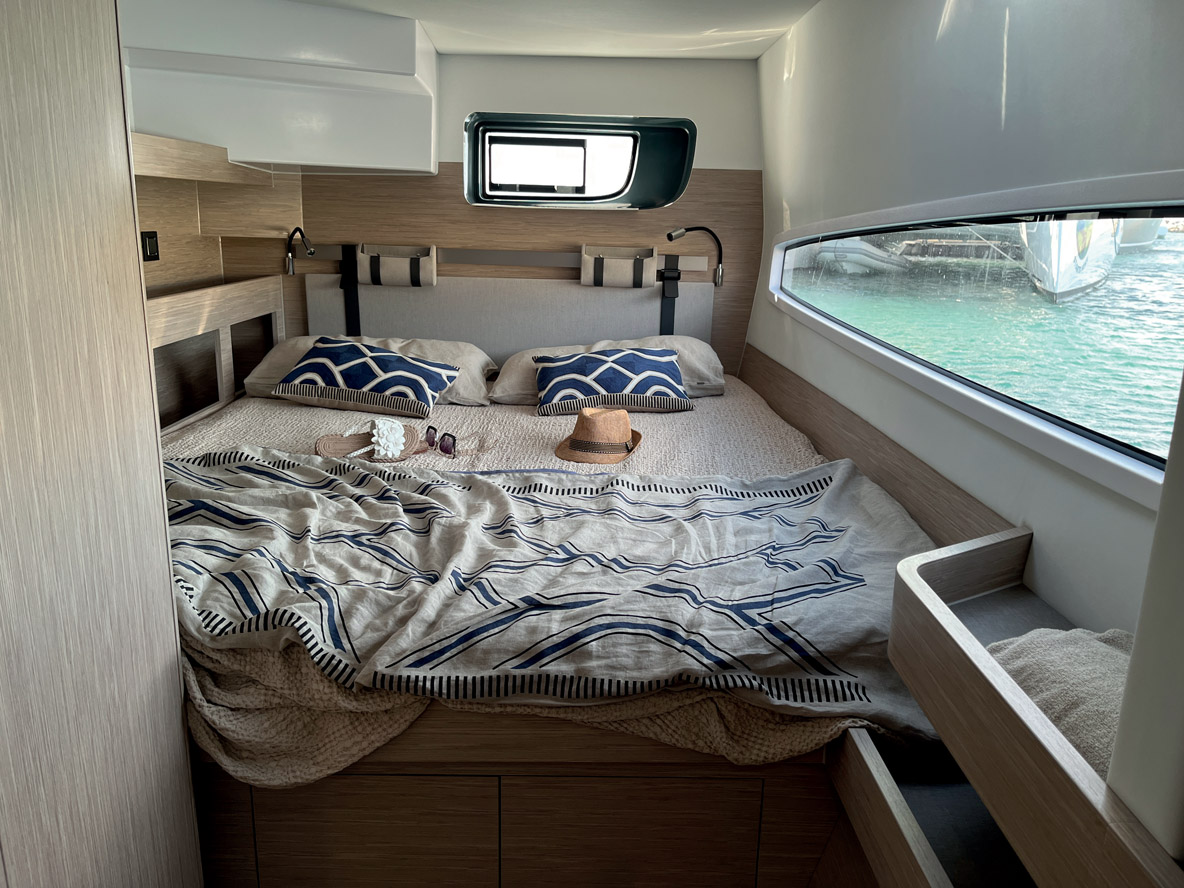
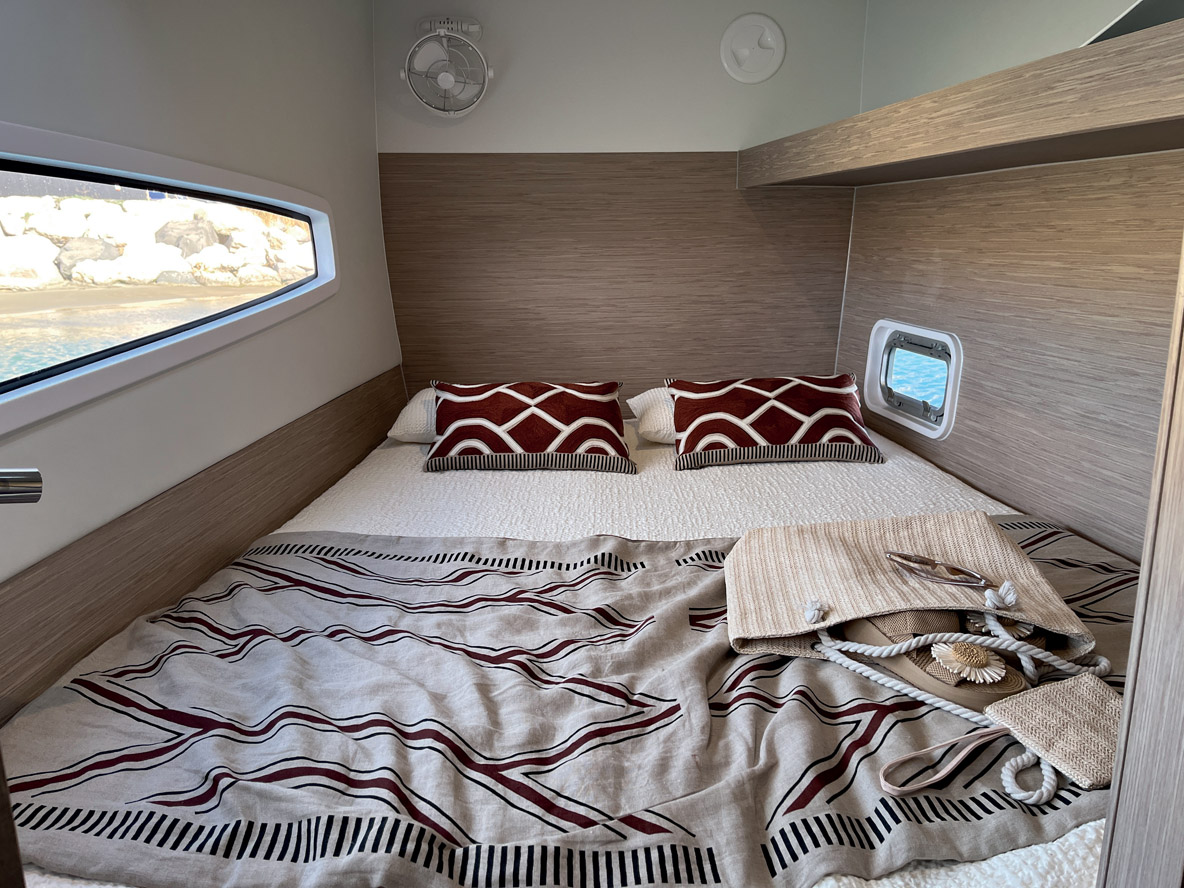
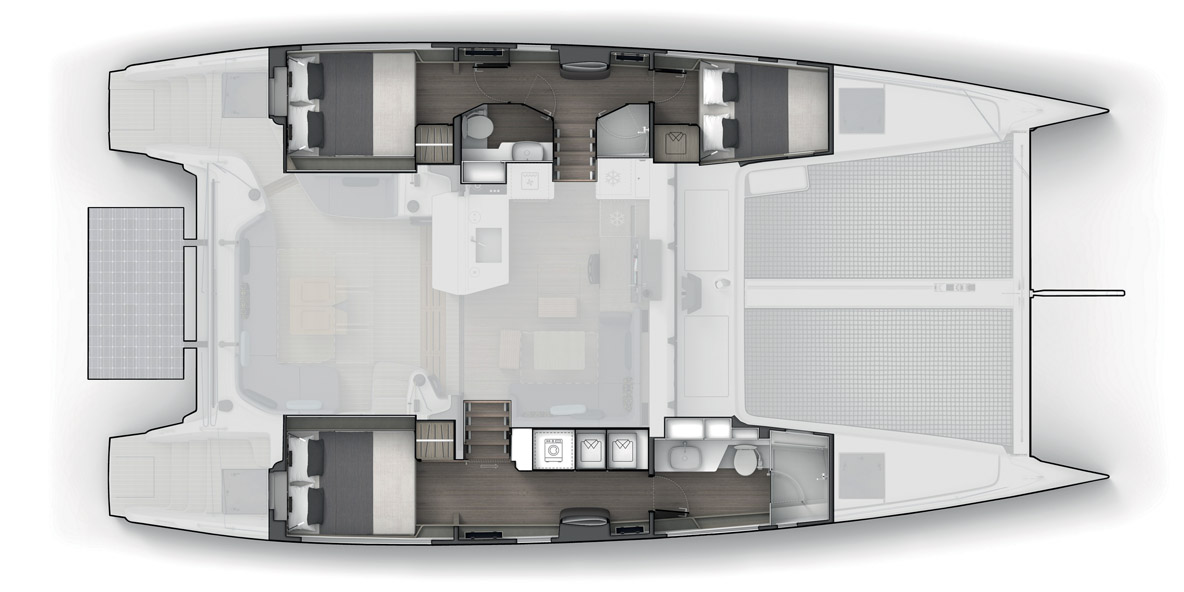
The tour de force is all the more successful in that the ergonomics are perfect, with the table facing forward and the galley facing aft, to the bar and cockpit. Below decks, in the hulls, it is the same, whether you opt for the 3 or 4 cabin version. The passageways are close to the topsides to give more space for the bathrooms. The built-in berths are 63” (160 cm) wide and even 71” (180 cm) if you decide to do without the side panels. The concession to island bed shapes has been rejected - the preference here is to be able to wedge oneself in under all circumstances rather than to give priority to access. The owner’s cabin is located along the entire length of the hull and has a separate head forward of the huge bathroom. Construction techniques now allow for larger openings while maintaining excellent rigidity: light simply floods in! There appears to have been much effort put into the decor and finishing touches, and there’s plenty of storage space, and practical, light and aesthetic leatherette pockets can used to stow all kinds of items in the passageways and cabins. Lastly, the technical elements are easily accessible. This contributes to further increasing one’s peace of mind on board, an essential factor for blue water cruising.
An average speed of ten knots in all circumstances (or almost)
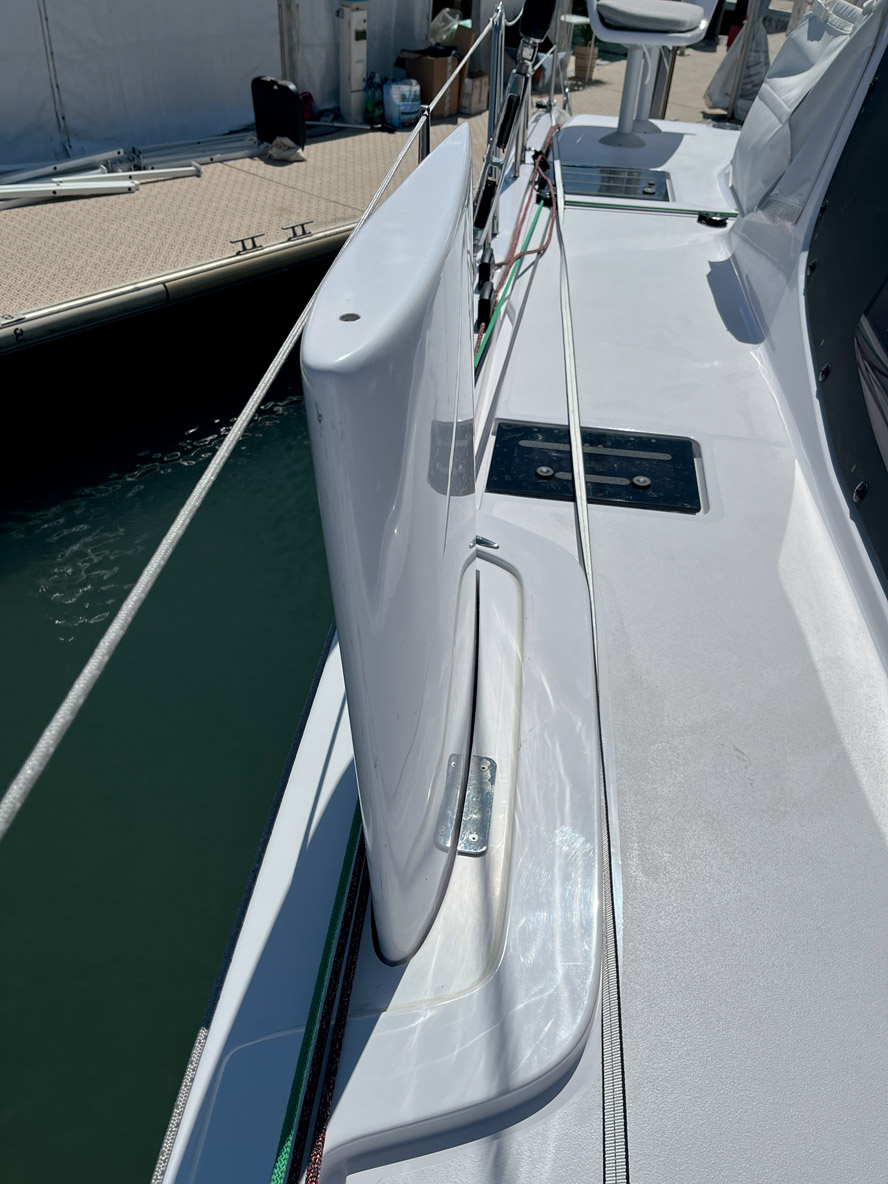
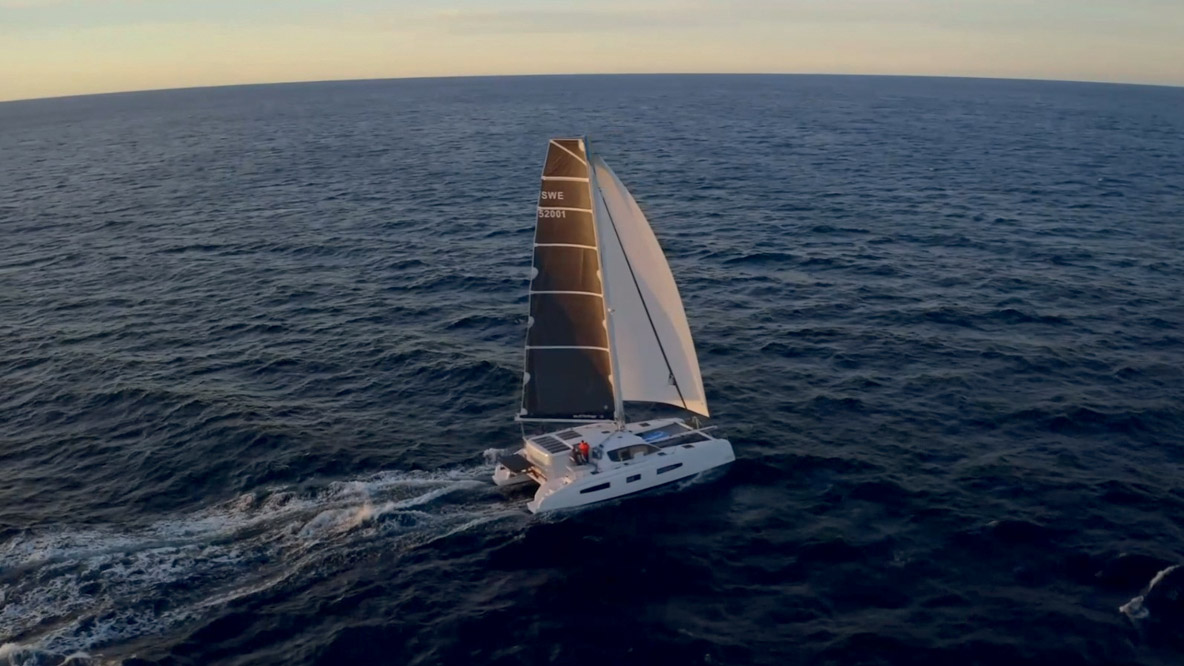
Coming out of La Grande-Motte, a Tramontane wind that had been ruffling the International Multihull Show was still blowing at 15-20 knots. We hoisted the mainsail with the electric winch and unfurled the small gennaker in less time than it’s taken me to write it. We set the catamaran going on a reaching leg: the GPS immediately showed us accelerating to 14 knots. We held this course for a few miles, with the log oscillating between 12 and 15 knots depending on the ripples and the wind angle. The sensation of ease and safety is truly amazing. Whether at the tiller (there is only one on the port side!) or at the wheel, to starboard, the feeling was always smooth, and the helmsman was able to point the bows very precisely. You don’t need a lot of experience to manage this sort of speed, one that would already allow us to complete 24-hour runs of over 300 miles. The catamaran is very well balanced, and you can even let go of the helm for a few moments without fearing the slightest lurch, which promises for calm sailing under autopilot. We then sailed back up towards La Grande-Motte. With the daggerboards fully lowered, we noted an angle of 90° from tack to tack – compare that to 100° for the majority of catamarans fitted with skeg keels. At 30° to the apparent wind, our speed was still 8.5 knots. No comment required! Bearing away a little, a large gennaker promises to be able to sail at the wind speed up to ten knots of breeze. As mentioned earlier, the specifications foresaw performances at least equivalent to those of the 51, and that objective has been reached, but without forcing it. We are indeed aboard a multihull made for cruising and not for racing. Under motor, the very fine hulls and the displacement of no more than 16 tons laden consume no more than 4 liters (just over a gallon) per hour to make 8 knots. This is excellent performance. On the other hand, a little more in terms of sound insulation would be appreciated.
Conclusion
The multitude of details that make life on board easier, along with the quality of finish found on this first model, show that the Outremer 52 was the subject of a very thorough design process with great care taken in its construction. With its high level of performance, safety at sea and convincing ergonomics, the results of our test are particularly positive. There one hitch, though: the price logically takes into account a generous carbon construction and is in the upper range of the 50/54-foot production category – ultimately slipping into the semi-custom range. But if you want one...
A word from the architect Darnet Design
“The collaboration with VPLP and Patrick Le Quément was based on key words to define the 52 project. The word that came up as “the obvious” was that the 52 should be a 100% Outremer”, summarizes Franck. In the 50 to 53-foot bracket, the most representative today of what sailors expect from a multihull for a round-the-world family trip, there’s no room for maneuver in terms of the coherence of the design. Franck admits that “Adding more space and comfort while keeping the lightness (design to weight) is a problem that requires a lot of thought before finding the desired compromise. It wasn’t possible, in view of the narrower beam, to have a central island as on the 55. The central galley-bar straddling the saloon and the cockpit was the solution to achieve the ideal compromise, but only after many ergonomic tests! We’re happy with the result, because in the end, we’ve got a boat that is livelier than the 51, is more convivial and has greater habitability.”
Increased build quality and finish
Very enjoyable under way
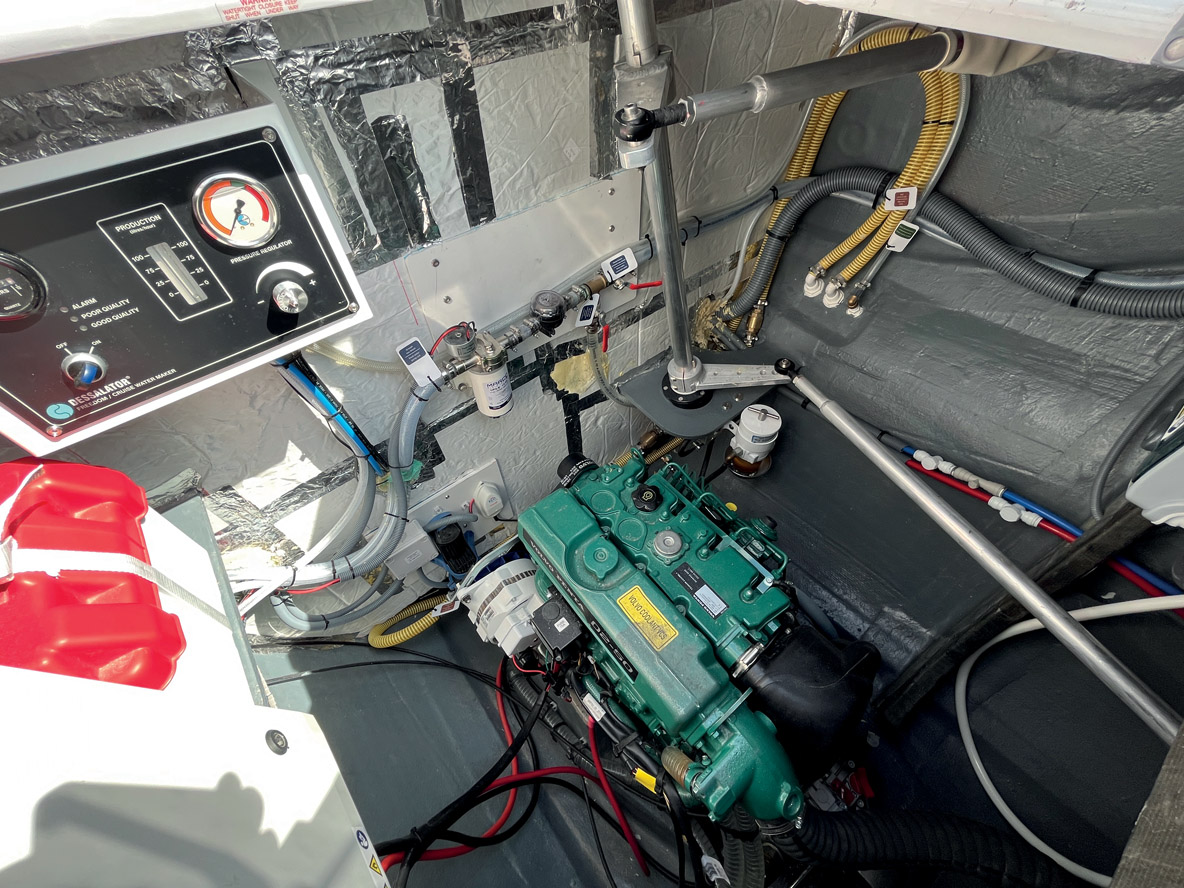
Engine compartment insulation could be improved
Price fully loaded is not inconsequential
Technical specifications
Architect: VPLP
Design consultant: Patrick Le Quément
Interior designer: Darnet Design
Length overall: 51’7” (15.73 m)
Waterline length: 48’10” (14.89 m)
Beam: 25’11” (7.89 m)
Draft: 3’6”/7’7” (1.07/2.3 m)
Air draft: 75’7” (23.05 m)
Light displacement: 27,550 lbs (12.5 t)
Loaded displacement: 34,600 lbs (15.7 t)
Square-topped mainsail: 1,023 sq ft (95 m²)
Self-tacking jib: 430 sq ft (40 m²)
Solent: 670 sq ft (62.3 m²)
Gennaker: 1,184 sq ft (110 m²)
Spinnaker: 1,722 sq ft (160 m²)
Engine: 2 x 50 HP Volvo Penta
Price: from € 1,230,000 ex-tax
Price of the boat we tested: € 1,598,785 ex-tax
Main options in € ex-tax
4 Harken electric winches: 15,360
Carbon mast + Kevlar shrouds: 105,100
2 x 3kW lithium batteries: 20,200
Solar panels (2 kWp max in total) on bimini: 9,840
Glass/carbon beam: 20,980
Hydranet staysail: 6,420
B&G Triton 2 Pack: 29,250
Sportline styling: 11,640