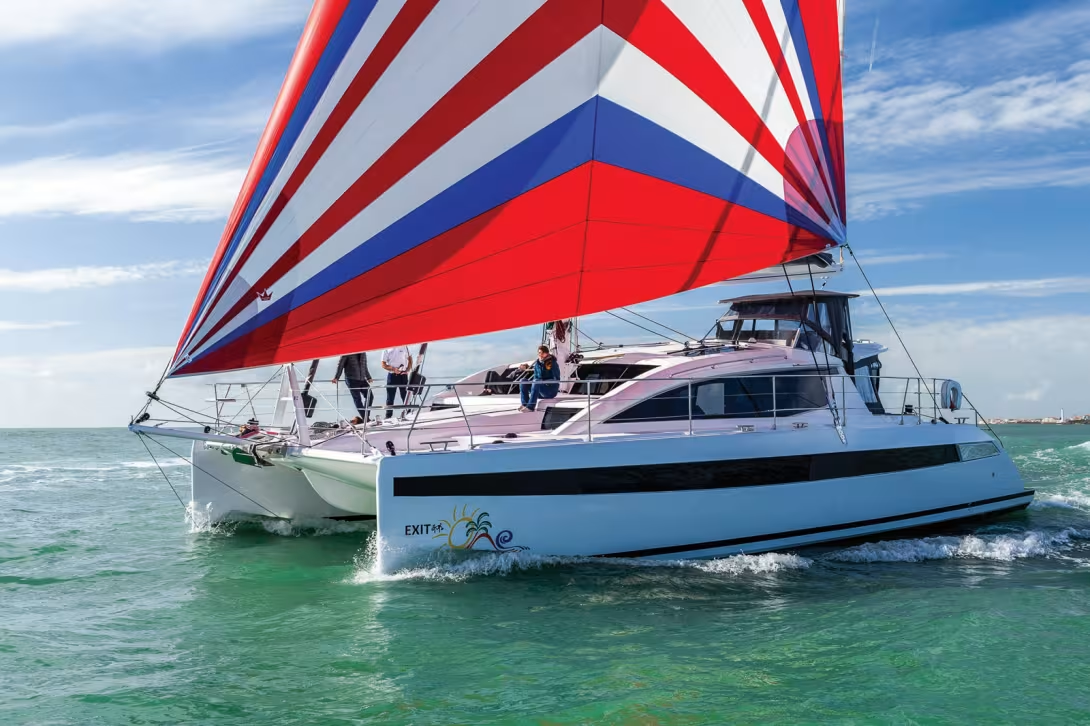
Privilège Marine is pursues its objective: to offer owners multihulls designed for blue water cruising. This year, the builder is presenting a new generation of catamarans with the 510 and the 580. The smaller of the two was launched back in March at Les Sables d’Olonne, on France’s Atlantic coast. We got the chance to test her for you with 48 hours of good breeze...
Infos pratiques
- Le chantier : Privilege Signature 510
- La fiche technique
-
 Découvrez notre vidéo exclusive
- Financez votre Privilège 510 Signature
- Assuez votre Privilège 510 Signature
- Articles autour du Privilège 510 Signature
Test location: Les Sables d’Olonne/île d’Yeu
France Wind: SW 20 to 25 knots
Sea state: Moderate
The shipyard created by Philippe Jeantot and René Bernard in 1985 began by building catamarans for charter - a business then in its infancy aboard multihulls. The early models were designed by Guy Ribadeau Dumas). The builder, which had always been based in Les Sables d’Olonne, became Alliaura, then Privilège Marine. It has managed to leave a strong imprint on a whole generation of luxurious multihulls (the interior woodwork is exceptional) designed by Marc Lombard. Taken over in 2012 by Gilles Wagner, Privilège Marine is now part of the German group Hanse and benefits from the purchasing and industrial sharing synergies of a powerful group.
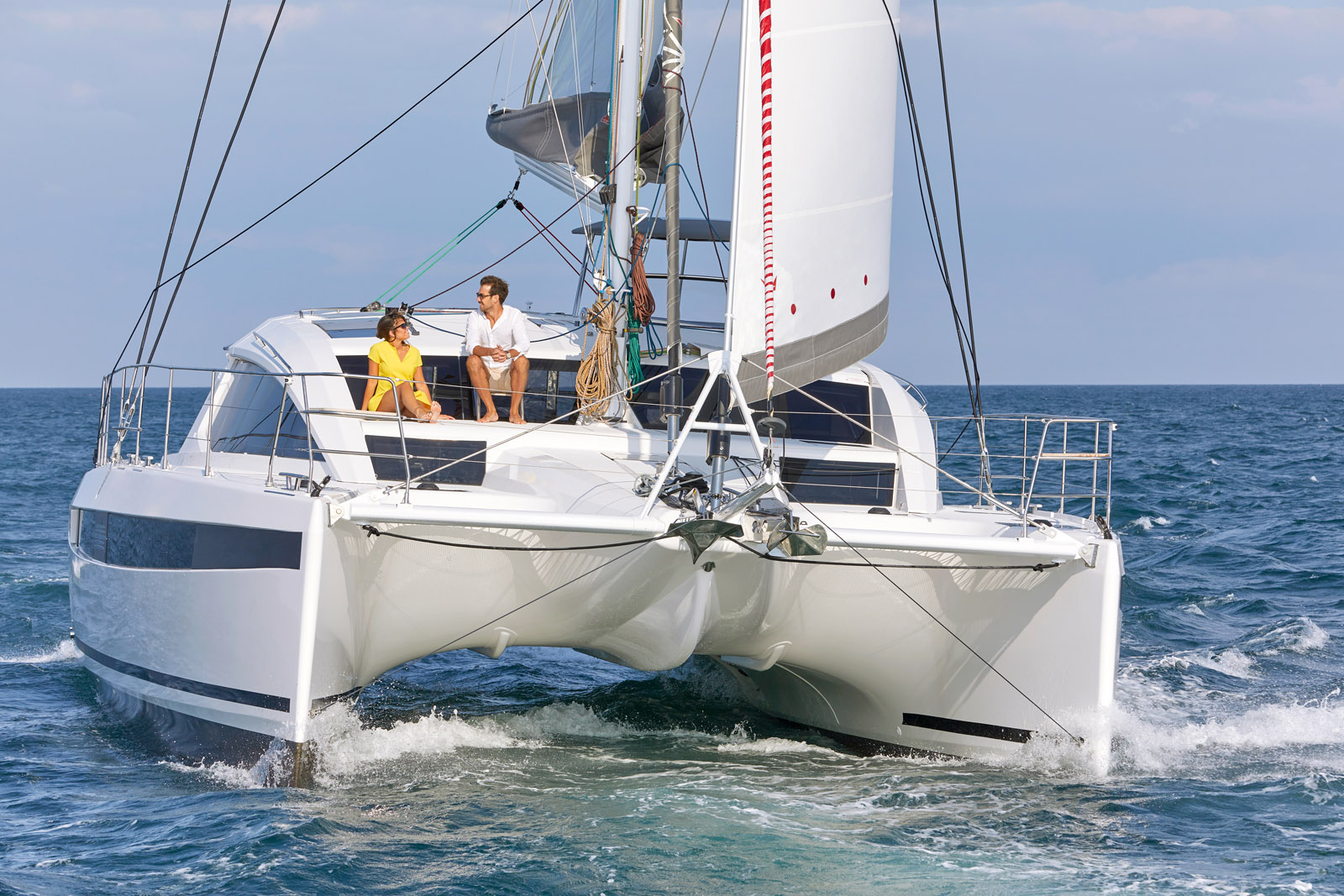
Privilège has remained faithful to the coachroof arches, which cleverly conceal the forward windows. Compared to the Série 5, the glazed area has increased by 30%.
Continuing legacy
Presented at the 2009 La Rochelle Boat Show, the 515 confirmed the brand’s profound evolution. The Série 5 (23 examples built) later revisited this promising base - sign ificantly lengthened waterline, increased sail area, optimized deck plan. The current evolution, the 510, benefits from this experience and good feedback from owners. But it goes further. The coachroof, the entire deck and the interior (by Franck Darnet) have been completely redesigned, based on the strong points of this already successful catamaran. The previous “cabinetmaker” style has completely evolved to the benefit of a high quality, but more contemporary design. As for the ergonomics, they have been revisited. The fittings come from the German Hanse factories, then installed by the excellent craftsmen in the Vendée in France.
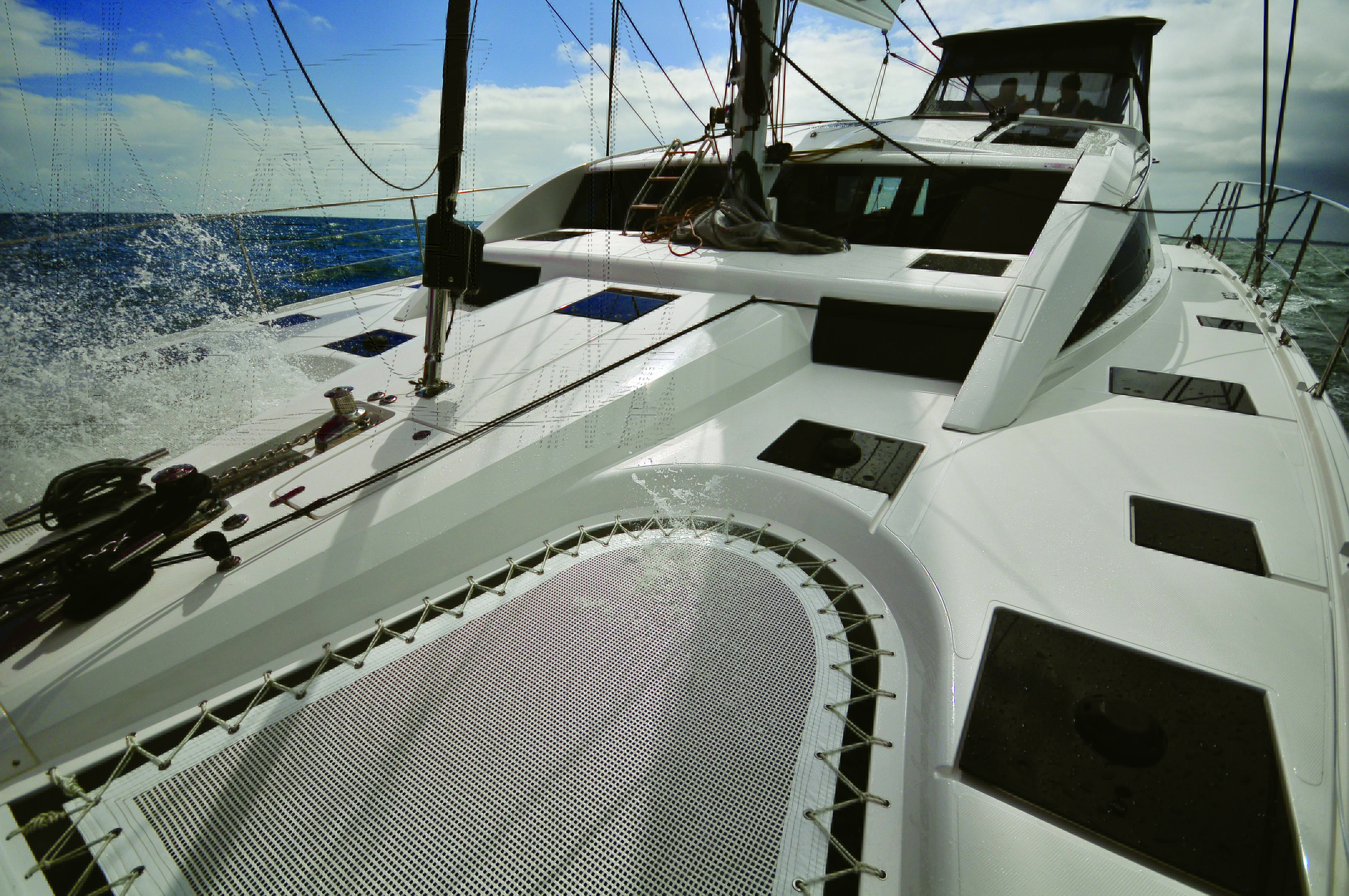
The 510 has retained all the brand’s identity: a suspended central mini hull and a plunging arch that conceals the forward hatches in profile.
A robust construction
The 510 is solidly constructed in a sandwich of PVC foam, biaxial glass cloth and vinylester resin on the first layer and polyester for the rest (infusion process and isophthalic gelcoat). The bulkheads are produced using the same process and laminated with filets to the hull. These structures, both forward and aft, also act as crash boxes. The deck is glued and laminated to the platform, the windows are made of toughened safety glass and the skeg keels are structurally integrated into the platform. The manufacturer also offers a D-light version, which is 10% lighter in displacement thanks to the use of a foam sandwich for the superstructure, furniture and floors. Bulkheads and loaded zones are reinforced with carbon cloth.
An dependable aluminum rig
Marechal masts have been proving their worth in racing and blue water cruising for two generations. Lacquered, not anodized, they’re in place for the life of the multihull, subject to painting every 15 years, regular overhauls and periodic renewal of the standing rigging. The chainplates and hardware fittings are welded, not riveted. The 510’s mast comes with two sets of spreaders, forestay and staysail stay, cap shrouds and lowers: this is strong stuff!
Engines: a careful installation
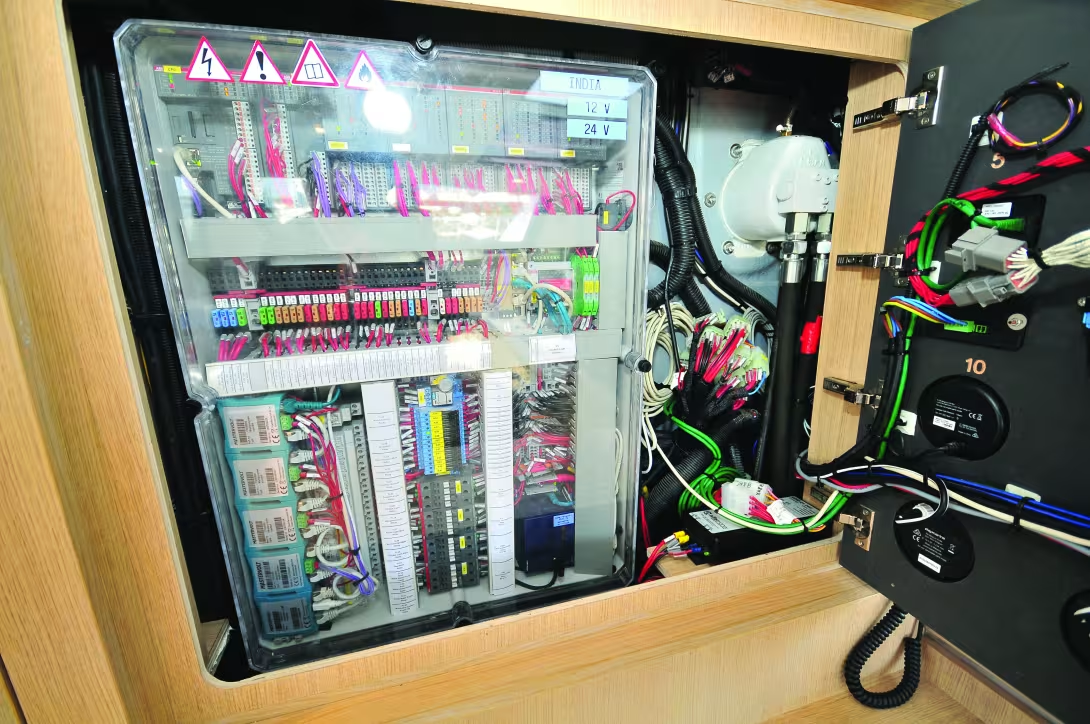
For this strategic compartment, the Les Sables d’Olonne-based yard made the right choices: shaft line transmissions with easy access to the sternglands. As for the raw water intakes and strainers (and fuel filters), they are clearly visible and robust. The general architecture is legible with rigorous marking of the functions. The plumbing and pipework are all perfectly ordered. The engine room is entirely painted (and not only what can be seen!) with gray Topcoat. The installation of ancillary equipment on technical shelves contributes to a good understanding of the systems for the user and allows for efficient maintenance. Our test model was equipped with two 80 hp Yanmar engines - compared to the 55 hp that come as standard - and three-bladed, folding propellers.
Attractive deck and cockpit layout
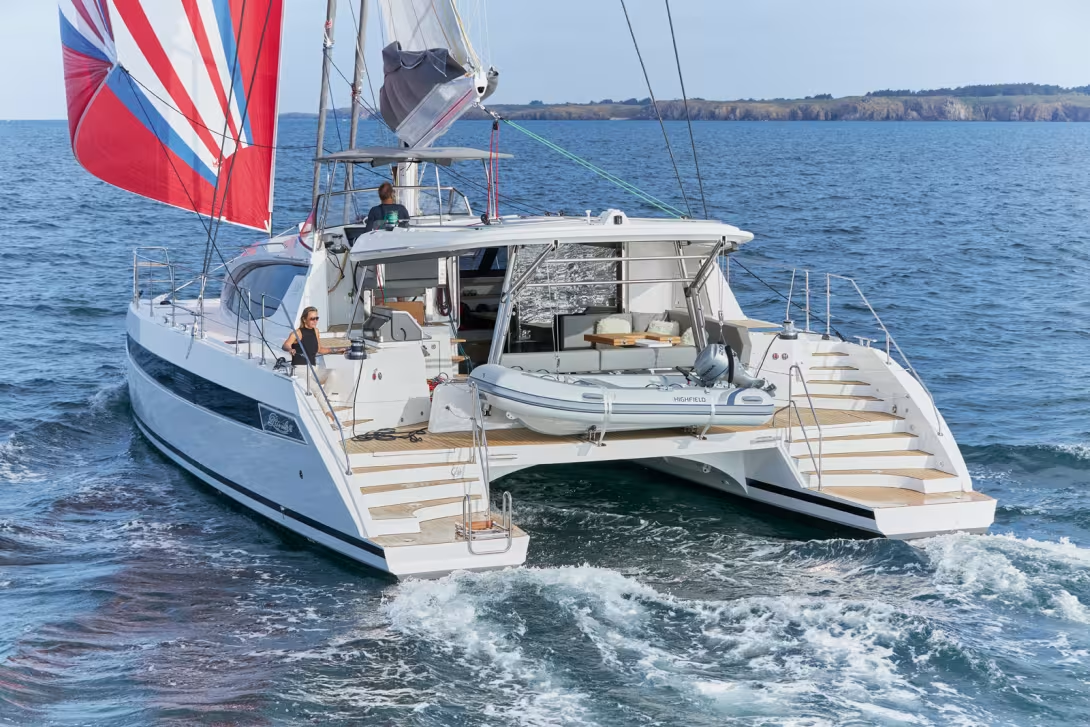
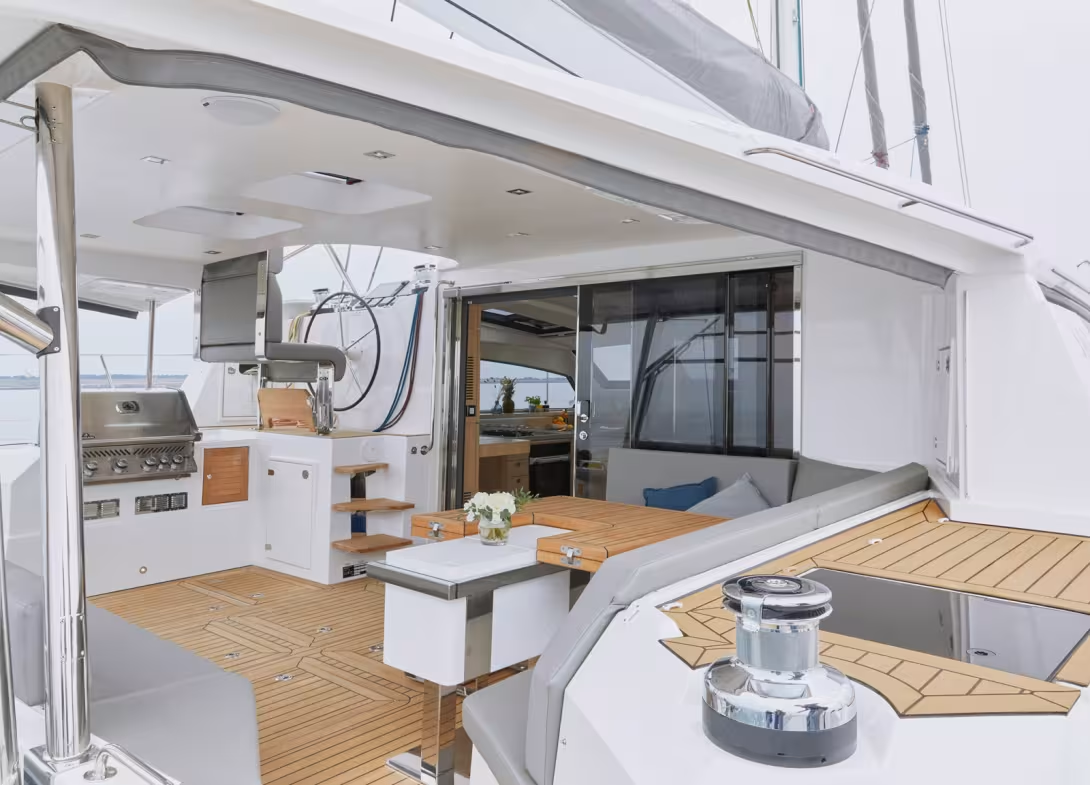
The 510 retains the general lines of the 515 and the Série 5, which is the identity of the brand: a suspended central mini hull (the famous rostrum so dear to the manufacturer) and a plunging arch that conceals the forward hatches in profile. The design remains one of elegant classicism, without necessarily being beholden to current fashions, but everything else has evolved profoundly. Access on board via the sugarscoops is super comfortable, wide and safe. A flight of four gently sloping steps leads to the cockpit. Note the superb design and construction of the tender support arch and its solid and practical cradle that allows the tender to be stored sheltered from the sea without the structural constraints of davits, bravo! The wide side-decks are safe, with handrails along the coachroof and reassuring 30” (75 cm) high guardrail instead of stanchions and lines which always seem too low. The flush opening hatches are of impeccable quality and don’t flood the interior when opened after it’s been raining. The access to the coachroof (lined with flush-deck solar panels) is well thought out: a tubular staircase with wide non-slip steps leads to the foot of the mast. When arriving in the cockpit, in hot weather or cool with rain, this semi-outdoor space always offers an enviable welcome that will seduce the crew. Easily adaptable, this cockpit is perfectly suited to outdoor conditions. All you have to do is roll up and unroll the fabric enclosures. These have a clever grid that obscures the view inwards without hindering outward perception from the inside. We tried out several combinations during our two-day test, which was carried out during the passing of a stormy front: everything proved to be pleasant at sea as well as in port. The rigor of this installation is remarkable: it contributes in part to this catamaran’s “all latitudes” vocation.
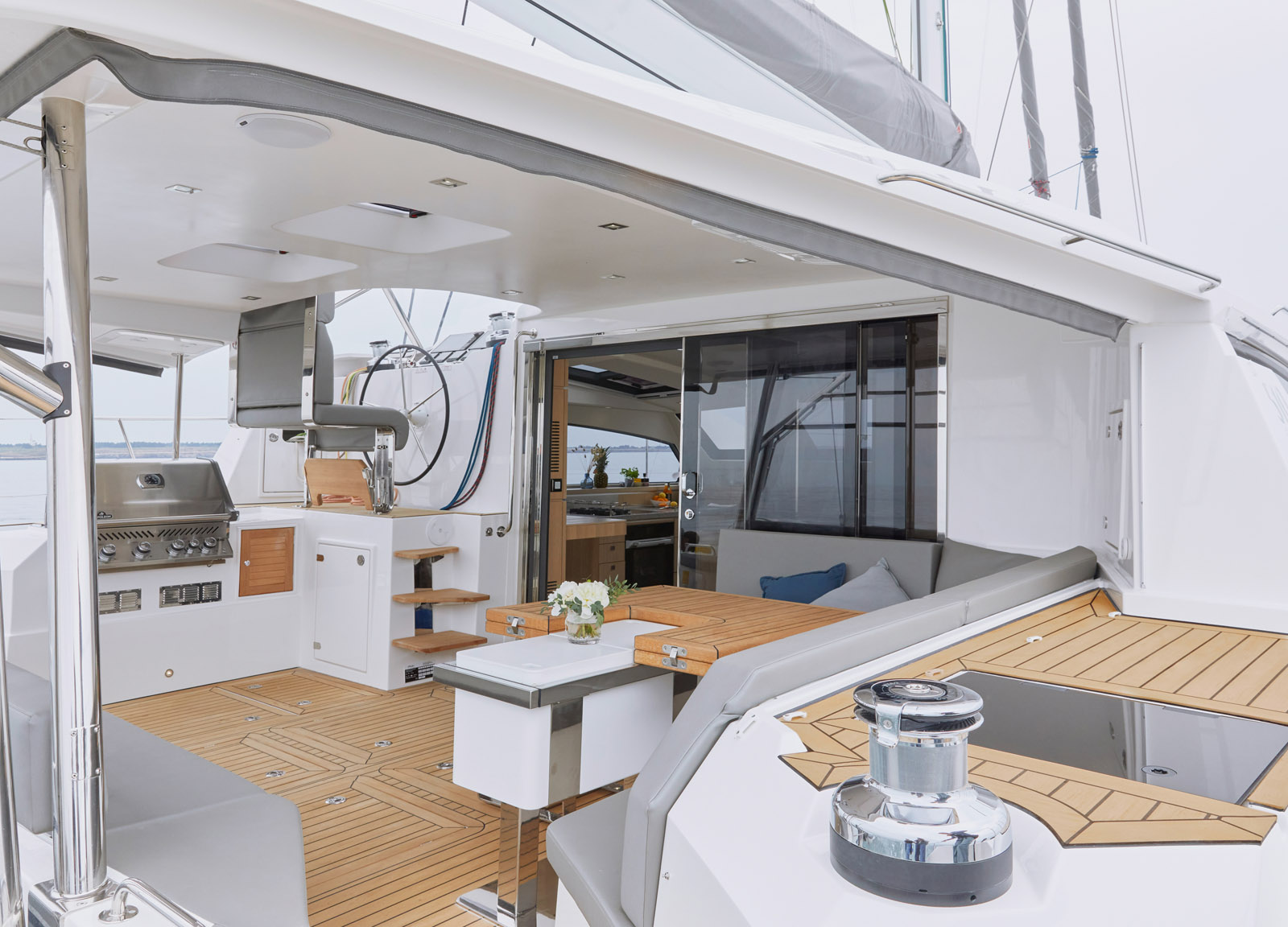
The cockpit is vast and perfectly protected by the imposing rigid bimini
Atmosphere, atmosphere…
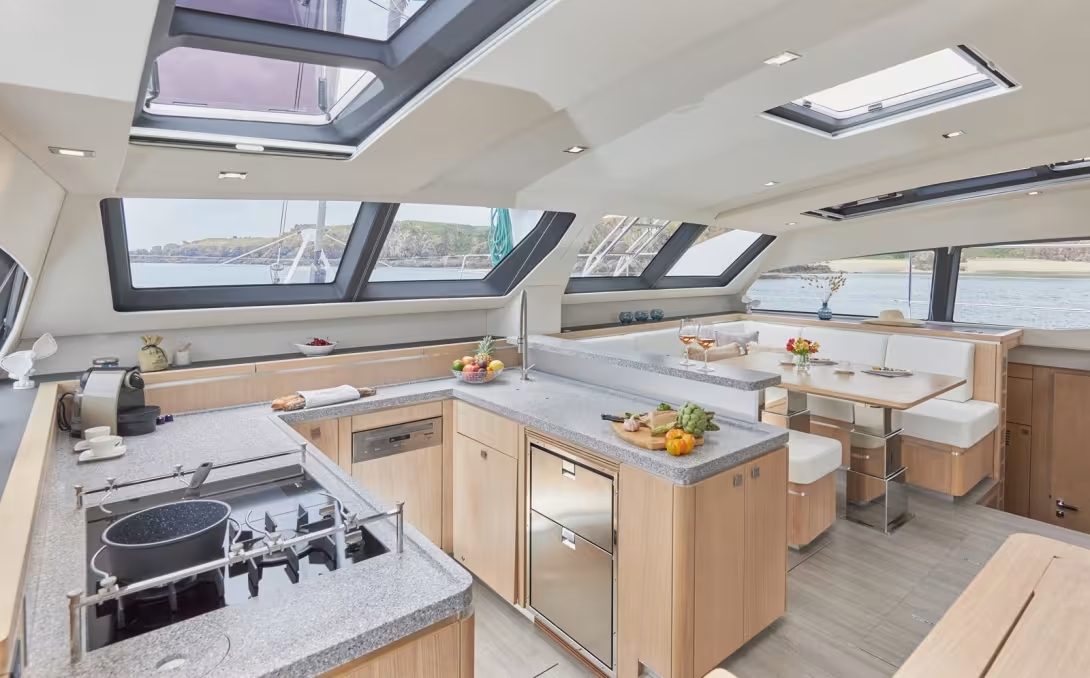
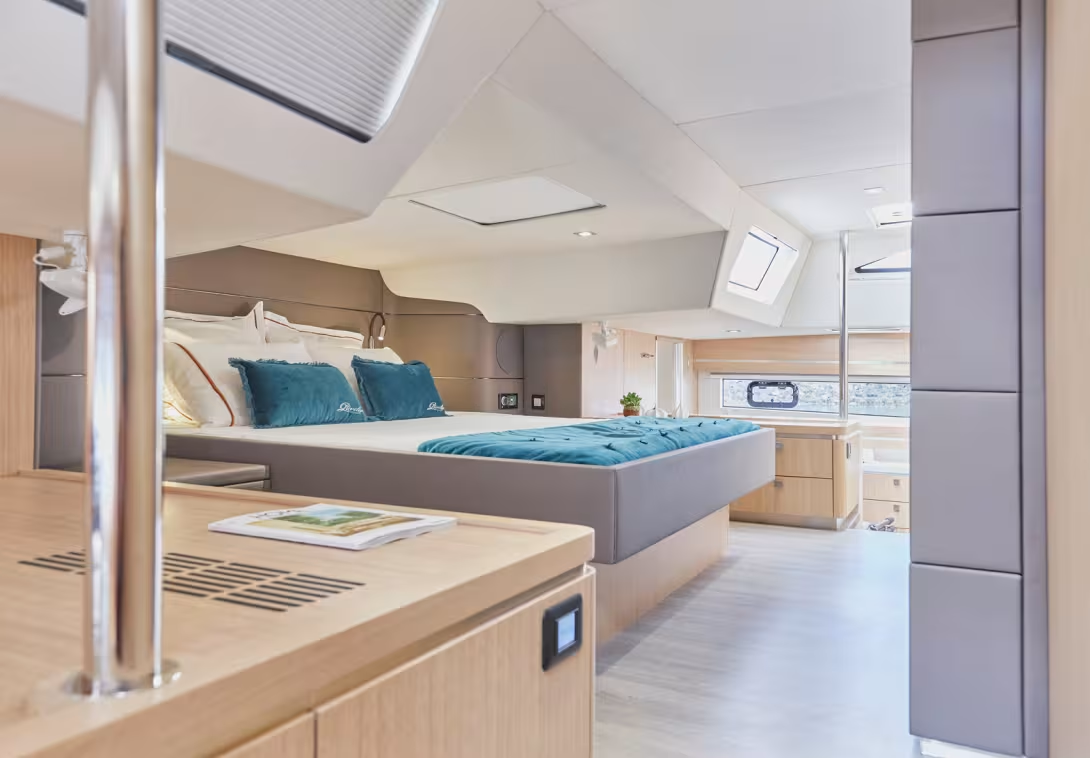
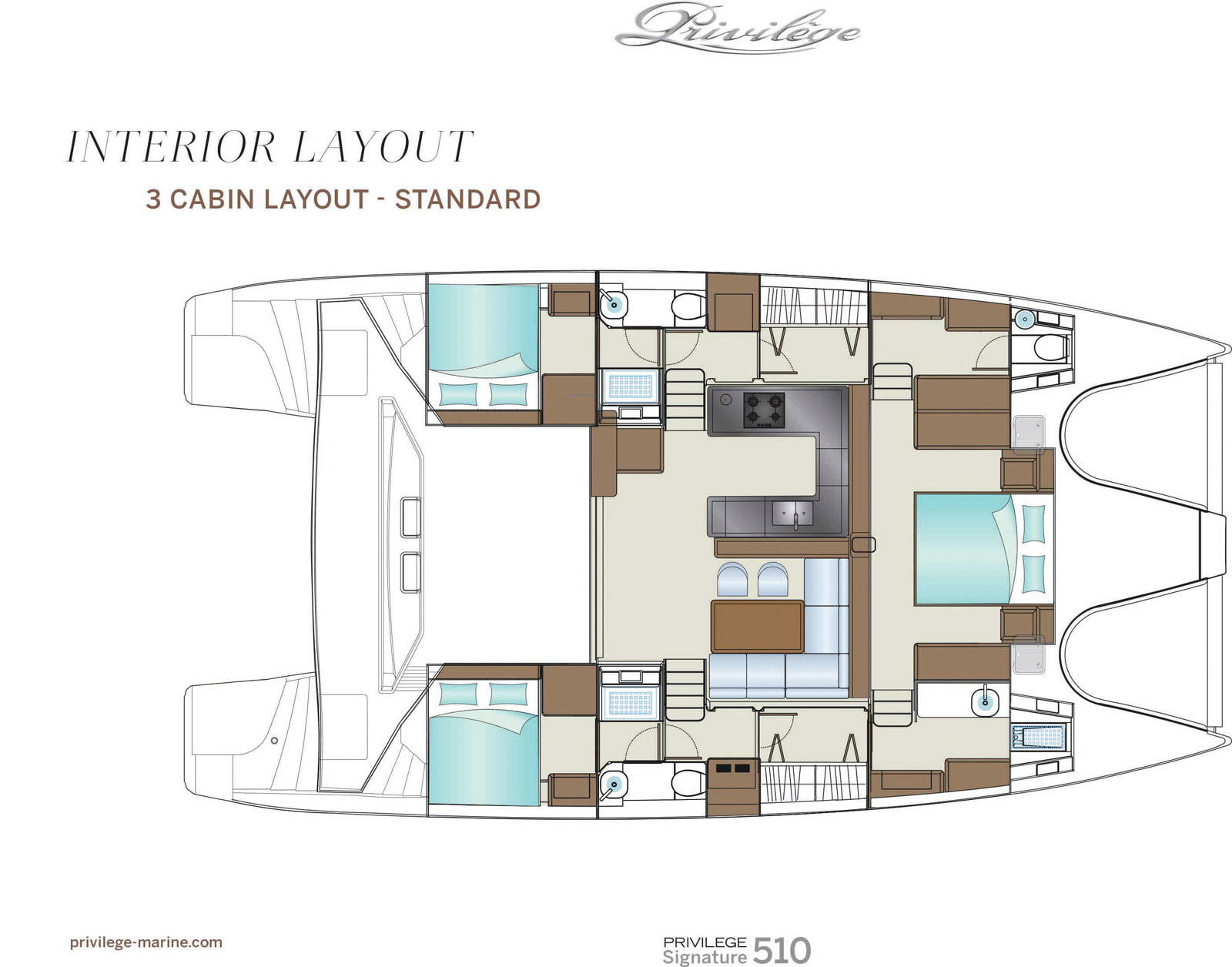
Going inside the 510 is a pleasant experience: the sliding glass window with stainless steel frames is beautiful and fitted with real sturdy locks. The oak-veined floors (at the customer’s choice) are superb and the linings are of superior quality. Light and ventilation are superlative. On the port side as you enter are the desk and the control panels for the catamaran. Opposite, the U-shaped galley is equipped with excellent quality units (Miele) and generous Corian worktops: a real chef’s kitchen! The deck saloon has gained in volume without reducing that of the galley. The table (swiveling and height-adjustable) can easily seat 6-8 guests. As for the panoramic view, it is exceptional thanks to a 30% increase in glazed area compared to the Série 5. On board our three-cabin owner’s version, guests are truly welcomed and have all the comfort and privacy expected on such a model. The Owner’s cabin in the central rostrum is obviously the most spectacular in terms of volume and comfort. It offers numerous storage spaces (wardrobes, drawers, dressing area). The bathroom with dressing table is ideal (it could nevertheless do with an LED striplight over the mirror), the shower is vast, the separate electric WC, perfect.
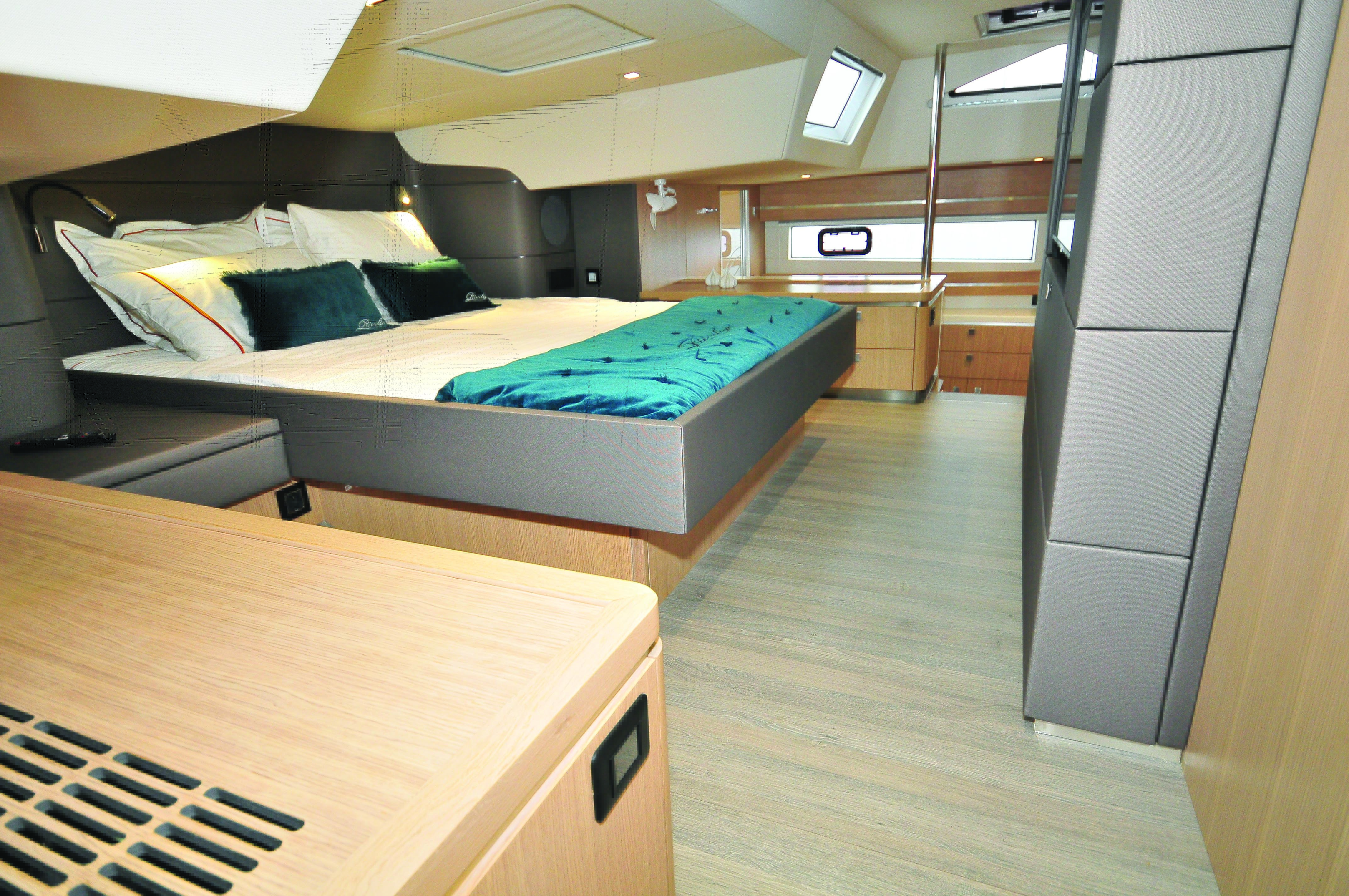
Forward, a very large Owner’s cabin - not necessarily the most pleasant while under way.
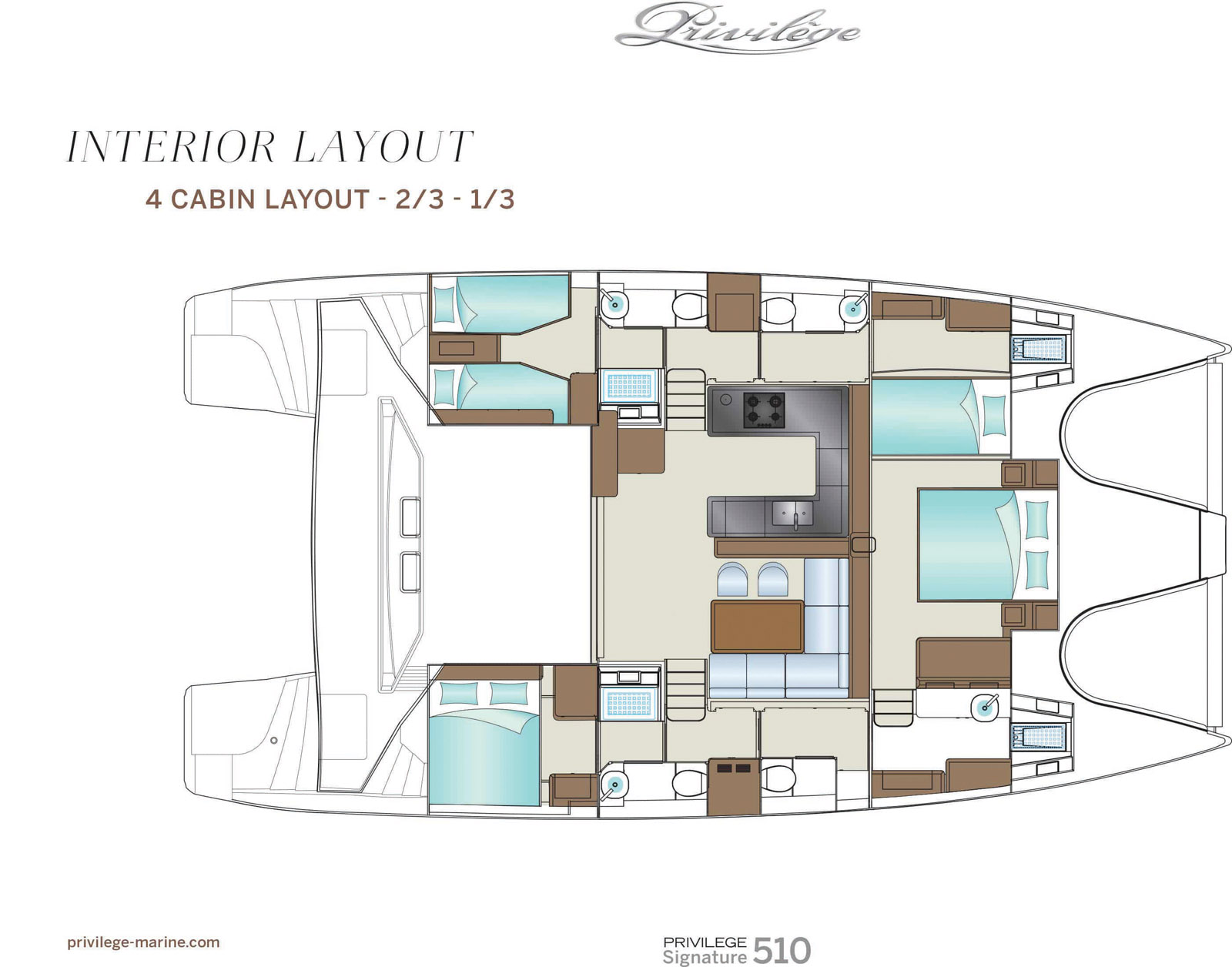
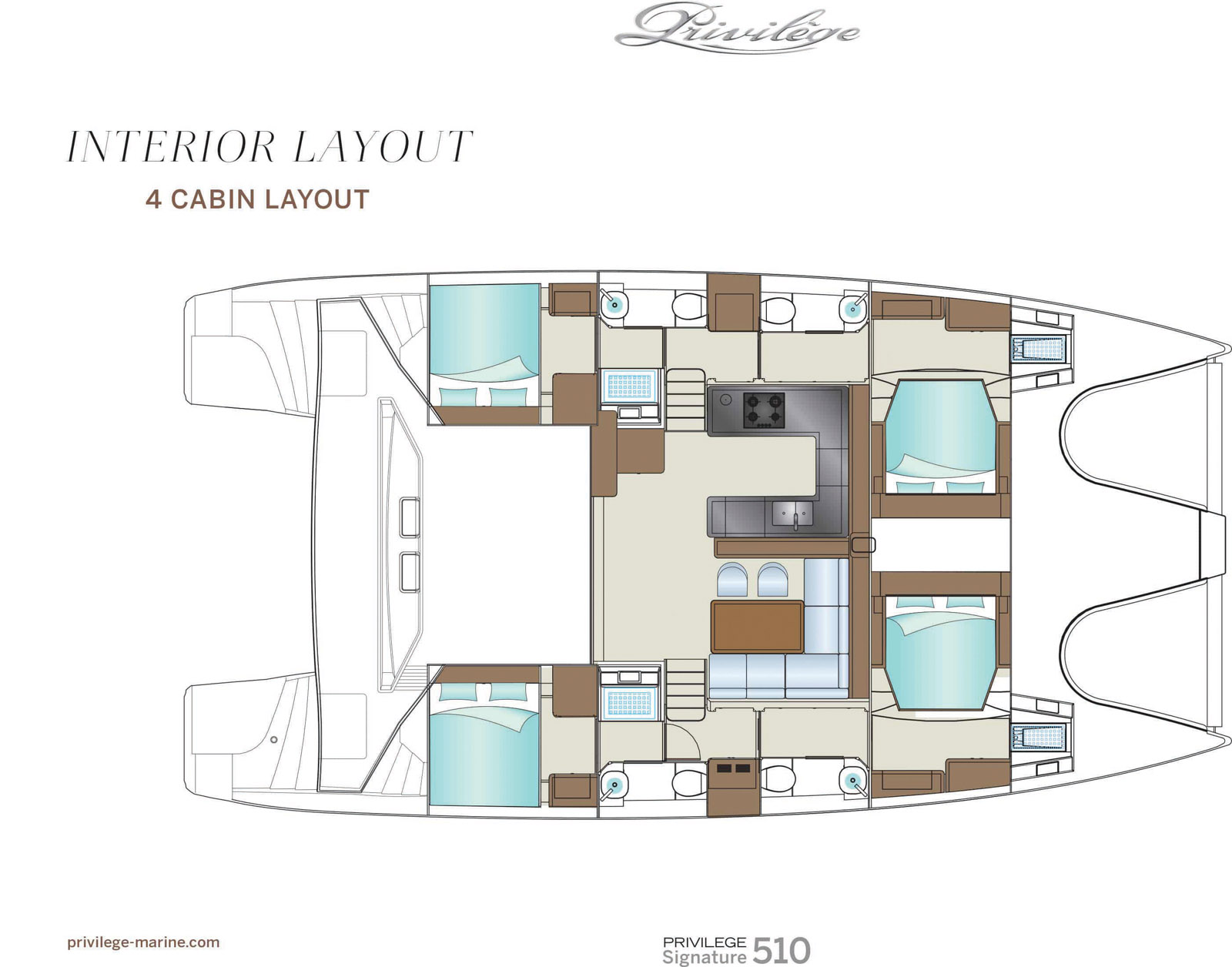
You can opt for other layout configurations.
A boat that’s fun to use, and has top performance
This 510 is luxuriously ‘optioned’ with heating, air conditioning, sound and video systems. The deck has benefited from the same attention: a cutter rig assisted by two Facnor electric furlers, automated helm station, and twin-sheeted management of the mainsail using an electric winch. All maneuvers are centralized, including the Code 0 sheet winches, which are usually so often off-center aft of the bulwarks. I’m focusing on the cockpit, whose design and execution is remarkable; this is likely to become a standard-setter. During our two days on board, sailing around the island of Ile d’Yeu, we encountered diverse and sustained conditions (SW 20- 25 knots with squalls) which enabled us to highlight the qualities of the helm station: selected deck fittings, fluidity of the maneuvers, meticulous fine-tuning, availability of the electric winches (Lewmar 55 and 65) all contribute enormously to the pleasure of handling this catamaran. Hoisting sail, taking in reefs, and sail trim all become child’s play – this boat is a real pleasure to sail (well). Steering sensitivity, on the other hand, is not the main focus: on this point, former racing sailors may be a little disappointed. However, the clarity of the maneuvers and the efficiency of the autopilot allow you to concentrate on successful sailing and efficient trimming for easy and fast progress on the high seas. The spirit of blue water sailing is in the DNA of this multihull. The speed in medium airs and in a breeze is consistently satisfactory (8-12 knots average, with a peak at 13 knots), but it is above all the comfort at sea which is attractive. The gentle movements and the general balance make it possible to enjoy sailing and life on board even in choppy, beam seas.
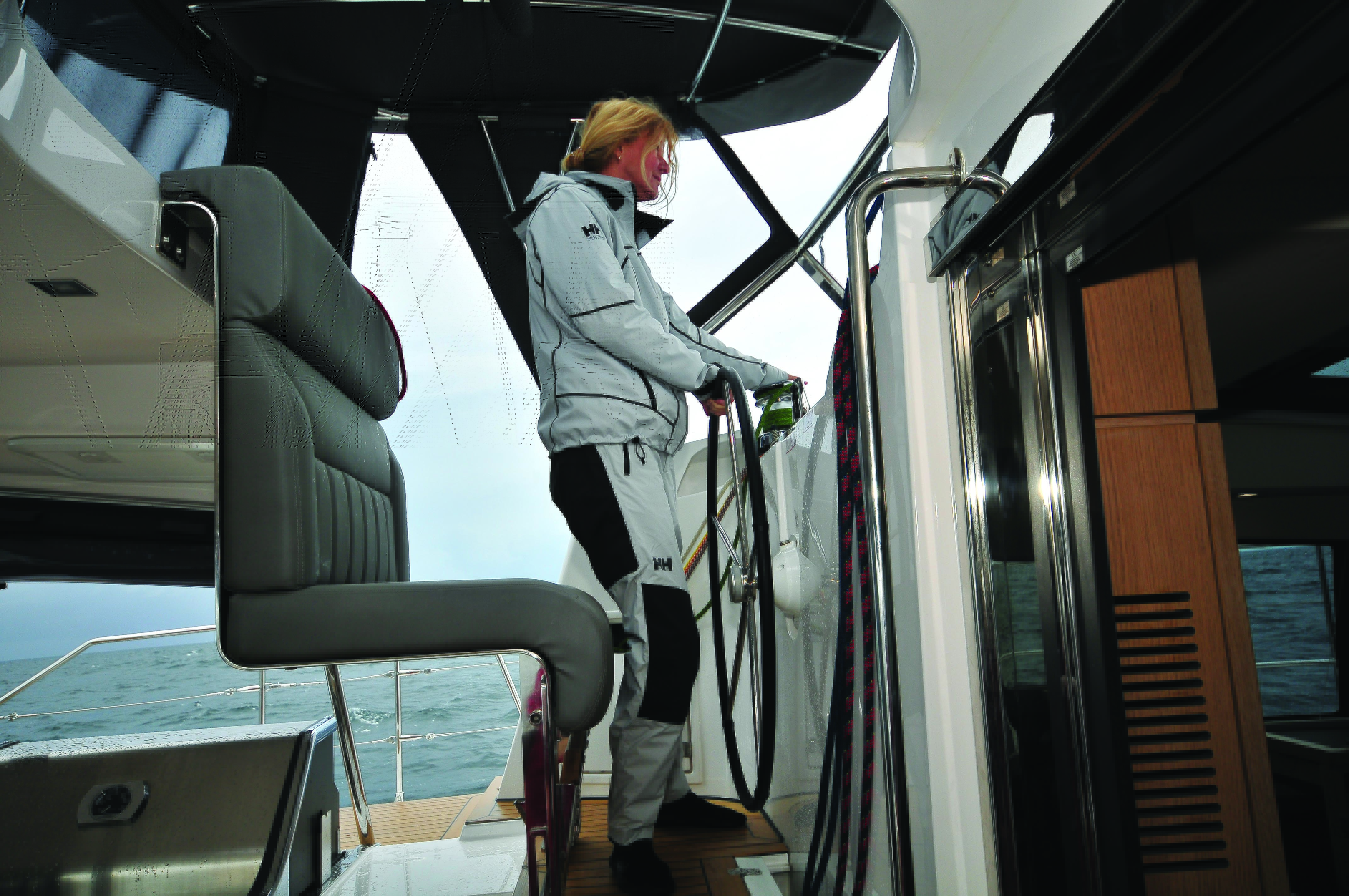
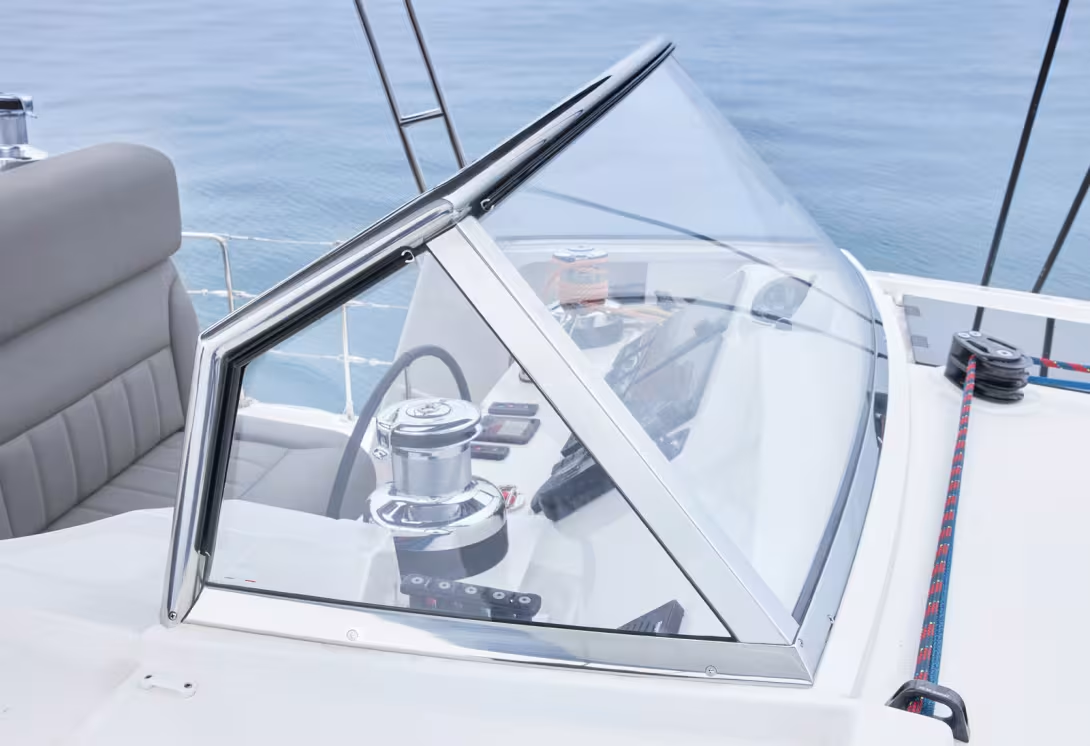
The helm station is installed at half-height. Perfect, whether sitting or standing.
Conclusion
This Privilege 510 Signature has all the assets to seduce the cruising crew with a comfortable budget. Like all the models from the yard, the 510 is a semi-custom catamaran. It lends itself to all possible customizations. The impressive list of options provided gives a foretaste of the possibilities... I really appreciated this multihull, which opens the doors to blue water sailing by allowing you, thanks to all her qualities, to feel that rare release at sea. Her comfort both at sea and at anchor, as well as her ergonomic handling, make her ideal for owners seeking luxury. This catamaran is for long-term cruisers prepared to forego top speeds in favor of a smooth and comfortable ride in all weathers.
The Pluses
+ A magnificent model
+ Pleasure to use
+ Seakeeping qualities
The Minuses
- Why not a Harken traveler management system (automated mainsheet car)?
- Silhouette with the ‘pilot house tent’ erected (but it’s so comfortable...)
- No rigid helm transmission
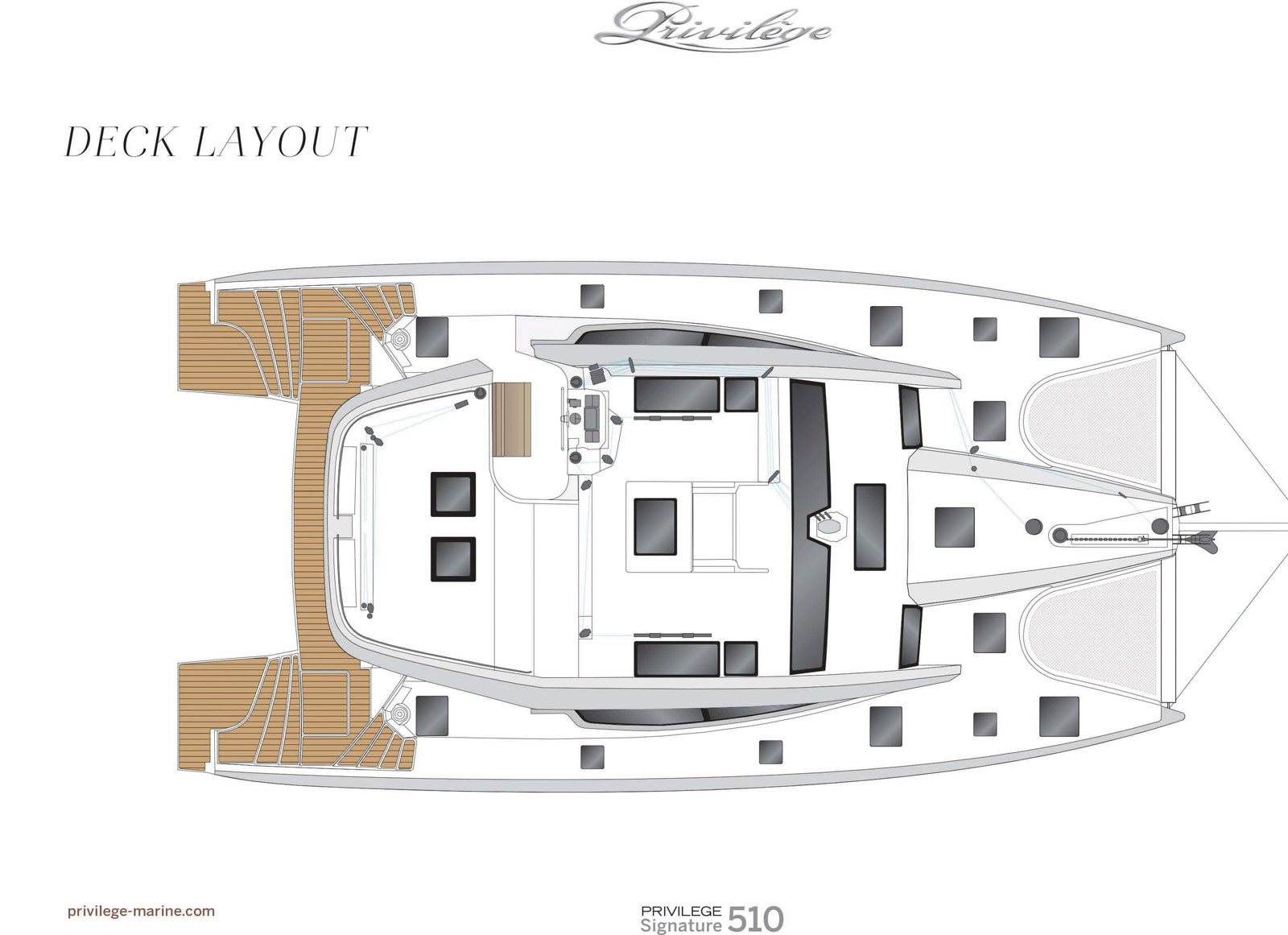 |
 |
 |
 |
TECHNICAL SPECIFICATIONS
Builder: Privilège Marine Naval
Architect: Cabinet Marc Lombard
Interior designer: Franck Darnet
Length: 50’ (15.24 m)
Beam: 26’2” (7.98 m)
Draft: 5’2” (1.57 m)
Air draft: 69’7” (21.21 m)
Operating weight: 37,000 lbs (16.8 t)
Maximum displacement: 50,265 lbs (22.8 t)
Upwind sail area: 1,520 sq ft (141 m²)
Mainsail: 945 sq ft (88 m²)
Genoa: 570 sq ft (53 m²)
Staysail: 215 sq ft (20 m²)
Gennaker: 1,290 sq ft (120 m²)
Engines: Yanmar 2 x 55 hp or 2 x 80 hp (option)
Transmission: propeller shafts
Bilge pumps: 2 hand pumps, 4 electric pumps
Water: 2 x 79 US gal (2 x 300 l)
Fuel: 2 x 10⁵ US gal (2 x 400 l)
Holding tanks: 2 x 28 US gal (2 x 10⁶ l)
Price of the standard boat ex-tax: € 1,035,000
Price of the boat we tested ex-tax: € 1,440,000
Privilege World Premiere - The Sables d’Olonne shipyard is having a boatshow!
Privilège Marine has decided to create an event at home: from September 23rd to 26th, two world premieres - Privilège 510 and 580 Signature -, in addition to the Privilège 640 Series and the Euphorie 5 will be presented in Les Sablesd’Olonne. Sea trials, visits to the shipyard and tastings of local products are on the program.
To register: salon@privilege-marine.com