
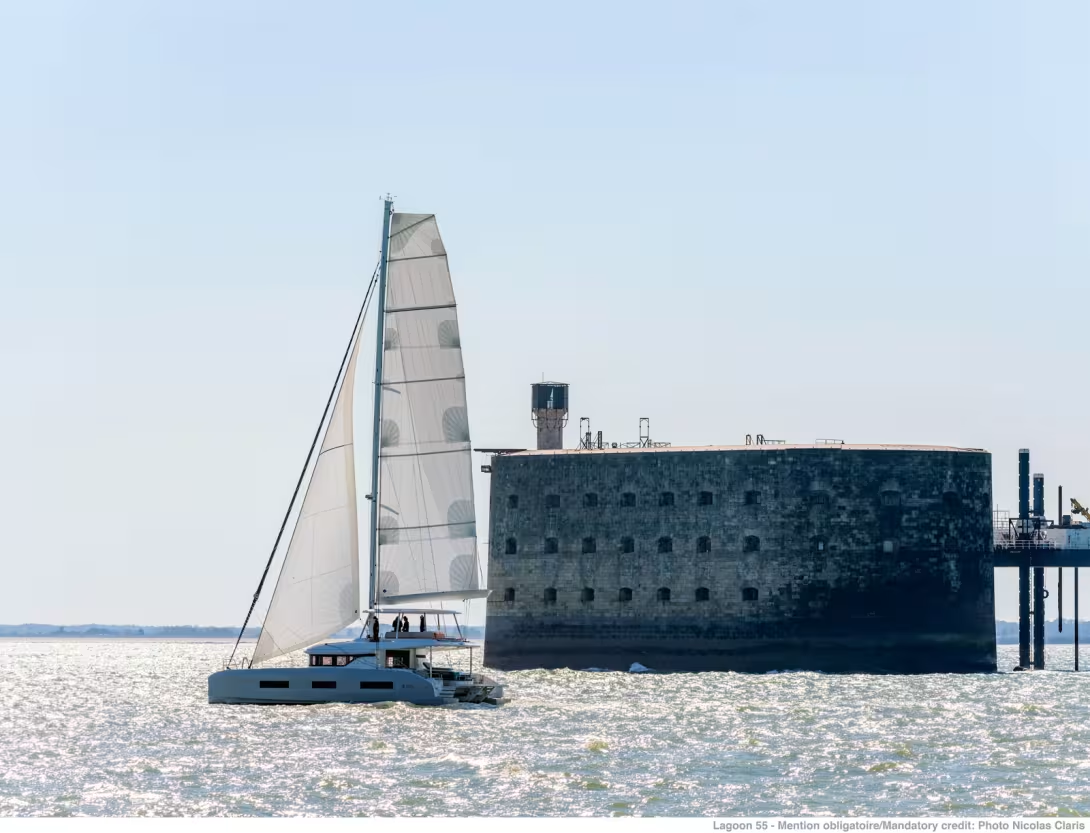
This new model is the first catamaran designed from scratch since Privilège Marine joined Hanse Yachts. The 510 Signature, launched a year ago, takes many elements from the former Series 5. This is a strong indicator of what the powerful German group wants: to respect the DNA of the Privilege brand founded by Philippe Jeantot back in 1985, while offering a contemporary vision of luxury sailing. We went along to Les Sables d’Olonne, the birthplace of the brand, to verify that the 580 Signature is indeed... a Privilège!
Infos pratiques
- Le chantier : Privilege Signature 580
- La fiche technique
-
 Découvrez notre vidéo exclusive
- Financez votre Privilege 580 Signature
- Assuez votre Privilege 580 Signature
- Articles autour du Privilege 580 Signature
Test location: Les Sables-d’Olonne, France
Conditions: Wind, ENE 8-12 knots; sea state, slight
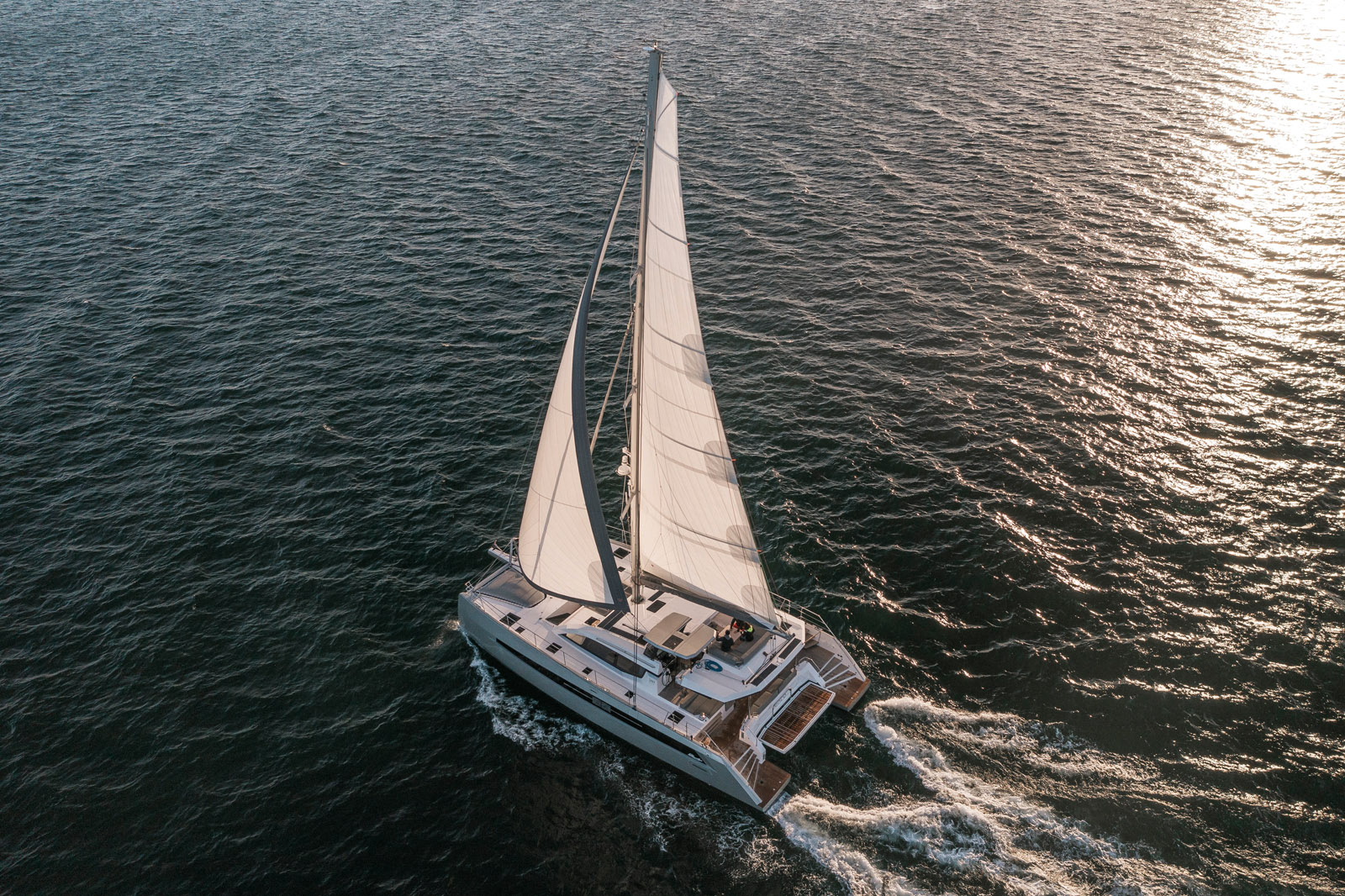
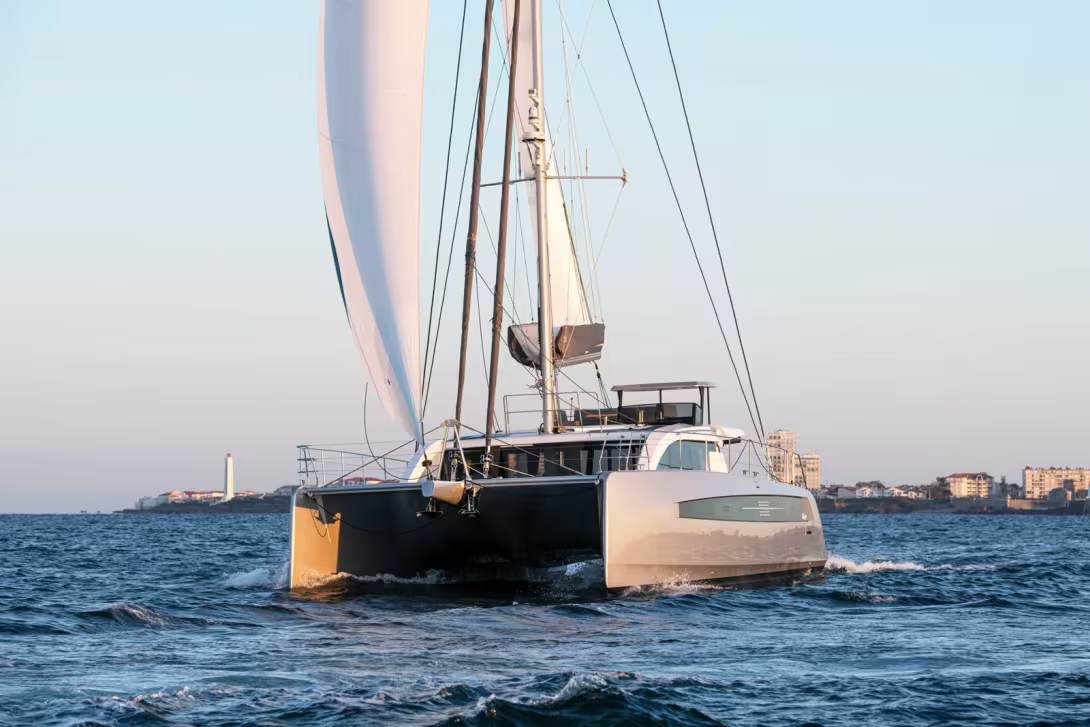
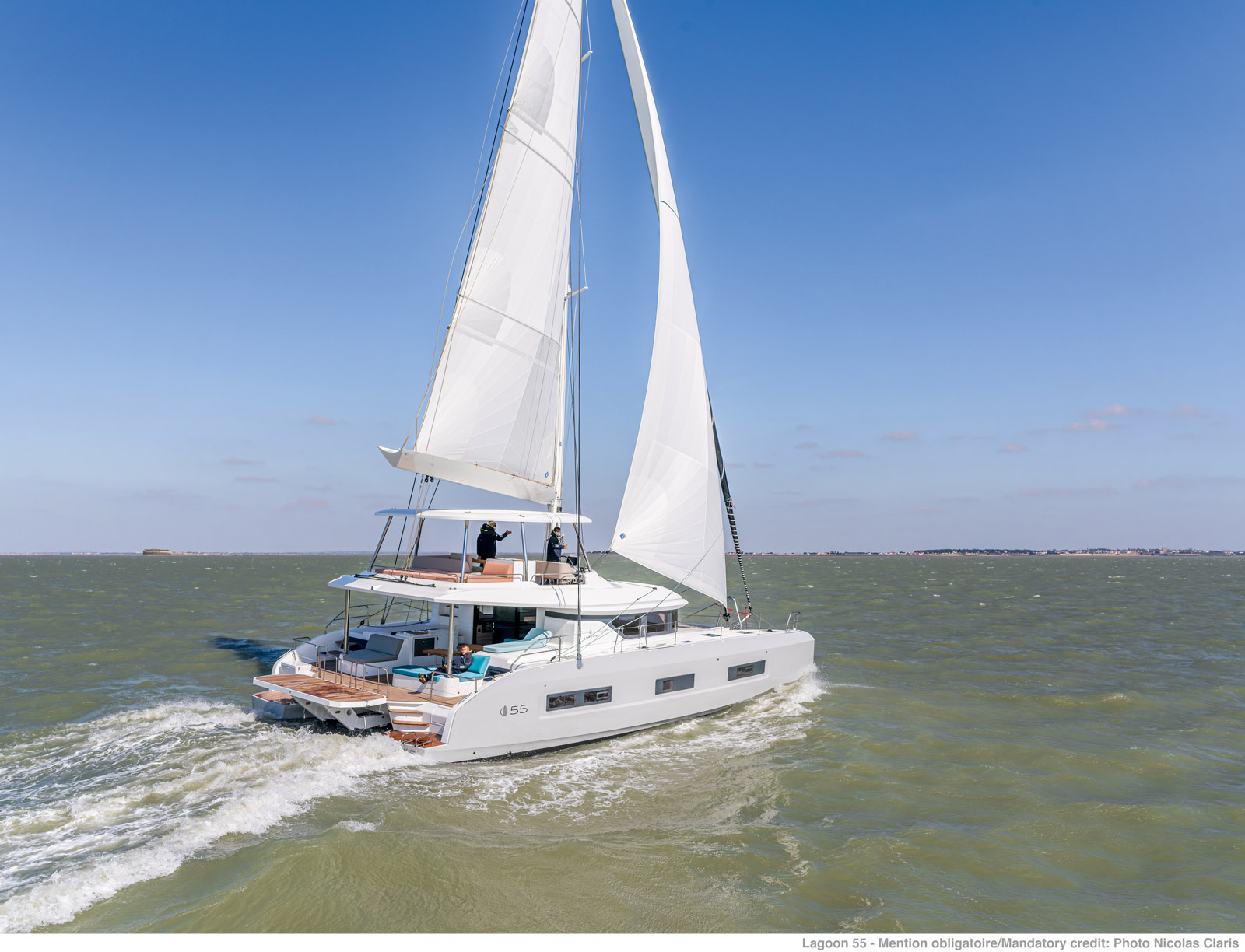
Just off the wind in a good breeze, the 580 is sporting a square-topped main and overlapping genoa.
Gilles Wagner, CEO of the shipyard, came to welcome me in person; it was immediately clear that this launch was important and that strong choices had been very consciously made. Indeed, after 35 years during which the highlight of going aboard a new Privilège was always seeing the famous owner’s cabin housed in the central rostrum, the 580 Signature dares to free itself from this feature. Better than a revolution, it’s a totally different approach that was adopted from the start of the project. As with superyachts, the exterior design was a major factor in the initial choices. Already in charge of the interior design of the Privilège for several years, the Darnet Design agency was naturally entrusted with the exterior style of this new model. Although there are now various different participants, the naval architecture remains the domain of Marc Lombard’s firm - you don’t change a winning team! Customers clearly appreciate this new idea: seven units have been ordered even before the launch of hull #1 of this model. With 35% of customers already being owners of a Lombard-designed catamaran, the team is confident. Not only do the “historic” clients not seem to be disoriented, but the Privilège 580 Signature is also attracting new interest.
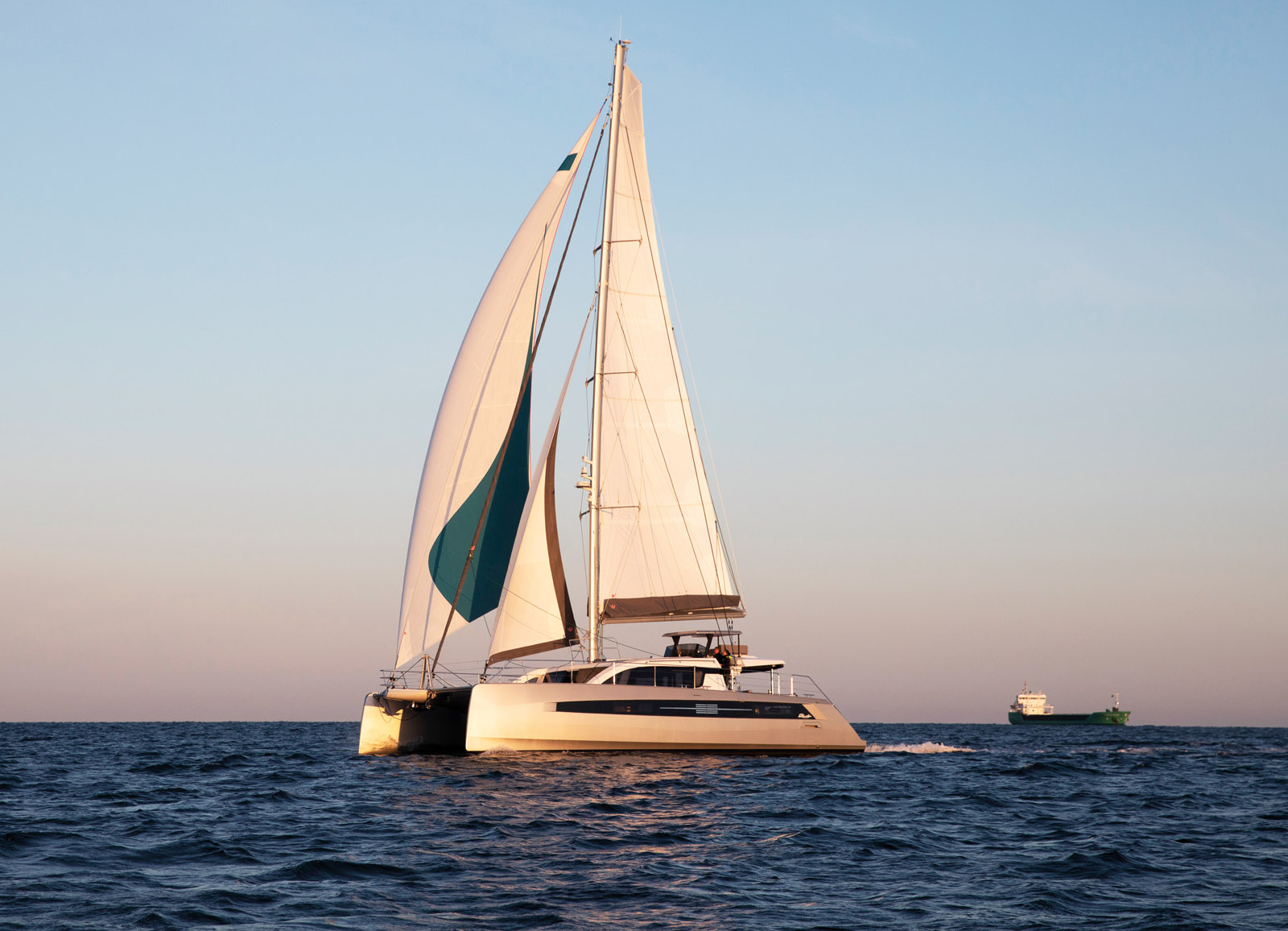
The yankee chosen as a downwind sail on a furler is easy to set and trim - but its area is much smaller than the gennaker that has more overlap and a lower clew.
More fluid lines
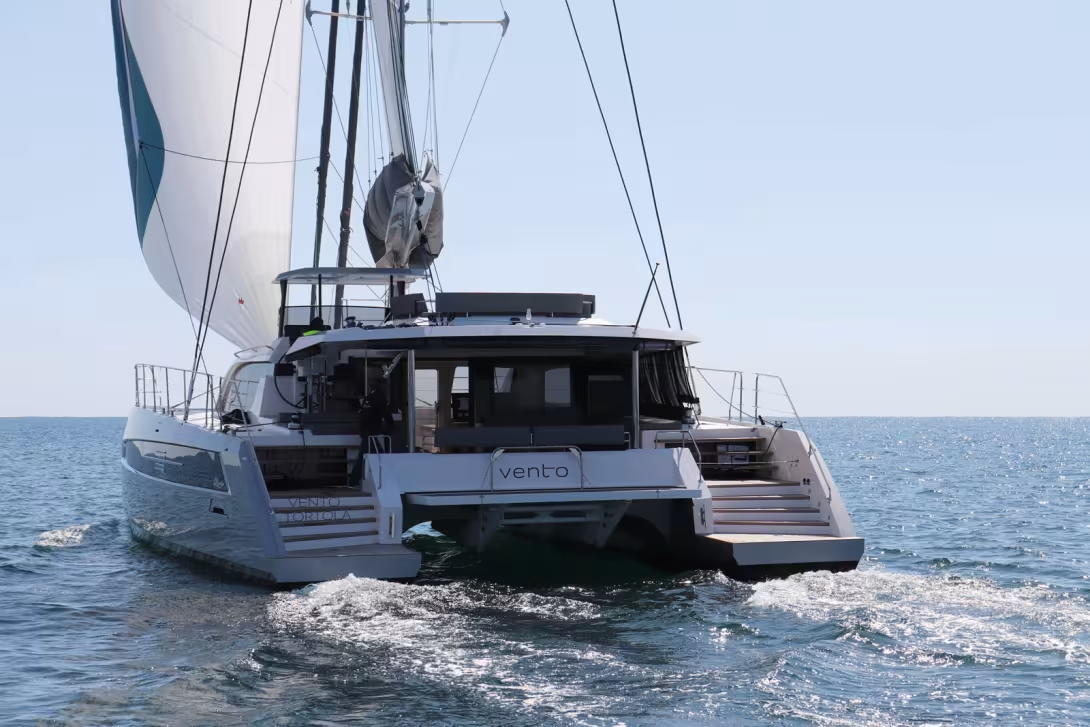
Whether viewed from the dock, up close on the pontoon or from the water (from the boat kindly made available for a photo shoot), the proportions are definitely those of a Privilège. The freeboard, in particular, suggests a generous interior volume in the hulls. But compared to her predecessors, including the very recent 510 Signature, the overall appearance looks more fluid. Of course, the metallic grey livery is particularly attractive... Better-integrated hatches in the hulls, a rib that runs from the bow to the stern, or the line of the coachroof that extends from the arch in front to the bimini: so many small details that improve the visual perception of the 580. This inaugural unit bears the lovely name Vento, but unfortunately... there wasn’t a breath of wind as we left the Privilège dock. The two optional 110 HP engines (the standard being twin 80 HP) have no trouble pulling the imposing multihull out of her slip. MaxProp propellers are due to be fitted, and these will only improve maneuverability. The big inflatable fenders protect the immaculate hull paint in all situations. And thanks to their light weight, they are not even difficult to handle.
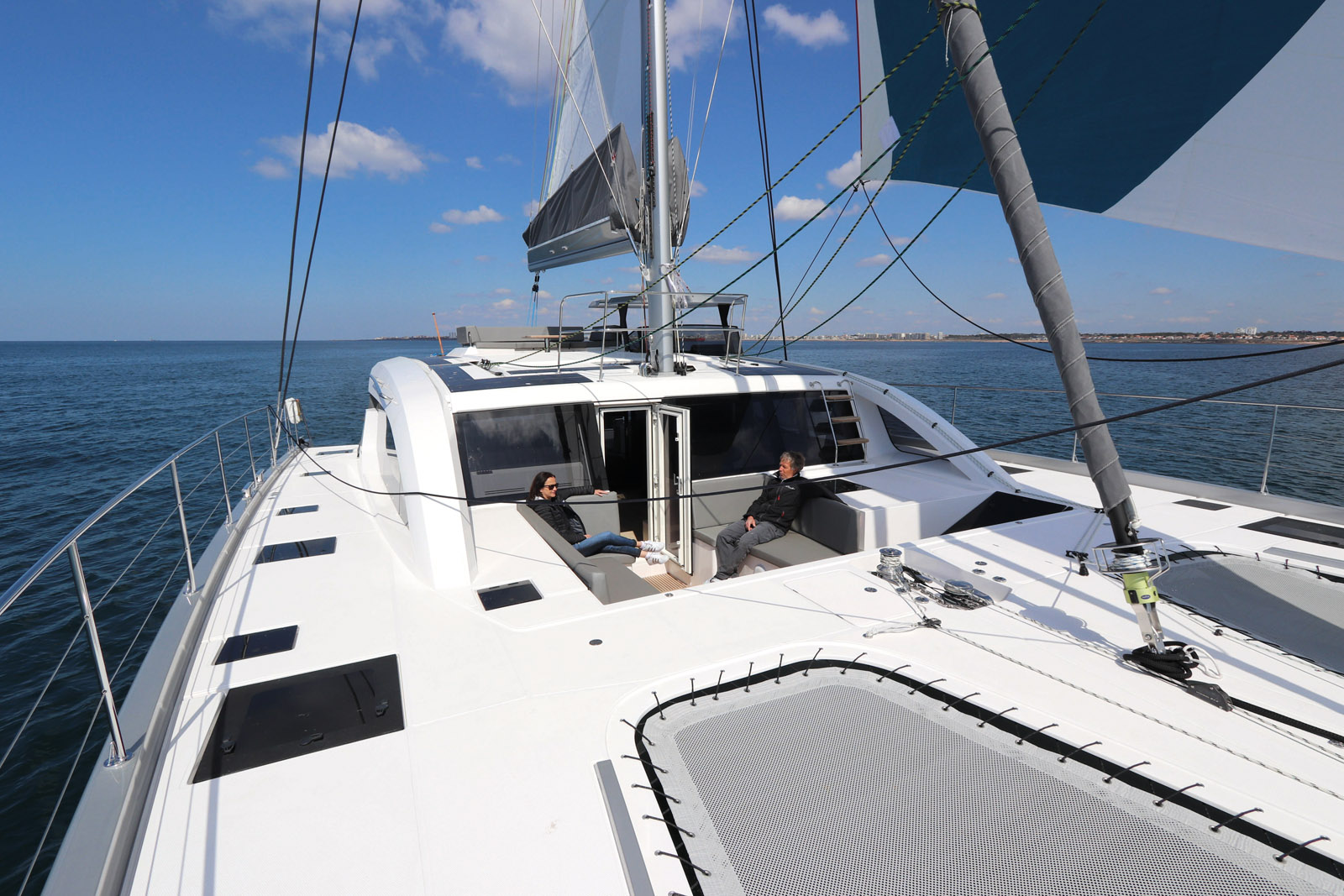
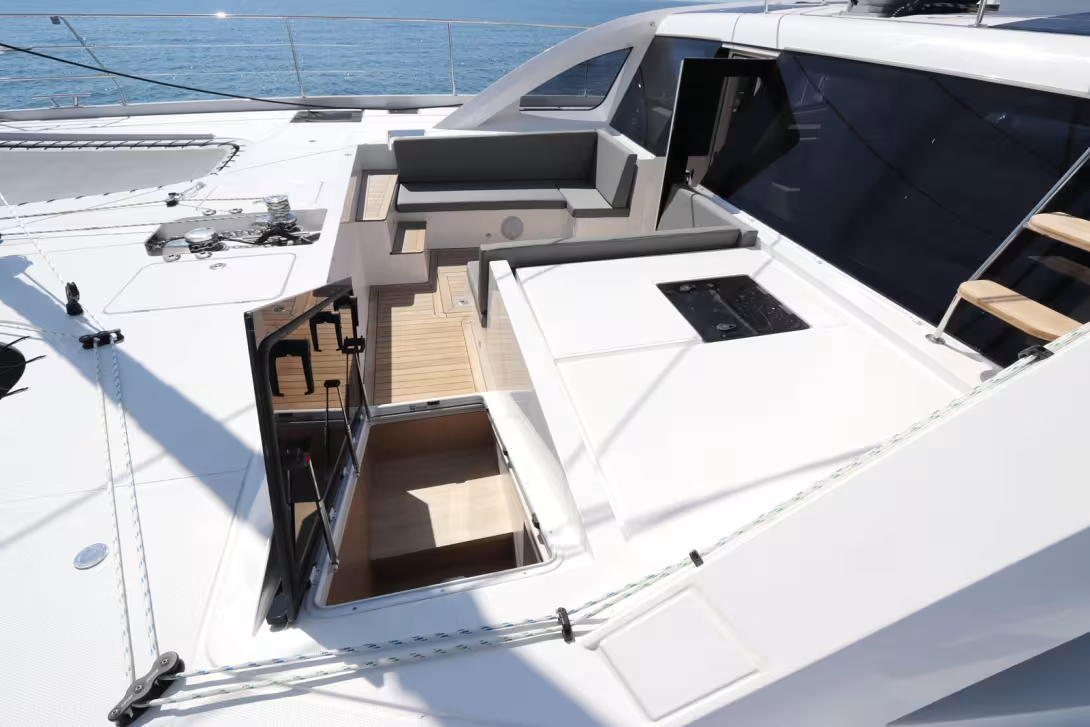
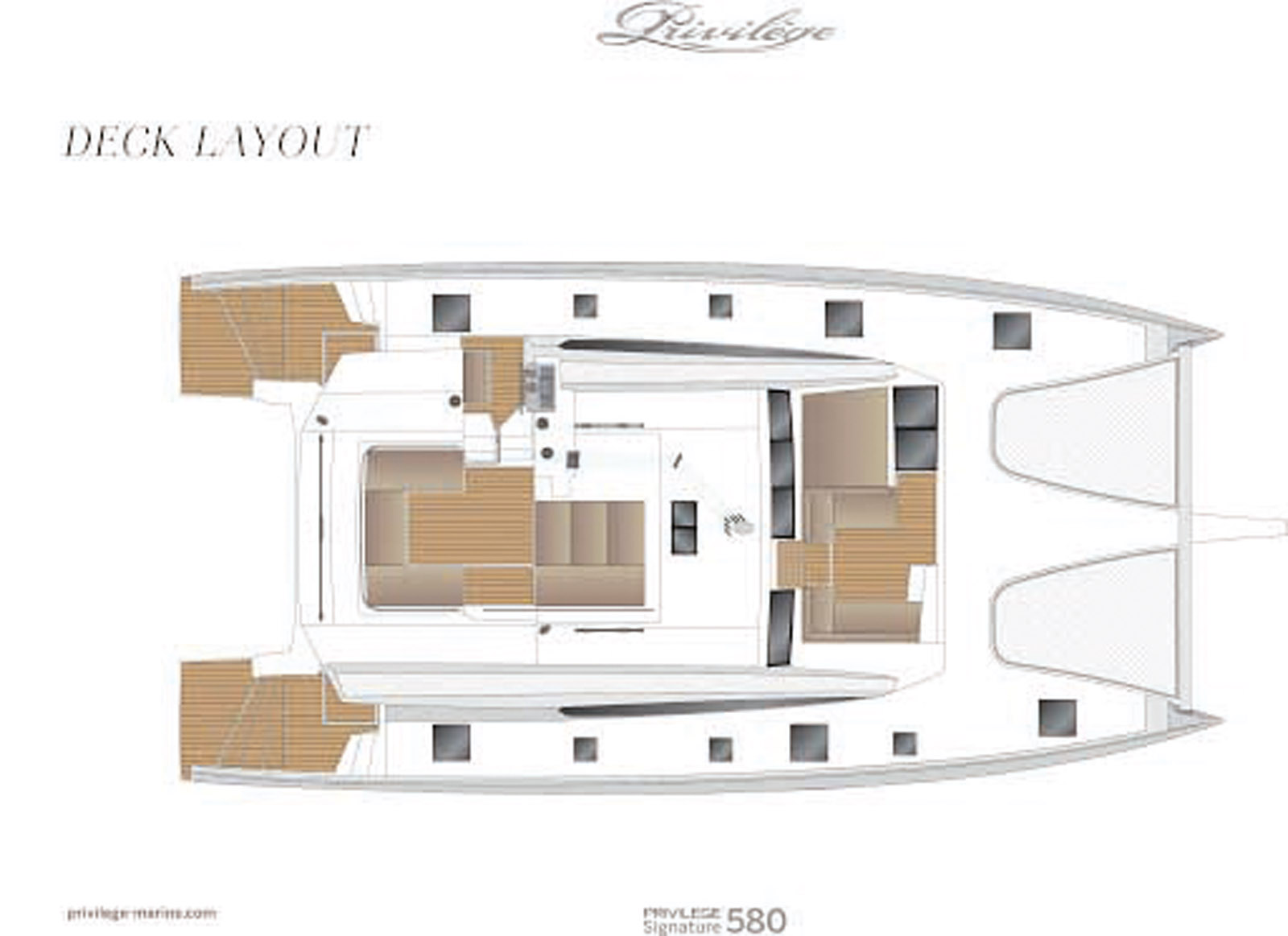
Gone is the owner’s cabin in the central rostrum! In its place, there is direct access to the deck and an optional forward cockpit, as on our test model.
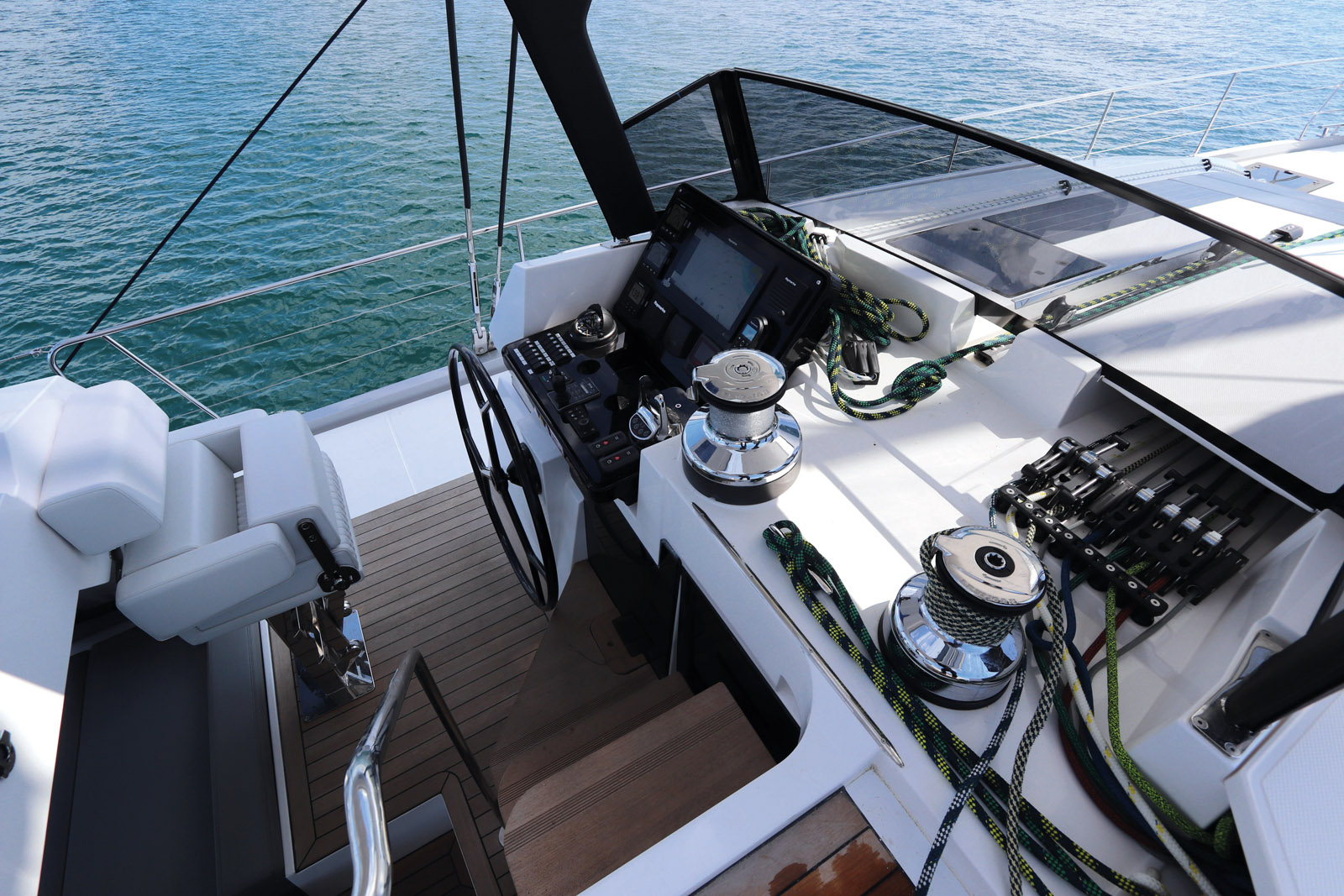
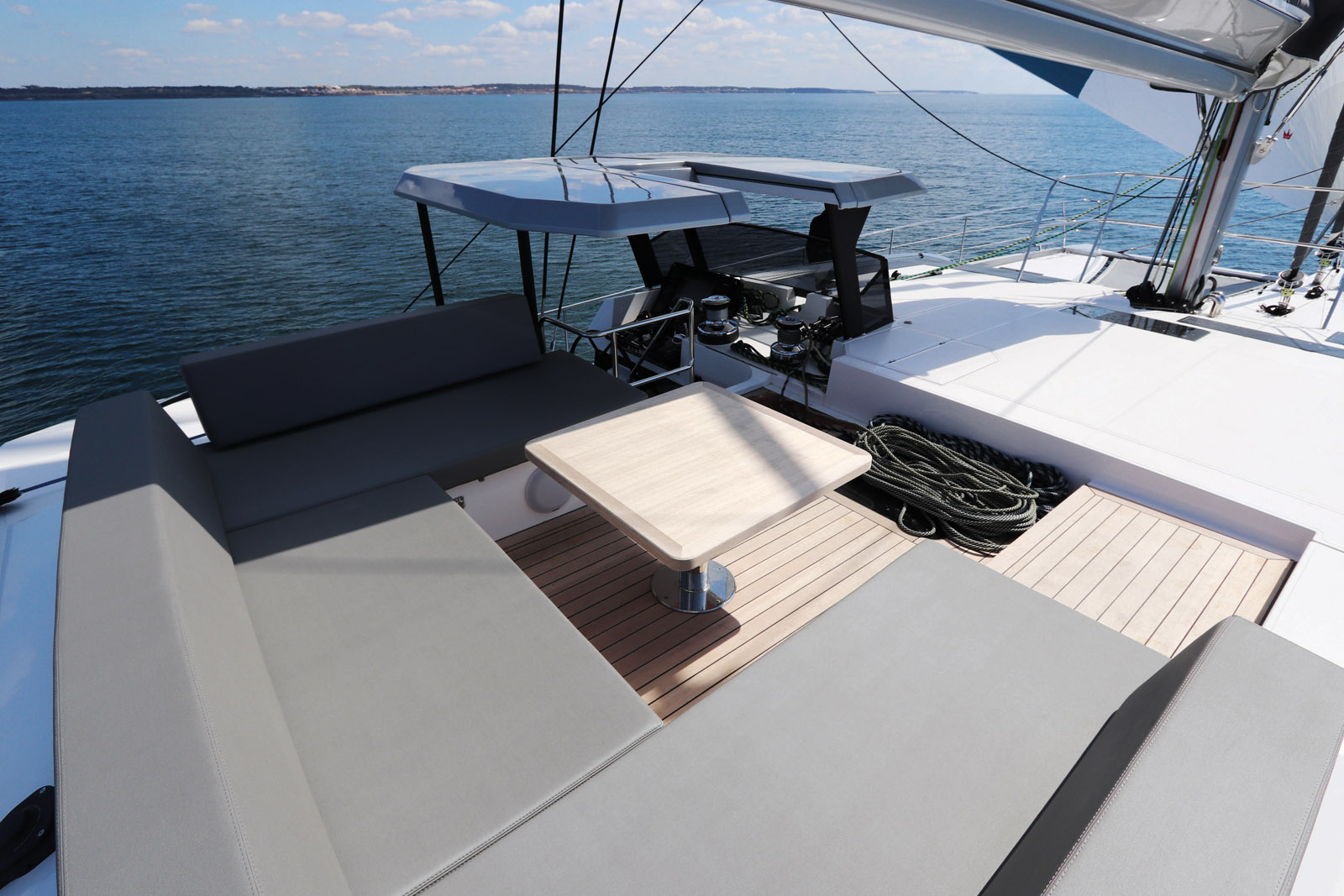
A real windshield at the helm station Raised by a single step up from the deck, the position of helm station has been calculated to the millimeter, in search of that elusive compromise between visibility and protection. The latter has been particularly well thought out. Located behind the protective bulkhead of the coachroof, the helm station features a proper windshield and a rigid T-top. Although optional, it would be a real shame to do without this, as its function is so important and it has been so carefully designed, with a hatch looking up to the mainsail and its uprights trimmed in imitation leather to great effect. Like the glass windshield, there is a clearly the beneficial “Fjord” influence (another Hanse Yachts brand) in the aesthetics and quality of these fittings. The massive winches are electric as standard, so the 1,300 sq ft (121m²) mainsail is effortless to hoist. The speed of 10.5 knots provided by the two engines running at 3,000 rpm was much higher than the wind once we cleared the port, making it easy to stay head-to-wind so the main slid nicely between the lazyjacks. The boom is easy to get to, thanks to the three solid steps that give quick and direct access to the rigid bimini. We were delighted that the designers have chosen a reasonable and therefore accessible boom height. This is not only aesthetic and practical, but also consistent with the marine qualities so dear to Privilège. None of this inhibits the presence of a real flybridge saloon, though, with its large U-shaped seating simply inviting you chill out. The coffee table with modest dimensions confirms the hedonistic vocation of this area that, being so well-integrated, doesn’t spoil the overall lines. In short, a successful living space without excessive windage. Back at the helm, to protect yourself from the elements, simply close the sliding plexiglass hatch that provides a comfortable passage to the coachroof and the bimini. But perhaps we should also mention the sail maneuvering station: everything is grouped together here within easy reach. The area can of course be completely enclosed - just like the cockpit - by custom-made covers, but for the purposes of our photo shoot, we left these off. The individual helm seat chosen by the owner of this first unit will benefit from being replaced by a double bench seat for contemplating the course and keeping watch together.
Forward cockpit or no forward cockpit?
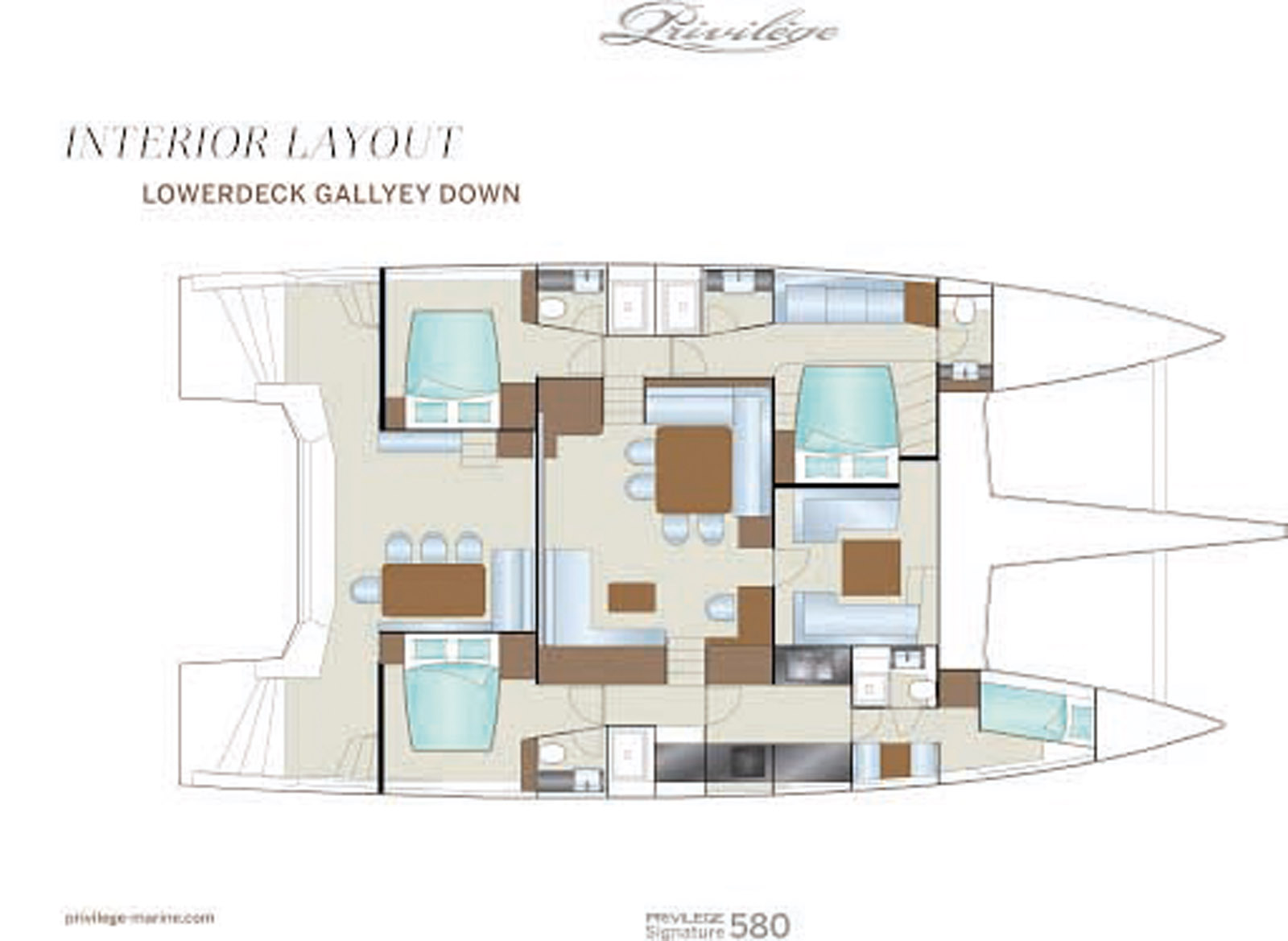
With or without a bench seat, this is not the most determining choice offered to the purchaser of a Privilège 580 Signature. There are numerous layout options, going far beyond the traditional number of cabins and bathrooms. More original options, which will have a significant impact on the function of each space and how you move around on board, will have to be defined according to each owner’s program. Free from the traditional Privilège cabin in the central rostrum, the forward part of the nacelle can be built as a vast cockpit. Whether or not to opt for this configuration is of course decisive. Long-distance fans will undoubtedly prefer large and deep lockers. Our test boat was equipped with this forward cockpit, and it will prove to be very pleasant in certain conditions under way, as well as alongside the dock or at anchor in warm weather. The forward cockpit is accessible from the saloon through a solid watertight door, but also, and this is more original, from the front of the port hull. This new access gives the Owner’s suite a new and very convincing opening to the exterior. Note that the 160 square feet (15 square meters) allow this cabin to feature a very beautiful island-bed (5’3” x 6’7” / 160 x 200 cm). The sofa along the side is perfect for admiring the ocean on a screen - sorry, a window – that’s more than thirteen feet (four meters) diagonally, no less! With two bathrooms - one for the shower, the other for the toilet - we are touching 5-star comfort here.
The famous owner’s cabin with direct access to the deck.
Large hull windows and panoramic vision
The interior/exterior connection is one of the most contemporary trends, and aboard the 580 Signature is formed by the long hull windows that extend into the aft cabins across the entire width of the transoms. They also offer an immersive view from the generously-sized beds (4’7” x 6’7” / 140 x 200 cm). Whether to port or starboard, guests will be accommodated in a perfectly equitable manner since these VIP cabins are rigorously symmetrical with, of course, their own private bathroom with separate shower. In the same way, the decision to do away with the central rostrum cabin makes it possible to offer an unprecedented height for the forward windows on a Privilège. The result is excellent: the view from the saloon can truly be described as panoramic.
Galley up or galley down?
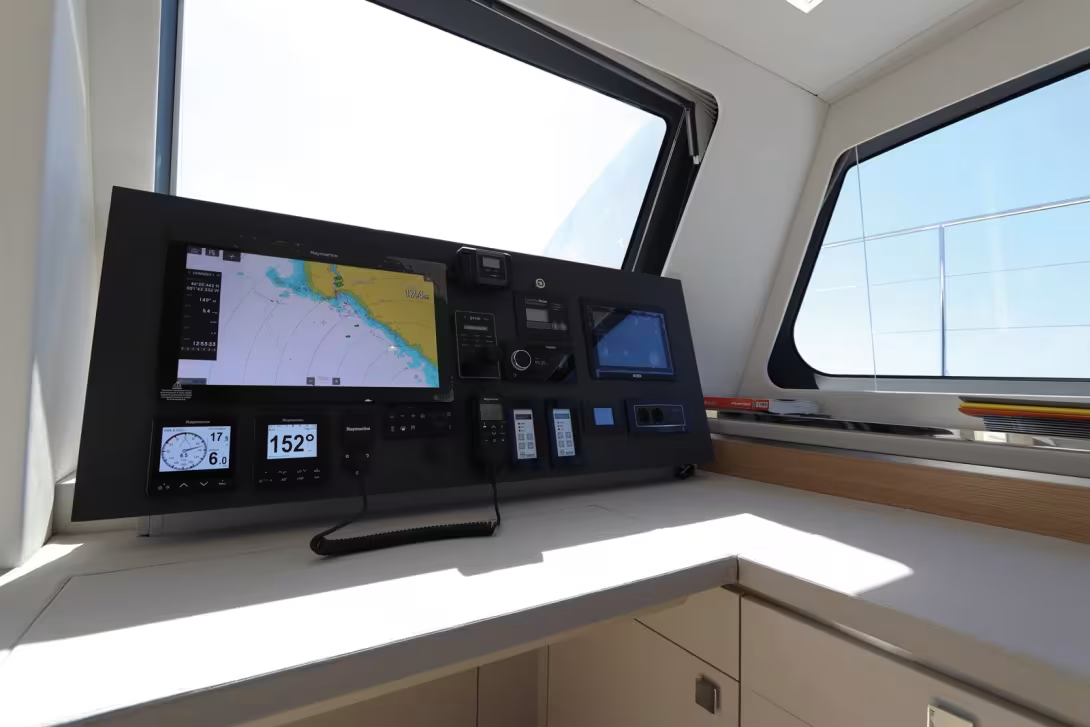
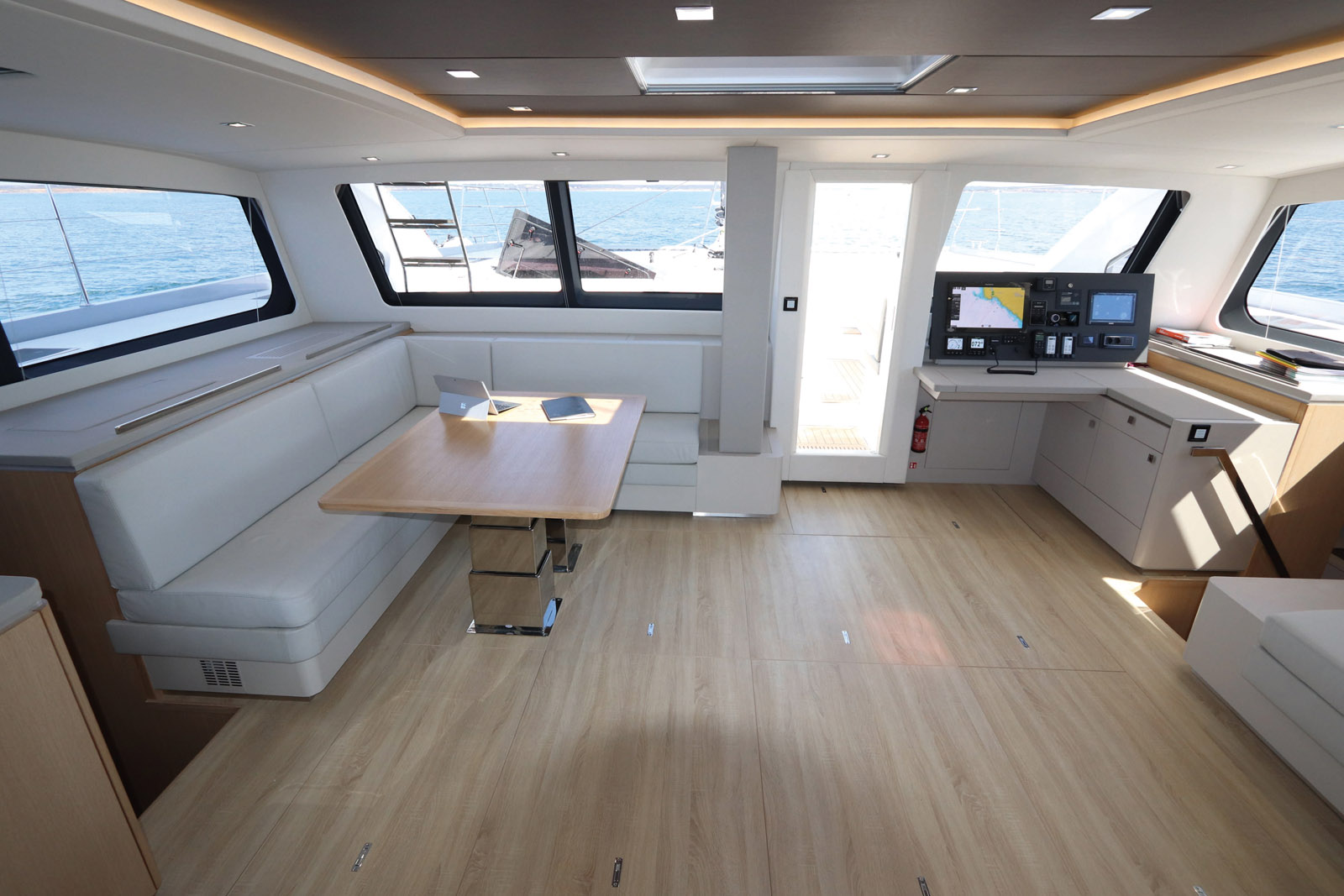
The nacelle also calls for another very structuring choice: does it house the galley, or should this be positioned on the forward half of the starboard hull, as on our test boat? In this case, the galley features countertops and appliances over 8 feet (2.40 m) either side of a 31” (80 cm) passageway, allowing space for passing. This is important because in this configuration, clearly organized around the presence of a permanent crew on board, the staff quarters are in forward of this beautiful kitchen. A desk/table, a nice bathroom, and two good size bunks (31” x 6’7” / 80 x 200 cm) complete the space to the starboard bow. With such facilities, there should be no lack of candidates to take care of this luxury craft. Without a galley, the nacelle seems enormous, though it could do with the coffee table that occupies the aft starboard corner. On the opposite diagonal, the L-shaped dining area will effortlessly accommodate eight guests around its solid table - as soon as the additional stylish seats are delivered. Forward, to starboard, the chart table looks like an airplane cockpit with a Boeing-style instrument panel. Being fairly high to integrate the multitude of screens that have become unavoidable on a modern multihull, it encroaches a little on the front window, but this spot will nevertheless remain a privileged lookout post. The view is almost 360° and most importantly, you’re in the strategic center of the catamaran, at the crossroads between the exterior maneuvering station, the forward cockpit and the starboard crew hull.
Getting the forefeet just clear of the water
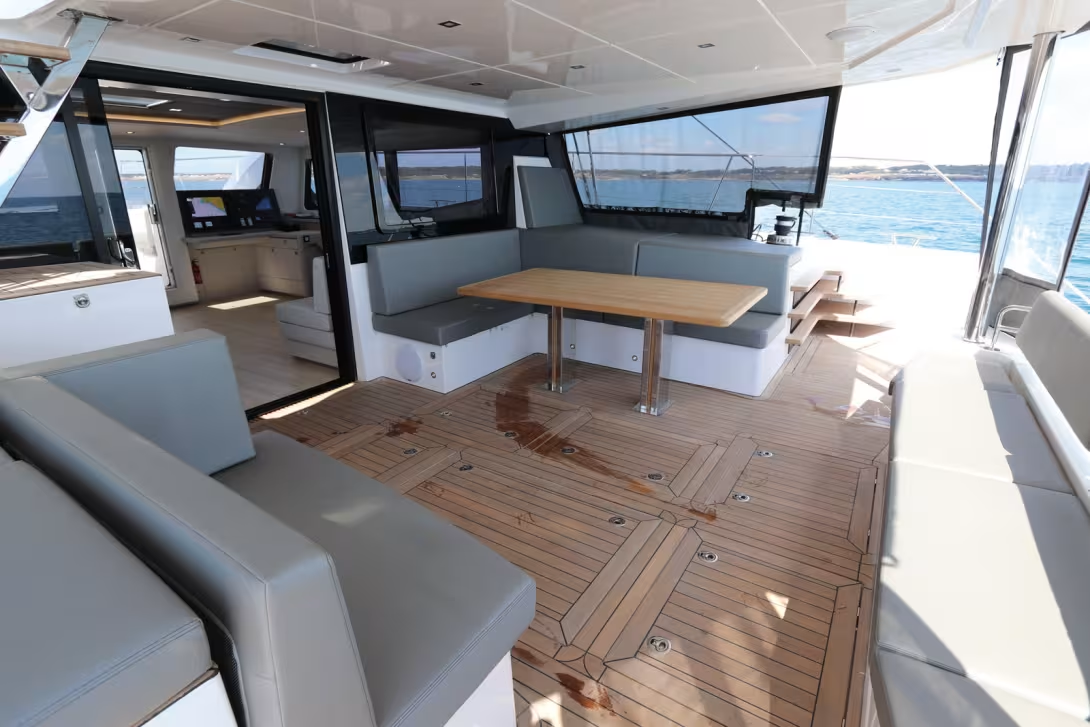
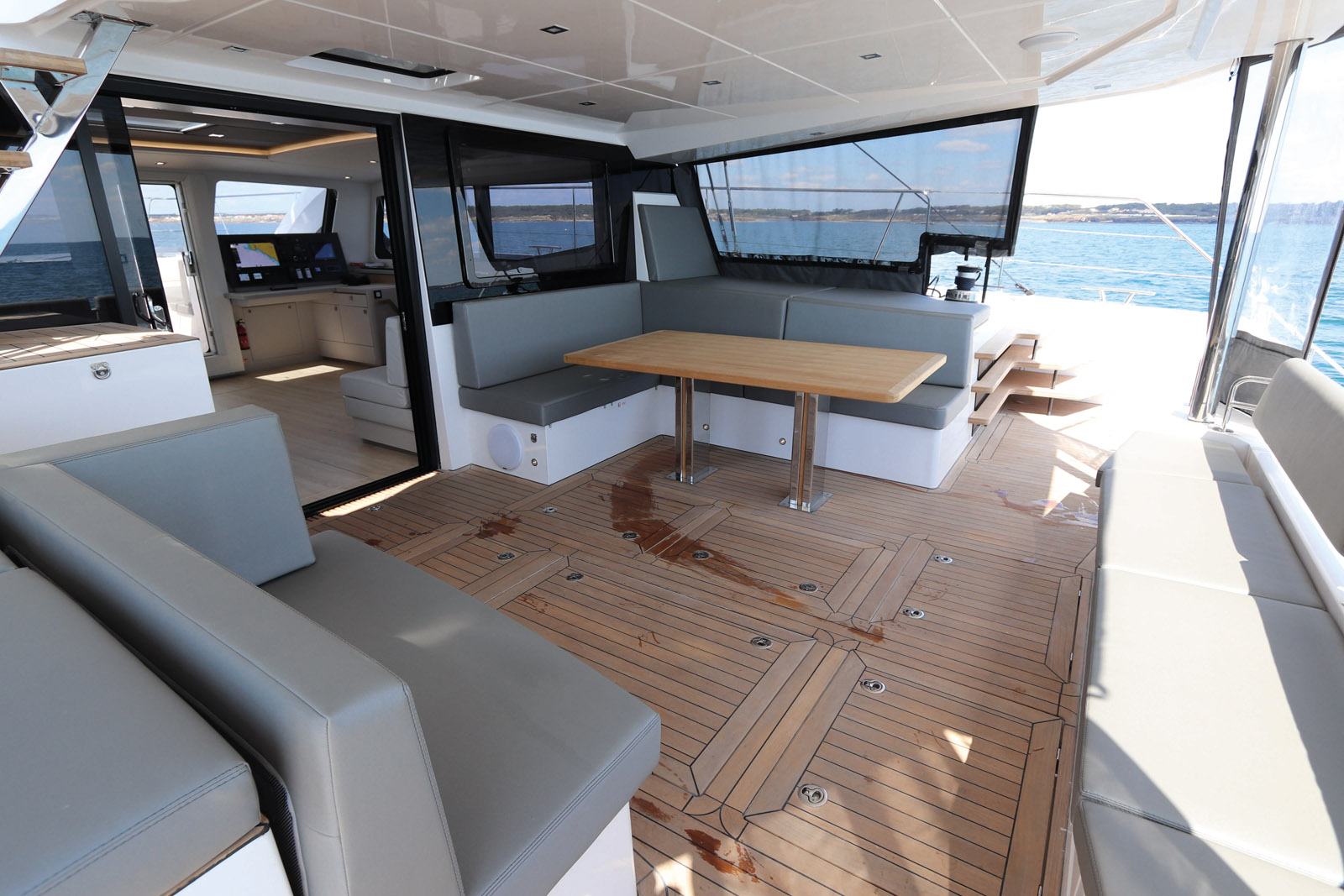
The crew oversaw sail handling, with the objective being to take advantage of the slightest breath of air to get the 32 tons of Vento moving. Having checked the boxes for all the “heavy” options (generator, two watermakers, air conditioning, hydraulic platform...) and chosen the standard aluminum mast as opposed to a carbon spar, which would have been welcome, we’re looking at the worst-case scenario configuration for our light airs test day. Especially since the future skipper has opted for a rather specific headsail, stronger and flatter than a gennaker, but smaller than a code zero, with a very high clew. The idea is to carry it even in strengthening winds, but to rely on the motors if in the doldrums. But we didn’t let this bother us and unfurled the whole canvas. While gybes happen without problems, tacking requires you to roll up the headsail, making getting under way again more difficult. It’s important to note that thanks to the deck layout and the cleverly-designed ergonomics of the helm station, most maneuvers can be undertaken without any problems when sailing solo, something not always obvious on a nearly 60-foot boat. Once moving, in flat seas, the Privilège 580 Signature does not disappoint. At 70 degrees to the apparent wind, that didn’t exceed 8 knots, we managed to reach 6.9 knots. Closer to the wind, the speed drops quickly, down to 5.1 knots at 40 degrees to the apparent. At lunch time, we made the most of the wonderful weather to have our picnic in the forward cockpit. With the wind aft, we were well sheltered, and in the sunshine were easily able to forget the still winter temperatures. Another advantage of this space: there’s no better place to look out for lobster pots and guide the helmsman. Fortunately, the wind picked up a little in the afternoon for the trip home. With 16 knots of apparent wind and under genoa, the angle was good – just shy of 40 degrees. The log was oscillating between 6.2 and 6.7 knots. Without breaking any speed records, this catamaran remains “easy”, and we never tired of admiring the two forefeet, slightly lifting, and piercing the water. It was already time to head back in, while everything on board was inciting us to set off far and wide. We still made the most of the aft cockpit for a while, getting up from the starboard L-shaped bench seat and its dining table, to relax on the long aft bench seat.
Conclusion
So, what did we make of this first Privilège/ Hanse model? With its extremely meticulous design, its perfectly suited underwater hull and a build quality allowing it to face any weather, this Privilège 580 Signature is indeed representative of a brand that has already been around on the market for 35 years... The 580 has also had the audacity to deviate from the central rostrum, which up until now has been the Privilège hallmark, and to propose original deck plan and layout options. The future of the next generation is assured!
The Pluses
+ Owner’s suite
+ Elegant lines
+ On-board circulation
The Minuses
- Instrument panel a little high
- Some finishing touches to be taken care of
- Significant displacement
TECHNICAL SPECIFICATIONS
Builder: Privilège
Architect: Marc Lombard Yacht Design
Designer: Darnet Design
Length overall: 61.2 ft (18.65 m)
Waterline length: 58.98 ft (17.98 m)
Hull Length: 58.72 ft (17.90 m)
Beam: 30.1 ft (9.18 m)
Draft: 5.9 ft (1,75 m)
Displacement lightship: 63,934 lbs (29 t)
Displacement fully laden: 77,162 lbs (35 t)
Total Sail area: 2,292 sq ft (213 m²)
Mainsail: 1,302 sq ft (121 m²)
Genoa: 990 sq ft (92 m²)
Staysail (option): 549 sq ft (51 m²)
Gennaker (option): 1,894 sq ft (176 m²)
Mast length: 90.45 ft (27.57 m)
Engines: 2 x 75 HP | 2 x 55 kW
Fuel Tank: 264 US gal (1,000 l)
Fresh water: 264 US gal (1,000 l)
Grey water / Black Water Tank: 113.5 US gal (430 l)
CE Certification: A - 12
Standard price: € 1,740,000 ex-tax
Price of the boat we tested: € 2,700,000 ex-tax
Main options ex-tax:
Hull paint: € 65,500
Carbon mast and boom, Kevlar rigging: € 215,500
Hydranet mainsail and genoa: € 29,200
1,410 sq ft (131 m²) Gennaker: € 18,200
2,185 sq ft (203 m²) Asymmetric spinnaker: € 14,600
Electric genoa furler: € 15,100
Ground tackle: € 12,800
Rigid guardrail: € 9,750
Hydraulic aft platform: € 86,000
Cockpit and sugarscoops in teak: € 39,000
Rigid T-Top for helm station: € 34,500
Leather upholstery: € 12,500
Air conditioning: € 75,000
Heating : € 11,500 25 kVA
Generator: € 31,900
Raymarine electronics pack: € 26,100
110 HP shaft-driven engines: € 15,500
230 V 200 l (53 US gal)/h Watermaker: € 22,700
 |
 |
