After a decade’s absence, Multicat Algarve launched the second model in its new Punch range in Portugal, a 13.70 in a Day Charter configuration. For the editorial team here at Multihulls World, who have always been fans of epoxy wood construction, the opportunity was just too good: we met up with builder Christian Hernandez in Portugal to sail a few miles aboard this unclassifiable newcomer.
Infos pratiques
- Le chantier : Punch 1370
- La fiche technique
-
 Découvrez notre vidéo exclusive
- Financez votre Punch 13.70
- Assuez votre Punch 13.70
- Articles autour du Punch 13.70
Test location: Vila Real de Santo António, Portugal
Conditions: wind 5 to 10 knots, calm sea
There are some catamarans that capture the imagination. Whether on the glossy pages of an old article lost in an unlikely pile of magazines, or deep in our memories of tropical cruising, the Punch is always up there. These multihulls have left a whole generation with a taste for the tropics, the sun and the trade winds.
It has to be said that Punch catamarans, with their original construction method, strong inverted deck sheer and colorful visual identity from the 1990s and 2000s, helped to associate catamarans with escape, simplicity and performance. Despite the closure of the Martinique-based shipyard run by the inimitable Christian Hernandez in 2010, the catamarans have continued to sail the world, proving the reliability of their epoxy plywood build, a construction method that dispenses with the need for molds and guarantees excellent mechanical qualities such as strength and rigidity. Plywood epoxy means sharp chines: only the Punch 1700 benefited from strip-planking hulls, an assembly of narrow battens that allows part of the hull to be shaped. According to Alain Mortain, one of the historic naval architects for Punch, strip-planking offers multihulls that are more refined than GRP or aluminum, and almost equivalent to sophisticated, expensive sandwich construction. Alain, who joined architect Philippe Harlé, the father of the famous Muscadet - it’s not hard to find similarities between France’s “boat of the century” and the Punch - was joined by Yannis Mavrikios after Philippe’s passed away in 1991. Between them, they designed the 12.50, 15.00, 17.00 and 21.00, not to mention being involved in some monohull adventures too.
More recently, it was after a customer’s request during a repair, that Alain had the idea of rethinking a new range, almost 15 years after the shipyard in Fort-de-France had ceased operations. After a few sketches and doodles by Alain, Christian was tempted, after much thought, to relaunch the Punch adventure, this time in southern Portugal in the small town of Vila Real de San Antonio on the Algarve.
Four sizes are on offer: 12.70, 13.70, 15.10 and 17.10. A first 13.70 was ordered, then a second one left the new production site and hit the water at the end of 2023, just 16 months after the start of construction. The 13.70 in question was ordered by owner José Cloquell, a loyal customer on the east coast of Martinique: Zelphis is now the fourth Punch in his fleet!
The specifications drawn up in advance between the owner and the shipyard are specific to a catamaran that has to meet the requirements of a day charter operation for 30 people, and with constraints linked to its tropical working area. What’s more, the multihull is mainly at anchor when not out working, so water and fuel supply requirements also had to be taken into account
More modern construction
If the Punches of times past enjoy a reputation for simplicity and reliability, they owe it largely to their epoxy plywood construction method. For the 13.70, we’re dealing with epoxy wood, but this time, strip planking has been chosen for the hull bottoms. Strips of 16 mm red cedar are glued together using epoxy, then reinforced with glass cloth inside and out, allowing the longitudinal stringers to be done away with. This eliminates the need for restructuring. The fiberglass, the resin and wood only come to a thickness of 20 mm (just over ¾”), guaranteeing a perfect seal. “Our hull bottoms are clean because there’s no frame, there’s no need for a sump since we don’t have any stagnant water. It’s light, strong and ages very well,” explains Christian Hernandez. For the upper sections (topsides, deck, nacelle), plywood is replaced by Airex foam panels with a density of 100 kg/m³ (6¼ pcf), laminated with epoxy using the infusion method.
Simplicity and reliability
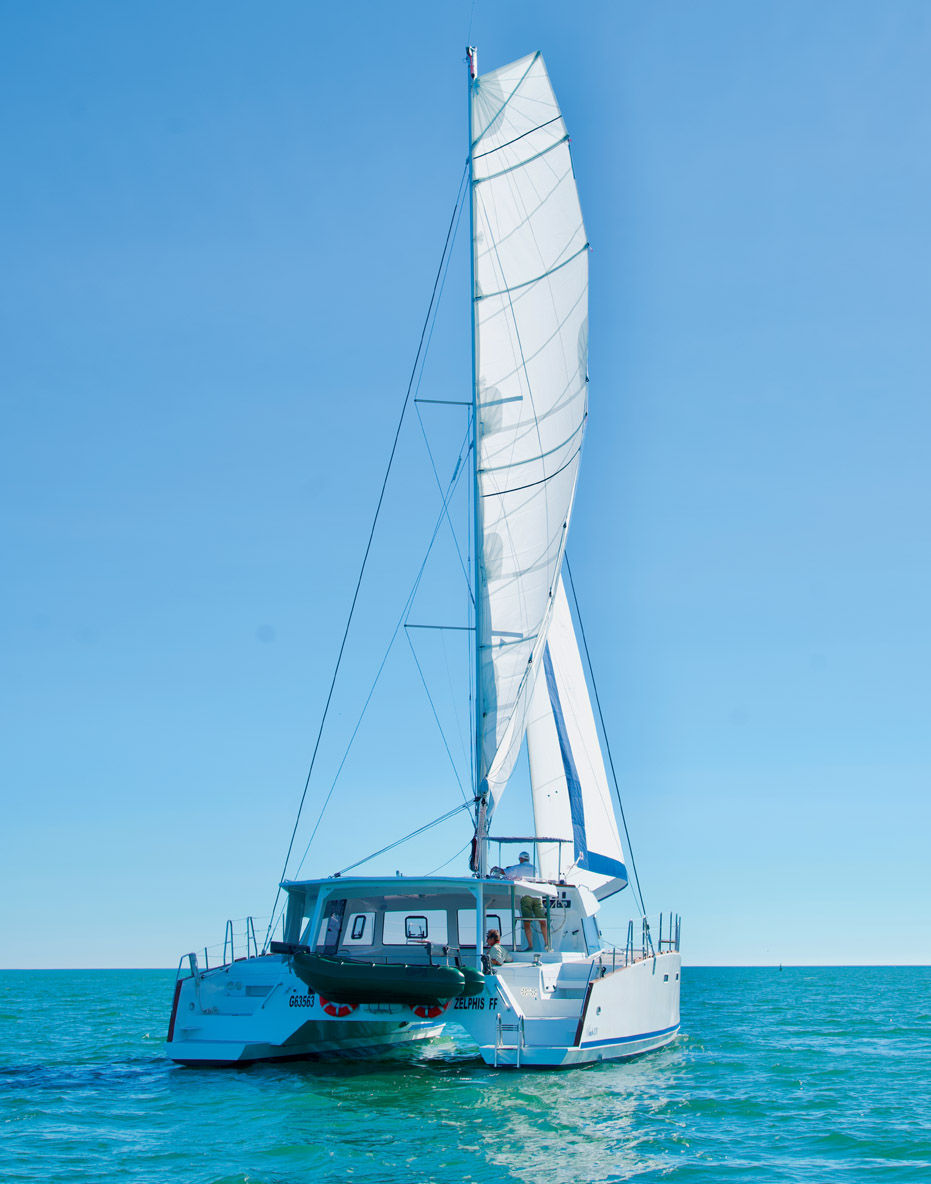
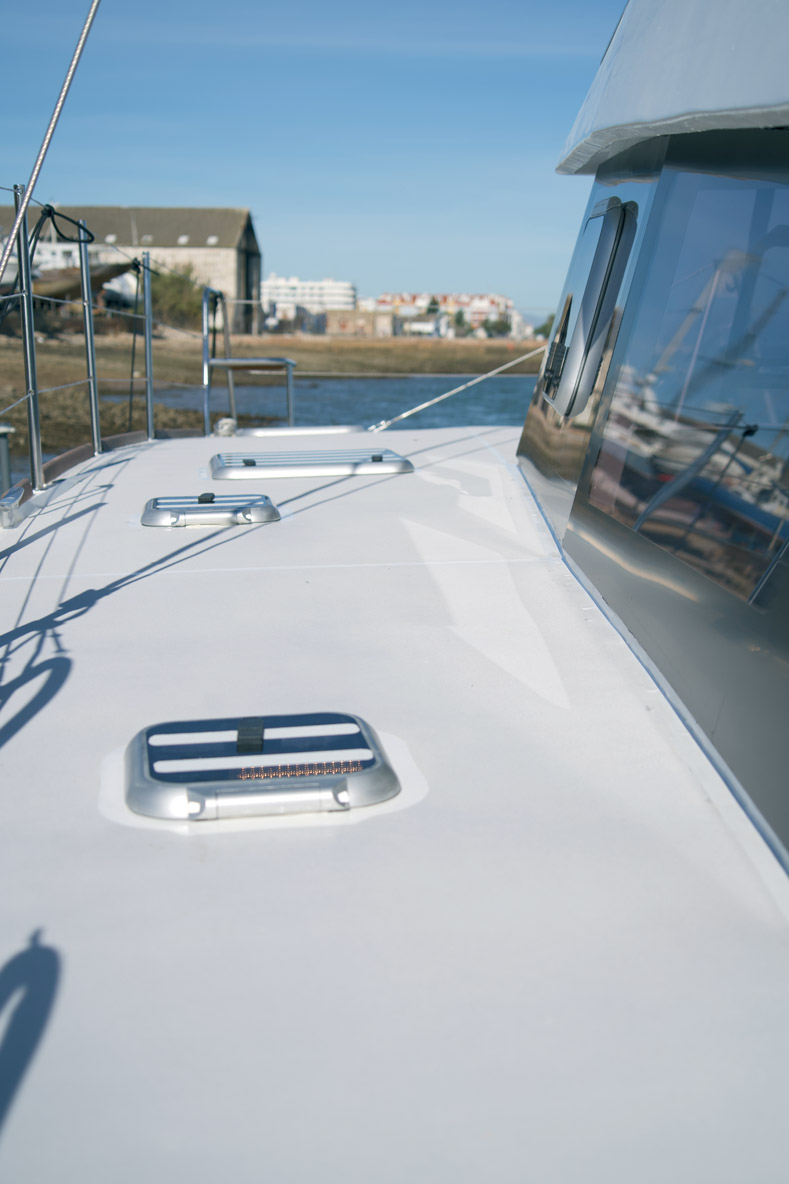
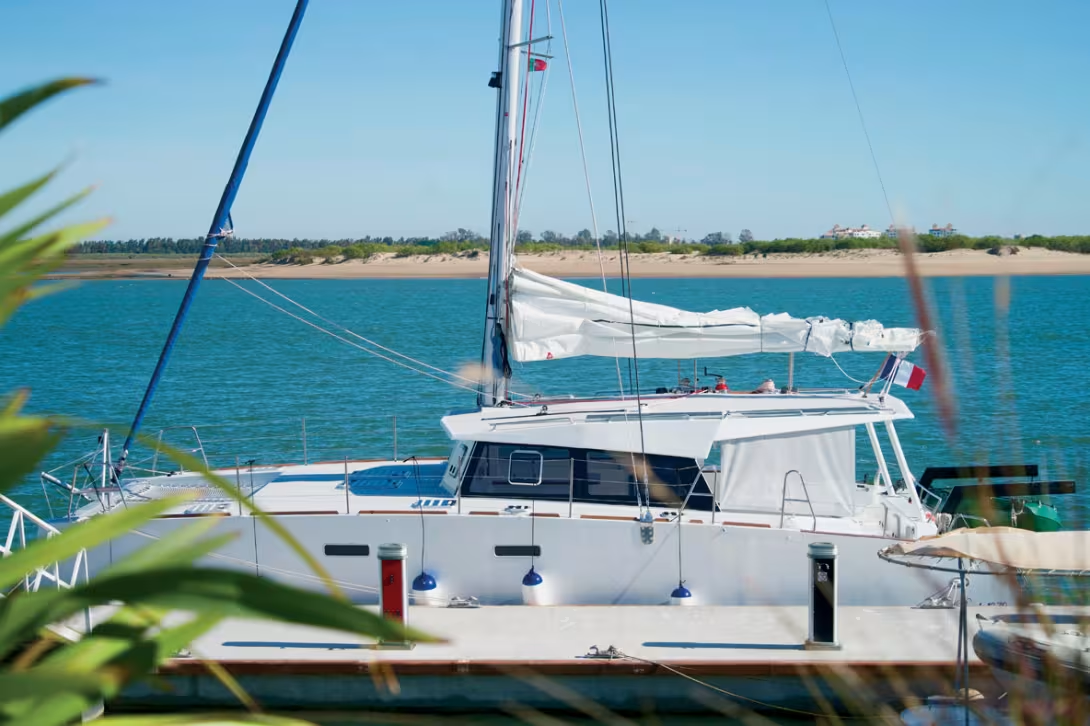
From the top of the pontoon on the banks of the Guyana River, which separates Portugal from Spain, watched by the shipyard’s employees and her new owner, the Punch 13.70 looked stunning in her white livery. The indefatigable Christian Hernandez is perched at the top of the mast, making a last-minute adjustment to the wind vane. The catamaran was just undergoing a few final adjustments and waiting for a shift in the wind and tide before getting under sail for the very first time. As you approach the pontoon, you immediately notice the imposing cap to the coachroof, along with the raised helm station and the inverted deck sheer so characteristic of her predecessors. This design offers a number of advantages, as Alain Mortain points out: “The inverted sheer is a habit established with Philippe Harlé, who validated this famous torpedo profile. It’s a signature for this catamaran, but not the only one: it also allows for high central headroom, while avoiding overly imposing freeboard at the outsides. It also facilitates water drainage.” On this modern Punch, this deck line remains as relevant as ever, responding perfectly to structural and ergonomic imperatives. In terms of marketing, it ensures a continuity of the Punch saga...
The very full rounding of the hull is another remarkable feature visible from the outside. This type of shape, seen on multihulls as well as monohulls, provides a load-bearing bow that reduces pitching effects. As soon as the catamaran starts to “plunge”, the volume of the hull counteracts this, limiting any burying of the bows. The Punch’s habitability is also directly impacted (in a good way) with increased interior volume.
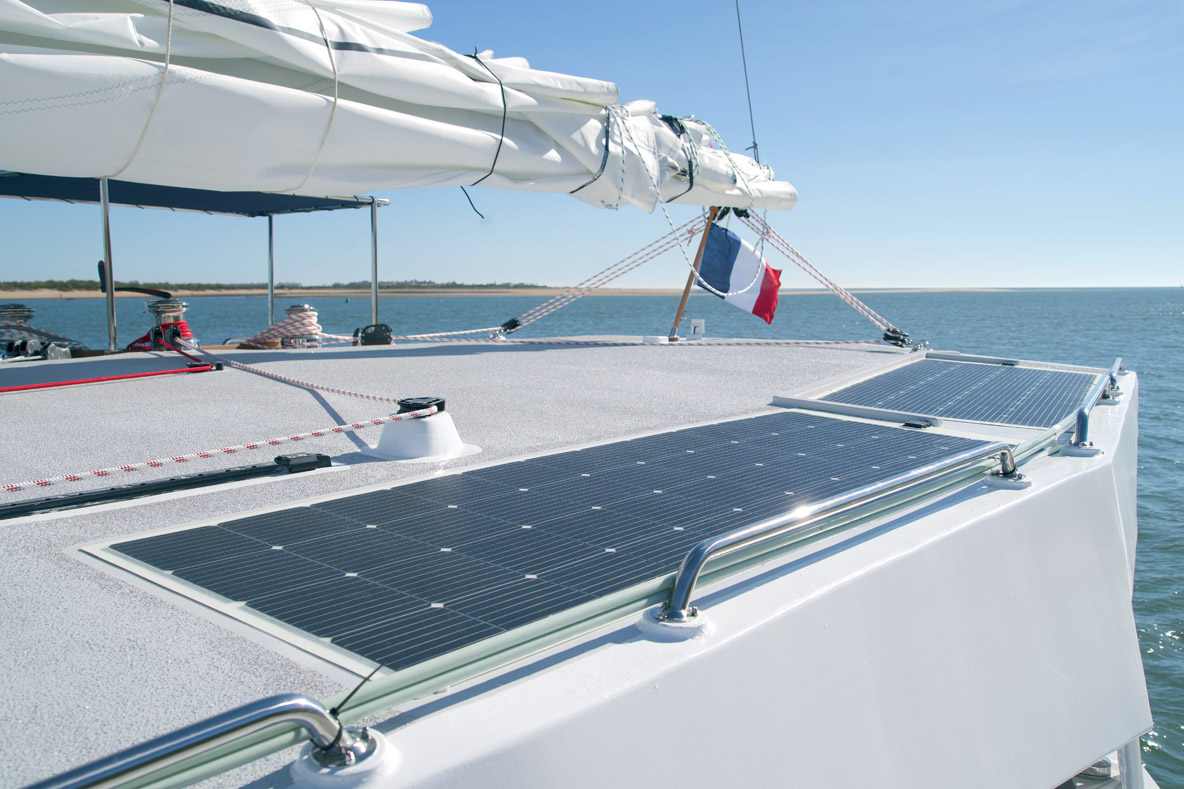
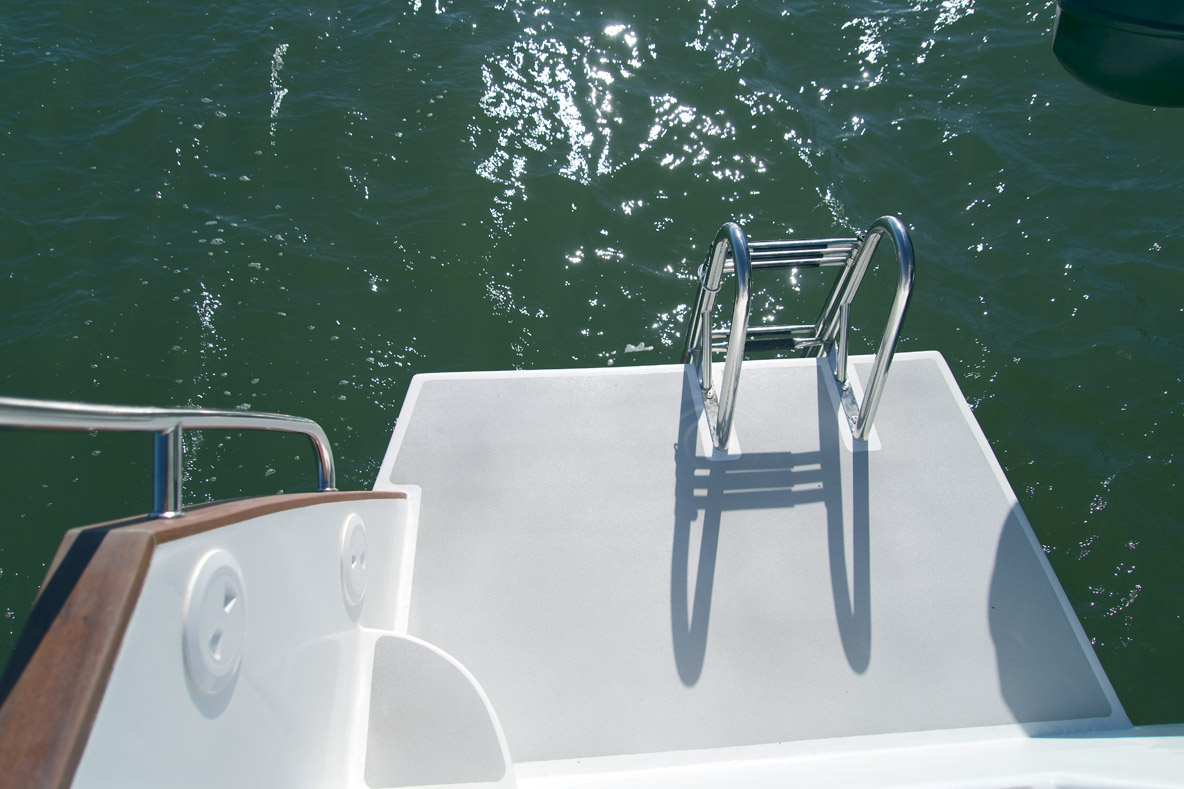
Once aboard via the stern, the first impression is one of space. The large sugarscoops provide easy access to the bathing area and a rinsing/drying area for people before entering the nacelle. A rigid, non-inflatable tender is suspended from aluminum davits. This was an imperative choice for withstanding “bommies”, the coral heads that are very common in Zelphis’ future cruising grounds, and also for hauling the dinghy ashore. The need for robustness is also reflected in the addition of numerous reinforcements on the lower parts of the hull. Also at the stern, a step has been added between the sugarscoops and side decks to facilitate boarding for people with reduced mobility. The installation of a large bimini has allowed the mainsheet to be moved to the coachroof, freeing up space aft of the cockpit for easier moving around. This large surface area has also enabled the deployment of 300-Wp solar panels glued directly to the roof. You can walk on them because there’s no aluminum structure around them. All the cells are independent, which means that if a shadow falls on one of them, the others will continue to function.
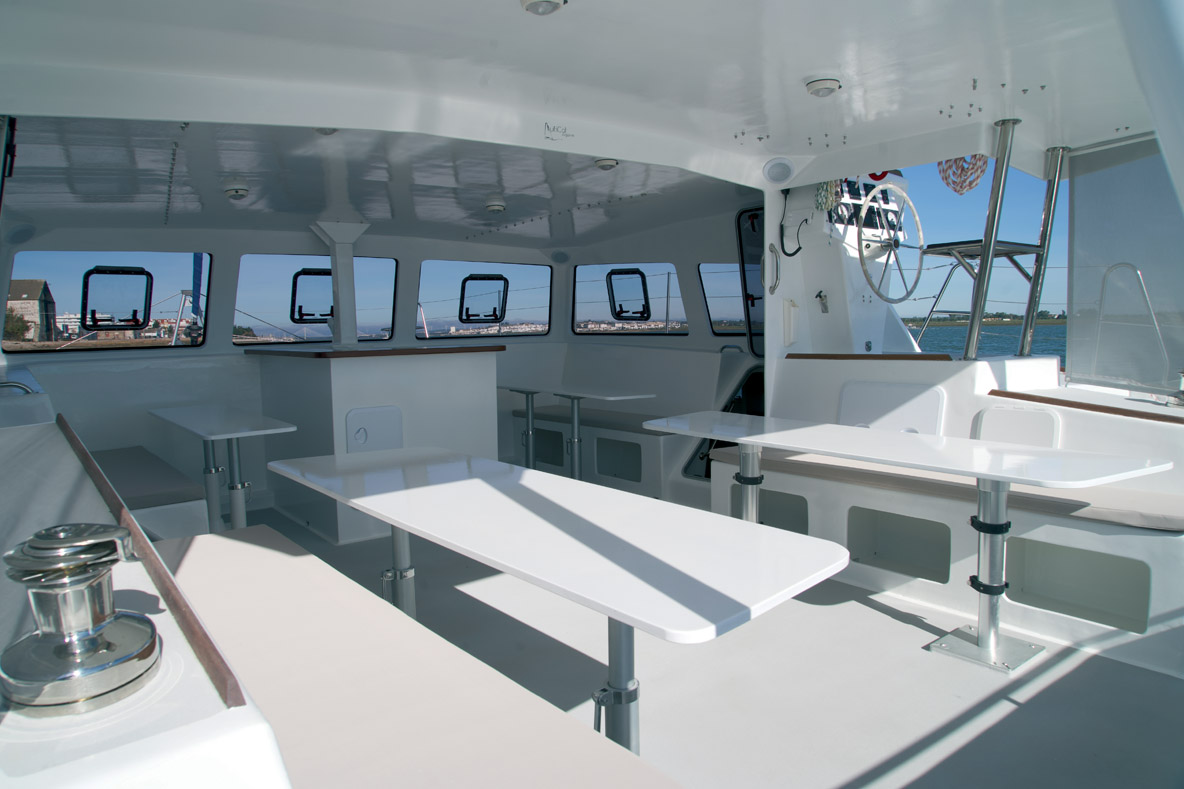
Unlike the cruising version, there are no sliding doors to close off the saloon. Instead, you enter directly into a very large space where there is no chart table, but a central bar flanked by tables and side benches offering ample storage space.
Circulation on board is extremely fluid, particularly when it comes to getting to the forepeaks, thanks to the 3-foot (92 cm) side-decks. Support is provided by 4 handrails on either side of the coachroof and Dyneema guardwires with neat splices at the ends.
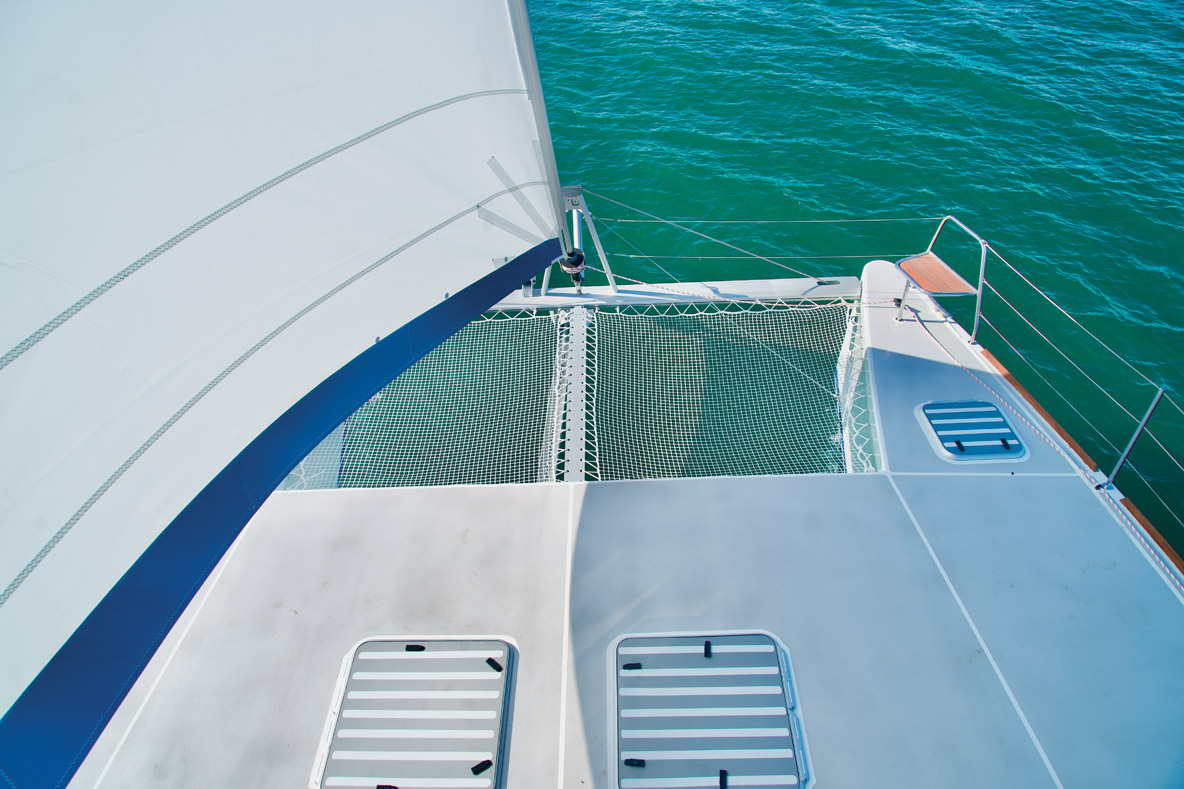
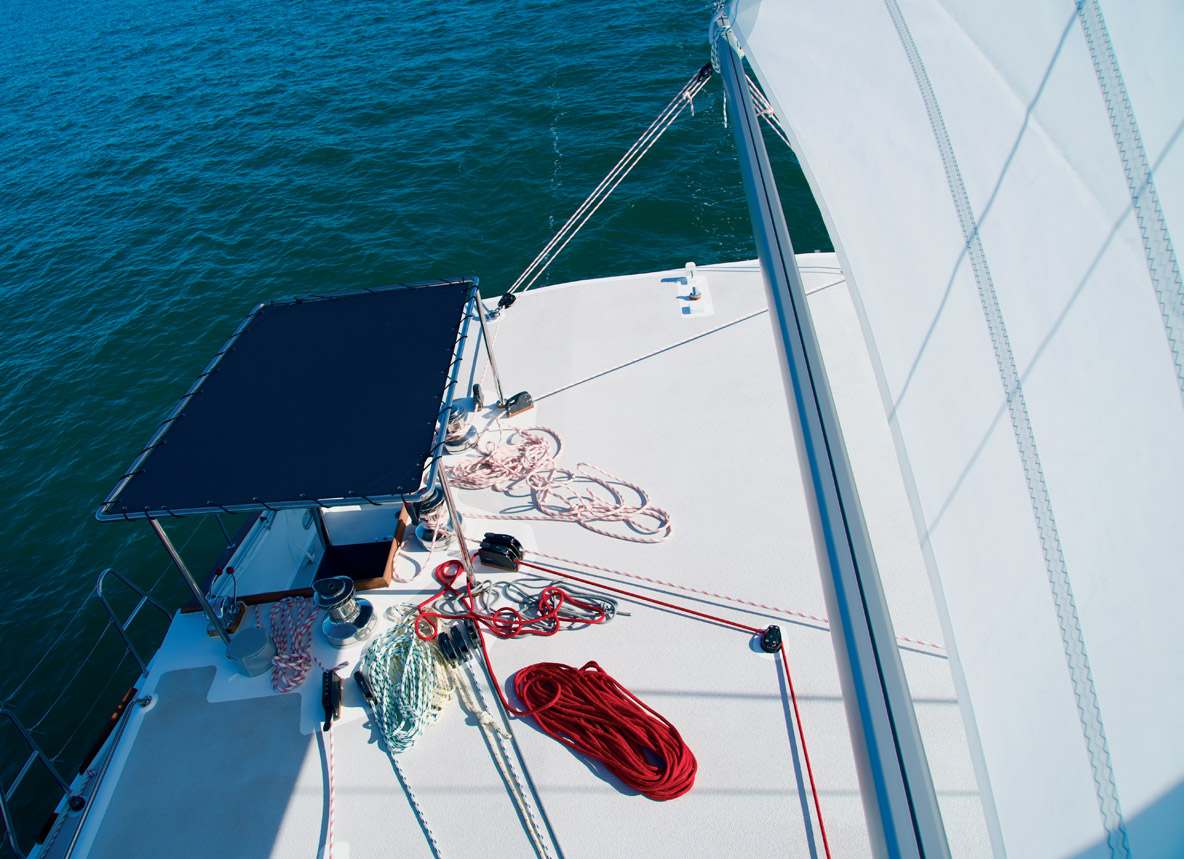
At the bow, the trampoline is of moderate size, so as not to monopolize all the space and allow as many passengers as possible to sit up forward. This relative constraint of accommodating up to 30 passengers and the displacements that may be involved - one can easily imagine the variations in trim at the moment of a dolphin sighting, for example - required additional calculations and adjustments to the structure on the part of the naval architecture.
The 55-pound (25-kilo) stainless steel anchor is placed under the nets, again for safety reasons.
A larger sail area
The hulls are significantly wider than those of the previous-generation Punch, which prompted the architects to lengthen the mast to provide a larger sail area. At the very front, a bowsprit allows for a gennaker, a Code D or a Code 0, which are very popular with short-handed crews. The helm station has been moved to starboard, and all halyards and sheets are now routed to starboard, meaning a single skipper can easily maneuver the catamaran. The deck hardware is vastly oversized – as per the Philippe Harlé school - with Andersen and Frederiksen winches size 58 on top and 56 below. There are no electric winches here, as taking part in maneuvers (hoisting the main, furling the genoa, etc.) is all part of the day charter activities of José Cloquell’s fleet. The B&G electronics installed at the helm are simple but complete. For audio, a Fusion system has been installed.
The helm station has a direct view over the coachroof and bows, as well as the stern and interior of the catamaran. This guarantees the skipper is able to keep an eye on the comfort of his passengers. Numerous lockers allow quick and efficient stowage of mooring lines and fenders.
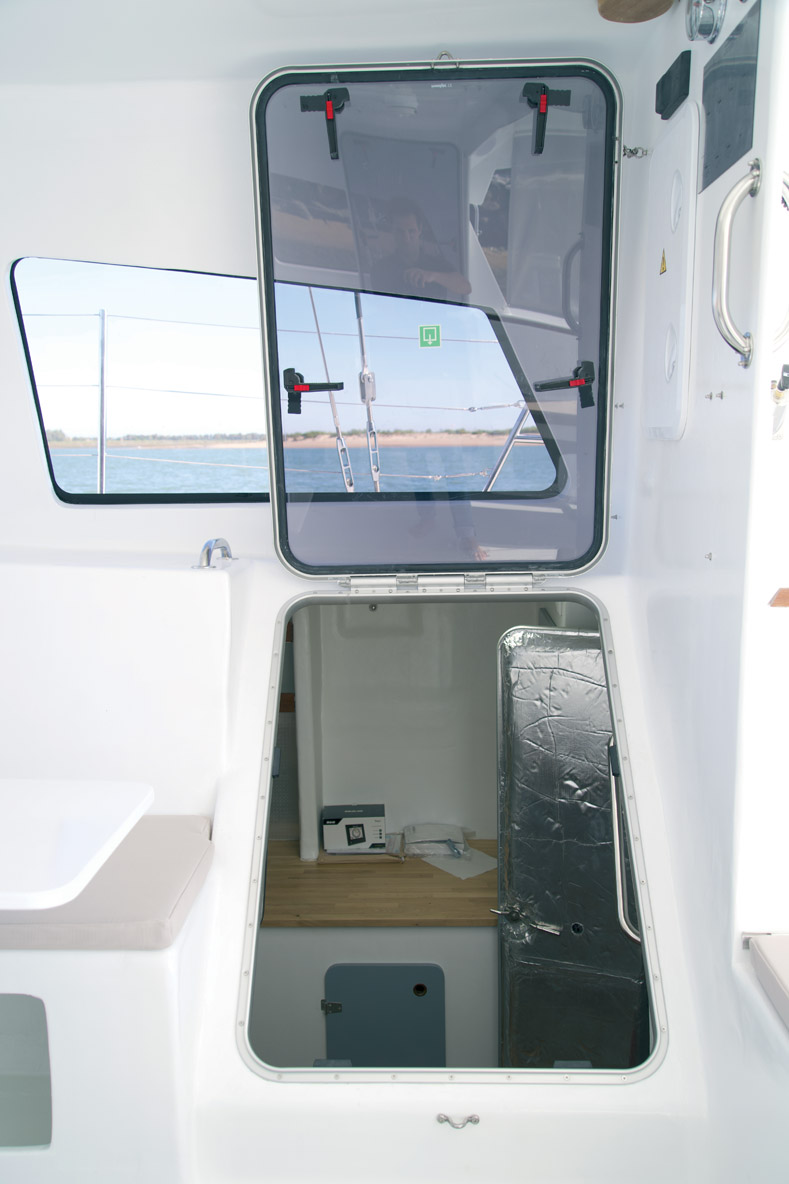
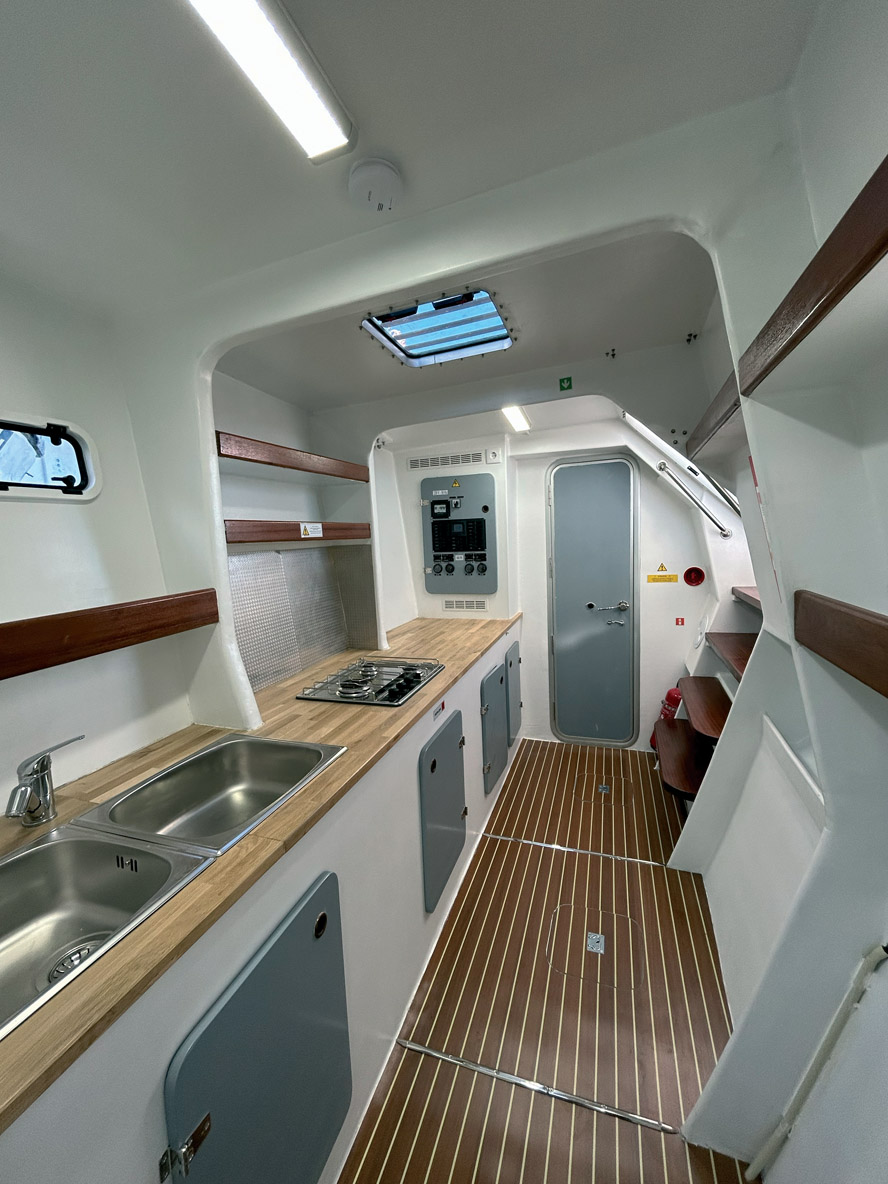
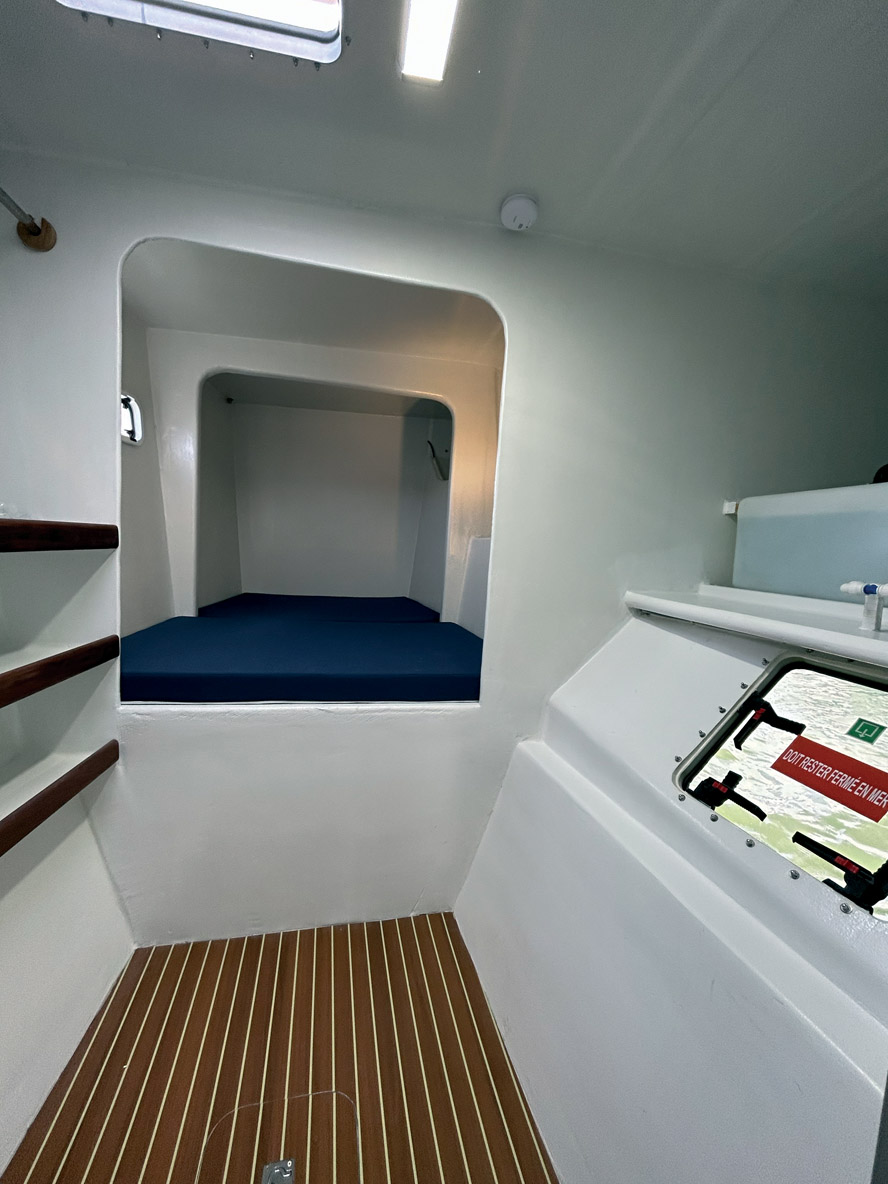
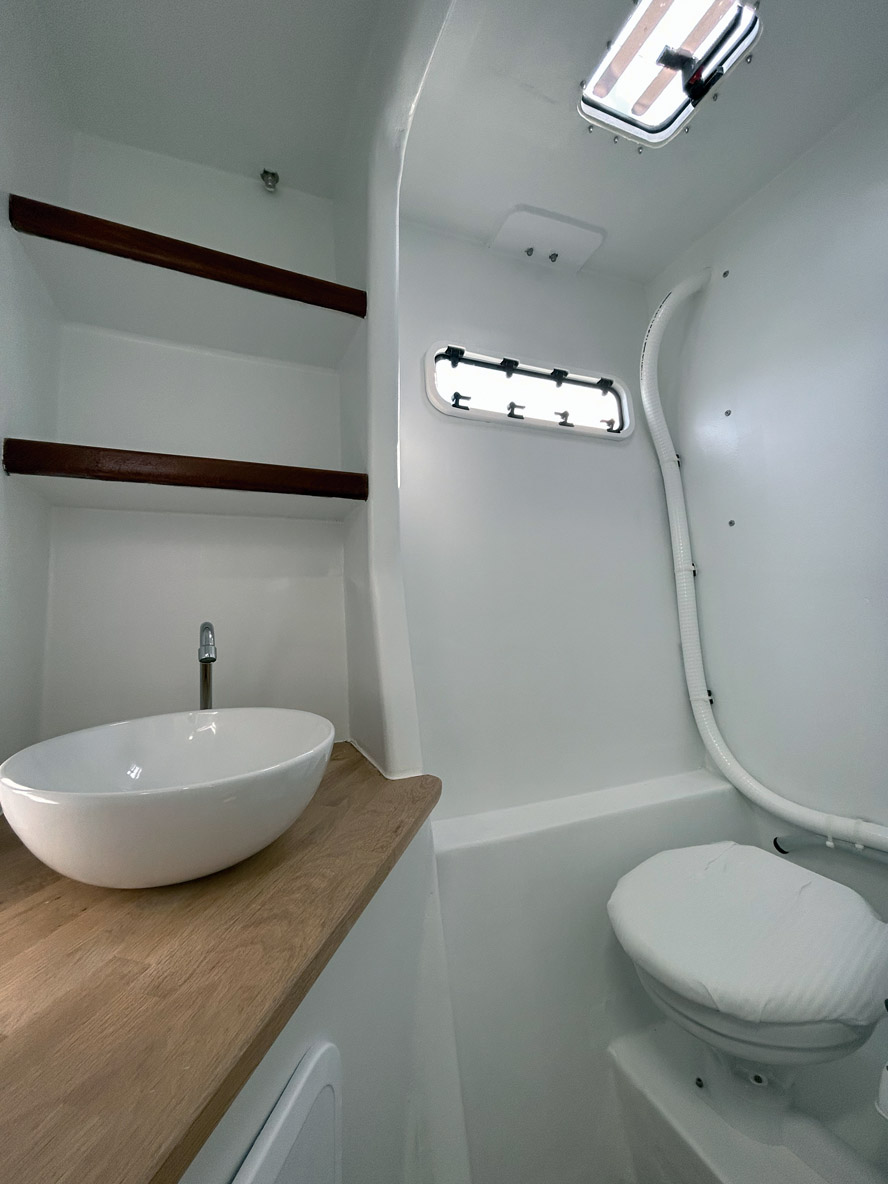
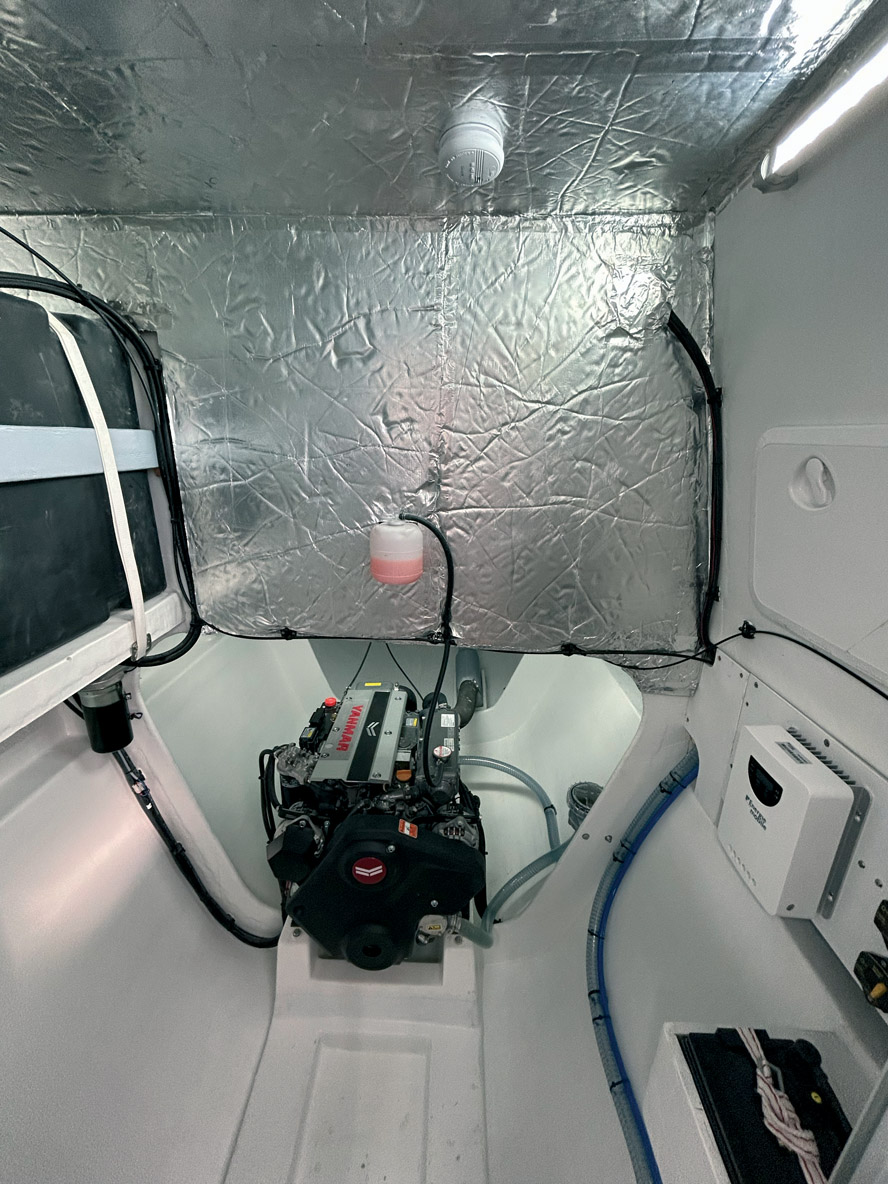
Back in the saloon, you’ll appreciate the great peripheral vision and 7’5” (2.25 m) headroom. To access the hulls, lift and lock the large 40” x 41” (103 x 105 cm) companionway hatches. At the bottom of the 4-step staircase, you find large engine compartments aft. The spaces are clear and well-lit, facilitating maintenance operations. The owner has opted for two 50 hp Yanmars mounted with saildrive - a habit the owner is accustomed to. In the starboard hull, the long passageway is home to the electrical panel. The battery bank offers 440 Ah for domestic and 2 x 110 Ah are dedicated to engine starting. A large, full-length galley is fitted out, and it features a large work surface and plenty of equipment. Forward of this, a cabin houses a large 6½’ x 5’ (198 x 148 cm) bed under which passengers’ life jackets are stowed. The interior woodwork is in Sapele mahogany, offering a perceived quality that is unusual but very much appreciated on board a working boat. Another cabin is available on the port side. There are also two spacious heads compartments. This is also where the black water and fresh water tanks are mounted. These have been doubled to 800 liters, in order to cope with the infrequent revictualling of this Punch during the coming operating periods.
Highly efficient in light to medium airs
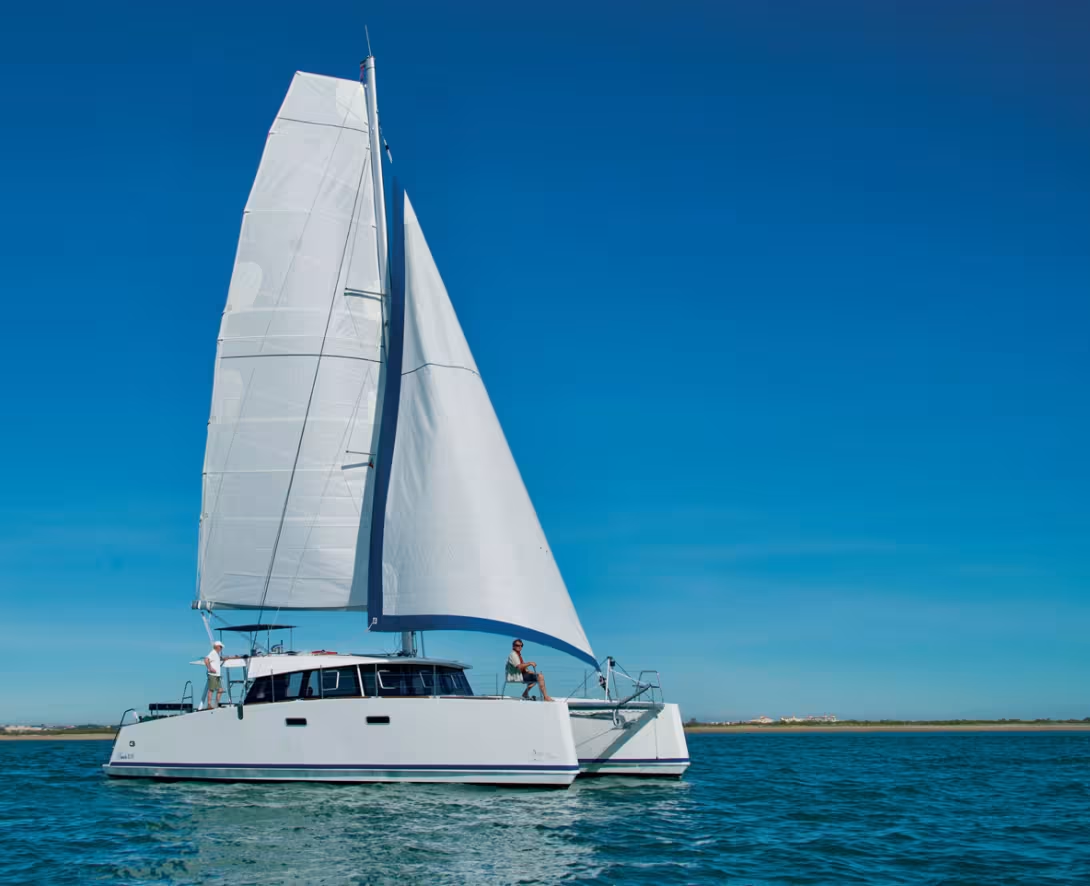
The thermal breeze from the southeast is showing at 355° on the compass. It settles in at just 5 to 7 knots, but has the advantage of being stable, allowing all available sail to be hoisted immediately. Delta Voiles’ fully battened mainsail has 3 reefing points, all of whose lines are returned to the helm station. Once the sails are trimmed, the Punch easily sets off at 4.5/5 knots. The catamaran is responsive to the helmsman’s input and remains very well balanced at the helm. Longitudinal and transverse trim are perfect - it’s worth noting that today’s seas are very calm. When tacking, the Punch seems to turn on its own. It loses very little headway and picks up again very quickly, well supported on its skeg keels. The deck hardware is well adapted and always functional. During gybes, the mainsheet system is secured by the absence of a traveler car, which avoids untimely slamming when going through the wind. Theoretically, the first reef in the mainsail should be taken in at 24 knots of wind. On-board recommendations suggest 3 reefs up to 41 knots. Beyond that, the mainsail should be fully stowed, and the genoa reefed to 8 rolls. The program is therefore vast and designed to cope with all types of conditions.
The advantage of sailing alongside Christian Hernandez is that you learn a lot, and the desire to pass on his knowledge is clearly evident. The builder is also an excellent popularizer. It has to be said that his resume speaks for itself – part of France’s famous Glénans sailing school, officer and Commander of the Merchant Navy, fisherman and shipyard manager, no less... The years seem to have no hold on the septuagenarian, and the finesse of his analyses has been put to good use for his multihulls, resulting in a very high level of loyalty on the part of his customers, some of whom have become owners. Having built around a hundred boats and twice participated in the reworking of French boating regulations, Christian’s words and deeds are quite consistent! The proof? He’ll be delivering Zelphis to Martinique himself. In the meantime, the builder is scrutinizing the boat’s every reaction, watching for the slightest inopportune pitch or unexpected noise.
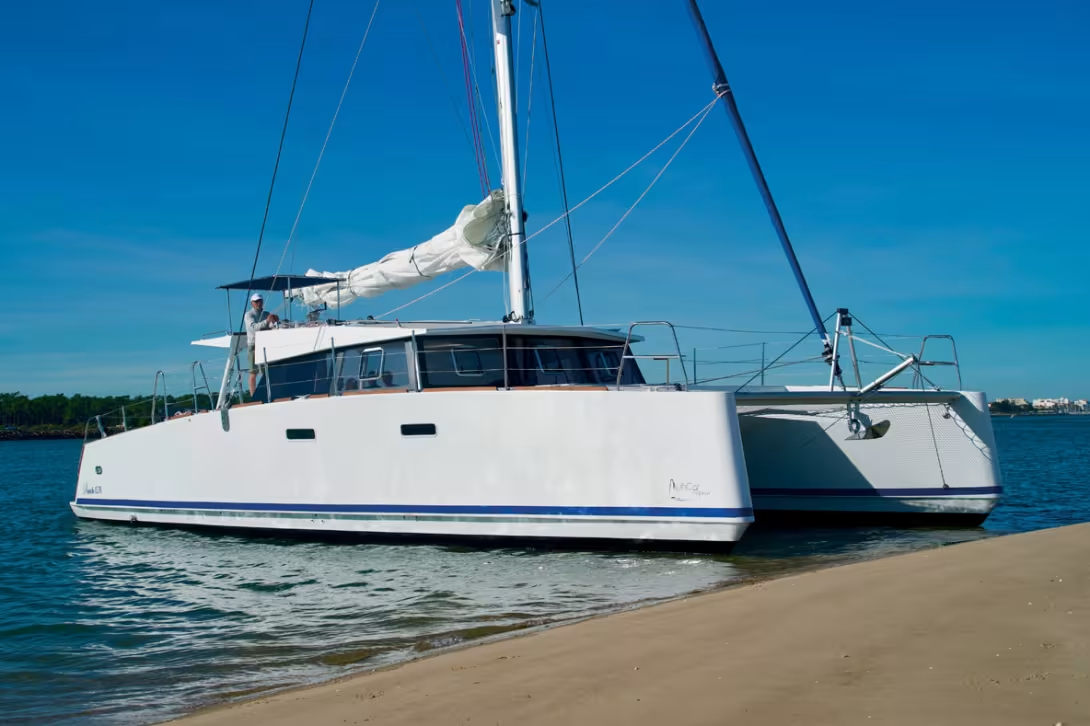
For the time being, off Vila Real de San Antonio, the wind is easing, so we resign ourselves to lowering the mainsail and furling the genoa. The engines are a little noisy inside - but bearable. A blessing in disguise, as the bottom of the tide allows us to get close to an exposed sandbank and take full advantage of the flat hull by having the Punch touch down on this ephemeral beach. The precision of the helm and the suppleness of the throttles make maneuvering easy. The Algarve coastline in November takes on an air of the Caribbean, much to the delight of the crew.
Conclusion
Making its comeback on the boating scene, Multicat Algarve scores straightaway. The Punch 13.70’s ease of handling, versatility and light airs performance are a perfect return to the brand’s fundamentals. These simple (but mature!), no-frills catamarans perfectly convey the essence and pleasures of sailing, whether for passage-making or day charter.
Layout
Construction method
Insufficient engine soundproofing
Technical specifications
Architects: A. Mortain & Y. Mavrikios
Overall length: 44’11” (13.7 m)
Beam: 24’3” (7.4 m)
Draft: 4’2” (1.27 m)
Mast height: 65’5” (19.95 m)
Light displacement: 18,750 lbs (8.5 t)
Laden displacement: 25,350 lbs (11.5 t)
Mainsail: 657 sq ft (61 m²)
Genoa: 505 sq ft (47 m²)
Engines: 2 x 50 HP Yanmar saildrive
Fuel: 2 x 80 US gal (2 x 300 l)
Water: 210 US gal (800 l)
Price: €700,000 ex-tax in the version tested