
British yard Broadblue Catamarans offers a 40 foot model which is light, performs well and is built for the great outdoors… the Rapier 400 is an original catamaran, and here are the full results of our test.
Infos pratiques
- Le chantier : Broablue Rapier 400
- La fiche technique
- Découvrez notre vidéo exclusive
- Financez votre Rapier 400
- Assuez votre Rapier 400
- Articles autour du Rapier 400
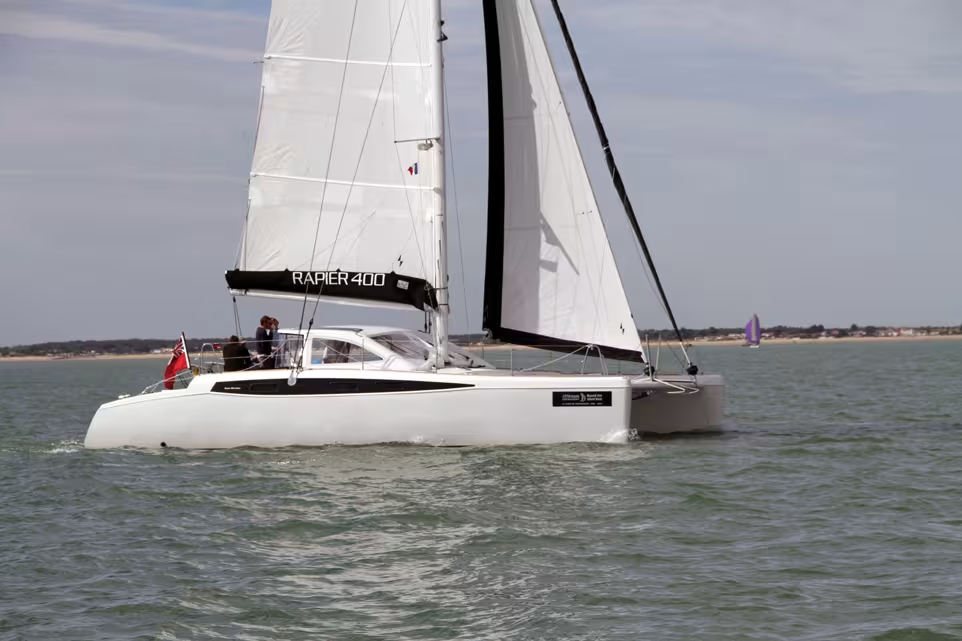
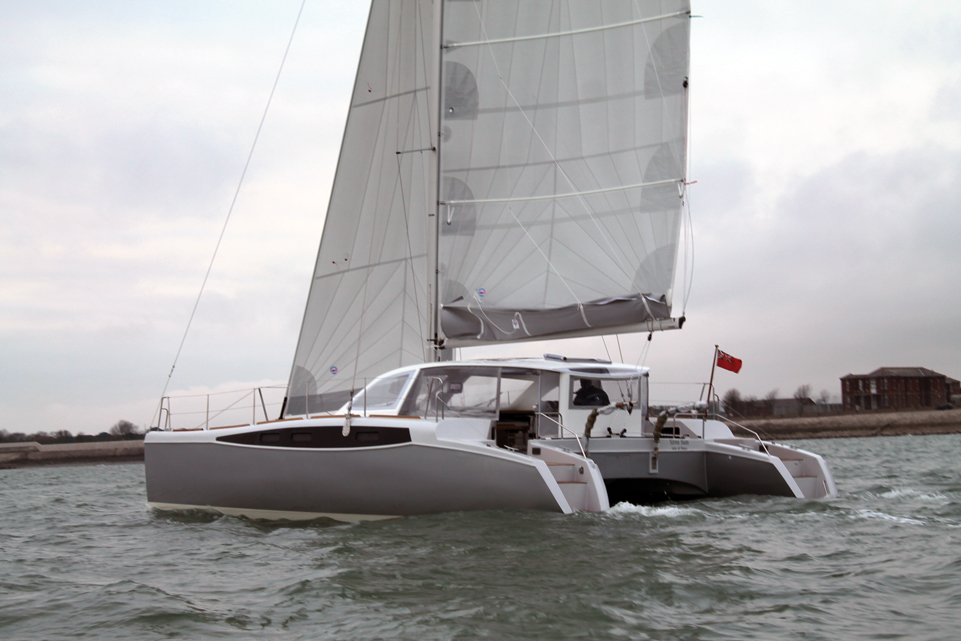
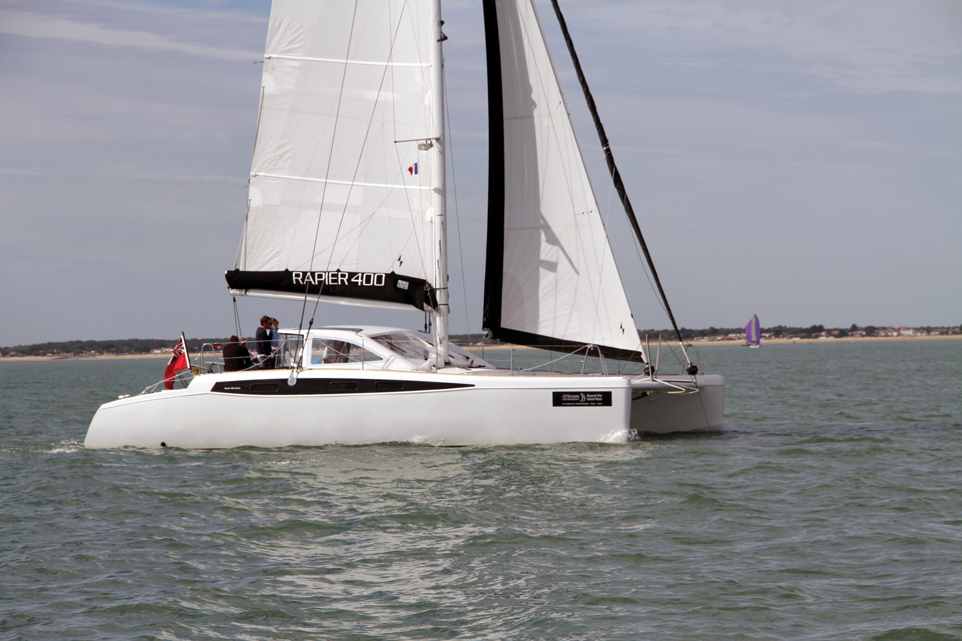
It’s often forgotten just how much British designers contributed to the development of early production catamarans and trimarans. And today, looking at the Rapier 400 on the dock, we discover a modern, clever, innovative and above all, lightweight boat. A 40 foot catamaran which is near enough half the weight of the majority of multihulls this size, though it’s true, they may offer more in terms of comfort…
At first sight, it brings to mind an image that we’ll be sailing on a modern Louisiane or Outremer 40!
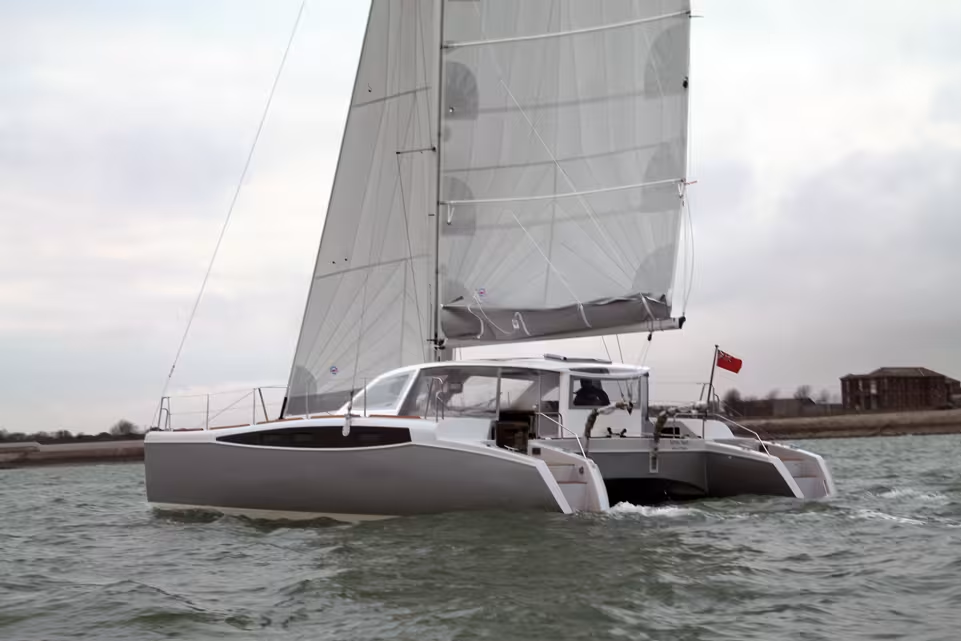
The meticulous construction is carried out in Poland - a country which, for a long time now, has shown an impressive level of boatbuilding competence and skill, and which is home to the latest hi-tech production facilities. The hulls and deck are a vacuum-built sandwich with foam core. The underwater hulls, for greater shock-resistance and optimal ease of repair, are in monolithic polyester. As for the skegs, they are added on, so as to offer increased floatation in the event of taking on water - the 400 is also fitted with structural watertight bulkheads. In addition, if the skegs sustain any damage - a coral bommie, for example - the hulls wouldn’t be affected. A final positive point is that this construction allows for the possible beaching of the boat.
Multiple options for deck layout
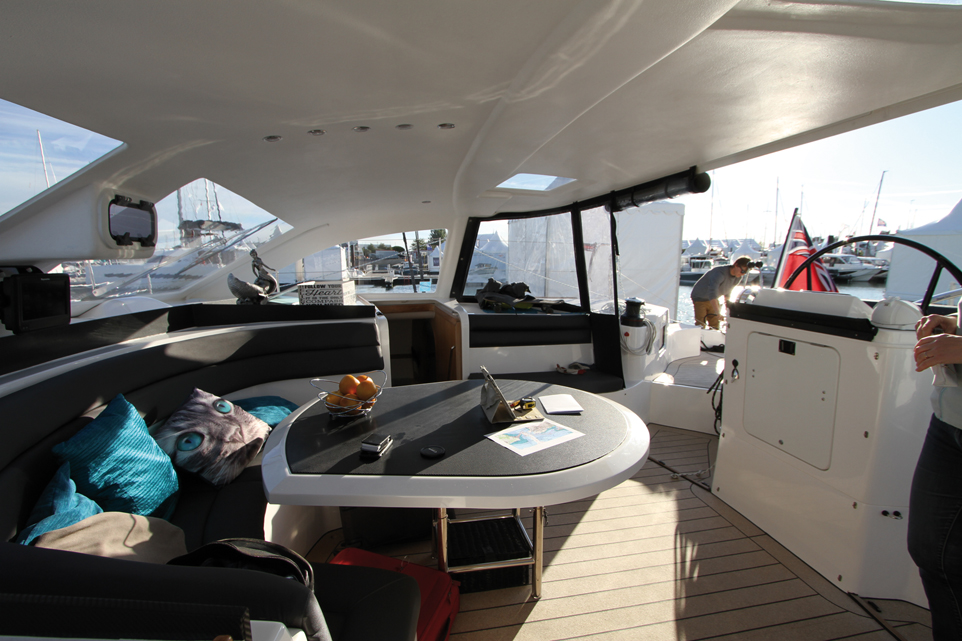
Other than her light weight and reduced volume in comparison to other similar-sized models, the Rapier 400 offers numerous original options. Starting with the coachroof which is available in short or long versions. The boat we tested had the short roof: a version more suited to warmer climes, with its completely open cockpit - there are simple fabric screens with windows, secured by zippers which allow you to close up the cockpit living area in the event of bad weather. An even more radical “Open” concept than that seen on the Nautitech 40 or Bali 4.0. The Rapier’s nacelle can be fitted out as desired: ours had a headroom of 1.84m (just over 6’), but the yard can build you a higher coachroof if desired… The cockpit can be sheltered by a bimini, but there is also the option of the long coachroof. And in a nutshell, for the deck layout, it’s up to you to design and build the boat of your dreams!
Another good point to note is that the non-slip surfaces are really grippy.
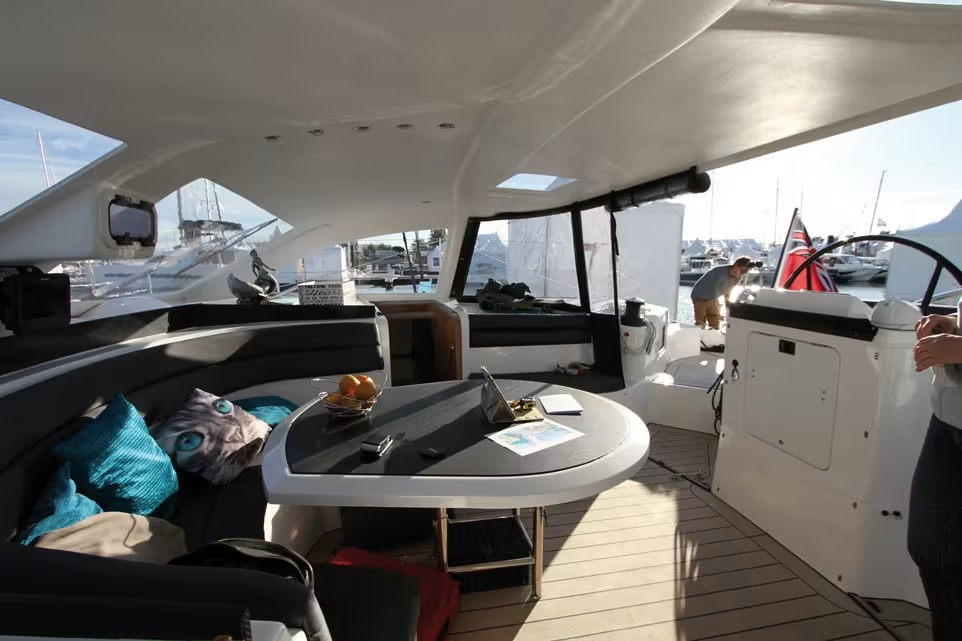
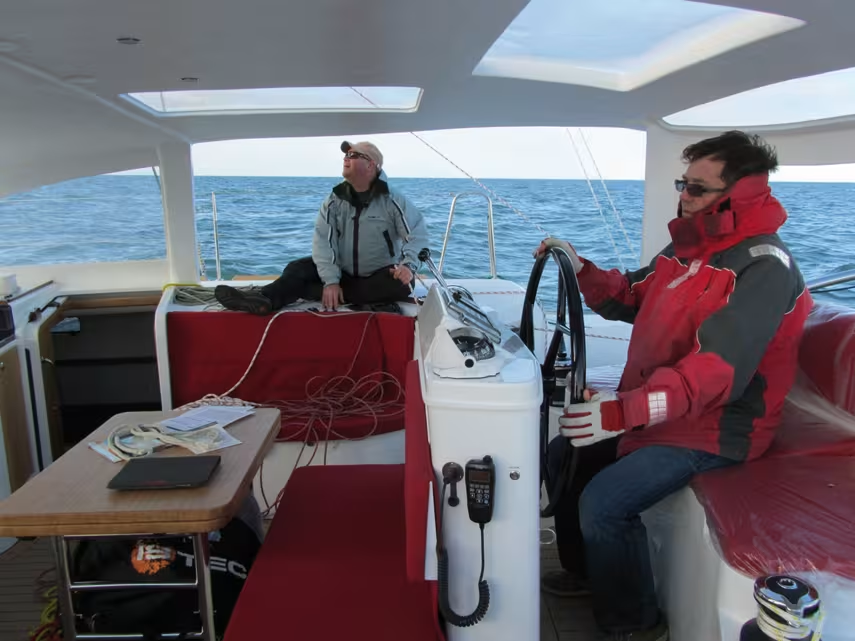
The helm station is quite original, with its stout console and large-diameter wheel, taking pride of place in the center of the cockpit. Raised up, with a 165cm long bench seat (great for two), it gives excellent visibility across the water when stood up. Sitting down, you can see just as well through the coachroof, whose windows are fitted with windshield wipers… Sail trimming is carried out either side of the helm, and the setup is designed so that when on autopilot, one person can easily manage this catamaran. All the lines are cleverly led through trunking - which can be dismantled. Only one criticism though: they are a little supple underfoot, as are the large forward hatches.
On the other hand, we really liked maneuvering the Broadblue Rapier 400 in port. First off, you have a great view of the bows and the stern, but the low windage allows for choosing different approach options even in a strong crosswind.
A good sail area to weight ratio
86m² at 5 tonnes gives a sail area to weight ratio of 17.2m²/t. So we’re not far off the figures for a Louisiane (15.27m²/t) or an Outremer 40 (21.71m²/t)… older catamarans of course, but with excellent reputations under sail. Generally, 40 foot catamarans on today’s market are around 10m²/t. But they offer a disproportionate level of on-board comfort and volume.
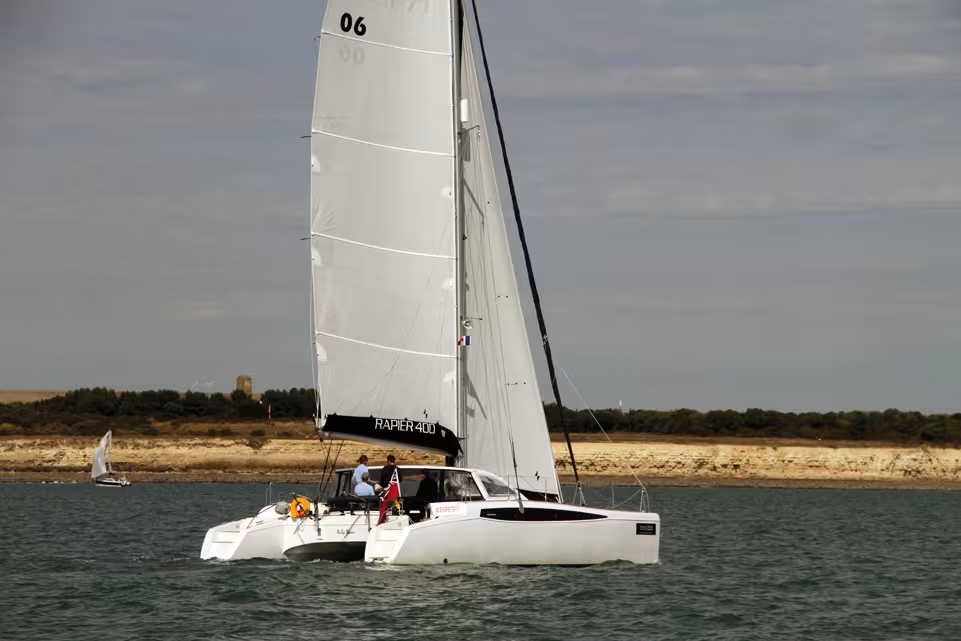
So it comes as no surprise that the Rapier 400 has twice won her class in the Round the Island Race. During our test, this catamaran (fitted with folding propellers) was making 6.5 knots close-hauled in 12 knots of true wind. The skegs allow you to maintain a course up to 50° off the wind. Under gennaker, we saw 8 knots with a fraction less wind, touching 9 in the gusts. One owner who has already covered 4,000 miles in his Rapier claims to have hit 16 knots. In heavier weather, the nacelle might seem a little low, but this same skipper was really pleased with the performance of this catamaran off the Spanish coast in a big blow. The asymmetric hulls have been designed not to slam, we are assured by Broadblue. We certainly didn’t have these conditions on our test day, of course, and indulged ourselves with the direct and precise hydraulic steering.
Interior Layout
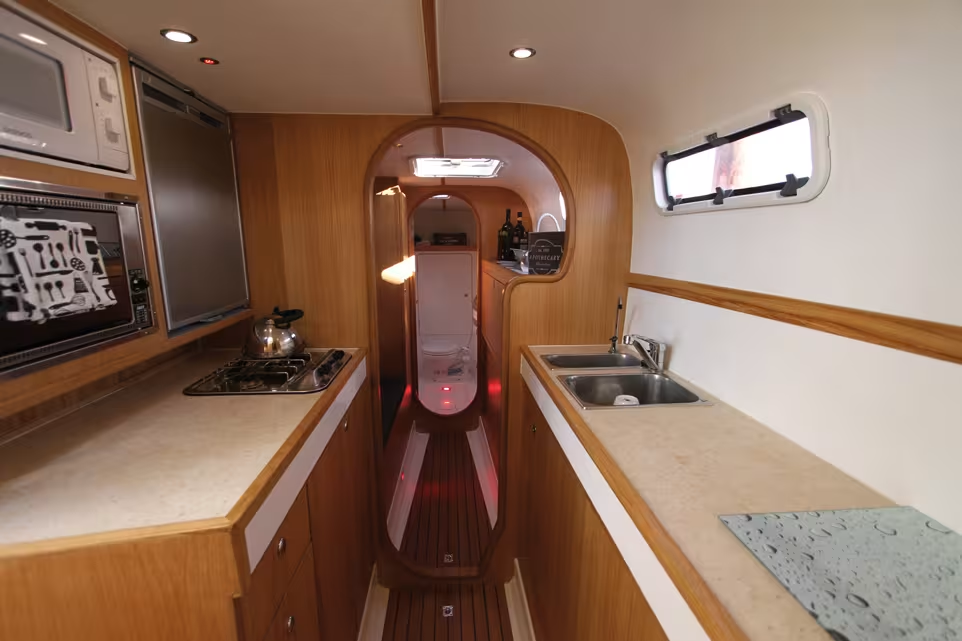
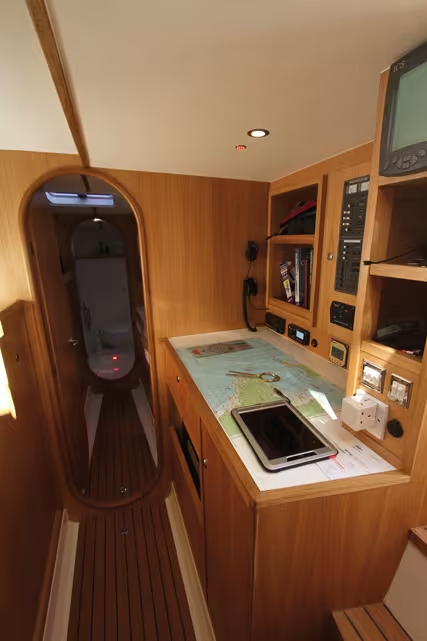
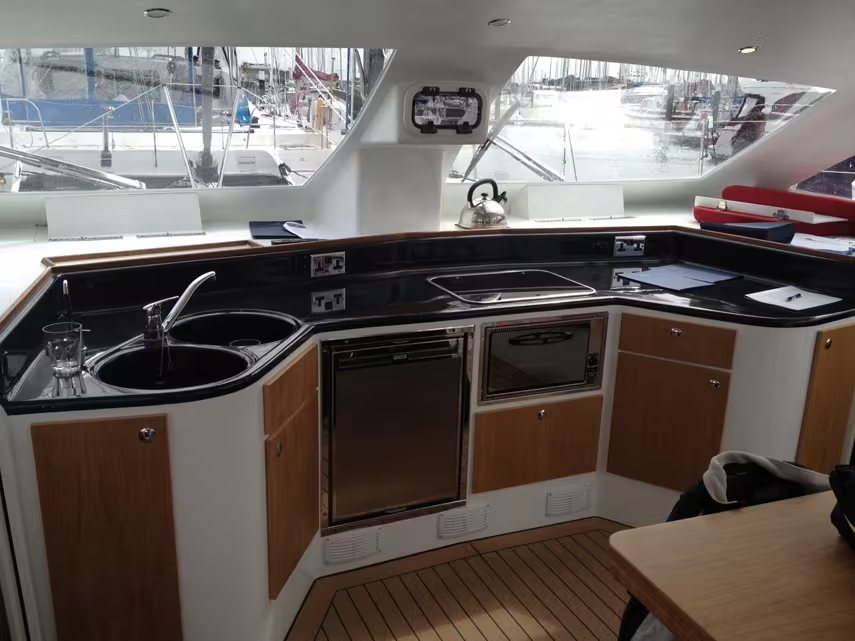
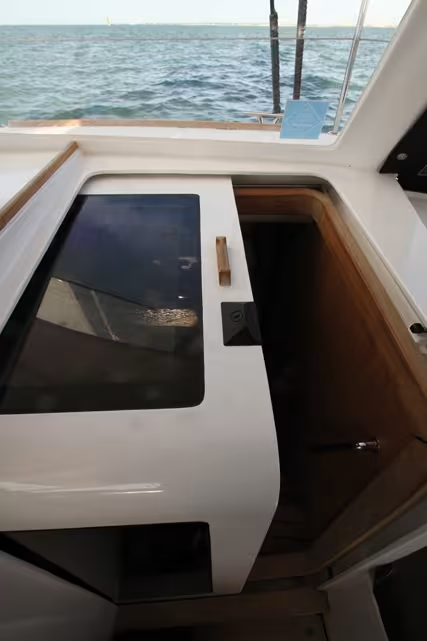
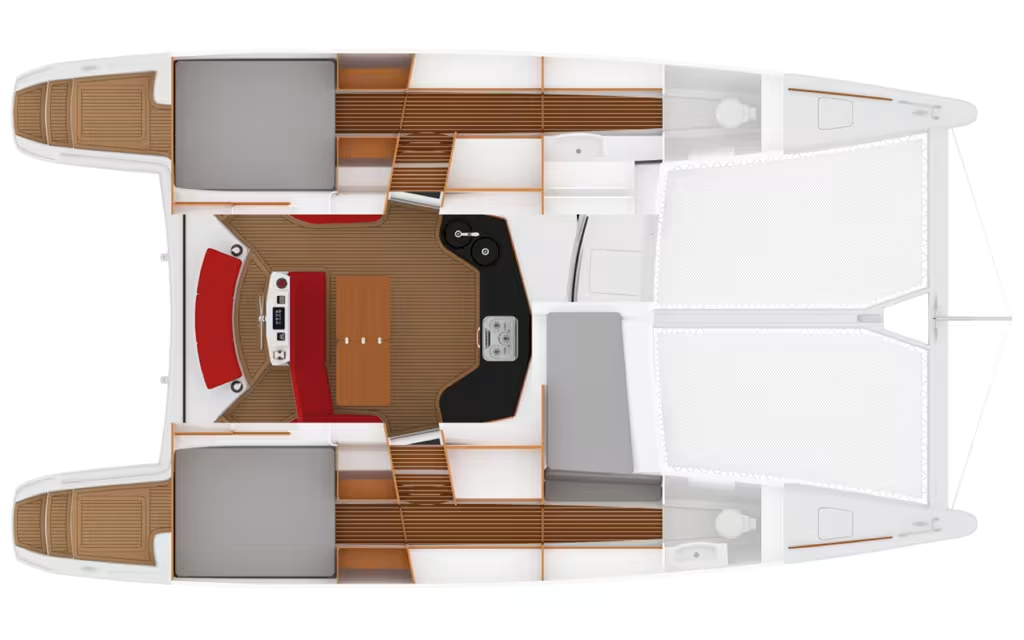
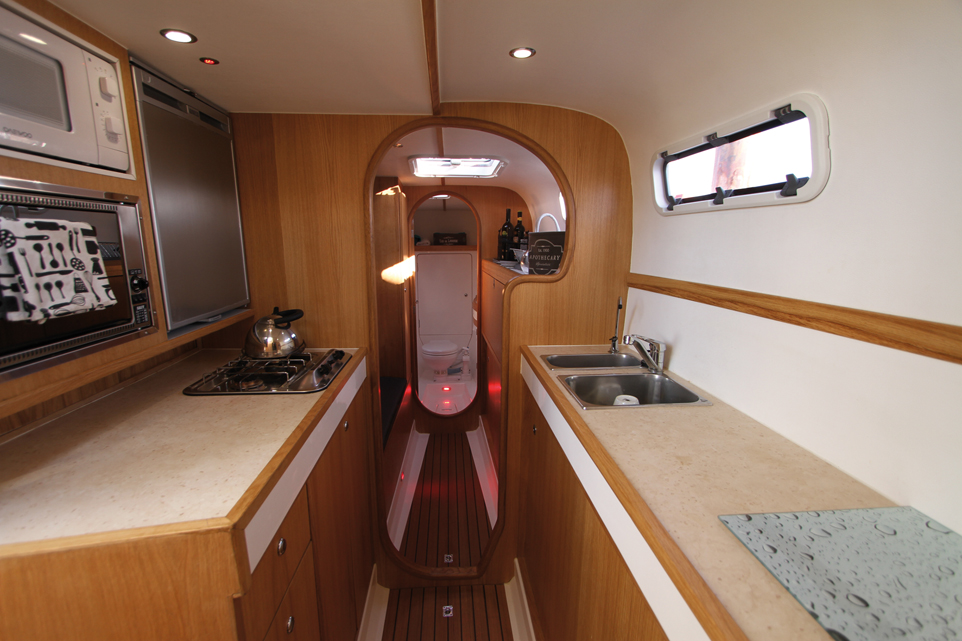
The originality of the Rapier 400 is clear from the single-area nacelle/cockpit. You live outside in the nacelle or inside when you’re in the cockpit. Here, the “open” concept is pushed to its maximum, and it works. Forward, ventilation is provided by a small hatch, and there is an option to increase ventilation by having more. The table measures 115cm by 145. On our test boat, the setup is adaptable, with a giant bench seat and console incorporating a screen support. But what about the galley? That’s in the starboard hull, fitted lengthways. The chart table? In the port hull. You sit at it athwartships. The lid measures 60cm by 93. The hulls are accessed via stairways, which, given their proximity to the cockpit are equipped with scuppers and importantly, watertight doors. Useful and reassuring in heavy weather… The large cabins, aft, have a headroom of 1.90m and bunks which are 1.60m wide. A third cabin can be installed, forward, athwartships, if the galley is fitted “up”, forward in the nacelle.
Conclusion
Convincing under sail, the Rapier 400 offers an unrivalled on-board life, a bit like driving a convertible car. Another big thing in this boat’s favor is the option to personalize the deck layout according to your wishes. For sure, the volume on offer (particularly in the nacelle) is quite a bit less than on most models of this size. But the price is well-justified. A perfect catamaran for enjoying yourself, but preferably short-handed.
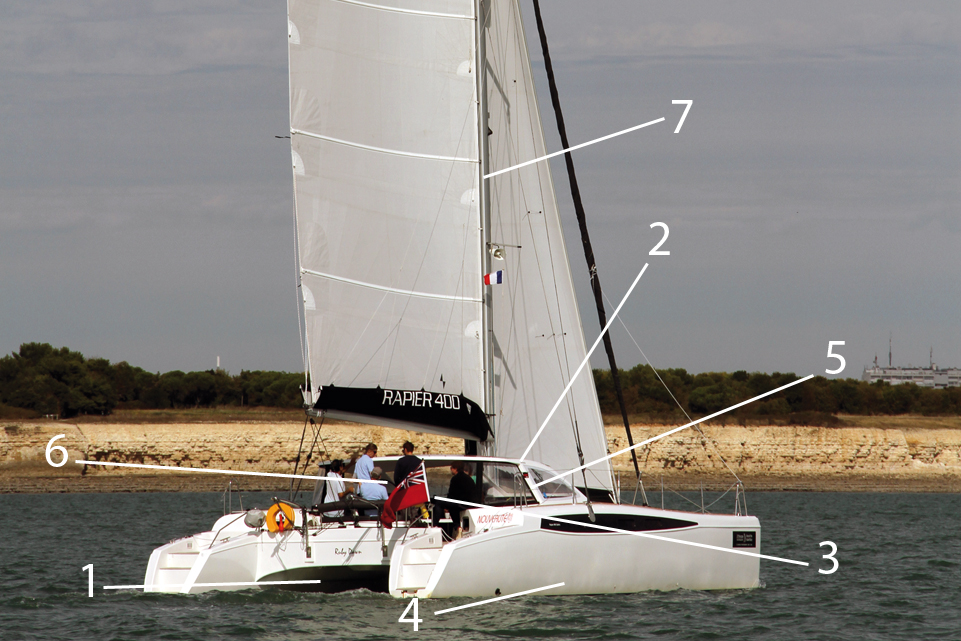
1: The height of the nacelle seemed a bit low to us, but the Rapier is certainly very light
2: Coachroof. Short or long? The yard offers both options.
3: All the lines pass through trunking to arrive at two winches and a bank of clutches located either side of the helm station.
4: The skegs are fixed on separately, so will protect the hulls in the event of a collision
5: The big hatches in the coachroof ensure excellent visibility across the water, but they are a bit supple, flexing under the weight of a crewman.
6: A large raised-up central wheel: the helm station is right next to the winches, located both sides of the console.
7: The lateral rigging is fiber, and a carbon mast is available as an option.
The plusses:
- Ease of handling
- Performance in all conditions
- Numerous deck and interior layout versions available
The minuses:
- Flexing of coachroof hatches
- Nacelle a little low
- Stairwells need to be closed off in heavy weather
Technical specifications
Builder: Broadblue Catamarans
Naval Architect: Jürgen Peter
Length: 11.99 m
Beam: 6.7 m
Draft: 1.1 m
Weight: 5 t
Upwind sail area: 86 m²
Mainsail: 58 m²
Self-tacking solent: 28 m²
Gennaker: 80 m²
Spinnaker: 100 m²
Motors: 2 x 20 hp or 30 hp inboard diesel
Diesel: 2 x 200 liters
Water: 350 liters
Cabins: 3
CE certification: A
Basic price: € 230,422
Options:
Colored hulls: €2,281
Long coachroof: €14,437
Galley in the nacelle (long coachroof option only): €7,796
Saloon convertible into double berth: € 2,599
Gennaker kit: €11,492
Hydranet sails and dyneema halyards: €7,854
Electric halyard winch: €3,696
Carbon mast: €32,340
Bimini (short coachroof option only): €982
Supplement for 30 hp motors: €2,166
Three-bladed folding propellers: €3,523
Additional freshwater tank: €1,253
Coastal Navigation Instruments pack: €9,529
Open-seas Navigation pack: €11,827
Ocean Navigation pack: €15,691
The competition:
| Model: | Bali 4.0 | Nautitech Open 40 | Lucia 40 | Lagoon 39 |
| Builder: | Bali Catamarans | Bavaria Catamarans | Fountaine-Pajot | Lagoon |
| Sail area in m²: | 81 | 97 | 94 | 70 |
| Weight in t: | 8.6 | 8.5 | 9.1 | 11.67 |
| Price ex-tax in €: | 262,569 | 280,000 | 260,862 | 240,000 |
