
Deprived of a sumptuous launch in Cannes and then in Miami, the Samana 59 has therefore had to start her career relatively discreetly, between Marseille and Toulon... The replacement for the Ipanema 58 has nevertheless managed to convince an informed public: no less than 20 units have already been ordered! We got the chance to sail aboard this luxurious catamaran.
Infos pratiques
- Le chantier : Samana 59
- La fiche technique
- Découvrez notre vidéo exclusive
- Financez votre Samana 59
- Assuez votre Samana 59
- Articles autour du Samana 59
Test location: Bandol, France
Conditions: sea state slight, wind southeast 10 to 15 knots
The late cancellation of the Cannes Yachting Festival motivated many builders to organize private events on the French Mediterranean coast, most choosing the same dates as the original Cannes event. This is what Fountaine Pajot did at the port of Bandol. In the absence of the third new model for 2021, the Power 67 - which ended up staying in Greece - the Isla 40 and the Samana 59 were presented for the first time to a restricted public audience from September 10th to 13th. And following these few days of presentation, we were able to try out these two catamarans. The timing was tight: photo and video shoots were already under way…
Flattering design
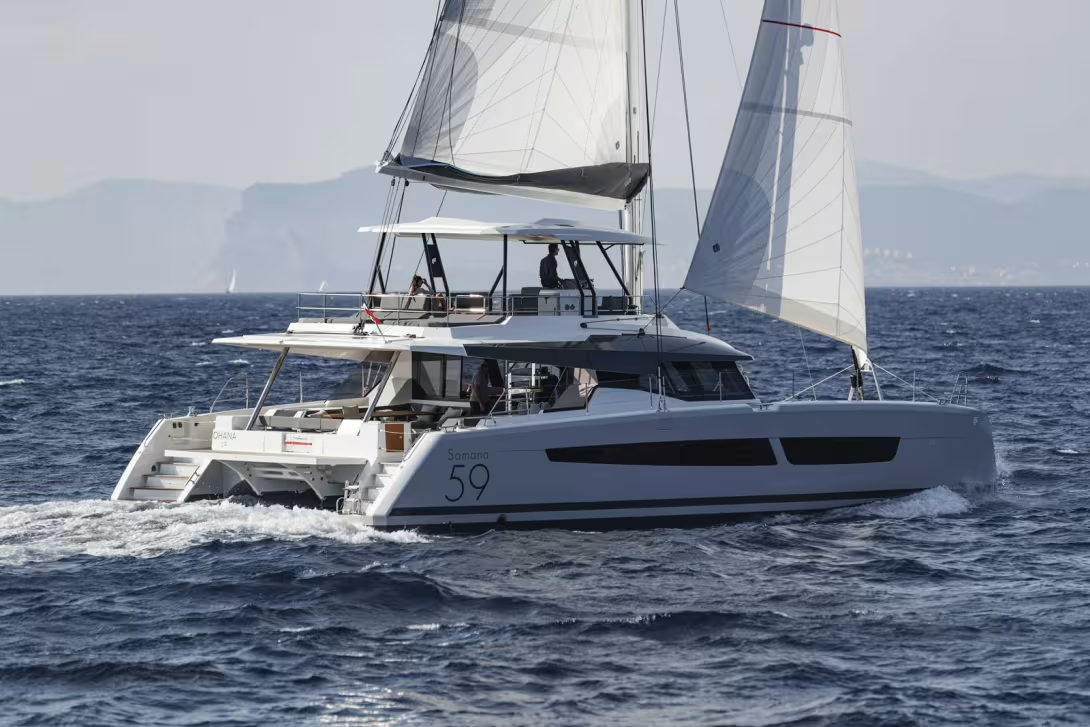
Compared to her predecessor, the Ipanema 58, launched six years earlier, the Samana 59 is undeniably more elegant. The integration of the flybridge has been particularly well accomplished and is a success. The lifting effect of the superstructure achieved by the lateral windows that hide the uprights, the glazed cockpit “ears” and the gray coachroof wings have a lot to do with it. The deck line is also completely different. The straight lines seen on the 58 have been replaced by a very pronounced inverted shear on the 59. The overall design, reinforced by a rib and very elaborate hull portholes, is much more flattering - the bows and sterns appear refined, especially since the former are now noticeably inverted. The tour de force of naval architects Berret-Racoupeau (the same team that drew the Ipanema) is to have succeeded in designing a much more beautiful catamaran. A challenge that was by no means obvious: the Samana 59 is bigger, beamier and heavier than the 58.
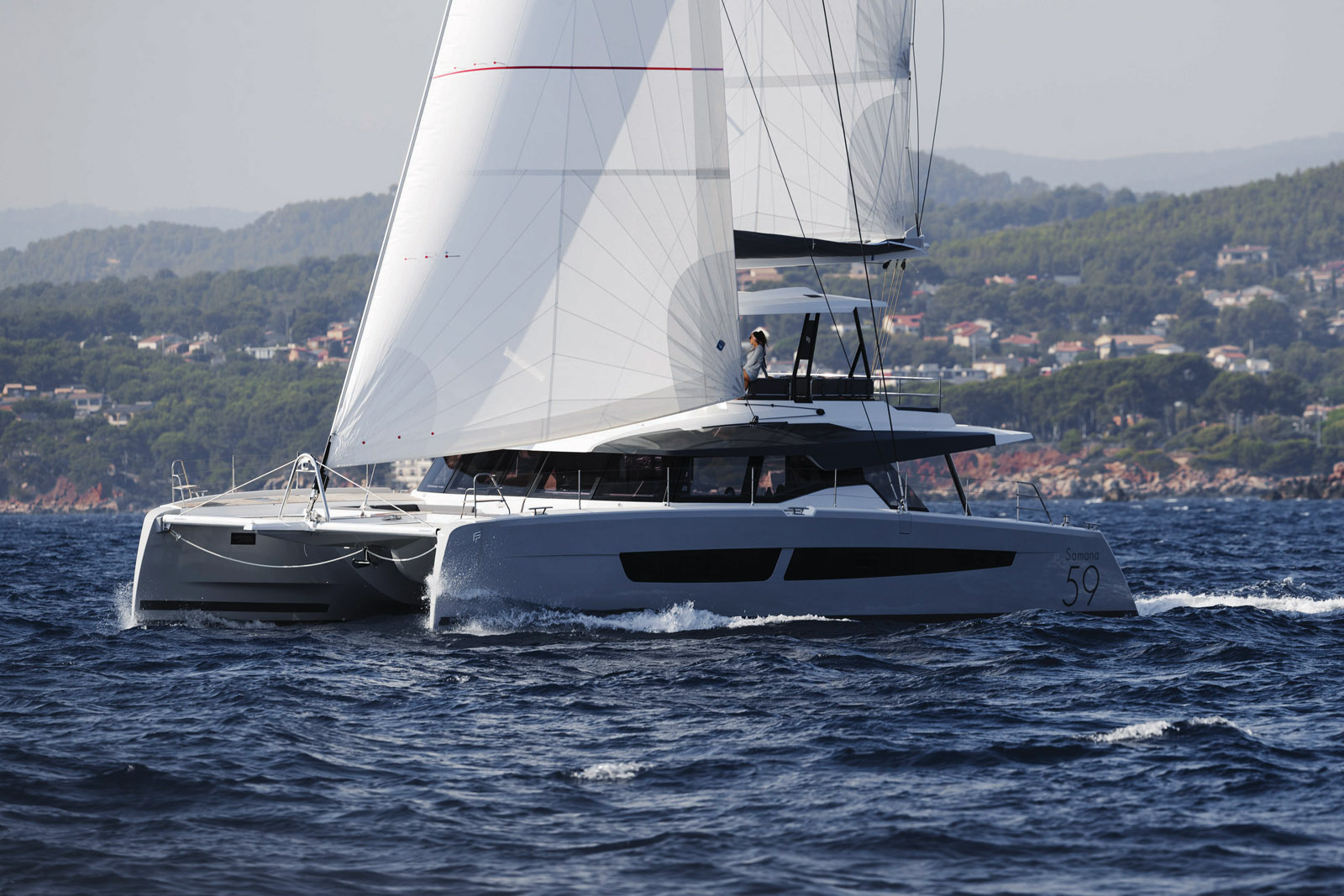
Despite the significant superstructure, the architects have managed to design an elegant catamaran.
Quite a machine…
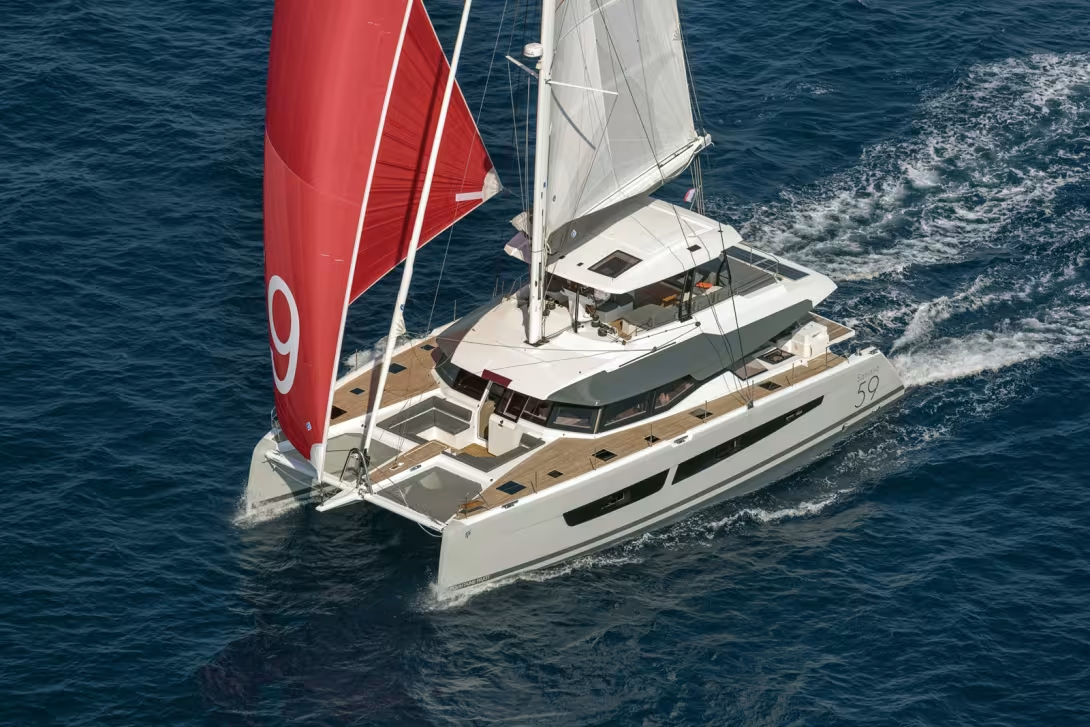
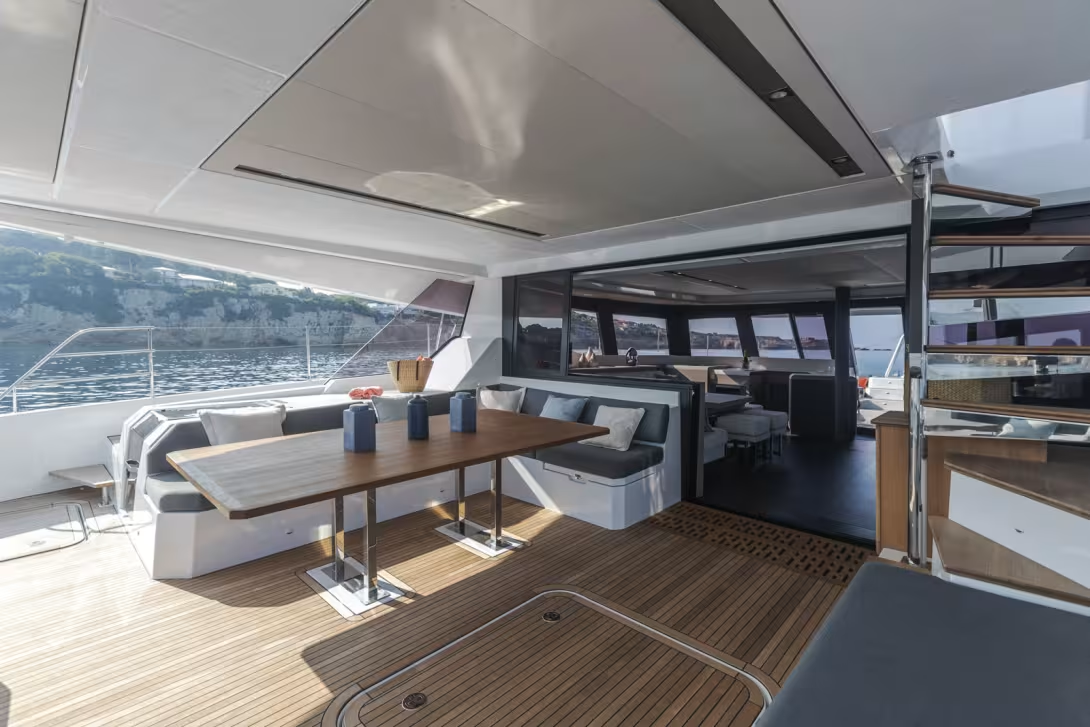
Arriving in the port of Bandol, it was easy to find this new boat: her air-draft is the largest of the 1,600 boats moored here! Seen closer to the dock, the 59 is certainly playing in the big league - that of the builder’s flagships, headed up by the Alegria 67. All the codes of the luxury world are there - materials, feeling of space, exclusive use of top-of-the-range equipment. On board, technicians were still working on the final details of the home automation system. The buyers of this hull #1 were already on board: they’re going to begin their family journey with a transatlantic passage. The passerelle leads us across one of the two wide sugarscoops that feature slightly curved steps. Between the two hulls, a huge hydraulic platform takes up all the available space - it can support a 15’ (4.50 m) dinghy weighing 775 lbs (350 kg). Higher up, the cockpit provides 295 sq ft (27.5 m²) of space... On its port side, the teak cockpit table measures 7’4” by 4’3” (224 x 129 cm) – and there’s an extension available as an option. This table can seat twelve: six on the bench seat, and six on stools or armchairs. Two bench seats are also fitted – 8’8” (2.65 m) aft and 5’9” (1.74 m) to starboard. An outdoor galley is also to be found here. The two glazed panels that extend the coachroof contribute to the excellent protection of the cockpit. On each side, three steps lead to the side-decks – which are more like boulevards: they are always more than 34” (87 cm) wide and are protected behind a 5” (13 cm) bulwark. However, there are no handrails on the coachroof. All the deck hatches - and there are many - are of course flush. Forward, there is a second cockpit - open this time - and the two trampolines.
A 325-square foot flybridge
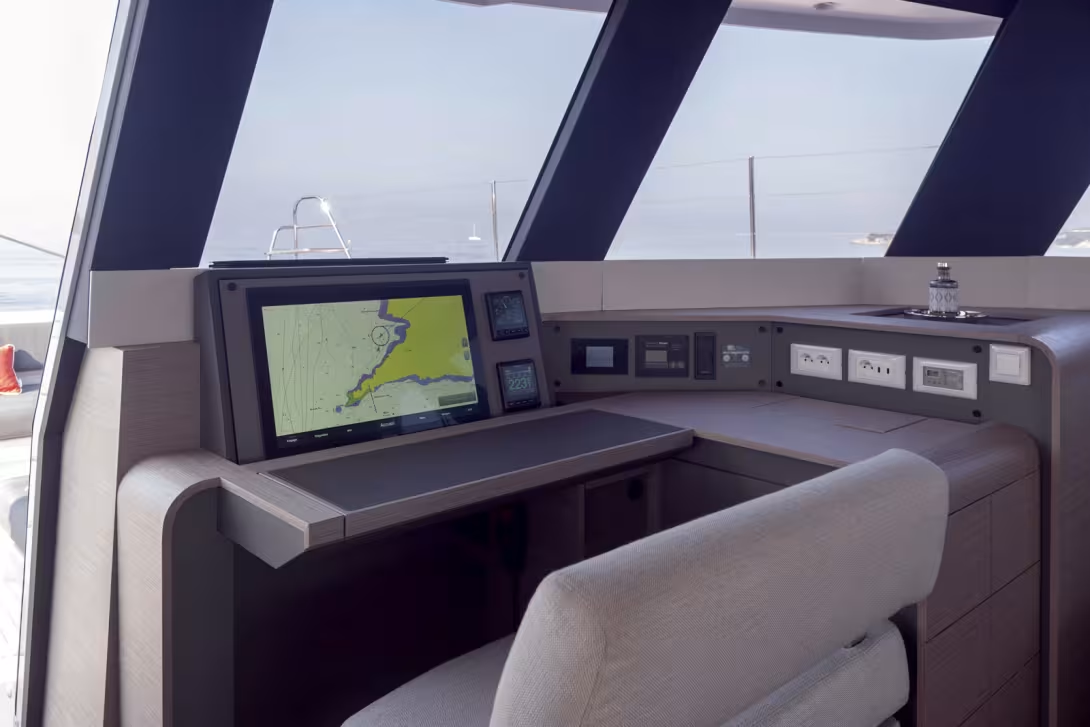
From the aft cockpit, nine wide steps lead to the imposing flybridge. Of course, the view from up there is breathtaking... but you are relatively exposed to the wind, all the more so being perched high up. Everything is designed so you can enjoy the show, starting with the huge aft sunbathing area, seating on the port side - around a small 35”x28” (88 x 70 cm) table, a galley, and finally the superb forward-facing maneuvering station and helm. A seat for two, a large central wheel steering, a dashboard with XXL-sized screen and an impressive set of four XT66 Antal winches. This equipment is perfectly designed, both in terms of ergonomics and power. An enlightened sailor can manage this impressive catamaran - provided that they’re aware of the efforts involved during maneuvers. No improvisation here, but nothing particularly complicated. In the end, it is rather the climbing up to the boom and the management of this imposing vessel that might exceed the skills - both physical and technical - of an owner, who would then be wise to call upon one or more professional crew.
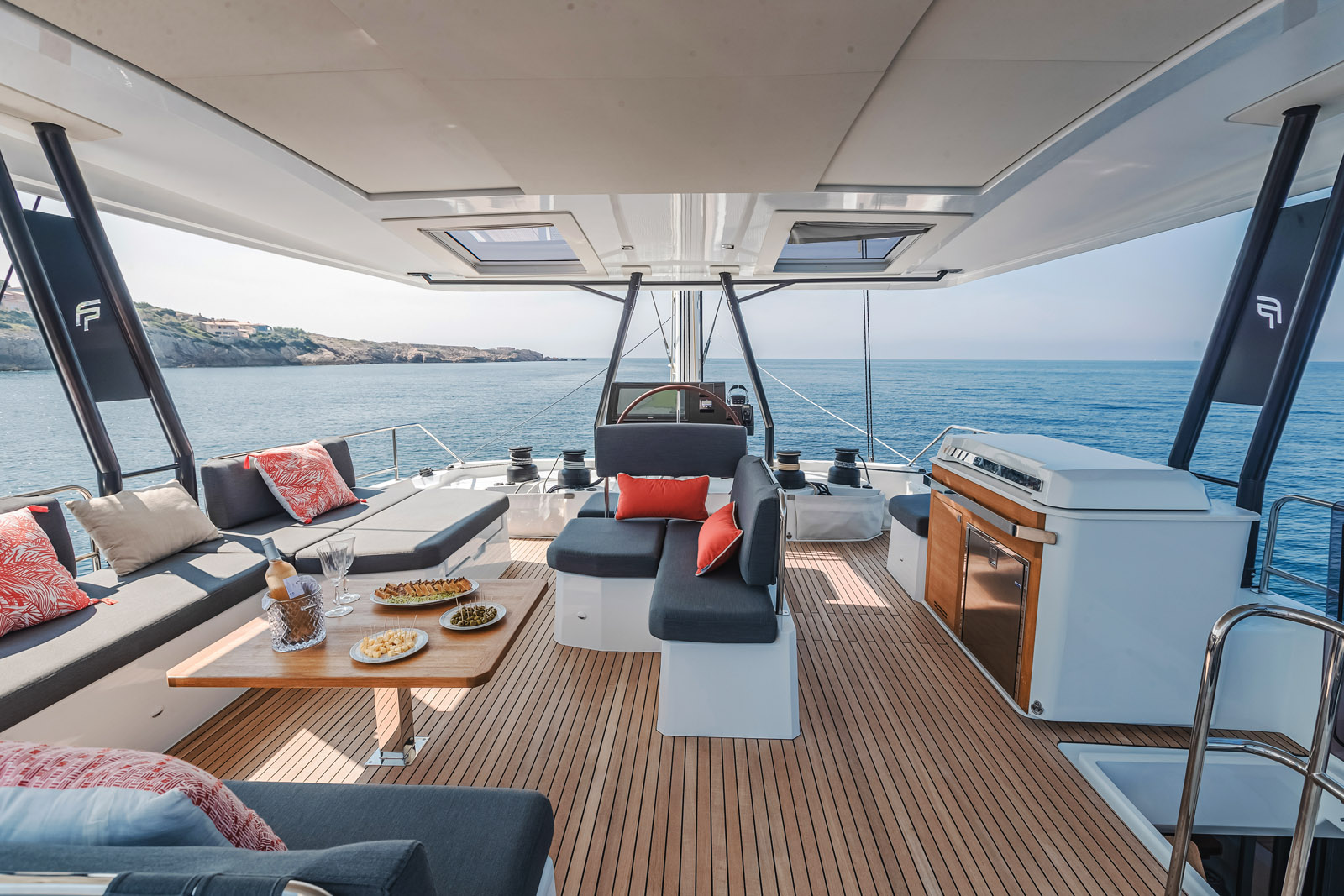
On the flybridge, the manufacturer has incorporated the helm and maneuvering station, an outdoor saloon and galley, not forgetting a vast sunbathing area at the back.
Comfort worthy of a palace
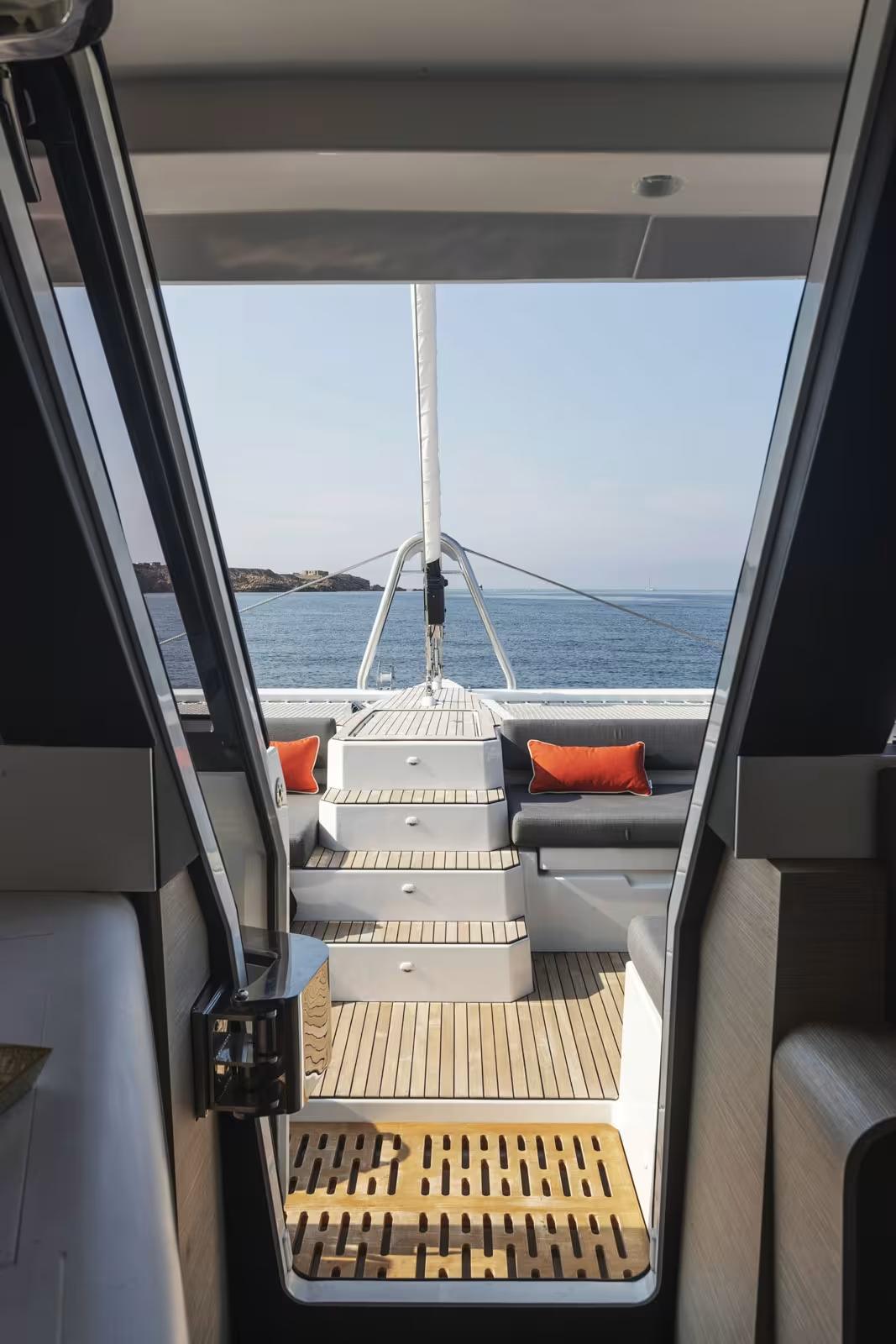
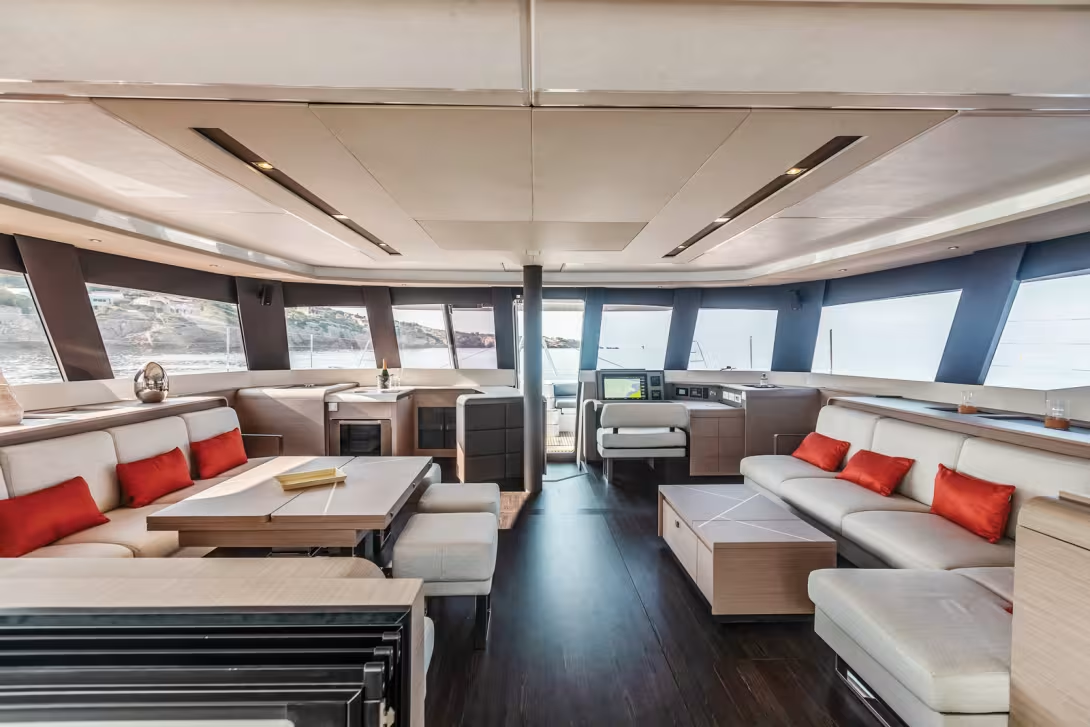
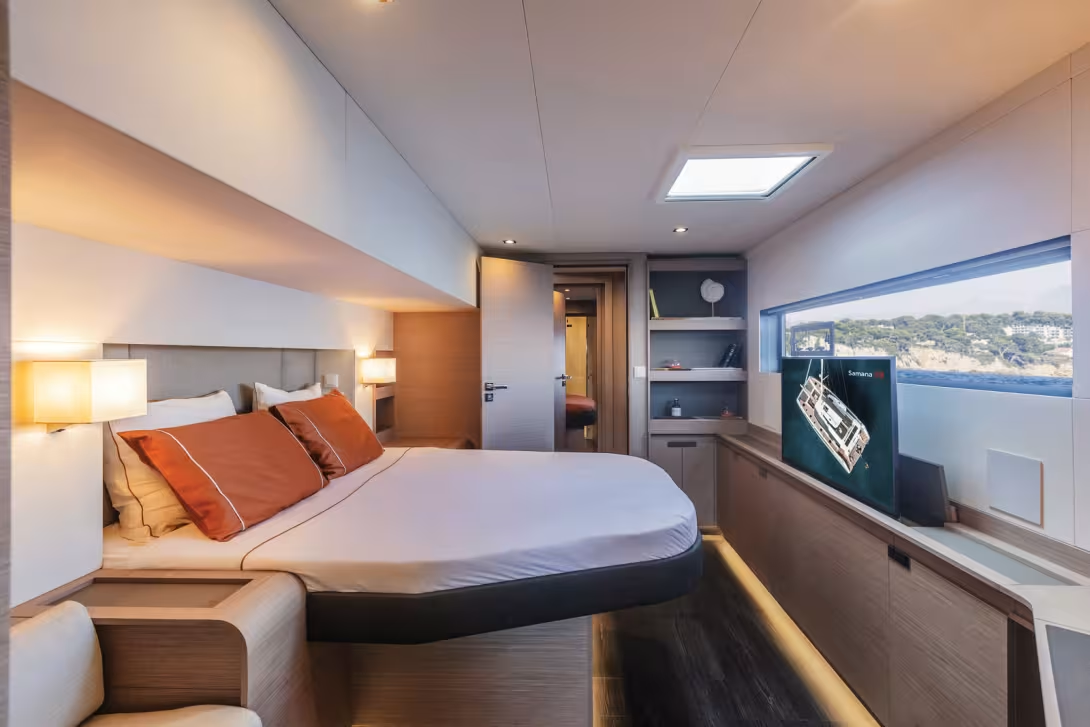
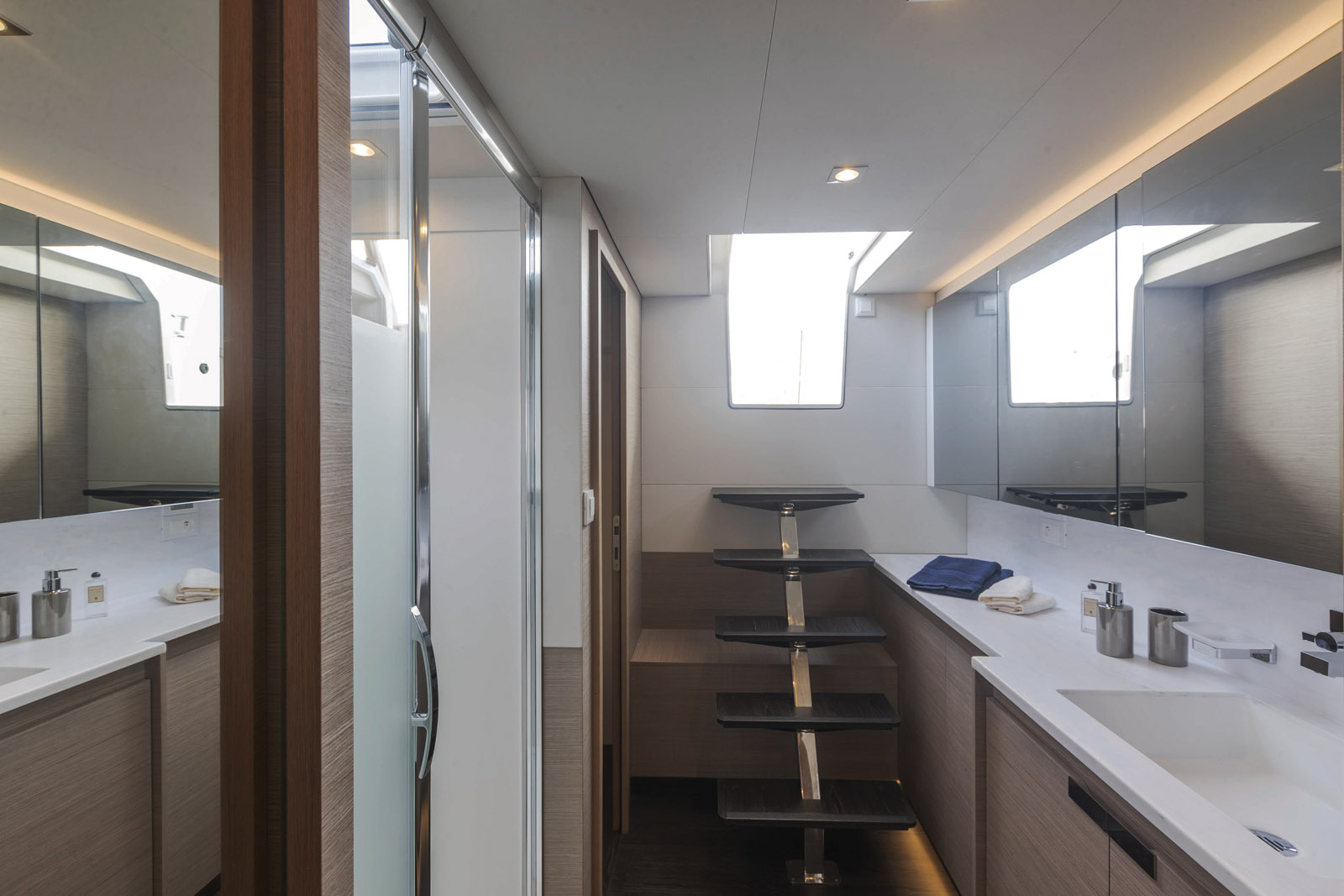
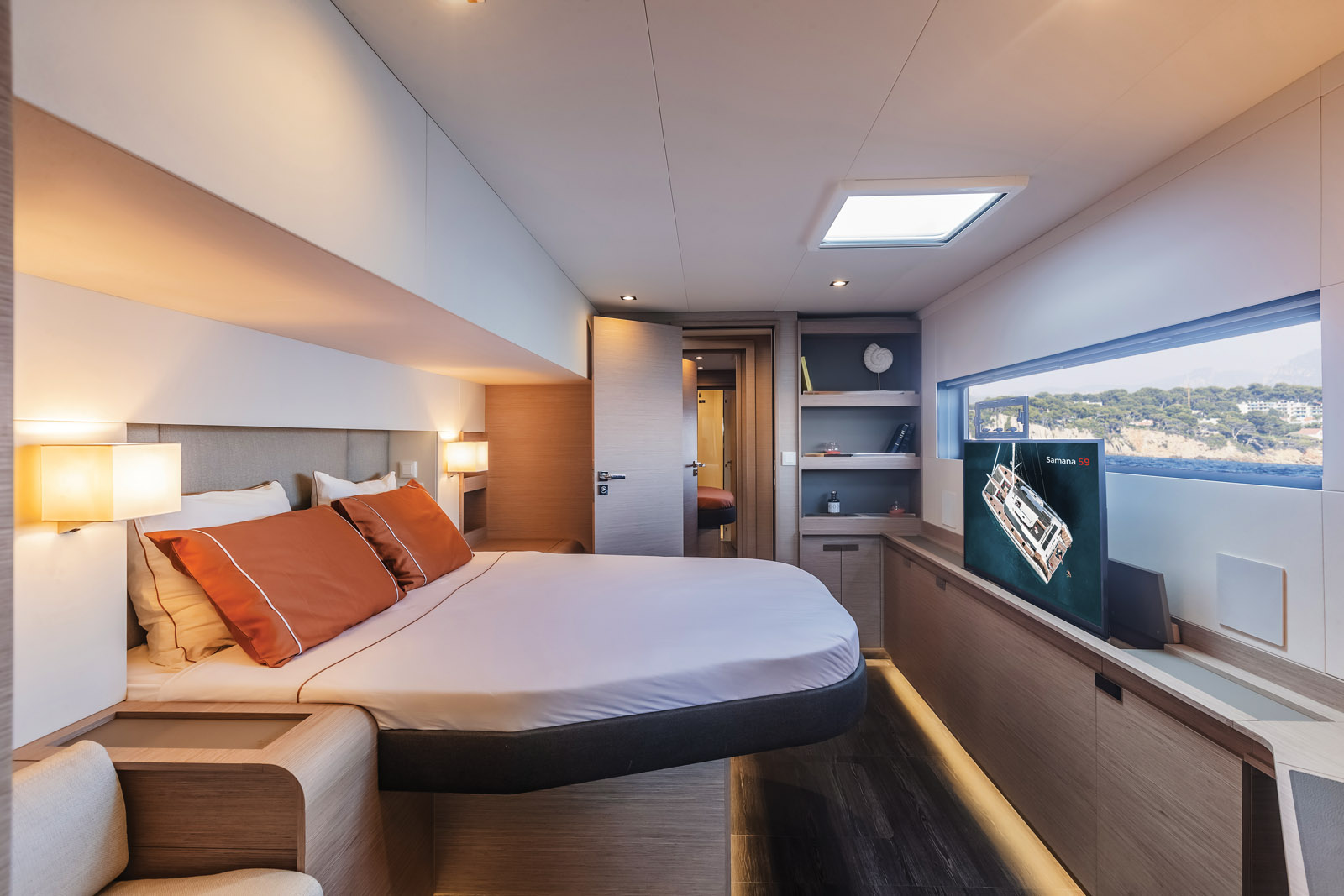
Forward in the aft cockpit, a large bay window guarantees flush-decked passage through to the interior. The opening is 6’7” (2 m) high by 4’7” (1.4 m) wide: a higher-level opening window allows for an additional 4’5” (1.36 m) in width. In the nacelle, you are immediately surprised by the immense volume on offer - highlighted by a generous 6’11” (2.10 m) of headroom. This immense nacelle is even more spectacular in the ‘Galley Down’ version, chosen here: a saloon on the port side can accommodate 10 or 11 people with its 3’2” x 3’7” (95 x 110 cm) table, which can be doubled up, while a lounge area extends to starboard. At the front, the U-shaped bar and the navigation station are separated by an imposing forward door mounted on a folding bracket. In addition to offering direct passage to the forward cockpit, this space is remarkable both technically and aesthetically. The only downside is that the step just before the sill deserves to be marked to avoid the odd fall... Overall, the finish is flattering - only a few covers and joint profiles, themselves on connecting pieces, betray speedy execution rather than an in-depth reflection on the “treatment of the smallest detail”. Another point for improvement? Noise! Many squeaks, creaks and other vibrations are noticeable going along - both under sail and under power. High-quality lighting and electrical systems can be accompanied by all possible options in terms of comfort - screen/sound system, internet, air-conditioning etc. The cabins are distributed in the hulls without any great surprises. The big option is the galley: up, or down (to port)? The second option is obviously perfectly suited to an owner with professional crew members on board, who then have their quarters in the port hull. Generally speaking, the cabins are very spacious, and the berths are mostly installed athwartships – so with a sea view guaranteed, right at the end of your duvet! The advantage of the aft cabins is of course the direct access to the cockpit via their own private companionway.
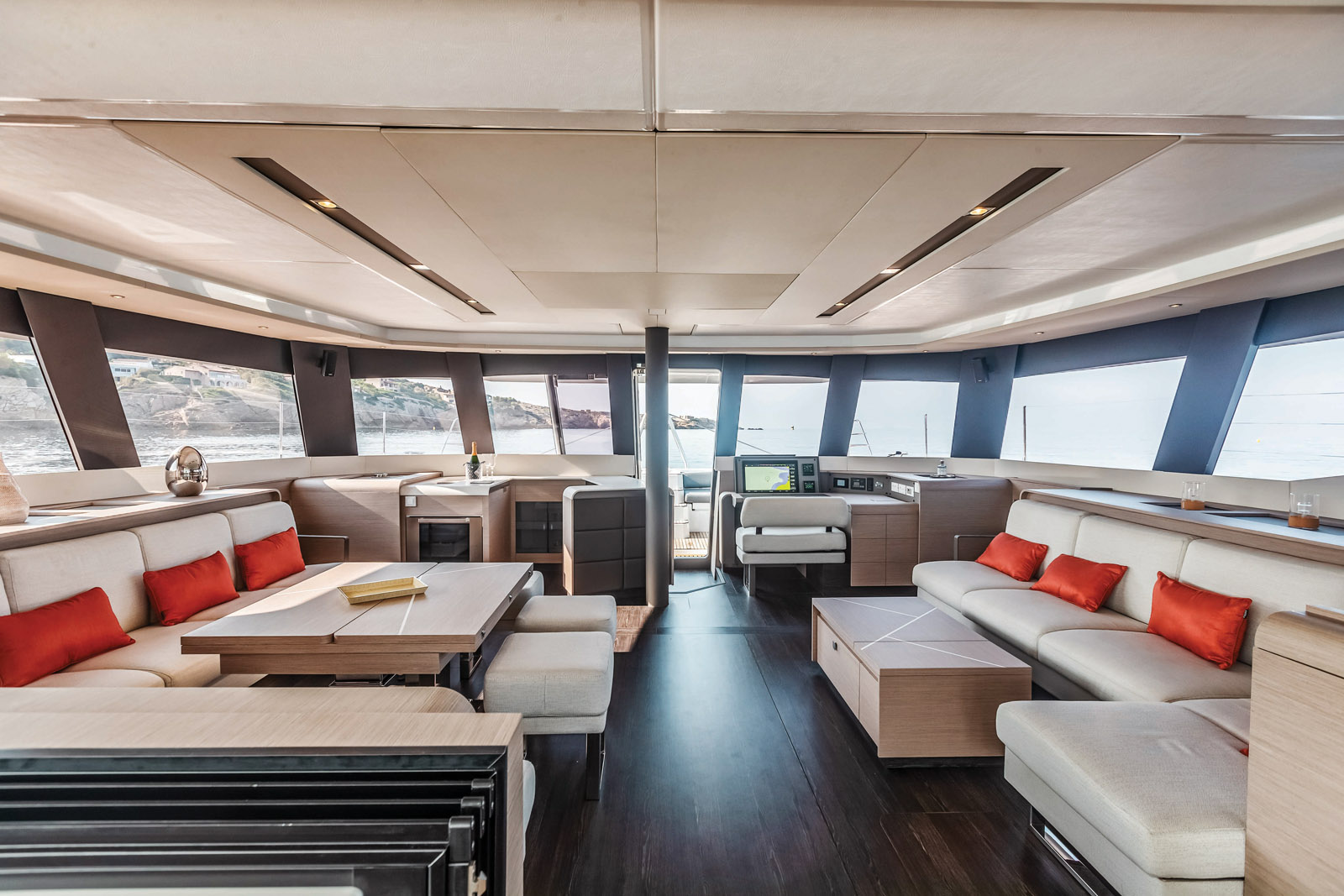
In the “Galley Down” version, the nacelle offers a huge dining area with a saloon to starboard.
Average speeds in excess of 10 knots
Obviously, handling a platform of over 60 feet by 30 (nearly 20 meters by 10) that borders on 30 tons is not going to be an exercise in improvisation. The exercise is obviously reserved for a very experienced skipper. The standard powertrain is 2 x 110 HP, though 150 HP motors are available as an option. You immediately feel more comfortable in open water: out there, everything happens on the flybridge. The Samana 59 is held head to wind, and it takes a few minutes for the square-topped mainsail to reach the masthead. From then on, we bore away on one tack, then cut the engines to unfurl the genoa. Though the mast is set relatively far back and stepped on the coachroof, an overlapping headsail is still used. Associated with a large square-topped main, the sail plan is powerful and allows sailing in 5 to 6 knots of wind. However, be careful with the genoa sheets when tacking. We began with the wind on the beam: in 12 knots, the GPS was displaying 8 knots. Upwind, the breeze picked up a little - 13 knots – and at 50/55° off the true wind, we were making 7.5 knots. A very honorable figure considering the windage of the Samana, and her shallow appendages (5’5” / 1.65 m). Bearing away significantly gave the opportunity to unfurl the gennaker, and the speed oscillated between 8 and 10 knots depending on the wind strength – which never exceeded 15 knots. In fact, a little Force 4 downwind will be enough to be sail permanently above 10 knots – that’s the advantage of the length!

The gennaker makes it easy to lengthen the stride: 10 knots is quickly exceeded!
Conclusion
Once again, the catamaran formula demonstrates that it is possible to afford the luxury of a superyacht that would be over 80 feet (24 meters) in length, in a sailboat that’s 18’ (5 m) shorter. The features offered by the Samana 59 are definitely worthy of the superyacht world. Let’s leave the last word to Thomas Bez, skipper of this first yacht: “This 59 is incredibly comfortable and remains manageable for two people. During our circumnavigation of Spain, the catamaran behaved perfectly offshore, without ever slamming; we sailed 200 mile-days without pushing it.”
TECHNICAL SPECIFICATIONS
Builder: Fountaine Pajot
Architect: Berret/Racoupeau YD
Length: 61’7” (18.78 m)
Beam: 31’ (9.46 m)
Light displacement: 28.2 t
Draft: 5’5” (1.65 m)
Mainsail: 1,260 sq ft (117 m²)
Genoa: 936 sq ft (87 m²)
Water: 396 US gal (1,150 l)
Diesel: 317 US gal (1,200 l)
Engines: 2 x 110 or 150 HP
Versions available and prices in € ex-tax:
Maestro: 1,338,078
Charter: 1,369,196
Principal options in € ex-tax:
Galley down: 50,000
Offshore Pack: 28,000
Ocean Pack: 90,000
Comfort Pack: 108,000
150 HP engines: 4,400
Three-blade folding propellers: 16,149
Bow thruster: 18,346
Hard top: 62,700
Galley unit on flybridge: 6,070
Fitted-out forepeak: 19,200
Aft camera: 980
Garmin 3 electronics package: 32,000
Satellite communications: 22,712
Wi-Fi booster: 1,684 12
place-setting dishwasher: 2,050
Full air conditioning: 45,614
Underwater lighting: 3,457 3 x 170 W
Solar panels: 4,721 17 kW
generator: 23,978 58gal/h (220 l/h)
Watermaker: 16,437
Hydranet sails: 24,600
Gennaker: 13,980
Carbon mast: 125,000
Hydraulic platform: 50,240
Commissioning: 13,200
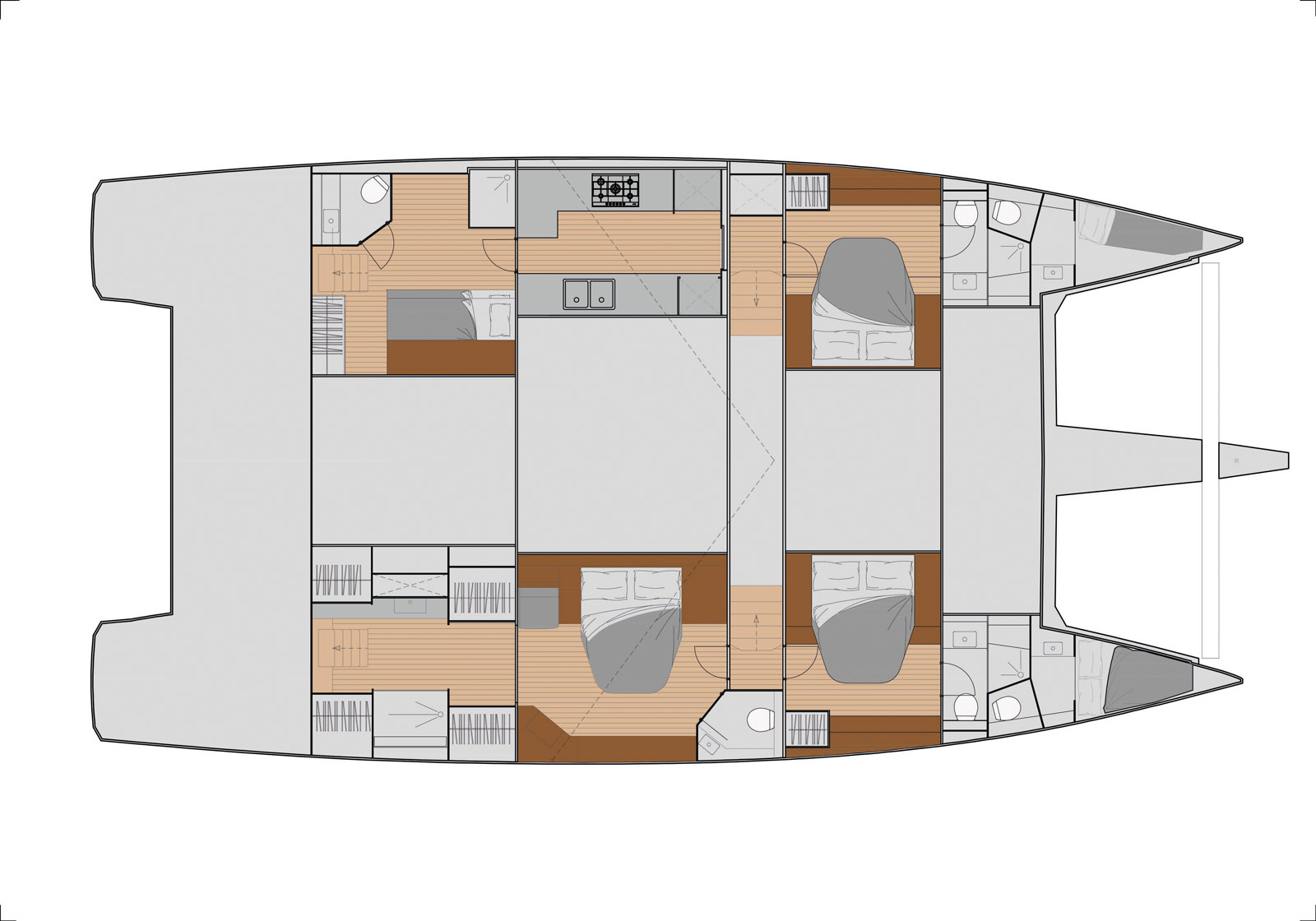
This layout version with galley in the port hull was our test model.
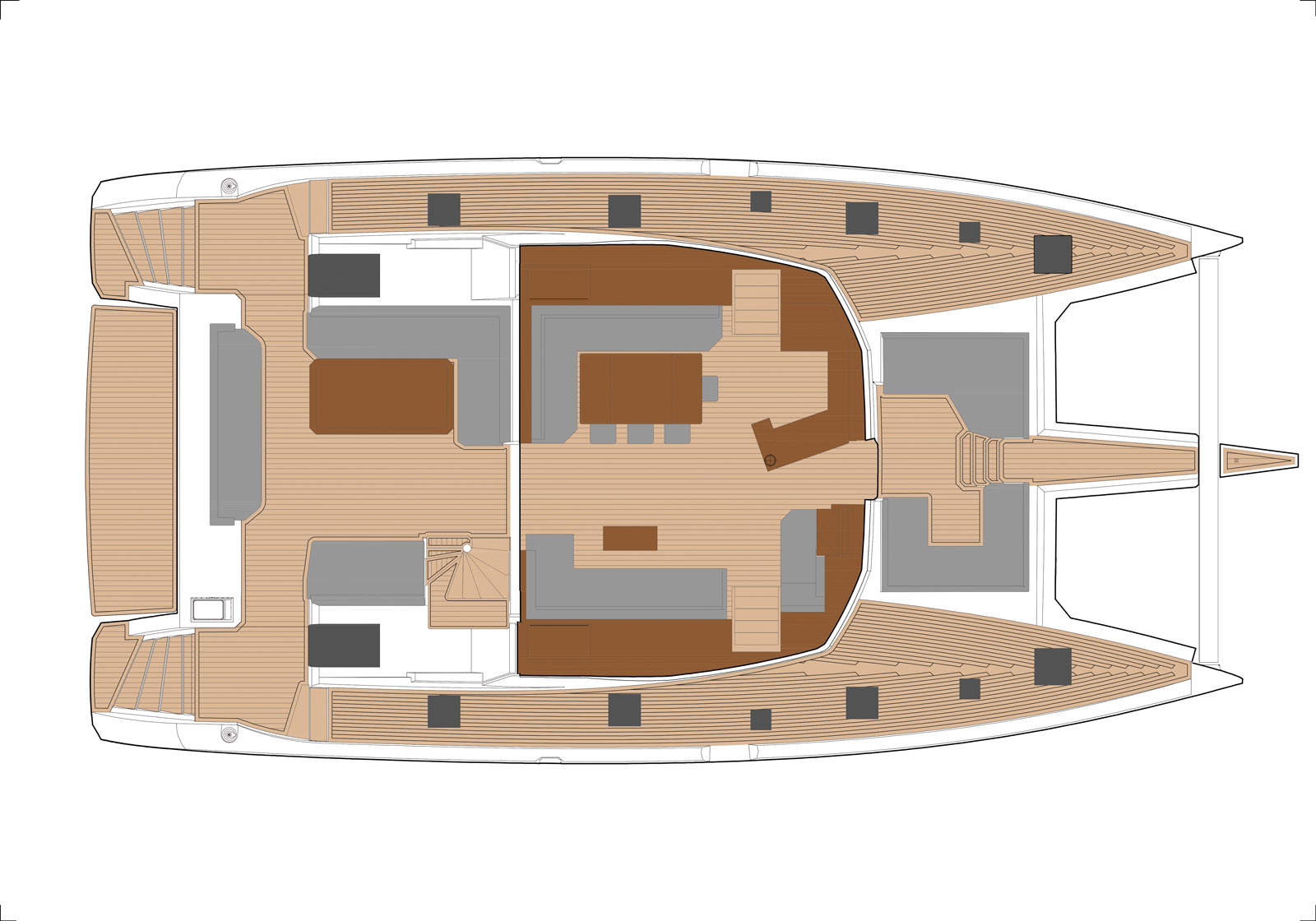
A huge nacelle, with two possibilities: the galley can be installed on the port side... or not, leaving room for an XXL-sized saloon.
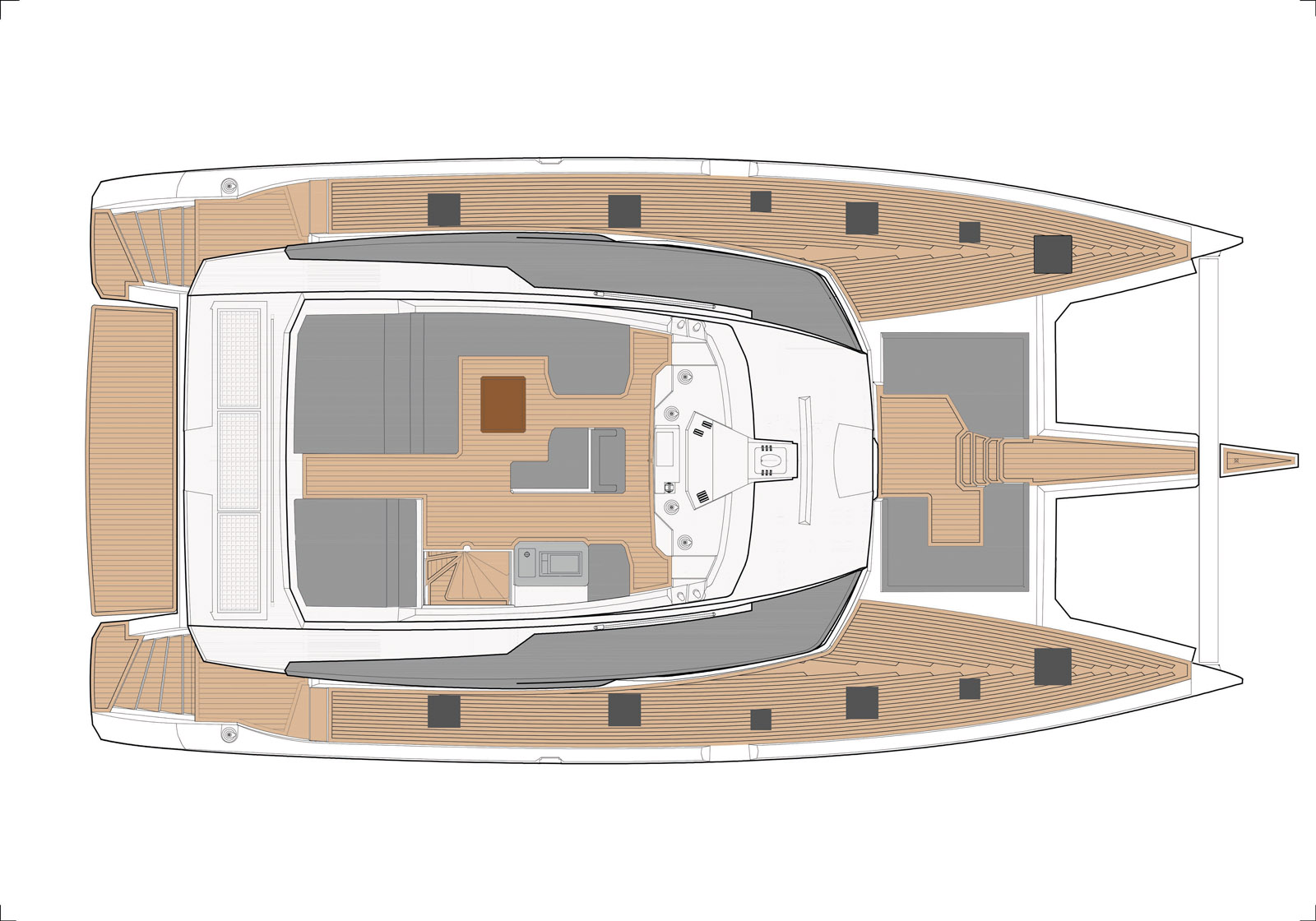
The flybridge of the Samana 59 offers a record surface area of 325 sq ft (30 m²).
 |
 |
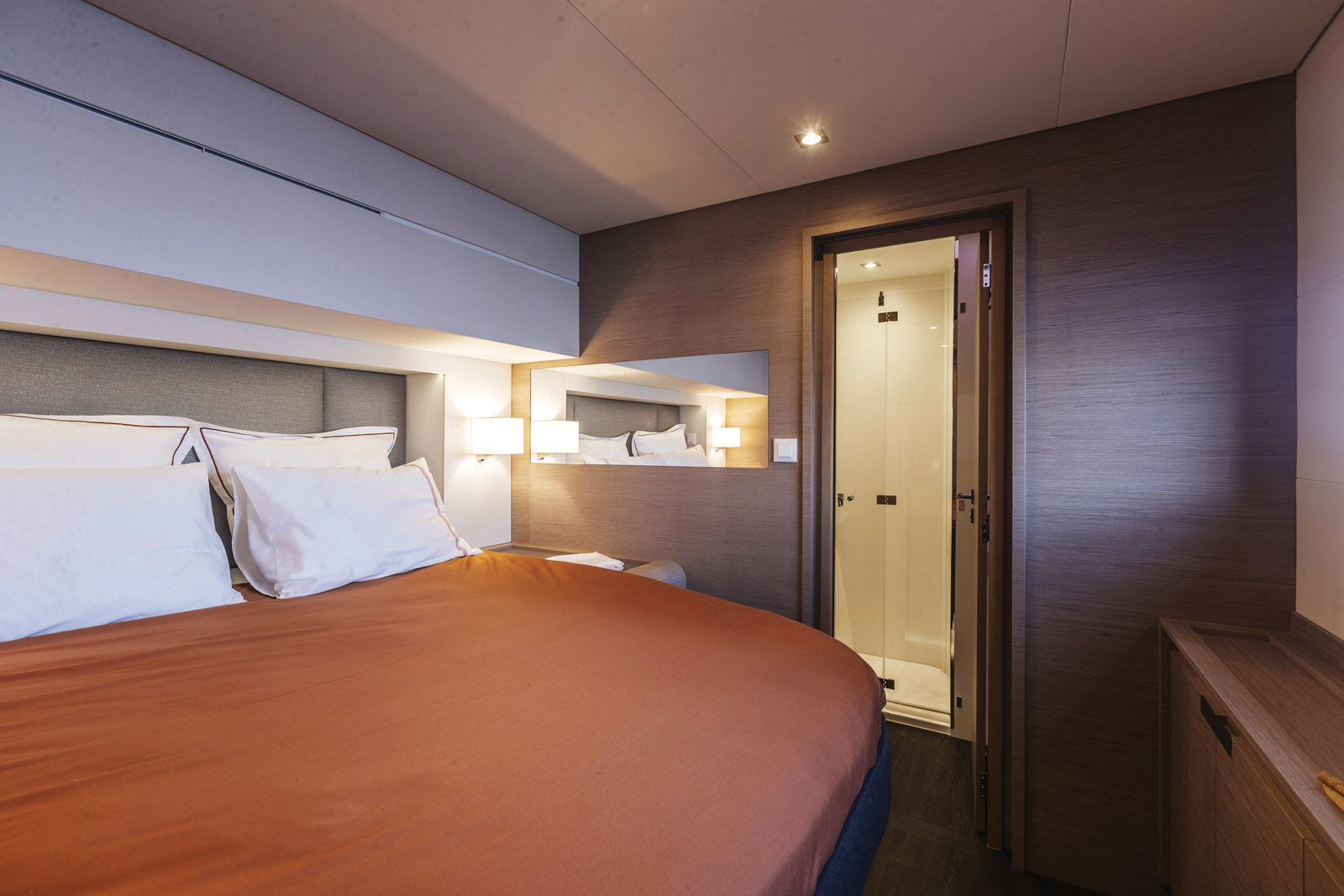 |
In the hulls, 4 to 6 cabins and comfortable bathrooms await.
The Pluses:
+ Exceptional comfort
+ Performance on all points of sail
+ Available either ‘galley up’ or ‘galley down’
The Minuses:
- Treacherous step in front of the forward door
- Flybridge exposed to the wind
- General soundproofing to be reviewed
