Over the years, small Australian builder Seawind, has become a key figure in the globalized world of cruising catamarans. With the Seawind 1170, the shipyard is taking an interesting option by offering modern design and remarkable habitability in a hull of less than 40 feet, a size somewhat shunned by the larger builders. What’s more, Seawind has succeeded in building this small boat without sacrificing performance. For that, the requirements were simple: building a compact ocean-capable cruising catamaran... that’s what we’re going to find out!
Infos pratiques
- Le chantier : Seawind 1170
- La fiche technique
-
 Découvrez notre vidéo exclusive
- Financez votre Seawind 1170
- Assuez votre Seawind 1170
- Articles autour du Seawind 1170
Conditions: Calm sea, 10 to 18 knots of wind, 9 people on board
The man behind Seawind is Richard Ward, an accomplished sailor and ocean racer who decided one day - 40 years ago - to build his own catamaran, just off the beach in Australia. More than 40 years later, Seawind has become a recognized brand worldwide, and even a group, with the acquisition in 2010 of the Corsair Marine brand. The company employs over 550 people and is present on virtually every continent. The Seawind range now includes no fewer than eight models, from 38 to 52 feet.
One ambition: to design an ocean-capable catamaran under 40 feet
The 1170 is a 39-foot unit, a relatively small size in the world of cruising catamarans. However, this catamaran features a very interesting use of space. Built in a new factory in Izmir, Turkey, the Seawind is presented by the shipyard as a compact ocean-capable catamaran.
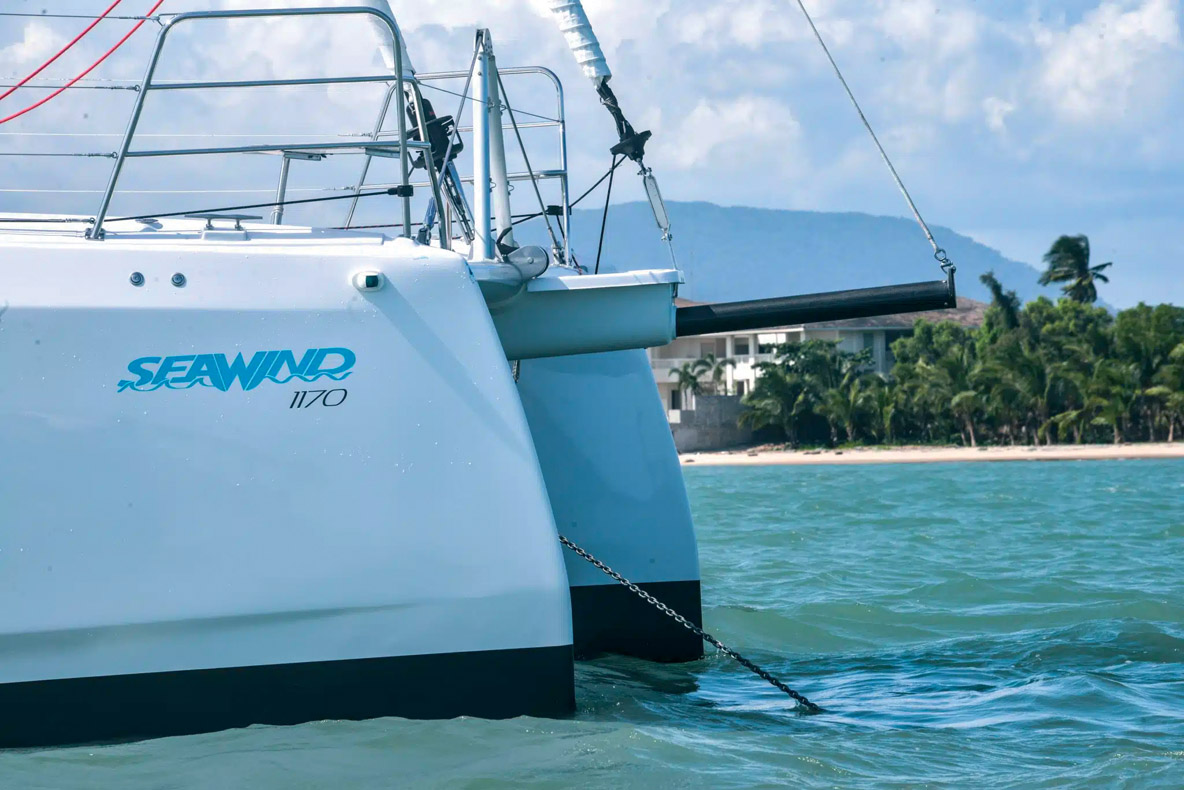
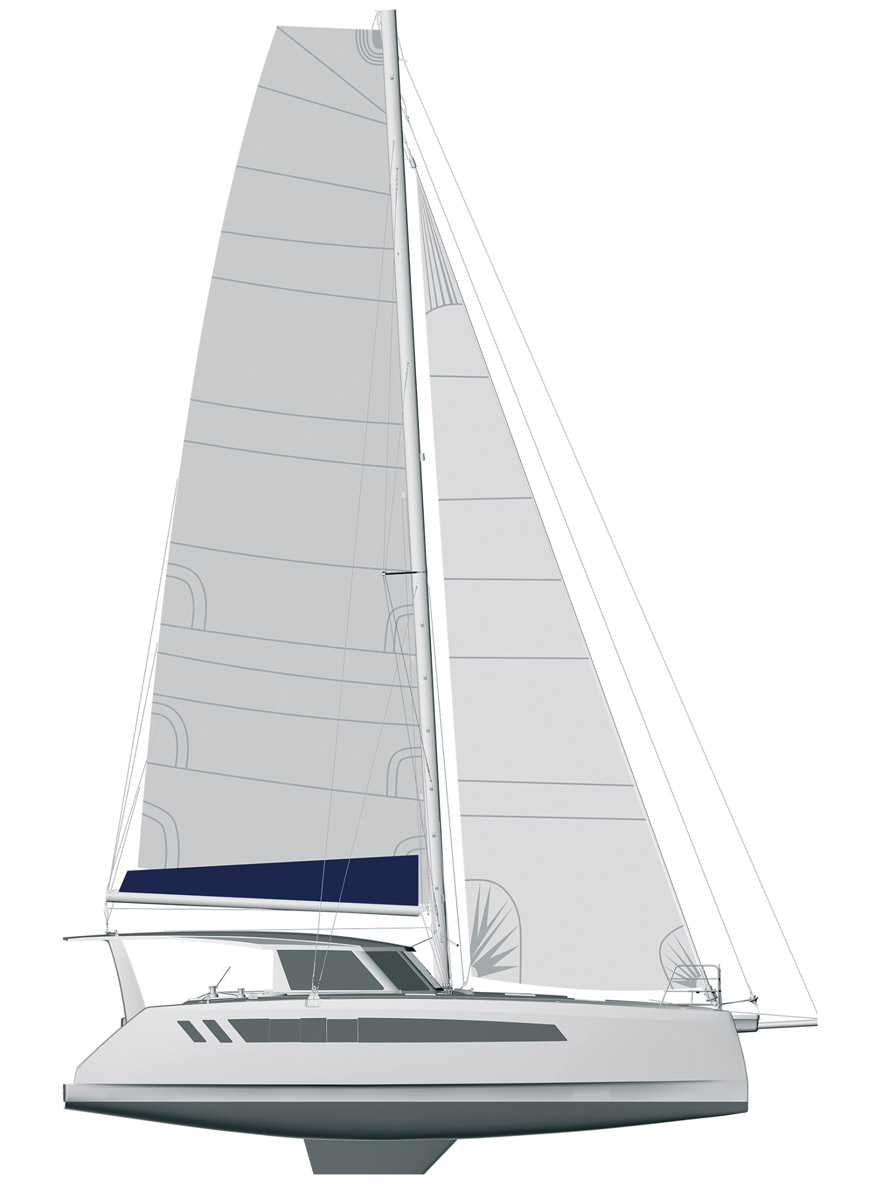
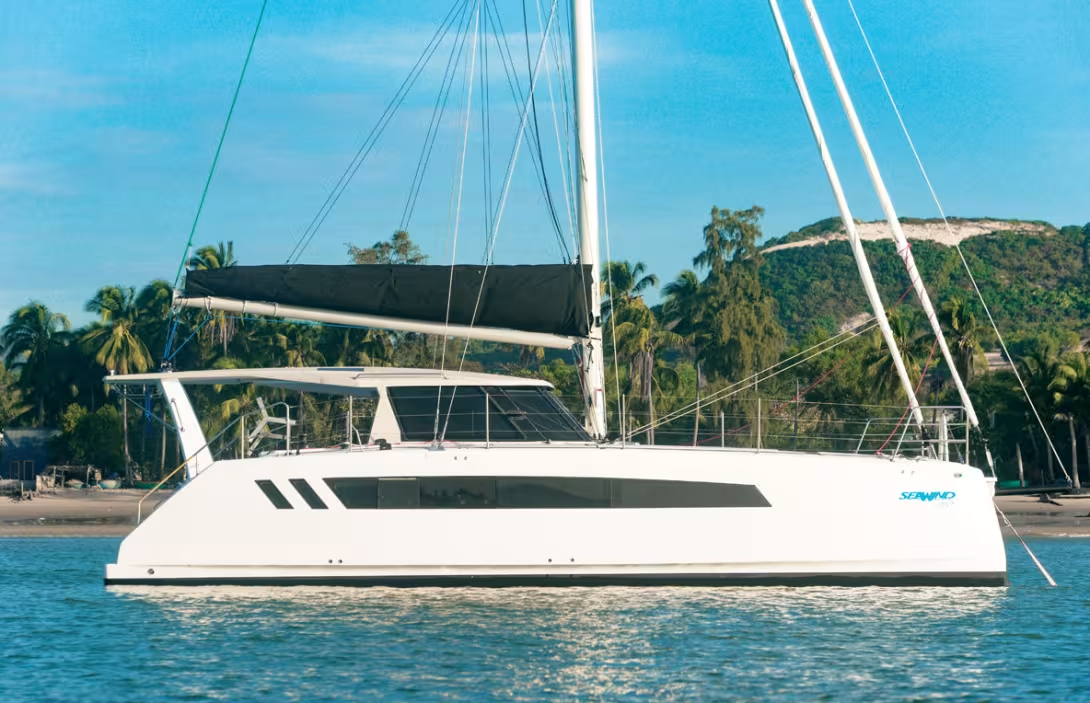
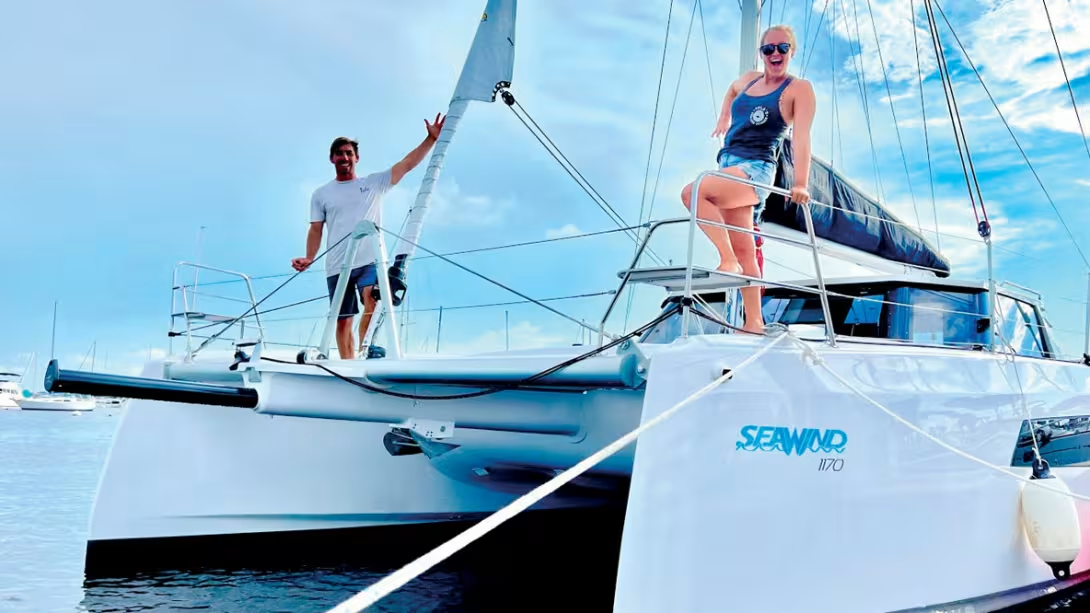
Aesthetically, the 1170 benefits from a significant styling evolution compared to the 1190 and 1260, with more elongated lines - very similar to those of the 1370. The interior space has also been improved. The long hull portholes are still there, but the hull bulwarks are completely vertical, and keep virtually the same height from stern to bow. The coachroof is much larger than on previous models, yet remains highly aerodynamic. The rigid bimini continues to the rear of the sugarscoops, offering perfect protection from the sun and/or the elements. The slender inverted bows give the catamaran style, while the forward beam supports two furlers and a retractable carbon bowsprit. Despite its generous volume, the nacelle, which sits more than 2 feet above the water, appears very slender, almost aerial.
These beautiful lines give a modern look to the 1170 and this clever design also serves to enhance its functionality. From the cockpit, it’s easy to reach the foredeck thanks to the wide side-decks. This forward deck is mainly rigid and includes several lockers for fenders, sails, or safety equipment. The windlass is nicely concealed and, to enjoy the show, there are two seats on the bow of each hull.
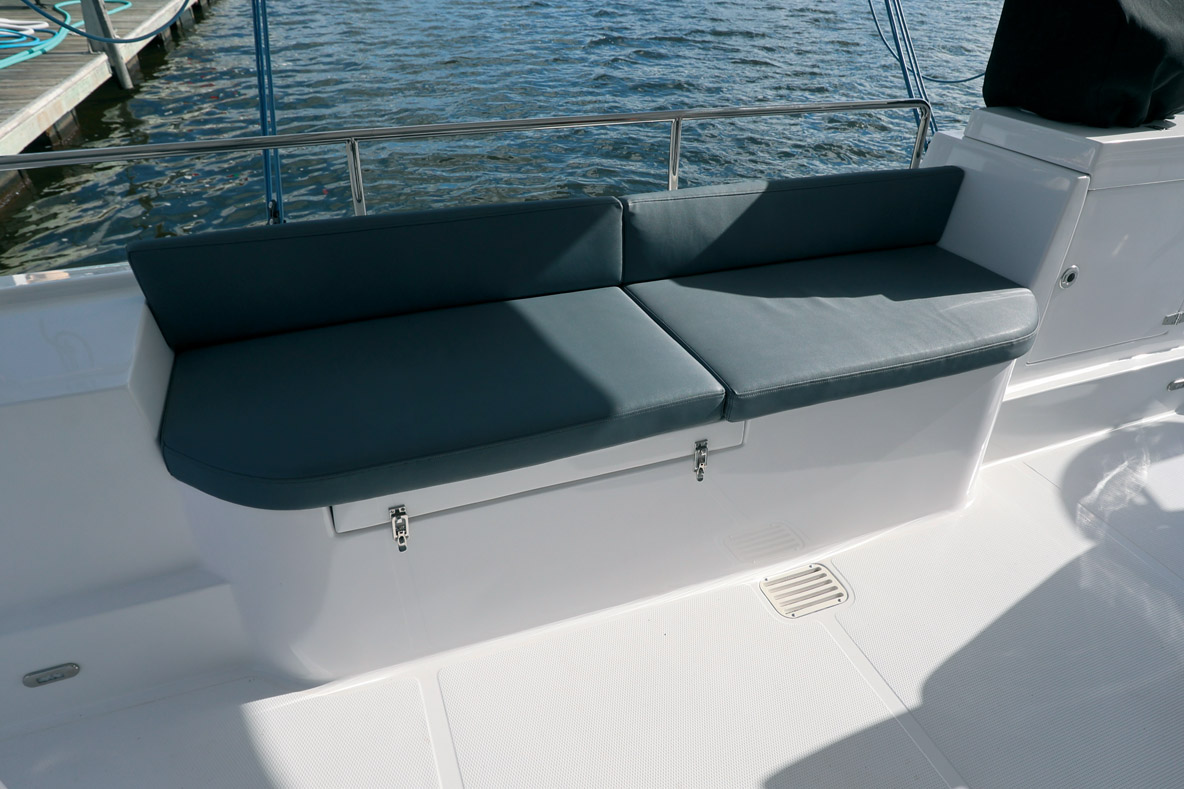
The same idea of functionality is found in the living area, with a cockpit that’s not huge - but we’re only on a 39-footer. However, its design is clever. The aft section features a large bench seat, while on each side of the cockpit, access to the small sugarscoops is closed off blocked by lifelines. Located on either side of the cockpit, the two helm stations benefit from good visibility while being sheltered from the elements. What’s more, the helmsman is not isolated from the rest of the crew. Thanks to an opening window, electronic equipment remains well protected, yet easily accessible to the helm. Finally, a bench seat allows the skipper to settle in comfortably for long crossing. This cockpit is also completely covered by the rigid bimini. As well as keeping the crew out of the elements, this allows the integration of racks for fishing rods or paddleboards. Finally, two roof windows allow the skipper to keep an eye on the rig.
Very easy to move around on board
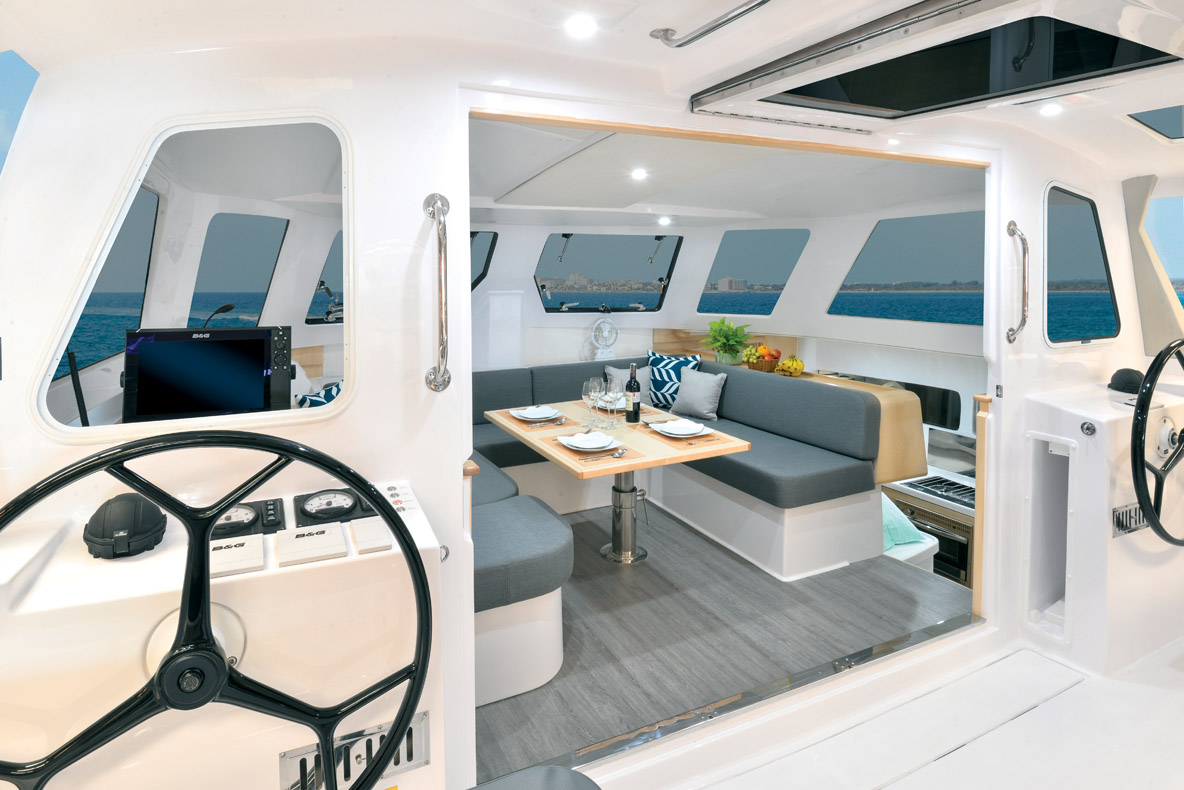
To get from the cockpit to the interior saloon, Seawind has opted for an interesting solution. The separation door consists of three parts. In the closed position, the two outer sections of the door open in the conventional way, but if you want to open it all, the three panels fold in on themselves, and a winch-operated mechanism raises the whole assembly to the ceiling. A great idea for saving space on board.
The shipyard designed this catamaran for use by a couple, with or without children. This is reflected in the interior layout. Indeed, despite being under 40 feet, this catamaran feels surprisingly spacious.
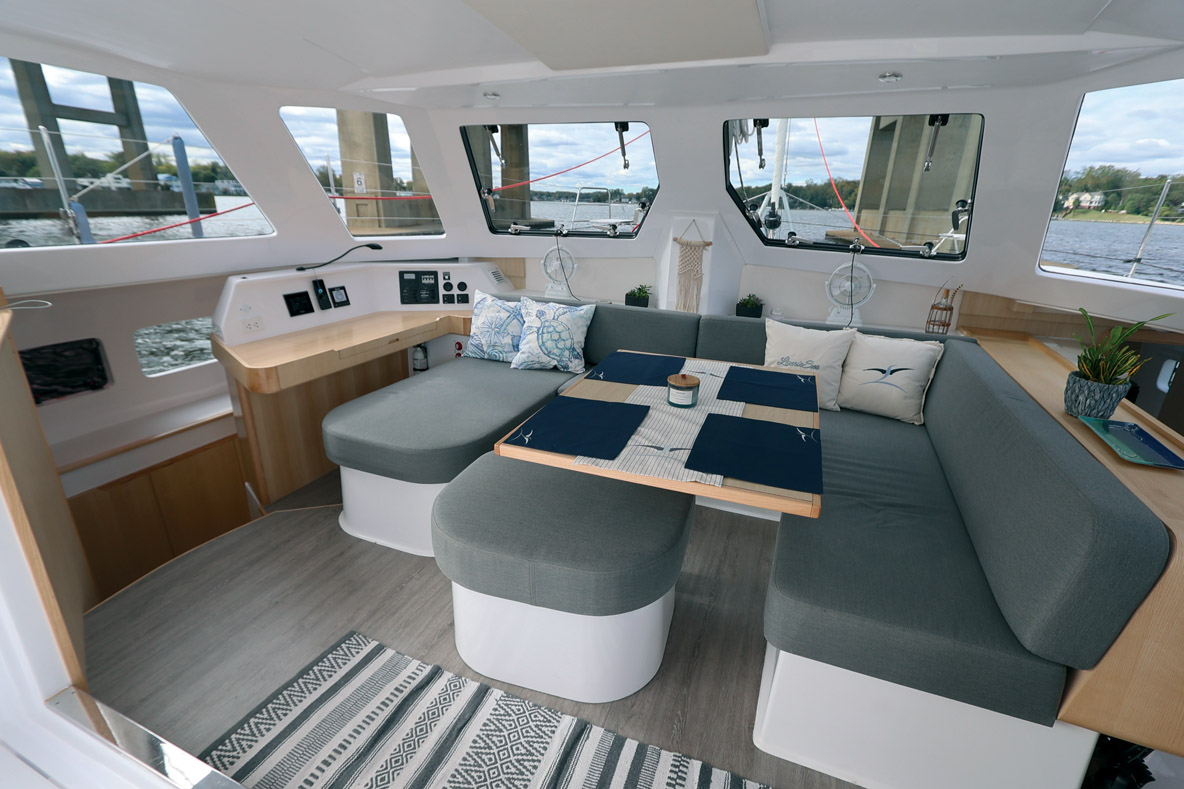
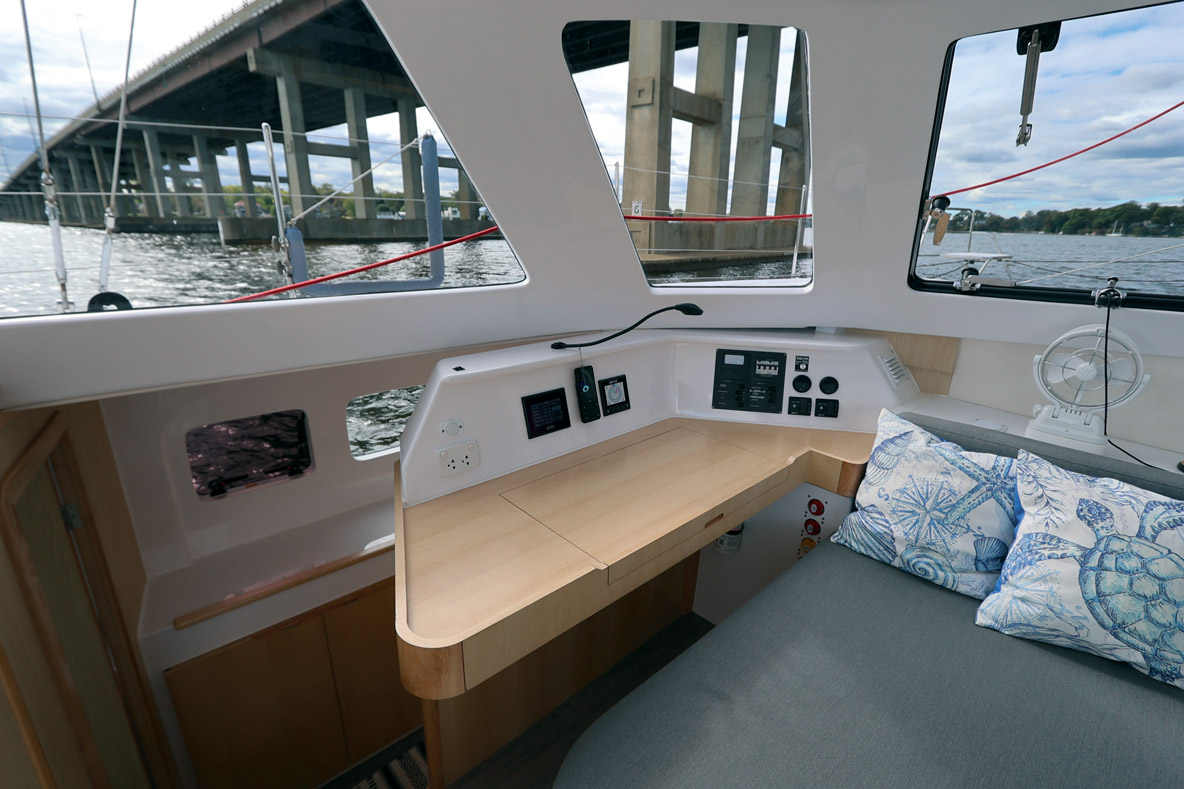
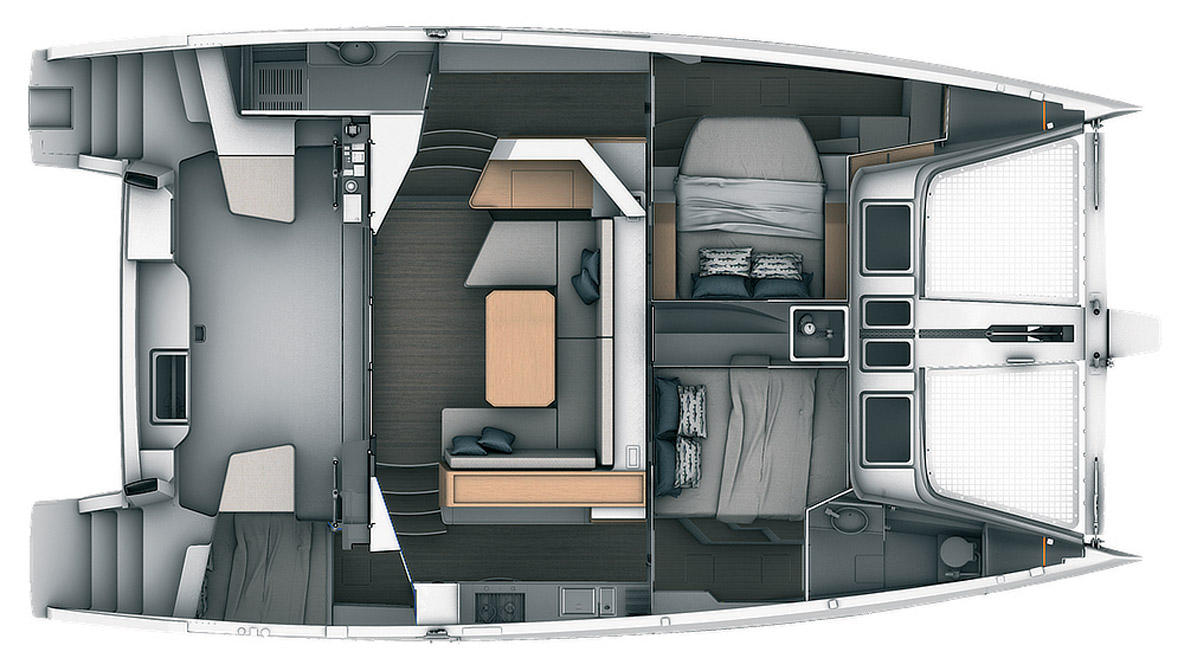
The main saloon features a U-shaped seating area complemented by an ottoman, with capacity for seven or eight people around the table. For classic two-to four-person use, this is more than enough. This table is also modular and can be lowered to create an extra berth, bringing the sleeping capacity to 8. The port seat also serves as a bench for the chart table, again a good use of space. The chart table is a good size, with storage underneath and room for a full range of electronic instruments. The interior of the 1170 is characterized by clever volume management. To top it all off, the interior benefits from generous natural light and numerous opening bay windows - like the portholes - contribute to efficient ventilation.
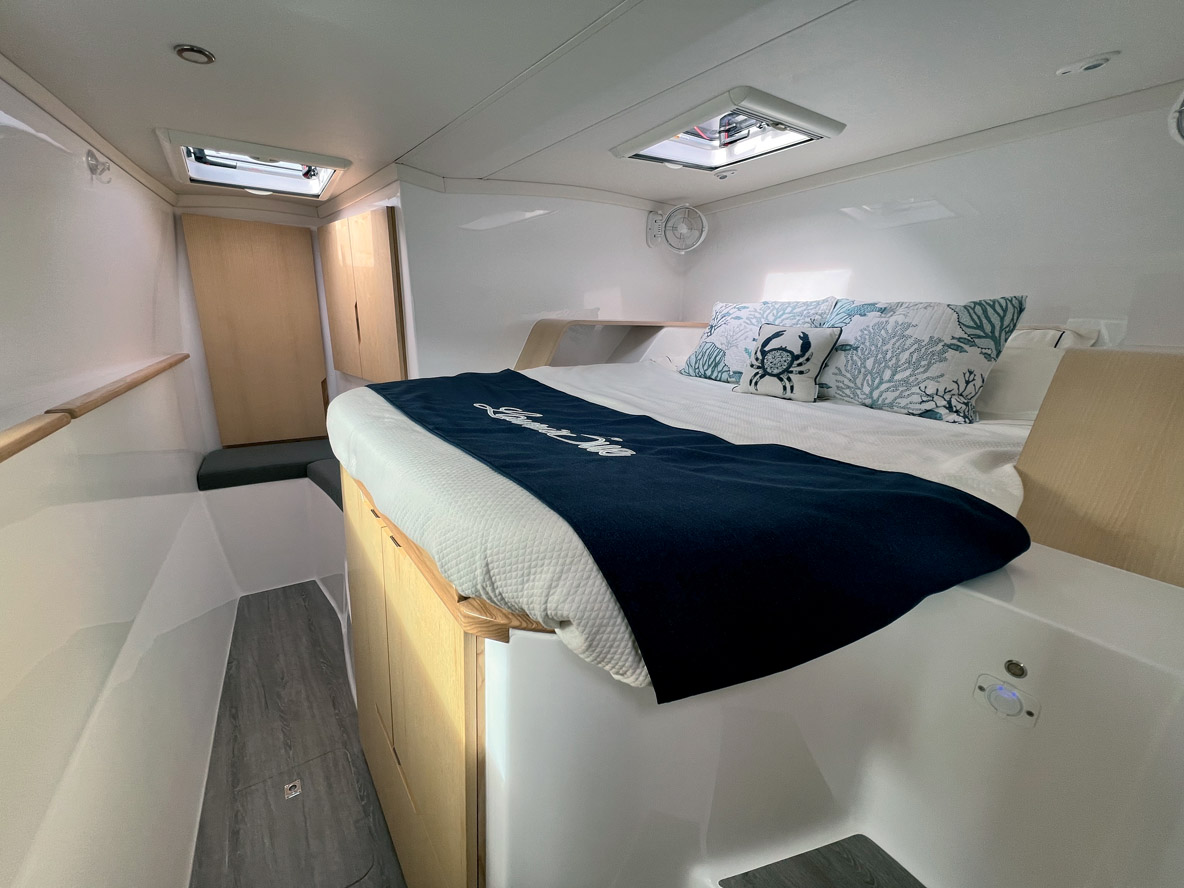
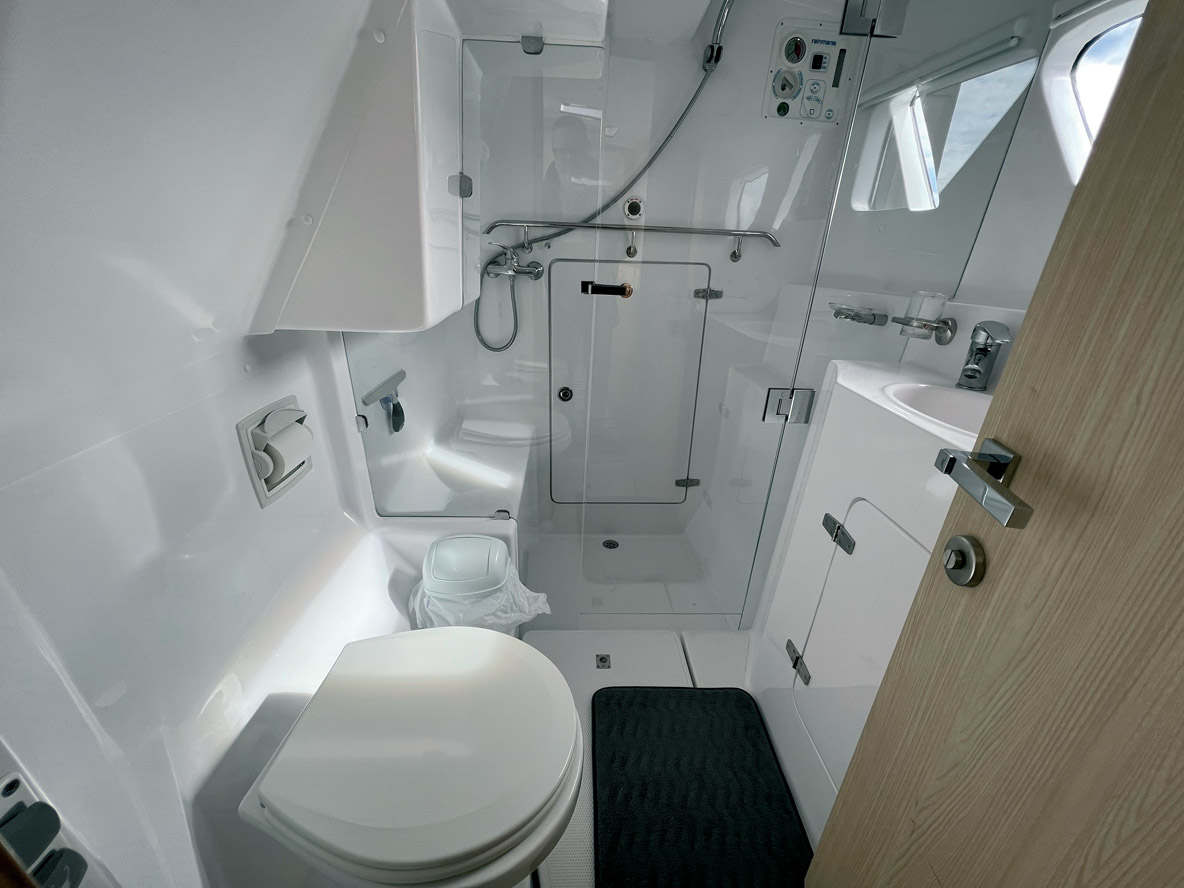
As for the sleeping area, the port hull houses the Owner’s suite with a double bed, and a beautiful forward area with plenty of storage space. The hallway also abounds in storage space, and it is where you can find the power supply system. At the rear, the Owner can enjoy a very large heads compartment with a separate XXL shower. This shower even incorporates a bench, which can be useful in rough sea conditions. Finally, a door in the shower gives access to the engine for maintenance.
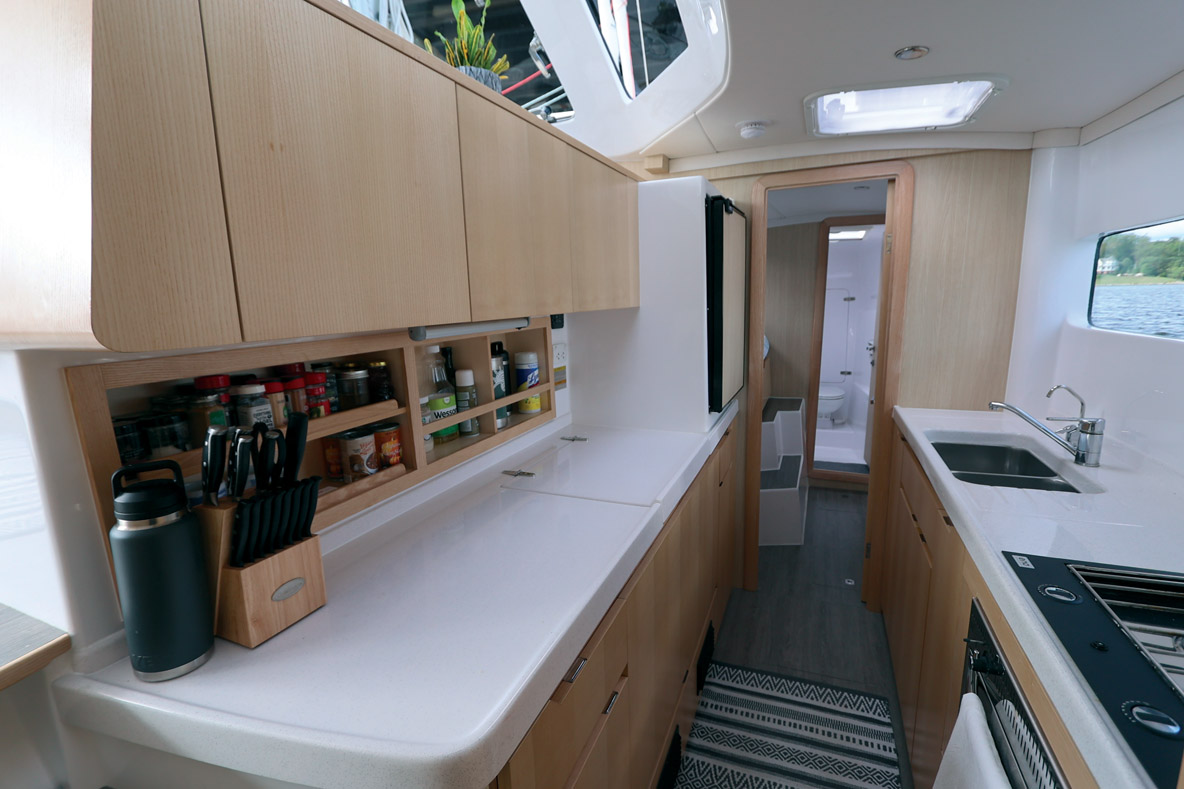
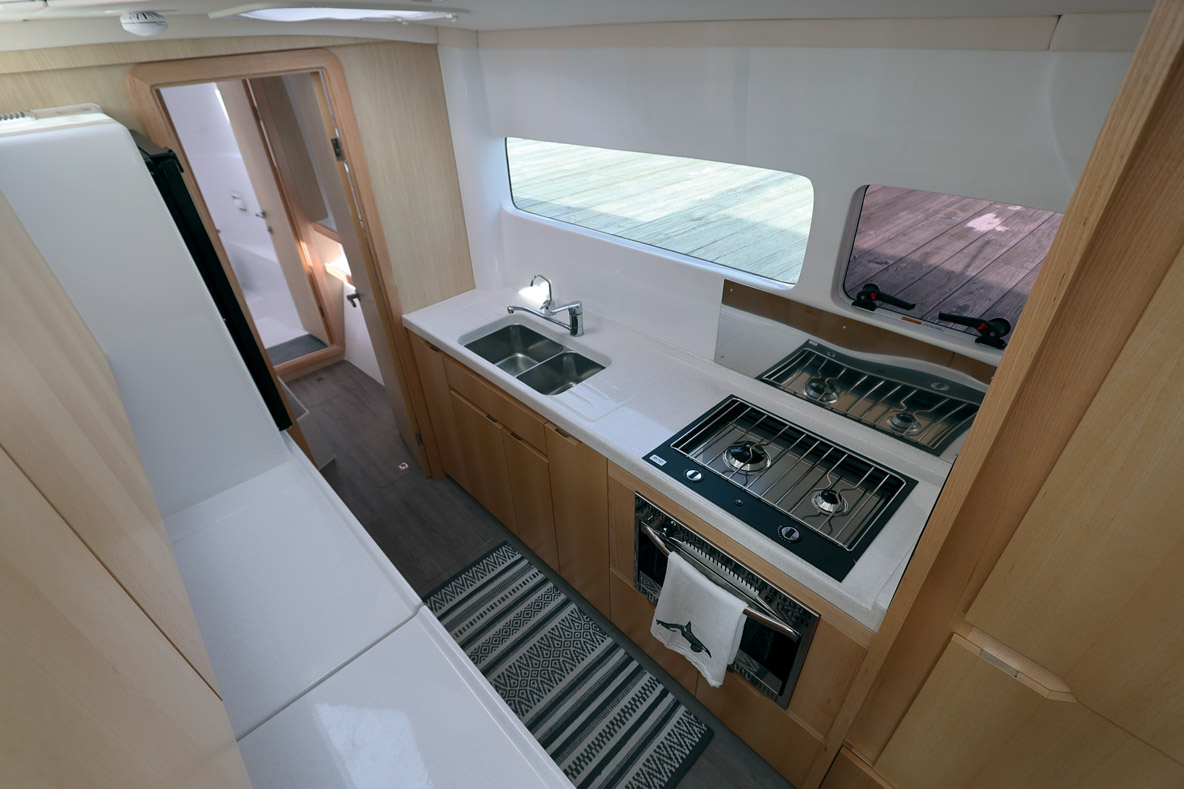
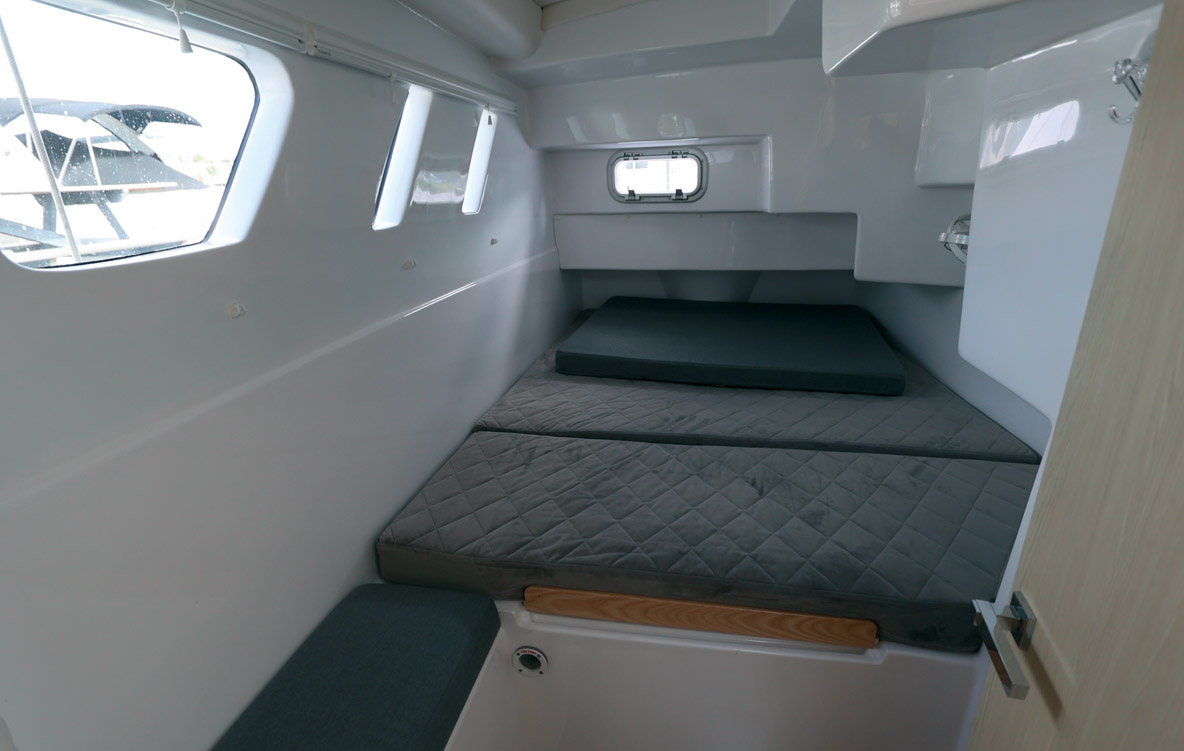
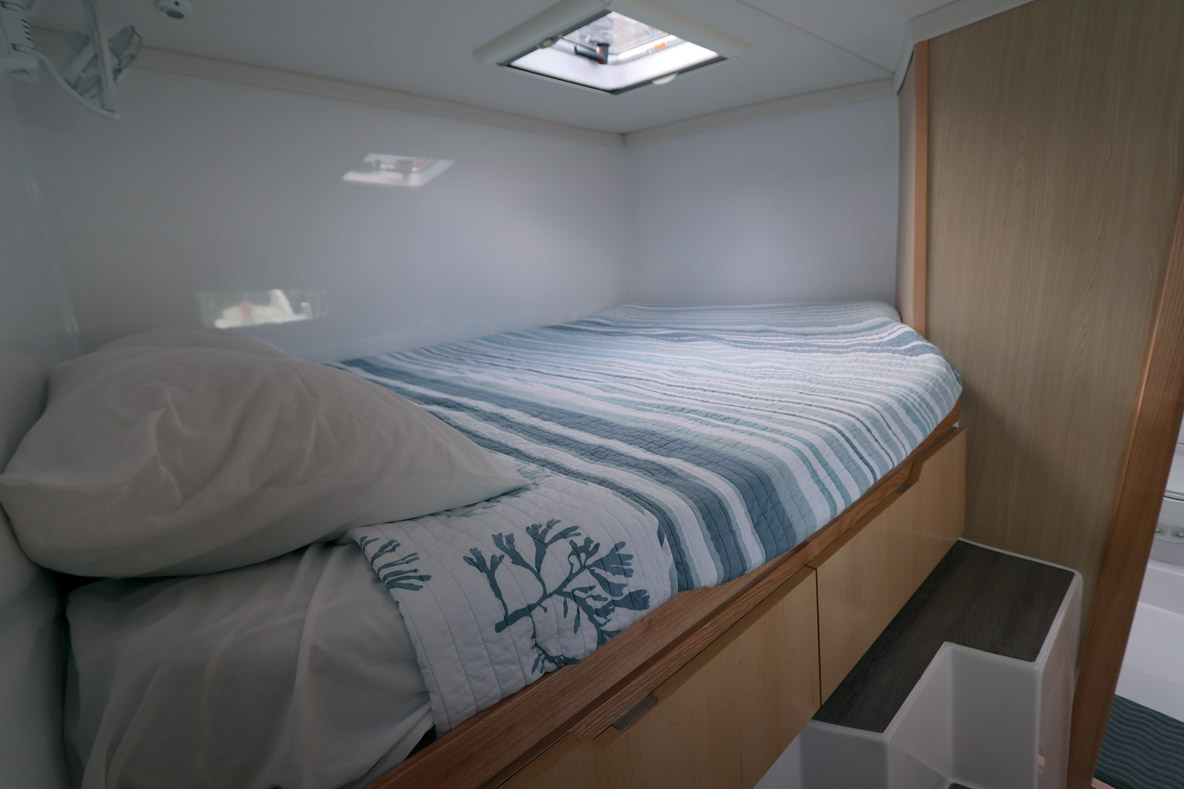
The starboard hull takes advantage of the absence of a chart table to accommodate a real galley with two countertops, lots of cabinets and all the necessary appliances. The portholes are especially noteworthy, offering a view of the sea when cooking, even down below the hull. The galley is followed at the bow by a cabin with a double berth, head, and plenty of storage spaces. Finally, on the aft side of this starboard hull, you can find the third cabin, intended more for a child or for storage, but still including a double berth. Access to the starboard engine is also located under this berth.
A rather impressive layout for a unit of this size since every nook and cranny has been exploited. Headroom is almost always over 6 feet, and you’ll never feel cramped on board - the white walls, clear woodwork and numerous picture windows all contribute to this. The building quality and the finish are also outstanding.
Easy to operate from the cockpit
When it comes to on-board power, the Seawind uses a traditional solution based on the engine and a generator. The catamaran also features a number of solar panels, and this configuration is set by the customer, as is the number of lithium batteries depending on the program of the owner. Another interesting detail about the roof is that it is built with a rainwater collecting system. All you have to do is connect a hose between the collection point in the gutter and your water tank, and you’re ready to go.
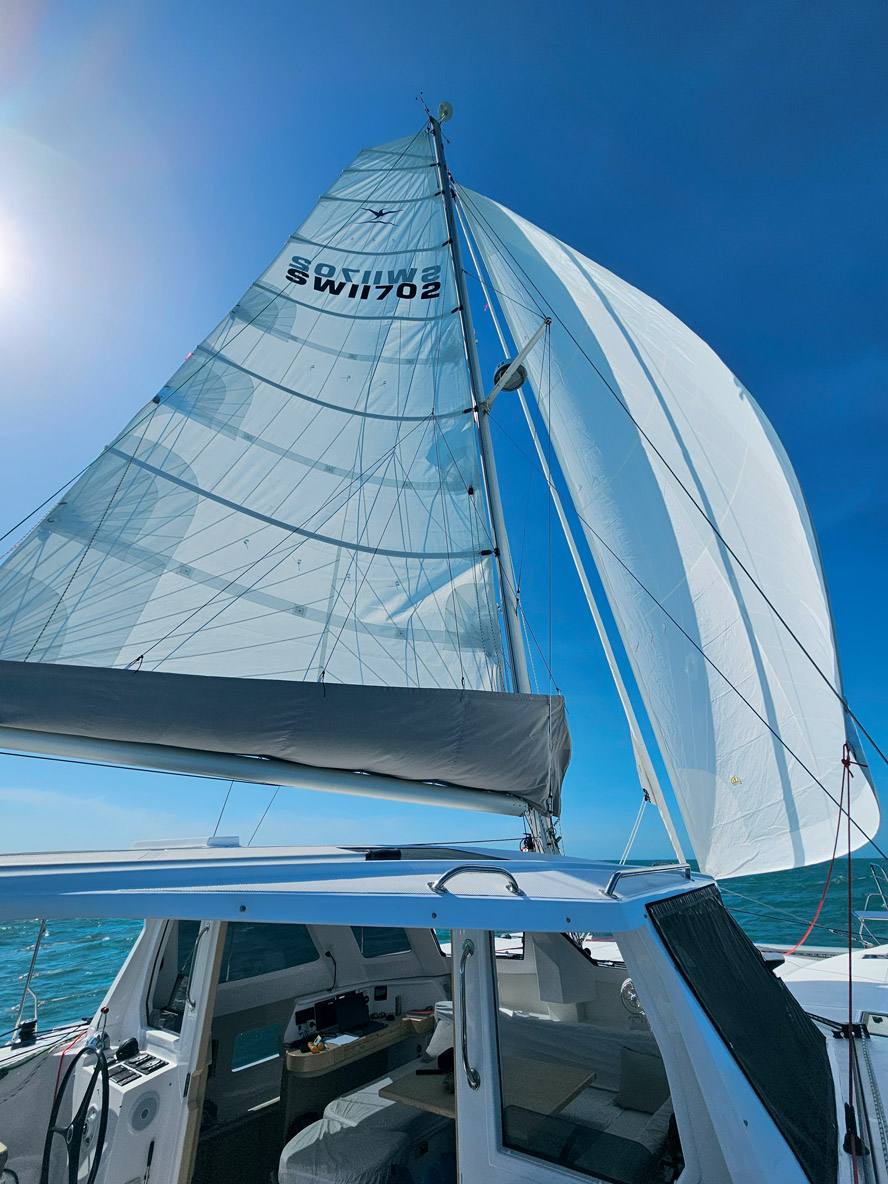
In keeping with the fact that this catamaran is primarily designed for a couple or a small crew, the Seawind 1170 focuses on simplicity in maneuvering. This begins on the bow, with two furling systems, one for the jib and the other one for the screecher. If you want to hoist the spinnaker, you can use the retractable carbon bowsprit and a self-tacking jib is also available as standard, greatly simplifying maneuvering.
All halyards return to the cockpit, taking advantage of the wide side decks. A rope bag, or rather a rope «tray», is installed just behind the winches. As for the clutches, they are easily accessible from the helm station. The mainsheet traveler has been installed on the bimini top, which is both easy and very safe, since boom movements take place outside the circulation zones.
Performance in line with intended use
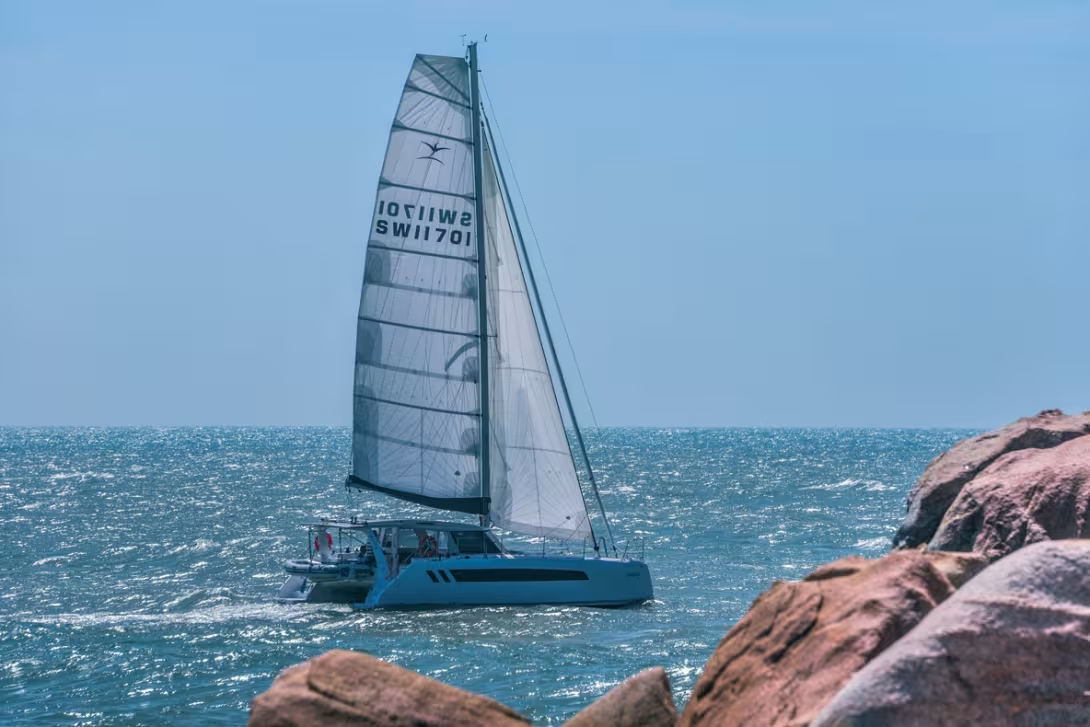
Although the Seawind has ocean crossing capabilities, it doesn’t claim to be a racing multihull. As such, it has no daggerboards, but mini keels. Nor does this mean that the 1170 is slow - quite the contrary! On the day of our test run in Maryland’s Chesapeake Bay, we had 11 to 18 knots of wind and relatively flat seas - ideal conditions for testing this Seawind. To get around, the catamaran is equipped with a set of Doyle sails with a 614 sq ft (57 m²) mainsail and an optional 548 sq ft (51 m²) Code Zero, giving an upwind sail area of 1,162 sq ft (108 m²) for a boat that weighs close to 10 tons unladen. To this can be added a 1,194 sq ft (111 m²) spinnaker, which really helps in the right conditions.
In any case, the Seawind is already making 8.5 knots with 11 knots of wind, which is very promising. We’ll even climb to 9.3 knots with a 16-knot wind and a 40° angle to the apparent wind. With 18 knots of wind, barely more than that, the Seawind can reach peak speeds of over 10 knots, which means we can already go a long way. Talking to Bill and Sierra, the happy owners of 1170 who live on the boat year-round to support their YouTube channel “Tula’s Endless Summer”, the catamaran’s average speed is around 6 to 7 knots, which seems totally coherent.
To get out of the marina or for windless days, the Seawind 1170 is equipped with two 29 HP Yanmar engines. This power means you can cruise at around 6 knots without too much noise and with very reasonable fuel consumption.
Conclusion
It’s hard to find a 40-foot catamaran that’s so livable! The shipyard has really succeeded in exploiting the interior space to the maximum, thanks to a number of clever features. What’s more, this habitability doesn’t come at the expense of aesthetics, since the 1170 boasts very fluid, almost sporty lines, nor does it sacrifice performance, which is pretty decent for a family cruising multihull. Construction and finish are also of a very high standard. The final pleasant surprise is that, with a starting price of US$ 510,000, the Seawind 1170 is still quite competitive compared to other catamarans on the market.
Ease of handling
Performance
Small sugarscoops
Technical specifications
Design: BE Seawind
Overall length: 39’3’’ (11.9 m)
Beam: 21’4’’ (6.5 m)
Draft: 3’9’’ (1.2 m)
Air draft: 61’7’’ (18.8 m)
Light displacement: 20,200 lbs (9.2 t)
Mainsail: 614 sq ft (57 m²)
Self-tacking jib: 296 sq ft (27.5 m²)
Code 0: 548 sq ft (51 m²)
Asymmetric spinnaker: 1,194 sq ft (111 m²)
Fuel: 2 x 68 US gal (2 x 260 l)
Water: 132 US gal (500 l)
Engines: 2 x 29 HP Yanmar
Starting price SC version: US$ 510,000