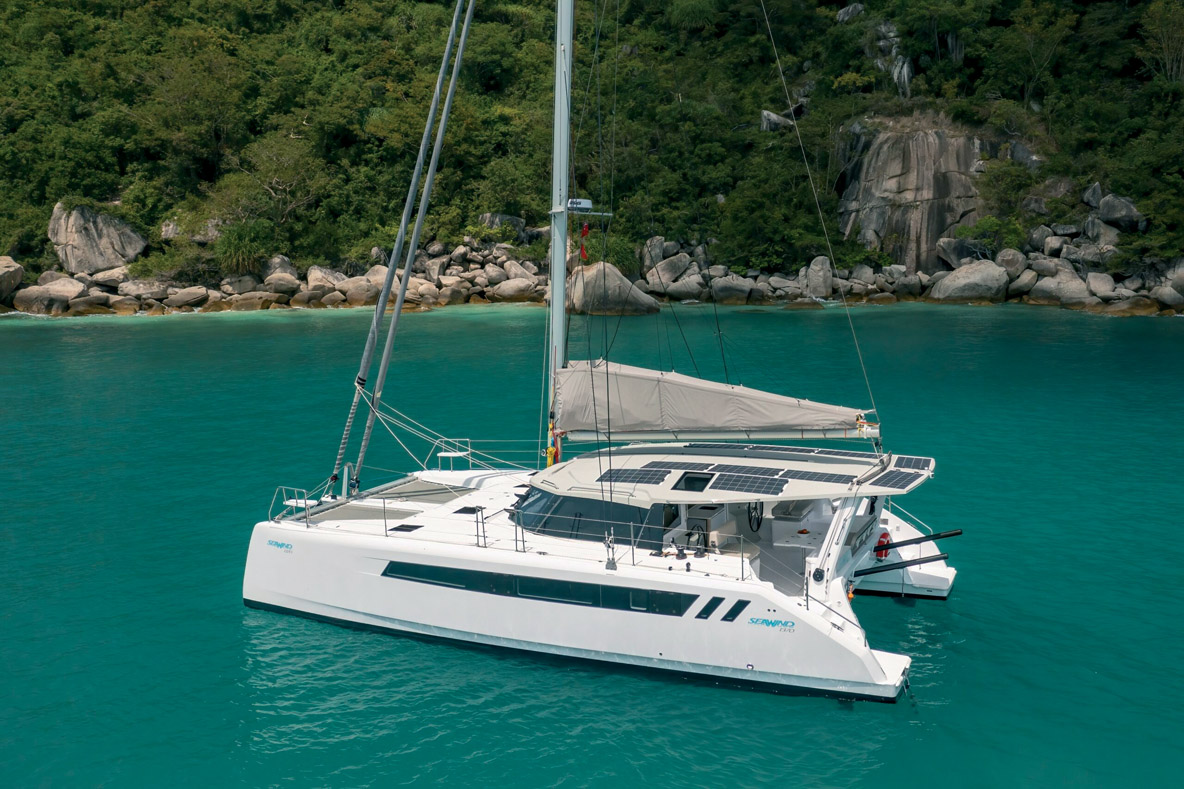
The Seawind 1370 heralds a new era for builder Seawind, founded in Australia over 40 years ago. A new, more modern design combined with an increased production capacity augurs well for the success of this model. But does this performance cruising catamaran retain the legendary build quality of her older siblings? We went along to find out…


Infos pratiques
- Le chantier : Seawind 1370
- La fiche technique
-
 Découvrez notre vidéo exclusive
- Financez votre Seawind 1370
- Assuez votre Seawind 1370
- Articles autour du Seawind 1370
Conditions : wind 11 to 14 knots, slight chop
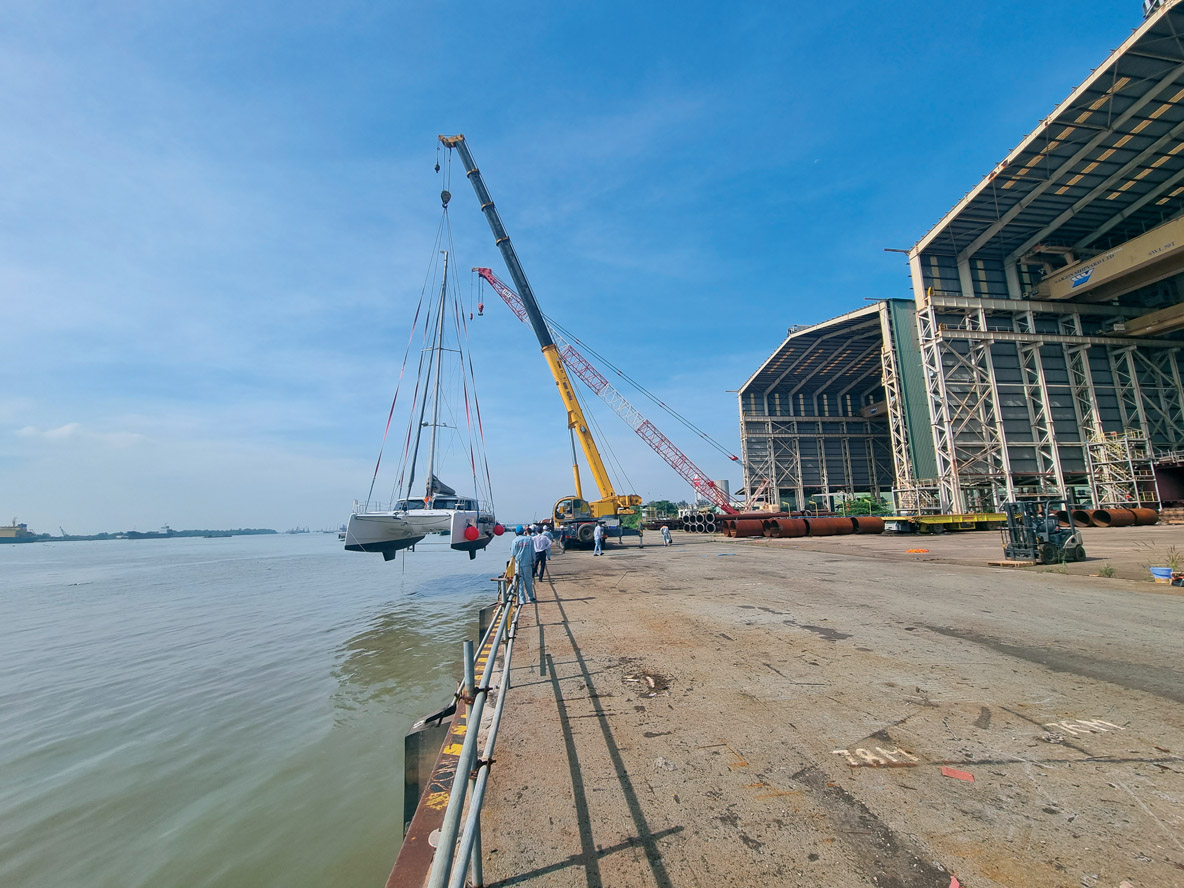
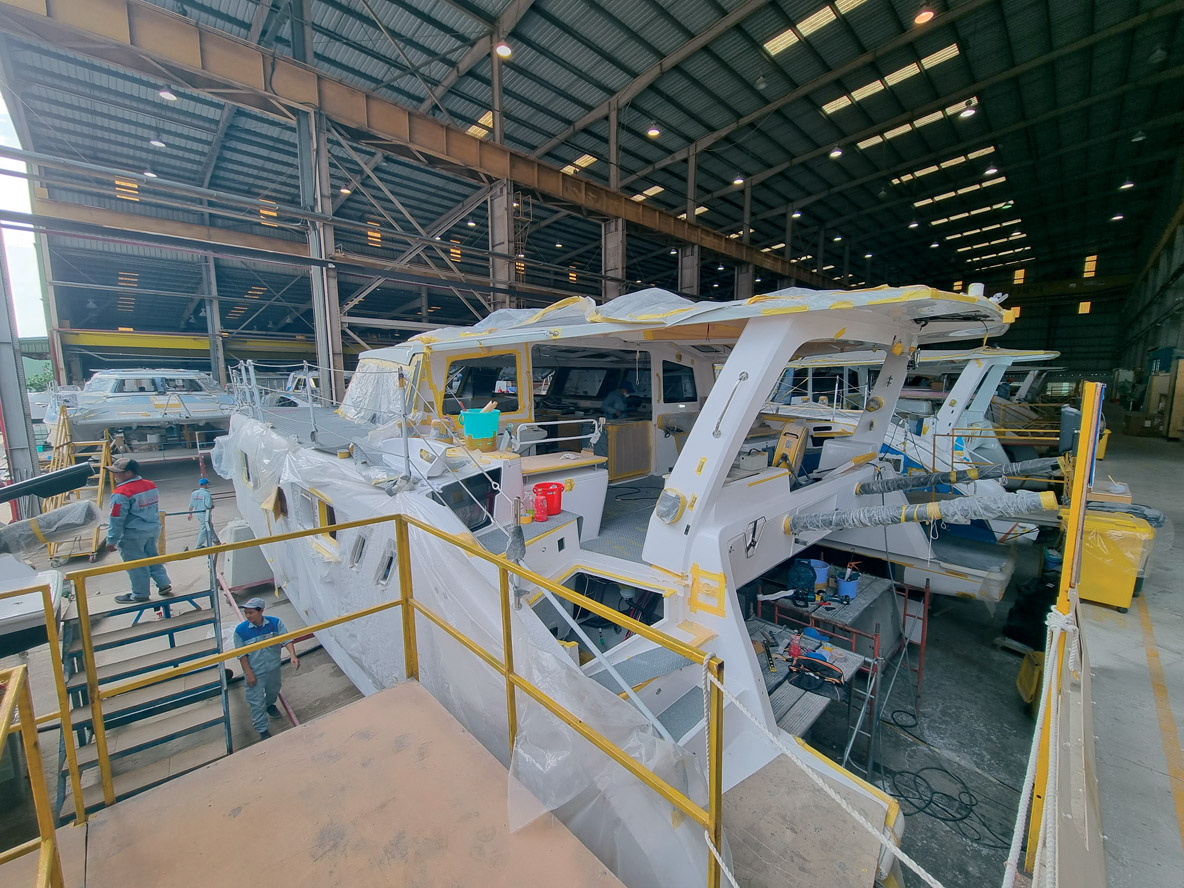
Seawind continues to produce capable cruising boats from its Vietnam yard, after relocating there from Australia a decade ago to improve its supply chain. The range now comprises models from 39 to 52 feet and it’s currently the mid-range boats that are really pushing the brand’s popularity, both in Australia and in its largest overseas market, the USA.
The stand-out has been the newly designed 45-foot 1370 which has more than 70 orders as we go to press. For 2024, it is joined by the 39-foot 1170 that company owner Richard Ward has been evaluating since the first hull popped-out of the mold in late 2023. These two boats epitomize the new era being heralded into this company that’s now some 42 years old. Company expansion has also taken place for 2024, with a newly built yard on the Mediterranean shores of Turkey. These new premises, along with larger premises in Vietnam has allowed a substantial increase in output.
So, to see if the quality has remained as the quantity has risen, I sought out a 1370.
To find one, I flew to fly to Thailand to board an early 1370 because the company has developed a base here for those choosing a factory handover – only a few days sail from Hoh Chi Minh City for a company delivery skipper. Alternatively, the new Turkey yard also allows a factory handover in the Mediterranean, which is for many the ultimate cruising destination.
A long-awaited new model
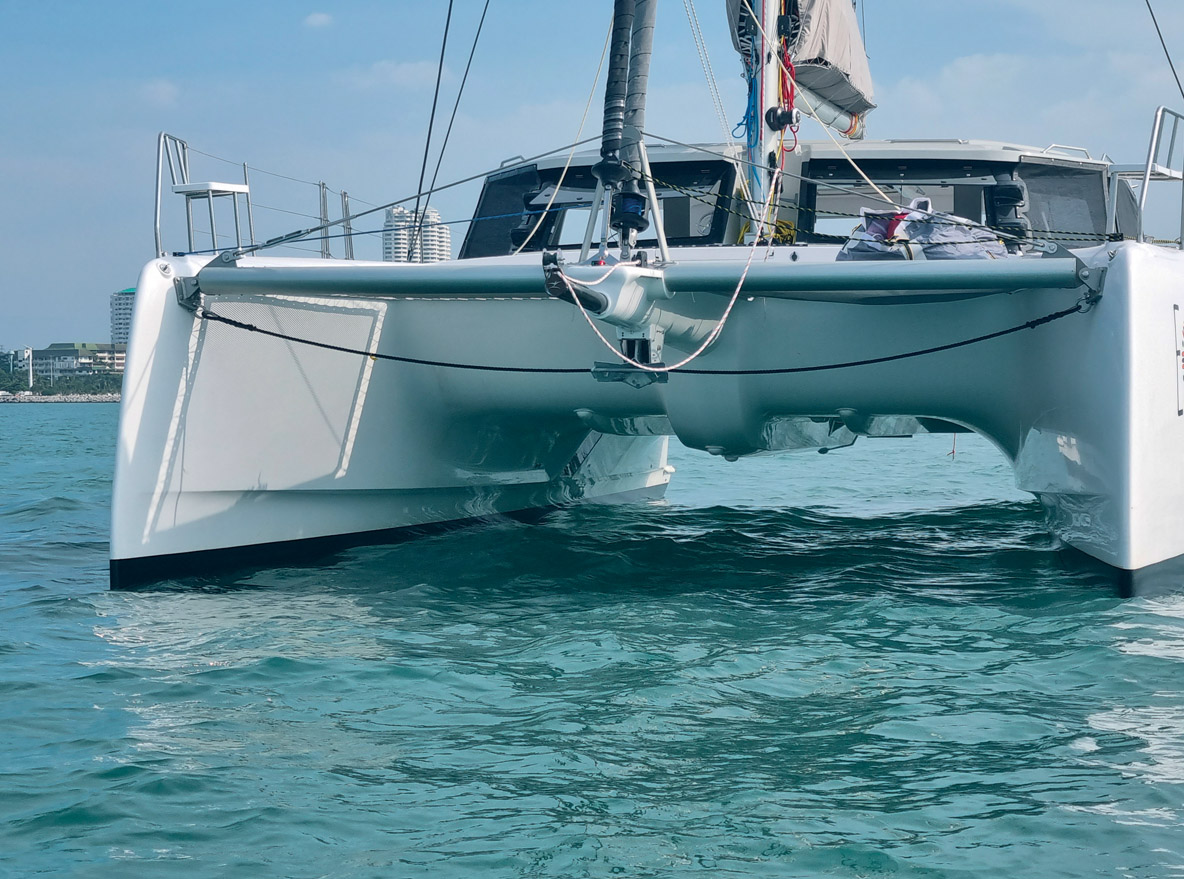
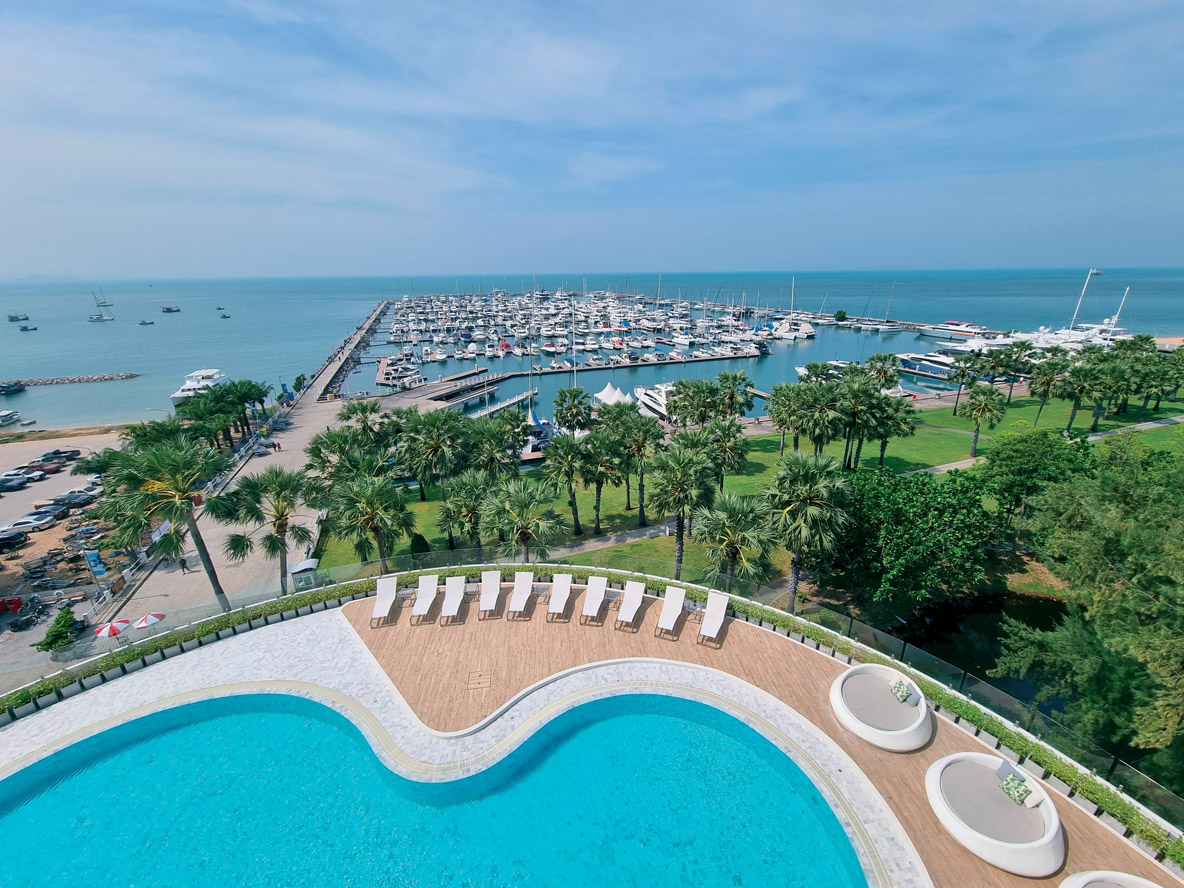
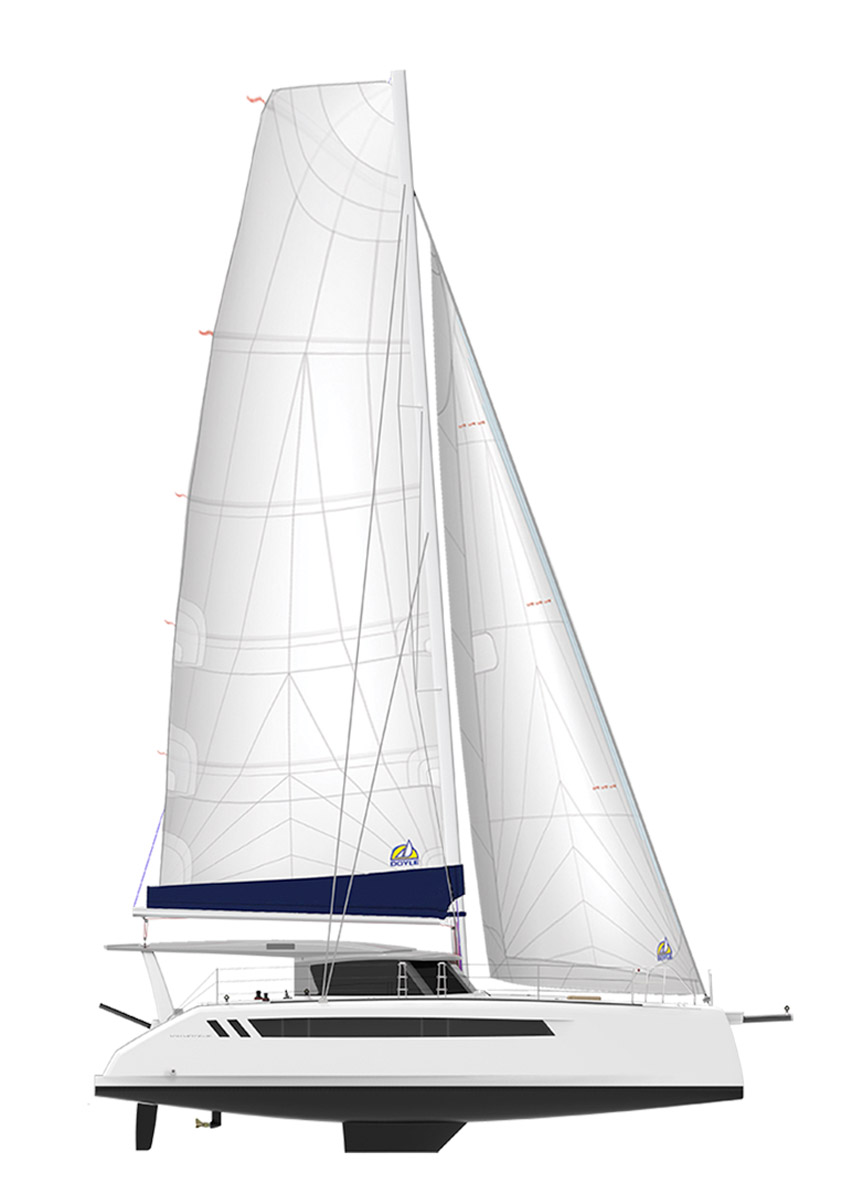
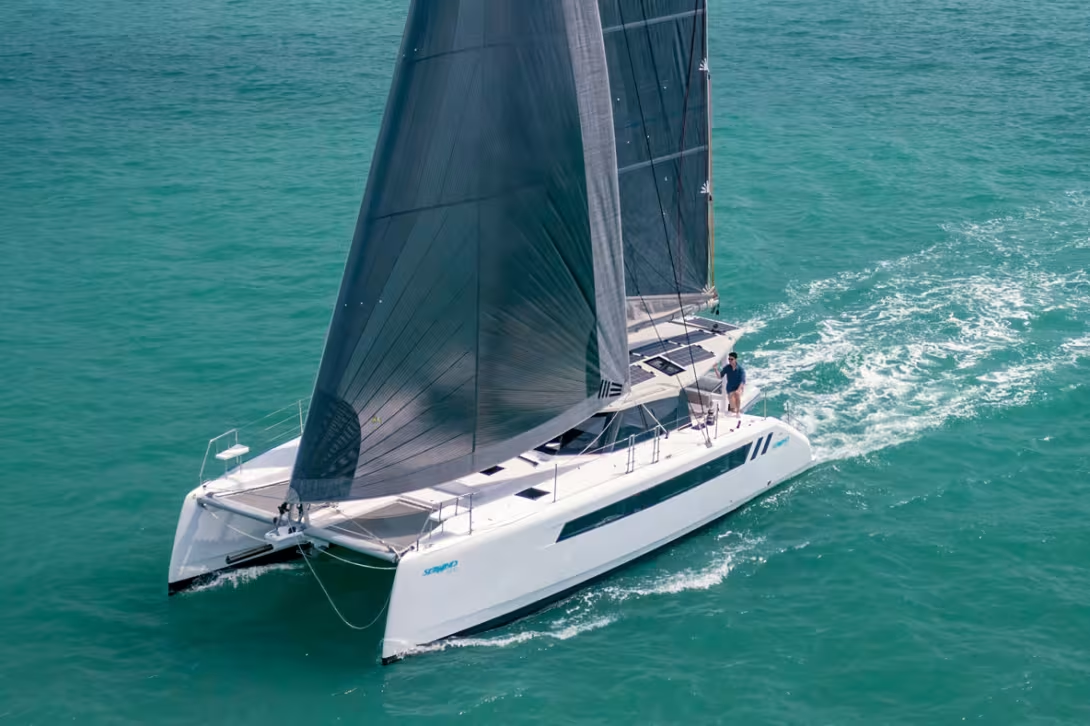
Walking down the pontoon at Ocean Marina, an hour’s taxi ride from Bangkok airport on the Gulf of Thailand, rewarded me with my first sight of the 1370. It was hull number four, with the first hull nearby as well, belonging to YouTubers Ruby Rose. Angled, yet sleek aesthetics with reverse bows, backed-up with infused lighter- weight construction and an extensive sailplan to maximize the wind spectrum, are among the attractions of the 1370. The company’s large and loyal userbase has been keen to upgrade to these new models, as the order book shows, but they’ve had a long wait. Covid had delayed these boats significantly, so it was good to finally see them.
And the setting is superb, at the Australian managed Ocean Marina where ex-Cruising Yacht Club of Australia manager Scott Finsten runs a pretty tight ship. Having raced from here during Top of the Gulf Regattas, it was good to return and board the Seawind 1370 with dealer Brent Vaughan from Multihull Central in Sydney.
First impressions show this 45-footer to have the signature features of the well-proven Seawind brand – trifold doors to maximize access between cockpit and saloon, along with twin helms for easy handling. In the cockpit the 1370 has transom seating beside the electric barbecue hotplate with sink on the opposite quarter. Protecting the cockpit is a wide fiberglass targa walkway - a similar setup to previous models which includes the mainsheet track, controlled by a neat targa-side winch.
Carbon davits support the substantial dinghy and swim access is good on both hulls with wide steps and a ladder.
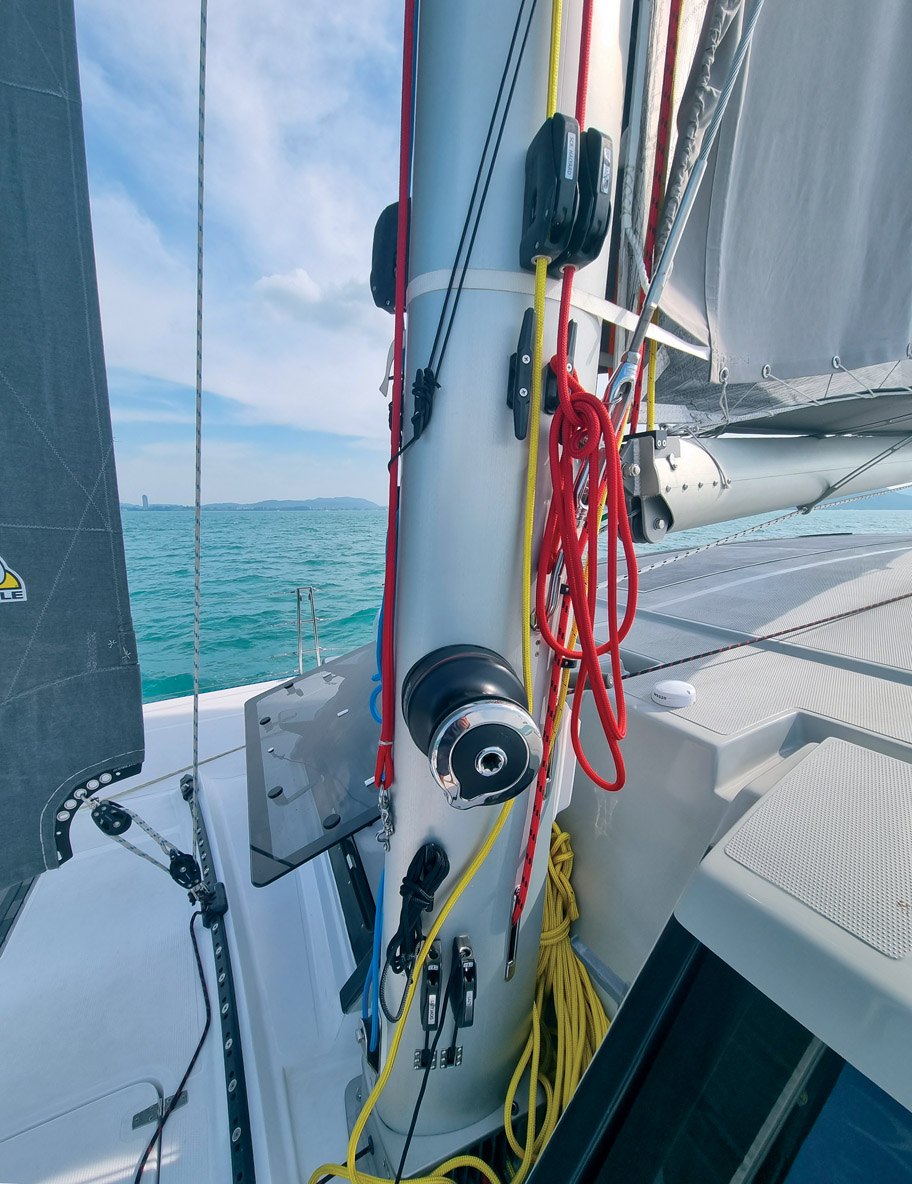
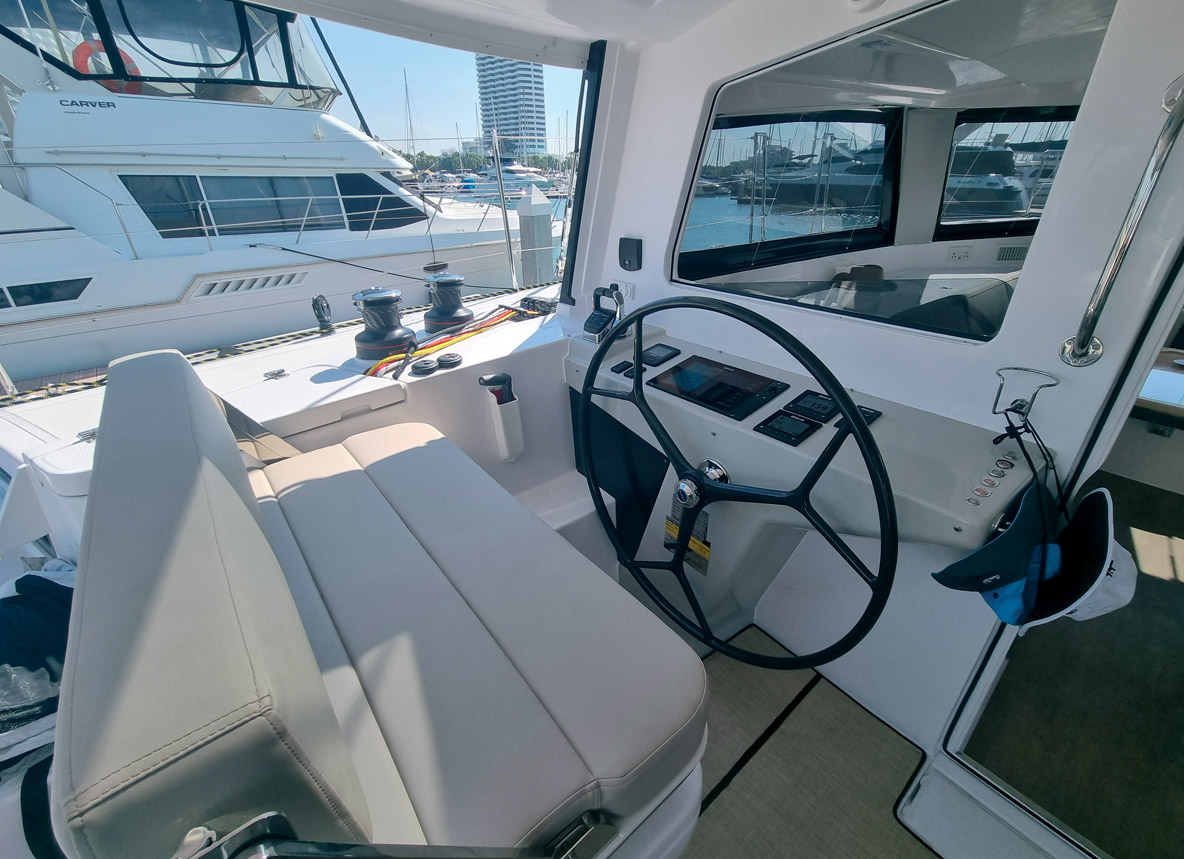
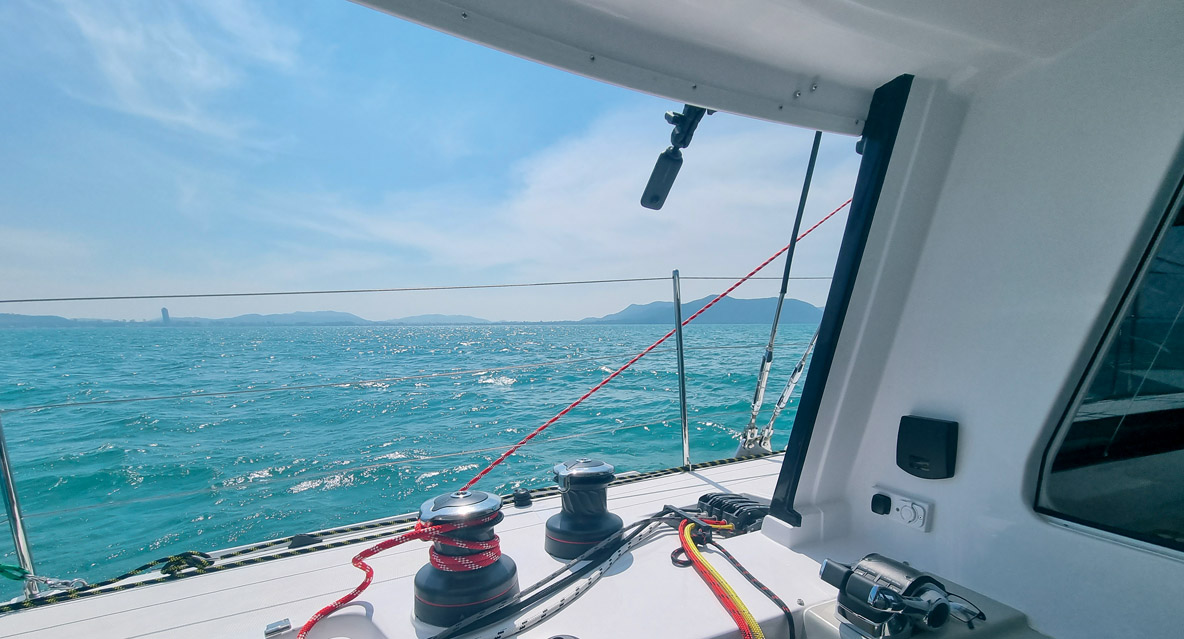
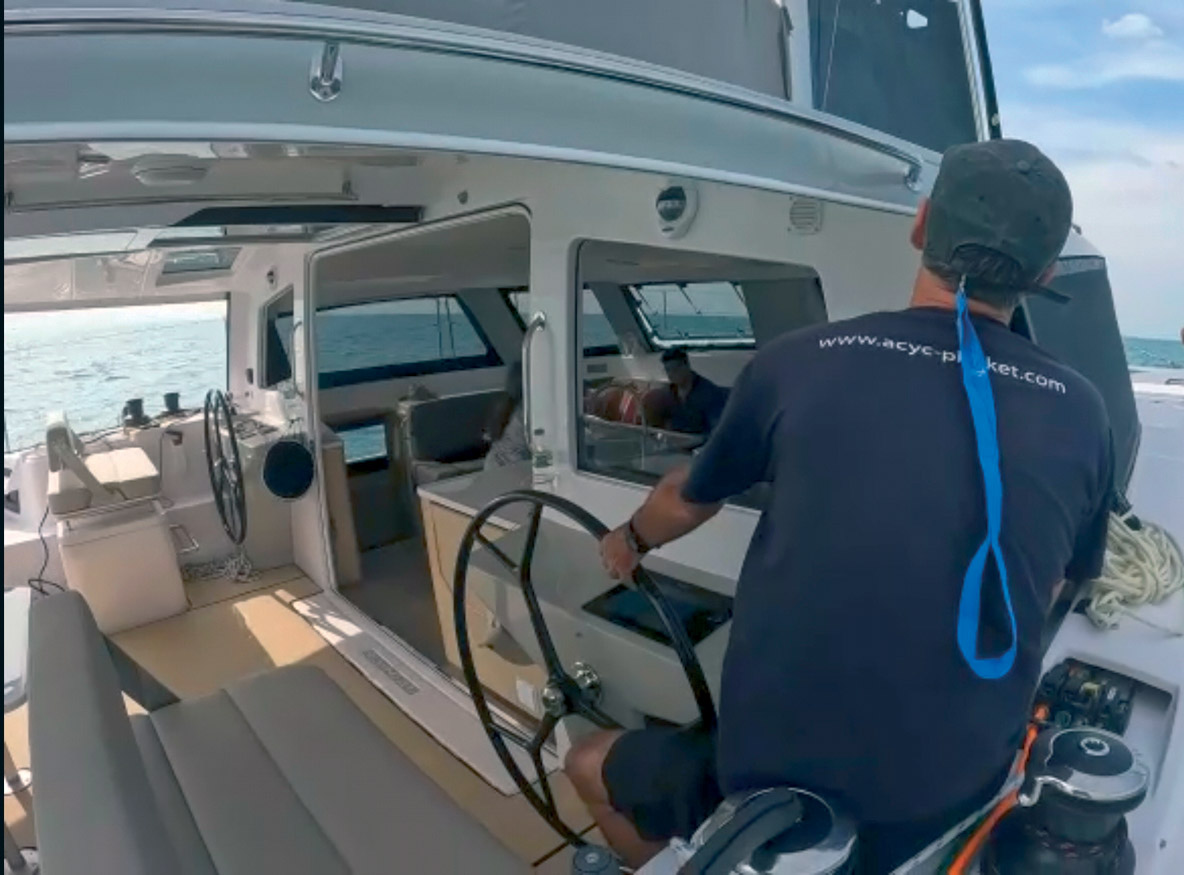
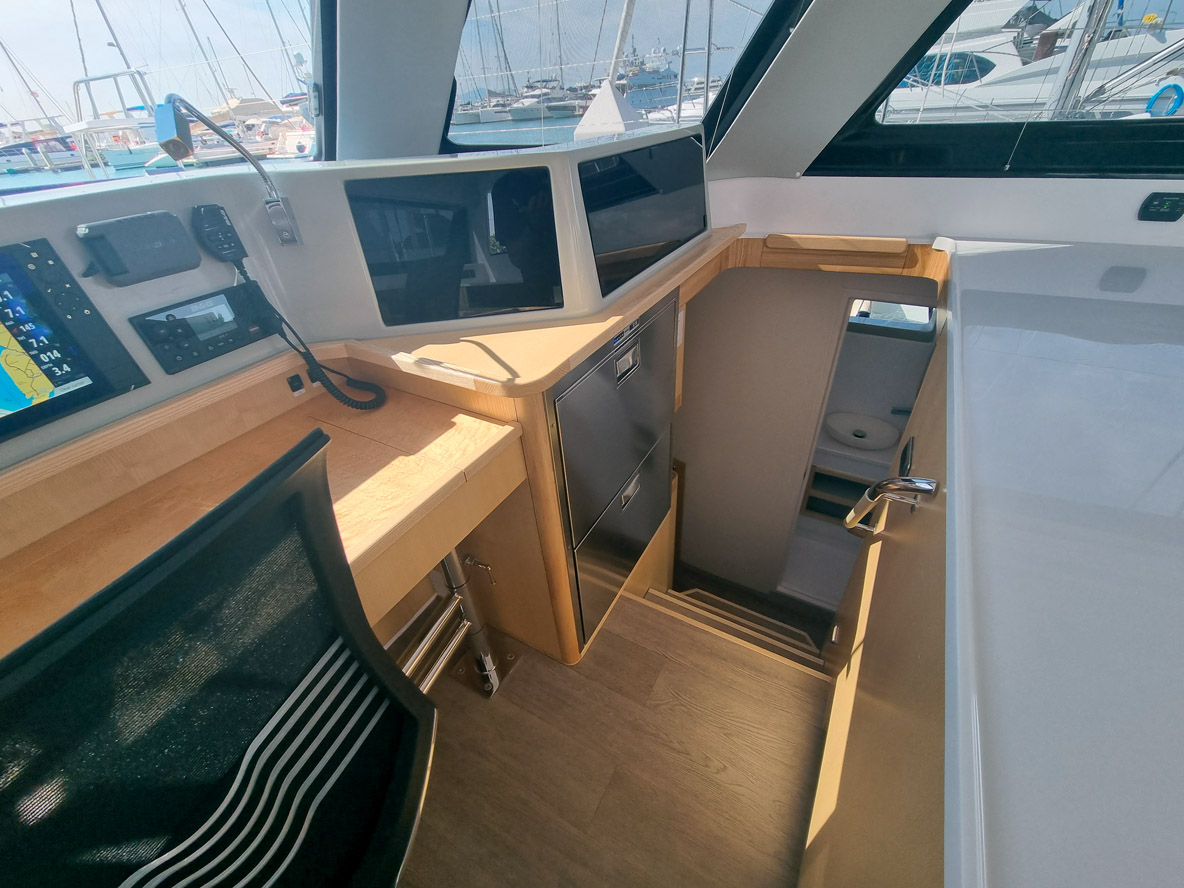
At the Seawind’s twin helms, B&G electronics are used throughout with a 12-inch plotter and readouts on both sides. The helms are well shaded by the hardtop targa, but wisely, skylights above each give a view of the mainsail, and the adjoining saloon windows drop down electrically for clear views forward. The review boat came with twin electric Harken 50 winches each side with adjoining jammers, plus another winch on the mast for spinnakers.
As we found during our sail, this entire arrangement worked well, with both the sheltered helms comfortable and the running rigging controls all tidied into rope boxes. Another plus was the flat combings which allowed the steerer to sit out and adopt a more race-style posture. Also handy when docking are throttles on both sides. Good design is evident throughout this area, including the moveable helm backrests on the double seats, beside the Lewmar GRP steering wheel; the latter an improvement on the metal ones used on earlier boats.
A nacelle bathed in light
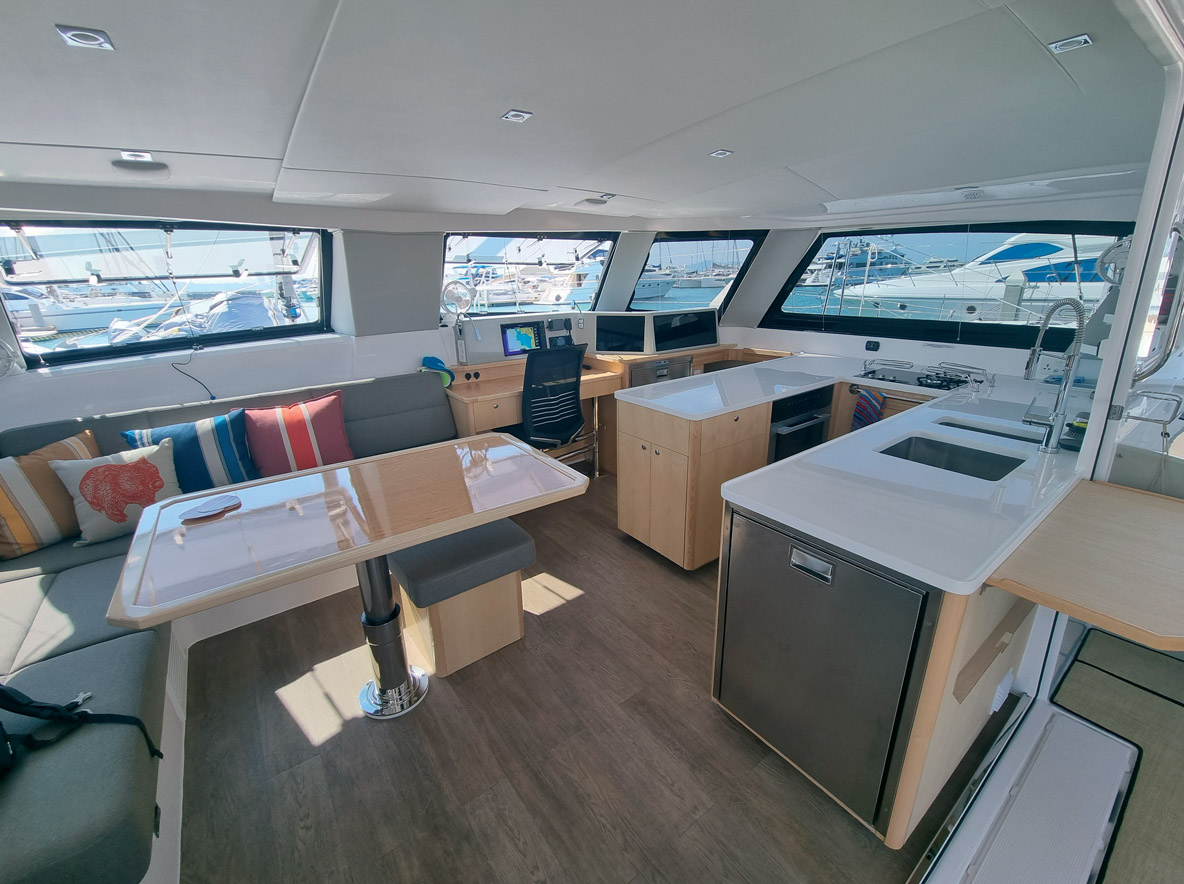
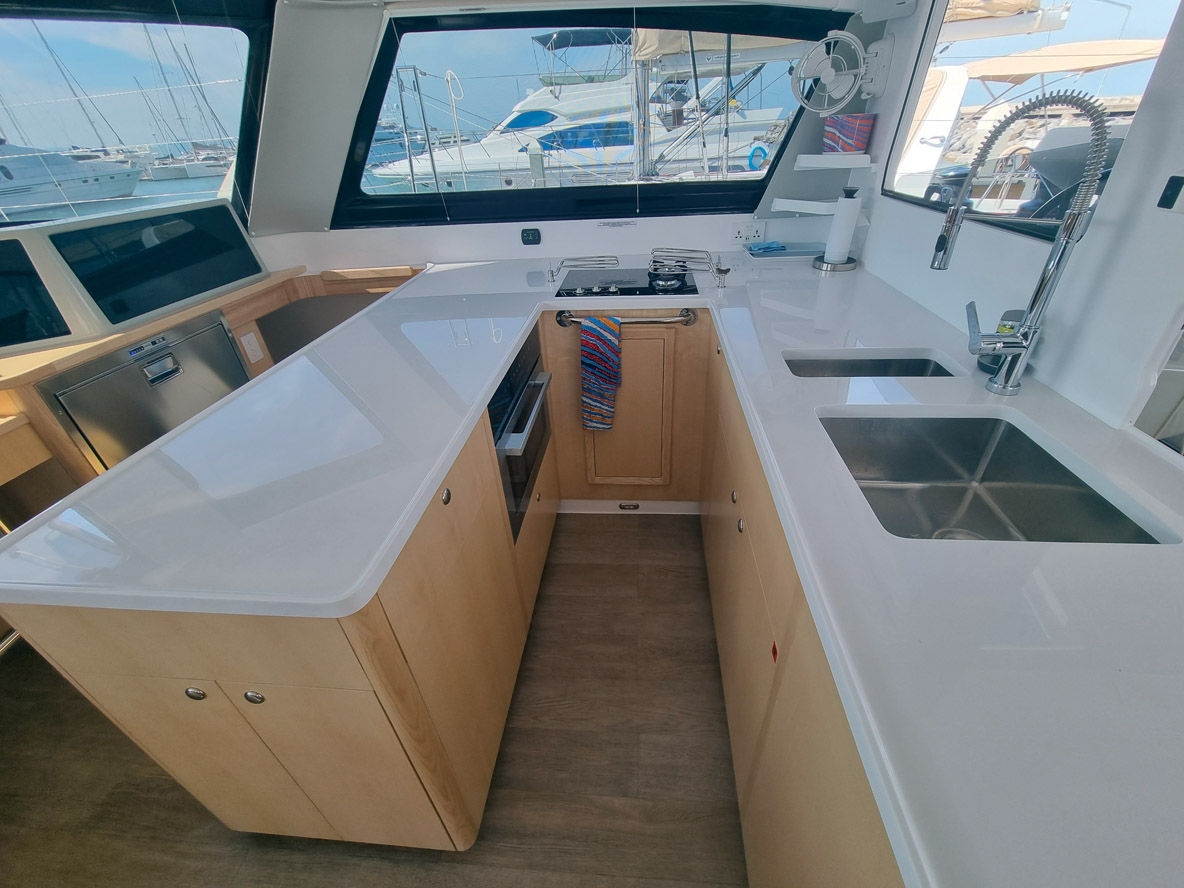
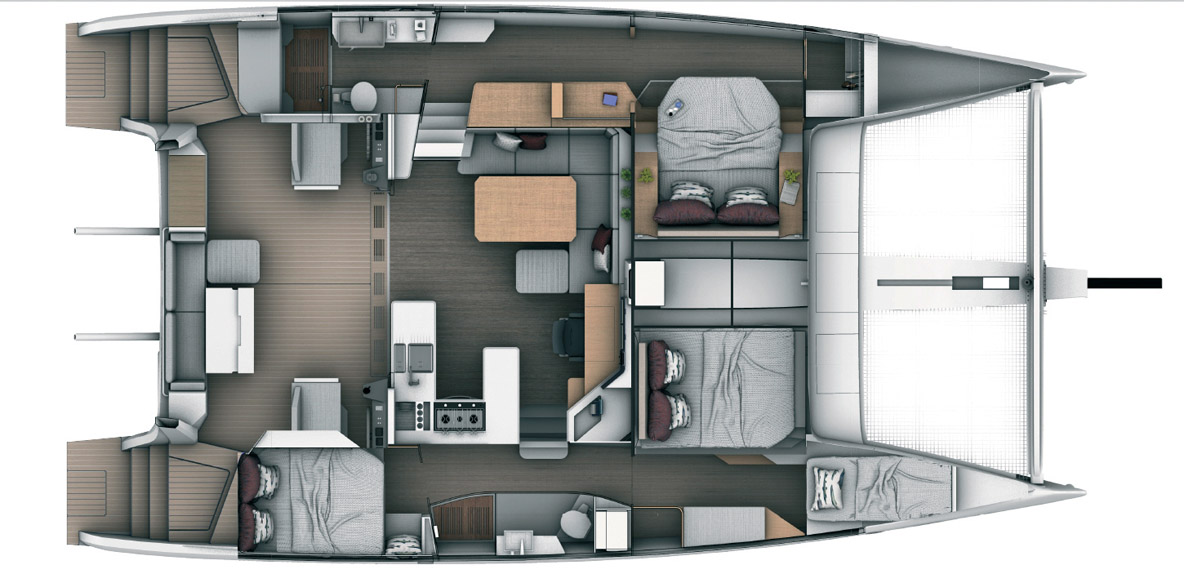
Inside the saloon, it’s a busier space than previous models because the company has adopted the fashionable galley-up arrangement over previous models where it was installed in one of the hulls. This means the starboard-side contains the U-shaped galley with navigation station in front, where views are superb, thanks to tall windows and generous headroom of 6’10” (2.1 m). The lounge doubles as a daybed with elevating table around the bench seating, while opposite nestled into the aft bulkhead is the television. Quality finishes are evident all around the area with Sunbrella coverings and polished solid wood rounded finishes. Sloping bulkheads forward reduce windage and large, opening windows give the essential airflow. The aft facing galley has panoramic views from the twin sinks which could persuade even the most reluctant crew to wash the dishes. Alongside them is the three-burner gas hob and oven. Good design points here include a large chest freezer and equally large opening fridge. The entire area is surrounded by ample synthetic worktops and cupboard space as well, and all below eye level to maximize the views.
A proper suite for the Owner
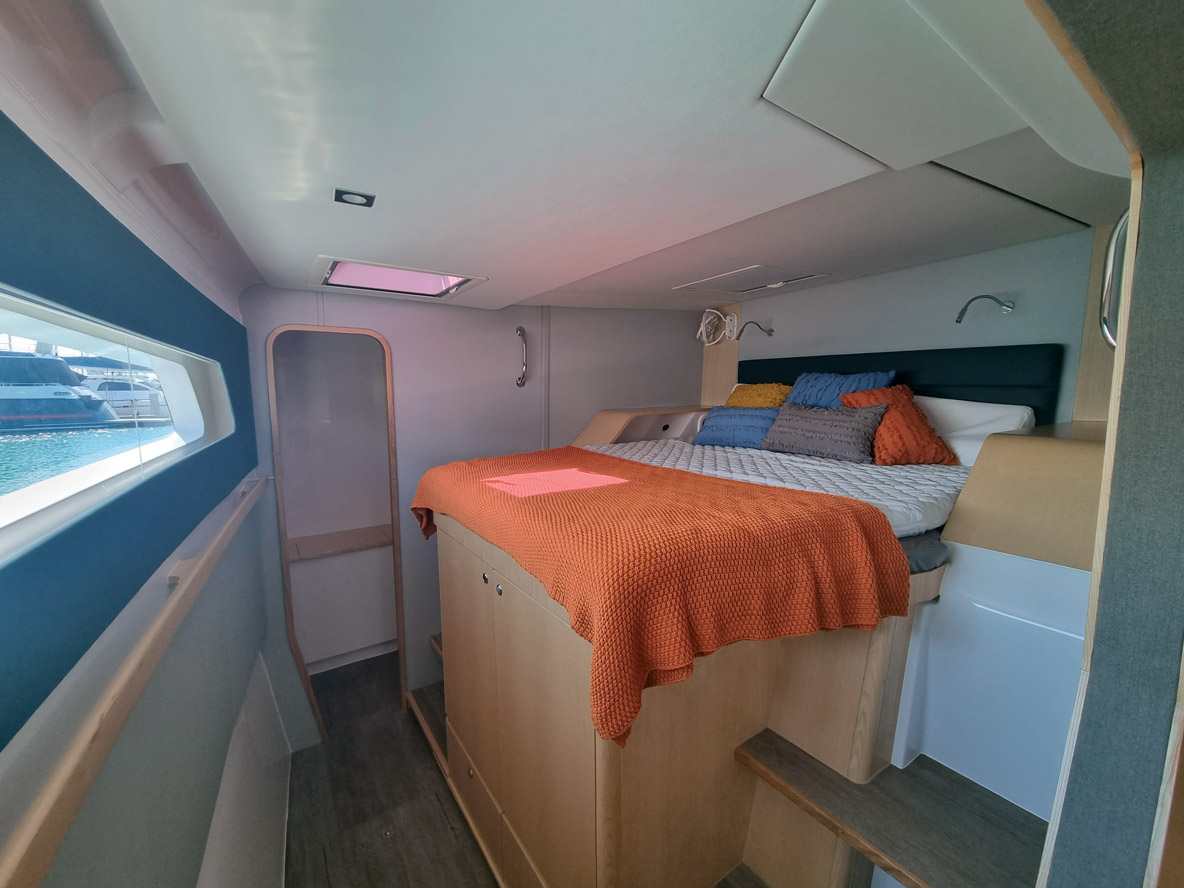
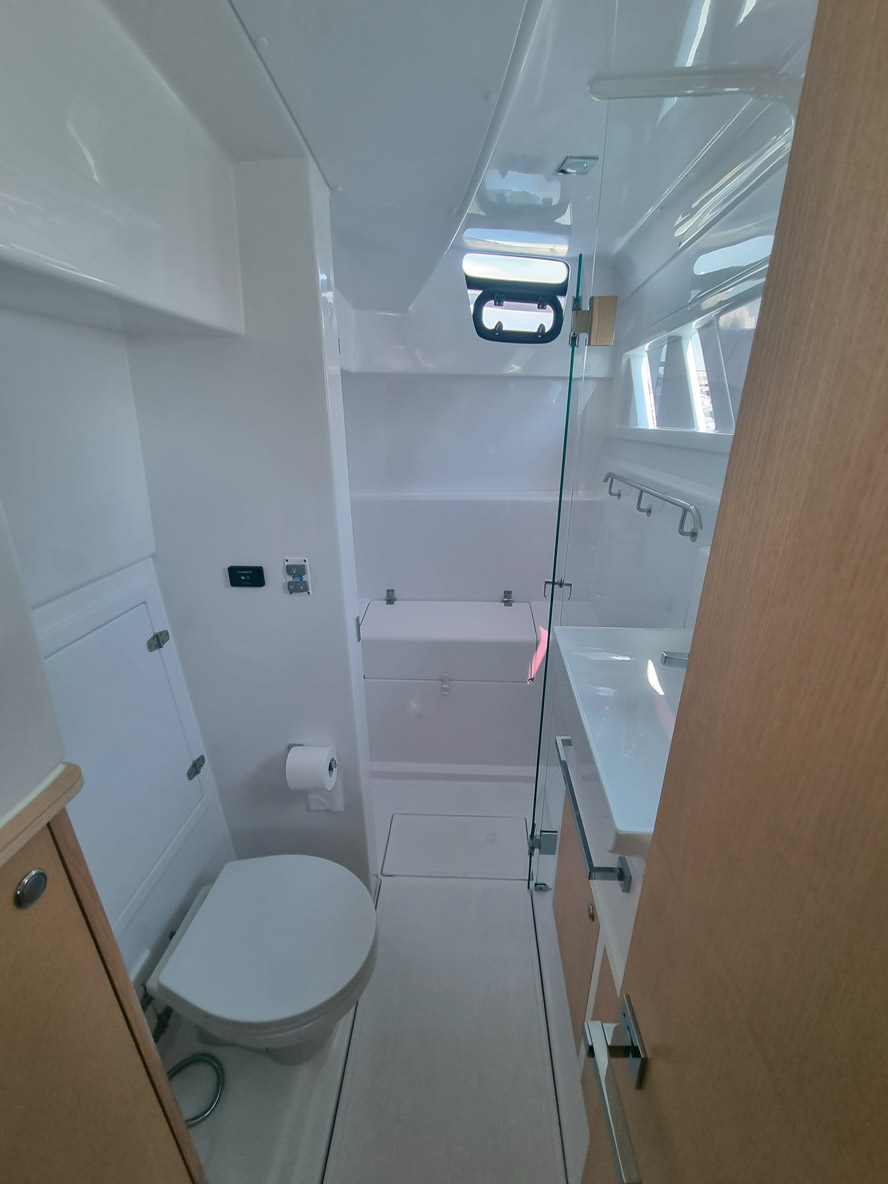
The three-cabin layout dedicates the port hull as the owner’s suite while on starboard are two cabins with bathroom between. Privacy is one of the big pluses with accommodation on catamarans and the portside owner’s suit on the 1370 does this well, with the forward athwartships island bed and stern bathroom a very pleasant area, plus the option for a small vanity or office space in between.
Outside views are excellent down here, thanks to large windows and ventilation is also good, as an opening side hatch is fitted to both hulls. On starboard, there’s a double cabin aft with a single berth forward, completing a highly functional layout. A lightwood finish of Ash laminates throughout the interior contrasted nicely with the ambience from neutral-colored soft furnishings, proving that it’s not just big European builders that can turn on the style. European CE standards apply to these boats, so an escape hatch is included in each hull, an essential for a bluewater sailing catamaran of under 20 tons.
Easy circulation thanks to tidy topsides
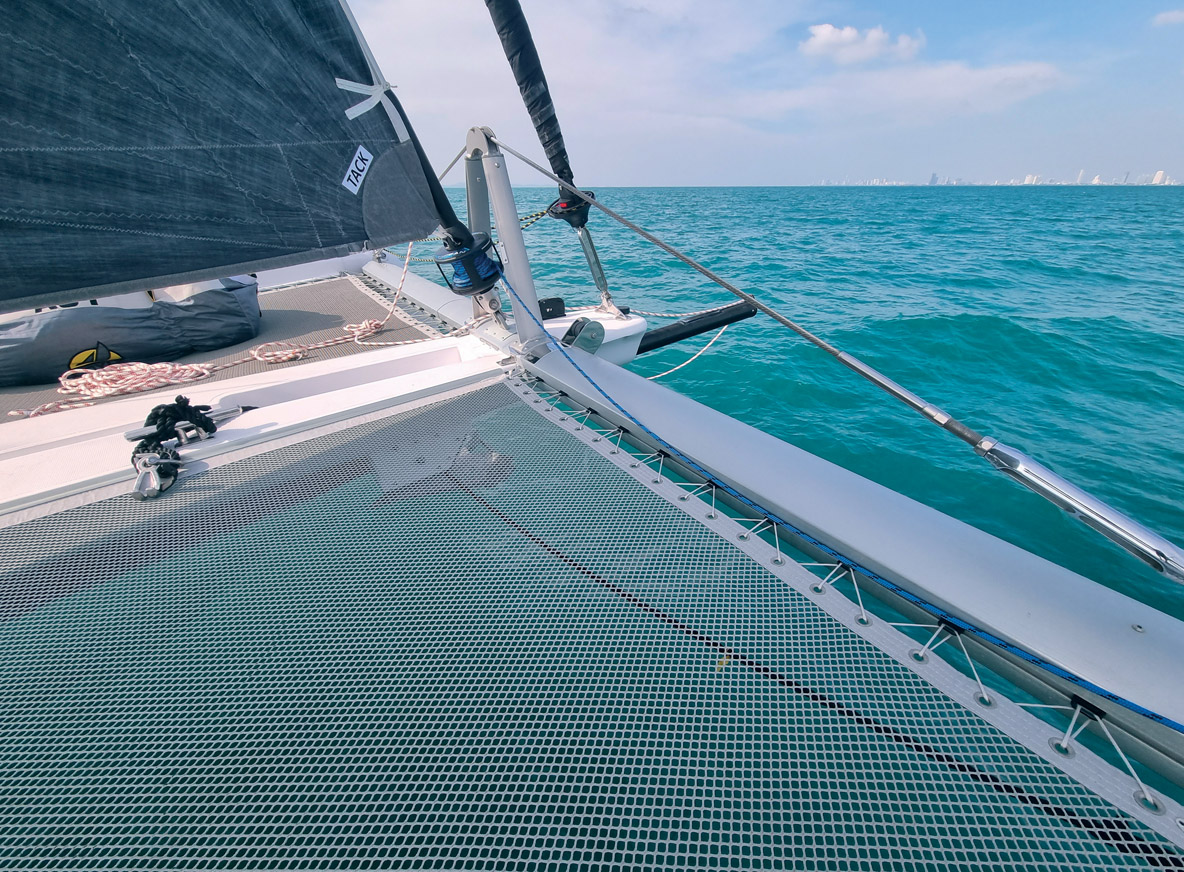
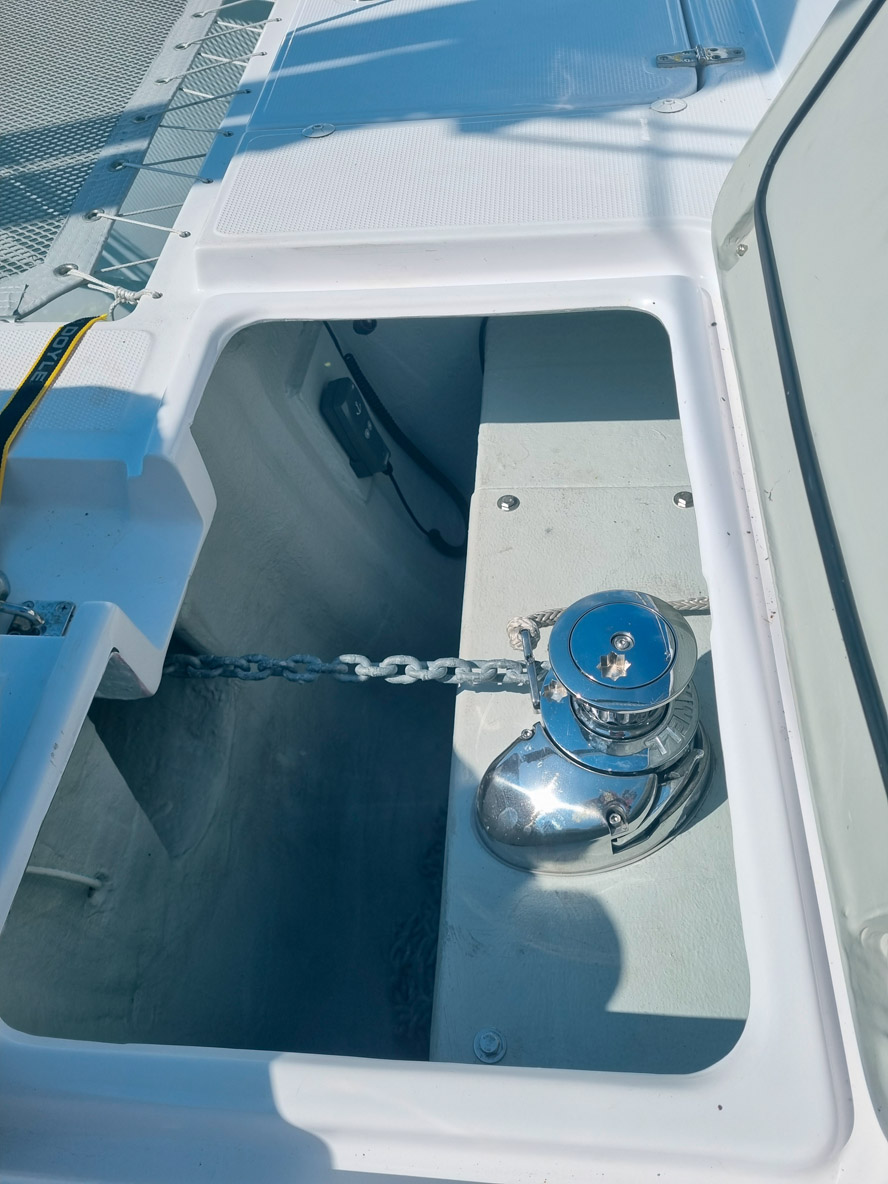
Moving forward is easily done on the 1370 thanks to wide and flat side decks with support both from the coachroof handrail and lifelines. The forward area is uncluttered with all systems in lockers, including the Maxwell vertical windlass with primary rode (260 feet / 80m of galvanized chain and a 66-pound Excel anchor) running below the main cross beam and there’s a secondary roller installed. Cleating was all round, including midships but a slightly undersized for my liking. Nearby is the track for the self-tacking jib, yet another useful cruising feature of the 1370, that rolls out and once set allows you to forget about. The square-topped mainsail fitted to the review boat was an upgraded Doyle Racing Laminate performance cruising cut with full battens, sitting in lazy jacks. Single line reefing, again all operated from the cockpit, finished off a functional sailplan. For off-the-wind running, big sail options include an asymmetric and screecher with bowsprit. Holding all this up are Dyform wire outboard shrouds with substantial chain plates molded into the gunwales, attached to a single alloy spreader mast tube from All Yacht Spars in Brisbane, Australia.
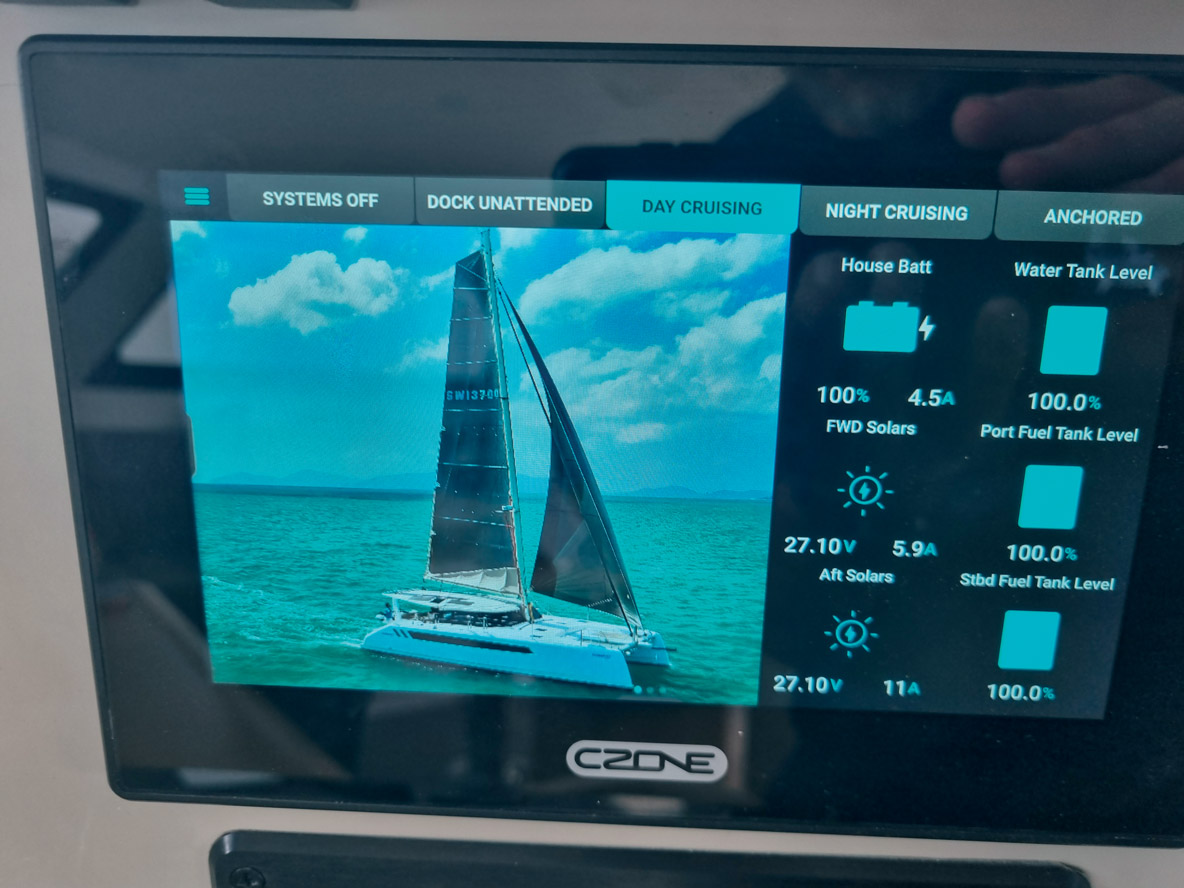
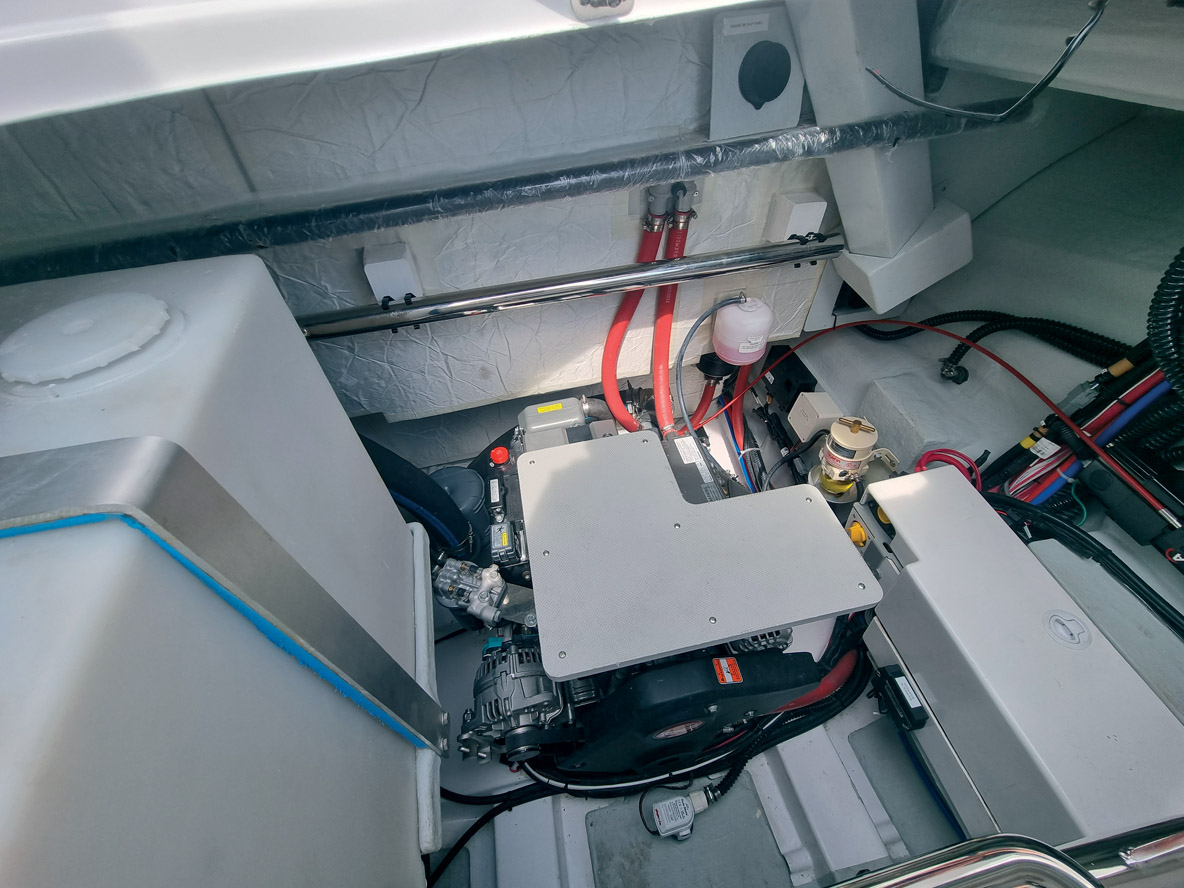
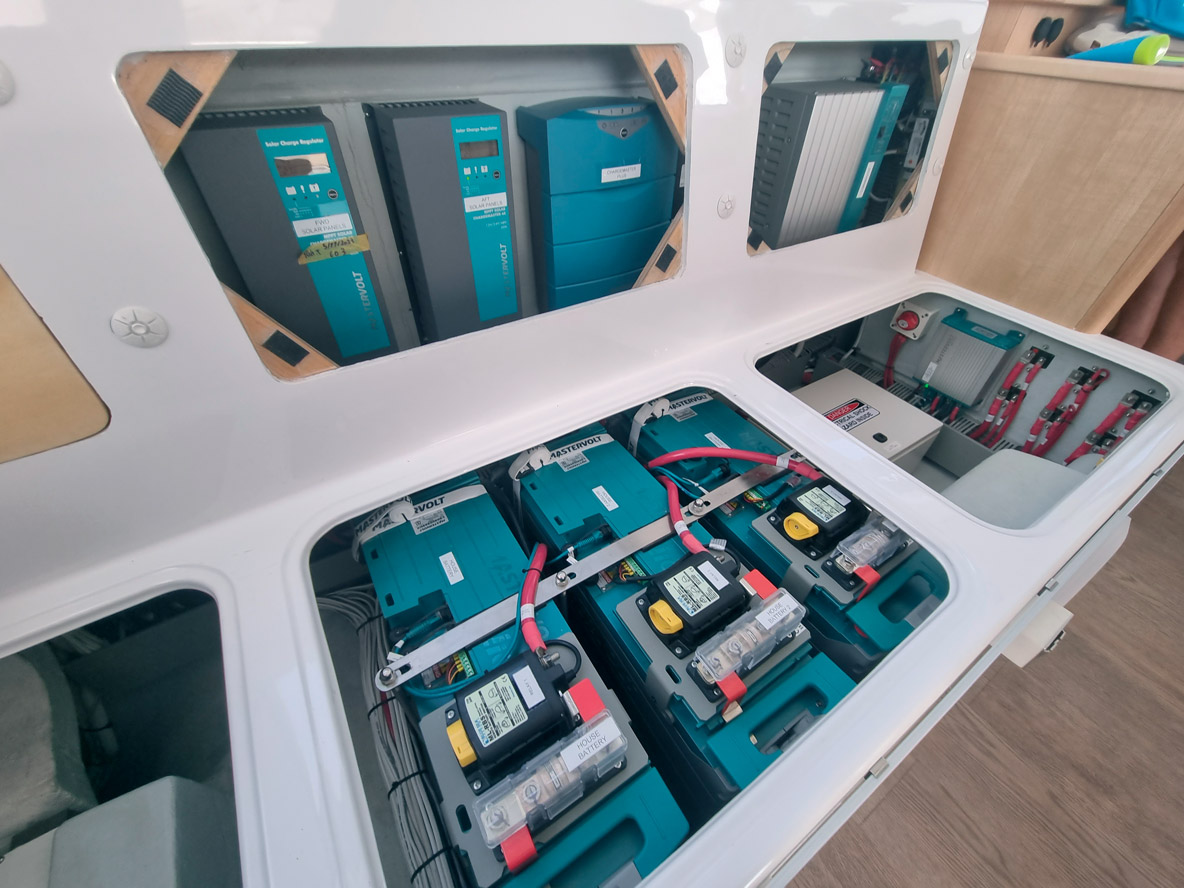
The GRP hulls are fully foam cored which both creates strength and more inherent buoyancy, while the infusion build has also been refined to include triaxial fiberglass cloth in key areas. The 1370 uses mini keels which protect the sail drives when beaching. Importantly, there’s ample bridgedeck clearance (33” / 0.85m) to give an easy motion, as long as you don’t overload it. Engine access is from both on deck and behind the bathroom bulkhead with the two 57HP Yanmars service points all accessible. The sail drive legs have twin bladed folding Gori propellers with overdrive to enhance efficiency while minimizing drag. Electronics and systems have had a major upgrade, with Czone digital switching installed – which allows software menu modes to be simply chosen and giving enhanced error checking. Married to this, on our review boat, was a bank of three 400-amp lithium house batteries in the nacelle along with a large inverter; able to run white goods, should you want to avoid installing a generator. Fast and wide-spectrum charging are what you pay for with lithium batteries. Aircon is another tropical nicety, and a 32000BTU/24V system was fitted. The entire installation is top quality Mastervolt branded. In addition, the vast roof space on the saloon houses soft solar panels.
Sailing the wonderful Gulf of Thailand
Racing the Gulf Regattas has been one of life’s joys for me over the decades but taking time to cruise here was something I was looking forward to on the Seawind 1370. Departing Ocean Marina, the horizon is dotted with islands to the west and to the south, brooding peninsulas rolling all the way down to the Cambodian border. A region of vast possibilities for the cruising sailor if they choose to do a factory delivery here from Seawind, as the Sydney couple David and Olivia did. Motoring along with twin 57HPs at cruising speed showed a nippy 7.3 knots as the Yanmars spun at 1,700 rpm. Turning into the wind, we slowed and rolled the main halyard onto the electric Harken to quickly hoist the mainsail before reaching off, while unwinding the screecher. Sitting at the helm I glance through the skylight to check the mainsail telltales, as we accelerate in the 14-knot breeze, doing 8.7 knots on the beam reach. The light but positive feel of the helm, thanks to the Lewmar hard linkages, rewarded my efforts of trimming and steering.
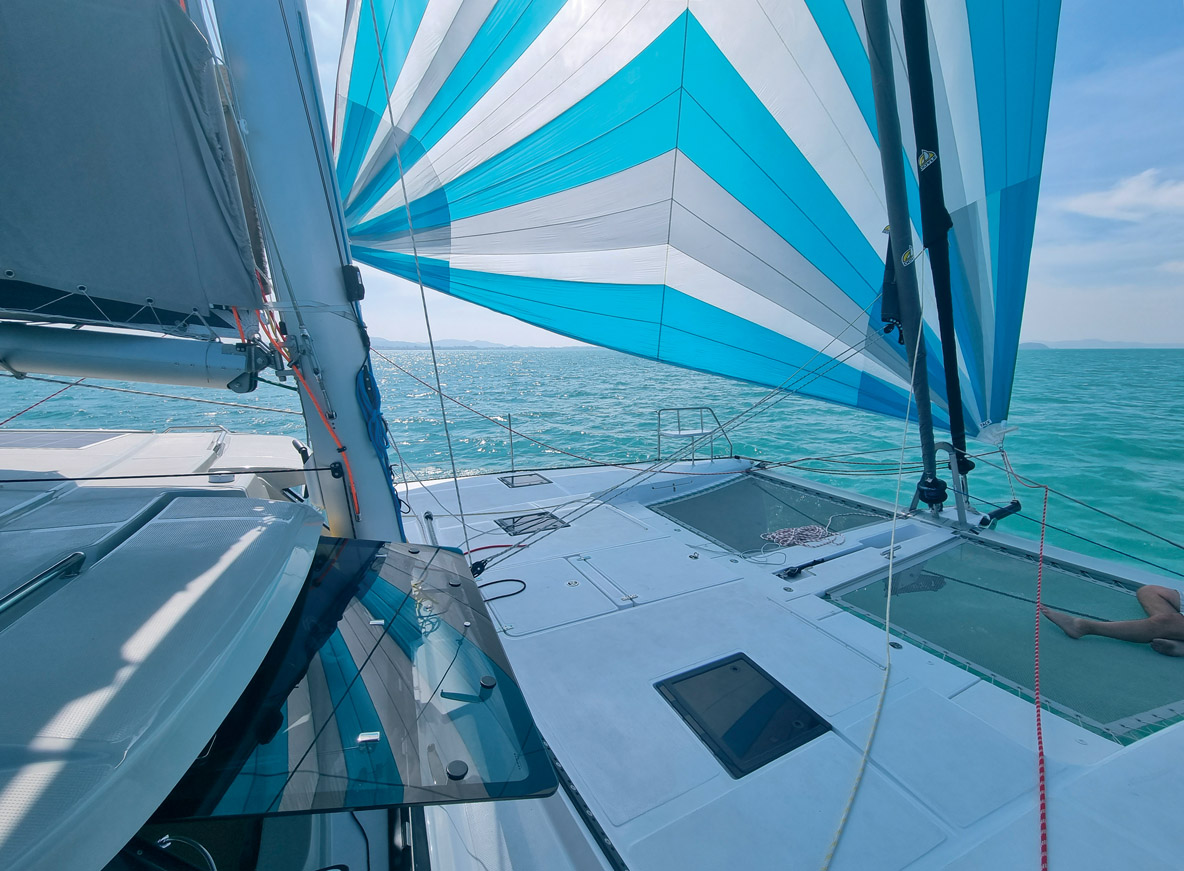
We were heading for the famed Monkey Island, so had to be prepared for fury boarders should we anchor too close. Meantime, there was some dodging to do among the myriad fishing gear spread across our path, so it was good to have clear views through the saloon to the bows, via the windows of the 1370. As conditions quickly eased, our crew hoisted the asymmetric in its snuffer and we put the wind well behind the mast, running at 120 degrees in 11.5 knots of wind which showed 7.1 knots boatspeed, quickly taking us to the lee of the island. Here the Maxwell windlass did its job, allowing us a relaxed lunch break and a view of the jungle clad island hills and the strange wild sounds emanating from them. I felt like sailing for another two days to the picturesque shores of the Koh Samui island group and perhaps a wild night at the Full Moon Party but alas we had to up-anchor and beat homeward. Thanks to the self-tacking jib, this only required me to occasionally turn the wheel, spinning the hulls round without the need to touch mainsheet or jibsheet.
Conclusion
Easy-as, sums up this new cruiser from Seawind that’s as capable as it is comfortable. The model we tested was easy to use, but also to live aboard, with great interior space and a very neat finish. This is the perfect multihull for family cruising.
Excellent performance
Serious build quality
Reduced number of berths
Cleats too small
Technical specifications
Design: Seawind Catamarans
Overall Length: 45’ (13.7 m)
Waterline Length: 45’ (13.7 m)
Beam: 25’ (7.6 m)
Draft: 4’3” (1.3 m)
Air Draft: 70’10” (21.6 m)
Bridgedeck Clearance: 33” (0.85 m)
Displacement: 24,250 lbs (11 t)
Engines: 2 x 40HP Yanmar (Optional 57HP fitted to our test boat)
Fuel: 158 US gal (600 l)
Water: 158 US gal (600 l)
Mainsail: 861 sq ft (80 m²)
Jib: 387 sq ft (36 m²)
Price: from $ 820,000 ex-tax, ex-works Vietnam
Price of the boat we tested: $ 1,160,000