In their twenty years of constructing highend custom catamarans, Sunreef have built themselves a unique and enviable place in the world of multihulls. The Polish brand, founded by Frenchman Francis Lapp, has made a global name for itself and now aims to combine luxury and ecology. Is the innovative Sunreef 80 ECO trying to solve an impossible equation? We went in search of the answer in the waters of the Persian Gulf.
Test location: Dubaï
Conditions: 5 to 10 knots of wind, calm sea

Infos pratiques
- Le chantier : Sunreef 80 Eco
- La fiche technique
-
 Découvrez notre vidéo exclusive
- Financez votre Sunreef 80 ECO
- Assuez votre Sunreef 80 ECO
- Articles autour du Sunreef 80 ECO
Metallic navy blue
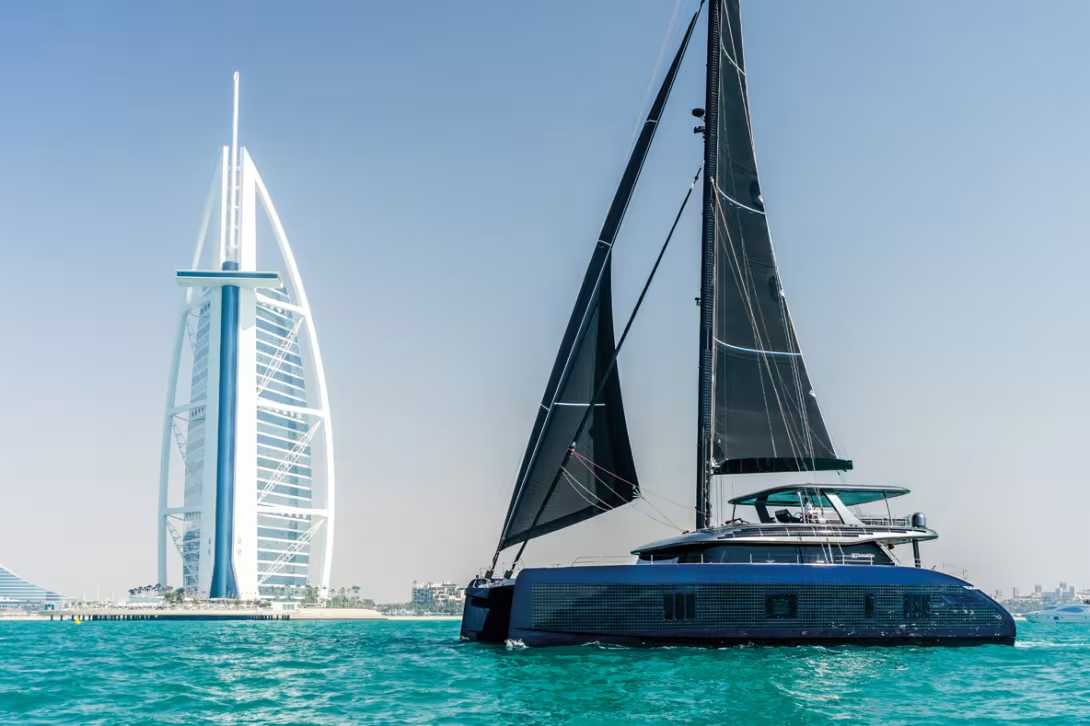
Here in the Dubai Marina district, near the artificial islands of Palm Jumeirah, the first Sunreef 80 ECO finally fits perfectly into its environment. Everything in Dubai about excess, whether it’s the length of the pontoons or the relentless heat, but it is in a small car, electric of course, that we arrive at the Marie-Joseph. Her name sounds very French in this globalized world. It is a nice tribute that the owner of the shipyard paid to his parents: he gave their first names to his first personal Sunreef. For the event, the family made the long trip to the United Arab Emirates from France. This catamaran is worth the trip: electric propulsion, intelligent energy management and new solar panel technology, the “green touch” is clearly in evidence. Her metallic navy-blue livery integrates the photovoltaic cells, making the 80 ECO shine like a thousand lights under the Gulf sun. But this large catamaran requires constant attention from her crew to keep her perfectly clean out here in this environment: the very dry air is often saturated with sand dust.
 |
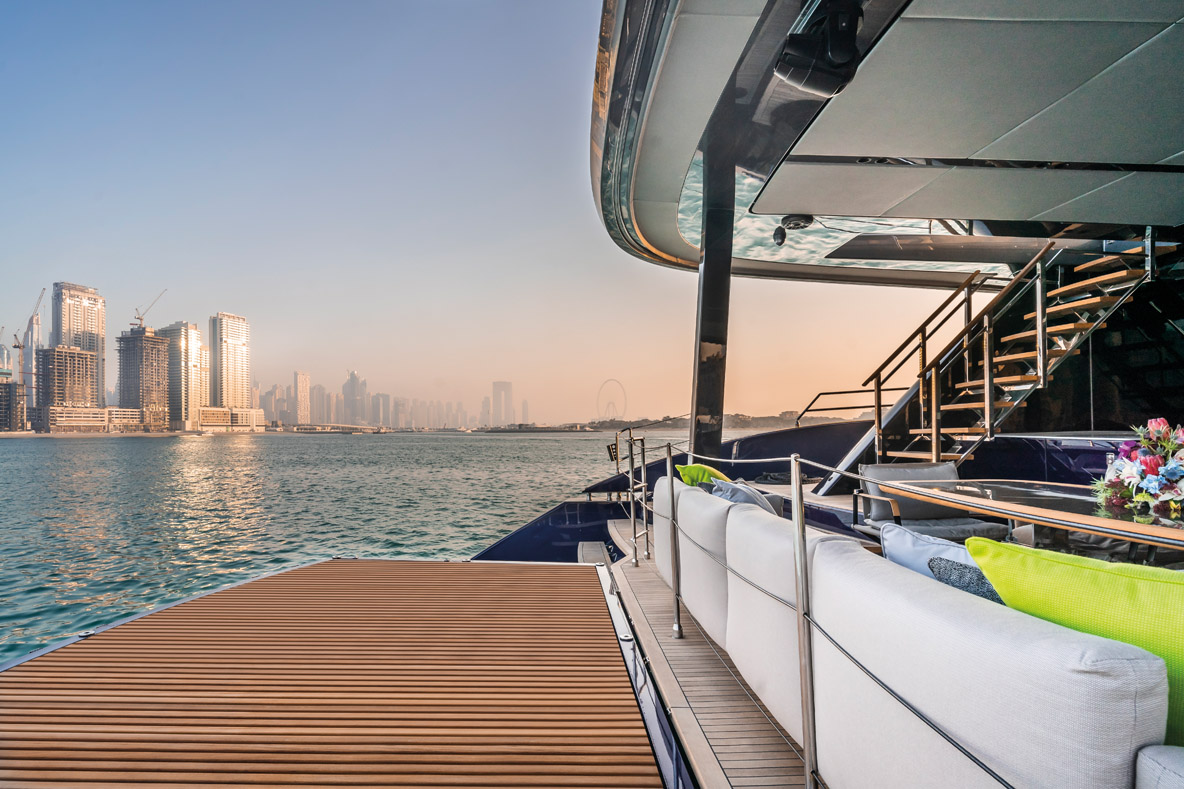 |
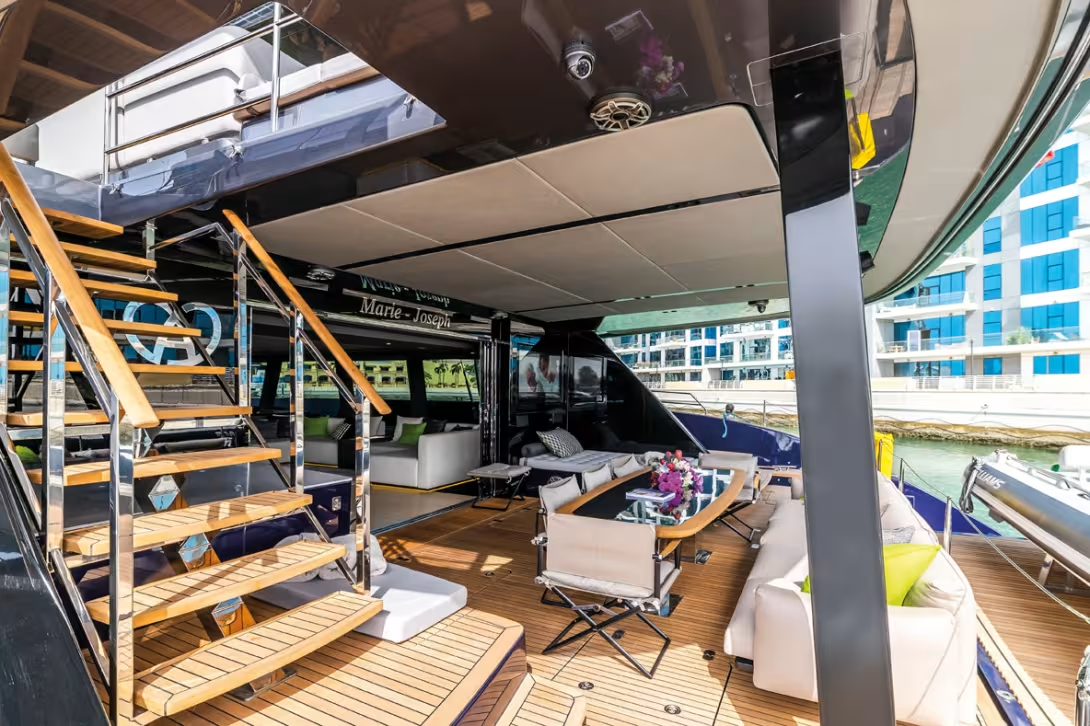
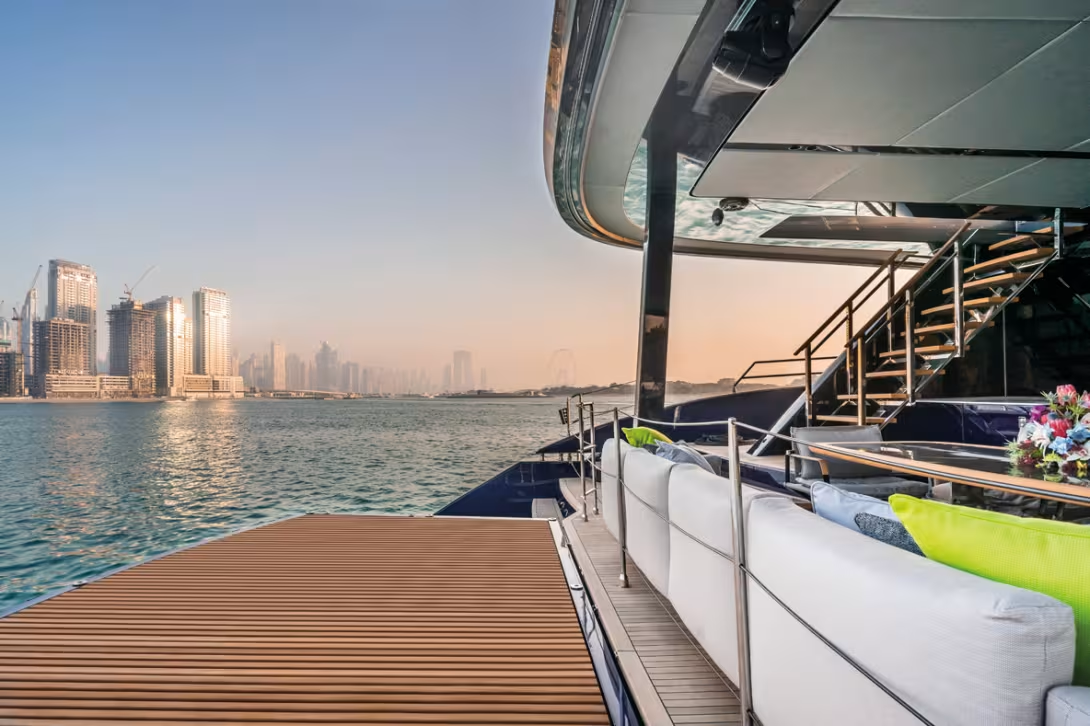
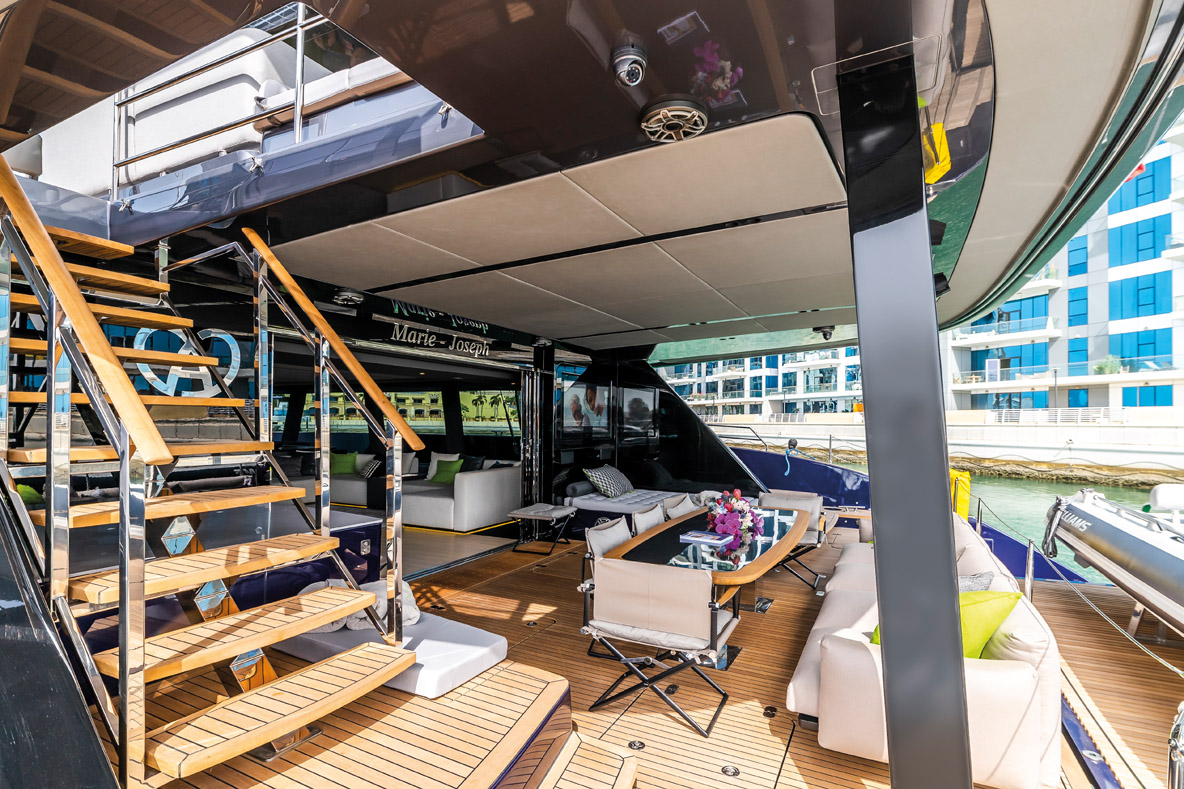
The aft cockpit opens onto a huge hydraulic platform.
Two 180 kW electric motors
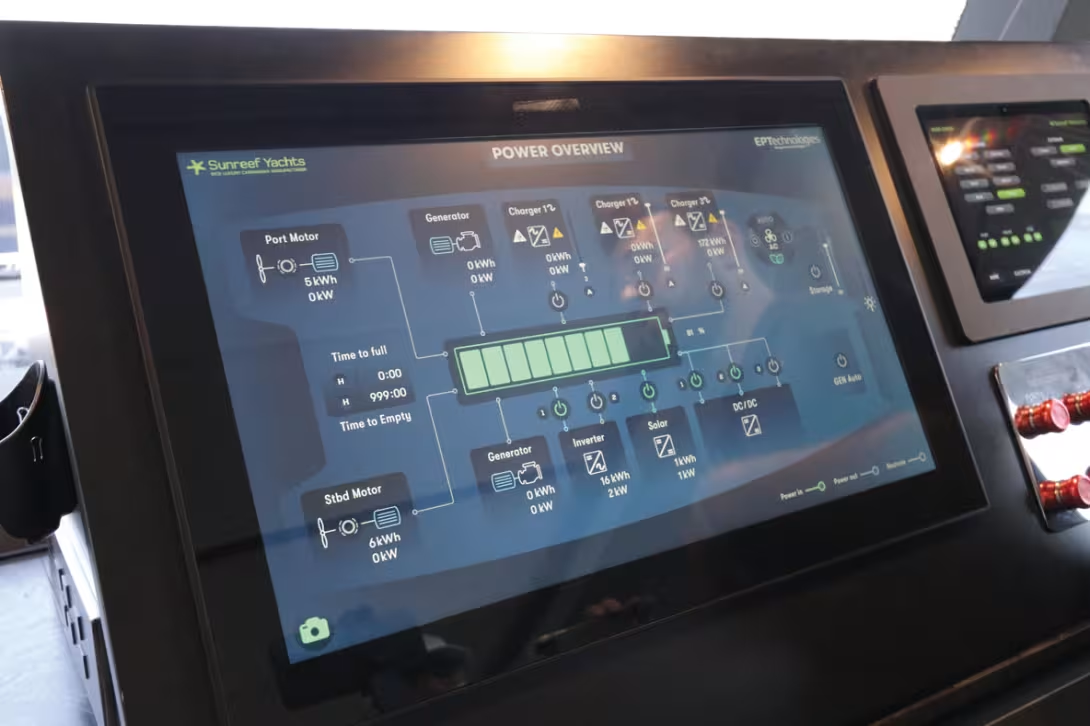
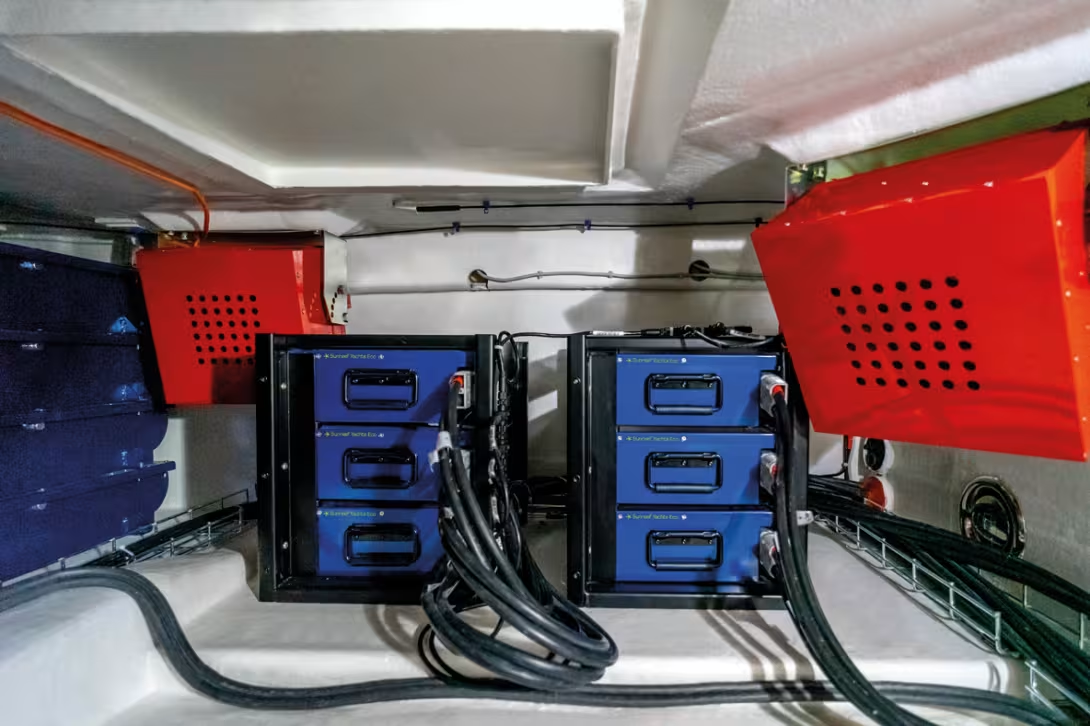
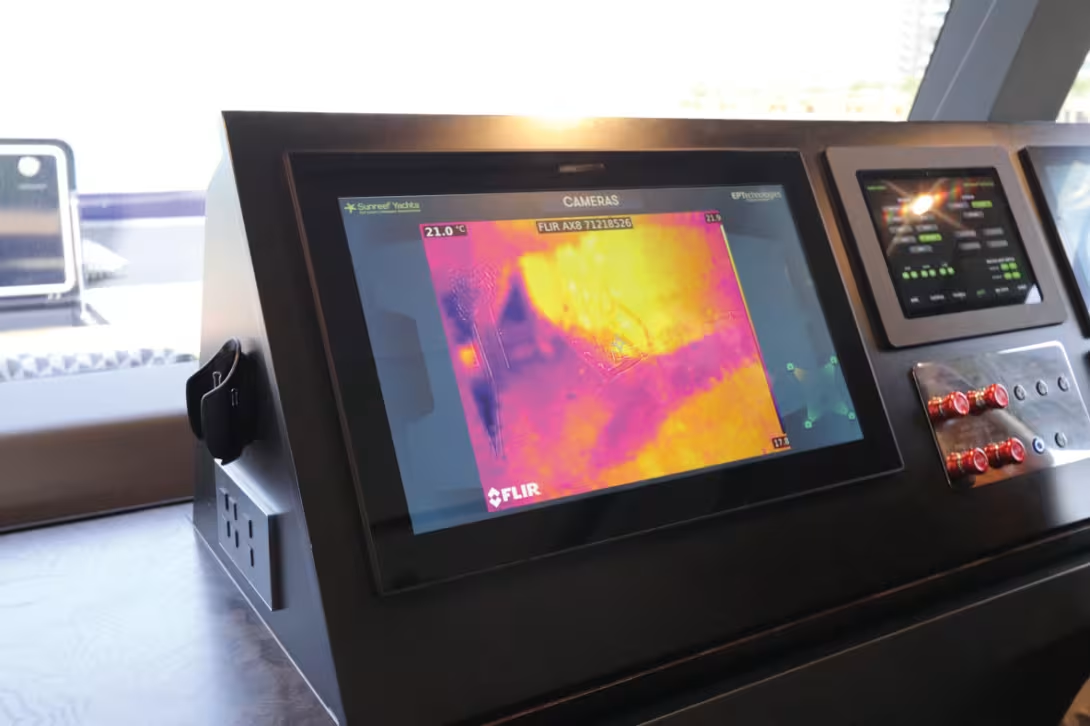
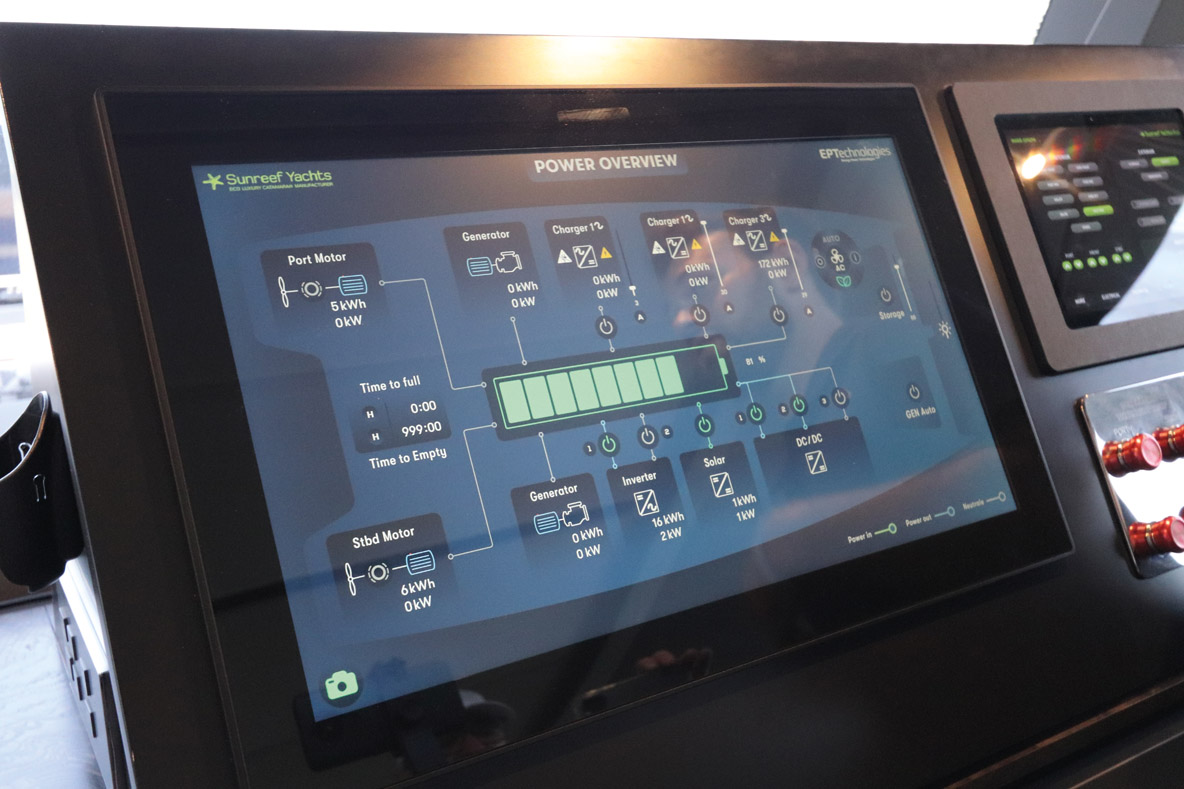
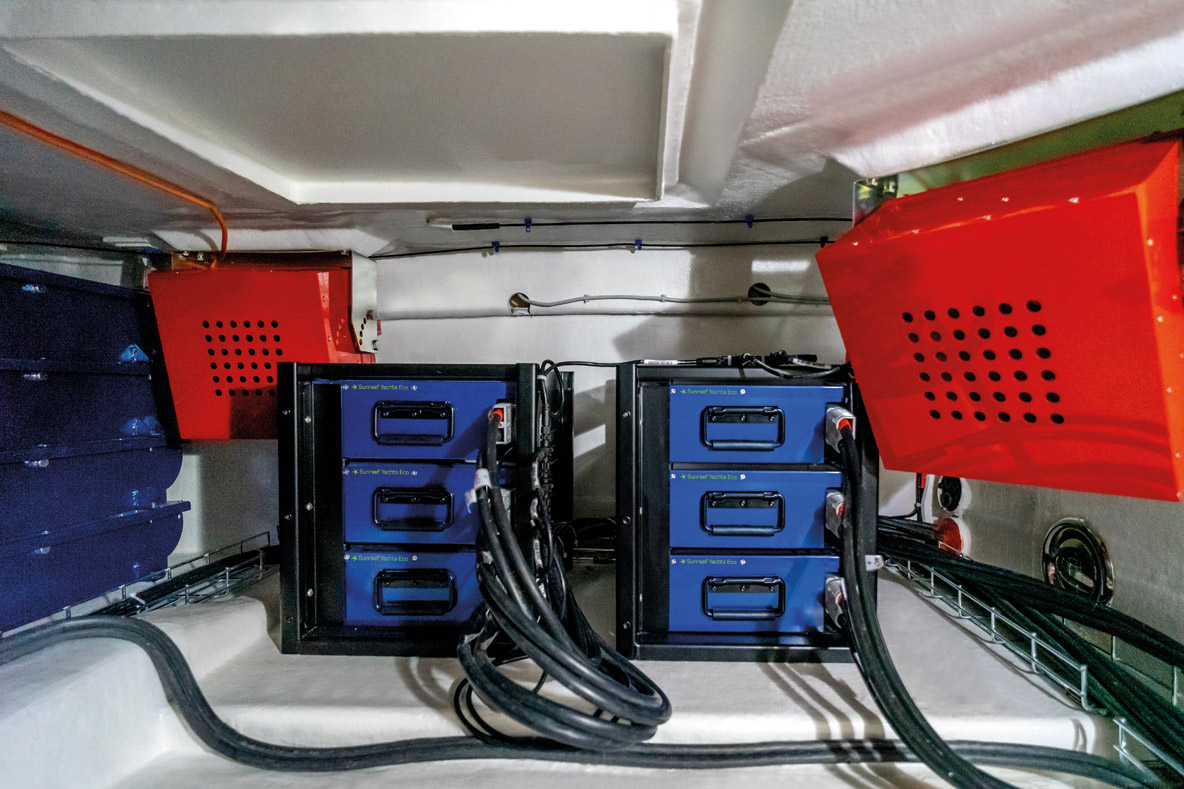
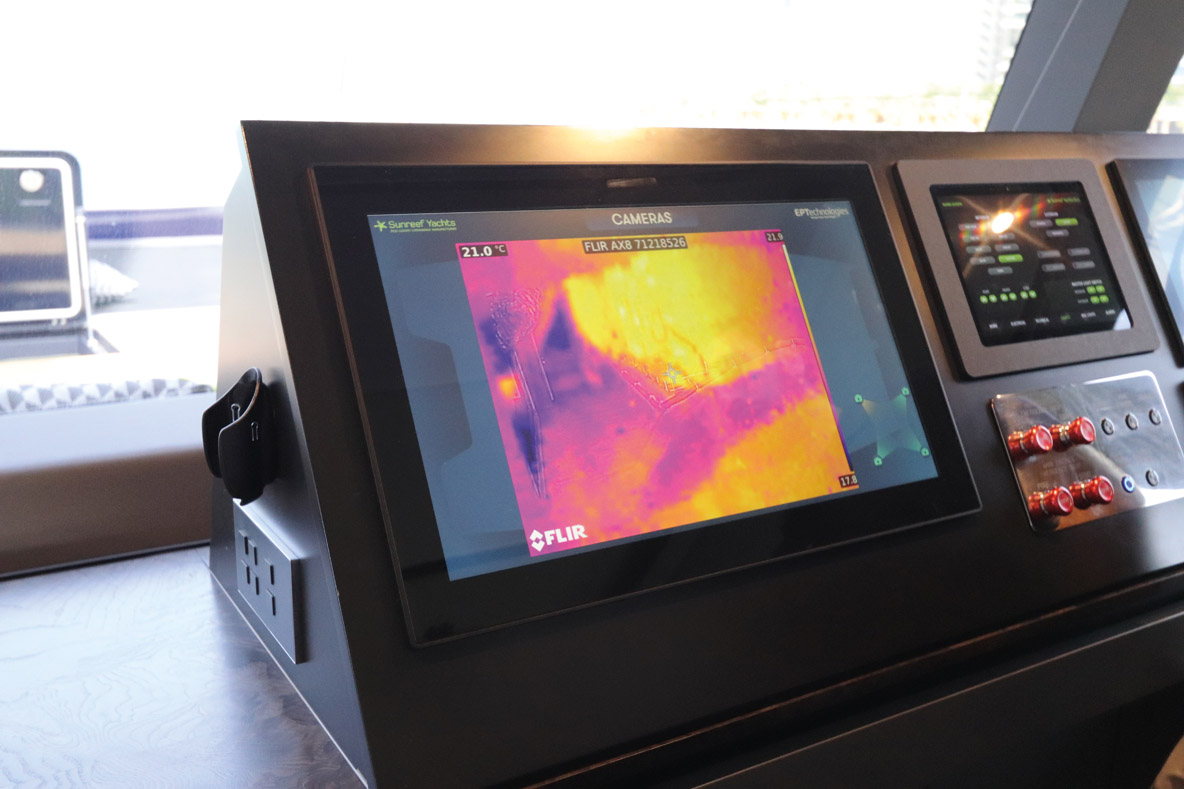
From the interior helm station or from the flybridge, the large touch screens allow you to control and monitor all on-board functions from the two 180 kW electric motors to the opening and closing of the electric curtains. The ergonomics and the reactivity of the interfaces are really a credit to the shipyard. Initially, Francis Lapp did well in Poland in the field of electricity for the construction industry, so it’s not really surprising to find such knowhow in this field on board Sunreefs. Three years and six months after presenting the 60-foot electric yacht “E” in Cannes, we can see just how successfully the technology has been mastered. What’s more, operating everything is really quite intuitive. Monitoring of the main battery bank, composed of 5 lithium units of 183 Ah at 600 V each, is of course the cornerstone of the system. State of charge, discharge, temperature, voltage, consumption - all the information is immediately accessible and easily readable in figures or graphs. With fingertip control, you can switch to the page for the two electric motors. Like the batteries, whose compartment is air-conditioned, they are monitored by thermal cameras that will detect any abnormal rise in temperature. Between the marina and the anchorage, 6 kWh will be spent on one and 5 kWh on the other. The difference can be explained by the departure and arrival maneuvers in port that solicited the engines unequally.
But through this interface produced in-house by the shipyard, all technical monitoring of the multiyacht is also accessible at any time: diesel tanks, fresh water, waste water, pumps, lighting, navigation lights, and so on. Delivering a catamaran that is certainly innovative but reliable was a major challenge in order to satisfy a clientele used to perfection. Many functions therefore incorporate redundancy, with one piece of equipment in use and another on stand-by, but immediately available. This is the case with the inverter, working off the 24V batteries to power lighting, electronics, electric blinds, etc. Somewhat more incongruous: aboard this boat, which prides herself on being ecological, two generators have been installed. So far, they have not been used, says the skipper. Obviously between the Dubai sun and regularly hooking up to shore power, the need has not yet been felt. Though in the event of the batteries’ amperage dropping too low, a generator would start automatically. Manually switched on for demonstration purposes, it turns out to be absolutely inaudible in its double cocoon. When this test starts, the 1,720 sq ft (160m²) of solar panels fitted to this big catamaran already provide 2 kW. The sun is however veiled by the sand kicked up by an unexpected breeze. At anchor, during the day, even with the air conditioning on, the production of the solar panels is able to surpass the consumption of the boat when conditions are good. In Dubai, this is when the wind comes from the open sea and drives the sand out of the atmosphere.
The charging power, thanks only to solar energy, has already risen to 9 kW and could theoretically reach 20 kW. On board the Sunreef 80 ECO, there are solar panels everywhere and this is one of the most striking advances. But in addition to covering an exceptional area, these panels have unique characteristics: they are thin (less than a millimeter thick), as strong as the composite hull, flexible, relatively light at 0.3 lbs per square foot (1.5 Kg/m²), and of course, efficient. No existing units met these demanding specifications, so Sunreef embarked on a new business by designing - and now manufacturing - their own photovoltaic cells. It comes as no great surprise to find them on the bimini, nor on the windows - although the visual effect is striking. On the other hand, it is unprecedented to find solar panels covering the hull topsides and even more incredible on the carbon mast, which is conductive. The company’s engineers have managed to install a maximum number of photovoltaic cells. A real technological feat that’s been described as a revolution by the shipyard. The connections, the installation, and the way to replace any cells in the event of damage are all jealously guarded secrets.
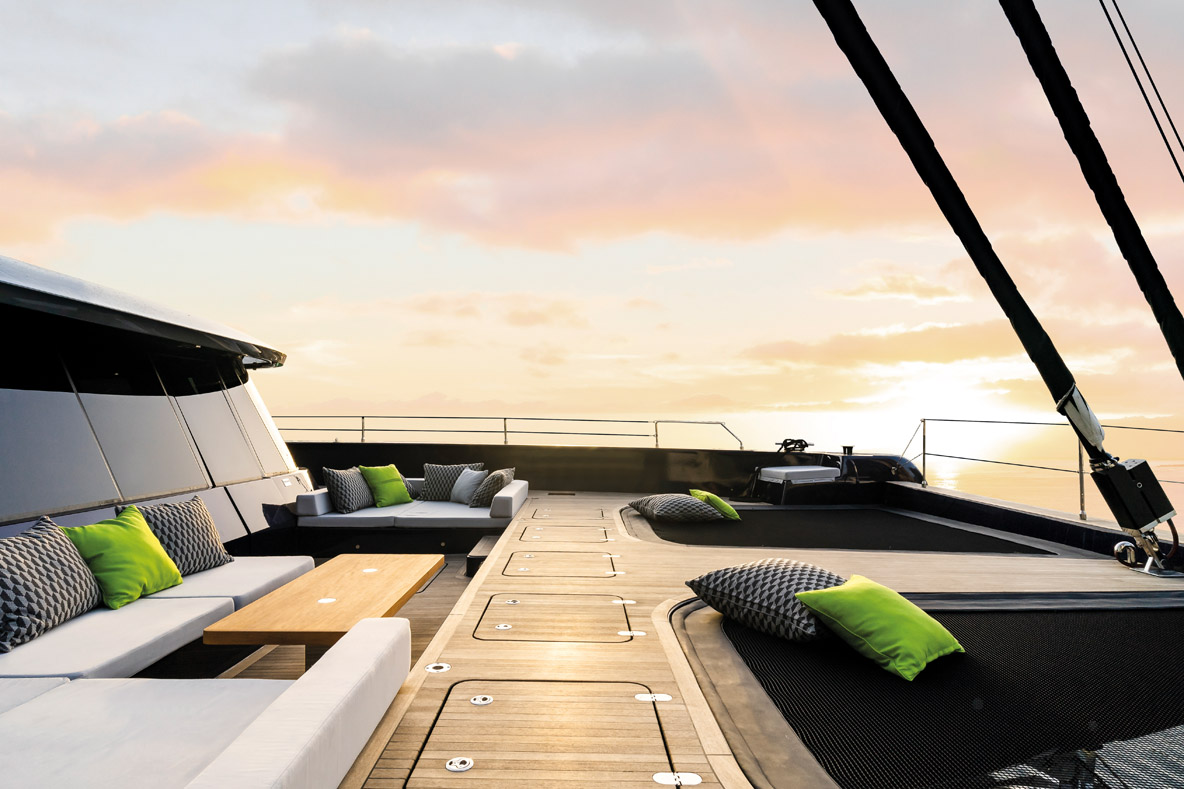
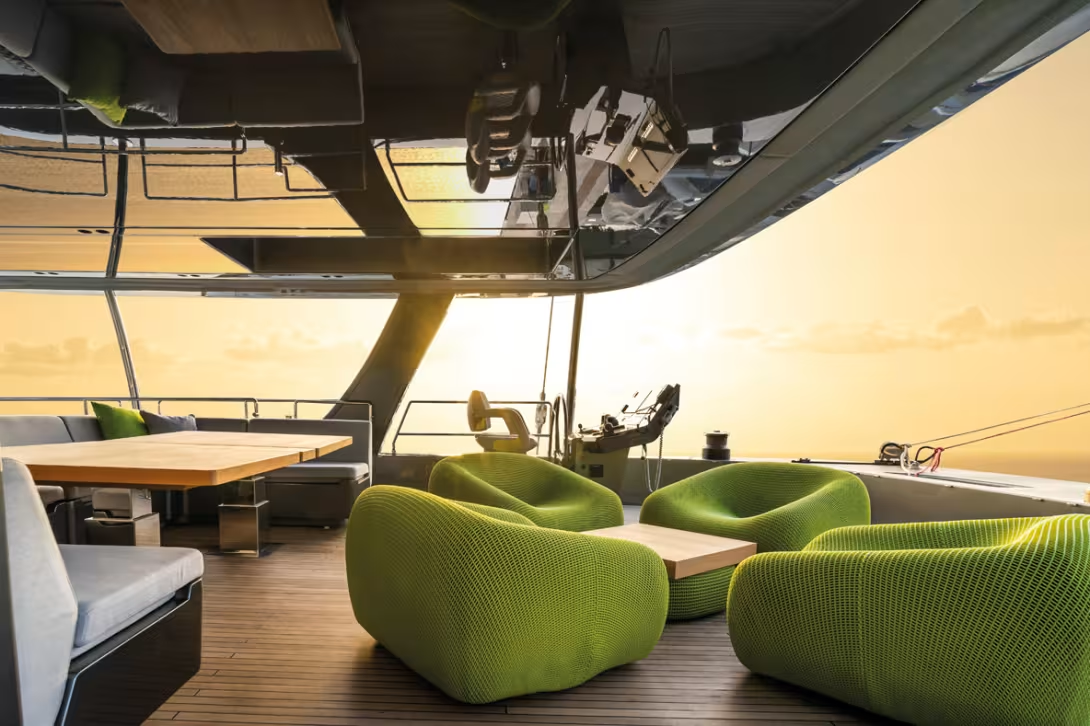
The foredeck incorporates an outdoor saloon.
Dubai: Betting on solar
Dubai? An (over-airconditioned) oil, commercial and tourist emirate in the middle of the desert. Such is the caricature of this small territory, seen from the western world. It is thus far from being a paragon of environmental virtue, and therefore from the main theme of this special edition of the magazine. However, on closer examination, the Emirati strategy is ambitious, with the objective of 75% carbon-free energy production by 2050. A fund of 100 billion UAE dirham (a little over 25 billion euros) has been created to support investments in this direction. The most visible to date is the Saih Al-Dahal solar power plant, some 30 miles south of the cosmopolitan capital of 3.5 million inhabitants. Almost half of the planned 5,000 MW is already in operation. By 2030, they expect to be providing 25% of the electricity consumed in the emirate.
This is a logical investment when you consider that the sun shines on average more than 10 hours a day, 340 days a year!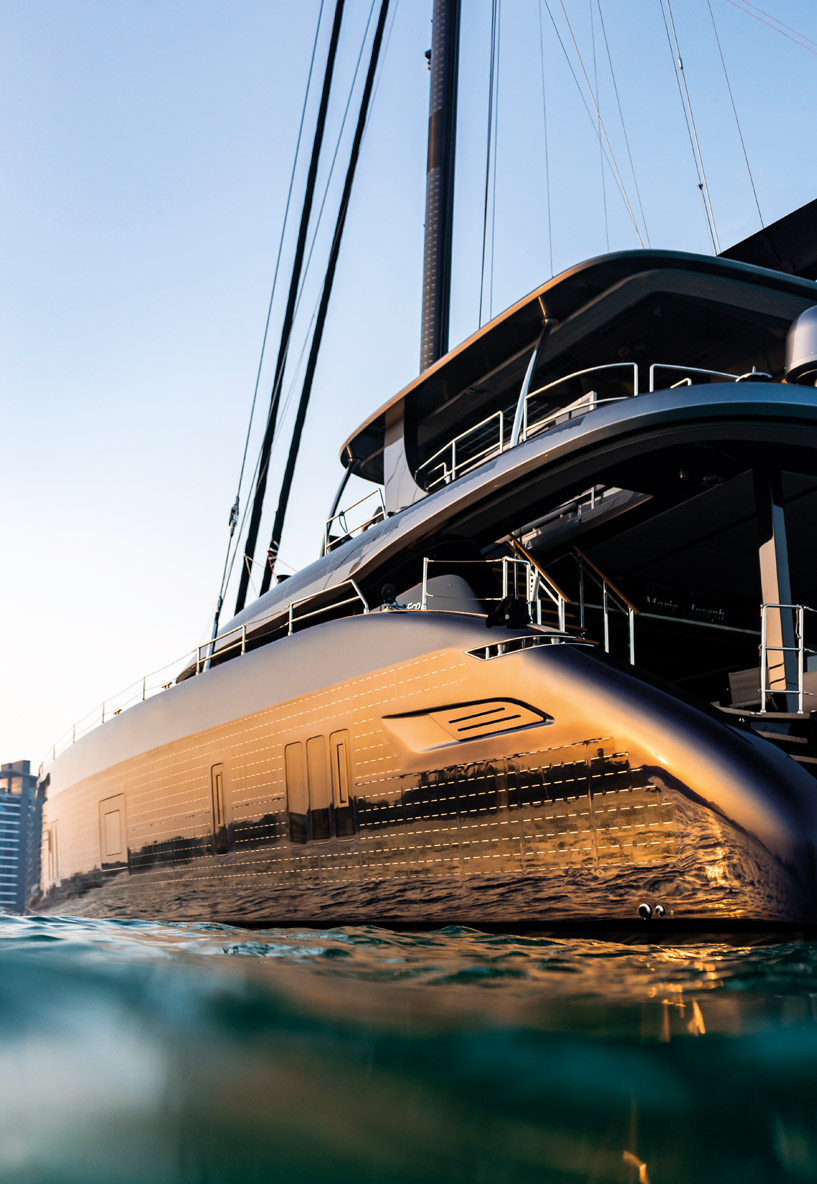
The shipyard has succeeded in integrating its photovoltaic cells everywhere, including the hull topsides and the rig.
Consuming 30 kWh per motor at 7 knots
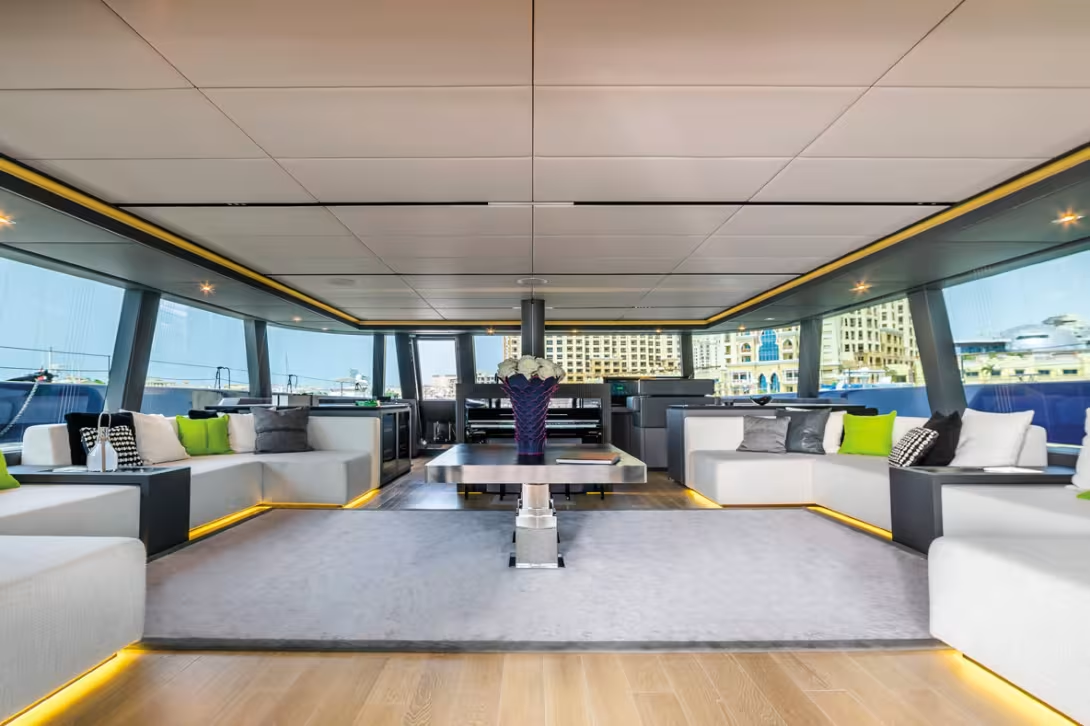
As we come off the dock, the absolute silence and the total lack of vibration offer a really new sensation on board such an awe-inspiring multihull. Instead, we hear the soft notes of a virtuoso pianist playing live in the immense saloon - the builder has of course made a point of highlighting the qualities of this model in its ECO range. The 5’3” (1.60 m) high windows, the aft bay window opening to a width of more than ten feet (three meters) and the cameras in the mast offering a bird’s eye view of the platform allow piloting from the helm station located forward, to starboard. But it is from the flybridge that, with his fingertips, the skipper plays with the two motors and the bowthruster. Heading out to the first anchorage under motor, at full power we reached 10 knots. More reasonably, the cruising speed is around 7 knots. The consumption is then 30 kWh per engine and the electronic displays assure us that we have 8 hours of full autonomy without any recharging. Logically, on board, apart from the aft platform, which is hydraulic, everything is electric - from the winches to the furling of the headsails and the cooker hobs. Given that the most ecological way to travel is under sail, the fully-battened mainsail is traditionally mounted on batten cars and not on a furler. The port authorities wouldn’t allow us to test the catamaran offshore, so we had to contend with the outer harbor for seeing how she performed under sail. The displacement of the 80 ECO was not communicated by the builder, and we suspect it to be pretty significant considering the volume and the equipment offered. The expected performance under sail in light winds is modest - 4 to 5 knots - but the waterline length ensures averages above 10 knots if the wind deigns to exceed 15 knots. Sunreef’s know-how is not limited to high technology. The deck layout of this 80-footer is immediately operational for a professional crew of just two. As quiet under sail, a hydro-generation system adds to the on-board recharging systems.
 |
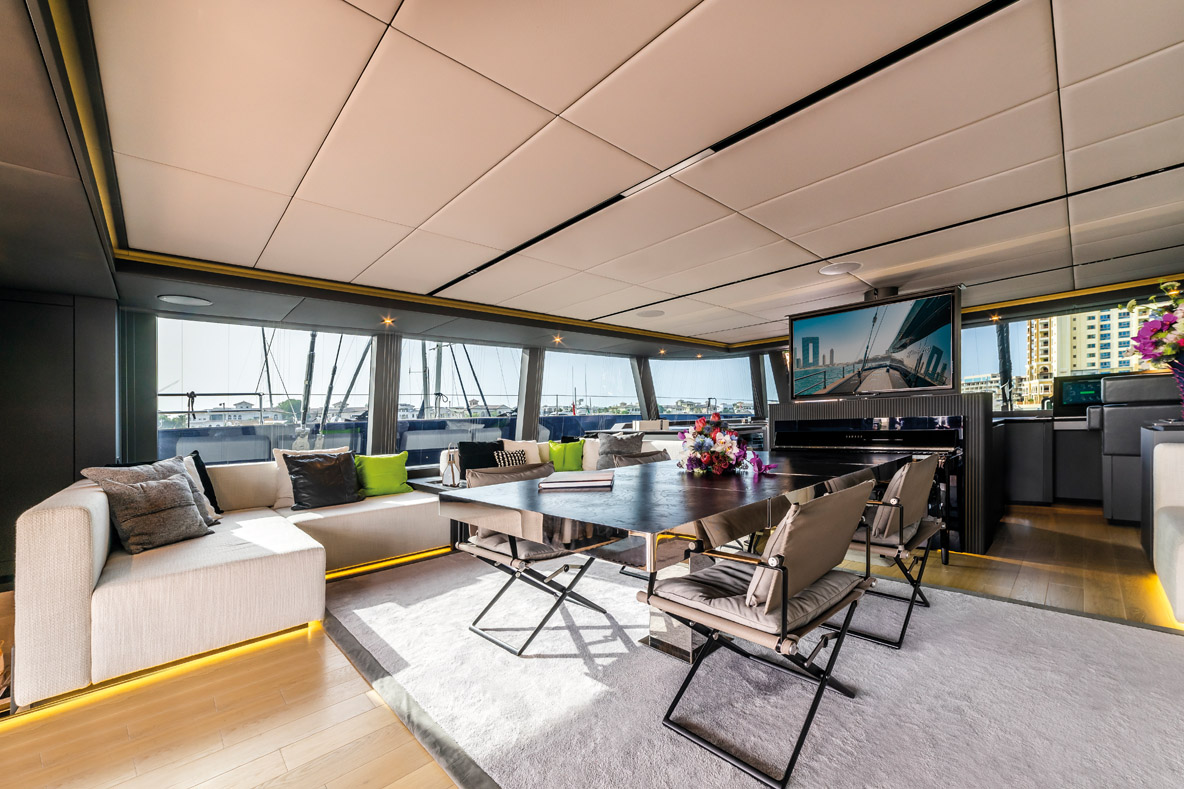 |
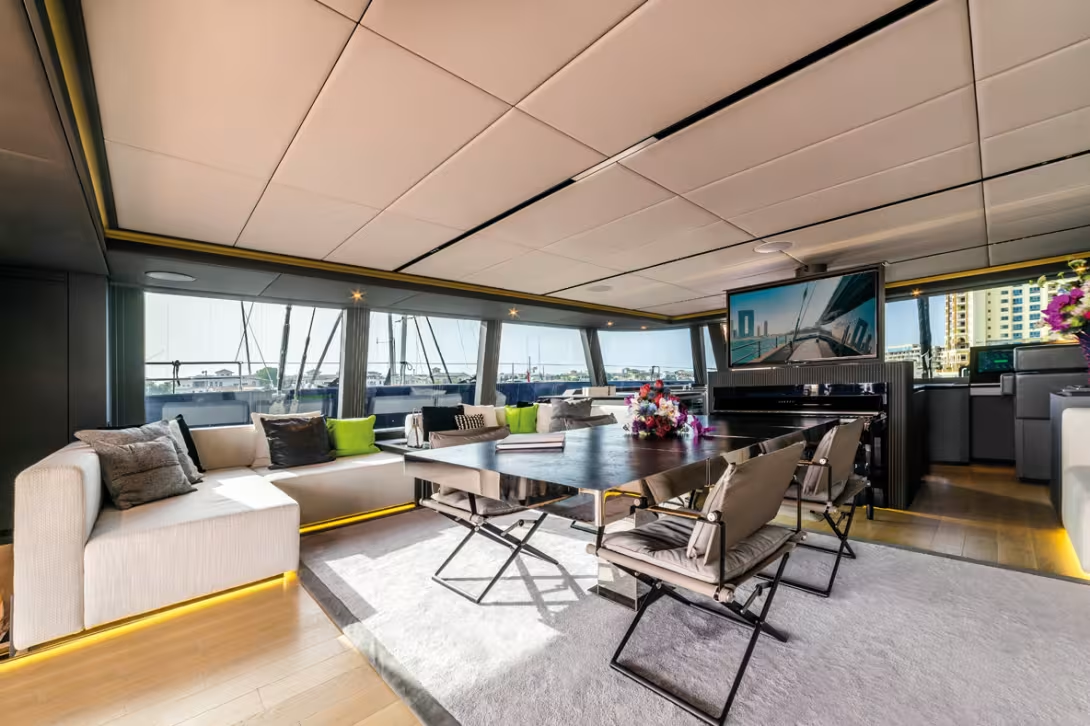
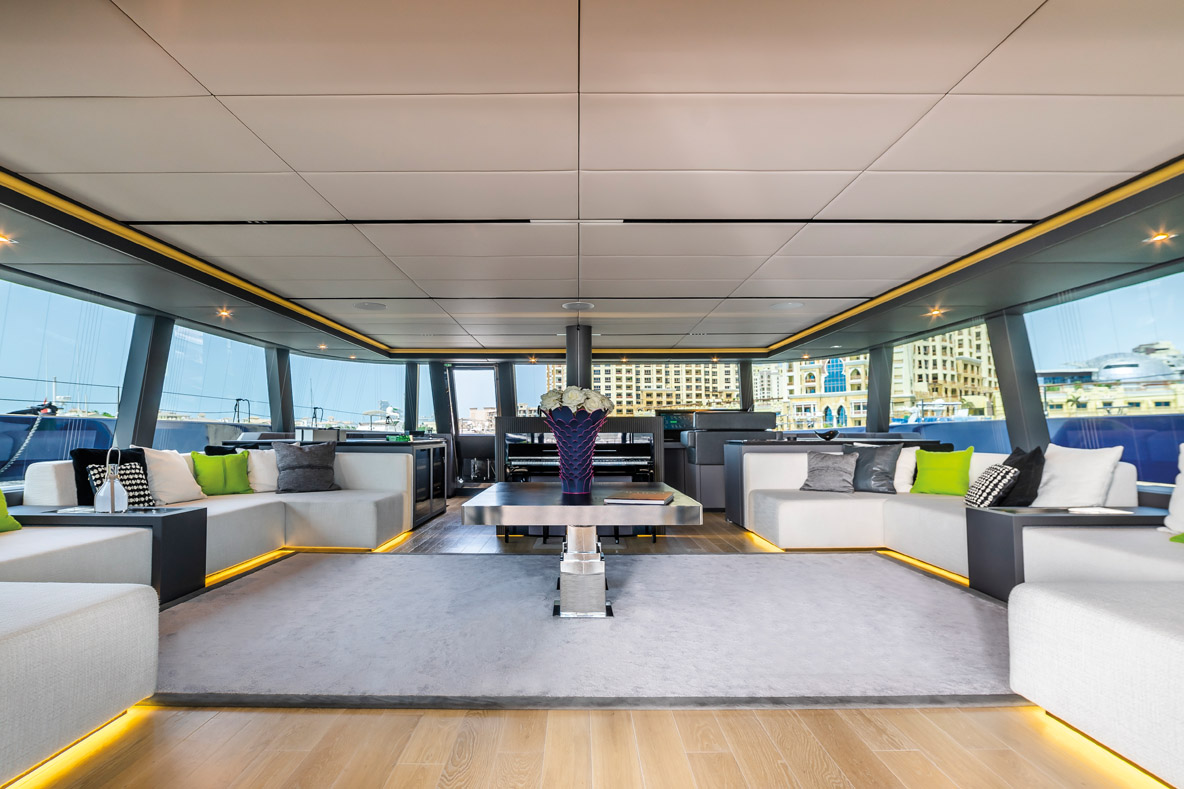
Central in the nacelle, a huge table can be used that seats up to 15 guests.
Custom-made interior
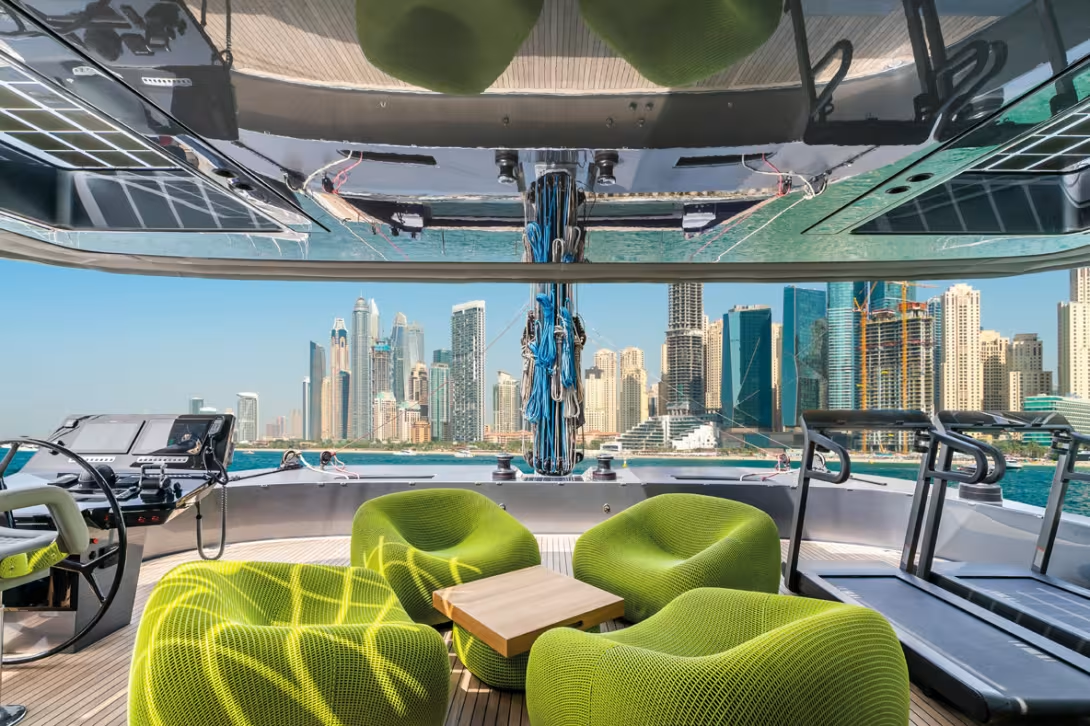
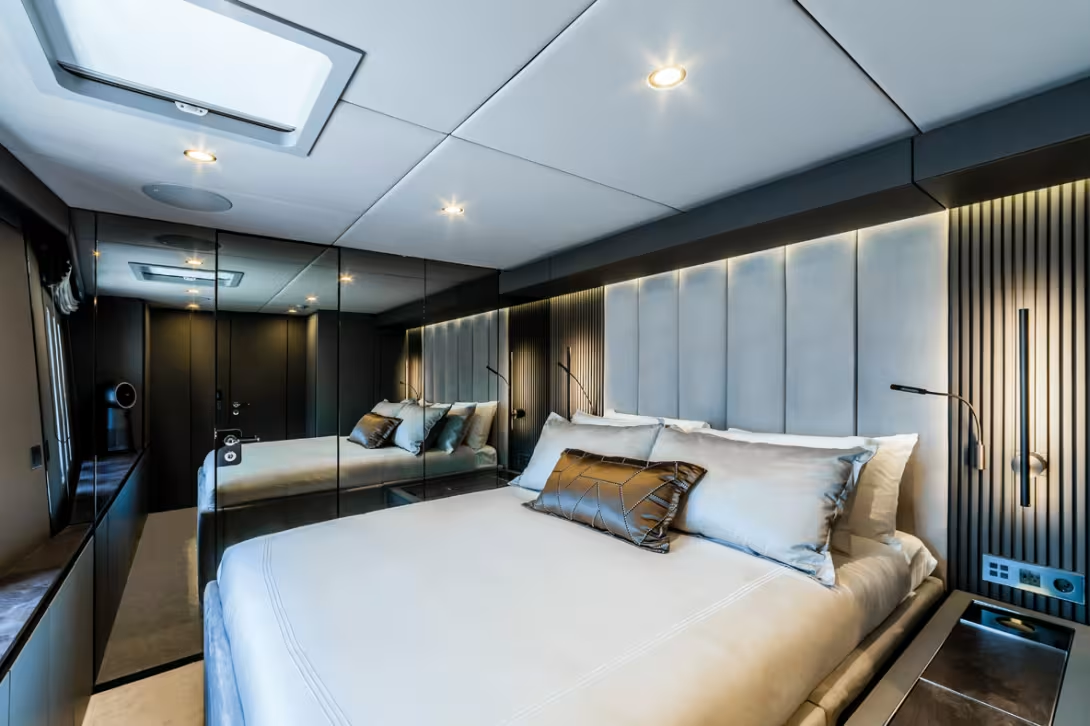
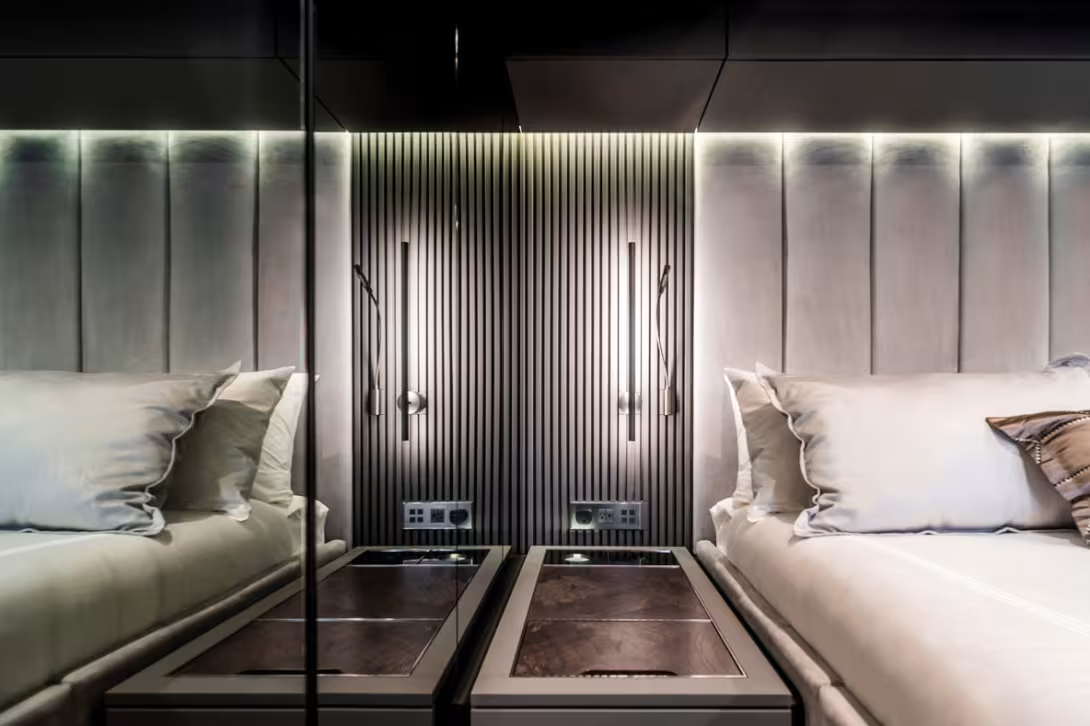
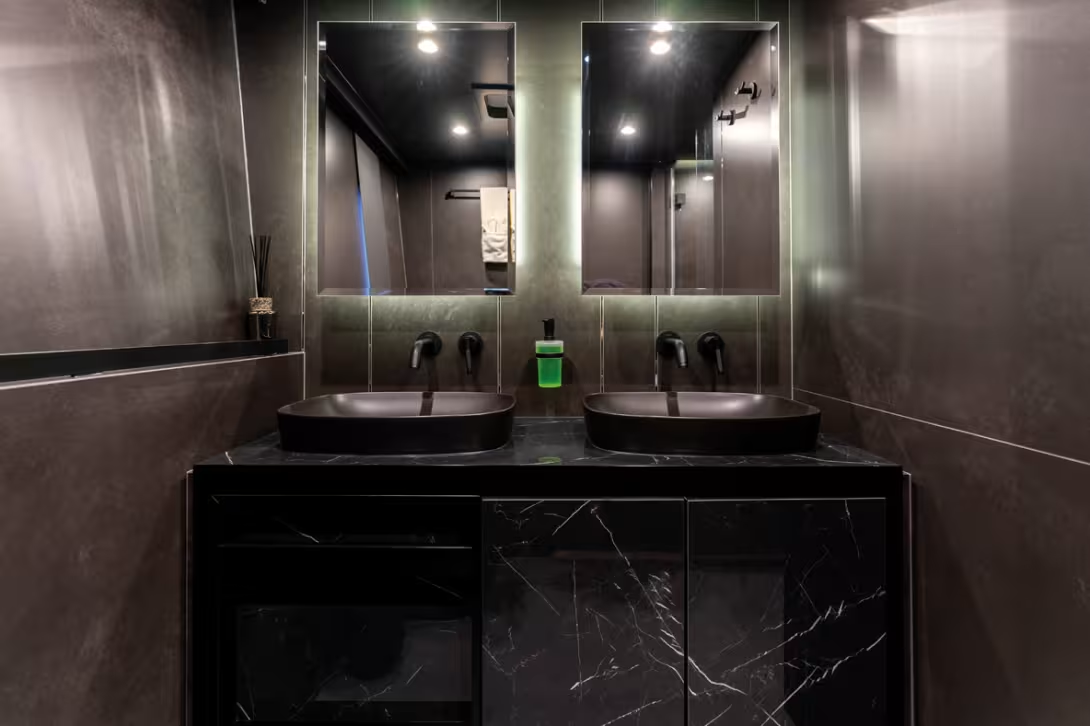
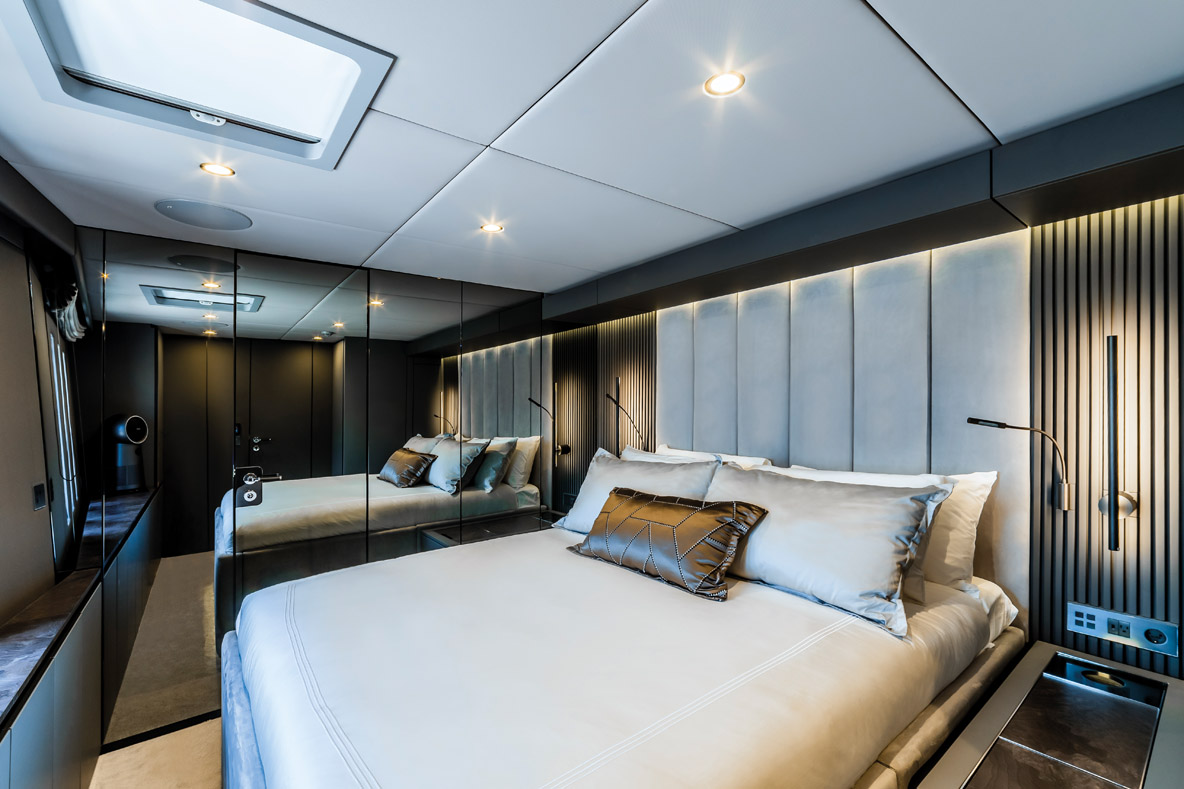
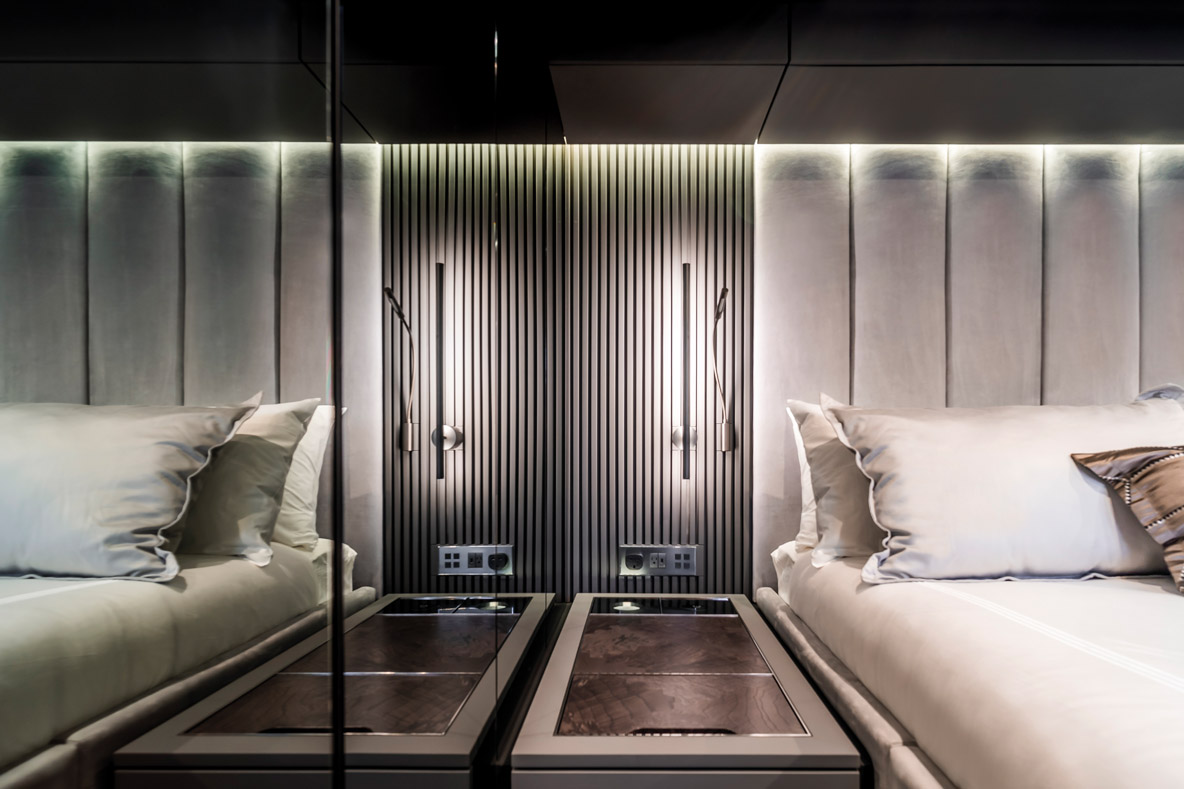
This shortened trip gave us plenty of time to discover the interior. As always with boats from the Gdańsk manufacturer, the layout inside is entirely modular, both in the distribution of volumes and in the decor. Thick carpeting, the use of noble materials, and careful lighting: we are firmly in the world of luxury that seduces both celebrities (from Rafael Nadal to Niko Rosberg) and more discreet owners – who are likely just as wealthy. Invariably, aboard a catamaran with the dimensions of a tennis court, the volumes offered make you dizzy. This is not necessarily the case for the aft cockpit. On the other hand, the saloon is vast, with two large L-shaped side benches. If it’s cool at night, there’s plenty of room in the center to set the large dining table. At the front, in addition to the starboard helm station, you pass a bar on your way to the access to the forward cockpit. This might be better described as a terrace, since here again the dimensions are outstanding. As for the hull layout, while the possibilities are not infinite, they are multiple. On this unit, the galley (down) occupies the entire aft port side, and is XXL in size. A guest cabin and, notably, the owner’s cabin take up the forward two thirds. Both are accessible via a second companionway. Controlled temperature, absolute silence, high-end bedding, marble in the bathrooms and... a sea view through the large windows: this is the program offered in the night zone. In the opposite hull, three cabins, including one reserved for the crew, offer the same level of service, but in a more “reasonable” size. Up on the flybridge, the 360° view is impressive, and under way, the apparent wind is quickly noticeable. On the other hand, at anchor it will be particularly solicited: under its rigid roof (obviously covered with solar panels), the flybridge hosts in addition to the helm and maneuvering station, a saloon area for ten guests, an outdoor galley, a lounge with modernist armchairs and even two treadmills. Too bad these run on electricity instead of producing it!
 |
 |
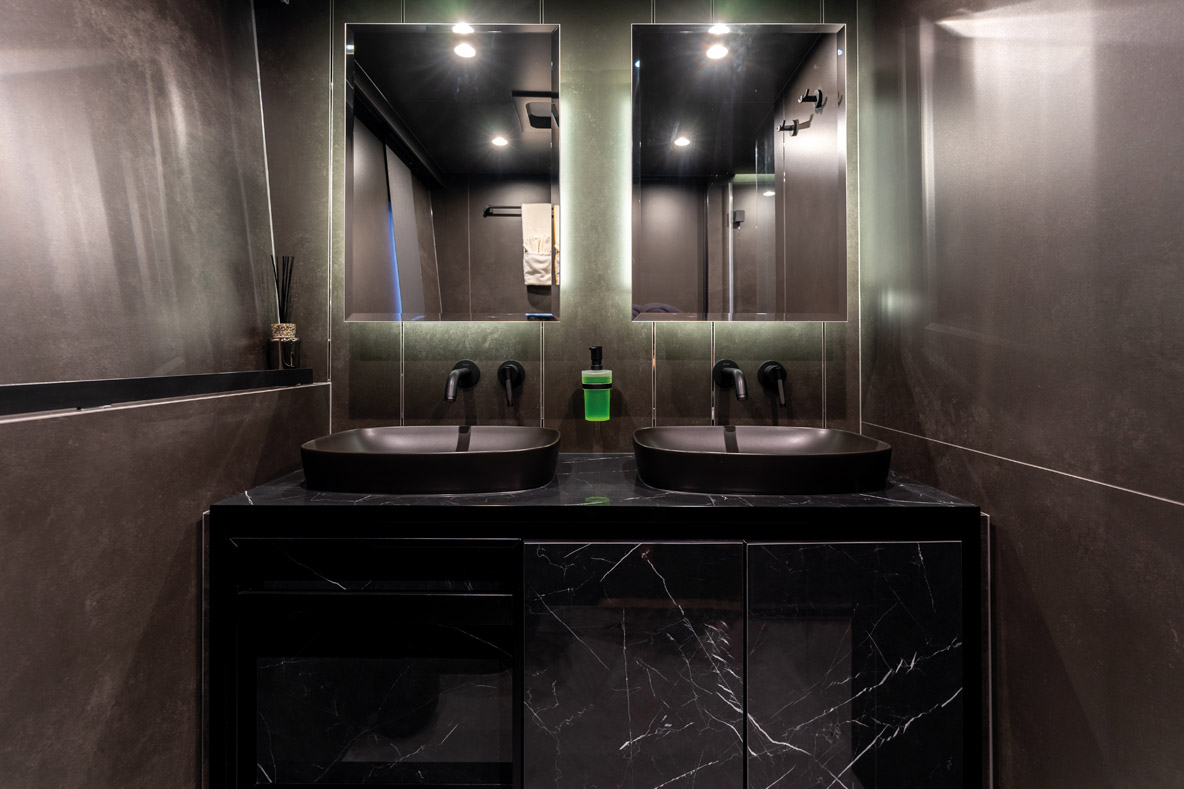 |
In the hulls, the cabins offer incredible levels of luxury…
Conclusion
This new Sunreef can’t claim to have the monopoly on the ecological future of yachting: excessive, luxurious and necessarily very heavy, she is somewhat of a paradox. Being honest though, we are no different, having flown 3,000 miles to test this Sunreef. This multihull, like our report, is the reflection of an era where behavior is adapting (a little) more slowly than our consciousness.
This new catamaran is in this sense very contemporary - with its limits, but with its merits. Because when it comes to ecology, we can’t expect any great revolution for the moment. But each evolution is good news. This boat combines the present, even if imperfect, with the multihull of a future that we hope is not far away. By the technologies implemented and their successful integration into the luxurious universe of the brand, the Sunreef 80 ECO is a milestone in the brand-new history of eco-boating.
 |
 |
The Sunreef monitoring system allows you to check all the data on board, such as the readings from the thermal cameras.
THE PLUSES:
+ Really very quiet in operation
+ Integration of solar panels
+ Breathtaking standards of luxury
+ Perfectly functioning domestic automation
THE MINUSES:
- Lighter would be better
- The two generators are incongruous
- A crew of 3 to 4 is essential
- Anchoring gear difficult to access
All the technical installations have been particularly well thought out.
TECHNICAL SPECIFICATIONS
Overall length: 78’4” (23.87 m)
Beam: 37’10” (11.53 m)
Mainsail: 2,150 sq ft (200 m²)
Genoa: 1,670 sq ft (155 m²)
Gennaker: 3,660 sq ft (340 m²)
Staysail: 753 sq ft (70 m²)
Solar panels: 1,722 sq ft (160 m²) / 34 kWp
Electric motors: 2 x 180 kW
Main battery bank: 550 kW
Generators: 2 x 80 kW
Price: On request