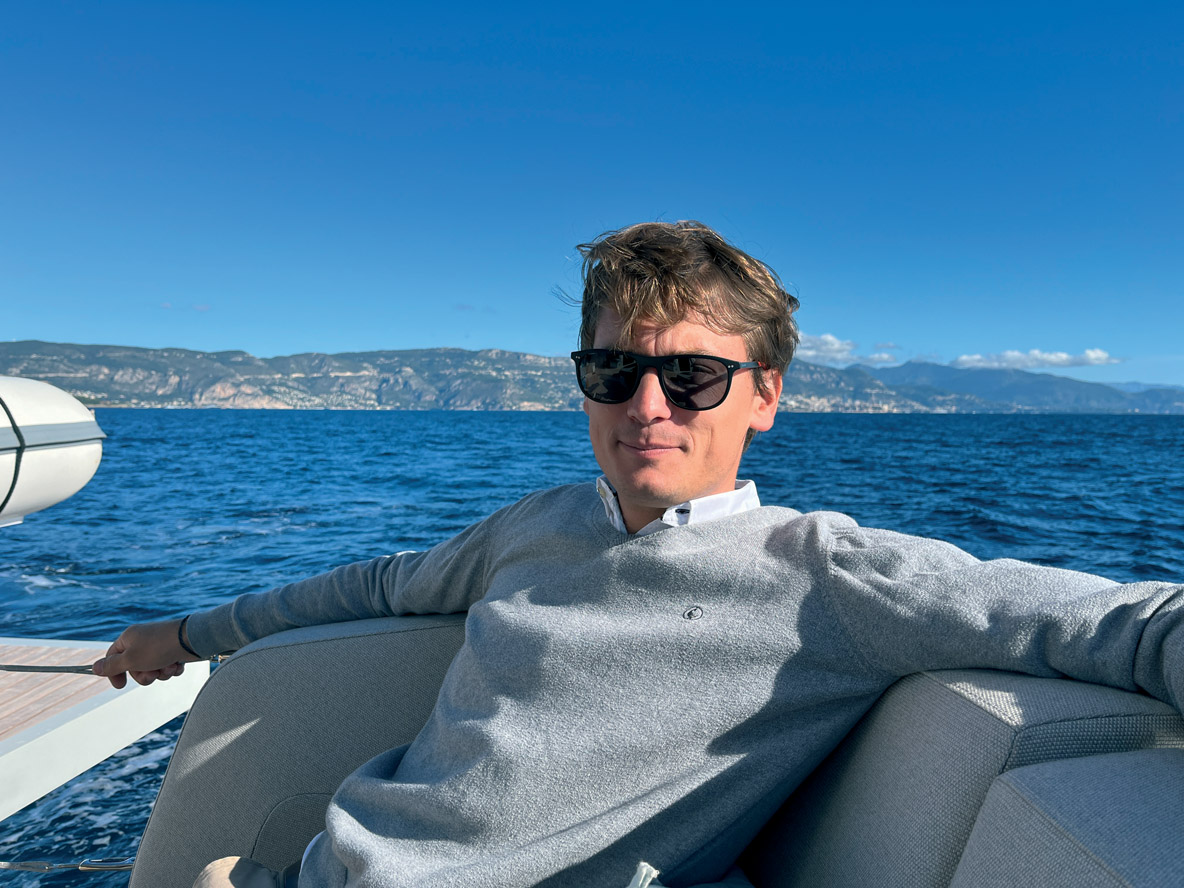
Following the well-deserved success of the Alegria 67, Fountaine Pajot has launched its largest model ever. For the group, which has become a key player in recreational boat building, this is the very first foray into the world of superyachts. An audacious gamble, all the more so as it precedes by two years the project of the brand’s major competitor Lagoon - whose Eighty 2 will be revealed at the Cannes Yachting Festival this September. Will the Thíra 80 be followed by an even bigger multiyacht? While we wait for an answer to this question, we got the chance to sail one on the French Riviera, between Cannes and Monaco.

Infos pratiques
- Le chantier : Thira 80
- La fiche technique
-
 Découvrez notre vidéo exclusive
- Financez votre Thira 80
- Assuez votre Thira 80
- Articles autour du Thira 80
Conditions: 10 knots of wind, sea state smooth
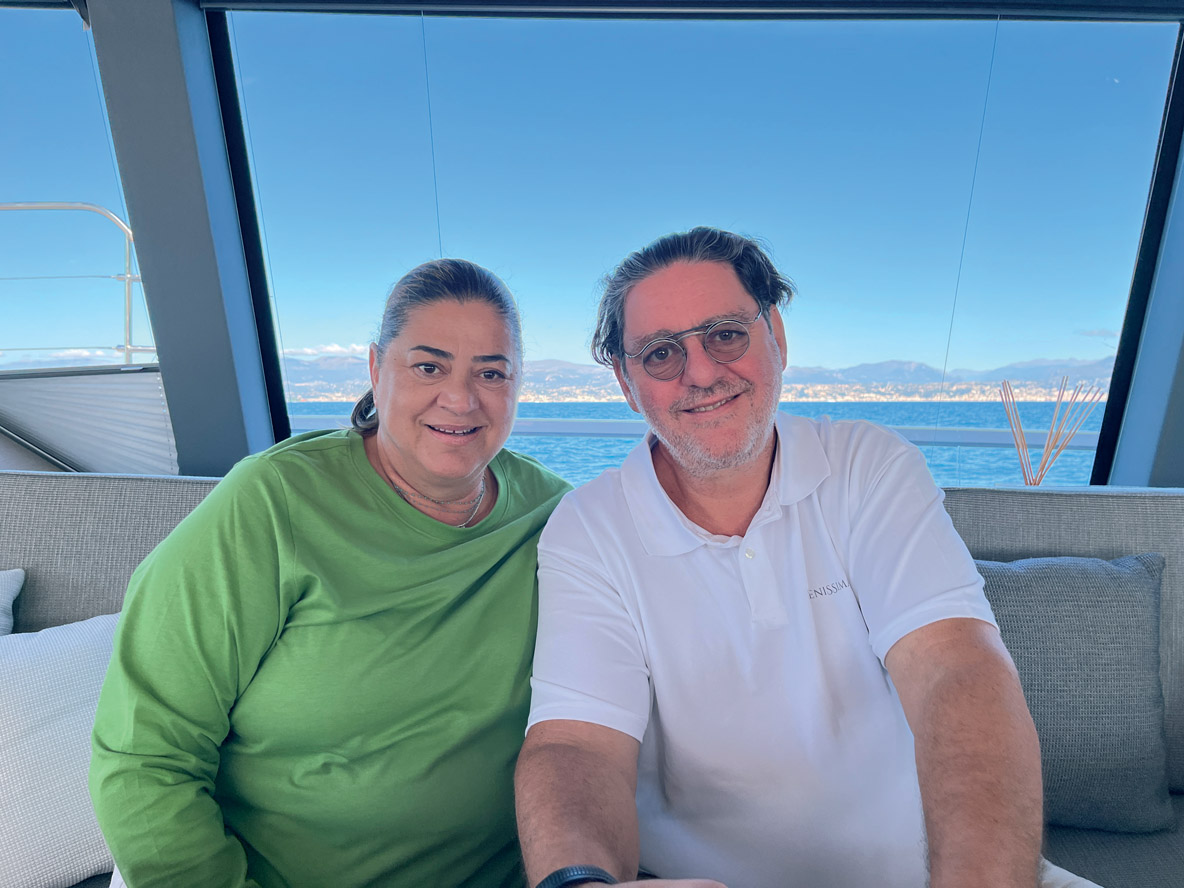
A major first at the Monaco Yacht Show: the Fountaine Pajot group presented a catamaran there for the very first time. The flagship of the manufacturer’s sailing yacht range didn’t necessarily stand out from the crowd in the prestigious Port Hercule, though we were in the midst of some of the most extraordinary superyachts on the planet… The Thíra 80’s sleek hulls, imposing stature fitting perfectly on its floats, and vertiginous mast do, however, make it eye-catching. “It’s a cathedral on the water,” says the Cypriot owner, who welcomed us aboard Serrenissima III, the second example of the Thíra 80. Hull #1 was exhibited at Cannes in September 2023.
Benjamin Lachaise, the brand’s project manager, was also with us: he’d be able to reveal all the secrets behind the development and finishing of this luxury catamaran - the degree of personalization has never been so advanced within the brand (See inset on P.89).
The Hallmark of the Brand
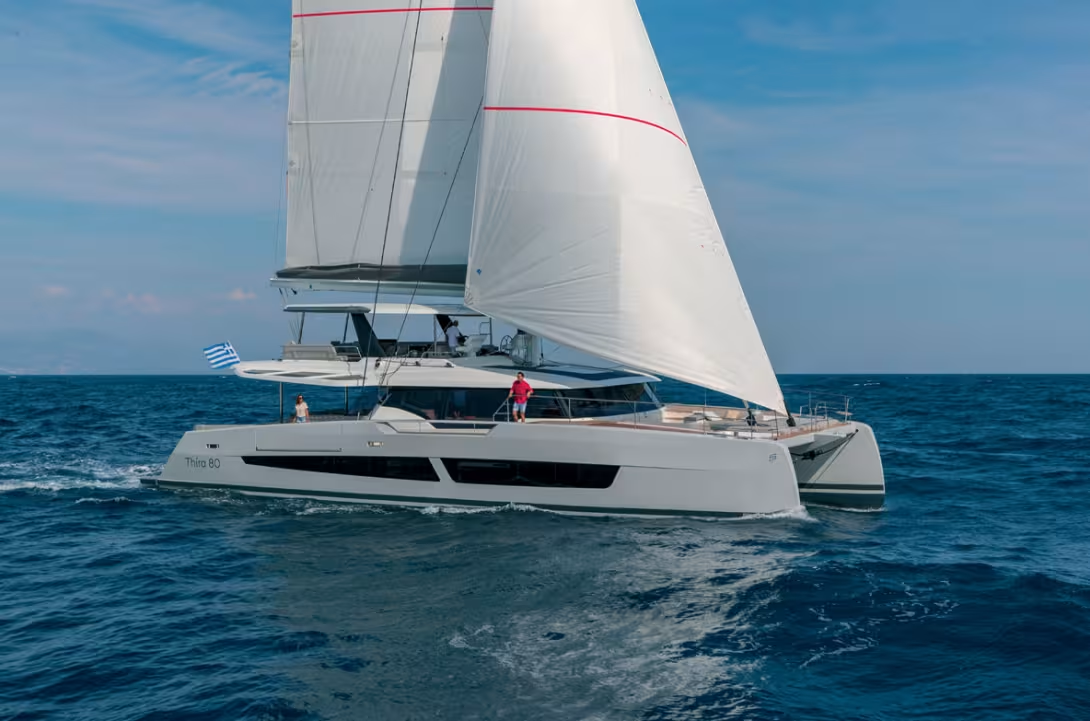
When you first see the Thíra 80 in port, the first thing that comes to mind is that this catamaran is gigantic, even disproportionate... but if you look at it on its own, from a distance, it’s clear that it belongs to the Fountaine Pajot sailing range. Deck sheer and inverted bows, hull portholes tapering below their reveal, a well-proportioned coachroof with a slender peak: all the codes that characterize models from the New 41 to the Alegria 67 are in evidence. Admittedly, the imposing flybridge means a lot of windage and a relatively high boom, which is bound to offend purist sailors. However, with its 3,660 square feet (340 m²) of sail area, the Thíra is ready to do without its engines whenever the wind picks up. With 3,360 sq ft (340 m²) of living space, the Thíra is taking the yard into a new category: that of superyachts. Berret-Racoupeau Yacht Design, in charge of architecture and design, has achieved a subtle balance between elegance and comfort - as we shall soon discover, there’s nothing lacking to offer the most elitist of features. The yard’s experience is put to good use in the creation of a series production envelope and layouts with various pre-designed variants, to meet all the needs expressed on plans and in the catalog. No fewer than 80 different molds are used to infuse hulls and superstructures. Just draping the cloth takes three weeks, and it takes a minimum of 6 months from the start of construction to the initial launch. The finishing touches, meanwhile, take 12 months, bringing the total manufacturing time to 16 months - a far cry from the 1,000 to 1,500 man-hours required to build a 40-foot production catamaran!
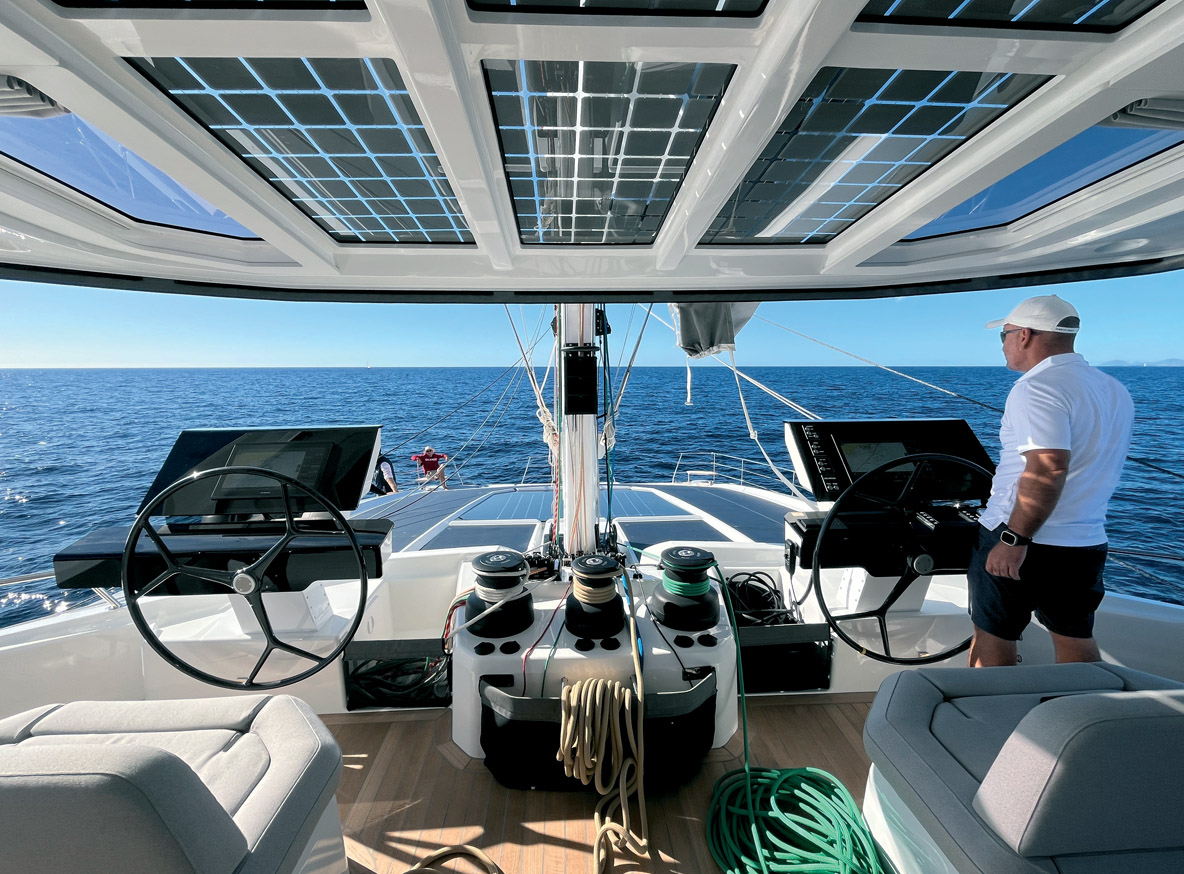
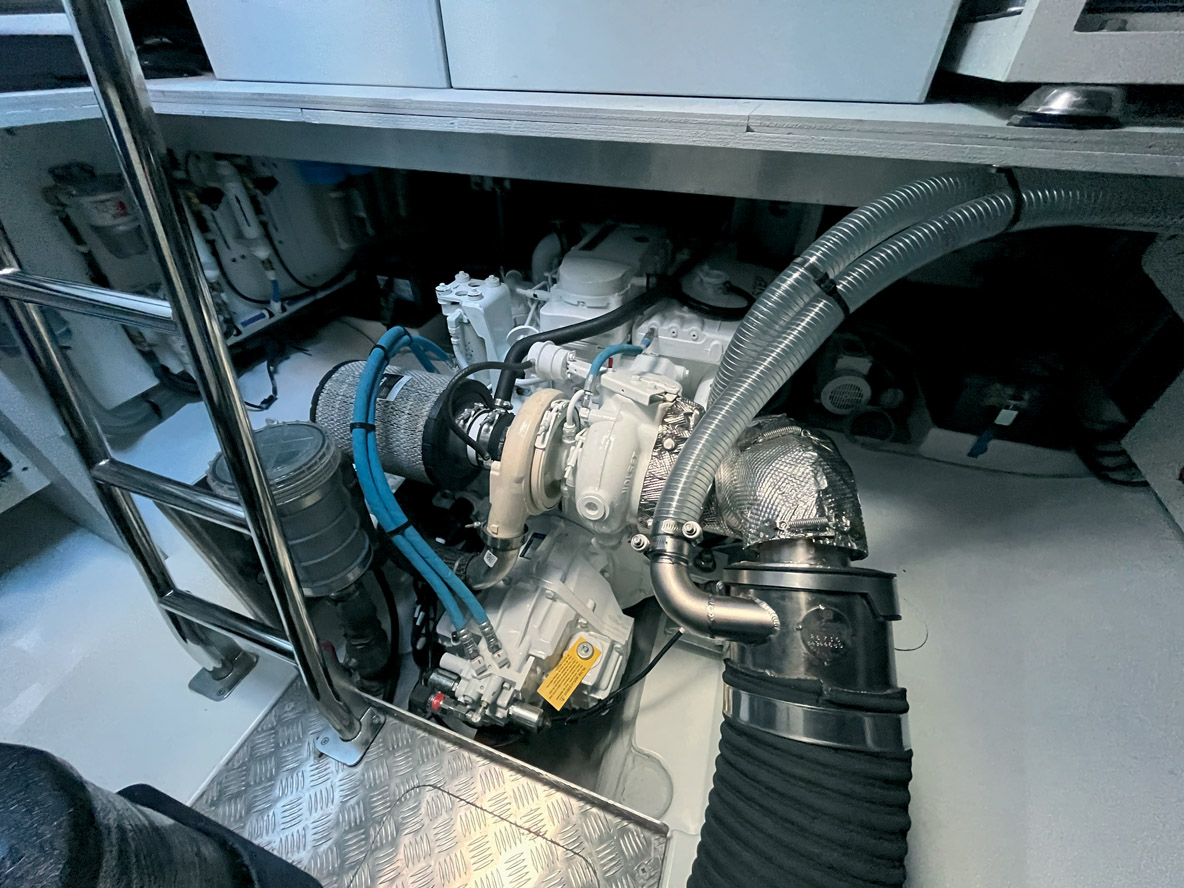
To meet the demands of a set of specifications dedicated to uncompromising luxury, a number of unprecedented technical solutions have been implemented. Sound insulation, for example, is a key concern. In the engine compartments, foam is applied to ducting and extraction systems. 450 pounds (200 kg) of sand under each engine reduces vibrations through the hull. As for the bulkheads, they are composed of multiple layers of foam, cork and rubber - they deal with different sounds, from the lowest to the highest pitched. The supply of green energy is mixed with Solbian solar panels and Energy Glass cells that create subtle skylights. The whole system supplies over 8 kWp - with generators to provide the remainder.
Luxury and Relaxation on Every Level...
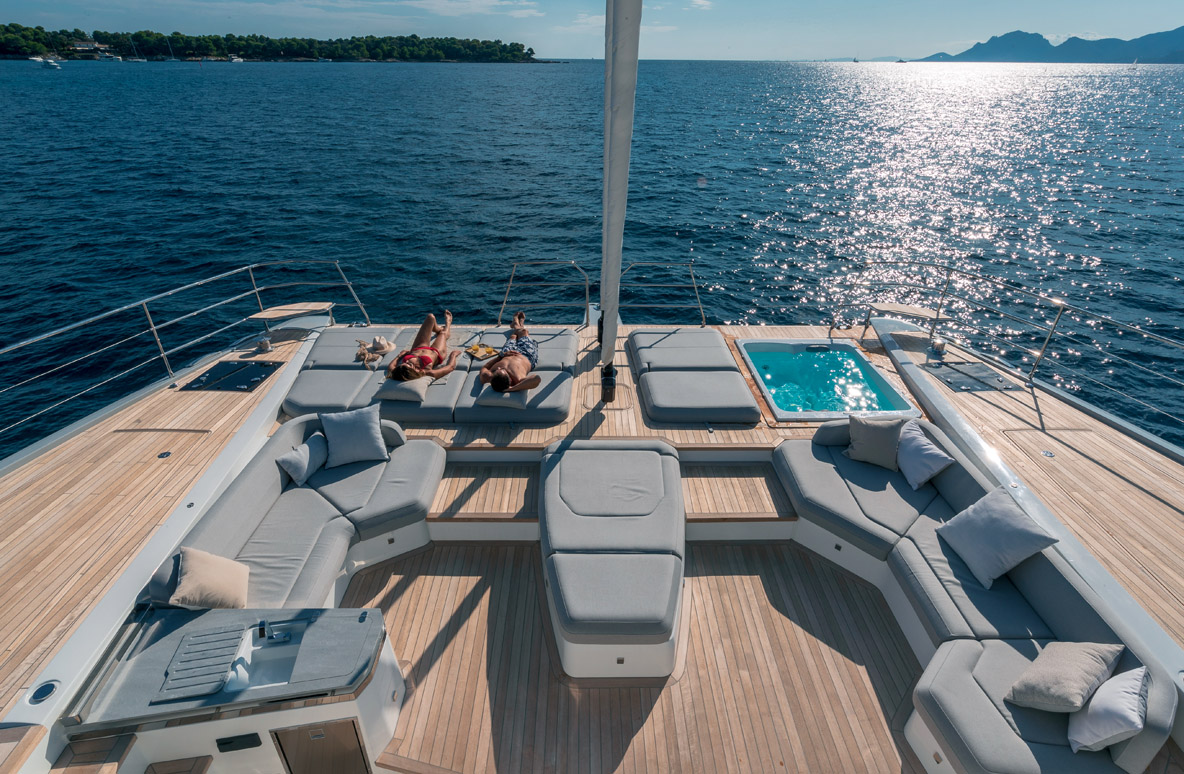
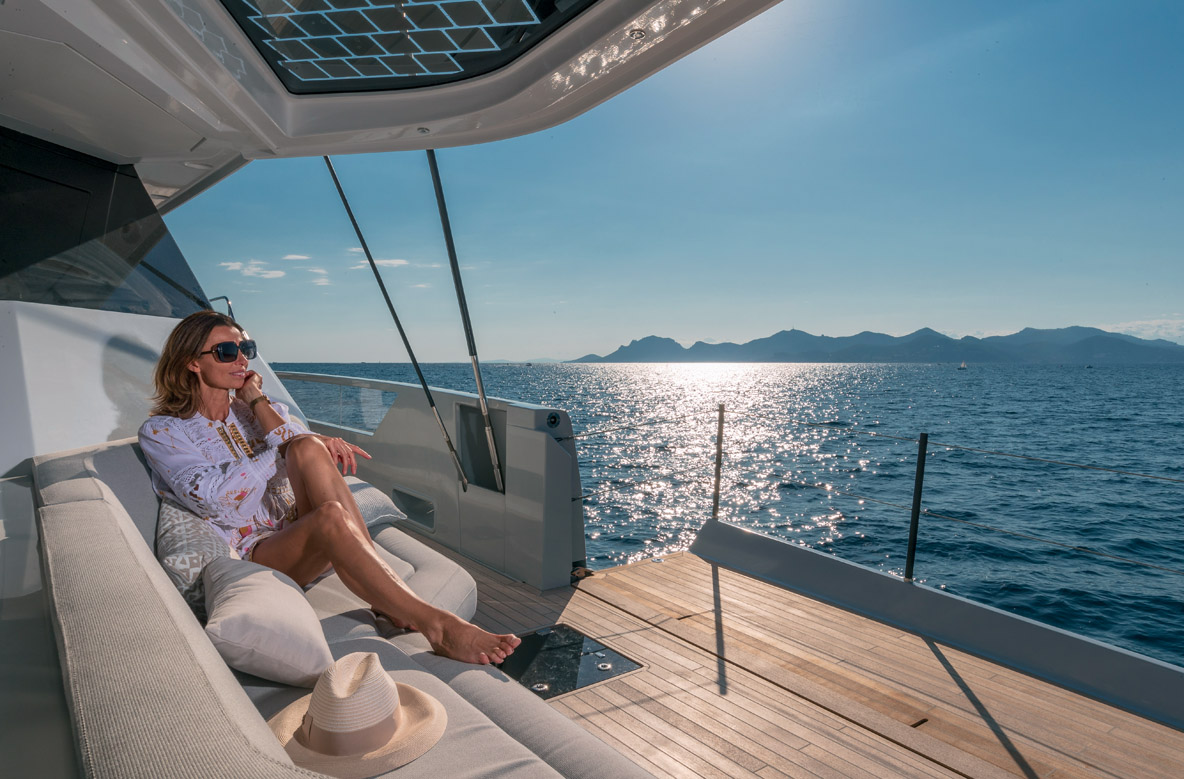
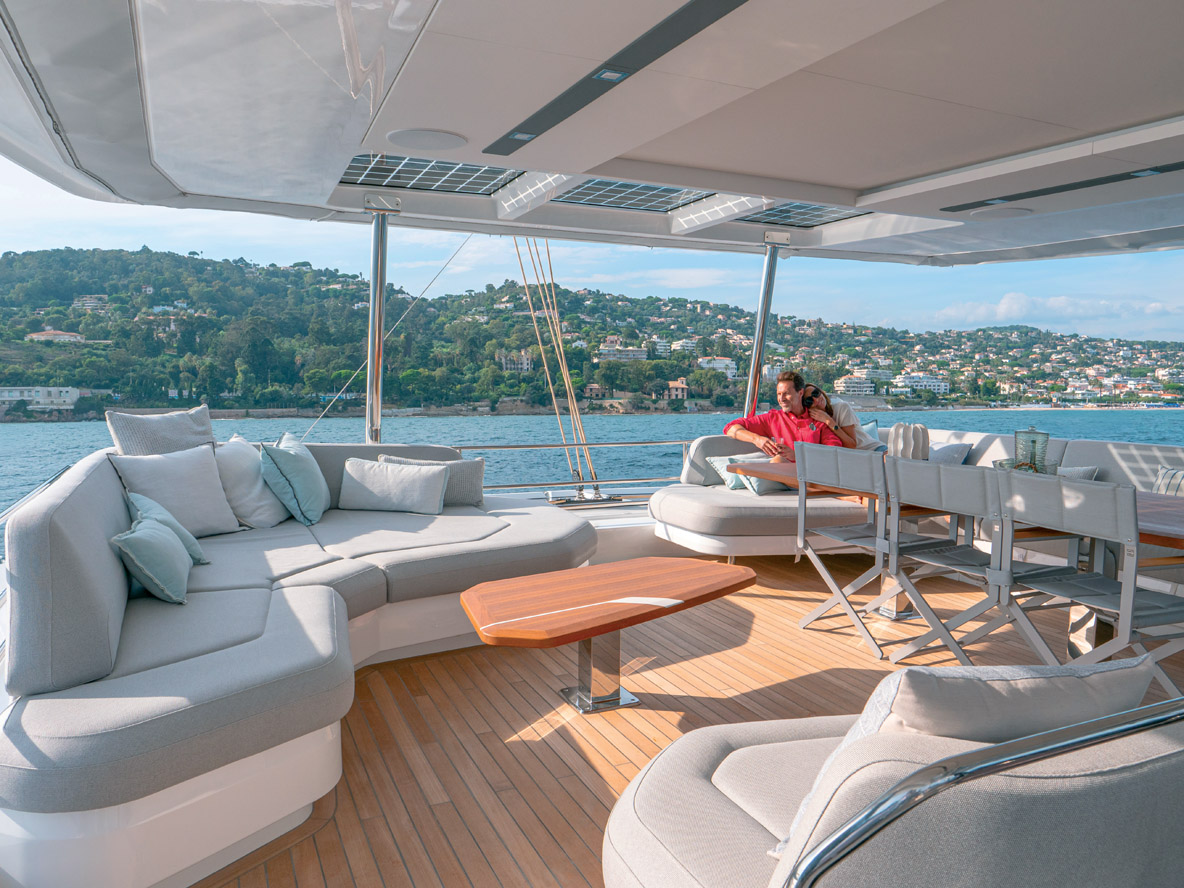
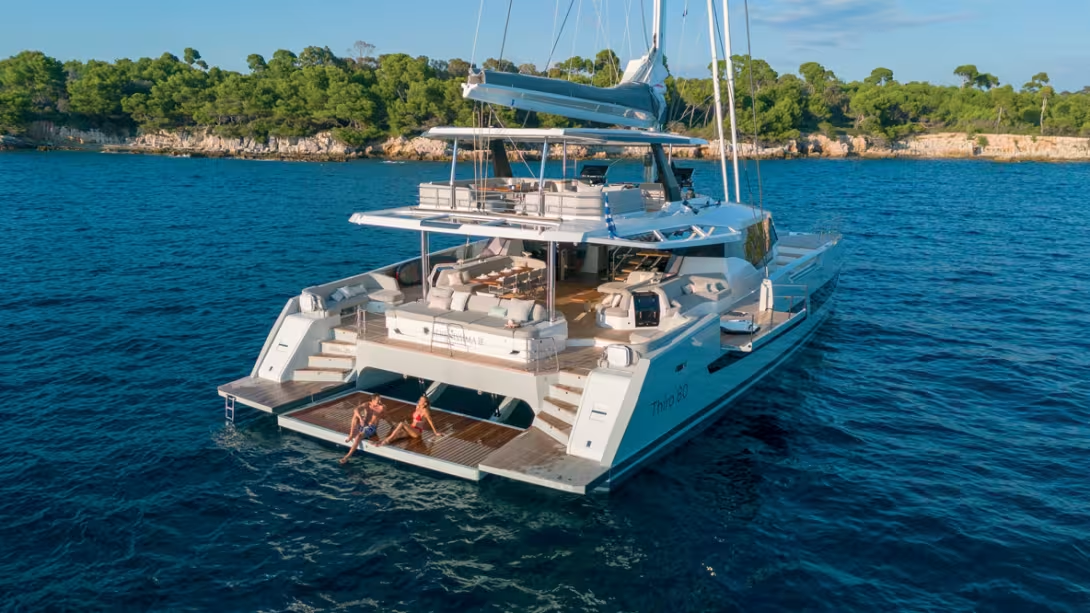
The platform’s extraordinary dimensions have enabled taking an innovative approach to the layout of the spaces, in particular to offer optimum views of the exterior. Around 15 bench seats - most of them loungers - are spread across the Thíra 80’s main deck and flybridge to create 8 to 9 deck lounges of all sizes. The two most spectacular are deployed on the fold-down bulwarks, creating a terrace overlooking the sea on each side. Just above, the semi- transparent coachroof wings provide protection.
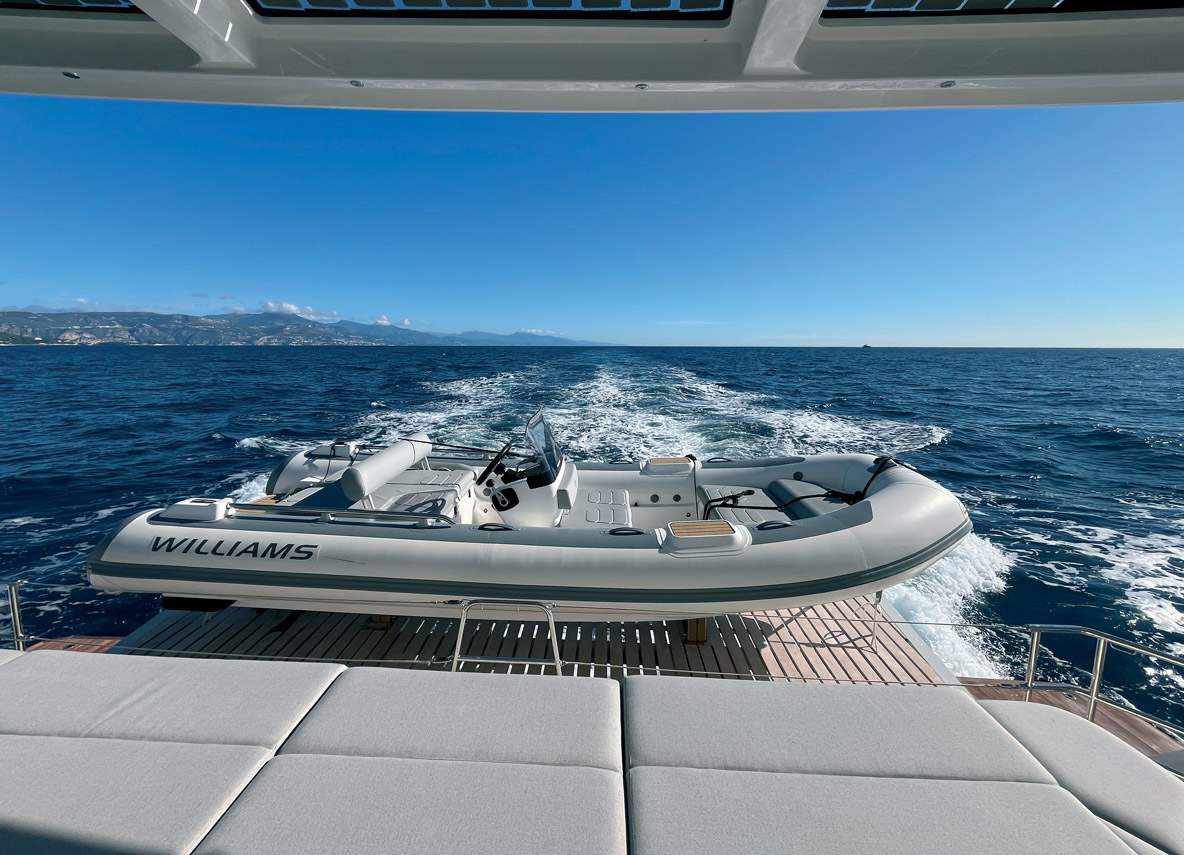
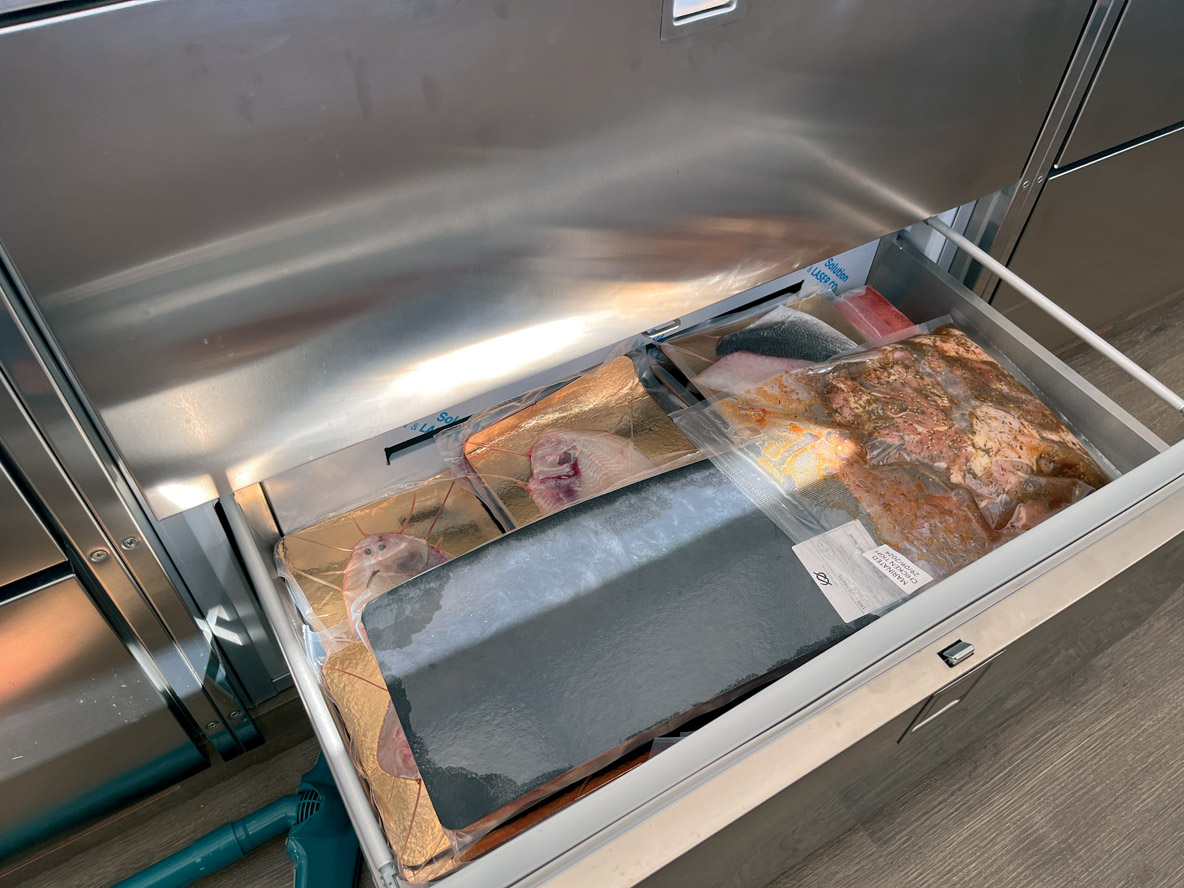
At the stern, a beach club with a huge sundeck and a full-width bathing platform has been laid out. Forward, the hard decking runs right up to the bows. To starboard, there’s a Jacuzzi – a feature already offered on the Alegria - with large mattresses and an adjoining whirlpool tub. Minibars are scattered throughout. A garage houses an electric water scooter, while two forward lockers conceal paddleboards and other water toys. For sharing meals, two beautiful tables - one on the flybridge and one in the cockpit - complete the extensive outdoor relaxation facilities. Note that all the seats, which can be dismantled, are made of a rigid structure and several layers of foam of varying densities.
The Industrialization of Luxury
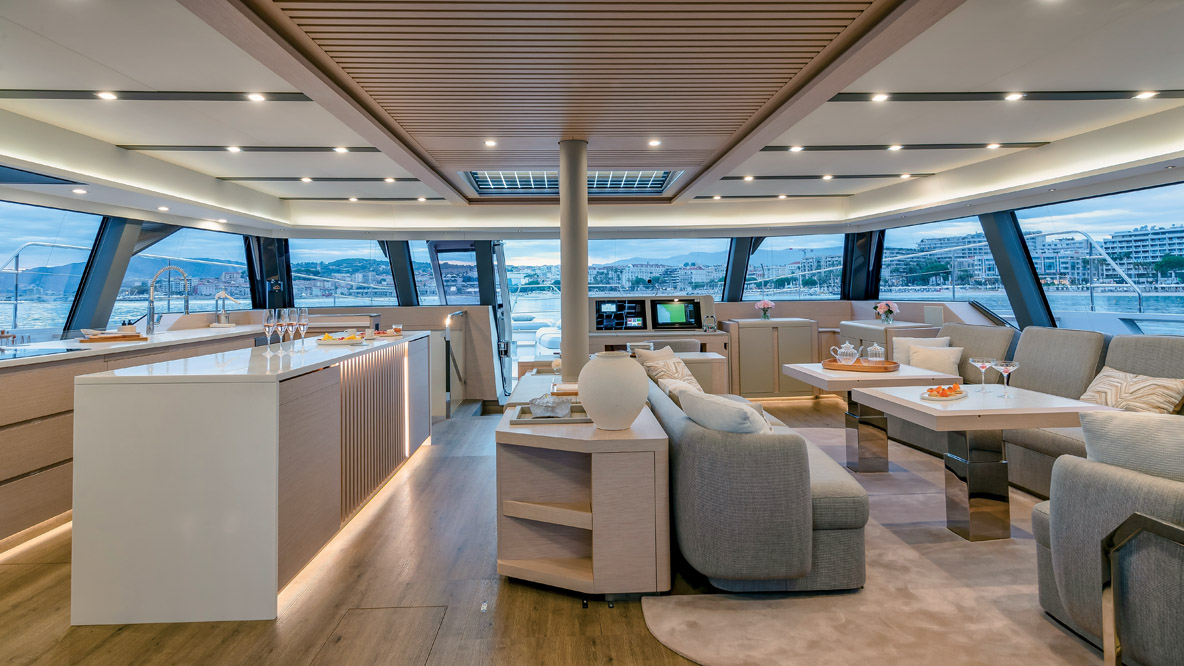
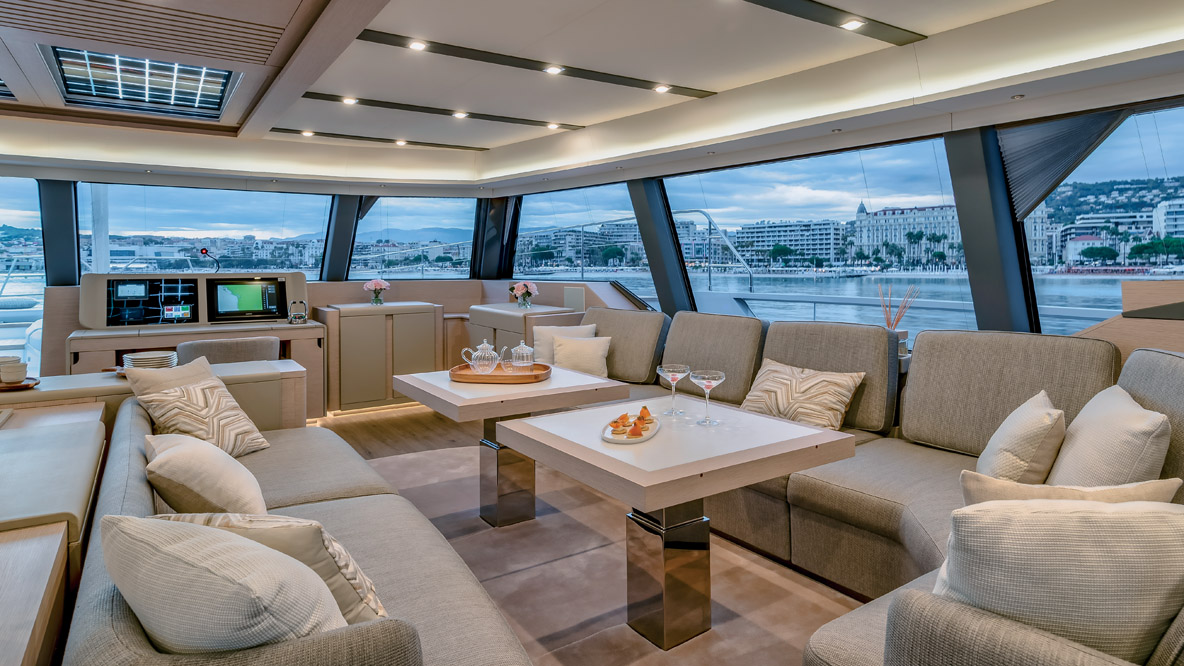
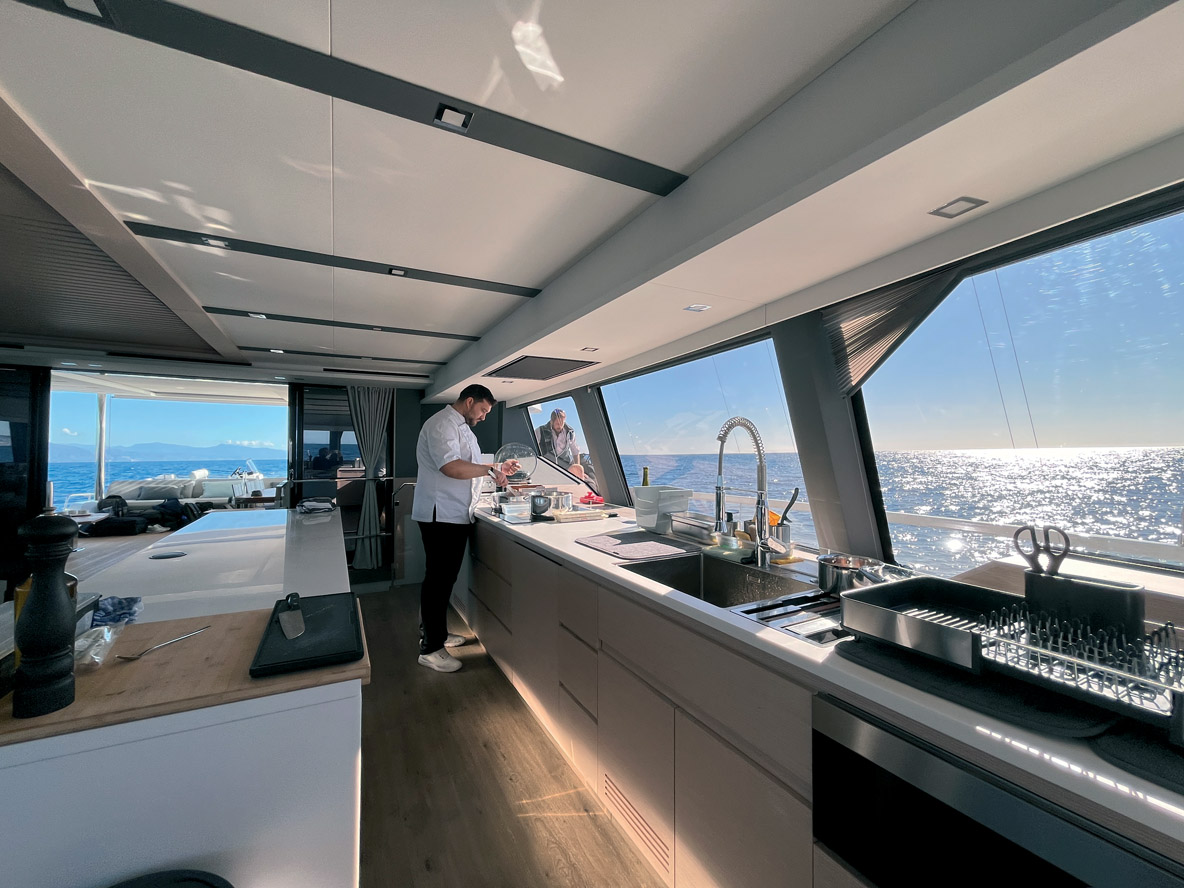
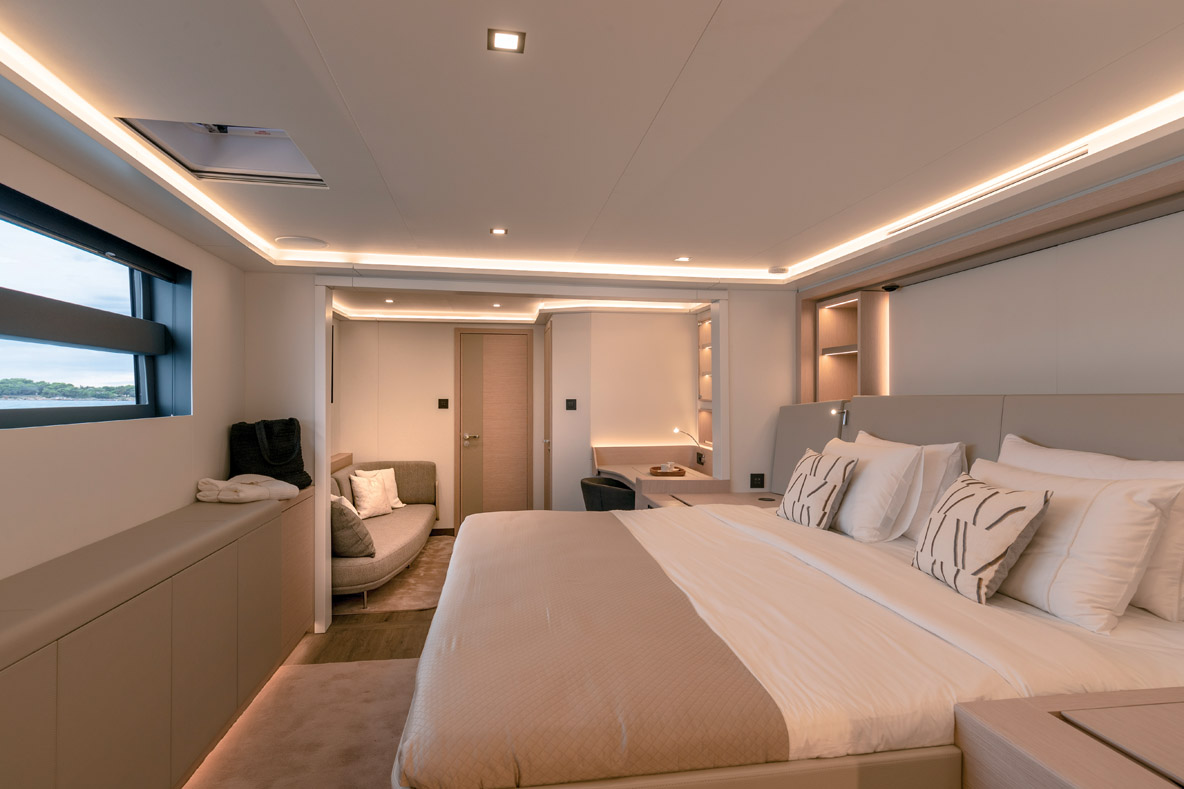
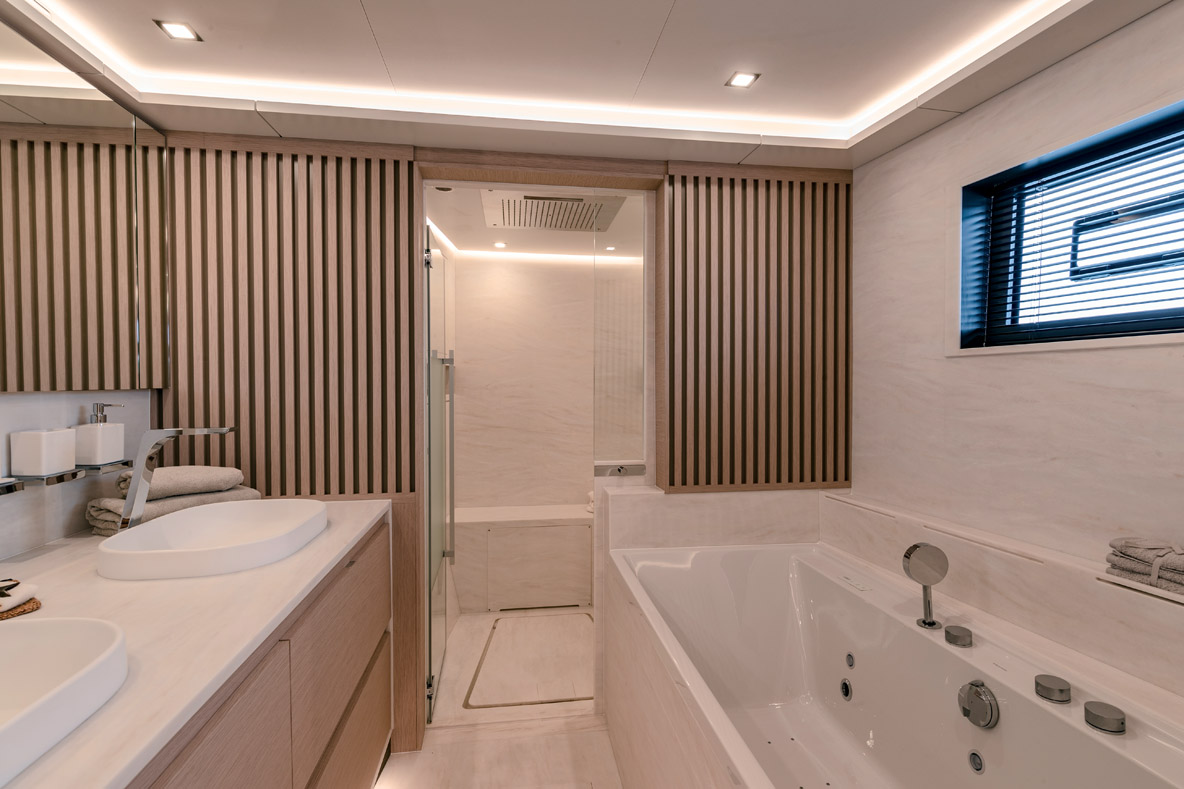
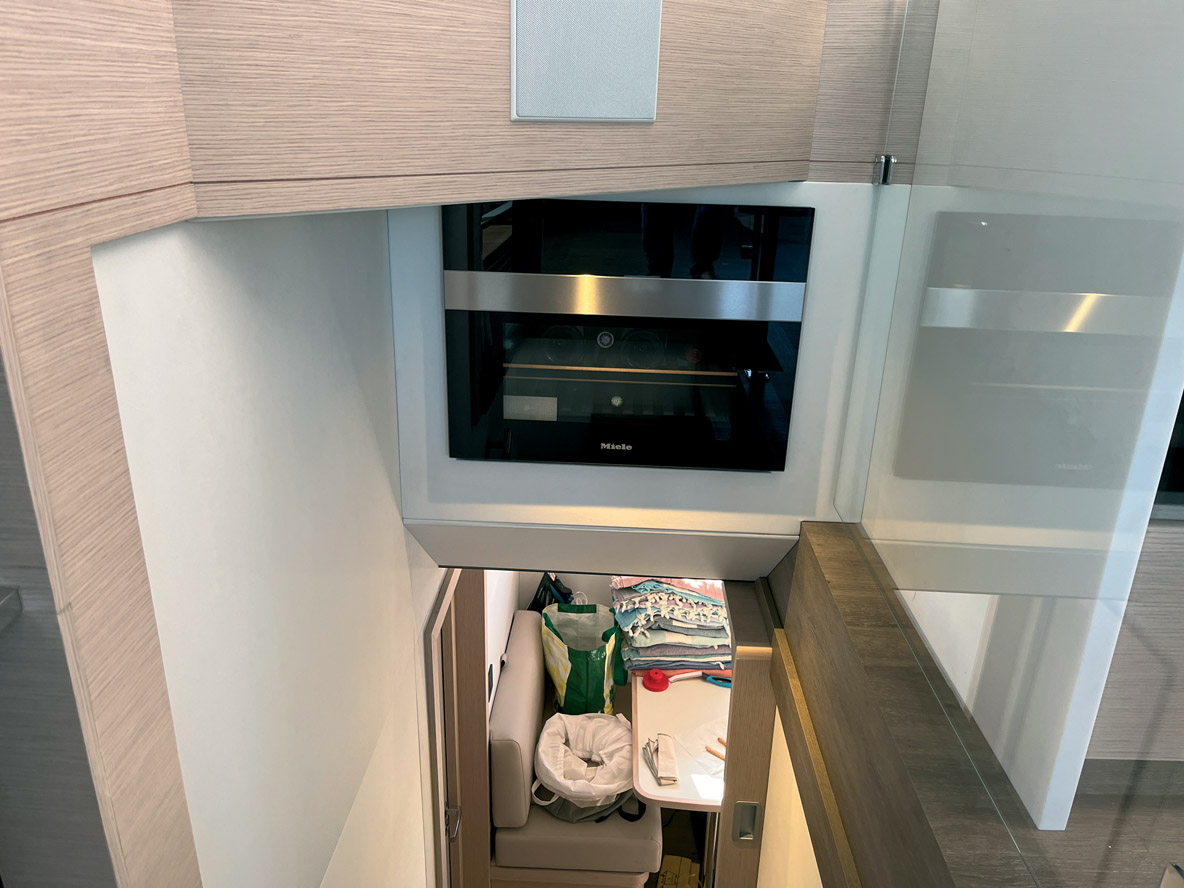
The difference between the first two Thíra 80s is tangible: on this one, the galley is on the main deck, whereas hull #1 was a “galley- down” version, it being located in the port hull. From the outset, the choice is between an open-plan galley in the saloon or a more discreet one on the lower level. In both cases, a crew mess area and crew cabins are located in the port hull, with the aim of preserving the privacy of guests while providing real comfort for the crew. The 540 square foot (50 m²) living room is devoid of any elements up high, therefore offering a panoramic view from the entrance - guarded by a superb galley bar. To starboard, a saloon welcomes all guests, while opposite, depending on the layout, is seating space or the galley. Aboard Serrenissima III, the galley-up version, the central island leads to the forward door and decked area in front of the coachroof. But before you get there are the two main companionways to the hulls, which house 4 to 6 cabins. Unsurprisingly, Owners are the most spoiled: their 215 square foot (20 m²) suite includes, in addition to a king-size bed, a desk, a lounge, and a closet giving access to a double-basin bathroom and a Jacuzzi bathtub. Customization is organized by catalog to create a unique décor. You can opt for one of three types of wood for the furniture and floors, and one of four shades for the leather trim on the chests of drawers and the chart table. With the upholstery available directly from the Pierre Frey catalog in Paris, the combinations are infinite - refinement is guaranteed!
Offshore Cruising with Complete Peace of Mind
Serrenissima III is equipped with the largest drivetrain option available. The twin 425 HP Cummins motors are almost 2½ times more powerful than the 175 HPs supplied as standard. An intermediate 2 x 270 HP option is also available. After leaving port, we cruised at 9 knots, with only a faint hum, proof that the care taken to insulate the engine compartments and bulkheads, as mentioned earlier, has a very positive effect. At this speed, fuel consumption is 8 US gallons (30 liters) per hour, or just over 0.8 gal (3 l)/mile. At 10 knots, this figure rises to 13 gal (50 l)/hour, which is quite dissuasive given the small gain achieved. Once offshore, the captain stopped the engines to hoist the mainsail and gennaker - the 4,300 square feet (400 m²) are perfectly adapted to the day’s breeze, which managed to settle at Force 2-3. Maneuvers are operated electro-hydraulically by the crew from the forward area of the flybridge, which houses two steering wheels and a central console. The well-defined aft area is dedicated to relaxation. On a close reach, we followed the Riviera coastline at 6 knots in 10 knots of wind. This ratio of max speed = 60% of true wind speed is precisely part of the specifications for Fountaine Pajot’s new flagship multihull - at least from 5 to 20 knots of wind. By optimizing the sail area, it is therefore possible to expect an average of 12 knots. Beyond that, of course, you’ll have to scale back, as the strain on the rig will quickly become too great.
Conclusion
Who would have thought that the shipyard founded by two sailing champions in 1976 to build lightweight dinghies and windsurfers would be delivering 66-ton monsters almost 50 years later? Fountaine Pajot’s new flagship combines discreet luxury with the elegant lines of a real sailing yacht. The openness to semi- custom finishes is obviously a plus, and potential customers are clearly keen, with hull #3 in the series having already been ordered. To add to the mix, the Thíra 80 is lively at the helm, even in light airs. This is definitely a sailing superyacht!
Semi-custom Construction : The Shipyard Teams, the Architects and... the Customer!
Luxury and comfort both under way and at anchor
Numerous relaxation areas
Slightly high view of the sea from the beds
Technical specifications
Overall length: 78’8” (23.98 m)
Beam: 36’5” (11.09 m)
Draft: 6’11” (2.1 m)
Light displacement: 66 t
Mainsail: 2,150 sq ft (200 m²)
Genoa: 1,505 sq ft (140 m²)
Standard drivetrain: 2 x 175 HP
Optional drivetrain: 2 x 270/425 HP
Fuel: 634 US gal (2,400 l)
Water: 420 US gal (1,600 l)
Generator: 2 x 19 kW
Cabins: 4, 5 or 6 + 3 crew
Price: from € 7,500,000 ex-tax