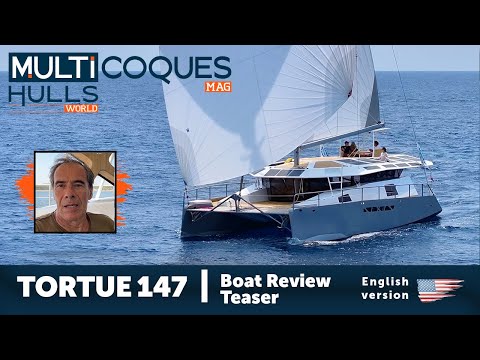
Revealed to the public for the first time at the International Multihull Show, the Tortue 147 has been the subject of much discussion, as evidenced by the comments accompanying our online videos. So, are we dealing with an avant-garde multihull that’s both environmentally friendly and the embodiment of a pioneering way of life at sea, or is it the culmination of a vague, hippie-esque dream? To try and provide some answers, there was only one solution: step aboard, cast off, and set sail...

Infos pratiques
- Le chantier : Tortue 147
- La fiche technique
-
 Découvrez notre vidéo exclusive
- Financez votre Tortue 147
- Assuez votre Tortue 147
- Articles autour du Tortue 147
Conditions: 5 to 10 knots of wind, calm sea
Cataruga? No one had heard of a boatbuilder by this name before the first announcements of the development of a curious aluminum catamaran... Cataruga is actually a combination of catamaran and turtle (tortuga) in Spanish, which pretty much sums it all up! The images we’d seen already suggested a multihull that could be described as more than a little unconventional. At Multihulls World, we’ve always had an open mind and take a positive view of different architectural approaches – ensuring we avoid preconceived ideas such as “A skipper friend of mine thought that blah blah blah...” And we can assure you of one thing: we were certainly not disappointed when we finally got to see the Tortue 147 in real life!
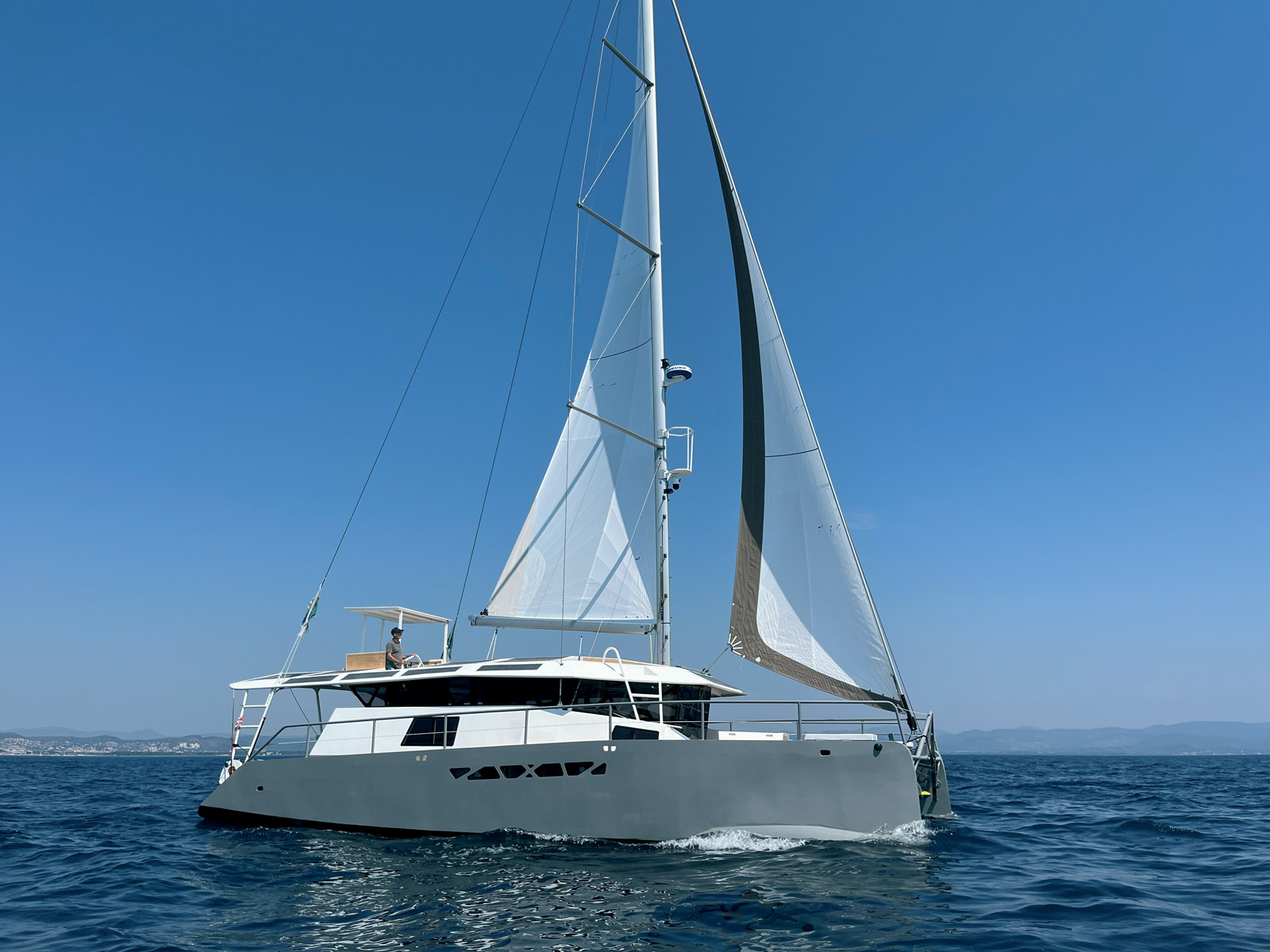
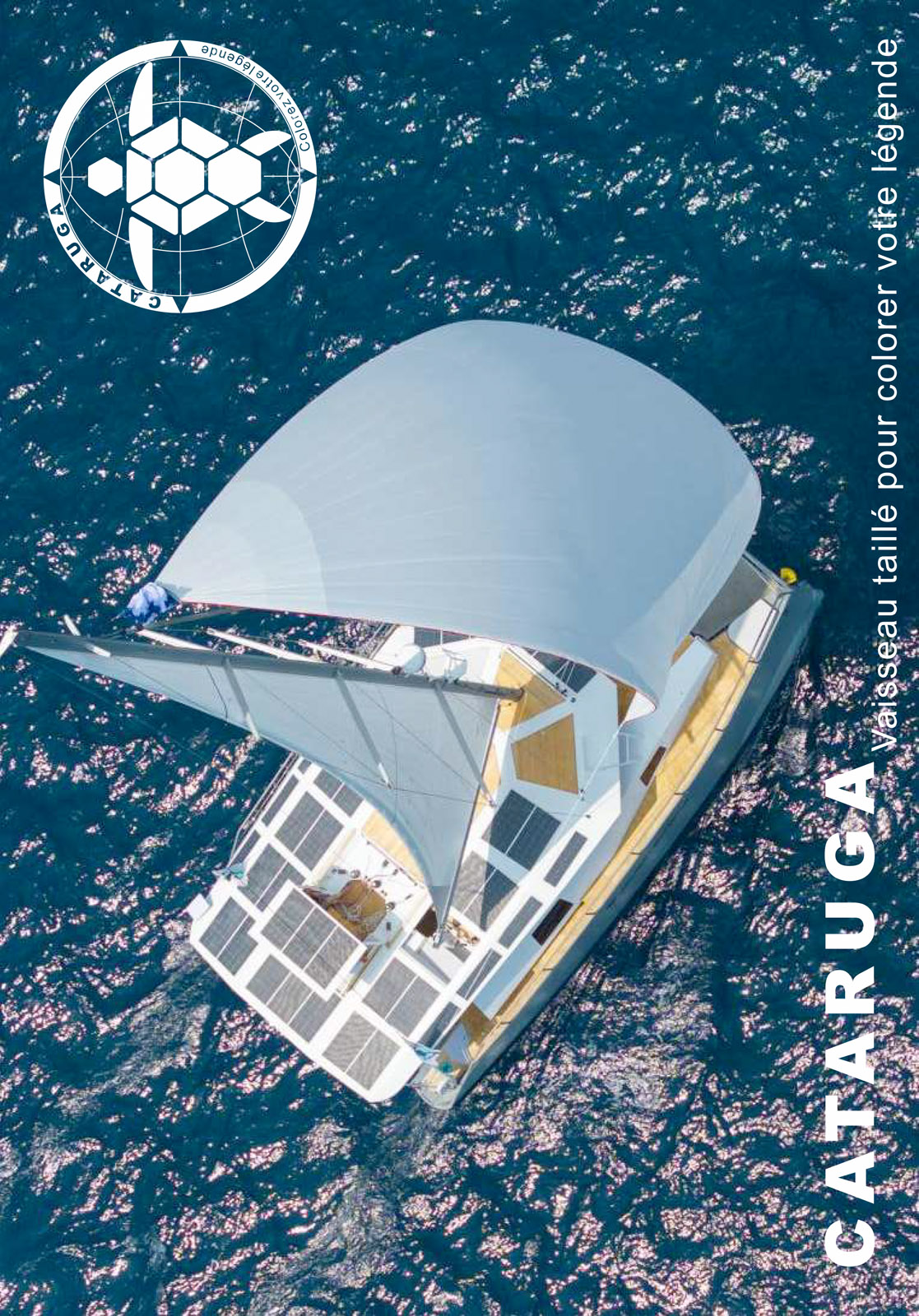
With its sturdy raw aluminum hulls fitted with bulbs and its coachroof that seems to spill out everywhere, this catamaran unmistakably evokes exploration. A program somewhat reminiscent of the famous Banana Split by the renowned French singer- sailor Antoine.
Taking Inspiration from Turtles
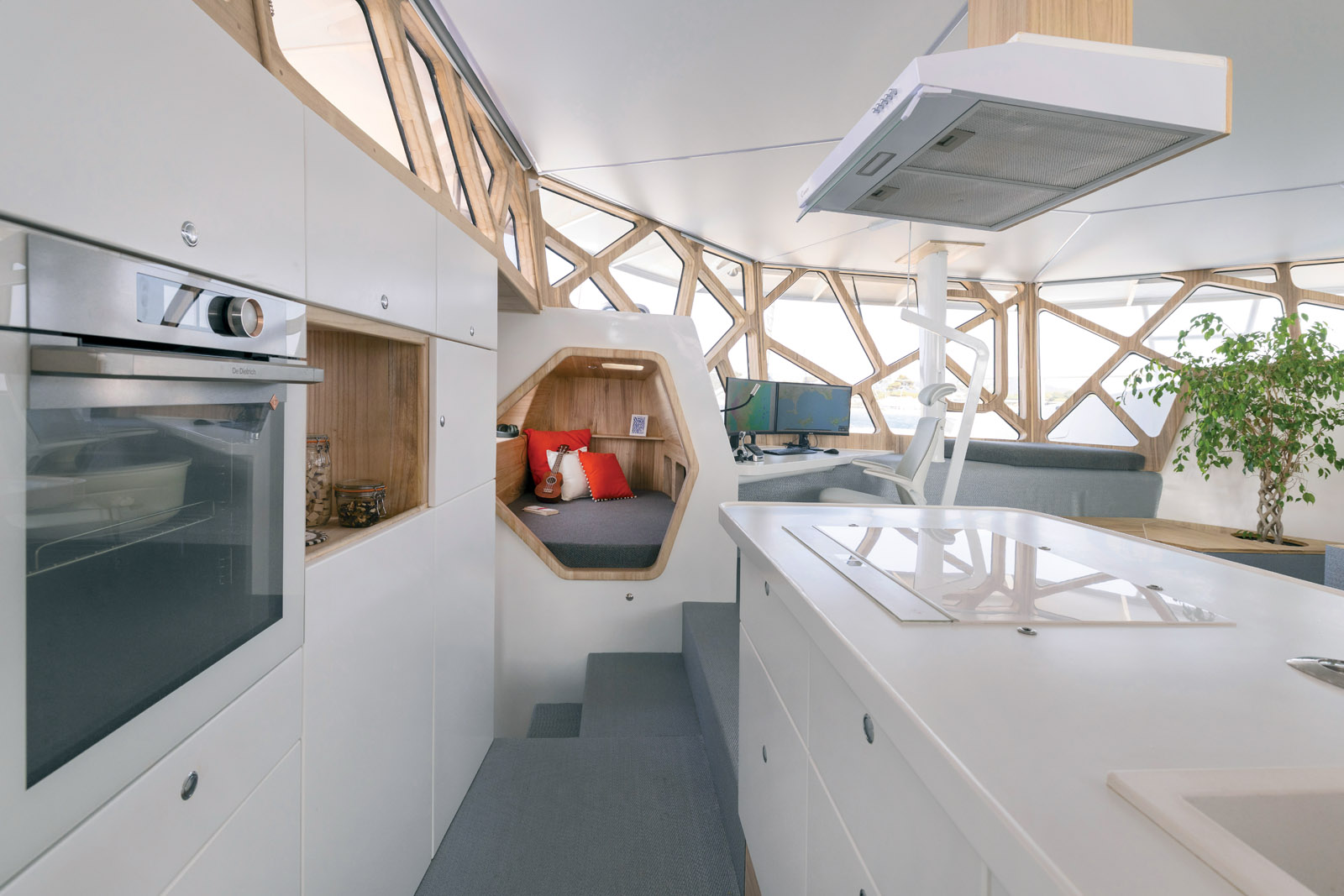
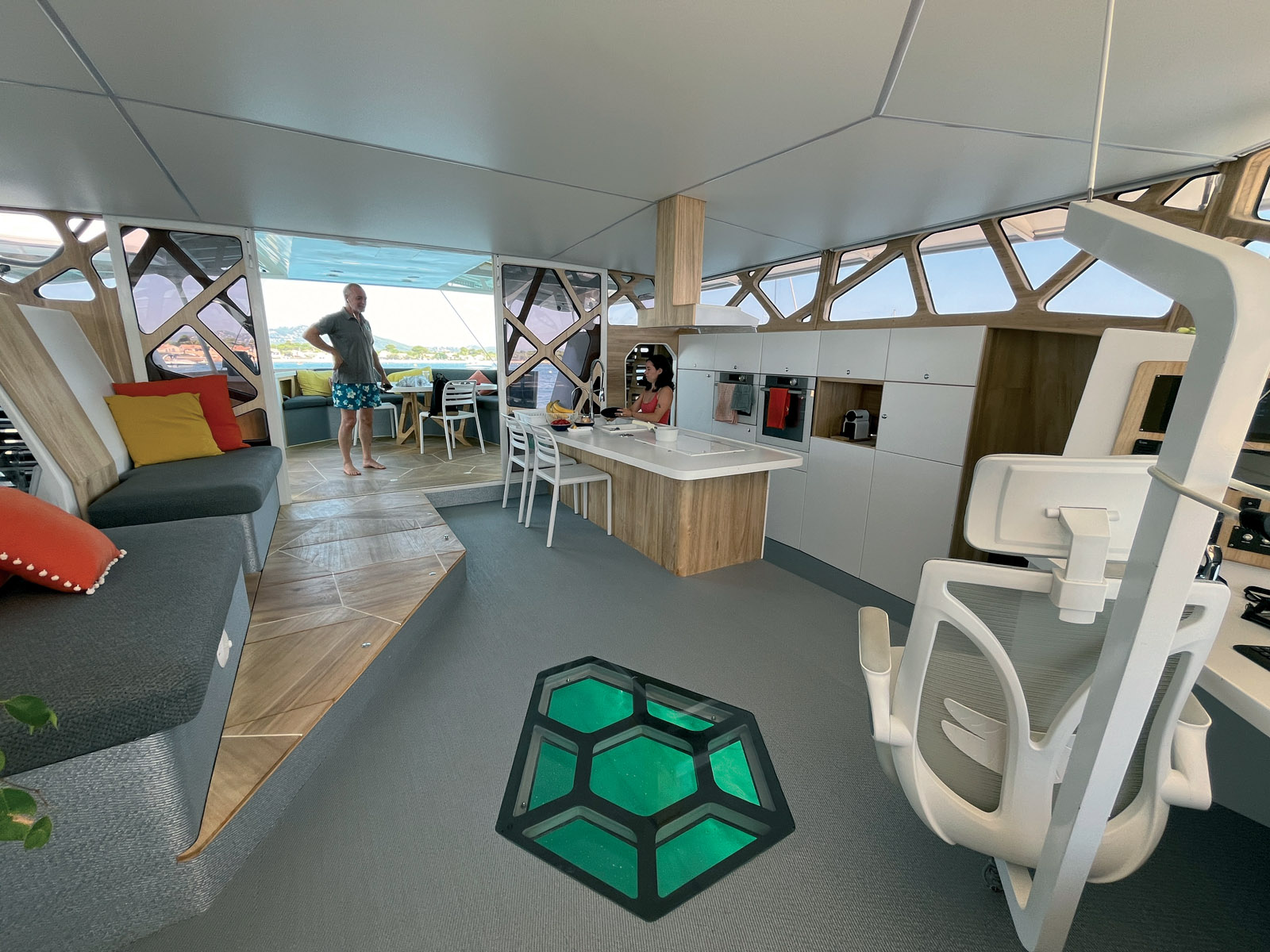
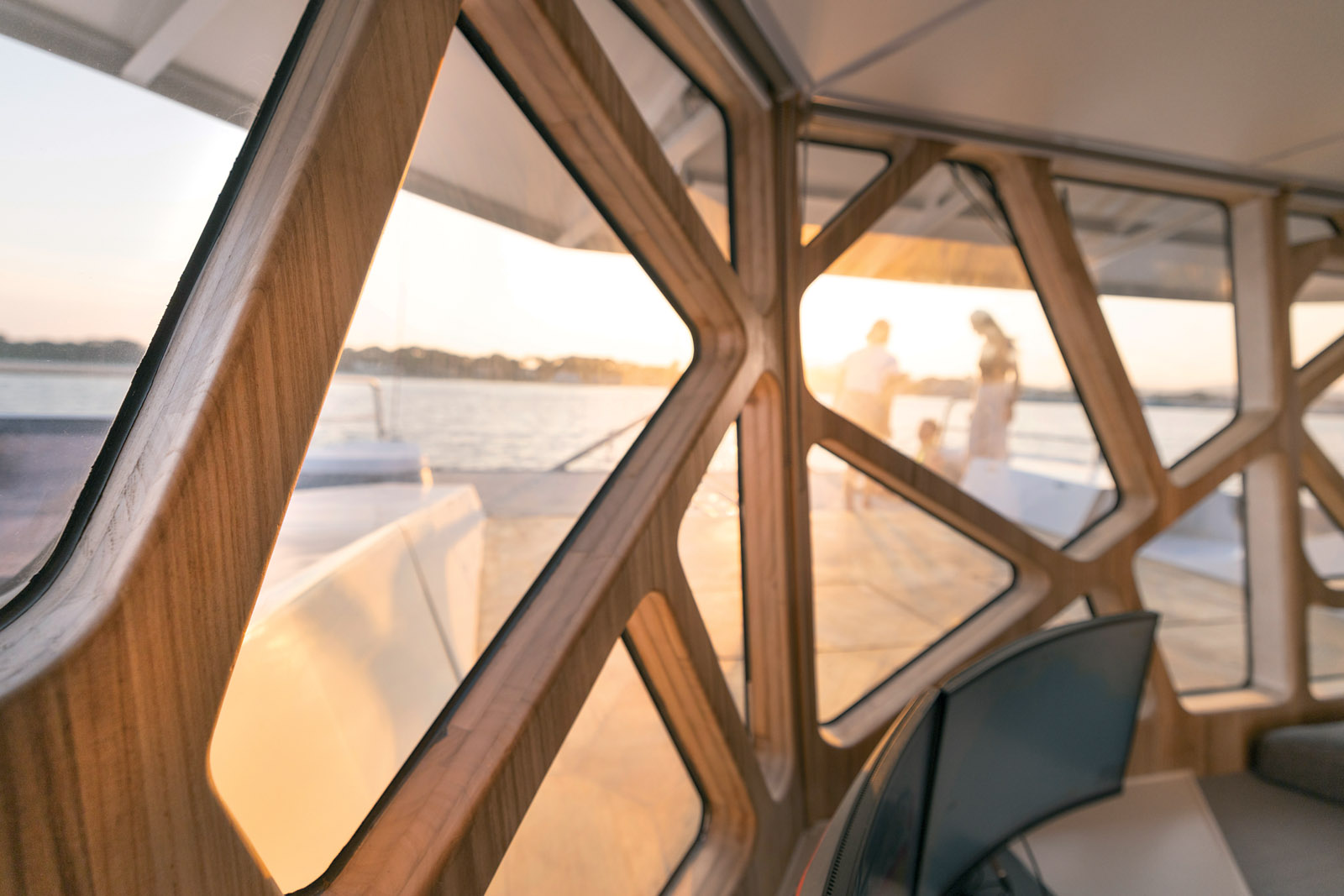
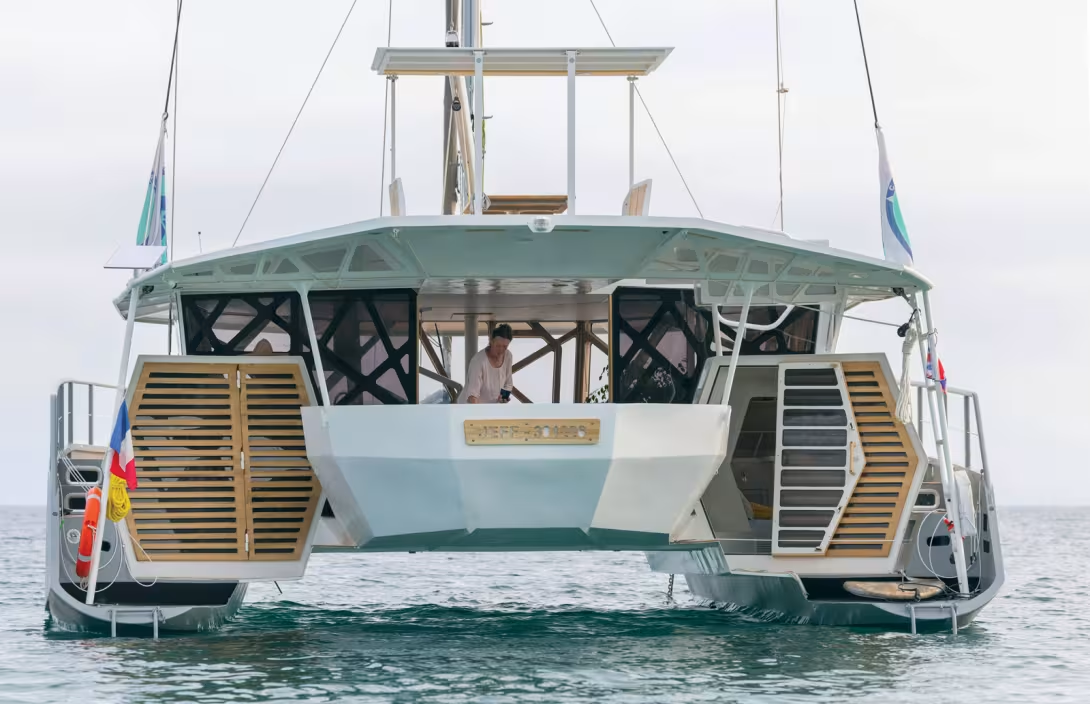
On closer inspection, the shape of the windows in the coachroof and the hulls resembles features a puzzle-like cutout. This is the first artistic approach... which uses the turtle and its shell as a source of inspiration. Discovering what lies beneath the shell of the Tortue 147 is like opening Pandora’s box, releasing a multitude of questions and surprises – we’re definitely a long way from the conventional products that come out of the molds at the big shipyards! When you step aboard, you immediately find the same concave and convex shapes on the floors that characterize a turtle’s shell. It’s surprising to say the least – I can’t wait to meet the designer of this unique ocean-going catamaran.
A Childhood Dream
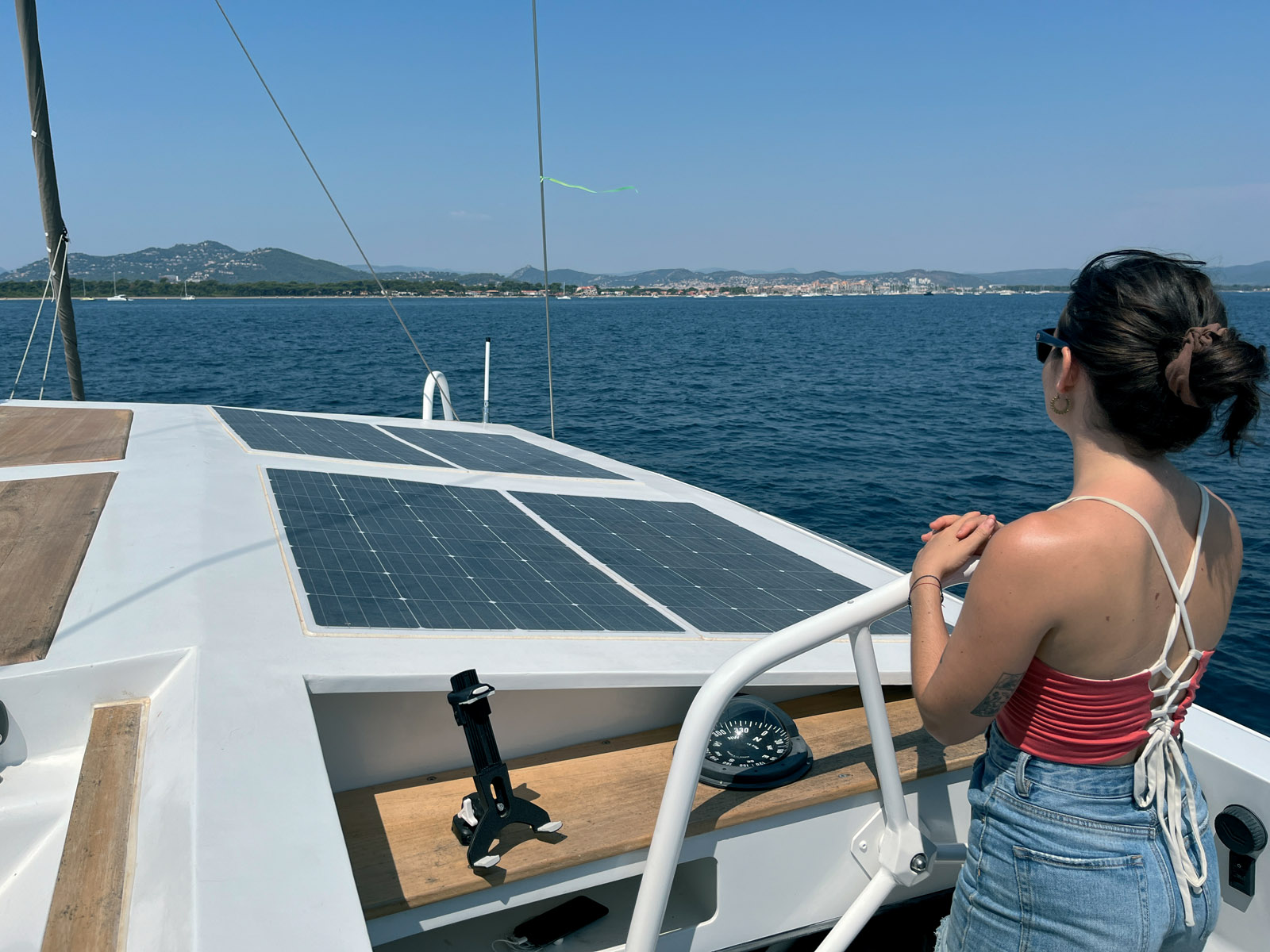
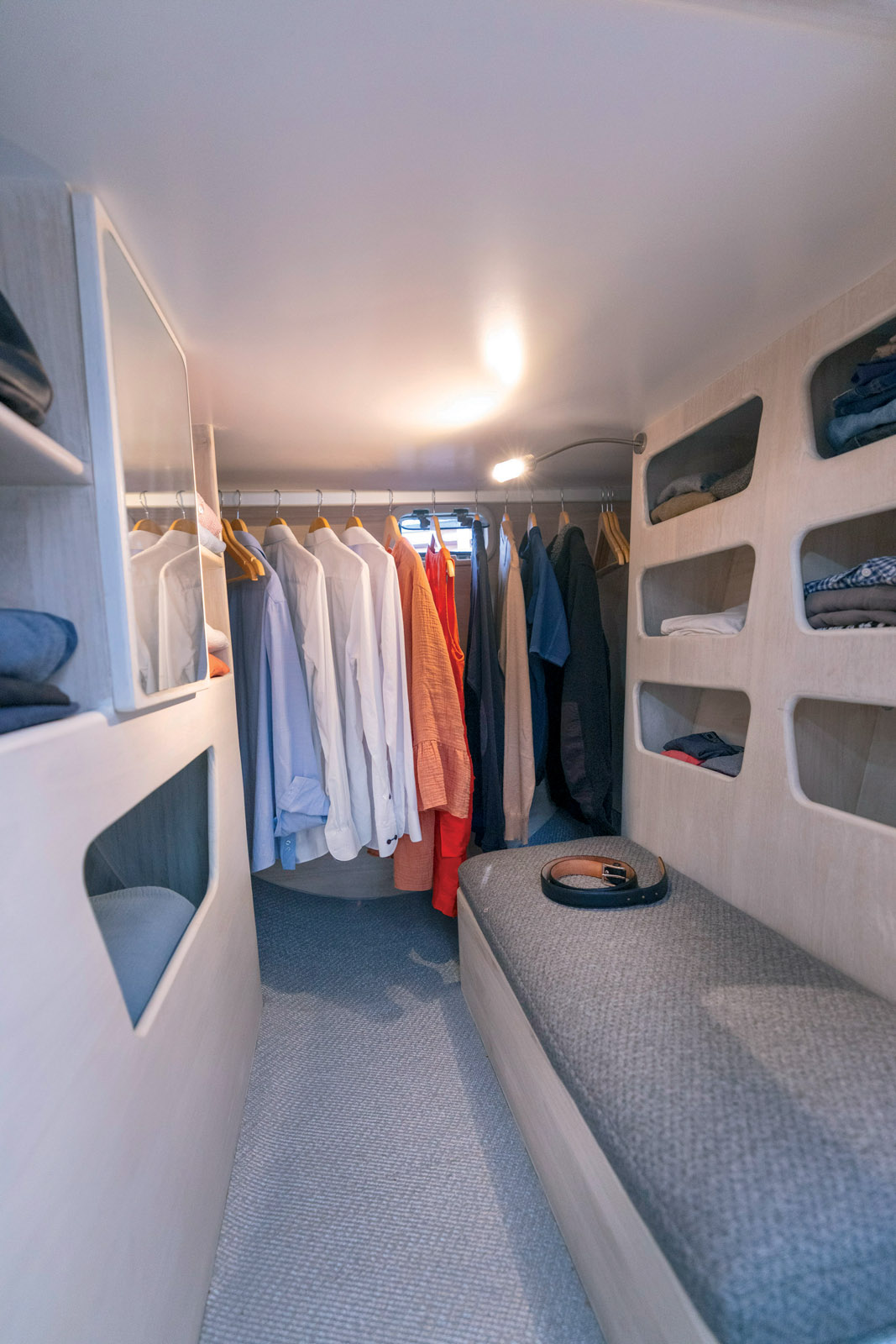
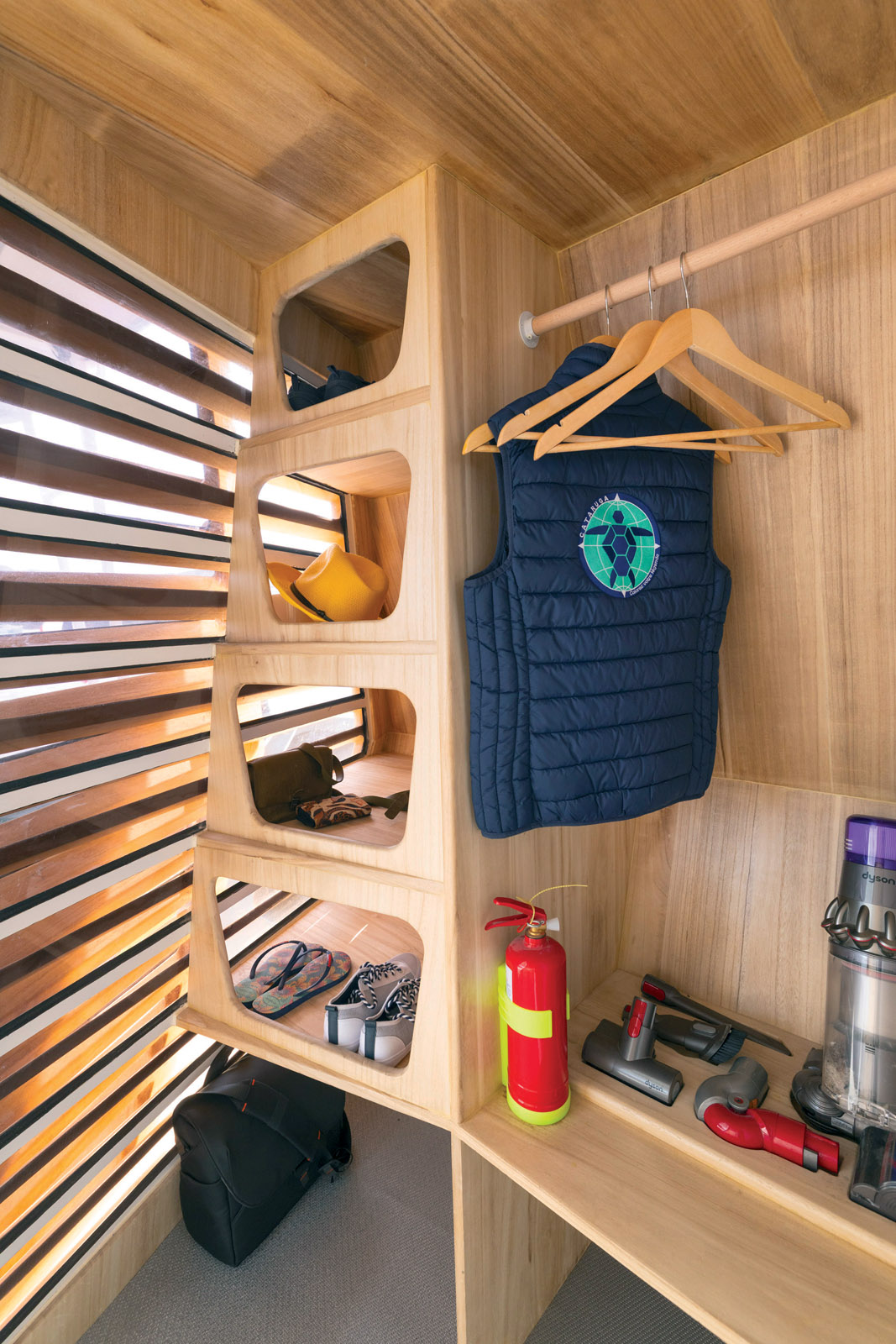
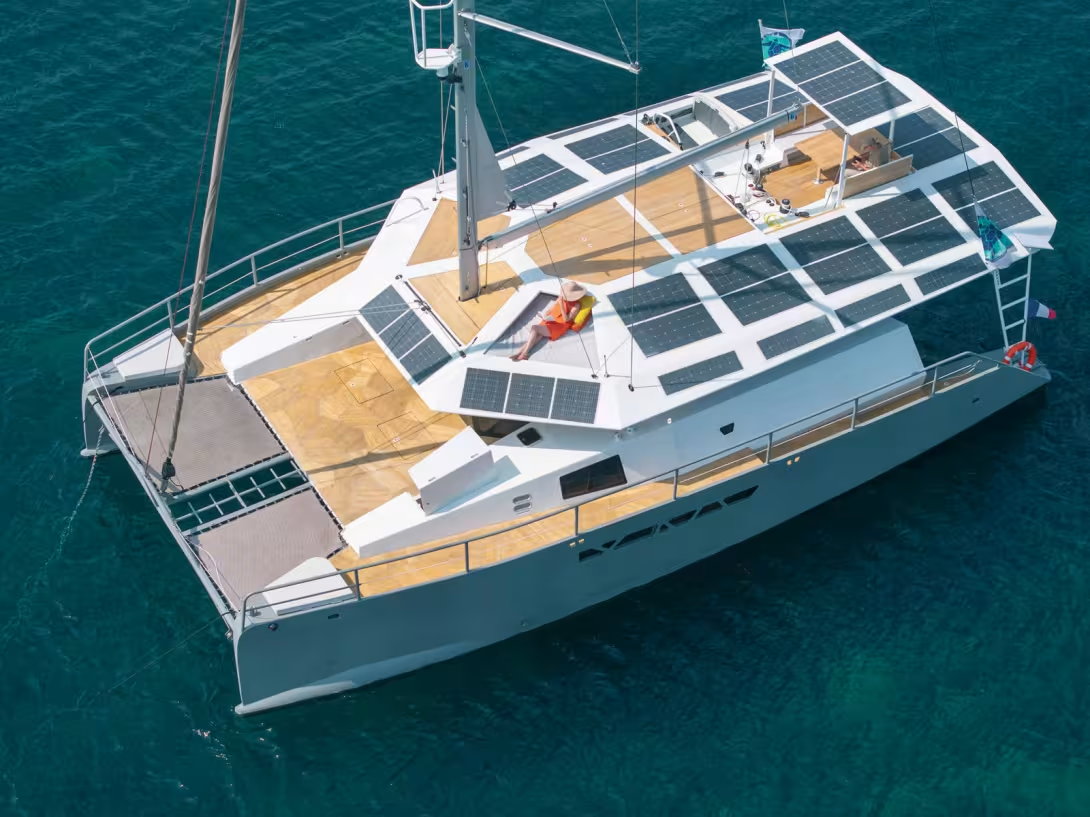
With a smile on his face, Jean Sommereux, founder of Cataruga and designer of this first model, welcomed me on board. On entering, I had to leave my belongings in the dressing room... I’ll come back to that a bit later. An engineer by training, Jean has retained his childlike carefree attitude and, above all, his dreams. Attracted from the outset by Amel sailboats for their central cockpit, comfort, and a thousand and one features that make sailing and living on board easier, he finally had a schooner built inspired by Pen Duick III, whose design he loved. Over the course of the next four years’ sailing, his vision of the ideal sailboat became clearer. The two most important points? Ease of solo handling and the ability to work on board. Jean turned his attention to a “multihull for living” capable of sailing independently away from busy waters. He was attracted to Leopard catamarans for their fluid movement, but also to Outremer and Neel for their performance... Jean readily acknowledged that speed and comfort are sometimes contradictory - given the choice, he prefers steady averages, without excess. The specifications were refined with the adoption of thick aluminum as the construction material. After attempting to collaborate with a shipyard called Meta (which has since ceased operations) and several architects, he finally formed his own team, bringing in interior designer Jean-Michel Kalfon (JMK Design). Together, they designed the Tortue 147, a sturdy, easy-to-handle cruiser measuring almost 50 feet (15 meters). The layout is ergonomically designed to make life on board enjoyable, while simplifying functionality, including the most technological aspects, for maximum peace of mind when under way. To achieve the desired level of self-sufficiency for the Tortue, Jean thought big: more than a ton of fuel, 300 US gallons (1,200 liters) of fresh water, a 20-gallon (75-liter) hot water tank, and a 6-kW generator in case the 5.5-kWp solar panels were not enough. In good sunshine, these produce between 15 and 20 kWh/day, which roughly corresponds to the estimated daily consumption of between 12 and 15 kWh—up to 25 kWh with air conditioning. On board, everything is just like at home: induction hob, coffee machine, and even Starlink for communication. “Everything’s got to be designed for life at sea. A house, yes, but on the water... a bit like a turtle carrying its house on its back”.
A Craftsman-like and Sustainable Approach
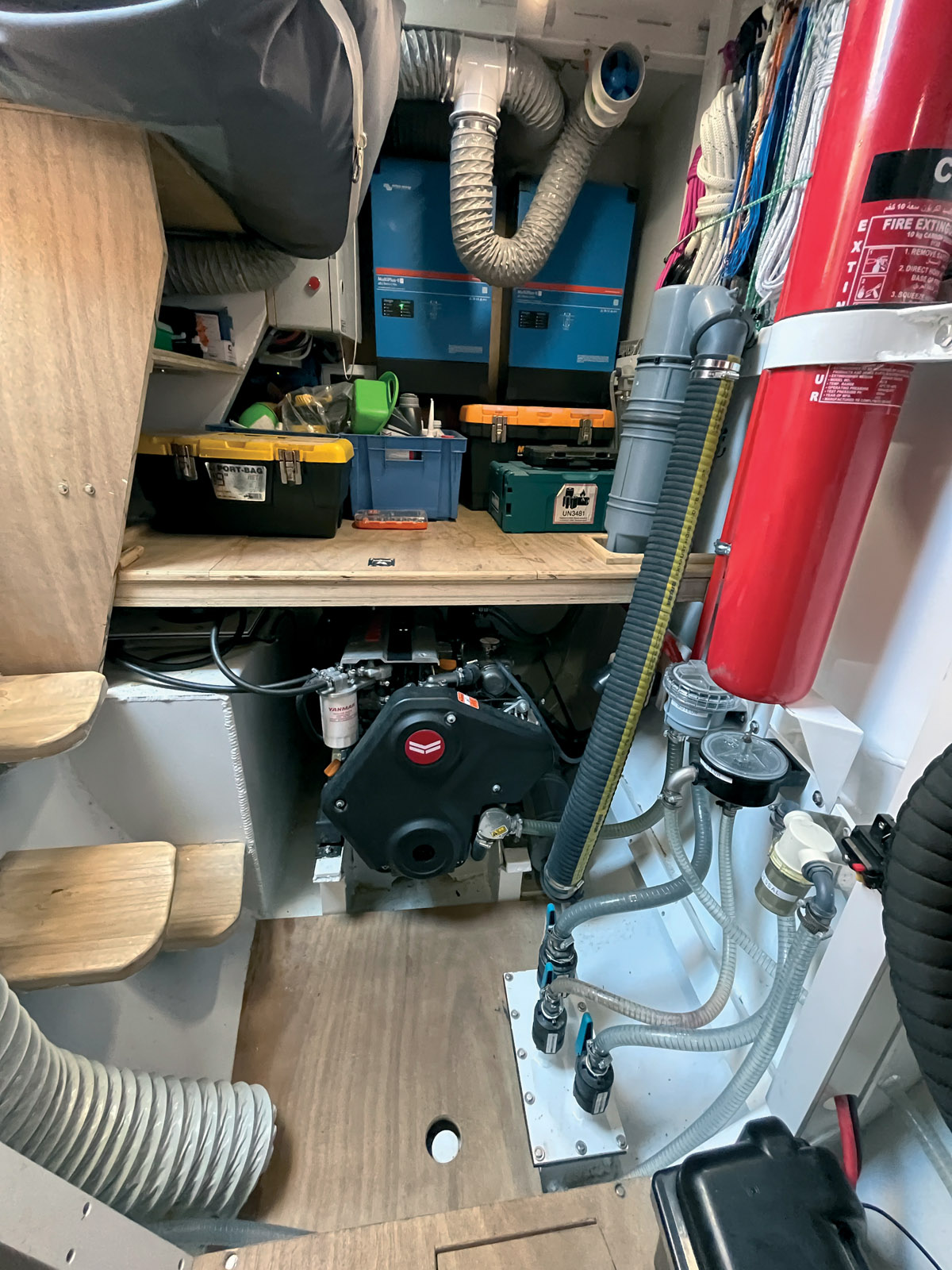
For the construction, Jean set up his own workshop in the village of Hergla in Tunisia, where he has lived for many years. He wanted this to be a human and collective endeavor. It must be said that Jean is a furniture manufacturer by trade, which gives him a wealth of experience in production and team management. He is supported by Julien Bernillon, a naval engineer, and a team of craftsmen specializing in metallurgy and furniture. However, despite the high level of comfort required, Jean wanted to implement an environmentally responsible approach. Aluminum of 8 to 10 mm thick was chosen as the material for its recyclability, its relative lightness, and also for the possibility of adapting shapes and sizes more easily - which proved almost indispensable for the first unit. For the fittings, Paulownia wood was chosen because, in addition to its ability to grow back very quickly after being cut and absorb ten times more CO2 than other trees, it has interesting properties for boatbuilding. It is light and mechanically strong, but also resistant to moisture and does not store heat from the sun. Native to China and Korea, this species grows very well in Spain and Italy, which means reduced transport costs. For strength and practicality when taking the ground, long skeg keels enclose the propeller shafts. It should be noted that the engines (twin 57 HP Yanmars) are located forward. They are equipped with optional electric motors (2 x 10 kW) connected by belt-drive to the shafts and can also provide hydrogeneration. The rudders are protected by skegs that shield them from any unexpected contact. The rig is by Sparcraft. Here again, solutions for a short-handed or even novice crew have been chosen, such as an in-mast furling mainsail and an electric furling self-tacking jib. A spinnaker can be hoisted on the windward bow for downwind sailing, but a central gennaker has not yet been planned for this first model. It should be noted that CE certification is still in progress, so modifications may still occur.
A Never-before-seen Layout
On deck and down below, the surprise is total: the Tortue 147 completely rewrites the rules of naval architecture. Here, the aim was not to sell square feet and volume, but to create a unique atmosphere.
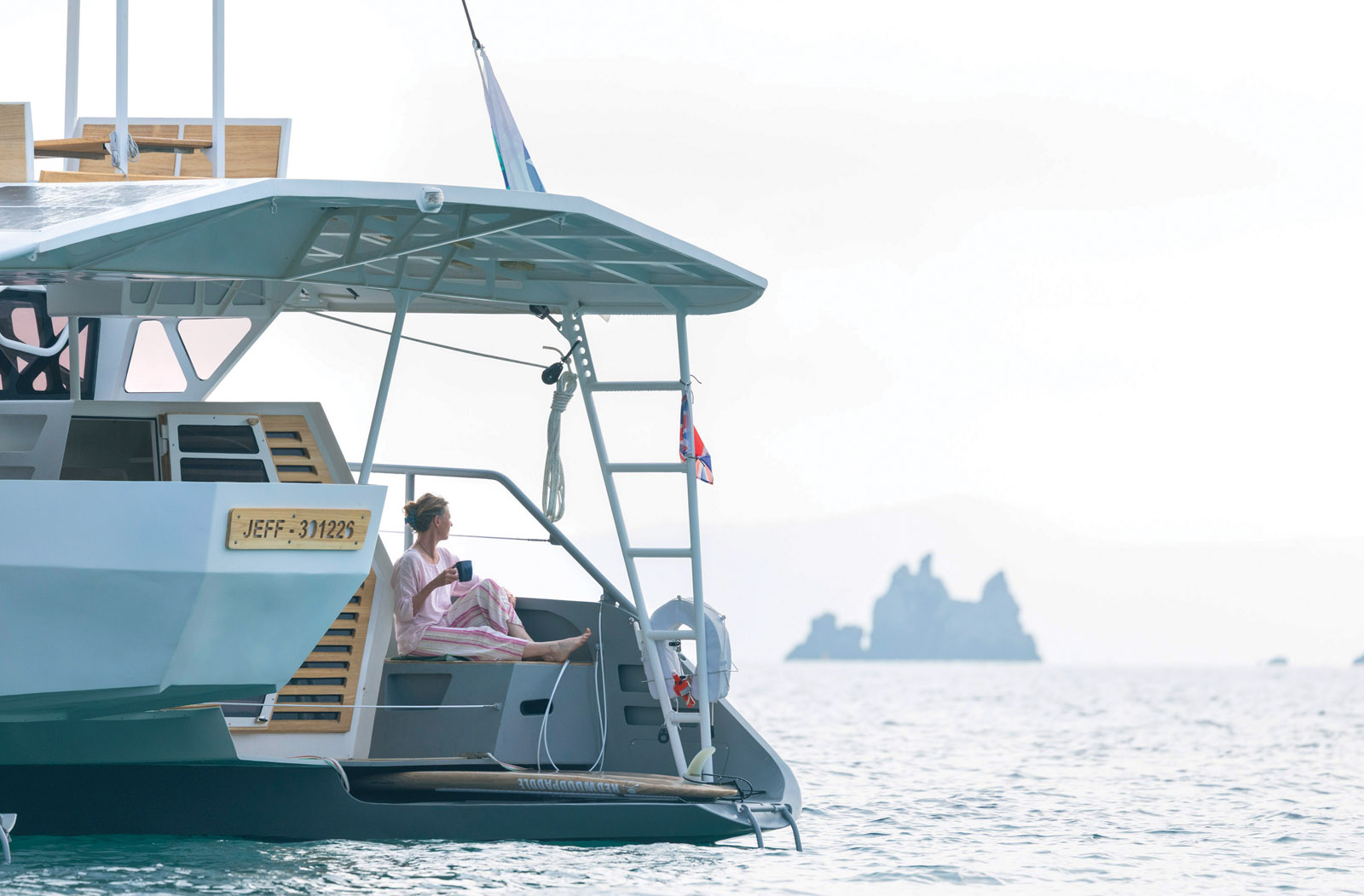
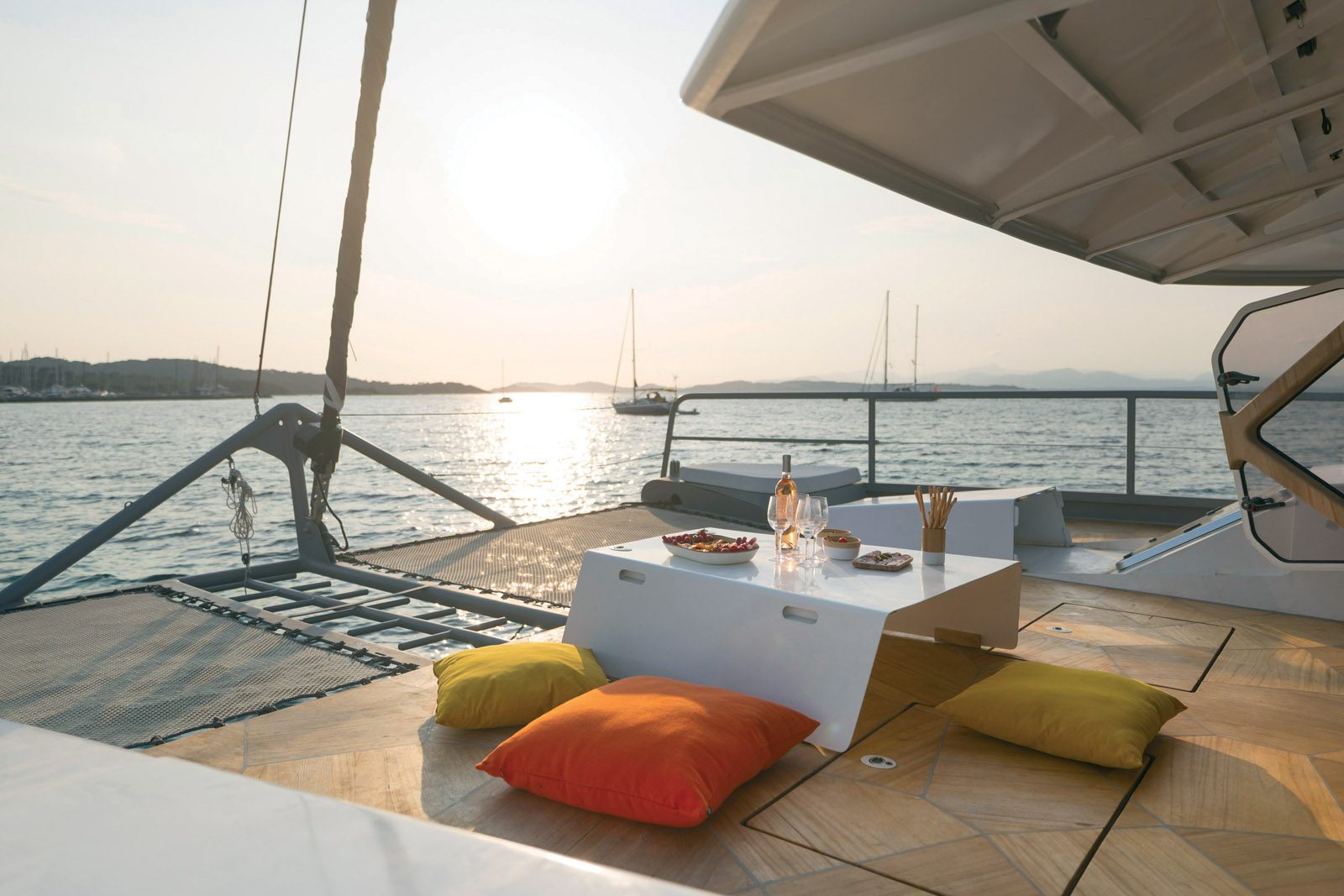
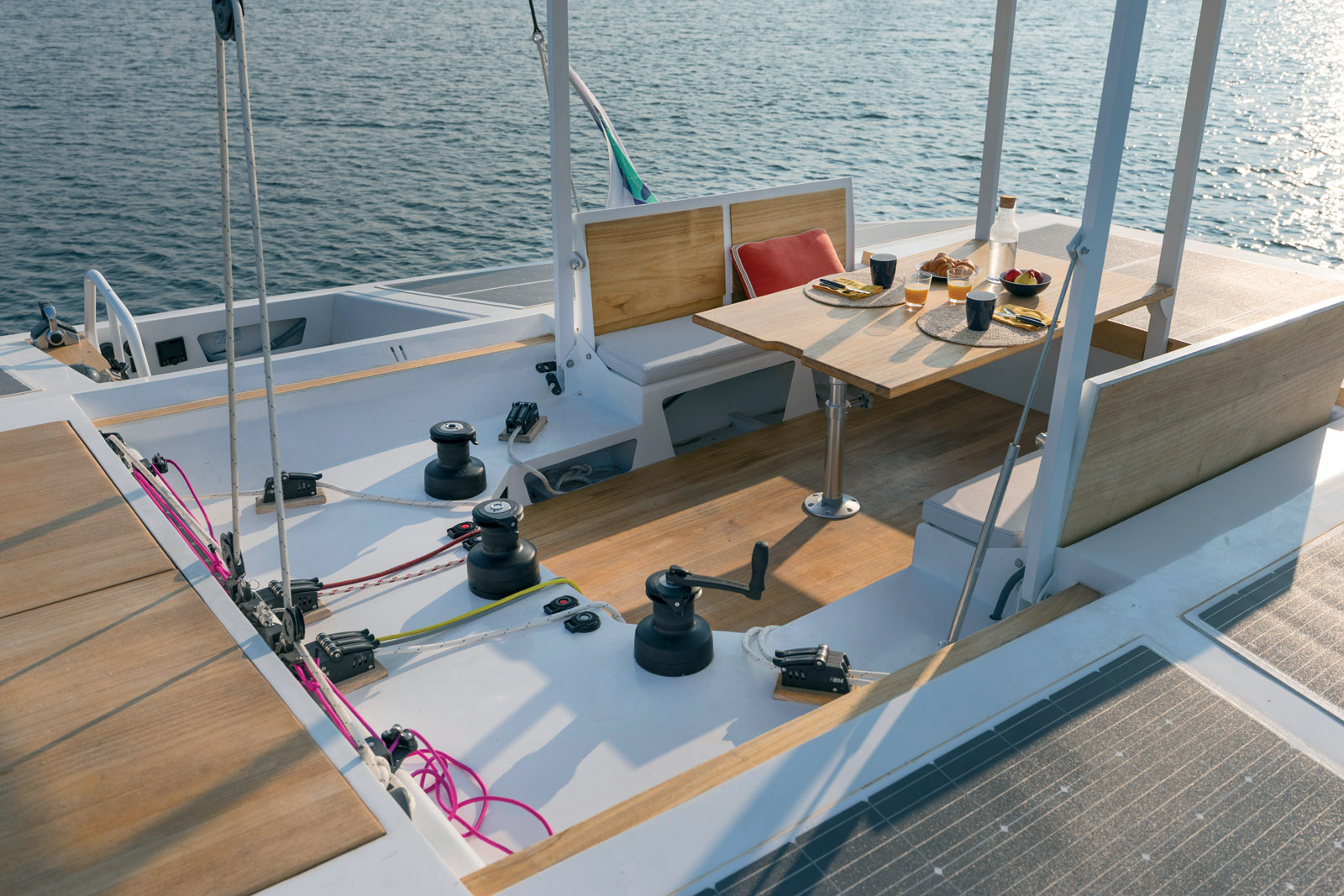
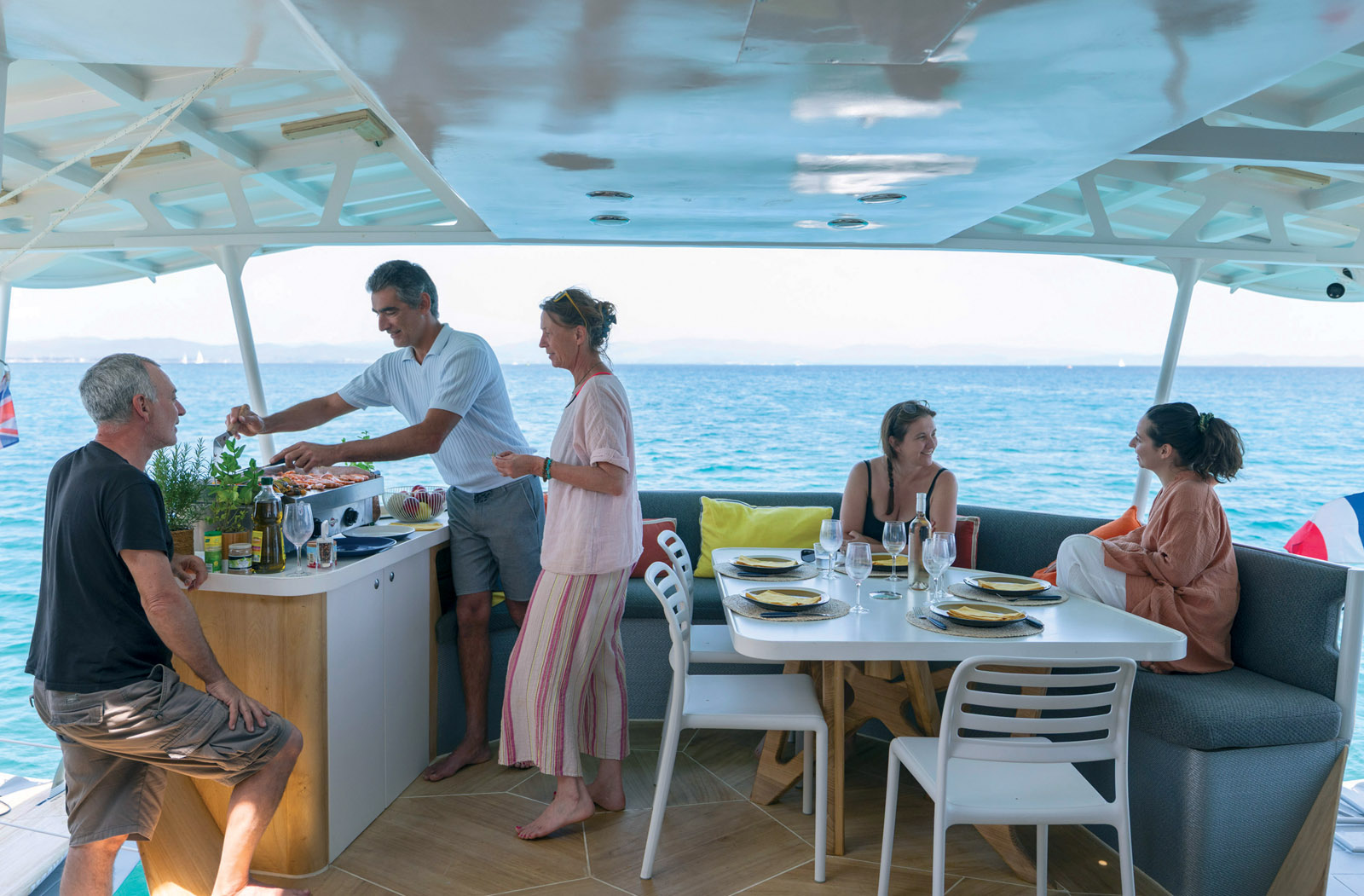
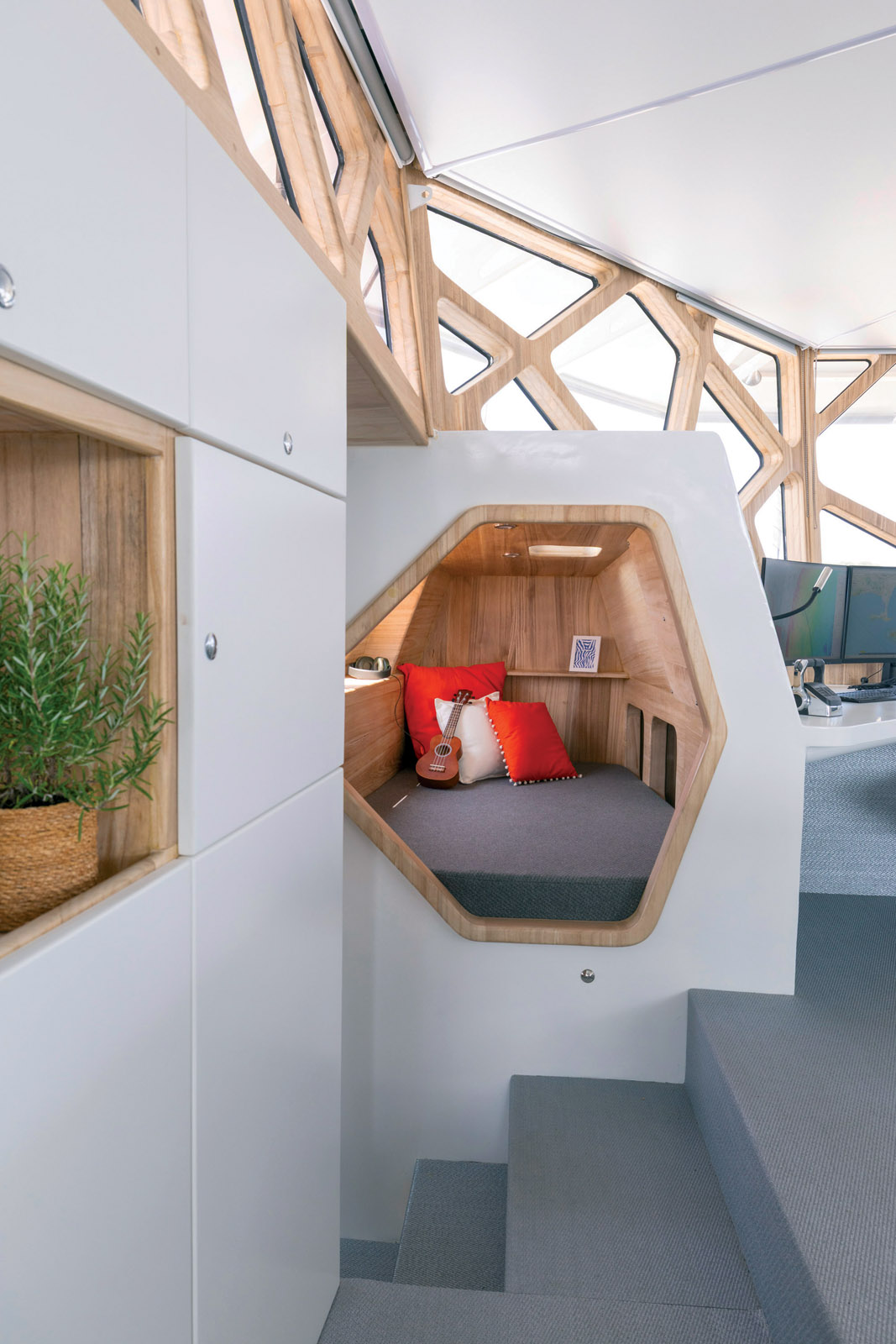
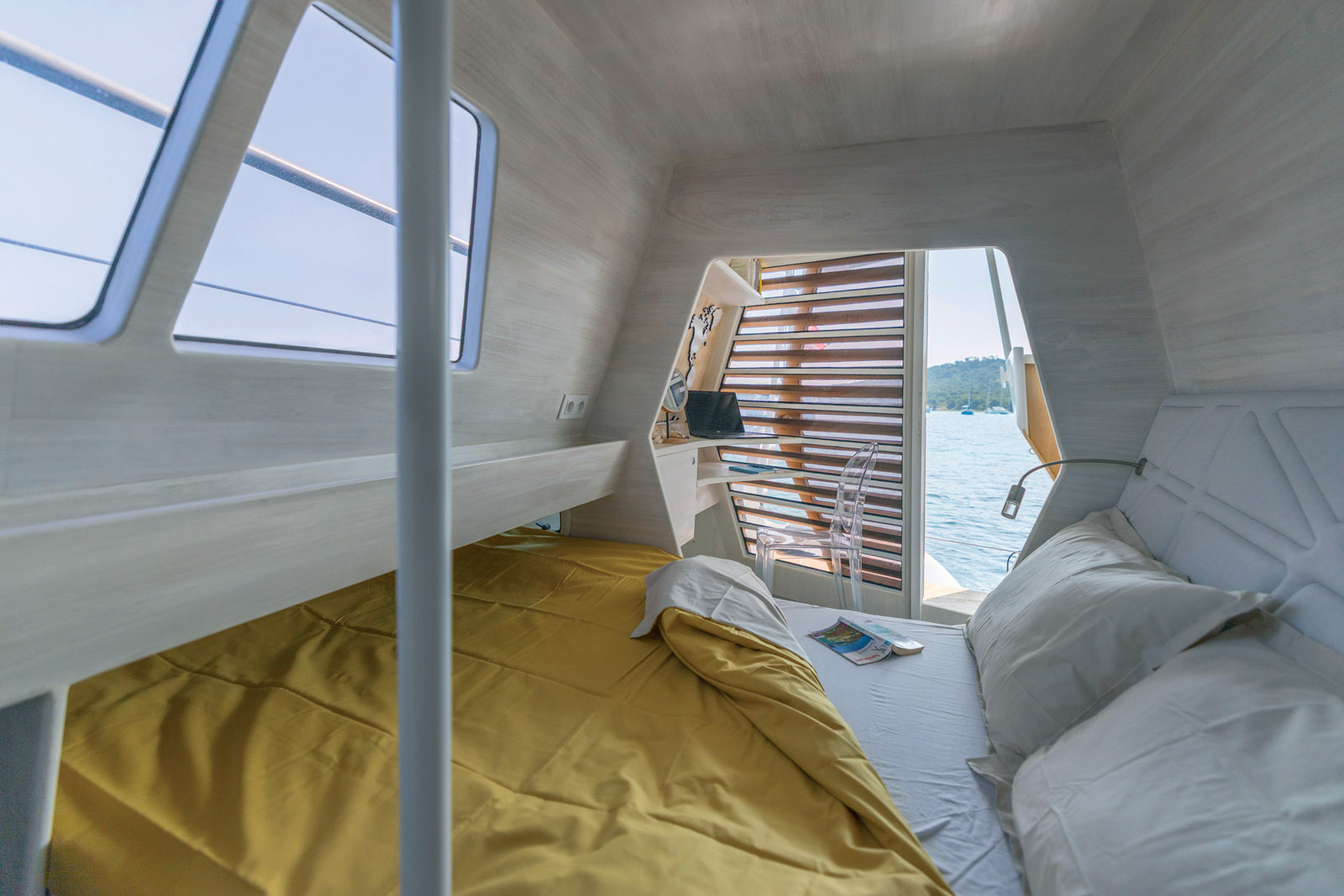
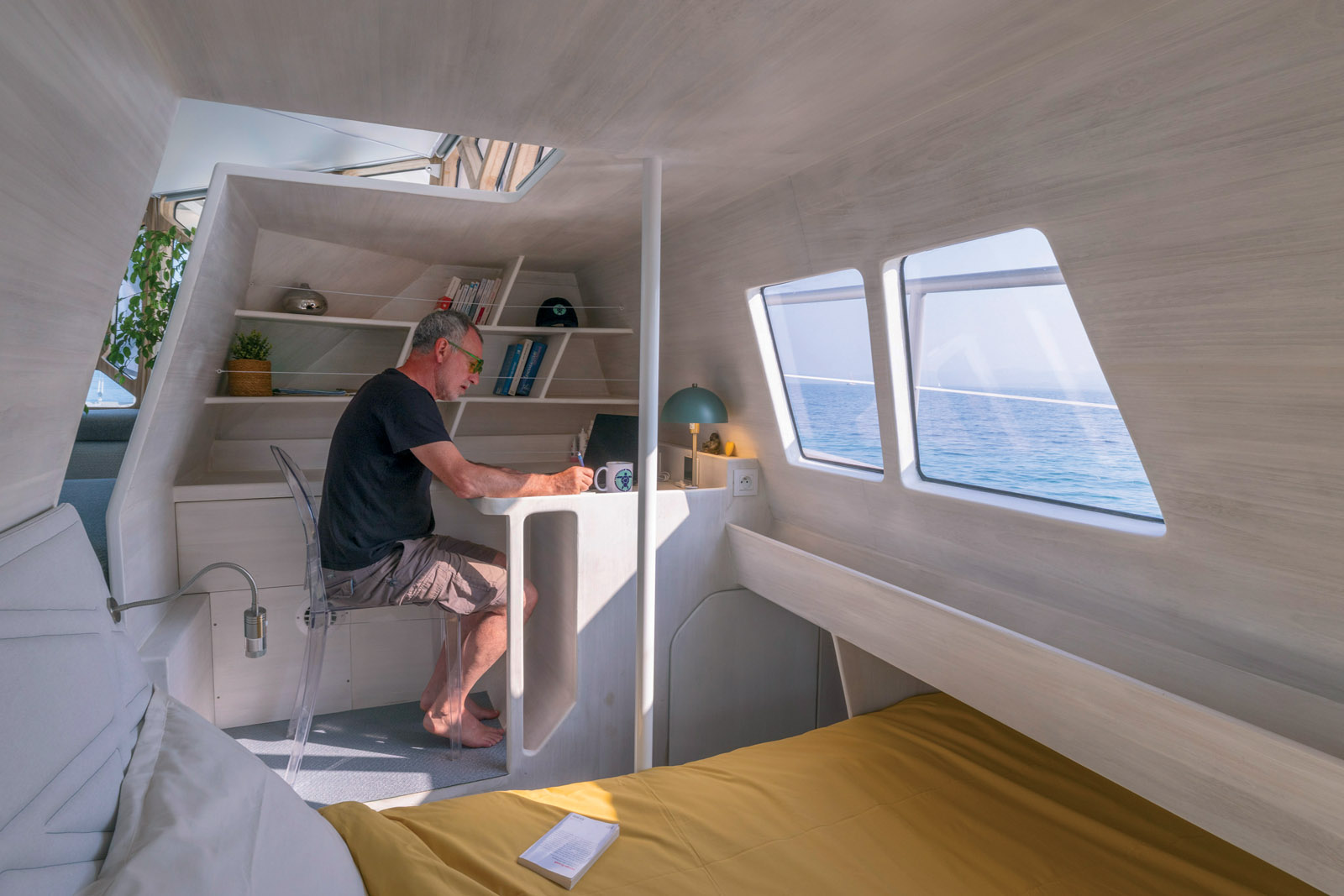
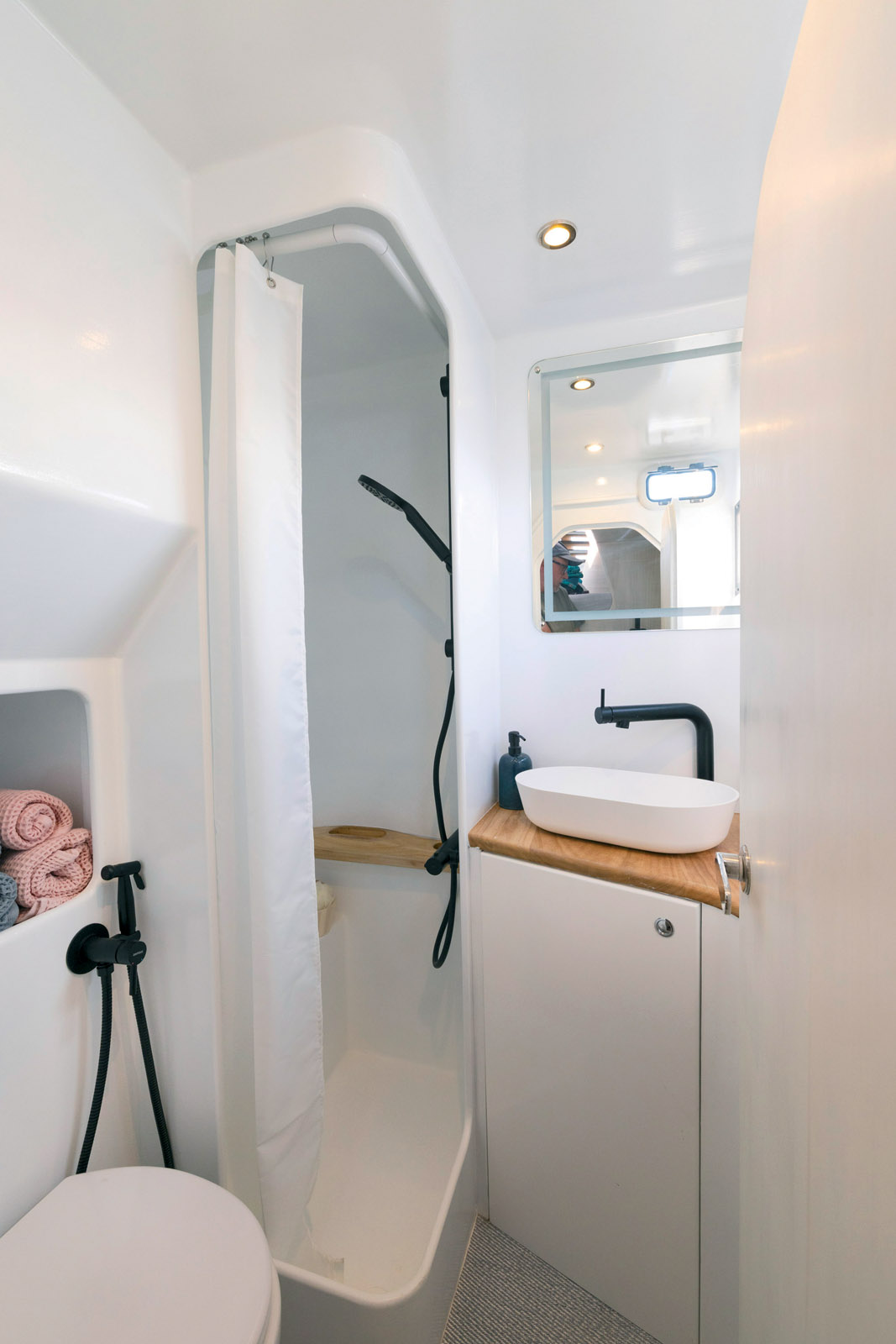
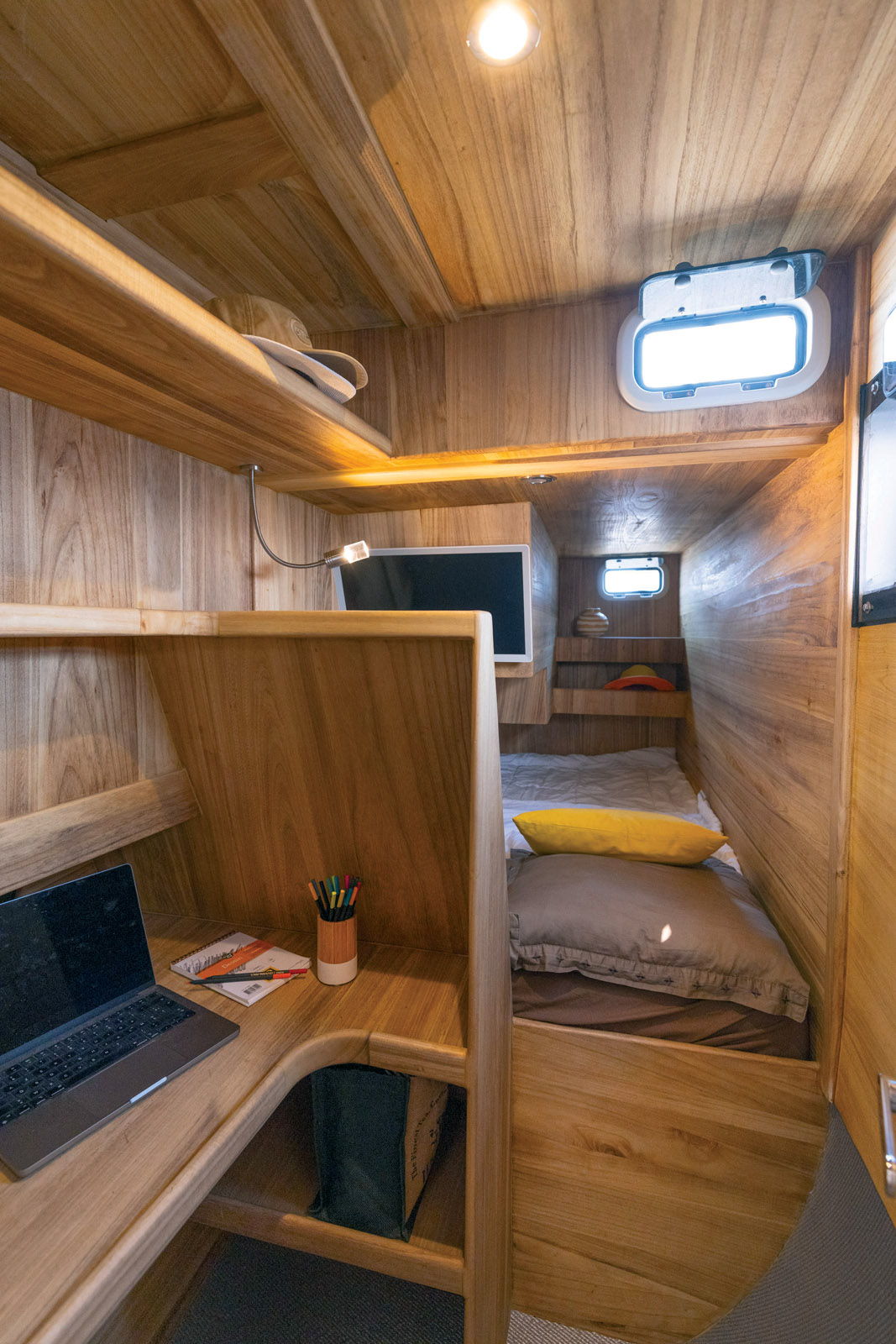
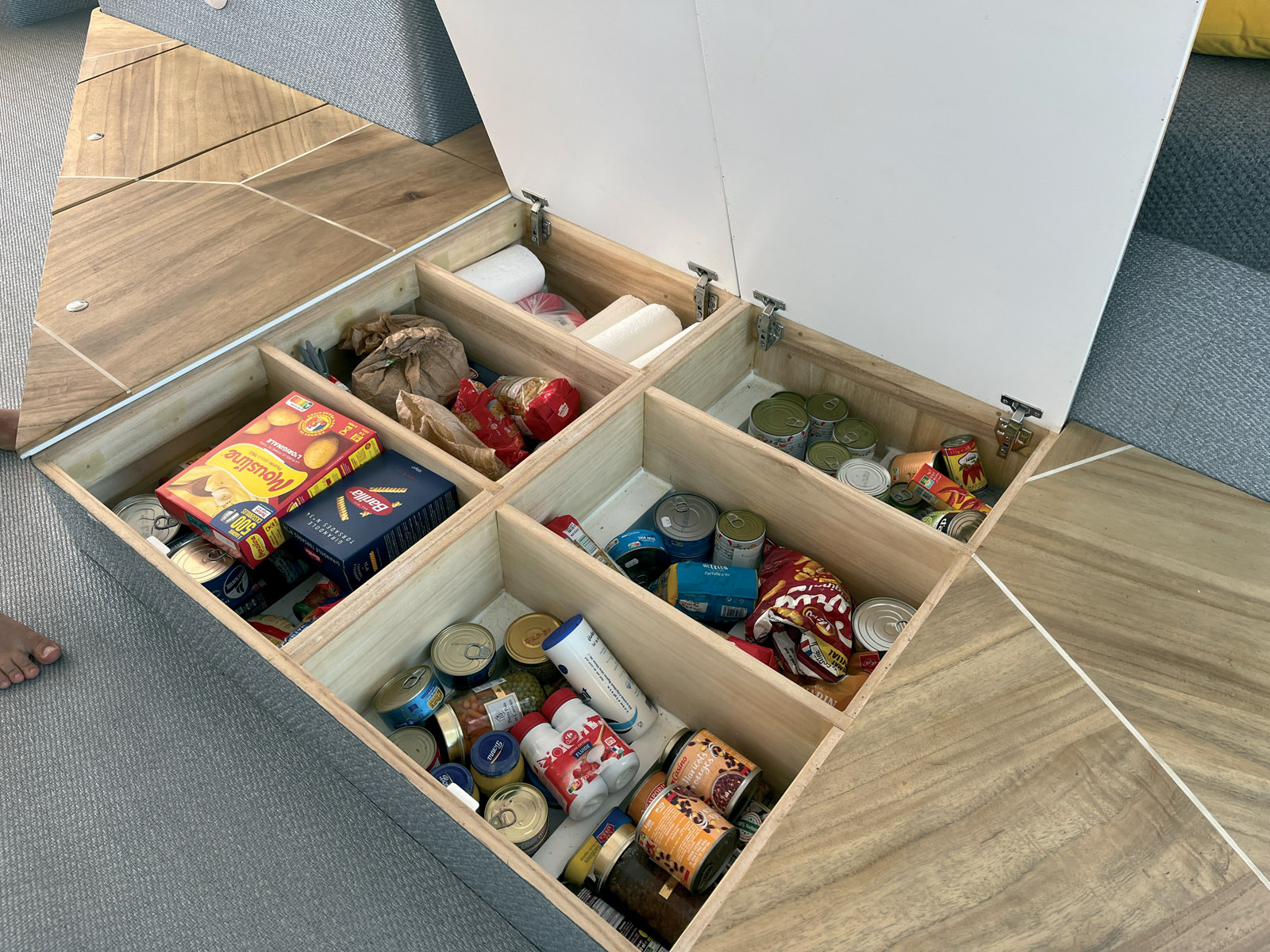
The sugarscoops, which include space for paddleboards or surfing gear, are very low to the water. The balcony-shaped cockpit extends beyond the aft beam - it appears as if suspended above the water but is nevertheless completely protected by a gigantic coachroof bimini. Before even stepping onto this terrace, you can pass through a dressing room entrance that gives access to the galley area of the central island, the main feature for enjoying living on board. Life revolves around this island in a space that opens out onto the aft balcony, where there is a large table and a festive plancha grill. Forward, a navigation station precedes a platform through which you can access the foredeck via a porthole door. There is even a small “niche” just forward of the galley for a nap or for children to play or sleep without going down into the hulls. With its different levels and access to the various cabins, this open space is reminiscent of a loft you’d find ashore, or even a surprising theater set that everyone is invited to explore. Two double cabins are installed in the hulls - the port side cabin with its private bathroom and its screen mount is very pleasant. I was a little less convinced by the starboard cabin - it is located above the engine and only has a simple heads compartment. While the atmosphere is cheerful, the beds are a little narrow for two large adults. On the other hand, the cabin, or rather the Owner’s suite, is truly innovative. Accessible from the saloon or from the sugarscoop, it features a large bed with a direct view of the sea and two desks, one of which is near the water towards the stern. A few steps down, ahead of the bathroom is a large closet hidden under the bed. Taller people may find fault with this layout... but it must be acknowledged that this very original, optimized space offers an atypical and unique cabin. To get onto the flybridge, you pass through the helm station or via a ladder from the side-deck. The upper deck area is fairly modest in relation to the size of the Tortue, but it has all the essentials - a table with two mirrored bench seats, all well protected by a hardtop. Sun-lounger mattresses can be placed on the front section, but this will be at the expense of the solar panels that occupy this space.
Serene Sailing
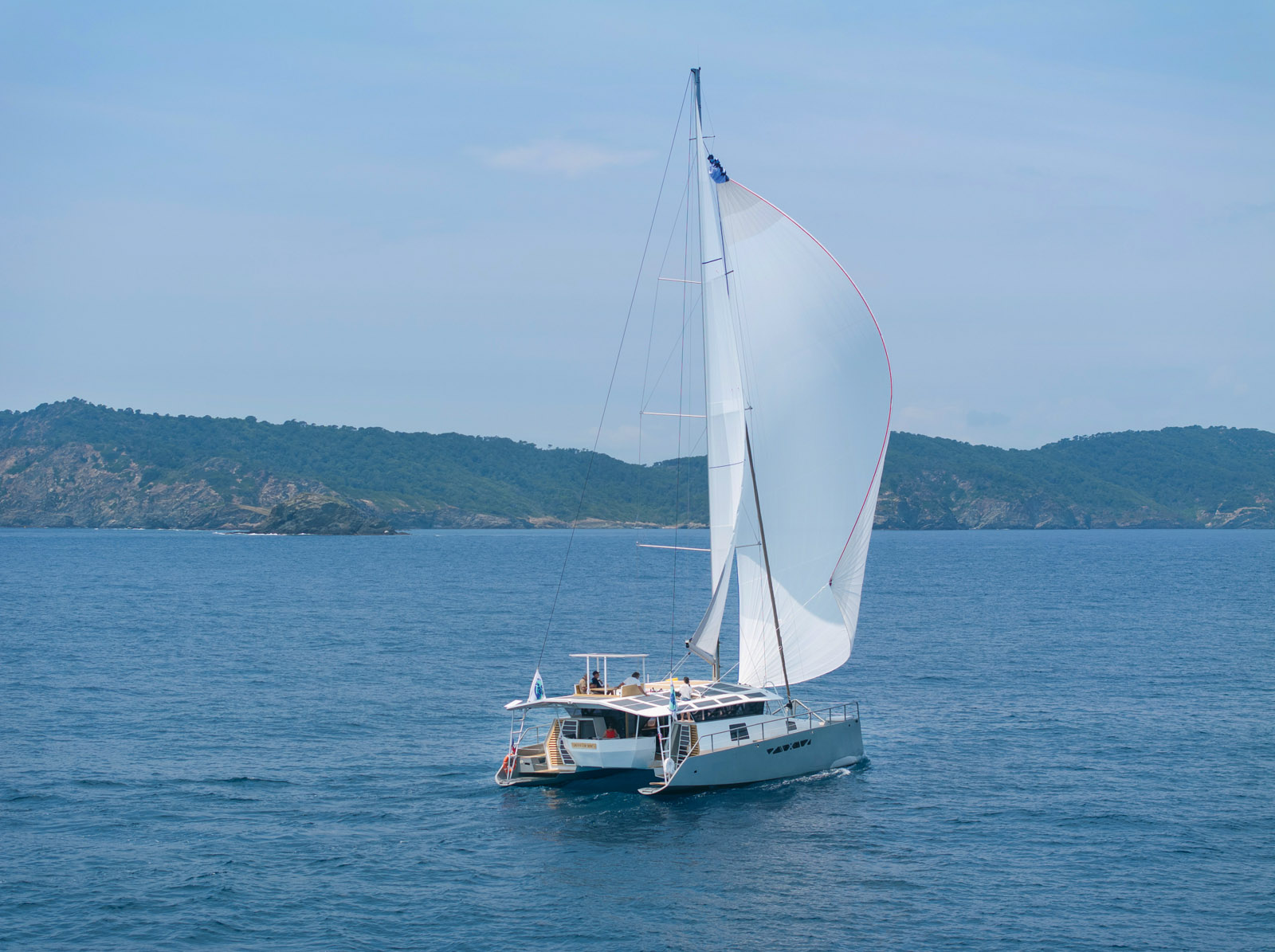
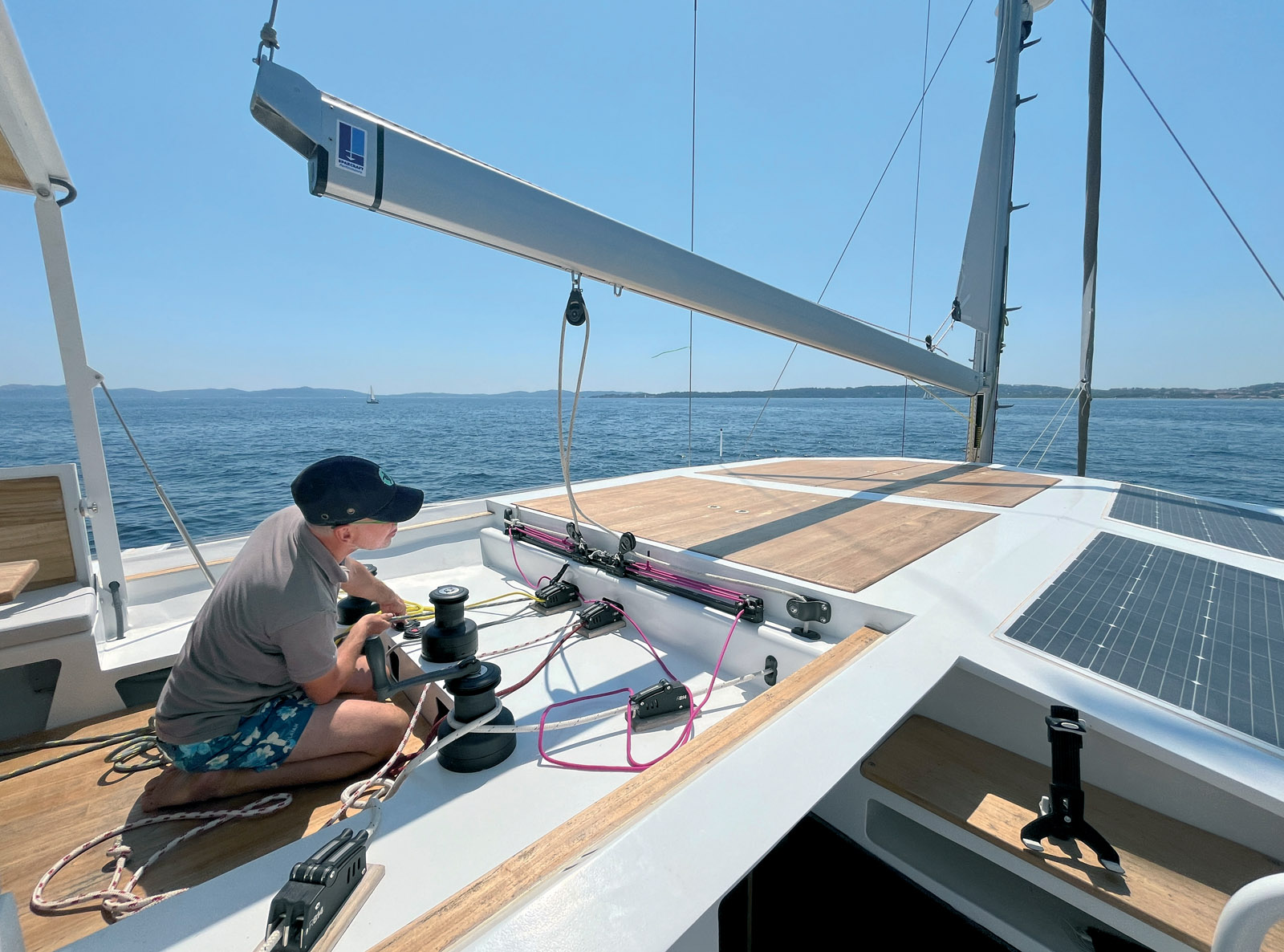
I joined the Tortue 147 at anchor in the South of France, at La Capte, a stone’s throw from Hyères. To be honest, I wasn’t expecting any speed records given the light airs that were forecast. For a large aluminum cruising boat, it really was a bit light... but on closer inspection, the rig is relatively slender, standing some 72 feet (22 meters) above the waterline. We headed out of the anchorage under engine power. Eight knots was easily achieved at 2,100 rpm, consuming 1.08 liters (0.29 US gal.) per mile. We took turns at the helm and maneuvering station on the flybridge, where I noted the extreme simplicity of the system, which consists of just three electric winches controlling the halyards and sheets. It took just two or three minutes to unfurl the mainsail and jib, and then we were off! To our pleasant surprise, the Tortue 147 was making 3.5 knots - not bad at all in the 5-knot breeze. It must be said that the “limited” laden weight of 20 tons has something to do with it. As the afternoon progressed, a thermal breeze kicked in a little, allowing us to sail at 6-7 knots. We were reassured about the Tortue’s potential to sail at between 8 and 10 knots in a good breeze, or even a little more if the wind exceeds 20 knots. In difficult sea conditions, half-bulb-shaped rostrums help support the bows, and in addition, it is possible to pump ballast (fuel and fresh water) from forward to aft in order to adjust the trim according to the speed and sea conditions. We weren’t going to be able to try out the effectiveness of the system on the day of our test sail - the sea remained completely flat - so we returned to the anchorage. An anchor on each bow allows for several anchoring techniques, which can be useful when blue water sailing. One last dip in the deep blue sea – the low sugarscoops and beautiful bathing ladders (forward and aft) invite you to stay a while longer in the water and make it easy to climb back aboard.
Conclusion
Undoubtedly, the adventurous look of this catamaran makes you want to cast off... for a lengthy voyage. The multitude of innovations is surprising and will undoubtedly shake up the established codes in the world of recreational boating.
Decent performance
Interior stacked with good ideas
Only one large (wide) double berth
Flybridge access could be improved
Technical specifications
Architect/designer: Jean Sommereux
Interior architect: Jean Michel Kalfon
Length overall: 48’3” (14.7 m)
Beam: 25’9” (7.85 m)
Draft: 5’5” (1.65 m)
Light displacement: 38,600 lbs (17.5 t)
Max laden displacement: 44,100 lbs (20 t)
Sail area upwind/downwind: 990/1,925 sq ft (92/179 m²)
Drivetrain: 2 x 57 HP (+ 2 x 10 kW option)
Fuel: 290 US gal (1,100 l)
Water: 317 US gal (1,200 l)
Solar panels: 5.5 kWp
Battery bank: 25 to 60 kWh
Cabins/berths: 3/9
Prices
Base price: currently being calculated
Price of the boat we tested: € 1,470,000 ex-tax