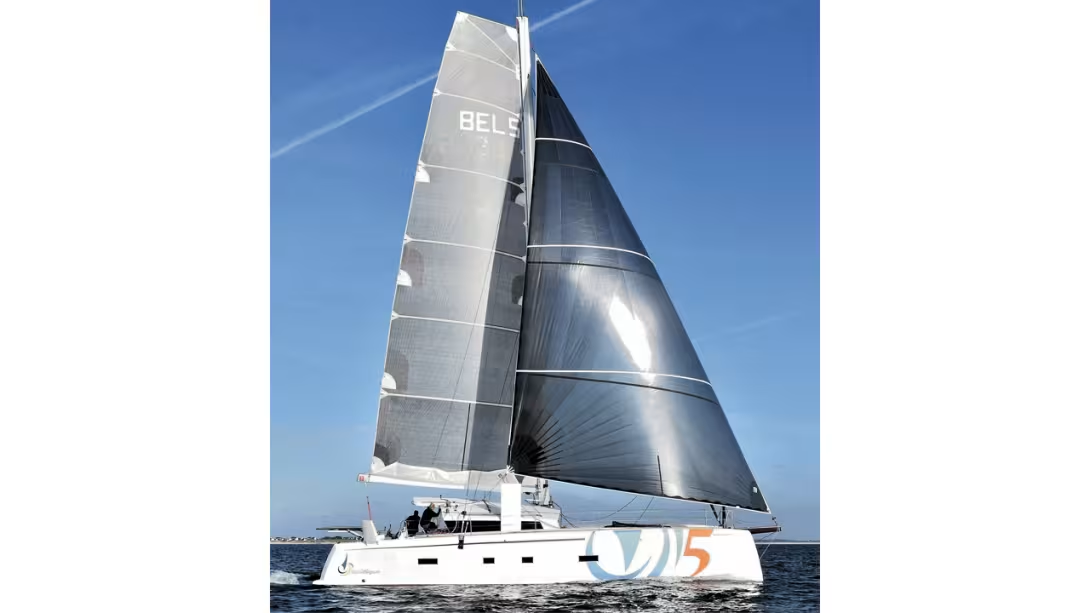
The rebellious family of TS boats has already got an excellent pedigree. The strong character of the earliest of these designs by Christophe Barreau (based on an idea from none other than Francis Joyon) demonstrated both vigor and talent, through the first series manufactured by Marsaudon in Lorient, Brittany (for the 50') and at Xlight Catamarans (for the 52'), made at Canet en Roussillon in the South of France. The dozen examples that were built understandably made headlines, as they were among the fastest livable multihulls in the world (more than 400 miles a day with Francis at the helm!). The TS 42s in turn are very popular with fans. The TS5 is a brand new boat that successfully integrates the TS50 and 52's DNA by offering a much more consensual living space, grafted onto a sporty chassis similar to that of the TS42! Let’s discover a catamaran with teeth and long legs.
Infos pratiques
- Le chantier : Ts 5
- La fiche technique
-
 Découvrez notre vidéo exclusive
- Financez votre TS5
- Assuez votre TS5
- Articles autour du TS5
They haven’t lost the magic formula, but it’s had a serious review!
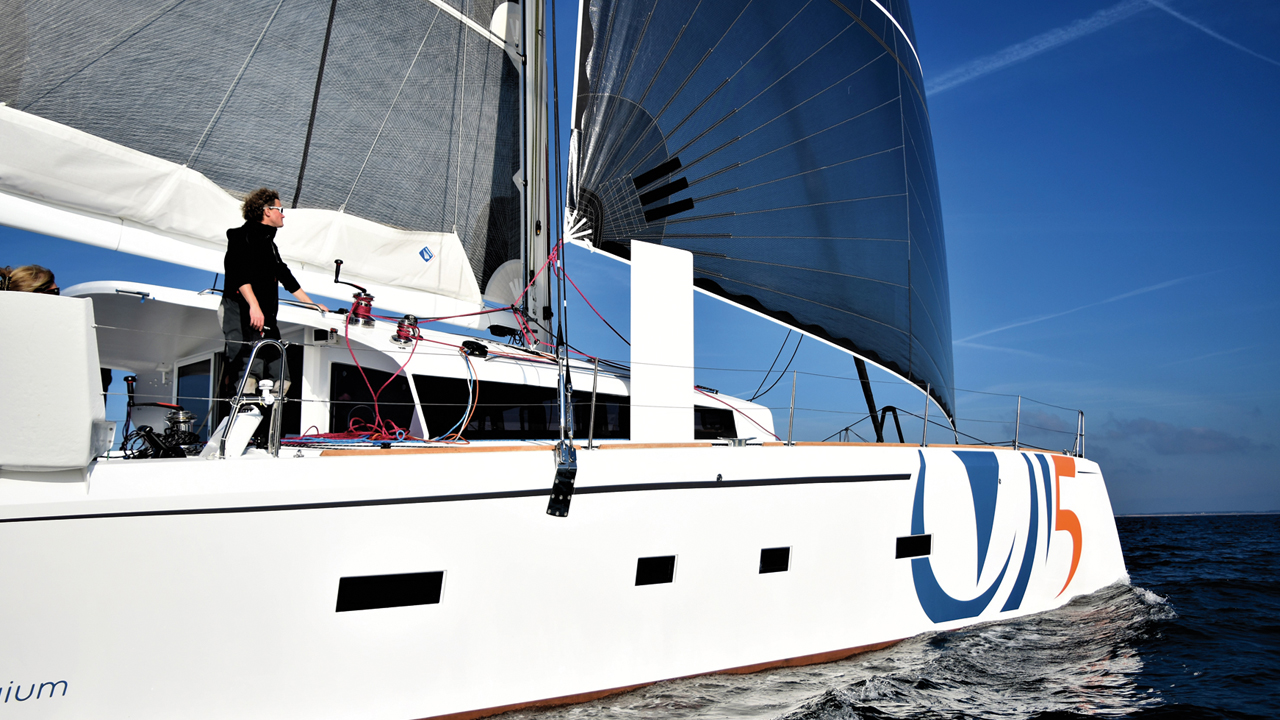
The TS50-52 offered rounded shapes: the coachroof seemed to make every effort to avoid appearing chunky, and the powerful straight bows appeared to belong to a larger racing catamaran. The stylistic power of this pumped-up surfer clearly betrayed its ambitions of wild speed. A formidable sporty multihull! Today’s TS5 is a big TS42: the relevance of this 12m model clearly reflects the creativity of the naval architect and his capacity for innovation in a growing segment, certainly, but also one constrained by expectations of volume and style which you have to be quite daring to do away with, even partially! The efficient simplicity of the 42, its assertive personality and its high level performance are all a precursor to those of the TS5. But can this be confirmed?
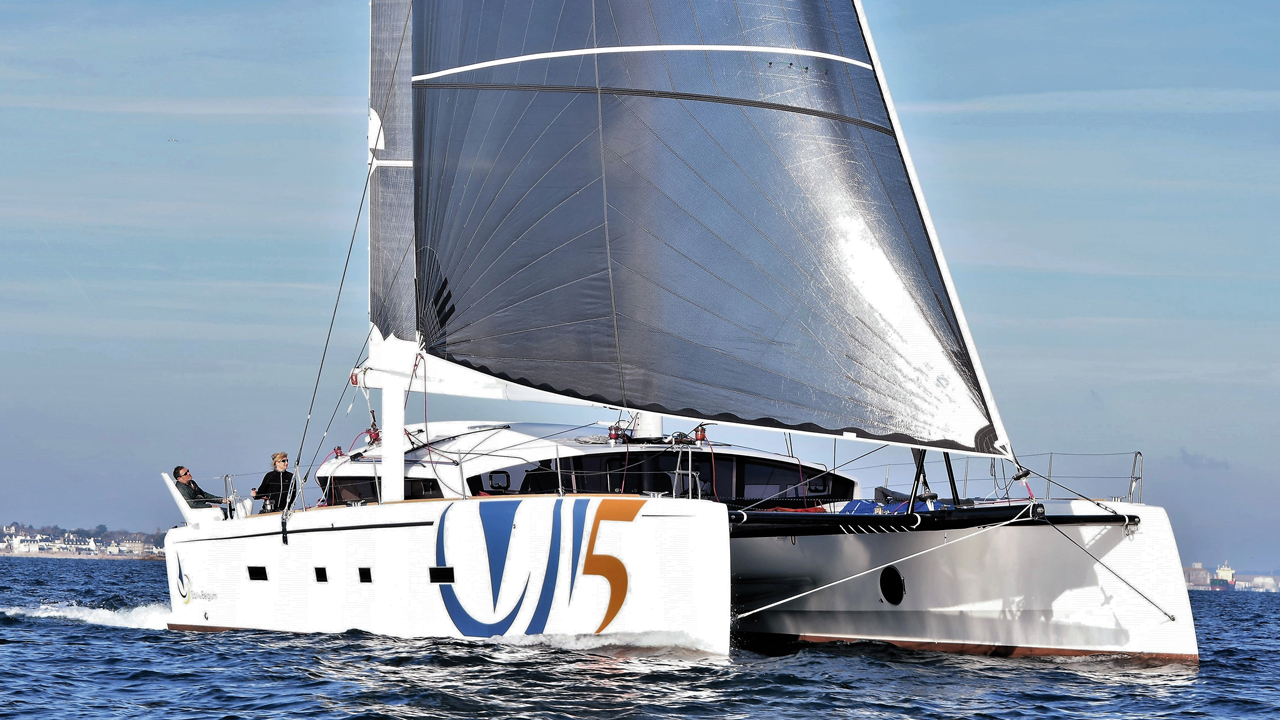
Captivating lines
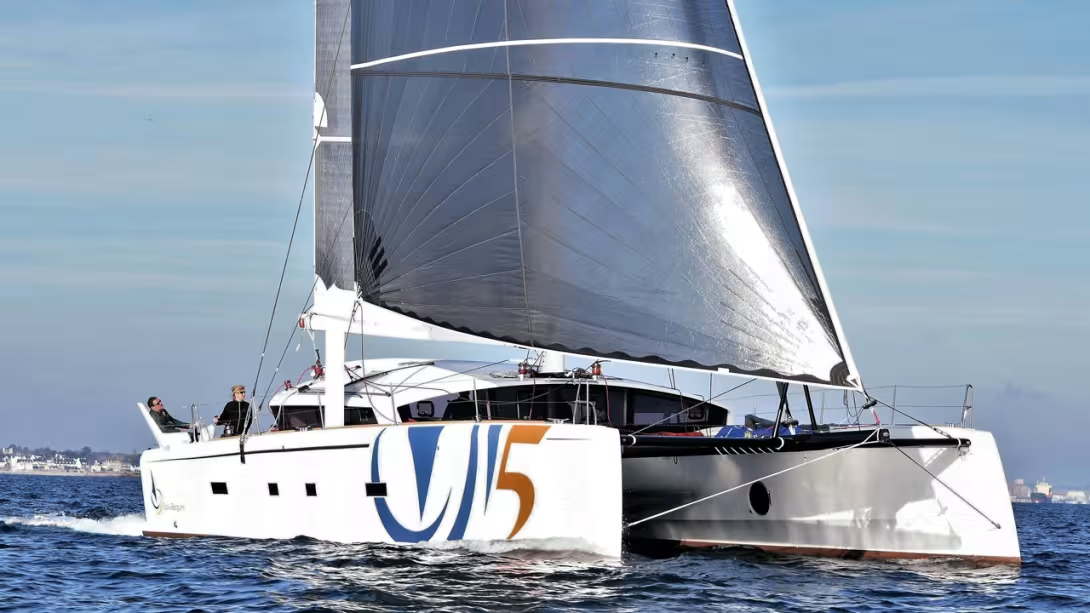
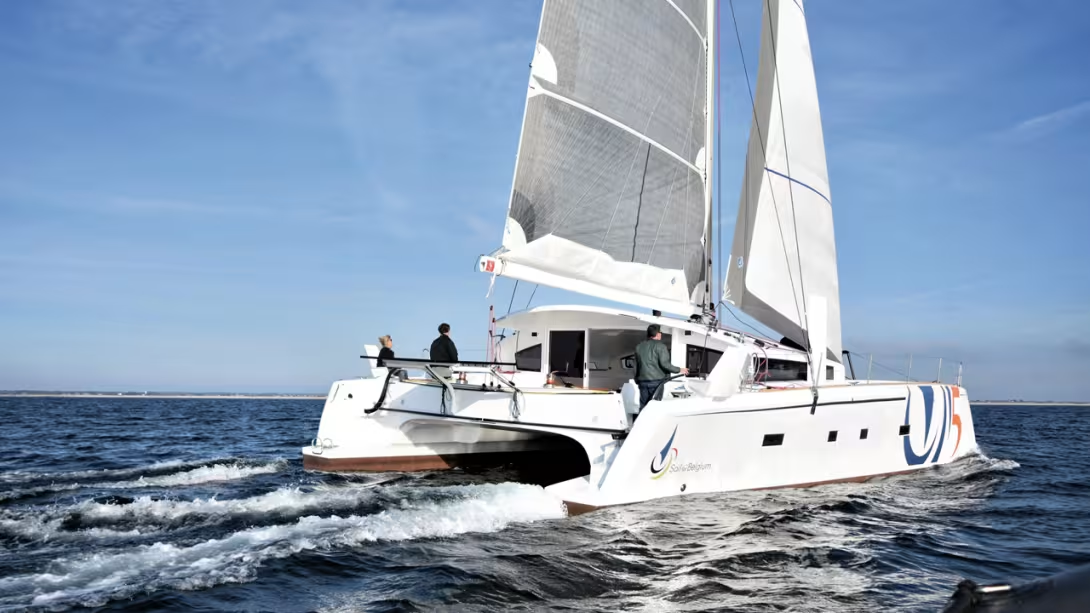
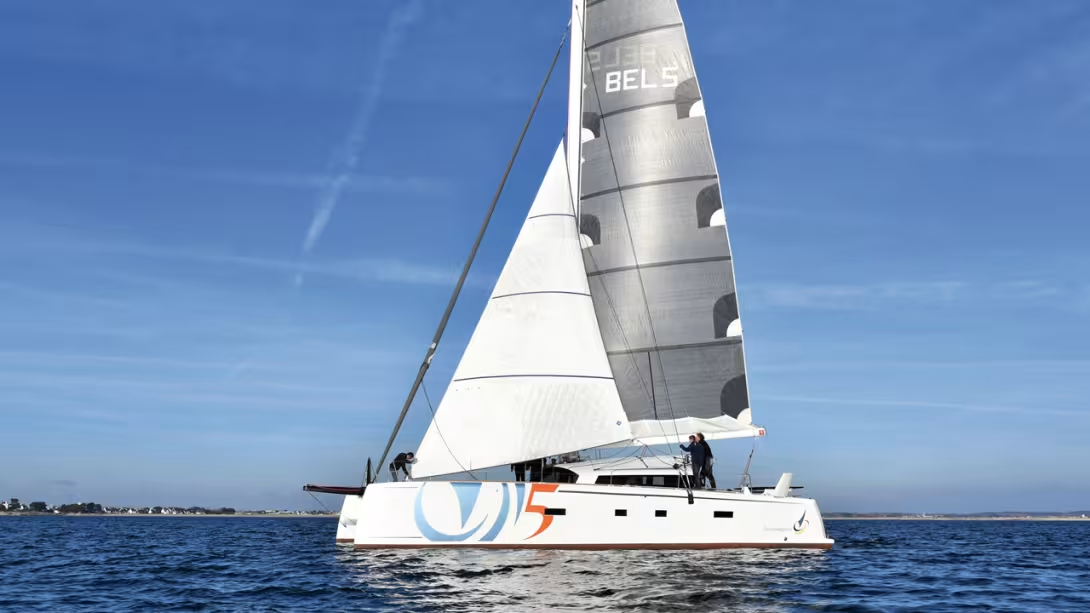
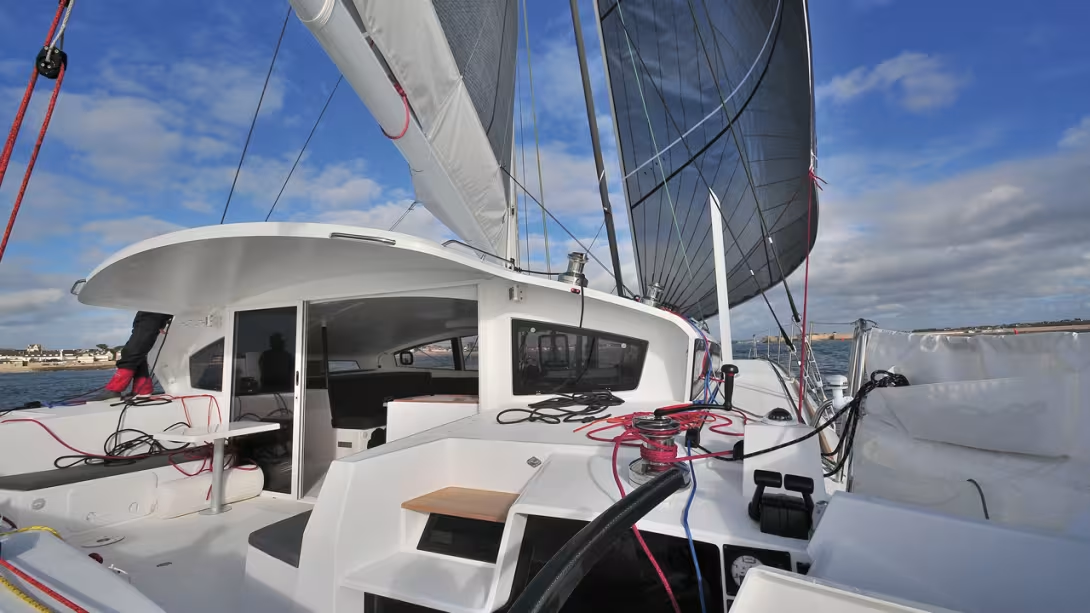
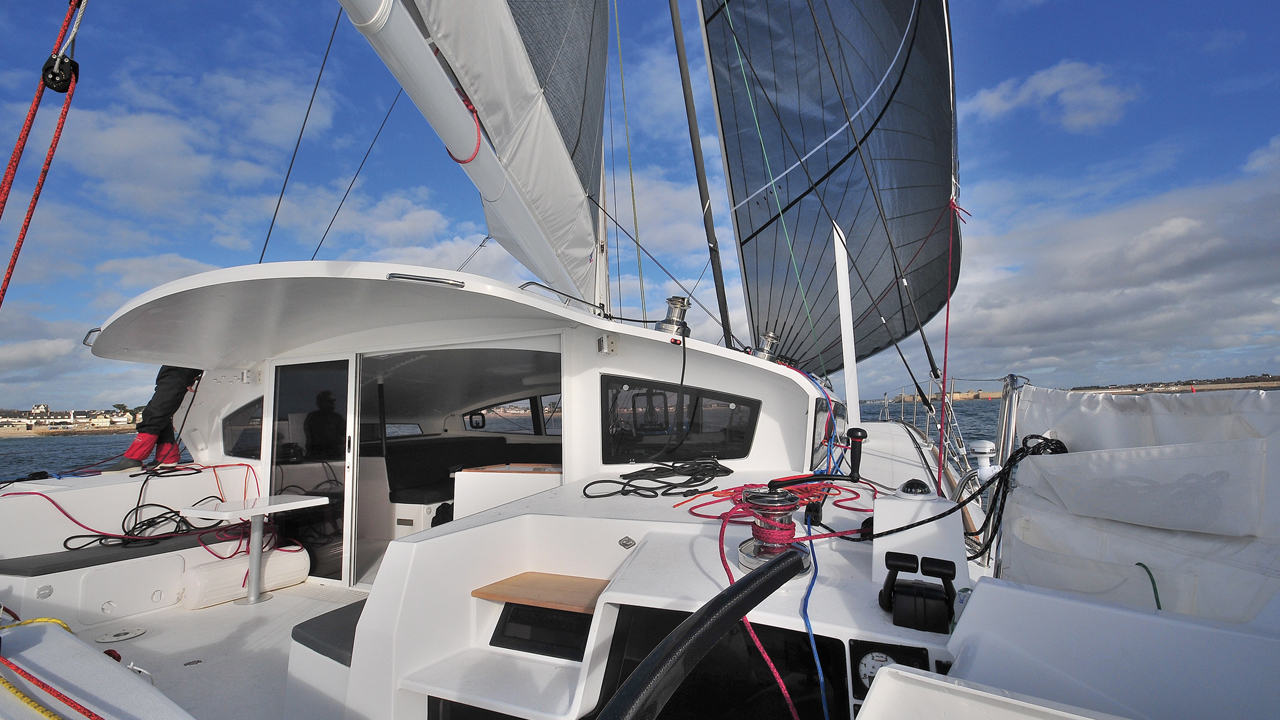
The TS5 is beautiful. The white gelcoat doesn’t fully emphasize the formal subtleties of this multihull, but successful graphics would highlight the strength of this inspired design. The quadrangular coachroof houses free space and a panoramic view, now essential. This form succeeds in the feat of not penalizing the aerodynamics too much, offering effective protection to the cockpit against spray and wind, affirms seductive stylistic lines and does away with the reservations some had about the TS50-52 over the narrowness of the nacelle. The power seen in the overall lines of the predecessor is preserved (coachroof set aft, high freeboard, XXL-sized bows and a sleek design), but everything is different. The marked camber of the inverted bows is clearly perceptible and the sculpted topsides play a deflecting role in establishing the sporty personality of this machine. The rig (20m Lorima rotating carbon mast) is perfectly proportioned and even suggests a fluidity and a feeling of reassuring moderation (!).
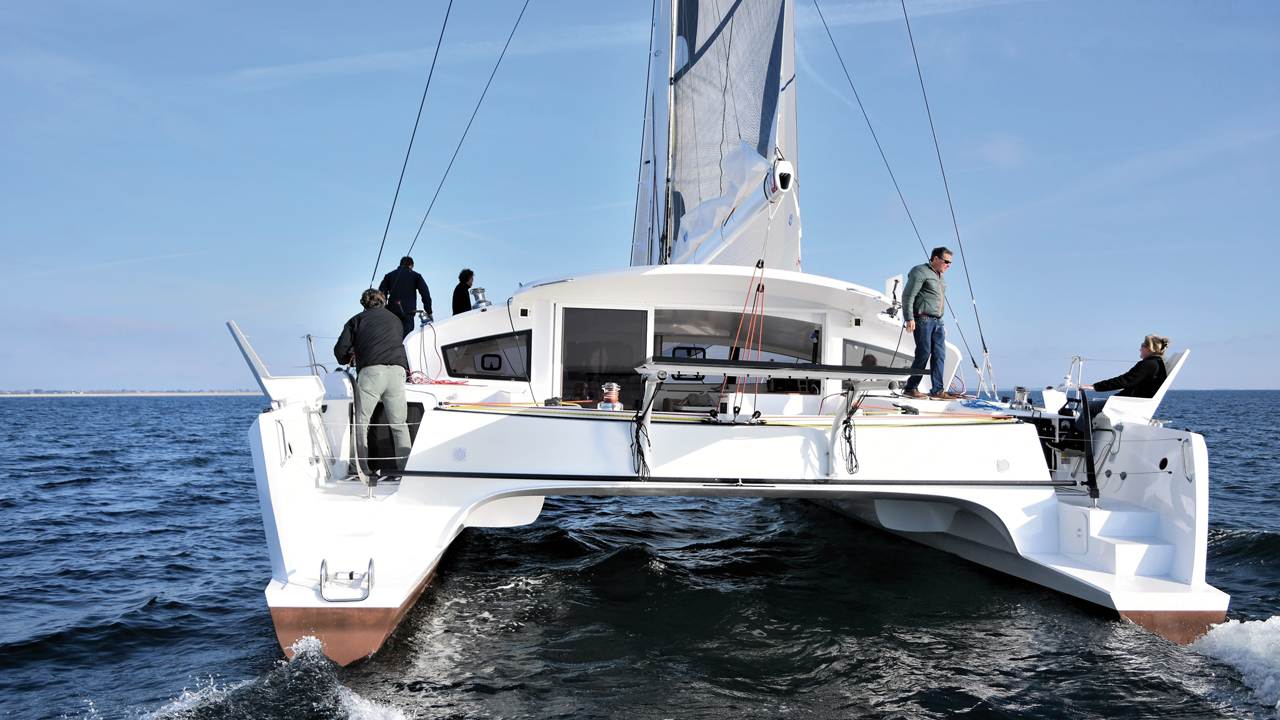
A very comfortable layout on a GT chassis
Like some production sedans that seem to be enthusiastically celebrating the culmination and the end of the reign of the engine (the 350hp Ford Focus RS, or 550hp Alfa Romeo Giulietta Quadrifoglio) by offering performance close to the inaccessible and prestigious GT, some cruising multihulls seem to want to escape the old categories by getting close to the speeds of racing machines of previous generations, in surprising comfort and safety. Architecturally, the underwater hull of the TS5 is dedicated to speed: the thin, taut lines; the semi-circular sections that open to a U-shape aft; the reduced wetted surface; the deep appendages and the inboard topsides with their small step, all contribute to performance and efficiency.
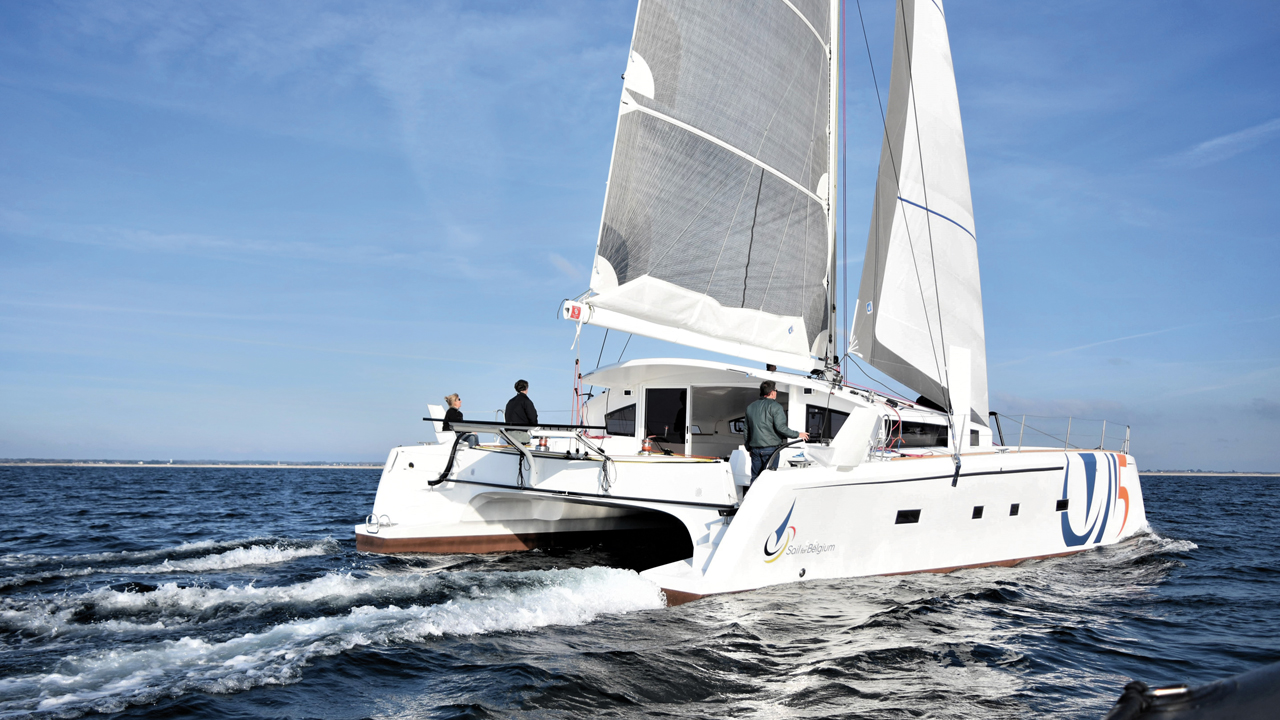
A solid yet light build
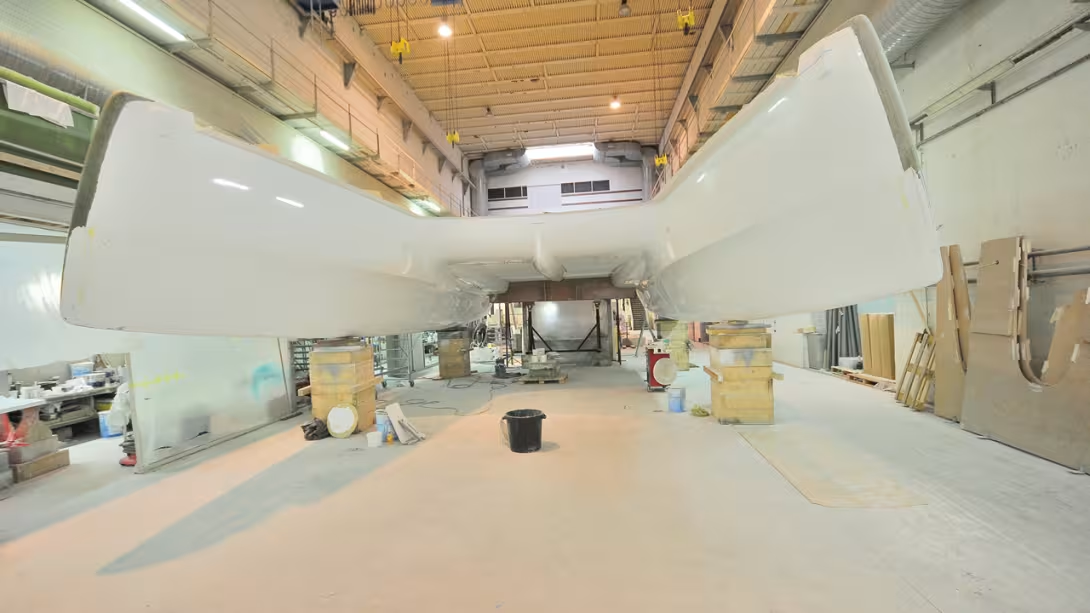
The Brittany-based builder has deservedly acquired a reputation both in the offshore cruising world and in that of racing. The many fast boats they have built all meet strict weight and quality construction standards. The first TS5 is no exception to the rule; it came out of the factory at the weight predicted for a top sporty charter boat (which involves appropriate equipment and facilities)! They’re going to be able to achieve a saving of about 500kg on future units, and so reach the ideal weight. This catamaran is built entirely in infusion in a female foam-glass-poly/vinylester sandwich mold, but carbon structural elements can be chosen depending on the buyer’s program, requirements and budget. The complex architecture of the aft beam and main bulkhead can be made in carbon in order to limit the weight by increasing the mechanical resistance. The cross formed by the forward beam and the compression beam can also be made in carbon. During my visit to the yard, I was able to observe hull n° 2 in production and noted a very high quality of infusion, rigorous assemblies, reinforcing corners to the bulkheads and good care being taken generally.
Inside: volume, light and Feng Shui atmosphere
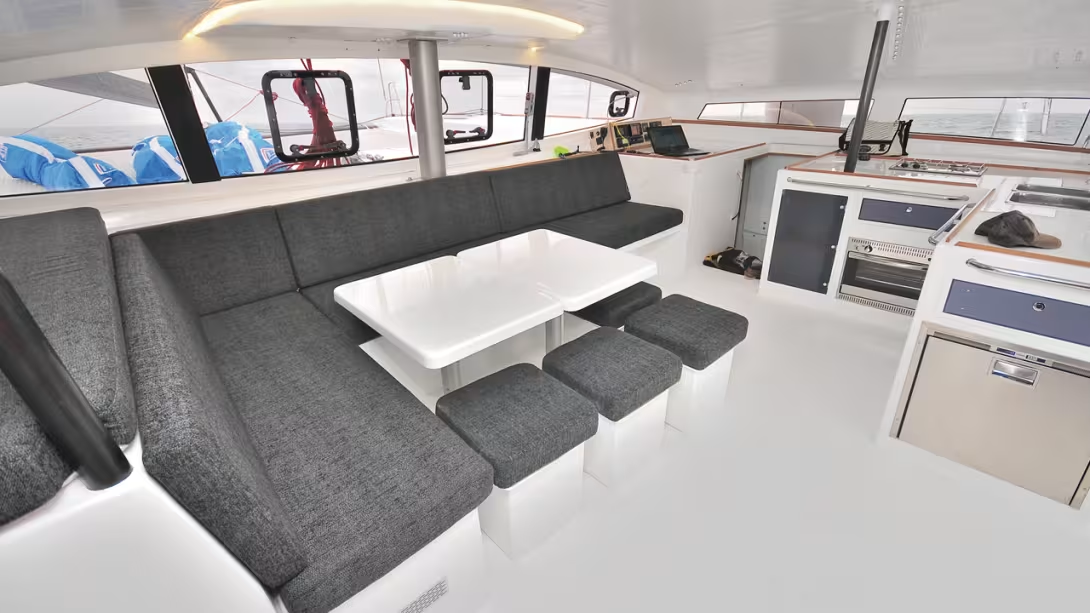
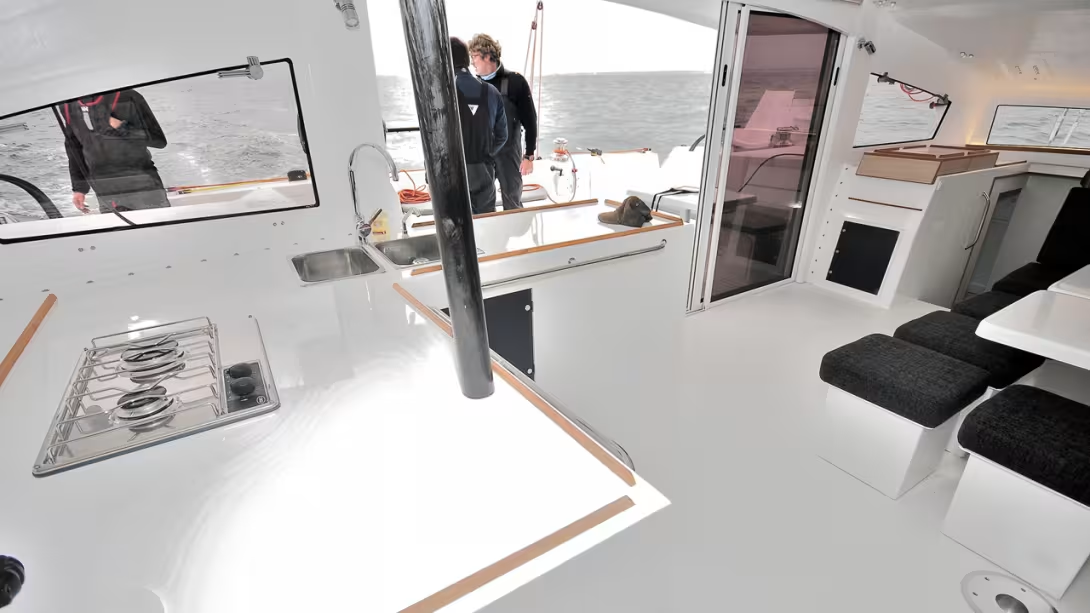
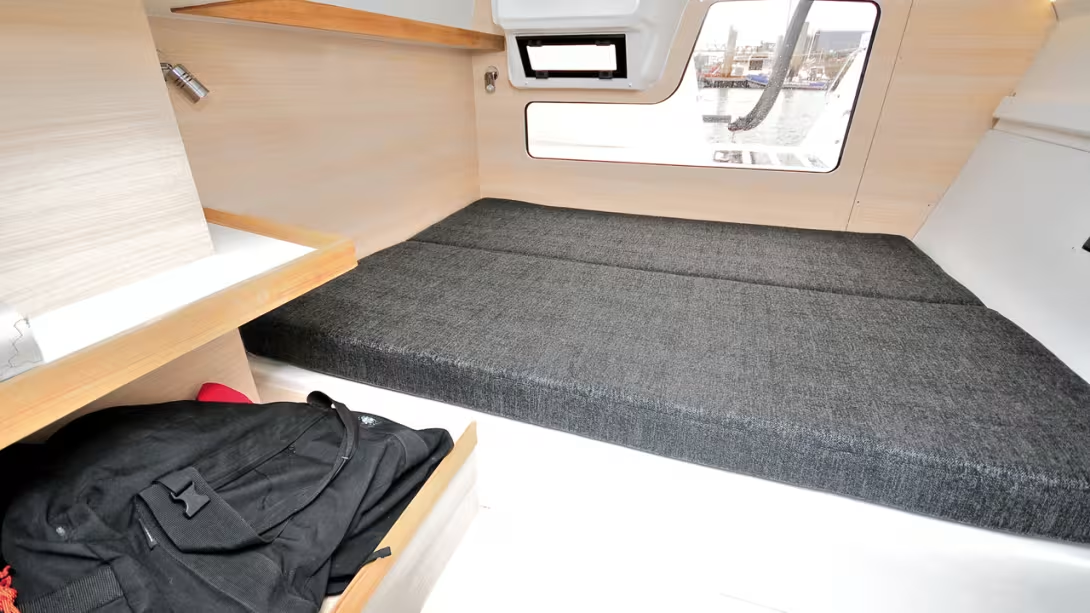
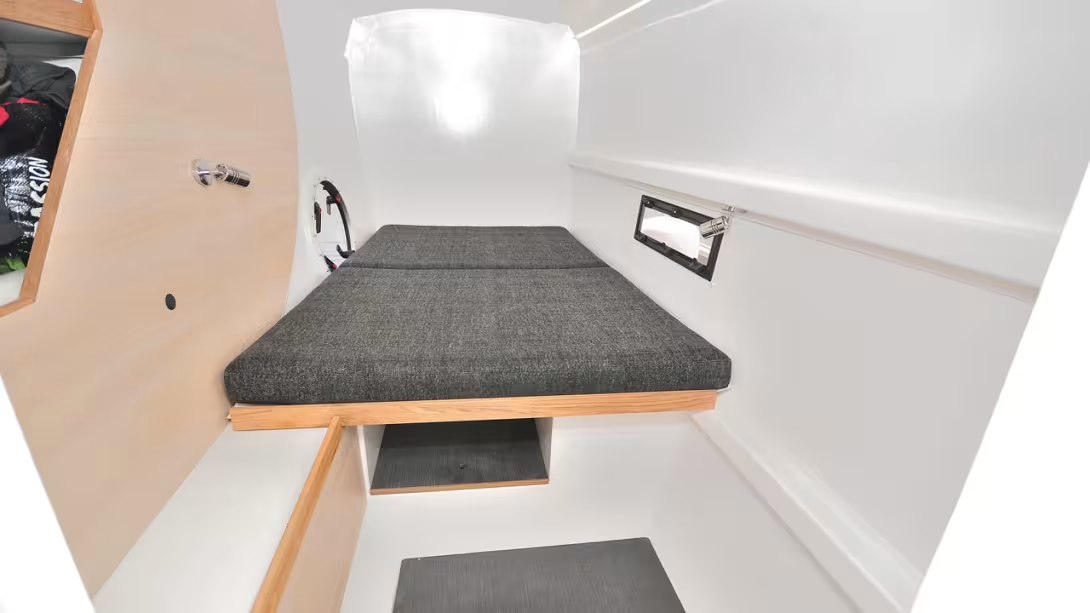
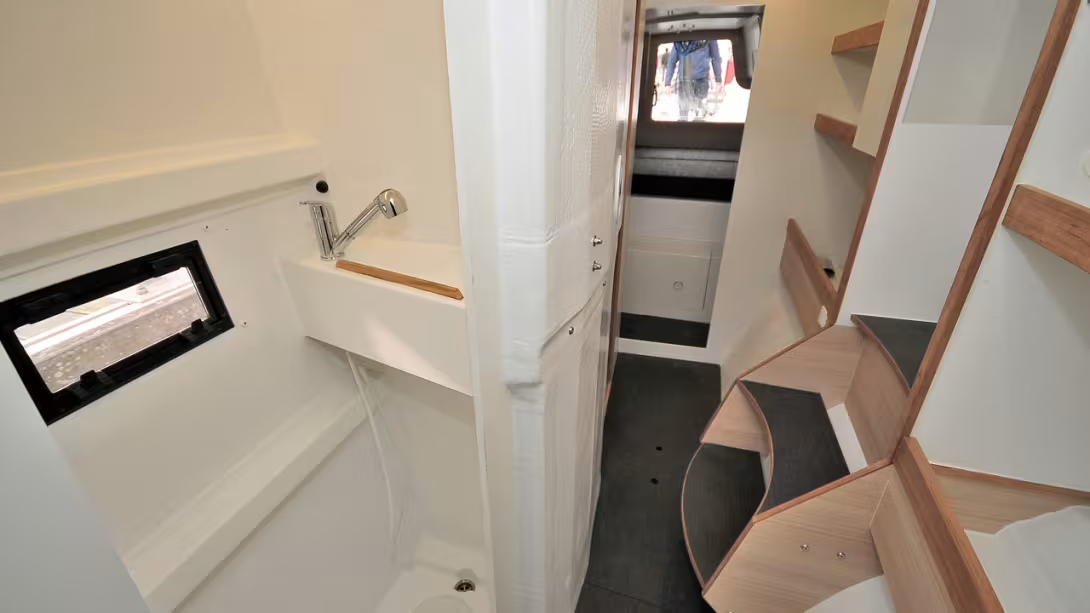
This is a boat with an infectious personality, but what will grab your attention is the simplicity of the ambience once inside. Amalia, our test boat (number 1 in the series) is equipped with a sliding bay window - nice, but heavy, at 200kg! (Other solutions are possible) Once through the door, the atmosphere of the TS5 welcomes you in. Or more precisely it hits you! You'll know immediately whether you like this sleek multihull style. Personally I enjoyed the wonderful and new space of the nacelle. The galley is L-shaped, very complete, vast, luminous and perfectly ventilated, with gelcoated countertops (not Corian, obviously!). Storage is abundant and the galley offers all the necessary features: stove, 2-burner cooktop, refrigerator drawer and double sink! It’s a proper galley without being spartan. The wide, L-shaped dining area is backed by a large watchkeeper’s lounger whose appeal among fans is unanimous. 6-8 people can sit comfortably at the table, gathered around 3 removable sections (composite on aluminum feet) which can also be installed in the cockpit if necessary: light, economical and smart! The upholstery chosen (unbleached mouse gray) is very pleasant - it brings the essential comfort and decor. The rest is a matter of appreciation and understanding. The top of the coachroof, as with the topsides are simply lacquered after having had a sanded finish: we’re in direct contact with the superb composite here, a real pleasure! The manufacturing quality is tangible, the LED lighting is hidden behind a small decorative band, and in fact everything inside the nacelle of the TS5 gives way to the exterior features, allowing the light and the seascape to enter, panning across the whole boat. The front windshield is a total success. This skylight is beautiful (the divided elements will be easy to change, no nightmare curvature problems for replacement) and the small front lip protects from glare. In the hulls (here, we are on a 4-cabin version plus a single berth in the passageway) are housed two fantastic cabins aft, pleasant, bright and wide open to the boat’s wake. They are also airy and spacious (200x160) and access to the bunks is just perfect. Wood-effect headlining panels warm up the sporty atmosphere: they are clean and simply beautiful. The small size of the heads/shower compartments will limit lengthy stays and other abuses of the facilities by certain crewmembers!
Generous engine power and direct transmission
The engine compartment is accessed via a deck hatch. The motors, logically set further forward in the boat, allow for shaft-driven transmission which is a more rational choice. Wide opening panels beneath the aft bunks also offer access to the mechanical elements. The installation is simple and clear: the sumps are protected from any potential spray and accessibility is good.
Seatrial: two most enjoyable days
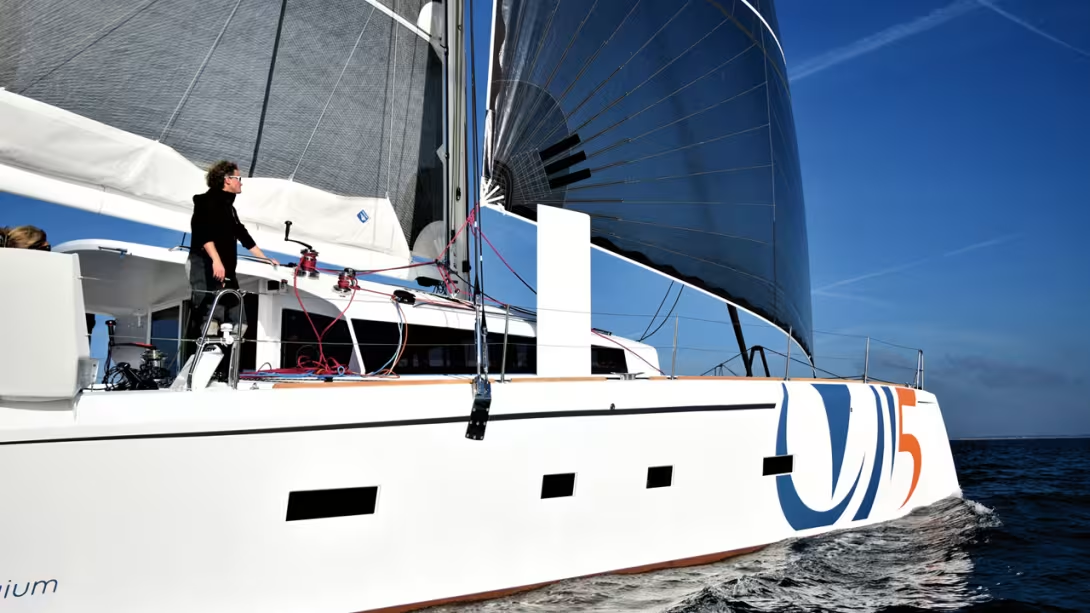
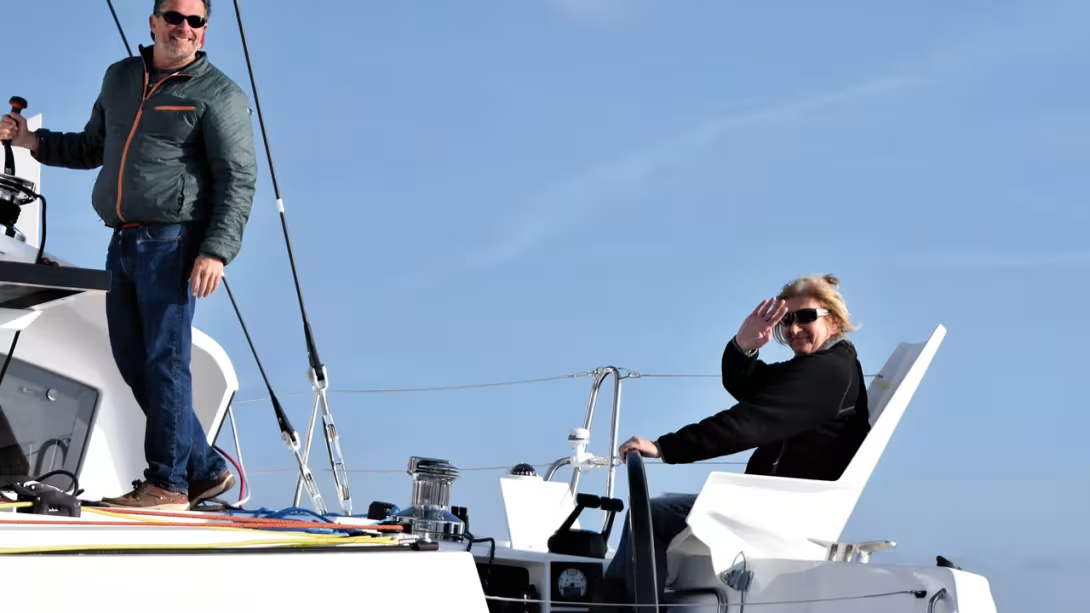
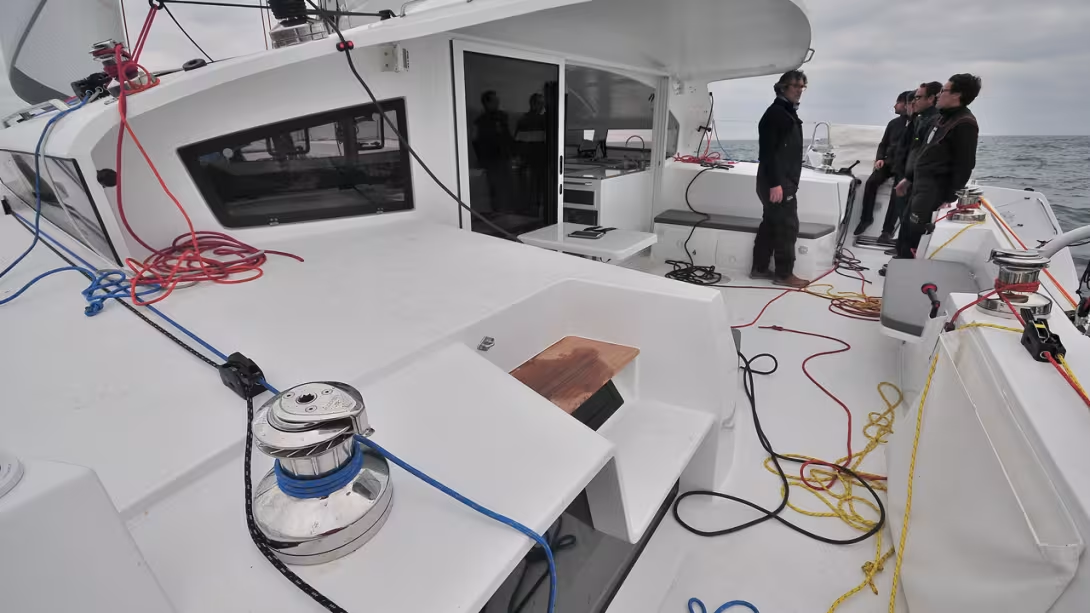
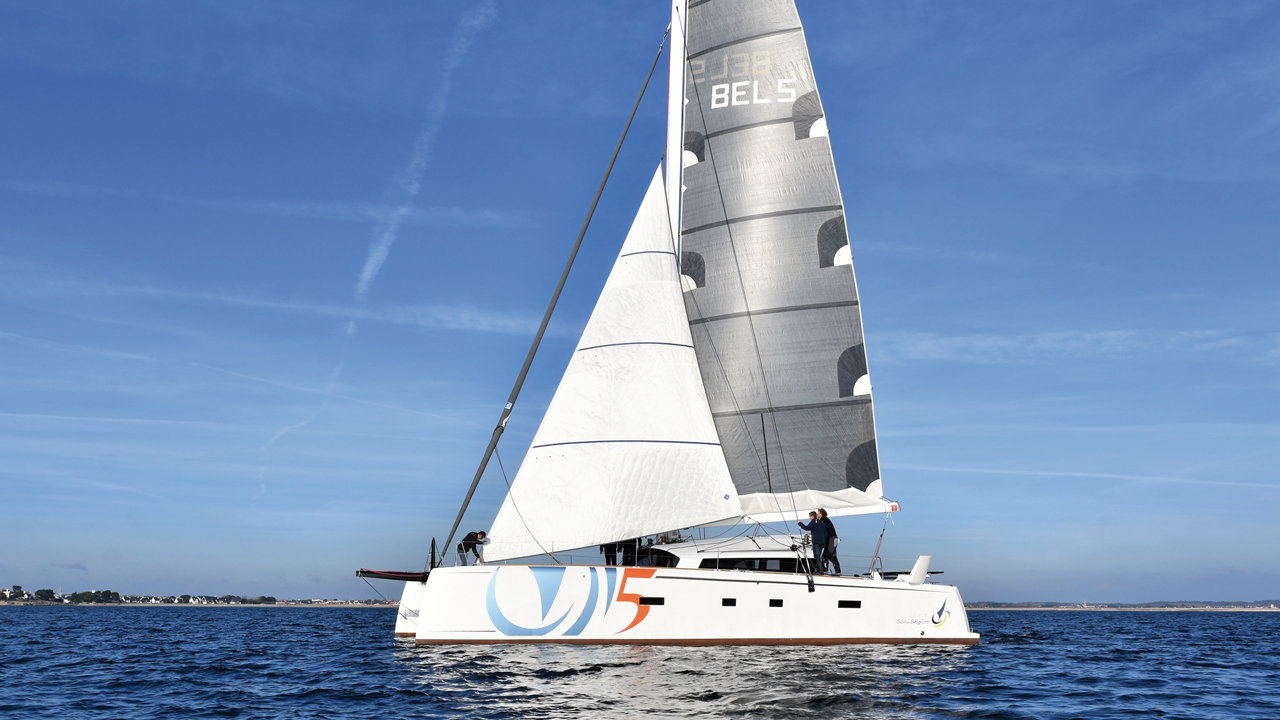
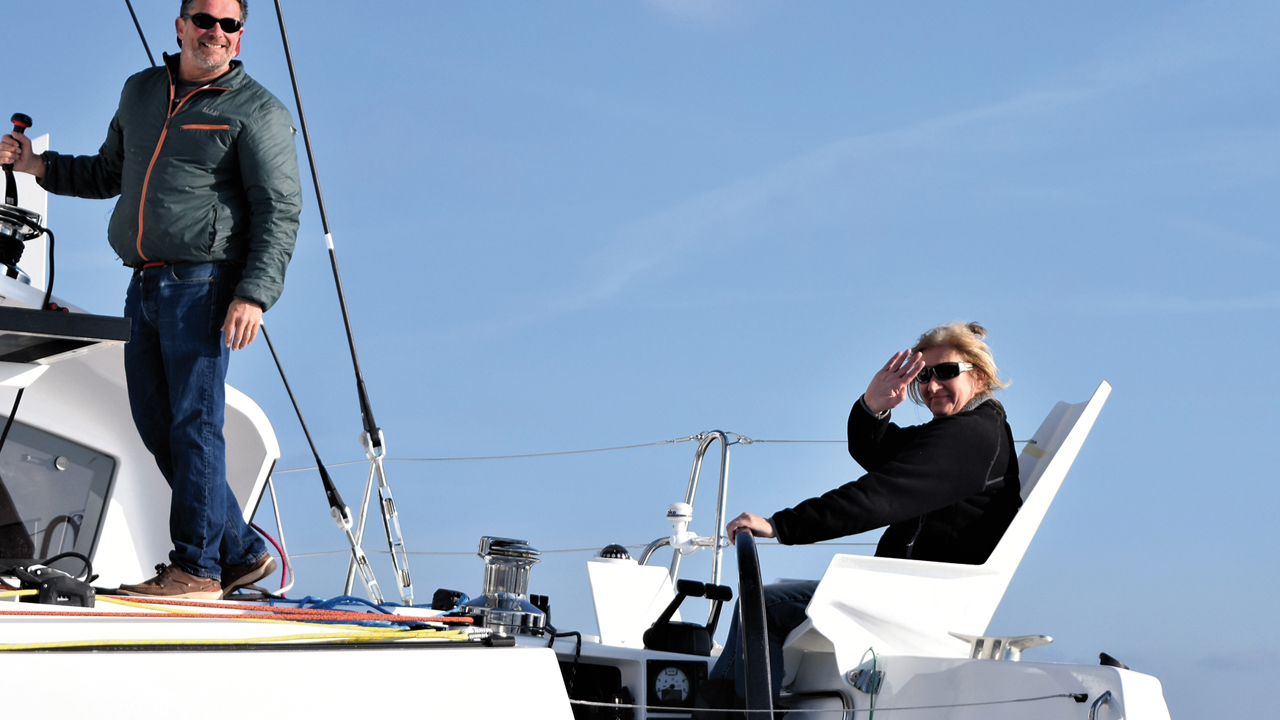
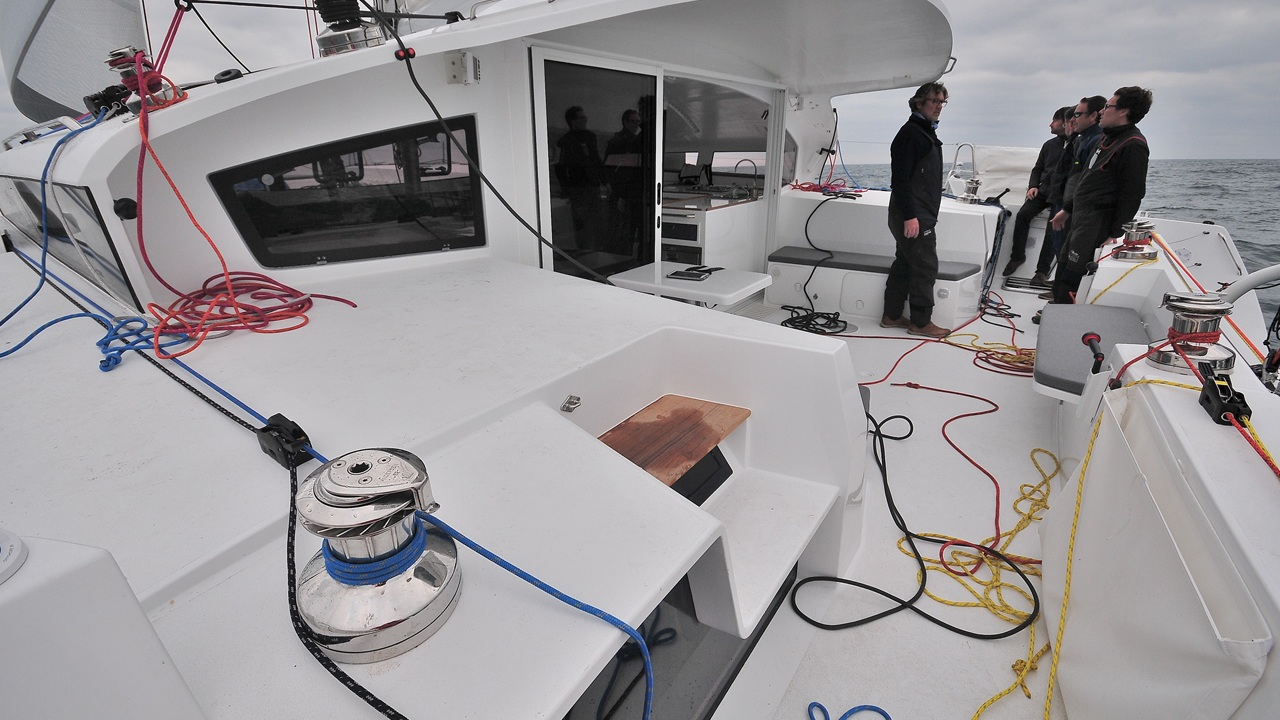
Amalia, our TS5 test and first in the series is set up for sports charter, friendliness between owners and occasional amateur racing. The trade-offs on this boat belonging to an experienced captain are perfectly coherent. This TS5 is equipped with a Lorima rotating carbon mast, a carbon crossbeam including forward, cathedral stays support, compression beam and bowsprit, all in one piece. The fiber shrouds and an all-or-nothing genoa stay (fiber, mounted on Karver furler) are efficiently complemented with a staysail on a removable forestay. This arrangement also offers many possibilities in the choice of foresails, from reaching to upwind. This beautiful rig is set fairly well aft - not as much as on the 42, but it's the same principle. The 40hp engines with three-bladed, folding propellers are really generous in both torque and power (max speed 12kts!), and maneuverability is good with the daggerboards at 50%. I liked the position of the engine controls to starboard, as it allows you to simultaneously manage the helm if necessary. The helm station is absolutely remarkable. The seats with footrests are wraparound and can be comfortably sat on for long hours and the carbon tiller fits perfectly in your hand. The mainsheet traveler and sheet are efficient, led back to powerful winches and with good quality lines / blocks: a solitary helmsman can easily dump the main in a breeze if needed. On this boat without electric or hydraulic winches, you need to hoist the 90m² of mainsail and sheet in the headsails by hand. This requires effort, but that’s the goal of this participative boat. As soon as the main was hoisted, the TS evolved and accelerated down the Chenal de Lorient; the chop kicked up from an earlier gusty wind nervously stirred up the water, creating conditions which were less than ideal for a sailboat. The breeze out of the NE was blowing 12 knots. The superb Incidences membrane genoa without furler (soft shackles) is marvelous and was quickly hoisted, allowing the TS to show off its true personality. The machine boldly makes a course upwind with the daggerboards lowered to 3m. Fun at the helm is immediate and instinctive, the appendages are perfect and there is a delicate feel to the rudders! You need to be attentive, as the log rewards or punishes the helmsman on merit and the difference can be significant! The movements are gentle and the balance admirable, even in this choppy water. The log constantly displays two-digit scores very close to the true wind speed and between 40 and 60° to the apparent and it is possible to go up to less than 30°. Rediscovering the pleasure of sailing a multihull hard on the wind is part of the TS experience, if you don’t need furlers (all-or-nothing genoa and reefable staysail), the result will be clear. Less weight forward (around 100kg, on a 50 footer): there is a drastic reduction in windage and a sail with increased performance. On board this type of high-performance catamaran, it’s an extra step towards a range of sensations not normally found on cruising boats. The TS5 is stiff, very stiff even for a vinylester boat! The architecture, the construction and the addition of carbon bulkheads all combine to achieve a result with positive consequences which are tangible, both at the helm and under foot in these choppy conditions. With no distortion related to flexibility, the work of the appendages and hulls is optimized, and transmits the reality of what is happens beneath the water straight to the helm. It’s a subtle and intense pleasure! When adjusting the sheeting angles of the headsails, there are no tracks, but a centering barber-hauler with low friction rings. Simple and efficient! During these two days on board, separated by a day off to allow a depression to pass, we enjoyed some good sailing speeds (16kt on the 1st day, 17 on the second). Modest speeds for such a sprinter, but achieved in medium airs that didn’t exceeded 15 knots! Sliding with agility on a sea with no whitecaps, downwind under code with the lines sheeted in generates real pleasure. All that’s missing from our test is the wild run (well beyond 20kts) that we had when we sailed the first TS52; the feedback from chassis and rigging experienced during these two days shows that the exploitable potential is there to reach speeds far beyond this figure.
Conclusion
The successor to the TS50 is at the same level as its gifted predecessor. It is more civilized, more consistent in terms of the welcome on board, and more desirable! Her lines are seductive and her performance is exciting. This super-charged catamaran remains perfectly balanced and well set-up for its program of sporty cruising: She is seaworthy, fast, but safe and will give a great deal of pleasure to the enlightened crews who choose this boat.
Technical specifications
Naval Architect: Christophe Barreau
Builder: Marsaudon Composites
Construction: Foam/glass/Vinyl-Polyester sandwich infusion. Option for bulkheads, forward beam, compression beam and mast in carbon
Length: 15.24m
Beam: 8.60m
Draft: 1.20/3m
Light displacement: 8600kg/max 11t
Mast length: 20m
Upwind sail area: 154m²
Mainsail: 88m²
Genoa on furler: 60m²
Solent: 43m²
Staysail: 20m²
Gennaker: 94m²
Spinnaker: 210m²
Motors: 2x40hp Yanmar (Sail drive transmission)
Diesel: 2x110l
Water: 2x200l
Basic price: € 620,000 ex-tax
Principal options in € ex-tax:
Rotating carbon mast with fiber rigging: 76,000
Fiber standing rigging for aluminum mast: 10,000
Carbon cross (forward beam and compression beam): 25,000
Mast bulkhead and aft beam in carbon: 18,600
Carbon daggerboards: 12,000
Electronics pack: 16,900
4x160W solar panels + davits: 9,035
Watermaker: 14,250
Deck hardware for gennaker: 3,750
Three-bladed folding propellers: price on request
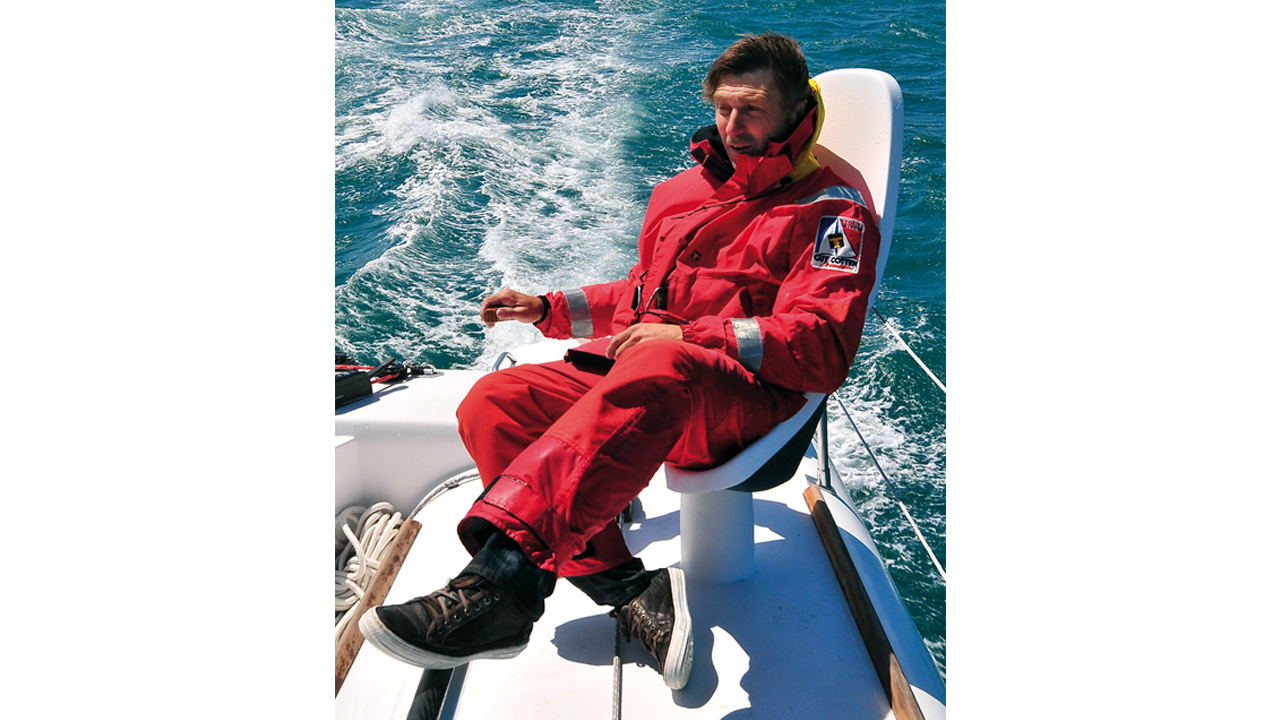
A word from the naval architect, Christophe Barreau
For the TS5, we worked a lot on platform stiffness, with the shape and the internal architecture serving this purpose. The topsides are drawn lighter, there is less surface and therefore less weight. The boat will be a little quieter than the TS50-52 (less tense, with slightly less bite) but more comfortable in light airs (8% theoretical gain compared to the TS50 by reducing drag at 5kts and 2% at 15kts). The target: the weight of a TS50 and a huge living space! The coachroof is wide, bright and the aft cabins open out over the wake. We made a big effort to create a remarkable interior volume. The TS concept assumes a perfect construction and total respect for the weight calculations. We will further advance with the manufacturer by weighing each molded part for rigorous control of this factor.
PLUSES
- Exceptional performance
- Reliability / simplicity / helming pleasure
- Interior atmosphere
MINUSES
- Bolted stainless chainplates
- Cramped heads compartments
- Stringent use and maintenance required
The essentials
XXL-sized feel and liveaboard quality
A machine with a two personalities which will appeal to both racers and their families
THE COMPETITION
|
Model |
Builder |
Upwind sail area in m² |
Weight in T |
Basic price ex-tax |
|
Rapido 50 |
RAPIDO |
159 |
6.55 |
€ 725,000 |
|
NEEL 51 |
NEEL |
171 |
14 |
€ 670,000 |
|
MC50 Cat |
MACCONAGHY |
200 |
NA |
$ 1,675,000 |
|
OUTREMER 51 CR |
OUTREMER |
147 |
10 |
€ 774,000 |
|
EOS 54 |
MARSAUDON |
164 |
12.5 |
€ 999,500 |
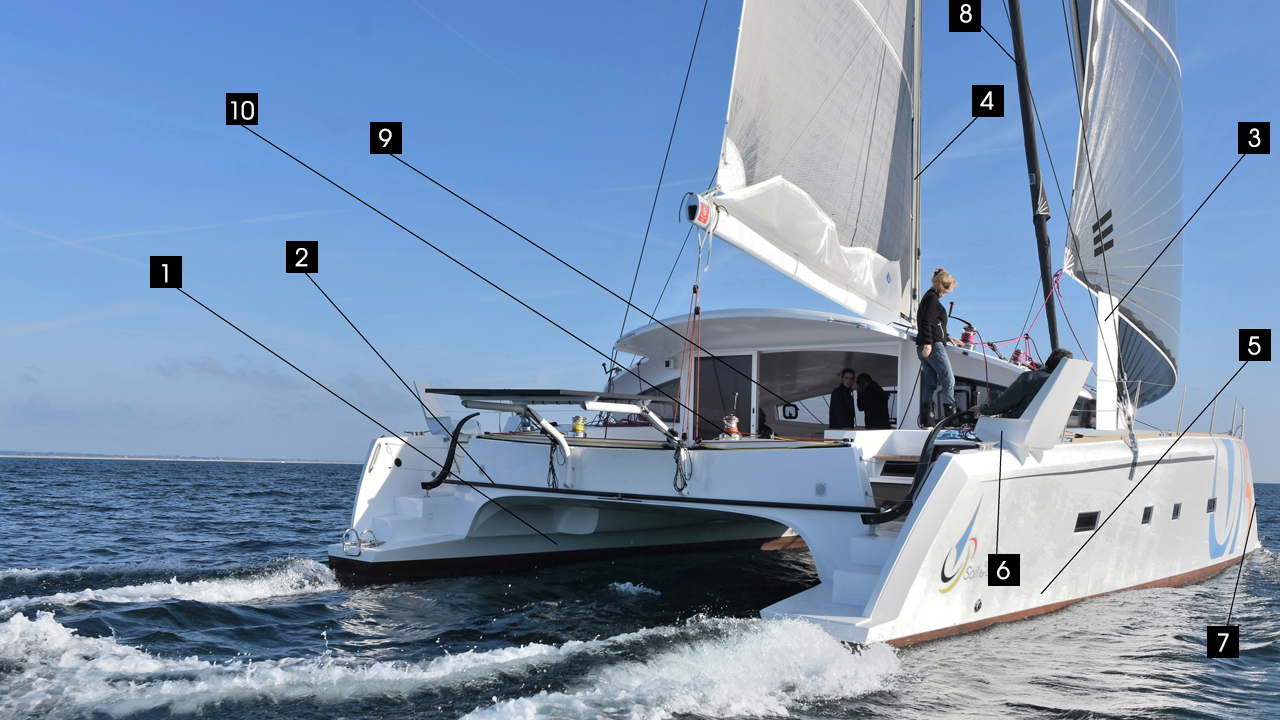
1: A perfectly hydrodynamic tunnel, the shape of the step allows for water to flow off smoothly, avoiding slamming from the sea.
2: Note the effective simplicity of the inter-rudder link: a small rail and a ball-bearing slider take up any flexion from the outer link
3: The long daggerboards allow for a draft of 3m and for deep hydrodynamic and effective support in undisturbed water. These large appendages have to be retrieved as soon as speed permits or the sea state requires
4: Our test boat had a Lorima carbon rotating mast, carbon bulkheads, a carbon crossbeam forward and membrane sails. A very effective "sport kit", but you need the budget for it!
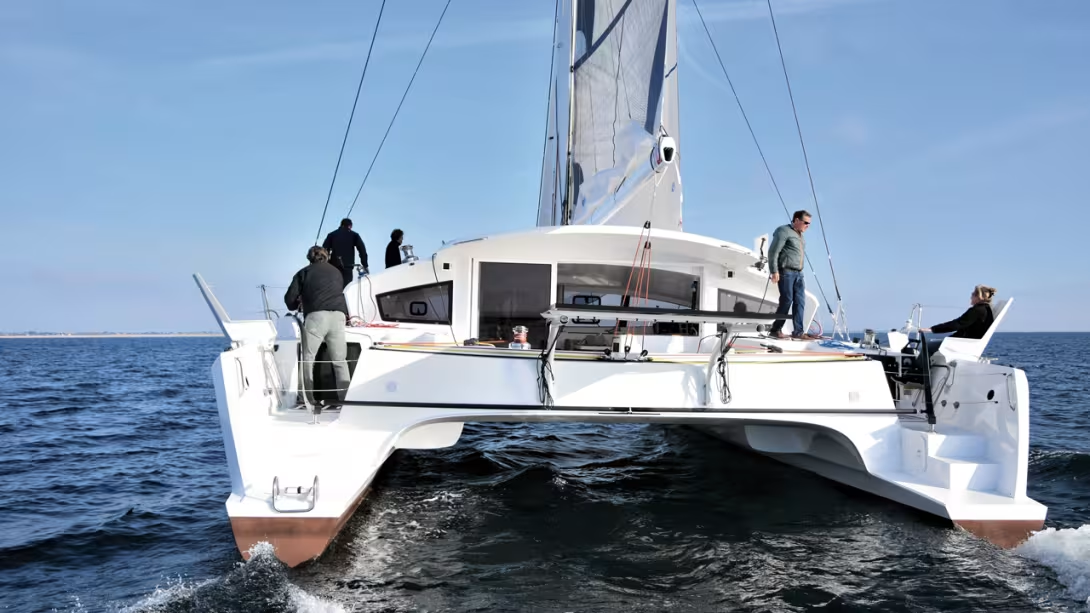
5: The “sculpted” outer hull plays a very effective deflector role. The engines are logically set forward in the hull (centering of the weights and enabling transmission by propeller shafts)
6: These chairs generated a lot of comments with the early TS42s, but in use, they are very comfortable and dry! The fun you get at the helm owes a lot to them.
7: The vertical axis of the bows is angled outward
8: Amalia does not have a genoa furler: it's all or nothing, and you have to go under staysail around 20kts true. A wise choice (aerodynamics and centering optimized weights)!
9: The coachroof of the TS5 houses an extremely comfortable, luminous, panoramic living space, and perfectly protects the cockpit from wind and spray
10: A big thumbs up for the traditional design of the mainsheet track and traveler lines. Very seamanlike, and also crucial for this vessel that doesn’t tolerate mistakes!