The goal of this new Dutch yard is to launch a range of luxury catamarans while maintaining strong ecological commitments. The materials chosen, the drivetrain, and all the systems linked to on-board energy follow the objective of modern yachting more in step with the challenges of tomorrow.
Test location: Hellevoetsluis, the Netherlands
Conditions: 10 to 15 knots of wind, slight sea



Infos pratiques
- Le chantier : Vaan R4
- La fiche technique
-
 Découvrez notre vidéo exclusive
- Financez votre VAAN R4
- Assuez votre VAAN R4
- Articles autour du VAAN R4
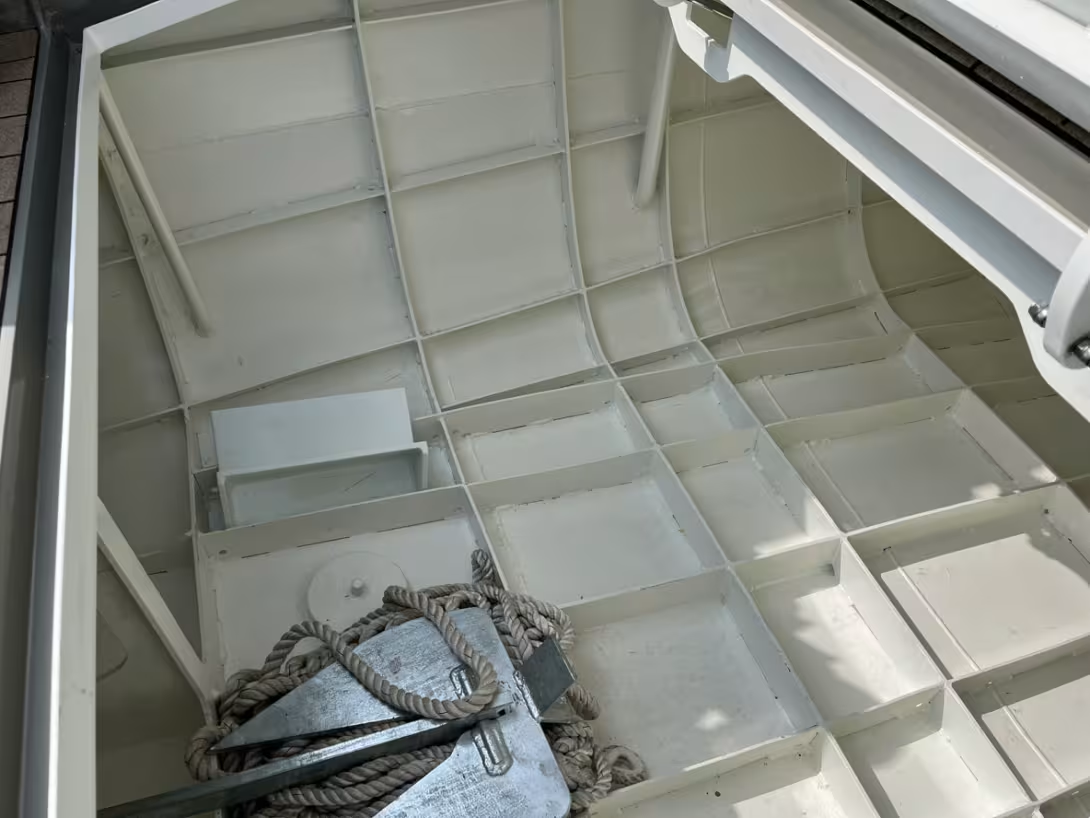
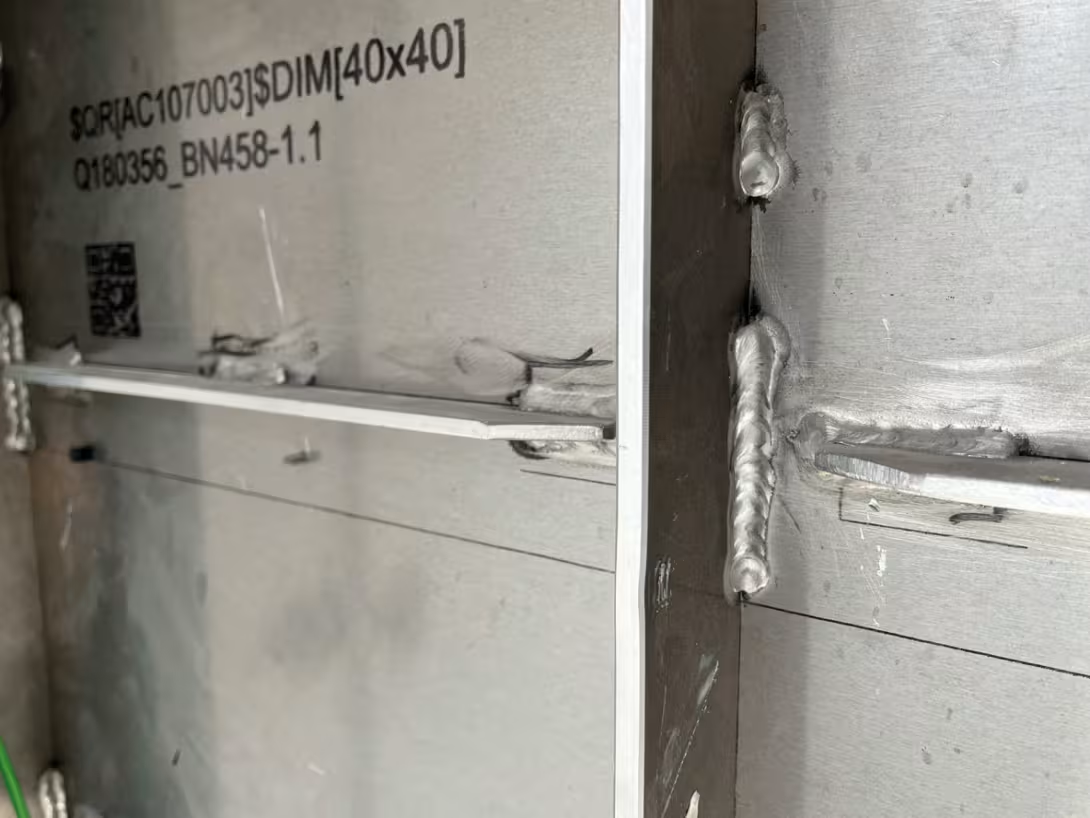
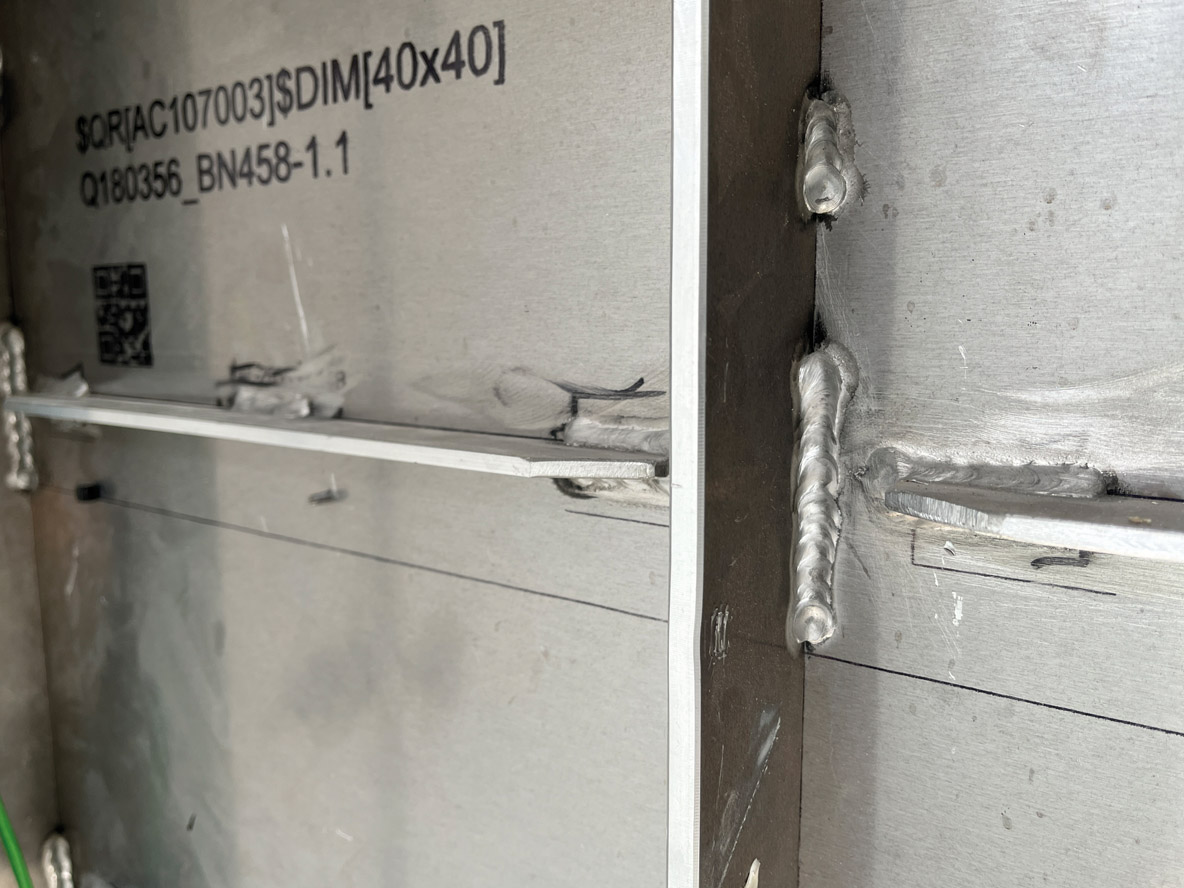
The Netherlands is certainly one of the world leaders in steel and aluminum shipbuilding. In the field of leisure boating, many manufacturers offer a range of trawler yachts designed for inland waters but also for the open sea. In this context, it isn’t that surprising to find a catamaran manufacturer who has set up shop about 20 km (12 mi) from Rotterdam. Igor Kluin, founder of Vaan Yachts, was keen to keep this Dutch identity - vaan means “weather vane” in Dutch. As for the R, it is in charge of bringing a Racing touch... The concept is about catching the wind, seeing where it comes from... and to hold a course! For Igor, the course to take is one of reducing polluting emissions and of using recyclable materials. That’s why all Vaan catamarans’ hulls are made of 60% recycled aluminum from window frames, road signs and license plates. Other ecological materials, such as cork or plant-based alternatives to leather, are also used. The drivetrain is obviously electric, and we’ll take a look at that in more detail later.
 |
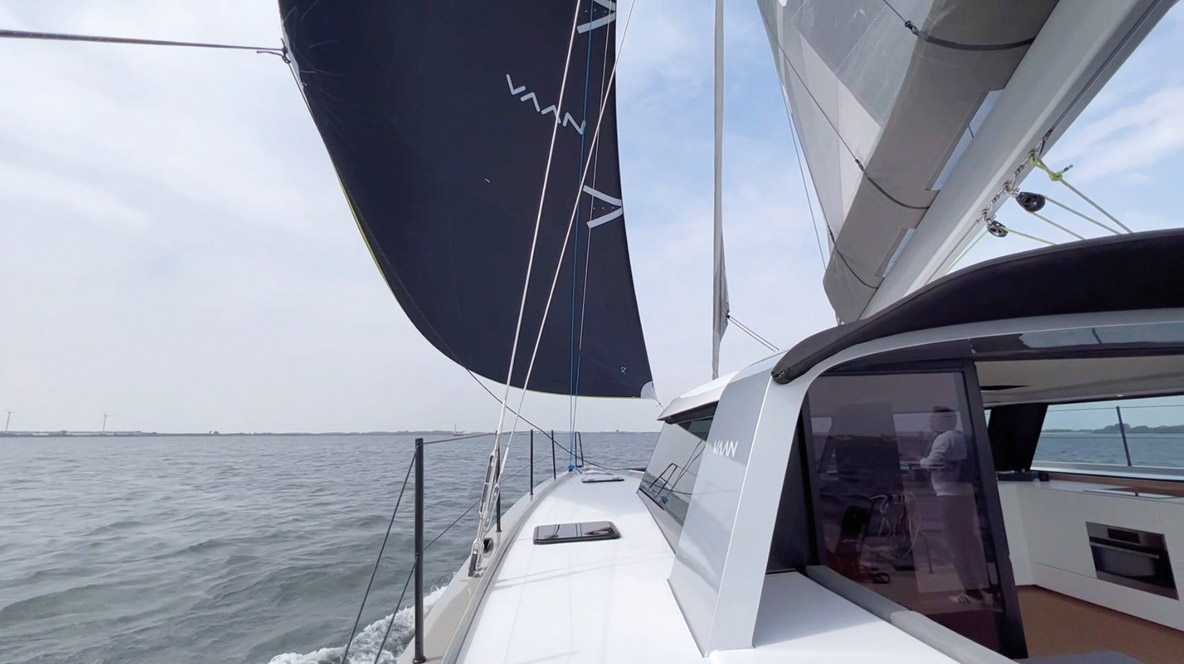 |
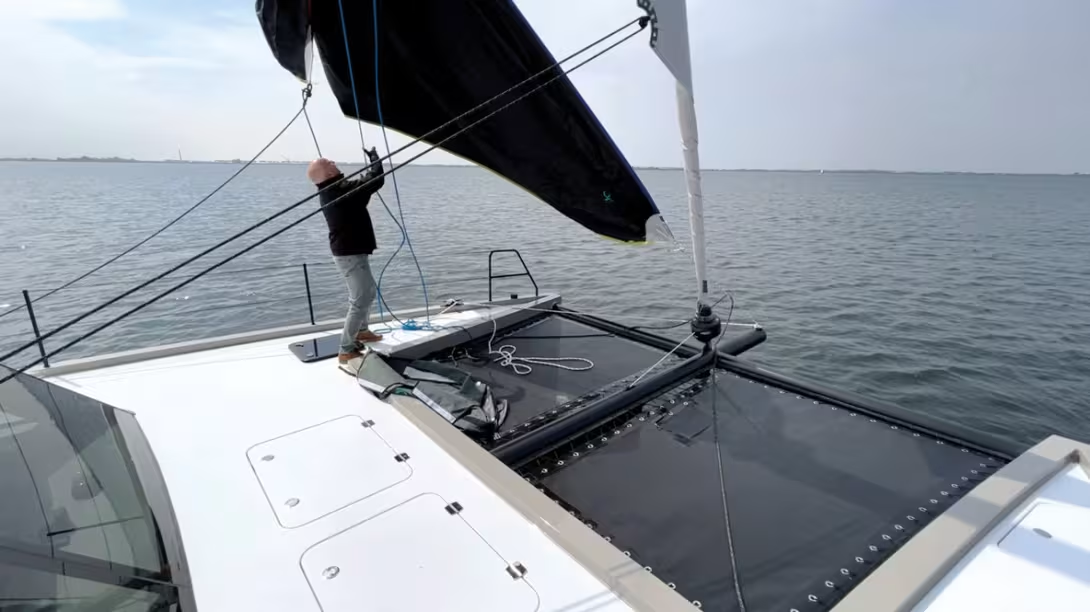
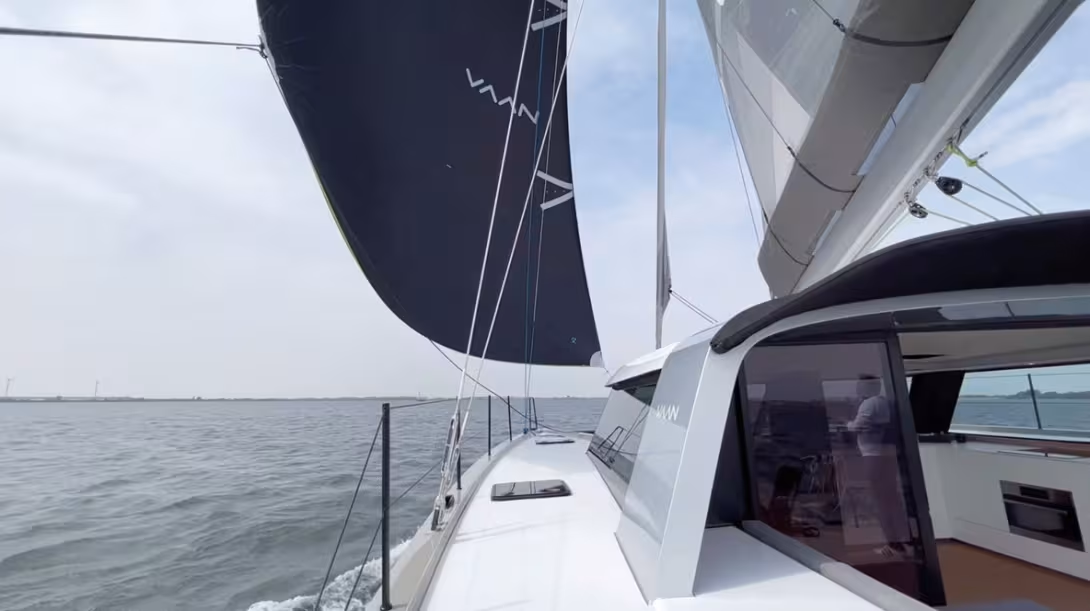
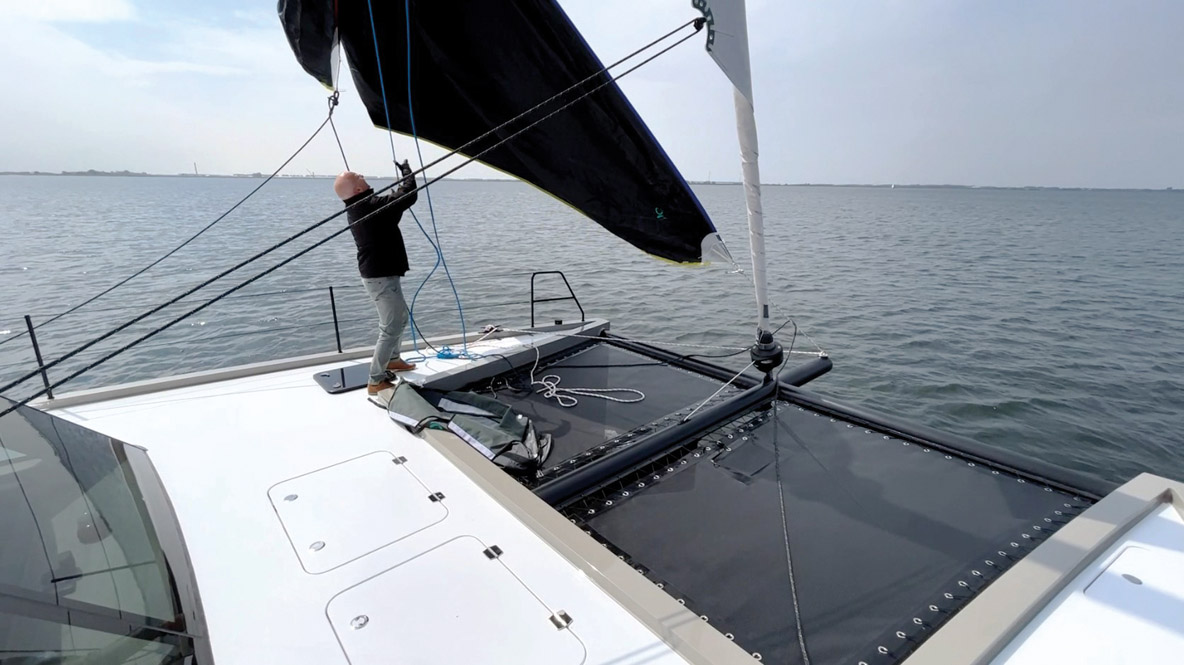
The foredeck is entirely dedicated to maneuvers: the two trampolines are very big.
The side-decks are wide and bordered by a decent bulwark, making it safe to move around, though it would be nice to see some handrails added to the coachroof.
Sleek and racy lines
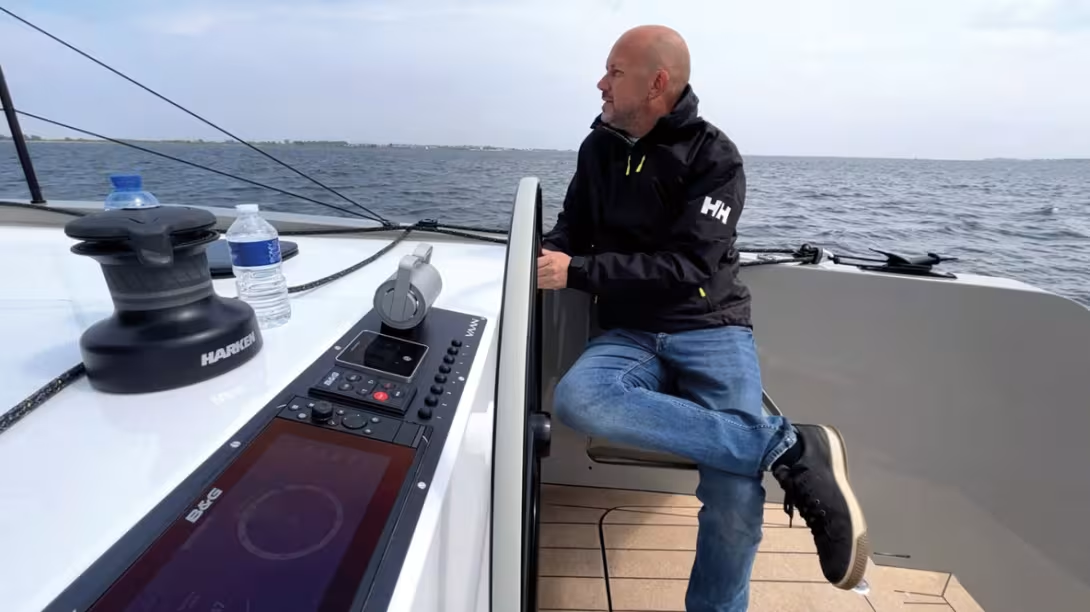
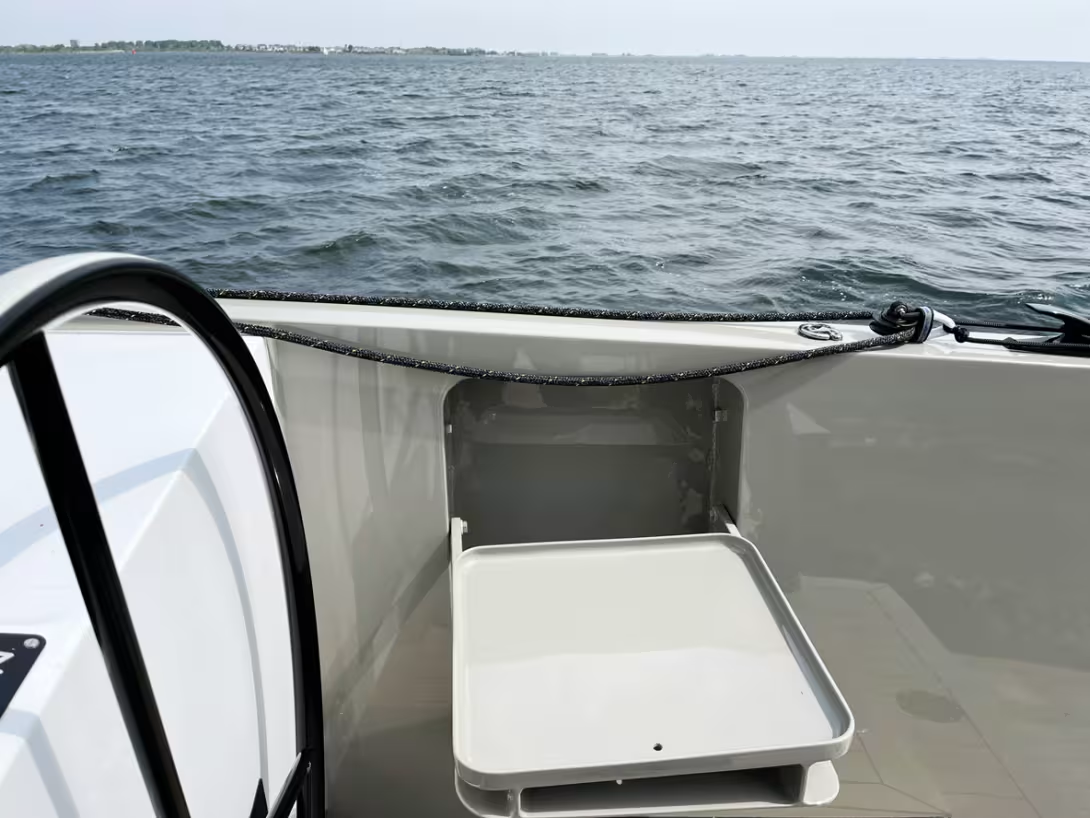
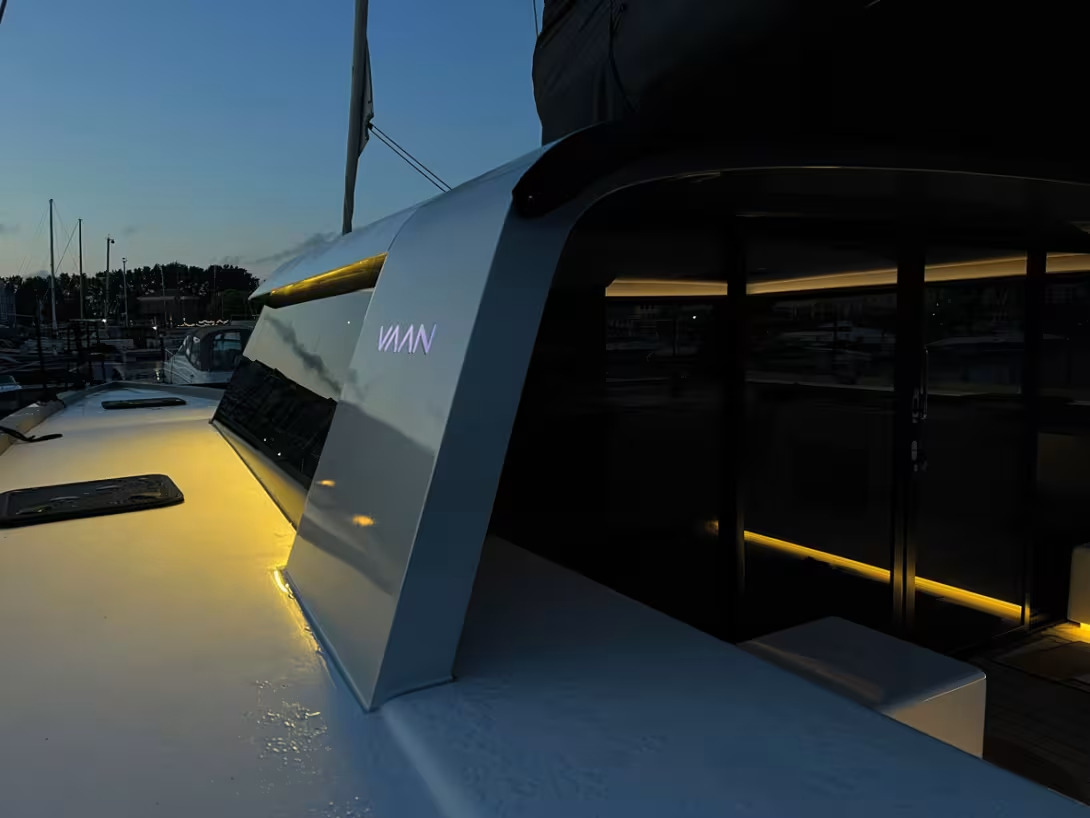
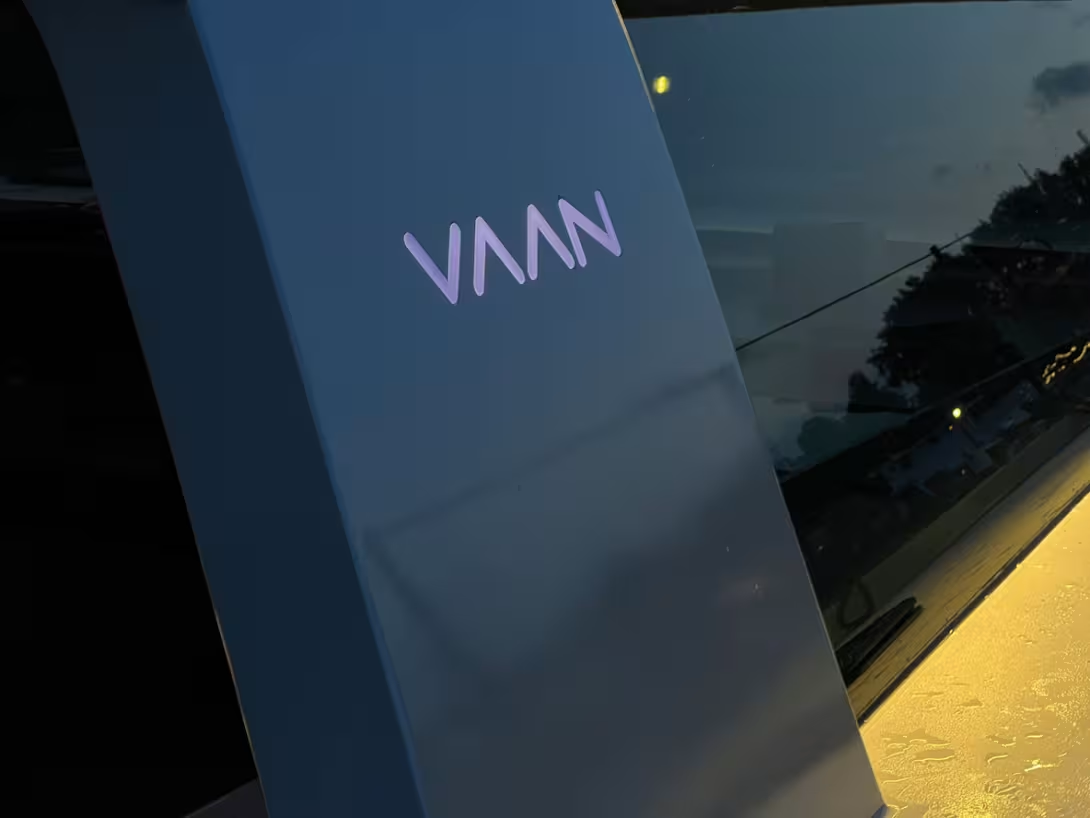
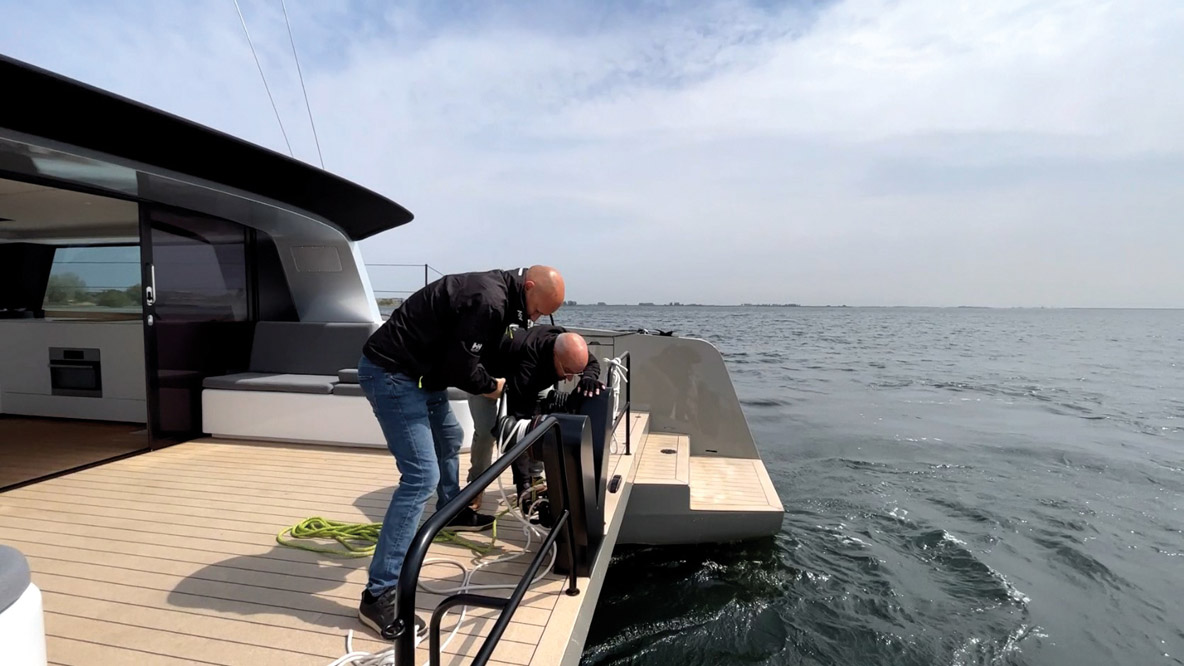
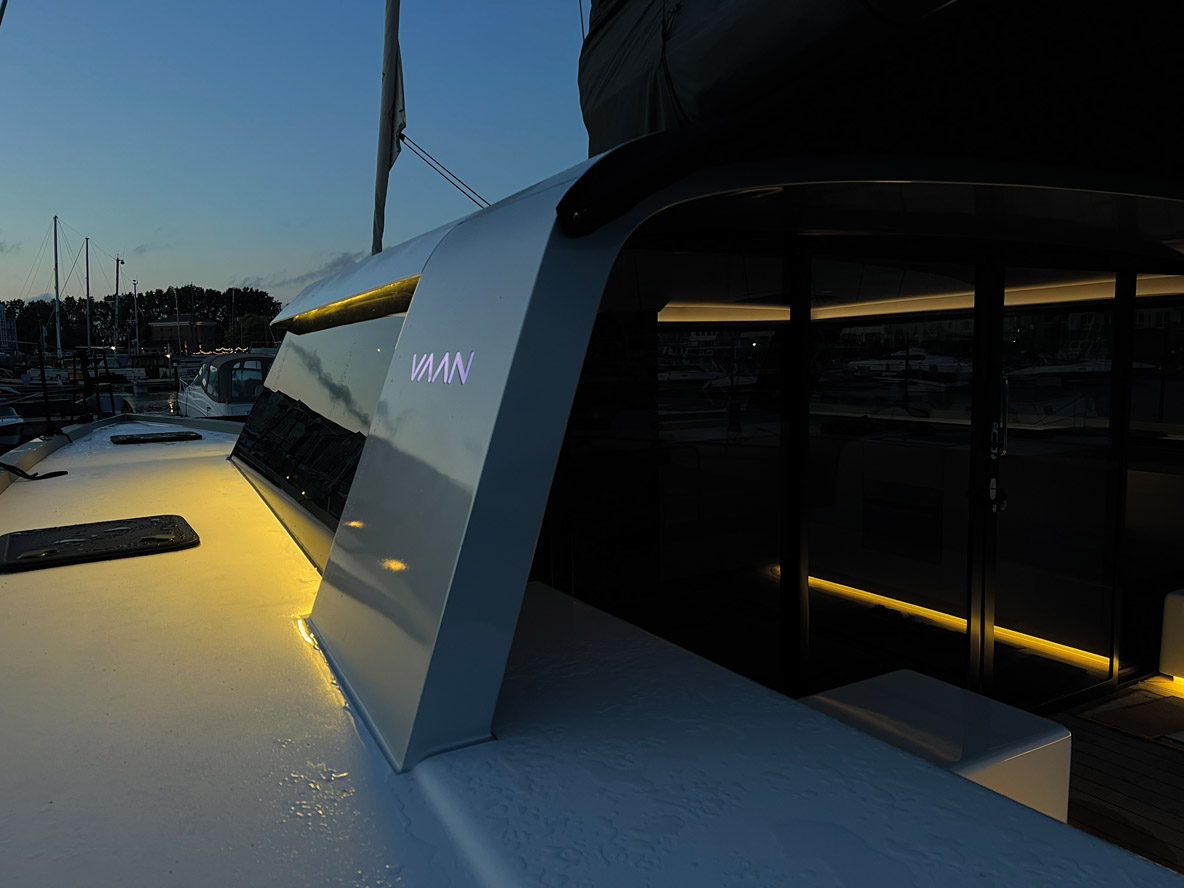
The rounded design of the coachroof with its light grey metallic arch at the back would almost make you wonder whether this section really is made of aluminum - it is perfectly worked, coated and painted metal. There are no chines and even less, any evidence of thick sheet metal: here, you’ve got a form built on tight stringers and frames. This sleek design immediately gives the R4 a “luxury” stamp. The stanchions, cleats, mast, boom, forward beam and even the elegant lazy-bag are all in black. Combined with the smoked glass, these elements also contribute to the upscale ambiance. But the ultimate feature? The Vaan logo that’s cut into the coachroof arch is luminous at night... The manufacturer has done away with a large, fixed bimini to lighten the silhouette and for enjoying the sun - which is quite pleasant in high latitudes. A rear “cap” is nevertheless available, as well as a removable protection system, including for the helm stations. For helming, you sit on one of the hulls - the idea here is to get a proper feel and a good view of both the water and the sails. The builder has designed a removable seat that folds away into the topsides. Between the helm stations, there’s a magnificent V-shaped column (again in black) that is home to all sail maneuvers except for the sheets of the downwind sails. The V obviously reminds us of Vaan, especially since the stainless steel pushpits on either side are in the form of an A... The design apart, there is plenty of room for maneuvering, but access to the side decks is less easy due to the lack of steps - so you have to stand on the bench seats... The side-decks for access to the bows are wide (never less than 26”/67 cm) and are bordered by a thick bulwark, which also surrounds the foredeck. On the downside, there are no handrails on the coachroof. The foredeck is perfectly clear – its main functions being maneuvering or lounging on the two big trampolines.
 |
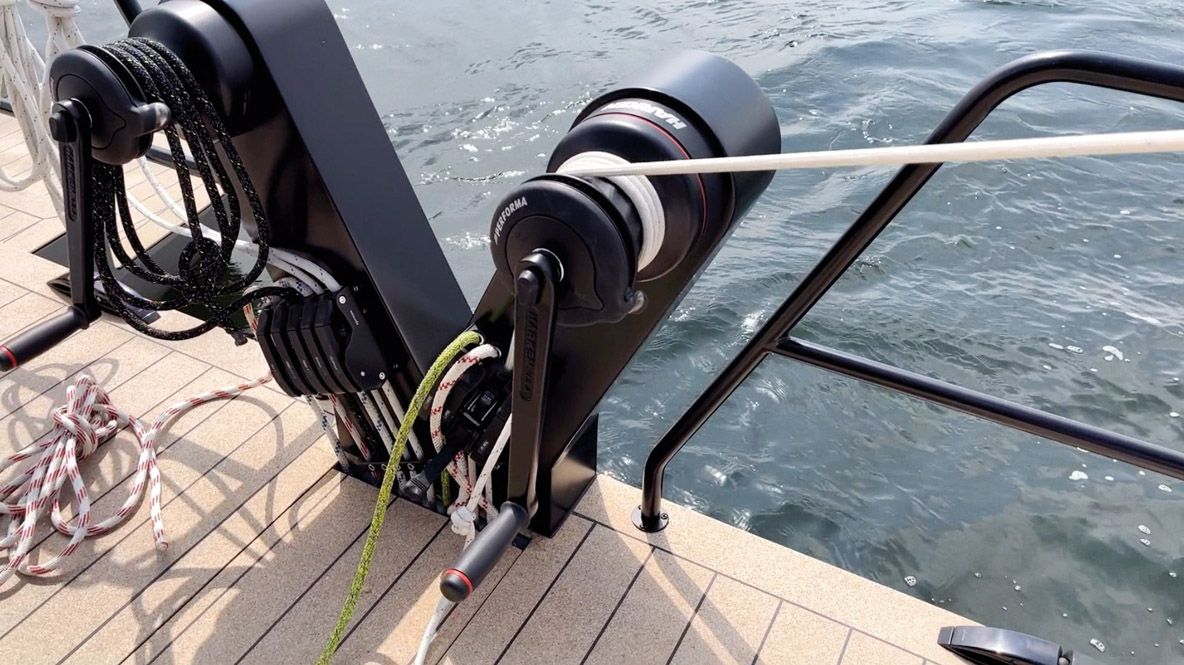 |
Most of the sail handling maneuvers are carried out on this V-shaped column equipped with two winches.
Streamlined interior
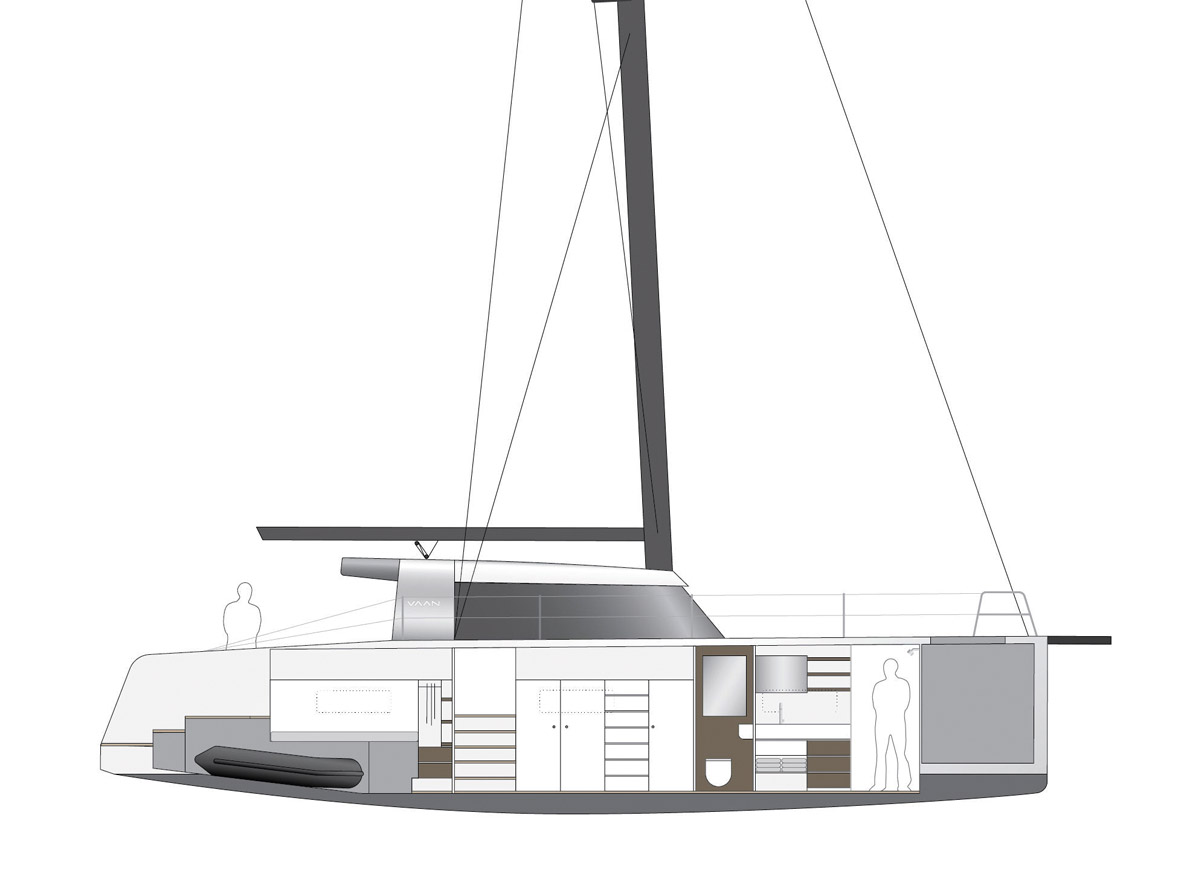
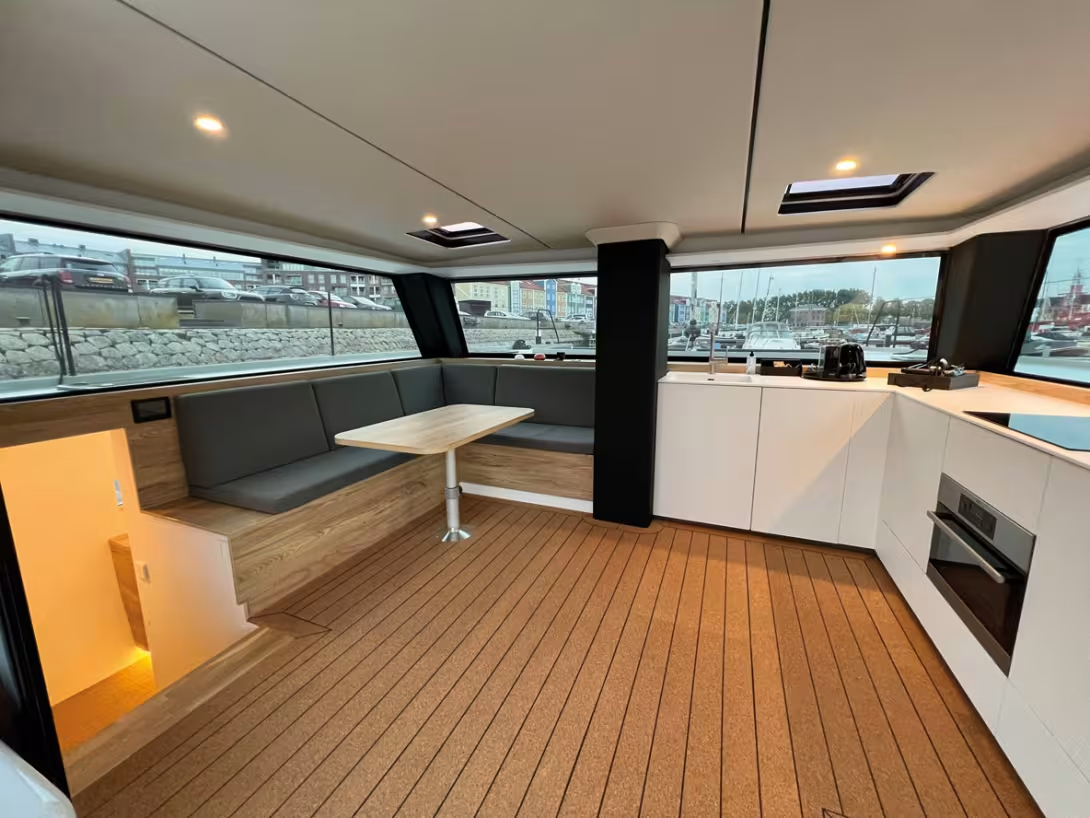
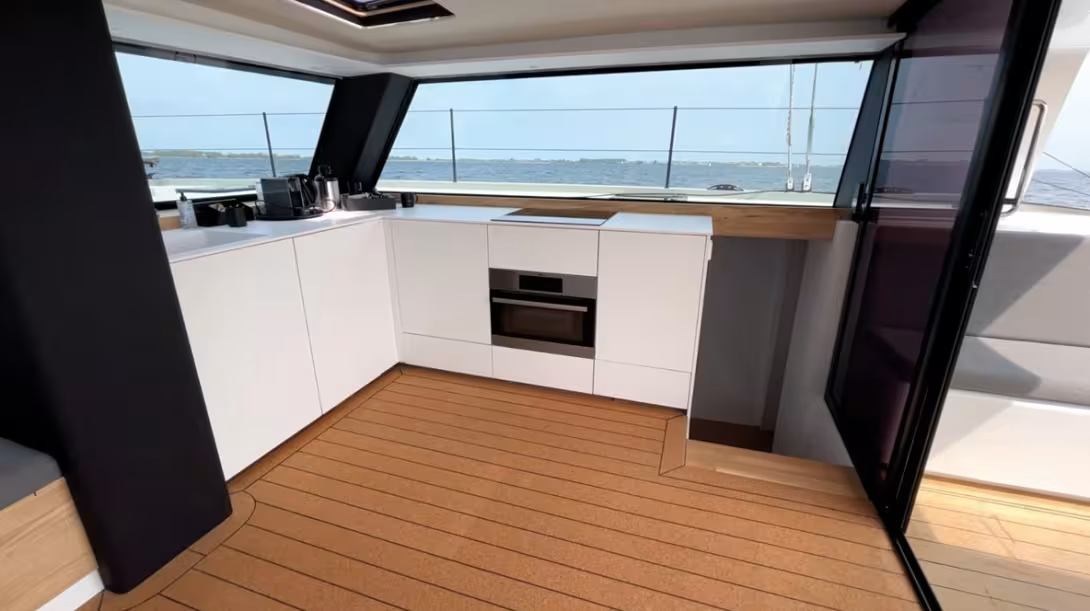
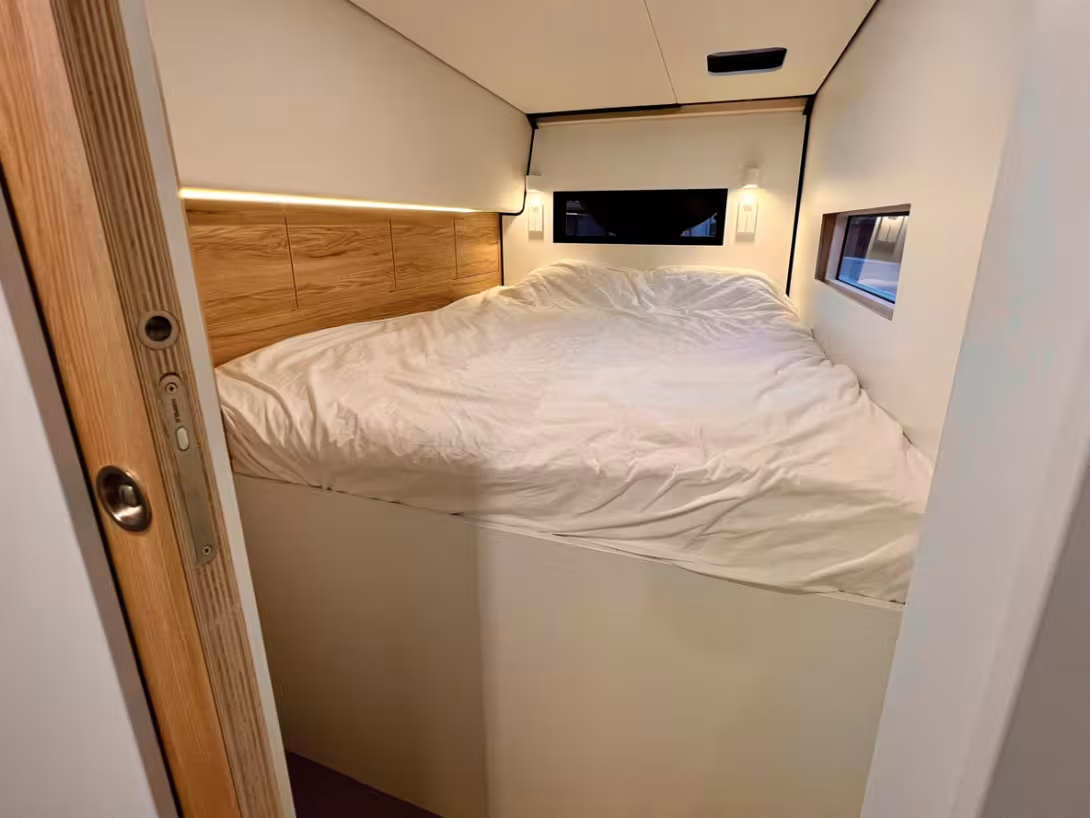
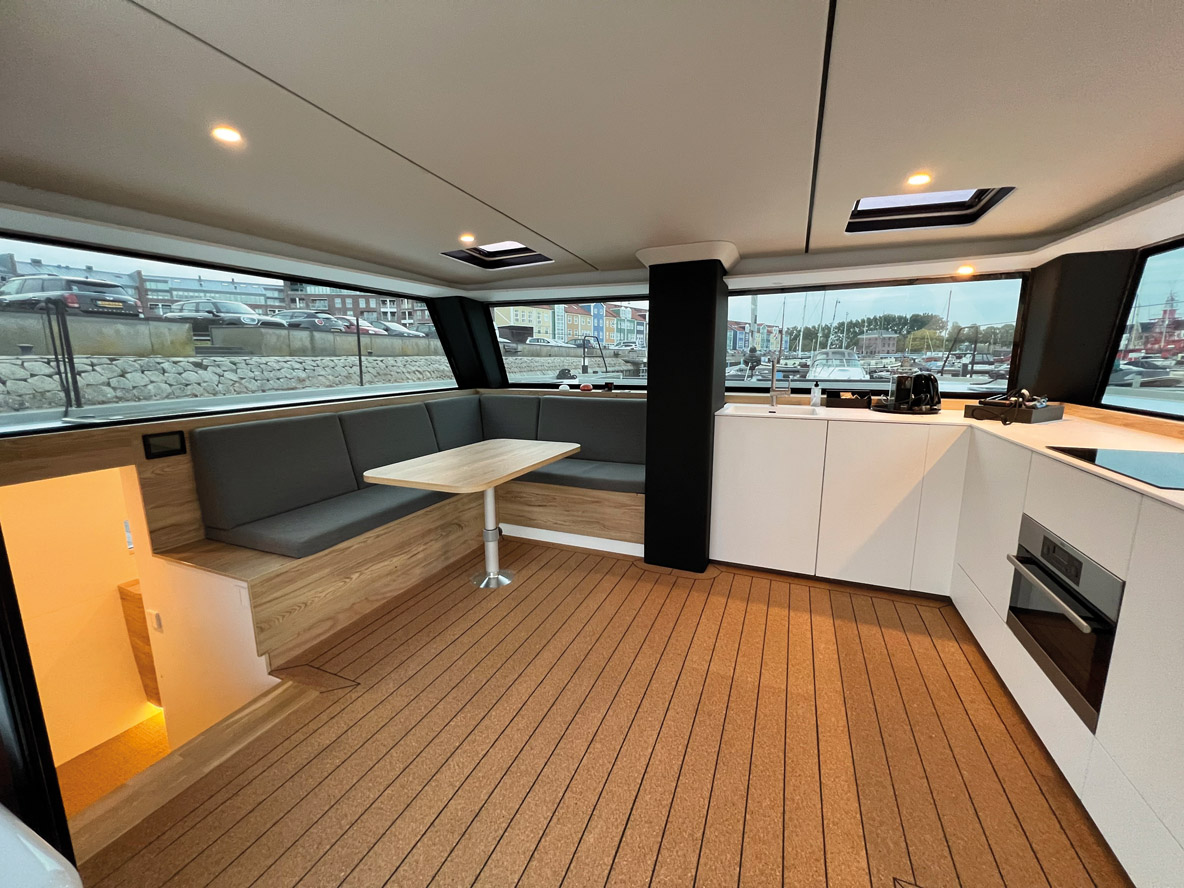
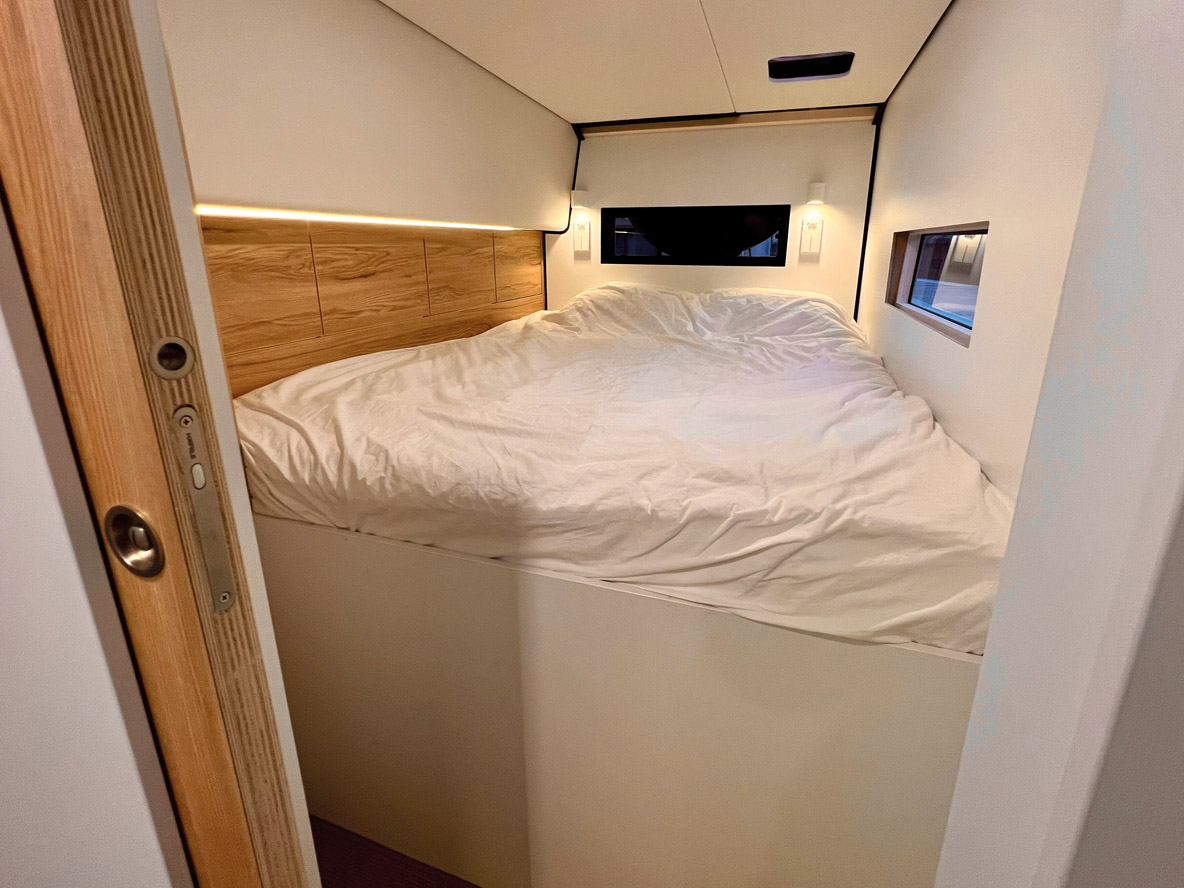
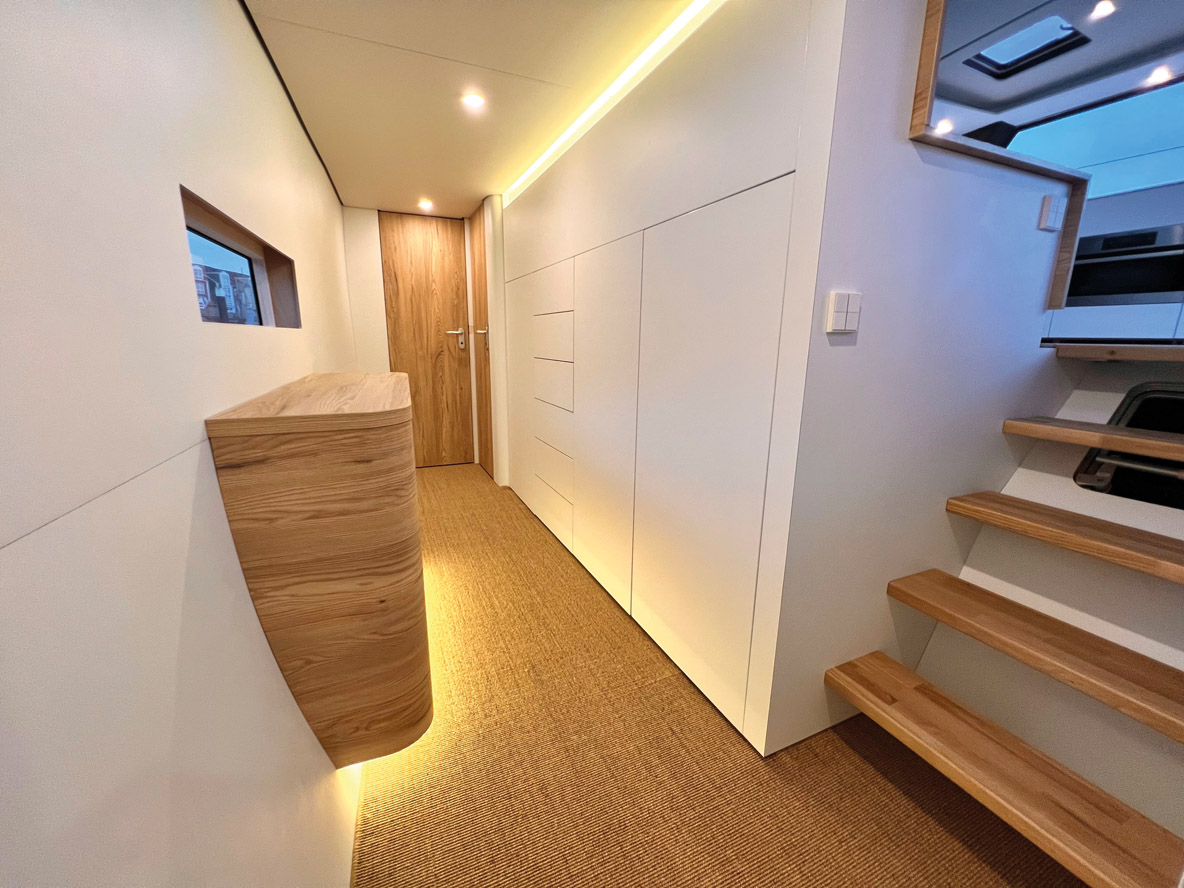
Access into the nacelle is through an opening of 6’2” by 5’8” (1.87 m x 1.72 m). Inside, the shipyard has sought to break away from current trends by favoring the idea of space, even if that has meant omitting to install a nav station. The large floor space is exacerbated by the continuity of the faux teak floor from the cockpit. The design work is also clear here, with a black central coachroof post that extends to the floor, and perfectly integrated, white galley units. Headroom is generous for a 40-footer, approaching 6½ feet (2 meters). The table in the saloon, offset to starboard, measures 48” by 28” (120 x 70 cm). The larger crewmember might find the passage to the hulls on each side a bit low. The aft berths, 78” (2 m) long and 61” (1.55 m) in width, are very comfortable, but they take up all the space of the cabin itself. In this “double owner” version, this isn’t a problem since the rest of the hull remains... Storage spaces are concentrated in the center (as is access to the electrical systems to starboard) while the bathrooms occupy the forepeaks. The decor proposed on board this first model features white paneling and light wood.
 |
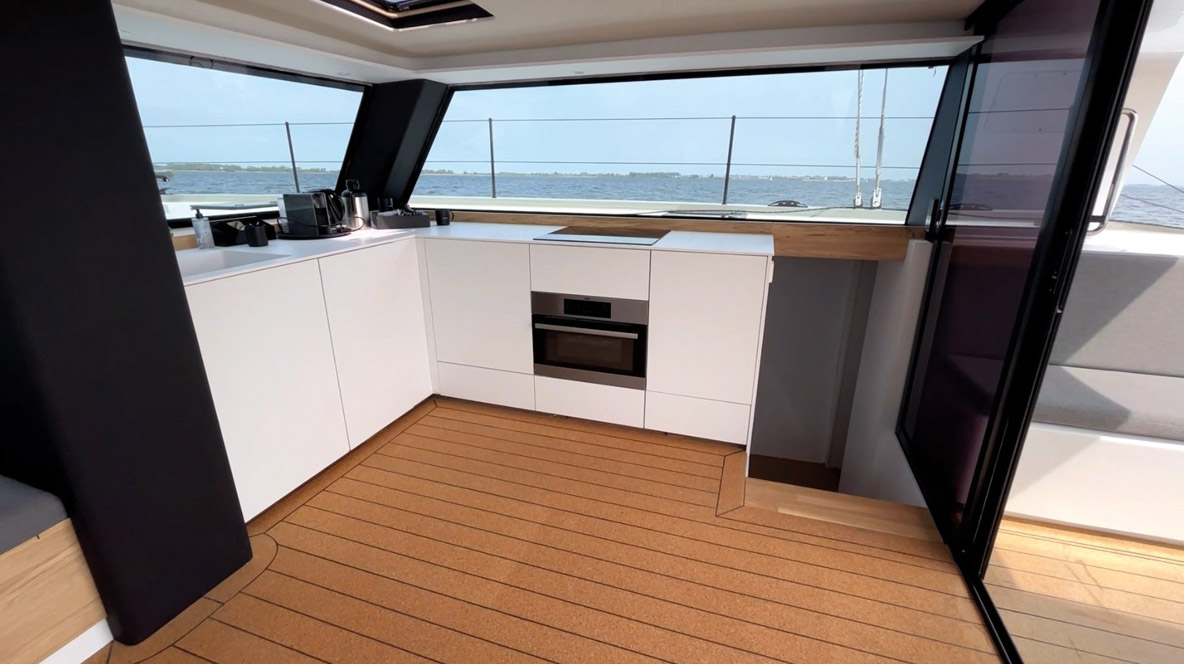 |
The nacelle provides a large, unobstructed floor area, and the saloon on the port side can feature an (optional) extra berth.
“Recreational cruising needs to quickly become more sustainable because our enjoyment should no longer come at the expense of others and the marine environment,” according to Igor Kluin, founder of Vaan Yachts, “By looking at materials and design in different and innovative ways, you can even build a more environmentally friendly luxury yacht. Doing so is simply a choice.”
 |
 |
Our test model has just two owner’s cabins; the beds are installed aft and enjoy a beautiful view of the sea through the well-positioned windows.
The silence of electric
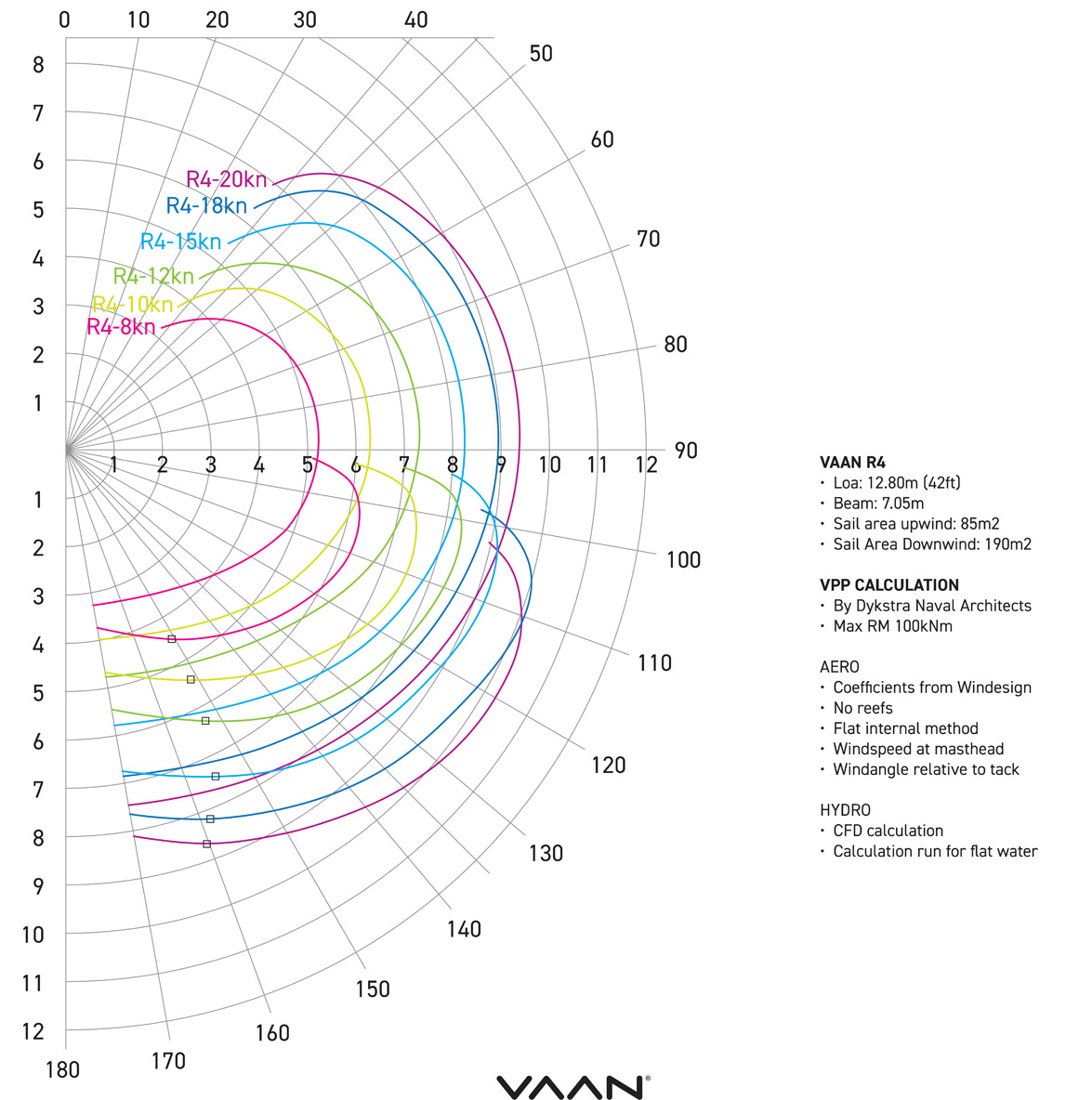
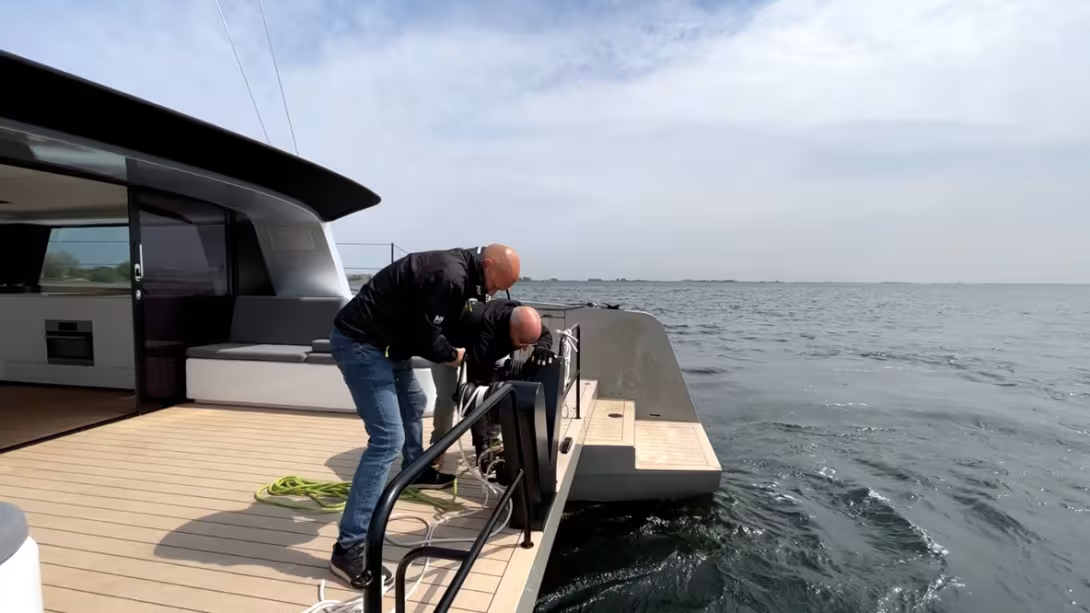
The Vaan R4 was moored outside the lifting bridge and the remains of the old lock, meaning she was free to maneuver. The electric motors (15 kW Oceanvolt on this example) are quiet and offer more than enough torque required to spin on the spot. Maximum speed under motor is around 8 knots, but the R4 is designed to cruise at 5 to 6 knots. The manufacturer offers a very wide range of possibilities in terms of the powertrain, but also of the battery bank, the hydrogeneration system and solar panels. The generator feels to me like an essential complement to the installation - in the event of discharged batteries, it means you can maintain 5 to 6 knots in dieselelectric mode. This is an important safety factor, even if it is possible go cruising and almost not need it at all - offshore as well as coastal - as long as all the boxes are ticked to complete the installation. There is significant additional cost, but that’s unavoidable if you are to free yourself from the idea of internal combustion. Under sail, the Vann R4 pleasantly surprised us - under asymmetric spinnaker, we reached 8.4 knots on a broad reach.
Seen from the outside, the hulls seem to stir up quite a bit of water at the bows, but conversely, the wake is fairly discreet - the large, flattened bows explain this agitation of the sea, which in the end amounts to little more than foam. Later, on a beat, our speed stabilized at 6.5 knots at 50° to the true wind. We were aboard the version with fixed keels, but when it comes to appendages, aluminum construction certainly offers more possibilities than molded composite hulls: the Vaan can be equipped with skeg keels limiting draft to 4’11” (1.50 m), or longer (6’5”/1.95 m) or even a pair of daggerboards. Our test took place with a slight sea state, but we’ll have to wait and see how the Vaan R4 performs in livelier conditions. The catamaran should do well with its voluminous bows and a 2-foot bridgedeck clearance (59 cm).
 |
 |
The quality of the exterior finish could almost make you forget that the Vaan R4 is indeed an aluminum catamaran!
Conclusion
Two R4s are currently on order, but they’re not the only ones: the next model up, the R5, has also been ordered in two examples - the construction of hull #1 has already begun. And the good news from Vaan Yachts does not stop there, as a very ambitious R6 has also been signed... The concept of the more environmentally friendly aluminum catamaran is not just wishful thinking: yachting customers are clearly convinced by the idea of sailing aboard a non-polluting multihull whose construction takes a step towards greater respect for the environment. The neat and original design, associated with the wide range of customization options, is also convincing... The shipyard expects to build 5 catamarans per year.
 |
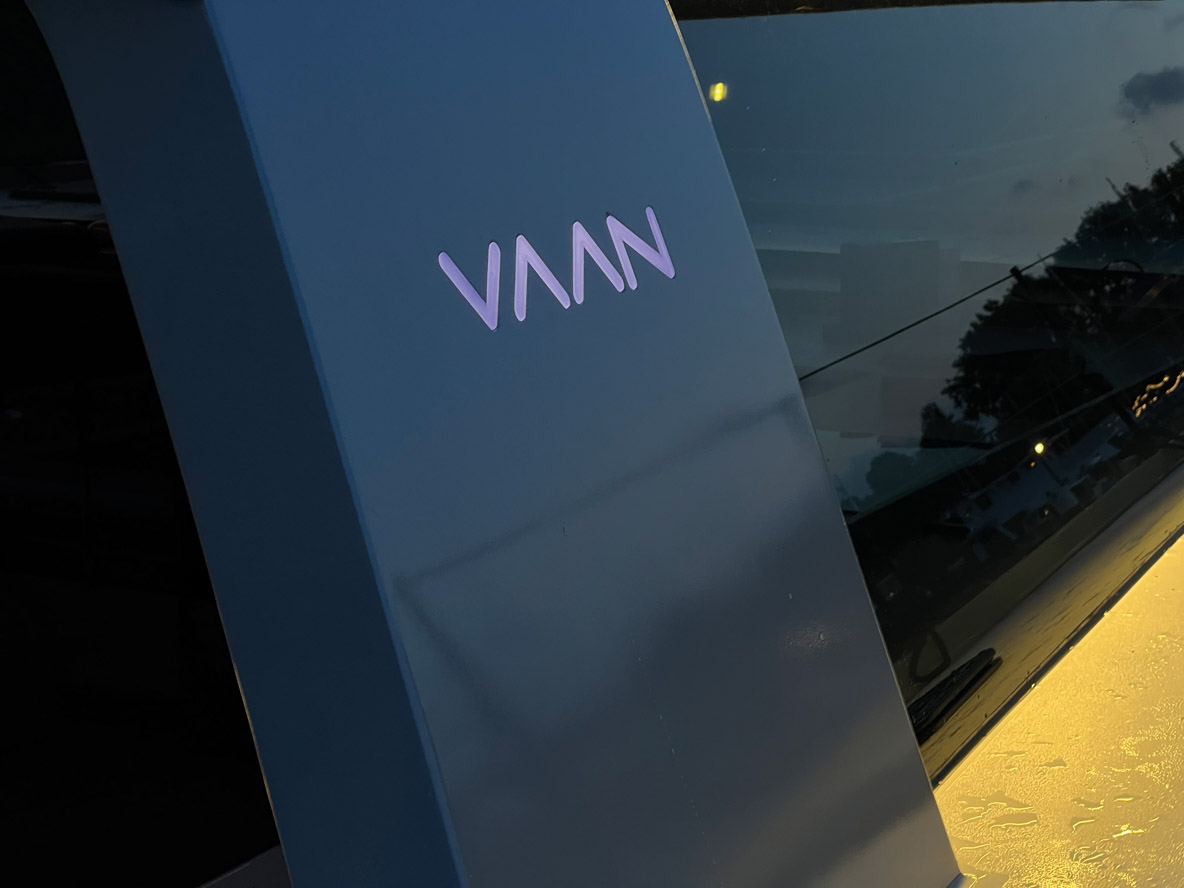 |
Even in a nocturnal atmosphere, the manufacturer’s design efforts remain entirely in evidence!
THE PLUSES:
+ One of the only 40-foot aluminum catamarans
+ Attractive design
+ Efficient propulsion system
THE MINUSES:
- Cockpit/deck access to be reviewed
- No nav station
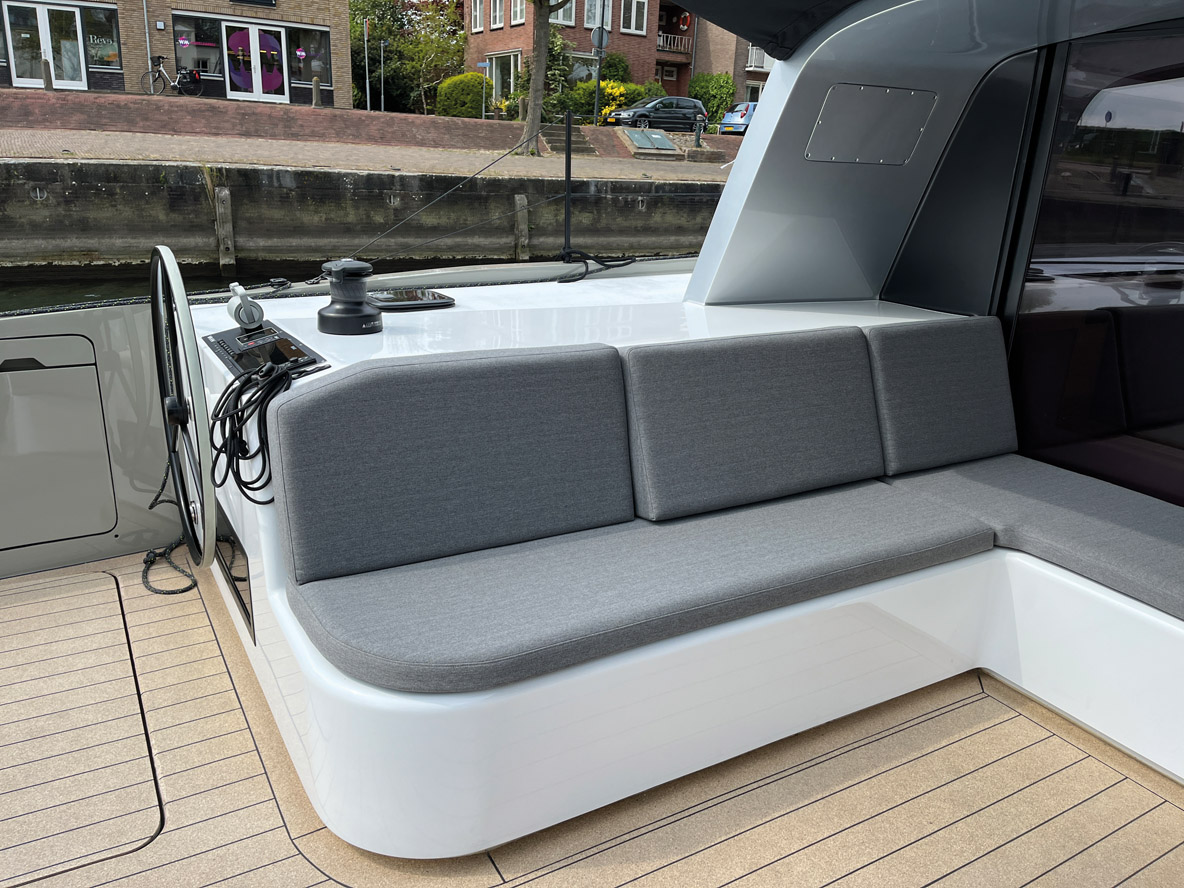
Climbing up on to the side-decks requires using the bench seats as steps (due to the lack of a suitable passageway)... something to be reviewed.
TECHNICAL SPECIFICATIONS
Builder: Vaan Yachts
Length: 42’ (12.80 m)
Beam: 23’2” (7.05 m)
Displacement: (10.90 t)
Draft: 4’11”/6’5” (1.50/1.95 m)
Air draft: 65’ (19.80 m)
Mainsail: 592 sq ft (55 m²)
Self-tacking solent: 323 sq ft (30 m²)
Code 0: 915 sq ft (85 m²)
Gennaker: 1,453 sq ft (135 m²)
Drivetrain: 2 x 10/15 kW
Battery bank: 18 kWh
Price (delivery included): € 437,900 ex-tax
Main options. Prices in € ex-tax
B&G electronics pack: 15,862
Daggerboards: 12,900
Cockpit and sugarscoops in imitation teak: 7,900
Deck in imitation-teak: 11,025
Extended bimini: 1,975
Underwater lighting: 2,600
Quantum gennaker and furler: 8,375
Quantum Code 0 and furler: 11,625
2 electric winches on the V-column: 7,090
2 Harken Winches (46.2ST) for gennaker or Code 0: 4,128
Ocean Volt SD15 saildrives 2 x 15 kW with hydrogeneration: 22,245
42 kWh battery bank: 22,450
15 kW generator and 52 US gal (200 l) diesel tank: 28,900
640 Wp Solar panels: 4,750 640
Wp Solar panels on bimini extension: 4,750
15.8 gal (60 l)/h Watermaker: 11,900
Modular saloon table: 2,540
Double glazing in nacelle: 3,550
Blinds for nacelle windows and sliding door: 7,600
6-person liferaft: 1,290
8’ (2.5 m) tender with electric motor: 4,875
Davits with mooring cleats: 2,615