After the success of the now mythical Virus Magnum 18 and 21, the Morbihan-based company is launching into the raid catamaran adventure. To our great delight.
Infos pratiques
- Le chantier : V8
- La fiche technique
- Découvrez notre vidéo exclusive
- Financez votre Virus V8
- Assuez votre Virus V8
- Articles autour du Virus V8
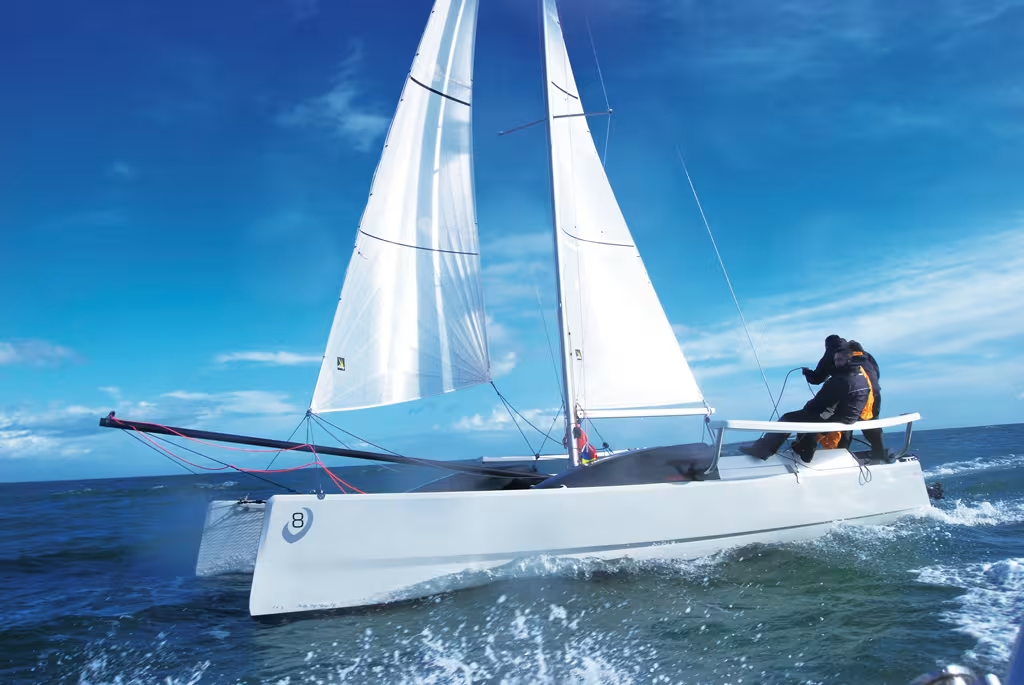
The idea of a test is above all to have fun, so we chose our day: the weather forecast gave a light to moderate breeze, with sunshine. Above all, it was forecast to be favourable on the outward leg of course, (from Locmiquélic, in the ‘Rade de Lorient’, to Rosbras, 25 miles away, in the Aven, which leads to…Pont Aven), but also for the return leg, as Mr. Ugrib’s wind vane forecast a change overnight. We were not wrong: “if you are sailing to windward, you have chosen the wrong route”. Once we had left the Rade de Lorient, the V8 showed its character. In difficulty in the very light airs close to the coast, notably to windward (but a code 0 would help), it really came alive once the breeze reached 6-7 knots, to allow the GPS to display values which changed when the wind increased or decreased by 1 or 2 knots. Little by little, we settled down on the wings, holding the tiller extension, sitting comfortably, with a good view over the platform and the sails. The wings would be improved by the addition of a backrest - planned for the future.
A real raid catamaran, pleasant to sail and fast: a big hand for the builder!
Fun, fun, fun…
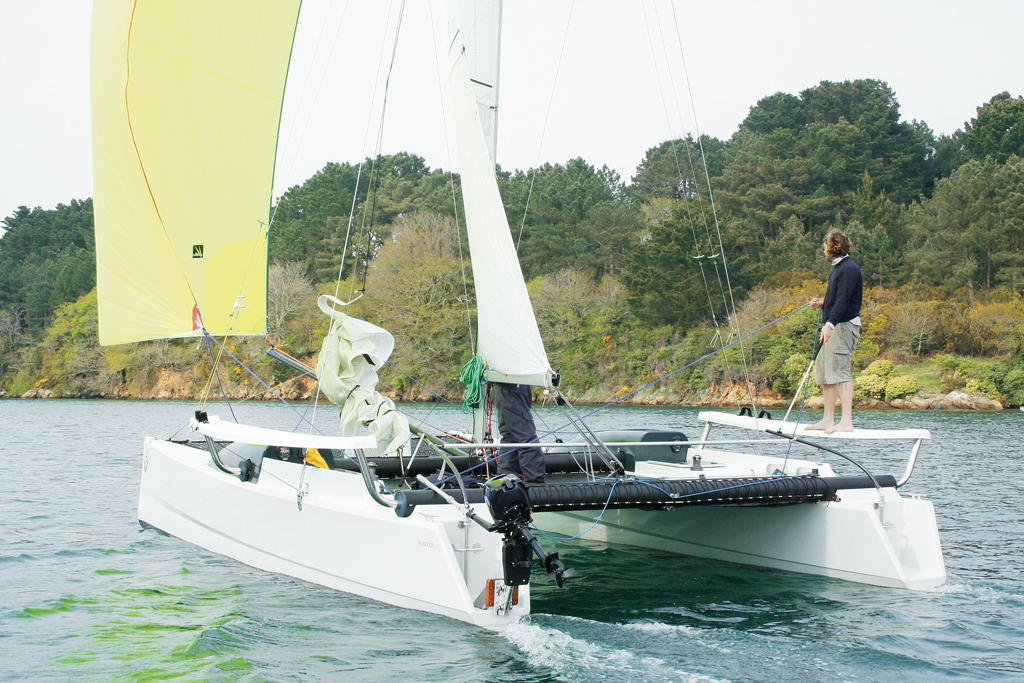
In the choppy water, we felt that the boat was a little flexible; this is due to the construction method, with mechanical connections. The central and aft beams are made up of fat aluminium tubes, each attached with three big bolts, making 12 in total. The hulls slip through the waves well; they ‘sit’ on the stern. Once we arrived at the western point of the Ile de Groix, the breeze got up, so we bore away and hoisted the spinnaker. This boat is half-way between a sport catamaran and a cruising cat; the spinnaker’s area does not need either a snuffer or a furler. Once its bag is strapped to the leeward trampoline, all that is necessary is to bear away so that the wind is almost dead aft, not far from sailing by the lee, haul the tack line out to the end of the huge all-carbon bowsprit, before taking in the halyard to hoist the sail, then sheet in. When sailing as a family, a snuffer would be a good investment. The power was unleashed, the boat could express itself. We continued sailing tacks on a broad reach, and attempted to make ground downwind, by trying to find the best compromise between course and speed. The spinnaker tack, well forward, was remarkably effective in helping us. The difference is subtle, speed must be the priority rather than course; thus a difference of 10 to 15° in the course, which in itself is not a problem, immediately results in a difference of two or three knots on the GPS. The perfectly-designed rudders (controlled by carbon tillers) keep the boat on rails; only a few corrections were necessary to keep the boat on its trajectory, and accelerate from time to time, by luffing a few degrees to look for the apparent wind which without fail got us back up to cruising speed again (which had now settled at around 10 knots, a speed we hardly ever dropped below again – except when a certain helmsman who enjoys chatting lost concentration). Pushed by the wind-induced waves, climbing and descending the westerly ocean swell, the mild weather, the sunshine, the swell and the speed combined to make this sail aboard the Virus V8 a real pleasure.
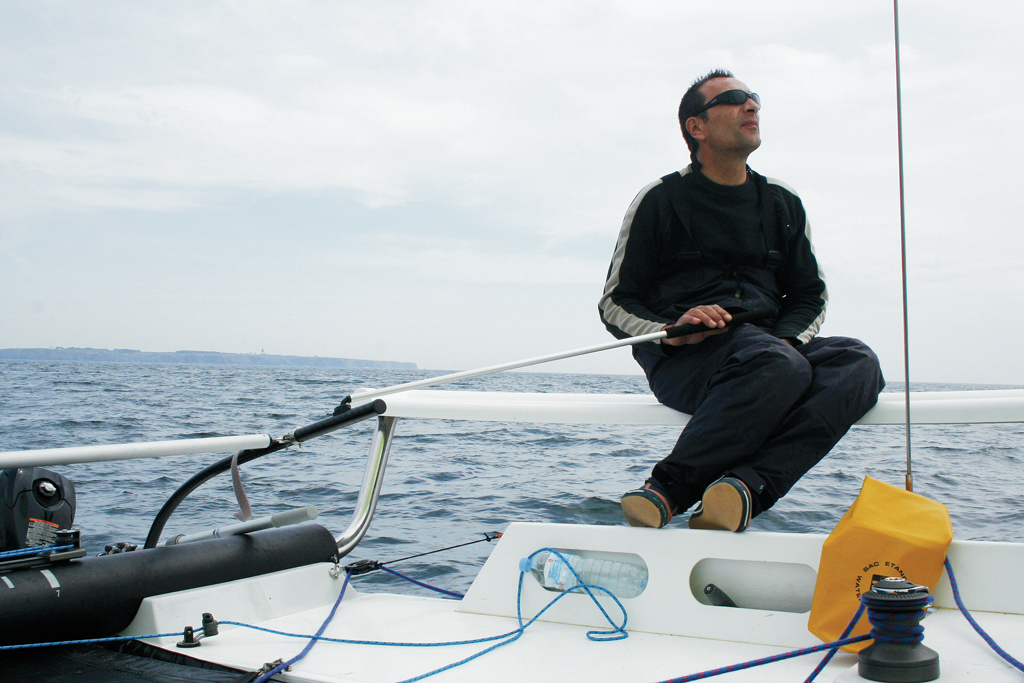
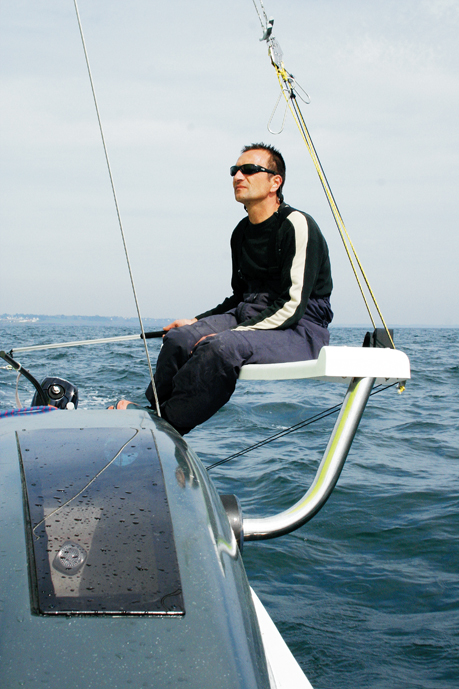
The wings are comfortable and allow you to escape the spray: a real luxury!
Easy beaching.
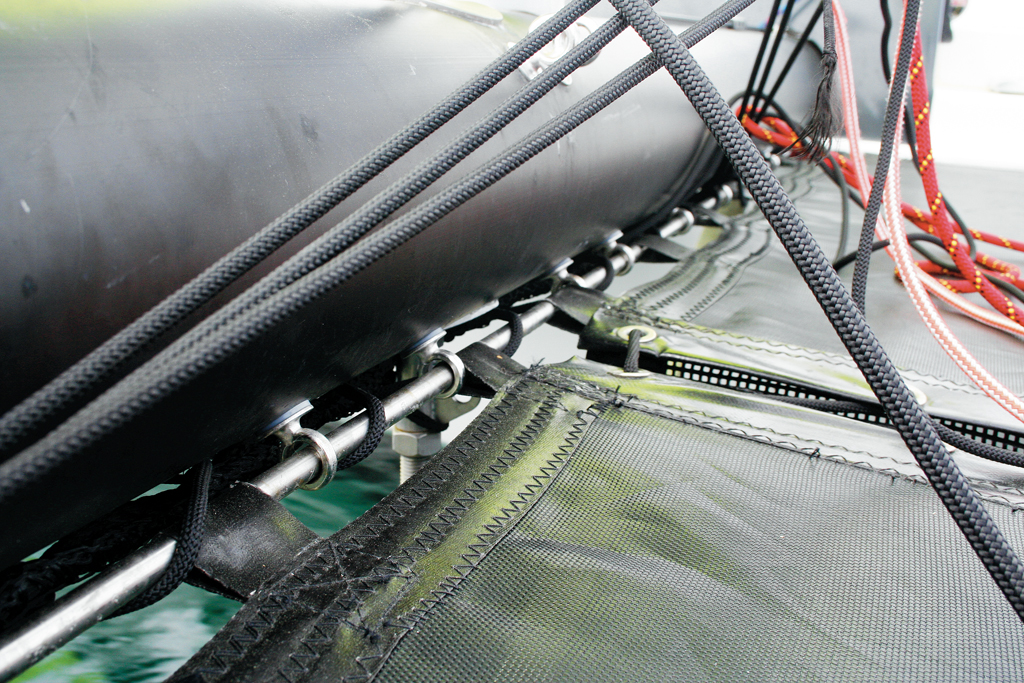
We were approaching Rosbras, the wind and the V8 rewarded us with a nice top speed of 14 knots (on another outing, it reached 18 knots). We had sailed lots of tacks on a broad reach; the 25 miles had been swallowed up in less than four hours, with a distance covered estimated at around thirty miles. It’s a well-known fact that fast multihulls detest sailing with the wind dead aft. So apart from tacking downwind, there is no other solution. We kept the spinnaker hoisted, and the V8 progressed, still at a good speed, amongst lots of boats moored to their buoys in the middle of the river, until we anchored in a little creek in a metre or two of water, to wait for the ebb tide. Because of its light displacement, there is no need for a windlass; the two anchors, their chains and the warp are stowed in plastic baskets, which at sea are themselves stowed in the bottom of the hulls, close to the centre of gravity. The V8 is a boat for raids; it is certainly fast, but its vocation is not to try and find the last tenth of a knot of performance. It has therefore been designed with keels, rather than daggerboards: easier to build and therefore cheaper. And in addition, these keels are particularly long, thus giving very good stability when beached. The architect has taken care with his design; the hulls have an aggressive, modern look – everything we like! A ‘weight-saver’ would have the time of his life, and many solutions exist to make this cruiser-racer day-boat faster still. A plethora of stainless steel parts could be replaced with lighter (but more expensive) materials. This is the case for the bars which hold the trampoline; they are in stainless steel, passing through eye bolts which are also in stainless; a tape lashing would do the job. The same goes for the inverted dolphin striker under the mast, the numerous stainless shackles which could be replaced by textiles, or the shrouds…
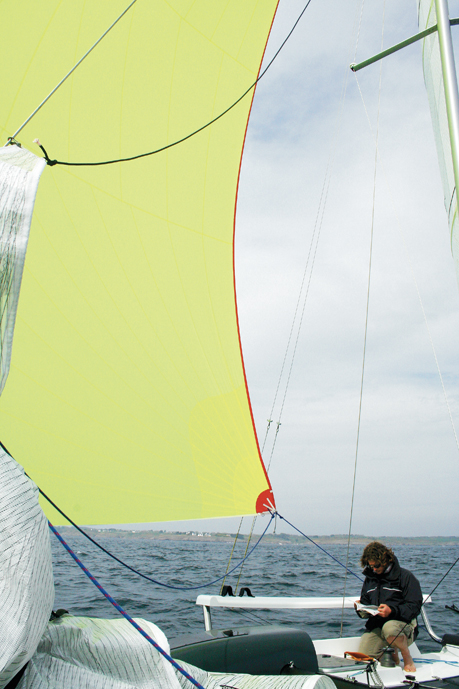
Everyone quickly finds their place aboard during the long downwind legs.
A boat designed for raids.
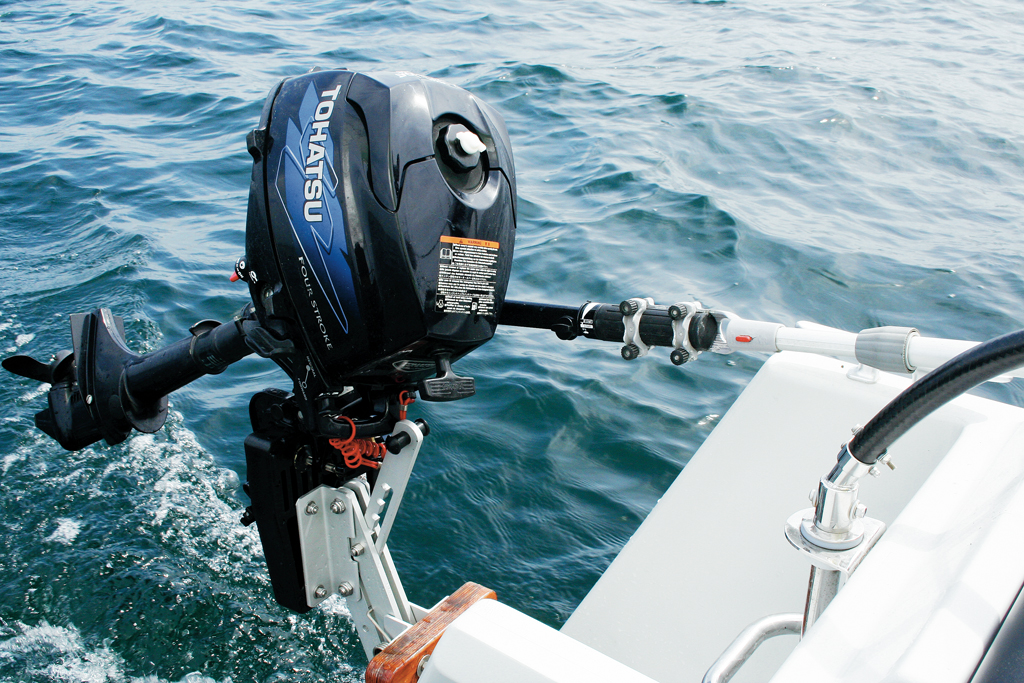
After a working evening dedicated to re-writing the history of sailing in general, and multihulls in particular (…), we went aboard to sleep. The boat was perfectly beached on a sandy hump. Each hull has two berths (canvas stretched over aluminium tubes). Once you have slid into the interior, the berth situated forward allows you to sit, thanks to the presence of the coachroof. But the ideal, of course, would be to take a tent with you and pitch it on the aft trampoline, which is in canvas and therefore quite comfortable. Remember however to insulate yourself from the canvas with a foam mat, otherwise the air circulating under the trampoline risks making the April nights very cold (personal experience!). For breakfast, a watertight box holds the minimum for a bivouac: a small gas camping stove, plates, tinned foods, etc. As for the heads, a chemical model such as the Tutti Potti would do the job perfectly and could be stowed under one of the berths. At dawn, we weighed anchor and set off towards the open sea. In the shelter of the river, the little motor pushed us along without a problem. It is fitted to a bracket, at the back of the port sugar scoop (the starboard one is reserved for the rope bathing ladder). To control it, a tubular extension has been added to the handle. This little motor will quickly find its limits when battling into a strong wind or manoeuvring in a crowded harbour. The 3.5hp could then be replaced advantageously by a more powerful motor, of at least 6hp or even more.
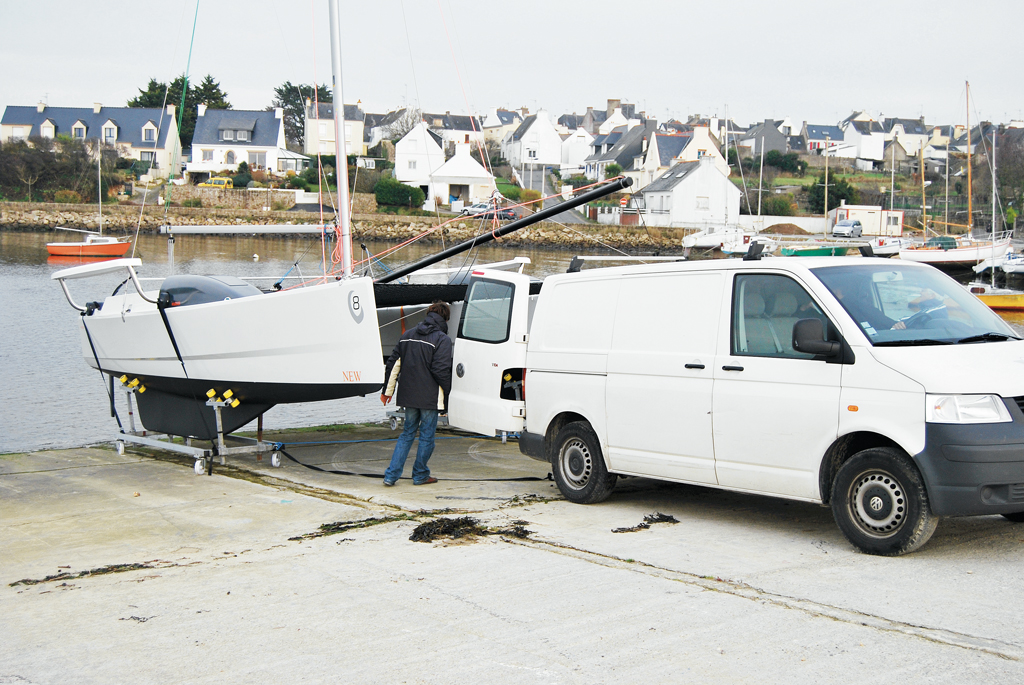
The V8 can be dismantled and transported…
Invigorating return leg.
The square-headed mainsail reached the top of the mast, which is supported by a simple diamond and one set of spreaders, and we set off again under spinnaker. Unlike the previous day, there was no longer any need to tack downwind; our tack led us on a direct route to pass in front of Port Tudy, on Groix. The post-front sky was superb; a rainbow accompanied us in the morning light, with a background of big black clouds which were soon to generate a squall. The spi was put back in its bag until things had settled down again. The wind in fact picked up a little, and under mainsail only we remained at over 10 knots, surfing on the waves, at the limit of sailing on a dead run, and by the lee. In these gusty conditions, it is best to avoid (as we did) keeping two crew members (totalling 150 kilos) forward on the trampoline, at the risk of modifying the trim excessively. There is no point in lying: the V8 calls for a minimum of expertise. Lorient was getting closer. The mainsail (in Pentex, the same as the jib) was a little unwilling to come down easily; the mast is to be changed for a model with an integrated track, which will allow the use of ball bearing slides. Laouen de Kersauzon had been the Virus export director for five years before taking over the company, (founded by Noël Louvet), last year. “We wanted a bigger boat,” he told us, “and as the cruising trimaran market was already well-represented, and we didn’t want to venture into too big a size (8 metres is a good size), we designed a boat with no draft, as a fast but civilised day-boat, for exploration.” The V8 can be dismantled and transported behind a saloon car. Allow a good half day for three people, the builder told us. The hulls fit onto two marinised trolleys, which themselves are loaded onto the transport trailer. In the present version, the V8 is not a racing machine; it is not designed to fly a hull in 10 knots of wind, but will do so once the wind freshens a bit, if you ask it to. At over 10 - 12 knots (boat speed, not wind speed!), which is often the case, caution dictates that you keep the main or spinnaker sheet close to hand, ready to be freed.
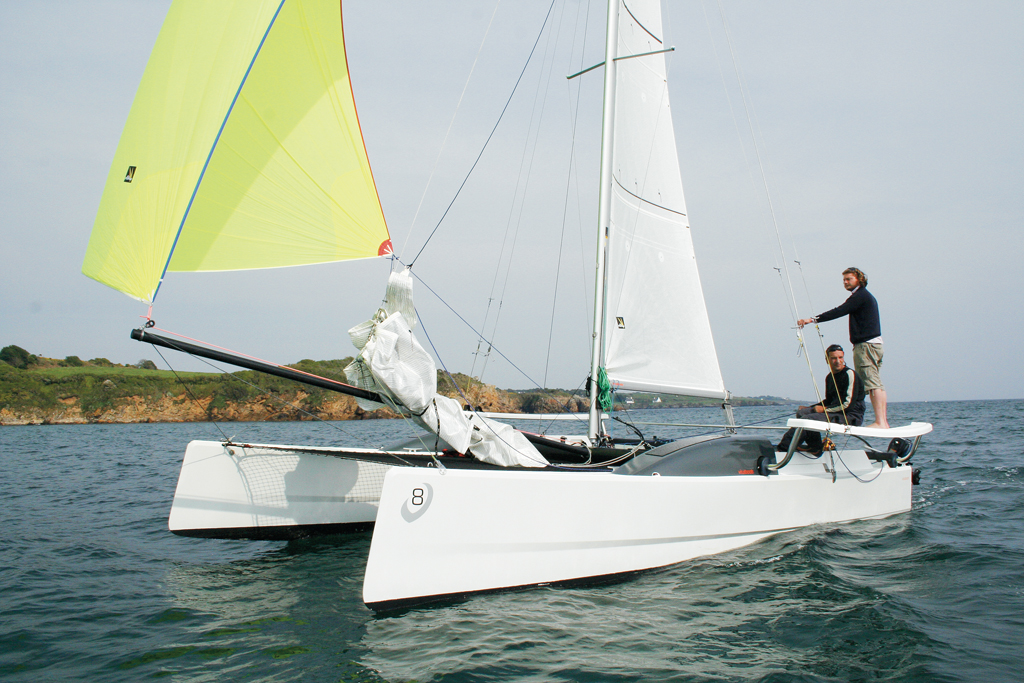
A carefully-designed, very good-looking hull!
Technical specifications.
Length: 8 m Max. beam: 4.70 m Weight: 650 kg Mainsail: 24 m² Jib: 13 m² Asymmetric spinnaker: 50 m² Air draft: 12.45 m Draft: 0.77 m Engine: 8 hp max. Construction: monolithic Capacity: 4 / 8 persons Architect: Julien Marin Yacht Design Price (standard version, with aluminium bowsprit, Dacron sails, etc): 37,584 euros exc. VAT (44,950 euros inc. VAT)
Details from the architect, Julien Marin.
“The idea was to create a coastal raid catamaran, which would be accessible to anyone, fun, comfortable and safe. I therefore worked from a given sail area and by optimising the resistances to forward movement as far as possible. Lateral stability and the bows digging in have been dealt with by having a wide platform, sufficient and necessary to delay the flying of the windward hull to a real wind force (that an experienced crew would find at over 18 knots), without compromising the length/beam ratio: an inexperienced crew could quite easily find themselves sailing in this wind strength, or even more. So the boat ‘sits’ slightly on its sterns, to retain a margin of safety with respect to the bows digging into a wave. As planned, it finds its optimum trim from about 10/12 knots of breeze, and retains it above that. Apart from the rather dynamic look, and the aesthetic appeal the builder wished for, the inverted bow allows the drag of the wave system generated at the boat’s bow to be reduced. The gain, for an angle in the order of 8° can be as much as 12%. Without hoping for as much, this little trick contributes to my wish to produce a pleasant, therefore fast, catamaran without increasing the power, but rather by playing on the reduction of drag: inverted bows, high length/beam ratio hulls, wide platform for stability (in the targeted sailing range), suspended rudders. The keel, lengthened to guarantee efficient and safe beaching, actually contributes to increasing the overall weight and wetted surface area. It is fitted and goes with the constraints of the monolithic construction imposed by the builder. The same goes for the ‘step’, whose role is mainly structural, forming a stiffener for the upper part of the hull sides. Very open and placed high on the bow, its role will only be effective in the case of the bows digging in, by allowing an additional volume to be gained at the top of the bows through the increased width.”
Caption
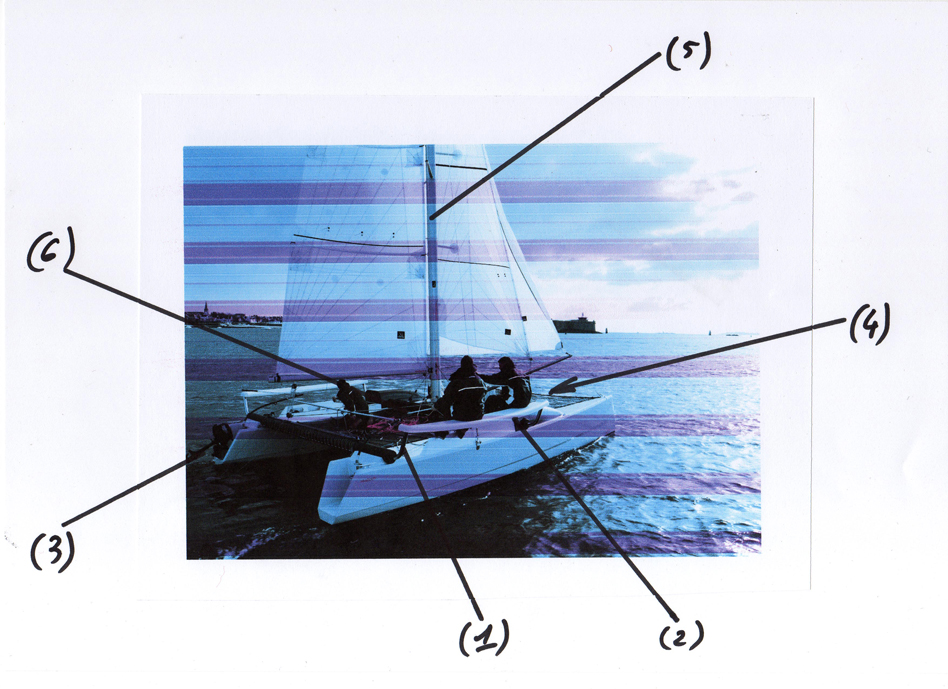
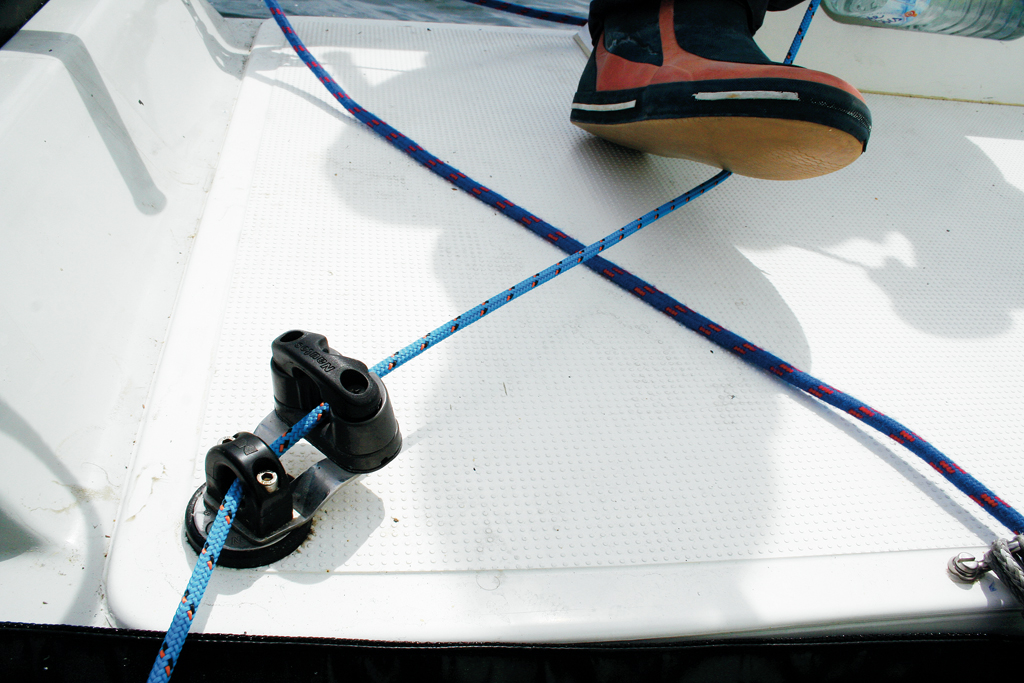
1) The jammer turret. It is too low when out on the wings, and jamming the lines again calls for judicious use of the foot.
2) The high position of the wings. They allow you to remain dry, and to steer comfortably.
3) The little outboard motor. A bit on the small side in its 3.5hp version, it can be lifted easily and thus has no effect on drag. Not really powerful enough for manoeuvres in windy harbours.
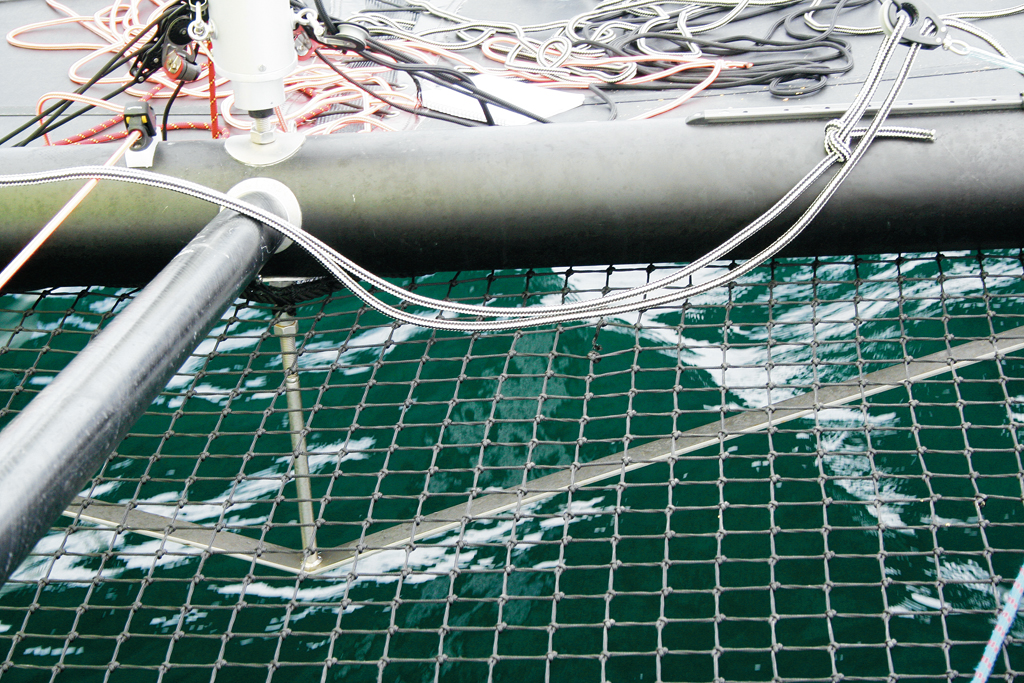
4) The stainless steel bar. It’s certainly robust. But it is also a bit heavy.
5) The rotating mast. Essential on all fast multihulls. Fitting the mainsheet further aft should allow it to turn more easily, the same goes for the upper shroud fitting (at the moment, the ‘Arthur’, or mast turning lever, is not enough).
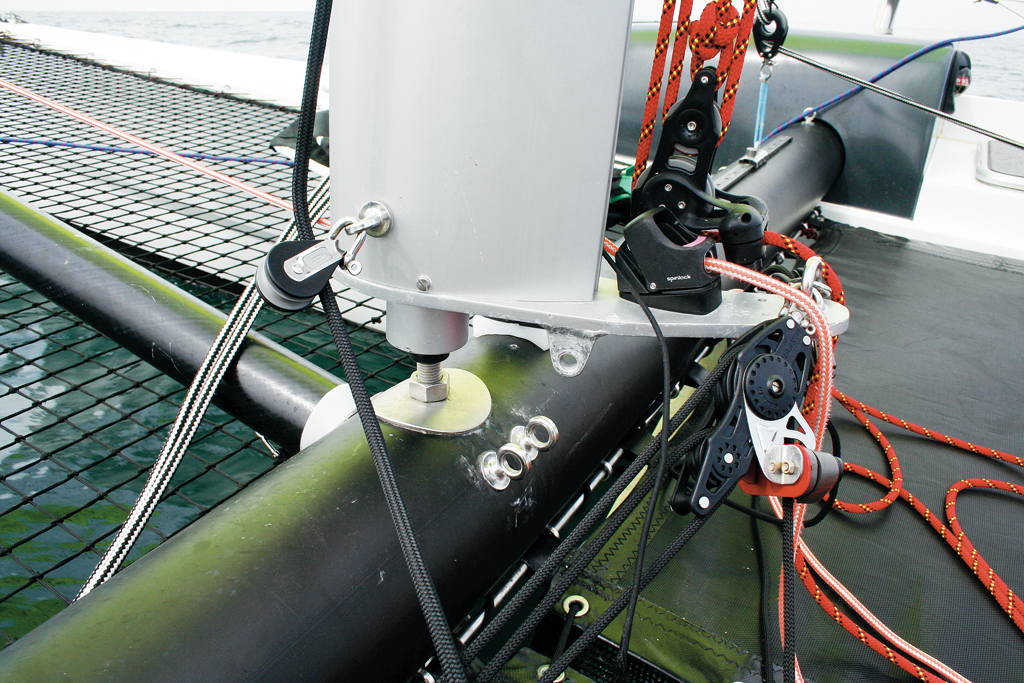
6) The stainless steel dolphin striker. Here again, it is robust! A lighter solution would allow some weight-saving.