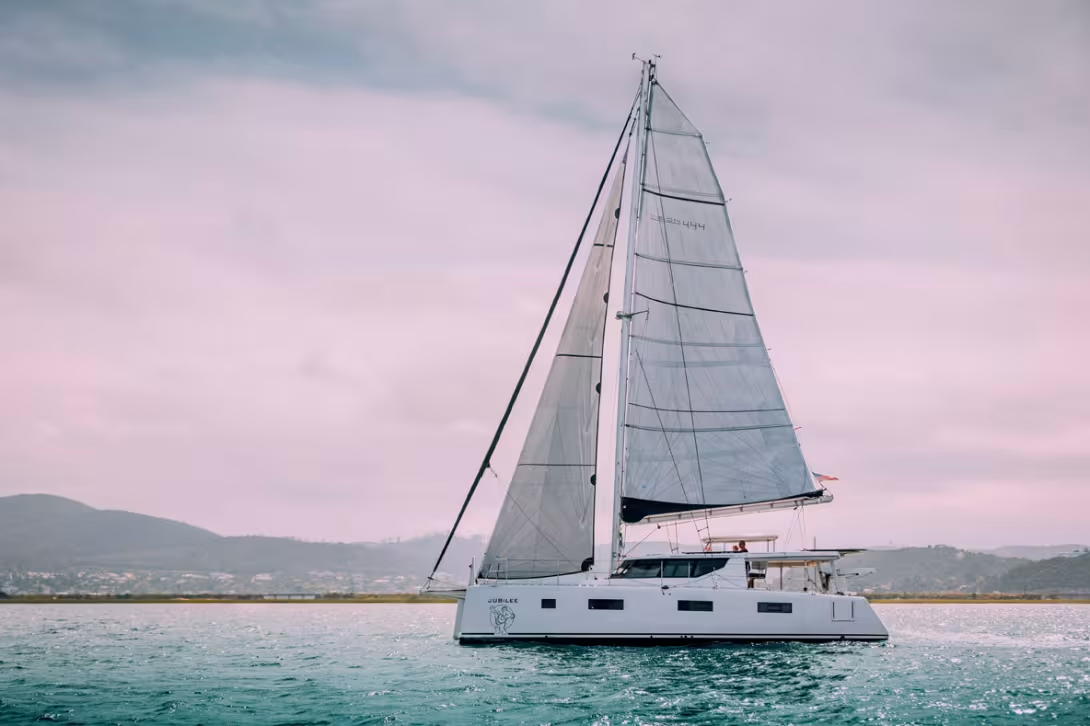
In the category of cruising catamarans under 50 feet, many multihulls are designed for cruising for one or two weeks. The Vision 444, on the other hand, is a completely different kind of catamaran, designed for long-distance cruising and ocean passage-making. This South African-built catamaran has been designed to cope with all sea conditions in safety and comfort. We were able to discover this model, unique in many respects, in the mythical Chesapeake Bay on the American East Coast.


Infos pratiques
- Le chantier : Vision 444
- La fiche technique
-
 Découvrez notre vidéo exclusive
- Financez votre Vision 444
- Assuez votre Vision 444
- Articles autour du Vision 444
Conditions: southeast wind 12-14 knots, calm sea
Vision Yachts is based in Knysna, east of Cape Town. While the charming town borders a peaceful lagoon, the passes that open onto the Indian Ocean are sufficiently rough for local builders to be particularly sensitive to the robustness and seaworthiness of their multihulls. Vision Yachts is no exception. The particularity of this shipyard is that it produces only one model, the Vision 444 - launched in 2019. This unusual strategy is the brainchild of the shipyard’s founder, James Turner. As an experienced sailor, James was seeking to create a true ocean-going catamaran, capable of sailing anywhere in the world, while offering performance and comfort.
To achieve this, the shipyard opted for infusion construction to create a light, solid multihull. What also sets this catamaran apart from its competitors is its truly generous living space. Similarly, the Vision 444 has been designed so that the furniture is glued in place, forming part of the structure. A solution that saves weight while improving overall solidity.
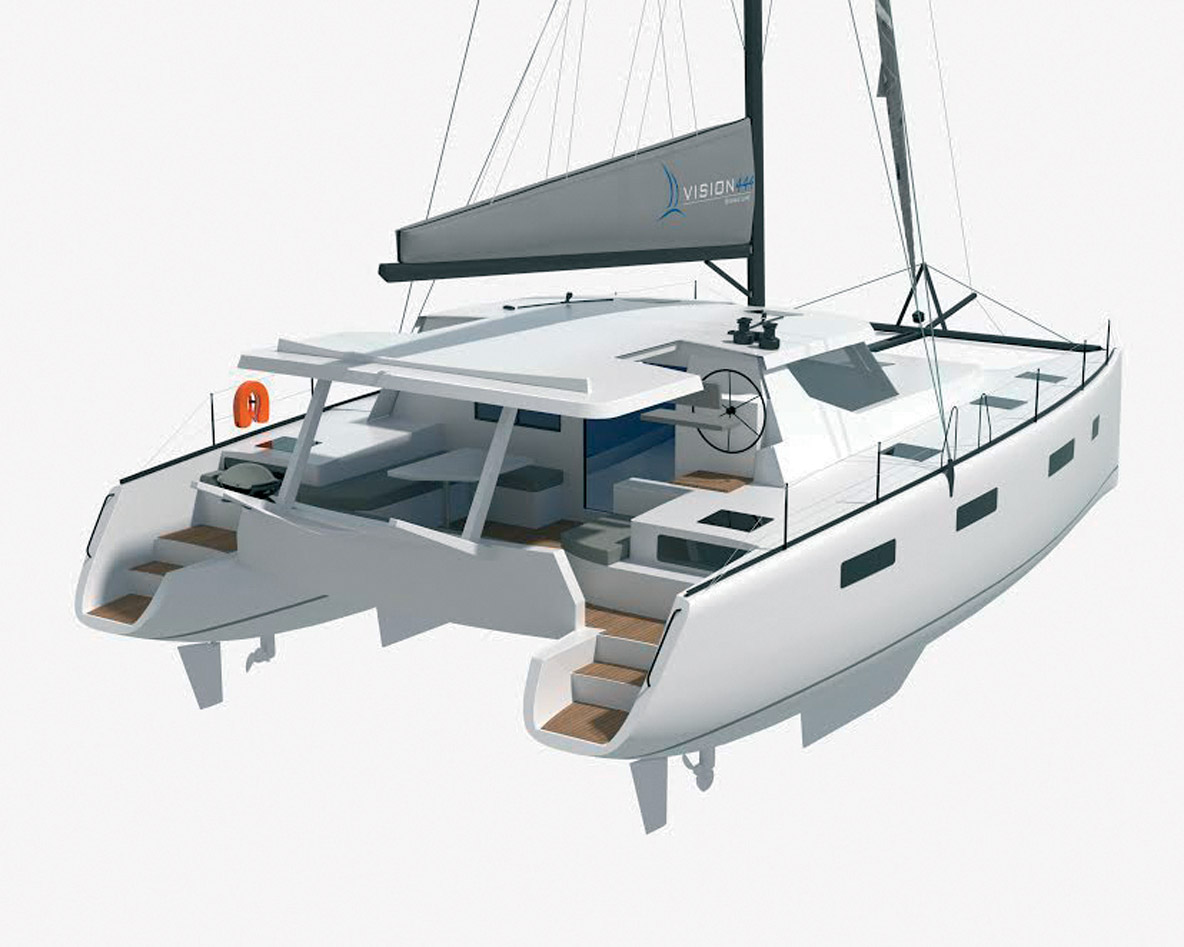
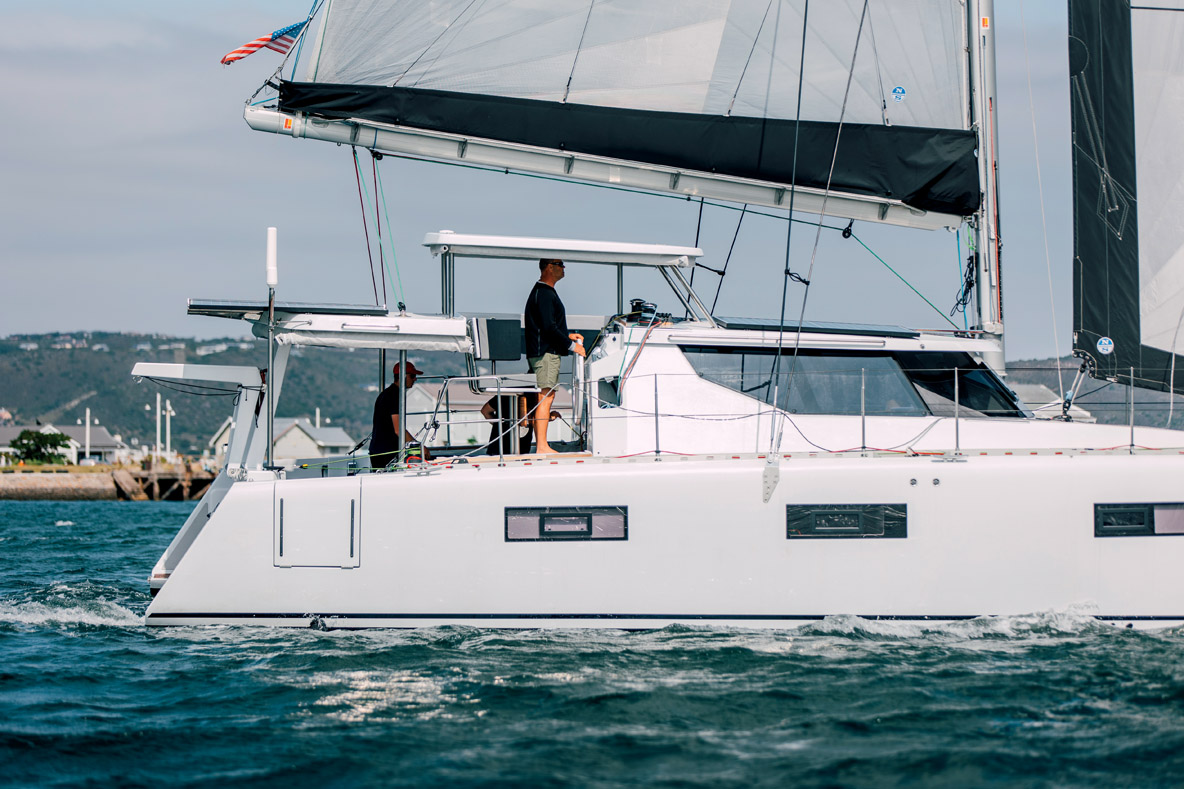
At first glance, the Vision 444 gives an impression of sturdiness. Resting comfortably on its two hulls, the catamaran is 25 ft (7.6 m) in the beam yet appears wider. This effect is due to the profile of the hulls, which are slightly narrower at the stern, while the central nacelle takes up a lot of space. This impression is further reinforced by the wide side-decks surrounding a generous coachroof, which ends in a long bimini protecting the aft cockpit. A fairly simple profile, except for the bimini top above the starboard helm station, but we’ll come back to that later.
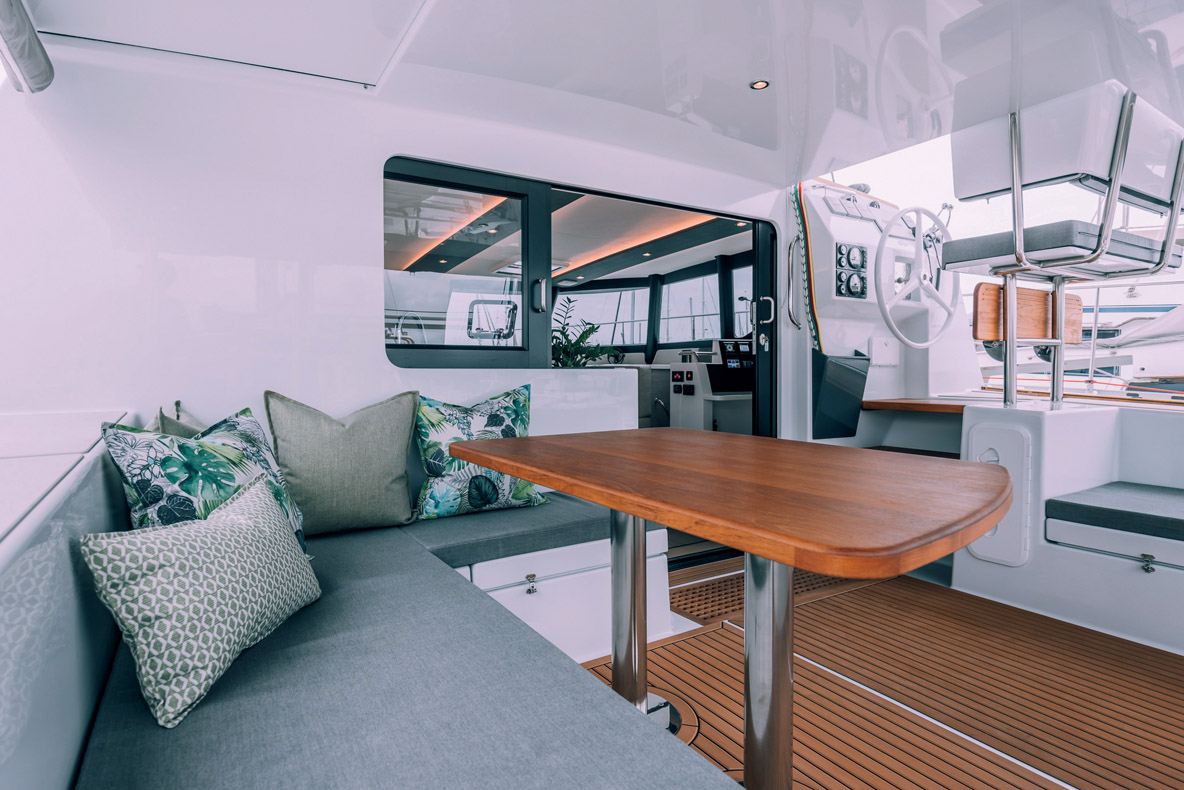
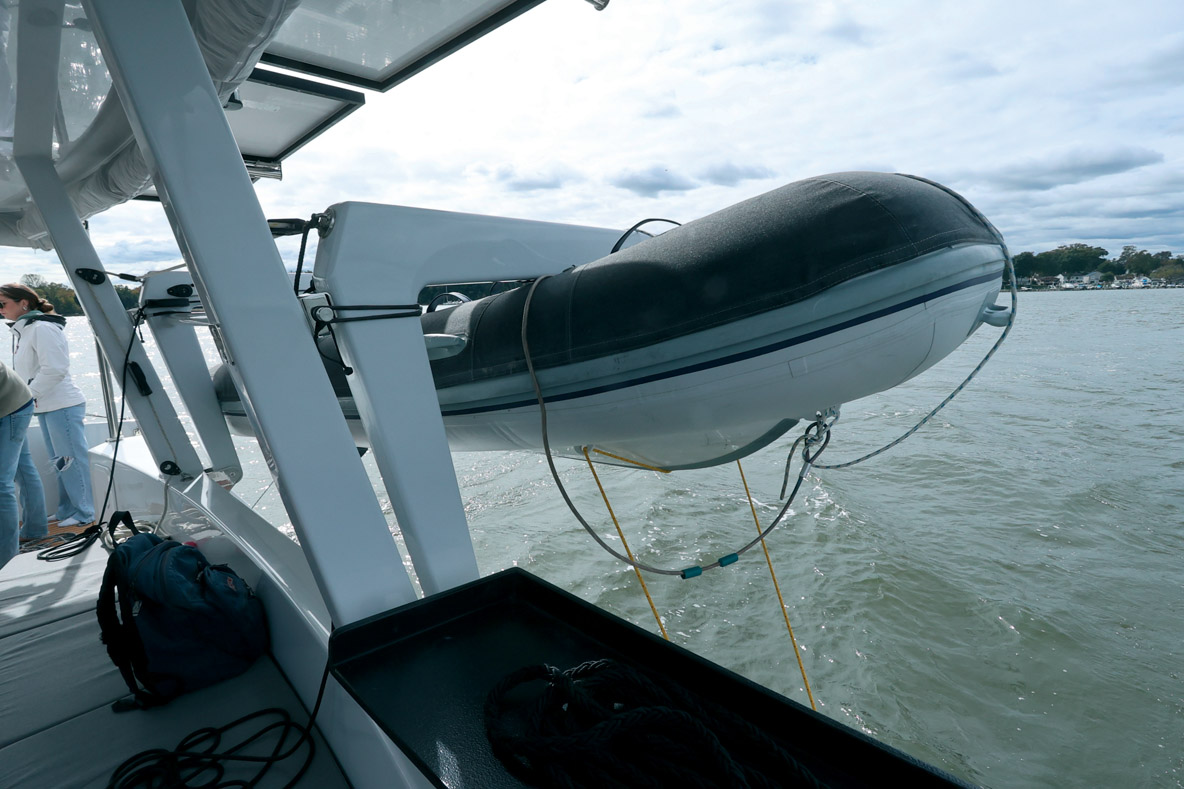
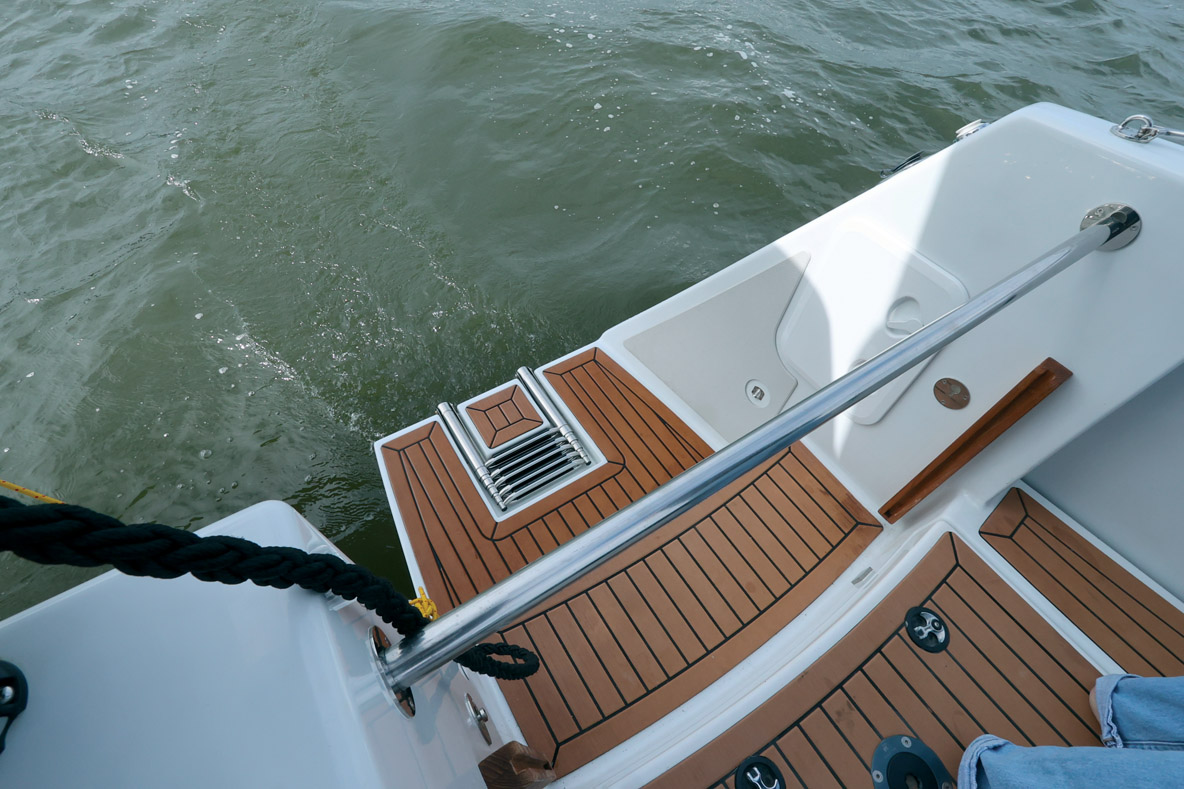
For this test, we were pleased to be welcomed aboard by David Stein, owner of Jubilee, hull #8. Access to the cockpit via the sugarscoop is easy, and only two steps are needed to reach the main deck. An aft washboard can also be slid into the top of each transom, which is great for children’s safety, but also to prevent waves from entering the cockpit. The catamaran doesn’t feature a central aft platform but has davits to accommodate the tender. The cockpit is relatively spacious, with a large L-shaped bench seat and a decent- sized table. Another central bench seat and a seat to starboard, just below the helm station, provide a total seating capacity of 8 to 9, not bad for a 44-foot catamaran.
A simple, rational deck layout designed for a small crew
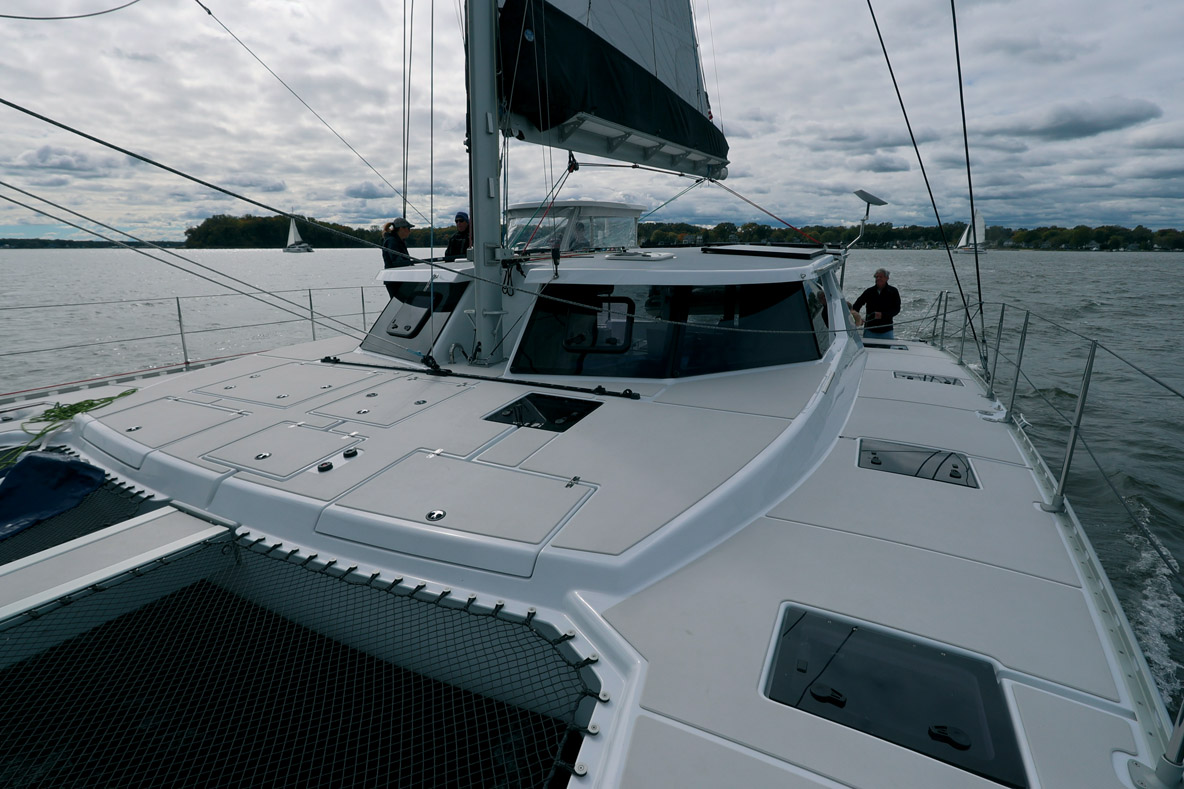
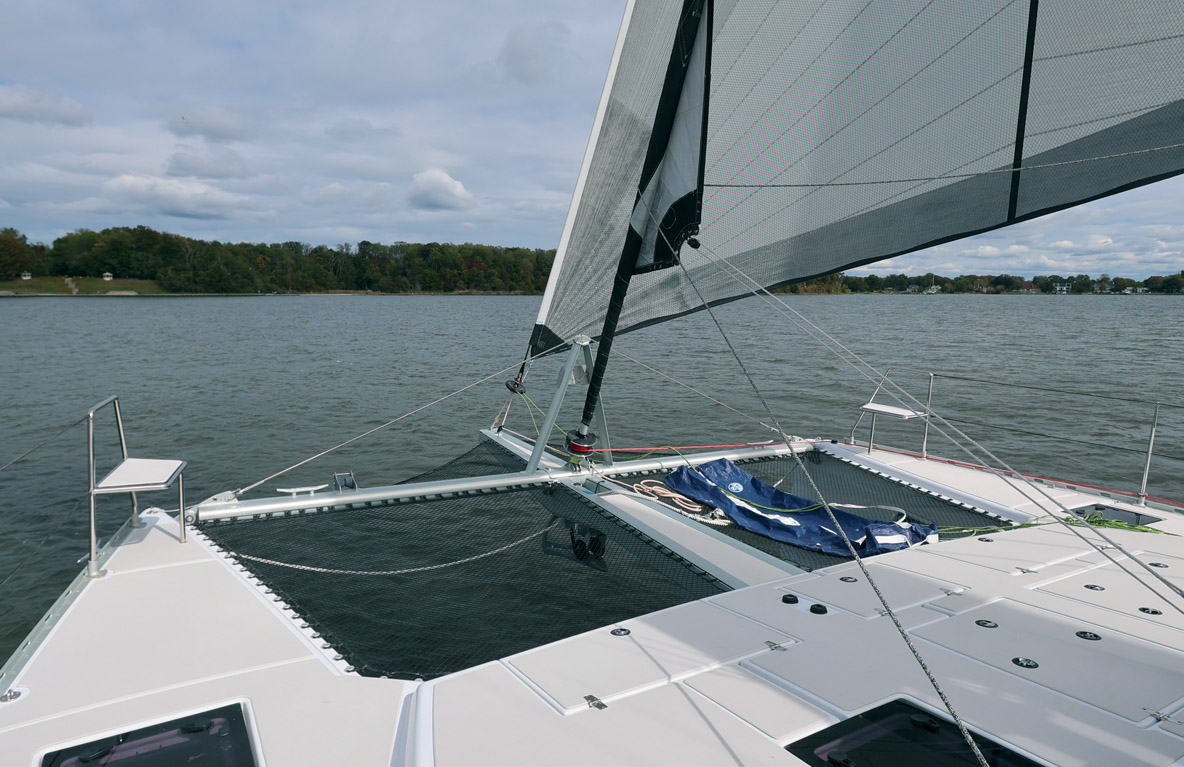
From the cockpit, it’s easy to climb up to the side-decks. Being quite wide, they allow you to reach the bow in complete safety. Like the rest of the catamaran, this bow area is fairly simple. The front of the nacelle features a series of lockers, which is always very practical on board. What’s more, this large, flat surface accommodates the mast step, allowing you to work there in complete safety. A classic trampoline completes the set, so as not to weigh the boat down.
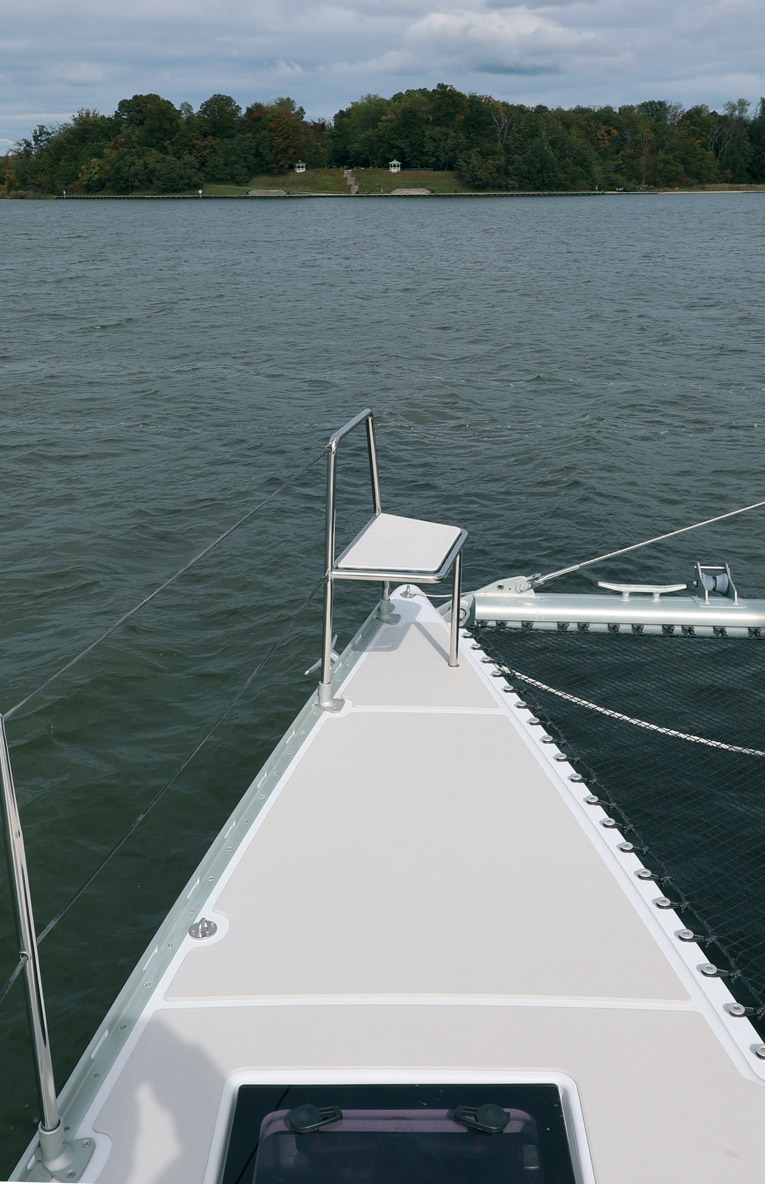
On each bow, a small seat provides the perfect spot for dolphin- watching or looking at the depths, while the forward beam houses the main furling system for the self-tacking jib. A second furler for the gennaker is fitted on the bowsprit. Finally, the anchor is located under the forward beam, making it difficult to reach in the event of a problem.
Overall, installation choices and equipment are geared towards simplicity, which in many cases translates into high reliability.
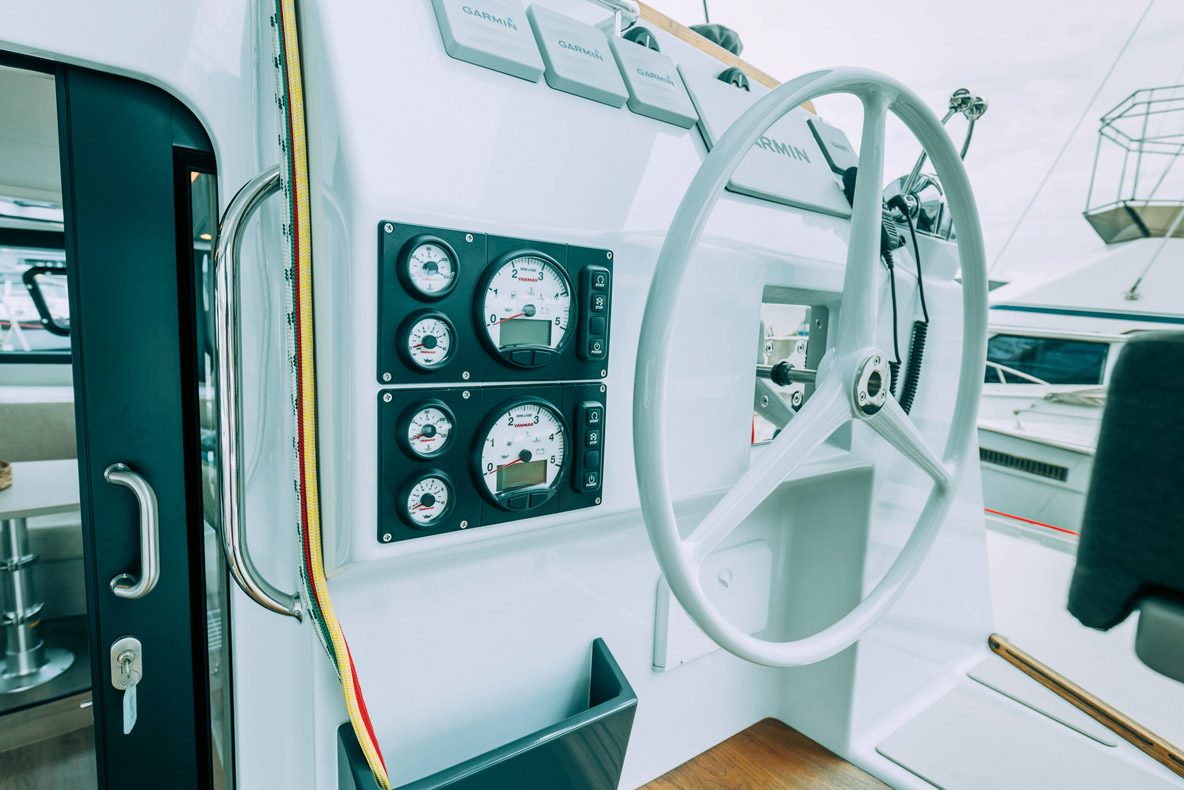
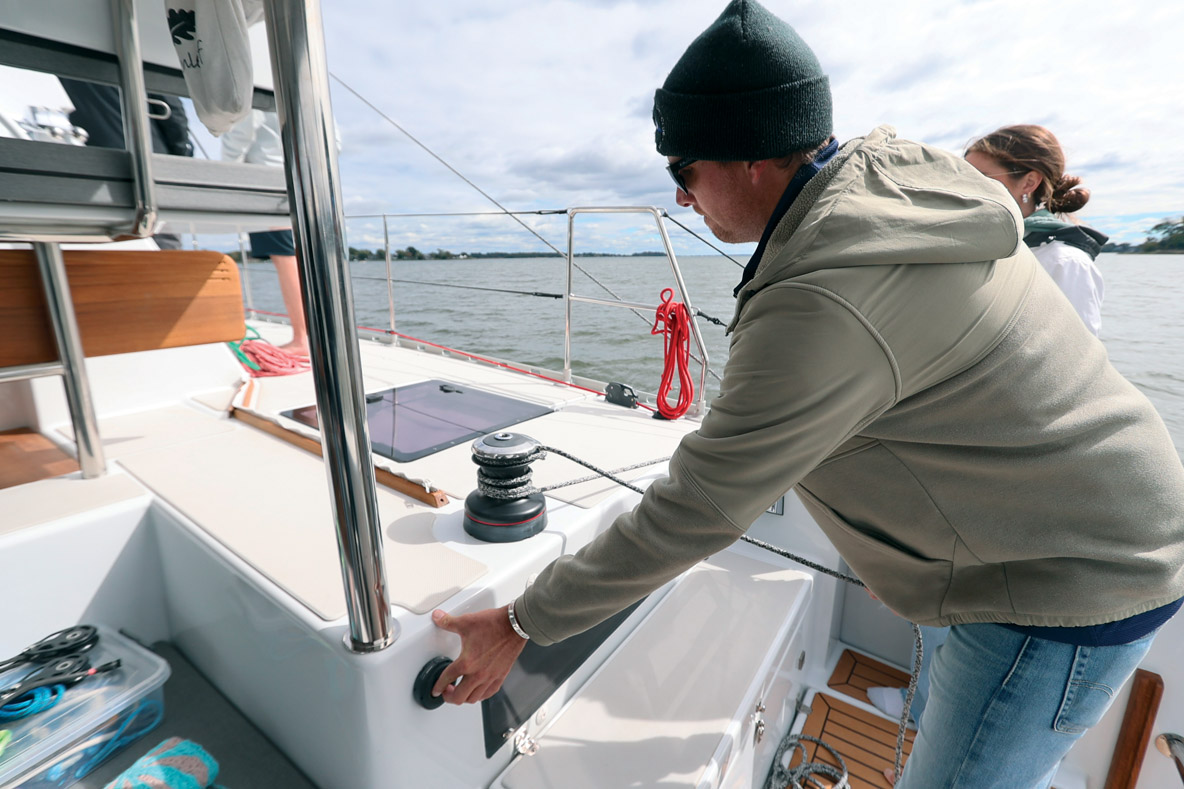
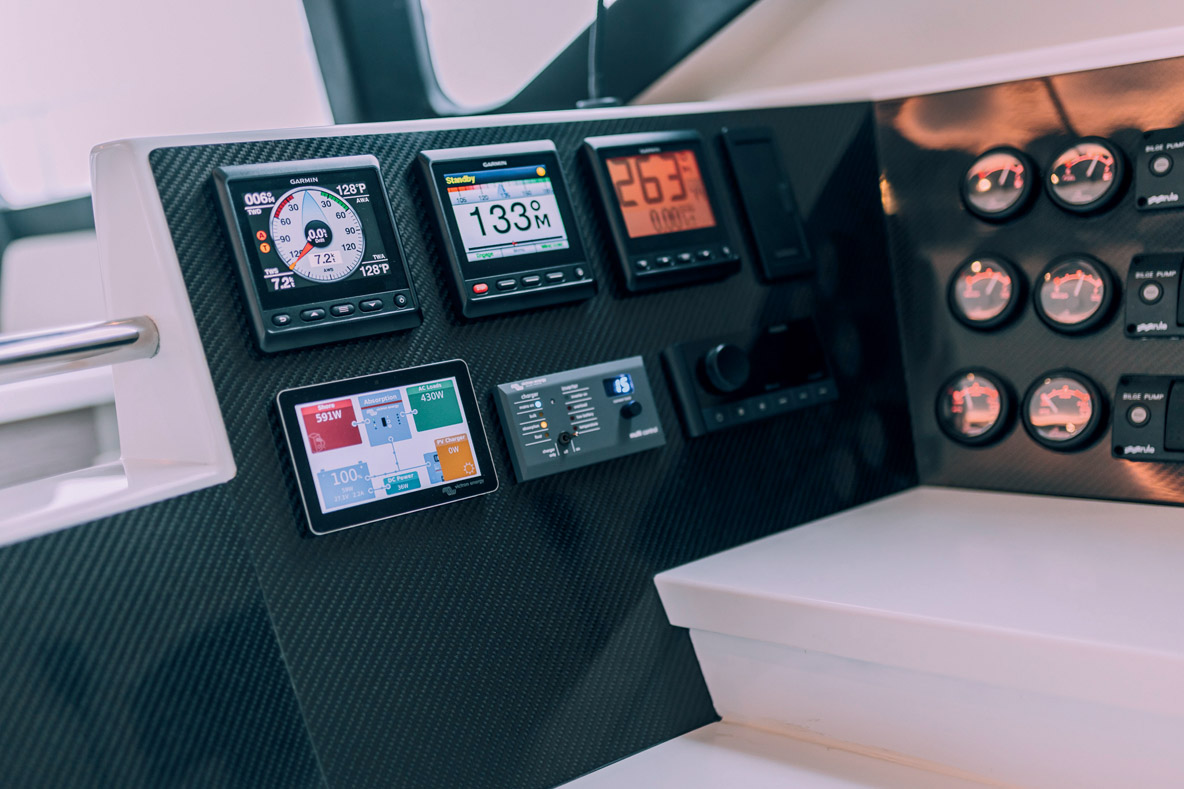
For maximum visibility, the helm station is elevated on the starboard side. Simple yet complete, it provides optimum visibility of the sea and the rig, even with the bimini top incorporating a roof window. As for the rest, this is where you’ll find all the electronics you need for navigation and also two winches. All halyards are routed back to the helm station, making maneuvering easy, even with a small crew or single-handed sailing - an activity in which the owner of Jubilee regularly engages. It’s also worth noting that the helm station can be completely enclosed by a transparent canvas in case of bad weather. The same goes for the cockpit, a real plus for rainy days.
Contained weight for enhanced performance
Thanks to its vacuum resin construction, the Vision 444 weighs just 9 tons, a particularly reasonable weight for a 44-foot cruising catamaran. So there’s no need for a huge sail area to power this multihull. In the standard version, the Vision 444 comes with a 719-sq ft (66.8 m²) mainsail and a 313-sq ft (29.1 m²) self- tacking jib, giving an upwind surface area of 1,032 sq ft (95.9 m²). Jubilee also benefits from two North Sails gennakers, both of which enhance the boat’s performance while remaining easy to control. Finally, when conditions are right, the Vision 444 can also be fitted with a large asymmetric spinnaker, a welcome addition to the wardrobe. In fact, David tells us that after more than 10,000 nautical miles with his Vision 444, his average speed is around 7.8 knots. A more than decent result for a catamaran designed for long-distance cruising. More surprisingly, David tells us that he can easily go upwind at 30° to the true wind, a very tight angle for a catamaran with no daggerboards, but rather, relatively short keels. On the day of our test, in Chesapeake Bay, we had a breeze of 12 to 13 knots. Not record-breaking, but enough wind to pull the Vision along between 6 and 8 knots, confirming the information provided by David. Beyond the performance, we really appreciated the ease of maneuvering, with most of the lines coming back to the helm, and the catamaran’s responsiveness - especially when approaching rocks! The self-tacking jib obviously plays a key role in this simplicity, and for David, who often sails single-handed, it’s an indispensable element.
An interior layout full of (pleasant) surprises
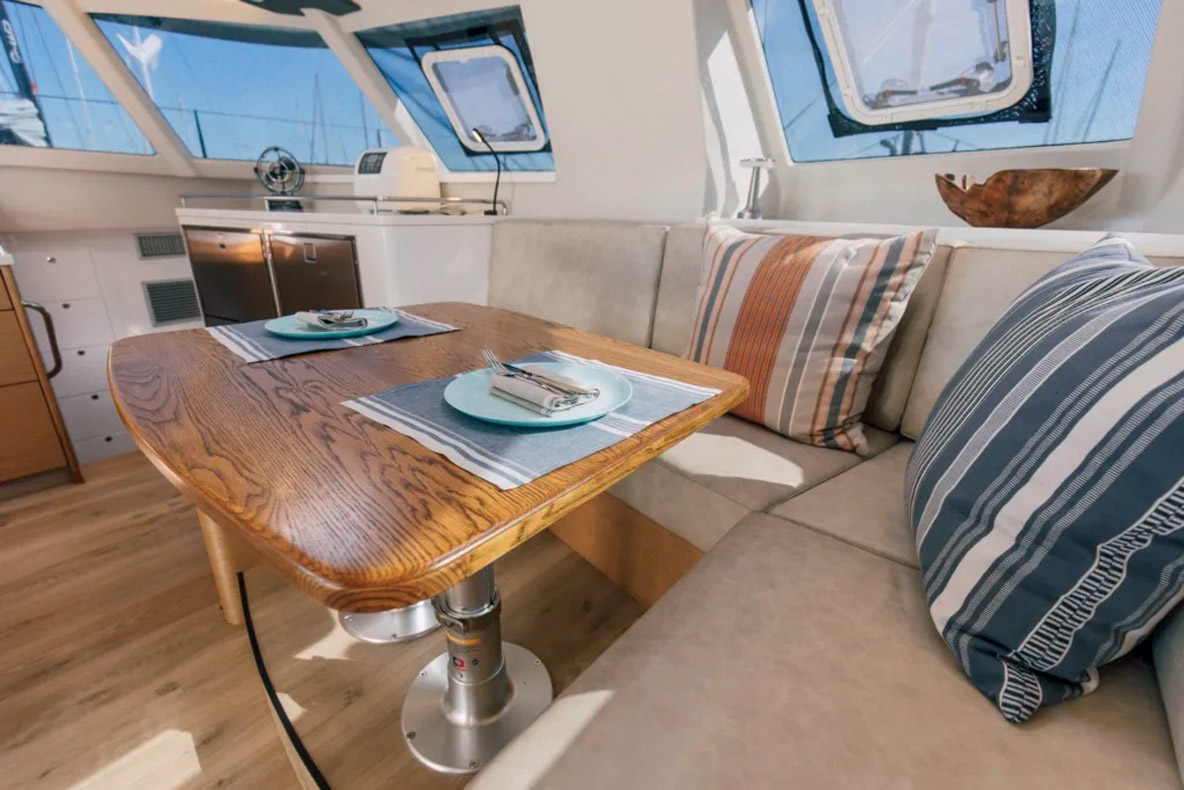
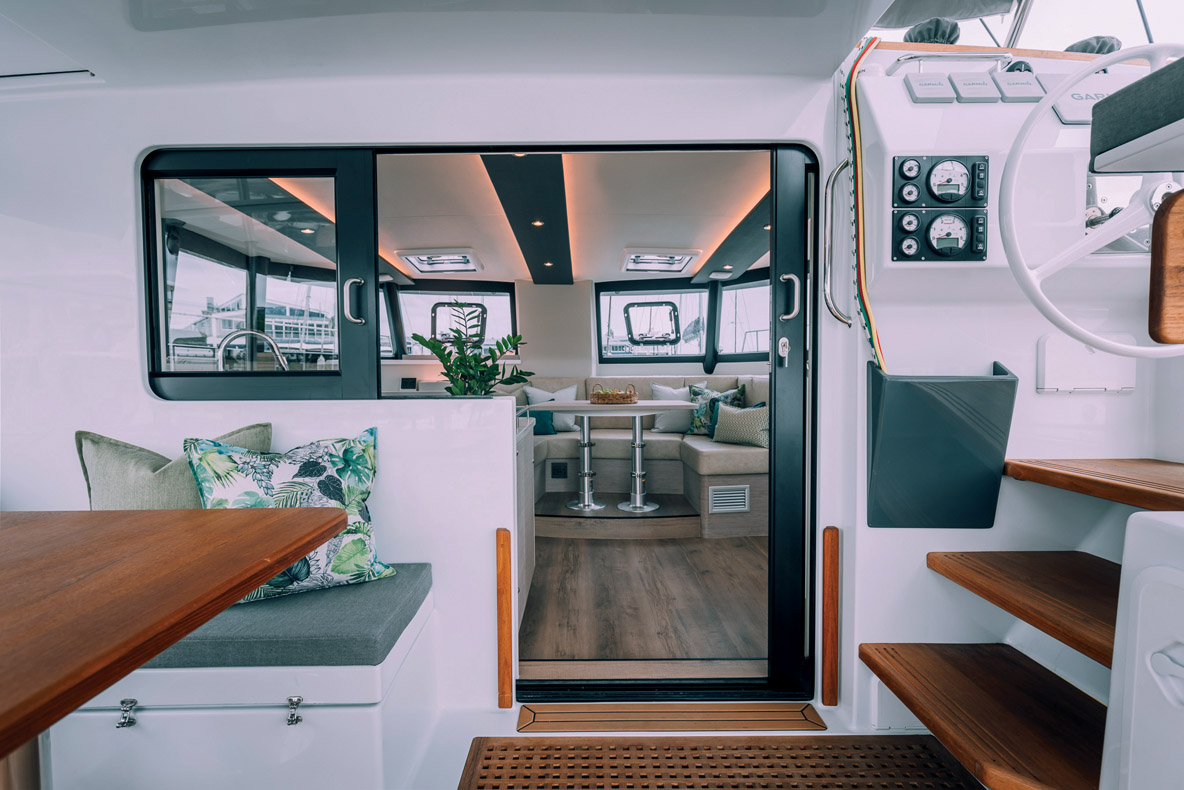
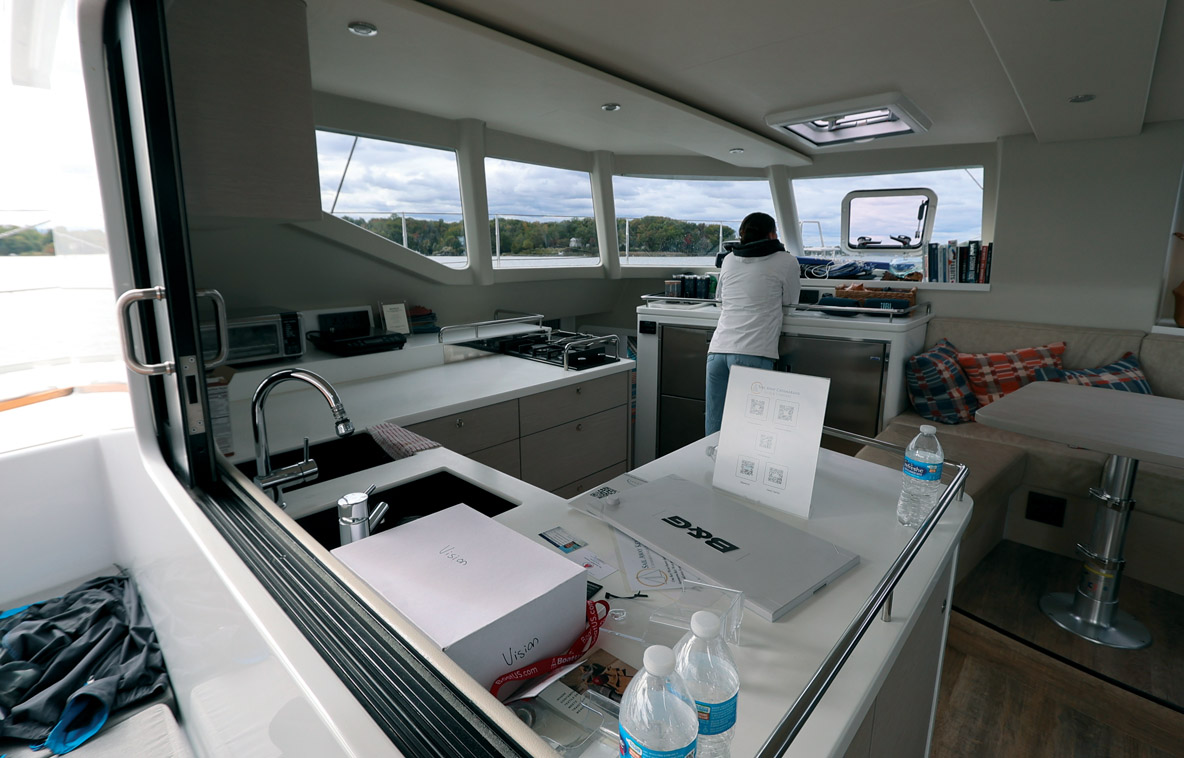
Easy to handle, the Vision 444 is also easy to live with on board. As soon as you step aboard, the first thing that strikes you is the impression of space, which almost makes you forget that you’re «only» on a 44-footer. The large cockpit opens onto a saloon that takes advantage of every nook and cranny of the nacelle. This starts with the large door, to which is added a sliding window that almost abolishes the limits between inside and outside. In fact, this window opens directly onto the galley, which not only ensures that the cook is not isolated from the crew, but is also practical for passing dishes or cocktails. Located on the port side, this galley is really complete, with a U-shaped section housing the sink and cooktop, while a block forward houses the refrigerator and freezer, with a storage volume that makes long passages easy. This nacelle also houses a dining area that can be converted into an additional berth, and above all, a genuine navigation station, very close to the helm station, truly complete and oriented in the direction of travel - a feature that has become rare in this category.In addition to its rational layout, this main deck is bathed in light, thanks to large windows offering panoramic views. Last but not least, the headroom (at 6’10” / 2.1 m) will satisfy even the tallest of sailors.
Customizable to fit your needs
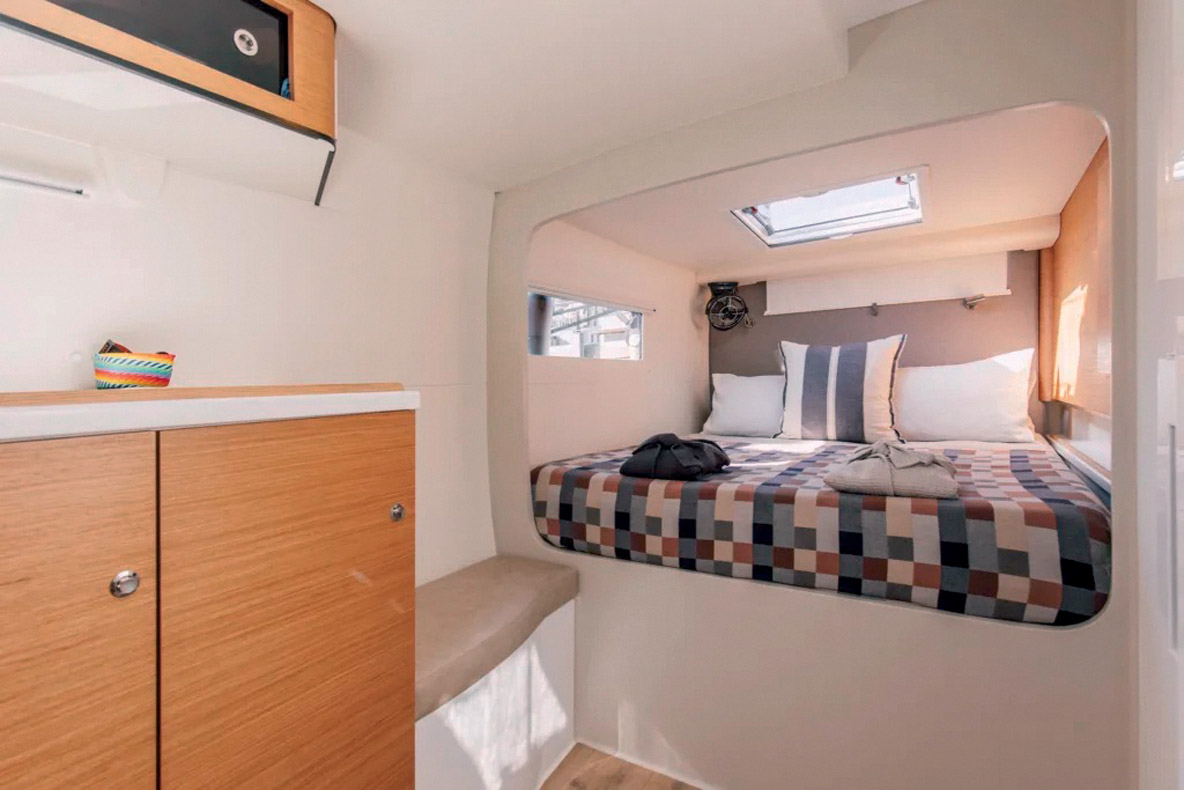
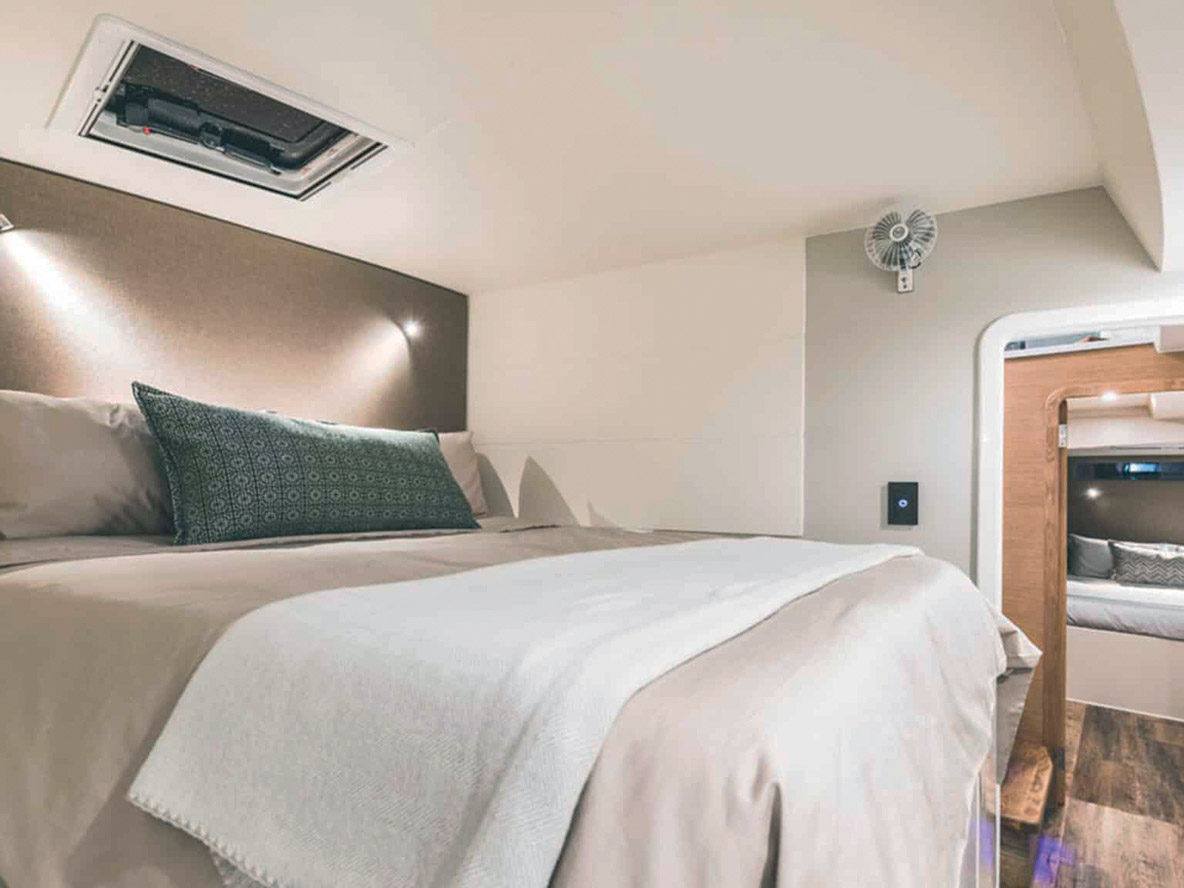
Although it’s the brand’s only model, the Vision 444 can be customized according to the owner’s needs and desires, such as hull #1, adapted for disabled sailors. Jubilee has three cabins. The starboard hull is dedicated to the owner’s suite and features a double bed aft. The center section has a desk and storage space, while the bow welcomes a large head with an XXL shower. Last but not least, a door in the shower gives access to a secret room, a workshop with workbench, vice and tons of storage space. An original layout that makes perfect sense for long crossings.
The port hull houses two cabins, each with a private head. The first cabin is aft, while the second, located forward, offers a bed set athwartships and a head in the forepeak. The overall layout is designed to optimize space.
In fact, beneath its apparent simplicity, this catamaran reveals a number of pleasant surprises, starting with the storage compartments, hidden absolutely everywhere. The finish is very good, and while this model may not be luxurious in the strict sense of the word, it is pleasant to live in and, above all, highly functional. Another good point is the interior brightness, thanks to hull portholes and deck hatches that let the sunshine in just about everywhere on the catamaran, including the workshop.
Truly designed by sailors, for sailors, the Vision has been thought to facilitate maintenance operations. There are easily accessible hatches with each system clearly identified, whether electrical or plumbing.
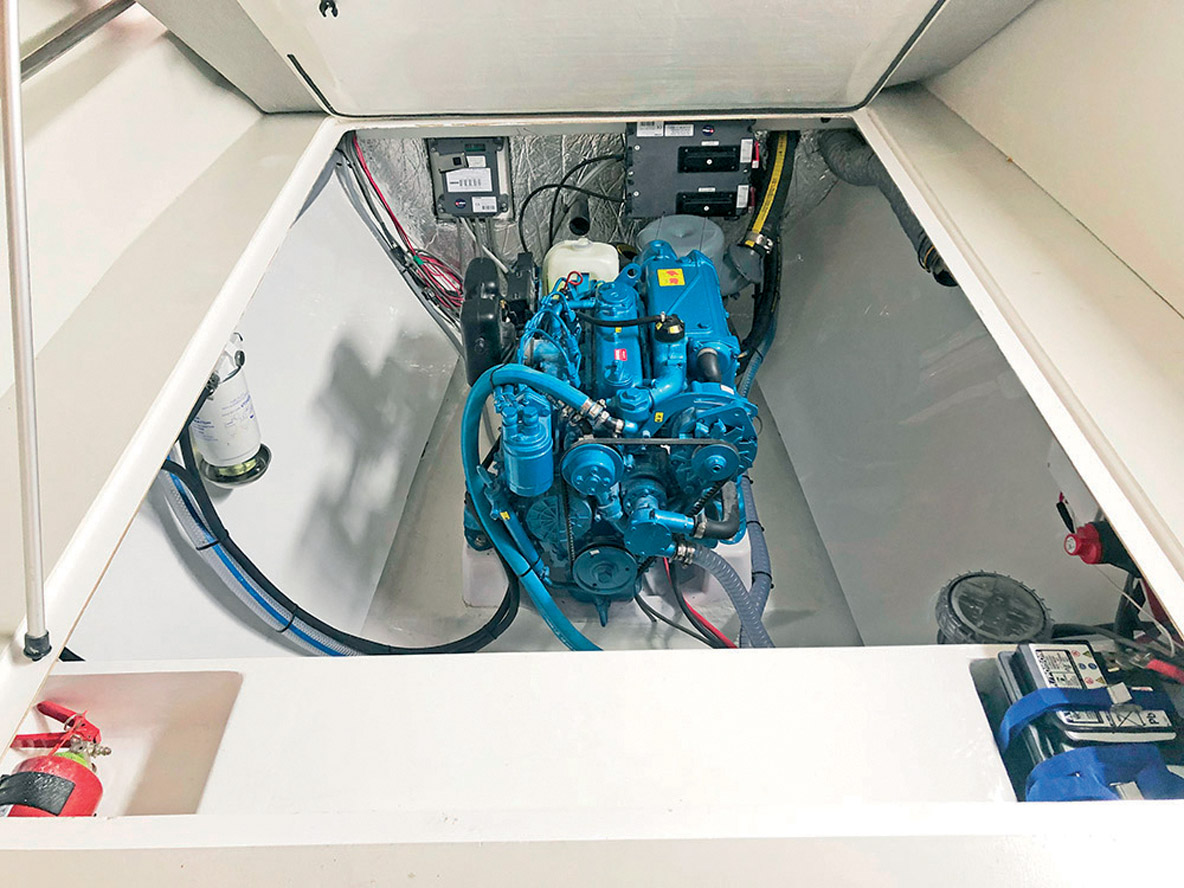
To get out of the marina or for windless days, the Vision 444 in our test was equipped with two 40 hp Yanmar engines, though these have been replaced by 37 hp Nanni engines on more recent models. More than enough power to drive this catamaran, and an economical choice that allows you to sail without using too much fuel. Coupled to the engine are two alternators charging a 24-volt lithium battery bank. By the way, these engines are also easily accessible, as they are located under the aft berths. Electricity is also supplied by six solar panels of 370 Watts, giving a total solar capacity of 2,220 Watts, more than enough to make the catamaran almost self-reliant without sacrificing comfort or the use of on-board appliances.
Finally, it’s worth noting the quality of the fittings and equipment. In addition to North Sails’ signature sails, the catamaran uses Harken winches, B&G navigation electronics and top-of-the-notch appliances that won’t let you down in the middle of the ocean.
Conclusion
The 444 is undeniably a well-thought-out ocean-going multihull. At a time when many catamarans are designed primarily for life aboard in port or at anchor - which, let’s not forget, is 90% of their actual use - the Vision is optimized for reliable, efficient sailing. Everything is rationally designed to help the sailor meet the challenges of offshore sailing. This includes on-board movements, maneuvering and maintenance. The equipment is of high quality and the build, serious. On second thoughts, it doesn’t seem necessary to have many models in the catalog: one well-built model is sometimes enough to make a brand successful!
David Stein: A happy owner!
Overall habitability
Easy to maneuver
Very (too?) classic design
Technical specifications
Architect: James Turner
Length overall: 44’3” (13.5 m)
Waterline length: 42’8” (13.01 m)
Beam: 24’11” (7.6 m)
Draft: 3’9” (1.15 m)
Air draft: 65’3” (19.9 m)
Light displacement: 19,850 lbs (9 t)
Loaded displacement: 25,650 lbs (11.5 t)
Mainsail: 719 sq ft (66.8 m²)
Self-tacking jib: 313 sq ft (29.1 m²)
Engines: 2 x 37 HP Nanni diesel
Solar panels: 2,220 Watts
CE Category: A
Price: from € 888,000 ex-tax