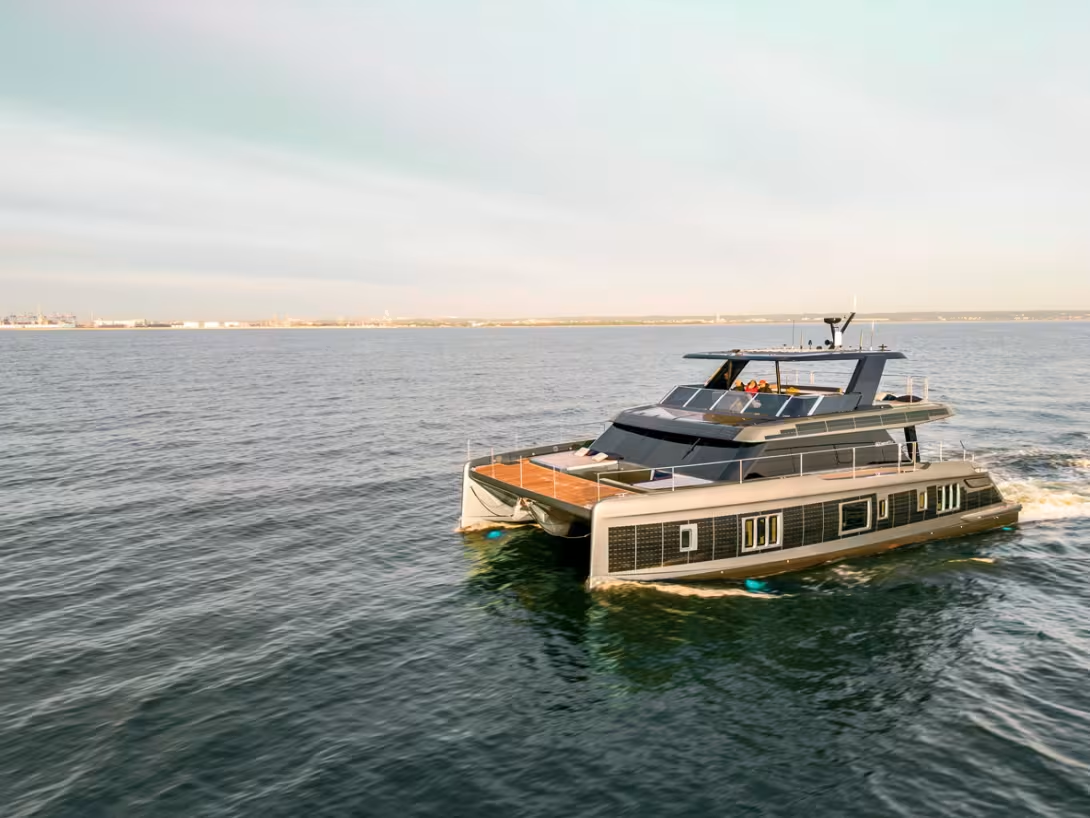
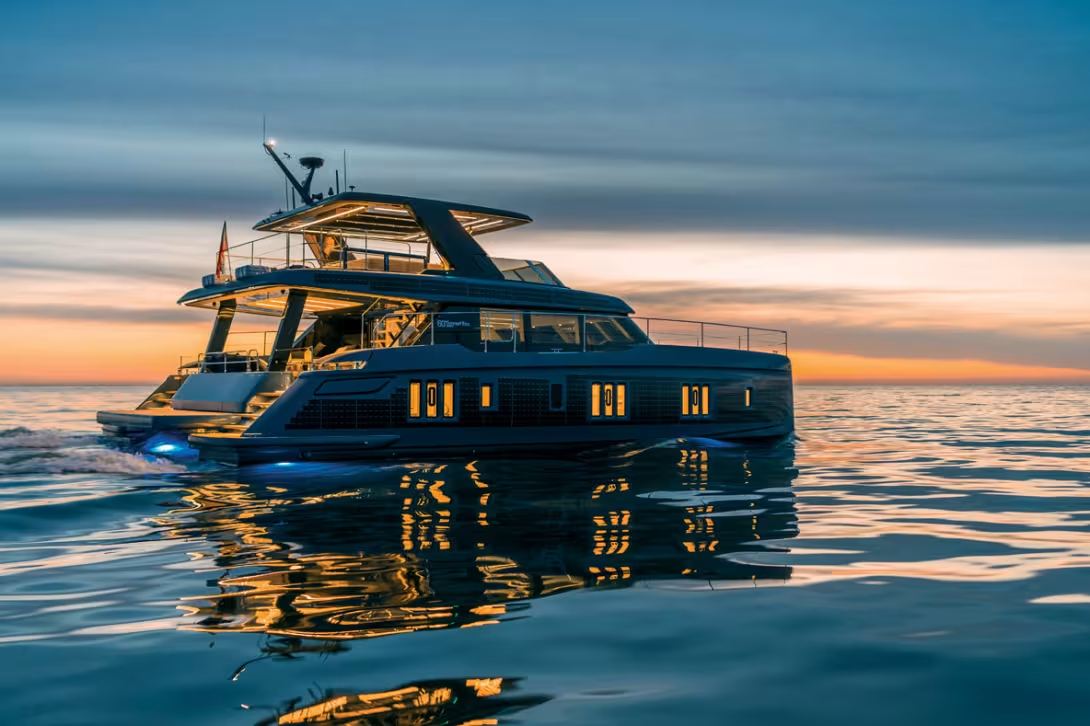
Our title fits perfectly with the powercat we’re trying out here, as it comes from a poem by Charles Beaudelaire entitled “L’Invitation au Voyage” [Invitation to the Voyage] – whose famous lines have become the source of multiple works and inspirations are precisely “Là, tout n’est qu’ordre et beauté / luxe, calme et volupté.” [“There, all is order and beauty / luxury, calm and pleasure.”] And that’s exactly the feeling we experienced off Cannes aboard the 60 Sunreef Power Eco #2. This glamorous and exclusive powercat boasts a sophisticated and, of course, silent electric motor, whose technical features we wanted to understand, and whose ecological and economical credentials we wanted to assess.
Infos pratiques
- Le chantier : 60 Sunreef Power Eco
- La fiche technique
-
 Découvrez notre vidéo exclusive
- Financez votre 60 Sunreef Power Eco
- Assuez votre 60 Sunreef Power Eco
- Articles autour du 60 Sunreef Power Eco
Conditions: Short chop, 5 to 8 knots of wind
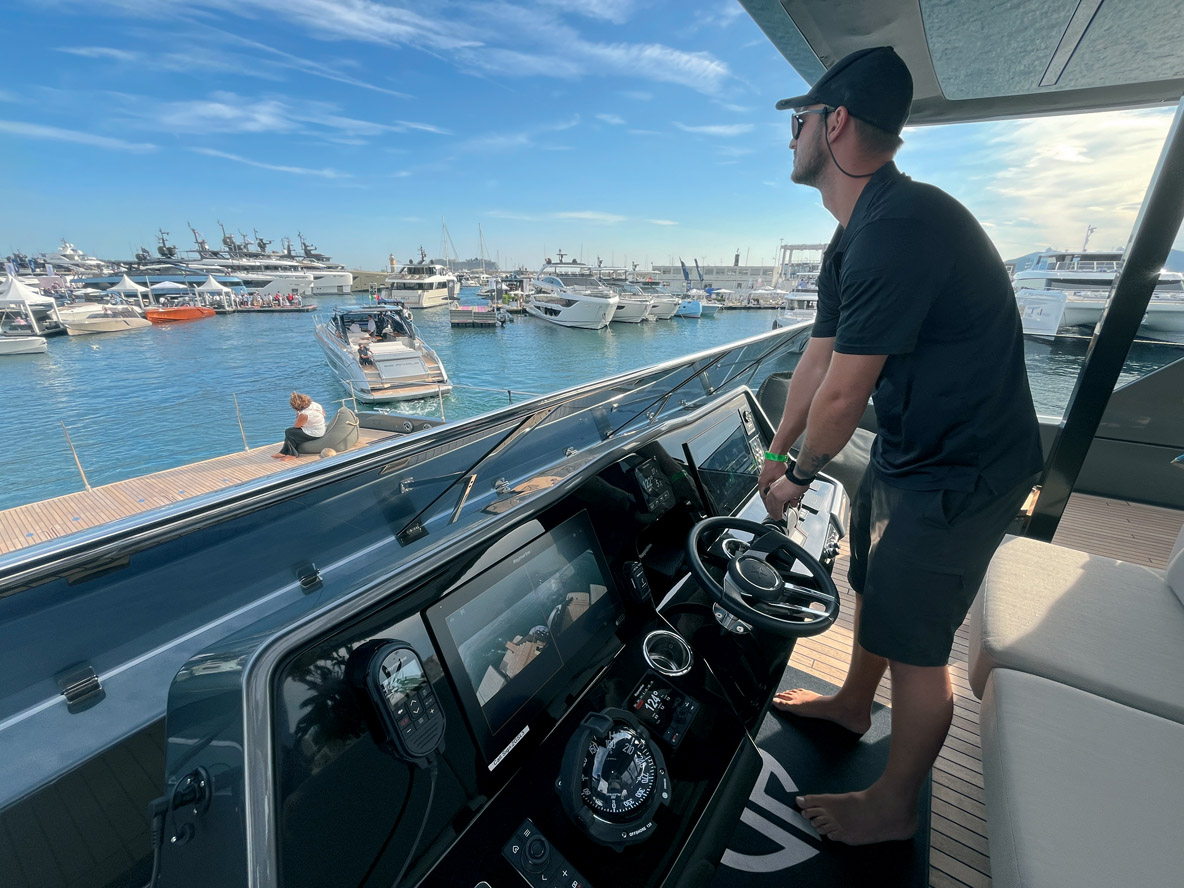
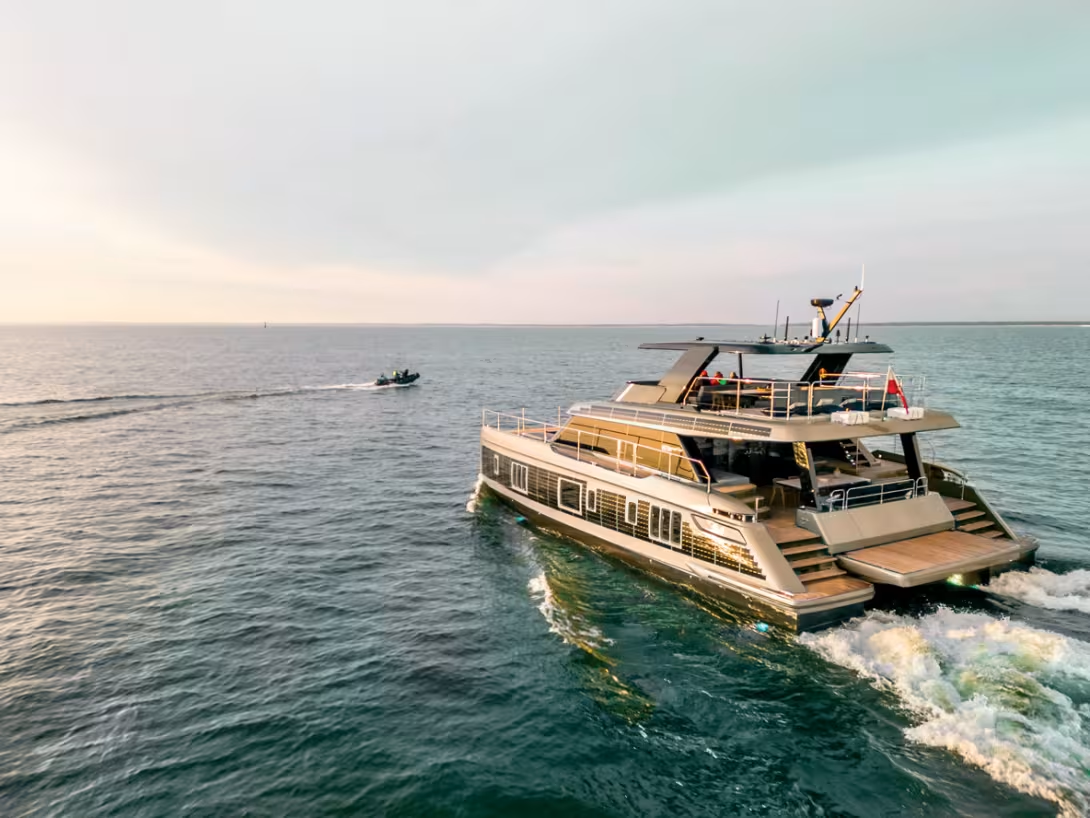
We would have liked to try out the first example of this 60 Sunreef Power Eco, but that hadn’t been possible for scheduling reasons. It’s a bit of a shame, because hull #1 is owned by Formula 1 driver Fernando Alonso... and what’s more, it’s covered with solar panels on its sides, unlike the model we’re discovering today in Cannes on the Albert 1er jetty, of which only the T-Top and coachroof cap are equipped with them. The comparison would have been useful... Never mind: Alexander, the Owner of this second 60 Power Eco, warmly welcomed us aboard. Enthusiastic about his new Sunreef, which he has christened Double Happiness, he gave us an interesting testimonial - one that was to dispel our journalistic frustrations. As far as looks are concerned, the 60 that we were about to discover was rather modern and trendy, with a metallic anthracite hull and lacquered black superstructure. The famous solar panels integrated into the side of the roof are barely noticeable. Black on black, you can only see... black. And it’s precisely to preserve his anthracite hulls that Alexander decided not to fit them with solar panels, which he feels stand out too much for his taste and detract from the overall aesthetic. It’s obviously a shame to do without this green energy source - more on that later.
Several Production Sites
Sunreef Yachts now operates two shipyards in Gdansk, Poland, covering 125,000 m² (over 30 acres) and a new 65,000 m² (16-acre) shipyard in Ras Al Khaimah, United Arab Emirates. The company now employs almost 3,000 people worldwide. Since the launch of the new range, which includes the 60, no fewer than 50 units have been launched, all sizes and types (sail or power) combined. Two 100 Power yachts have been delivered, a 35-meter (115’) yacht is currently being completed, and a new range, Ultima, will soon be launched. On the Eco side, several 60, 70 and 80 models have been delivered in both sail and power versions. The fiberglass/resin/balsa composite construction of the hulls is undoubtedly robust, all the more so as certain structural parts, such as bulkheads and connections, are further reinforced with carbon fiber. The solar panels integrated into the structure are the result of a patented in-house development. This process has made it possible to get rid of the heat problems sometimes generated by traditional photovoltaic panels. The weights were not provided by the yard, but there’s no doubt that the samples are substantial. Synchronization between the design office and the workshops is one of Sunreef’s strong points, enabling the production of tailor-made interiors to suit the client’s wishes. For potential customers, this is undoubtedly the shipyard’s greatest asset: the brand prides itself on never having built two models the same - with the exception, however, of catamarans belonging to the same fleet and intended mainly for charter. Sunreef undoubtedly owes its success to its ability to customize its models.
The 100 Power #2, moored alongside the 60, is just one example of the shipyard’s expertise, with a highly personalized interior design that includes a cozy outdoor saloon on the flybridge!
Relaxation Areas with Class and Style
The wide beam (35’/10.7 m) gives the nacelle a very large surface area. The entire length is exploited, offering an impressive amount of available space - both inside and out. Several layouts are available, within structural constraints. There are three to five cabins, “galley-down” or “galley-up”, and always two crew cabins - one aft (possibly adjacent to the galley) and one in one of the forepeaks. Our test model is intended for private use, but the owner, who wants to sail to Portugal and then across to the Caribbean this winter with his family of six, isn’t ruling out a few weeks of luxury charter operation. The crew is made up of three people (skipper, chef and hostess) to ensure the high level of service found in this category.
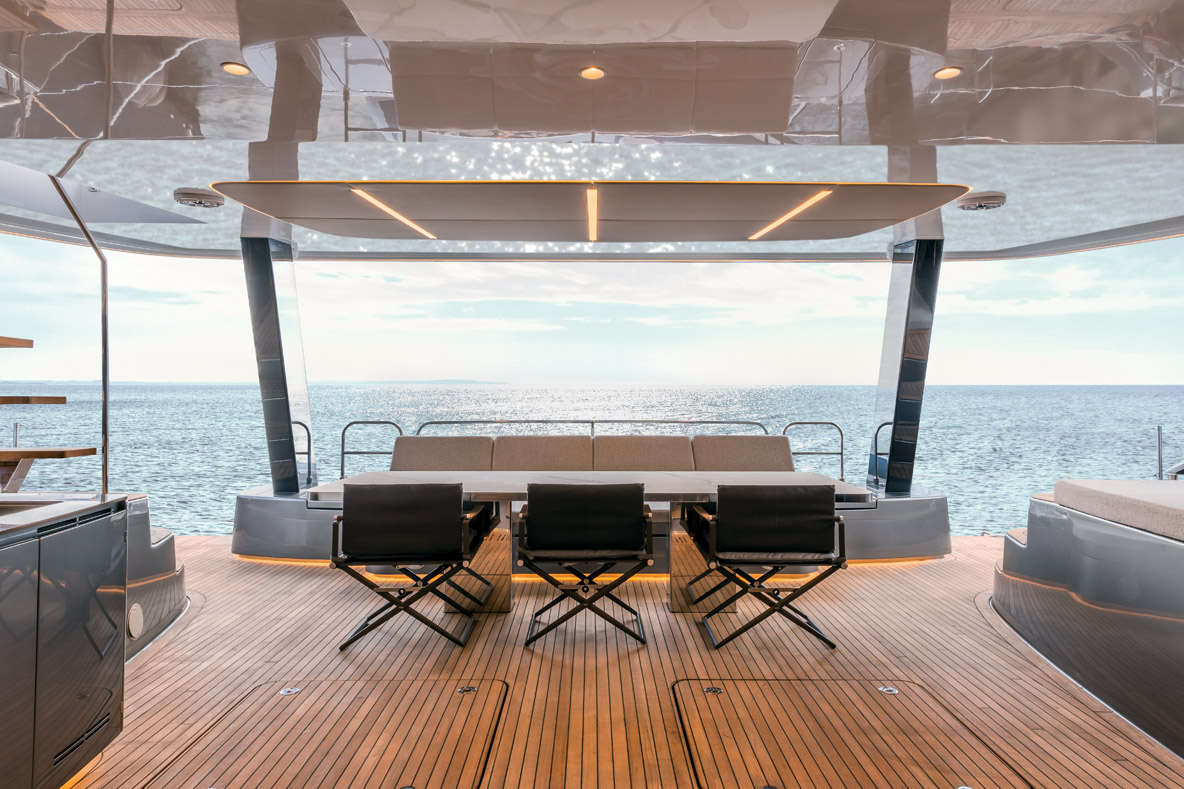
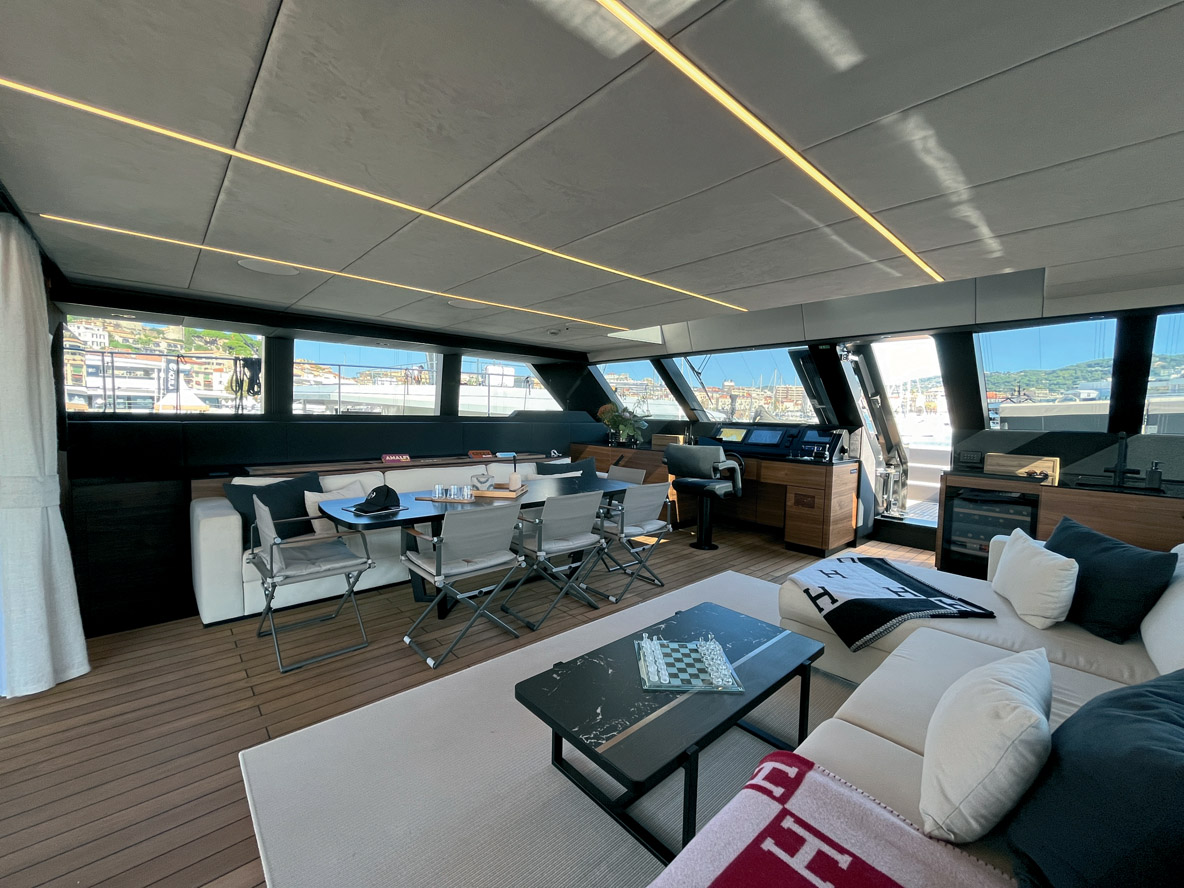
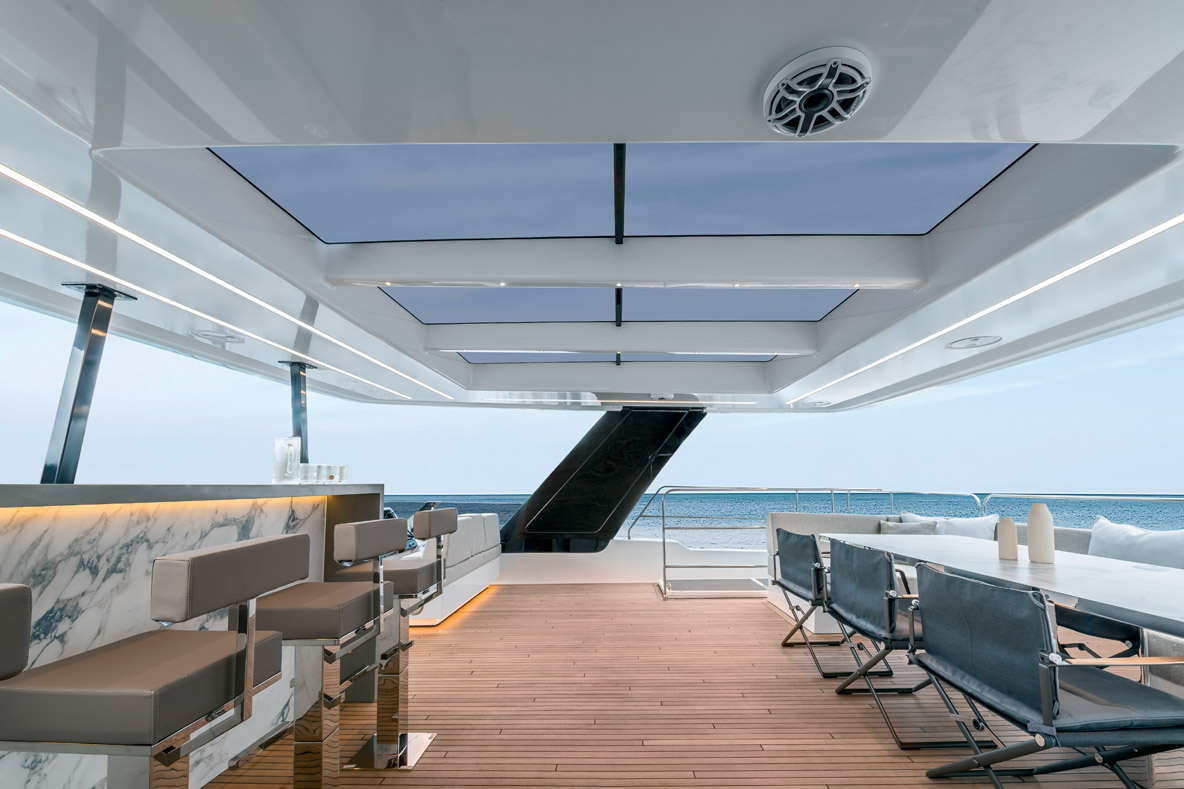
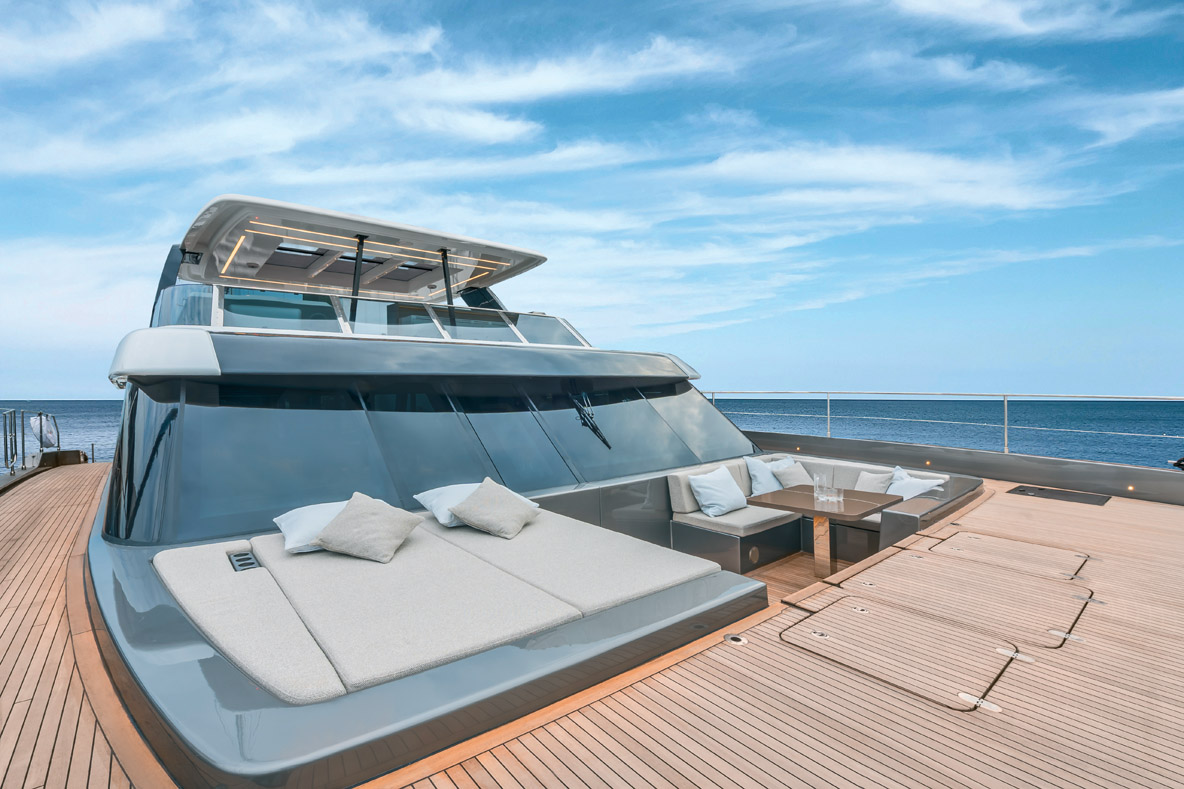
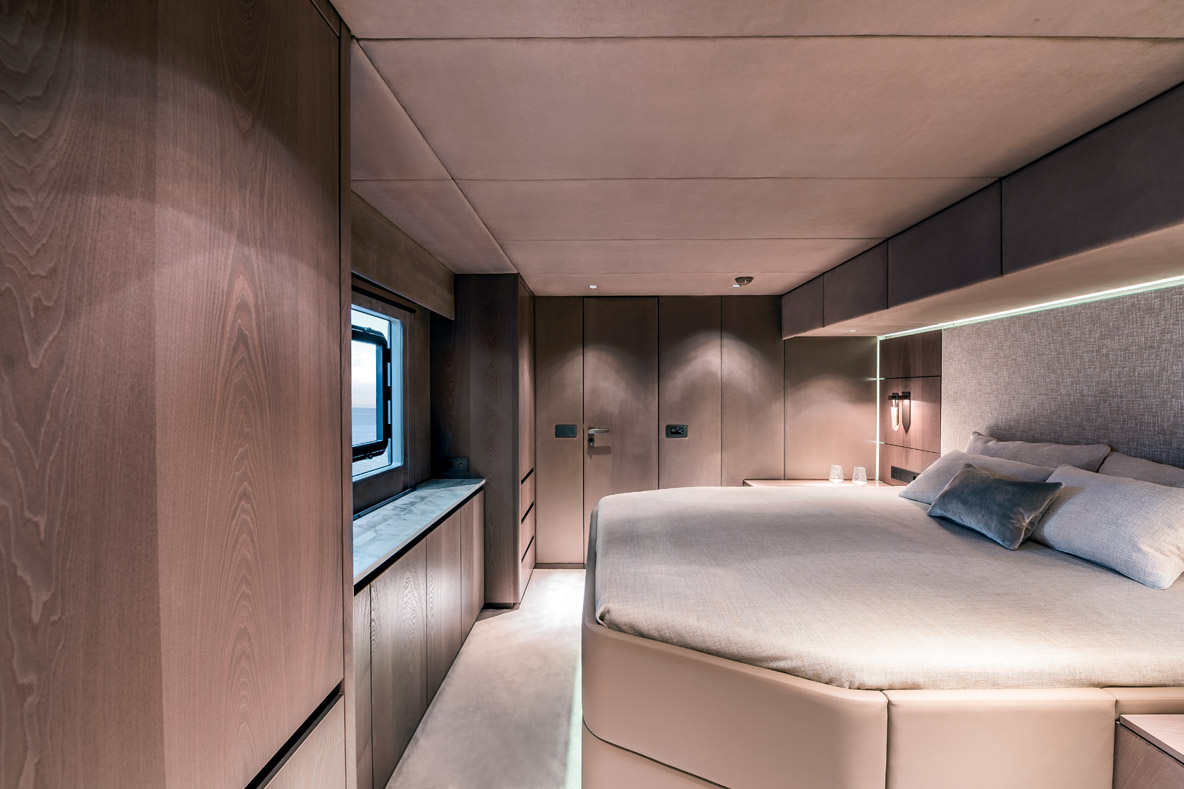
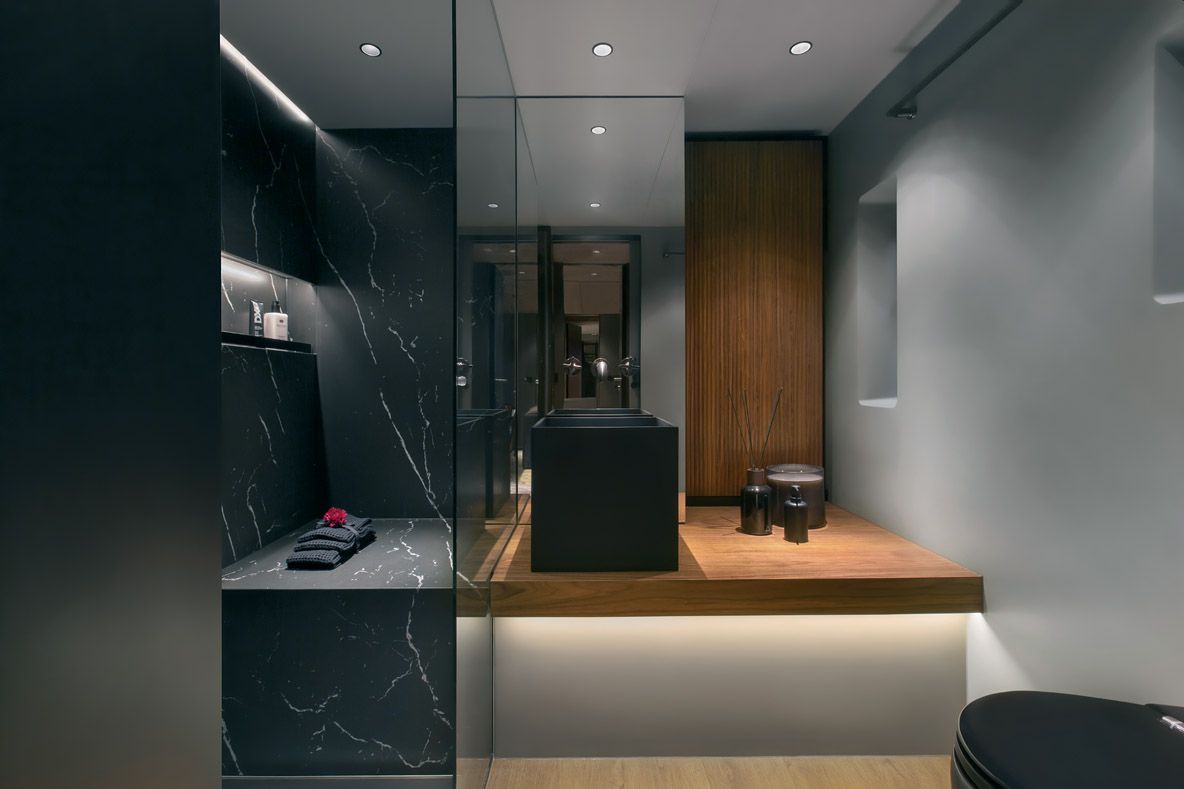
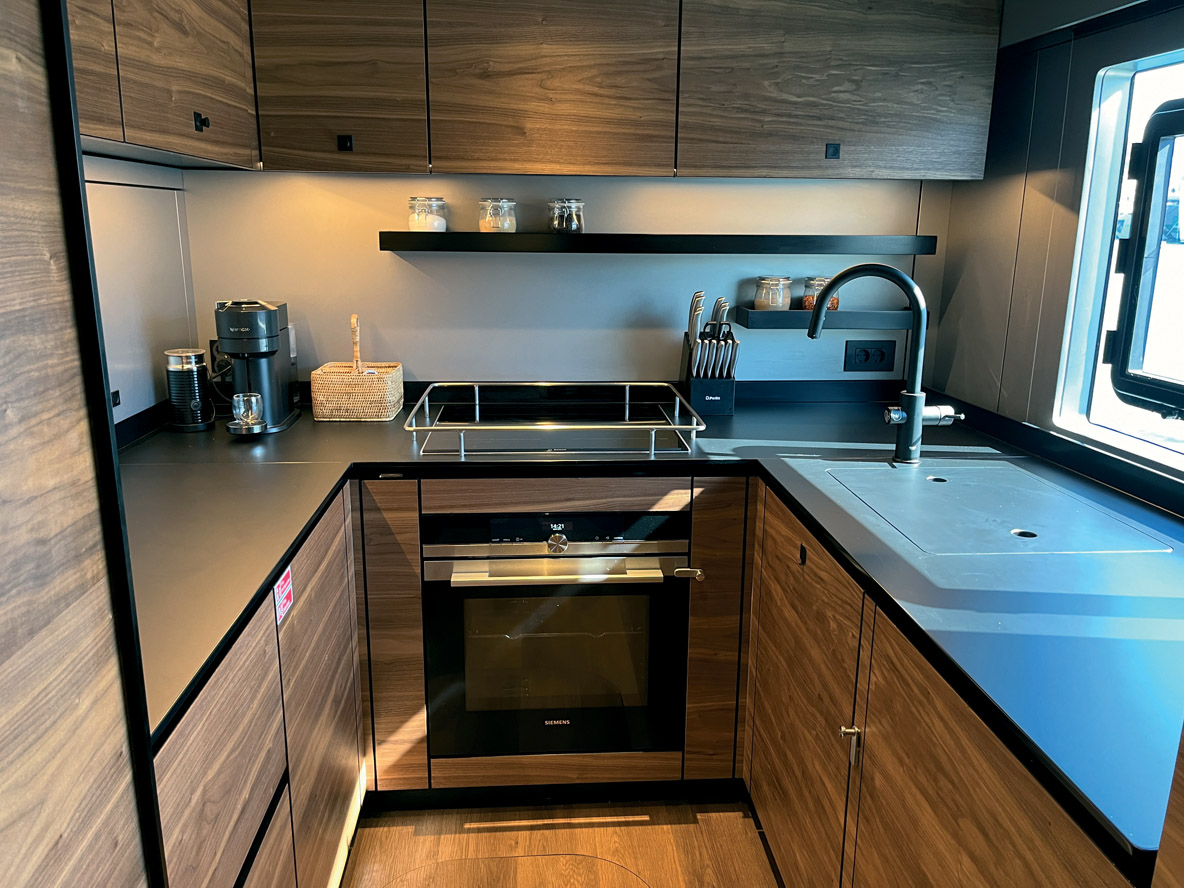
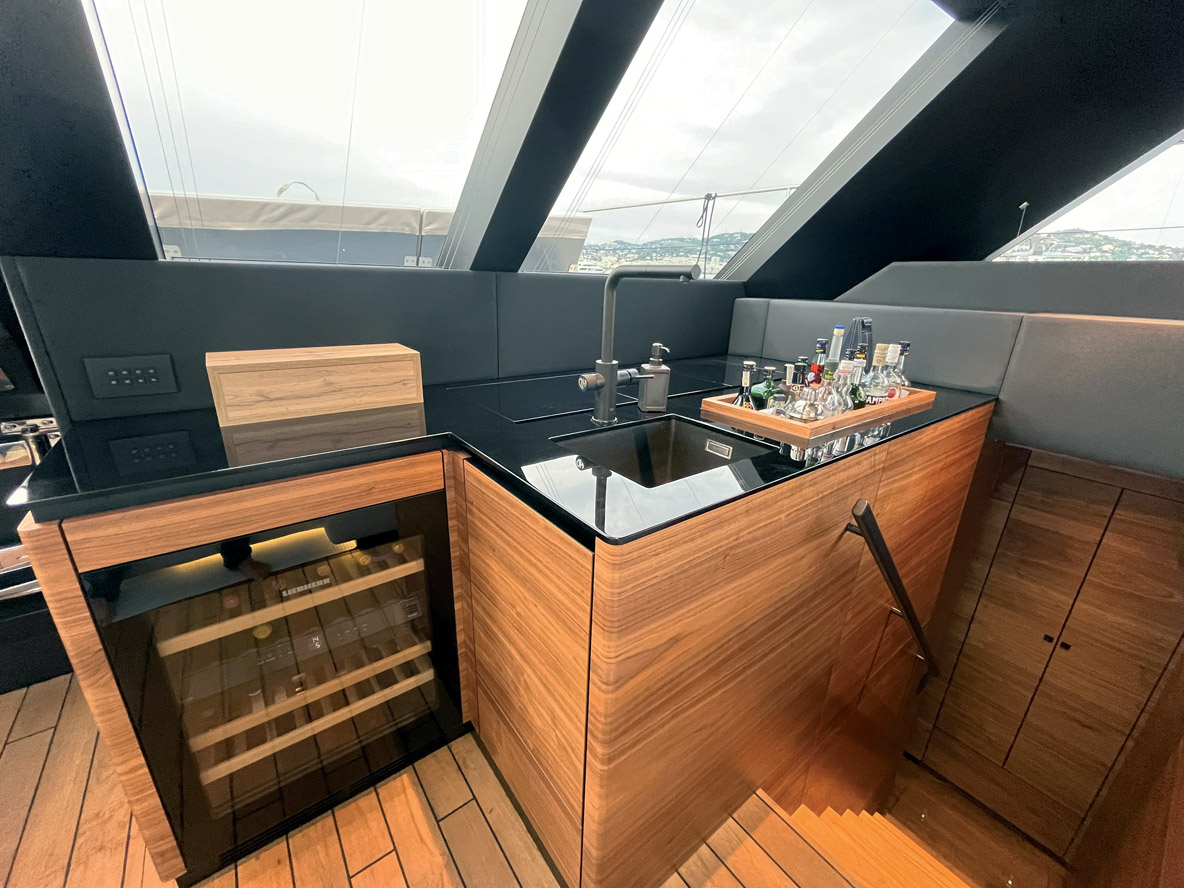
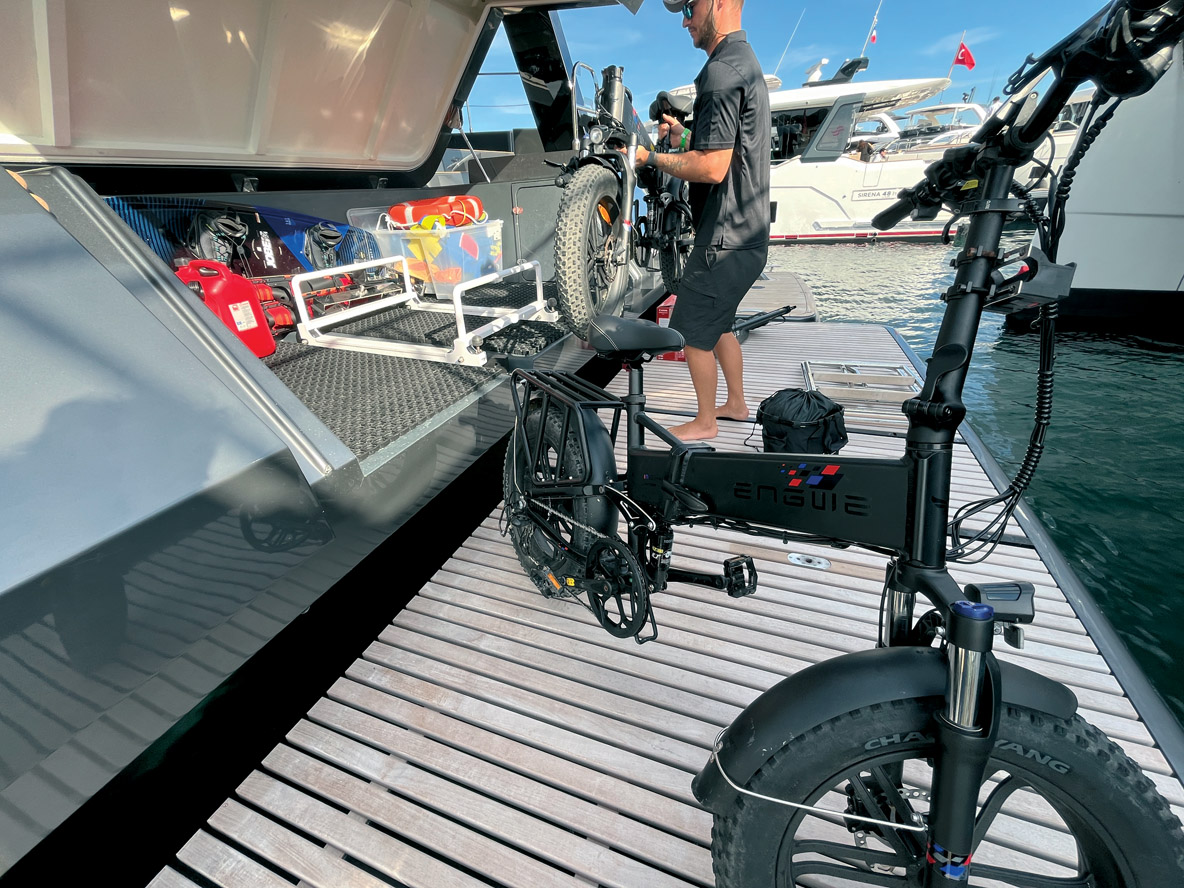
The galley aboard Double Happiness has been installed in the starboard hull, opposite a crew cabin. The saloon features a large dining table and a lounge area with a comfortable sofa. Forward, a hydraulic door gives access to a cockpit and sun-lounging area. The decor, in shades of medium-dark walnut for the woodwork, matte anthracite for the lacquer and veined black for the quartz worktops, contrasts with the cream of the upholstery and drapes. The woodwork features mini-sculptures that enhance the coziness often lacking in very (too?) designer interiors. Outside, the very large flybridge is a must for this size. The large hydraulic bathing platform and a foredeck with saloon and sunloungers offer grandiose spaces at any time of day. The icing on the cake is a host of toys, including the essential electric e-foil. There are even fat-tire beach bikes on board.
High-level Specifications
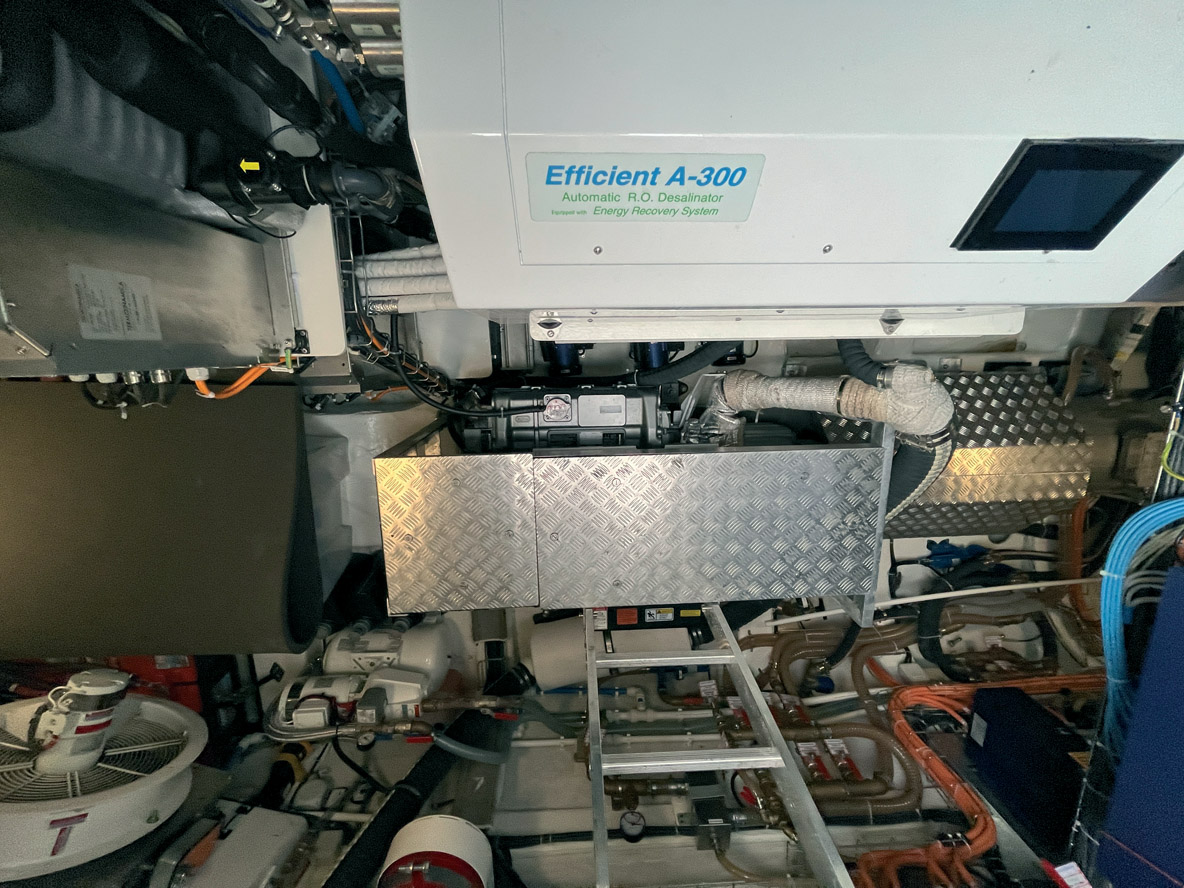
On the technical side, everything can be customized to suit the owner’s program. We remember that Rafael Nadal wanted a powerful engine on his 80, enabling him to reach speeds of up to 18 knots. Another 80 required only half as much power to cruise at 10 knots. Fernando Alonso had said that in his spare time, he wasn’t interested in speed, only in relaxation. Well, Alexander has also made his mark in the Sunreef sphere, with features tailored to his particular needs. The two 120 kW electric motors allow a top speed of over 10 knots - but above 8 knots, consumption is very high - you’d need two 100 kW generators to cover it. The emphasis is on coherent energy management. A 330-kWh battery bank is easily recharged to 80% by an 85 kW Yanmar generator. The recommendation is not to over-discharge the batteries, and if you charge to 90%, it’s better to quickly use the 10% surplus, which is not good for storing in the batteries for a longer life. Alexander prefers to run his generator for an extra quarter hour every day, which corresponds to the power that the vertical panels could provide in very good weather. His solar panels, which produce 10 kWp, are enough to get him through the night with air conditioning, and his substantial battery bank gives him 48 hours’ autonomy at anchor without smoke, noise or vibration. And above all, without polluting the water where he and his neighbors in the anchorage go swimming. Another advantage is that electric motors are less costly to maintain than diesel engines
An Economical Powertrain
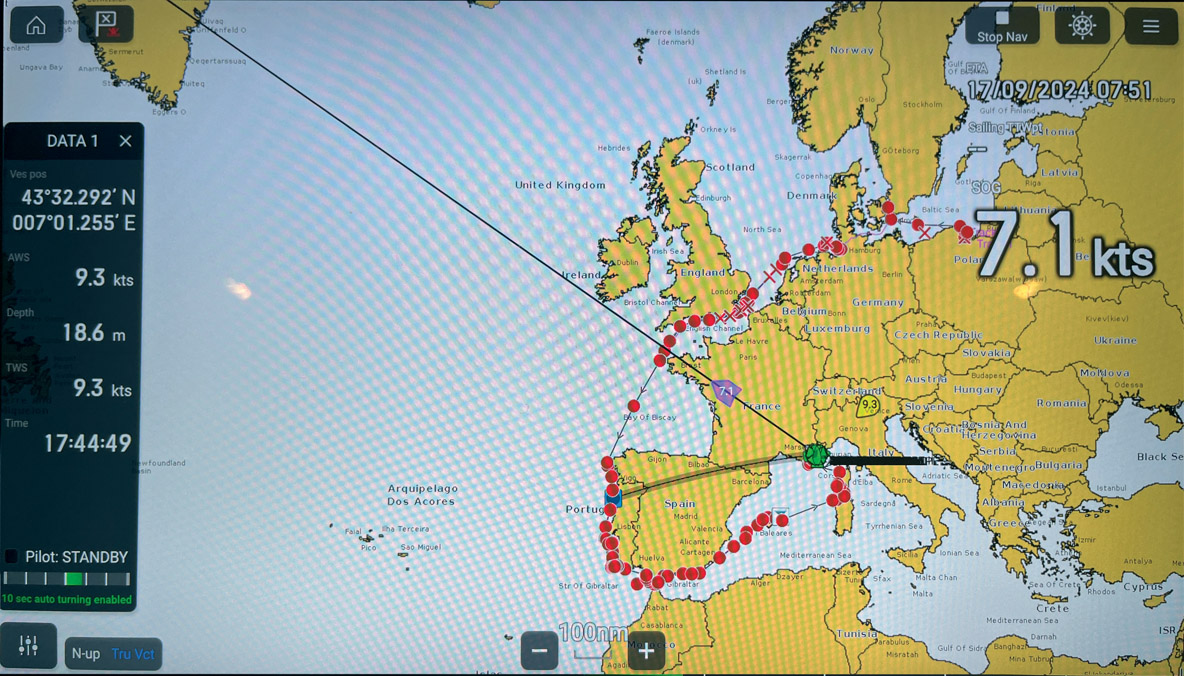
The time had come to head out into the Baie de Cannes to check out the merits of this formula. On leaving the harbor, the short chop typical of the Mediterranean saw the bows planting themselves a little. But as we picked up speed, the 60 Power balanced her longitudinal trim and any pitching was almost down to nothing. Motoring at 8 knots, the battery bank lasts 4 hours. At 6 knots, you gain another hour. In fact, the best compromise is 7 knots, the speed at which the motors consume 70 kW. At this rate, the generator (which we can’t hear when under way) instantly supplies the power needed to power the motors via the battery bank. And there’s still a few kW for on-board service in the event of solar failure, while the generator limits its consumption to around 4 US gallons (15 liters) per hour. According to Alexander, “That’s three to four times less fuel than with diesel engines”. The owner knows his stuff, having sailed from Poland to the Côte d’Azur at an average speed of precisely 7 knots. Double Happiness will certainly be the first Power Eco to complete a transatlantic passage - which will happen this winter. With 2,600 gallons (10,000 liters) of fuel in her tanks, there’s no doubt that his Sunreef will cross the ocean without a hitch.
Conclusion
Sunreef Yachts is making a name for itself with its Eco range, with half of all orders now for electrically-powered catamarans. Let’s face it, the arguments are convincing. The price to pay? A very modest cruising speed, that’s true... This powercat offers an exceptional quality of life on board, since you can sail with much less noise, anchor without polluting the environment - and all in silence. Admittedly, we’re dealing with a hybrid rather than a full electric/solar drivetrain, but for this level of comfort and space, fuel consumption - which is comparable to that of a 40-foot sailing catamaran - is really very low, and provides huge range. So you can understand why Alexander is doubly happy!
Very low consumption and maintenance given the level of luxury
Coherent hybridization
Speed limited to 10 knots
Very high power consumption above 8 knots
technical Specifications
Architect: Sunreef Yachts
Design: Sunreef Yachts
Construction: Fiberglass/foam/balsa composite
Length overall: 60’ (18.3 m)
Beam: 35’1” (10.7 m)
Motors: 2 x 130 kW
Generator: 85 kW
Batteries: 330 kWh
Solar panels: 4.5/24 kWp
Fuel: 2 x 1,585/2,640 US gal (2 x 6,000/10,000 l)
Water: 210 US gal (800 l)
Laden displacement: approx. 65 t
Cabins: 3 to 5 + 3 crew
Guests: up to 12
Crew: up to 5
Price: on request