Sunreef’s latest range is available in both sail and power - with the notable exception of the 50, which remains a sailing catamaran. In fact, the 60 Sunreef Power is the entry model in the motor range from the Polish shipyard that specializes in semi-custom multiyachts. Two units have already been splashed, and we were able to discover one of them, Otoctone, named after her 80-foot sistership.


Infos pratiques
- Le chantier : 60 Sunreef Power (2021)
- La fiche technique
-
 Découvrez notre vidéo exclusive
- Financez votre 60 Sunreef Power
- Assuez votre 60 Sunreef Power
- Articles autour du 60 Sunreef Power
Test location: Cannes, France
Conditions: 5 to 6 knots of wind, calm sea
For the resumption of the Cannes boat show, Sunreef Yachts came along in force, with three sailboat models in Port Canto (the 50, the 70 and the 80) and two motor units (the 60 and the 80) on show in the Vieux Port. These five models integrate the new range, initially presented in 2017 for the sailboats and then in 2019 for the powercats. It’s worth noting that the first models to be sought by customers - both sail and power - were the 80-footers. Five 80 Power models have been delivered in the last two years and a dozen 80 Sail models in the last four years, proof of the success of this line, which has cleverly counterbalanced the Supreme line, which had been judged by some to be somewhat extreme in terms of volume and design. In fact, the volume offered by the “classic” line remains the same, but the more curved and fluid lines highlight a more evocative maritime world. The semi-custom concept works well because even in the smaller sizes offered by the manufacturer (50 and 60 feet), the interior finish is new to each new order. The specifications for the layout and decor begin with a blank sheet of paper, to be filled in by the client. This would typically be a couple but working alongside their personal decorator. For the larger models, the decorator works directly with the design teams on site. The first two units of the 60 Power to be built illustrate this approach well - they feature radically different atmospheres.
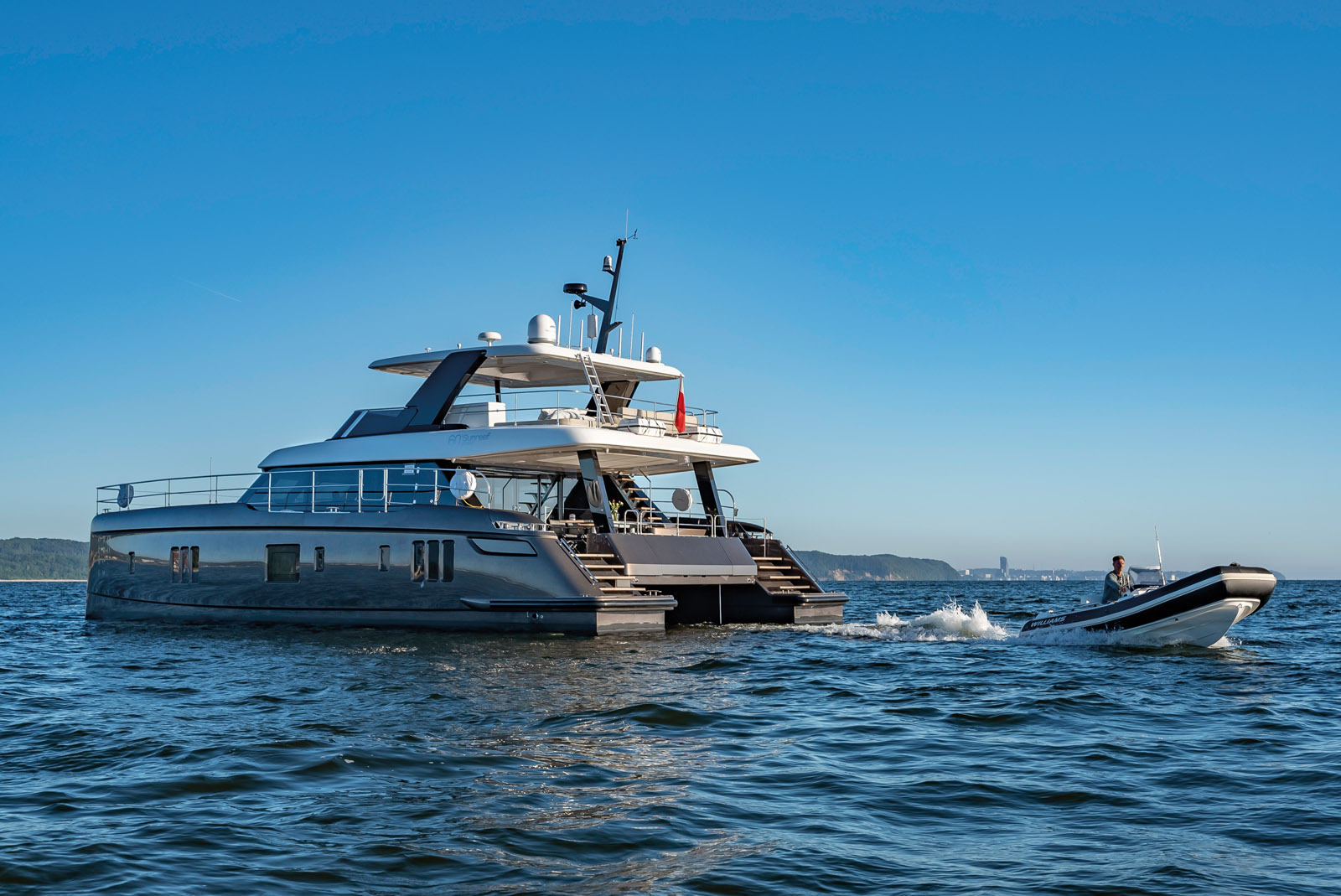
Discovering Otoctone in the Vieux Port, we could see that the freeboard of the 60 Sunreef Power was barely lower than that of the 80. Their beam is almost identical, which bodes well for what’s on offer on board.
 |
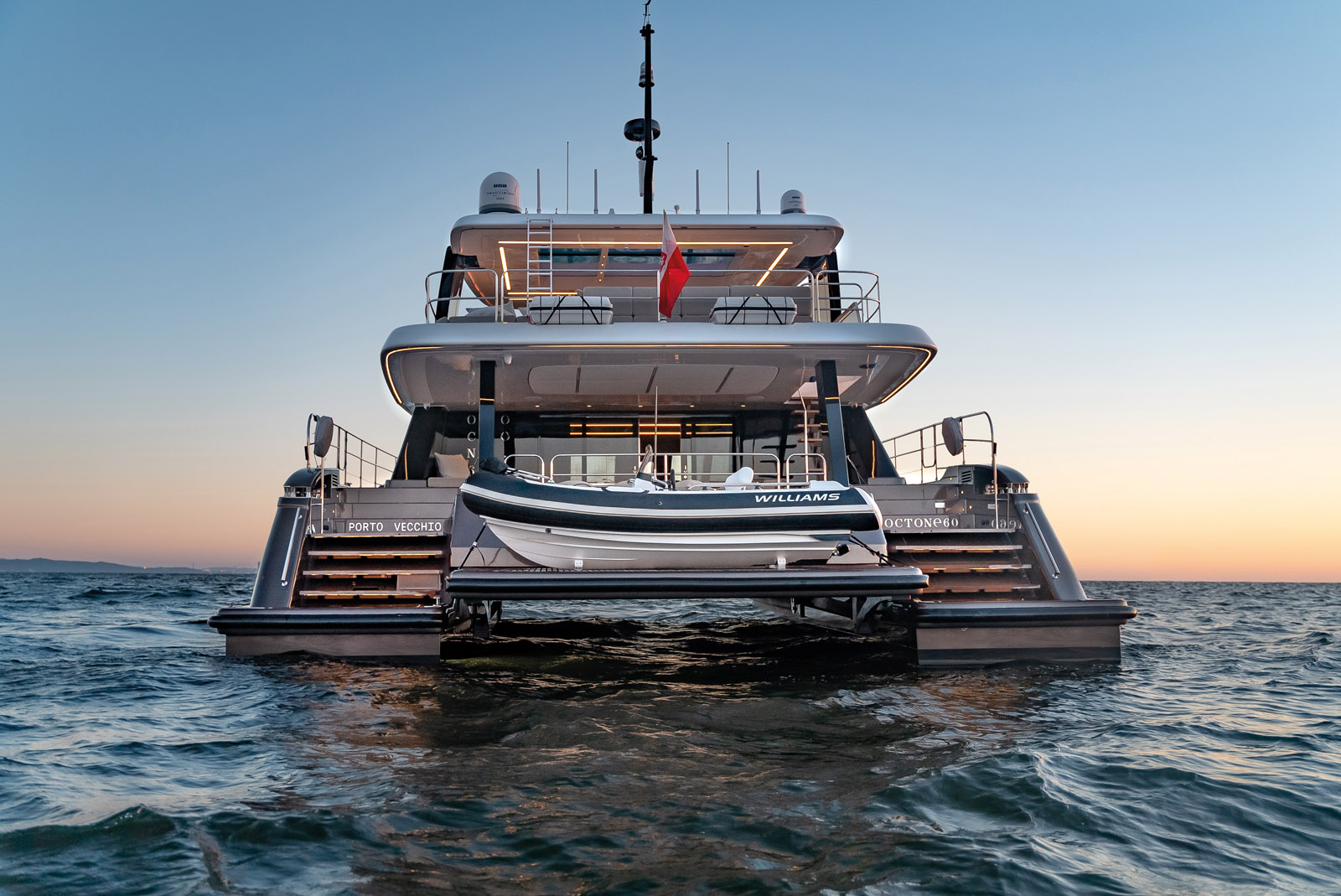 |
With a beam of more than thirty feet and high freeboard, the 60 Sunreef Power offers record-breaking habitability for her size. The aft platform can accommodate a 14-foot dinghy capable of taking all the passengers ashore in a single rotation.
New yard taking on new growth
Francis Lapp, the brand’s founder, assures us that the new premises are fully operational. Almost all of the workshops have now gone from the historic port area. With these new facilities, (see MW #177) Francis expects to produce about twenty units per year, a good pace for the yard. The demand is certainly there: since its launch, the new range has seen 35 units splashed. A 100-footer is currently being delivered, larger one-off models are on order, and the Eco range is about to make its appearance with a first 60 that has been ordered by former Formula 1 racing driver Fernando Alonso. With foresight, Francis Lapp has already acquired land nearby to be able to anticipate future developments. The construction of the f ibe rgl a s s / re s i n /ba l s a composite hulls is robust: some structural parts, such as bulkheads or connecting panels, can be reinforced with carbon. We were unable to find out the weights, but there’s no doubt that the samples are substantial. Communication between the design team and the workshops is a particularly careful point at Sunreef, allowing small last-minute modifications to adapt to the client’s wishes. As an example, an anchor locker being adapted to take a different type of anchor…
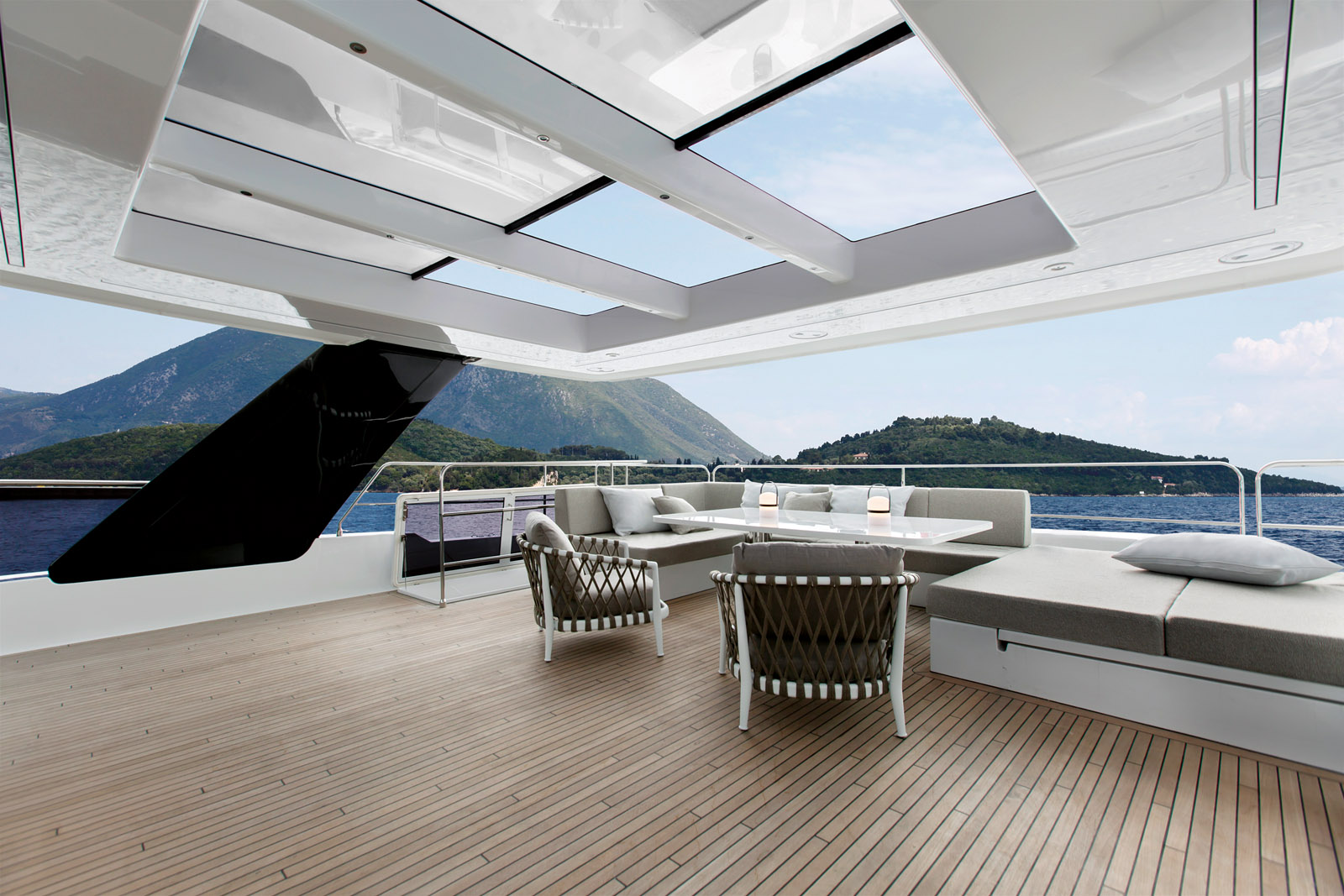
The 650-square foot flybridge can be arranged to suit your desires. Sunbathing or lounging, sitting area or large dining table, it’s up to you …
Volume - Always volume
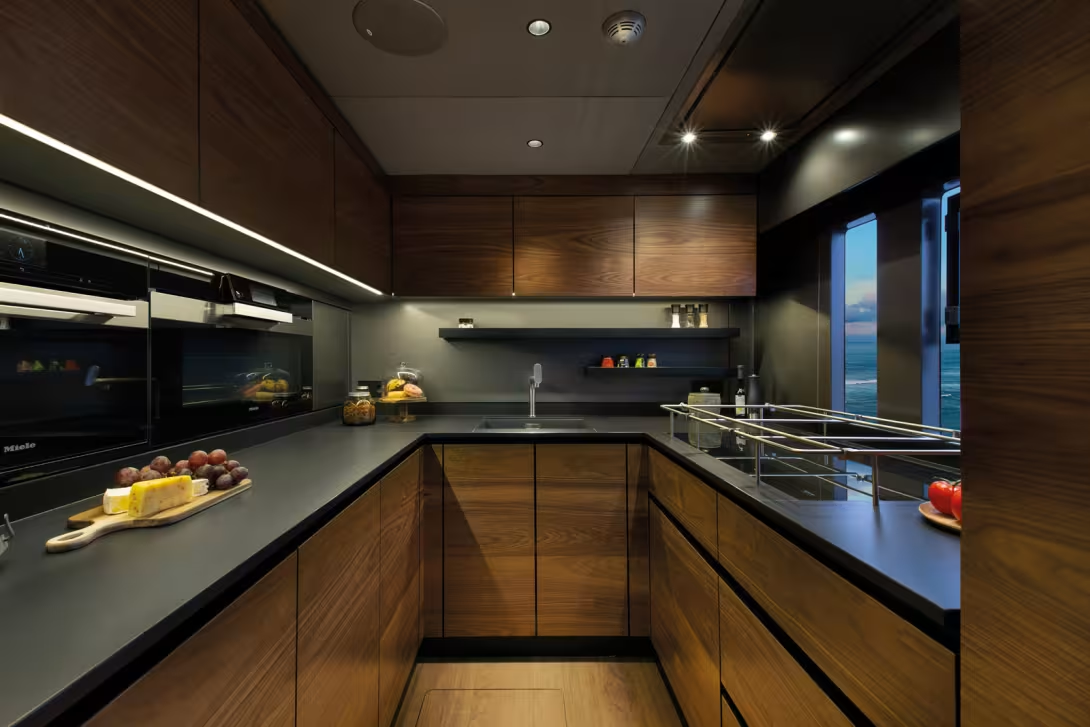
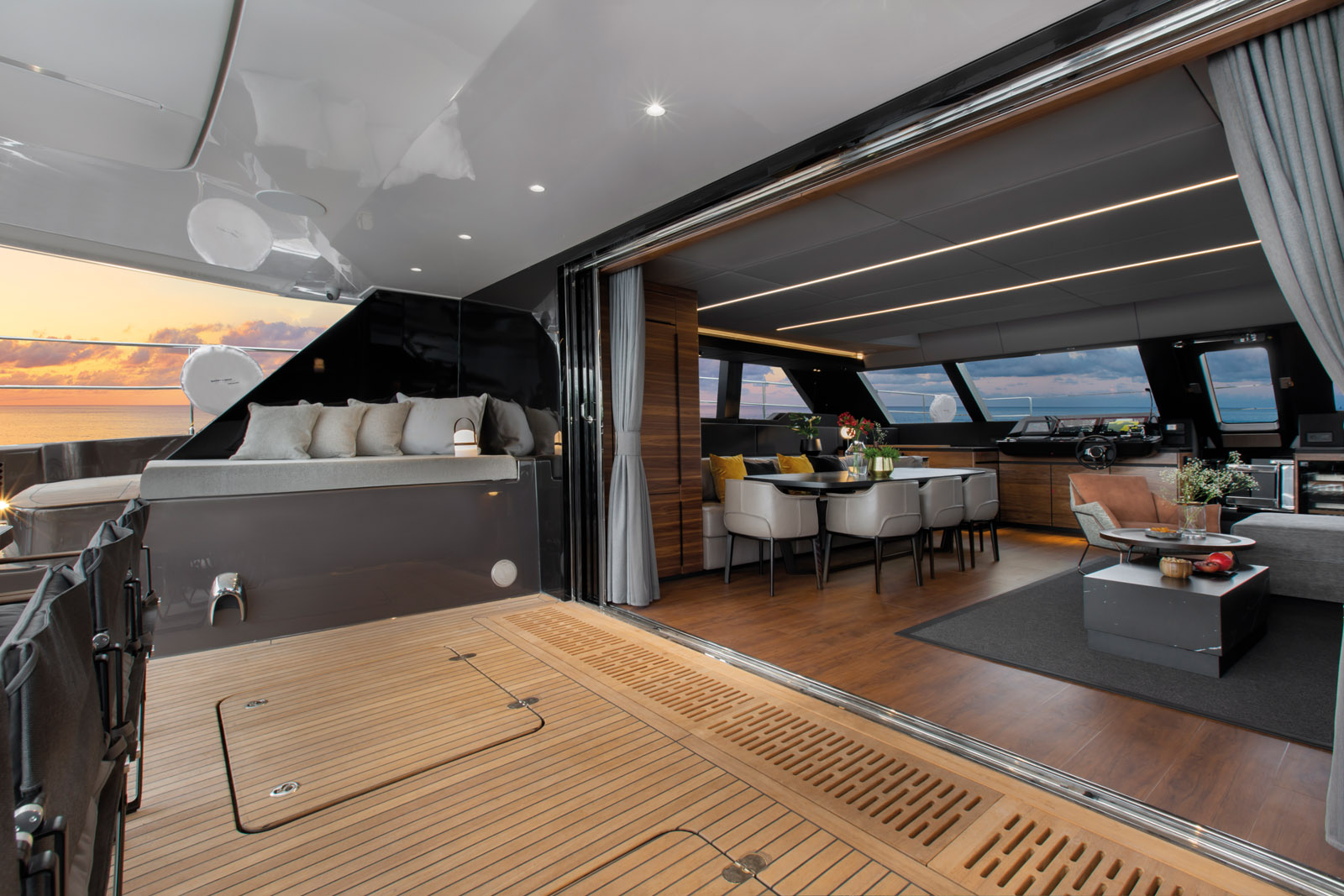
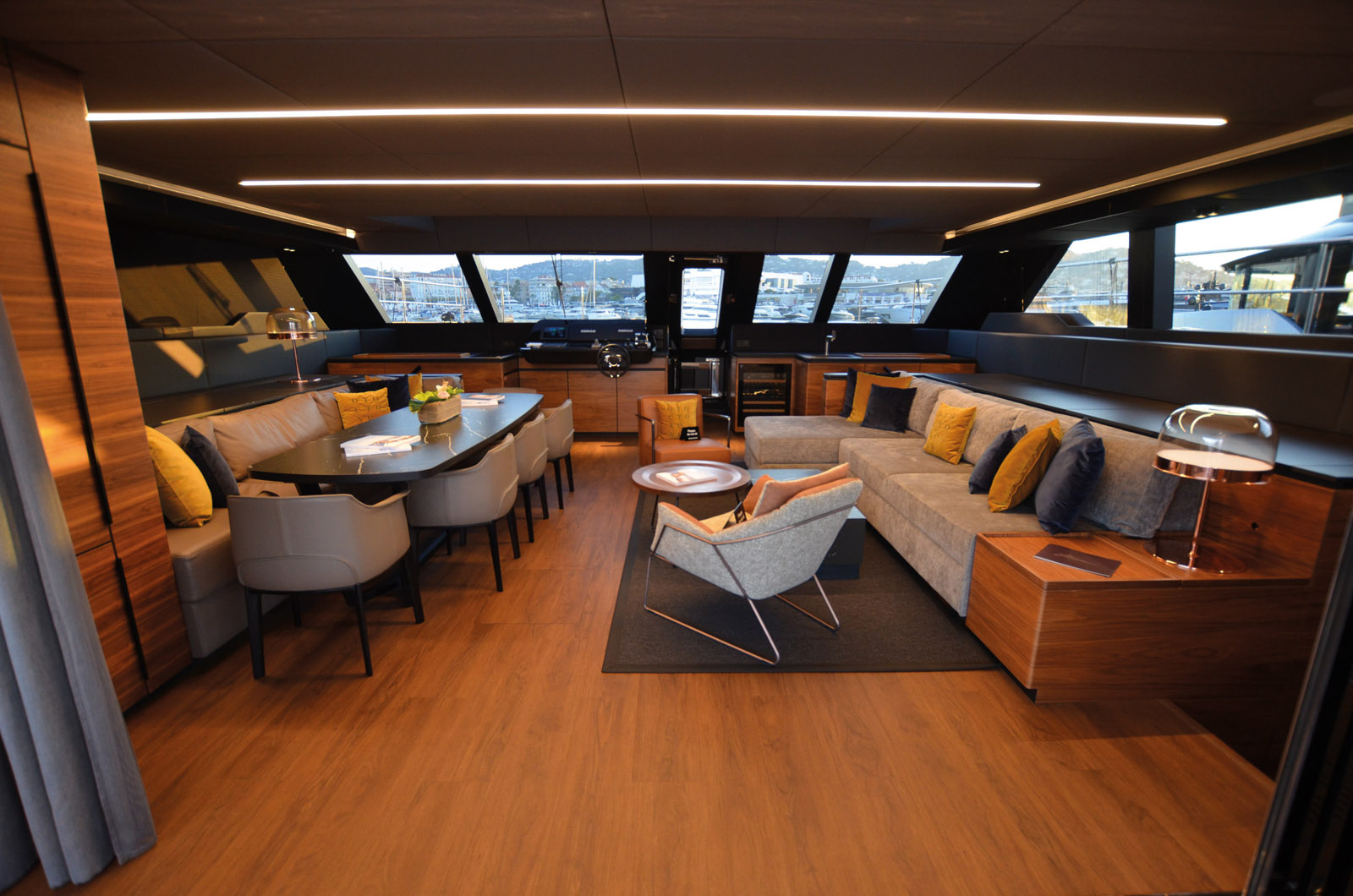
Several layout options are pre-planned to respect technical constraints. The possibilities are numerous: three to five cabins, galley up or galley down, but always two crew cabins, one at the stern (possibly adjacent to the galley) and one in one of the forepeaks. The entire length is exploited, and the beam (33’/10 m) is generous - not only is there the huge nacelle but also a significant living area. This model, which is the smaller sistership to the 80, is intended for mixed use, either private use or luxury charter. The galley in the starboard hull is opposite a crew cabin - the latter can be assigned to guests in case of a short-handed crew. For charter, the crew will consist of three people (Skipper, Chef and mate/hostess), ensuring high standards of service in this category. The saloon is top of the list in terms of the immense volume offered - the living area is home to a very large table for meals as well as a lounge area with a very pleasant L-shaped (convertible) sofa. Forward in the saloon, a hydraulic door gives access to a cockpit and sunbathing area. As with her bigger sistership, Otoctone’s ambiance features shades of dark walnut for the woodwork, matt anthracite for the lacquers and finally veined black for the quartz worktops. This similarity is not a coincidence as both catamarans in the Otoctone fleet will be offered for simultaneous charter. Going on vacation will be possible for a large family or with many friends on these luxurious and similar platforms. Outside, you can’t go wrong: a very large flybridge that can be converted as desired, a beautiful hydraulic bathing platform and a foredeck with a lounge and sunbathing area. The space is XXL-sized everywhere.
 |
 |
The wide door separating the cockpit from the saloon completely retracts into the bulkheads. An immense space then opens up.
The saloon has been created using warm and somewhat dark tones. In this size, having the galley down frees up a lot of space to create a proper living room with a large sofa and dining tables.
Lessons learned from the 80 Sunreef Power
Benefiting from the experience of the first 80 Power, some details have been adjusted for a better comfort, both for the crew and for the guests. The forepeak is equipped with a double bed, hatches under the sunbathing areas allow for stowing small accessories, and storage lockers have been placed in all the unused spaces. In terms of multimedia, all cabins have been equipped with iMac instead of televisions and a KVH satellite transmission system allows to communicate and receive digital content offshore. The safety standards required by the commercial classification for charter also meant taking into account some safety aspects such as watertight bulkheads, the height of the railings and the mooring system with two anchors and well-sized windlasses. For energy management, the lessons learned from the first multiyacht were also useful. A 60 kWh battery bank (2 x 15 batteries of 2 kWh each) allows the air conditioning to run all night and for all the cabins without having to fire up the 22-kW generator.
 |
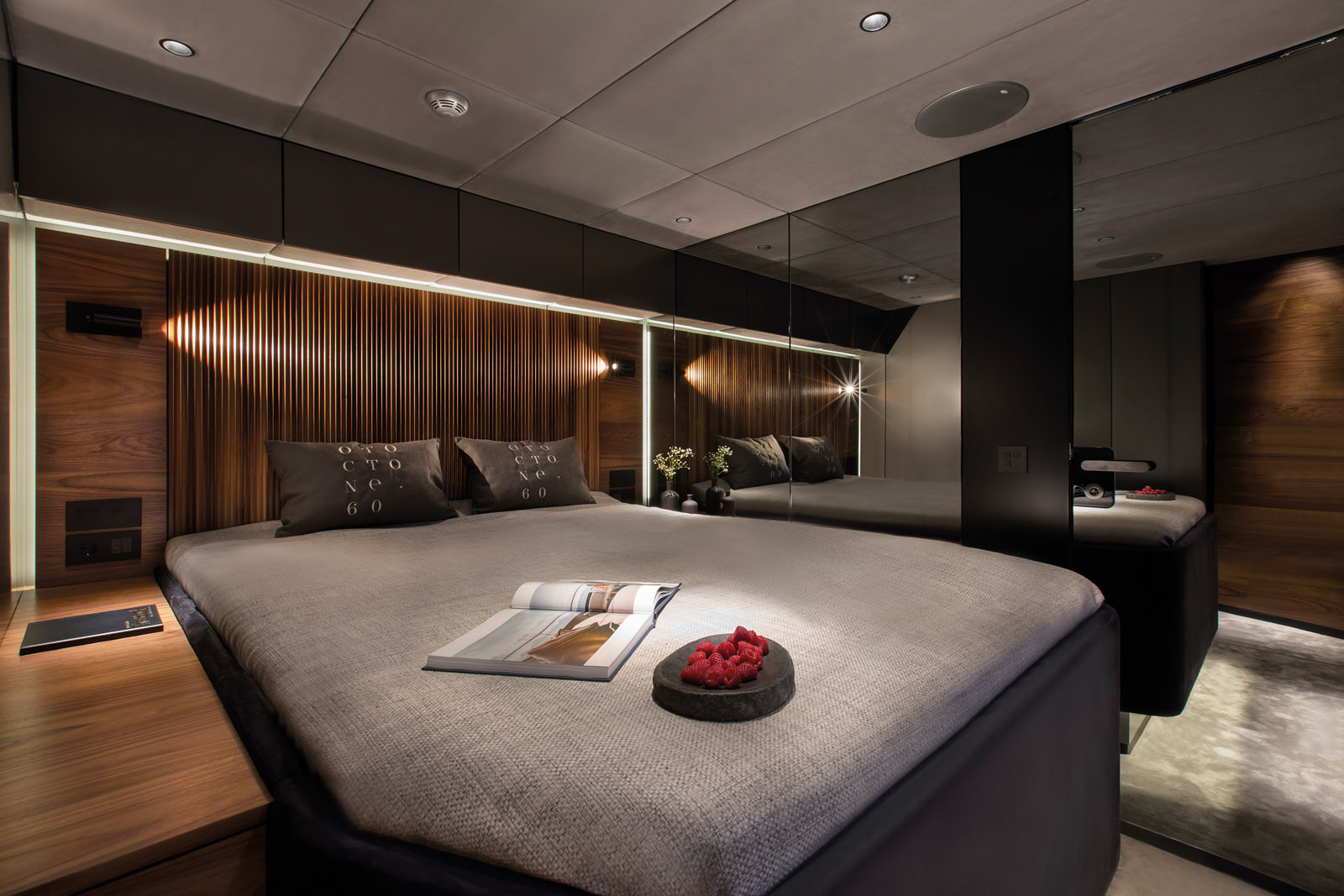 |
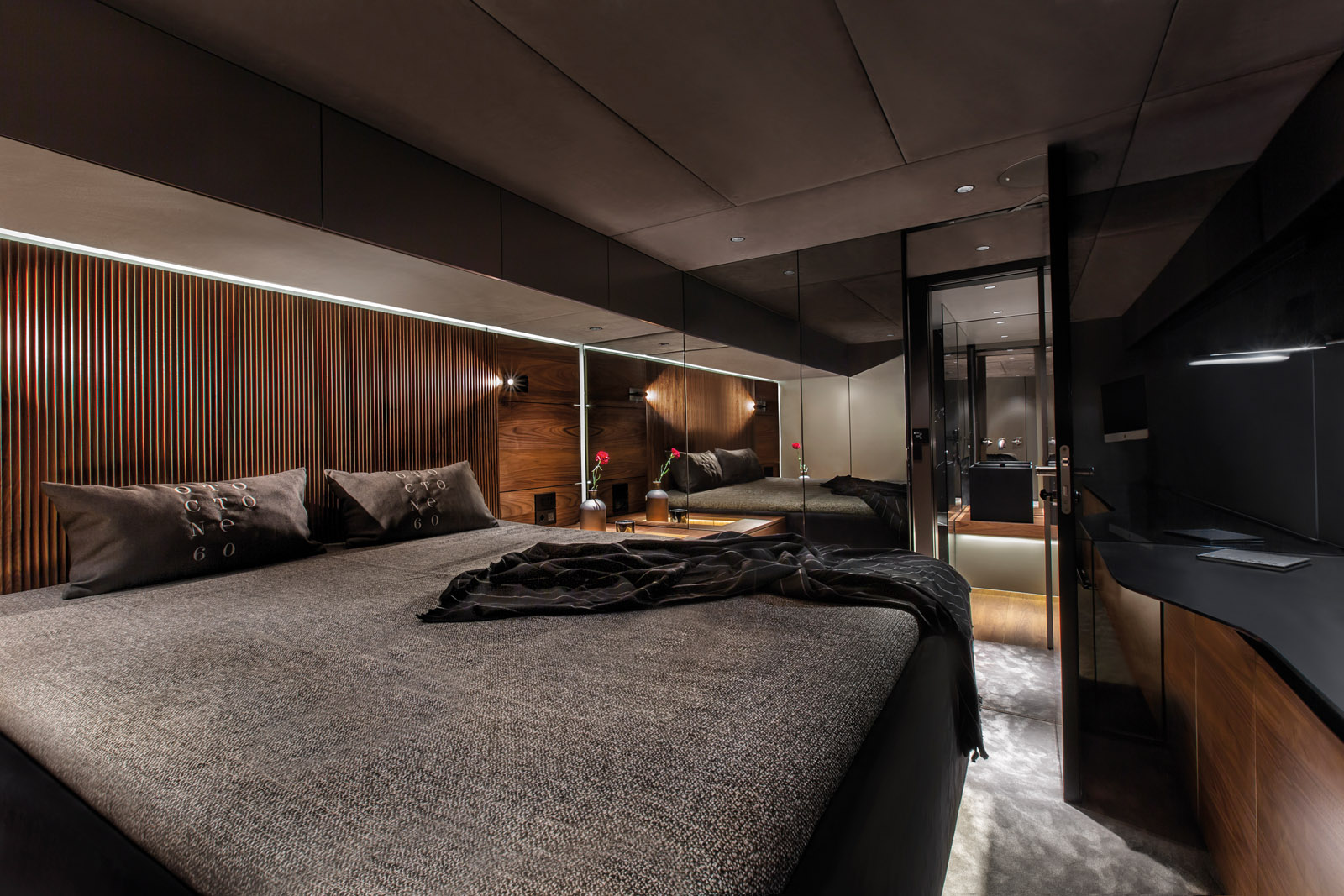
The owner’s cabin and guest cabins feature the same color-coding. The air-conditioning generates a pleasant coolness in these cabins, made even more pleasant as the generator doesn’t need to be fired up.
Ten knots is just about right
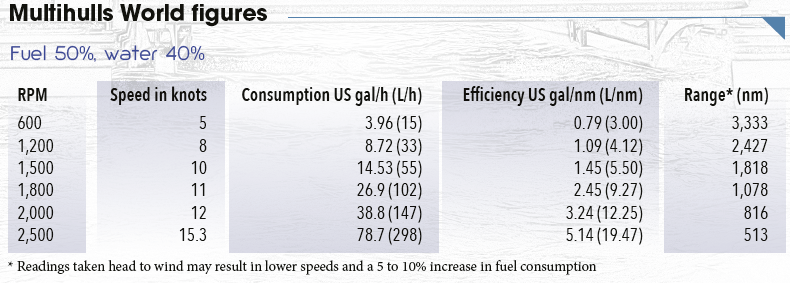
The 60 Power is equipped with a pair of 705 HP Cummins engines with shaft-driven props, and bow thrusters. Controls and electric steering are from ZF. With an automatic DPS positioning system (for use when launching the toys, for example) and the two anchors, maneuvering and maintaining station in an anchorage are very efficient in all circumstances, which is a plus in charter operation. The more powerful drivetrain than the one on the 80 we tried can reach a little over than 15 knots. Eliot Johnstone, the skipper, explains that this reserve of power “is mainly to have some more power under the hull in case it’s needed”. In fact, the ideal cruising speed (for guests and crew) is around 10 knots. At this speed, the Cummins’ appetite remains reasonable. On the delivery trip from Gdańsk to Cannes (over 400 hours), average consumption was 13 US gallons (50 liters) an hour. Certain speeds need to be avoided because they generate too much. And at speeds in excess of 10 knots, fuel consumption increases dramatically.
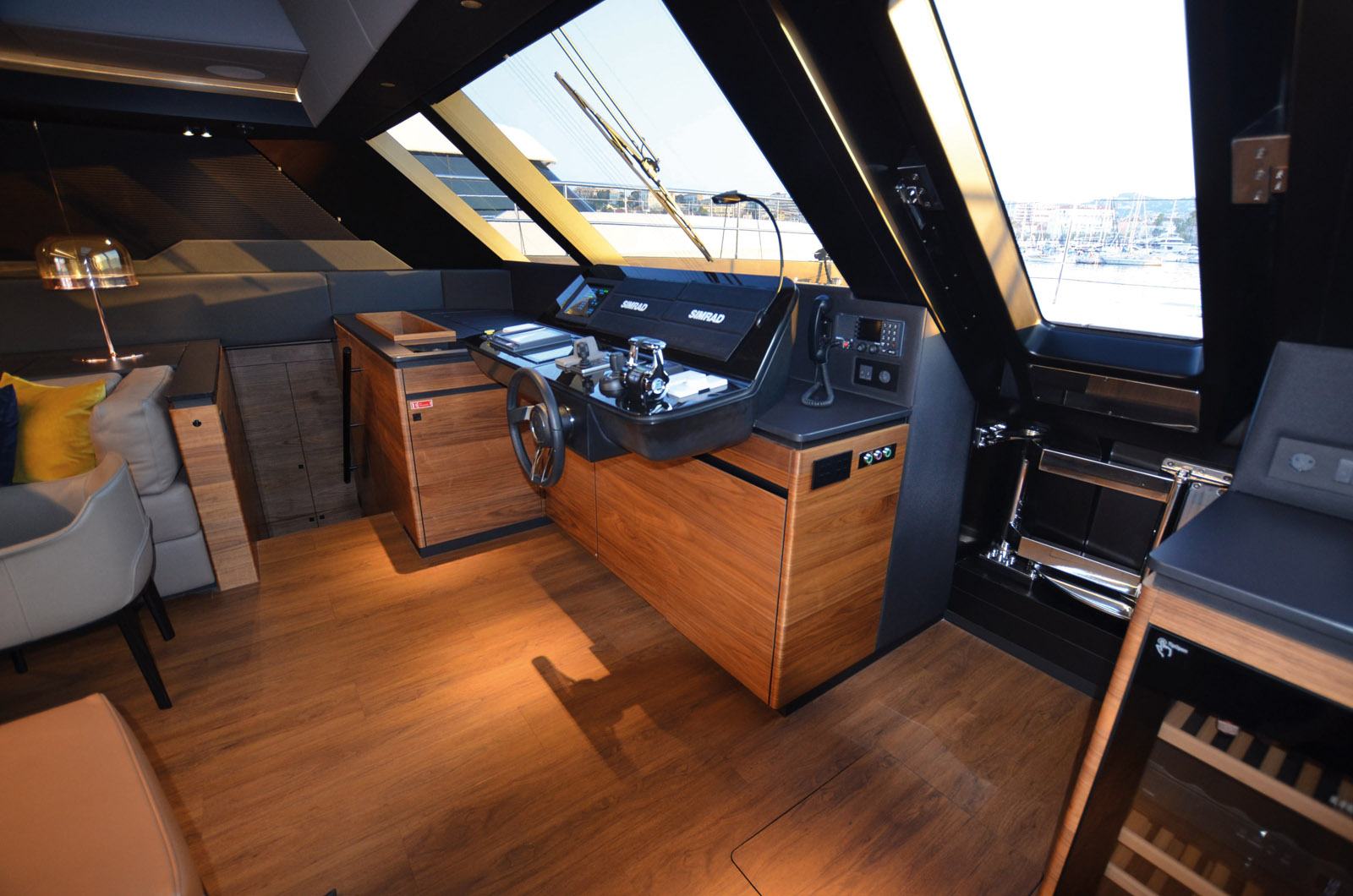
The rather discreet interior helm station will be used in bad weather. The typical cumbersome bench seat is replaced by a movable stool.
Conclusion
The smallest of the brand’s power multiyachts has nothing to envy of her bigger sisterships, except maybe a little volume, but even that is exceptional for this “entry level” model. The finish of the interiors, entirely custom, allows you to benefit from a proper yacht with unique personalization. This type of luxury unit is very well received in the charter market - the upcoming season of the second Otoctone is already well underway, which proves the validity of the positioning.
The Pluses:
+ Record volume and habitability
+ Equipment worthy of superyachts
+ Exceptional standard of finish
The Minuses:
- Noise at certain engine speeds
- Fuel consumption above 10 knots
- Requires an experienced skipper
TECHNICAL SPECIFICATIONS
Builder: Sunreef Yachts
Design: Sunreef Yachts
Construction: fiberglass/foam/balsa composite
Length: 60’ (18.30 m)
Max beam: 35’1” (10.70 m)
Laden displacement: about 65 t
Motors: 2 x 350 to 850 HP
Fuel: 2 x 1,585 to 2,640 US gal (2 x 6,000 to 10,000 l)
Water: 210 US gal (800 l)
Cabins: 3 to 5 + 3 crew
Guests: up to 12
Crew: up to 5
Price: on quotation