Sure, the revolutionary technical advances in electric propulsion and the promise of unlimited range are now a reality on board our multihulls: taking ecological issues into account is no longer just wishful thinking... But as far as “traditional” propulsion is concerned, modern internal combustion engines are still a great solution aboard a simple, light and durable motor catamaran. The 110 HP motors that equip the C-Cat 40 Power Fish are indeed characterized by perfect reliability, remarkable efficiency and relative sobriety - not to mention their affordable price.
Test location: Fiumiccino, Italy
Conditions: 0 to 5 knots of wind, calm sea
Infos pratiques
- Le chantier : C-Cat 40 Power Fish
- La fiche technique
-
 Découvrez notre vidéo exclusive
- Financez votre C-Cat 40 Power Fish
- Assuez votre C-Cat 40 Power Fish
- Articles autour du C-Cat 40 Power Fish
Why a powercat? What’s it for?
Questions as banal as they are provocative at the beginning of a boat test like this. Most sailboat catamaran on the market today have pretty big (too big?) motors, and recent trends in terms of equipment, comfort and space have resulted in these multihulls becoming significantly heavier, making their engines less and less “auxiliary”. As a result, in the context of summer sailing, the use of the sails themselves is sometimes almost secondary. As a result, even though motor sailing isn’t necessarily a source of pleasure, most multihull sailors are already well versed in fishing. So, offering these boaters a powercat is not a heresy. Not to mention that the power catamaran market is awash with motorboat customers who are tired of the rolling of monohulls as well as first-time buyers. If genuine sailing, in windy regions, remains a pure pleasure for coast hopping, racing or oceanic wandering, it means work and doesn’t necessarily lend itself well to the demands of a tight schedule. The upshot of this is that the powercat market has been experiencing a particularly significant boom (notably in the United States) in recent years. Its share of the multihull cruising market is now 15%. If the specifications of most powercats implied reaching or even exceeding 20 knots, the pressure on manufacturers to achieve high speeds is tending to diminish – we’re witnessing a return to the trawler concept, favoring moderation in terms of performance and consumption to achieve greater range. The C-Cat 40 Power Fish, with its reasonable size powertrain, fits completely into this trend. In this context, it is difficult to avoid mention of the Lagoon 40 PC and its twin 75 HP motors - a model born almost a decade too soon…
 |
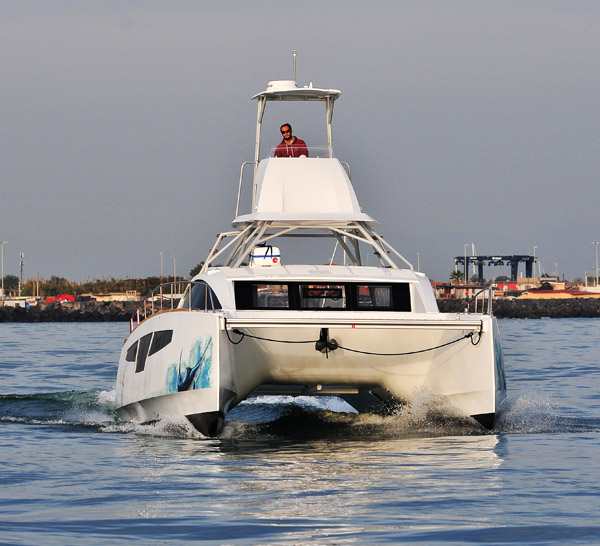 |
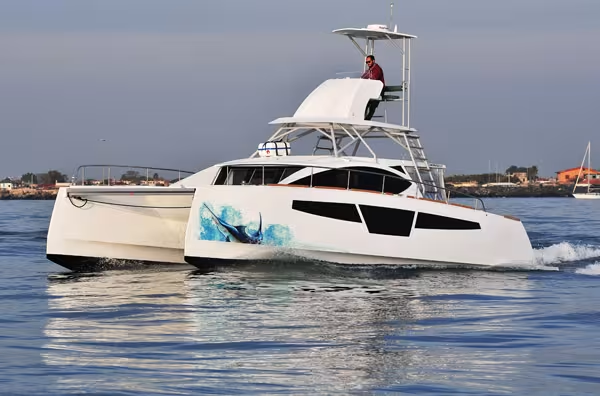
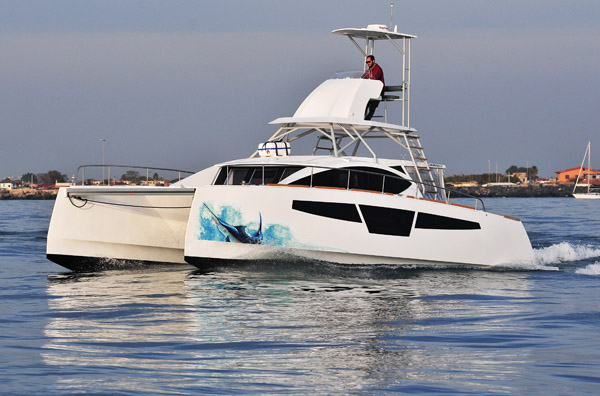
In terms of design, the sailboat to powerboat transformation has been quite a success. The builder is also working on a more traditional flybridge.
Naval architect Marc Lombard’s design means that this slight upwards pitch will make it easier for the bows to pass through the waves.
A catamaran with reasonable drivetrain
The C-Cat 40 we tested was a special order from a big game-fishing enthusiast who wanted a cozy interior, reasonable range and fuel consumption for use within the perimeter of the western Mediterranean, but without exceeding 40 feet in length. The power evolution of the C-Cat 37 sailboat (on test in MW #166) looked to be the perfect choice - the reputation and experience of the Lombard naval architect team being indisputable.
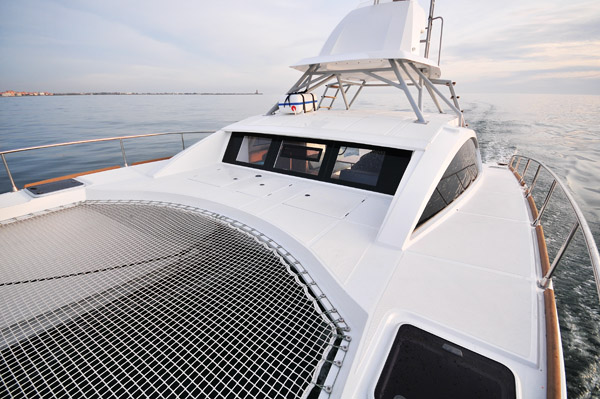
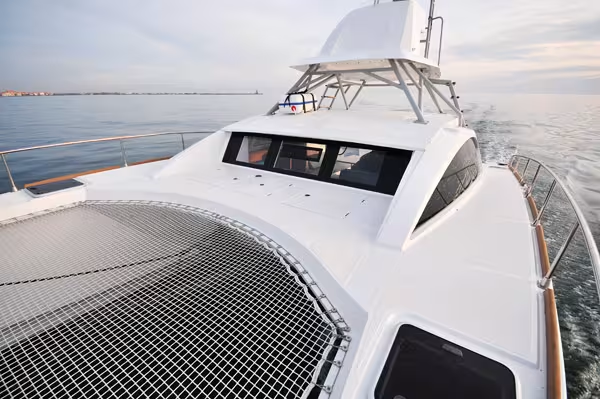
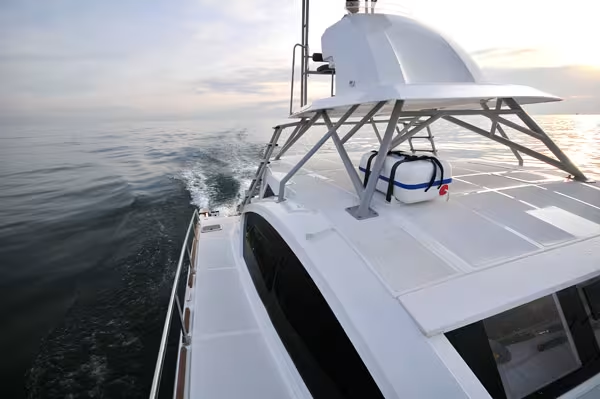
The all-stainless-steel railing around the deck makes it very safe. The deck is indeed the same as on the C-Cat 37: the footprint of the mast step is still visible forward of the coachroof.
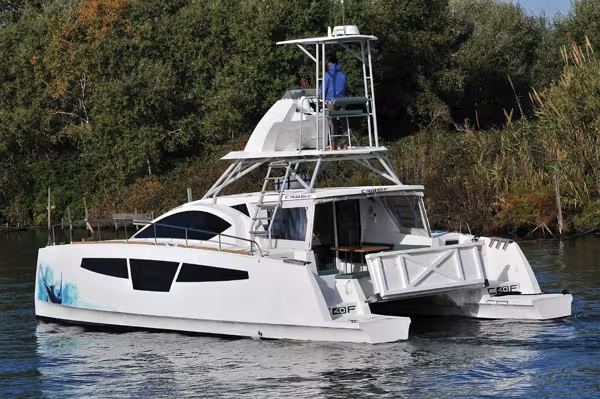
The rungs built into the structure of the helm and lookout station don’t ensure easy access in big seas.
Marc Lombard: “A big range and reasonable consumption”

“As far as the shape of the C-Cat 40 Power Fish is concerned, the hulls of the C-Cat 37 have been lengthened by around 31” (80 cm) to compensate for the weight of the engines, which are heavier than the standard version on the sailboat. In accordance with our firm’s designs for catamarans originally conceived as sailboats and transformed into power versions (the Nautitech 47 Power, the Euphorie 5, or the Long Island 78 and 85), the extended part has a flat area and a clear inflection in relation to the keel line of the sailboat in order to limit the angle of pitching at speeds in excess of 10 knots. These hull modifications, developed using CFD for nearly 10 years by our firm, have proven to be very effective and simple to implement. For the same reasons of simplicity of manufacture, this flat area doesn’t feature any lateral chines but remains very effective for speeds between 12 and 18 knots. The fronts of the hulls are unchanged from the sailboat and allows the powercat to remain slightly upright, which facilitates passage through the water in bigger seas. The engines allow for a comfortable or even relatively high speed so you can reach the fishing grounds, while maintaining a large range and reasonable fuel consumption.”
Carefully designed and comfortable
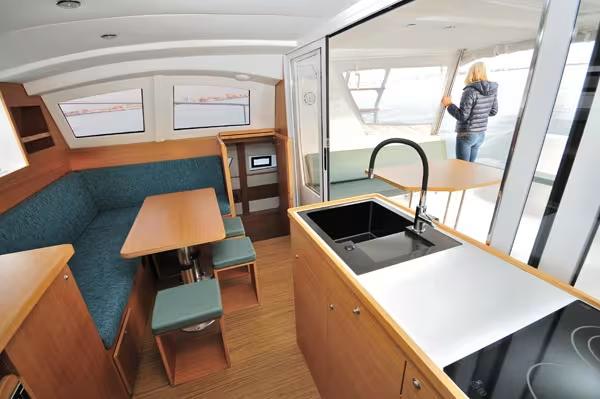
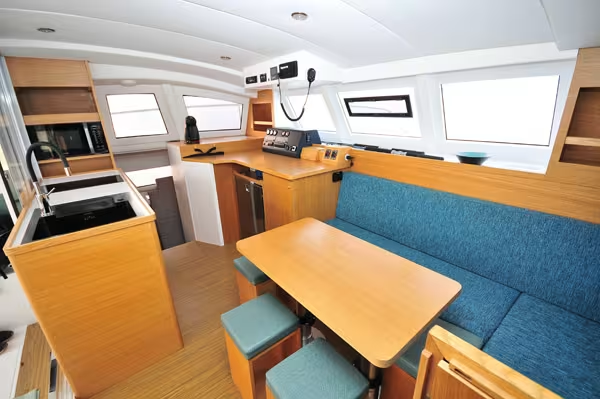
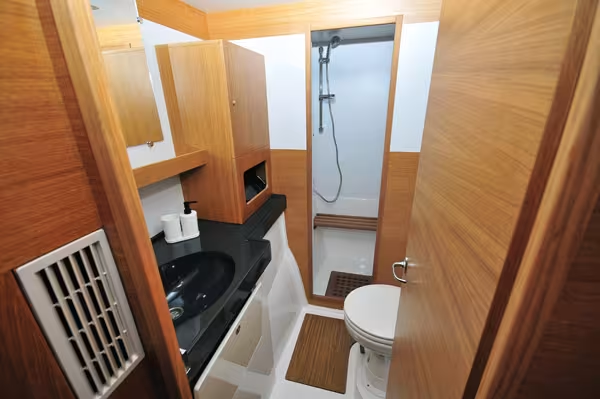
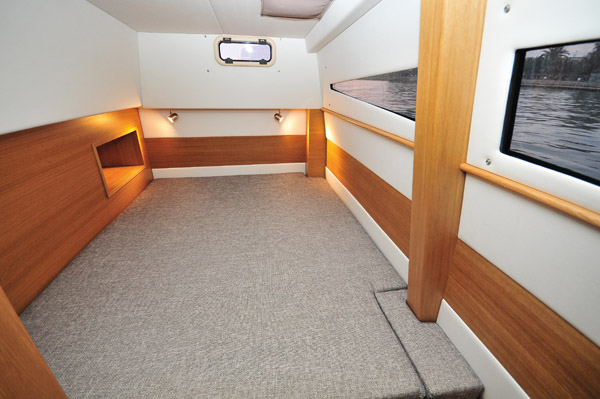
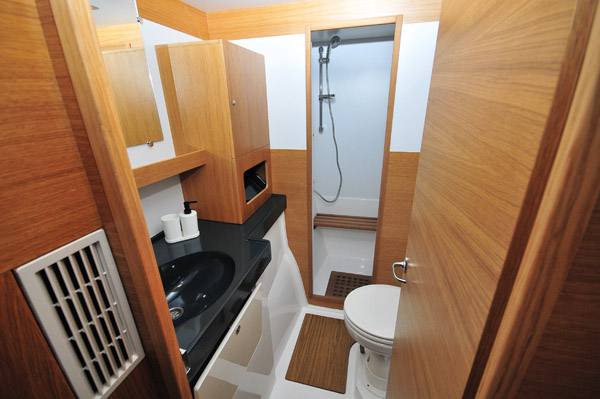
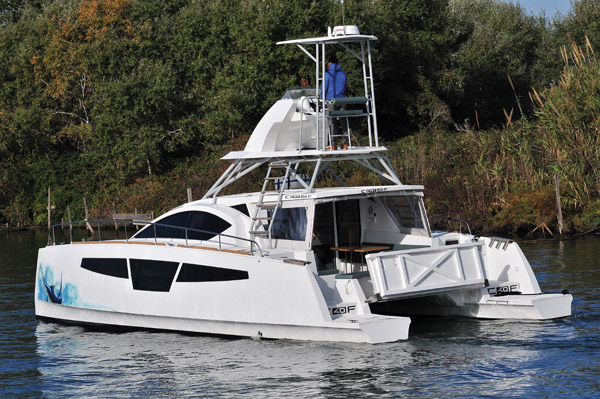
The silhouette of the C40 Power is easy on the eye, modern but not ostentatious with its slightly inverted bows. The solid guardrail skillfully matches the curve of the deck, while the coachroof is aesthetically fluid and features a large amount of glazing. The cockpit’s fabric enclosures stow neatly into the bimini, creating a beautiful convertible semi-outdoor space, to be enjoyed at sea as well as at anchor in the rain or in the summer sun. The flybridge area of the fishing version is a proper piloting and fish spotting station that’s well suited to the use, though it requires a certain amount of agility - this is not a deck lounge. A more conventional version, better adapted to coast-hopping or simply relaxing, will be available from the shipyard. The fitted cockpit is plain, as befits marine use (especially fishing), but two neat bench seats and a table that can seat 6 allow the crew to be comfortable yet remain protected from the sun, sea spray, or even cold weather. The movable bulkhead of the deck saloon offers direct access to the galley island and there’s a little dining table that can be transformed into a lounger, as well as a small, forward-facing chart table. As always at C-Cat, the woodwork made at the shipyard as well as the superb in-house upholstery create a neat and cozy atmosphere. In the hulls, the light coming in through the large windows in the topsides is spectacular. The bathroom on our owner’s version is spacious and practical and could easily be found on a larger boat. The two double cabins in the port hull are also very inviting and comfortable. They share a common heads compartment and shower.
 |
 |
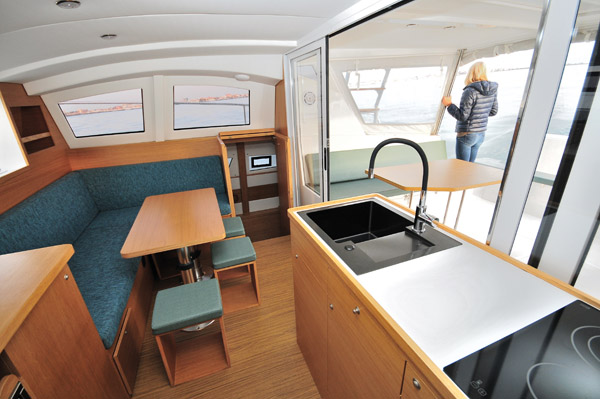
The well-protected cockpit is a natural extension of the interior.
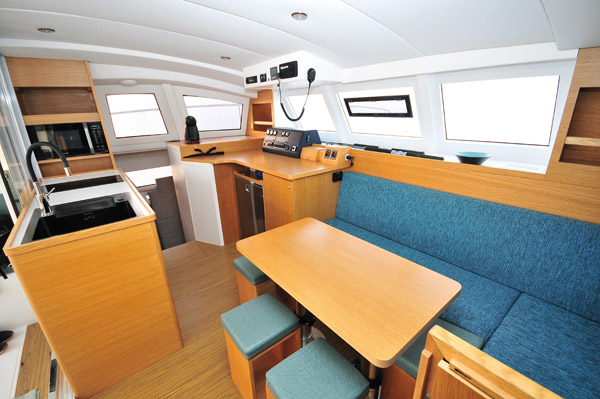
You can see in this shot that the nacelle is relatively short, but with a large floor area available, it’s all there - saloon, galley and chart table.
Surprising ease
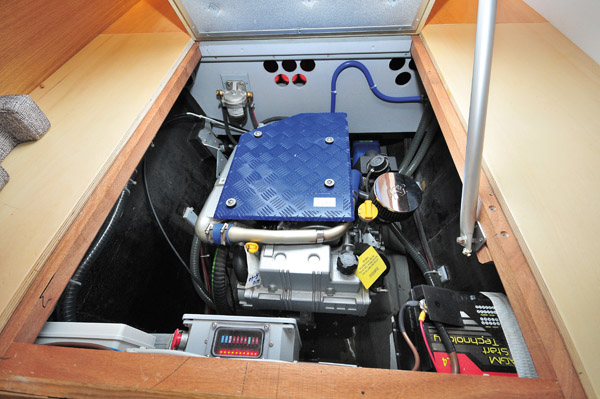
From our photo boat, the attitude of the C-Cat 40 Power is characteristic: narrow bows, progressive volume, the help of a small deflecting chine, the support created by the aft sections, and the centering of the engine weights give it a surprising ease, despite a slight pitch upwards. The speed, agility and passage through the water are top notch. Back on board, the suppleness of the boat’s touch on the water is quite evident. At the helm, the catamaran’s speed is real and with this twin 110 HP setup, our maximum speed exceeds 18 knots - and it is really useable. There are several levels of compromise when it comes to consumption, speed and acceleration between 12 and 15 knots. A 10 or 11 knot “cruising” speed is economical and favors comfort and life on board. Without doubt, a flybridge of more modest height with less windage will further improve the already significant performance. Docking maneuvers with this fairly compact machine are easy. As for the shoal draft, it allows good access to rivers and the shoreline. The FNM engines (an Italian manufacturer) offer an excellent combination of quality, price, weight and power, since this small 1,300 cc engine with common-rail injection develops 110 HP in the turbo version (with variable geometry) with a weight of 445 lbs (202 kg). Testing over the first 1,500 nautical miles confirmed that the choice is relevant, according to the testimony of Amerigo Guardigli of C-Catamarans: “The C-Cat 40 reaches its cruising speed of 13 knots easily, leaving the crew free to devote themselves to the various activities on board. You almost forget that you are traveling fast! Fuel consumption at this speed is limited to half a US gallon (2 l) / mile. In the saloon, you have a 360° view while cooking or relaxing on the sofa. When crossing the wakes of other boats, the passage is smooth, and any movement of the catamaran stops immediately after. For super economical cruising, you can also use just one engine at 8 knots. We’re currently investigating new propellers that should further improve performance and efficiency.”
 |
 |
 |
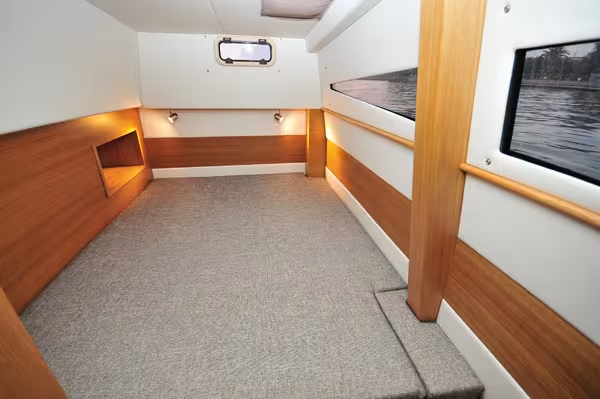
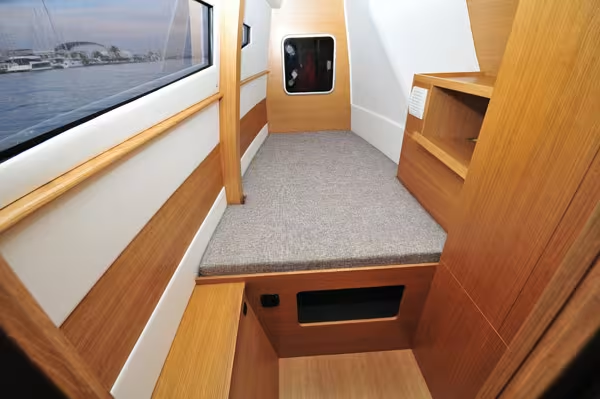
No island bed or kingsize bed on this compact powercat, but the starboard hull that can be dedicated to the owner.
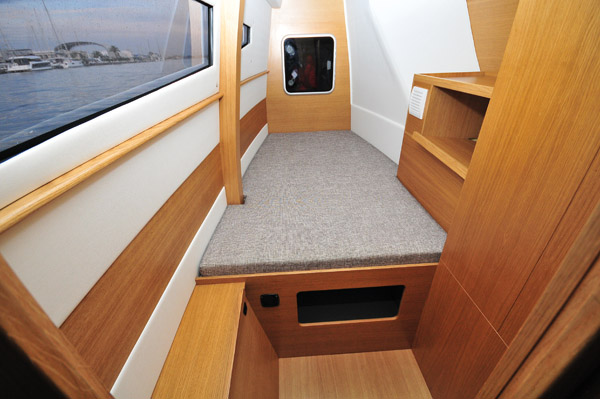
The port side forward berth fits into a hull with a fine-entry bow…
Conclusion
Bravo to C-Cat for having dared to develop this pleasant and comfortable “little” powercat. Its versatility will tempt the speed enthusiast as well as the reasonable cruiser. A version with a compact and aerodynamic flybridge will offer a nice potential for the boater who’s satisfied with a nice average of 10 knots. In this spirit, the twin 150 HP option that’s available didn’t seem essential to me at all.
 |
 |
With a shoal draft of just two feet, the boat can access most navigable waterways.
The hatch over the motors acts as a step - very useful for climbing down into the engine compartments!
THE PLUSES:
+ Handling
+ Agility
+ Efficiency
THE MINUSES:
- Accessibility of the fishing station is somewhat sporty
- Fuel consumption at high speeds
TECHNICAL SPECIFICATIONS
Builder: C-Catamarans
Architect: Marc Lombard Yacht Design
Length: 38’9” (11.82 m)
Beam: 19’2” (5.84 m)
Draft: 2’ (0.60 m)
Air draft: 16’7” (5.05 m)
Light displacement: 14,350 lbs (6.5 t)
Loaded displacement: 20,500 lbs (9.3 t)
Engines: 2 x 110/150 HP
Fuel: 2 x 52 US gal (2 x 200 l)
Water: 2 x 79 US gal (2 x 300 l)
Cabins: 2 or 4 Bathrooms: 2
Price of standard version 2 cabins/2 bathrooms: € 343,000 ex-tax
Main options in € ex-tax
3-Cabin Club version: 7,300
4-Cabin Armatoriale version: 12,000
Electronics pack + interior electrics & 220 V system: 13,000
Windlass & ground tackle: 3,350
Safety equipment: 3,597
Delivery and mooring for 1 week in Fiummiccino: 7,500
Engine options: 110 HP: 22,000 / 150 HP: 35,000
Schenker 13.2 US gal (50 l) / h watermaker: 6,900
Webasto forced air heating: 5,000