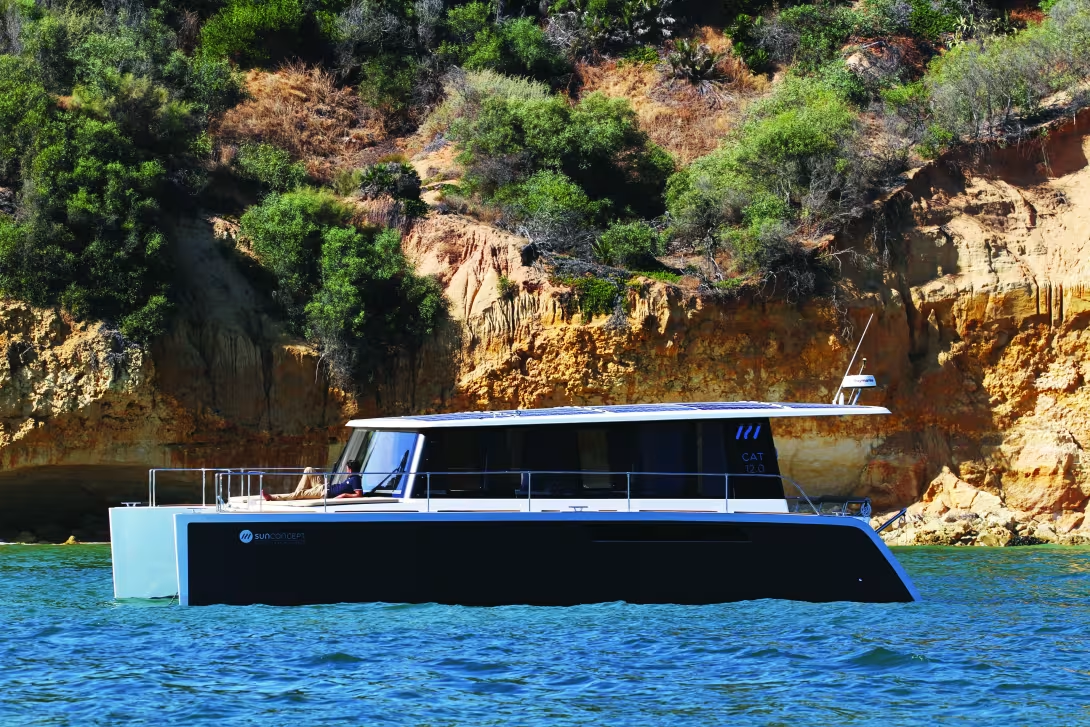
Specialist in solar-powered electric boats, Sun Concept offers a 40-foot (12-meter) catamaran in several versions - MT, Pro and Cruise. It was the latter of these three, designed for coastal cruising, that we tested in southern Portugal.
Infos pratiques
- Le chantier : CAT 12.0
- La fiche technique
- Découvrez notre vidéo exclusive
- Financez votre Cat 12.0 Cruise
- Assuez votre Cat 12.0 Cruise
- Articles autour du Cat 12.0 Cruise
Test location: Vilamoura, Portugal
Conditions: South-southwest 5 to 8 knots, sea state slight
It’s not for nothing that Sun Concept settled five years ago in Olhão: this fishing town, very close to Faro, is located in the heart of a particularly vulnerable ecosystem: a succession of lagoons, sand banks and muddy plains stretch over 30 miles (50 km). Here, the professionals - fishermen, fish farmers, oyster farmers, shuttle boat pilots, water-taxis - are numerous and sensitive to the preservation of their environment. Close to their concerns but also to their requirements in terms of specifications, Sun Concept launched its first 23-foot (7 m) electric boat, the Sunsailer 7.0. This model, with around 10 units built, was a relative success. And it seemed to be suitable for both professionals and yachtsmen. Following this, the Sun Concept team have been working on a new, more ambitious project, the Cat 12.0. Still a zero-emissions boat, of course, but it is now a catamaran. This configuration brings two decisive advantages: less drag for the same displacement and the possibility of optimizing the surface area for solar panels.
Sailing without polluting? Yes you can, with a Cat 12.0.
A young and motivated team
João Paulo Bastos, General Manager of Sun Concept, was at Faro airport to greet me. 15 minutes later we were at his shipyard in the nearby coastal town of Olhão and in these modern premises, Cat 12.0 #3 was under construction. The yard adapts to all - or almost all - of its customers’ requests: this third model is entirely made of carbon. The employees are all quite young and the atmosphere is relaxed, but it’s an atmosphere that doesn’t hide the very high level of the team members... João, to speak only of one of them, has a degree in marine biology. For him, preserving the marine ecosystem is not just a stance he’s taking, it’s a real personal and committed will. Though the first Cat 12.0 delivered was an Open version able to carry up to 45 passengers, #2 is a Cruise version. We went along to see this catamaran at the famous seaside town of Vilamoura. Here, the atmosphere is more inclined towards partying, golf courses and luxury shops rather than the preservation of the environment, but the neighbors on the Cat 12.0’s pontoons seemed to make a special welcome for its owner…
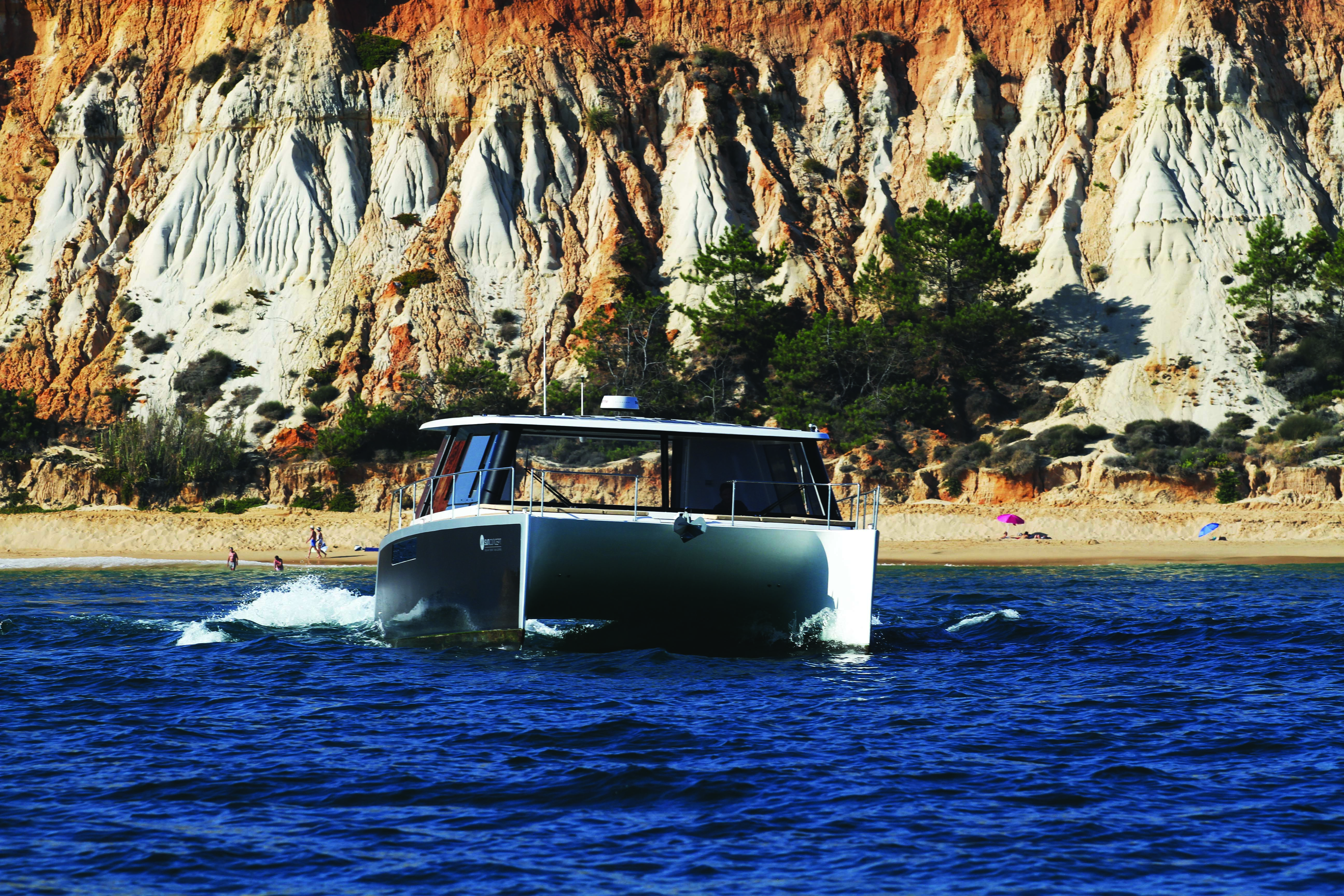
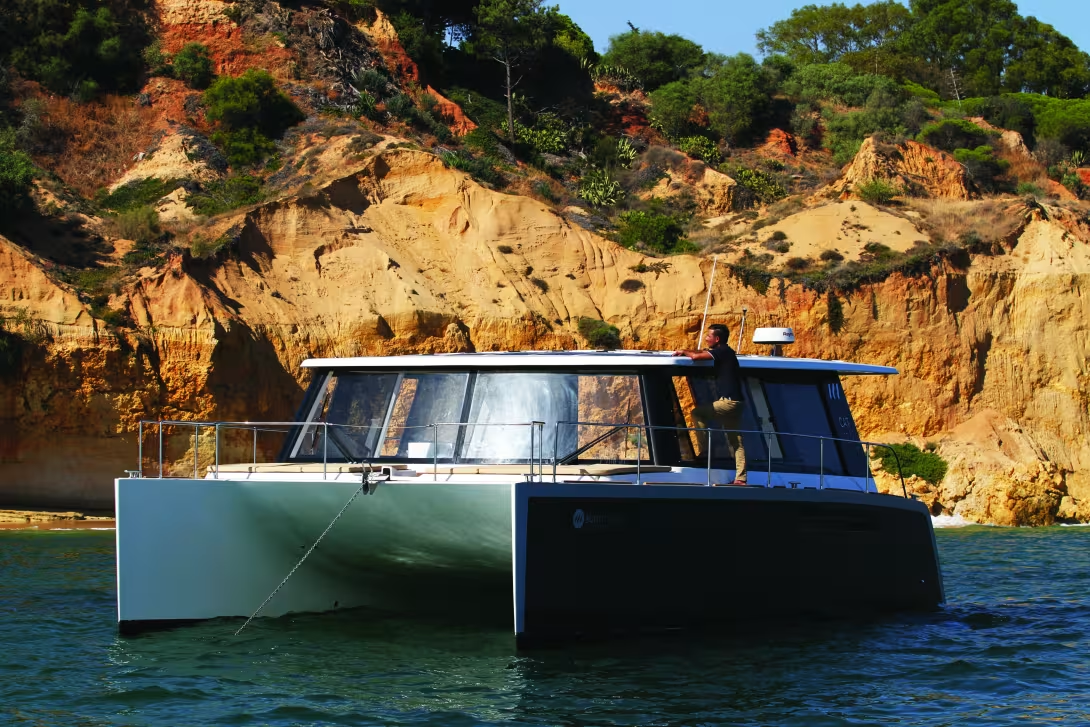
The very fine bows of the Cat 12.0 pass really 4 well through the chop.
Torque... and silence!
One of the pleasures of electric catamarans is the ease of use: you switch on both motors, cast off the mooring lines and that’s it! No warming-up, no checking the exhaust... and of course no fumes or odors. Even though the power of the Cat 12.0 motors is limited compared to that of internal combustion engines - 2 x 25 kW is roughly the equivalent of 2 x 40 HP - the power delivered at low revs is astonishing. This torque favors docking maneuvers: without any experience of this catamaran, I managed to get it in its slip without any difficulty. For the time being, we were leaving the port and heading west. The sound of the motors is barely perceptible. However, João would like to point out that the Torqeedos installed on board are noticeably louder than the standard motors. A glance in the engine compartments clearly shows the simplicity, cleanliness and low volume of an electric motor compared to an internal combustion propulsion system.
Unlimited range?
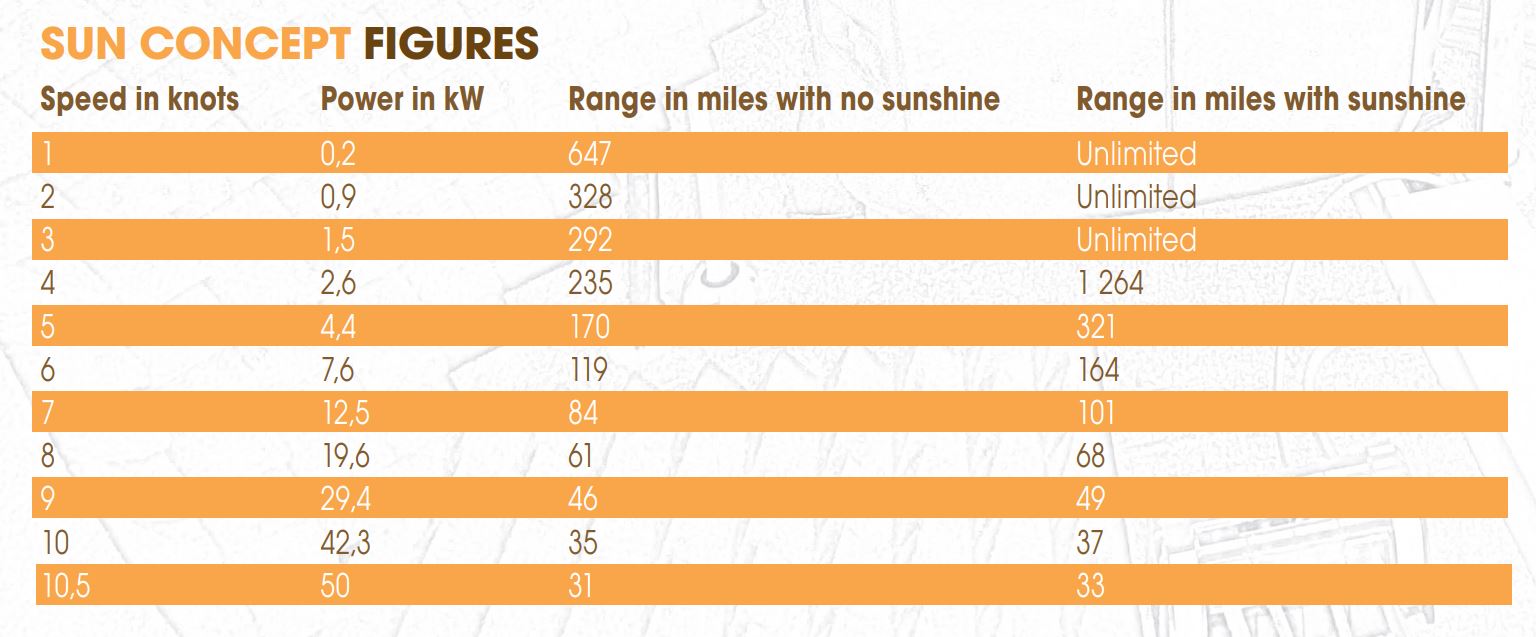
On a relatively calm sea, we nevertheless noted as we crossed the occasional wake that the Cat 12.0 hardly pitches. Its hulls with particularly fine-entry bows seem to generate minimal drag judging by the near absence of wake ourselves. The steering is efficient, and the catamaran accelerates rapidly to 9 knots - the slightly dirty hulls deprive us of the last one and a half knots of speed - during the initial seatrials, the Cat 12.0 reached 10.5 knots. At this speed, range would be limited to a handful of miles (15 to 33 miles depending on the engines and batteries used). The generator allows you to continue on your way, but at reduced speed - no more than 5 knots. Speed is obviously not the best buddy of an electric catamaran: they are adapted to a much quieter pace. The ideal is therefore to cruise at 5 or 6 knots, or even significantly less, to enjoy unlimited range - provided the sun is shining. On a sunny stretch of water, you can sail 20 to 50 miles a day at reduced speed without using the generator. A new way of sailing... a tough one, but a clean one! Be aware that depending on the power of the electric motors used, the speed, and ultimately the number of batteries under the floorboards, the range is inevitably going to be quite variable. Our silent stroll took us along the coast, following the cliffs and beaches to reach a well-protected anchorage. It would be hard to imagine a more pleasant trip!
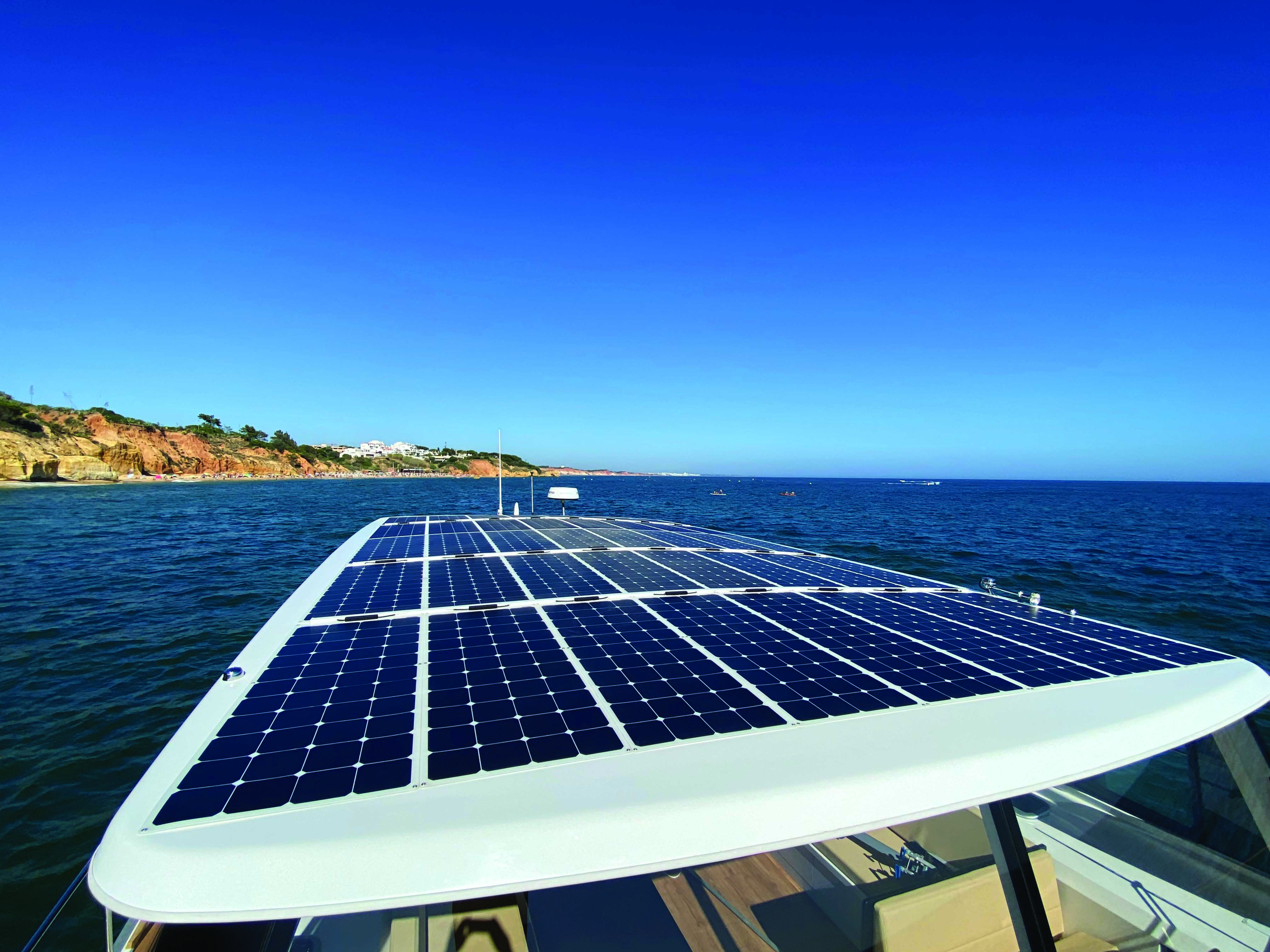
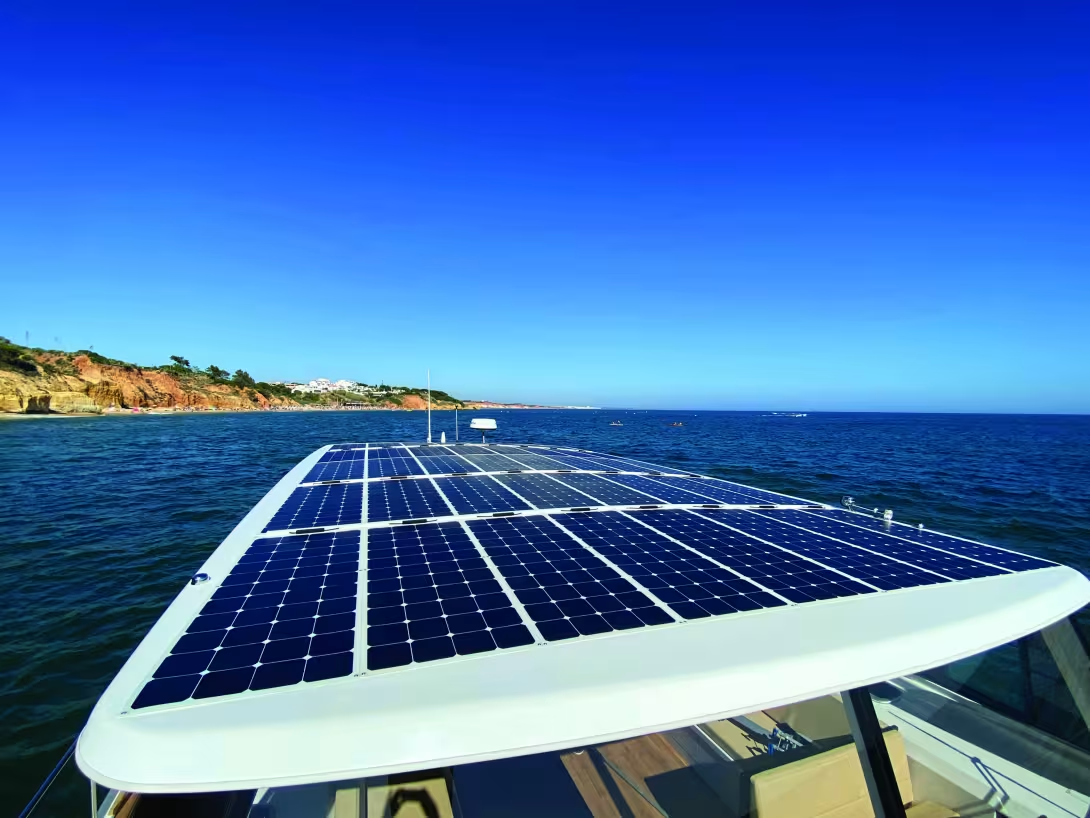
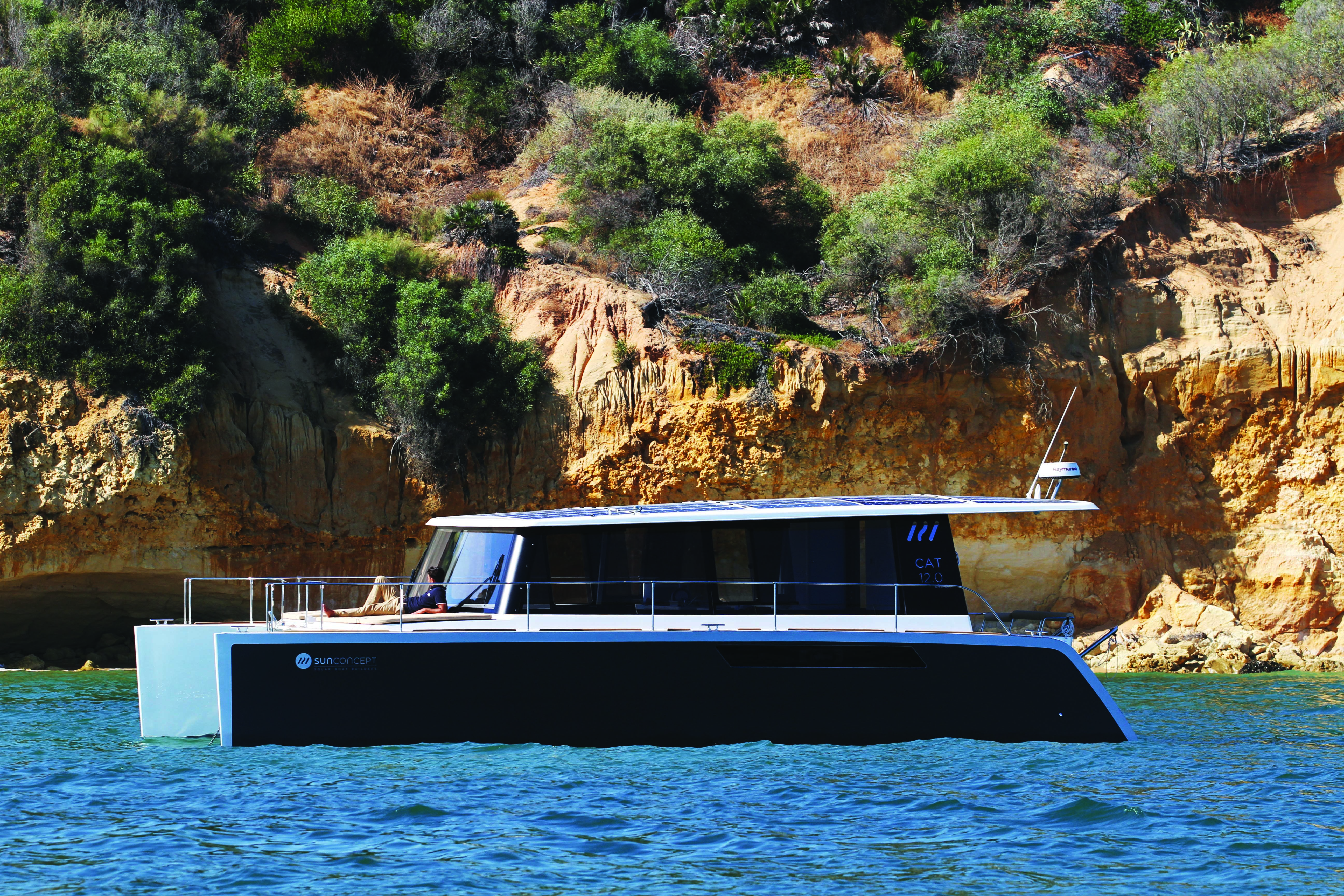
The solar panels occupy the entire available surface above the nacelle.
The nacelle predominates on deck…
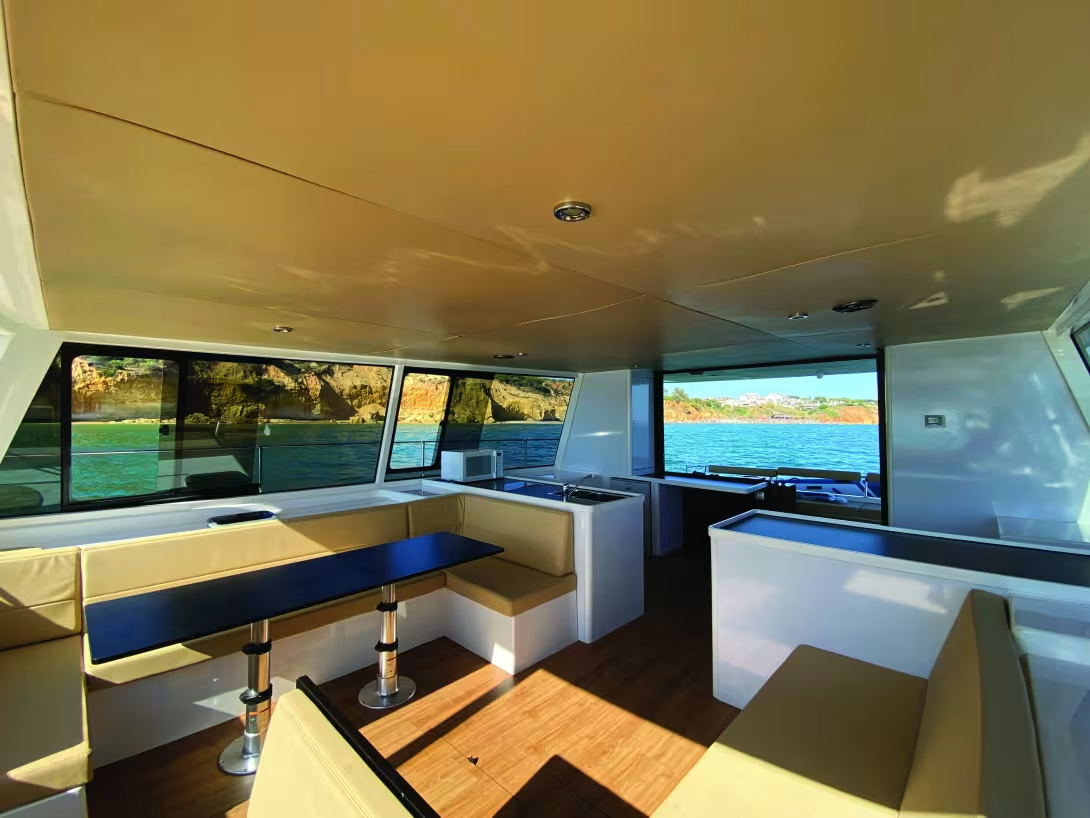
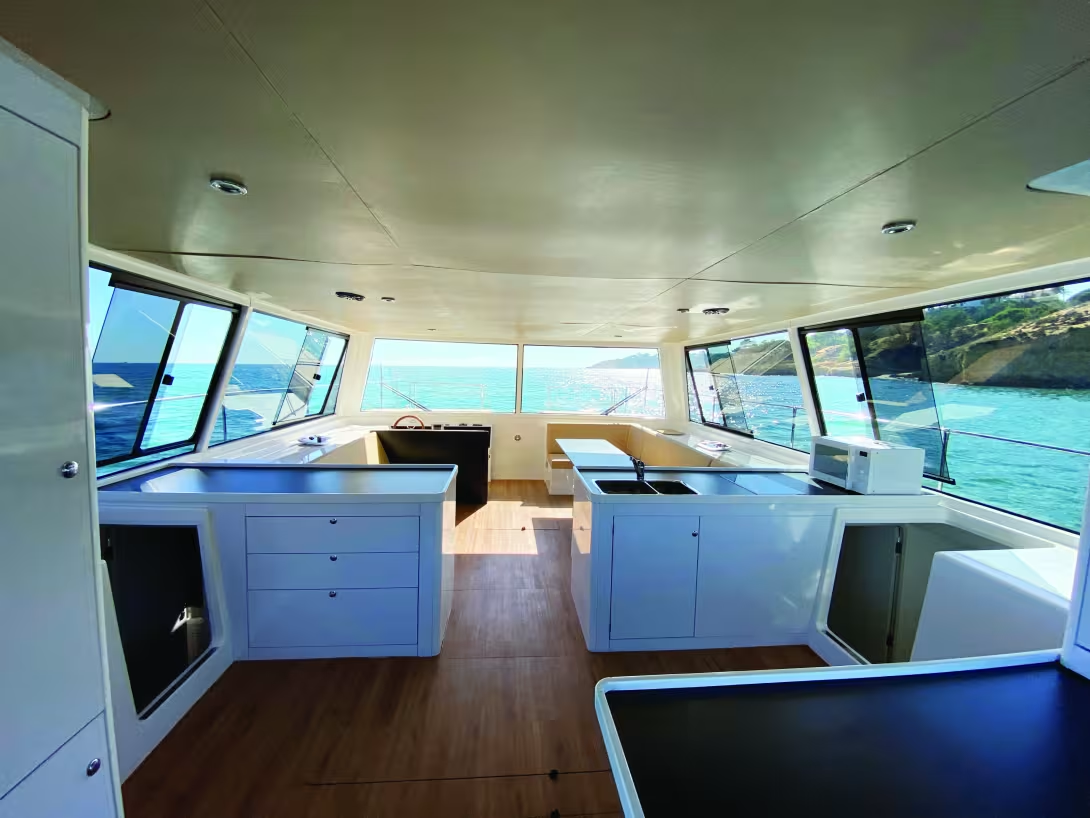
The need to provide maximum surface area for the solar panels results in a very wide coachroof followed by a bimini at the stern. There is a slight overhang above the windows. This architecture is perfectly suited to the MT and Pro versions, which remain open. However, it is less convincing on our Cruise version. But let’s start with the good things: the nacelle is huge for a 40-footer and the light is exceptional. Wherever you are inside, the view of the water - or the coast - is unbelievable. A large saloon, a bench seat, a full galley and numerous seats occupy the immense volume. The large floor area makes life on board so much more pleasant. On the other hand, the maximum footprint of the nacelle results in very narrow side-decks (it is possible to move a little further out and to offset the foothods). One step between the cockpit and deck level and a pair of handrails on the corners of the coachroof would be wel - come. Overall, the deck area is reduced. The aft cockpit is in fact rather short... but its great width allows the installation of a folding table and bench seat designed for eight people. Right at the stern, a long seat - fixed to the cockpit - with a backrest closes off the deck area, just in front of the davits for the tender, between the two sugarscoops. The only free area on deck is the two sun - bathing areas at the bow, on either side of the anchor loc - ker. The second consequence of this fully-glazed nacelle is that it is very hot, especially when the sun hits the bow at 45°. With this orientation, even the large side openings and the air-conditioning don’t manage to bring real freshness inside. A forward cap would have two advan - tages: it would cut out a little of the sun’s rays and increase the surface area available for the panels. More vertical or even inverted forward glazing would also effectively protect the helmsman from the sun from the front.the handrail
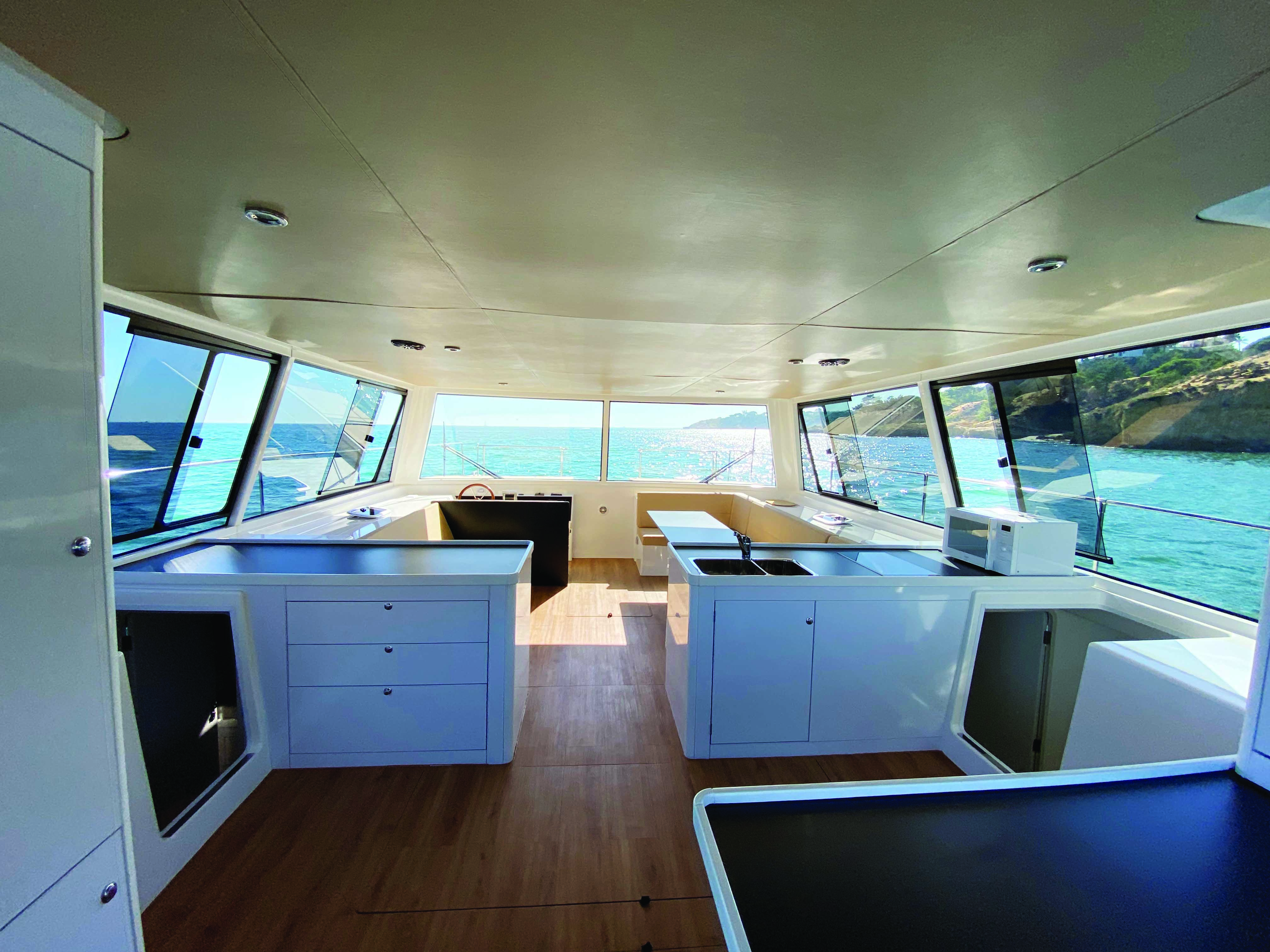
The nacelle offers incredible volume for a 40-foot Powercat.
A user-friendly helm station
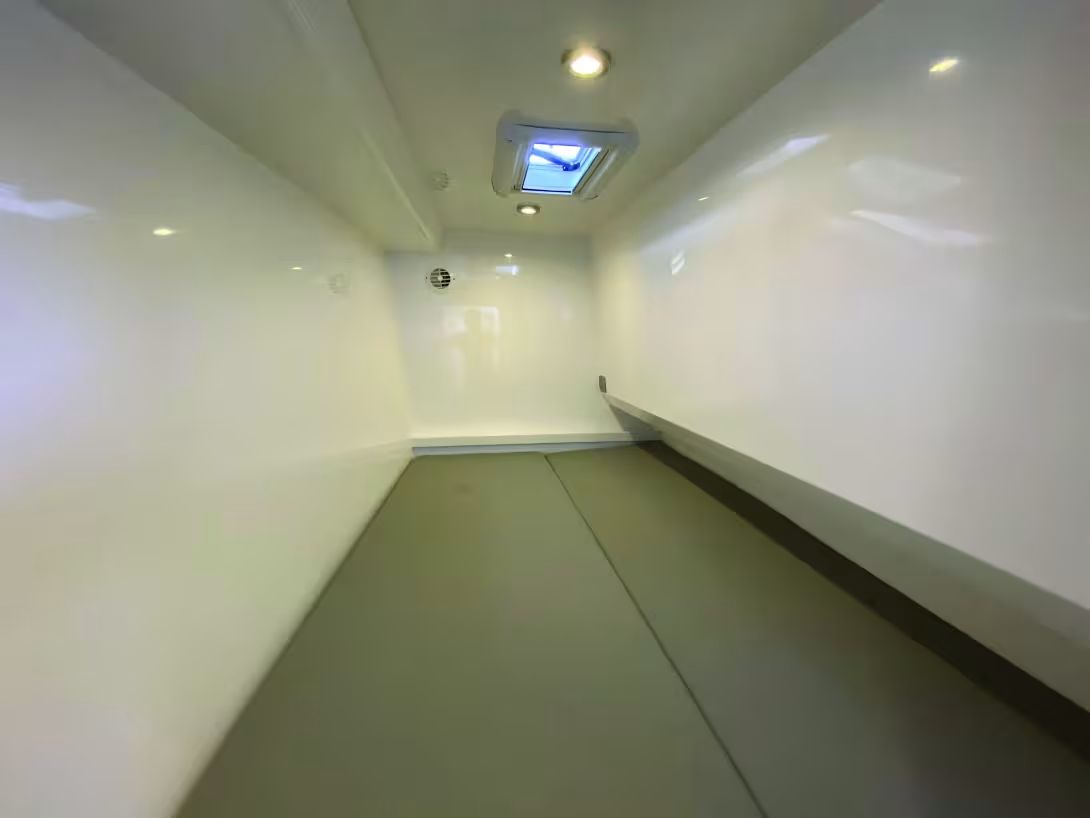
So, the helm is installed at the very front, on the port side of the nacelle. The bench seat is long enough to accommodate two or even three people. With the wooden steering wheel (optional), engine controls within easy reach, and large, clearly visible screens, the skipper is spoiled. The port side opening allows you to exit directly onto the deck. A real door would be even more practical, but it is already very appreciable, when short-handed or even single-handed, to have the option to step outside. Overall, the finish is good but still deserves some effort - particularly in the assembly of the linings. The builders are aware of this and are doing their utmost to raise the level of presentation. As for the hulls, they are only modestly fitted out: in each one, there is a double cabin and a bathroom. The bunks, a little high for easy access, will be lower on-board future units. Of course, it is surprising to have only two cabins and technical rooms on board a 40-foot catamaran. But the priority here has been given to keeping a multihull with low drag and light weight.
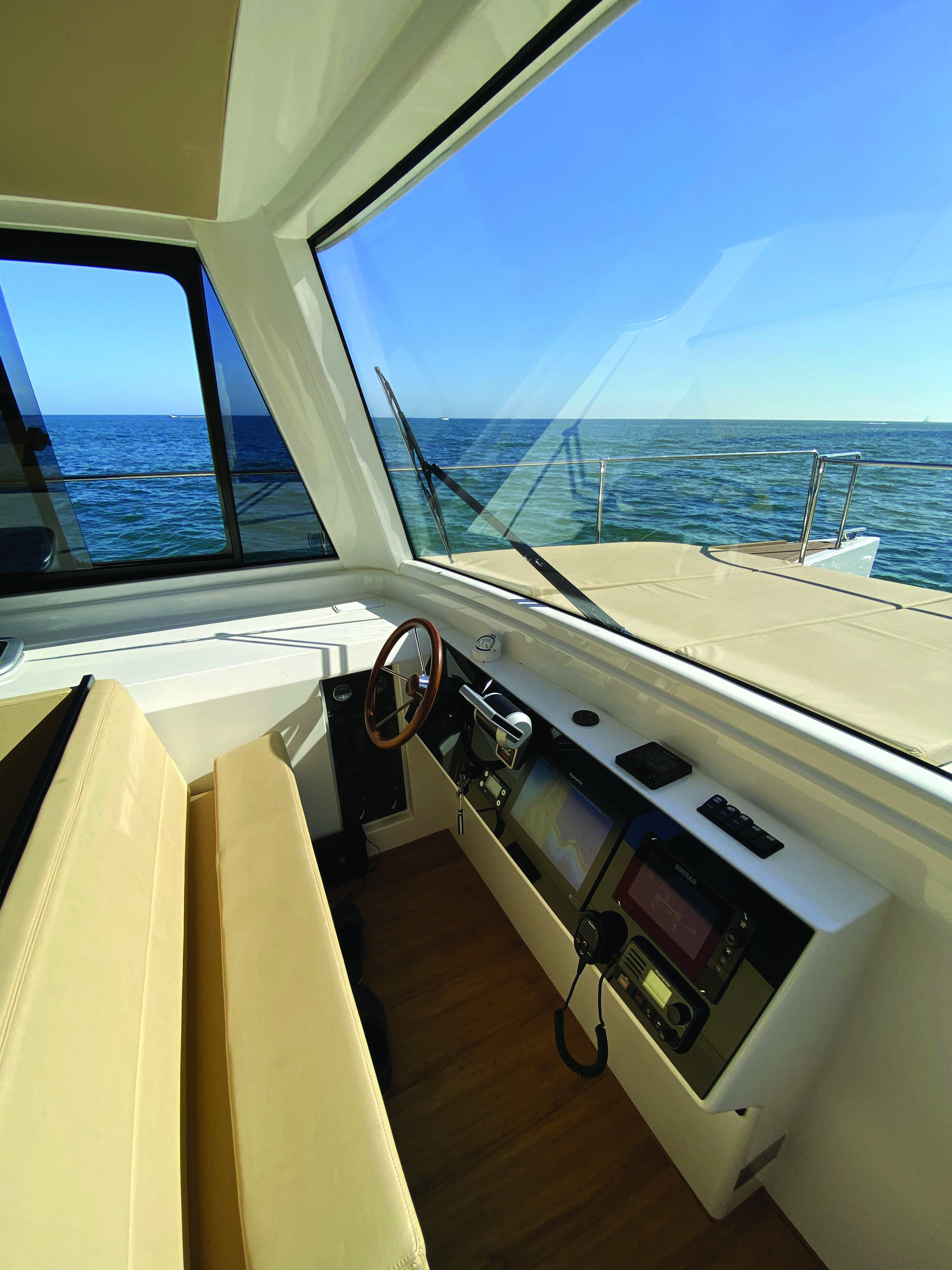
The helm station is very well designed... except when you are sailing into the sun, making it very hot!
Conclusion
Easy to use, comfortable and environmentally friendly, the Cat 12.0 is undoubtedly foreshadowing the powercat of tomorrow. Its immediate interest is to be one of the only electric catamarans of this size - most ecopowers are much bigger. Admittedly, the range is further reduced as soon as the speed exceeds 6 knots. But let’s bet that the next bunch of innovations we see in the field of solar panels and batteries will make the electric formula as attractive as it is essential.
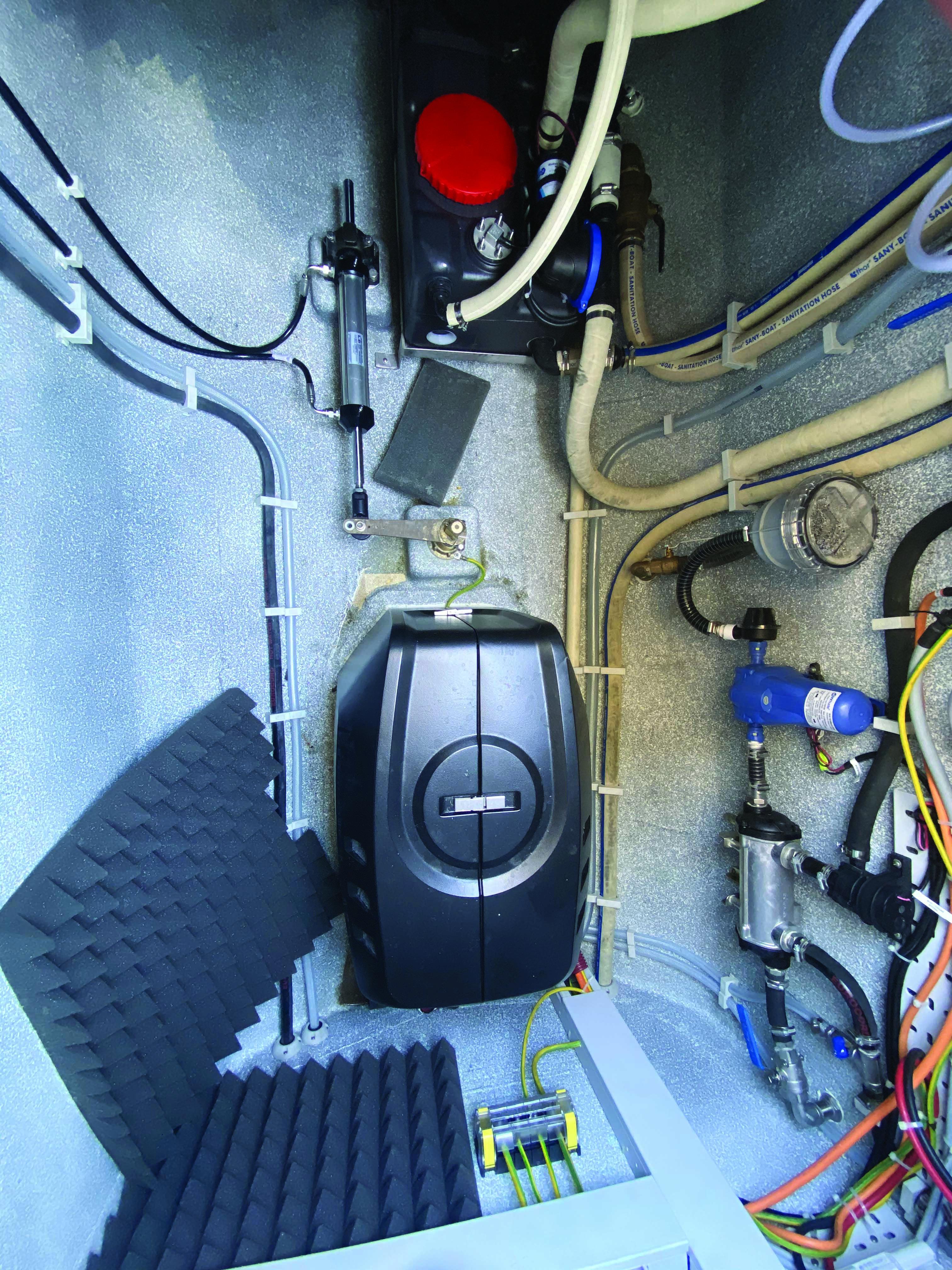
Electric motors are much smaller than traditional combustion engines - and the bilges stay clean!
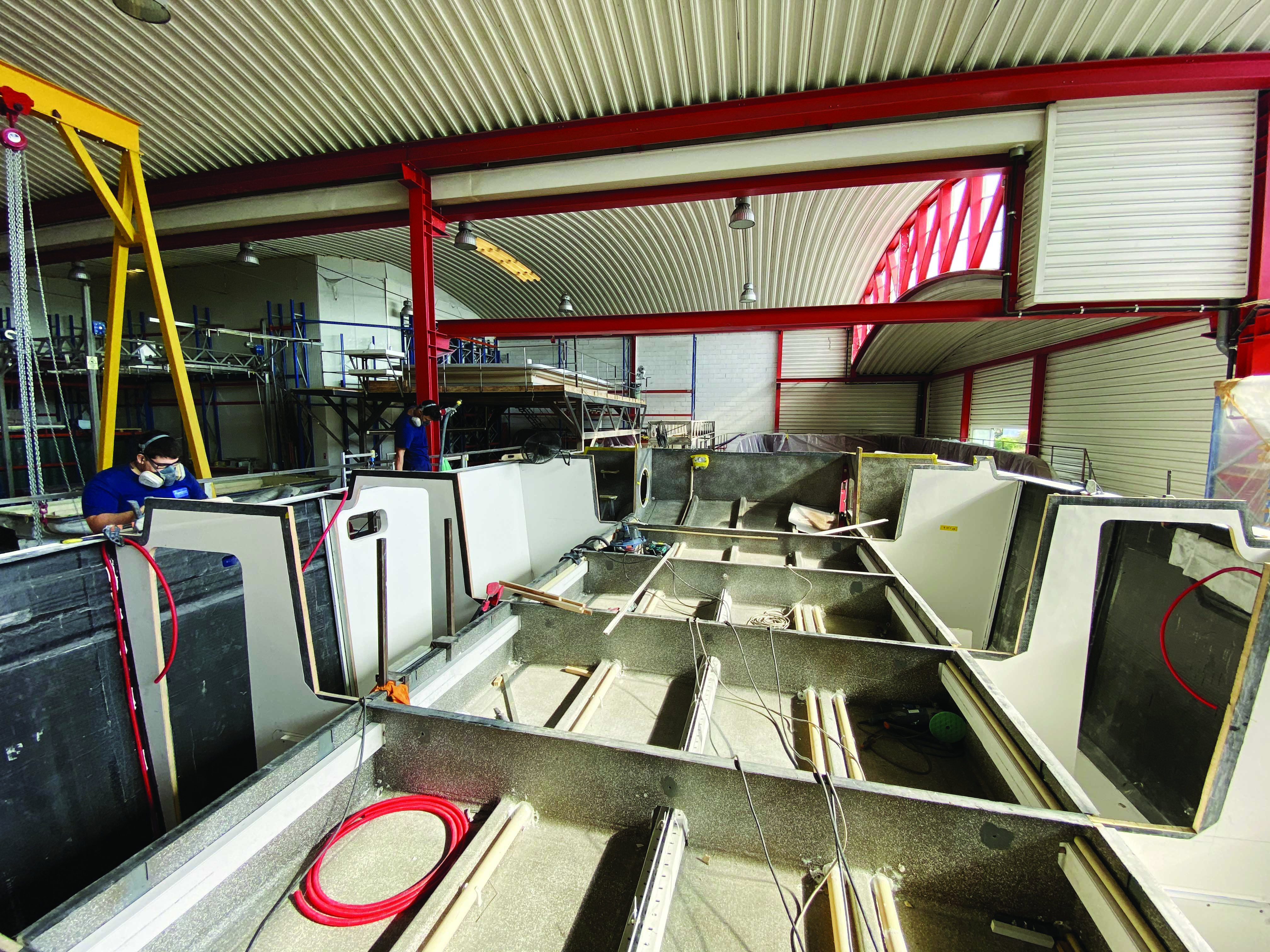
The third Cat 12.0 under construction at Sun Concept in Olhão. Built all-carbon, it is now completed and was delivered in October in Germany.
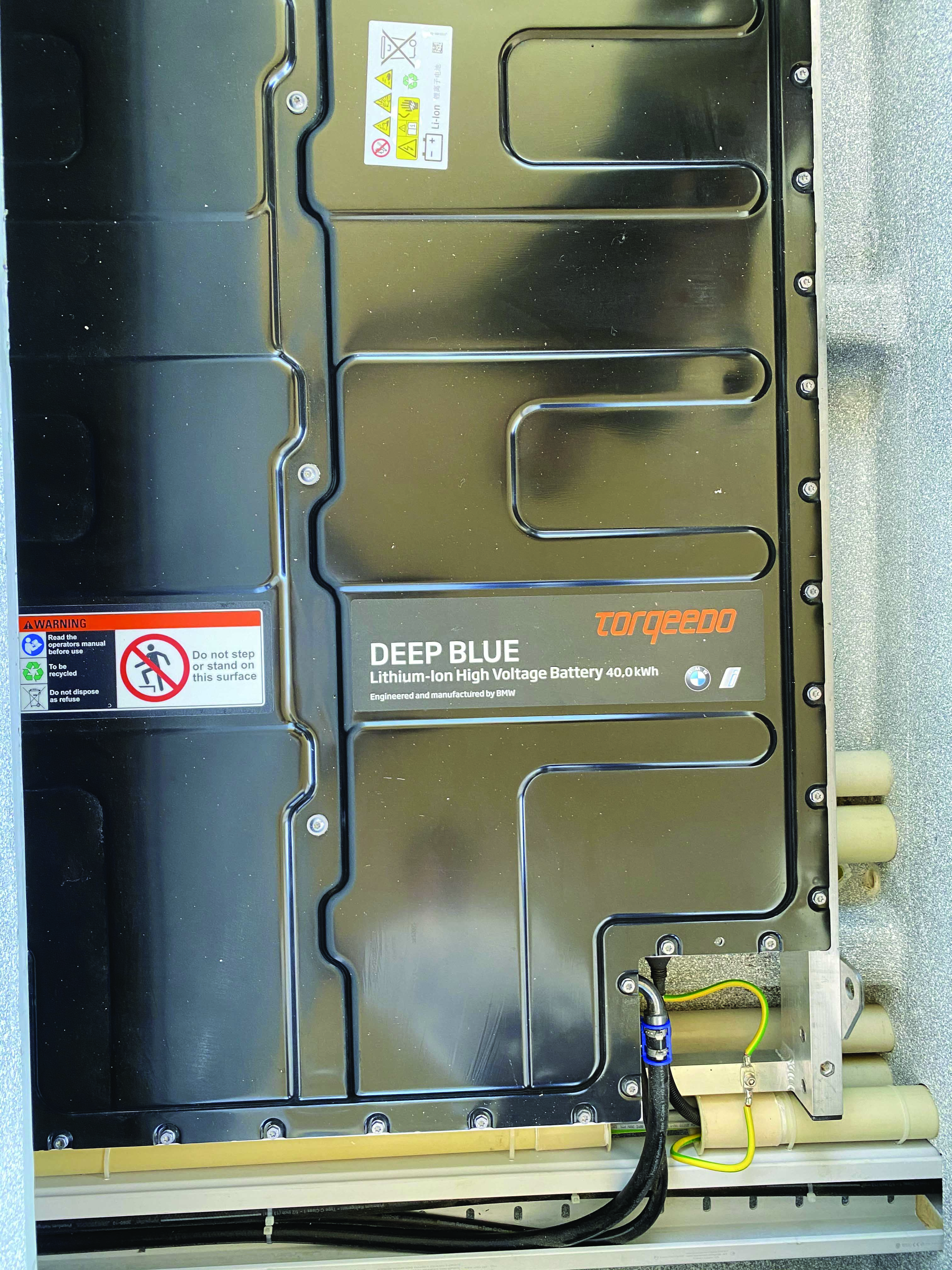
Our test Cat 12.0 was equipped with four 40 kWh Torqeedo Deep Blue batteries like this one.
The Pluses
+ Catamaran specifically designed for electric propulsion
+ Pleasure of use
+Interior helm with direct access to the side-deck
The Minuses
- Glazing in the nacelle gives little protection from the sun
- Narrow side-decks
- Only two relatively basic cabins
TECHNICAL SPECIFICATIONS
Builder: Sun Concept
Length: 39’ (11.90 m)
Beam: 39’6” (5.95 m)
Draft: 3’7” (1.10 m)
Minimum displacement: 16,500 lbs (7.5 t)
Standard drive: Krautler SDKH- D 15.0 AC - 2 x 15 kW
Motors on our test catamaran: Torqeedo Deep Blue 2 x 25 kW Sail Drive
Standard batteries: MG Energy LiNMC 75 kWh
Batteries on our test catamaran: Torqeedo BMWi 160 kWh
Solar panels: 6 kWh
CE certification: B10, C16
Price: € 474,123 ex-tax
Price of the model we tested: € 634,506 ex-tax
Principal options ex-tax:
10 kW Generator: € 23,665
Autopilot: € 2,967
Radar: € 3,209
Air conditioning: € 6,655
Hull cover: € 5,000
4 cameras: € 2,160
Transport and launching in Olhão: € 1,850